•  
Illustration - Loire Valley

Illustration - Loire Valley

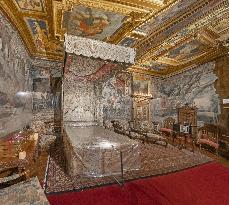
FRANCE - LOIRE VALLEY - LOIR ET CHER (41) - CASTLE OF CHEVERNY : THE KING'S ROOM, WHICH WAS RESERVED FOR DISTINGUISHED GUESTS. ABOVE, A SO-CALLED "ITALIAN-STYLE" COFFERED CEILING, WHICH REPRESENTS THE MYTHOLOGICAL HISTORY OF PERSEUS AND ANDROMEDA. ON THE PANELING, 30 SCENES OF THE THWARTED LOVE OF THEAGENE AND CHARICLEE. ALL AROUND, A COLLECTION OF TAPESTRIES ILLUSTRATE THE JOURNEY OF ULYSSES, HERO OF THE ODYSSEY. THE CANOPY BED IS COVERED WITH 16TH CENTURY PERSIAN EMBROIDERY. IT SERVED TO HENRY IV DURING A PASSAGE IN THE OLD CASTLE. Photo by Stephane Compoint/Only France/ABACAPRESS.COM

  •  
Cheval Passion 2025 - Avignon

Cheval Passion 2025 - Avignon

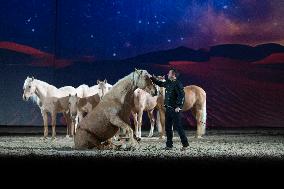
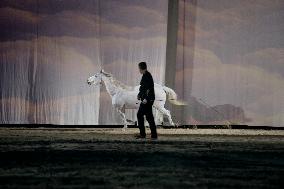
Vincent Liberator, Specialist in free dressage, Vincent Liberator diversifies his repertoire with 'Vola Via', a plural show of mythological inspiration that takes us in the wake of Pegasus, the divine winged horse. Vola Via, meaning flight in Italian, is the story of an encounter. That of Vincent Liberator's free horses with the mythological horse Pegasus and his rider Victoria Lebigre, at Exposition Park in Avignon on January 26, 2025. Photo by Cyrille Bernard/ABACAPRESS.COM

  •  
Cheval Passion 2025 - Avignon

Cheval Passion 2025 - Avignon

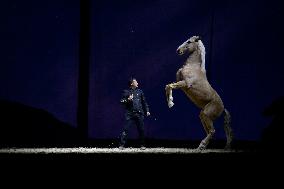
Vincent Liberator, Specialist in free dressage, Vincent Liberator diversifies his repertoire with 'Vola Via', a plural show of mythological inspiration that takes us in the wake of Pegasus, the divine winged horse. Vola Via, meaning flight in Italian, is the story of an encounter. That of Vincent Liberator's free horses with the mythological horse Pegasus and his rider Victoria Lebigre, at Exposition Park in Avignon on January 26, 2025. Photo by Cyrille Bernard/ABACAPRESS.COM

  •  
Cheval Passion 2025 - Avignon

Cheval Passion 2025 - Avignon

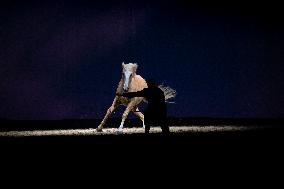
Vincent Liberator, Specialist in free dressage, Vincent Liberator diversifies his repertoire with 'Vola Via', a plural show of mythological inspiration that takes us in the wake of Pegasus, the divine winged horse. Vola Via, meaning flight in Italian, is the story of an encounter. That of Vincent Liberator's free horses with the mythological horse Pegasus and his rider Victoria Lebigre, at Exposition Park in Avignon on January 26, 2025. Photo by Cyrille Bernard/ABACAPRESS.COM

  •  
Cheval Passion 2025 - Avignon

Cheval Passion 2025 - Avignon

Vincent Liberator, Specialist in free dressage, Vincent Liberator diversifies his repertoire with 'Vola Via', a plural show of mythological inspiration that takes us in the wake of Pegasus, the divine winged horse. Vola Via, meaning flight in Italian, is the story of an encounter. That of Vincent Liberator's free horses with the mythological horse Pegasus and his rider Victoria Lebigre, at Exposition Park in Avignon on January 26, 2025. Photo by Cyrille Bernard/ABACAPRESS.COM

  •  
Cheval Passion 2025 - Avignon

Cheval Passion 2025 - Avignon

Vincent Liberator, Specialist in free dressage, Vincent Liberator diversifies his repertoire with 'Vola Via', a plural show of mythological inspiration that takes us in the wake of Pegasus, the divine winged horse. Vola Via, meaning flight in Italian, is the story of an encounter. That of Vincent Liberator's free horses with the mythological horse Pegasus and his rider Victoria Lebigre, at Exposition Park in Avignon on January 26, 2025. Photo by Cyrille Bernard/ABACAPRESS.COM

  •  
Cheval Passion 2025 - Avignon

Cheval Passion 2025 - Avignon

Vincent Liberator, Specialist in free dressage, Vincent Liberator diversifies his repertoire with 'Vola Via', a plural show of mythological inspiration that takes us in the wake of Pegasus, the divine winged horse. Vola Via, meaning flight in Italian, is the story of an encounter. That of Vincent Liberator's free horses with the mythological horse Pegasus and his rider Victoria Lebigre, at Exposition Park in Avignon on January 26, 2025. Photo by Cyrille Bernard/ABACAPRESS.COM

  •  
Cheval Passion 2025 - Avignon

Cheval Passion 2025 - Avignon

Vincent Liberator, Specialist in free dressage, Vincent Liberator diversifies his repertoire with 'Vola Via', a plural show of mythological inspiration that takes us in the wake of Pegasus, the divine winged horse. Vola Via, meaning flight in Italian, is the story of an encounter. That of Vincent Liberator's free horses with the mythological horse Pegasus and his rider Victoria Lebigre, at Exposition Park in Avignon on January 26, 2025. Photo by Cyrille Bernard/ABACAPRESS.COM

  •  
Cheval Passion 2025 - Avignon

Cheval Passion 2025 - Avignon

Vincent Liberator, Specialist in free dressage, Vincent Liberator diversifies his repertoire with 'Vola Via', a plural show of mythological inspiration that takes us in the wake of Pegasus, the divine winged horse. Vola Via, meaning flight in Italian, is the story of an encounter. That of Vincent Liberator's free horses with the mythological horse Pegasus and his rider Victoria Lebigre, at Exposition Park in Avignon on January 26, 2025. Photo by Cyrille Bernard/ABACAPRESS.COM

  •  
Cheval Passion 2025 - Avignon

Cheval Passion 2025 - Avignon

Vincent Liberator, Specialist in free dressage, Vincent Liberator diversifies his repertoire with 'Vola Via', a plural show of mythological inspiration that takes us in the wake of Pegasus, the divine winged horse. Vola Via, meaning flight in Italian, is the story of an encounter. That of Vincent Liberator's free horses with the mythological horse Pegasus and his rider Victoria Lebigre, at Exposition Park in Avignon on January 26, 2025. Photo by Cyrille Bernard/ABACAPRESS.COM

  •  
Cheval Passion 2025 - Avignon

Cheval Passion 2025 - Avignon

Vincent Liberator, Specialist in free dressage, Vincent Liberator diversifies his repertoire with 'Vola Via', a plural show of mythological inspiration that takes us in the wake of Pegasus, the divine winged horse. Vola Via, meaning flight in Italian, is the story of an encounter. That of Vincent Liberator's free horses with the mythological horse Pegasus and his rider Victoria Lebigre, at Exposition Park in Avignon on January 26, 2025. Photo by Cyrille Bernard/ABACAPRESS.COM

  •  
Cheval Passion 2025 - Avignon

Cheval Passion 2025 - Avignon

Vincent Liberator, Specialist in free dressage, Vincent Liberator diversifies his repertoire with 'Vola Via', a plural show of mythological inspiration that takes us in the wake of Pegasus, the divine winged horse. Vola Via, meaning flight in Italian, is the story of an encounter. That of Vincent Liberator's free horses with the mythological horse Pegasus and his rider Victoria Lebigre, at Exposition Park in Avignon on January 26, 2025. Photo by Cyrille Bernard/ABACAPRESS.COM

  •  
Tiny House With Erotic Frescoes Uncovered - Pompeii

Tiny House With Erotic Frescoes Uncovered - Pompeii

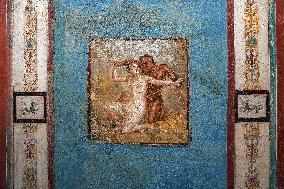
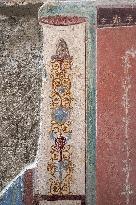
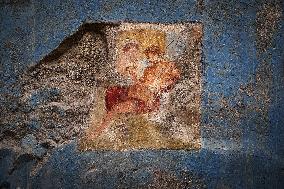
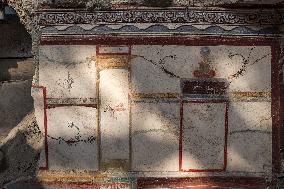
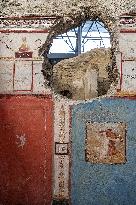
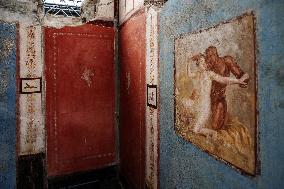
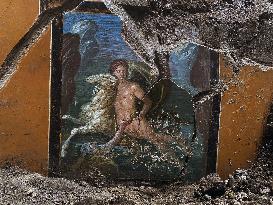
Fresco with the myth of Phaedra and Hippolytus uncovered by Archaeologists in a richly decorated small house with finely preserved erotic frescoes of mythological scenes in the ancient Roman city of Pompeii, Italy on October 2024. The vividly coloured wall paintings include one depicting a sexual encounter between a satyr and a nymph on a bed and another one of Phaedra, mythological queen, and her stepson Hippolytus. Phaedra, Cretan princess and wife of Theseus, fell in love with her stepson Hippolytus through the work of Aphrodite, who avenged the young man’s disdain for her. Hippolytus rejected Phaedra, and she, scorned, falsely accused him of trying to rape her. Another fresco features gods presumed to be Venus and Adonis. Experts say the exquisitely decorated abode, called the House of Phaedra after the mythological queen , sheds light on the changing architectural styles in the first century AD but is also further proof that the residents of Pompeii had an appetite for sensual art. Despite its small size

  •  
Tiny House With Erotic Frescoes Uncovered - Pompeii

Tiny House With Erotic Frescoes Uncovered - Pompeii

Archaeologists have uncovered a fresco depicting a sexual encounter between a satyr and a nymph on a bed in a richly decorated small house with finely preserved erotic frescoes of mythological scenes in the ancient Roman city of Pompeii, Italy on October 2024. The vividly coloured wall paintings include another one of Phaedra, mythological queen, and her stepson Hippolytus. Phaedra, Cretan princess and wife of Theseus, fell in love with her stepson Hippolytus through the work of Aphrodite, who avenged the young man’s disdain for her. Hippolytus rejected Phaedra, and she, scorned, falsely accused him of trying to rape her. Another fresco features gods presumed to be Venus and Adonis. Experts say the exquisitely decorated abode, called the House of Phaedra after the mythological queen , sheds light on the changing architectural styles in the first century AD but is also further proof that the residents of Pompeii had an appetite for sensual art. Despite its small size, the dwelling ‘strikes us for the high leve

  •  
Tiny House With Erotic Frescoes Uncovered - Pompeii

Tiny House With Erotic Frescoes Uncovered - Pompeii

Archaeologists have uncovered a richly decorated small house with finely preserved erotic frescoes of mythological scenes in the ancient Roman city of Pompeii, Italy on October 2024. The vividly coloured wall paintings include one depicting a sexual encounter between a satyr and a nymph on a bed and another one of Phaedra, mythological queen, and her stepson Hippolytus. Phaedra, Cretan princess and wife of Theseus, fell in love with her stepson Hippolytus through the work of Aphrodite, who avenged the young man’s disdain for her. Hippolytus rejected Phaedra, and she, scorned, falsely accused him of trying to rape her. Another fresco features gods presumed to be Venus and Adonis. Experts say the exquisitely decorated abode, called the House of Phaedra after the mythological queen , sheds light on the changing architectural styles in the first century AD but is also further proof that the residents of Pompeii had an appetite for sensual art. Despite its small size, the dwelling ‘strikes us for the high level of

  •  
Tiny House With Erotic Frescoes Uncovered - Pompeii

Tiny House With Erotic Frescoes Uncovered - Pompeii

Fresco with the myth of Phaedra and Hippolytus uncovered by Archaeologists in a richly decorated small house with finely preserved erotic frescoes of mythological scenes in the ancient Roman city of Pompeii, Italy on October 2024. The vividly coloured wall paintings include one depicting a sexual encounter between a satyr and a nymph on a bed and another one of Phaedra, mythological queen, and her stepson Hippolytus. Phaedra, Cretan princess and wife of Theseus, fell in love with her stepson Hippolytus through the work of Aphrodite, who avenged the young man’s disdain for her. Hippolytus rejected Phaedra, and she, scorned, falsely accused him of trying to rape her. Another fresco features gods presumed to be Venus and Adonis. Experts say the exquisitely decorated abode, called the House of Phaedra after the mythological queen , sheds light on the changing architectural styles in the first century AD but is also further proof that the residents of Pompeii had an appetite for sensual art. Despite its small size

  •  
Tiny House With Erotic Frescoes Uncovered - Pompeii

Tiny House With Erotic Frescoes Uncovered - Pompeii

Archaeologists have uncovered a fresco featuring gods presumed to be Venus and Adonis in a richly decorated small house with finely preserved erotic frescoes of mythological scenes in the ancient Roman city of Pompeii, Italy on October 2024. The vividly coloured wall paintings include one depicting a sexual encounter between a satyr and a nymph on a bed and another one of Phaedra, mythological queen, and her stepson Hippolytus. Phaedra, Cretan princess and wife of Theseus, fell in love with her stepson Hippolytus through the work of Aphrodite, who avenged the young man’s disdain for her. Hippolytus rejected Phaedra, and she, scorned, falsely accused him of trying to rape her. Another fresco features gods presumed to be Venus and Adonis. Experts say the exquisitely decorated abode, called the House of Phaedra after the mythological queen , sheds light on the changing architectural styles in the first century AD but is also further proof that the residents of Pompeii had an appetite for sensual art. Despite its

  •  
Tiny House With Erotic Frescoes Uncovered - Pompeii

Tiny House With Erotic Frescoes Uncovered - Pompeii

Archaeologists have uncovered a richly decorated small house with finely preserved erotic frescoes of mythological scenes in the ancient Roman city of Pompeii, Italy on October 2024. The vividly coloured wall paintings include one depicting a sexual encounter between a satyr and a nymph on a bed and another one of Phaedra, mythological queen, and her stepson Hippolytus. Phaedra, Cretan princess and wife of Theseus, fell in love with her stepson Hippolytus through the work of Aphrodite, who avenged the young man’s disdain for her. Hippolytus rejected Phaedra, and she, scorned, falsely accused him of trying to rape her. Another fresco features gods presumed to be Venus and Adonis. Experts say the exquisitely decorated abode, called the House of Phaedra after the mythological queen , sheds light on the changing architectural styles in the first century AD but is also further proof that the residents of Pompeii had an appetite for sensual art. Despite its small size, the dwelling ‘strikes us for the high level of

  •  
Tiny House With Erotic Frescoes Uncovered - Pompeii

Tiny House With Erotic Frescoes Uncovered - Pompeii

Archaeologists have uncovered a richly decorated small house with finely preserved erotic frescoes of mythological scenes in the ancient Roman city of Pompeii, Italy on October 2024. The vividly coloured wall paintings include one depicting a sexual encounter between a satyr and a nymph on a bed and another one of Phaedra, mythological queen, and her stepson Hippolytus. Phaedra, Cretan princess and wife of Theseus, fell in love with her stepson Hippolytus through the work of Aphrodite, who avenged the young man’s disdain for her. Hippolytus rejected Phaedra, and she, scorned, falsely accused him of trying to rape her. Another fresco features gods presumed to be Venus and Adonis. Experts say the exquisitely decorated abode, called the House of Phaedra after the mythological queen , sheds light on the changing architectural styles in the first century AD but is also further proof that the residents of Pompeii had an appetite for sensual art. Despite its small size, the dwelling ‘strikes us for the high level of

  •  
Tiny House With Erotic Frescoes Uncovered - Pompeii

Tiny House With Erotic Frescoes Uncovered - Pompeii

Fresco with the myth of Phaedra and Hippolytus uncovered by Archaeologists in a richly decorated small house with finely preserved erotic frescoes of mythological scenes in the ancient Roman city of Pompeii, Italy on October 2024. The vividly coloured wall paintings include one depicting a sexual encounter between a satyr and a nymph on a bed and another one of Phaedra, mythological queen, and her stepson Hippolytus. Phaedra, Cretan princess and wife of Theseus, fell in love with her stepson Hippolytus through the work of Aphrodite, who avenged the young man’s disdain for her. Hippolytus rejected Phaedra, and she, scorned, falsely accused him of trying to rape her. Another fresco features gods presumed to be Venus and Adonis. Experts say the exquisitely decorated abode, called the House of Phaedra after the mythological queen , sheds light on the changing architectural styles in the first century AD but is also further proof that the residents of Pompeii had an appetite for sensual art. Despite its small size

  •  
Tiny House With Erotic Frescoes Uncovered - Pompeii

Tiny House With Erotic Frescoes Uncovered - Pompeii

Archaeologists have uncovered a fresco depicting a sexual encounter between a satyr and a nymph on a bed in a richly decorated small house with finely preserved erotic frescoes of mythological scenes in the ancient Roman city of Pompeii, Italy on October 2024. The vividly coloured wall paintings include another one of Phaedra, mythological queen, and her stepson Hippolytus. Phaedra, Cretan princess and wife of Theseus, fell in love with her stepson Hippolytus through the work of Aphrodite, who avenged the young man’s disdain for her. Hippolytus rejected Phaedra, and she, scorned, falsely accused him of trying to rape her. Another fresco features gods presumed to be Venus and Adonis. Experts say the exquisitely decorated abode, called the House of Phaedra after the mythological queen , sheds light on the changing architectural styles in the first century AD but is also further proof that the residents of Pompeii had an appetite for sensual art. Despite its small size, the dwelling ‘strikes us for the high leve

  •  
Tiny House With Erotic Frescoes Uncovered - Pompeii

Tiny House With Erotic Frescoes Uncovered - Pompeii

Archaeologists have uncovered a fresco depicting a sexual encounter between a satyr and a nymph on a bed in a richly decorated small house with finely preserved erotic frescoes of mythological scenes in the ancient Roman city of Pompeii, Italy on October 2024. The vividly coloured wall paintings include another one of Phaedra, mythological queen, and her stepson Hippolytus. Phaedra, Cretan princess and wife of Theseus, fell in love with her stepson Hippolytus through the work of Aphrodite, who avenged the young man’s disdain for her. Hippolytus rejected Phaedra, and she, scorned, falsely accused him of trying to rape her. Another fresco features gods presumed to be Venus and Adonis. Experts say the exquisitely decorated abode, called the House of Phaedra after the mythological queen , sheds light on the changing architectural styles in the first century AD but is also further proof that the residents of Pompeii had an appetite for sensual art. Despite its small size, the dwelling ‘strikes us for the high leve

  •  
Spectacular Room Decorated With Trojan War Characters Discovered In Pompeii

Spectacular Room Decorated With Trojan War Characters Discovered In Pompeii

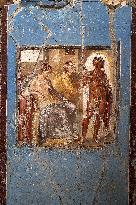
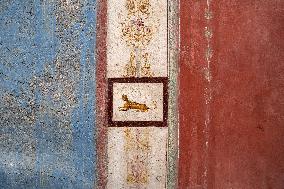
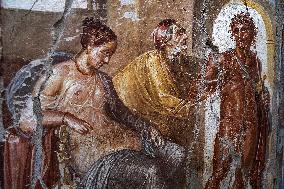
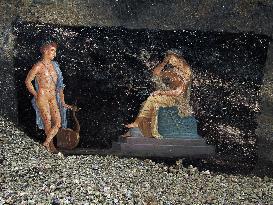
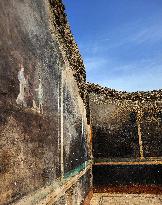
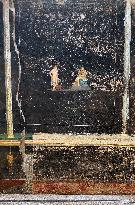
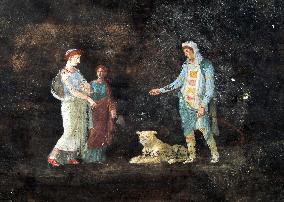
Fresco representing (left) the two lovers Helen and Paris, who are the cause of the Trojan war and (right) Apollo and Cassandra (daughter of Priam, king of Troy), on a wall of a spectacular banqueting room with elegant black walls, decorated with mythological characters and subjects inspired by the Trojan War, recently brought to light during the excavations currently underway at Pompeii, Italy on April 2024 and now completely visible in all its splendour. The room is about fifteen metres long and six metres wide and opens onto a courtyard that seems to be an unroofed access room with a long undecorated staircase leading up to the first floor. The walls were painted black to prevent the smoke from the oil lamps being seen on the walls. The frequent presence of mythological figures in the paintings of living rooms and dining rooms of Roman houses had the explicit social function of entertaining guests and table companions, providing talking points for conversations and reflections on life. The dominant theme s

  •  
Spectacular Room Decorated With Trojan War Characters Discovered In Pompeii

Spectacular Room Decorated With Trojan War Characters Discovered In Pompeii

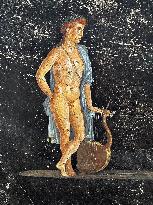
Fresco representing Apollo and Cassandra on a wall of a spectacular banqueting room with elegant black walls, decorated with mythological characters and subjects inspired by the Trojan War, recently brought to light during the excavations currently underway at Pompeii, Italy on April 2024 and now completely visible in all its splendour. Cassandra was the daughter of Priam the king of Troy, she could see the future but no one believed her. Apollo sided with the Trojans against the Greek invaders, but being a god, could not ensure victory. The room is about fifteen metres long and six metres wide and opens onto a courtyard that seems to be an unroofed access room with a long undecorated staircase leading up to the first floor. The walls were painted black to prevent the smoke from the oil lamps being seen on the walls. The frequent presence of mythological figures in the paintings of living rooms and dining rooms of Roman houses had the explicit social function of entertaining guests and table companions, provi

  •  
Spectacular Room Decorated With Trojan War Characters Discovered In Pompeii

Spectacular Room Decorated With Trojan War Characters Discovered In Pompeii

Fresco representing (left) the two lovers Helen and Paris, who are the cause of the Trojan war, on a wall of a spectacular banqueting room with elegant black walls, decorated with mythological characters and subjects inspired by the Trojan War, recently brought to light during the excavations currently underway at Pompeii, Italy on April 2024 and now completely visible in all its splendour. The room is about fifteen metres long and six metres wide and opens onto a courtyard that seems to be an unroofed access room with a long undecorated staircase leading up to the first floor. The walls were painted black to prevent the smoke from the oil lamps being seen on the walls. The frequent presence of mythological figures in the paintings of living rooms and dining rooms of Roman houses had the explicit social function of entertaining guests and table companions, providing talking points for conversations and reflections on life. The dominant theme seems to be that of heroism, shown by the depictions of pairs of her

  •  
Spectacular Room Decorated With Trojan War Characters Discovered In Pompeii

Spectacular Room Decorated With Trojan War Characters Discovered In Pompeii

Fresco representing Apollo and Cassandra on a wall of a spectacular banqueting room with elegant black walls, decorated with mythological characters and subjects inspired by the Trojan War, recently brought to light during the excavations currently underway at Pompeii, Italy on April 2024 and now completely visible in all its splendour. Cassandra was the daughter of Priam the king of Troy, she could see the future but no one believed her. Apollo sided with the Trojans against the Greek invaders, but being a god, could not ensure victory. The room is about fifteen metres long and six metres wide and opens onto a courtyard that seems to be an unroofed access room with a long undecorated staircase leading up to the first floor. The walls were painted black to prevent the smoke from the oil lamps being seen on the walls. The frequent presence of mythological figures in the paintings of living rooms and dining rooms of Roman houses had the explicit social function of entertaining guests and table companions, provi

  •  
Spectacular Room Decorated With Trojan War Characters Discovered In Pompeii

Spectacular Room Decorated With Trojan War Characters Discovered In Pompeii

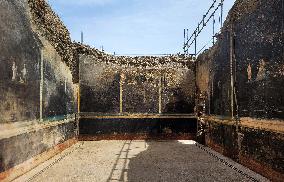
A spectacular banqueting room with elegant black walls, decorated with mythological characters and subjects inspired by the Trojan War, has recently been brought to light during the excavations currently underway at Pompeii, Italy on April 2024 and is now completely visible in all its splendour. The room is about fifteen metres long and six metres wide and opens onto a courtyard that seems to be an unroofed access room with a long undecorated staircase leading up to the first floor. The walls were painted black to prevent the smoke from the oil lamps being seen on the walls. The frequent presence of mythological figures in the paintings of living rooms and dining rooms of Roman houses had the explicit social function of entertaining guests and table companions, providing talking points for conversations and reflections on life. The dominant theme seems to be that of heroism, shown by the depictions of pairs of heroes and deities involved in the Trojan War, but also of fate and, at the same time, of the possib

  •  
Spectacular Room Decorated With Trojan War Characters Discovered In Pompeii

Spectacular Room Decorated With Trojan War Characters Discovered In Pompeii

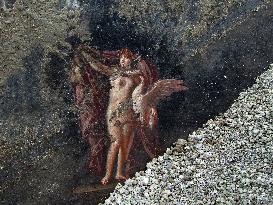
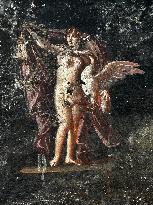
Fresco representing Jupiter’s lover Leda and the swan on a wall of a spectacular banqueting room with elegant black walls, decorated with mythological characters and subjects inspired by the Trojan War, recently brought to light during the excavations currently underway at Pompeii, Italy on April 2024 and now completely visible in all its splendour. The room is about fifteen metres long and six metres wide and opens onto a courtyard that seems to be an unroofed access room with a long undecorated staircase leading up to the first floor. The walls were painted black to prevent the smoke from the oil lamps being seen on the walls. The frequent presence of mythological figures in the paintings of living rooms and dining rooms of Roman houses had the explicit social function of entertaining guests and table companions, providing talking points for conversations and reflections on life. The dominant theme seems to be that of heroism, shown by the depictions of pairs of heroes and deities involved in the Trojan War

  •  
Spectacular Room Decorated With Trojan War Characters Discovered In Pompeii

Spectacular Room Decorated With Trojan War Characters Discovered In Pompeii

Fresco representing the two lovers Helen and Paris, who are the cause of the Trojan war, on a wall of a spectacular banqueting room with elegant black walls, decorated with mythological characters and subjects inspired by the Trojan War, recently brought to light during the excavations currently underway at Pompeii, Italy on April 2024 and now completely visible in all its splendour. The room is about fifteen metres long and six metres wide and opens onto a courtyard that seems to be an unroofed access room with a long undecorated staircase leading up to the first floor. The walls were painted black to prevent the smoke from the oil lamps being seen on the walls. The frequent presence of mythological figures in the paintings of living rooms and dining rooms of Roman houses had the explicit social function of entertaining guests and table companions, providing talking points for conversations and reflections on life. The dominant theme seems to be that of heroism, shown by the depictions of pairs of heroes and

  •  
Spectacular Room Decorated With Trojan War Characters Discovered In Pompeii

Spectacular Room Decorated With Trojan War Characters Discovered In Pompeii

Fresco representing Apollo on a wall of a spectacular banqueting room with elegant black walls, decorated with mythological characters and subjects inspired by the Trojan War, recently brought to light during the excavations currently underway at Pompeii, Italy on April 2024 and now completely visible in all its splendour. Apollo sided with the Trojans against the Greek invaders, but being a god, could not ensure victory. The room is about fifteen metres long and six metres wide and opens onto a courtyard that seems to be an unroofed access room with a long undecorated staircase leading up to the first floor. The walls were painted black to prevent the smoke from the oil lamps being seen on the walls. The frequent presence of mythological figures in the paintings of living rooms and dining rooms of Roman houses had the explicit social function of entertaining guests and table companions, providing talking points for conversations and reflections on life. The dominant theme seems to be that of heroism, shown b

  •  
Spectacular Room Decorated With Trojan War Characters Discovered In Pompeii

Spectacular Room Decorated With Trojan War Characters Discovered In Pompeii

Fresco representing Jupiter’s lover Leda and the swan on a wall of a spectacular banqueting room with elegant black walls, decorated with mythological characters and subjects inspired by the Trojan War, recently brought to light during the excavations currently underway at Pompeii, Italy on April 2024 and now completely visible in all its splendour. The room is about fifteen metres long and six metres wide and opens onto a courtyard that seems to be an unroofed access room with a long undecorated staircase leading up to the first floor. The walls were painted black to prevent the smoke from the oil lamps being seen on the walls. The frequent presence of mythological figures in the paintings of living rooms and dining rooms of Roman houses had the explicit social function of entertaining guests and table companions, providing talking points for conversations and reflections on life. The dominant theme seems to be that of heroism, shown by the depictions of pairs of heroes and deities involved in the Trojan War

  •  
Spectacular Room Decorated With Trojan War Characters Discovered In Pompeii

Spectacular Room Decorated With Trojan War Characters Discovered In Pompeii

Fresco representing the two lovers Helen and Paris, who are the cause of the Trojan war, on a wall of a spectacular banqueting room with elegant black walls, decorated with mythological characters and subjects inspired by the Trojan War, recently brought to light during the excavations currently underway at Pompeii, Italy on April 2024 and now completely visible in all its splendour. The room is about fifteen metres long and six metres wide and opens onto a courtyard that seems to be an unroofed access room with a long undecorated staircase leading up to the first floor. The walls were painted black to prevent the smoke from the oil lamps being seen on the walls. The frequent presence of mythological figures in the paintings of living rooms and dining rooms of Roman houses had the explicit social function of entertaining guests and table companions, providing talking points for conversations and reflections on life. The dominant theme seems to be that of heroism, shown by the depictions of pairs of heroes and

  •  
Spectacular Room Decorated With Trojan War Characters Discovered In Pompeii

Spectacular Room Decorated With Trojan War Characters Discovered In Pompeii

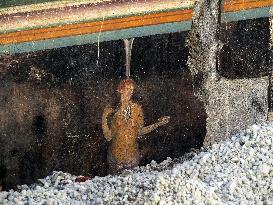
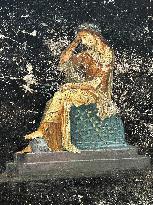
Fresco representing Cassandra on a wall of a spectacular banqueting room with elegant black walls, decorated with mythological characters and subjects inspired by the Trojan War, recently brought to light during the excavations currently underway at Pompeii, Italy on April 2024 and now completely visible in all its splendour. Cassandra was the daughter of Priam the king of Troy, she could see the future but no one believed her. The room is about fifteen metres long and six metres wide and opens onto a courtyard that seems to be an unroofed access room with a long undecorated staircase leading up to the first floor. The walls were painted black to prevent the smoke from the oil lamps being seen on the walls. The frequent presence of mythological figures in the paintings of living rooms and dining rooms of Roman houses had the explicit social function of entertaining guests and table companions, providing talking points for conversations and reflections on life. The dominant theme seems to be that of heroism, s

  •  
XINHUA PHOTOS OF THE DAY

XINHUA PHOTOS OF THE DAY

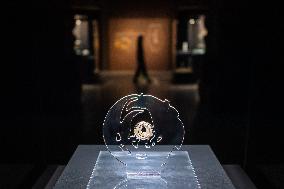
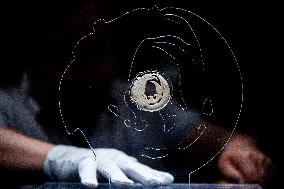
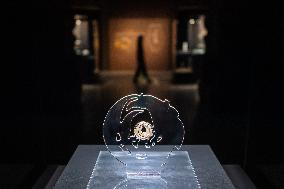
(240401) -- BEIJING, April 1, 2024 (Xinhua) -- This photo taken on March 30, 2024 shows the jade phoenix at the Panlongcheng Site Museum in Wuhan, central China's Hubei Province. The jade phoenix, which has been kept by the National Museum of China, was introduced to the exhibition "Mythological Jade of Shijiahe Culture" at the Panlongcheng Site Museum in Wuhan on Saturday. This is the first time that the jade phoenix has returned to Hubei since it was unearthed at the Shijiahe site in Tianmen of Hubei in 1955. (Xinhua/Wu Zhizun)

  •  
CHINA-HUBEI-WUHAN-JADE PHOENIX-EXHIBITION (CN)

CHINA-HUBEI-WUHAN-JADE PHOENIX-EXHIBITION (CN)

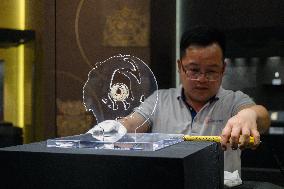
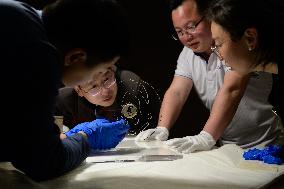
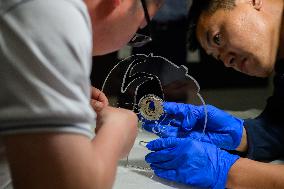
(240331) -- WUHAN, March 31, 2024 (Xinhua) -- A staff member makes preparations for display of the jade phoenix at the Panlongcheng Site Museum in Wuhan, central China's Hubei Province, March 30, 2024. The jade phoenix, which has been kept by the National Museum of China, was introduced to the exhibition "Mythological Jade of Shijiahe Culture" at the Panlongcheng Site Museum in Wuhan on Saturday. This is the first time that the jade phoenix has returned to Hubei since it was unearthed at the Shijiahe site in Tianmen of Hubei in 1955. (Xinhua/Hu Jingwen)

  •  
CHINA-HUBEI-WUHAN-JADE PHOENIX-EXHIBITION (CN)

CHINA-HUBEI-WUHAN-JADE PHOENIX-EXHIBITION (CN)

(240331) -- WUHAN, March 31, 2024 (Xinhua) -- This photo taken on March 30, 2024 shows the jade phoenix at the Panlongcheng Site Museum in Wuhan, central China's Hubei Province. The jade phoenix, which has been kept by the National Museum of China, was introduced to the exhibition "Mythological Jade of Shijiahe Culture" at the Panlongcheng Site Museum in Wuhan on Saturday. This is the first time that the jade phoenix has returned to Hubei since it was unearthed at the Shijiahe site in Tianmen of Hubei in 1955. (Xinhua/Wu Zhizun)

  •  
CHINA-HUBEI-WUHAN-JADE PHOENIX-EXHIBITION (CN)

CHINA-HUBEI-WUHAN-JADE PHOENIX-EXHIBITION (CN)

(240331) -- WUHAN, March 31, 2024 (Xinhua) -- A staff member makes preparations for display of the jade phoenix at the Panlongcheng Site Museum in Wuhan, central China's Hubei Province, March 30, 2024. The jade phoenix, which has been kept by the National Museum of China, was introduced to the exhibition "Mythological Jade of Shijiahe Culture" at the Panlongcheng Site Museum in Wuhan on Saturday. This is the first time that the jade phoenix has returned to Hubei since it was unearthed at the Shijiahe site in Tianmen of Hubei in 1955. (Xinhua/Wu Zhizun)

  •  
CHINA-HUBEI-WUHAN-JADE PHOENIX-EXHIBITION (CN)

CHINA-HUBEI-WUHAN-JADE PHOENIX-EXHIBITION (CN)

(240331) -- WUHAN, March 31, 2024 (Xinhua) -- A staff member makes preparations for display of the jade phoenix at the Panlongcheng Site Museum in Wuhan, central China's Hubei Province, March 30, 2024. The jade phoenix, which has been kept by the National Museum of China, was introduced to the exhibition "Mythological Jade of Shijiahe Culture" at the Panlongcheng Site Museum in Wuhan on Saturday. This is the first time that the jade phoenix has returned to Hubei since it was unearthed at the Shijiahe site in Tianmen of Hubei in 1955. (Xinhua/Wu Zhizun)

  •  
CHINA-HUBEI-WUHAN-JADE PHOENIX-EXHIBITION (CN)

CHINA-HUBEI-WUHAN-JADE PHOENIX-EXHIBITION (CN)

(240331) -- WUHAN, March 31, 2024 (Xinhua) -- Staff members walk past the exhibition hall of "Mythological Jade of Shijiahe Culture" at the Panlongcheng Site Museum in Wuhan, central China's Hubei Province, March 30, 2024. The jade phoenix, which has been kept by the National Museum of China, was introduced to the exhibition "Mythological Jade of Shijiahe Culture" at the Panlongcheng Site Museum in Wuhan on Saturday. This is the first time that the jade phoenix has returned to Hubei since it was unearthed at the Shijiahe site in Tianmen of Hubei in 1955. (Xinhua/Wu Zhizun)

  •  
CHINA-HUBEI-WUHAN-JADE PHOENIX-EXHIBITION (CN)

CHINA-HUBEI-WUHAN-JADE PHOENIX-EXHIBITION (CN)

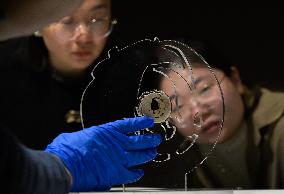
(240331) -- WUHAN, March 31, 2024 (Xinhua) -- Staff members make preparations for display of the jade phoenix under a jade phoenix-shaped light installation at the Panlongcheng Site Museum in Wuhan, central China's Hubei Province, March 30, 2024. The jade phoenix, which has been kept by the National Museum of China, was introduced to the exhibition "Mythological Jade of Shijiahe Culture" at the Panlongcheng Site Museum in Wuhan on Saturday. This is the first time that the jade phoenix has returned to Hubei since it was unearthed at the Shijiahe site in Tianmen of Hubei in 1955. (Xinhua/Wu Zhizun)

  •  
CHINA-HUBEI-WUHAN-JADE PHOENIX-EXHIBITION (CN)

CHINA-HUBEI-WUHAN-JADE PHOENIX-EXHIBITION (CN)

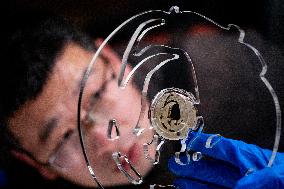
(240331) -- WUHAN, March 31, 2024 (Xinhua) -- Staff members make preparations for display of the jade phoenix at the Panlongcheng Site Museum in Wuhan, central China's Hubei Province, March 30, 2024. The jade phoenix, which has been kept by the National Museum of China, was introduced to the exhibition "Mythological Jade of Shijiahe Culture" at the Panlongcheng Site Museum in Wuhan on Saturday. This is the first time that the jade phoenix has returned to Hubei since it was unearthed at the Shijiahe site in Tianmen of Hubei in 1955. (Xinhua/Wu Zhizun)

  •  
CHINA-HUBEI-WUHAN-JADE PHOENIX-EXHIBITION (CN)

CHINA-HUBEI-WUHAN-JADE PHOENIX-EXHIBITION (CN)

(240331) -- WUHAN, March 31, 2024 (Xinhua) -- Staff members make preparations for display of the jade phoenix at the Panlongcheng Site Museum in Wuhan, central China's Hubei Province, March 30, 2024. The jade phoenix, which has been kept by the National Museum of China, was introduced to the exhibition "Mythological Jade of Shijiahe Culture" at the Panlongcheng Site Museum in Wuhan on Saturday. This is the first time that the jade phoenix has returned to Hubei since it was unearthed at the Shijiahe site in Tianmen of Hubei in 1955. (Xinhua/Hu Jingwen)

  •  
CHINA-HUBEI-WUHAN-JADE PHOENIX-EXHIBITION (CN)

CHINA-HUBEI-WUHAN-JADE PHOENIX-EXHIBITION (CN)

(240331) -- WUHAN, March 31, 2024 (Xinhua) -- A staff member makes preparations for display of the jade phoenix at the Panlongcheng Site Museum in Wuhan, central China's Hubei Province, March 30, 2024. The jade phoenix, which has been kept by the National Museum of China, was introduced to the exhibition "Mythological Jade of Shijiahe Culture" at the Panlongcheng Site Museum in Wuhan on Saturday. This is the first time that the jade phoenix has returned to Hubei since it was unearthed at the Shijiahe site in Tianmen of Hubei in 1955. (Xinhua/Wu Zhizun)

  •  
CHINA-HUBEI-WUHAN-JADE PHOENIX-EXHIBITION (CN)

CHINA-HUBEI-WUHAN-JADE PHOENIX-EXHIBITION (CN)

(240331) -- WUHAN, March 31, 2024 (Xinhua) -- Staff members make preparations for display of the jade phoenix at the Panlongcheng Site Museum in Wuhan, central China's Hubei Province, March 30, 2024. The jade phoenix, which has been kept by the National Museum of China, was introduced to the exhibition "Mythological Jade of Shijiahe Culture" at the Panlongcheng Site Museum in Wuhan on Saturday. This is the first time that the jade phoenix has returned to Hubei since it was unearthed at the Shijiahe site in Tianmen of Hubei in 1955. (Xinhua/Hu Jingwen)

  •  
CHINA-HUBEI-WUHAN-JADE PHOENIX-EXHIBITION (CN)

CHINA-HUBEI-WUHAN-JADE PHOENIX-EXHIBITION (CN)

(240331) -- WUHAN, March 31, 2024 (Xinhua) -- A staff member takes photos of the jade phoenix at the Panlongcheng Site Museum in Wuhan, central China's Hubei Province, March 30, 2024. The jade phoenix, which has been kept by the National Museum of China, was introduced to the exhibition "Mythological Jade of Shijiahe Culture" at the Panlongcheng Site Museum in Wuhan on Saturday. This is the first time that the jade phoenix has returned to Hubei since it was unearthed at the Shijiahe site in Tianmen of Hubei in 1955. (Xinhua/Wu Zhizun)

  •  
CHINA-HUBEI-WUHAN-JADE PHOENIX-EXHIBITION (CN)

CHINA-HUBEI-WUHAN-JADE PHOENIX-EXHIBITION (CN)

(240331) -- WUHAN, March 31, 2024 (Xinhua) -- Staff members make preparations for display of the jade phoenix at the Panlongcheng Site Museum in Wuhan, central China's Hubei Province, March 30, 2024. The jade phoenix, which has been kept by the National Museum of China, was introduced to the exhibition "Mythological Jade of Shijiahe Culture" at the Panlongcheng Site Museum in Wuhan on Saturday. This is the first time that the jade phoenix has returned to Hubei since it was unearthed at the Shijiahe site in Tianmen of Hubei in 1955. (Xinhua/Hu Jingwen)

  •  
Archaeologists Find Pompeii Fresco Depicting Greek Mythological Siblings - Italy

Archaeologists Find Pompeii Fresco Depicting Greek Mythological Siblings - Italy

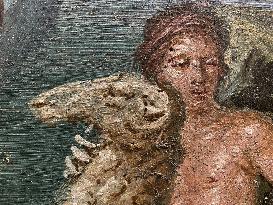
Part of the fresco in an excellent state of conservation depicting the Greek mythological siblings Phrixus and Helle discovered at the ancient Roman city of Pompeii, Italy on March 1, 2024. The myth of Phrixus and Helle is widespread at Pompeii but it is topical too. They are two refugees at sea, a brother and sister, forced to flee because their stepmother wants rid of them and she does so with deception and corruption. She, Helle, fell into the water and drowned. The fresco showcases vibrant colours and exquisite artistry, with Phrixus rescued by a ram with golden wool and Helle depicted on the verge of drowning, her face obscured by waves as she reaches out to her brother. The ancient city of Pompeii was destroyed in AD79 by an eruption. Photo (EV) Pompei Park/ABACAPRESS.COM

  •  
Archaeologists Find Pompeii Fresco Depicting Greek Mythological Siblings - Italy

Archaeologists Find Pompeii Fresco Depicting Greek Mythological Siblings - Italy

In a remarkable discovery at the ancient Roman city of Pompeii, Italy on March 1, 2024, archaeologists have unearthed a fresco in an excellent state of conservation depicting the Greek mythological siblings Phrixus and Helle. The myth of Phrixus and Helle is widespread at Pompeii but it is topical too. They are two refugees at sea, a brother and sister, forced to flee because their stepmother wants rid of them and she does so with deception and corruption. She, Helle, fell into the water and drowned. The fresco showcases vibrant colours and exquisite artistry, with Phrixus rescued by a ram with golden wool and Helle depicted on the verge of drowning, her face obscured by waves as she reaches out to her brother. The ancient city of Pompeii was destroyed in AD79 by an eruption. Photo (EV) Pompei Park/ABACAPRESS.COM

  •  

Italian Kung Fu enthusiast's passion for dragon dance

STORY: Italian Kung Fu enthusiast's passion for dragon dance SHOOTING TIME: Feb. 6-8, 2024 DATELINE: Feb. 13, 2024 LENGTH: 0:02:46 LOCATION: FLORENCE, Italy CATEGORY: CULTURE SHOTLIST: 1. various of Italian Kung Fu teacher Nicola Pastorino is performing 2. SOUNDBITE 1 (Italian): NICOLA PASTORINO, Teacher of Traditional Kung Fu School of Florence 3. SOUNDBITE 2 (Italian): NICOLA PASTORINO, Teacher of Traditional Kung Fu School of Florence 4. SOUNDBITE 3 (Italian): NICOLA PASTORINO, Teacher of Traditional Kung Fu School of Florence 5. SOUNDBITE 1 (Italian): NICOLA PASTORINO, Teacher of Traditional Kung Fu School of Florence STORYLINE: Mythological creatures, such as Loong, have a more complete, richer, and positive psychological value in traditional Chinese culture, said an Italian Kung Fu teacher who is the head of a Kung Fu School in Italy's Florence. Nicola Pastorino's passion with martial arts began in the early 1980s, when he first traveled to the southern Chinese city of Foshan, which is famous for ma

  •  
XINHUA PHOTOS OF THE DAY

XINHUA PHOTOS OF THE DAY

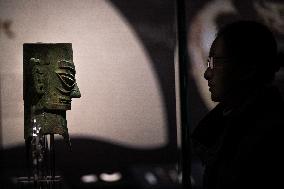
(240203) -- BEIJING, Feb. 3, 2024 (Xinhua) -- A visitor looks at an exhibit at the exhibition "Mythological Jade of Shijiahe Culture" in Wuhan, central China's Hubei Province, Feb. 1, 2024. The exhibition showcases a total of 172 cultural relics from the Shijiahe site, which is the ruins of a prehistoric city in Hubei Province, as well as from 20 other cultural institutions and museums across the country. Together, they depict the diverse and integrated development pattern of Chinese civilization. (Xinhua/Xiao Yijiu)

  • Main
  • Top
  • Editorial
  • Creative
  • About Us
  • About ILG
  • Terms of use
  • Company
  • BEHIND
  • Price List
  • Single Plan
  • Monthly Plan
  • Services
  • Shooting
  • Rights Clearance
  • Support
  • FAQ
  • How To Buy
  • Contact Us
  • Become a Partner

© KYODO NEWS IMAGES INC

All Rights Reserved.

  • Editorial
  • Olympics
  • News
  • Sports
  • Japan
  • Tech
  • Royal
  • Disaster
  • NorthKorea
  • Old Japan
  • SNS
  • Creative
  • Food
  • Japan
  • Landscape
  • Animal
  • Popular
  • #Ukraine
  • #Thailand
  • #coronavirus
  • #N. Korea
  • #China
  • #Russia
  • #Ukraine
  • #Thailand
  • #coronavirus
  • #N. Korea
  • #China
  • #Russia
  • Food
  • Japan
  • Landscape
  • Animal
  • Olympics
  • News
  • Sports
  • Japan
  • Tech
  • Royal
  • Disaster
  • NorthKorea
  • Old Japan
  • SNS