•  

Japan: Historic Kishiwada Danjiri Festival Kicks Off in Osaka With Massive Floats

The annual Kishiwada Danjiri Festival began on September 13 in Kishiwada City, Osaka Prefecture, running through September 14. Thirty-four massive wooden floats, each over 4 meters tall and weighing more than 4 tons, raced through the city streets of the Kishiwada and Haruki districts to the spirited chant of “Sorya, Sorya.” Festival participants in matching happi coats pulled the floats with ropes, while “daiku-gata” performers danced atop the roofs with fans. At intersections, the floats performed the festival’s signature “yarimawashi,” a dramatic 90-degree turn executed at high speed, thrilling spectators with cheers. Drums, flutes, and bells added to the festive atmosphere. The festival, held for over 300 years since the Edo period, continues late into the evening on September 13, with a ceremonial shrine visit (“Miyairi”) scheduled on September 14.

  •  
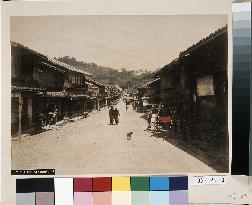
Shindaiku-machi  Street

Shindaiku-machi Street

The Shindaiku-machi neighbourhood is seen in the mid-Meiji Period. The streets are wide, and there are many rickshaws. Many carpenters ( daiku ) came to this area and established this neighbourhood around 1606. Later, the Daiku-machi became too small and was expanded to form a new quarter called Shindaiku-machi. It was part of the inner section of Nagasaki in 1672. Dekidaiku-machi was also established in 1672. The two Daiku-machi neighbourhoods were separated from Ise-machi 1981.==Date:unknown, Place:Nagasaki, Photo:unknown, (Credit:Nagasaki University Library/Kyodo News Images) [Cabinet Number109‐24‐0]

  •  
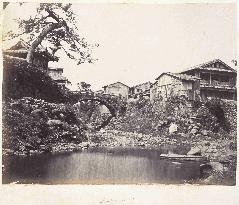
Futamata and Momotani-bashi Bridge

Futamata and Momotani-bashi Bridge

This is where the Zeniya river (present-day main stream of Nakashima River) from Himi Pass and the Narutaki area and the Domon river from the Nishiyama area merge. Momotani Bridge is an arched stone bridge 12.4m in length and 3.4m width built in 1679 by Nagashima Nizaemon, also known as Monk Bokui, over the Domon river in Dekidaiku-machi. Since there were many peach trees along the river, the town was called Momonoki-Daiku-machi and the area Momotani (peach valley). The area around the big pine tree on the left is Fudomyoh-do. The bridge is located a little upstream of where the two rivers merged and therefore survived the Nagasaki Flood.==Date:about 1874, Place:Nagasaki, Photo:Ueno Hikoma?, (Credit:Nagasaki University Library/Kyodo News Images)

  • Main
  • Top
  • Editorial
  • Creative
  • About Us
  • About ILG
  • Terms of use
  • Company
  • BEHIND
  • Price List
  • Single Plan
  • Monthly Plan
  • Services
  • Shooting
  • Rights Clearance
  • Support
  • FAQ
  • How To Buy
  • Contact Us
  • Become a Partner

© KYODO NEWS IMAGES INC

All Rights Reserved.

  • Editorial
  • Olympics
  • News
  • Sports
  • Japan
  • Tech
  • Royal
  • Disaster
  • NorthKorea
  • Old Japan
  • SNS
  • Creative
  • Food
  • Japan
  • Landscape
  • Animal
  • Popular
  • #Ukraine
  • #Russia
  • #coronavirus
  • #N. Korea
  • #China
  • #Thailand
  • #Ukraine
  • #Russia
  • #coronavirus
  • #N. Korea
  • #China
  • #Thailand
  • Food
  • Japan
  • Landscape
  • Animal
  • Olympics
  • News
  • Sports
  • Japan
  • Tech
  • Royal
  • Disaster
  • NorthKorea
  • Old Japan
  • SNS