•  

Sweden, France to deepen cooperation on nuclear power, forestry

STORY: Sweden, France to deepen cooperation on nuclear power, forestry SHOOTING TIME: Jan. 30, 2024 DATELINE: Jan. 31, 2024 LENGTH: 00:01:11 LOCATION: Stockholm CATEGORY: POLITICS SHOTLIST: 1. various of the press conference (credit: Government Offices of Sweden) STORYLINE: Sweden and France are set to cooperate on nuclear power, forestry, and security, said French President Emmanuel Macron during a state visit to Sweden on Tuesday. "We have decided on certain guidelines when it comes to deepening our cooperation within the field of nuclear power, to phase out carbon dioxide to move towards a more carbon-neutral economy," Macron told a joint press conference with Swedish Prime Minister Ulf Kristersson. Cooperation on nuclear power is important to the Swedish government, which in November said that the country would build new nuclear power output corresponding to ten large-scale reactors by 2045. Two of these are expected to be operational by 2035. Forests are also vital to fighting climate chan

  •  
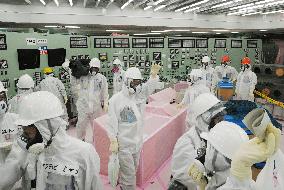
Media see reactor control room at Fukushima nuclear plant

Media see reactor control room at Fukushima nuclear plant

TOKYO, Japan - Media are given access to the central control room of the No. 1 and No. 2 reactors at the Fukushima Daiichi nuclear power plant on Feb. 26, 2014, ahead of the third anniversary of the start of the nuclear crisis on March 11. (Pool photo by Nihon Keizai Shimbun)

  •  
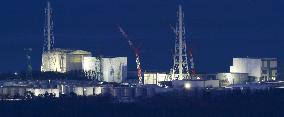
Fukushima Daiichi nuclear plant

Fukushima Daiichi nuclear plant

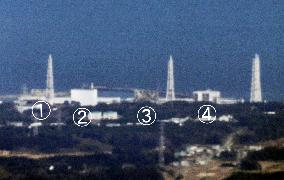
FUKUSHIMA, Japan - Photo taken in January 2014 from mountains in Tomioka, Fukushima Prefecture, shows (from left) the Nos. 1 to 4 reactors of the Fukushima Daiichi nuclear power plant, almost three years after the March 11, 2011, earthquake and tsunami disaster that triggered meltdowns at the plant.

  •  
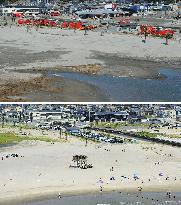
2 and a half years after quake

2 and a half years after quake

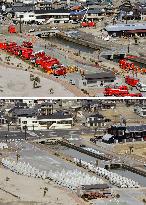
SENDAI, Japan - Combination photos taken from a Kyodo News helicopter show the Yotsukura beach in Iwaki, Fukushima Prefecture, on March 18, 2011 (top), shortly after the March 11, 2011, Great East Japan Earthquake, with fire engines gathered to douse overheated reactors and spent fuel at the Fukushima Daiichi Nuclear Power Station, and the same location on the beach about two and a half years later on Aug. 18, 2013 (bottom), after opening to the public for the summer season for the first time in three years.

  •  
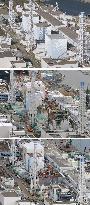
2 years after quake

2 years after quake

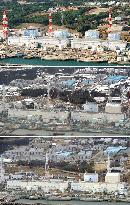
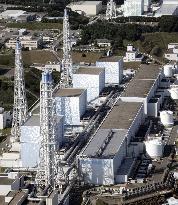
FUKUSHIMA, Japan - Aerial photos taken by Kyodo News show Fukushima Daiichi Nuclear Power Station in Fukushima Prefecture in October 2008 (top), on Feb. 26, 2012 (center), about a year after a nuclear crisis triggered by the earthquake and tsunami on March 11, 2011, and on March 3, 2013. From back to front are the buildings housing the No. 1 to No. 4 reactors. The bottom photo shows a cover on the No. 1 reactor building used to prevent radioactive particles from being dispersed. Cranes are at work at No. 3 and No. 4 reactor buildings.

  •  
2 years after quake

2 years after quake

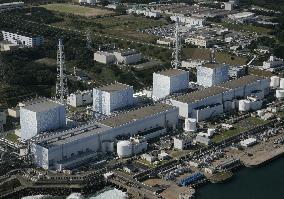
FUKUSHIMA, Japan - Aerial photos taken by Kyodo News show Fukushima Daiichi Nuclear Power Station in Fukushima Prefecture in December 2000 (top), on Feb. 26, 2012 (center), about a year after a nuclear crisis triggered by the earthquake and tsunami on March 11, 2011, and on March 3, 2013. From right to left are the buildings housing the No. 1 to No. 4 reactors.

  •  
2 years after quake

2 years after quake

IWAKI, Japan - Aerial photos taken by Kyodo News show an area around Yotsukura port in the city of Iwaki, Fukushima Prefecture, on March 18, 2011 (top), shortly after the area was devastated by the March 11 earthquake and tsunami, with fire engines gathering to douse overheated reactors and spent fuel at the Fukushima Daiichi Nuclear Power Station, and the same location on March 3, 2013, with wave-dissipating blocks.

  •  
Fukushima Daiichi plant

Fukushima Daiichi plant

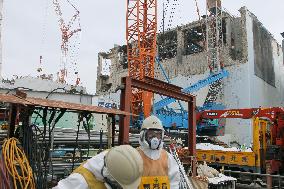
OKUMA, Japan - A March 1, 2013 photo shows workers at the No. 4 (R) and No. 3 (L back) reactors of the Fukushima Daiichi Nuclear Power Station in Fukushima Prefecture, northeastern Japan. Tokyo Electric Power Co. showed work to decommission the plant ahead of the second anniversary of the March 11, 2011, Great East Japan Earthquake and tsunami that triggered the nuclear crisis. (Pool photo)

  •  
Abandoned animals in Fukushima

Abandoned animals in Fukushima

TOKYO, Japan - In this photo taken in the town of Tomioka, Fukushima Prefecture, on May 19, 2012, a cattle beast lies starved to death after its owner abandoned it in a barn. The town remains nearly deserted as the government in April 2011 designated it and other municipalities within a 20-kilometer ring around the crippled Fukushima Daiichi nuclear power plant as a no-go zone. The plant's reactors suffered meltdowns after being struck by the March 11, 2011, earthquake and tsunami, spewing massive amounts of radioactive materials into the air and sea.

  •  
Abandoned animals in Fukushima

Abandoned animals in Fukushima

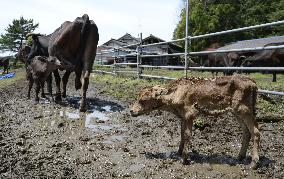
TOKYO, Japan - In this photo taken in the town of Tomioka, Fukushima Prefecture, on June 23, 2012, a calf (front) looks almost skeletal because its mother is too weak to breastfeed it. The town remains nearly deserted as the government in April 2011 designated it and other municipalities within a 20-kilometer ring around the crippled Fukushima Daiichi nuclear power plant as a no-go zone. The plant's reactors suffered meltdowns after being struck by the March 11, 2011, earthquake and tsunami, spewing massive amounts of radioactive materials into the air and sea.

  •  
Man caring for abandoned cattle in Fukushima

Man caring for abandoned cattle in Fukushima

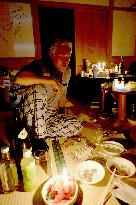
TOKYO, Japan - In this photo taken in the town of Tomioka, Fukushima Prefecture, on June 23, 2012, Naoto Matsumura, who cares for cattle abandoned by their owners, relaxes at his home after finishing his day's work of tending to pets and livestock. Without electricity, he relies on candles to light his room. The town remains nearly deserted as the government in April 2011 designated it and other municipalities within a 20-kilometer ring around the crippled Fukushima Daiichi nuclear power plant as a no-go zone. The plant's reactors suffered meltdowns after being struck by the March 11, 2011, earthquake and tsunami, spewing massive amounts of radioactive materials into the air and sea.

  •  
Abandoned animals in Fukushima

Abandoned animals in Fukushima

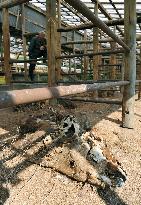
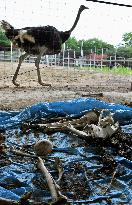
TOKYO, Japan - In this photo taken in the town of Okuma, Fukushima Prefecture, on May 20, 2012, an ostrich walks by the remains of another that starved to death after they were left abandoned at a breeding facility. In April 2011, the government designated Okuma and other municipalities within a 20-kilometer ring around the crippled Fukushima Daiichi nuclear power plant as a no-go zone. The plant's reactors suffered meltdowns after being struck by the March 11, 2011, earthquake and tsunami, spewing massive amounts of radioactive materials into the air and sea.

  •  
Abandoned animals in Fukushima

Abandoned animals in Fukushima

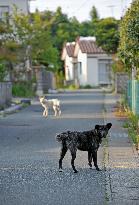
TOKYO, Japan - Photo taken in the town of Tomioka, Fukushima Prefecture, on May 21, 2012, shows dogs that have been abandoned by their owners. The town remains nearly deserted as the government in April 2011 designated it and other municipalities within a 20-kilometer ring around the crippled Fukushima Daiichi nuclear power plant as a no-go zone. The plant's reactors suffered meltdowns after being struck by the March 11, 2011, earthquake and tsunami, spewing massive amounts of radioactive materials into the air and sea.

  •  
Man caring for abandoned cattle in Fukushima

Man caring for abandoned cattle in Fukushima

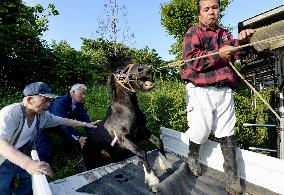
TOKYO, Japan - In this photo taken in the town of Tomioka, Fukushima Prefecture, on June 22, 2012, Naoto Matsumura (C) and his friend Kazuo Endo (R) help a pony onto a truck so he can take it home and care for it, doing so at the request of a resident (L) who has returned home temporarily. The town remains nearly deserted as the government in April 2011 designated it and other municipalities within a 20-kilometer ring around the crippled Fukushima Daiichi nuclear power plant as a no-go zone. The plant's reactors suffered meltdowns after being struck by the March 11, 2011, earthquake and tsunami, spewing massive amounts of radioactive materials into the air and sea.

  •  
Man caring for abandoned cattle in Fukushima

Man caring for abandoned cattle in Fukushima

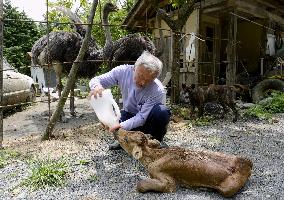
TOKYO, Japan - In this photo taken in the town of Tomioka, Fukushima Prefecture, on June 23, 2012, Naoto Matsumura, who cares for cattle abandoned by their owners, gives milk to a weakened calf via a feeding bottle. Behind him are the ostriches and the dog he keeps after their owners abandoned them. The town remains nearly deserted as the government in April 2011 designated it and other municipalities within a 20-kilometer ring around the crippled Fukushima Daiichi nuclear power plant as a no-go zone. The plant's reactors suffered meltdowns after being struck by the March 11, 2011, earthquake and tsunami, spewing massive amounts of radioactive materials into the air and sea.

  •  
Fukui governor likely to OK restart of reactors

Fukui governor likely to OK restart of reactors

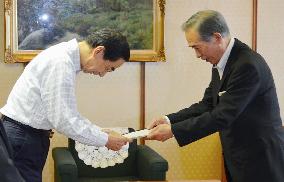
FUKUI, Japan - Fukui Gov. Issei Nishikawa (L) receives a report from Hideyuki Nakagawa, head of a local nuclear safety commission, at the prefectural government hall in Fukui on June 11, 2012. The governor is expected to endorse the restart of two idled reactors at the Oi nuclear power plant in the prefecture as he was officially informed of the commission's conclusion that necessary safety measures have been taken.

  •  
Fukushima Daiichi reactors

Fukushima Daiichi reactors

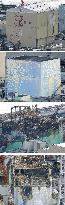
TOKYO, Japan - Photos from a Kyodo News helicopter show (from top) the No. 1, No. 2, No. 3, and No. 4 reactors of the Fukushima Daiichi Nuclear Power Station in Fukushima Prefecture on March 11, 2012, the first anniversary of the massive earthquake and tsunami that triggered the nuclear crisis.

  •  
Kyushu Electric scandal

Kyushu Electric scandal

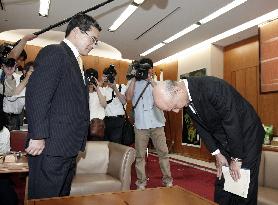
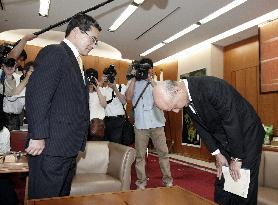
TOKYO, Japan - Haruyoshi Yamamoto (R), vice president of Kyushu Electric Power Co., bows in apology to Kagoshima Gov. Yuichi Ito, at the prefectural head office in the city of Kagoshima on July 11, 2011. The utility is under fire for having employees post online comments in support of the restart of its nuclear reactors in Saga Prefecture on a government-sponsored TV program aimed at seeking support for their resumption.

  •  
Suit filed to seek decommissioning of Hamaoka reactors

Suit filed to seek decommissioning of Hamaoka reactors

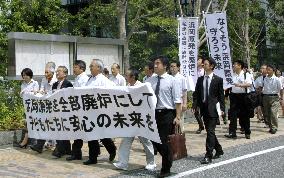
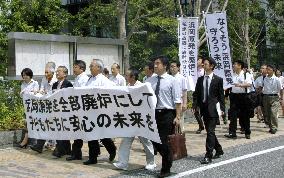
SHIZUOKA, Japan - Plaintiffs carrying banners calling for an end to nuclear power walk to the Shizuoka District Court in the city of Shizuoka on July 1, 2011, to file a lawsuit seeking the decommissioning of the reactors at the Hamaoka nuclear power plant in the prefecture. Located in a major active fault zone, Chubu Electric Power Co. suspended the plant's Nos. 3 to 5 reactors in May at the request of the central government in the wake of the nuclear crisis at the Fukushima Daiichi power plant crippled by the March 11 earthquake and tsunami. The Nos. 1 and 2 reactors at the Hamaoka plant were deactivated in 2008 for decommissioning.

  •  
Toshiba president Sasaki in interview

Toshiba president Sasaki in interview

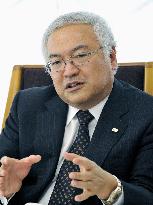
TOKYO, Japan - Toshiba Corp. President Norio Sasaki speaks during an interview in Tokyo on April 14, 2011. He said the company may be forced to revise its plan to win orders to build 39 nuclear reactors around the world by fiscal 2015 following the nuclear power plant accident in Fukushima Prefecture triggered by the March 11 earthquake and tsunami disaster.

  •  
Fukushima Daiichi plant

Fukushima Daiichi plant

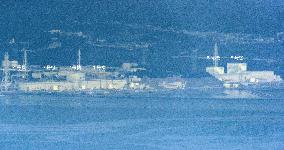
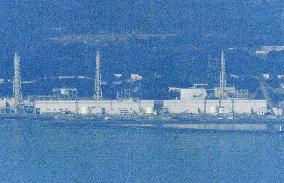
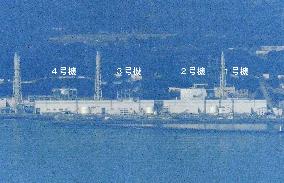
TOKYO, Japan - Photo from a Kyodo News helicopter at a height of around 1,500 meters and a distance of more than 30 kilometers shows the Fukushima Daiichi Nuclear Power Station in Fukushima Prefecture on the morning of March 29, 2011. From left are the No. 4, No. 3, No. 2, No. 1, and No. 5 and No. 6 reactors. Efforts are under way to bring the crippled plant under control following the March 11 quake and tsunami.

  •  
Fukushima Daiichi plant

Fukushima Daiichi plant

TOKYO, Japan - Photo from a Kyodo News helicopter at a height of some 1,500 meters and distance of more than 30 kilometers shows the Fukushima Daiichi Nuclear Power Station in Fukushima Prefecture at 9:10 a.m. on March 29, 2011. From right are the No. 1, No. 2, No. 3 and No. 4 reactors. Efforts are under way to bring the crippled plant under control following the March 11 quake and disaster.

  •  
Fukushima Daiichi plant

Fukushima Daiichi plant

TOKYO, Japan - Photo from a Kyodo News helicopter at a height of some 1,500 meters and distance of more than 30 kilometers shows the Fukushima Daiichi Nuclear Power Station in Fukushima Prefecture at 9:10 a.m. on March 29, 2011. From right are the No. 1, No. 2, No. 3 and No. 4 reactors. Efforts are under way to bring the crippled plant under control following the March 11 quake and disaster.

  •  
Fukushima Daiichi

Fukushima Daiichi

TOKYO, Japan - Photo from a Kyodo News helicopter at a height of roughly 1,500 meters and distance of more than 30 kilometers shows the Fukushima Daiichi Nuclear Power Station in Fukushima Prefecture at 12:19 p.m. on March 27, 2011. From L are the No. 1, No. 2, No. 3 and No. 4 reactors. Efforts have been under way to restore the crippled plant since the March 11 quake and tsunami disaster.

  •  
Protective, firefighting suits

Protective, firefighting suits

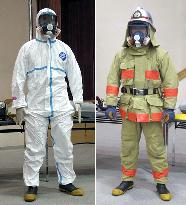
TOKYO, Japan - Combination photo shows the protective suits (L) being worn by Tokyo firefighters spraying water on reactors at the Fukushima Daiichi Nuclear Power Station, which has been crippled since a massive quake and tsunami on March 11, 2011. The firefighting suit (R) is worn on top of the hazmat suit.

  •  
Quake-hit Fukushima Daiichi nuke plant

Quake-hit Fukushima Daiichi nuke plant

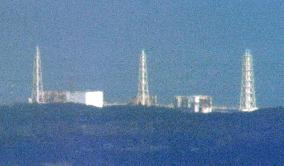
RIFU, Japan - Photo taken from a Kyodo News helicopter at about 40 kilometers in distance shows four of the six reactors at the quake-hit Fukushima Daiichi Nuclear Power Station in Fukushima Prefecture, northeastern Japan, at 1:45 p.m. on March 18, 2011. Japan faces a crisis after the power plant accident which was damaged by the devastating earthquake and tsunami on March 11.

  •  
Nuclear woes after quake

Nuclear woes after quake

TOKYO, Japan - File photo taken in October 2008 shows the Fukushima No. 1 nuclear power plant's reactors -- (from L front to L back) No. 4, No. 3, No. 2 and No. 1 -- in Fukushima Prefecture, northeastern Japan. Troubles at the multiple reactors of the plant have been reported following the March 11, 2011, earthquake and tsunami disasters.

  •  
Fukushima nuclear plant

Fukushima nuclear plant

TOKYO, Japan - File photo taken in October 2008 shows the Fukushima No.1 nuclear power plant's four reactors in the town of Okuma in Fukushima Prefecture, northeastern Japan, operated by Tokyo Electric Power Co. Around 3,000 residents around the plant were ordered to evacuate as the Japanese government declared a state of atomic power emergency on March 11, 2011, following a massive earthquake that struck the area the same day.

  •  
Nuclear plant after Shizuoka quake

Nuclear plant after Shizuoka quake

SHIZUOKA, Japan - This photo shows the Hamaoka nuclear plant of Chubu Electric Power Co. in Omaezaki, Shizuoka Prefecture, after a strong earthquake that hit the prefecture south of Tokyo and its vicinity Aug. 11. The No. 4 and No. 5 reactors operating in the plant on the Pacific at the time of the jolt were automatically suspended. This photo was taken at 10:40 a.m. Aug. 11.

  •  
Police raid Kansai Electric office over nuke plant disaster

Police raid Kansai Electric office over nuke plant disaster

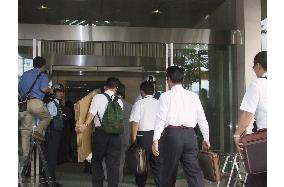
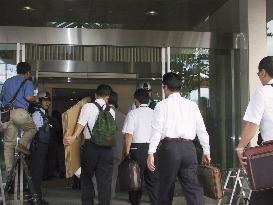
TSURUGA, Japan - Police raid Kansai Electric Power Co.'s Wakasa branch office in Fukui Prefecture on Sept. 28 as part of investigations into a deadly nuclear power plant accident in August. Prefectural police investigators entered the office in Mihama, which oversees operations at the company's 11 nuclear reactors in the prefecture. Five workers were killed in the accident.

  •  
Tokyo, London agree on return of MOX fuel

Tokyo, London agree on return of MOX fuel

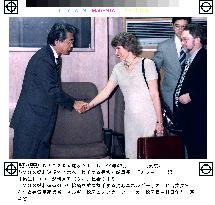
TOKYO, Japan - Natural Resources and Energy Agency chief Hirobumi Kawano (L) and Anna Walker, the Energy Bureau chief of Britain's Department of Trade and Industry, shake hands July 11 in Tokyo shortly before reaching an agreement whereby tainted mixed uranium-plutonium oxide (MOX) fuel manufactured by British Nuclear Fuels PLC (BNFL) is to be returned to Britain from Japan. It came to light last year that quality-assurance data on MOX fuel shipments intended for use at two reactors in Japan had been falsified by BNFL workers.

  •  
Shimane nuclear power plant in Japan

Shimane nuclear power plant in Japan

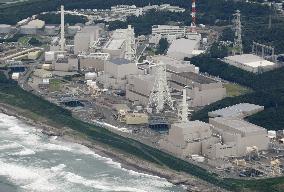
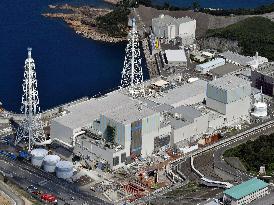
File photo taken Sept. 11, 2021, shows the No. 1 (R) and No. 2 reactors of Chugoku Electric Power Co.'s Shimane nuclear plant in Matsue, western Japan.

  •  

Nuclear reactor in Shimane prefecture passes safety screening: it sits in Japan’s sole nuclear plant in a prefectural capital

The Nuclear Regulation Authority held a regular meeting on Sept. 15 and decided to certify that safety measures taken at the No. 2 unit of Chugoku Electric Power Co.'s nuclear plant in the Shimane prefectural capital of Matsue meet Japan’s new regulatory standards, formally granting safety approval for a restart to the reactor. It is the 17th reactor in a total of 10 nuclear plants across the country cleared by the NRA. The No. 2 unit is a boiling water reactor, the same type as those installed at the disaster-hit Fukushima Daiichi nuclear power plant. It is the fifth boiling water reactor among such reactors at four nuclear plants that have passed the NRA’s safety screenings. The Shimane nuclear plant is the only one located in a Japanese prefectural capital, raising concern about the evacuation of residents in case of an accident. ==Date: Sept. 11, 2021, Place: Matsue City, Shimane Prefecture, JAPAN

  •  
Police raid Kansai Electric office over nuke plant disaster

Police raid Kansai Electric office over nuke plant disaster

TSURUGA, Japan - Police raid Kansai Electric Power Co.'s Wakasa branch office in Fukui Prefecture on Sept. 28 as part of investigations into a deadly nuclear power plant accident in August. Prefectural police investigators entered the office in Mihama, which oversees operations at the company's 11 nuclear reactors in the prefecture. Five workers were killed in the accident. (Kyodo)

  •  
Indian activist opposes Japan's nuclear reactor exports

Indian activist opposes Japan's nuclear reactor exports

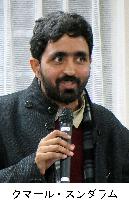
Kumar Sundaram, head of the India civil activist group Coalition for Nuclear Disarmament and Peace, is shown in this file photo taken in Tokyo on Dec. 11, 2014. He questions the advisability of India's nuclear cooperation agreement with Japan, which aims to export nuclear reactors to the country. (Kyodo) ==Kyodo

  •  
Indian activist opposes Japan's nuclear reactor exports

Indian activist opposes Japan's nuclear reactor exports

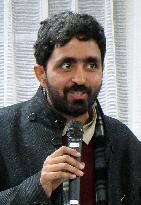
Kumar Sundaram, head of the India civil activist group Coalition for Nuclear Disarmament and Peace, is shown in this file photo taken in Tokyo on Dec. 11, 2014. He questions the advisability of India's nuclear cooperation agreement with Japan, which aims to export nuclear reactors to the country. (Kyodo) ==Kyodo

  •  
5 years on: Fukushima Daiichi nuclear plant

5 years on: Fukushima Daiichi nuclear plant

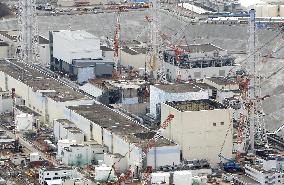
Photo taken from a Kyodo News helicopter on March 11, 2016, the fifth anniversary of a magnitude 9.0 earthquake and massive tsunami in Japan's northeastern coasts, shows Tokyo Electric Power Co.'s Fukushima Daiichi nuclear power plant where three reactors suffered meltdowns following the natural disasters. Decommissioning of the plant is expected to take decades. (Kyodo) ==Kyodo

  •  
5 years on: Fukushima Daiichi nuclear plant

5 years on: Fukushima Daiichi nuclear plant

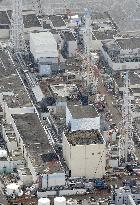
Photo taken from a Kyodo News helicopter on March 11, 2016, the fifth anniversary of a magnitude 9.0 earthquake and massive tsunami in Japan's northeastern coasts, shows Tokyo Electric Power Co.'s Fukushima Daiichi nuclear power plant where three reactors suffered meltdowns following the natural disasters. Decommissioning of the plant is expected to take decades. (Kyodo) ==Kyodo

  •  
5 years on: Fukushima Daiichi nuclear plant

5 years on: Fukushima Daiichi nuclear plant

Photo taken from a Kyodo News helicopter on March 11, 2016, the fifth anniversary of a magnitude 9.0 earthquake and massive tsunami in Japan's northeastern coasts, shows Tokyo Electric Power Co.'s Fukushima Daiichi nuclear power plant where three reactors suffered meltdowns following the natural disasters. Decommissioning of the plant is expected to take decades. (Kyodo) ==Kyodo

  •  
5 years on: Fukushima town remains evacuation zone

5 years on: Fukushima town remains evacuation zone

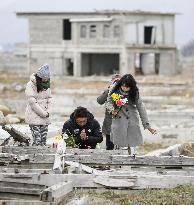
People offer flowers at the site of a building washed away by a massive tsunami in March 2011, in the town of Namie, Fukushima Prefecture on March 11, 2016, the fifth anniversary of a magnitude 9.0 earthquake that triggered the wave. Because of its proximity to the Fukushima Daiichi nuclear power plant, where three reactors suffered meltdowns following the natural disasters, the town lies within an evacuation zone. (Kyodo) ==Kyodo

  •  
Watchdog chief urges nuclear safety efforts by gov't, utilities

Watchdog chief urges nuclear safety efforts by gov't, utilities

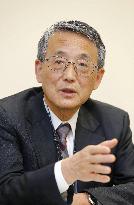
Shunichi Tanaka, the chairman of Japan's Nuclear Regulation Authority, gives an exclusive interview to Kyodo News on March 7, 2016, ahead of the fifth anniversary of the Fukushima nuclear disaster on March 11. Tanaka urged the government and utility companies to make constant efforts to ensure the safety of nuclear reactors, without dropping their guard just because the units cleared the regulator's tough safety screening. (Kyodo) ==Kyodo

  •  
Abe leaves for India

Abe leaves for India

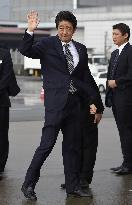
Japanese Prime Minister Shinzo Abe waves at Tokyo's Haneda airport on Dec. 11, 2015, before leaving for India. Abe and Indian Prime Minister Narendra Modi are expected to discuss the following day the possible introduction of the shinkansen bullet train system in India and a nuclear cooperation agreement that would pave the way for exporting Japanese nuclear reactors to India. (Kyodo) ==Kyodo

  •  
Ex-nuke plant deputy chief now against restart of idle reactors

Ex-nuke plant deputy chief now against restart of idle reactors

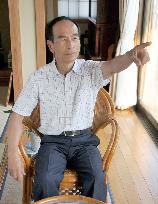
Katsuaki Tokuda, 77, former deputy director of Kyushu Electric Power Co.'s Sendai nuclear power plant in Satsumasendai, Kagoshima Prefecture, points in the direction of the plant at his home in the southwestern Japan city on Aug. 11, 2015. The plant's No. 1 reactor was reactivated the same day. Tokuda, who negotiated with antinuclear protesters during construction of the Sendai complex's Nos. 1 and 2 reactors, now opposes resumption of nuclear power plants idled after the 2011 nuclear disaster at Tokyo Electric Power Co.'s Fukushima Daiichi power station in northeastern Japan. (Kyodo) ==Kyodo

  •  
Japan reboots nuclear reactor after 2-yr lull despite safety concern

Japan reboots nuclear reactor after 2-yr lull despite safety concern

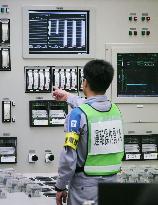
A worker in the main control room of Kyushu Electric Power Co.'s Sendai nuclear plant in Satsumasendai, southwestern Japan, points at the display board that shows the control rods being pulled out on Aug. 11, 2015, for the resumption of the No. 1 reactor. The reactor became the first to resume operations since all the country's commercial reactors went offline by September 2013, following the tsunami-triggered Fukushima nuclear disaster in March 2011. (Pool photo)(Kyodo) ==Kyodo

  •  
Japan reboots nuclear reactor after 2-yr lull despite safety concern

Japan reboots nuclear reactor after 2-yr lull despite safety concern

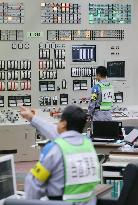
Workers in the main control room take procedures to restart the No. 1 reactor at Kyushu Electric Power Co.'s Sendai nuclear plant in Satsumasendai, southwestern Japan, on Aug. 11, 2015. The reactor became the first to resume operations since all the country's commercial reactors went offline by September 2013, following the tsunami-triggered Fukushima nuclear disaster in March 2011. (Pool photo)(Kyodo) ==Kyodo

  •  
Japan reboots nuclear reactor after 2-yr lull amid safety concern

Japan reboots nuclear reactor after 2-yr lull amid safety concern

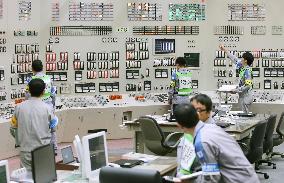
Workers in the main control room reactivate the No. 1 reactor at Kyushu Electric Power Co.'s Sendai nuclear plant in Satsumasendai, southwestern Japan, on Aug. 11, 2015. The reactor became the first one to resume operations since all the country's commercial reactors went offline by September 2013, following the tsunami-triggered Fukushima nuclear disaster in March 2011. (Pool photo)(Kyodo) ==Kyodo

  •  
Photos from Fukushima nuclear plant

Photos from Fukushima nuclear plant

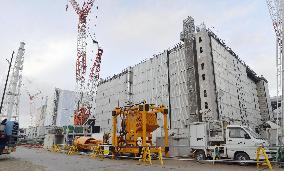
Photo shows (from R) Tokyo Electric Co.'s No. 3, 2, 1 reactor buildings at Tokyo Electric Power Co.'s Fukushima Daiichi complex in the town of Okuma in Fukushima Prefecture on Feb. 26, 2015. Work to decommission the reactors, which is expected to take up to 40 years, has progressed over the past year ahead of the fourth anniversary of the start of the Fukushima nuclear crisis on March 11. (Kyodo) ==Kyodo

  •  
Protest against nuclear power generation

Protest against nuclear power generation

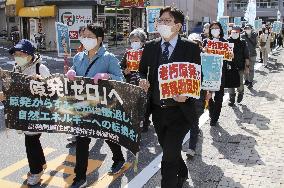
People stage a protest in Fukui, Japan, against nuclear power generation on March 11, 2021, the 10th anniversary of the Great East Japan Earthquake that caused the country's worst nuclear disaster on record, when three reactors melted down at the Fukushima Daiichi plant.

  •  
Kyushu Electric scandal

Kyushu Electric scandal

TOKYO, Japan - Haruyoshi Yamamoto (R), vice president of Kyushu Electric Power Co., bows in apology to Kagoshima Gov. Yuichi Ito, at the prefectural head office in the city of Kagoshima on July 11, 2011. The utility is under fire for having employees post online comments in support of the restart of its nuclear reactors in Saga Prefecture on a government-sponsored TV program aimed at seeking support for their resumption. (Kyodo)

  •  
Suit filed to seek decommissioning of Hamaoka reactors

Suit filed to seek decommissioning of Hamaoka reactors

SHIZUOKA, Japan - Plaintiffs carrying banners calling for an end to nuclear power walk to the Shizuoka District Court in the city of Shizuoka on July 1, 2011, to file a lawsuit seeking the decommissioning of the reactors at the Hamaoka nuclear power plant in the prefecture. Located in a major active fault zone, Chubu Electric Power Co. suspended the plant's Nos. 3 to 5 reactors in May at the request of the central government in the wake of the nuclear crisis at the Fukushima Daiichi power plant crippled by the March 11 earthquake and tsunami. The Nos. 1 and 2 reactors at the Hamaoka plant were deactivated in 2008 for decommissioning. (Kyodo)

  • Main
  • Top
  • Editorial
  • Creative
  • About Us
  • About ILG
  • Terms of use
  • Company
  • BEHIND
  • Price List
  • Single Plan
  • Monthly Plan
  • Services
  • Shooting
  • Rights Clearance
  • Support
  • FAQ
  • How To Buy
  • Contact Us
  • Become a Partner

© KYODO NEWS IMAGES INC

All Rights Reserved.

  • Editorial
  • Olympics
  • News
  • Sports
  • Japan
  • Tech
  • Royal
  • Disaster
  • NorthKorea
  • Old Japan
  • SNS
  • Creative
  • Food
  • Japan
  • Landscape
  • Animal
  • Popular
  • #Ukraine
  • #China
  • #coronavirus
  • #N. Korea
  • #Thailand
  • #Russia
  • #Ukraine
  • #China
  • #coronavirus
  • #N. Korea
  • #Thailand
  • #Russia
  • Food
  • Japan
  • Landscape
  • Animal
  • Olympics
  • News
  • Sports
  • Japan
  • Tech
  • Royal
  • Disaster
  • NorthKorea
  • Old Japan
  • SNS