•  
Illustration - Toulouse

Illustration - Toulouse

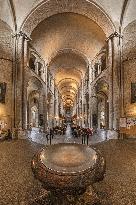
FRANCE. HAUTE-GARONNE (31) TOULOUSE. BASILIQUE SAINT SERNIN. BUILT FROM THE MIDDLE OF THE 11TH CENTURY TO HOUSE NUMEROUS RELICS, INCLUDING THAT OF SAINT SATURNIN, THE CURRENT CHURCH WAS CONSECRATED IN 1096 BY POPE URBAN II. ELEVATED TO THE RANK OF BASILICA IN 1878, IT WAS ONE OF THE MOST IMPORTANT CENTRES OF PILGRIMAGE IN THE MEDIEVAL WEST AND REMAINS THE LARGEST SURVIVING ROMANESQUE CHURCH IN EUROPE. HERE, THE NAVE. Photo by Stephane Compoint/Only France/ABACAPRESS.COM

  •  
Illustration - Toulouse

Illustration - Toulouse

FRANCE . OCCITANIE. TOULOUSE. SAINT SERNIN BASILICA. BUILT FROM THE MIDDLE OF THE 11TH CENTURY TO HOUSE NUMEROUS RELICS, INCLUDING THAT OF SAINT SATURNIN, THE CURRENT CHURCH WAS CONSECRATED IN 1096 BY POPE URBAN II. ELEVATED TO THE RANK OF BASILICA IN 1878, IT WAS ONE OF THE MOST IMPORTANT CENTRES OF PILGRIMAGE IN THE MEDIEVAL WEST AND REMAINS THE LARGEST SURVIVING ROMANESQUE CHURCH IN EUROPE. HERE, THE CHOIR AISLE, WITH ITS FAMOUS BAS-RELIEFS. Photo by Stephane Compoint/Only France/ABACAPRESS.COM

  •  
Illustration - Toulouse

Illustration - Toulouse

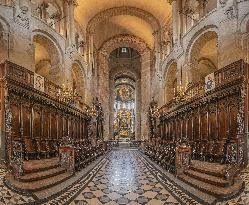
FRANCE. OCCITANIE. HAUTE-GARONNE (31) TOULOUSE. SAINT SERNIN BASILICA. BUILT FROM THE MIDDLE OF THE 11TH CENTURY TO HOUSE NUMEROUS RELICS, INCLUDING THAT OF SAINT SATURNIN, THE CURRENT CHURCH WAS CONSECRATED IN 1096 BY POPE URBAN II. ELEVATED TO THE RANK OF BASILICA IN 1878, IT WAS ONE OF THE MOST IMPORTANT CENTRES OF PILGRIMAGE IN THE MEDIEVAL WEST AND REMAINS THE LARGEST SURVIVING ROMANESQUE CHURCH IN EUROPE. HERE, THE CHOIR STALLS. Photo by Stephane Compoint/Only France/ABACAPRESS.COM

  •  
Illustration - Toulouse

Illustration - Toulouse

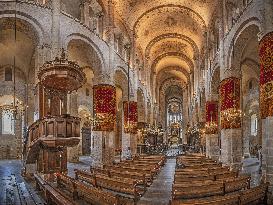
FRANCE. HAUTE-GARONNE (31) TOULOUSE. BASILIQUE SAINT SERNIN. BUILT FROM THE MIDDLE OF THE 11TH CENTURY TO HOUSE NUMEROUS RELICS, INCLUDING THAT OF SAINT SATURNIN, THE CURRENT CHURCH WAS CONSECRATED IN 1096 BY POPE URBAN II. ELEVATED TO THE RANK OF BASILICA IN 1878, IT WAS ONE OF THE MOST IMPORTANT CENTRES OF PILGRIMAGE IN THE MEDIEVAL WEST AND REMAINS THE LARGEST SURVIVING ROMANESQUE CHURCH IN EUROPE. HERE, THE NAVE. Photo by Stephane Compoint/Only France/ABACAPRESS.COM

  •  
Illustration - Occitanie

Illustration - Occitanie

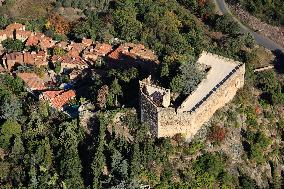
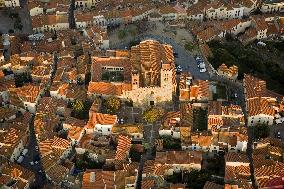
FRANCE. PYRENEES-ORIENTALES (66) AERIAL VIEW OF CASTELNOU. LISTED AS ONE OF FRANCE'S MOST BEAUTIFUL VILLAGES. NEAR THUIR. SEAT OF A POWERFUL 11TH-CENTURY VISCOUNT (CASTLE BUILT IN THE YEAR 1000). Photo by Frederic Hedelin/Only France/ABACAPRESS.COM

  •  
Illustration - Occitanie

Illustration - Occitanie

FRANCE. PYRENEES-ORIENTALES (66) AERIAL VIEW OF ELNE CATHEDRAL (11TH CENTURY) Photo by Frederic Hedelin/Only France/ABACAPRESS.COM

  •  
Illustration - Aerial View of France

Illustration - Aerial View of France

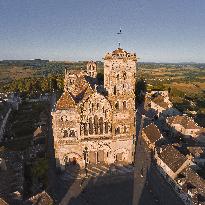
FRANCE. BURGUNDY. YONNE (89) VEZELAY: FACADE OF THE SAINTE MARIE MADELEINE BASILICA. FAMOUS FOR ITS BASILICA (A MASTERPIECE OF ROMANESQUE ART) AND A HIGH PLACE OF CHRISTIANITY, THE SITE, PERCHED ON A HILL, WAS AN ESSENTIAL STOPOVER FOR PILGRIMS ON THEIR WAY TO SANTIAGO DE COMPOSTELA AND IS LISTED AS A UNESCO WORLD HERITAGE SITE SINCE 1979. SAINT FRANCIS OF ASSISI FOUNDED THE FIRST FRANCISCAN MONASTERY IN FRANCE HERE. THE ABBEY HAS BEEN KNOWN THROUGHOUT EUROPE SINCE THE 11TH CENTURY FOR HOUSING THE RELICS OF SAINT MADELEINE. Photo by Stephane Compoint/Only France/ABACAPRESS.COM

  •  
Illustration - Aerial View of France

Illustration - Aerial View of France

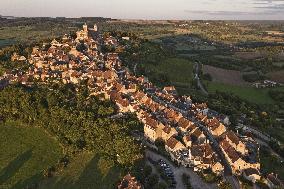
FRANCE. BURGUNDY. YONNE (89) VEZELAY: AERIAL VIEW OF THE ETERNAL HILL AND THE VILLAGE FROM THE WEST. IN THE BACKGROUND, THE BASILICA OF SAINTE MARIE MADELEINE. FAMOUS FOR ITS BASILICA (A MASTERPIECE OF ROMANESQUE ART) AND A HIGH PLACE OF CHRISTIANITY, THE SITE, PERCHED ON A HILL, WAS AN ESSENTIAL STOPOVER FOR PILGRIMS ON THEIR WAY TO SANTIAGO DE COMPOSTELA AND IS LISTED AS A UNESCO WORLD HERITAGE SITE SINCE 1979. SAINT FRANCIS OF ASSISI FOUNDED THE FIRST FRANCISCAN MONASTERY IN FRANCE HERE. THE ABBEY HAS BEEN KNOWN THROUGHOUT EUROPE SINCE THE 11TH CENTURY FOR HOUSING THE RELICS OF SAINT MADELEINE. Photo by Stephane Compoint/Only France/ABACAPRESS.COM

  •  
Illustration - Aerial View of France

Illustration - Aerial View of France

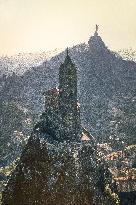
FRANCE. AUVERGNE. HAUTE-LOIRE (43). THE SAINT-MICHEL CHAPEL BUILT IN THE 11TH CENTURY ON A VOLCANIC DYKE Photo by Luc Olivier/Only France/ABACAPRESS.COM

  •  
Illustration - French Riviera

Illustration - French Riviera

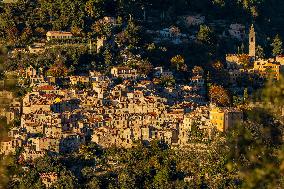
FRANCE. ALPES MARITIMES (06) MEDIEVAL VILLAGE OF PEILLE (11TH CENTURY) ON A STEEP SITE, DOMINATED BY THE SHEER CLIFFS OF MONT BAUDON Photo by Robert Palomba/Only France/ABACAPRESS.COM

  •  
Dege Sutra Printing House - Tibet

Dege Sutra Printing House - Tibet

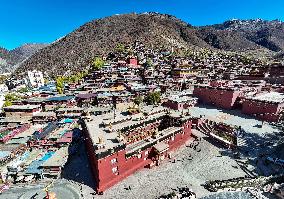
A drone photo taken on Nov. 2, 2024 shows the Dege Sutra Printing House in Dege County of Garze Tibetan Autonomous Prefecture, southwest China's Sichuan Province. Built in 1729, the Dege Sutra Printing House preserves in good condition 325,520 woodcut printing plates containing significant Tibetan classics dating back to the 11th century. The majority of the blocks were carved between the 18th and mid-20th centuries. The printing blocks housed at the Dege Sutra Printing House in Sichuan were listed in this May as documentary heritage on the Asia Pacific regional register of UNESCO's Memory of the World (MOW) Programme. Photo by Wang Xi/Xinhua/ABACAPRESSC.OM

  •  
Dege Sutra Printing House - Tibet

Dege Sutra Printing House - Tibet

A worker revises a woodcut printing block at the Dege Sutra Printing House in Dege County of Garze Tibetan Autonomous Prefecture, southwest China's Sichuan Province, Nov. 2, 2024. Built in 1729, the Dege Sutra Printing House preserves in good condition 325,520 woodcut printing plates containing significant Tibetan classics dating back to the 11th century. The majority of the blocks were carved between the 18th and mid-20th centuries. The printing blocks housed at the Dege Sutra Printing House in Sichuan were listed in this May as documentary heritage on the Asia Pacific regional register of UNESCO's Memory of the World (MOW) Programme. Photo by Shen Bohan/Xinhua/ABACAPRESS.COM

  •  
Dege Sutra Printing House - Tibet

Dege Sutra Printing House - Tibet

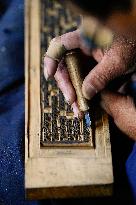
A worker carves a woodcut printing block at the Dege Sutra Printing House in Dege County of Garze Tibetan Autonomous Prefecture, southwest China's Sichuan Province, Nov. 2, 2024. Built in 1729, the Dege Sutra Printing House preserves in good condition 325,520 woodcut printing plates containing significant Tibetan classics dating back to the 11th century. The majority of the blocks were carved between the 18th and mid-20th centuries. The printing blocks housed at the Dege Sutra Printing House in Sichuan were listed in this May as documentary heritage on the Asia Pacific regional register of UNESCO's Memory of the World (MOW) Programme. Photo by Wang Xi/Xinhua/ABACAPRESSC.OM

  •  
Dege Sutra Printing House - Tibet

Dege Sutra Printing House - Tibet

A worker airs fresh prints at the Dege Sutra Printing House in Dege County of Garze Tibetan Autonomous Prefecture, southwest China's Sichuan Province, Nov. 2, 2024. Built in 1729, the Dege Sutra Printing House preserves in good condition 325,520 woodcut printing plates containing significant Tibetan classics dating back to the 11th century. The majority of the blocks were carved between the 18th and mid-20th centuries. The printing blocks housed at the Dege Sutra Printing House in Sichuan were listed in this May as documentary heritage on the Asia Pacific regional register of UNESCO's Memory of the World (MOW) Programme. Photo by Shen Bohan/Xinhua/ABACAPRESS.COM

  •  
Dege Sutra Printing House - Tibet

Dege Sutra Printing House - Tibet

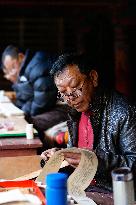
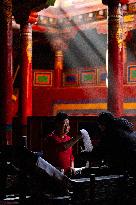
A worker proofreads newly made prints at the Dege Sutra Printing House in Dege County of Garze Tibetan Autonomous Prefecture, southwest China's Sichuan Province, Nov. 2, 2024. Built in 1729, the Dege Sutra Printing House preserves in good condition 325,520 woodcut printing plates containing significant Tibetan classics dating back to the 11th century. The majority of the blocks were carved between the 18th and mid-20th centuries. The printing blocks housed at the Dege Sutra Printing House in Sichuan were listed in this May as documentary heritage on the Asia Pacific regional register of UNESCO's Memory of the World (MOW) Programme. Photo by Wang Xi/Xinhua/ABACAPRESSC.OM

  •  
Dege Sutra Printing House - Tibet

Dege Sutra Printing House - Tibet

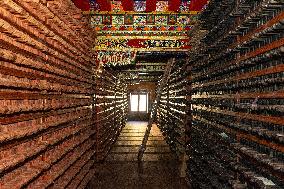
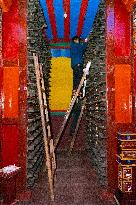
This photo taken on Nov. 2, 2024 shows woodcut printing blocks housed at the Dege Sutra Printing House in Dege County of Garze Tibetan Autonomous Prefecture, southwest China's Sichuan Province. Built in 1729, the Dege Sutra Printing House preserves in good condition 325,520 woodcut printing plates containing significant Tibetan classics dating back to the 11th century. The majority of the blocks were carved between the 18th and mid-20th centuries. The printing blocks housed at the Dege Sutra Printing House in Sichuan were listed in this May as documentary heritage on the Asia Pacific regional register of UNESCO's Memory of the World (MOW) Programme. Photo by Shen Bohan/Xinhua/ABACAPRESS.COM

  •  
Dege Sutra Printing House - Tibet

Dege Sutra Printing House - Tibet

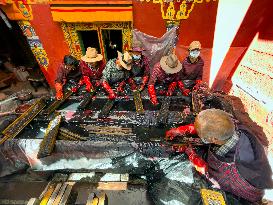
Workers print with vintage woodcut printing blocks at the Dege Sutra Printing House in Dege County of Garze Tibetan Autonomous Prefecture, southwest China's Sichuan Province, Nov. 2, 2024. Built in 1729, the Dege Sutra Printing House preserves in good condition 325,520 woodcut printing plates containing significant Tibetan classics dating back to the 11th century. The majority of the blocks were carved between the 18th and mid-20th centuries. The printing blocks housed at the Dege Sutra Printing House in Sichuan were listed in this May as documentary heritage on the Asia Pacific regional register of UNESCO's Memory of the World (MOW) Programme. Photo by Shen Bohan/Xinhua/ABACAPRESS.COM

  •  
Dege Sutra Printing House - Tibet

Dege Sutra Printing House - Tibet

This photo taken on Oct. 3, 2021 shows workers cleaning and maintaining woodcut printing blocks with traditional techniques at the Dege Sutra Printing House in Dege County of Garze Tibetan Autonomous Prefecture, southwest China's Sichuan Province. Built in 1729, the Dege Sutra Printing House preserves in good condition 325,520 woodcut printing plates containing significant Tibetan classics dating back to the 11th century. The majority of the blocks were carved between the 18th and mid-20th centuries. The printing blocks housed at the Dege Sutra Printing House in Sichuan were listed in this May as documentary heritage on the Asia Pacific regional register of UNESCO's Memory of the World (MOW) Programme. Photo by Shen Bohan/Xinhua/ABACAPRESS.COM

  •  
Dege Sutra Printing House - Tibet

Dege Sutra Printing House - Tibet

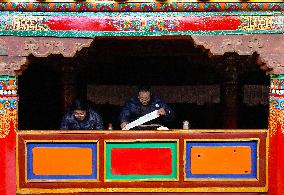
Workers proofread newly made prints at the Dege Sutra Printing House in Dege County of Garze Tibetan Autonomous Prefecture, southwest China's Sichuan Province, Nov. 2, 2024. Built in 1729, the Dege Sutra Printing House preserves in good condition 325,520 woodcut printing plates containing significant Tibetan classics dating back to the 11th century. The majority of the blocks were carved between the 18th and mid-20th centuries. The printing blocks housed at the Dege Sutra Printing House in Sichuan were listed in this May as documentary heritage on the Asia Pacific regional register of UNESCO's Memory of the World (MOW) Programme. Photo by Shen Bohan/Xinhua/ABACAPRESS.COM

  •  
Dege Sutra Printing House - Tibet

Dege Sutra Printing House - Tibet

A worker revises a woodcut printing block at the Dege Sutra Printing House in Dege County of Garze Tibetan Autonomous Prefecture, southwest China's Sichuan Province, Nov. 2, 2024. Built in 1729, the Dege Sutra Printing House preserves in good condition 325,520 woodcut printing plates containing significant Tibetan classics dating back to the 11th century. The majority of the blocks were carved between the 18th and mid-20th centuries. The printing blocks housed at the Dege Sutra Printing House in Sichuan were listed in this May as documentary heritage on the Asia Pacific regional register of UNESCO's Memory of the World (MOW) Programme. Photo by Shen Bohan/Xinhua/ABACAPRESS.COM

  •  
Dege Sutra Printing House - Tibet

Dege Sutra Printing House - Tibet

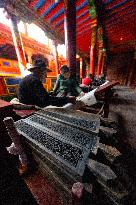
A worker checks woodcut printing blocks at the Dege Sutra Printing House in Dege County of Garze Tibetan Autonomous Prefecture, southwest China's Sichuan Province, Nov. 2, 2024. Built in 1729, the Dege Sutra Printing House preserves in good condition 325,520 woodcut printing plates containing significant Tibetan classics dating back to the 11th century. The majority of the blocks were carved between the 18th and mid-20th centuries. The printing blocks housed at the Dege Sutra Printing House in Sichuan were listed in this May as documentary heritage on the Asia Pacific regional register of UNESCO's Memory of the World (MOW) Programme. Photo by Shen Bohan/Xinhua/ABACAPRESS.COM

  •  
Dege Sutra Printing House - Tibet

Dege Sutra Printing House - Tibet

Workers print with vintage woodcut printing blocks at the Dege Sutra Printing House in Dege County of Garze Tibetan Autonomous Prefecture, southwest China's Sichuan Province, Nov. 2, 2024. Built in 1729, the Dege Sutra Printing House preserves in good condition 325,520 woodcut printing plates containing significant Tibetan classics dating back to the 11th century. The majority of the blocks were carved between the 18th and mid-20th centuries. The printing blocks housed at the Dege Sutra Printing House in Sichuan were listed in this May as documentary heritage on the Asia Pacific regional register of UNESCO's Memory of the World (MOW) Programme. Photo by Shen Bohan/Xinhua/ABACAPRESS.COM

  •  
Dege Sutra Printing House - Tibet

Dege Sutra Printing House - Tibet

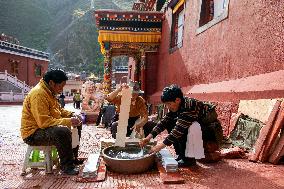
This photo taken on May 16, 2017 shows workers soaking paper for printing outside the Dege Sutra Printing House in Dege County of Garze Tibetan Autonomous Prefecture, southwest China's Sichuan Province. Built in 1729, the Dege Sutra Printing House preserves in good condition 325,520 woodcut printing plates containing significant Tibetan classics dating back to the 11th century. The majority of the blocks were carved between the 18th and mid-20th centuries. The printing blocks housed at the Dege Sutra Printing House in Sichuan were listed in this May as documentary heritage on the Asia Pacific regional register of UNESCO's Memory of the World (MOW) Programme. Photo by Gong Zihua/Xinhua/ABACAPRESS.COM

  •  
Dege Sutra Printing House - Tibet

Dege Sutra Printing House - Tibet

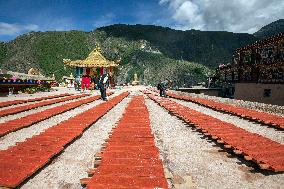
This file photo taken on June 11, 2019 shows workers airing woodcut printing blocks on a roof at the Dege Sutra Printing House in Dege County of Garze Tibetan Autonomous Prefecture, southwest China's Sichuan Province. Built in 1729, the Dege Sutra Printing House preserves in good condition 325,520 woodcut printing plates containing significant Tibetan classics dating back to the 11th century. The majority of the blocks were carved between the 18th and mid-20th centuries. The printing blocks housed at the Dege Sutra Printing House in Sichuan were listed in this May as documentary heritage on the Asia Pacific regional register of UNESCO's Memory of the World (MOW) Programme. Photo by Gong Zihua/Xinhua/ABACAPRESS.COM

  •  
CAMBODIA-PHNOM PENH-METROPOLITAN MUSEUM OF ART-LOOTED ARTIFACTS

CAMBODIA-PHNOM PENH-METROPOLITAN MUSEUM OF ART-LOOTED ARTIFACTS

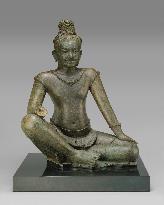
(240704) -- PHNOM PENH, July 4, 2024 Photo by Xinhua/ABACAPRESS.COM) -- This undated photo shows a late 10th-early 11th century bronze Bodhisattva Avalokiteshvara, which was repatriated to Cambodia from the United States. Fourteen looted Cambodian artifacts have been repatriated from the Metropolitan Museum of Art (the MET) in New York, the Cambodian Ministry of Culture and Fine Arts said in a press statement on Wednesday. (Cambodian Ministry of Culture and Fine Arts/Handout via Xinhua/ABACAPRESS.COM

  •  
XINHUA PHOTOS OF THE DAY

XINHUA PHOTOS OF THE DAY

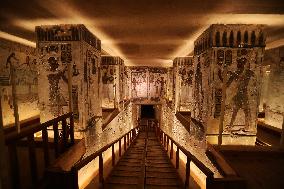
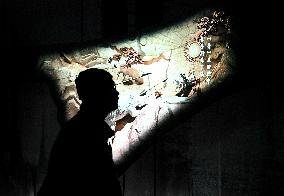
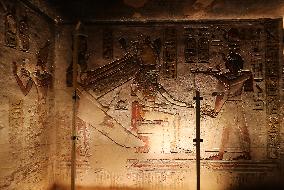
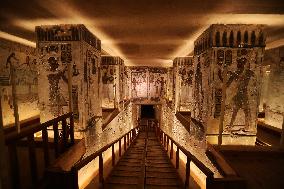
(240419) -- BEIJING, April 19, 2024 (Xinhua) -- This photo taken on April 8, 2024 shows mural paintings at the Valley of the Kings in Luxor, Egypt. Luxor, the ancient city of Thebes in southern Egypt, was the pharaohs' capital at the height of their power during the New Kingdom from the 16th century BC to the 11th century BC. Seen by many as the world's largest open-air museum, it is home to famous Tutankhamen's tomb in the Valley of the Kings and the ruins of the huge Karnak Temple Complex and Luxor Temple. The Yin Ruins, which is located in Anyang of central China's Henan Province, is the first documented late Shang Dynasty (1600-1046 B.C.) capital site in China, as confirmed by archaeological excavations and oracle bone inscriptions. Luxor and the Yin Ruins have, respectively, witnessed the historic highlights of the development of Egypt and China, the two ancient civilizations. April 18 marks the International Day for Monuments and Sites. It is a sound occasion to explore the trace of past glor

  •  
XINHUA PHOTOS OF THE DAY

XINHUA PHOTOS OF THE DAY

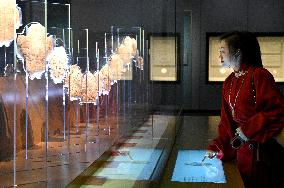
(240419) -- BEIJING, April 19, 2024 (Xinhua) -- This photo taken on Feb. 26, 2024 shows a visitor looking at oracle bones with inscriptions displayed at the new building of Yinxu Museum in Anyang, central China's Henan Province. Luxor, the ancient city of Thebes in southern Egypt, was the pharaohs' capital at the height of their power during the New Kingdom from the 16th century BC to the 11th century BC. Seen by many as the world's largest open-air museum, it is home to famous Tutankhamen's tomb in the Valley of the Kings and the ruins of the huge Karnak Temple Complex and Luxor Temple. The Yin Ruins, which is located in Anyang of central China's Henan Province, is the first documented late Shang Dynasty (1600-1046 B.C.) capital site in China, as confirmed by archaeological excavations and oracle bone inscriptions. Luxor and the Yin Ruins have, respectively, witnessed the historic highlights of the development of Egypt and China, the two ancient civilizations. April 18 marks the International Day

  •  
CHINA-EGYPT-YIN RUINS-LUXOR-ANCIENT CIVILIZATION (CN)

CHINA-EGYPT-YIN RUINS-LUXOR-ANCIENT CIVILIZATION (CN)

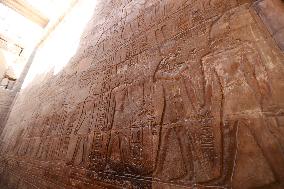
(240418) -- BEIJING, April 18, 2024 (Xinhua) -- This photo taken on April 9, 2024 shows murals at Luxor Temple in Luxor, Egypt. Luxor, the ancient city of Thebes in southern Egypt, was the pharaohs' capital at the height of their power during the New Kingdom from the 16th century BC to the 11th century BC. Seen by many as the world's largest open-air museum, it is home to famous Tutankhamen's tomb in the Valley of the Kings and the ruins of the huge Karnak Temple Complex and Luxor Temple. The Yin Ruins, which is located in Anyang of central China's Henan Province, is the first documented late Shang Dynasty (1600-1046 B.C.) capital site in China, as confirmed by archaeological excavations and oracle bone inscriptions. Luxor and the Yin Ruins have, respectively, witnessed the historic highlights of the development of Egypt and China, the two ancient civilizations. April 18 marks the International Day for Monuments and Sites. It is a sound occasion to explore the trace of past glory and have a touch w

  •  
CHINA-EGYPT-YIN RUINS-LUXOR-ANCIENT CIVILIZATION (CN)

CHINA-EGYPT-YIN RUINS-LUXOR-ANCIENT CIVILIZATION (CN)

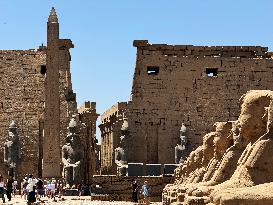
(240418) -- BEIJING, April 18, 2024 (Xinhua) -- This photo taken on April 9, 2024 shows people visiting Luxor Temple in Luxor, Egypt. Luxor, the ancient city of Thebes in southern Egypt, was the pharaohs' capital at the height of their power during the New Kingdom from the 16th century BC to the 11th century BC. Seen by many as the world's largest open-air museum, it is home to famous Tutankhamen's tomb in the Valley of the Kings and the ruins of the huge Karnak Temple Complex and Luxor Temple. The Yin Ruins, which is located in Anyang of central China's Henan Province, is the first documented late Shang Dynasty (1600-1046 B.C.) capital site in China, as confirmed by archaeological excavations and oracle bone inscriptions. Luxor and the Yin Ruins have, respectively, witnessed the historic highlights of the development of Egypt and China, the two ancient civilizations. April 18 marks the International Day for Monuments and Sites. It is a sound occasion to explore the trace of past glory and have a t

  •  
CHINA-EGYPT-YIN RUINS-LUXOR-ANCIENT CIVILIZATION (CN)

CHINA-EGYPT-YIN RUINS-LUXOR-ANCIENT CIVILIZATION (CN)

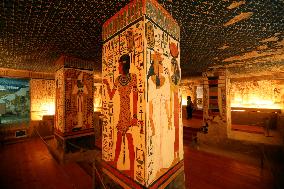
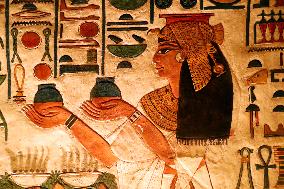
(240418) -- BEIJING, April 18, 2024 (Xinhua) -- This photo taken on Jan. 24, 2023 shows mural paintings inside the tomb of Nefertari at the Valley of the Queens in Luxor, Egypt. Luxor, the ancient city of Thebes in southern Egypt, was the pharaohs' capital at the height of their power during the New Kingdom from the 16th century BC to the 11th century BC. Seen by many as the world's largest open-air museum, it is home to famous Tutankhamen's tomb in the Valley of the Kings and the ruins of the huge Karnak Temple Complex and Luxor Temple. The Yin Ruins, which is located in Anyang of central China's Henan Province, is the first documented late Shang Dynasty (1600-1046 B.C.) capital site in China, as confirmed by archaeological excavations and oracle bone inscriptions. Luxor and the Yin Ruins have, respectively, witnessed the historic highlights of the development of Egypt and China, the two ancient civilizations. April 18 marks the International Day for Monuments and Sites. It is a sound occasion to

  •  
CHINA-EGYPT-YIN RUINS-LUXOR-ANCIENT CIVILIZATION (CN)

CHINA-EGYPT-YIN RUINS-LUXOR-ANCIENT CIVILIZATION (CN)

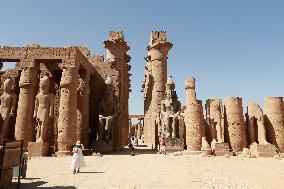
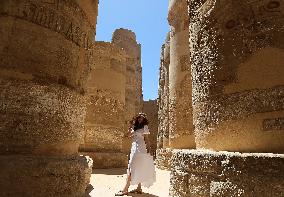
(240418) -- BEIJING, April 18, 2024 (Xinhua) -- This photo taken on April 8, 2024 shows visitors taking pictures at Karnak Temple in Luxor, Egypt. Luxor, the ancient city of Thebes in southern Egypt, was the pharaohs' capital at the height of their power during the New Kingdom from the 16th century BC to the 11th century BC. Seen by many as the world's largest open-air museum, it is home to famous Tutankhamen's tomb in the Valley of the Kings and the ruins of the huge Karnak Temple Complex and Luxor Temple. The Yin Ruins, which is located in Anyang of central China's Henan Province, is the first documented late Shang Dynasty (1600-1046 B.C.) capital site in China, as confirmed by archaeological excavations and oracle bone inscriptions. Luxor and the Yin Ruins have, respectively, witnessed the historic highlights of the development of Egypt and China, the two ancient civilizations. April 18 marks the International Day for Monuments and Sites. It is a sound occasion to explore the trace of past glory

  •  
CHINA-EGYPT-YIN RUINS-LUXOR-ANCIENT CIVILIZATION (CN)

CHINA-EGYPT-YIN RUINS-LUXOR-ANCIENT CIVILIZATION (CN)

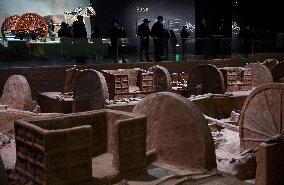
(240418) -- BEIJING, April 18, 2024 (Xinhua) -- This photo taken on Feb. 26, 2024 shows visitors looking at chariot pit displayed at the new building of Yinxu Museum in Anyang, central China's Henan Province. Luxor, the ancient city of Thebes in southern Egypt, was the pharaohs' capital at the height of their power during the New Kingdom from the 16th century BC to the 11th century BC. Seen by many as the world's largest open-air museum, it is home to famous Tutankhamen's tomb in the Valley of the Kings and the ruins of the huge Karnak Temple Complex and Luxor Temple. The Yin Ruins, which is located in Anyang of central China's Henan Province, is the first documented late Shang Dynasty (1600-1046 B.C.) capital site in China, as confirmed by archaeological excavations and oracle bone inscriptions. Luxor and the Yin Ruins have, respectively, witnessed the historic highlights of the development of Egypt and China, the two ancient civilizations. April 18 marks the International Day for Monuments and Si

  •  
CHINA-EGYPT-YIN RUINS-LUXOR-ANCIENT CIVILIZATION (CN)

CHINA-EGYPT-YIN RUINS-LUXOR-ANCIENT CIVILIZATION (CN)

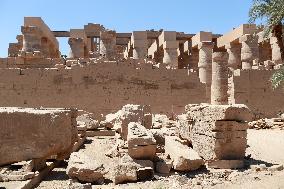
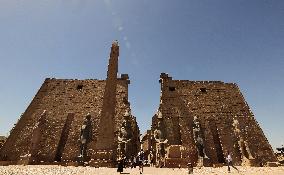
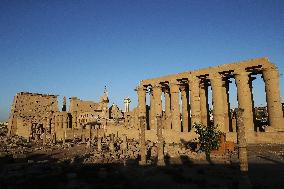
(240418) -- BEIJING, April 18, 2024 (Xinhua) -- This photo taken on April 8, 2024 shows Karnak Temple Complex in Luxor, Egypt. Luxor, the ancient city of Thebes in southern Egypt, was the pharaohs' capital at the height of their power during the New Kingdom from the 16th century BC to the 11th century BC. Seen by many as the world's largest open-air museum, it is home to famous Tutankhamen's tomb in the Valley of the Kings and the ruins of the huge Karnak Temple Complex and Luxor Temple. The Yin Ruins, which is located in Anyang of central China's Henan Province, is the first documented late Shang Dynasty (1600-1046 B.C.) capital site in China, as confirmed by archaeological excavations and oracle bone inscriptions. Luxor and the Yin Ruins have, respectively, witnessed the historic highlights of the development of Egypt and China, the two ancient civilizations. April 18 marks the International Day for Monuments and Sites. It is a sound occasion to explore the trace of past glory and have a touch wi

  •  
CHINA-EGYPT-YIN RUINS-LUXOR-ANCIENT CIVILIZATION (CN)

CHINA-EGYPT-YIN RUINS-LUXOR-ANCIENT CIVILIZATION (CN)

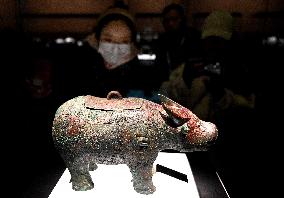
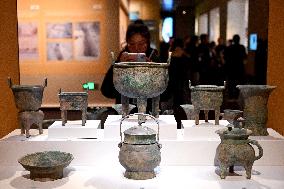
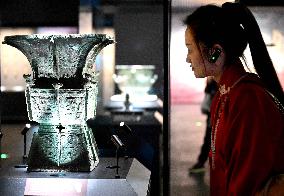
(240418) -- BEIJING, April 18, 2024 (Xinhua) -- This photo taken on Feb. 26, 2024 shows visitors looking at a buffalo-shaped bronze vessel unearthed from the Yin Ruins at the new building of Yinxu Museum in Anyang, central China's Henan Province. Luxor, the ancient city of Thebes in southern Egypt, was the pharaohs' capital at the height of their power during the New Kingdom from the 16th century BC to the 11th century BC. Seen by many as the world's largest open-air museum, it is home to famous Tutankhamen's tomb in the Valley of the Kings and the ruins of the huge Karnak Temple Complex and Luxor Temple. The Yin Ruins, which is located in Anyang of central China's Henan Province, is the first documented late Shang Dynasty (1600-1046 B.C.) capital site in China, as confirmed by archaeological excavations and oracle bone inscriptions. Luxor and the Yin Ruins have, respectively, witnessed the historic highlights of the development of Egypt and China, the two ancient civilizations. April 18 marks the

  •  
CHINA-EGYPT-YIN RUINS-LUXOR-ANCIENT CIVILIZATION (CN)

CHINA-EGYPT-YIN RUINS-LUXOR-ANCIENT CIVILIZATION (CN)

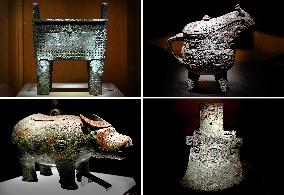
(240418) -- BEIJING, April 18, 2024 (Xinhua) -- This combo photo taken on Feb. 23, 2024 shows various bronze vessels unearthed from the Yin Ruins displayed at the new building of Yinxu Museum in Anyang, central China's Henan Province. Luxor, the ancient city of Thebes in southern Egypt, was the pharaohs' capital at the height of their power during the New Kingdom from the 16th century BC to the 11th century BC. Seen by many as the world's largest open-air museum, it is home to famous Tutankhamen's tomb in the Valley of the Kings and the ruins of the huge Karnak Temple Complex and Luxor Temple. The Yin Ruins, which is located in Anyang of central China's Henan Province, is the first documented late Shang Dynasty (1600-1046 B.C.) capital site in China, as confirmed by archaeological excavations and oracle bone inscriptions. Luxor and the Yin Ruins have, respectively, witnessed the historic highlights of the development of Egypt and China, the two ancient civilizations. April 18 marks the Internationa

  •  
CHINA-EGYPT-YIN RUINS-LUXOR-ANCIENT CIVILIZATION (CN)

CHINA-EGYPT-YIN RUINS-LUXOR-ANCIENT CIVILIZATION (CN)

(240418) -- BEIJING, April 18, 2024 (Xinhua) -- This photo taken on Jan. 24, 2023 shows mural paintings inside the tomb of Nefertari at the Valley of the Queens in Luxor, Egypt. Luxor, the ancient city of Thebes in southern Egypt, was the pharaohs' capital at the height of their power during the New Kingdom from the 16th century BC to the 11th century BC. Seen by many as the world's largest open-air museum, it is home to famous Tutankhamen's tomb in the Valley of the Kings and the ruins of the huge Karnak Temple Complex and Luxor Temple. The Yin Ruins, which is located in Anyang of central China's Henan Province, is the first documented late Shang Dynasty (1600-1046 B.C.) capital site in China, as confirmed by archaeological excavations and oracle bone inscriptions. Luxor and the Yin Ruins have, respectively, witnessed the historic highlights of the development of Egypt and China, the two ancient civilizations. April 18 marks the International Day for Monuments and Sites. It is a sound occasion to

  •  
CHINA-EGYPT-YIN RUINS-LUXOR-ANCIENT CIVILIZATION (CN)

CHINA-EGYPT-YIN RUINS-LUXOR-ANCIENT CIVILIZATION (CN)

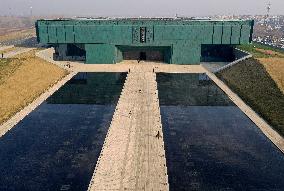
(240418) -- BEIJING, April 18, 2024 (Xinhua) -- This photo taken on Feb. 26, 2024 shows a man visiting the new building of Yinxu Museum in Anyang, central China's Henan Province. Luxor, the ancient city of Thebes in southern Egypt, was the pharaohs' capital at the height of their power during the New Kingdom from the 16th century BC to the 11th century BC. Seen by many as the world's largest open-air museum, it is home to famous Tutankhamen's tomb in the Valley of the Kings and the ruins of the huge Karnak Temple Complex and Luxor Temple. The Yin Ruins, which is located in Anyang of central China's Henan Province, is the first documented late Shang Dynasty (1600-1046 B.C.) capital site in China, as confirmed by archaeological excavations and oracle bone inscriptions. Luxor and the Yin Ruins have, respectively, witnessed the historic highlights of the development of Egypt and China, the two ancient civilizations. April 18 marks the International Day for Monuments and Sites. It is a sound occasion to

  •  
CHINA-EGYPT-YIN RUINS-LUXOR-ANCIENT CIVILIZATION (CN)

CHINA-EGYPT-YIN RUINS-LUXOR-ANCIENT CIVILIZATION (CN)

(240418) -- BEIJING, April 18, 2024 (Xinhua) -- This photo taken on April 9, 2024 shows people visiting Luxor Temple in Luxor, Egypt. Luxor, the ancient city of Thebes in southern Egypt, was the pharaohs' capital at the height of their power during the New Kingdom from the 16th century BC to the 11th century BC. Seen by many as the world's largest open-air museum, it is home to famous Tutankhamen's tomb in the Valley of the Kings and the ruins of the huge Karnak Temple Complex and Luxor Temple. The Yin Ruins, which is located in Anyang of central China's Henan Province, is the first documented late Shang Dynasty (1600-1046 B.C.) capital site in China, as confirmed by archaeological excavations and oracle bone inscriptions. Luxor and the Yin Ruins have, respectively, witnessed the historic highlights of the development of Egypt and China, the two ancient civilizations. April 18 marks the International Day for Monuments and Sites. It is a sound occasion to explore the trace of past glory and have a t

  •  
CHINA-EGYPT-YIN RUINS-LUXOR-ANCIENT CIVILIZATION (CN)

CHINA-EGYPT-YIN RUINS-LUXOR-ANCIENT CIVILIZATION (CN)

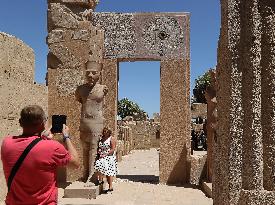
(240418) -- BEIJING, April 18, 2024 (Xinhua) -- This photo taken on April 8, 2024 shows a visitor posing for pictures at Luxor Temple in Luxor, Egypt. Luxor, the ancient city of Thebes in southern Egypt, was the pharaohs' capital at the height of their power during the New Kingdom from the 16th century BC to the 11th century BC. Seen by many as the world's largest open-air museum, it is home to famous Tutankhamen's tomb in the Valley of the Kings and the ruins of the huge Karnak Temple Complex and Luxor Temple. The Yin Ruins, which is located in Anyang of central China's Henan Province, is the first documented late Shang Dynasty (1600-1046 B.C.) capital site in China, as confirmed by archaeological excavations and oracle bone inscriptions. Luxor and the Yin Ruins have, respectively, witnessed the historic highlights of the development of Egypt and China, the two ancient civilizations. April 18 marks the International Day for Monuments and Sites. It is a sound occasion to explore the trace of past g

  •  
CHINA-EGYPT-YIN RUINS-LUXOR-ANCIENT CIVILIZATION (CN)

CHINA-EGYPT-YIN RUINS-LUXOR-ANCIENT CIVILIZATION (CN)

(240418) -- BEIJING, April 18, 2024 (Xinhua) -- This photo taken on Feb. 26, 2024 shows a visitor taking pictures of exhibits displayed at the new building of Yinxu Museum in Anyang, central China's Henan Province. Luxor, the ancient city of Thebes in southern Egypt, was the pharaohs' capital at the height of their power during the New Kingdom from the 16th century BC to the 11th century BC. Seen by many as the world's largest open-air museum, it is home to famous Tutankhamen's tomb in the Valley of the Kings and the ruins of the huge Karnak Temple Complex and Luxor Temple. The Yin Ruins, which is located in Anyang of central China's Henan Province, is the first documented late Shang Dynasty (1600-1046 B.C.) capital site in China, as confirmed by archaeological excavations and oracle bone inscriptions. Luxor and the Yin Ruins have, respectively, witnessed the historic highlights of the development of Egypt and China, the two ancient civilizations. April 18 marks the International Day for Monuments

  •  
CHINA-EGYPT-YIN RUINS-LUXOR-ANCIENT CIVILIZATION (CN)

CHINA-EGYPT-YIN RUINS-LUXOR-ANCIENT CIVILIZATION (CN)

(240418) -- BEIJING, April 18, 2024 (Xinhua) -- This photo taken on April 9, 2024 shows people visiting Luxor Temple and the Avenue of the Sphinxes in Luxor, Egypt. Luxor, the ancient city of Thebes in southern Egypt, was the pharaohs' capital at the height of their power during the New Kingdom from the 16th century BC to the 11th century BC. Seen by many as the world's largest open-air museum, it is home to famous Tutankhamen's tomb in the Valley of the Kings and the ruins of the huge Karnak Temple Complex and Luxor Temple. The Yin Ruins, which is located in Anyang of central China's Henan Province, is the first documented late Shang Dynasty (1600-1046 B.C.) capital site in China, as confirmed by archaeological excavations and oracle bone inscriptions. Luxor and the Yin Ruins have, respectively, witnessed the historic highlights of the development of Egypt and China, the two ancient civilizations. April 18 marks the International Day for Monuments and Sites. It is a sound occasion to explore the t

  •  
CHINA-EGYPT-YIN RUINS-LUXOR-ANCIENT CIVILIZATION (CN)

CHINA-EGYPT-YIN RUINS-LUXOR-ANCIENT CIVILIZATION (CN)

(240418) -- BEIJING, April 18, 2024 (Xinhua) -- This photo taken on April 8, 2024 shows mural paintings at the Valley of the Kings in Luxor, Egypt. Luxor, the ancient city of Thebes in southern Egypt, was the pharaohs' capital at the height of their power during the New Kingdom from the 16th century BC to the 11th century BC. Seen by many as the world's largest open-air museum, it is home to famous Tutankhamen's tomb in the Valley of the Kings and the ruins of the huge Karnak Temple Complex and Luxor Temple. The Yin Ruins, which is located in Anyang of central China's Henan Province, is the first documented late Shang Dynasty (1600-1046 B.C.) capital site in China, as confirmed by archaeological excavations and oracle bone inscriptions. Luxor and the Yin Ruins have, respectively, witnessed the historic highlights of the development of Egypt and China, the two ancient civilizations. April 18 marks the International Day for Monuments and Sites. It is a sound occasion to explore the trace of past glor

  •  
CHINA-EGYPT-YIN RUINS-LUXOR-ANCIENT CIVILIZATION (CN)

CHINA-EGYPT-YIN RUINS-LUXOR-ANCIENT CIVILIZATION (CN)

(240418) -- BEIJING, April 18, 2024 (Xinhua) -- This photo taken on April 9, 2024 shows people visiting Luxor Temple in Luxor, Egypt. Luxor, the ancient city of Thebes in southern Egypt, was the pharaohs' capital at the height of their power during the New Kingdom from the 16th century BC to the 11th century BC. Seen by many as the world's largest open-air museum, it is home to famous Tutankhamen's tomb in the Valley of the Kings and the ruins of the huge Karnak Temple Complex and Luxor Temple. The Yin Ruins, which is located in Anyang of central China's Henan Province, is the first documented late Shang Dynasty (1600-1046 B.C.) capital site in China, as confirmed by archaeological excavations and oracle bone inscriptions. Luxor and the Yin Ruins have, respectively, witnessed the historic highlights of the development of Egypt and China, the two ancient civilizations. April 18 marks the International Day for Monuments and Sites. It is a sound occasion to explore the trace of past glory and have a t

  •  
CHINA-EGYPT-YIN RUINS-LUXOR-ANCIENT CIVILIZATION (CN)

CHINA-EGYPT-YIN RUINS-LUXOR-ANCIENT CIVILIZATION (CN)

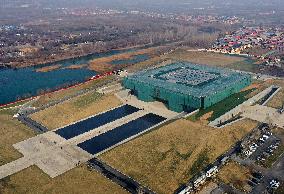
(240418) -- BEIJING, April 18, 2024 (Xinhua) -- An aerial drone photo taken on Feb. 26, 2024 shows the new building of Yinxu Museum in Anyang, central China's Henan Province. Luxor, the ancient city of Thebes in southern Egypt, was the pharaohs' capital at the height of their power during the New Kingdom from the 16th century BC to the 11th century BC. Seen by many as the world's largest open-air museum, it is home to famous Tutankhamen's tomb in the Valley of the Kings and the ruins of the huge Karnak Temple Complex and Luxor Temple. The Yin Ruins, which is located in Anyang of central China's Henan Province, is the first documented late Shang Dynasty (1600-1046 B.C.) capital site in China, as confirmed by archaeological excavations and oracle bone inscriptions. Luxor and the Yin Ruins have, respectively, witnessed the historic highlights of the development of Egypt and China, the two ancient civilizations. April 18 marks the International Day for Monuments and Sites. It is a sound occasion to exp

  •  
CHINA-EGYPT-YIN RUINS-LUXOR-ANCIENT CIVILIZATION (CN)

CHINA-EGYPT-YIN RUINS-LUXOR-ANCIENT CIVILIZATION (CN)

(240418) -- BEIJING, April 18, 2024 (Xinhua) -- An aerial drone photo taken on Feb. 26, 2024 shows the new building of Yinxu Museum in Anyang, central China's Henan Province. Luxor, the ancient city of Thebes in southern Egypt, was the pharaohs' capital at the height of their power during the New Kingdom from the 16th century BC to the 11th century BC. Seen by many as the world's largest open-air museum, it is home to famous Tutankhamen's tomb in the Valley of the Kings and the ruins of the huge Karnak Temple Complex and Luxor Temple. The Yin Ruins, which is located in Anyang of central China's Henan Province, is the first documented late Shang Dynasty (1600-1046 B.C.) capital site in China, as confirmed by archaeological excavations and oracle bone inscriptions. Luxor and the Yin Ruins have, respectively, witnessed the historic highlights of the development of Egypt and China, the two ancient civilizations. April 18 marks the International Day for Monuments and Sites. It is a sound occasion to exp

  •  
CHINA-EGYPT-YIN RUINS-LUXOR-ANCIENT CIVILIZATION (CN)

CHINA-EGYPT-YIN RUINS-LUXOR-ANCIENT CIVILIZATION (CN)

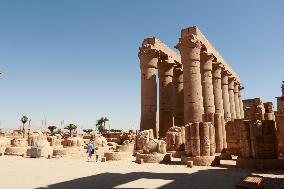
(240418) -- BEIJING, April 18, 2024 (Xinhua) -- This photo taken on April 9, 2024 shows a view of Luxor Temple in Luxor, Egypt. Luxor, the ancient city of Thebes in southern Egypt, was the pharaohs' capital at the height of their power during the New Kingdom from the 16th century BC to the 11th century BC. Seen by many as the world's largest open-air museum, it is home to famous Tutankhamen's tomb in the Valley of the Kings and the ruins of the huge Karnak Temple Complex and Luxor Temple. The Yin Ruins, which is located in Anyang of central China's Henan Province, is the first documented late Shang Dynasty (1600-1046 B.C.) capital site in China, as confirmed by archaeological excavations and oracle bone inscriptions. Luxor and the Yin Ruins have, respectively, witnessed the historic highlights of the development of Egypt and China, the two ancient civilizations. April 18 marks the International Day for Monuments and Sites. It is a sound occasion to explore the trace of past glory and have a touch w

  •  
CHINA-EGYPT-YIN RUINS-LUXOR-ANCIENT CIVILIZATION (CN)

CHINA-EGYPT-YIN RUINS-LUXOR-ANCIENT CIVILIZATION (CN)

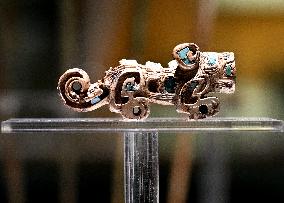
(240418) -- BEIJING, April 18, 2024 (Xinhua) -- This photo taken on Feb. 23, 2024 shows a tiger-shaped item with turquoise inlaid displayed at the new building of Yinxu Museum in Anyang, central China's Henan Province. Luxor, the ancient city of Thebes in southern Egypt, was the pharaohs' capital at the height of their power during the New Kingdom from the 16th century BC to the 11th century BC. Seen by many as the world's largest open-air museum, it is home to famous Tutankhamen's tomb in the Valley of the Kings and the ruins of the huge Karnak Temple Complex and Luxor Temple. The Yin Ruins, which is located in Anyang of central China's Henan Province, is the first documented late Shang Dynasty (1600-1046 B.C.) capital site in China, as confirmed by archaeological excavations and oracle bone inscriptions. Luxor and the Yin Ruins have, respectively, witnessed the historic highlights of the development of Egypt and China, the two ancient civilizations. April 18 marks the International Day for Monume

  •  
CHINA-EGYPT-YIN RUINS-LUXOR-ANCIENT CIVILIZATION (CN)

CHINA-EGYPT-YIN RUINS-LUXOR-ANCIENT CIVILIZATION (CN)

(240418) -- BEIJING, April 18, 2024 (Xinhua) -- This photo taken on April 8, 2024 shows mural paintings at the Valley of the Kings in Luxor, Egypt. Luxor, the ancient city of Thebes in southern Egypt, was the pharaohs' capital at the height of their power during the New Kingdom from the 16th century BC to the 11th century BC. Seen by many as the world's largest open-air museum, it is home to famous Tutankhamen's tomb in the Valley of the Kings and the ruins of the huge Karnak Temple Complex and Luxor Temple. The Yin Ruins, which is located in Anyang of central China's Henan Province, is the first documented late Shang Dynasty (1600-1046 B.C.) capital site in China, as confirmed by archaeological excavations and oracle bone inscriptions. Luxor and the Yin Ruins have, respectively, witnessed the historic highlights of the development of Egypt and China, the two ancient civilizations. April 18 marks the International Day for Monuments and Sites. It is a sound occasion to explore the trace of past glor

  •  
CHINA-EGYPT-YIN RUINS-LUXOR-ANCIENT CIVILIZATION (CN)

CHINA-EGYPT-YIN RUINS-LUXOR-ANCIENT CIVILIZATION (CN)

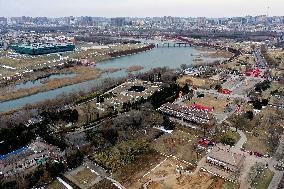
(240418) -- BEIJING, April 18, 2024 (Xinhua) -- An aerial drone photo taken on Feb. 23, 2024 shows the palace and royal ancestral shrines area site of the Yin Ruins (R) and the new building of Yinxu Museum in Anyang, central China's Henan Province. Luxor, the ancient city of Thebes in southern Egypt, was the pharaohs' capital at the height of their power during the New Kingdom from the 16th century BC to the 11th century BC. Seen by many as the world's largest open-air museum, it is home to famous Tutankhamen's tomb in the Valley of the Kings and the ruins of the huge Karnak Temple Complex and Luxor Temple. The Yin Ruins, which is located in Anyang of central China's Henan Province, is the first documented late Shang Dynasty (1600-1046 B.C.) capital site in China, as confirmed by archaeological excavations and oracle bone inscriptions. Luxor and the Yin Ruins have, respectively, witnessed the historic highlights of the development of Egypt and China, the two ancient civilizations. April 18 marks th

  •  
CHINA-EGYPT-YIN RUINS-LUXOR-ANCIENT CIVILIZATION (CN)

CHINA-EGYPT-YIN RUINS-LUXOR-ANCIENT CIVILIZATION (CN)

(240418) -- BEIJING, April 18, 2024 (Xinhua) -- This photo taken on Feb. 26, 2024 shows a visitor looking at an exhibit displayed at the new building of Yinxu Museum in Anyang, central China's Henan Province. Luxor, the ancient city of Thebes in southern Egypt, was the pharaohs' capital at the height of their power during the New Kingdom from the 16th century BC to the 11th century BC. Seen by many as the world's largest open-air museum, it is home to famous Tutankhamen's tomb in the Valley of the Kings and the ruins of the huge Karnak Temple Complex and Luxor Temple. The Yin Ruins, which is located in Anyang of central China's Henan Province, is the first documented late Shang Dynasty (1600-1046 B.C.) capital site in China, as confirmed by archaeological excavations and oracle bone inscriptions. Luxor and the Yin Ruins have, respectively, witnessed the historic highlights of the development of Egypt and China, the two ancient civilizations. April 18 marks the International Day for Monuments and Si

  • Main
  • Top
  • Editorial
  • Creative
  • About Us
  • About ILG
  • Terms of use
  • Company
  • BEHIND
  • Price List
  • Single Plan
  • Monthly Plan
  • Services
  • Shooting
  • Rights Clearance
  • Support
  • FAQ
  • How To Buy
  • Contact Us
  • Become a Partner

© KYODO NEWS IMAGES INC

All Rights Reserved.

  • Editorial
  • Olympics
  • News
  • Sports
  • Japan
  • Tech
  • Royal
  • Disaster
  • NorthKorea
  • Old Japan
  • SNS
  • Creative
  • Food
  • Japan
  • Landscape
  • Animal
  • Popular
  • #Ukraine
  • #Russia
  • #coronavirus
  • #N. Korea
  • #Thailand
  • #China
  • #Ukraine
  • #Russia
  • #coronavirus
  • #N. Korea
  • #Thailand
  • #China
  • Food
  • Japan
  • Landscape
  • Animal
  • Olympics
  • News
  • Sports
  • Japan
  • Tech
  • Royal
  • Disaster
  • NorthKorea
  • Old Japan
  • SNS