•  

Over 900 pieces of relics retrieved from ancient shipwrecks in South China Sea

STORY: Over 900 pieces of relics retrieved from ancient shipwrecks in South China Sea SHOOTING TIME: File DATELINE: June 13, 2024 LENGTH: 00:00:17 LOCATION: QIONGHAI, China CATEGORY: SOCIETY SHOTLIST: 1. various of cultural relics being retrieved from shipwrecks in South China Sea STORYLINE: More than 900 pieces of cultural relics were unearthed from two ancient shipwrecks discovered in the South China Sea, according to a press conference held by the National Cultural Heritage Administration on Thursday in Qionghai, south China's Hainan Province. According to the National Cultural Heritage Administration, three phases of archaeological survey were conducted by joint efforts between research institutes and a local museum from 2023 to 2024. The No. 1 shipwreck mainly consists of porcelain relics, estimated to contain more than 100,000 pieces dating back to the reign of Emperor Zhengde (1506-1521) of the Ming Dynasty (1368-1644). A total of 890 pieces of relics have been excavated during the three phases of

  •  

London holds Chinese Language Day event

STORY: London holds Chinese Language Day event DATELINE: May 13, 2023 LENGTH: 00:04:21 LOCATION: London CATEGORY: CULTURE SHOTLIST: 1. various of Chinese Language Day event 2. SOUNDBITE (English): JOAN DESLANDES, Head teacher of Kingsford Community School in east London STORYLINE: More than 100 British secondary school students and teachers participated in an International Chinese Language Day event in London on Thursday. The event, hosted by the Chinese Bridge Club and the Chinese Proficiency Test UK Committee, marked the end of the 2023 International Chinese Language Day activities across Britain. Teachers of six Confucius Institutes from London, Oxford and Nottingham brought different workshops showcasing traditional Chinese culture, covering Chinese calligraphy, paper folding, paper painting and rubbing, Chinese opera face painting and Chinese Kongfu, among other activities. The activities were welcomed by participants. SOUNDBITE (English): JOAN DESLANDES, Head teacher of Kingsford Communit

  •  
Hiroshima, Belarus institutes to study low dose exposure

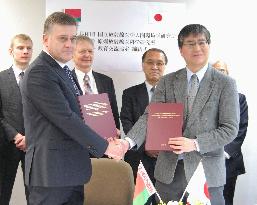
Hiroshima, Belarus institutes to study low dose exposure

HIROSHIMA, Japan - Toshiya Inaba (R), the leader of a research institute at Hiroshima University, and Alexander Rozhko, head of a Belarusian research institute, shake hands in Hiroshima, western Japan, on Feb. 13, 2014, after concluding a deal to jointly study the health effects on humans of exposure to low dose radiation.

  •  
Hayabusa capsule analysis

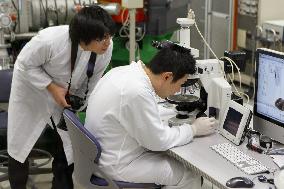
Hayabusa capsule analysis

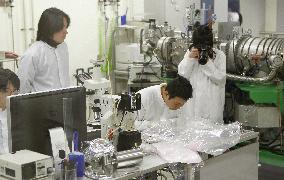
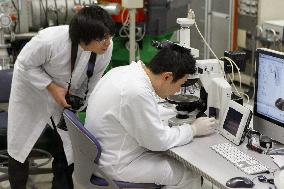
SAPPORO, Japan - Reporters visit Hokkaido University in Sapporo, northern Japan, to view samples brought back from the asteroid Itokawa by the unmanned Japanese space probe Hayabusa on March 1, 2011. A total of 13 institutes and eight teams have taken part in the project to analyze the samples. Hayabusa was launched in May 2003 and landed on the asteroid in September 2005. It returned to Earth while burning out upon reentry into atmosphere in June 2010 and the capsule containing the samples was recovered in a desert in southern Australia.

  •  
Hayabusa capsule analysis

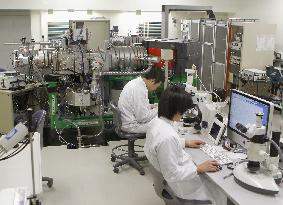
Hayabusa capsule analysis

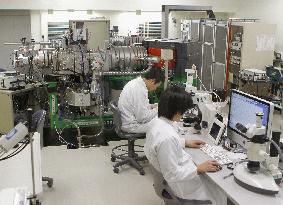
SAPPORO, Japan - Reporters visit Hokkaido University in Sapporo, northern Japan, to view samples brought back from the asteroid Itokawa by the unmanned Japanese space probe Hayabusa on March 1, 2011. Seen at left back is a machine for analysis. A total of 13 institutes and eight teams have taken part in the project to analyze the samples. Hayabusa was launched in May 2003 and landed on the asteroid in September 2005. It returned to Earth while burning out upon reentry into atmosphere in June 2010 and the capsule containing the samples was recovered in a desert in southern Australia.

  •  
Hayabusa capsule analysis

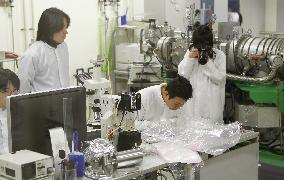
Hayabusa capsule analysis

SAPPORO, Japan - Reporters visit Hokkaido University in Sapporo, northern Japan, to view samples brought back from the asteroid Itokawa by the unmanned Japanese space probe Hayabusa on March 1, 2011. A total of 13 institutes and eight teams have taken part in the project to analyze the samples. Hayabusa was launched in May 2003 and landed on the asteroid in September 2005. It returned to Earth while burning out upon reentry into atmosphere in June 2010 and the capsule containing the samples was recovered in a desert in southern Australia.

  •  

China sets world record in steady high magnetic field research

STORY: China sets world record in steady high magnetic field research DATELINE: Aug. 13, 2022 LENGTH: 00:01:33 LOCATION: HEFEI, China CATEGORY: TECHNOLOGY SHOTLIST: 1. STANDUP 1 (English): HE XIYUE, Xinhua correspondent 2. STANDUP 2 (English): HE XIYUE, Xinhua correspondent 3. SOUNDBITE (Chinese): FANG ZHEN, Scientist with Hefei Institutes of Physical Science STORYLINE: STANDUP 1 (English): HE XIYUE, Xinhua correspondent "We are now at the Hefei Institutes of Physical Science under the Chinese Academy of Sciences. Right now, the scientists here are probably in hotter emotions than the weather outside right now, because today (Friday), they break a world record that has been held for 23 years. The scientists here created a steady high magnetic field. That is more than 900,000 times the Earth's magnetic field. Want to why Chinese scientists strive to make breakthroughs in the high magnetic field? Come with us today to check it out!" STANDUP 2 (English): HE XIYUE, Xinhua correspondent "We are now in the cent

  •  
Hayabusa capsule analysis

Hayabusa capsule analysis

SAPPORO, Japan - Reporters visit Hokkaido University in Sapporo, northern Japan, to view samples brought back from the asteroid Itokawa by the unmanned Japanese space probe Hayabusa on March 1, 2011. A total of 13 institutes and eight teams have taken part in the project to analyze the samples. Hayabusa was launched in May 2003 and landed on the asteroid in September 2005. It returned to Earth while burning out upon reentry into atmosphere in June 2010 and the capsule containing the samples was recovered in a desert in southern Australia. (Kyodo)

  •  
Hayabusa capsule analysis

Hayabusa capsule analysis

SAPPORO, Japan - Reporters visit Hokkaido University in Sapporo, northern Japan, to view samples brought back from the asteroid Itokawa by the unmanned Japanese space probe Hayabusa on March 1, 2011. A total of 13 institutes and eight teams have taken part in the project to analyze the samples. Hayabusa was launched in May 2003 and landed on the asteroid in September 2005. It returned to Earth while burning out upon reentry into atmosphere in June 2010 and the capsule containing the samples was recovered in a desert in southern Australia. (Kyodo)

  •  
Hayabusa capsule analysis

Hayabusa capsule analysis

SAPPORO, Japan - Reporters visit Hokkaido University in Sapporo, northern Japan, to view samples brought back from the asteroid Itokawa by the unmanned Japanese space probe Hayabusa on March 1, 2011. Seen at left back is a machine for analysis. A total of 13 institutes and eight teams have taken part in the project to analyze the samples. Hayabusa was launched in May 2003 and landed on the asteroid in September 2005. It returned to Earth while burning out upon reentry into atmosphere in June 2010 and the capsule containing the samples was recovered in a desert in southern Australia. (Kyodo)

  •  
Japan makers agree to co-develop new cancer radiotherapy device

Japan makers agree to co-develop new cancer radiotherapy device

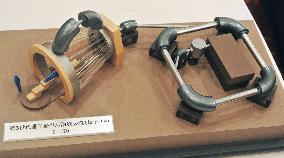
Photo taken Dec. 13, 2016, shows a small model of a new heavy ion cancer treatment device to be developed by four major Japanese manufacturers and a research institute. Hitachi Ltd., Mitsubishi Electric Corp., Toshiba Corp. and Sumitomo Heavy Industries Ltd. as well as the National Institutes for Quantum and Radiological Science and Technology agreed that day to share research costs to develop the device in 10 years. (Kyodo) ==Kyodo

  •  
Japan makers agree to co-develop new cancer radiotherapy device

Japan makers agree to co-develop new cancer radiotherapy device

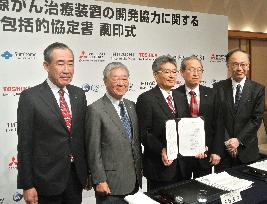
Hitachi Ltd., Mitsubishi Electric Corp., Toshiba Corp. and Sumitomo Heavy Industries Ltd. as well as the National Institutes for Quantum and Radiological Science and Technology agree in Tokyo on Dec. 13, 2016 to share research costs to develop a new heavy ion cancer treatment device in about 10 years. (Kyodo) ==Kyodo

  • Main
  • Top
  • Editorial
  • Creative
  • About Us
  • About ILG
  • Terms of use
  • Company
  • BEHIND
  • Price List
  • Single Plan
  • Monthly Plan
  • Services
  • Shooting
  • Rights Clearance
  • Support
  • FAQ
  • How To Buy
  • Contact Us
  • Become a Partner

© KYODO NEWS IMAGES INC

All Rights Reserved.

  • Editorial
  • Olympics
  • News
  • Sports
  • Japan
  • Tech
  • Royal
  • Disaster
  • NorthKorea
  • Old Japan
  • SNS
  • Creative
  • Food
  • Japan
  • Landscape
  • Animal
  • Popular
  • #Ukraine
  • #Russia
  • #coronavirus
  • #N. Korea
  • #China
  • #Thailand
  • #Ukraine
  • #Russia
  • #coronavirus
  • #N. Korea
  • #China
  • #Thailand
  • Food
  • Japan
  • Landscape
  • Animal
  • Olympics
  • News
  • Sports
  • Japan
  • Tech
  • Royal
  • Disaster
  • NorthKorea
  • Old Japan
  • SNS