•  
Illustration - Iran

Illustration - Iran

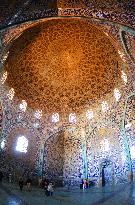
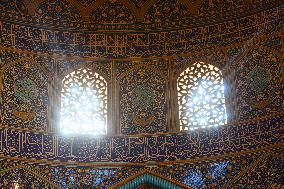
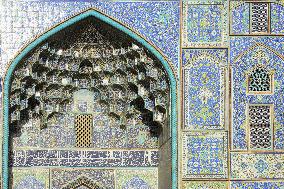
IRAN. ISPAHAN ESFAHAN. EMAM SQUARE. INSIDE VIEW OF THE DOME OF THE CHEIKH LOTFALLA'S MOSQUE, OR WOMEN'S MOSQUE, BUILT IN THE XVIIE CENTURY (1598- 1619) UNDER THE REIGN OF THE SAFAVIDES KINGS. ITS MAIN ARCHITECT IS MOHAMMAD RIZA IBN HUSSAIN. Photo by Antoine Lorgnier/Only World/ABACAPRESS.COM

  •  
Illustration - Iran

Illustration - Iran

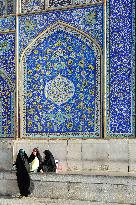
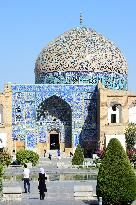
IRAN. ISPAHAN ESFAHAN. EMAM SQUARE. WOMEN IN VAIL IN FRONT OF THE CHEIKH LOTFALLA'S MOSQUE, OR WOMEN'S MOSQUE, BUILT IN THE XVIIE CENTURY (1598- 1619) UNDER THE REIGN OF THE SAFAVIDES KINGS. ITS MAIN ARCHITECT IS MOHAMMAD RIZA IBN HUSSAIN. Photo by Antoine Lorgnier/Only World/ABACAPRESS.COM

  •  
Illustration - Iran

Illustration - Iran

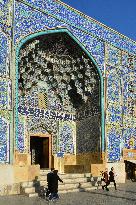
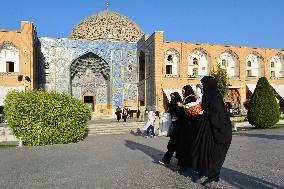
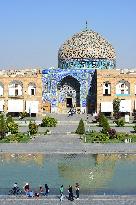
IRAN. ISPAHAN ESFAHAN. EMAM SQUARE. THE CHEIKH LOTFALLA'S MOSQUE, OR WOMEN'S MOSQUE, BUILT IN THE XVIIE CENTURY (1598- 1619) UNDER THE REIGN OF THE SAFAVIDES KINGS. ITS MAIN ARCHITECT IS MOHAMMAD RIZA IBN HUSSAIN. Photo by Antoine Lorgnier/Only World/ABACAPRESS.COM

  •  
Illustration - Iran

Illustration - Iran

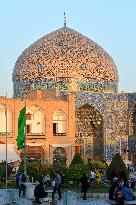
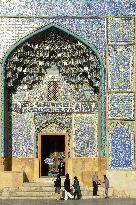
IRAN. ISPAHAN ESFAHAN. EMAM SQUARE. THE CHEIKH LOTFALLA'S MOSQUE, OR WOMEN'S MOSQUE, BUILT IN THE XVIIE CENTURY (1598- 1619) UNDER THE REIGN OF THE SAFAVIDES KINGS. ITS MAIN ARCHITECT IS MOHAMMAD RIZA IBN HUSSAIN. Photo by Antoine Lorgnier/Only World/ABACAPRESS.COM

  •  
Illustration - Iran

Illustration - Iran

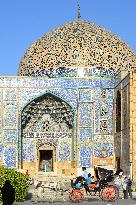
IRAN. ISPAHAN ESFAHAN. EMAM SQUARE. THE CHEIKH LOTFALLA'S MOSQUE, OR WOMEN'S MOSQUE, BUILT IN THE XVIIE CENTURY (1598- 1619) UNDER THE REIGN OF THE SAFAVIDES KINGS. ITS MAIN ARCHITECT IS MOHAMMAD RIZA IBN HUSSAIN. Photo by Antoine Lorgnier/Only World/ABACAPRESS.COM

  •  
Illustration - Iran

Illustration - Iran

IRAN. ISPAHAN ESFAHAN. EMAM SQUARE. INSIDE VIEW OF THE CHEIKH LOTFALLA'S MOSQUE, OR WOMEN'S MOSQUE, BUILT IN THE XVIIE CENTURY (1598- 1619) UNDER THE REIGN OF THE SAFAVIDES KINGS. ITS MAIN ARCHITECT IS MOHAMMAD RIZA IBN HUSSAIN. Photo by Antoine Lorgnier/Only World/ABACAPRESS.COM

  •  
Illustration - Iran

Illustration - Iran

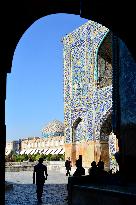
IRAN. ISPAHAN ESFAHAN. EMAM SQUARE. THE CHEIKH LOTFALLA'S MOSQUE, OR WOMEN'S MOSQUE, HAS BEEN BUILT IN THE XVIIE CENTURY (1598- 1619) UNDER THE REIGN OF THE SAFAVIDES KINGS. ITS MAIN ARCHITECT IS MOHAMMAD RIZA IBN HUSSAIN. Photo by Antoine Lorgnier/Only World/ABACAPRESS.COM

  •  
Illustration - Iran

Illustration - Iran

IRAN. ISPAHAN ESFAHAN. EMAM SQUARE. VIEW OF THE DOME OF THE CHEIKH LOTFALLA'S MOSQUE, OR WOMEN'S MOSQUE, BUILT IN THE XVIIE CENTURY (1598- 1619) UNDER THE REIGN OF THE SAFAVIDES KINGS. ITS MAIN ARCHITECT IS MOHAMMAD RIZA IBN HUSSAIN. Photo by Antoine Lorgnier/Only World/ABACAPRESS.COM

  •  
Illustration - Iran

Illustration - Iran

IRAN. ISPAHAN ESFAHAN. EMAM SQUARE. THE CHEIKH LOTFALLA'S MOSQUE, OR WOMEN'S MOSQUE, BUILT IN THE XVIIE CENTURY (1598- 1619) UNDER THE REIGN OF THE SAFAVIDES KINGS. ITS MAIN ARCHITECT IS MOHAMMAD RIZA IBN HUSSAIN. Photo by Antoine Lorgnier/Only World/ABACAPRESS.COM

  •  
Illustration - Iran

Illustration - Iran

IRAN. ISPAHAN ESFAHAN. THE CHEIKH LOTFALLA'S MOSQUE, OR WOMEN'S MOSQUE, HAS BEEN BUILT IN THE XVIIE CENTURY (1598- 1619) UNDER THE REIGN OF THE SAFAVIDES KINGS. ITS MAIN ARCHITECT IS MOHAMMAD RIZA IBN HUSSAIN. Photo by Antoine Lorgnier/Only World/ABACAPRESS.COM

  •  
Illustration - Iran

Illustration - Iran

IRAN. ISPAHAN ESFAHAN. EMAM SQUARE. THE CHEIKH LOTFALLA'S MOSQUE, OR WOMEN'S MOSQUE, HAS BEEN BUILT IN THE XVIIE CENTURY (1598- 1619) UNDER THE REIGN OF THE SAFAVIDES KINGS. ITS MAIN ARCHITECT IS MOHAMMAD RIZA IBN HUSSAIN. Photo by Antoine Lorgnier/Only World/ABACAPRESS.COM

  •  
Illustration - Iran

Illustration - Iran

IRAN. ISPAHAN ESFAHAN. EMAM SQUARE. THE CHEIKH LOTFALLA'S MOSQUE, OR WOMEN'S MOSQUE, HAS BEEN BUILT IN THE XVIIE CENTURY (1598- 1619) UNDER THE REIGN OF THE SAFAVIDES KINGS. ITS MAIN ARCHITECT IS MOHAMMAD RIZA IBN HUSSAIN. Photo by Antoine Lorgnier/Only World/ABACAPRESS.COM

  •  
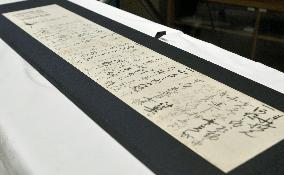
Letter from Naoe Kanetsugu to Uesugi clan vassals

Letter from Naoe Kanetsugu to Uesugi clan vassals

YAMAGATA, Japan - Yamagata University displays on Feb. 4, 2014 in Yamagata, northeastern Japan, a letter written by feudal lord Naoe Kanetsugu (1560-1619) addressed to vassals of the Uesugi clan, praising them for putting up a good fight against the forces of rival lord Date Masamune.

  •  
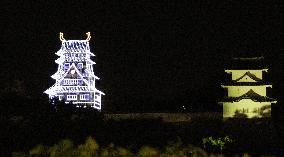
Virtual-reality image of Akashi Castle keep illuminated

Virtual-reality image of Akashi Castle keep illuminated

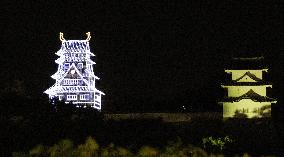
KOBE, Japan - A virtual-reality image of Akashi Castle's keep (L) is illuminated by LEDs in Akashi, Hyogo Prefecture, western Japan, on Oct.7, 2014, as a prelude to the 400th anniversary of its construction in 1619 by feudal lord Ogasawara Tadazane. A stone keep base remains but no keep was constructed.

  •  
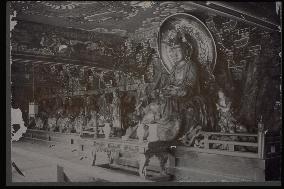
An image of Buddha at the top of Sanmon Gate Building,Chion-in Temple

An image of Buddha at the top of Sanmon Gate Building,Chion-in Temple

Buddhist statues on the Sanmon Gate of Chion-in Temple. The Buddha is seated in the middle, flanked by Zenzai-doji, Shudatsu-choja, and the 16 Buddhist Saints. Unryu (dragons in clouds) and other motifs are painted on the ceiling. This is the largest gate of its kind in Japan, with five bays and three entrances. Built in two-story irimoya style, it has a tiled roof and was erected in 1619 by the second shogun Tokugawa Ietada.==Date:unknown, Place:Kyoto, Photo:unknown, (Credit:Nagasaki University Library/Kyodo News Images) [Cabinet Number72‐42‐0]

  •  
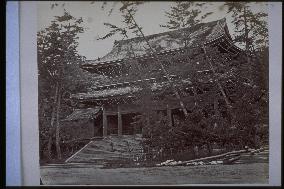
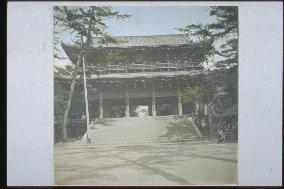
The Sanmon Gate of Chion-in Temple

The Sanmon Gate of Chion-in Temple

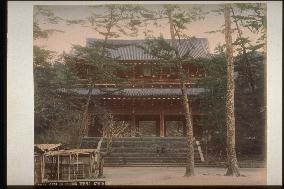
The Sanmon Gate of Chion-in Temple is viewed from the southwest. The tall pine trees south of the gate are slanted due to the wind, and pine logs are scattered about underneath. This is the largest gate of its kind in Japan, with five bays and three entrances. Built in two-story irimoya style, it has a tiled roof and was erected in 1619 by the second shogun Tokugawa Ietada.==Date:unknown, Place:Kyoto, Photo:R. Stillfried, (Credit:Nagasaki University Library/Kyodo News Images) [Cabinet Number63‐17‐0]

  •  
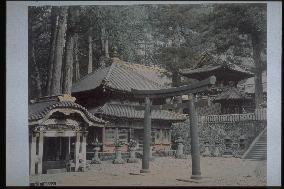
Near the Nino-torii (the second gate),Toshogu Shrine,Nikko

Near the Nino-torii (the second gate),Toshogu Shrine,Nikko

The structure on the left is the Omizuya, with a granite basin donated by the Nabeshima Clan in 1619. The building to the right is the Rinzo, where Buddhist sutras are stored. The first bronze torii built in Japan, Karagane Torii (centre foreground) was built by third shogun Tokugawa Iemitsu. The building on the right back is the Drum Tower. A hanging lantern is visible to the right.==Date:unknown, Place:Nikko, Photo:unknown, (Credit:Nagasaki University Library/Kyodo News Images) [Cabinet Number54‐6‐2]

  •  
The Sanmon Gate of Chion-in Temple

The Sanmon Gate of Chion-in Temple

The Sanmon Gate of Chion-in is viewed from the west. The board south of the gate says Religious Lecture. A rickshaw with a passenger is visible. This is the largest gate of its kind in Japan, with five bays and three entrances. Built in two-story irimoya style, it has a tiled roof and was erected in 1619 by the second shogun Tokugawa Ietada. The word Kachozan on the tablet at the front of the gate is said to be the calligraphy of Emperor Reigen (1654-1732).==Date:unknown, Place:Kyoto, Photo:unknown, (Credit:Nagasaki University Library/Kyodo News Images) [Cabinet Number46‐89‐0]

  •  
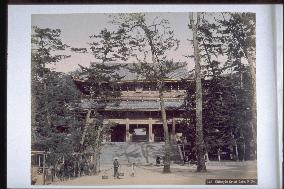
The Sanmon Gate of Chion-in Temple

The Sanmon Gate of Chion-in Temple

The western side of Chion-in Temple Sanmon Gate is seen looking east. There are three rickshaws parked in front, a vendor, and a child. This is the largest gate of its kind in Japan, with five bays and three entrances. Built in two-story irimoya style, it has a tiled roof and was erected in 1619 by the second shogun Tokugawa Ietada. The word Kachozan on the tablet at the front of the gate is said to be the calligraphy of Emperor Reigen (1654-1732).==Date:unknown, Place:Kyoto, Photo:unknown, (Credit:Nagasaki University Library/Kyodo News Images) [Cabinet Number42‐22‐0]

  •  
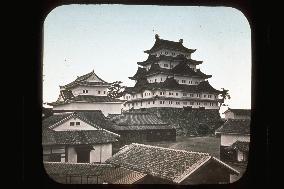
Nagoya Castle

Nagoya Castle

The construction of Nagoya Castle, famous for the Golden Dolphins on the castle tower, began in 1610 and reached completion in 1619. A strong and huge castle, it became an important crossroad for transport and a fortress guarding the west of Japan.==Date:unknown, Place:Nagoya, Photo:unknown, (Credit:Nagasaki University Library/Kyodo News Images) [Cabinet Number31‐32‐0]

  •  
Akashi castle

Akashi castle

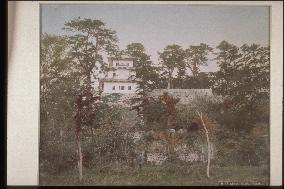
Akashi Castle was built by Ogasawara Tadamasa in 1619, and the Matsudaira family became lords of the castle afterwards. The existing Hitsuji Saru Yagura and Tatsumiyagura show what it was like then.==Date:unknown, Place:Akashi, Photo:unknown, (Credit:Nagasaki University Library/Kyodo News Images) [Cabinet Number24‐7‐0]

  •  
The Sanmon Gate of Chion-in Temple

The Sanmon Gate of Chion-in Temple

Shinbashi dori of the Higashiyama district, Kyoto City. Chionin Temple was founded as Kissui Zenbo, of Honen a hermitage of the priest. It is the head temple of the Jodo Sect. The gate is the largest cherry gate made by Tokugawa Hidetada. The construction was initiated in 1619 and completed 2 years later. The photo looks up at the overall gate. The plaque with the characters Kachozan on the top tier of the gate features calligraphy by Emperor Reigen. White trees line the entrance. People are visible on the steps.==Date:unknown, Place:Kyoto, Photo:A. Farsari, (Credit:Nagasaki University Library/Kyodo News Images) [Cabinet Number18‐9‐0]

  •  
The Sanmon Gate of Chion-in Temple

The Sanmon Gate of Chion-in Temple

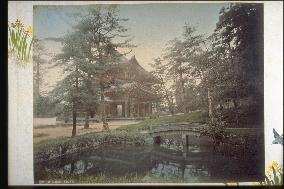
Shinbashi Street of the Higashiyama district of Kyoto City. Chionin is the head temple of the Jodo Sect which was initiated by Honen Jonin of Yoshimizu Zenbo (temple of the Zen sect). The gate is the largest Sakura Gate in Japan, built by Tokugawa Hidetada. The construction was started in 1619 and completed two years later. The photo looks at the gate over the stone bridge to the right of the lake within the temple.==Date:unknown, Place:Kyoto, Photo:Ogawa Kazumasa, (Credit:Nagasaki University Library/Kyodo News Images) [Cabinet Number5‐40‐0]

  •  
Virtual-reality image of Akashi Castle keep illuminated

Virtual-reality image of Akashi Castle keep illuminated

KOBE, Japan - A virtual-reality image of Akashi Castle's keep (L) is illuminated by LEDs in Akashi, Hyogo Prefecture, western Japan, on Oct.7, 2014, as a prelude to the 400th anniversary of its construction in 1619 by feudal lord Ogasawara Tadazane. A stone keep base remains but no keep was constructed. (Kyodo)

  • Main
  • Top
  • Editorial
  • Creative
  • About Us
  • About ILG
  • Terms of use
  • Company
  • BEHIND
  • Price List
  • Single Plan
  • Monthly Plan
  • Services
  • Shooting
  • Rights Clearance
  • Support
  • FAQ
  • How To Buy
  • Contact Us
  • Become a Partner

© KYODO NEWS IMAGES INC

All Rights Reserved.

  • Editorial
  • Olympics
  • News
  • Sports
  • Japan
  • Tech
  • Royal
  • Disaster
  • NorthKorea
  • Old Japan
  • SNS
  • Creative
  • Food
  • Japan
  • Landscape
  • Animal
  • Popular
  • #Ukraine
  • #China
  • #coronavirus
  • #N. Korea
  • #Russia
  • #Thailand
  • #Ukraine
  • #China
  • #coronavirus
  • #N. Korea
  • #Russia
  • #Thailand
  • Food
  • Japan
  • Landscape
  • Animal
  • Olympics
  • News
  • Sports
  • Japan
  • Tech
  • Royal
  • Disaster
  • NorthKorea
  • Old Japan
  • SNS