•  
16th Century Basque Whaler Replica Launching- Pasaia

16th Century Basque Whaler Replica Launching- Pasaia

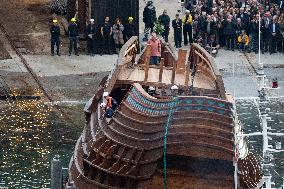
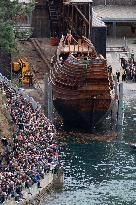
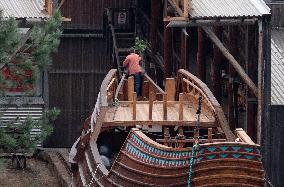
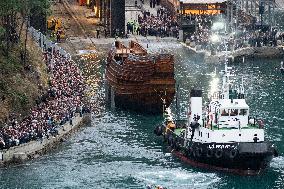
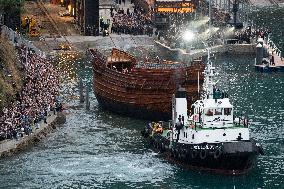
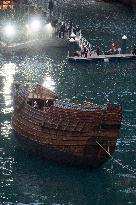
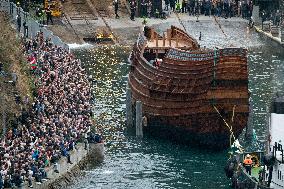
Launching of the nao San Juan, at Albaola Itsas Kultur Faktoria, on November 7, 2025, in Pasaia, San Sebastian, Guipuzcoa, Basque Country, Spain. The nao San Juan is the scientific replica of the 16th century Basque whaler that sank off the Canadian coast, thus culminating the construction stage on land and opening its sea stage, marking a milestone for the international maritime heritage. Photo by Arnaitz Rubio/Europa Press/ABACAPRESS.COM

  •  
16th Century Basque Whaler Replica Launching- Pasaia

16th Century Basque Whaler Replica Launching- Pasaia

Launching of the nao San Juan, at Albaola Itsas Kultur Faktoria, on November 7, 2025, in Pasaia, San Sebastian, Guipuzcoa, Basque Country, Spain. The nao San Juan is the scientific replica of the 16th century Basque whaler that sank off the Canadian coast, thus culminating the construction stage on land and opening its sea stage, marking a milestone for the international maritime heritage. Photo by Arnaitz Rubio/Europa Press/ABACAPRESS.COM

  •  
16th Century Basque Whaler Replica Launching- Pasaia

16th Century Basque Whaler Replica Launching- Pasaia

Launching of the nao San Juan, at Albaola Itsas Kultur Faktoria, on November 7, 2025, in Pasaia, San Sebastian, Guipuzcoa, Basque Country, Spain. The nao San Juan is the scientific replica of the 16th century Basque whaler that sank off the Canadian coast, thus culminating the construction stage on land and opening its sea stage, marking a milestone for the international maritime heritage. Photo by Arnaitz Rubio/Europa Press/ABACAPRESS.COM

  •  
16th Century Basque Whaler Replica Launching- Pasaia

16th Century Basque Whaler Replica Launching- Pasaia

Launching of the nao San Juan, at Albaola Itsas Kultur Faktoria, on November 7, 2025, in Pasaia, San Sebastian, Guipuzcoa, Basque Country, Spain. The nao San Juan is the scientific replica of the 16th century Basque whaler that sank off the Canadian coast, thus culminating the construction stage on land and opening its sea stage, marking a milestone for the international maritime heritage. Photo by Arnaitz Rubio/Europa Press/ABACAPRESS.COM

  •  
16th Century Basque Whaler Replica Launching- Pasaia

16th Century Basque Whaler Replica Launching- Pasaia

Launching of the nao San Juan, at Albaola Itsas Kultur Faktoria, on November 7, 2025, in Pasaia, San Sebastian, Guipuzcoa, Basque Country, Spain. The nao San Juan is the scientific replica of the 16th century Basque whaler that sank off the Canadian coast, thus culminating the construction stage on land and opening its sea stage, marking a milestone for the international maritime heritage. Photo by Arnaitz Rubio/Europa Press/ABACAPRESS.COM

  •  
16th Century Basque Whaler Replica Launching- Pasaia

16th Century Basque Whaler Replica Launching- Pasaia

Launching of the nao San Juan, at Albaola Itsas Kultur Faktoria, on November 7, 2025, in Pasaia, San Sebastian, Guipuzcoa, Basque Country, Spain. The nao San Juan is the scientific replica of the 16th century Basque whaler that sank off the Canadian coast, thus culminating the construction stage on land and opening its sea stage, marking a milestone for the international maritime heritage. Photo by Arnaitz Rubio/Europa Press/ABACAPRESS.COM

  •  
16th Century Basque Whaler Replica Launching- Pasaia

16th Century Basque Whaler Replica Launching- Pasaia

Launching of the nao San Juan, at Albaola Itsas Kultur Faktoria, on November 7, 2025, in Pasaia, San Sebastian, Guipuzcoa, Basque Country, Spain. The nao San Juan is the scientific replica of the 16th century Basque whaler that sank off the Canadian coast, thus culminating the construction stage on land and opening its sea stage, marking a milestone for the international maritime heritage. Photo by Arnaitz Rubio/Europa Press/ABACAPRESS.COM

  •  
16th Century Basque Whaler Replica Launching- Pasaia

16th Century Basque Whaler Replica Launching- Pasaia

Launching of the nao San Juan, at Albaola Itsas Kultur Faktoria, on November 7, 2025, in Pasaia, San Sebastian, Guipuzcoa, Basque Country, Spain. The nao San Juan is the scientific replica of the 16th century Basque whaler that sank off the Canadian coast, thus culminating the construction stage on land and opening its sea stage, marking a milestone for the international maritime heritage. Photo by Arnaitz Rubio/Europa Press/ABACAPRESS.COM

  •  
16th Century Basque Whaler Replica Launching- Pasaia

16th Century Basque Whaler Replica Launching- Pasaia

Launching of the nao San Juan, at Albaola Itsas Kultur Faktoria, on November 7, 2025, in Pasaia, San Sebastian, Guipuzcoa, Basque Country, Spain. The nao San Juan is the scientific replica of the 16th century Basque whaler that sank off the Canadian coast, thus culminating the construction stage on land and opening its sea stage, marking a milestone for the international maritime heritage. Photo by Arnaitz Rubio/Europa Press/ABACAPRESS.COM

  •  
Italian week at Osaka expo

Italian week at Osaka expo

Photo shows an android representing Ito Mancio, head of the 16th century Tensho embassy, the first Japanese diplomatic mission to Europe including Italy, on display at Italy's pavilion at the World Exposition in Osaka on Sept. 7, 2025, the opening day of the expo's eight-day Italian week.

  •  
Italian week at Osaka expo

Italian week at Osaka expo

Photo shows an android representing Ito Mancio, head of the 16th century Tensho embassy, the first Japanese diplomatic mission to Europe including Italy, on display at Italy's pavilion at the World Exposition in Osaka on Sept. 7, 2025, the opening day of the expo's eight-day Italian week.

  •  
Illustration - Toulouse

Illustration - Toulouse

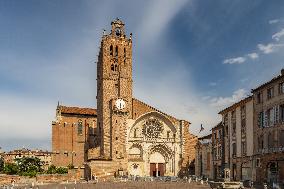
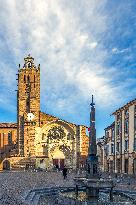
FRANCE, HAUTE-GARONNE (31TOULOUSE, SAINT ETIENNE CATHEDRAL AND ITS BELL TOWER BUILT BY CARDINAL JEAN D'ORLEANS (16TH CENTURY) Photo by Jean Isenmann/Only France/ABACAPRESS.COM

  •  
Illustration - Toulouse

Illustration - Toulouse

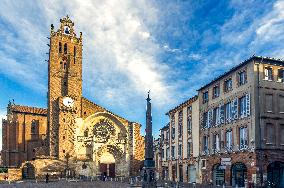
FRANCE, HAUTE-GARONNE (31TOULOUSE, SAINT ETIENNE CATHEDRAL AND ITS BELL TOWER BUILT BY CARDINAL JEAN D'ORLEANS (16TH CENTURY) Photo by Norbert Scanella/Only France/ABACAPRESS.COM

  •  
Illustration - Toulouse

Illustration - Toulouse

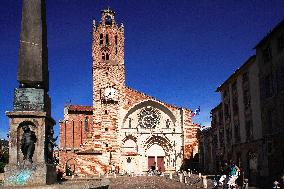
FRANCE, HAUTE-GARONNE (31TOULOUSE, SAINT ETIENNE CATHEDRAL AND ITS BELL TOWER BUILT BY CARDINAL JEAN D'ORLEANS (16TH CENTURY) Photo by Norbert Scanella/Only France/ABACAPRESS.COM

  •  
Illustration - Toulouse

Illustration - Toulouse

FRANCE. HAUTE-GARONNE (31) TOULOUSE, SAINT ETIENNE CATHEDRAL AND ITS BELL TOWER BUILT BY CARDINAL JEAN D'ORLEANS (16TH CENTURY) Photo by Stephane Frances/Only France/ABACAPRESS.COM

  •  
Illustration - Puy-de-Dome

Illustration - Puy-de-Dome

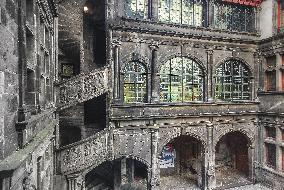
FRANCE. AUVERGNE. PUY-DE-DOME (63). CLERMONT-FERRAND. THE FONTFREYDE HOTEL (16TH CENTURY), RUE DES GRAS Photo by Luc Olivier/Only France/ABACAPRESS.COM

  •  
Pope Leo XIV Visits Vatican’s Astronomical Observatory - Ital

Pope Leo XIV Visits Vatican’s Astronomical Observatory - Ital

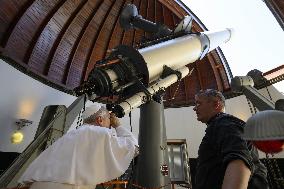
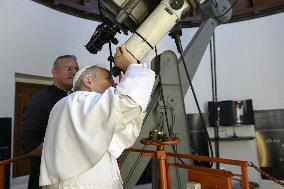
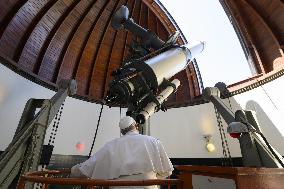
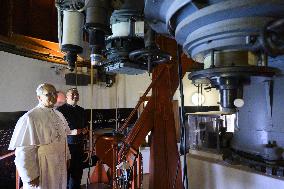
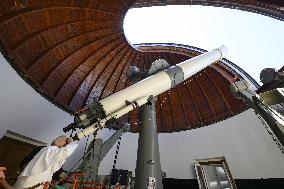
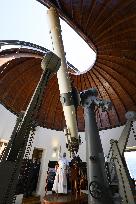
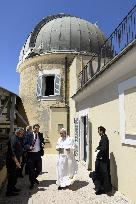
Pope Leo XIV visits the Vatican’s Astronomical Observatory (or Specola Vaticana) in Castel Gandolfo, near Rome, Italy, where he is on holidays on July 20, 2025. The Specola Vaticana can be considered one of the oldest astronomical observatories in the world. Its origins date back to the second half of the 16th century, when Pope Gregory XIII had the Tower of Winds built in the Vatican in 1578, and invited Jesuit astronomers and mathematicians of the Roman College to prepare a reform of the calendar, which had been promulgated in 1582. Since then, with significant continuity, the Holy See has never stopped showing an interest in and supporting astronomical research. Pius XI thus ordered that the Specola be transferred to his summer residence at Castel Gandolfo on the Alban Hills, some 25 kilometres south of Rome. In that environment so rich in history, a modern Observatory was re-founded and entrusted to Jesuits in 1935. It was equipped with three new telescopes and a laboratory for astrophysics, capable of sp

  •  
Pope Leo XIV Visits Vatican’s Astronomical Observatory - Ital

Pope Leo XIV Visits Vatican’s Astronomical Observatory - Ital

Pope Leo XIV visits the Vatican’s Astronomical Observatory (or Specola Vaticana) in Castel Gandolfo, near Rome, Italy, where he is on holidays on July 20, 2025. The Specola Vaticana can be considered one of the oldest astronomical observatories in the world. Its origins date back to the second half of the 16th century, when Pope Gregory XIII had the Tower of Winds built in the Vatican in 1578, and invited Jesuit astronomers and mathematicians of the Roman College to prepare a reform of the calendar, which had been promulgated in 1582. Since then, with significant continuity, the Holy See has never stopped showing an interest in and supporting astronomical research. Pius XI thus ordered that the Specola be transferred to his summer residence at Castel Gandolfo on the Alban Hills, some 25 kilometres south of Rome. In that environment so rich in history, a modern Observatory was re-founded and entrusted to Jesuits in 1935. It was equipped with three new telescopes and a laboratory for astrophysics, capable of sp

  •  
Pope Leo XIV Visits Vatican’s Astronomical Observatory - Ital

Pope Leo XIV Visits Vatican’s Astronomical Observatory - Ital

Pope Leo XIV visits the Vatican’s Astronomical Observatory (or Specola Vaticana) in Castel Gandolfo, near Rome, Italy, where he is on holidays on July 20, 2025. The Specola Vaticana can be considered one of the oldest astronomical observatories in the world. Its origins date back to the second half of the 16th century, when Pope Gregory XIII had the Tower of Winds built in the Vatican in 1578, and invited Jesuit astronomers and mathematicians of the Roman College to prepare a reform of the calendar, which had been promulgated in 1582. Since then, with significant continuity, the Holy See has never stopped showing an interest in and supporting astronomical research. Pius XI thus ordered that the Specola be transferred to his summer residence at Castel Gandolfo on the Alban Hills, some 25 kilometres south of Rome. In that environment so rich in history, a modern Observatory was re-founded and entrusted to Jesuits in 1935. It was equipped with three new telescopes and a laboratory for astrophysics, capable of sp

  •  
Pope Leo XIV Visits Vatican’s Astronomical Observatory - Ital

Pope Leo XIV Visits Vatican’s Astronomical Observatory - Ital

Pope Leo XIV visits the Vatican’s Astronomical Observatory (or Specola Vaticana) in Castel Gandolfo, near Rome, Italy, where he is on holidays on July 20, 2025. The Specola Vaticana can be considered one of the oldest astronomical observatories in the world. Its origins date back to the second half of the 16th century, when Pope Gregory XIII had the Tower of Winds built in the Vatican in 1578, and invited Jesuit astronomers and mathematicians of the Roman College to prepare a reform of the calendar, which had been promulgated in 1582. Since then, with significant continuity, the Holy See has never stopped showing an interest in and supporting astronomical research. Pius XI thus ordered that the Specola be transferred to his summer residence at Castel Gandolfo on the Alban Hills, some 25 kilometres south of Rome. In that environment so rich in history, a modern Observatory was re-founded and entrusted to Jesuits in 1935. It was equipped with three new telescopes and a laboratory for astrophysics, capable of sp

  •  
Pope Leo XIV Visits Vatican’s Astronomical Observatory - Ital

Pope Leo XIV Visits Vatican’s Astronomical Observatory - Ital

Pope Leo XIV visits the Vatican’s Astronomical Observatory (or Specola Vaticana) in Castel Gandolfo, near Rome, Italy, where he is on holidays on July 20, 2025. The Specola Vaticana can be considered one of the oldest astronomical observatories in the world. Its origins date back to the second half of the 16th century, when Pope Gregory XIII had the Tower of Winds built in the Vatican in 1578, and invited Jesuit astronomers and mathematicians of the Roman College to prepare a reform of the calendar, which had been promulgated in 1582. Since then, with significant continuity, the Holy See has never stopped showing an interest in and supporting astronomical research. Pius XI thus ordered that the Specola be transferred to his summer residence at Castel Gandolfo on the Alban Hills, some 25 kilometres south of Rome. In that environment so rich in history, a modern Observatory was re-founded and entrusted to Jesuits in 1935. It was equipped with three new telescopes and a laboratory for astrophysics, capable of sp

  •  
Pope Leo XIV Visits Vatican’s Astronomical Observatory - Ital

Pope Leo XIV Visits Vatican’s Astronomical Observatory - Ital

Pope Leo XIV visits the Vatican’s Astronomical Observatory (or Specola Vaticana) in Castel Gandolfo, near Rome, Italy, where he is on holidays on July 20, 2025. The Specola Vaticana can be considered one of the oldest astronomical observatories in the world. Its origins date back to the second half of the 16th century, when Pope Gregory XIII had the Tower of Winds built in the Vatican in 1578, and invited Jesuit astronomers and mathematicians of the Roman College to prepare a reform of the calendar, which had been promulgated in 1582. Since then, with significant continuity, the Holy See has never stopped showing an interest in and supporting astronomical research. Pius XI thus ordered that the Specola be transferred to his summer residence at Castel Gandolfo on the Alban Hills, some 25 kilometres south of Rome. In that environment so rich in history, a modern Observatory was re-founded and entrusted to Jesuits in 1935. It was equipped with three new telescopes and a laboratory for astrophysics, capable of sp

  •  
Pope Leo XIV Visits Vatican’s Astronomical Observatory - Ital

Pope Leo XIV Visits Vatican’s Astronomical Observatory - Ital

Pope Leo XIV visits the Vatican’s Astronomical Observatory (or Specola Vaticana) in Castel Gandolfo, near Rome, Italy, where he is on holidays on July 20, 2025. The Specola Vaticana can be considered one of the oldest astronomical observatories in the world. Its origins date back to the second half of the 16th century, when Pope Gregory XIII had the Tower of Winds built in the Vatican in 1578, and invited Jesuit astronomers and mathematicians of the Roman College to prepare a reform of the calendar, which had been promulgated in 1582. Since then, with significant continuity, the Holy See has never stopped showing an interest in and supporting astronomical research. Pius XI thus ordered that the Specola be transferred to his summer residence at Castel Gandolfo on the Alban Hills, some 25 kilometres south of Rome. In that environment so rich in history, a modern Observatory was re-founded and entrusted to Jesuits in 1935. It was equipped with three new telescopes and a laboratory for astrophysics, capable of sp

  •  
Illustration - Aerial Rome - Italy

Illustration - Aerial Rome - Italy

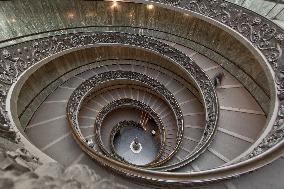
ITALY. LAZIO. ROME. VATICAN MUSEUMS. THE BRAMANTE STAIRCASE IS A FAMOUS MONUMENTAL SPIRAL STAIRCASE (ALLEGORICAL DOUBLE HELICOIDAL), WHICH ACTS AS AN EXIT FOR THE PUBLIC. RESERVED INITIALLY FOR RIDERS, IT WAS BUILT IN 1932 BY THE ITALIAN ARCHITECT GIUSEPPE MOMO (PONTIFICATE OF POPE PIUS XI) AND INSPIRED BY A NEARBY RENAISSANCE STAIRCASE FROM THE 16TH CENTURY BY THE ARCHITECT BRAMANTE Photo by Stephane Compoint/Only World/ABACAPRESS.COM

  •  
Illustration - Aerial Rome - Italy

Illustration - Aerial Rome - Italy

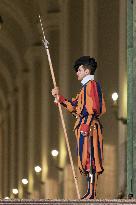
ITALY - ROMA - VATICAN : AT THE ENTRANCE OF ST. PETER'S BASILICA (AND TO ALL ACCESS TO THE VATICAN), THE FAMOUS SWISS GUARDS WHO HAVE BEEN WATCHING OVER THE POPE SINCE THE 16TH CENTURY. STILL DRESSED IN THEIR COSTUME DESIGNED BY, IT IS SAID, MICHELANGELO (ACTUALLY BY THE COMMANDER OF THE GUARD JULES REPOND IN 1914, WHICH WAS INSPIRED BY THE FRESCOES RAPHAEL). THE UNIFORMS ARE TAILOR-MADE AND BLESSED BY THE POPE FOR EACH GUARD. WHEN ONE OF THEM FINISHES HIS SERVICE, HIS UNIFORM MUST BE DESTROYED IN ORDER TO AVOID ANY FRAUDULENT OR ABUSIVE USE. Photo by Stephane Compoint/Only World/ABACAPRESS.COM

  •  
Illustration - Campomoro

Illustration - Campomoro

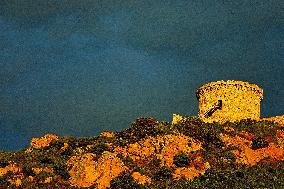
THE GENOESE TOWER OF CAMPOMORO (16TH CENTURY) IN A STORM, SOUTHERN CORSICA (2A), CORSICA, FRANCE Photo by Philippe Royer/Only France/ABACAPRESS.COM

  •  
Illustration - Bourges

Illustration - Bourges

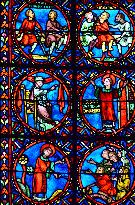
FRANCE. CHER (18) BOURGES 2028. EUROPEAN CAPITAL OF CULTURE. DETAIL OF THE STAINED GLASS WINDOWS IN SAINT-ETIENNE'S CATHEDRAL. THE STAINED GLASS WINDOWS WERE CREATED BETWEEN THE 13TH AND 16TH CENTURIES. THE 16TH-CENTURY WINDOWS ARE THE WORK OF MASTER GLASSWORKER JEAN LECUYER. Photo by Antoine Lorgnier/Only France/ABACAPRESS.COM

  •  
Illustration - Bourges

Illustration - Bourges

FRANCE. CHER (18) BOURGES 2028. EUROPEAN CAPITAL OF CULTURE. DETAIL OF THE STAINED GLASS WINDOWS IN SAINT-ETIENNE'S CATHEDRAL. THE STAINED GLASS WINDOWS WERE CREATED BETWEEN THE 13TH AND 16TH CENTURIES. THE 16TH-CENTURY WINDOWS ARE THE WORK OF MASTER GLASSWORKER JEAN LECUYER. Photo by Antoine Lorgnier/Only France/ABACAPRESS.COM

  •  
King Felipe VI and Queen Letizia Visit Burela

King Felipe VI and Queen Letizia Visit Burela

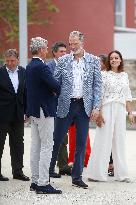
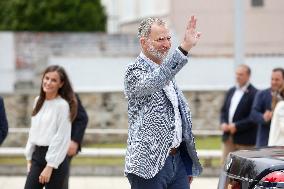
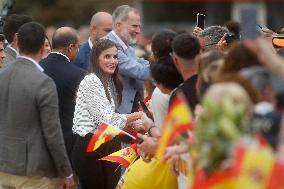
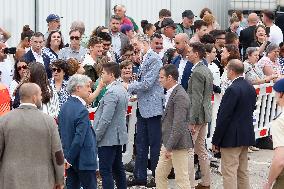
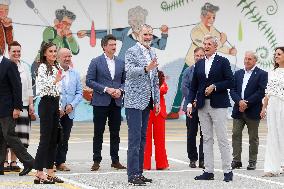
King Felipe VI and Queen Letizia greet residents during a visit to the town of Burela, June 17, 2025, in Burela, Lugo, Galicia (Spain). Burela is a seafaring town with a strong fishing tradition and an economy based on fishing, with its origins in the 16th century through whaling activity. Its port and fishing fleet are outstanding in Galicia, and the town is a tourist destination that combines maritime heritage, beaches and port activity? During their visit the King and Queen will visit the Fishermen's Guild, the Redeiras work ship and the old and new docks. Photo by Carlos Castro/Europa Press/ABACAPRESS.COM

  •  
King Felipe VI and Queen Letizia Visit Burela

King Felipe VI and Queen Letizia Visit Burela

King Felipe VI (r), greets the President of the Xunta de Galicia, Alfonso Serrano (l), during a visit to the town of Burela, June 17, 2025, in Burela, Lugo, Galicia (Spain). Burela is a seafaring town with a strong fishing tradition and an economy based on fishing, with its origins in the 16th century through whaling activity. Its port and fishing fleet are outstanding in Galicia, and the town is a tourist destination that combines maritime heritage, beaches and port activity? During their visit the King and Queen will visit the Fishermen's Guild, the Redeiras work ship and the old and new docks. Photo by Carlos Castro/Europa Press/ABACAPRESS.COM

  •  
King Felipe VI and Queen Letizia Visit Burela

King Felipe VI and Queen Letizia Visit Burela

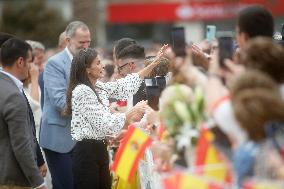
King Felipe VI and Queen Letizia greet residents during a visit to the town of Burela, June 17, 2025, in Burela, Lugo, Galicia (Spain). Burela is a seafaring town with a strong fishing tradition and an economy based on fishing, with its origins in the 16th century through whaling activity. Its port and fishing fleet are outstanding in Galicia, and the town is a tourist destination that combines maritime heritage, beaches and port activity? During their visit the King and Queen will visit the Fishermen's Guild, the Redeiras work ship and the old and new docks. Photo by Carlos Castro/Europa Press/ABACAPRESS.COM

  •  
King Felipe VI and Queen Letizia Visit Burela

King Felipe VI and Queen Letizia Visit Burela

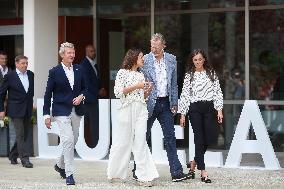
King Felipe VI (2r) and Queen Letizia (1r) during a visit to the town of Burela, June 17, 2025, in Burela, Lugo, Galicia (Spain). Burela is a seafaring town with a strong fishing tradition and an economy based on fishing, with its origins in the 16th century through whaling activity. Its port and fishing fleet are outstanding in Galicia, and the town is a tourist destination that combines maritime heritage, beaches and port activity? During their visit the King and Queen will visit the Fishermen's Guild, the Redeiras work ship and the old and new docks. Photo by Carlos Castro/Europa Press/ABACAPRESS.COM

  •  
King Felipe VI and Queen Letizia Visit Burela

King Felipe VI and Queen Letizia Visit Burela

King Felipe VI and Queen Letizia greet residents during a visit to the town of Burela, June 17, 2025, in Burela, Lugo, Galicia (Spain). Burela is a seafaring town with a strong fishing tradition and an economy based on fishing, with its origins in the 16th century through whaling activity. Its port and fishing fleet are outstanding in Galicia, and the town is a tourist destination that combines maritime heritage, beaches and port activity? During their visit the King and Queen will visit the Fishermen's Guild, the Redeiras work ship and the old and new docks. Photo by Carlos Castro/Europa Press/ABACAPRESS.COM

  •  
King Felipe VI and Queen Letizia Visit Burela

King Felipe VI and Queen Letizia Visit Burela

King Felipe VI and Queen Letizia greet residents during a visit to the town of Burela, June 17, 2025, in Burela, Lugo, Galicia (Spain). Burela is a seafaring town with a strong fishing tradition and an economy based on fishing, with its origins in the 16th century through whaling activity. Its port and fishing fleet are outstanding in Galicia, and the town is a tourist destination that combines maritime heritage, beaches and port activity? During their visit the King and Queen will visit the Fishermen's Guild, the Redeiras work ship and the old and new docks. Photo by Carlos Castro/Europa Press/ABACAPRESS.COM

  •  
King Felipe VI and Queen Letizia Visit Burela

King Felipe VI and Queen Letizia Visit Burela

King Felipe VI greets the locals during a visit to the town of Burela, June 17, 2025, in Burela, Lugo, Galicia (Spain). Burela is a seafaring town with a strong fishing tradition and an economy based on fishing, with its origins in the 16th century through whaling activity. Its port and fishing fleet are outstanding in Galicia, and the town is a tourist destination that combines maritime heritage, beaches and port activity? During their visit the King and Queen will visit the Fishermen's Guild, the Redeiras work ship and the old and new docks. Photo by Carlos Castro/Europa Press/ABACAPRESS.COM

  •  
King Felipe VI and Queen Letizia Visit Burela

King Felipe VI and Queen Letizia Visit Burela

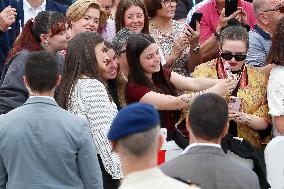
Queen Letizia takes a photo with some neighbors during a visit to the town of Burela, June 17, 2025, in Burela, Lugo, Galicia (Spain). Burela is a seafaring town with a strong fishing tradition and an economy based on fishing, with its origins in the 16th century through the whaling activity. Its port and fishing fleet are outstanding in Galicia, and the town is a tourist destination that combines maritime heritage, beaches and port activity? During their visit the King and Queen will visit the Fishermen's Guild, the Redeiras work ship and the old and new docks. Photo by Carlos Castro/Europa Press/ABACAPRESS.COM

  •  
King Felipe VI and Queen Letizia Visit Burela

King Felipe VI and Queen Letizia Visit Burela

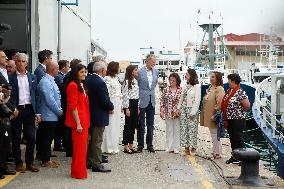
King Felipe VI (5r) and Queen Letizia (6r) during a visit to the town of Burela on June 17, 2025, in Burela, Lugo, Galicia (Spain). Burela is a seafaring town with a strong fishing tradition and an economy based on fishing, with its origins in the 16th century through whaling activity. Its port and fishing fleet are outstanding in Galicia, and the town is a tourist destination that combines maritime heritage, beaches and port activity? During their visit the King and Queen will visit the Fishermen's Guild, the Redeiras work ship and the old and new docks. Photo by Carlos Castro/Europa Press/ABACAPRESS.COM

  •  
King Felipe VI and Queen Letizia Visit Burela

King Felipe VI and Queen Letizia Visit Burela

King Felipe VI (5l) and Queen Letizia (2l), and the President of the Xunta de Galicia, Alfonso Rueda (2r), during a visit to the town of Burela, on June 17, 2025, in Burela, Lugo, Galicia (Spain). Burela is a seafaring town with a strong fishing tradition and an economy based on fishing, with its origins in the 16th century through whaling activity. Its port and fishing fleet are outstanding in Galicia, and the town is a tourist destination that combines maritime heritage, beaches and port activity? During their visit the King and Queen will visit the Fishermen's Guild, the Redeiras work ship and the old and new docks. Photo by Carlos Castro/Europa Press/ABACAPRESS.COM

  •  
Deepest wreck in French waters

Deepest wreck in French waters

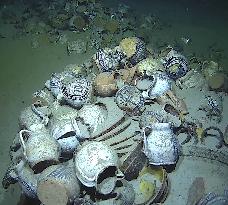
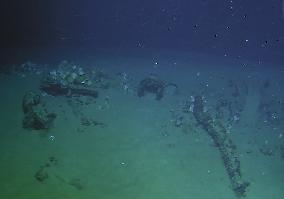
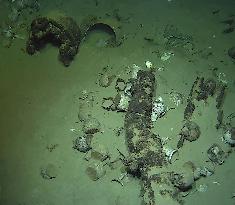
This handout photograph released by the French Navy (Marine Nationale) on June 11, 2025, shows a wreck containing globular jugs with pinched spouts, marked with the IHS monogram of Christ or with plant or geometric motifs lying on the sand off the coast near Ramatuelle, south-eastern France on June 3, 2025. The Prefecture Maritime de Mediterranee and the Ministry of Culture announced on June 11, 2025, that the deepest wreck in French waters was spotted in March 2025, when a 16th-century merchant ship was discovered off Ramatuelle, south-eastern France, some 2,567 metres below the surface of the Mediterranean Sea. Photo by Handout/Marine Nationale/ABACAPRESS.COM RESTRICTED TO EDITORIAL USE TO ILLUSTRATE THE EVENT AS SPECIFIED IN THE CAPTION

  •  
Deepest wreck in French waters

Deepest wreck in French waters

This handout photograph released by the French Navy (Marine Nationale) on June 11, 2025, shows a wreck containing globular jugs with pinched spouts, marked with the IHS monogram of Christ or with plant or geometric motifs lying on the sand off the coast near Ramatuelle, south-eastern France on June 3, 2025. The Prefecture Maritime de Mediterranee and the Ministry of Culture announced on June 11, 2025, that the deepest wreck in French waters was spotted in March 2025, when a 16th-century merchant ship was discovered off Ramatuelle, south-eastern France, some 2,567 metres below the surface of the Mediterranean Sea. Photo by Handout/Marine Nationale/ABACAPRESS.COM RESTRICTED TO EDITORIAL USE TO ILLUSTRATE THE EVENT AS SPECIFIED IN THE CAPTION

  •  
Deepest wreck in French waters

Deepest wreck in French waters

This handout photograph released by the French Navy (Marine Nationale) on June 11, 2025, shows a wreck containing globular jugs with pinched spouts, marked with the IHS monogram of Christ or with plant or geometric motifs lying on the sand off the coast near Ramatuelle, south-eastern France on June 3, 2025. The Prefecture Maritime de Mediterranee and the Ministry of Culture announced on June 11, 2025, that the deepest wreck in French waters was spotted in March 2025, when a 16th-century merchant ship was discovered off Ramatuelle, south-eastern France, some 2,567 metres below the surface of the Mediterranean Sea. Photo by Handout/Marine Nationale/ABACAPRESS.COM RESTRICTED TO EDITORIAL USE TO ILLUSTRATE THE EVENT AS SPECIFIED IN THE CAPTION

  •  
Deepest wreck in French waters

Deepest wreck in French waters

This handout photograph released by the French Navy (Marine Nationale) on June 11, 2025, shows a wreck containing globular jugs with pinched spouts, marked with the IHS monogram of Christ or with plant or geometric motifs lying on the sand off the coast near Ramatuelle, south-eastern France on June 3, 2025. The Prefecture Maritime de Mediterranee and the Ministry of Culture announced on June 11, 2025, that the deepest wreck in French waters was spotted in March 2025, when a 16th-century merchant ship was discovered off Ramatuelle, south-eastern France, some 2,567 metres below the surface of the Mediterranean Sea. Photo by Handout/Marine Nationale/ABACAPRESS.COM RESTRICTED TO EDITORIAL USE TO ILLUSTRATE THE EVENT AS SPECIFIED IN THE CAPTION

  •  
Deepest wreck in French waters

Deepest wreck in French waters

This handout photograph released by the French Navy (Marine Nationale) on June 11, 2025, shows a wreck containing globular jugs with pinched spouts, marked with the IHS monogram of Christ or with plant or geometric motifs lying on the sand off the coast near Ramatuelle, south-eastern France on June 3, 2025. The Prefecture Maritime de Mediterranee and the Ministry of Culture announced on June 11, 2025, that the deepest wreck in French waters was spotted in March 2025, when a 16th-century merchant ship was discovered off Ramatuelle, south-eastern France, some 2,567 metres below the surface of the Mediterranean Sea. Photo by Handout/Marine Nationale/ABACAPRESS.COM RESTRICTED TO EDITORIAL USE TO ILLUSTRATE THE EVENT AS SPECIFIED IN THE CAPTION

  •  
Deepest wreck in French waters

Deepest wreck in French waters

This handout photograph released by the French Navy (Marine Nationale) on June 11, 2025, shows a wreck containing globular jugs with pinched spouts, marked with the IHS monogram of Christ or with plant or geometric motifs lying on the sand off the coast near Ramatuelle, south-eastern France on June 3, 2025. The Prefecture Maritime de Mediterranee and the Ministry of Culture announced on June 11, 2025, that the deepest wreck in French waters was spotted in March 2025, when a 16th-century merchant ship was discovered off Ramatuelle, south-eastern France, some 2,567 metres below the surface of the Mediterranean Sea. Photo by Handout/Marine Nationale/ABACAPRESS.COM RESTRICTED TO EDITORIAL USE TO ILLUSTRATE THE EVENT AS SPECIFIED IN THE CAPTION

  •  
Deepest wreck in French waters

Deepest wreck in French waters

This handout photograph released by the French Navy (Marine Nationale) on June 11, 2025, shows a wreck containing globular jugs with pinched spouts, marked with the IHS monogram of Christ or with plant or geometric motifs lying on the sand off the coast near Ramatuelle, south-eastern France on June 3, 2025. The Prefecture Maritime de Mediterranee and the Ministry of Culture announced on June 11, 2025, that the deepest wreck in French waters was spotted in March 2025, when a 16th-century merchant ship was discovered off Ramatuelle, south-eastern France, some 2,567 metres below the surface of the Mediterranean Sea. Photo by Handout/Marine Nationale/ABACAPRESS.COM RESTRICTED TO EDITORIAL USE TO ILLUSTRATE THE EVENT AS SPECIFIED IN THE CAPTION

  •  

Traditional parade in Kanazawa

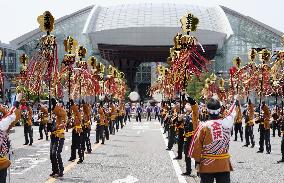
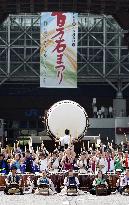
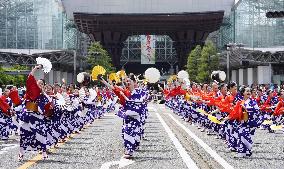
KANAZAWA, Japan, June 9 Kyodo - Men perform during a traditional parade in Kanazawa in Ishikawa Prefecture, central Japan, on June 7, 2025, reenacting 16th-century warlord Maeda Toshiie's entry into Kanazawa Castle. (Kyodo)

  •  
Traditional parade in Kanazawa

Traditional parade in Kanazawa

Actor Yoshizumi Ishihara (on horse) reenacts the entry of 16th-century warlord Maeda Toshiie into Kanazawa Castle during a traditional parade in Kanazawa in Ishikawa Prefecture, central Japan, on June 7, 2025.

  •  
Traditional parade in Kanazawa

Traditional parade in Kanazawa

Men perform during a traditional parade in Kanazawa in Ishikawa Prefecture, central Japan, on June 7, 2025, reenacting 16th-century warlord Maeda Toshiie's entry into Kanazawa Castle.

  •  
Traditional parade in Kanazawa

Traditional parade in Kanazawa

Drummers perform during a traditional parade in Kanazawa in Ishikawa Prefecture, central Japan, on June 7, 2025, reenacting 16th-century warlord Maeda Toshiie's entry into Kanazawa Castle.

  •  
Traditional parade in Kanazawa

Traditional parade in Kanazawa

Women dressed in kimono dance during a traditional parade in Kanazawa in Ishikawa Prefecture, central Japan, on June 7, 2025, reenacting 16th-century warlord Maeda Toshiie's entry into Kanazawa Castle.

  • Main
  • Top
  • Editorial
  • Creative
  • About Us
  • About ILG
  • Terms of use
  • Company
  • BEHIND
  • Price List
  • Single Plan
  • Monthly Plan
  • Services
  • Shooting
  • Rights Clearance
  • Support
  • FAQ
  • How To Buy
  • Contact Us
  • Become a Partner

© KYODO NEWS IMAGES INC

All Rights Reserved.

  • Editorial
  • Olympics
  • News
  • Sports
  • Japan
  • Tech
  • Royal
  • Disaster
  • NorthKorea
  • Old Japan
  • SNS
  • Creative
  • Food
  • Japan
  • Landscape
  • Animal
  • Popular
  • #Ukraine
  • #Russia
  • #coronavirus
  • #N. Korea
  • #Thailand
  • #China
  • #Ukraine
  • #Russia
  • #coronavirus
  • #N. Korea
  • #Thailand
  • #China
  • Food
  • Japan
  • Landscape
  • Animal
  • Olympics
  • News
  • Sports
  • Japan
  • Tech
  • Royal
  • Disaster
  • NorthKorea
  • Old Japan
  • SNS