•  
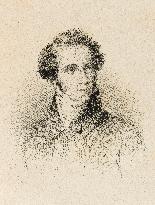
Bellini, Vincenzo 1801 - 1835

Bellini, Vincenzo 1801 - 1835

Vincenzo Salvatore Carmelo Francesco Bellini. Sicilian opera composer and the quintessential composer of Bel canto opera Date: 1801 - 1835

  •  
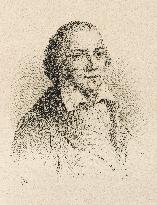
Cimarosa, Domenico 1749-1801

Cimarosa, Domenico 1749-1801

Domenico Cimarosa. Neapolitan composer and prolific composer of more than eighty operas Date: 1749-1801

  •  
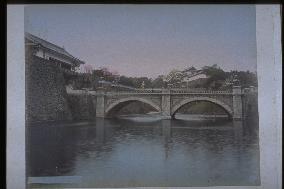
Niju-bashi Bridge,the Imperial Palace

Niju-bashi Bridge,the Imperial Palace

Kakumon Bridge spanning the inner moat (Nijubashi Moat) is said to have been built during the Kansei Period (1789-1801). During the Edo and Meiji Periods, the bridge in the foreground was called Nishinomaru Ote-bashi and the one behind it Nishinomaru Shimojo-bashi. The names currently used by the Imperial House Agency are Imperial Palace Main Gate Stone Bridge and Imperial Palace Main Gate Iron Bridge, respectively. Since 1948, commoners have been allowed to cross these bridges on January 2 and on the Emperor's birthday. Mid-Meiji Period.==Date:unknown, Place:Tokyo, Photo:unknown, (Credit:Nagasaki University Library/Kyodo News Images) [Cabinet Number88‐36‐0]

  •  
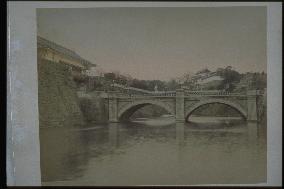
Niju-bashi Bridge,the Imperial Palace

Niju-bashi Bridge,the Imperial Palace

Kakumon Bridge spanning the inner moat (Nijubashi Moat) is said to have been built during the Kansei Period (1789-1801). During the Edo and Meiji Periods, the bridge in the foreground was called Nishinomaru Ote-bashi and the one behind it Nishinomaru Shimojo-bashi. The names currently used by the Imperial House Agency are Imperial Palace Main Gate Stone Bridge and Imperial Palace Main Gate Iron Bridge, respectively. Since 1948, commoners have been allowed to cross these bridges on January 2 and on the Emperor's birthday. Mid-Meiji Period.==Date:unknown, Place:Tokyo, Photo:unknown, (Credit:Nagasaki University Library/Kyodo News Images) [Cabinet Number87‐1‐0]

  •  
Shinobazu Pond

Shinobazu Pond

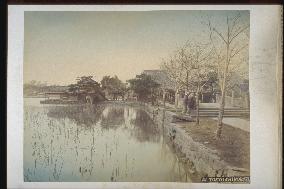
Benten-do on Nakanoshima and the path to it are seen at Shinobazu Pond. The Buddhist priest Tenkai modeled the pond after Lake Biwa and built the shrine to worship the deity Benzaiten of Chikubushima. The stone bridge was built between 1789 and 1801. Numerous dead lotus stems remain in the water, indicating that the season is winter.==Date:unknown, Place:Tokyo, Photo:unknown, (Credit:Nagasaki University Library/Kyodo News Images) [Cabinet Number47‐1‐0]

  •  
A teahouse at Oji

A teahouse at Oji

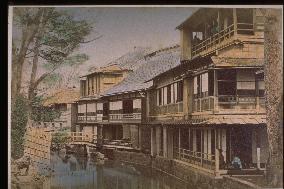
The restaurant Ogiya in Oji during the early Meiji era. Opened during the Kanei years of 1789-1801, it stands at the shore of the Otonashi River (Shaukujii River) and is the head of the Kanto Inari. It was a popular restaurant among people visiting Oji Inari, a famous spot during the Edo Era known in the Rakugo Fox of Oji story. The building to the fore does not have a third floor, so this picture must have been taken before the reconstruction.==Date:unknown, Place:Tokyo, Photo:F. Beato, (Credit:Nagasaki University Library/Kyodo News Images) [Cabinet Number28‐5‐0]

  •  
A teahouse at Oji

A teahouse at Oji

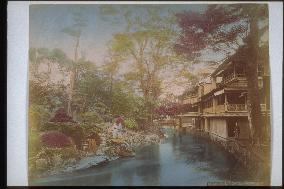
The restaurant Ogiya in Oji, in the early years of the Meiji era. It was opened during the Kansei era (1789-1801), and stands at the shore of Otonashi River (Shakujii River). It is the head of Kanto Inari. It is a famous restaurant for worshippers of the Inari in Oji, which was one of the famous spots in Edo. It is known for its appearance in the rakugo story Oji no Kitsune (Fox of Oji).==Date:unknown, Place:Tokyo, Photo:unknown, (Credit:Nagasaki University Library/Kyodo News Images) [Cabinet Number24‐47‐0]

  •  
A teahouse at Oji

A teahouse at Oji

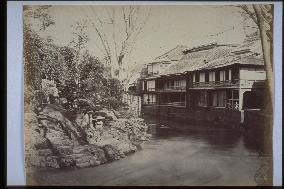
The restaurant Ogiya in Oji in the early Meiji era. It was opened during the Kansei era (1789-1801) and stood along the Otonashi River (Shakujii River). It is a popular stop for people worshipping at Oji Inari, which is the head Inari Shrine in the Kanto area. It is also famous as a tourist spot and for the rakugo story entitled Fox of Oji .==Date:unknown, Place:Tokyo, Photo:unknown, (Credit:Nagasaki University Library/Kyodo News Images) [Cabinet Number14‐9‐0]

  •  
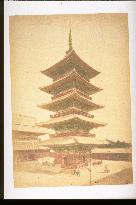
Five-story pagoda at Shitennoji Temple

Five-story pagoda at Shitennoji Temple

The five-story tower at Shitennoji Temple was destroyed by fire after being struck by lightning on December 5, 1801. The tower restored in 1813 is seen in this photo. The buildings were destroyed by fire during the war in 1945 but were restored again in 1963 using reinforced concrete.==Date:unknown, Place:Osaka, Photo:unknown, (Credit:Nagasaki University Library/Kyodo News Images) [Cabinet Number13‐27‐0]

  • Main
  • Top
  • Editorial
  • Creative
  • About Us
  • About ILG
  • Terms of use
  • Company
  • BEHIND
  • Price List
  • Single Plan
  • Monthly Plan
  • Services
  • Shooting
  • Rights Clearance
  • Support
  • FAQ
  • How To Buy
  • Contact Us
  • Become a Partner

© KYODO NEWS IMAGES INC

All Rights Reserved.

  • Editorial
  • Olympics
  • News
  • Sports
  • Japan
  • Tech
  • Royal
  • Disaster
  • NorthKorea
  • Old Japan
  • SNS
  • Creative
  • Food
  • Japan
  • Landscape
  • Animal
  • Popular
  • #Ukraine
  • #China
  • #coronavirus
  • #N. Korea
  • #Thailand
  • #Russia
  • #Ukraine
  • #China
  • #coronavirus
  • #N. Korea
  • #Thailand
  • #Russia
  • Food
  • Japan
  • Landscape
  • Animal
  • Olympics
  • News
  • Sports
  • Japan
  • Tech
  • Royal
  • Disaster
  • NorthKorea
  • Old Japan
  • SNS