•  
Behind The Scenes Of The Vatican

Behind The Scenes Of The Vatican

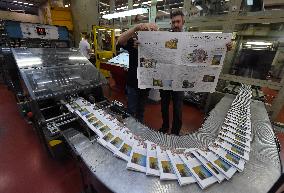
The making of 'L'Osservatore Romano' the Vatican's daily newspaper on October 2014. Like all modern nation States, the Vatican also has its own press. Although not considered an official mouthpiece for the Vatican, 'l'Osservatore Romano' is nonetheless the Holy See's most significant media venue. It is the only newspaper printed by the Vatican presses. Since 1861, each day 50,000 copies of the daily edition have been released at 3 pm. Written in Italian, the daily is supplemented by weekly editions in French, German, Spanish and Portuguese, as well as a monthly in Polish. All of the Holy See's current events as well as articles illustrating Church life and major political, economic and social events occurring throughout the world are all published in the Vatican's daily paper. Photo by Eric Vandeville/ABACAPRESS.COM

  •  
Unrest in Ukraine

Unrest in Ukraine

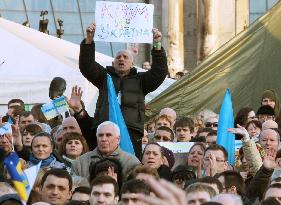
KIEV, Ukraine - A man raises a placard reading "Crimea belongs to Ukraine" at a rally to commemorate the 200th anniversary of the birth of Ukrainian poet Taras Shevchenko (1814-1861) in Independence Square in Kiev, the capital of Ukraine, on March 9, 2014. More than 10,000 people participated in the rally, where many speakers criticized Russia's effective control of the southern Ukrainian region of Crimea.

  •  
Unrest in Ukraine

Unrest in Ukraine

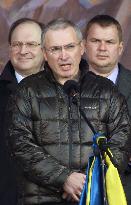
KIEV, Ukraine - Former Russian oil tycoon Mikhail Khodorkovsky, who was a political foe of Russian President Vladimir Putin, speaks at a rally to commemorate the 200th anniversary of the birth of Ukrainian poet Taras Shevchenko (1814-1861) in Independence Square in Kiev, Ukraine, on March 9, 2014. Khodorkovsky, who was serving a prison term for tax evasion and other charges, was freed in late 2013 when Putin pardoned him.

  •  
Tomosaburo Kato

Tomosaburo Kato

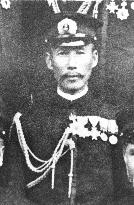
Became Japan's 21st prime minister on June 12, 1922 but died in office on Aug. 24, 1923. In 1921, Kato headed Japan's delegation to the Washington Conference and signed the Naval Limitation Treaty of 1922. Born Feb. 22, 1861, died Aug. 24, 1923.

  •  
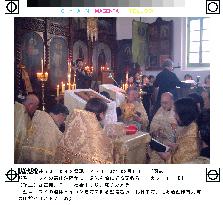
Remains of St. Nikolai honored at Hakodate church

Remains of St. Nikolai honored at Hakodate church

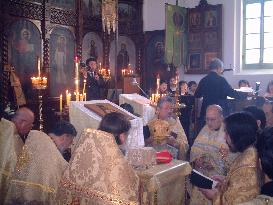
HAKODATE, Japan - A ceremony to officially mark the transfer of the remains of St. Nikolai (1836-1912) from Tokyo is held at the orthodox church in Hakodate, Hokkaido, on Feb. 16. Nikolai, sainted in 1970, established the first Russian Orthodox mission in Japan. He first came to Japan in 1861 as a monk affiliated with the Russian consulate in Hakodate.

  •  
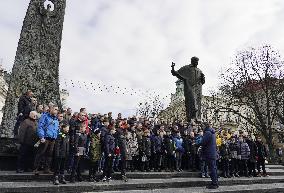
Statue of Ukrainian poet Taras Shevchenko

Statue of Ukrainian poet Taras Shevchenko

People gather in front of a statue of Taras Shevchenko (1814-1861) in Lviv, western Ukraine, as they celebrate the 208th anniversary of the poet's birth on March 9, 2022, amid the Russian invasion of the country.

  •  
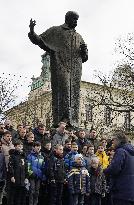
Statue of Ukrainian poet Taras Shevchenko

Statue of Ukrainian poet Taras Shevchenko

People gather in front of a statue of Taras Shevchenko (1814-1861) in Lviv, western Ukraine, as they celebrate the 208th anniversary of the poet's birth on March 9, 2022, amid the Russian invasion of the country.

  •  
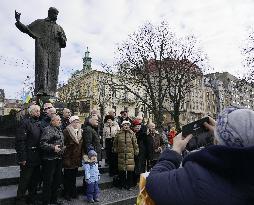
Statue of Ukrainian poet Taras Shevchenko

Statue of Ukrainian poet Taras Shevchenko

People pose for a photo in front of a statue of Taras Shevchenko (1814-1861) in Lviv, western Ukraine, as they celebrate the 208th anniversary of the poet's birth on March 9, 2022, amid the Russian invasion of the country.

  •  
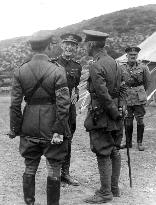
General Sir Ian Hamilton and General Ellison, Kephalos

General Sir Ian Hamilton and General Ellison, Kephalos

General Sir Ian Standish Monteith Hamilton (1853-1947), British army officer, best known for commanding the ill-fated Mediterranean Expeditionary Force in the Dardanelles during the Battle of Gallipoli. He also served in the First and Second Boer Wars, the Second Anglo-Afghan War, the Mahdist War, and the Russo-Japanese War. Seen here at Kephalos, talking with General Sir Gerald Francis Ellison (1861-1947) on the morning of his departure for England. Date: October 1915

  •  
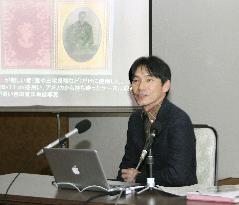
Photo of feudal warrior likely taken by John Manjiro: researcher

Photo of feudal warrior likely taken by John Manjiro: researcher

Akiyoshi Tani, a specialist at the University of Tokyo's Historiographical Institute, explains in Kochi, western Japan, on March 13, 2015, his research results that show a portrait photo of the Tosa domain's reform-minded "samurai" warrior Yoshida Toyo was likely taken by John Manjiro in 1861 in Edo, today's Tokyo. The photo was one of the first wet collodion process photography shots in Japan. Manjiro was the first Japanese known to have studied in the United States. (Kyodo) ==Kyodo

  •  
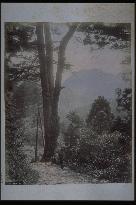
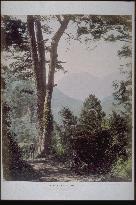
Near Hatayado,on the old Hakone Road

Near Hatayado,on the old Hakone Road

This photo depicts the Old Hakone Highway and Mt. Futago viewed from around the teahouse at Yumoto. Since the telegraph pole made in 1873 between Tokyo and Nagasaki is present, and therefore, this photo was taken after that time. The cobblestone paved road was renovated between 1861 to 64. This site was a resting place and a man carrying rectangular wooden holder on his back and a worker are resting. There are many photos like this one existing.==Date:unknown, Place:Hakone, Photo:unknown, (Credit:Nagasaki University Library/Kyodo News Images) [Cabinet Number93‐34‐0]

  •  
Mt. Futago seen from Yumoto

Mt. Futago seen from Yumoto

Futagoyama Mountain and the old Tokaido Highway viewed from around Yumoto Teahouse. This photo must have been taken after 1873 when the telegraph line was placed between Tokyo and Nagasaki because the telegraph line and the electric pole are visible. The stone pavement which was renovated extensively between 1861 and 1864 still remains. A worker and a woman carrying a wooden rack on the back are visible.==Date:unknown, Place:Hakone, Photo:unknown, (Credit:Nagasaki University Library/Kyodo News Images) [Cabinet Number86‐10‐0]

  •  
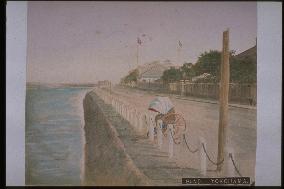
Kaigan-dori Avenue,Yokohama

Kaigan-dori Avenue,Yokohama

This is the area around No.4 and No.5 Kaigandori (Bund). The street did not exist in the foreign settlement at the time the port opened, but was probably laid during the Bunkyu Period (1861-1864). Pine trees were planted in 1885 and the area became more like a promenade. This photograph was taken before the trees were planted.==Date:unknown, Place:Yokohama, Photo:unknown, (Credit:Nagasaki University Library/Kyodo News Images) [Cabinet Number64‐15‐0]

  •  
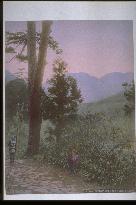
Near Hatayado,on the old Hakone Road

Near Hatayado,on the old Hakone Road

This photo depicts the Old Hakone Highway and Mt. Futago viewed from around the teahouse at Yumoto. The telegraph pole made in 1873 between Tokyo and Nagasaki is not present, and therefore, this photo was taken before that time. The cobblestone paved road was renovated between 1861 to 64. This site appears to have been a resting place and two workers are relaxing. There are many photos like this one existing.==Date:unknown, Place:Hakone, Photo:unknown, (Credit:Nagasaki University Library/Kyodo News Images) [Cabinet Number47‐14‐0]

  •  
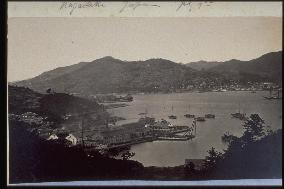
Akunoura factory of NAGASAKI iron foundry

Akunoura factory of NAGASAKI iron foundry

The Nagasaki Iron Foundry, established in 1861, was sold and became the Mitsubishi Nagasaki Shipyard Akunoura Machinery Factory in 1884. The buildings of the factory and facilities including a 50-ton crane can be seen. On the opposite bank is the vicinity of Nishizaka and Daikoku-machi.==Date:About 1879, Place:Nagasaki, Photo:Ueno Hikoma, (Credit:Nagasaki University Library/Kyodo News Images) [Cabinet Number21‐3‐0]

  •  
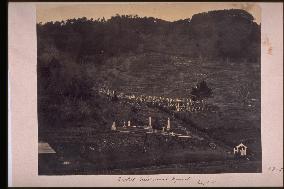
Cemetery for foreigners at NAGASAKI kawakamicho

Cemetery for foreigners at NAGASAKI kawakamicho

Written March 1866 by Beato. This is the Oura International Cemetery in Kawakami-machi built by agreement between the British consul and Japanese officials in 1861. It was closed in 1888. There are still no houses around the cemetery, and many of the cemetery plots are still vacant.==Date:1866, Place:Nagasaki, Photo:F. Beato, (Credit:Nagasaki University Library/Kyodo News Images) [Cabinet Number17‐5‐0]

  •  
A panoramic view of Kobe

A panoramic view of Kobe

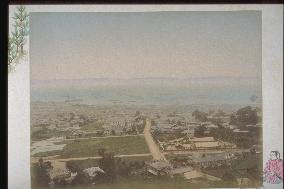
A view of Kobe Harbour from Yamate. On the occasion of the opening of the harbour to foreigners in 1861, the area to the east from Ikuta River to Uji River was designated as a foreign settlement. This area developed into what is now Kobe City.==Date:unknown, Place:Kobe, Photo:Ogawa Kazumasa, (Credit:Nagasaki University Library/Kyodo News Images) [Cabinet Number5‐47‐0]

  •  
Remains of St. Nikolai honored at Hakodate church

Remains of St. Nikolai honored at Hakodate church

HAKODATE, Japan - A ceremony to officially mark the transfer of the remains of St. Nikolai (1836-1912) from Tokyo is held at the orthodox church in Hakodate, Hokkaido, on Feb. 16. Nikolai, sainted in 1970, established the first Russian Orthodox mission in Japan. He first came to Japan in 1861 as a monk affiliated with the Russian consulate in Hakodate.

  •  
Panoramic view of NAGASAKI

Panoramic view of NAGASAKI

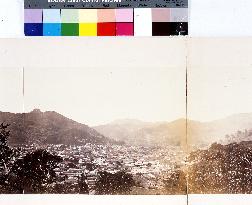
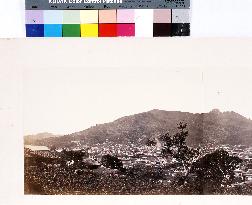
This photo captures the city of Nagasaki and Seitokukan from the hill of Higashiyamate around 1865. The two white buildings on the right hill are Yojosho (hospital) built in 1861 and the one on the left is Igakusho (medical school) attached to it. The big building on its left is Bunseki-Kyurisho where physics and chemistry were taught. They are merged and renamed as Seitokukan in 1865. This is the place where the modern medical education and hospital in Japan began and the root of Nagasaki University School of Medicine. The roof of Shokakuji temple is seen next to it. The houses on the lower right are Tojin-yashiki (Chinese residences). When looking closely, the hall and decorations can be seen.==Date:1865, Place:Nagasaki, Photo:unknown, (Credit:Nagasaki University Library/Kyodo News Images) [Cabinet Number124‐351‐0]

  •  
Panoramic view of NAGASAKI

Panoramic view of NAGASAKI

This photo captures the city of Nagasaki and Seitokukan from the hill of Higashiyamate around 1865. The two white buildings on the right hill are Yojosho (hospital) built in 1861 and the one on the left is Igakusho (medical school) attached to it. The big building on its left is Bunseki-Kyurisho where physics and chemistry were taught. They are merged and renamed as Seitokukan in 1865. This is the place where the modern medical education and hospital in Japan began and the root of Nagasaki University School of Medicine. The roof of Shokakuji temple is seen next to it. The houses on the lower right are Tojin-yashiki (Chinese residences). When looking closely, the hall and decorations can be seen.==Date:1865, Place:Nagasaki, Photo:unknown, (Credit:Nagasaki University Library/Kyodo News Images) [Cabinet Number124‐351‐0]

  •  
Panoramic view of NAGASAKI

Panoramic view of NAGASAKI

This photo captures the city of Nagasaki and Seitokukan from the hill of Higashiyamate around 1865. The two white buildings on the right hill are Yojosho (hospital) built in 1861 and the one on the left is Igakusho (medical school) attached to it. The big building on its left is Bunseki-Kyurisho where physics and chemistry were taught. They are merged and renamed as Seitokukan in 1865. This is the place where the modern medical education and hospital in Japan began and the root of Nagasaki University School of Medicine. The roof of Shokakuji temple is seen next to it. The houses on the lower right are Tojin-yashiki (Chinese residences). When looking closely, the hall and decorations can be seen.==Date:1865, Place:Nagasaki, Photo:unknown, (Credit:Nagasaki University Library/Kyodo News Images) [Cabinet Number124‐351‐0]

  •  
Panoramic view of NAGASAKI

Panoramic view of NAGASAKI

This photo captures the city of Nagasaki and Seitokukan from the hill of Higashiyamate around 1865. The two white buildings on the right hill are Yojosho (hospital) built in 1861 and the one on the left is Igakusho (medical school) attached to it. The big building on its left is Bunseki-Kyurisho where physics and chemistry were taught. They are merged and renamed as Seitokukan in 1865. This is the place where the modern medical education and hospital in Japan began and the root of Nagasaki University School of Medicine. The roof of Shokakuji temple is seen next to it. The houses on the lower right are Tojin-yashiki (Chinese residences). When looking closely, the hall and decorations can be seen.==Date:1865, Place:Nagasaki, Photo:unknown, (Credit:Nagasaki University Library/Kyodo News Images) [Cabinet Number124‐351‐0]

  •  
Viewing Oura Foreign Settlement from Japanese Garden next to Chief Officer’s Residence at Dejima

Viewing Oura Foreign Settlement from Japanese Garden next to Chief Officer’s Residence at Dejima

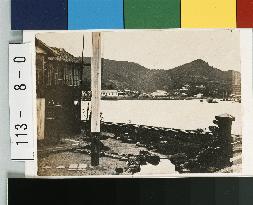
This is one of the oldest scenic photographs of Nagasaki. It was taken by Milton Miller, who came to Nagasaki in 1862, not long after the opening of Japan's doors in 1859. Miller seems to have visited the residence of the chief factor at the Dejima Dutch Factory. Taken from the garden beside the residence, the photograph provides a distant view of the foreign settlement where the 2nd phase of land reclamation work had reached completion and houses were being built. The column on the left is a flag pole to raise the Dutch national flag. The roof of Myogyoji Temple (temporary British Consulate at the time) is visible. The Glover house has not been built yet. This photograph is also contained in the Bauduin Collection donated to Leiden University.==Date:1861-62?, Place:Nagasaki, Photo:, (Credit:Nagasaki University Library/Kyodo News Images) [Cabinet Number113‐8‐0]

  •  
Kyogoku Notonokami Taka’akira (Metsuke Officer In Charge of Foreign Affairs in Shogunate Government)

Kyogoku Notonokami Taka’akira (Metsuke Officer In Charge of Foreign Affairs in Shogunate Government)

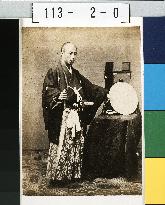
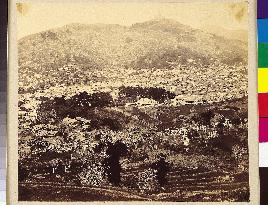
Kyogoku Notonokami Taka’akira (Metsuke Officer In Charge of Foreign Affairs in Shogunate Government)==Date:1861-62?, Place:Hong Kong, Photo:, (Credit:Nagasaki University Library/Kyodo News Images)

  •  
The Oura foreign settlement and Nagasaki Harbour seen from Don-no-Yama

The Oura foreign settlement and Nagasaki Harbour seen from Don-no-Yama

This photo captures the area around the Oura River as viewed from mid-hill Mt. Donnoyama. At the mouth of the river stands Sagarimatsu Bridge, built in 1869 for the horse trail in the settlement. A bit upstream stands Benten Bridge built during the Bunkyu period (1861-1864) when the land was reclaimed for the Oura settlement. The U-shaped building visible next to Myogyoji Temple on the left hill is the Belle Vue Hotel. On the other side of the port is the Nagasaki Shipyard controlled by the Ministry of Engineering. Since the dormitory for foreign employees built in April 1874, doesn’t show in this photo, it must have been taken before then.==Date:1872, Place:Nagasaki, Photo:Ueno Hikoma, (Credit:Nagasaki University Library/Kyodo News Images)

  •  
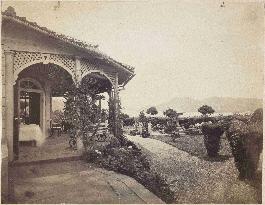
The Glover House and garden

The Glover House and garden

The Glover residence and the garden at Minamiyamate No. 1. The house was built in 1863 and was the residence of Thomas Glover who came to Nagasaki in 1861 as a representative of Jardine, Matheson & Company. It is the oldest western-style building in Japan. The garden is well maintained. Many historical figures such as Sakamoto Ryoma, Ito Shunsuke and Inoue Bunta among others had business talks here.==Date:about 1874, Place:Nagasaki, Photo:unknown, (Credit:Nagasaki University Library/Kyodo News Images)

  •  
A scene of a play

A scene of a play

A scene of a play==Date:1861-62?, Place:Nagasaki, Photo:, (Credit:Nagasaki University Library/Kyodo News Images)

  •  
Matsudaira Iwaminokami Yasunao (Vice-Delegate of the First Iwakuni Mission to the West)

Matsudaira Iwaminokami Yasunao (Vice-Delegate of the First Iwakuni Mission to the West)

Matsudaira Iwaminokami Yasunao (Vice-Delegate of the First Iwakuni Mission to the West)==Date:1861-62?, Place:Hong Kong, Photo:, (Credit:Nagasaki University Library/Kyodo News Images)

  •  
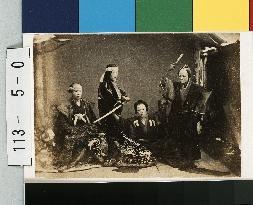
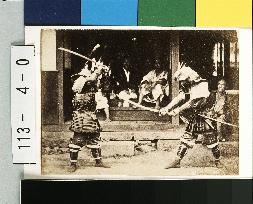
Battle between armed soldiers

Battle between armed soldiers

Battle between armed soldiers==Date:1861-62?, Place:Nagasaki, Photo:, (Credit:Nagasaki University Library/Kyodo News Images)

  •  
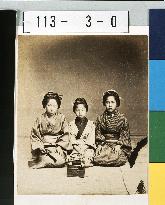
Three women

Three women

Three women==Date:1861-62?, Place:Nagasaki, Photo:, (Credit:Nagasaki University Library/Kyodo News Images)

  •  
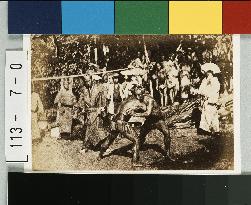
Sumo wrestling

Sumo wrestling

Sumo wrestling==Date:1861-62?, Place:Nagasaki, Photo:, (Credit:Nagasaki University Library/Kyodo News Images)

  •  
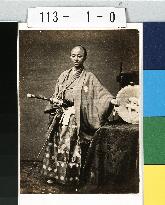
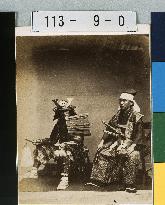
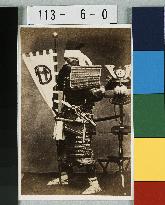
A soldier in armour

A soldier in armour

A soldier in armour==Date:1861-62?, Place:Nagasaki, Photo:, (Credit:Nagasaki University Library/Kyodo News Images)

  •  
A soldier in armour

A soldier in armour

A soldier in armour==Date:1861-62?, Place:Nagasaki, Photo:, (Credit:Nagasaki University Library/Kyodo News Images)

  •  
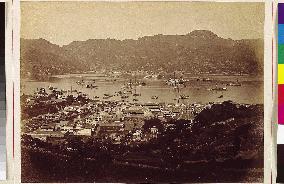
Koshima Hospital and the city of Nagasaki

Koshima Hospital and the city of Nagasaki

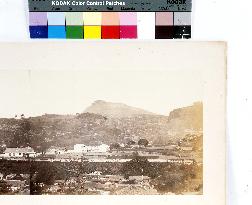
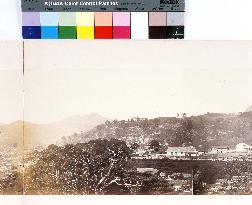
This photo was taken some time during the period spanning the Bakumatsu - end of Meiji Period. Koshima Yojosho is standing in the middle of the photo. A hospital called Koshima Yojosho was built in May 1860 at Sako, Koshima-go, to treat commoners. In 1861, a medical school was built adjacent to the hospital. Pompe van Meerdervoort taught internal medicine and surgery there. The Chinese settlement was in the area of slightly lower elevation on the lower left.==Date:About 1865, Place:Nagasaki, Photo:F. Beato, (Credit:Nagasaki University Library/Kyodo News Images)

  • Main
  • Top
  • Editorial
  • Creative
  • About Us
  • About ILG
  • Terms of use
  • Company
  • BEHIND
  • Price List
  • Single Plan
  • Monthly Plan
  • Services
  • Shooting
  • Rights Clearance
  • Support
  • FAQ
  • How To Buy
  • Contact Us
  • Become a Partner

© KYODO NEWS IMAGES INC

All Rights Reserved.

  • Editorial
  • Olympics
  • News
  • Sports
  • Japan
  • Tech
  • Royal
  • Disaster
  • NorthKorea
  • Old Japan
  • SNS
  • Creative
  • Food
  • Japan
  • Landscape
  • Animal
  • Popular
  • #Ukraine
  • #China
  • #coronavirus
  • #N. Korea
  • #Thailand
  • #Russia
  • #Ukraine
  • #China
  • #coronavirus
  • #N. Korea
  • #Thailand
  • #Russia
  • Food
  • Japan
  • Landscape
  • Animal
  • Olympics
  • News
  • Sports
  • Japan
  • Tech
  • Royal
  • Disaster
  • NorthKorea
  • Old Japan
  • SNS