•  
Japanese Christians appreciate returned painting of Virgin Mary

Japanese Christians appreciate returned painting of Virgin Mary

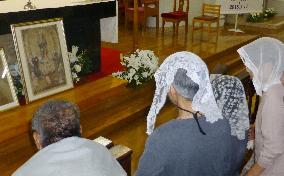
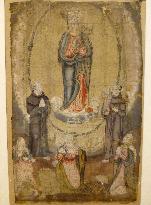
NAGASAKI, Japan - Christians gather before a painting of Virgin Mary, brought to France from Nagasaki, southwestern Japan, early in the Meiji period (1868-1912) and returned to its original place on May 29, 2014, after a hiatus of 145 years.

  •  
Painting of Virgin Mary returns to Nagasaki from France

Painting of Virgin Mary returns to Nagasaki from France

NAGASAKI, Japan - A painting of Virgin Mary, brought to France from Nagasaki, southwestern Japan, early in the Meiji period (1868-1912), returns to its original place at a church in the Nagasaki Archdiocese on May 29, 2014, after a hiatus of 145 years.

  •  
Photo exhibition on Japan in Switzerland

Photo exhibition on Japan in Switzerland

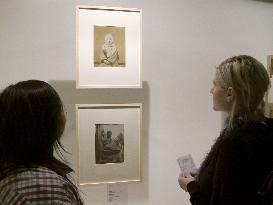
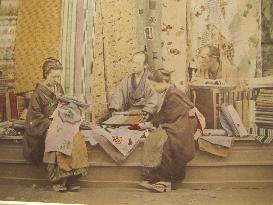
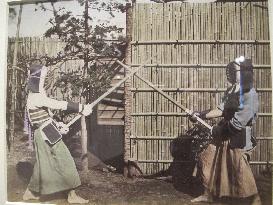
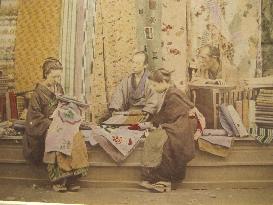
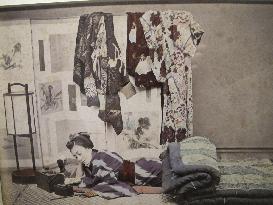
LUGANO, Switzerland - Visitors look at photos capturing life in Japan around the end of the Edo period (1603-1867) and the early Meiji period (1868-1912) at an exhibition in Lugano, southern Switzerland, on Feb. 1, 2011. Some 200 photos at the exhibition, which runs through Feb. 27, include those taken by well-known photographers Felice Beato, Kimbe Kusakabe and others. The photos, which were originally black and white, were later hand-colored.

  •  
Photo exhibition on Japan in Switzerland

Photo exhibition on Japan in Switzerland

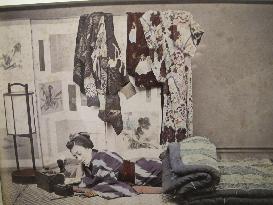
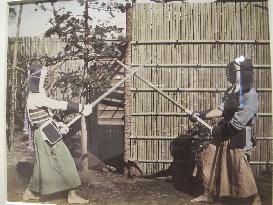
LUGANO, Switzerland - Photo showing life in Japan around the end of the Edo period (1603-1867) and the beginning of the Meiji period (1868-1912) is one of some 200 photos, many on public display for the first time, at an exhibition in Lugano, southern Switzerland, on Feb. 1, 2011. Photos at the exhibition, which runs through Feb. 27, include those taken by well-known photographers Felice Beato, Kimbe Kusakabe and others. The photos, which were originally black and white, were later hand-colored.

  •  
Photo exhibition on Japan in Switzerland

Photo exhibition on Japan in Switzerland

LUGANO, Switzerland - Photo showing life in Japan around the end of the Edo period (1603-1867) and the beginning of the Meiji period (1868-1912) is one of some 200 photos, many on public display for the first time, at an exhibition in Lugano, southern Switzerland, on Feb. 1, 2011. Photos at the exhibition, which runs through Feb. 27, include those taken by well-known photographers Felice Beato, Kimbe Kusakabe and others. The photos, which were originally black and white, were later hand-colored.

  •  
Photo exhibition on Japan in Switzerland

Photo exhibition on Japan in Switzerland

LUGANO, Switzerland - Photo showing life in Japan around the end of the Edo period (1603-1867) and the beginning of the Meiji period (1868-1912) is one of some 200 photos, many on public display for the first time, at an exhibition in Lugano, southern Switzerland, on Feb. 1, 2011. Photos at the exhibition, which runs through Feb. 27, include those taken by well-known photographers Felice Beato, Kimbe Kusakabe and others. The photos, which were originally black and white, were later hand-colored.

  •  
National Diet Library working on digitization of books

National Diet Library working on digitization of books

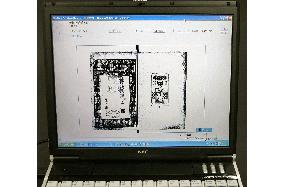
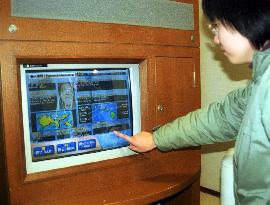
TOKYO, Japan - Digitized pages of prominent Meiji era (1868-1912) novelist Soseki Natsume's ''Wagahai-wa Neko-de-ru (I Am A Cat)'' displayed on a screen at The National Diet Library neighboring the National Diet building in Tokyo.

  •  
New notes to be issued in Nov.

New notes to be issued in Nov.

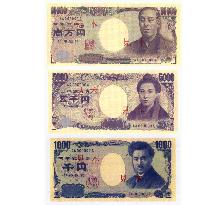
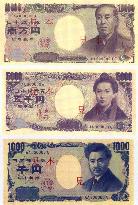
TOKYO, Japan - The Japanese Finance Ministry plans to issue three kinds of new notes in November using forgery prevention technology. The 10,000 yen note (top) features Yukichi Fukuzawa (1835-1901), educator, writer and propagator of Western knowledge in the Meiji period (1868-1912), the 5,000 yen note (middle) Ichiyo Higuchi (1872-1896), female writer of the Meiji period, and the 1,000 yen note (below) Hideyo Noguchi (1876-1928), bacteriologist.

  •  
Memorial held to remember Meiji gov't-backed Ainu assimilation

Memorial held to remember Meiji gov't-backed Ainu assimilation

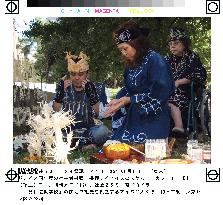
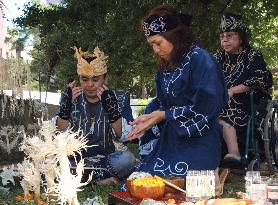
TOKYO, Japan - Three Ainu people offer their prayers at a vacant lot in Tokyo on Aug. 10 in the first memorial for indigenous Ainu people who were forced to leave their homes in Hokkaido and study in the capital during the early Meiji Period (1868-1912). The memorial was held at the former site of a school, Kaitakushi Kari Gakko, and styled after a traditional Ainu ceremony dedicated to their ancestors.

  •  
Data on Japanese emigrants to Hawaii to be available online

Data on Japanese emigrants to Hawaii to be available online

YAMAGUCHI, Japan - The Museum of Japanese Emigration to Hawaii, located in Oshima, Yamaguchi Prefecture, western Japan, will next month launch a research service to allow the emigrants' descendants to obtain information on their ancestors who sailed to the Pacific islands in the late 19th century. The museum will post information online on about 29,000 Japanese who emigrated to Hawaii to work in the sugar industry between 1885 and 1894, under a government-led program during the Meiji Period (1868-1912).

  •  
Miyazaki gives English names to local streets

Miyazaki gives English names to local streets

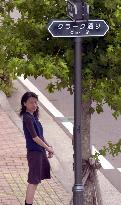
MIYAZAKI, Japan - A woman in downtown Miyazaki on July 11 stands near a street sign indicating ''Clark Street,'' one of 132 of the city's previously unnamed streets given English names in a gesture of internationalization. The move was in advance of the two-day meeting of the foreign ministers of Group of Eight (G-8) nations that began in the city July 12. Clark Street is named after a missionary who lived in the city during the Meiji era (1868-1912).

  •  
Miyazaki gives English names to local streets

Miyazaki gives English names to local streets

MIYAZAKI, Japan - A woman in downtown Miyazaki on July 11 stands near a street sign indicating ''Clark Street,'' one of 132 of the city's previously unnamed streets given English names in a gesture of internationalization. The move was in advance of the two-day meeting of the foreign ministers of Group of Eight (G-8) nations that began in the city July 12. Clark Street is named after a missionary who lived in the city during the Meiji era (1868-1912).

  •  
Century-old brick wall uncovered, becomes new attraction in Yokohama

Century-old brick wall uncovered, becomes new attraction in Yokohama

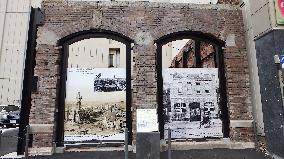
A gate-like brick wall, built during the Meiji era (1868-1912) and discovered in a dismantled building, stands in Yokohama southwest of Tokyo on Feb. 25, 2015. It is being presented as a new attraction in the port city. (Kyodo) ==Kyodo

  •  
Women walk by century-old brick wall preserved in Yokohama

Women walk by century-old brick wall preserved in Yokohama

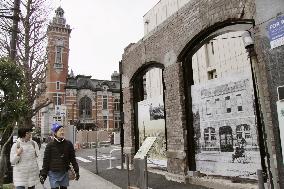
Women walk by a gate-like brick wall, built during the Meiji era (1868-1912) and discovered in a dismantled building, in Yokohama southwest of Tokyo on Feb. 25, 2015. It is being presented as a new attraction in the port city. At left is the Yokohama Port Opening Memorial Hall. (Kyodo) ==Kyodo

  •  
Restored gate at Kanazawa Castle Park unveiled to media

Restored gate at Kanazawa Castle Park unveiled to media

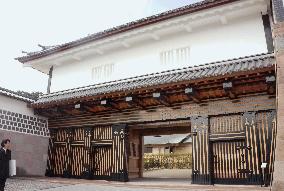
A restored gate at Kanazawa Castle Park in Kanazawa, Ishikawa Prefecture, central Japan, is unveiled to the media on March 6, 2015. The Ishikawa prefectural government restored the gate, which was burnt down during the 1868-1912 Meiji era, with the hope of making it a new attraction ahead of the March 14 opening of the Hokuriku Shinkansen bullet train line linking Tokyo and Kanazawa. (Kyodo) ==Kyodo

  •  
Garden opened to public for autumn leaves in southern Japan

Garden opened to public for autumn leaves in southern Japan

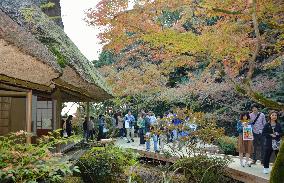
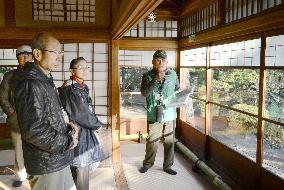
Tourists visit the Kunenan cottage in Kanzaki, Saga Prefecture, southwestern Japan, on Nov. 15, 2015. The cottage, built by a wealthy businessman in the Meiji era (1868-1912), is open to the public to enable them to enjoy autumn leaves in its large garden. (Kyodo) ==Kyodo

  •  
Entrance to Japan's oldest river tunnel in Kobe

Entrance to Japan's oldest river tunnel in Kobe

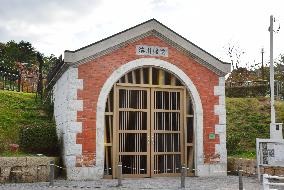
Photo taken on Oct. 17, 2015, shows the entrance to Minatogawa Zuido, Japan's first full-fledged tunnel built under a river in Kobe, western Japan, during the Meiji period (1868-1912). (Kyodo) ==Kyodo

  •  
Unique concert held in Japan's oldest river tunnel in Kobe

Unique concert held in Japan's oldest river tunnel in Kobe

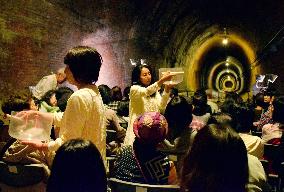
A fantastical music concert is held with crystal singing bowls on Oct. 17, 2015, in Minatogawa Zuido, Japan's first full-fledged tunnel built under a river in Kobe, western Japan, during the Meiji period (1868-1912). (Kyodo) ==Kyodo

  •  
Ex-PM Yamagata's home used as memorial museum

Ex-PM Yamagata's home used as memorial museum

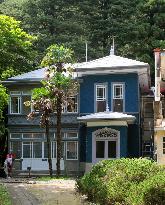
Photo taken in Yaita, Tochigi Prefecture, eastern Japan, on Aug. 7, 2015, shows a former residence where Meiji-era (1868-1912) Prime Minister Aritomo Yamagata (1838-1922) spent his closing years. The residential building has been relocated from Odawara, Kanagawa Prefecture, southwest of Tokyo, and is now used as the General Yamagata Memorial Museum. (Kyodo) ==Kyodo

  •  
Photo exhibition on Japan in Switzerland

Photo exhibition on Japan in Switzerland

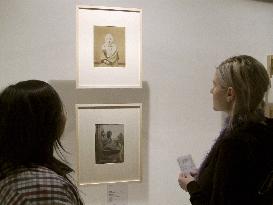
LUGANO, Switzerland - Visitors look at photos capturing life in Japan around the end of the Edo period (1603-1867) and the early Meiji period (1868-1912) at an exhibition in Lugano, southern Switzerland, on Feb. 1, 2011. Some 200 photos at the exhibition, which runs through Feb. 27, include those taken by well-known photographers Felice Beato, Kimbe Kusakabe and others. The photos, which were originally black and white, were later hand-colored. (Kyodo)

  •  
Photo exhibition on Japan in Switzerland

Photo exhibition on Japan in Switzerland

LUGANO, Switzerland - Photo showing life in Japan around the end of the Edo period (1603-1867) and the beginning of the Meiji period (1868-1912) is one of some 200 photos, many on public display for the first time, at an exhibition in Lugano, southern Switzerland, on Feb. 1, 2011. Photos at the exhibition, which runs through Feb. 27, include those taken by well-known photographers Felice Beato, Kimbe Kusakabe and others. The photos, which were originally black and white, were later hand-colored. (Kyodo)

  •  
Photo exhibition on Japan in Switzerland

Photo exhibition on Japan in Switzerland

LUGANO, Switzerland - Photo showing life in Japan around the end of the Edo period (1603-1867) and the beginning of the Meiji period (1868-1912) is one of some 200 photos, many on public display for the first time, at an exhibition in Lugano, southern Switzerland, on Feb. 1, 2011. Photos at the exhibition, which runs through Feb. 27, include those taken by well-known photographers Felice Beato, Kimbe Kusakabe and others. The photos, which were originally black and white, were later hand-colored. (Kyodo)

  •  
Photo exhibition on Japan in Switzerland

Photo exhibition on Japan in Switzerland

LUGANO, Switzerland - Photo showing life in Japan around the end of the Edo period (1603-1867) and the beginning of the Meiji period (1868-1912) is one of some 200 photos, many on public display for the first time, at an exhibition in Lugano, southern Switzerland, on Feb. 1, 2011. Photos at the exhibition, which runs through Feb. 27, include those taken by well-known photographers Felice Beato, Kimbe Kusakabe and others. The photos, which were originally black and white, were later hand-colored. (Kyodo)

  •  
Historical mansions near Tokyo

Historical mansions near Tokyo

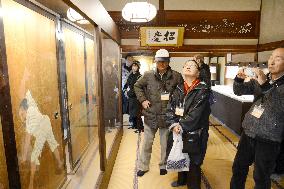
Photo taken in December 2018 shows people visiting the former residence of late Japanese Foreign Minister Munemitsu Mutsu during a public tour of historical mansions in Oiso, a beach resort southwest of Tokyo known as a popular retreat among politicians during the Meiji era (1868-1912). (Kyodo) ==Kyodo

  •  
Historical mansions near Tokyo

Historical mansions near Tokyo

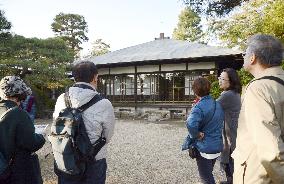
Photo taken in December 2018 shows people visiting the former residence of late Japanese Prime Minister Shigenobu Okuma during a public tour of historical mansions in Oiso, a beach resort southwest of Tokyo known as a popular retreat among politicians during the Meiji era (1868-1912). (Kyodo) ==Kyodo

  •  
Historical mansions near Tokyo

Historical mansions near Tokyo

Photo taken in December 2018 shows people visiting the former residence of late Japanese Prime Minister Shigenobu Okuma during a public tour of historical mansions in Oiso, a beach resort southwest of Tokyo known as a popular retreat among politicians during the Meiji era (1868-1912). (Kyodo) ==Kyodo

  •  
Historical mansions near Tokyo

Historical mansions near Tokyo

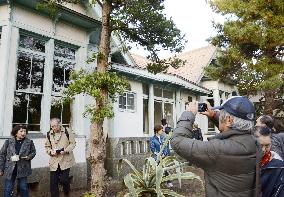
Photo taken in December 2018 shows people visiting the former residence of first Japanese Prime Minister Hirobumi Ito during a public tour of historical mansions in Oiso, a beach resort southwest of Tokyo known as a popular retreat among politicians during the Meiji era (1868-1912). (Kyodo) ==Kyodo

  •  
Prince Akishino and Princess Kiko

Prince Akishino and Princess Kiko

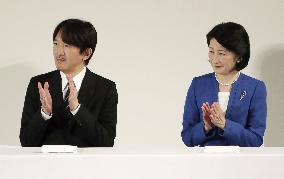
Japan's Prince Akishino and his wife Princess Kiko attend a ceremony to commemorate the 150th anniversary of the start of the Meiji era (1868-1912) in Kagoshima Prefecture, southwestern Japan, on May 25, 2018. (Kyodo) ==Kyodo

  •  
New notes to be issued in Nov.

New notes to be issued in Nov.

TOKYO, Japan - The Japanese Finance Ministry plans to issue three kinds of new notes in November using forgery prevention technology. The 10,000 yen note (top) features Yukichi Fukuzawa (1835-1901), educator, writer and propagator of Western knowledge in the Meiji period (1868-1912), the 5,000 yen note (middle) Ichiyo Higuchi (1872-1896), female writer of the Meiji period, and the 1,000 yen note (below) Hideyo Noguchi (1876-1928), bacteriologist. (Kyodo)

  •  
Memorial held to remember Meiji gov't-backed Ainu assimilation

Memorial held to remember Meiji gov't-backed Ainu assimilation

TOKYO, Japan - Three Ainu people offer their prayers at a vacant lot in Tokyo on Aug. 10 in the first memorial for indigenous Ainu people who were forced to leave their homes in Hokkaido and study in the capital during the early Meiji Period (1868-1912). The memorial was held at the former site of a school, Kaitakushi Kari Gakko, and styled after a traditional Ainu ceremony dedicated to their ancestors. (Kyodo)

  •  
Data on Japanese emigrants to Hawaii to be available online

Data on Japanese emigrants to Hawaii to be available online

YAMAGUCHI, Japan - The Museum of Japanese Emigration to Hawaii, located in Oshima, Yamaguchi Prefecture, western Japan, will next month launch a research service to allow the emigrants' descendants to obtain information on their ancestors who sailed to the Pacific islands in the late 19th century. The museum will post information online on about 29,000 Japanese who emigrated to Hawaii to work in the sugar industry between 1885 and 1894, under a government-led program during the Meiji Period (1868-1912).

  •  
Oldest blueprint for lighthouse found in Hyogo Pref

Oldest blueprint for lighthouse found in Hyogo Pref

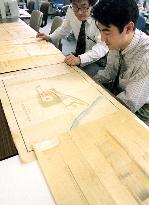
Officials of the Maritime Safety Agency look at Jan. 6 a lighthouse blueprint from the early Meiji period (1868-1912) believed to be the oldest in Japan. The blueprint for the Esaki Lighthouse, which was drafted by Scottish engineer Richard Henry Brunton (1841-1901), has been found in the office of a beacon on Awajishima Island in Hyogo Prefecture, western Japan.

  • Main
  • Top
  • Editorial
  • Creative
  • About Us
  • About ILG
  • Terms of use
  • Company
  • BEHIND
  • Price List
  • Single Plan
  • Monthly Plan
  • Services
  • Shooting
  • Rights Clearance
  • Support
  • FAQ
  • How To Buy
  • Contact Us
  • Become a Partner

© KYODO NEWS IMAGES INC

All Rights Reserved.

  • Editorial
  • Olympics
  • News
  • Sports
  • Japan
  • Tech
  • Royal
  • Disaster
  • NorthKorea
  • Old Japan
  • SNS
  • Creative
  • Food
  • Japan
  • Landscape
  • Animal
  • Popular
  • #Ukraine
  • #China
  • #coronavirus
  • #N. Korea
  • #Russia
  • #Thailand
  • #Ukraine
  • #China
  • #coronavirus
  • #N. Korea
  • #Russia
  • #Thailand
  • Food
  • Japan
  • Landscape
  • Animal
  • Olympics
  • News
  • Sports
  • Japan
  • Tech
  • Royal
  • Disaster
  • NorthKorea
  • Old Japan
  • SNS