•  
Kumartuli Sculptors Prepare for Festival Season - India

Kumartuli Sculptors Prepare for Festival Season - India

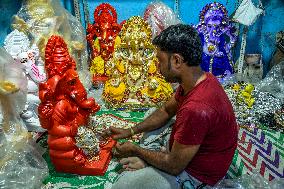
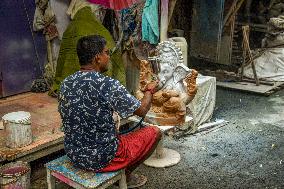
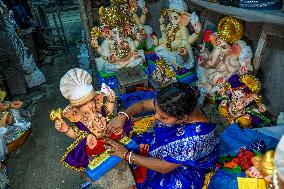
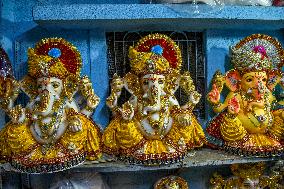
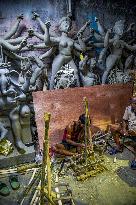
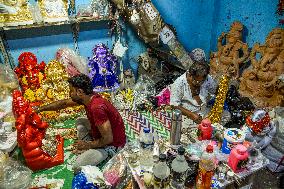
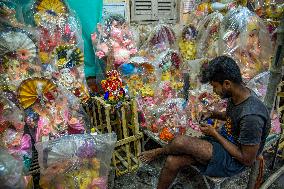
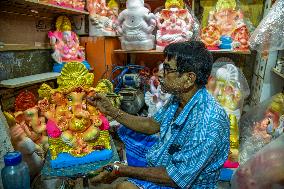
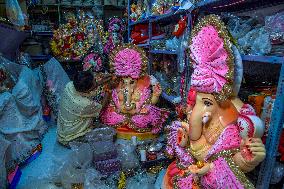
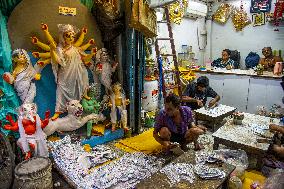
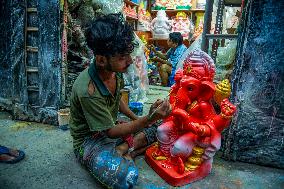
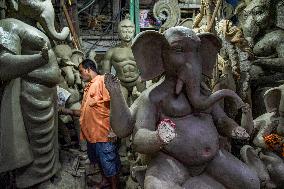
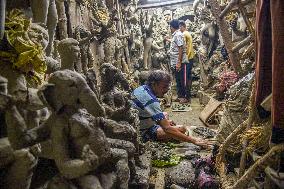
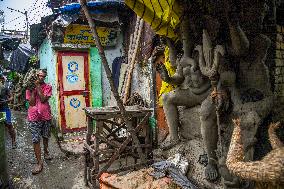
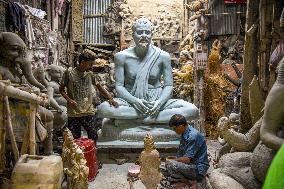
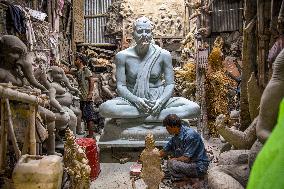
Kumartuli, Kolkata's historic potters' quarter, is renowned for its centuries-old tradition of crafting clay idols, especially for the Durga Puja festival. Artisans sculpt elaborate figures of Hindu deities from straw and clay inside narrow, open-air workshops in this densely populated neighborhood in northern Kolkata, India, on August 5, 2025. The area dates back to the early 18th century, when potters were commissioned to create idols for wealthy Bengali households. Today, Kumartuli supplies thousands of handcrafted idols not only to cities across India but also to international communities celebrating Durga Puja. As the festival approaches, the pace of work intensifies, with sculptors of all ages and skill levels contributing to the creation of goddess Durga, Ganesh, Kartik, Lakshmi, and Saraswati. The craft blends spiritual devotion with generational artistry, sustaining a vital cultural heritage that continues to thrive amid urban transformation. Photo by Debajyoti Chakraborty/Middle East Images/ABACAPRE

  •  
Kumartuli Sculptors Prepare for Festival Season - India

Kumartuli Sculptors Prepare for Festival Season - India

Kumartuli, Kolkata's historic potters' quarter, is renowned for its centuries-old tradition of crafting clay idols, especially for the Durga Puja festival. Artisans sculpt elaborate figures of Hindu deities from straw and clay inside narrow, open-air workshops in this densely populated neighborhood in northern Kolkata, India, on August 5, 2025. The area dates back to the early 18th century, when potters were commissioned to create idols for wealthy Bengali households. Today, Kumartuli supplies thousands of handcrafted idols not only to cities across India but also to international communities celebrating Durga Puja. As the festival approaches, the pace of work intensifies, with sculptors of all ages and skill levels contributing to the creation of goddess Durga, Ganesh, Kartik, Lakshmi, and Saraswati. The craft blends spiritual devotion with generational artistry, sustaining a vital cultural heritage that continues to thrive amid urban transformation. Photo by Debajyoti Chakraborty/Middle East Images/ABACAPRE

  •  
Kumartuli Sculptors Prepare for Festival Season - India

Kumartuli Sculptors Prepare for Festival Season - India

Kumartuli, Kolkata's historic potters' quarter, is renowned for its centuries-old tradition of crafting clay idols, especially for the Durga Puja festival. Artisans sculpt elaborate figures of Hindu deities from straw and clay inside narrow, open-air workshops in this densely populated neighborhood in northern Kolkata, India, on August 5, 2025. The area dates back to the early 18th century, when potters were commissioned to create idols for wealthy Bengali households. Today, Kumartuli supplies thousands of handcrafted idols not only to cities across India but also to international communities celebrating Durga Puja. As the festival approaches, the pace of work intensifies, with sculptors of all ages and skill levels contributing to the creation of goddess Durga, Ganesh, Kartik, Lakshmi, and Saraswati. The craft blends spiritual devotion with generational artistry, sustaining a vital cultural heritage that continues to thrive amid urban transformation. Photo by Debajyoti Chakraborty/Middle East Images/ABACAPRE

  •  
Kumartuli Sculptors Prepare for Festival Season - India

Kumartuli Sculptors Prepare for Festival Season - India

Kumartuli, Kolkata's historic potters' quarter, is renowned for its centuries-old tradition of crafting clay idols, especially for the Durga Puja festival. Artisans sculpt elaborate figures of Hindu deities from straw and clay inside narrow, open-air workshops in this densely populated neighborhood in northern Kolkata, India, on August 5, 2025. The area dates back to the early 18th century, when potters were commissioned to create idols for wealthy Bengali households. Today, Kumartuli supplies thousands of handcrafted idols not only to cities across India but also to international communities celebrating Durga Puja. As the festival approaches, the pace of work intensifies, with sculptors of all ages and skill levels contributing to the creation of goddess Durga, Ganesh, Kartik, Lakshmi, and Saraswati. The craft blends spiritual devotion with generational artistry, sustaining a vital cultural heritage that continues to thrive amid urban transformation. Photo by Debajyoti Chakraborty/Middle East Images/ABACAPRE

  •  
Kumartuli Sculptors Prepare for Festival Season - India

Kumartuli Sculptors Prepare for Festival Season - India

Kumartuli, Kolkata's historic potters' quarter, is renowned for its centuries-old tradition of crafting clay idols, especially for the Durga Puja festival. Artisans sculpt elaborate figures of Hindu deities from straw and clay inside narrow, open-air workshops in this densely populated neighborhood in northern Kolkata, India, on August 5, 2025. The area dates back to the early 18th century, when potters were commissioned to create idols for wealthy Bengali households. Today, Kumartuli supplies thousands of handcrafted idols not only to cities across India but also to international communities celebrating Durga Puja. As the festival approaches, the pace of work intensifies, with sculptors of all ages and skill levels contributing to the creation of goddess Durga, Ganesh, Kartik, Lakshmi, and Saraswati. The craft blends spiritual devotion with generational artistry, sustaining a vital cultural heritage that continues to thrive amid urban transformation. Photo by Debajyoti Chakraborty/Middle East Images/ABACAPRE

  •  
Kumartuli Sculptors Prepare for Festival Season - India

Kumartuli Sculptors Prepare for Festival Season - India

Kumartuli, Kolkata's historic potters' quarter, is renowned for its centuries-old tradition of crafting clay idols, especially for the Durga Puja festival. Artisans sculpt elaborate figures of Hindu deities from straw and clay inside narrow, open-air workshops in this densely populated neighborhood in northern Kolkata, India, on August 5, 2025. The area dates back to the early 18th century, when potters were commissioned to create idols for wealthy Bengali households. Today, Kumartuli supplies thousands of handcrafted idols not only to cities across India but also to international communities celebrating Durga Puja. As the festival approaches, the pace of work intensifies, with sculptors of all ages and skill levels contributing to the creation of goddess Durga, Ganesh, Kartik, Lakshmi, and Saraswati. The craft blends spiritual devotion with generational artistry, sustaining a vital cultural heritage that continues to thrive amid urban transformation. Photo by Debajyoti Chakraborty/Middle East Images/ABACAPRE

  •  
Kumartuli Sculptors Prepare for Festival Season - India

Kumartuli Sculptors Prepare for Festival Season - India

Kumartuli, Kolkata's historic potters' quarter, is renowned for its centuries-old tradition of crafting clay idols, especially for the Durga Puja festival. Artisans sculpt elaborate figures of Hindu deities from straw and clay inside narrow, open-air workshops in this densely populated neighborhood in northern Kolkata, India, on August 5, 2025. The area dates back to the early 18th century, when potters were commissioned to create idols for wealthy Bengali households. Today, Kumartuli supplies thousands of handcrafted idols not only to cities across India but also to international communities celebrating Durga Puja. As the festival approaches, the pace of work intensifies, with sculptors of all ages and skill levels contributing to the creation of goddess Durga, Ganesh, Kartik, Lakshmi, and Saraswati. The craft blends spiritual devotion with generational artistry, sustaining a vital cultural heritage that continues to thrive amid urban transformation. Photo by Debajyoti Chakraborty/Middle East Images/ABACAPRE

  •  
Kumartuli Sculptors Prepare for Festival Season - India

Kumartuli Sculptors Prepare for Festival Season - India

Kumartuli, Kolkata's historic potters' quarter, is renowned for its centuries-old tradition of crafting clay idols, especially for the Durga Puja festival. Artisans sculpt elaborate figures of Hindu deities from straw and clay inside narrow, open-air workshops in this densely populated neighborhood in northern Kolkata, India, on August 5, 2025. The area dates back to the early 18th century, when potters were commissioned to create idols for wealthy Bengali households. Today, Kumartuli supplies thousands of handcrafted idols not only to cities across India but also to international communities celebrating Durga Puja. As the festival approaches, the pace of work intensifies, with sculptors of all ages and skill levels contributing to the creation of goddess Durga, Ganesh, Kartik, Lakshmi, and Saraswati. The craft blends spiritual devotion with generational artistry, sustaining a vital cultural heritage that continues to thrive amid urban transformation. Photo by Debajyoti Chakraborty/Middle East Images/ABACAPRE

  •  
Kumartuli Sculptors Prepare for Festival Season - India

Kumartuli Sculptors Prepare for Festival Season - India

Kumartuli, Kolkata's historic potters' quarter, is renowned for its centuries-old tradition of crafting clay idols, especially for the Durga Puja festival. Artisans sculpt elaborate figures of Hindu deities from straw and clay inside narrow, open-air workshops in this densely populated neighborhood in northern Kolkata, India, on August 5, 2025. The area dates back to the early 18th century, when potters were commissioned to create idols for wealthy Bengali households. Today, Kumartuli supplies thousands of handcrafted idols not only to cities across India but also to international communities celebrating Durga Puja. As the festival approaches, the pace of work intensifies, with sculptors of all ages and skill levels contributing to the creation of goddess Durga, Ganesh, Kartik, Lakshmi, and Saraswati. The craft blends spiritual devotion with generational artistry, sustaining a vital cultural heritage that continues to thrive amid urban transformation. Photo by Debajyoti Chakraborty/Middle East Images/ABACAPRE

  •  
Kumartuli Sculptors Prepare for Festival Season - India

Kumartuli Sculptors Prepare for Festival Season - India

Kumartuli, Kolkata's historic potters' quarter, is renowned for its centuries-old tradition of crafting clay idols, especially for the Durga Puja festival. Artisans sculpt elaborate figures of Hindu deities from straw and clay inside narrow, open-air workshops in this densely populated neighborhood in northern Kolkata, India, on August 5, 2025. The area dates back to the early 18th century, when potters were commissioned to create idols for wealthy Bengali households. Today, Kumartuli supplies thousands of handcrafted idols not only to cities across India but also to international communities celebrating Durga Puja. As the festival approaches, the pace of work intensifies, with sculptors of all ages and skill levels contributing to the creation of goddess Durga, Ganesh, Kartik, Lakshmi, and Saraswati. The craft blends spiritual devotion with generational artistry, sustaining a vital cultural heritage that continues to thrive amid urban transformation. Photo by Debajyoti Chakraborty/Middle East Images/ABACAPRE

  •  
Kumartuli Sculptors Prepare for Festival Season - India

Kumartuli Sculptors Prepare for Festival Season - India

Kumartuli, Kolkata's historic potters' quarter, is renowned for its centuries-old tradition of crafting clay idols, especially for the Durga Puja festival. Artisans sculpt elaborate figures of Hindu deities from straw and clay inside narrow, open-air workshops in this densely populated neighborhood in northern Kolkata, India, on August 5, 2025. The area dates back to the early 18th century, when potters were commissioned to create idols for wealthy Bengali households. Today, Kumartuli supplies thousands of handcrafted idols not only to cities across India but also to international communities celebrating Durga Puja. As the festival approaches, the pace of work intensifies, with sculptors of all ages and skill levels contributing to the creation of goddess Durga, Ganesh, Kartik, Lakshmi, and Saraswati. The craft blends spiritual devotion with generational artistry, sustaining a vital cultural heritage that continues to thrive amid urban transformation. Photo by Debajyoti Chakraborty/Middle East Images/ABACAPRE

  •  
Kumartuli Sculptors Prepare for Festival Season - India

Kumartuli Sculptors Prepare for Festival Season - India

Kumartuli, Kolkata's historic potters' quarter, is renowned for its centuries-old tradition of crafting clay idols, especially for the Durga Puja festival. Artisans sculpt elaborate figures of Hindu deities from straw and clay inside narrow, open-air workshops in this densely populated neighborhood in northern Kolkata, India, on August 5, 2025. The area dates back to the early 18th century, when potters were commissioned to create idols for wealthy Bengali households. Today, Kumartuli supplies thousands of handcrafted idols not only to cities across India but also to international communities celebrating Durga Puja. As the festival approaches, the pace of work intensifies, with sculptors of all ages and skill levels contributing to the creation of goddess Durga, Ganesh, Kartik, Lakshmi, and Saraswati. The craft blends spiritual devotion with generational artistry, sustaining a vital cultural heritage that continues to thrive amid urban transformation. Photo by Debajyoti Chakraborty/Middle East Images/ABACAPRE

  •  
Kumartuli Sculptors Prepare for Festival Season - India

Kumartuli Sculptors Prepare for Festival Season - India

Kumartuli, Kolkata's historic potters' quarter, is renowned for its centuries-old tradition of crafting clay idols, especially for the Durga Puja festival. Artisans sculpt elaborate figures of Hindu deities from straw and clay inside narrow, open-air workshops in this densely populated neighborhood in northern Kolkata, India, on August 5, 2025. The area dates back to the early 18th century, when potters were commissioned to create idols for wealthy Bengali households. Today, Kumartuli supplies thousands of handcrafted idols not only to cities across India but also to international communities celebrating Durga Puja. As the festival approaches, the pace of work intensifies, with sculptors of all ages and skill levels contributing to the creation of goddess Durga, Ganesh, Kartik, Lakshmi, and Saraswati. The craft blends spiritual devotion with generational artistry, sustaining a vital cultural heritage that continues to thrive amid urban transformation. Photo by Debajyoti Chakraborty/Middle East Images/ABACAPRE

  •  
Kumartuli Sculptors Prepare for Festival Season - India

Kumartuli Sculptors Prepare for Festival Season - India

Kumartuli, Kolkata's historic potters' quarter, is renowned for its centuries-old tradition of crafting clay idols, especially for the Durga Puja festival. Artisans sculpt elaborate figures of Hindu deities from straw and clay inside narrow, open-air workshops in this densely populated neighborhood in northern Kolkata, India, on August 5, 2025. The area dates back to the early 18th century, when potters were commissioned to create idols for wealthy Bengali households. Today, Kumartuli supplies thousands of handcrafted idols not only to cities across India but also to international communities celebrating Durga Puja. As the festival approaches, the pace of work intensifies, with sculptors of all ages and skill levels contributing to the creation of goddess Durga, Ganesh, Kartik, Lakshmi, and Saraswati. The craft blends spiritual devotion with generational artistry, sustaining a vital cultural heritage that continues to thrive amid urban transformation. Photo by Debajyoti Chakraborty/Middle East Images/ABACAPRE

  •  
Kumartuli Sculptors Prepare for Festival Season - India

Kumartuli Sculptors Prepare for Festival Season - India

Kumartuli, Kolkata's historic potters' quarter, is renowned for its centuries-old tradition of crafting clay idols, especially for the Durga Puja festival. Artisans sculpt elaborate figures of Hindu deities from straw and clay inside narrow, open-air workshops in this densely populated neighborhood in northern Kolkata, India, on August 5, 2025. The area dates back to the early 18th century, when potters were commissioned to create idols for wealthy Bengali households. Today, Kumartuli supplies thousands of handcrafted idols not only to cities across India but also to international communities celebrating Durga Puja. As the festival approaches, the pace of work intensifies, with sculptors of all ages and skill levels contributing to the creation of goddess Durga, Ganesh, Kartik, Lakshmi, and Saraswati. The craft blends spiritual devotion with generational artistry, sustaining a vital cultural heritage that continues to thrive amid urban transformation. Photo by Debajyoti Chakraborty/Middle East Images/ABACAPRE

  •  
Kumartuli Sculptors Prepare for Festival Season - India

Kumartuli Sculptors Prepare for Festival Season - India

Kumartuli, Kolkata's historic potters' quarter, is renowned for its centuries-old tradition of crafting clay idols, especially for the Durga Puja festival. Artisans sculpt elaborate figures of Hindu deities from straw and clay inside narrow, open-air workshops in this densely populated neighborhood in northern Kolkata, India, on August 5, 2025. The area dates back to the early 18th century, when potters were commissioned to create idols for wealthy Bengali households. Today, Kumartuli supplies thousands of handcrafted idols not only to cities across India but also to international communities celebrating Durga Puja. As the festival approaches, the pace of work intensifies, with sculptors of all ages and skill levels contributing to the creation of goddess Durga, Ganesh, Kartik, Lakshmi, and Saraswati. The craft blends spiritual devotion with generational artistry, sustaining a vital cultural heritage that continues to thrive amid urban transformation. Photo by Debajyoti Chakraborty/Middle East Images/ABACAPRE

  •  
Dege Sutra Printing House - Tibet

Dege Sutra Printing House - Tibet

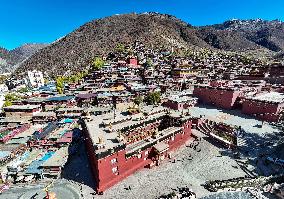
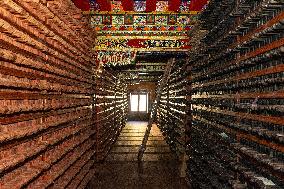
A drone photo taken on Nov. 2, 2024 shows the Dege Sutra Printing House in Dege County of Garze Tibetan Autonomous Prefecture, southwest China's Sichuan Province. Built in 1729, the Dege Sutra Printing House preserves in good condition 325,520 woodcut printing plates containing significant Tibetan classics dating back to the 11th century. The majority of the blocks were carved between the 18th and mid-20th centuries. The printing blocks housed at the Dege Sutra Printing House in Sichuan were listed in this May as documentary heritage on the Asia Pacific regional register of UNESCO's Memory of the World (MOW) Programme. Photo by Wang Xi/Xinhua/ABACAPRESSC.OM

  •  
Dege Sutra Printing House - Tibet

Dege Sutra Printing House - Tibet

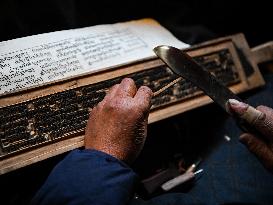
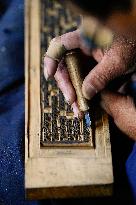
A worker revises a woodcut printing block at the Dege Sutra Printing House in Dege County of Garze Tibetan Autonomous Prefecture, southwest China's Sichuan Province, Nov. 2, 2024. Built in 1729, the Dege Sutra Printing House preserves in good condition 325,520 woodcut printing plates containing significant Tibetan classics dating back to the 11th century. The majority of the blocks were carved between the 18th and mid-20th centuries. The printing blocks housed at the Dege Sutra Printing House in Sichuan were listed in this May as documentary heritage on the Asia Pacific regional register of UNESCO's Memory of the World (MOW) Programme. Photo by Shen Bohan/Xinhua/ABACAPRESS.COM

  •  
Dege Sutra Printing House - Tibet

Dege Sutra Printing House - Tibet

A worker carves a woodcut printing block at the Dege Sutra Printing House in Dege County of Garze Tibetan Autonomous Prefecture, southwest China's Sichuan Province, Nov. 2, 2024. Built in 1729, the Dege Sutra Printing House preserves in good condition 325,520 woodcut printing plates containing significant Tibetan classics dating back to the 11th century. The majority of the blocks were carved between the 18th and mid-20th centuries. The printing blocks housed at the Dege Sutra Printing House in Sichuan were listed in this May as documentary heritage on the Asia Pacific regional register of UNESCO's Memory of the World (MOW) Programme. Photo by Wang Xi/Xinhua/ABACAPRESSC.OM

  •  
Dege Sutra Printing House - Tibet

Dege Sutra Printing House - Tibet

A worker airs fresh prints at the Dege Sutra Printing House in Dege County of Garze Tibetan Autonomous Prefecture, southwest China's Sichuan Province, Nov. 2, 2024. Built in 1729, the Dege Sutra Printing House preserves in good condition 325,520 woodcut printing plates containing significant Tibetan classics dating back to the 11th century. The majority of the blocks were carved between the 18th and mid-20th centuries. The printing blocks housed at the Dege Sutra Printing House in Sichuan were listed in this May as documentary heritage on the Asia Pacific regional register of UNESCO's Memory of the World (MOW) Programme. Photo by Shen Bohan/Xinhua/ABACAPRESS.COM

  •  
Dege Sutra Printing House - Tibet

Dege Sutra Printing House - Tibet

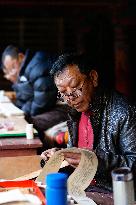
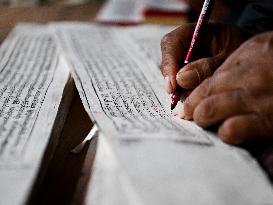
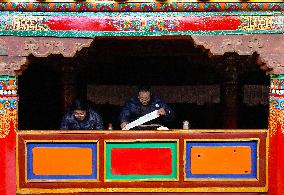
A worker proofreads newly made prints at the Dege Sutra Printing House in Dege County of Garze Tibetan Autonomous Prefecture, southwest China's Sichuan Province, Nov. 2, 2024. Built in 1729, the Dege Sutra Printing House preserves in good condition 325,520 woodcut printing plates containing significant Tibetan classics dating back to the 11th century. The majority of the blocks were carved between the 18th and mid-20th centuries. The printing blocks housed at the Dege Sutra Printing House in Sichuan were listed in this May as documentary heritage on the Asia Pacific regional register of UNESCO's Memory of the World (MOW) Programme. Photo by Wang Xi/Xinhua/ABACAPRESSC.OM

  •  
Dege Sutra Printing House - Tibet

Dege Sutra Printing House - Tibet

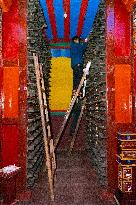
This photo taken on Nov. 2, 2024 shows woodcut printing blocks housed at the Dege Sutra Printing House in Dege County of Garze Tibetan Autonomous Prefecture, southwest China's Sichuan Province. Built in 1729, the Dege Sutra Printing House preserves in good condition 325,520 woodcut printing plates containing significant Tibetan classics dating back to the 11th century. The majority of the blocks were carved between the 18th and mid-20th centuries. The printing blocks housed at the Dege Sutra Printing House in Sichuan were listed in this May as documentary heritage on the Asia Pacific regional register of UNESCO's Memory of the World (MOW) Programme. Photo by Shen Bohan/Xinhua/ABACAPRESS.COM

  •  
Dege Sutra Printing House - Tibet

Dege Sutra Printing House - Tibet

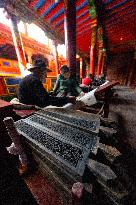
Workers print with vintage woodcut printing blocks at the Dege Sutra Printing House in Dege County of Garze Tibetan Autonomous Prefecture, southwest China's Sichuan Province, Nov. 2, 2024. Built in 1729, the Dege Sutra Printing House preserves in good condition 325,520 woodcut printing plates containing significant Tibetan classics dating back to the 11th century. The majority of the blocks were carved between the 18th and mid-20th centuries. The printing blocks housed at the Dege Sutra Printing House in Sichuan were listed in this May as documentary heritage on the Asia Pacific regional register of UNESCO's Memory of the World (MOW) Programme. Photo by Shen Bohan/Xinhua/ABACAPRESS.COM

  •  
Dege Sutra Printing House - Tibet

Dege Sutra Printing House - Tibet

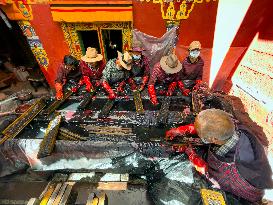
This photo taken on Oct. 3, 2021 shows workers cleaning and maintaining woodcut printing blocks with traditional techniques at the Dege Sutra Printing House in Dege County of Garze Tibetan Autonomous Prefecture, southwest China's Sichuan Province. Built in 1729, the Dege Sutra Printing House preserves in good condition 325,520 woodcut printing plates containing significant Tibetan classics dating back to the 11th century. The majority of the blocks were carved between the 18th and mid-20th centuries. The printing blocks housed at the Dege Sutra Printing House in Sichuan were listed in this May as documentary heritage on the Asia Pacific regional register of UNESCO's Memory of the World (MOW) Programme. Photo by Shen Bohan/Xinhua/ABACAPRESS.COM

  •  
Dege Sutra Printing House - Tibet

Dege Sutra Printing House - Tibet

Workers proofread newly made prints at the Dege Sutra Printing House in Dege County of Garze Tibetan Autonomous Prefecture, southwest China's Sichuan Province, Nov. 2, 2024. Built in 1729, the Dege Sutra Printing House preserves in good condition 325,520 woodcut printing plates containing significant Tibetan classics dating back to the 11th century. The majority of the blocks were carved between the 18th and mid-20th centuries. The printing blocks housed at the Dege Sutra Printing House in Sichuan were listed in this May as documentary heritage on the Asia Pacific regional register of UNESCO's Memory of the World (MOW) Programme. Photo by Shen Bohan/Xinhua/ABACAPRESS.COM

  •  
Dege Sutra Printing House - Tibet

Dege Sutra Printing House - Tibet

A worker revises a woodcut printing block at the Dege Sutra Printing House in Dege County of Garze Tibetan Autonomous Prefecture, southwest China's Sichuan Province, Nov. 2, 2024. Built in 1729, the Dege Sutra Printing House preserves in good condition 325,520 woodcut printing plates containing significant Tibetan classics dating back to the 11th century. The majority of the blocks were carved between the 18th and mid-20th centuries. The printing blocks housed at the Dege Sutra Printing House in Sichuan were listed in this May as documentary heritage on the Asia Pacific regional register of UNESCO's Memory of the World (MOW) Programme. Photo by Shen Bohan/Xinhua/ABACAPRESS.COM

  •  
Dege Sutra Printing House - Tibet

Dege Sutra Printing House - Tibet

A worker checks woodcut printing blocks at the Dege Sutra Printing House in Dege County of Garze Tibetan Autonomous Prefecture, southwest China's Sichuan Province, Nov. 2, 2024. Built in 1729, the Dege Sutra Printing House preserves in good condition 325,520 woodcut printing plates containing significant Tibetan classics dating back to the 11th century. The majority of the blocks were carved between the 18th and mid-20th centuries. The printing blocks housed at the Dege Sutra Printing House in Sichuan were listed in this May as documentary heritage on the Asia Pacific regional register of UNESCO's Memory of the World (MOW) Programme. Photo by Shen Bohan/Xinhua/ABACAPRESS.COM

  •  
Dege Sutra Printing House - Tibet

Dege Sutra Printing House - Tibet

Workers print with vintage woodcut printing blocks at the Dege Sutra Printing House in Dege County of Garze Tibetan Autonomous Prefecture, southwest China's Sichuan Province, Nov. 2, 2024. Built in 1729, the Dege Sutra Printing House preserves in good condition 325,520 woodcut printing plates containing significant Tibetan classics dating back to the 11th century. The majority of the blocks were carved between the 18th and mid-20th centuries. The printing blocks housed at the Dege Sutra Printing House in Sichuan were listed in this May as documentary heritage on the Asia Pacific regional register of UNESCO's Memory of the World (MOW) Programme. Photo by Shen Bohan/Xinhua/ABACAPRESS.COM

  •  
Dege Sutra Printing House - Tibet

Dege Sutra Printing House - Tibet

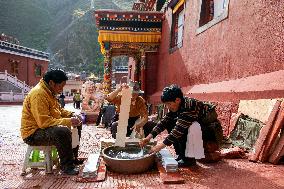
This photo taken on May 16, 2017 shows workers soaking paper for printing outside the Dege Sutra Printing House in Dege County of Garze Tibetan Autonomous Prefecture, southwest China's Sichuan Province. Built in 1729, the Dege Sutra Printing House preserves in good condition 325,520 woodcut printing plates containing significant Tibetan classics dating back to the 11th century. The majority of the blocks were carved between the 18th and mid-20th centuries. The printing blocks housed at the Dege Sutra Printing House in Sichuan were listed in this May as documentary heritage on the Asia Pacific regional register of UNESCO's Memory of the World (MOW) Programme. Photo by Gong Zihua/Xinhua/ABACAPRESS.COM

  •  
Dege Sutra Printing House - Tibet

Dege Sutra Printing House - Tibet

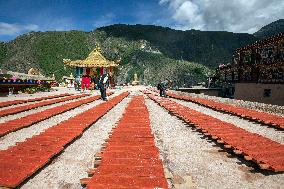
This file photo taken on June 11, 2019 shows workers airing woodcut printing blocks on a roof at the Dege Sutra Printing House in Dege County of Garze Tibetan Autonomous Prefecture, southwest China's Sichuan Province. Built in 1729, the Dege Sutra Printing House preserves in good condition 325,520 woodcut printing plates containing significant Tibetan classics dating back to the 11th century. The majority of the blocks were carved between the 18th and mid-20th centuries. The printing blocks housed at the Dege Sutra Printing House in Sichuan were listed in this May as documentary heritage on the Asia Pacific regional register of UNESCO's Memory of the World (MOW) Programme. Photo by Gong Zihua/Xinhua/ABACAPRESS.COM

  •  
Architecture of Kyiv

Architecture of Kyiv

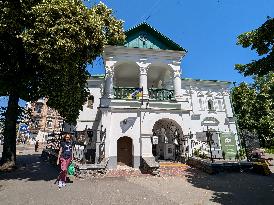
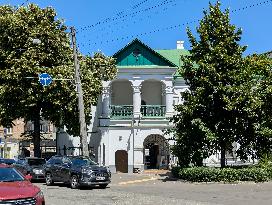
KYIV, UKRAINE - JUNE 27, 2024 - Built at the turn of the 17th and 18th centuries, the stone house of the Kyiv Wojt which belonged to Ivan Bykowski, the Wojt of Kyiv, is one of Kyivs oldest monuments of civil masonry architecture, Kyiv, capital of Ukraine.

  •  
Architecture of Kyiv

Architecture of Kyiv

KYIV, UKRAINE - JUNE 27, 2024 - Built at the turn of the 17th and 18th centuries, the stone house of the Kyiv Wojt which belonged to Ivan Bykowski, the Wojt of Kyiv, is one of Kyivs oldest monuments of civil masonry architecture, Kyiv, capital of Ukraine.

  •  
CHINA-BEIJING-PALACE MUSEUM-FRANCE-VERSAILLES-EXHIBITION (CN)

CHINA-BEIJING-PALACE MUSEUM-FRANCE-VERSAILLES-EXHIBITION (CN)

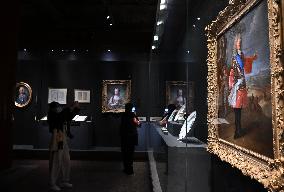
(240401) -- BEIJING, April 1, 2024 (Xinhua) -- Visitors watch an exhibition at the Palace Museum in Beijing, capital of China, April 1, 2024. The exhibition "The Forbidden City and the Palace of Versailles: Exchanges Between China and France in the 17th and 18th Centuries" opened at the Palace Museum in Beijing on Monday, showcasing about 200 cultural relics. (Xinhua/Jin Liangkuai)

  •  
CHINA-BEIJING-PALACE MUSEUM-FRANCE-VERSAILLES-EXHIBITION (CN)

CHINA-BEIJING-PALACE MUSEUM-FRANCE-VERSAILLES-EXHIBITION (CN)

(240401) -- BEIJING, April 1, 2024 (Xinhua) -- Visitors watch an exhibition at the Palace Museum in Beijing, capital of China, April 1, 2024. The exhibition "The Forbidden City and the Palace of Versailles: Exchanges Between China and France in the 17th and 18th Centuries" opened at the Palace Museum in Beijing on Monday, showcasing about 200 cultural relics. (Xinhua/Jin Liangkuai)

  •  
CHINA-BEIJING-PALACE MUSEUM-FRANCE-VERSAILLES-EXHIBITION (CN)

CHINA-BEIJING-PALACE MUSEUM-FRANCE-VERSAILLES-EXHIBITION (CN)

(240401) -- BEIJING, April 1, 2024 (Xinhua) -- Visitors watch an exhibition at the Palace Museum in Beijing, capital of China, April 1, 2024. The exhibition "The Forbidden City and the Palace of Versailles: Exchanges Between China and France in the 17th and 18th Centuries" opened at the Palace Museum in Beijing on Monday, showcasing about 200 cultural relics. (Xinhua/Jin Liangkuai)

  •  
CHINA-BEIJING-PALACE MUSEUM-FRANCE-VERSAILLES-EXHIBITION (CN)

CHINA-BEIJING-PALACE MUSEUM-FRANCE-VERSAILLES-EXHIBITION (CN)

(240401) -- BEIJING, April 1, 2024 (Xinhua) -- Visitors watch an exhibition at the Palace Museum in Beijing, capital of China, April 1, 2024. The exhibition "The Forbidden City and the Palace of Versailles: Exchanges Between China and France in the 17th and 18th Centuries" opened at the Palace Museum in Beijing on Monday, showcasing about 200 cultural relics. (Xinhua/Jin Liangkuai)

  •  
CHINA-BEIJING-PALACE MUSEUM-FRANCE-VERSAILLES-EXHIBITION (CN)

CHINA-BEIJING-PALACE MUSEUM-FRANCE-VERSAILLES-EXHIBITION (CN)

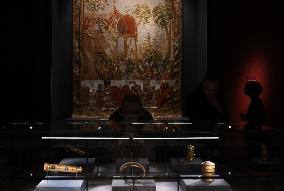
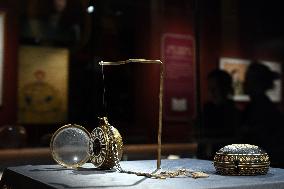
(240401) -- BEIJING, April 1, 2024 (Xinhua) -- A pocket watch is displayed during an exhibition at the Palace Museum in Beijing, capital of China, April 1, 2024. The exhibition "The Forbidden City and the Palace of Versailles: Exchanges Between China and France in the 17th and 18th Centuries" opened at the Palace Museum in Beijing on Monday, showcasing about 200 cultural relics. (Xinhua/Jin Liangkuai)

  •  
Celebration of Izium liberation anniversary

Celebration of Izium liberation anniversary

IZIUM, UKRAINE - SEPTEMBER 10, 2023 - The text of the Lord's Prayer written in Cossack skoropys, a type of Cyrillic calligraphic handwriting that was widely used in Zaporozhian Cossack documents in the 16th-18th centuries, is seen on the wall of the House of Culture on the first anniversary of the liberation of the city from Russian invaders, Izium, Kharkiv Region, northeastern Ukraine.

  •  
Trace of liquefaction found in ruins in Oita

Trace of liquefaction found in ruins in Oita

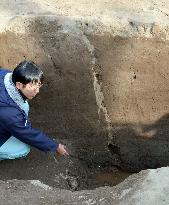
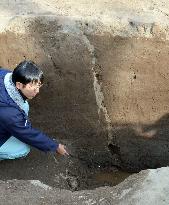
OITA, Japan - A man points to traces of soil liquefaction (white part) in the city of Oita, Japan, on Dec. 15, 2014, believed to have caused by a big earthquake between the 16th and 18th centuries. The traces were discovered during an excavation of a dwelling site in the remains from the age of provincial wars in the late 15th to 16th centuries.

  •  
Pope Francis leads open-air Mass for beatification of Korean martyrs

Pope Francis leads open-air Mass for beatification of Korean martyrs

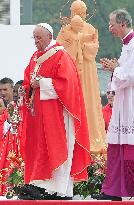
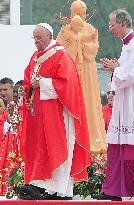
SEOUL, South Korea - Pope Francis (L) walks past a statue of the Virgin Mary and baby Jesus in traditional Korean costumes at Gwangwhamun Plaza in Seoul on Aug. 16, 2014, as he attends an open-air Mass for 124 Koreans persecuted and executed for their faith in the 18th and 19th centuries.

  •  
Pope Francis leads open-air Mass for beatification of Korean martyrs

Pope Francis leads open-air Mass for beatification of Korean martyrs

SEOUL, South Korea - Pope Francis attends an open-air Mass for 124 Koreans persecuted and executed for their faith in the 18th and 19th centuries at Gwangwhamun Plaza in Seoul on Aug. 16, 2014.

  •  
Pope Francis leads open-air Mass for beatification of Korean martyrs

Pope Francis leads open-air Mass for beatification of Korean martyrs

SEOUL, South Korea - Pope Francis waves to the crowd during a parade in Seoul on Aug. 16, 2014, before an open-air Mass for 124 Koreans persecuted and executed for their faith in the 18th and 19th centuries.

  •  

Rare clock collection displayed in Jerusalem

STORY: Rare clock collection displayed in Jerusalem DATELINE: July 8, 2022 LENGTH: 0:02:39 LOCATION: Jerusalem CATEGORY: CULTURE SHOTLIST: 1. various of clocks displayed in the museum STORYLINE: A rare clock collection of David Salomons is exhibited at the Museum for Islamic Art in Jerusalem. David Salomons was a leading figure in the 19th century struggle for Jewish rights in the United Kingdom. As an amateur scientist and horologist engaged in the science of time measurement, he was interested in intricate clocks based on sophisticated mechanical principles. Some of these clocks are on show at the museum, including items from the 18th and 19th centuries. The 200 clocks in the collection are sophisticated gadgets loved by the monarchs centuries ago. The collection includes simple clocks and chiming clocks which are mechanical and aesthetic masterpieces, as well as clocks with automatic winding mechanism which were then an innovation. There are pendulum clocks and grandfather clocks, scientific measuring

  •  

Popular musicians bring their art to parks and plazas in Cuba

STORY: Popular musicians bring their art to parks and plazas in Cuba DATELINE: July 2, 2022 LENGTH: 00:01:56 LOCATION: Havana CATEGORY: CULTURE SHOTLIST: various of people playing musicvarious of visitorsSOUNDBITE (Spanish): ENRIQUE LOPEZ, Director of the Typical Traditional Orchestra STORYLINE: The members of the Typical Traditional Orchestra in Cuba turn Cespedes Park in the eastern city of Santiago into a concert venue in the open air where locals, national and foreign tourists can pass by and enjoy the music. Located 800 kilometers to the southeast of Havana, Santiago is considered to be the second urban center of the island nation after the capital, as well as the metro area with the strongest Caribbean flavor in the country. With more than six decades of existence, the Typical Traditional Orchestra primarily interprets dance music known as danzon, the national dance of Cuba, as well as other rhythms of the 18th and 19th centuries. SOUNDBITE (Spanish): ENRIQUE LOPEZ, Director of the Typical Tr

  •  
Moods of Mount Fuji - 3

Moods of Mount Fuji - 3

A view across stormy seas to Mount Fuji. A stylised painting by Malcolm Greensmith in the style of the great Japanese printmakers of the late 18th and 19th centuries such as Hiroshige and Hokusai. Date: 19th century

  •  
Trace of liquefaction found in ruins in Oita

Trace of liquefaction found in ruins in Oita

OITA, Japan - A man points to traces of soil liquefaction (white part) in the city of Oita, Japan, on Dec. 15, 2014, believed to have caused by a big earthquake between the 16th and 18th centuries. The traces were discovered during an excavation of a dwelling site in the remains from the age of provincial wars in the late 15th to 16th centuries. (Kyodo)

  •  
Pope Francis leads open-air Mass for beatification of Korean martyrs

Pope Francis leads open-air Mass for beatification of Korean martyrs

SEOUL, South Korea - Pope Francis (L) walks past a statue of the Virgin Mary and baby Jesus in traditional Korean costumes at Gwangwhamun Plaza in Seoul on Aug. 16, 2014, as he attends an open-air Mass for 124 Koreans persecuted and executed for their faith in the 18th and 19th centuries. (Kyodo)

  •  
Pope Francis leads open-air Mass for beatification of Korean martyrs

Pope Francis leads open-air Mass for beatification of Korean martyrs

SEOUL, South Korea - Pope Francis waves to the crowd during a parade in Seoul on Aug. 16, 2014, before an open-air Mass for 124 Koreans persecuted and executed for their faith in the 18th and 19th centuries. (Kyodo)

  •  
Kodaira Kate udon

Kodaira Kate udon

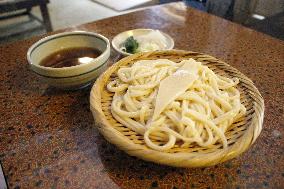
Photo taken on Nov. 4, 2018, shows Kodaira Kate "udon" noodles served at the Kodaira Furusato Mura village park in Kodaira city in western Tokyo. The noodle is a traditional local specialty and the park features restored or faithfully reconstructed buildings dating back to the 17th and 18th centuries. (Kyodo) ==Kyodo

  • Main
  • Top
  • Editorial
  • Creative
  • About Us
  • About ILG
  • Terms of use
  • Company
  • BEHIND
  • Price List
  • Single Plan
  • Monthly Plan
  • Services
  • Shooting
  • Rights Clearance
  • Support
  • FAQ
  • How To Buy
  • Contact Us
  • Become a Partner

© KYODO NEWS IMAGES INC

All Rights Reserved.

  • Editorial
  • Olympics
  • News
  • Sports
  • Japan
  • Tech
  • Royal
  • Disaster
  • NorthKorea
  • Old Japan
  • SNS
  • Creative
  • Food
  • Japan
  • Landscape
  • Animal
  • Popular
  • #Ukraine
  • #Thailand
  • #coronavirus
  • #N. Korea
  • #China
  • #Russia
  • #Ukraine
  • #Thailand
  • #coronavirus
  • #N. Korea
  • #China
  • #Russia
  • Food
  • Japan
  • Landscape
  • Animal
  • Olympics
  • News
  • Sports
  • Japan
  • Tech
  • Royal
  • Disaster
  • NorthKorea
  • Old Japan
  • SNS