•  
Shannen Doherty

Shannen Doherty

Shannen Doherty Circa 1980's. Los Angeles, California, United States. 01 Jan 1985. Photo by Media Punch/INSTARimages/ABACAPRESS.COM

  •  
Shannen Doherty

Shannen Doherty

Shannen Doherty Circa 1980's in Los Angeles, California, United States, 01 Jan 1985. Photo by Media Punch/INSTARimages/ABACAPRESS.COM

  •  
(MASTER OF CRAFTS)CHINA-SHANXI-COLOR PORCELAIN-INHERITOR (CN)

(MASTER OF CRAFTS)CHINA-SHANXI-COLOR PORCELAIN-INHERITOR (CN)

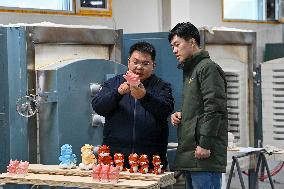
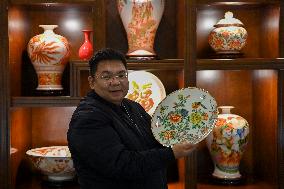
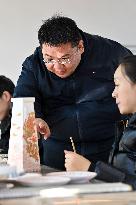
(240112) -- SHANGDANG, Jan. 12, 2024 (Xinhua) -- Li Yamin (L) talks with a craftsman at a production base of Honglyucai (Red and Green Color) Porcelain in Honglyucai Village, Changzhi City of north China's Shanxi Province, Jan. 4, 2024. The Honglyucai (Red and Green Color) Porcelain of Bayi kiln was originated from the Song Dynasty (960-1279) and became popular in the Jin Dynasty (1115-1234). Its pioneering twice-firing technique allows the use of multiple colors on one piece of porcelain, which is regarded as a major breakthrough in China's porcelain history. To make a Honglyucai porcelain item, it needs to go through 72 procedures, which is so complicated that the technique was almost lost in the 1980's. In 2021, the crafts of making Honglyucai Porcelain of Bayi kiln was listed as a national intangible cultural heritage. Li Yamin, a native in the Honglyucai Village of Bayi Town, is an inheritor of the craft. Under the influence of his father Li Jianping, a provincial-level inheritor of the craft, Li

  •  
(MASTER OF CRAFTS)CHINA-SHANXI-COLOR PORCELAIN-INHERITOR (CN)

(MASTER OF CRAFTS)CHINA-SHANXI-COLOR PORCELAIN-INHERITOR (CN)

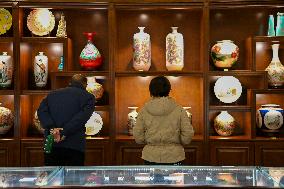
(240112) -- SHANGDANG, Jan. 12, 2024 (Xinhua) -- People visit a Honglyucai (Red and Green Color) Porcelain museum in Honglyucai Village, Changzhi City of north China's Shanxi Province, Jan. 4, 2024. The Honglyucai (Red and Green Color) Porcelain of Bayi kiln was originated from the Song Dynasty (960-1279) and became popular in the Jin Dynasty (1115-1234). Its pioneering twice-firing technique allows the use of multiple colors on one piece of porcelain, which is regarded as a major breakthrough in China's porcelain history. To make a Honglyucai porcelain item, it needs to go through 72 procedures, which is so complicated that the technique was almost lost in the 1980's. In 2021, the crafts of making Honglyucai Porcelain of Bayi kiln was listed as a national intangible cultural heritage. Li Yamin, a native in the Honglyucai Village of Bayi Town, is an inheritor of the craft. Under the influence of his father Li Jianping, a provincial-level inheritor of the craft, Li Yamin started to learn porcelain makin

  •  
(MASTER OF CRAFTS)CHINA-SHANXI-COLOR PORCELAIN-INHERITOR (CN)

(MASTER OF CRAFTS)CHINA-SHANXI-COLOR PORCELAIN-INHERITOR (CN)

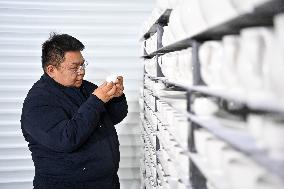
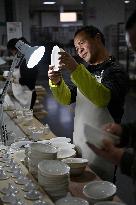
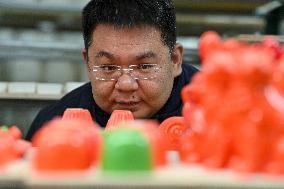
(240112) -- SHANGDANG, Jan. 12, 2024 (Xinhua) -- Li Yamin checks the finished products at a production base of Honglyucai (Red and Green Color) Porcelain in Honglyucai Village, Changzhi City of north China's Shanxi Province, Jan. 3, 2024. The Honglyucai (Red and Green Color) Porcelain of Bayi kiln was originated from the Song Dynasty (960-1279) and became popular in the Jin Dynasty (1115-1234). Its pioneering twice-firing technique allows the use of multiple colors on one piece of porcelain, which is regarded as a major breakthrough in China's porcelain history. To make a Honglyucai porcelain item, it needs to go through 72 procedures, which is so complicated that the technique was almost lost in the 1980's. In 2021, the crafts of making Honglyucai Porcelain of Bayi kiln was listed as a national intangible cultural heritage. Li Yamin, a native in the Honglyucai Village of Bayi Town, is an inheritor of the craft. Under the influence of his father Li Jianping, a provincial-level inheritor of the craft, L

  •  
(MASTER OF CRAFTS)CHINA-SHANXI-COLOR PORCELAIN-INHERITOR (CN)

(MASTER OF CRAFTS)CHINA-SHANXI-COLOR PORCELAIN-INHERITOR (CN)

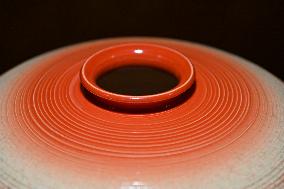
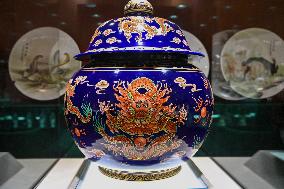
(240112) -- SHANGDANG, Jan. 12, 2024 (Xinhua) -- A porcelain ware is displayed at a Honglyucai (Red and Green Color) Porcelain museum in Honglyucai Village, Changzhi City of north China's Shanxi Province, Jan. 3, 2024. The Honglyucai (Red and Green Color) Porcelain of Bayi kiln was originated from the Song Dynasty (960-1279) and became popular in the Jin Dynasty (1115-1234). Its pioneering twice-firing technique allows the use of multiple colors on one piece of porcelain, which is regarded as a major breakthrough in China's porcelain history. To make a Honglyucai porcelain item, it needs to go through 72 procedures, which is so complicated that the technique was almost lost in the 1980's. In 2021, the crafts of making Honglyucai Porcelain of Bayi kiln was listed as a national intangible cultural heritage. Li Yamin, a native in the Honglyucai Village of Bayi Town, is an inheritor of the craft. Under the influence of his father Li Jianping, a provincial-level inheritor of the craft, Li Yamin started to l

  •  
(MASTER OF CRAFTS)CHINA-SHANXI-COLOR PORCELAIN-INHERITOR (CN)

(MASTER OF CRAFTS)CHINA-SHANXI-COLOR PORCELAIN-INHERITOR (CN)

(240112) -- SHANGDANG, Jan. 12, 2024 (Xinhua) -- Li Yamin shows a porcelain ware he collected at a Honglyucai (Red and Green Color) Porcelain museum in Honglyucai Village, Changzhi City of north China's Shanxi Province, Jan. 4, 2024. The Honglyucai (Red and Green Color) Porcelain of Bayi kiln was originated from the Song Dynasty (960-1279) and became popular in the Jin Dynasty (1115-1234). Its pioneering twice-firing technique allows the use of multiple colors on one piece of porcelain, which is regarded as a major breakthrough in China's porcelain history. To make a Honglyucai porcelain item, it needs to go through 72 procedures, which is so complicated that the technique was almost lost in the 1980's. In 2021, the crafts of making Honglyucai Porcelain of Bayi kiln was listed as a national intangible cultural heritage. Li Yamin, a native in the Honglyucai Village of Bayi Town, is an inheritor of the craft. Under the influence of his father Li Jianping, a provincial-level inheritor of the craft, Li Yam

  •  
(MASTER OF CRAFTS)CHINA-SHANXI-COLOR PORCELAIN-INHERITOR (CN)

(MASTER OF CRAFTS)CHINA-SHANXI-COLOR PORCELAIN-INHERITOR (CN)

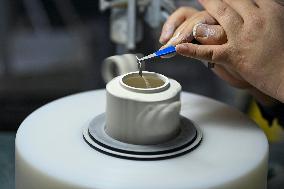
(240112) -- SHANGDANG, Jan. 12, 2024 (Xinhua) -- A craftsman fixes a ceramic body at a production base of Honglyucai (Red and Green Color) Porcelain in Honglyucai Village, Changzhi City of north China's Shanxi Province, Jan. 4, 2024. The Honglyucai (Red and Green Color) Porcelain of Bayi kiln was originated from the Song Dynasty (960-1279) and became popular in the Jin Dynasty (1115-1234). Its pioneering twice-firing technique allows the use of multiple colors on one piece of porcelain, which is regarded as a major breakthrough in China's porcelain history. To make a Honglyucai porcelain item, it needs to go through 72 procedures, which is so complicated that the technique was almost lost in the 1980's. In 2021, the crafts of making Honglyucai Porcelain of Bayi kiln was listed as a national intangible cultural heritage. Li Yamin, a native in the Honglyucai Village of Bayi Town, is an inheritor of the craft. Under the influence of his father Li Jianping, a provincial-level inheritor of the craft, Li Yam

  •  
(MASTER OF CRAFTS)CHINA-SHANXI-COLOR PORCELAIN-INHERITOR (CN)

(MASTER OF CRAFTS)CHINA-SHANXI-COLOR PORCELAIN-INHERITOR (CN)

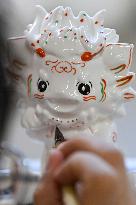
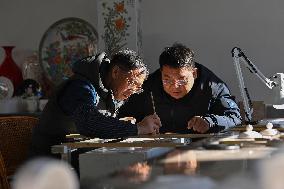
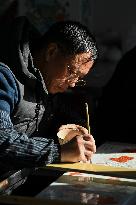
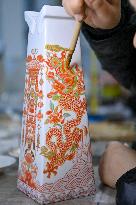
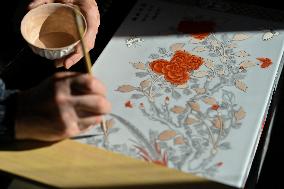
(240112) -- SHANGDANG, Jan. 12, 2024 (Xinhua) -- A craftsman paints on a piece of porcelain at a production base of Honglyucai (Red and Green Color) Porcelain in Honglyucai Village, Changzhi City of north China's Shanxi Province, Jan. 4, 2024. The Honglyucai (Red and Green Color) Porcelain of Bayi kiln was originated from the Song Dynasty (960-1279) and became popular in the Jin Dynasty (1115-1234). Its pioneering twice-firing technique allows the use of multiple colors on one piece of porcelain, which is regarded as a major breakthrough in China's porcelain history. To make a Honglyucai porcelain item, it needs to go through 72 procedures, which is so complicated that the technique was almost lost in the 1980's. In 2021, the crafts of making Honglyucai Porcelain of Bayi kiln was listed as a national intangible cultural heritage. Li Yamin, a native in the Honglyucai Village of Bayi Town, is an inheritor of the craft. Under the influence of his father Li Jianping, a provincial-level inheritor of the cra

  •  
(MASTER OF CRAFTS)CHINA-SHANXI-COLOR PORCELAIN-INHERITOR (CN)

(MASTER OF CRAFTS)CHINA-SHANXI-COLOR PORCELAIN-INHERITOR (CN)

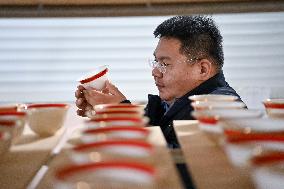
(240112) -- SHANGDANG, Jan. 12, 2024 (Xinhua) -- Fired porcelain artworks wait for cooling down at a production base of Honglyucai (Red and Green Color) Porcelain in Honglyucai Village, Changzhi City of north China's Shanxi Province, Jan. 4, 2024. The Honglyucai (Red and Green Color) Porcelain of Bayi kiln was originated from the Song Dynasty (960-1279) and became popular in the Jin Dynasty (1115-1234). Its pioneering twice-firing technique allows the use of multiple colors on one piece of porcelain, which is regarded as a major breakthrough in China's porcelain history. To make a Honglyucai porcelain item, it needs to go through 72 procedures, which is so complicated that the technique was almost lost in the 1980's. In 2021, the crafts of making Honglyucai Porcelain of Bayi kiln was listed as a national intangible cultural heritage. Li Yamin, a native in the Honglyucai Village of Bayi Town, is an inheritor of the craft. Under the influence of his father Li Jianping, a provincial-level inheritor of the

  •  
(MASTER OF CRAFTS)CHINA-SHANXI-COLOR PORCELAIN-INHERITOR (CN)

(MASTER OF CRAFTS)CHINA-SHANXI-COLOR PORCELAIN-INHERITOR (CN)

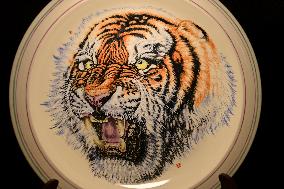
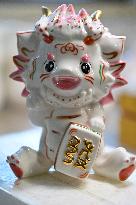
(240112) -- SHANGDANG, Jan. 12, 2024 (Xinhua) -- A porcelain artwork is displayed at a Honglyucai (Red and Green Color) Porcelain museum in Honglyucai Village, Changzhi City of north China's Shanxi Province, Jan. 3, 2024. The Honglyucai (Red and Green Color) Porcelain of Bayi kiln was originated from the Song Dynasty (960-1279) and became popular in the Jin Dynasty (1115-1234). Its pioneering twice-firing technique allows the use of multiple colors on one piece of porcelain, which is regarded as a major breakthrough in China's porcelain history. To make a Honglyucai porcelain item, it needs to go through 72 procedures, which is so complicated that the technique was almost lost in the 1980's. In 2021, the crafts of making Honglyucai Porcelain of Bayi kiln was listed as a national intangible cultural heritage. Li Yamin, a native in the Honglyucai Village of Bayi Town, is an inheritor of the craft. Under the influence of his father Li Jianping, a provincial-level inheritor of the craft, Li Yamin started t

  •  
(MASTER OF CRAFTS)CHINA-SHANXI-COLOR PORCELAIN-INHERITOR (CN)

(MASTER OF CRAFTS)CHINA-SHANXI-COLOR PORCELAIN-INHERITOR (CN)

(240112) -- SHANGDANG, Jan. 12, 2024 (Xinhua) -- Li Yamin checks a finished artwork at a production base of Honglyucai (Red and Green Color) Porcelain in Honglyucai Village, Changzhi City of north China's Shanxi Province, Jan. 3, 2024. The Honglyucai (Red and Green Color) Porcelain of Bayi kiln was originated from the Song Dynasty (960-1279) and became popular in the Jin Dynasty (1115-1234). Its pioneering twice-firing technique allows the use of multiple colors on one piece of porcelain, which is regarded as a major breakthrough in China's porcelain history. To make a Honglyucai porcelain item, it needs to go through 72 procedures, which is so complicated that the technique was almost lost in the 1980's. In 2021, the crafts of making Honglyucai Porcelain of Bayi kiln was listed as a national intangible cultural heritage. Li Yamin, a native in the Honglyucai Village of Bayi Town, is an inheritor of the craft. Under the influence of his father Li Jianping, a provincial-level inheritor of the craft, Li Y

  •  
(MASTER OF CRAFTS)CHINA-SHANXI-COLOR PORCELAIN-INHERITOR (CN)

(MASTER OF CRAFTS)CHINA-SHANXI-COLOR PORCELAIN-INHERITOR (CN)

(240112) -- SHANGDANG, Jan. 12, 2024 (Xinhua) -- A porcelain artwork is displayed at a Honglyucai (Red and Green Color) Porcelain museum in Honglyucai Village, Changzhi City of north China's Shanxi Province, Jan. 3, 2024. The Honglyucai (Red and Green Color) Porcelain of Bayi kiln was originated from the Song Dynasty (960-1279) and became popular in the Jin Dynasty (1115-1234). Its pioneering twice-firing technique allows the use of multiple colors on one piece of porcelain, which is regarded as a major breakthrough in China's porcelain history. To make a Honglyucai porcelain item, it needs to go through 72 procedures, which is so complicated that the technique was almost lost in the 1980's. In 2021, the crafts of making Honglyucai Porcelain of Bayi kiln was listed as a national intangible cultural heritage. Li Yamin, a native in the Honglyucai Village of Bayi Town, is an inheritor of the craft. Under the influence of his father Li Jianping, a provincial-level inheritor of the craft, Li Yamin started t

  •  
(MASTER OF CRAFTS)CHINA-SHANXI-COLOR PORCELAIN-INHERITOR (CN)

(MASTER OF CRAFTS)CHINA-SHANXI-COLOR PORCELAIN-INHERITOR (CN)

(240112) -- SHANGDANG, Jan. 12, 2024 (Xinhua) -- A craftsman checks a piece of porcelain at a production base of Honglyucai (Red and Green Color) Porcelain in Honglyucai Village, Changzhi City of north China's Shanxi Province, Jan. 3, 2024. The Honglyucai (Red and Green Color) Porcelain of Bayi kiln was originated from the Song Dynasty (960-1279) and became popular in the Jin Dynasty (1115-1234). Its pioneering twice-firing technique allows the use of multiple colors on one piece of porcelain, which is regarded as a major breakthrough in China's porcelain history. To make a Honglyucai porcelain item, it needs to go through 72 procedures, which is so complicated that the technique was almost lost in the 1980's. In 2021, the crafts of making Honglyucai Porcelain of Bayi kiln was listed as a national intangible cultural heritage. Li Yamin, a native in the Honglyucai Village of Bayi Town, is an inheritor of the craft. Under the influence of his father Li Jianping, a provincial-level inheritor of the craft,

  •  
(MASTER OF CRAFTS)CHINA-SHANXI-COLOR PORCELAIN-INHERITOR (CN)

(MASTER OF CRAFTS)CHINA-SHANXI-COLOR PORCELAIN-INHERITOR (CN)

(240112) -- SHANGDANG, Jan. 12, 2024 (Xinhua) -- Li Yamin (R) asks for advice from an experienced craftsman at a production base of Honglyucai (Red and Green Color) Porcelain in Honglyucai Village, Changzhi City of north China's Shanxi Province, Jan. 4, 2024. The Honglyucai (Red and Green Color) Porcelain of Bayi kiln was originated from the Song Dynasty (960-1279) and became popular in the Jin Dynasty (1115-1234). Its pioneering twice-firing technique allows the use of multiple colors on one piece of porcelain, which is regarded as a major breakthrough in China's porcelain history. To make a Honglyucai porcelain item, it needs to go through 72 procedures, which is so complicated that the technique was almost lost in the 1980's. In 2021, the crafts of making Honglyucai Porcelain of Bayi kiln was listed as a national intangible cultural heritage. Li Yamin, a native in the Honglyucai Village of Bayi Town, is an inheritor of the craft. Under the influence of his father Li Jianping, a provincial-level inhe

  •  
(MASTER OF CRAFTS)CHINA-SHANXI-COLOR PORCELAIN-INHERITOR (CN)

(MASTER OF CRAFTS)CHINA-SHANXI-COLOR PORCELAIN-INHERITOR (CN)

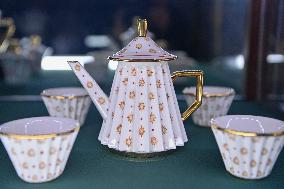
(240112) -- SHANGDANG, Jan. 12, 2024 (Xinhua) -- Porcelain tea sets are displayed at a production base of Honglyucai (Red and Green Color) Porcelain in Honglyucai Village, Changzhi City of north China's Shanxi Province, Jan. 3, 2024. The Honglyucai (Red and Green Color) Porcelain of Bayi kiln was originated from the Song Dynasty (960-1279) and became popular in the Jin Dynasty (1115-1234). Its pioneering twice-firing technique allows the use of multiple colors on one piece of porcelain, which is regarded as a major breakthrough in China's porcelain history. To make a Honglyucai porcelain item, it needs to go through 72 procedures, which is so complicated that the technique was almost lost in the 1980's. In 2021, the crafts of making Honglyucai Porcelain of Bayi kiln was listed as a national intangible cultural heritage. Li Yamin, a native in the Honglyucai Village of Bayi Town, is an inheritor of the craft. Under the influence of his father Li Jianping, a provincial-level inheritor of the craft, Li Yam

  •  
(MASTER OF CRAFTS)CHINA-SHANXI-COLOR PORCELAIN-INHERITOR (CN)

(MASTER OF CRAFTS)CHINA-SHANXI-COLOR PORCELAIN-INHERITOR (CN)

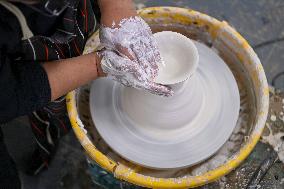
(240112) -- SHANGDANG, Jan. 12, 2024 (Xinhua) -- A craftsman makes a ceramic body at a production base of Honglyucai (Red and Green Color) Porcelain in Honglyucai Village, Changzhi City of north China's Shanxi Province, Jan. 3, 2024. The Honglyucai (Red and Green Color) Porcelain of Bayi kiln was originated from the Song Dynasty (960-1279) and became popular in the Jin Dynasty (1115-1234). Its pioneering twice-firing technique allows the use of multiple colors on one piece of porcelain, which is regarded as a major breakthrough in China's porcelain history. To make a Honglyucai porcelain item, it needs to go through 72 procedures, which is so complicated that the technique was almost lost in the 1980's. In 2021, the crafts of making Honglyucai Porcelain of Bayi kiln was listed as a national intangible cultural heritage. Li Yamin, a native in the Honglyucai Village of Bayi Town, is an inheritor of the craft. Under the influence of his father Li Jianping, a provincial-level inheritor of the craft, Li Yam

  •  
(MASTER OF CRAFTS)CHINA-SHANXI-COLOR PORCELAIN-INHERITOR (CN)

(MASTER OF CRAFTS)CHINA-SHANXI-COLOR PORCELAIN-INHERITOR (CN)

(240112) -- SHANGDANG, Jan. 12, 2024 (Xinhua) -- A craftsman paints on a piece of porcelain at a production base of Honglyucai (Red and Green Color) Porcelain in Honglyucai Village, Changzhi City of north China's Shanxi Province, Jan. 4, 2024. The Honglyucai (Red and Green Color) Porcelain of Bayi kiln was originated from the Song Dynasty (960-1279) and became popular in the Jin Dynasty (1115-1234). Its pioneering twice-firing technique allows the use of multiple colors on one piece of porcelain, which is regarded as a major breakthrough in China's porcelain history. To make a Honglyucai porcelain item, it needs to go through 72 procedures, which is so complicated that the technique was almost lost in the 1980's. In 2021, the crafts of making Honglyucai Porcelain of Bayi kiln was listed as a national intangible cultural heritage. Li Yamin, a native in the Honglyucai Village of Bayi Town, is an inheritor of the craft. Under the influence of his father Li Jianping, a provincial-level inheritor of the cra

  •  
(MASTER OF CRAFTS)CHINA-SHANXI-COLOR PORCELAIN-INHERITOR (CN)

(MASTER OF CRAFTS)CHINA-SHANXI-COLOR PORCELAIN-INHERITOR (CN)

(240112) -- SHANGDANG, Jan. 12, 2024 (Xinhua) -- Li Yamin checks the color of porcelain at a production base of Honglyucai (Red and Green Color) Porcelain in Honglyucai Village, Changzhi City of north China's Shanxi Province, Jan. 4, 2024. The Honglyucai (Red and Green Color) Porcelain of Bayi kiln was originated from the Song Dynasty (960-1279) and became popular in the Jin Dynasty (1115-1234). Its pioneering twice-firing technique allows the use of multiple colors on one piece of porcelain, which is regarded as a major breakthrough in China's porcelain history. To make a Honglyucai porcelain item, it needs to go through 72 procedures, which is so complicated that the technique was almost lost in the 1980's. In 2021, the crafts of making Honglyucai Porcelain of Bayi kiln was listed as a national intangible cultural heritage. Li Yamin, a native in the Honglyucai Village of Bayi Town, is an inheritor of the craft. Under the influence of his father Li Jianping, a provincial-level inheritor of the craft,

  •  
(MASTER OF CRAFTS)CHINA-SHANXI-COLOR PORCELAIN-INHERITOR (CN)

(MASTER OF CRAFTS)CHINA-SHANXI-COLOR PORCELAIN-INHERITOR (CN)

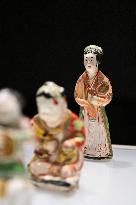
(240112) -- SHANGDANG, Jan. 12, 2024 (Xinhua) -- A porcelain ware is displayed at a Honglyucai (Red and Green Color) Porcelain museum in Honglyucai Village, Changzhi City of north China's Shanxi Province, Jan. 3, 2024. The Honglyucai (Red and Green Color) Porcelain of Bayi kiln was originated from the Song Dynasty (960-1279) and became popular in the Jin Dynasty (1115-1234). Its pioneering twice-firing technique allows the use of multiple colors on one piece of porcelain, which is regarded as a major breakthrough in China's porcelain history. To make a Honglyucai porcelain item, it needs to go through 72 procedures, which is so complicated that the technique was almost lost in the 1980's. In 2021, the crafts of making Honglyucai Porcelain of Bayi kiln was listed as a national intangible cultural heritage. Li Yamin, a native in the Honglyucai Village of Bayi Town, is an inheritor of the craft. Under the influence of his father Li Jianping, a provincial-level inheritor of the craft, Li Yamin started to l

  •  
(MASTER OF CRAFTS)CHINA-SHANXI-COLOR PORCELAIN-INHERITOR (CN)

(MASTER OF CRAFTS)CHINA-SHANXI-COLOR PORCELAIN-INHERITOR (CN)

(240112) -- SHANGDANG, Jan. 12, 2024 (Xinhua) -- A craftsman paints on a piece of porcelain at a production base of Honglyucai (Red and Green Color) Porcelain in Honglyucai Village, Changzhi City of north China's Shanxi Province, Jan. 3, 2024. The Honglyucai (Red and Green Color) Porcelain of Bayi kiln was originated from the Song Dynasty (960-1279) and became popular in the Jin Dynasty (1115-1234). Its pioneering twice-firing technique allows the use of multiple colors on one piece of porcelain, which is regarded as a major breakthrough in China's porcelain history. To make a Honglyucai porcelain item, it needs to go through 72 procedures, which is so complicated that the technique was almost lost in the 1980's. In 2021, the crafts of making Honglyucai Porcelain of Bayi kiln was listed as a national intangible cultural heritage. Li Yamin, a native in the Honglyucai Village of Bayi Town, is an inheritor of the craft. Under the influence of his father Li Jianping, a provincial-level inheritor of the cra

  •  
(MASTER OF CRAFTS)CHINA-SHANXI-COLOR PORCELAIN-INHERITOR (CN)

(MASTER OF CRAFTS)CHINA-SHANXI-COLOR PORCELAIN-INHERITOR (CN)

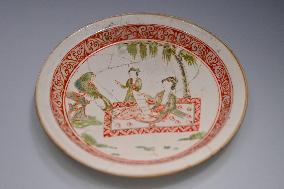
(240112) -- SHANGDANG, Jan. 12, 2024 (Xinhua) -- An ancient porcelain dish is displayed at Honglyucai (Red and Green Color) Porcelain museum in Honglyucai Village, Changzhi City of north China's Shanxi Province, Jan. 3, 2024. The Honglyucai (Red and Green Color) Porcelain of Bayi kiln was originated from the Song Dynasty (960-1279) and became popular in the Jin Dynasty (1115-1234). Its pioneering twice-firing technique allows the use of multiple colors on one piece of porcelain, which is regarded as a major breakthrough in China's porcelain history. To make a Honglyucai porcelain item, it needs to go through 72 procedures, which is so complicated that the technique was almost lost in the 1980's. In 2021, the crafts of making Honglyucai Porcelain of Bayi kiln was listed as a national intangible cultural heritage. Li Yamin, a native in the Honglyucai Village of Bayi Town, is an inheritor of the craft. Under the influence of his father Li Jianping, a provincial-level inheritor of the craft, Li Yamin start

  •  
(MASTER OF CRAFTS)CHINA-SHANXI-COLOR PORCELAIN-INHERITOR (CN)

(MASTER OF CRAFTS)CHINA-SHANXI-COLOR PORCELAIN-INHERITOR (CN)

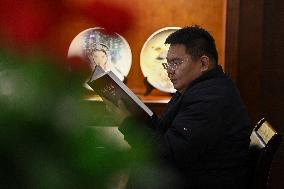
(240112) -- SHANGDANG, Jan. 12, 2024 (Xinhua) -- Li Yamin checks data at a Honglyucai (Red and Green Color) Porcelain museum in Honglyucai Village, Changzhi City of north China's Shanxi Province, Jan. 4, 2024. The Honglyucai (Red and Green Color) Porcelain of Bayi kiln was originated from the Song Dynasty (960-1279) and became popular in the Jin Dynasty (1115-1234). Its pioneering twice-firing technique allows the use of multiple colors on one piece of porcelain, which is regarded as a major breakthrough in China's porcelain history. To make a Honglyucai porcelain item, it needs to go through 72 procedures, which is so complicated that the technique was almost lost in the 1980's. In 2021, the crafts of making Honglyucai Porcelain of Bayi kiln was listed as a national intangible cultural heritage. Li Yamin, a native in the Honglyucai Village of Bayi Town, is an inheritor of the craft. Under the influence of his father Li Jianping, a provincial-level inheritor of the craft, Li Yamin started to learn porc

  •  
(MASTER OF CRAFTS)CHINA-SHANXI-COLOR PORCELAIN-INHERITOR (CN)

(MASTER OF CRAFTS)CHINA-SHANXI-COLOR PORCELAIN-INHERITOR (CN)

(240112) -- SHANGDANG, Jan. 12, 2024 (Xinhua) -- A porcelain artwork is displayed at a production base of Honglyucai (Red and Green Color) Porcelain in Honglyucai Village, Changzhi City of north China's Shanxi Province, Jan. 3, 2024. The Honglyucai (Red and Green Color) Porcelain of Bayi kiln was originated from the Song Dynasty (960-1279) and became popular in the Jin Dynasty (1115-1234). Its pioneering twice-firing technique allows the use of multiple colors on one piece of porcelain, which is regarded as a major breakthrough in China's porcelain history. To make a Honglyucai porcelain item, it needs to go through 72 procedures, which is so complicated that the technique was almost lost in the 1980's. In 2021, the crafts of making Honglyucai Porcelain of Bayi kiln was listed as a national intangible cultural heritage. Li Yamin, a native in the Honglyucai Village of Bayi Town, is an inheritor of the craft. Under the influence of his father Li Jianping, a provincial-level inheritor of the craft, Li Yam

  •  
(MASTER OF CRAFTS)CHINA-SHANXI-COLOR PORCELAIN-INHERITOR (CN)

(MASTER OF CRAFTS)CHINA-SHANXI-COLOR PORCELAIN-INHERITOR (CN)

(240112) -- SHANGDANG, Jan. 12, 2024 (Xinhua) -- Li Yamin talks with a craftswoman at a production base of Honglyucai (Red and Green Color) Porcelain in Honglyucai Village, Changzhi City of north China's Shanxi Province, Jan. 4, 2024. The Honglyucai (Red and Green Color) Porcelain of Bayi kiln was originated from the Song Dynasty (960-1279) and became popular in the Jin Dynasty (1115-1234). Its pioneering twice-firing technique allows the use of multiple colors on one piece of porcelain, which is regarded as a major breakthrough in China's porcelain history. To make a Honglyucai porcelain item, it needs to go through 72 procedures, which is so complicated that the technique was almost lost in the 1980's. In 2021, the crafts of making Honglyucai Porcelain of Bayi kiln was listed as a national intangible cultural heritage. Li Yamin, a native in the Honglyucai Village of Bayi Town, is an inheritor of the craft. Under the influence of his father Li Jianping, a provincial-level inheritor of the craft, Li Ya

  •  
(MASTER OF CRAFTS)CHINA-SHANXI-COLOR PORCELAIN-INHERITOR (CN)

(MASTER OF CRAFTS)CHINA-SHANXI-COLOR PORCELAIN-INHERITOR (CN)

(240112) -- SHANGDANG, Jan. 12, 2024 (Xinhua) -- A craftsman paints on a piece of porcelain at a production base of Honglyucai (Red and Green Color) Porcelain in Honglyucai Village, Changzhi City of north China's Shanxi Province, Jan. 4, 2024. The Honglyucai (Red and Green Color) Porcelain of Bayi kiln was originated from the Song Dynasty (960-1279) and became popular in the Jin Dynasty (1115-1234). Its pioneering twice-firing technique allows the use of multiple colors on one piece of porcelain, which is regarded as a major breakthrough in China's porcelain history. To make a Honglyucai porcelain item, it needs to go through 72 procedures, which is so complicated that the technique was almost lost in the 1980's. In 2021, the crafts of making Honglyucai Porcelain of Bayi kiln was listed as a national intangible cultural heritage. Li Yamin, a native in the Honglyucai Village of Bayi Town, is an inheritor of the craft. Under the influence of his father Li Jianping, a provincial-level inheritor of the cra

  •  
(MASTER OF CRAFTS)CHINA-SHANXI-COLOR PORCELAIN-INHERITOR (CN)

(MASTER OF CRAFTS)CHINA-SHANXI-COLOR PORCELAIN-INHERITOR (CN)

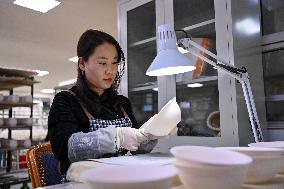
(240112) -- SHANGDANG, Jan. 12, 2024 (Xinhua) -- A craftswoman checks a ceramic body at a production base of Honglyucai (Red and Green Color) Porcelain in Honglyucai Village, Changzhi City of north China's Shanxi Province, Jan. 3, 2024. The Honglyucai (Red and Green Color) Porcelain of Bayi kiln was originated from the Song Dynasty (960-1279) and became popular in the Jin Dynasty (1115-1234). Its pioneering twice-firing technique allows the use of multiple colors on one piece of porcelain, which is regarded as a major breakthrough in China's porcelain history. To make a Honglyucai porcelain item, it needs to go through 72 procedures, which is so complicated that the technique was almost lost in the 1980's. In 2021, the crafts of making Honglyucai Porcelain of Bayi kiln was listed as a national intangible cultural heritage. Li Yamin, a native in the Honglyucai Village of Bayi Town, is an inheritor of the craft. Under the influence of his father Li Jianping, a provincial-level inheritor of the craft, Li

  •  
(MASTER OF CRAFTS)CHINA-SHANXI-COLOR PORCELAIN-INHERITOR (CN)

(MASTER OF CRAFTS)CHINA-SHANXI-COLOR PORCELAIN-INHERITOR (CN)

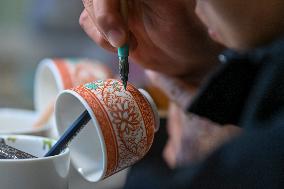
(240112) -- SHANGDANG, Jan. 12, 2024 (Xinhua) -- A craftsman paints on a porcelain at a production base of Honglyucai (Red and Green Color) Porcelain in Honglyucai Village, Changzhi City of north China's Shanxi Province, Jan. 4, 2024. The Honglyucai (Red and Green Color) Porcelain of Bayi kiln was originated from the Song Dynasty (960-1279) and became popular in the Jin Dynasty (1115-1234). Its pioneering twice-firing technique allows the use of multiple colors on one piece of porcelain, which is regarded as a major breakthrough in China's porcelain history. To make a Honglyucai porcelain item, it needs to go through 72 procedures, which is so complicated that the technique was almost lost in the 1980's. In 2021, the crafts of making Honglyucai Porcelain of Bayi kiln was listed as a national intangible cultural heritage. Li Yamin, a native in the Honglyucai Village of Bayi Town, is an inheritor of the craft. Under the influence of his father Li Jianping, a provincial-level inheritor of the craft, Li Ya

  •  
(MASTER OF CRAFTS)CHINA-SHANXI-COLOR PORCELAIN-INHERITOR (CN)

(MASTER OF CRAFTS)CHINA-SHANXI-COLOR PORCELAIN-INHERITOR (CN)

(240112) -- SHANGDANG, Jan. 12, 2024 (Xinhua) -- Porcelain artworks are displayed at a Honglyucai (Red and Green Color) Porcelain museum in Honglyucai Village, Changzhi City of north China's Shanxi Province, Jan. 3, 2024. The Honglyucai (Red and Green Color) Porcelain of Bayi kiln was originated from the Song Dynasty (960-1279) and became popular in the Jin Dynasty (1115-1234). Its pioneering twice-firing technique allows the use of multiple colors on one piece of porcelain, which is regarded as a major breakthrough in China's porcelain history. To make a Honglyucai porcelain item, it needs to go through 72 procedures, which is so complicated that the technique was almost lost in the 1980's. In 2021, the crafts of making Honglyucai Porcelain of Bayi kiln was listed as a national intangible cultural heritage. Li Yamin, a native in the Honglyucai Village of Bayi Town, is an inheritor of the craft. Under the influence of his father Li Jianping, a provincial-level inheritor of the craft, Li Yamin started t

  •  
Down And Out In Beverly Hills (1986)

Down And Out In Beverly Hills (1986)

Bette Midler Characters: Barbara Whiteman Film: Down And Out In Beverly Hills (USA 1986) Director: Paul Mazursky 31 January 1986 Date: 31 January 1986

  •  
Crocodile Dundee (1986)

Crocodile Dundee (1986)

Paul Hogan Characters: Michael J. 'Crocodile' Dundee Film: Crocodile Dundee (AUS 1986) Director: Peter Faiman 24 April 1986 Date: 24 April 1986

  •  
Tank (1984)

Tank (1984)

James Garner & G.D. Spradlin Characters: Cmd. Sgt. Maj. Zack Carey & Sheriff Cyrus Buelton Film: Tank (1984) Director: Marvin J.Chomsky 16 March 1984 Date: 16 March 1984

  •  
Tank (1984)

Tank (1984)

James Garner In Tank Film: Tank (1984) Director: Marvin J.Chomsky 16 March 1984 Date: 16 March 1984

  •  
Tank (1984)

Tank (1984)

James Garner & Jenilee Harrison Characters: Cmd. Sgt. Maj. Zack Carey & Sarah, Hooker Film: Tank (1984) Director: Marvin J.Chomsky 16 March 1984 Date: 16 March 1984

  •  
Nothing Personal (1980)

Nothing Personal (1980)

Suzanne Somers & Donald Sutherland Characters: Abigail Adams & Roger Keller Film: Nothing Personal (1982) Director: George Bloomfield 28 March 1980 Date: 28 March 1980

  •  
Down And Out In Beverly Hills (1986)

Down And Out In Beverly Hills (1986)

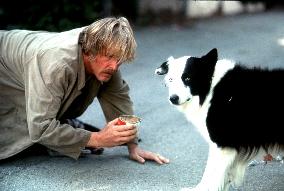
Nick Nolte & Dog Characters: Jerry Baskin & Film: Down And Out In Beverly Hills (USA 1986) Director: Paul Mazursky 31 January 1986 Date: 31 January 1986

  •  
Crocodile Dundee (1986)

Crocodile Dundee (1986)

Paul Hogan Characters: Michael J. 'Crocodile' Dundee Film: Crocodile Dundee (AUS 1986) / Location: New York City Director: Peter Faiman 24 April 1986 Date: 24 April 1986

  •  
Down And Out In Beverly Hills (1986)

Down And Out In Beverly Hills (1986)

Richard Dreyfuss, Nick Nolte & Bette Midler Characters: David 'Dave' Whiteman,Jerry Baskin & Barbara Whiteman Film: Down And Out In Beverly Hills (USA 1986) Director: Paul Mazursky 31 January 1986 Date: 31 January 1986

  •  
Sharky'S Machine (1981)

Sharky'S Machine (1981)

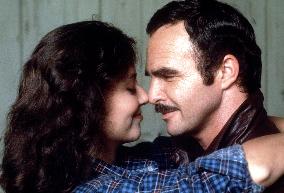
Rachel Ward & Burt Reynolds Characters: Dominoe & Sgt. Tom Sharky Film: Sharky'S Machine (USA 1981) Director: Burt Reynolds 18 December 1981 Date: 18 December 1981

  •  
Physical Evidence (1989)

Physical Evidence (1989)

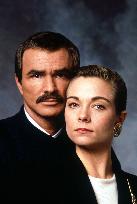
Burt Reynolds & Theresa Russell Characters: Joe Paris & Jenny Hudson Film: Physical Evidence (USA 1989) Director: Michael Crichton 27 January 1989 Date: 27 January 1989

  •  
Sharky'S Machine (1981)

Sharky'S Machine (1981)

Rachel Ward & Burt Reynolds Characters: Dominoe & Sgt. Tom Sharky Film: Sharky'S Machine (USA 1981) Director: Burt Reynolds 18 December 1981 Date: 18 December 1981

  •  
Heartbreak Ridge (1986)

Heartbreak Ridge (1986)

Clint Eastwood & Soldiers Characters: Sergeant Thomas Highway & Film: Heartbreak Ridge (USA 1987) Director: Clint Eastwood 05 December 1986 Date: 05 December 1986

  •  
Down And Out In Beverly Hills (1986)

Down And Out In Beverly Hills (1986)

Nick Nolte & Dog Characters: Jerry Baskin & Film: Down And Out In Beverly Hills (USA 1986) Director: Paul Mazursky 31 January 1986 Date: 31 January 1986

  •  
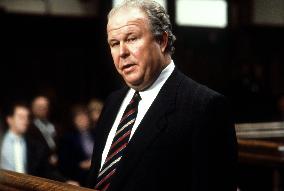
Physical Evidence (1989)

Physical Evidence (1989)

Ned Beatty Characters: James Nicks Film: Physical Evidence (USA 1989) Director: Michael Crichton 27 January 1989 Date: 27 January 1989

  •  
Physical Evidence (1989)

Physical Evidence (1989)

Theresa Russell Characters: Jenny Hudson Film: Physical Evidence (USA 1989) Director: Michael Crichton 27 January 1989 Date: 27 January 1989

  •  
Pretty In Pink (1986)

Pretty In Pink (1986)

Jon Cryer Characters: Duckie (Phil Dale) Film: Pretty In Pink (1986) Director: Howard Deutch 28 February 1986 Date: 28 February 1986

  •  
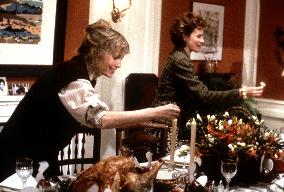
Hannah And Her Sisters (1986)

Hannah And Her Sisters (1986)

Mia Farrow & Dianne Wiest Characters: Hannah & Holly Film: Hannah And Her Sisters (USA 1986) Director: Woody Allen 16 January 1986 Date: 16 January 1986

  •  
Heartbreak Ridge (1986)

Heartbreak Ridge (1986)

Mario Van Peebles Characters: Corporal 'Stitch' Jones Film: Heartbreak Ridge (USA 1987) Director: Clint Eastwood 05 December 1986 Date: 05 December 1986

  •  
Out Of Africa (1985)

Out Of Africa (1985)

Meryl Streep & Dog Characters: Karen Blixen & Film: Out Of Africa (USA/UK 1985) Director: Sydney Pollack 10 December 1985 Date: 10 December 1985

  •  
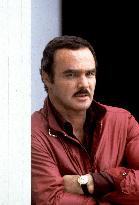
Sharky'S Machine (1981)

Sharky'S Machine (1981)

Burt Reynolds Characters: Sgt. Tom Sharky Film: Sharky'S Machine (USA 1981) Director: Burt Reynolds 18 December 1981 Date: 18 December 1981

  • Main
  • Top
  • Editorial
  • Creative
  • About Us
  • About ILG
  • Terms of use
  • Company
  • BEHIND
  • Price List
  • Single Plan
  • Monthly Plan
  • Services
  • Shooting
  • Rights Clearance
  • Support
  • FAQ
  • How To Buy
  • Contact Us
  • Become a Partner

© KYODO NEWS IMAGES INC

All Rights Reserved.

  • Editorial
  • Olympics
  • News
  • Sports
  • Japan
  • Tech
  • Royal
  • Disaster
  • NorthKorea
  • Old Japan
  • SNS

  • Creative
  • Food
  • Japan
  • Landscape
  • Animal
  • Popular
  • #Ukraine
  • #Thailand
  • #coronavirus
  • #N. Korea
  • #Russia
  • #China
  • #Ukraine
  • #Thailand
  • #coronavirus
  • #N. Korea
  • #Russia
  • #China
  • Food
  • Japan
  • Landscape
  • Animal
  • Olympics
  • News
  • Sports
  • Japan
  • Tech
  • Royal
  • Disaster
  • NorthKorea
  • Old Japan
  • SNS