•  
US Navy Warships Fired SM-3s To Intercept Iranian Missiles

US Navy Warships Fired SM-3s To Intercept Iranian Missiles

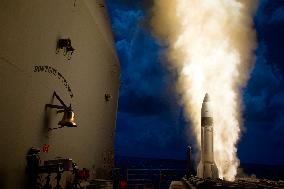
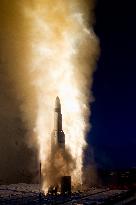
Handout photo dated September 18, 2013 shows an SM-3 Block 1B interceptor is launched from the guided-missile cruiser USS Lake Erie (CG 70) during a Missile Defense Agency test and successfully intercepted a complex short-range ballistic missile target off the coast of Kauai, Hawaii. US Navy warships used a missile interceptor for the first time in combat over the weekend while defending Israel from an unprecedented Iranian attack. Secretary of the Navy Carlos Del Toro said American forces fired the Standard Missile 3, or SM-3, to engage Iranian ballistic missiles that were fired as part of the massive barrage, which included more than 300 missiles and drones launched from Tehran and its proxies. Department of Defense photo via ABACAPRESS.COM

  •  
US Navy Warships Fired SM-3s To Intercept Iranian Missiles

US Navy Warships Fired SM-3s To Intercept Iranian Missiles

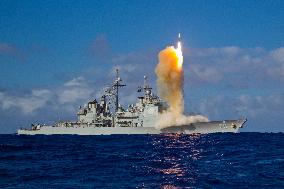
Handout photo dated May 16, 2013 shows a Standard Missile-3 (SM-3) Block 1B interceptor missile is launched from the guided-missile cruiser USS Lake Erie (CG 70) during a Missile Defense Agency and U.S. Navy test in the Pacific Ocean. US Navy warships used a missile interceptor for the first time in combat over the weekend while defending Israel from an unprecedented Iranian attack. Secretary of the Navy Carlos Del Toro said American forces fired the Standard Missile 3, or SM-3, to engage Iranian ballistic missiles that were fired as part of the massive barrage, which included more than 300 missiles and drones launched from Tehran and its proxies. U.S. Navy photo via ABACAPRESS.COM

  •  
US Navy Warships Fired SM-3s To Intercept Iranian Missiles

US Navy Warships Fired SM-3s To Intercept Iranian Missiles

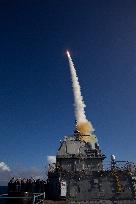
Handout photo dated May 16, 2013 show a Standard Missile-3 (SM-3) Block 1B interceptor missile is launched from the guided-missile cruiser USS Lake Erie (CG 70) during a Missile Defense Agency and U.S. Navy test in the Pacific Ocean. US Navy warships used a missile interceptor for the first time in combat over the weekend while defending Israel from an unprecedented Iranian attack. Secretary of the Navy Carlos Del Toro said American forces fired the Standard Missile 3, or SM-3, to engage Iranian ballistic missiles that were fired as part of the massive barrage, which included more than 300 missiles and drones launched from Tehran and its proxies. U.S. Navy photo via ABACAPRESS.COM

  •  
US Navy Warships Fired SM-3s To Intercept Iranian Missiles

US Navy Warships Fired SM-3s To Intercept Iranian Missiles

Handout photo dated May 16, 2013 shows a Standard Missile-3 (SM-3) Block 1B interceptor missile is launched from the guided-missile cruiser USS Lake Erie (CG 70) during a Missile Defense Agency and U.S. Navy test in the Pacific Ocean. US Navy warships used a missile interceptor for the first time in combat over the weekend while defending Israel from an unprecedented Iranian attack. Secretary of the Navy Carlos Del Toro said American forces fired the Standard Missile 3, or SM-3, to engage Iranian ballistic missiles that were fired as part of the massive barrage, which included more than 300 missiles and drones launched from Tehran and its proxies. U.S. Navy photo via ABACAPRESS.COM

  •  
B-1s Part Of Airstrikes In Iraq And Syria

B-1s Part Of Airstrikes In Iraq And Syria

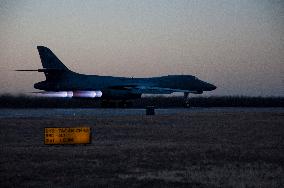
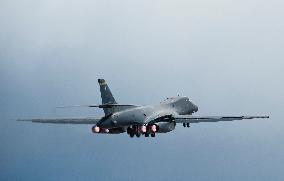
Handout file photo dated December 2, 2015 shows a B-1B Lancer launches from Ellsworth Air Force Base, S.D. B-1B Lancers from the 28th Bomb Wing launched early February 1, 2024, from Dyess Air Force Base, Texas, as part of airstrikes in Iraq and Syria against Iran’s Islamic Revolutionary Guards Corps (IRGC) Quds Force and affiliated militia groups. U.S. military forces struck more than 85 targets, with numerous aircraft to include long-range bombers flown from the United States. According to U.S. Central Command officials, the airstrikes employed more than 125 precision munitions. The facilities that were struck included command and control operations centers, intelligence centers, rockets, and missiles, and unmanned aerial vehicle storages, and logistics and munition supply chain facilities of militia groups and their IRGC sponsors who facilitated attacks against U.S. and Coalition forces. U.S. Air Force photo/Airman 1st Class James L. Miller via ABACAPRESS.COM

  •  
B-1s Part Of Airstrikes In Iraq And Syria

B-1s Part Of Airstrikes In Iraq And Syria

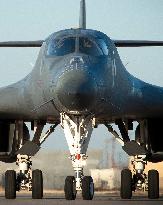
Handout file photo dated January 21, 2014 shows the first newly upgraded operational B1-B Lancer prepares to take flight , at Dyess Air Force Base, Texas. B-1B Lancers from the 28th Bomb Wing launched early February 1, 2024, from Dyess Air Force Base, Texas, as part of airstrikes in Iraq and Syria against Iran’s Islamic Revolutionary Guards Corps (IRGC) Quds Force and affiliated militia groups. U.S. military forces struck more than 85 targets, with numerous aircraft to include long-range bombers flown from the United States. According to U.S. Central Command officials, the airstrikes employed more than 125 precision munitions. The facilities that were struck included command and control operations centers, intelligence centers, rockets, and missiles, and unmanned aerial vehicle storages, and logistics and munition supply chain facilities of militia groups and their IRGC sponsors who facilitated attacks against U.S. and Coalition forces. U.S. Air Force photo by Staff Sgt. Richard Ebensberger/Released via ABACA

  •  
B-1s Part Of Airstrikes In Iraq And Syria

B-1s Part Of Airstrikes In Iraq And Syria

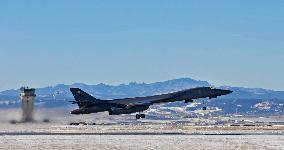
Handout file photo dated April 8, 2015 shows a B-1B Lancer takes off from Al Udeid Air Base, Qatar, to conduct combat operations. B-1B Lancers from the 28th Bomb Wing launched early February 1, 2024, from Dyess Air Force Base, Texas, as part of airstrikes in Iraq and Syria against Iran’s Islamic Revolutionary Guards Corps (IRGC) Quds Force and affiliated militia groups. U.S. military forces struck more than 85 targets, with numerous aircraft to include long-range bombers flown from the United States. According to U.S. Central Command officials, the airstrikes employed more than 125 precision munitions. The facilities that were struck included command and control operations centers, intelligence centers, rockets, and missiles, and unmanned aerial vehicle storages, and logistics and munition supply chain facilities of militia groups and their IRGC sponsors who facilitated attacks against U.S. and Coalition forces. U.S. Air Force photo/Senior Airman James Richardson via ABACAPRESS.COM

  •  
B-1s Part Of Airstrikes In Iraq And Syria

B-1s Part Of Airstrikes In Iraq And Syria

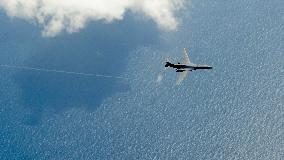
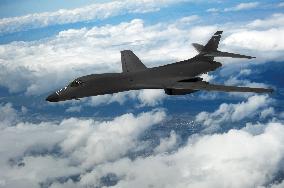
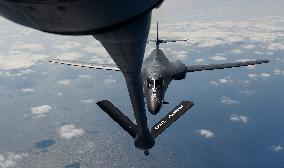
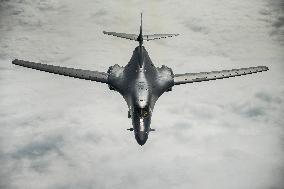
Handout file photo dated July 31, 2012 shows a B-1B Lancer from Dyess Air Force Base, Texas, flies over the Atlantic Ocean before refueling from a KC-135 assigned to the 100th Air Refueling Wing, Royal Air Force Mildenhall, UK. B-1B Lancers from the 28th Bomb Wing launched early February 1, 2024, from Dyess Air Force Base, Texas, as part of airstrikes in Iraq and Syria against Iran’s Islamic Revolutionary Guards Corps (IRGC) Quds Force and affiliated militia groups. U.S. military forces struck more than 85 targets, with numerous aircraft to include long-range bombers flown from the United States. According to U.S. Central Command officials, the airstrikes employed more than 125 precision munitions. The facilities that were struck included command and control operations centers, intelligence centers, rockets, and missiles, and unmanned aerial vehicle storages, and logistics and munition supply chain facilities of militia groups and their IRGC sponsors who facilitated attacks against U.S. and Coalition forces.

  •  
B-1s Part Of Airstrikes In Iraq And Syria

B-1s Part Of Airstrikes In Iraq And Syria

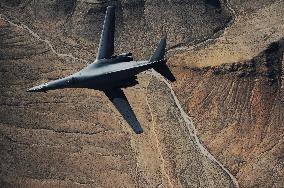
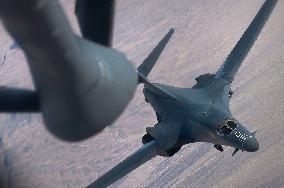
Handout file photo dated April 21, 2010 shows a B-1B Lancer flies to where it will meet a KC-135 Stratotanker for fuel above Northern New Mexico. B-1B Lancers from the 28th Bomb Wing launched early February 1, 2024, from Dyess Air Force Base, Texas, as part of airstrikes in Iraq and Syria against Iran’s Islamic Revolutionary Guards Corps (IRGC) Quds Force and affiliated militia groups. U.S. military forces struck more than 85 targets, with numerous aircraft to include long-range bombers flown from the United States. According to U.S. Central Command officials, the airstrikes employed more than 125 precision munitions. The facilities that were struck included command and control operations centers, intelligence centers, rockets, and missiles, and unmanned aerial vehicle storages, and logistics and munition supply chain facilities of militia groups and their IRGC sponsors who facilitated attacks against U.S. and Coalition forces. U.S. Air Force photo/Staff Sgt. Desiree N. Palacios via ABACAPRESS.COM

  •  
B-1s Part Of Airstrikes In Iraq And Syria

B-1s Part Of Airstrikes In Iraq And Syria

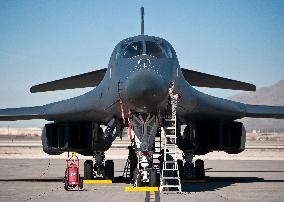
Handout file photo dated November 18, 2014 shows crew chiefs from the 34th Aircraft Maintenance Unit, Ellsworth Air Force Base, S.D., perform a pre-flight inspection on a B-1B Lancer assigned to the 34th Bomb Squadron, Ellsworth AFB, during Green Flag-West 15-02 at Nellis AFB, NV, USA. U.S. Army National Training Center, Fort Irwin, Calif. B-1B Lancers from the 28th Bomb Wing launched early February 1, 2024, from Dyess Air Force Base, Texas, as part of airstrikes in Iraq and Syria against Iran’s Islamic Revolutionary Guards Corps (IRGC) Quds Force and affiliated militia groups. U.S. military forces struck more than 85 targets, with numerous aircraft to include long-range bombers flown from the United States. According to U.S. Central Command officials, the airstrikes employed more than 125 precision munitions. The facilities that were struck included command and control operations centers, intelligence centers, rockets, and missiles, and unmanned aerial vehicle storages, and logistics and munition supply chai

  •  
B-1s Part Of Airstrikes In Iraq And Syria

B-1s Part Of Airstrikes In Iraq And Syria

Handout file photo dated February 24, 2010 shows a B-1B Lancer assigned to the 28th Bomb Squadron, Dyess Air Force Base, Texas, B-1B Lancers from the 28th Bomb Wing launched early February 1, 2024, from Dyess Air Force Base, Texas, as part of airstrikes in Iraq and Syria against Iran’s Islamic Revolutionary Guards Corps (IRGC) Quds Force and affiliated militia groups. U.S. military forces struck more than 85 targets, with numerous aircraft to include long-range bombers flown from the United States. According to U.S. Central Command officials, the airstrikes employed more than 125 precision munitions. The facilities that were struck included command and control operations centers, intelligence centers, rockets, and missiles, and unmanned aerial vehicle storages, and logistics and munition supply chain facilities of militia groups and their IRGC sponsors who facilitated attacks against U.S. and Coalition forces. U.S. Air Force photo/ Master Sgt. Kevin J. Gruenwald via ABACAPRESS.COM

  •  
B-1s Part Of Airstrikes In Iraq And Syria

B-1s Part Of Airstrikes In Iraq And Syria

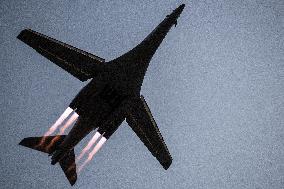
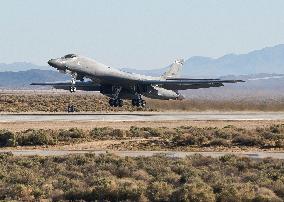
Handout file photo dated April 1, 2014 shhows an Edwards B-1B Lancer takes off Runway 22L to begin testing its new Sustainment Block 16A (SB 16A) software upgrades. B-1B Lancers from the 28th Bomb Wing launched early February 1, 2024, from Dyess Air Force Base, Texas, as part of airstrikes in Iraq and Syria against Iran’s Islamic Revolutionary Guards Corps (IRGC) Quds Force and affiliated militia groups. U.S. military forces struck more than 85 targets, with numerous aircraft to include long-range bombers flown from the United States. According to U.S. Central Command officials, the airstrikes employed more than 125 precision munitions. The facilities that were struck included command and control operations centers, intelligence centers, rockets, and missiles, and unmanned aerial vehicle storages, and logistics and munition supply chain facilities of militia groups and their IRGC sponsors who facilitated attacks against U.S. and Coalition forces. U.S. Air Force photo by Ethan Wagner via ABACAPRESS.COM

  •  
B-1s Part Of Airstrikes In Iraq And Syria

B-1s Part Of Airstrikes In Iraq And Syria

Handout file photo dated March 10, 2017 shows a B-1B Lancer assigned to the 9th Expeditionary Bomb Squadron, deployed to Andersen Air Force Base, Guam, receives fuel from a KC-135 Stratotanker over the Pacific Ocean. B-1B Lancers from the 28th Bomb Wing launched early February 1, 2024, from Dyess Air Force Base, Texas, as part of airstrikes in Iraq and Syria against Iran’s Islamic Revolutionary Guards Corps (IRGC) Quds Force and affiliated militia groups. U.S. military forces struck more than 85 targets, with numerous aircraft to include long-range bombers flown from the United States. According to U.S. Central Command officials, the airstrikes employed more than 125 precision munitions. The facilities that were struck included command and control operations centers, intelligence centers, rockets, and missiles, and unmanned aerial vehicle storages, and logistics and munition supply chain facilities of militia groups and their IRGC sponsors who facilitated attacks against U.S. and Coalition forces. U.S. Air Fo

  •  
B-1s Part Of Airstrikes In Iraq And Syria

B-1s Part Of Airstrikes In Iraq And Syria

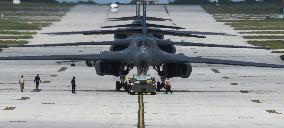
Handout file photo dated February 6, 2017 shows four B-1B Lancers assigned to the 9th Expeditionary Bomb Squadron, deployed from Dyess Air Force Base, Texas, arrive at Andersen AFB, Guam. B-1B Lancers from the 28th Bomb Wing launched early February 1, 2024, from Dyess Air Force Base, Texas, as part of airstrikes in Iraq and Syria against Iran’s Islamic Revolutionary Guards Corps (IRGC) Quds Force and affiliated militia groups. U.S. military forces struck more than 85 targets, with numerous aircraft to include long-range bombers flown from the United States. According to U.S. Central Command officials, the airstrikes employed more than 125 precision munitions. The facilities that were struck included command and control operations centers, intelligence centers, rockets, and missiles, and unmanned aerial vehicle storages, and logistics and munition supply chain facilities of militia groups and their IRGC sponsors who facilitated attacks against U.S. and Coalition forces. U.S. Air Force photo/Tech. Sgt. Richard

  •  
B-1s Part Of Airstrikes In Iraq And Syria

B-1s Part Of Airstrikes In Iraq And Syria

Handout file photo dated March 3, 2015 show a B-1B Lancer takes off , during Red Flag 15-2 from Nellis Air Force Base, Nev. B-1B Lancers from the 28th Bomb Wing launched early February 1, 2024, from Dyess Air Force Base, Texas, as part of airstrikes in Iraq and Syria against Iran’s Islamic Revolutionary Guards Corps (IRGC) Quds Force and affiliated militia groups. U.S. military forces struck more than 85 targets, with numerous aircraft to include long-range bombers flown from the United States. According to U.S. Central Command officials, the airstrikes employed more than 125 precision munitions. The facilities that were struck included command and control operations centers, intelligence centers, rockets, and missiles, and unmanned aerial vehicle storages, and logistics and munition supply chain facilities of militia groups and their IRGC sponsors who facilitated attacks against U.S. and Coalition forces. U.S. Air Force photo/Senior Airman Thomas Spangler via ABACAPRESS.COM

  •  
B-1s Part Of Airstrikes In Iraq And Syria

B-1s Part Of Airstrikes In Iraq And Syria

Handout file photo dated November 4, 2012 shows a B-1B Lancer approaches a KC-135 Stratotanker after being refueled during the Green Flag-West 13-2 exercise over Nevada. B-1B Lancers from the 28th Bomb Wing launched early February 1, 2024, from Dyess Air Force Base, Texas, as part of airstrikes in Iraq and Syria against Iran’s Islamic Revolutionary Guards Corps (IRGC) Quds Force and affiliated militia groups. U.S. military forces struck more than 85 targets, with numerous aircraft to include long-range bombers flown from the United States. According to U.S. Central Command officials, the airstrikes employed more than 125 precision munitions. The facilities that were struck included command and control operations centers, intelligence centers, rockets, and missiles, and unmanned aerial vehicle storages, and logistics and munition supply chain facilities of militia groups and their IRGC sponsors who facilitated attacks against U.S. and Coalition forces. U.S. Air Force photo by Staff Sgt. Christopher Hubenthal v

  •  
B-1s Part Of Airstrikes In Iraq And Syria

B-1s Part Of Airstrikes In Iraq And Syria

Handout file photo dated January 9, 2018 shows a U.S. Air Force B-1B Lancer, assigned to the 37th Expeditionary Bomb Squadron, Ellsworth Air Force Base, S.D., flies over the East China Sea, B-1B Lancers from the 28th Bomb Wing launched early February 1, 2024, from Dyess Air Force Base, Texas, as part of airstrikes in Iraq and Syria against Iran’s Islamic Revolutionary Guards Corps (IRGC) Quds Force and affiliated militia groups. U.S. military forces struck more than 85 targets, with numerous aircraft to include long-range bombers flown from the United States. According to U.S. Central Command officials, the airstrikes employed more than 125 precision munitions. The facilities that were struck included command and control operations centers, intelligence centers, rockets, and missiles, and unmanned aerial vehicle storages, and logistics and munition supply chain facilities of militia groups and their IRGC sponsors who facilitated attacks against U.S. and Coalition forces. U.S. Air Force photo by Staff Sgt. Pet

  •  
B-1s Part Of Airstrikes In Iraq And Syria

B-1s Part Of Airstrikes In Iraq And Syria

Handout file photo dated January 21, 2014 shows the first newly upgraded operational B1-B Lancer taxis in prior to a crew swap , at Dyess Air Force Base, Texas. B-1B Lancers from the 28th Bomb Wing launched early February 1, 2024, from Dyess Air Force Base, Texas, as part of airstrikes in Iraq and Syria against Iran’s Islamic Revolutionary Guards Corps (IRGC) Quds Force and affiliated militia groups. U.S. military forces struck more than 85 targets, with numerous aircraft to include long-range bombers flown from the United States. According to U.S. Central Command officials, the airstrikes employed more than 125 precision munitions. The facilities that were struck included command and control operations centers, intelligence centers, rockets, and missiles, and unmanned aerial vehicle storages, and logistics and munition supply chain facilities of militia groups and their IRGC sponsors who facilitated attacks against U.S. and Coalition forces. U.S. Air Force photo by Staff Sgt. Richard Ebensberger/Released via

  •  

S.Korea, U.S. conduct joint air drills involving U.S. strategic bombers

STORY: S.Korea, U.S. conduct joint air drills involving U.S. strategic bombers DATELINE: Nov. 20, 2022 LENGTH: 00:01:06 LOCATION: Seoul CATEGORY: MILITARY SHOTLIST: 1. various of S.Korea-U.S. joint air drills (courtesy of S.Korean Defense Ministry) STORYLINE: South Korea and the United States on Saturday conducted joint air drills near the Korean Peninsula, involving two U.S. strategic bombers, Yonhap news agency reported citing the South Korean Joint Chiefs of Staff (JCS). Two U.S. B-1B Lancer bombers made a sortie over South Korea's air defense identification zone (KADIZ), escorted by South Korean F-35A fighter jets and U.S. F-16 fighters, according to the Yonhap report. Xinhua News Agency correspondents reporting from Seoul. (XHTV)

  •  
One Year In Prison Against A Former Ikea CEO And Two Million Euros Fine

One Year In Prison Against A Former Ikea CEO And Two Million Euros Fine

File photo - Illustration picture shows lots of people respecting distances as they wait in front of the entrance of IKEA Anderlecht inside the parking in Brussels region, Belgium, on Monday 11 May 2020. Belgium goes into its ninth week of confinement. Stage 1B of the deconfinement plan in the ongoing corona virus crisis starts. All shops can reopen and more people can return to work. - Three years in prison, including one closed, were required this Tuesday, March 30 against Jean-Louis Baillot, former CEO of Ikea France, accused of having ordered the establishment of a system of espionage of certain employees between 2009 and 2012. The company risks a fine of 2 million euros. Photo by ABACAPRESS.COM (Credit:ABACA/Kyodo News Images)

  •  

AIR SHOW

AIR SHOW==Date:Oct, 1968, Place:,JAPAN, (Credit:INTERNATIONAL MOTION PICTURE/Kyodo News Images)

  •  
Czech scientific satellite Lucky-7

Czech scientific satellite Lucky-7

Experts introduced Czech scientific satellite Lucky-7 in Prague, Czech Republic, on July 2, 2019. The satellite will be part of Soyuz 2-1b rocket, launch is scheduled for July 5 at Vostochny Cosmodrome in Russia. (CTK Photo/Michal Kamaryt)

  •  
Czech scientific satellite Lucky-7

Czech scientific satellite Lucky-7

Experts introduced Czech scientific satellite Lucky-7 in Prague, Czech Republic, on July 2, 2019. The satellite will be part of Soyuz 2-1b rocket, launch is scheduled for July 5 at Vostochny Cosmodrome in Russia. (CTK Photo/Michal Kamaryt)

  •  
Czech scientific satellite Lucky-7

Czech scientific satellite Lucky-7

Experts introduced Czech scientific satellite Lucky-7 in Prague, Czech Republic, on July 2, 2019. The satellite will be part of Soyuz 2-1b rocket, launch is scheduled for July 5 at Vostochny Cosmodrome in Russia. (CTK Photo/Michal Kamaryt)

  •  
Czech scientific satellite Lucky-7

Czech scientific satellite Lucky-7

Experts introduced Czech scientific satellite Lucky-7 in Prague, Czech Republic, on July 2, 2019. The satellite will be part of Soyuz 2-1b rocket, launch is scheduled for July 5 at Vostochny Cosmodrome in Russia. (CTK Photo/Michal Kamaryt)

  •  
U.S. bombers fly over S. Korea in show of force to N. Korea

U.S. bombers fly over S. Korea in show of force to N. Korea

Photo taken Sept. 13, 2016, shows a B-1B Lancer bomber (C), which took off from Guam to fly over the Osan Air Base to the south of Seoul. The flight of the two bombers was apparently in warning to North Korea after Pyongyang carried out its fifth nuclear test recently in the face of global opposition. (Kyodo) ==Kyodo

  •  
U.S. bombers fly over S. Korea in show of force to N. Korea

U.S. bombers fly over S. Korea in show of force to N. Korea

Photo taken Sept. 13, 2016, shows a B-1B Lancer bomber (C), which took off from Guam to fly over the Osan Air Base to the south of Seoul. The flight of the two bombers was apparently in warning to North Korea after Pyongyang carried out its fifth nuclear test recently in the face of global opposition. (Kyodo) ==Kyodo

  • Main
  • Top
  • Editorial
  • Creative
  • About Us
  • About ILG
  • Terms of use
  • Company
  • BEHIND
  • Price List
  • Single Plan
  • Monthly Plan
  • Services
  • Shooting
  • Rights Clearance
  • Support
  • FAQ
  • How To Buy
  • Contact Us
  • Become a Partner

© KYODO NEWS IMAGES INC

All Rights Reserved.

  • Editorial
  • Olympics
  • News
  • Sports
  • Japan
  • Tech
  • Royal
  • Disaster
  • NorthKorea
  • Old Japan
  • SNS
  • Creative
  • Food
  • Japan
  • Landscape
  • Animal
  • Popular
  • #Ukraine
  • #Russia
  • #coronavirus
  • #N. Korea
  • #Thailand
  • #China
  • #Ukraine
  • #Russia
  • #coronavirus
  • #N. Korea
  • #Thailand
  • #China
  • Food
  • Japan
  • Landscape
  • Animal
  • Olympics
  • News
  • Sports
  • Japan
  • Tech
  • Royal
  • Disaster
  • NorthKorea
  • Old Japan
  • SNS