•  
Pope Leo XIV Visit To Turkiye - Day 3

Pope Leo XIV Visit To Turkiye - Day 3

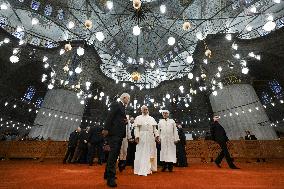
Pope Leo XIV visits the Sultan Ahmed Mosque, also known as the ‘Blue Mosque’ in Istanbul, Turkey on November 29, 2025 on the third day of the Pope’s Apostolic Journey to Turkey. This mosque was completed in 1617 on part of the site of the Great Palace of Constantinople. Pope Leo XIV becomes the third pope to visit the Blue Mosque, following in the footsteps of his immediate predecessors Francis (in 2014) and Benedict XVI (in 2006). Photo by (EV) Vatican Media/ABACAPRESS.COM

  •  
Pope Leo XIV Visit To Turkiye - Day 3

Pope Leo XIV Visit To Turkiye - Day 3

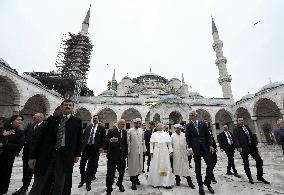
Pope Leo XIV visits the Sultan Ahmed Mosque, also known as the ‘Blue Mosque’ in Istanbul, Turkey on November 29, 2025 on the third day of the Pope’s Apostolic Journey to Turkey. This mosque was completed in 1617 on part of the site of the Great Palace of Constantinople. Pope Leo XIV becomes the third pope to visit the Blue Mosque, following in the footsteps of his immediate predecessors Francis (in 2014) and Benedict XVI (in 2006). Photo by (EV) Vatican Media/ABACAPRESS.COM

  •  
Pope Leo XIV Visit To Turkiye - Day 3

Pope Leo XIV Visit To Turkiye - Day 3

Pope Leo XIV visits the Sultan Ahmed Mosque, also known as the ‘Blue Mosque’ in Istanbul, Turkey on November 29, 2025 on the third day of the Pope’s Apostolic Journey to Turkey. This mosque was completed in 1617 on part of the site of the Great Palace of Constantinople. Pope Leo XIV becomes the third pope to visit the Blue Mosque, following in the footsteps of his immediate predecessors Francis (in 2014) and Benedict XVI (in 2006). Photo by (EV) Vatican Media/ABACAPRESS.COM

  •  
Pope Leo XIV Visit To Turkiye - Day 3

Pope Leo XIV Visit To Turkiye - Day 3

Pope Leo XIV visits the Sultan Ahmed Mosque, also known as the ‘Blue Mosque’ in Istanbul, Turkey on November 29, 2025 on the third day of the Pope’s Apostolic Journey to Turkey. This mosque was completed in 1617 on part of the site of the Great Palace of Constantinople. Pope Leo XIV becomes the third pope to visit the Blue Mosque, following in the footsteps of his immediate predecessors Francis (in 2014) and Benedict XVI (in 2006). Photo by (EV) Vatican Media/ABACAPRESS.COM

  •  
Pope Leo XIV Visit To Turkiye - Day 3

Pope Leo XIV Visit To Turkiye - Day 3

Pope Leo XIV visits the Sultan Ahmed Mosque, also known as the ‘Blue Mosque’ in Istanbul, Turkey on November 29, 2025 on the third day of the Pope’s Apostolic Journey to Turkey. This mosque was completed in 1617 on part of the site of the Great Palace of Constantinople. Pope Leo XIV becomes the third pope to visit the Blue Mosque, following in the footsteps of his immediate predecessors Francis (in 2014) and Benedict XVI (in 2006). Photo by (EV) Vatican Media/ABACAPRESS.COM

  •  
Pope Leo XIV Visit To Turkiye - Day 3

Pope Leo XIV Visit To Turkiye - Day 3

Pope Leo XIV visits the Sultan Ahmed Mosque, also known as the ‘Blue Mosque’ in Istanbul, Turkey on November 29, 2025 on the third day of the Pope’s Apostolic Journey to Turkey. This mosque was completed in 1617 on part of the site of the Great Palace of Constantinople. Pope Leo XIV becomes the third pope to visit the Blue Mosque, following in the footsteps of his immediate predecessors Francis (in 2014) and Benedict XVI (in 2006). Photo by (EV) Vatican Media/ABACAPRESS.COM

  •  
Pope Leo XIV Visit To Turkiye - Day 3

Pope Leo XIV Visit To Turkiye - Day 3

Pope Leo XIV visits the Sultan Ahmed Mosque, also known as the ‘Blue Mosque’ in Istanbul, Turkey on November 29, 2025 on the third day of the Pope’s Apostolic Journey to Turkey. This mosque was completed in 1617 on part of the site of the Great Palace of Constantinople. Pope Leo XIV becomes the third pope to visit the Blue Mosque, following in the footsteps of his immediate predecessors Francis (in 2014) and Benedict XVI (in 2006). Photo by (EV) Vatican Media/ABACAPRESS.COM

  •  
Tie-Dye Technique Of Bai Ethnic Group - Chin

Tie-Dye Technique Of Bai Ethnic Group - Chin

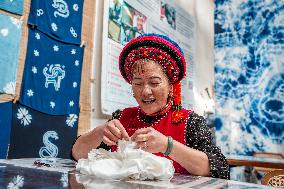
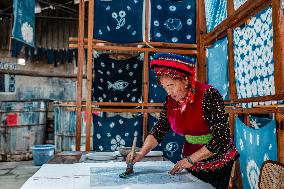
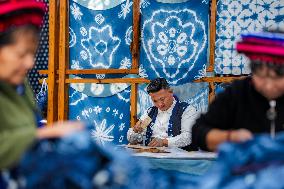
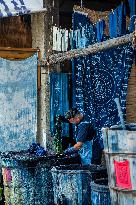
Duan Yuan, an inheritor of the tie-dye technique of Bai ethnic group, makes tie-dye designs in a dyehouse in Zhoucheng Village of Dali Bai Autonomous Prefecture, southwest China's Yunnan Province, November 21, 2025. Known as the hometown of the tie-dye technique of Bai ethnic group, Zhoucheng Village hosts over 200 households engaging in tie-dye businesses, with the number of employees exceeding 4,000. As a traditional folk technique of the Bai ethnic group, tie-dye boasts a history spanning over a thousand years and was included in the first batch of China's national intangible cultural heritage list in 2006. Tying and dyeing are the core steps in the process of making indigo tie-dye products. Artisans use needles and threads to create various patterns on the fabric, which are then dyed with plant-based dyes, resulting in blue backgrounds adorned with vivid white patterns. Photo by Hu Chao/Xinhua/ABACAPRESS.COM

  •  
Tie-Dye Technique Of Bai Ethnic Group - Chin

Tie-Dye Technique Of Bai Ethnic Group - Chin

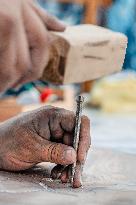
Duan Yinmei, an inheritor of the tie-dye technique of Bai ethnic group, creates knots on fabrics in a dyehouse in Zhoucheng Village of Dali Bai Autonomous Prefecture, southwest China's Yunnan Province, November 21, 2025. Known as the hometown of the tie-dye technique of Bai ethnic group, Zhoucheng Village hosts over 200 households engaging in tie-dye businesses, with the number of employees exceeding 4,000. As a traditional folk technique of the Bai ethnic group, tie-dye boasts a history spanning over a thousand years and was included in the first batch of China's national intangible cultural heritage list in 2006. Tying and dyeing are the core steps in the process of making indigo tie-dye products. Artisans use needles and threads to create various patterns on the fabric, which are then dyed with plant-based dyes, resulting in blue backgrounds adorned with vivid white patterns. Photo by Hu Chao/Xinhua/ABACAPRESS.COM

  •  
Tie-Dye Technique Of Bai Ethnic Group - Chin

Tie-Dye Technique Of Bai Ethnic Group - Chin

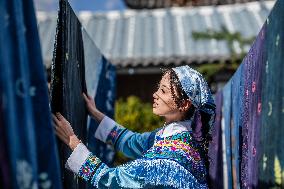
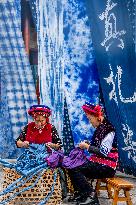
A woman experiences the tie-dye technique of Bai ethnic group in a dyehouse in Zhoucheng Village of Dali Bai Autonomous Prefecture, southwest China's Yunnan Province, November 21, 2025. Known as the hometown of the tie-dye technique of Bai ethnic group, Zhoucheng Village hosts over 200 households engaging in tie-dye businesses, with the number of employees exceeding 4,000. As a traditional folk technique of the Bai ethnic group, tie-dye boasts a history spanning over a thousand years and was included in the first batch of China's national intangible cultural heritage list in 2006. Tying and dyeing are the core steps in the process of making indigo tie-dye products. Artisans use needles and threads to create various patterns on the fabric, which are then dyed with plant-based dyes, resulting in blue backgrounds adorned with vivid white patterns. Photo by Hu Chao/Xinhua/ABACAPRESS.COM

  •  
Tie-Dye Technique Of Bai Ethnic Group - Chin

Tie-Dye Technique Of Bai Ethnic Group - Chin

Duan Yinmei, an inheritor of the tie-dye technique of Bai ethnic group, dyes patterns on fabrics in a dyehouse in Zhoucheng Village of Dali Bai Autonomous Prefecture, southwest China's Yunnan Province, November 21, 2025. Known as the hometown of the tie-dye technique of Bai ethnic group, Zhoucheng Village hosts over 200 households engaging in tie-dye businesses, with the number of employees exceeding 4,000. As a traditional folk technique of the Bai ethnic group, tie-dye boasts a history spanning over a thousand years and was included in the first batch of China's national intangible cultural heritage list in 2006. Tying and dyeing are the core steps in the process of making indigo tie-dye products. Artisans use needles and threads to create various patterns on the fabric, which are then dyed with plant-based dyes, resulting in blue backgrounds adorned with vivid white patterns. Photo by Hu Chao/Xinhua/ABACAPRESS.COM

  •  
Tie-Dye Technique Of Bai Ethnic Group - Chin

Tie-Dye Technique Of Bai Ethnic Group - Chin

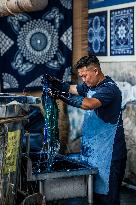
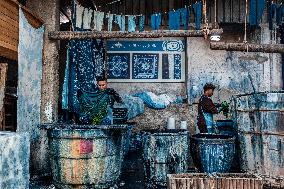
Duan Yuan, an inheritor of the tie-dye technique of Bai ethnic group, rinses dyed fabrics in a dyehouse in Zhoucheng Village of Dali Bai Autonomous Prefecture, southwest China's Yunnan Province, November 21, 2025. Known as the hometown of the tie-dye technique of Bai ethnic group, Zhoucheng Village hosts over 200 households engaging in tie-dye businesses, with the number of employees exceeding 4,000. As a traditional folk technique of the Bai ethnic group, tie-dye boasts a history spanning over a thousand years and was included in the first batch of China's national intangible cultural heritage list in 2006. Tying and dyeing are the core steps in the process of making indigo tie-dye products. Artisans use needles and threads to create various patterns on the fabric, which are then dyed with plant-based dyes, resulting in blue backgrounds adorned with vivid white patterns. Photo by Hu Chao/Xinhua/ABACAPRESS.COM

  •  
Tie-Dye Technique Of Bai Ethnic Group - Chin

Tie-Dye Technique Of Bai Ethnic Group - Chin

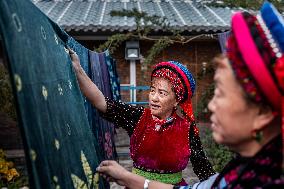
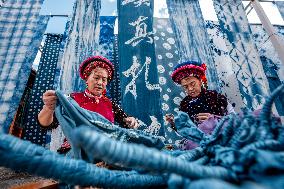
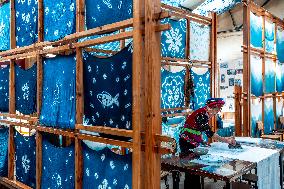
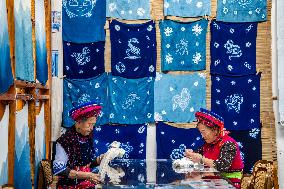
Duan Yinmei (L), an inheritor of the tie-dye technique of Bai ethnic group, and handicraftsman Duan Lilan dry tie-dye fabrics in a dyehouse in Zhoucheng Village of Dali Bai Autonomous Prefecture, southwest China's Yunnan Province, November 21, 2025. Known as the hometown of the tie-dye technique of Bai ethnic group, Zhoucheng Village hosts over 200 households engaging in tie-dye businesses, with the number of employees exceeding 4,000. As a traditional folk technique of the Bai ethnic group, tie-dye boasts a history spanning over a thousand years and was included in the first batch of China's national intangible cultural heritage list in 2006. Tying and dyeing are the core steps in the process of making indigo tie-dye products. Artisans use needles and threads to create various patterns on the fabric, which are then dyed with plant-based dyes, resulting in blue backgrounds adorned with vivid white patterns. Photo by Hu Chao/Xinhua/ABACAPRESS.COM

  •  
Tie-Dye Technique Of Bai Ethnic Group - Chin

Tie-Dye Technique Of Bai Ethnic Group - Chin

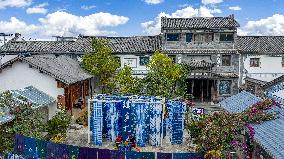
An aerial drone photo shows a scene at a dyehouse in Zhoucheng Village of Dali Bai Autonomous Prefecture, southwest China's Yunnan Province, November 21, 2025. Known as the hometown of the tie-dye technique of Bai ethnic group, Zhoucheng Village hosts over 200 households engaging in tie-dye businesses, with the number of employees exceeding 4,000. As a traditional folk technique of the Bai ethnic group, tie-dye boasts a history spanning over a thousand years and was included in the first batch of China's national intangible cultural heritage list in 2006. Tying and dyeing are the core steps in the process of making indigo tie-dye products. Artisans use needles and threads to create various patterns on the fabric, which are then dyed with plant-based dyes, resulting in blue backgrounds adorned with vivid white patterns. Photo by Hu Chao/Xinhua/ABACAPRESS.COM

  •  
Tie-Dye Technique Of Bai Ethnic Group - Chin

Tie-Dye Technique Of Bai Ethnic Group - Chin

Duan Yinmei (L), an inheritor of the tie-dye technique of Bai ethnic group, and handicraftsman Duan Lilan untie knots on fabrics in a dyehouse in Zhoucheng Village of Dali Bai Autonomous Prefecture, southwest China's Yunnan Province, November 21, 2025. Known as the hometown of the tie-dye technique of Bai ethnic group, Zhoucheng Village hosts over 200 households engaging in tie-dye businesses, with the number of employees exceeding 4,000. As a traditional folk technique of the Bai ethnic group, tie-dye boasts a history spanning over a thousand years and was included in the first batch of China's national intangible cultural heritage list in 2006. Tying and dyeing are the core steps in the process of making indigo tie-dye products. Artisans use needles and threads to create various patterns on the fabric, which are then dyed with plant-based dyes, resulting in blue backgrounds adorned with vivid white patterns. Photo by Hu Chao/Xinhua/ABACAPRESS.COM

  •  
Tie-Dye Technique Of Bai Ethnic Group - Chin

Tie-Dye Technique Of Bai Ethnic Group - Chin

Duan Yinmei (L), an inheritor of the tie-dye technique of Bai ethnic group, and handicraftsman Duan Lilan untie knots on fabrics in a dyehouse in Zhoucheng Village of Dali Bai Autonomous Prefecture, southwest China's Yunnan Province, November 21, 2025. Known as the hometown of the tie-dye technique of Bai ethnic group, Zhoucheng Village hosts over 200 households engaging in tie-dye businesses, with the number of employees exceeding 4,000. As a traditional folk technique of the Bai ethnic group, tie-dye boasts a history spanning over a thousand years and was included in the first batch of China's national intangible cultural heritage list in 2006. Tying and dyeing are the core steps in the process of making indigo tie-dye products. Artisans use needles and threads to create various patterns on the fabric, which are then dyed with plant-based dyes, resulting in blue backgrounds adorned with vivid white patterns. Photo by Hu Chao/Xinhua/ABACAPRESS.COM

  •  
Tie-Dye Technique Of Bai Ethnic Group - Chin

Tie-Dye Technique Of Bai Ethnic Group - Chin

Duan Yuan (L), an inheritor of the tie-dye technique of Bai ethnic group, dyes fabrics in a dyehouse in Zhoucheng Village of Dali Bai Autonomous Prefecture, southwest China's Yunnan Province, November 21, 2025. Known as the hometown of the tie-dye technique of Bai ethnic group, Zhoucheng Village hosts over 200 households engaging in tie-dye businesses, with the number of employees exceeding 4,000. As a traditional folk technique of the Bai ethnic group, tie-dye boasts a history spanning over a thousand years and was included in the first batch of China's national intangible cultural heritage list in 2006. Tying and dyeing are the core steps in the process of making indigo tie-dye products. Artisans use needles and threads to create various patterns on the fabric, which are then dyed with plant-based dyes, resulting in blue backgrounds adorned with vivid white patterns. Photo by Hu Chao/Xinhua/ABACAPRESS.COM

  •  
Tie-Dye Technique Of Bai Ethnic Group - Chin

Tie-Dye Technique Of Bai Ethnic Group - Chin

Duan Yuan, an inheritor of the tie-dye technique of Bai ethnic group, makes tie-dye designs in a dyehouse in Zhoucheng Village of Dali Bai Autonomous Prefecture, southwest China's Yunnan Province, November 21, 2025. Known as the hometown of the tie-dye technique of Bai ethnic group, Zhoucheng Village hosts over 200 households engaging in tie-dye businesses, with the number of employees exceeding 4,000. As a traditional folk technique of the Bai ethnic group, tie-dye boasts a history spanning over a thousand years and was included in the first batch of China's national intangible cultural heritage list in 2006. Tying and dyeing are the core steps in the process of making indigo tie-dye products. Artisans use needles and threads to create various patterns on the fabric, which are then dyed with plant-based dyes, resulting in blue backgrounds adorned with vivid white patterns. Photo by Hu Chao/Xinhua/ABACAPRESS.COM

  •  
Tie-Dye Technique Of Bai Ethnic Group - Chin

Tie-Dye Technique Of Bai Ethnic Group - Chin

Duan Yuan, an inheritor of the tie-dye technique of Bai ethnic group, dyes fabrics in a dyehouse in Zhoucheng Village of Dali Bai Autonomous Prefecture, southwest China's Yunnan Province, November 21, 2025. Known as the hometown of the tie-dye technique of Bai ethnic group, Zhoucheng Village hosts over 200 households engaging in tie-dye businesses, with the number of employees exceeding 4,000. As a traditional folk technique of the Bai ethnic group, tie-dye boasts a history spanning over a thousand years and was included in the first batch of China's national intangible cultural heritage list in 2006. Tying and dyeing are the core steps in the process of making indigo tie-dye products. Artisans use needles and threads to create various patterns on the fabric, which are then dyed with plant-based dyes, resulting in blue backgrounds adorned with vivid white patterns. Photo by Hu Chao/Xinhua/ABACAPRESS.COM

  •  
Tie-Dye Technique Of Bai Ethnic Group - Chin

Tie-Dye Technique Of Bai Ethnic Group - Chin

Duan Yuan, an inheritor of the tie-dye technique of Bai ethnic group, dyes fabrics in a dyehouse in Zhoucheng Village of Dali Bai Autonomous Prefecture, southwest China's Yunnan Province, November 21, 2025. Known as the hometown of the tie-dye technique of Bai ethnic group, Zhoucheng Village hosts over 200 households engaging in tie-dye businesses, with the number of employees exceeding 4,000. As a traditional folk technique of the Bai ethnic group, tie-dye boasts a history spanning over a thousand years and was included in the first batch of China's national intangible cultural heritage list in 2006. Tying and dyeing are the core steps in the process of making indigo tie-dye products. Artisans use needles and threads to create various patterns on the fabric, which are then dyed with plant-based dyes, resulting in blue backgrounds adorned with vivid white patterns. Photo by Hu Chao/Xinhua/ABACAPRESS.COM

  •  
Tie-Dye Technique Of Bai Ethnic Group - Chin

Tie-Dye Technique Of Bai Ethnic Group - Chin

Duan Yuan, an inheritor of the tie-dye technique of Bai ethnic group, makes tie-dye designs in a dyehouse in Zhoucheng Village of Dali Bai Autonomous Prefecture, southwest China's Yunnan Province, November 21, 2025. Known as the hometown of the tie-dye technique of Bai ethnic group, Zhoucheng Village hosts over 200 households engaging in tie-dye businesses, with the number of employees exceeding 4,000. As a traditional folk technique of the Bai ethnic group, tie-dye boasts a history spanning over a thousand years and was included in the first batch of China's national intangible cultural heritage list in 2006. Tying and dyeing are the core steps in the process of making indigo tie-dye products. Artisans use needles and threads to create various patterns on the fabric, which are then dyed with plant-based dyes, resulting in blue backgrounds adorned with vivid white patterns. Photo by Hu Chao/Xinhua/ABACAPRESS.COM

  •  
Tie-Dye Technique Of Bai Ethnic Group - Chin

Tie-Dye Technique Of Bai Ethnic Group - Chin

Duan Yinmei, an inheritor of the tie-dye technique of Bai ethnic group, unties knots on fabrics in a dyehouse in Zhoucheng Village of Dali Bai Autonomous Prefecture, southwest China's Yunnan Province, November 21, 2025. Known as the hometown of the tie-dye technique of Bai ethnic group, Zhoucheng Village hosts over 200 households engaging in tie-dye businesses, with the number of employees exceeding 4,000. As a traditional folk technique of the Bai ethnic group, tie-dye boasts a history spanning over a thousand years and was included in the first batch of China's national intangible cultural heritage list in 2006. Tying and dyeing are the core steps in the process of making indigo tie-dye products. Artisans use needles and threads to create various patterns on the fabric, which are then dyed with plant-based dyes, resulting in blue backgrounds adorned with vivid white patterns. Photo by Hu Chao/Xinhua/ABACAPRESS.COM

  •  
Tie-Dye Technique Of Bai Ethnic Group - Chin

Tie-Dye Technique Of Bai Ethnic Group - Chin

Duan Yinmei, an inheritor of the tie-dye technique of Bai ethnic group, dyes patterns on fabrics in a dyehouse in Zhoucheng Village of Dali Bai Autonomous Prefecture, southwest China's Yunnan Province, November 21, 2025. Known as the hometown of the tie-dye technique of Bai ethnic group, Zhoucheng Village hosts over 200 households engaging in tie-dye businesses, with the number of employees exceeding 4,000. As a traditional folk technique of the Bai ethnic group, tie-dye boasts a history spanning over a thousand years and was included in the first batch of China's national intangible cultural heritage list in 2006. Tying and dyeing are the core steps in the process of making indigo tie-dye products. Artisans use needles and threads to create various patterns on the fabric, which are then dyed with plant-based dyes, resulting in blue backgrounds adorned with vivid white patterns. Photo by Hu Chao/Xinhua/ABACAPRESS.COM

  •  
Tie-Dye Technique Of Bai Ethnic Group - Chin

Tie-Dye Technique Of Bai Ethnic Group - Chin

Duan Yinmei (R), an inheritor of the tie-dye technique of Bai ethnic group, and handicraftsman Duan Lilan create knots on fabrics in a dyehouse in Zhoucheng Village of Dali Bai Autonomous Prefecture, southwest China's Yunnan Province, November 21, 2025. Known as the hometown of the tie-dye technique of Bai ethnic group, Zhoucheng Village hosts over 200 households engaging in tie-dye businesses, with the number of employees exceeding 4,000. As a traditional folk technique of the Bai ethnic group, tie-dye boasts a history spanning over a thousand years and was included in the first batch of China's national intangible cultural heritage list in 2006. Tying and dyeing are the core steps in the process of making indigo tie-dye products. Artisans use needles and threads to create various patterns on the fabric, which are then dyed with plant-based dyes, resulting in blue backgrounds adorned with vivid white patterns. Photo by Hu Chao/Xinhua/ABACAPRESS.COM

  •  

Japan: Bear Incidents Spike in Northern Regions Ahead of Hibernation Season 5

Bear incidents have been increasing in northern Japan. Between April 2025 and March 2026, seven people were killed, marking the highest number of fatalities since records began in 2006. Bears become more active in the autumn before hibernation, so the Ministry of the Environment is urging people to exercise caution.

  •  

Japan: Bear Incidents Spike in Northern Regions Ahead of Hibernation Season 4

Bear incidents have been increasing in northern Japan. Between April 2025 and March 2026, seven people were killed, marking the highest number of fatalities since records began in 2006. Bears become more active in the autumn before hibernation, so the Ministry of the Environment is urging people to exercise caution.

  •  

Japan: Bear Incidents Spike in Northern Regions Ahead of Hibernation Season 3

Bear incidents have been increasing in northern Japan. Between April 2025 and March 2026, seven people were killed, marking the highest number of fatalities since records began in 2006. Bears become more active in the autumn before hibernation, so the Ministry of the Environment is urging people to exercise caution. This video was shot in Shari, Hokkaido on October 16.

  •  

Japan: Bear Incidents Spike in Northern Regions Ahead of Hibernation Season

A wild bear was spotted running on the sidewalk in Morioka City, Iwate Prefecture on Thursday, October 16. Bear incidents have been increasing in northern Japan. Between April 2025 and March 2026, seven people were killed, marking the highest number of fatalities since records began in 2006. Bears become more active in the autumn before hibernation, so the Ministry of the Environment is urging people to exercise caution.

  •  
L'Oreal Legends Gala Benefit For Ovarian Cancer Research Fund - New York City

L'Oreal Legends Gala Benefit For Ovarian Cancer Research Fund - New York City

Diane Keaton attends the L'Oreal Legends Gala to benefit The Ovarian Cancer Research Fund held at the Museum of Natural History in New York City, NY, USA on November 8, 2006. Photo by Gregorio Binuya/ABACAPRESS.COM

  •  
L'Oreal Legends Gala Benefit For Ovarian Cancer Research Fund - New York City

L'Oreal Legends Gala Benefit For Ovarian Cancer Research Fund - New York City

Diane Keaton attends the L'Oreal Legends Gala to benefit The Ovarian Cancer Research Fund held at the Museum of Natural History in New York City, NY, USA on November 8, 2006. Photo by Gregorio Binuya/ABACAPRESS.COM

  •  
L'Oreal Legends Gala Benefit For Ovarian Cancer Research Fund - New York City

L'Oreal Legends Gala Benefit For Ovarian Cancer Research Fund - New York City

(L-R) Diane Keaton, Eva Longoria, Andie MacDowell, Beyonce, Carol J. Hamilton and Dayle Haddon attend The L'Oreal Legends Gala to benefit The Ovarian Cancer Research Fund held at the Museum of Natural History, in New York City, NY, USA on November 8, 2006. Photo by David Miller/ABACAPRESS.COM

  •  
L'Oreal Legends Gala Benefit For Ovarian Cancer Research Fund - New York City

L'Oreal Legends Gala Benefit For Ovarian Cancer Research Fund - New York City

Diane Keaton attends the L'Oreal Legends Gala to benefit The Ovarian Cancer Research Fund held at the Museum of Natural History in New York City, NY, USA on November 8, 2006. Photo by Gregorio Binuya/ABACAPRESS.COM

  •  
Former Israeli PM Ehud Olmert at the La Toja Forum - Spain

Former Israeli PM Ehud Olmert at the La Toja Forum - Spain

The Prime Minister of Israel from 2006 to 2009, Ehud Olmert, participates in the 'Dialogue: Gaza: is peace possible?' during the last day of the 'La Toja Forum - Vínculo Atlántico' 2025, at the Eurostars Gran Hotel La Toja, on October 4, 2025, in la Toja, Pontevedra, Galicia, Spain. Photo by Elena Fernandez/Europa Press/ABACAPRESS.COM

  •  
Former Israeli PM Ehud Olmert at the La Toja Forum - Spain

Former Israeli PM Ehud Olmert at the La Toja Forum - Spain

The Prime Minister of Israel from 2006 to 2009, Ehud Olmert, participates in the 'Dialogue: Gaza: is peace possible?' during the last day of the 'La Toja Forum - Vínculo Atlántico' 2025, at the Eurostars Gran Hotel La Toja, on October 4, 2025, in la Toja, Pontevedra, Galicia, Spain. Photo by Elena Fernandez/Europa Press/ABACAPRESS.COM

  •  
Former Israeli PM Ehud Olmert at the La Toja Forum - Spain

Former Israeli PM Ehud Olmert at the La Toja Forum - Spain

The Prime Minister of Israel from 2006 to 2009, Ehud Olmert, participates in the 'Dialogue: Gaza: is peace possible?' during the last day of the 'La Toja Forum - Vínculo Atlántico' 2025, at the Eurostars Gran Hotel La Toja, on October 4, 2025, in la Toja, Pontevedra, Galicia, Spain. Photo by Elena Fernandez/Europa Press/ABACAPRESS.COM

  •  
Former Israeli PM Ehud Olmert at the La Toja Forum - Spain

Former Israeli PM Ehud Olmert at the La Toja Forum - Spain

The Prime Minister of Israel from 2006 to 2009, Ehud Olmert, participates in the 'Dialogue: Gaza: is peace possible?' during the last day of the 'La Toja Forum - Vínculo Atlántico' 2025, at the Eurostars Gran Hotel La Toja, on October 4, 2025, in la Toja, Pontevedra, Galicia, Spain. Photo by Elena Fernandez/Europa Press/ABACAPRESS.COM

  •  
Former Israeli PM Ehud Olmert at the La Toja Forum - Spain

Former Israeli PM Ehud Olmert at the La Toja Forum - Spain

The Prime Minister of Israel from 2006 to 2009, Ehud Olmert, participates in the 'Dialogue: Gaza: is peace possible?' during the last day of the 'La Toja Forum - Vínculo Atlántico' 2025, at the Eurostars Gran Hotel La Toja, on October 4, 2025, in la Toja, Pontevedra, Galicia, Spain. Photo by Elena Fernandez/Europa Press/ABACAPRESS.COM

  •  
Former Israeli PM Ehud Olmert at the La Toja Forum - Spain

Former Israeli PM Ehud Olmert at the La Toja Forum - Spain

The Prime Minister of Israel from 2006 to 2009, Ehud Olmert, participates in the 'Dialogue: Gaza: is peace possible?' during the last day of the 'La Toja Forum - Vínculo Atlántico' 2025, at the Eurostars Gran Hotel La Toja, on October 4, 2025, in la Toja, Pontevedra, Galicia, Spain. Photo by Elena Fernandez/Europa Press/ABACAPRESS.COM

  •  
Question time at the National Assembly in Paris

Question time at the National Assembly in Paris

UMP spokesman Brice Hortefeux and Interior minister Nicolas Sarkozy attend Question Time at the National Assembly in Paris, France, on October 17, 2006. Photo by Mehdi Taamallah/ABACAPRESS.COM

  •  
A meeting about Juvenile delinquency at the Hotel Matignon, Paris

A meeting about Juvenile delinquency at the Hotel Matignon, Paris

French Interior Minister Nicolas Sarkozy (R) talks with his cabinet director Claude Gueant as they arrive at Hotel Matignon, for talks with Prime Minister Dominique de Villepin on juvenile delinquency, in Paris May 11, 2006. Photo by Mehdi Taamallah/ABACAPRESS.COM

  •  
Pope Leo XIV Leads Canonization Of Pier Giorgio Frassati And Carlo Acutis - Vatican City

Pope Leo XIV Leads Canonization Of Pier Giorgio Frassati And Carlo Acutis - Vatican City

Pope Leo XIV presides over the Mass and canonization of Carlo Acutis and Pier Giorgio Frassati in Saint Peter’s square, Vatican on September 7, 2025. Leo XIV canonized Carlo Acutis, 15-year-old computer whiz who died in 2006, during an open-air Mass in St. Peter’s Square before an estimated 80,000 people, many of them millennials. During the first saint-making Mass of his pontificate, Leo also canonized another popular Italian figure who died young, Pier Giorgio Frassati. Photo by Eric Vandeville/ ABACAPRESS.COM

  •  
Pope Leo XIV Leads Canonization Of Pier Giorgio Frassati And Carlo Acutis - Vatican City

Pope Leo XIV Leads Canonization Of Pier Giorgio Frassati And Carlo Acutis - Vatican City

Pope Leo XIV presides over the Mass and canonization of Carlo Acutis and Pier Giorgio Frassati in Saint Peter’s square, Vatican on September 7, 2025. Leo XIV canonized Carlo Acutis, 15-year-old computer whiz who died in 2006, during an open-air Mass in St. Peter’s Square before an estimated 80,000 people, many of them millennials. During the first saint-making Mass of his pontificate, Leo also canonized another popular Italian figure who died young, Pier Giorgio Frassati. Photo by Eric Vandeville/ ABACAPRESS.COM

  •  
Pope Leo XIV Leads Canonization Of Pier Giorgio Frassati And Carlo Acutis - Vatican City

Pope Leo XIV Leads Canonization Of Pier Giorgio Frassati And Carlo Acutis - Vatican City

Pope Leo XIV presides over the Mass and canonization of Carlo Acutis and Pier Giorgio Frassati in Saint Peter’s square, Vatican on September 7, 2025. Leo XIV canonized Carlo Acutis, 15-year-old computer whiz who died in 2006, during an open-air Mass in St. Peter’s Square before an estimated 80,000 people, many of them millennials. During the first saint-making Mass of his pontificate, Leo also canonized another popular Italian figure who died young, Pier Giorgio Frassati. Photo by Eric Vandeville/ ABACAPRESS.COM

  •  
Pope Leo XIV Leads Canonization Of Pier Giorgio Frassati And Carlo Acutis - Vatican City

Pope Leo XIV Leads Canonization Of Pier Giorgio Frassati And Carlo Acutis - Vatican City

Pope Leo XIV arrive at his palace after he presided over the Mass and canonization of Carlo Acutis and Pier Giorgio Frassati in Saint Peter’s square, Vatican on September 7, 2025. Leo XIV canonized Carlo Acutis, 15-year-old computer whiz who died in 2006, during an open-air Mass in St. Peter’s Square before an estimated 80,000 people, many of them millennials. During the first saint-making Mass of his pontificate, Leo also canonized another popular Italian figure who died young, Pier Giorgio Frassati. Photo by Eric Vandeville/ ABACAPRESS.COM

  •  
Pope Leo XIV Leads Canonization Of Pier Giorgio Frassati And Carlo Acutis - Vatican City

Pope Leo XIV Leads Canonization Of Pier Giorgio Frassati And Carlo Acutis - Vatican City

Pope Leo XIV arrive at his palace after he presided over the Mass and canonization of Carlo Acutis and Pier Giorgio Frassati in Saint Peter’s square, Vatican on September 7, 2025. Leo XIV canonized Carlo Acutis, 15-year-old computer whiz who died in 2006, during an open-air Mass in St. Peter’s Square before an estimated 80,000 people, many of them millennials. During the first saint-making Mass of his pontificate, Leo also canonized another popular Italian figure who died young, Pier Giorgio Frassati. Photo by Eric Vandeville/ ABACAPRESS.COM

  •  
Pope Leo XIV Leads Canonization Of Pier Giorgio Frassati And Carlo Acutis - Vatican City

Pope Leo XIV Leads Canonization Of Pier Giorgio Frassati And Carlo Acutis - Vatican City

Pope Leo XIV presides over the Mass and canonization of Carlo Acutis and Pier Giorgio Frassati in Saint Peter’s square, Vatican on September 7, 2025. Leo XIV canonized Carlo Acutis, 15-year-old computer whiz who died in 2006, during an open-air Mass in St. Peter’s Square before an estimated 80,000 people, many of them millennials. During the first saint-making Mass of his pontificate, Leo also canonized another popular Italian figure who died young, Pier Giorgio Frassati. Photo by Eric Vandeville/ ABACAPRESS.COM

  •  
Pope Leo XIV Leads Canonization Of Pier Giorgio Frassati And Carlo Acutis - Vatican City

Pope Leo XIV Leads Canonization Of Pier Giorgio Frassati And Carlo Acutis - Vatican City

Pope Leo XIV presides over the Mass and canonization of Carlo Acutis and Pier Giorgio Frassati in Saint Peter’s square, Vatican on September 7, 2025. Leo XIV canonized Carlo Acutis, 15-year-old computer whiz who died in 2006, during an open-air Mass in St. Peter’s Square before an estimated 80,000 people, many of them millennials. During the first saint-making Mass of his pontificate, Leo also canonized another popular Italian figure who died young, Pier Giorgio Frassati. Photo by Eric Vandeville/ ABACAPRESS.COM

  •  
Pope Leo XIV Leads Canonization Of Pier Giorgio Frassati And Carlo Acutis - Vatican City

Pope Leo XIV Leads Canonization Of Pier Giorgio Frassati And Carlo Acutis - Vatican City

Pope Leo XIV presides over the Mass and canonization of Carlo Acutis and Pier Giorgio Frassati in Saint Peter’s square, Vatican on September 7, 2025. Leo XIV canonized Carlo Acutis, 15-year-old computer whiz who died in 2006, during an open-air Mass in St. Peter’s Square before an estimated 80,000 people, many of them millennials. During the first saint-making Mass of his pontificate, Leo also canonized another popular Italian figure who died young, Pier Giorgio Frassati. Photo by Eric Vandeville/ ABACAPRESS.COM

  •  
Pope Leo XIV Leads Canonization Of Pier Giorgio Frassati And Carlo Acutis - Vatican City

Pope Leo XIV Leads Canonization Of Pier Giorgio Frassati And Carlo Acutis - Vatican City

Pope Leo XIV presides over the Mass and canonization of Carlo Acutis and Pier Giorgio Frassati in Saint Peter’s square, Vatican on September 7, 2025. Leo XIV canonized Carlo Acutis, 15-year-old computer whiz who died in 2006, during an open-air Mass in St. Peter’s Square before an estimated 80,000 people, many of them millennials. During the first saint-making Mass of his pontificate, Leo also canonized another popular Italian figure who died young, Pier Giorgio Frassati. Photo by Eric Vandeville/ ABACAPRESS.COM

  •  
Pope Leo XIV Leads Canonization Of Pier Giorgio Frassati And Carlo Acutis - Vatican City

Pope Leo XIV Leads Canonization Of Pier Giorgio Frassati And Carlo Acutis - Vatican City

Pope Leo XIV arrive at his palace after he presided over the Mass and canonization of Carlo Acutis and Pier Giorgio Frassati in Saint Peter’s square, Vatican on September 7, 2025. Leo XIV canonized Carlo Acutis, 15-year-old computer whiz who died in 2006, during an open-air Mass in St. Peter’s Square before an estimated 80,000 people, many of them millennials. During the first saint-making Mass of his pontificate, Leo also canonized another popular Italian figure who died young, Pier Giorgio Frassati. Photo by Eric Vandeville/ ABACAPRESS.COM

  • Main
  • Top
  • Editorial
  • Creative
  • About Us
  • About ILG
  • Terms of use
  • Company
  • BEHIND
  • Price List
  • Single Plan
  • Monthly Plan
  • Services
  • Shooting
  • Rights Clearance
  • Support
  • FAQ
  • How To Buy
  • Contact Us
  • Become a Partner

© KYODO NEWS IMAGES INC

All Rights Reserved.

  • Editorial
  • Olympics
  • News
  • Sports
  • Japan
  • Tech
  • Royal
  • Disaster
  • NorthKorea
  • Old Japan
  • SNS
  • Creative
  • Food
  • Japan
  • Landscape
  • Animal
  • Popular
  • #Ukraine
  • #Russia
  • #coronavirus
  • #N. Korea
  • #China
  • #Thailand
  • #Ukraine
  • #Russia
  • #coronavirus
  • #N. Korea
  • #China
  • #Thailand
  • Food
  • Japan
  • Landscape
  • Animal
  • Olympics
  • News
  • Sports
  • Japan
  • Tech
  • Royal
  • Disaster
  • NorthKorea
  • Old Japan
  • SNS