•  
Cruise ships in the port of Tallinn

Cruise ships in the port of Tallinn

17.08.2025, Tallinn. Two cruise ships in Tallinn Old City Harbour. 316 meters long Mein Schiff 1 (blue) and 206 meters long Seven Seas Voyager (white). Photo: Martin Pedaja / Postimees

  •  
Cruise ships in the port of Tallinn

Cruise ships in the port of Tallinn

17.08.2025, Tallinn. Two cruise ships in Tallinn Old City Harbour. 316 meters long Mein Schiff 1 (blue) and 206 meters long Seven Seas Voyager (white). Photo: Martin Pedaja / Postimees

  •  
Cruise ships in the port of Tallinn

Cruise ships in the port of Tallinn

17.08.2025, Tallinn. Two cruise ships in Tallinn Old City Harbour. 316 meters long Mein Schiff 1 (blue) and 206 meters long Seven Seas Voyager (white). Photo: Martin Pedaja / Postimees

  •  
Cruise ships in the port of Tallinn

Cruise ships in the port of Tallinn

17.08.2025, Tallinn. Two cruise ships in Tallinn Old City Harbour. 316 meters long Mein Schiff 1 (blue) and 206 meters long Seven Seas Voyager (white). Photo: Martin Pedaja / Postimees

  •  
Cruise ships in the port of Tallinn

Cruise ships in the port of Tallinn

17.08.2025, Tallinn. Two cruise ships in Tallinn Old City Harbour. 316 meters long Mein Schiff 1 (blue) and 206 meters long Seven Seas Voyager (white). Photo: Martin Pedaja / Postimees

  •  
Cruise ships in the port of Tallinn

Cruise ships in the port of Tallinn

17.08.2025, Tallinn. Two cruise ships in Tallinn Old City Harbour. 316 meters long Mein Schiff 1 (blue) and 206 meters long Seven Seas Voyager (white). Photo: Martin Pedaja / Postimees

  •  
Cruise ships in the port of Tallinn

Cruise ships in the port of Tallinn

17.08.2025, Tallinn. Two cruise ships in Tallinn Old City Harbour. 316 meters long Mein Schiff 1 (blue) and 206 meters long Seven Seas Voyager (white). Photo: Martin Pedaja / Postimees

  •  
Cruise ships in the port of Tallinn

Cruise ships in the port of Tallinn

17.08.2025, Tallinn. Two cruise ships in Tallinn Old City Harbour. 316 meters long Mein Schiff 1 (blue) and 206 meters long Seven Seas Voyager (white). Photo: Martin Pedaja / Postimees

  •  
Cruise ships in the port of Tallinn

Cruise ships in the port of Tallinn

17.08.2025, Tallinn. Two cruise ships in Tallinn Old City Harbour. 316 meters long Mein Schiff 1 (blue) and 206 meters long Seven Seas Voyager (white). Photo: Martin Pedaja / Postimees

  •  

Canada: Funnel Cloud Spotted in Southern Manitoba Amid Tornado Warnings 2

A funnel cloud was spotted in southern Manitoba on Wednesday, August 6, as a tornado warning was in place in the region.

  •  
XINHUA PHOTOS OF THE DAY

XINHUA PHOTOS OF THE DAY

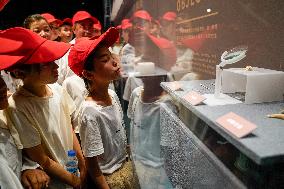
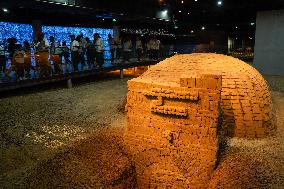
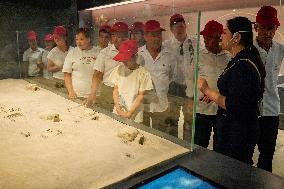
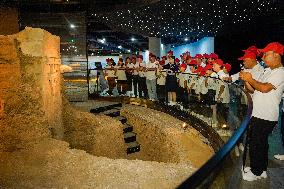
(240716) -- BEIJING, July 16, 2024 Photo by Xinhua/ABACAPRESS.COM) -- People visit the Wei and Jin Dynasties Ancient Tombs Site Museum in Kuqa City, northwest China's Xinjiang Uygur Autonomous Region, July 15, 2024. An underground museum of the Wei and Jin dynasties (220-420) ancient tombs opened on Monday in Kuqa County, an area that previously belonged to the ancient Qiuci State. The Qiuci State, which commenced in the second century BC and existed for more than 1,000 years, was one of the 36 states in the Western Regions, a term used in the Han Dynasty (206 BC-220 AD) for areas west of the Yumen Pass, including present Xinjiang and parts of Central Asia. This in-situ museum with an exhibition space of 5,000 square meters was built to protect 15 brick tomb chambers discovered in 2007 during the construction of the Youyi Road underground pass. The discovery was one of China's top ten new archaeological discoveries that year. The tomb complex was built in consistence with the Han Dynasty style brick-chambered

  •  
Wei And Jin Dynasties Ancient Tombs Site Museum - Kuqa City

Wei And Jin Dynasties Ancient Tombs Site Museum - Kuqa City

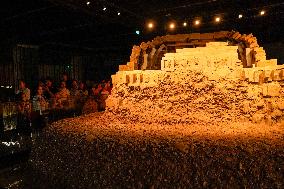
This photo taken on July 15, 2024. An underground museum of the Wei and Jin dynasties (220-420) ancient tombs opened on Monday in Kuqa County, an area that previously belonged to the ancient Qiuci State. The Qiuci State, which commenced in the second century BC and existed for more than 1,000 years, was one of the 36 states in the Western Regions, a term used in the Han Dynasty (206 BC-220 AD) for areas west of the Yumen Pass, including present Xinjiang and parts of Central Asia. This in-situ museum with an exhibition space of 5,000 square meters was built to protect 15 brick tomb chambers discovered in 2007 during the construction of the Youyi Road underground pass. The discovery was one of China's top ten new archaeological discoveries that year. The tomb complex was built in consistence with the Han Dynasty style brick-chambered tombs found in the central China region and along the Hexi Corridor, stretching over a distance of nearly 1,000 kilometers in northwest China's Gansu Province, which is home to fiv

  •  
Wei And Jin Dynasties Ancient Tombs Site Museum - Kuqa City

Wei And Jin Dynasties Ancient Tombs Site Museum - Kuqa City

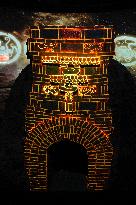
Visitors wear VR sets for exhibitions at the Wei and Jin Dynasties Ancient Tombs Site Museum in Kuqa City, northwest China's Xinjiang Uygur Autonomous Region, July 15, 2024. An underground museum of the Wei and Jin dynasties (220-420) ancient tombs opened on Monday in Kuqa County, an area that previously belonged to the ancient Qiuci State. The Qiuci State, which commenced in the second century BC and existed for more than 1,000 years, was one of the 36 states in the Western Regions, a term used in the Han Dynasty (206 BC-220 AD) for areas west of the Yumen Pass, including present Xinjiang and parts of Central Asia. This in-situ museum with an exhibition space of 5,000 square meters was built to protect 15 brick tomb chambers discovered in 2007 during the construction of the Youyi Road underground pass. The discovery was one of China's top ten new archaeological discoveries that year. The tomb complex was built in consistence with the Han Dynasty style brick-chambered tombs found in the central China region a

  •  
Wei And Jin Dynasties Ancient Tombs Site Museum - Kuqa City

Wei And Jin Dynasties Ancient Tombs Site Museum - Kuqa City

People visit the Wei and Jin Dynasties Ancient Tombs Site Museum in Kuqa City, northwest China's Xinjiang Uygur Autonomous Region, July 15, 2024. An underground museum of the Wei and Jin dynasties (220-420) ancient tombs opened on Monday in Kuqa County, an area that previously belonged to the ancient Qiuci State. The Qiuci State, which commenced in the second century BC and existed for more than 1,000 years, was one of the 36 states in the Western Regions, a term used in the Han Dynasty (206 BC-220 AD) for areas west of the Yumen Pass, including present Xinjiang and parts of Central Asia. This in-situ museum with an exhibition space of 5,000 square meters was built to protect 15 brick tomb chambers discovered in 2007 during the construction of the Youyi Road underground pass. The discovery was one of China's top ten new archaeological discoveries that year. The tomb complex was built in consistence with the Han Dynasty style brick-chambered tombs found in the central China region and along the Hexi Corridor,

  •  
Wei And Jin Dynasties Ancient Tombs Site Museum - Kuqa City

Wei And Jin Dynasties Ancient Tombs Site Museum - Kuqa City

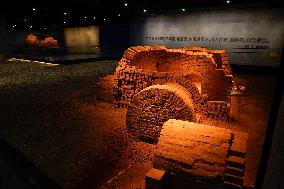
This photo taken on July 15, 2024. An underground museum of the Wei and Jin dynasties (220-420) ancient tombs opened on Monday in Kuqa County, an area that previously belonged to the ancient Qiuci State. The Qiuci State, which commenced in the second century BC and existed for more than 1,000 years, was one of the 36 states in the Western Regions, a term used in the Han Dynasty (206 BC-220 AD) for areas west of the Yumen Pass, including present Xinjiang and parts of Central Asia. This in-situ museum with an exhibition space of 5,000 square meters was built to protect 15 brick tomb chambers discovered in 2007 during the construction of the Youyi Road underground pass. The discovery was one of China's top ten new archaeological discoveries that year. The tomb complex was built in consistence with the Han Dynasty style brick-chambered tombs found in the central China region and along the Hexi Corridor, stretching over a distance of nearly 1,000 kilometers in northwest China's Gansu Province, which is home to fiv

  •  
Wei And Jin Dynasties Ancient Tombs Site Museum - Kuqa City

Wei And Jin Dynasties Ancient Tombs Site Museum - Kuqa City

People visit the Wei and Jin Dynasties Ancient Tombs Site Museum in Kuqa City, northwest China's Xinjiang Uygur Autonomous Region, July 15, 2024. An underground museum of the Wei and Jin dynasties (220-420) ancient tombs opened on Monday in Kuqa County, an area that previously belonged to the ancient Qiuci State. The Qiuci State, which commenced in the second century BC and existed for more than 1,000 years, was one of the 36 states in the Western Regions, a term used in the Han Dynasty (206 BC-220 AD) for areas west of the Yumen Pass, including present Xinjiang and parts of Central Asia. This in-situ museum with an exhibition space of 5,000 square meters was built to protect 15 brick tomb chambers discovered in 2007 during the construction of the Youyi Road underground pass. The discovery was one of China's top ten new archaeological discoveries that year. The tomb complex was built in consistence with the Han Dynasty style brick-chambered tombs found in the central China region and along the Hexi Corridor,

  •  
Wei And Jin Dynasties Ancient Tombs Site Museum - Kuqa City

Wei And Jin Dynasties Ancient Tombs Site Museum - Kuqa City

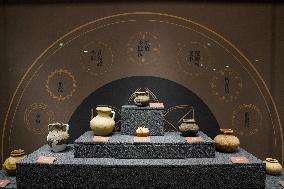
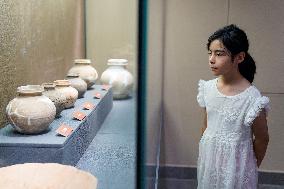
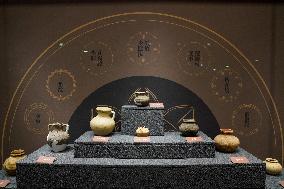
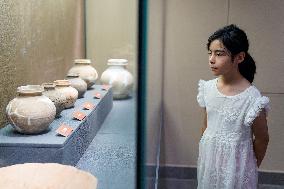
Potteries are exhibited at the Wei and Jin Dynasties Ancient Tombs Site Museum in Kuqa City, northwest China's Xinjiang Uygur Autonomous Region, July 15, 2024. An underground museum of the Wei and Jin dynasties (220-420) ancient tombs opened on Monday in Kuqa County, an area that previously belonged to the ancient Qiuci State. The Qiuci State, which commenced in the second century BC and existed for more than 1,000 years, was one of the 36 states in the Western Regions, a term used in the Han Dynasty (206 BC-220 AD) for areas west of the Yumen Pass, including present Xinjiang and parts of Central Asia. This in-situ museum with an exhibition space of 5,000 square meters was built to protect 15 brick tomb chambers discovered in 2007 during the construction of the Youyi Road underground pass. The discovery was one of China's top ten new archaeological discoveries that year. The tomb complex was built in consistence with the Han Dynasty style brick-chambered tombs found in the central China region and along the H

  •  
Wei And Jin Dynasties Ancient Tombs Site Museum - Kuqa City

Wei And Jin Dynasties Ancient Tombs Site Museum - Kuqa City

People visit the Wei and Jin Dynasties Ancient Tombs Site Museum in Kuqa City, northwest China's Xinjiang Uygur Autonomous Region, July 15, 2024. An underground museum of the Wei and Jin dynasties (220-420) ancient tombs opened on Monday in Kuqa County, an area that previously belonged to the ancient Qiuci State. The Qiuci State, which commenced in the second century BC and existed for more than 1,000 years, was one of the 36 states in the Western Regions, a term used in the Han Dynasty (206 BC-220 AD) for areas west of the Yumen Pass, including present Xinjiang and parts of Central Asia. This in-situ museum with an exhibition space of 5,000 square meters was built to protect 15 brick tomb chambers discovered in 2007 during the construction of the Youyi Road underground pass. The discovery was one of China's top ten new archaeological discoveries that year. The tomb complex was built in consistence with the Han Dynasty style brick-chambered tombs found in the central China region and along the Hexi Corridor,

  •  
Wei And Jin Dynasties Ancient Tombs Site Museum - Kuqa City

Wei And Jin Dynasties Ancient Tombs Site Museum - Kuqa City

This photo taken on July 15, 2024. An underground museum of the Wei and Jin dynasties (220-420) ancient tombs opened on Monday in Kuqa County, an area that previously belonged to the ancient Qiuci State. The Qiuci State, which commenced in the second century BC and existed for more than 1,000 years, was one of the 36 states in the Western Regions, a term used in the Han Dynasty (206 BC-220 AD) for areas west of the Yumen Pass, including present Xinjiang and parts of Central Asia. This in-situ museum with an exhibition space of 5,000 square meters was built to protect 15 brick tomb chambers discovered in 2007 during the construction of the Youyi Road underground pass. The discovery was one of China's top ten new archaeological discoveries that year. The tomb complex was built in consistence with the Han Dynasty style brick-chambered tombs found in the central China region and along the Hexi Corridor, stretching over a distance of nearly 1,000 kilometers in northwest China's Gansu Province, which is home to fiv

  •  
Wei And Jin Dynasties Ancient Tombs Site Museum - Kuqa City

Wei And Jin Dynasties Ancient Tombs Site Museum - Kuqa City

People visit the Wei and Jin Dynasties Ancient Tombs Site Museum in Kuqa City, northwest China's Xinjiang Uygur Autonomous Region, July 15, 2024. An underground museum of the Wei and Jin dynasties (220-420) ancient tombs opened on Monday in Kuqa County, an area that previously belonged to the ancient Qiuci State. The Qiuci State, which commenced in the second century BC and existed for more than 1,000 years, was one of the 36 states in the Western Regions, a term used in the Han Dynasty (206 BC-220 AD) for areas west of the Yumen Pass, including present Xinjiang and parts of Central Asia. This in-situ museum with an exhibition space of 5,000 square meters was built to protect 15 brick tomb chambers discovered in 2007 during the construction of the Youyi Road underground pass. The discovery was one of China's top ten new archaeological discoveries that year. The tomb complex was built in consistence with the Han Dynasty style brick-chambered tombs found in the central China region and along the Hexi Corridor,

  •  
Wei And Jin Dynasties Ancient Tombs Site Museum - Kuqa City

Wei And Jin Dynasties Ancient Tombs Site Museum - Kuqa City

People visit the Wei and Jin Dynasties Ancient Tombs Site Museum in Kuqa City, northwest China's Xinjiang Uygur Autonomous Region, July 15, 2024. An underground museum of the Wei and Jin dynasties (220-420) ancient tombs opened on Monday in Kuqa County, an area that previously belonged to the ancient Qiuci State. The Qiuci State, which commenced in the second century BC and existed for more than 1,000 years, was one of the 36 states in the Western Regions, a term used in the Han Dynasty (206 BC-220 AD) for areas west of the Yumen Pass, including present Xinjiang and parts of Central Asia. This in-situ museum with an exhibition space of 5,000 square meters was built to protect 15 brick tomb chambers discovered in 2007 during the construction of the Youyi Road underground pass. The discovery was one of China's top ten new archaeological discoveries that year. The tomb complex was built in consistence with the Han Dynasty style brick-chambered tombs found in the central China region and along the Hexi Corridor,

  •  
Wei And Jin Dynasties Ancient Tombs Site Museum - Kuqa City

Wei And Jin Dynasties Ancient Tombs Site Museum - Kuqa City

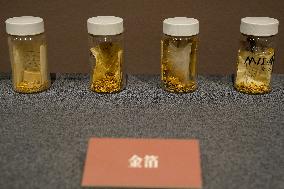
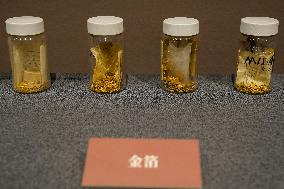
Gold foils are exhibited at the Wei and Jin Dynasties Ancient Tombs Site Museum in Kuqa City, northwest China's Xinjiang Uygur Autonomous Region, July 15, 2024. An underground museum of the Wei and Jin dynasties (220-420) ancient tombs opened on Monday in Kuqa County, an area that previously belonged to the ancient Qiuci State. The Qiuci State, which commenced in the second century BC and existed for more than 1,000 years, was one of the 36 states in the Western Regions, a term used in the Han Dynasty (206 BC-220 AD) for areas west of the Yumen Pass, including present Xinjiang and parts of Central Asia. This in-situ museum with an exhibition space of 5,000 square meters was built to protect 15 brick tomb chambers discovered in 2007 during the construction of the Youyi Road underground pass. The discovery was one of China's top ten new archaeological discoveries that year. The tomb complex was built in consistence with the Han Dynasty style brick-chambered tombs found in the central China region and along the

  •  
Wei And Jin Dynasties Ancient Tombs Site Museum - Kuqa City

Wei And Jin Dynasties Ancient Tombs Site Museum - Kuqa City

People visit the Wei and Jin Dynasties Ancient Tombs Site Museum in Kuqa City, northwest China's Xinjiang Uygur Autonomous Region, July 15, 2024. An underground museum of the Wei and Jin dynasties (220-420) ancient tombs opened on Monday in Kuqa County, an area that previously belonged to the ancient Qiuci State. The Qiuci State, which commenced in the second century BC and existed for more than 1,000 years, was one of the 36 states in the Western Regions, a term used in the Han Dynasty (206 BC-220 AD) for areas west of the Yumen Pass, including present Xinjiang and parts of Central Asia. This in-situ museum with an exhibition space of 5,000 square meters was built to protect 15 brick tomb chambers discovered in 2007 during the construction of the Youyi Road underground pass. The discovery was one of China's top ten new archaeological discoveries that year. The tomb complex was built in consistence with the Han Dynasty style brick-chambered tombs found in the central China region and along the Hexi Corridor,

  •  
Wei And Jin Dynasties Ancient Tombs Site Museum - Kuqa City

Wei And Jin Dynasties Ancient Tombs Site Museum - Kuqa City

People visit the Wei and Jin Dynasties Ancient Tombs Site Museum in Kuqa City, northwest China's Xinjiang Uygur Autonomous Region, July 15, 2024. An underground museum of the Wei and Jin dynasties (220-420) ancient tombs opened on Monday in Kuqa County, an area that previously belonged to the ancient Qiuci State. The Qiuci State, which commenced in the second century BC and existed for more than 1,000 years, was one of the 36 states in the Western Regions, a term used in the Han Dynasty (206 BC-220 AD) for areas west of the Yumen Pass, including present Xinjiang and parts of Central Asia. This in-situ museum with an exhibition space of 5,000 square meters was built to protect 15 brick tomb chambers discovered in 2007 during the construction of the Youyi Road underground pass. The discovery was one of China's top ten new archaeological discoveries that year. The tomb complex was built in consistence with the Han Dynasty style brick-chambered tombs found in the central China region and along the Hexi Corridor,

  •  
Wei And Jin Dynasties Ancient Tombs Site Museum - Kuqa City

Wei And Jin Dynasties Ancient Tombs Site Museum - Kuqa City

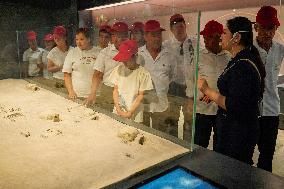
A visitor views exhibits at the Wei and Jin Dynasties Ancient Tombs Site Museum in Kuqa City, northwest China's Xinjiang Uygur Autonomous Region, July 15, 2024. An underground museum of the Wei and Jin dynasties (220-420) ancient tombs opened on Monday in Kuqa County, an area that previously belonged to the ancient Qiuci State. The Qiuci State, which commenced in the second century BC and existed for more than 1,000 years, was one of the 36 states in the Western Regions, a term used in the Han Dynasty (206 BC-220 AD) for areas west of the Yumen Pass, including present Xinjiang and parts of Central Asia. This in-situ museum with an exhibition space of 5,000 square meters was built to protect 15 brick tomb chambers discovered in 2007 during the construction of the Youyi Road underground pass. The discovery was one of China's top ten new archaeological discoveries that year. The tomb complex was built in consistence with the Han Dynasty style brick-chambered tombs found in the central China region and along the

  •  
Wei And Jin Dynasties Ancient Tombs Site Museum - Kuqa City

Wei And Jin Dynasties Ancient Tombs Site Museum - Kuqa City

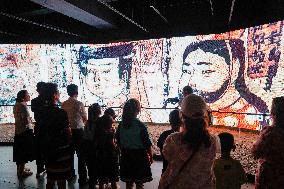
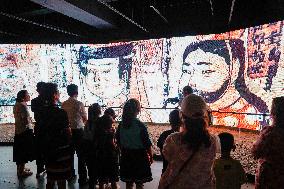
Exhibits powered by digital technologies are pictured at the Wei and Jin Dynasties Ancient Tombs Site Museum in Kuqa City, northwest China's Xinjiang Uygur Autonomous Region, July 15, 2024. An underground museum of the Wei and Jin dynasties (220-420) ancient tombs opened on Monday in Kuqa County, an area that previously belonged to the ancient Qiuci State. The Qiuci State, which commenced in the second century BC and existed for more than 1,000 years, was one of the 36 states in the Western Regions, a term used in the Han Dynasty (206 BC-220 AD) for areas west of the Yumen Pass, including present Xinjiang and parts of Central Asia. This in-situ museum with an exhibition space of 5,000 square meters was built to protect 15 brick tomb chambers discovered in 2007 during the construction of the Youyi Road underground pass. The discovery was one of China's top ten new archaeological discoveries that year. The tomb complex was built in consistence with the Han Dynasty style brick-chambered tombs found in the centra

  •  
CHINA-XINJIANG-KUQA-TOMBS SITE MUSEUM-OPEN (CN)

CHINA-XINJIANG-KUQA-TOMBS SITE MUSEUM-OPEN (CN)

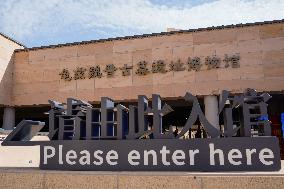
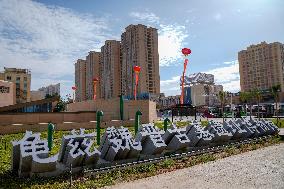
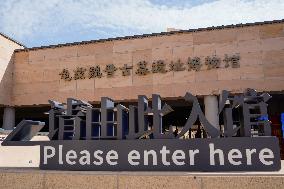
(240715) -- KUQA, July 15, 2024 Photo by Xinhua/ABACAPRESS.COM) -- This photo taken on July 15, 2024 shows an exterior view of the Wei and Jin Dynasties Ancient Tombs Site Museum in Kuqa City, northwest China's Xinjiang Uygur Autonomous Region. An underground museum of the Wei and Jin dynasties (220-420) ancient tombs opened on Monday in Kuqa County, an area that previously belonged to the ancient Qiuci State. The Qiuci State, which commenced in the second century BC and existed for more than 1,000 years, was one of the 36 states in the Western Regions, a term used in the Han Dynasty (206 BC-220 AD) for areas west of the Yumen Pass, including present Xinjiang and parts of Central Asia. This in-situ museum with an exhibition space of 5,000 square meters was built to protect 15 brick tomb chambers discovered in 2007 during the construction of the Youyi Road underground pass. The discovery was one of China's top ten new archaeological discoveries that year. The tomb complex was built in consistence with the Han

  •  
CHINA-XINJIANG-KUQA-TOMBS SITE MUSEUM-OPEN (CN)

CHINA-XINJIANG-KUQA-TOMBS SITE MUSEUM-OPEN (CN)

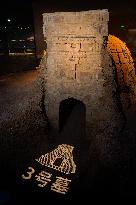
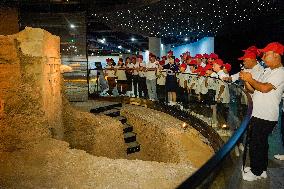
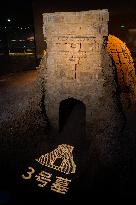
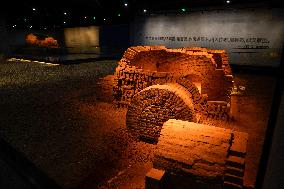
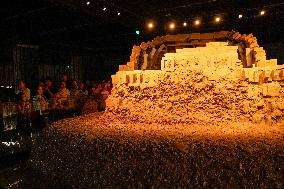
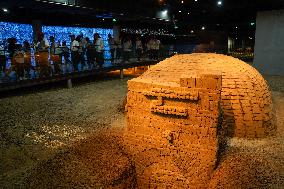
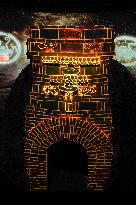
(240715) -- KUQA, July 15, 2024 Photo by Xinhua/ABACAPRESS.COM) -- This photo taken on July 15, 2024 shows a tomb exhibited at the Wei and Jin Dynasties Ancient Tombs Site Museum in Kuqa City, northwest China's Xinjiang Uygur Autonomous Region. An underground museum of the Wei and Jin dynasties (220-420) ancient tombs opened on Monday in Kuqa County, an area that previously belonged to the ancient Qiuci State. The Qiuci State, which commenced in the second century BC and existed for more than 1,000 years, was one of the 36 states in the Western Regions, a term used in the Han Dynasty (206 BC-220 AD) for areas west of the Yumen Pass, including present Xinjiang and parts of Central Asia. This in-situ museum with an exhibition space of 5,000 square meters was built to protect 15 brick tomb chambers discovered in 2007 during the construction of the Youyi Road underground pass. The discovery was one of China's top ten new archaeological discoveries that year. The tomb complex was built in consistence with the Han

  •  
CHINA-XINJIANG-KUQA-TOMBS SITE MUSEUM-OPEN (CN)

CHINA-XINJIANG-KUQA-TOMBS SITE MUSEUM-OPEN (CN)

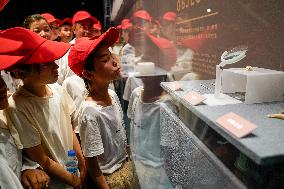
(240715) -- KUQA, July 15, 2024 Photo by Xinhua/ABACAPRESS.COM) -- People visit the Wei and Jin Dynasties Ancient Tombs Site Museum in Kuqa City, northwest China's Xinjiang Uygur Autonomous Region, July 15, 2024. An underground museum of the Wei and Jin dynasties (220-420) ancient tombs opened on Monday in Kuqa County, an area that previously belonged to the ancient Qiuci State. The Qiuci State, which commenced in the second century BC and existed for more than 1,000 years, was one of the 36 states in the Western Regions, a term used in the Han Dynasty (206 BC-220 AD) for areas west of the Yumen Pass, including present Xinjiang and parts of Central Asia. This in-situ museum with an exhibition space of 5,000 square meters was built to protect 15 brick tomb chambers discovered in 2007 during the construction of the Youyi Road underground pass. The discovery was one of China's top ten new archaeological discoveries that year. The tomb complex was built in consistence with the Han Dynasty style brick-chambered to

  •  
CHINA-XINJIANG-KUQA-TOMBS SITE MUSEUM-OPEN (CN)

CHINA-XINJIANG-KUQA-TOMBS SITE MUSEUM-OPEN (CN)

(240715) -- KUQA, July 15, 2024 Photo by Xinhua/ABACAPRESS.COM) -- People visit the Wei and Jin Dynasties Ancient Tombs Site Museum in Kuqa City, northwest China's Xinjiang Uygur Autonomous Region, July 15, 2024. An underground museum of the Wei and Jin dynasties (220-420) ancient tombs opened on Monday in Kuqa County, an area that previously belonged to the ancient Qiuci State. The Qiuci State, which commenced in the second century BC and existed for more than 1,000 years, was one of the 36 states in the Western Regions, a term used in the Han Dynasty (206 BC-220 AD) for areas west of the Yumen Pass, including present Xinjiang and parts of Central Asia. This in-situ museum with an exhibition space of 5,000 square meters was built to protect 15 brick tomb chambers discovered in 2007 during the construction of the Youyi Road underground pass. The discovery was one of China's top ten new archaeological discoveries that year. The tomb complex was built in consistence with the Han Dynasty style brick-chambered to

  •  
CHINA-XINJIANG-KUQA-TOMBS SITE MUSEUM-OPEN (CN)

CHINA-XINJIANG-KUQA-TOMBS SITE MUSEUM-OPEN (CN)

(240715) -- KUQA, July 15, 2024 Photo by Xinhua/ABACAPRESS.COM) -- This photo taken on July 15, 2024 shows an exterior view of the Wei and Jin Dynasties Ancient Tombs Site Museum in Kuqa City, northwest China's Xinjiang Uygur Autonomous Region. An underground museum of the Wei and Jin dynasties (220-420) ancient tombs opened on Monday in Kuqa County, an area that previously belonged to the ancient Qiuci State. The Qiuci State, which commenced in the second century BC and existed for more than 1,000 years, was one of the 36 states in the Western Regions, a term used in the Han Dynasty (206 BC-220 AD) for areas west of the Yumen Pass, including present Xinjiang and parts of Central Asia. This in-situ museum with an exhibition space of 5,000 square meters was built to protect 15 brick tomb chambers discovered in 2007 during the construction of the Youyi Road underground pass. The discovery was one of China's top ten new archaeological discoveries that year. The tomb complex was built in consistence with the Han

  •  
CHINA-XINJIANG-KUQA-TOMBS SITE MUSEUM-OPEN (CN)

CHINA-XINJIANG-KUQA-TOMBS SITE MUSEUM-OPEN (CN)

(240715) -- KUQA, July 15, 2024 Photo by Xinhua/ABACAPRESS.COM) -- People visit the Wei and Jin Dynasties Ancient Tombs Site Museum in Kuqa City, northwest China's Xinjiang Uygur Autonomous Region, July 15, 2024. An underground museum of the Wei and Jin dynasties (220-420) ancient tombs opened on Monday in Kuqa County, an area that previously belonged to the ancient Qiuci State. The Qiuci State, which commenced in the second century BC and existed for more than 1,000 years, was one of the 36 states in the Western Regions, a term used in the Han Dynasty (206 BC-220 AD) for areas west of the Yumen Pass, including present Xinjiang and parts of Central Asia. This in-situ museum with an exhibition space of 5,000 square meters was built to protect 15 brick tomb chambers discovered in 2007 during the construction of the Youyi Road underground pass. The discovery was one of China's top ten new archaeological discoveries that year. The tomb complex was built in consistence with the Han Dynasty style brick-chambered to

  •  
CHINA-XINJIANG-KUQA-TOMBS SITE MUSEUM-OPEN (CN)

CHINA-XINJIANG-KUQA-TOMBS SITE MUSEUM-OPEN (CN)

(240715) -- KUQA, July 15, 2024 Photo by Xinhua/ABACAPRESS.COM) -- Potteries are exhibited at the Wei and Jin Dynasties Ancient Tombs Site Museum in Kuqa City, northwest China's Xinjiang Uygur Autonomous Region, July 15, 2024. An underground museum of the Wei and Jin dynasties (220-420) ancient tombs opened on Monday in Kuqa County, an area that previously belonged to the ancient Qiuci State. The Qiuci State, which commenced in the second century BC and existed for more than 1,000 years, was one of the 36 states in the Western Regions, a term used in the Han Dynasty (206 BC-220 AD) for areas west of the Yumen Pass, including present Xinjiang and parts of Central Asia. This in-situ museum with an exhibition space of 5,000 square meters was built to protect 15 brick tomb chambers discovered in 2007 during the construction of the Youyi Road underground pass. The discovery was one of China's top ten new archaeological discoveries that year. The tomb complex was built in consistence with the Han Dynasty style bric

  •  
CHINA-XINJIANG-KUQA-TOMBS SITE MUSEUM-OPEN (CN)

CHINA-XINJIANG-KUQA-TOMBS SITE MUSEUM-OPEN (CN)

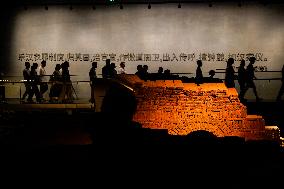
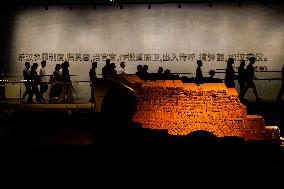
(240715) -- KUQA, July 15, 2024 Photo by Xinhua/ABACAPRESS.COM) -- This photo taken on July 15, 2024 shows an interior view of the Wei and Jin Dynasties Ancient Tombs Site Museum in Kuqa City, northwest China's Xinjiang Uygur Autonomous Region. An underground museum of the Wei and Jin dynasties (220-420) ancient tombs opened on Monday in Kuqa County, an area that previously belonged to the ancient Qiuci State. The Qiuci State, which commenced in the second century BC and existed for more than 1,000 years, was one of the 36 states in the Western Regions, a term used in the Han Dynasty (206 BC-220 AD) for areas west of the Yumen Pass, including present Xinjiang and parts of Central Asia. This in-situ museum with an exhibition space of 5,000 square meters was built to protect 15 brick tomb chambers discovered in 2007 during the construction of the Youyi Road underground pass. The discovery was one of China's top ten new archaeological discoveries that year. The tomb complex was built in consistence with the Han

  •  
CHINA-XINJIANG-KUQA-TOMBS SITE MUSEUM-OPEN (CN)

CHINA-XINJIANG-KUQA-TOMBS SITE MUSEUM-OPEN (CN)

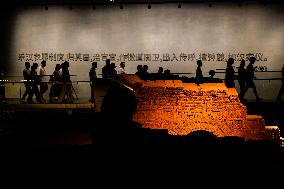
(240715) -- KUQA, July 15, 2024 Photo by Xinhua/ABACAPRESS.COM) -- People visit the Wei and Jin Dynasties Ancient Tombs Site Museum in Kuqa City, northwest China's Xinjiang Uygur Autonomous Region, July 15, 2024. An underground museum of the Wei and Jin dynasties (220-420) ancient tombs opened on Monday in Kuqa County, an area that previously belonged to the ancient Qiuci State. The Qiuci State, which commenced in the second century BC and existed for more than 1,000 years, was one of the 36 states in the Western Regions, a term used in the Han Dynasty (206 BC-220 AD) for areas west of the Yumen Pass, including present Xinjiang and parts of Central Asia. This in-situ museum with an exhibition space of 5,000 square meters was built to protect 15 brick tomb chambers discovered in 2007 during the construction of the Youyi Road underground pass. The discovery was one of China's top ten new archaeological discoveries that year. The tomb complex was built in consistence with the Han Dynasty style brick-chambered to

  •  
CHINA-XINJIANG-KUQA-TOMBS SITE MUSEUM-OPEN (CN)

CHINA-XINJIANG-KUQA-TOMBS SITE MUSEUM-OPEN (CN)

(240715) -- KUQA, July 15, 2024 Photo by Xinhua/ABACAPRESS.COM) -- People visit the Wei and Jin Dynasties Ancient Tombs Site Museum in Kuqa City, northwest China's Xinjiang Uygur Autonomous Region, July 15, 2024. An underground museum of the Wei and Jin dynasties (220-420) ancient tombs opened on Monday in Kuqa County, an area that previously belonged to the ancient Qiuci State. The Qiuci State, which commenced in the second century BC and existed for more than 1,000 years, was one of the 36 states in the Western Regions, a term used in the Han Dynasty (206 BC-220 AD) for areas west of the Yumen Pass, including present Xinjiang and parts of Central Asia. This in-situ museum with an exhibition space of 5,000 square meters was built to protect 15 brick tomb chambers discovered in 2007 during the construction of the Youyi Road underground pass. The discovery was one of China's top ten new archaeological discoveries that year. The tomb complex was built in consistence with the Han Dynasty style brick-chambered to

  •  
CHINA-XINJIANG-KUQA-TOMBS SITE MUSEUM-OPEN (CN)

CHINA-XINJIANG-KUQA-TOMBS SITE MUSEUM-OPEN (CN)

(240715) -- KUQA, July 15, 2024 Photo by Xinhua/ABACAPRESS.COM) -- Visitors wear VR sets for exhibitions at the Wei and Jin Dynasties Ancient Tombs Site Museum in Kuqa City, northwest China's Xinjiang Uygur Autonomous Region, July 15, 2024. An underground museum of the Wei and Jin dynasties (220-420) ancient tombs opened on Monday in Kuqa County, an area that previously belonged to the ancient Qiuci State. The Qiuci State, which commenced in the second century BC and existed for more than 1,000 years, was one of the 36 states in the Western Regions, a term used in the Han Dynasty (206 BC-220 AD) for areas west of the Yumen Pass, including present Xinjiang and parts of Central Asia. This in-situ museum with an exhibition space of 5,000 square meters was built to protect 15 brick tomb chambers discovered in 2007 during the construction of the Youyi Road underground pass. The discovery was one of China's top ten new archaeological discoveries that year. The tomb complex was built in consistence with the Han Dyna

  •  
CHINA-XINJIANG-KUQA-TOMBS SITE MUSEUM-OPEN (CN)

CHINA-XINJIANG-KUQA-TOMBS SITE MUSEUM-OPEN (CN)

(240715) -- KUQA, July 15, 2024 Photo by Xinhua/ABACAPRESS.COM) -- Gold foils are exhibited at the Wei and Jin Dynasties Ancient Tombs Site Museum in Kuqa City, northwest China's Xinjiang Uygur Autonomous Region, July 15, 2024. An underground museum of the Wei and Jin dynasties (220-420) ancient tombs opened on Monday in Kuqa County, an area that previously belonged to the ancient Qiuci State. The Qiuci State, which commenced in the second century BC and existed for more than 1,000 years, was one of the 36 states in the Western Regions, a term used in the Han Dynasty (206 BC-220 AD) for areas west of the Yumen Pass, including present Xinjiang and parts of Central Asia. This in-situ museum with an exhibition space of 5,000 square meters was built to protect 15 brick tomb chambers discovered in 2007 during the construction of the Youyi Road underground pass. The discovery was one of China's top ten new archaeological discoveries that year. The tomb complex was built in consistence with the Han Dynasty style bri

  •  
CHINA-XINJIANG-KUQA-TOMBS SITE MUSEUM-OPEN (CN)

CHINA-XINJIANG-KUQA-TOMBS SITE MUSEUM-OPEN (CN)

(240715) -- KUQA, July 15, 2024 Photo by Xinhua/ABACAPRESS.COM) -- People visit the Wei and Jin Dynasties Ancient Tombs Site Museum in Kuqa City, northwest China's Xinjiang Uygur Autonomous Region, July 15, 2024. An underground museum of the Wei and Jin dynasties (220-420) ancient tombs opened on Monday in Kuqa County, an area that previously belonged to the ancient Qiuci State. The Qiuci State, which commenced in the second century BC and existed for more than 1,000 years, was one of the 36 states in the Western Regions, a term used in the Han Dynasty (206 BC-220 AD) for areas west of the Yumen Pass, including present Xinjiang and parts of Central Asia. This in-situ museum with an exhibition space of 5,000 square meters was built to protect 15 brick tomb chambers discovered in 2007 during the construction of the Youyi Road underground pass. The discovery was one of China's top ten new archaeological discoveries that year. The tomb complex was built in consistence with the Han Dynasty style brick-chambered to

  •  
CHINA-XINJIANG-KUQA-TOMBS SITE MUSEUM-OPEN (CN)

CHINA-XINJIANG-KUQA-TOMBS SITE MUSEUM-OPEN (CN)

(240715) -- KUQA, July 15, 2024 Photo by Xinhua/ABACAPRESS.COM) -- People visit the Wei and Jin Dynasties Ancient Tombs Site Museum in Kuqa City, northwest China's Xinjiang Uygur Autonomous Region, July 15, 2024. An underground museum of the Wei and Jin dynasties (220-420) ancient tombs opened on Monday in Kuqa County, an area that previously belonged to the ancient Qiuci State. The Qiuci State, which commenced in the second century BC and existed for more than 1,000 years, was one of the 36 states in the Western Regions, a term used in the Han Dynasty (206 BC-220 AD) for areas west of the Yumen Pass, including present Xinjiang and parts of Central Asia. This in-situ museum with an exhibition space of 5,000 square meters was built to protect 15 brick tomb chambers discovered in 2007 during the construction of the Youyi Road underground pass. The discovery was one of China's top ten new archaeological discoveries that year. The tomb complex was built in consistence with the Han Dynasty style brick-chambered to

  •  
CHINA-XINJIANG-KUQA-TOMBS SITE MUSEUM-OPEN (CN)

CHINA-XINJIANG-KUQA-TOMBS SITE MUSEUM-OPEN (CN)

(240715) -- KUQA, July 15, 2024 Photo by Xinhua/ABACAPRESS.COM) -- A visitor views exhibits at the Wei and Jin Dynasties Ancient Tombs Site Museum in Kuqa City, northwest China's Xinjiang Uygur Autonomous Region, July 15, 2024. An underground museum of the Wei and Jin dynasties (220-420) ancient tombs opened on Monday in Kuqa County, an area that previously belonged to the ancient Qiuci State. The Qiuci State, which commenced in the second century BC and existed for more than 1,000 years, was one of the 36 states in the Western Regions, a term used in the Han Dynasty (206 BC-220 AD) for areas west of the Yumen Pass, including present Xinjiang and parts of Central Asia. This in-situ museum with an exhibition space of 5,000 square meters was built to protect 15 brick tomb chambers discovered in 2007 during the construction of the Youyi Road underground pass. The discovery was one of China's top ten new archaeological discoveries that year. The tomb complex was built in consistence with the Han Dynasty style bri

  •  
CHINA-XINJIANG-KUQA-TOMBS SITE MUSEUM-OPEN (CN)

CHINA-XINJIANG-KUQA-TOMBS SITE MUSEUM-OPEN (CN)

(240715) -- KUQA, July 15, 2024 Photo by Xinhua/ABACAPRESS.COM) -- Exhibits powered by digital technologies are pictured at the Wei and Jin Dynasties Ancient Tombs Site Museum in Kuqa City, northwest China's Xinjiang Uygur Autonomous Region, July 15, 2024. An underground museum of the Wei and Jin dynasties (220-420) ancient tombs opened on Monday in Kuqa County, an area that previously belonged to the ancient Qiuci State. The Qiuci State, which commenced in the second century BC and existed for more than 1,000 years, was one of the 36 states in the Western Regions, a term used in the Han Dynasty (206 BC-220 AD) for areas west of the Yumen Pass, including present Xinjiang and parts of Central Asia. This in-situ museum with an exhibition space of 5,000 square meters was built to protect 15 brick tomb chambers discovered in 2007 during the construction of the Youyi Road underground pass. The discovery was one of China's top ten new archaeological discoveries that year. The tomb complex was built in consistence w

  •  
CHINA-INNER MONGOLIA-BAOTOU-DEVELOPMENT (CN)

CHINA-INNER MONGOLIA-BAOTOU-DEVELOPMENT (CN)

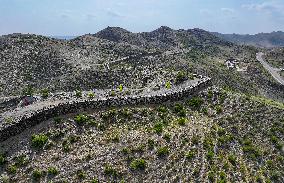
(240521) -- BAOTOU, May 21, 2024 (Xinhua) -- This photo taken on May 9, 2024 shows the Tianshengcheng section of the Great Wall built in the Qin Dynasty (221 B.C.-206 B.C.) in Guyang County, north China's Inner Mongolia Autonomous Region. Located in north China's Inner Mongolia Autonomous Region and along the Yellow River, Baotou City has a long history and rich cultural resources. At the junction of nomadic civilization and farming civilization, you can taste a mix of culture here. Baogang Group, one of China's earliest steel production bases, has made the city been known as a "steel city on grasslands." As an old industrial city, Baotou is now vigorously developing new industries in the fields of rare earth and new energy such as photovoltaics and wind power in a bid to create a new image of the city. (Xinhua/Lian Zhen)

  •  
CHINA-INNER MONGOLIA-BAOTOU-DEVELOPMENT (CN)

CHINA-INNER MONGOLIA-BAOTOU-DEVELOPMENT (CN)

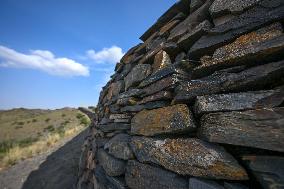
(240521) -- BAOTOU, May 21, 2024 (Xinhua) -- This photo taken on May 9, 2024 shows the Kangtugou section of the Great Wall built in the Qin Dynasty (221 B.C.-206 B.C.) in Guyang County, north China's Inner Mongolia Autonomous Region. Located in north China's Inner Mongolia Autonomous Region and along the Yellow River, Baotou City has a long history and rich cultural resources. At the junction of nomadic civilization and farming civilization, you can taste a mix of culture here. Baogang Group, one of China's earliest steel production bases, has made the city been known as a "steel city on grasslands." As an old industrial city, Baotou is now vigorously developing new industries in the fields of rare earth and new energy such as photovoltaics and wind power in a bid to create a new image of the city. (Xinhua/Lian Zhen)

  •  
CHINA-INNER MONGOLIA-BAOTOU-DEVELOPMENT (CN)

CHINA-INNER MONGOLIA-BAOTOU-DEVELOPMENT (CN)

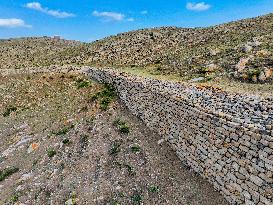
(240521) -- BAOTOU, May 21, 2024 (Xinhua) -- A drone photo taken on May 9, 2024 shows the Kangtugou section of the Great Wall built in the Qin Dynasty (221 B.C.-206 B.C.) in Guyang County, north China's Inner Mongolia Autonomous Region. Located in north China's Inner Mongolia Autonomous Region and along the Yellow River, Baotou City has a long history and rich cultural resources. At the junction of nomadic civilization and farming civilization, you can taste a mix of culture here. Baogang Group, one of China's earliest iron and steel manufacturer, has made the city known as a "steel city on grasslands." As an old industrial city, Baotou is now vigorously developing new industries in the fields of rare earth and new energy such as photovoltaics and wind power in a bid to create new growing momentum. (Xinhua/Lian Zhen)

  •  
XINHUA PHOTOS OF THE DAY

XINHUA PHOTOS OF THE DAY

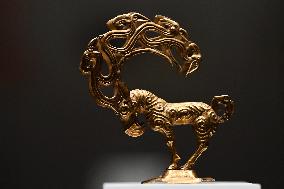
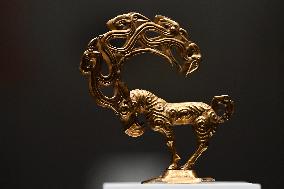
(240518) -- BEIJING, May 18, 2024 (Xinhua) -- A gold figurine is displayed at Shaanxi History Museum in Xi'an, capital of northwest China's Shaanxi Province, May 6, 2024. More than 1,500 cultural relics of Qin Dynasty (221 B.C. - 206 B.C.) and Han Dynasty (206 B.C.- 220 A.D.) are going to be displayed during an exhibition in celebration of the International Museum Day. (Xinhua/Li Yibo)

  •  
CHINA-SHAANXI-MUSEUM-EXHIBITION (CN)

CHINA-SHAANXI-MUSEUM-EXHIBITION (CN)

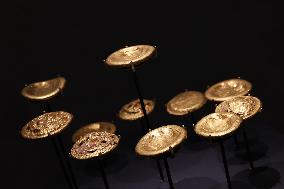
(240517) -- XI'AN, May 17, 2024 (Xinhua) -- Gold ware is displayed at Shaanxi History Museum in Xi'an, capital of northwest China's Shaanxi Province, April 15, 2024. More than 1,500 cultural relics of Qin Dynasty (221 B.C. - 206 B.C.) and Han Dynasty (206 B.C.- 220 A.D.) are going to be displayed during an exhibition in celebration of the International Museum Day. (Xinhua/Li Yibo)

  •  
CHINA-SHAANXI-MUSEUM-EXHIBITION (CN)

CHINA-SHAANXI-MUSEUM-EXHIBITION (CN)

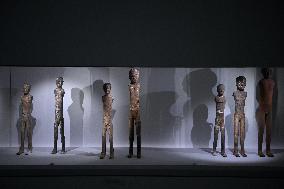
(240517) -- XI'AN, May 17, 2024 (Xinhua) -- Pottery figurines are displayed at Shaanxi History Museum in Xi'an, capital of northwest China's Shaanxi Province, May 13, 2024. More than 1,500 cultural relics of Qin Dynasty (221 B.C. - 206 B.C.) and Han Dynasty (206 B.C.- 220 A.D.) are going to be displayed during an exhibition in celebration of the International Museum Day. (Xinhua/Li Yibo)

  •  
CHINA-SHAANXI-MUSEUM-EXHIBITION (CN)

CHINA-SHAANXI-MUSEUM-EXHIBITION (CN)

(240517) -- XI'AN, May 17, 2024 (Xinhua) -- A gold figurine is displayed at Shaanxi History Museum in Xi'an, capital of northwest China's Shaanxi Province, May 6, 2024. More than 1,500 cultural relics of Qin Dynasty (221 B.C. - 206 B.C.) and Han Dynasty (206 B.C.- 220 A.D.) are going to be displayed during an exhibition in celebration of the International Museum Day. (Xinhua/Li Yibo)

  •  
CHINA-SHAANXI-MUSEUM-EXHIBITION (CN)

CHINA-SHAANXI-MUSEUM-EXHIBITION (CN)

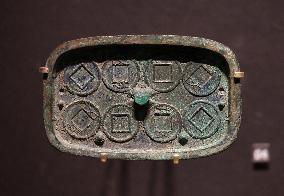
(240517) -- XI'AN, May 17, 2024 (Xinhua) -- A copper mold used to make copper coins is displayed at Shaanxi History Museum in Xi'an, capital of northwest China's Shaanxi Province, April 15, 2024. More than 1,500 cultural relics of Qin Dynasty (221 B.C. - 206 B.C.) and Han Dynasty (206 B.C.- 220 A.D.) are going to be displayed during an exhibition in celebration of the International Museum Day. (Xinhua/Li Yibo)

  • Main
  • Top
  • Editorial
  • Creative
  • About Us
  • About ILG
  • Terms of use
  • Company
  • BEHIND
  • Price List
  • Single Plan
  • Monthly Plan
  • Services
  • Shooting
  • Rights Clearance
  • Support
  • FAQ
  • How To Buy
  • Contact Us
  • Become a Partner

© KYODO NEWS IMAGES INC

All Rights Reserved.

  • Editorial
  • Olympics
  • News
  • Sports
  • Japan
  • Tech
  • Royal
  • Disaster
  • NorthKorea
  • Old Japan
  • SNS

  • Creative
  • Food
  • Japan
  • Landscape
  • Animal
  • Popular
  • #Ukraine
  • #China
  • #coronavirus
  • #N. Korea
  • #Thailand
  • #Russia
  • #Ukraine
  • #China
  • #coronavirus
  • #N. Korea
  • #Thailand
  • #Russia
  • Food
  • Japan
  • Landscape
  • Animal
  • Olympics
  • News
  • Sports
  • Japan
  • Tech
  • Royal
  • Disaster
  • NorthKorea
  • Old Japan
  • SNS