•  

Spain: Valencia Teachers’ Indefinite Strike Continues as Talks Collapse

Valencian teachers entered their ninth day of an indefinite strike on Thursday, May 21, with negotiations collapsing after just twelve minutes, as teachers gathered outside the regional parliament in Valencia, Alicante, and Castellón demanding the education minister's resignation.

  •  

Spain: Valencia Teachers’ Indefinite Strike Continues as Talks Collapse 2

Valencian teachers entered their ninth day of an indefinite strike on Thursday, May 21, with negotiations collapsing after just twelve minutes, as teachers gathered outside the regional parliament in Valencia, Alicante, and Castellón demanding the education minister's resignation.

  •  
World's Longest Expressway Tunnel - Urumqi

World's Longest Expressway Tunnel - Urumqi

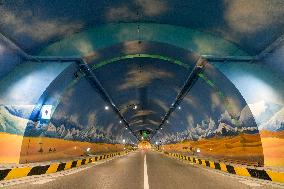
This photo taken on December 21, 2025 shows a view of the Tianshan Shengli Tunnel on Urumqi-Yuli Expressway in northwest China's Xinjiang Uygur Autonomous Region. The Tianshan Shengli Tunnel, the world's longest expressway tunnel, and the Urumqi-Yuli Expressway that traverses the Tianshan Mountains via the tunnel, will be open to traffic by the end of this year, enabling a new shortcut linking southern and northern parts of Xinjiang. The 22.13-kilometer tunnel will reduce the time it takes to drive across the middle section of the Tianshan Mountains from several hours to about 20 minutes. Once operational, the travel time from the regional capital of Urumqi, north of the Tianshan Mountains, to Korla, south of the Tianshan Mountains, will be shortened from seven hours to about three hours. Photo by Hu Huhu/Xinhua/ABACAPRESS.COM

  •  
Copernicus Sentinel-1D Launches Into Orbit - French Guiana

Copernicus Sentinel-1D Launches Into Orbit - French Guiana

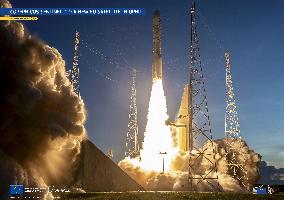
Handout photo dated on November 4, 2025 shows Copernicus Sentinel-1D was successfully launched on 4 November 2025 at 22:02 CET (21:02 UTC) aboard an Ariane 6 rocket from the European Spaceport in Kourou, French Guiana. The satellite was released into orbit 34 minutes after launch, and the first signal was received at 23:22 CET by the Troll ground station in Antarctica. At the heart of Copernicus Sentinel-1 is the C-SAR (C-band Synthetic Aperture Radar) instrument, operating at 5.405 GHz. It provides high-resolution imaging of the Earth's surface regardless of weather conditions, day or night. The radar supports four operational modes: Strip Map (5 × 5 m resolution, 80 km swath), Interferometric Wide Swath (5 × 20 m resolution, 250 km swath), Extra Wide Swath (20 × 40 m resolution, 400 km swath), and Wave mode for ocean monitoring. A key feature of Sentinel-1D, also present on Sentinel-1C, is the integration of the Automatic Identification System (AIS), which enables detection and tracking of ship signals in c

  •  
China Launches Shenzhou-21 Crewed Spaceship For New Scientific Goals

China Launches Shenzhou-21 Crewed Spaceship For New Scientific Goals

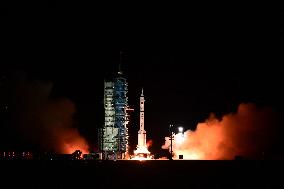
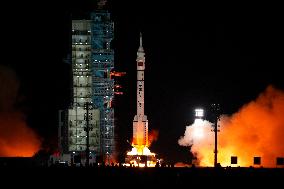
The Shenzhou-21 crewed spaceship, atop a Long March-2F carrier rocket, blasts off from the Jiuquan Satellite Launch Center in northwest China, Oct. 31, 2025. China successfully launched the Shenzhou-21 crewed spaceship on Friday, sending three astronauts to its orbiting space station on a six-month mission. The spaceship blasted off at 11:44 p.m. (Beijing Time). About 10 minutes after the launch, the spaceship separated from the rocket and entered its designated orbit. The astronauts are in good condition, and the launch of the Shenzhou-21 crewed spaceship was a complete success, according to the China Manned Space Agency (CMSA). (Photo by Wang Jiangbo/Xinhua)

  •  
China Launches Shenzhou-21 Crewed Spaceship For New Scientific Goals

China Launches Shenzhou-21 Crewed Spaceship For New Scientific Goals

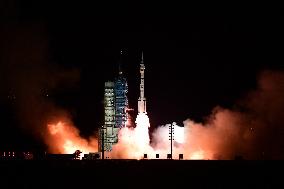
The Shenzhou-21 crewed spaceship, atop a Long March-2F carrier rocket, blasts off from the Jiuquan Satellite Launch Center in northwest China, Oct. 31, 2025. China successfully launched the Shenzhou-21 crewed spaceship on Friday, sending three astronauts to its orbiting space station on a six-month mission. The spaceship blasted off at 11:44 p.m. (Beijing Time). About 10 minutes after the launch, the spaceship separated from the rocket and entered its designated orbit. The astronauts are in good condition, and the launch of the Shenzhou-21 crewed spaceship was a complete success, according to the China Manned Space Agency (CMSA). (Photo by Wang Jiangbo/Xinhua)

  •  
China Launches Shenzhou-21 Crewed Spaceship For New Scientific Goals

China Launches Shenzhou-21 Crewed Spaceship For New Scientific Goals

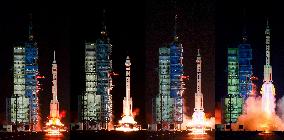
This combo photo shows the Shenzhou-21 crewed spaceship, atop a Long March-2F carrier rocket, blasting off from the Jiuquan Satellite Launch Center in northwest China, Oct. 31, 2025. China successfully launched the Shenzhou-21 crewed spaceship on Friday, sending three astronauts to its orbiting space station on a six-month mission. The spaceship blasted off at 11:44 p.m. (Beijing Time). About 10 minutes after the launch, the spaceship separated from the rocket and entered its designated orbit. The astronauts are in good condition, and the launch of the Shenzhou-21 crewed spaceship was a complete success, according to the China Manned Space Agency (CMSA). (Xinhua)

  •  
China Launches Shenzhou-21 Crewed Spaceship For New Scientific Goals

China Launches Shenzhou-21 Crewed Spaceship For New Scientific Goals

The Shenzhou-21 crewed spaceship, atop a Long March-2F carrier rocket, blasts off from the Jiuquan Satellite Launch Center in northwest China, Oct. 31, 2025. China successfully launched the Shenzhou-21 crewed spaceship on Friday, sending three astronauts to its orbiting space station on a six-month mission. The spaceship blasted off at 11:44 p.m. (Beijing Time). About 10 minutes after the launch, the spaceship separated from the rocket and entered its designated orbit. The astronauts are in good condition, and the launch of the Shenzhou-21 crewed spaceship was a complete success, according to the China Manned Space Agency (CMSA). (Xinhua/Li Minggang)

  •  
Sunflower Field Illustrations - Spain

Sunflower Field Illustrations - Spain

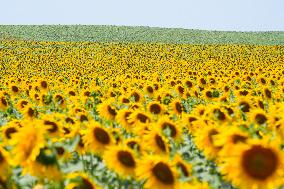
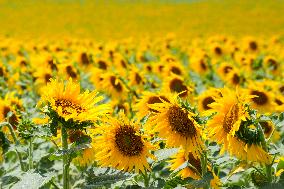
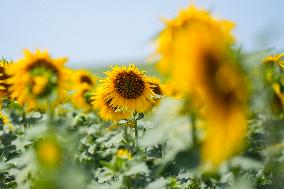
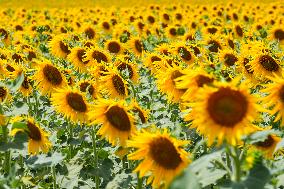
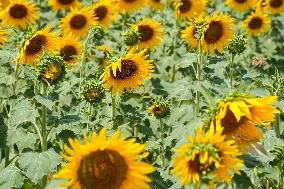
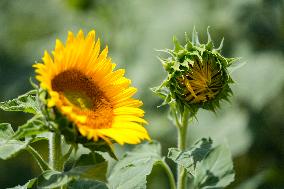
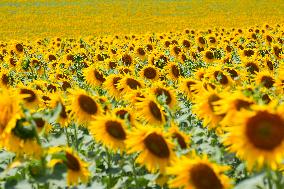
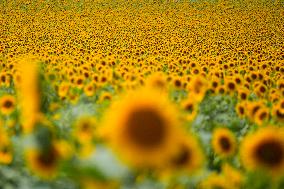
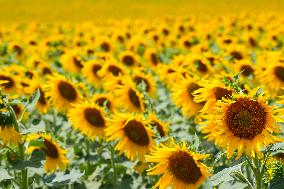
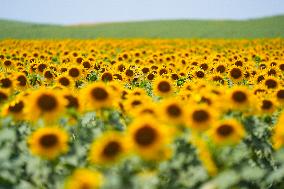
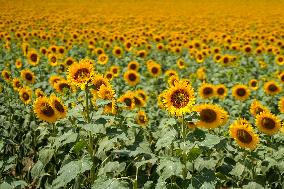
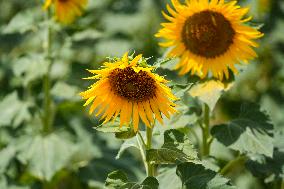
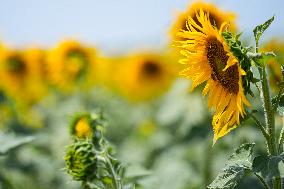
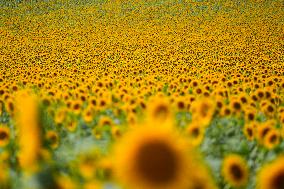
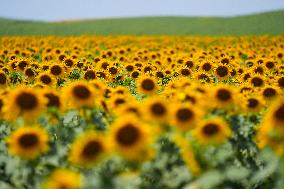
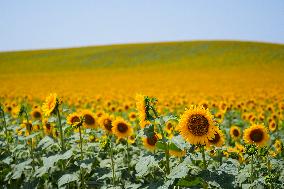
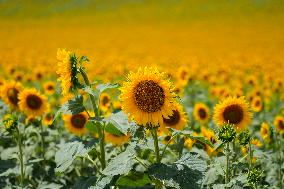
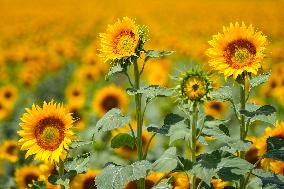
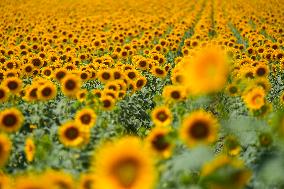
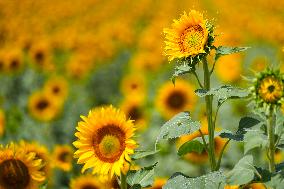
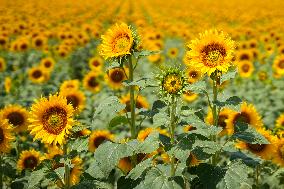
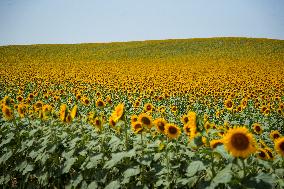
Images of a field of sunflowers in bloom in the Sevillian town of Sanlucar la Mayor, on June 20, 2025, in Seville, Andalusia, Spain. This Saturday, June 21, at 2 hours 42 minutes UTC, according to calculations by the National Astronomical Observatory, the summer solstice will occur, a phenomenon in which the Sun reaches its maximum declination projecting its light over the maximum geographic latitude on Earth. This astronomical event starts the summer in the northern hemisphere and the winter in the southern hemisphere. In addition, the day of the summer solstice corresponds to the longest day of the year, since it is the day on which the Sun rises the earliest and the day on which it sets the latest. Photo by Joaquin Corchero/Europa Press/ABACAPRESS.COM

  •  
Sunflower Field Illustrations - Spain

Sunflower Field Illustrations - Spain

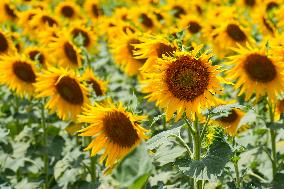
Images of a field of sunflowers in bloom in the Sevillian town of Sanlucar la Mayor, on June 20, 2025, in Seville, Andalusia, Spain. This Saturday, June 21, at 2 hours 42 minutes UTC, according to calculations by the National Astronomical Observatory, the summer solstice will occur, a phenomenon in which the Sun reaches its maximum declination projecting its light over the maximum geographic latitude on Earth. This astronomical event starts the summer in the northern hemisphere and the winter in the southern hemisphere. In addition, the day of the summer solstice corresponds to the longest day of the year, since it is the day on which the Sun rises the earliest and the day on which it sets the latest. Photo by Joaquin Corchero/Europa Press/ABACAPRESS.COM

  •  
Sunflower Field Illustrations - Spain

Sunflower Field Illustrations - Spain

Images of a field of sunflowers in bloom in the Sevillian town of Sanlucar la Mayor, on June 20, 2025, in Seville, Andalusia, Spain. This Saturday, June 21, at 2 hours 42 minutes UTC, according to calculations by the National Astronomical Observatory, the summer solstice will occur, a phenomenon in which the Sun reaches its maximum declination projecting its light over the maximum geographic latitude on Earth. This astronomical event starts the summer in the northern hemisphere and the winter in the southern hemisphere. In addition, the day of the summer solstice corresponds to the longest day of the year, since it is the day on which the Sun rises the earliest and the day on which it sets the latest. Photo by Joaquin Corchero/Europa Press/ABACAPRESS.COM

  •  
Sunflower Field Illustrations - Spain

Sunflower Field Illustrations - Spain

Images of a field of sunflowers in bloom in the Sevillian town of Sanlucar la Mayor, on June 20, 2025, in Seville, Andalusia, Spain. This Saturday, June 21, at 2 hours 42 minutes UTC, according to calculations by the National Astronomical Observatory, the summer solstice will occur, a phenomenon in which the Sun reaches its maximum declination projecting its light over the maximum geographic latitude on Earth. This astronomical event starts the summer in the northern hemisphere and the winter in the southern hemisphere. In addition, the day of the summer solstice corresponds to the longest day of the year, since it is the day on which the Sun rises the earliest and the day on which it sets the latest. Photo by Joaquin Corchero/Europa Press/ABACAPRESS.COM

  •  
Sunflower Field Illustrations - Spain

Sunflower Field Illustrations - Spain

Images of a field of sunflowers in bloom in the Sevillian town of Sanlucar la Mayor, on June 20, 2025, in Seville, Andalusia, Spain. This Saturday, June 21, at 2 hours 42 minutes UTC, according to calculations by the National Astronomical Observatory, the summer solstice will occur, a phenomenon in which the Sun reaches its maximum declination projecting its light over the maximum geographic latitude on Earth. This astronomical event starts the summer in the northern hemisphere and the winter in the southern hemisphere. In addition, the day of the summer solstice corresponds to the longest day of the year, since it is the day on which the Sun rises the earliest and the day on which it sets the latest. Photo by Joaquin Corchero/Europa Press/ABACAPRESS.COM

  •  
Sunflower Field Illustrations - Spain

Sunflower Field Illustrations - Spain

Images of a field of sunflowers in bloom in the Sevillian town of Sanlucar la Mayor, on June 20, 2025, in Seville, Andalusia, Spain. This Saturday, June 21, at 2 hours 42 minutes UTC, according to calculations by the National Astronomical Observatory, the summer solstice will occur, a phenomenon in which the Sun reaches its maximum declination projecting its light over the maximum geographic latitude on Earth. This astronomical event starts the summer in the northern hemisphere and the winter in the southern hemisphere. In addition, the day of the summer solstice corresponds to the longest day of the year, since it is the day on which the Sun rises the earliest and the day on which it sets the latest. Photo by Joaquin Corchero/Europa Press/ABACAPRESS.COM

  •  
Sunflower Field Illustrations - Spain

Sunflower Field Illustrations - Spain

Images of a field of sunflowers in bloom in the Sevillian town of Sanlucar la Mayor, on June 20, 2025, in Seville, Andalusia, Spain. This Saturday, June 21, at 2 hours 42 minutes UTC, according to calculations by the National Astronomical Observatory, the summer solstice will occur, a phenomenon in which the Sun reaches its maximum declination projecting its light over the maximum geographic latitude on Earth. This astronomical event starts the summer in the northern hemisphere and the winter in the southern hemisphere. In addition, the day of the summer solstice corresponds to the longest day of the year, since it is the day on which the Sun rises the earliest and the day on which it sets the latest. Photo by Joaquin Corchero/Europa Press/ABACAPRESS.COM

  •  
Sunflower Field Illustrations - Spain

Sunflower Field Illustrations - Spain

Images of a field of sunflowers in bloom in the Sevillian town of Sanlucar la Mayor, on June 20, 2025, in Seville, Andalusia, Spain. This Saturday, June 21, at 2 hours 42 minutes UTC, according to calculations by the National Astronomical Observatory, the summer solstice will occur, a phenomenon in which the Sun reaches its maximum declination projecting its light over the maximum geographic latitude on Earth. This astronomical event starts the summer in the northern hemisphere and the winter in the southern hemisphere. In addition, the day of the summer solstice corresponds to the longest day of the year, since it is the day on which the Sun rises the earliest and the day on which it sets the latest. Photo by Joaquin Corchero/Europa Press/ABACAPRESS.COM

  •  
Sunflower Field Illustrations - Spain

Sunflower Field Illustrations - Spain

Images of a field of sunflowers in bloom in the Sevillian town of Sanlucar la Mayor, on June 20, 2025, in Seville, Andalusia, Spain. This Saturday, June 21, at 2 hours 42 minutes UTC, according to calculations by the National Astronomical Observatory, the summer solstice will occur, a phenomenon in which the Sun reaches its maximum declination projecting its light over the maximum geographic latitude on Earth. This astronomical event starts the summer in the northern hemisphere and the winter in the southern hemisphere. In addition, the day of the summer solstice corresponds to the longest day of the year, since it is the day on which the Sun rises the earliest and the day on which it sets the latest. Photo by Joaquin Corchero/Europa Press/ABACAPRESS.COM

  •  
Sunflower Field Illustrations - Spain

Sunflower Field Illustrations - Spain

Images of a field of sunflowers in bloom in the Sevillian town of Sanlucar la Mayor, on June 20, 2025, in Seville, Andalusia, Spain. This Saturday, June 21, at 2 hours 42 minutes UTC, according to calculations by the National Astronomical Observatory, the summer solstice will occur, a phenomenon in which the Sun reaches its maximum declination projecting its light over the maximum geographic latitude on Earth. This astronomical event starts the summer in the northern hemisphere and the winter in the southern hemisphere. In addition, the day of the summer solstice corresponds to the longest day of the year, since it is the day on which the Sun rises the earliest and the day on which it sets the latest. Photo by Joaquin Corchero/Europa Press/ABACAPRESS.COM

  •  
Sunflower Field Illustrations - Spain

Sunflower Field Illustrations - Spain

Images of a field of sunflowers in bloom in the Sevillian town of Sanlucar la Mayor, on June 20, 2025, in Seville, Andalusia, Spain. This Saturday, June 21, at 2 hours 42 minutes UTC, according to calculations by the National Astronomical Observatory, the summer solstice will occur, a phenomenon in which the Sun reaches its maximum declination projecting its light over the maximum geographic latitude on Earth. This astronomical event starts the summer in the northern hemisphere and the winter in the southern hemisphere. In addition, the day of the summer solstice corresponds to the longest day of the year, since it is the day on which the Sun rises the earliest and the day on which it sets the latest. Photo by Joaquin Corchero/Europa Press/ABACAPRESS.COM

  •  
Sunflower Field Illustrations - Spain

Sunflower Field Illustrations - Spain

Images of a field of sunflowers in bloom in the Sevillian town of Sanlucar la Mayor, on June 20, 2025, in Seville, Andalusia, Spain. This Saturday, June 21, at 2 hours 42 minutes UTC, according to calculations by the National Astronomical Observatory, the summer solstice will occur, a phenomenon in which the Sun reaches its maximum declination projecting its light over the maximum geographic latitude on Earth. This astronomical event starts the summer in the northern hemisphere and the winter in the southern hemisphere. In addition, the day of the summer solstice corresponds to the longest day of the year, since it is the day on which the Sun rises the earliest and the day on which it sets the latest. Photo by Joaquin Corchero/Europa Press/ABACAPRESS.COM

  •  
Sunflower Field Illustrations - Spain

Sunflower Field Illustrations - Spain

Images of a field of sunflowers in bloom in the Sevillian town of Sanlucar la Mayor, on June 20, 2025, in Seville, Andalusia, Spain. This Saturday, June 21, at 2 hours 42 minutes UTC, according to calculations by the National Astronomical Observatory, the summer solstice will occur, a phenomenon in which the Sun reaches its maximum declination projecting its light over the maximum geographic latitude on Earth. This astronomical event starts the summer in the northern hemisphere and the winter in the southern hemisphere. In addition, the day of the summer solstice corresponds to the longest day of the year, since it is the day on which the Sun rises the earliest and the day on which it sets the latest. Photo by Joaquin Corchero/Europa Press/ABACAPRESS.COM

  •  
Sunflower Field Illustrations - Spain

Sunflower Field Illustrations - Spain

Images of a field of sunflowers in bloom in the Sevillian town of Sanlucar la Mayor, on June 20, 2025, in Seville, Andalusia, Spain. This Saturday, June 21, at 2 hours 42 minutes UTC, according to calculations by the National Astronomical Observatory, the summer solstice will occur, a phenomenon in which the Sun reaches its maximum declination projecting its light over the maximum geographic latitude on Earth. This astronomical event starts the summer in the northern hemisphere and the winter in the southern hemisphere. In addition, the day of the summer solstice corresponds to the longest day of the year, since it is the day on which the Sun rises the earliest and the day on which it sets the latest. Photo by Joaquin Corchero/Europa Press/ABACAPRESS.COM

  •  
Sunflower Field Illustrations - Spain

Sunflower Field Illustrations - Spain

Images of a field of sunflowers in bloom in the Sevillian town of Sanlucar la Mayor, on June 20, 2025, in Seville, Andalusia, Spain. This Saturday, June 21, at 2 hours 42 minutes UTC, according to calculations by the National Astronomical Observatory, the summer solstice will occur, a phenomenon in which the Sun reaches its maximum declination projecting its light over the maximum geographic latitude on Earth. This astronomical event starts the summer in the northern hemisphere and the winter in the southern hemisphere. In addition, the day of the summer solstice corresponds to the longest day of the year, since it is the day on which the Sun rises the earliest and the day on which it sets the latest. Photo by Joaquin Corchero/Europa Press/ABACAPRESS.COM

  •  
Sunflower Field Illustrations - Spain

Sunflower Field Illustrations - Spain

Images of a field of sunflowers in bloom in the Sevillian town of Sanlucar la Mayor, on June 20, 2025, in Seville, Andalusia, Spain. This Saturday, June 21, at 2 hours 42 minutes UTC, according to calculations by the National Astronomical Observatory, the summer solstice will occur, a phenomenon in which the Sun reaches its maximum declination projecting its light over the maximum geographic latitude on Earth. This astronomical event starts the summer in the northern hemisphere and the winter in the southern hemisphere. In addition, the day of the summer solstice corresponds to the longest day of the year, since it is the day on which the Sun rises the earliest and the day on which it sets the latest. Photo by Joaquin Corchero/Europa Press/ABACAPRESS.COM

  •  
Sunflower Field Illustrations - Spain

Sunflower Field Illustrations - Spain

Images of a field of sunflowers in bloom in the Sevillian town of Sanlucar la Mayor, on June 20, 2025, in Seville, Andalusia, Spain. This Saturday, June 21, at 2 hours 42 minutes UTC, according to calculations by the National Astronomical Observatory, the summer solstice will occur, a phenomenon in which the Sun reaches its maximum declination projecting its light over the maximum geographic latitude on Earth. This astronomical event starts the summer in the northern hemisphere and the winter in the southern hemisphere. In addition, the day of the summer solstice corresponds to the longest day of the year, since it is the day on which the Sun rises the earliest and the day on which it sets the latest. Photo by Joaquin Corchero/Europa Press/ABACAPRESS.COM

  •  
Sunflower Field Illustrations - Spain

Sunflower Field Illustrations - Spain

Images of a field of sunflowers in bloom in the Sevillian town of Sanlucar la Mayor, on June 20, 2025, in Seville, Andalusia, Spain. This Saturday, June 21, at 2 hours 42 minutes UTC, according to calculations by the National Astronomical Observatory, the summer solstice will occur, a phenomenon in which the Sun reaches its maximum declination projecting its light over the maximum geographic latitude on Earth. This astronomical event starts the summer in the northern hemisphere and the winter in the southern hemisphere. In addition, the day of the summer solstice corresponds to the longest day of the year, since it is the day on which the Sun rises the earliest and the day on which it sets the latest. Photo by Joaquin Corchero/Europa Press/ABACAPRESS.COM

  •  
Sunflower Field Illustrations - Spain

Sunflower Field Illustrations - Spain

Images of a field of sunflowers in bloom in the Sevillian town of Sanlucar la Mayor, on June 20, 2025, in Seville, Andalusia, Spain. This Saturday, June 21, at 2 hours 42 minutes UTC, according to calculations by the National Astronomical Observatory, the summer solstice will occur, a phenomenon in which the Sun reaches its maximum declination projecting its light over the maximum geographic latitude on Earth. This astronomical event starts the summer in the northern hemisphere and the winter in the southern hemisphere. In addition, the day of the summer solstice corresponds to the longest day of the year, since it is the day on which the Sun rises the earliest and the day on which it sets the latest. Photo by Joaquin Corchero/Europa Press/ABACAPRESS.COM

  •  
Sunflower Field Illustrations - Spain

Sunflower Field Illustrations - Spain

Images of a field of sunflowers in bloom in the Sevillian town of Sanlucar la Mayor, on June 20, 2025, in Seville, Andalusia, Spain. This Saturday, June 21, at 2 hours 42 minutes UTC, according to calculations by the National Astronomical Observatory, the summer solstice will occur, a phenomenon in which the Sun reaches its maximum declination projecting its light over the maximum geographic latitude on Earth. This astronomical event starts the summer in the northern hemisphere and the winter in the southern hemisphere. In addition, the day of the summer solstice corresponds to the longest day of the year, since it is the day on which the Sun rises the earliest and the day on which it sets the latest. Photo by Joaquin Corchero/Europa Press/ABACAPRESS.COM

  •  
Sunflower Field Illustrations - Spain

Sunflower Field Illustrations - Spain

Images of a field of sunflowers in bloom in the Sevillian town of Sanlucar la Mayor, on June 20, 2025, in Seville, Andalusia, Spain. This Saturday, June 21, at 2 hours 42 minutes UTC, according to calculations by the National Astronomical Observatory, the summer solstice will occur, a phenomenon in which the Sun reaches its maximum declination projecting its light over the maximum geographic latitude on Earth. This astronomical event starts the summer in the northern hemisphere and the winter in the southern hemisphere. In addition, the day of the summer solstice corresponds to the longest day of the year, since it is the day on which the Sun rises the earliest and the day on which it sets the latest. Photo by Joaquin Corchero/Europa Press/ABACAPRESS.COM

  •  
Sunflower Field Illustrations - Spain

Sunflower Field Illustrations - Spain

Images of a field of sunflowers in bloom in the Sevillian town of Sanlucar la Mayor, on June 20, 2025, in Seville, Andalusia, Spain. This Saturday, June 21, at 2 hours 42 minutes UTC, according to calculations by the National Astronomical Observatory, the summer solstice will occur, a phenomenon in which the Sun reaches its maximum declination projecting its light over the maximum geographic latitude on Earth. This astronomical event starts the summer in the northern hemisphere and the winter in the southern hemisphere. In addition, the day of the summer solstice corresponds to the longest day of the year, since it is the day on which the Sun rises the earliest and the day on which it sets the latest. Photo by Joaquin Corchero/Europa Press/ABACAPRESS.COM

  •  
Sunflower Field Illustrations - Spain

Sunflower Field Illustrations - Spain

Images of a field of sunflowers in bloom in the Sevillian town of Sanlucar la Mayor, on June 20, 2025, in Seville, Andalusia, Spain. This Saturday, June 21, at 2 hours 42 minutes UTC, according to calculations by the National Astronomical Observatory, the summer solstice will occur, a phenomenon in which the Sun reaches its maximum declination projecting its light over the maximum geographic latitude on Earth. This astronomical event starts the summer in the northern hemisphere and the winter in the southern hemisphere. In addition, the day of the summer solstice corresponds to the longest day of the year, since it is the day on which the Sun rises the earliest and the day on which it sets the latest. Photo by Joaquin Corchero/Europa Press/ABACAPRESS.COM

  •  
Sunflower Field Illustrations - Spain

Sunflower Field Illustrations - Spain

Images of a field of sunflowers in bloom in the Sevillian town of Sanlucar la Mayor, on June 20, 2025, in Seville, Andalusia, Spain. This Saturday, June 21, at 2 hours 42 minutes UTC, according to calculations by the National Astronomical Observatory, the summer solstice will occur, a phenomenon in which the Sun reaches its maximum declination projecting its light over the maximum geographic latitude on Earth. This astronomical event starts the summer in the northern hemisphere and the winter in the southern hemisphere. In addition, the day of the summer solstice corresponds to the longest day of the year, since it is the day on which the Sun rises the earliest and the day on which it sets the latest. Photo by Joaquin Corchero/Europa Press/ABACAPRESS.COM

  •  
Sunflower Field Illustrations - Spain

Sunflower Field Illustrations - Spain

Images of a field of sunflowers in bloom in the Sevillian town of Sanlucar la Mayor, on June 20, 2025, in Seville, Andalusia, Spain. This Saturday, June 21, at 2 hours 42 minutes UTC, according to calculations by the National Astronomical Observatory, the summer solstice will occur, a phenomenon in which the Sun reaches its maximum declination projecting its light over the maximum geographic latitude on Earth. This astronomical event starts the summer in the northern hemisphere and the winter in the southern hemisphere. In addition, the day of the summer solstice corresponds to the longest day of the year, since it is the day on which the Sun rises the earliest and the day on which it sets the latest. Photo by Joaquin Corchero/Europa Press/ABACAPRESS.COM

  •  

Winner of world's first humanoid half marathon

BEIJING, China, May 16 Kyodo - A two-legged robot runs in front of the media in Beijing on May 16, 2025, after winning the world's first humanoid half marathon, held in the Chinese capital in April. The robot completed the 21-kilometer course in 2 hours and 40 minutes, outperforming around 20 other similar robots in the race. (Kyodo)

  •  

South Korea: Fire Erupts at High-Rise Apartment in Wonmi District, Bucheon

A fire broke out on the 4th floor of a 21-story apartment building in Jung-dong, Wonmi District, Bucheon City, on Thursday, May 22. Three residents suffered from smoke inhalation, and 60 people were evacuated. Firefighters extinguished the blaze within 23 minutes.

  •  
Winner of world's first humanoid half marathon

Winner of world's first humanoid half marathon

A two-legged robot runs in front of the media in Beijing on May 16, 2025, after winning the world's first humanoid half marathon, held in the Chinese capital in April. The robot completed the 21-kilometer course in 2 hours and 40 minutes, outperforming around 20 other similar robots in the race.

  •  
Winner of world's first humanoid half marathon

Winner of world's first humanoid half marathon

A two-legged robot runs in front of the media in Beijing on May 16, 2025, after winning the world's first humanoid half marathon, held in the Chinese capital in April. The robot completed the 21-kilometer course in 2 hours and 40 minutes, outperforming around 20 other similar robots in the race.

  •  
Winner of world's first humanoid half marathon

Winner of world's first humanoid half marathon

A two-legged robot runs in front of the media in Beijing on May 16, 2025, after winning the world's first humanoid half marathon, held in the Chinese capital in April. The robot completed the 21-kilometer course in 2 hours and 40 minutes, outperforming around 20 other similar robots in the race.

  •  
Winner of world's first humanoid half marathon

Winner of world's first humanoid half marathon

A two-legged robot runs in front of the media in Beijing on May 16, 2025, after winning the world's first humanoid half marathon, held in the Chinese capital in April. The robot completed the 21-kilometer course in 2 hours and 40 minutes, outperforming around 20 other similar robots in the race.

  •  
Winner of world's first humanoid half marathon

Winner of world's first humanoid half marathon

A two-legged robot runs in front of the media in Beijing on May 16, 2025, after winning the world's first humanoid half marathon, held in the Chinese capital in April. The robot completed the 21-kilometer course in 2 hours and 40 minutes, outperforming around 20 other similar robots in the race.

  •  

World's first humanoid half-marathon

BEIJING, China, April 21 Kyodo - The world's first humanoid half-marathon is held in Beijing on April 19, 2025. About 20 two-legged robots competed in the race, with the winner completing the 21-kilometer course in 2 hours and 40 minutes. (Kyodo)

  •  

Construction to link JR stations with Haneda airport

TOKYO, Japan, April 21 Kyodo - Construction is under way near JR Tamachi Station in Tokyo on April 19, 2025, to link JR stations with Haneda airport directly. When the construction is completed in fiscal 2031, passengers will be able to travel between JR Tokyo Station and the airport in 18 minutes. (Kyodo)

  •  
World's first humanoid half-marathon

World's first humanoid half-marathon

The world's first humanoid half-marathon is held in Beijing on April 19, 2025. About 20 two-legged robots competed in the race, with the winner (C) completing the 21-kilometer course in 2 hours and 40 minutes.

  •  
World's first humanoid half-marathon

World's first humanoid half-marathon

The world's first humanoid half-marathon is held in Beijing on April 19, 2025. About 20 two-legged robots competed in the race, with the winner completing the 21-kilometer course in 2 hours and 40 minutes.

  •  
World's first humanoid half-marathon

World's first humanoid half-marathon

The world's first humanoid half-marathon is held in Beijing on April 19, 2025. About 20 two-legged robots competed in the race, with the winner completing the 21-kilometer course in 2 hours and 40 minutes.

  •  
World's first humanoid half-marathon

World's first humanoid half-marathon

The world's first humanoid half-marathon is held in Beijing on April 19, 2025. About 20 two-legged robots competed in the race, with the winner completing the 21-kilometer course in 2 hours and 40 minutes.

  •  
World's first humanoid half-marathon

World's first humanoid half-marathon

The world's first humanoid half-marathon is held in Beijing on April 19, 2025. About 20 two-legged robots competed in the race, with the winner completing the 21-kilometer course in 2 hours and 40 minutes.

  •  
World's first humanoid half-marathon

World's first humanoid half-marathon

The world's first humanoid half-marathon is held in Beijing on April 19, 2025. About 20 two-legged robots competed in the race, with the winner completing the 21-kilometer course in 2 hours and 40 minutes.

  •  
World's first humanoid half-marathon

World's first humanoid half-marathon

The world's first humanoid half-marathon is held in Beijing on April 19, 2025. About 20 two-legged robots competed in the race, with the winner completing the 21-kilometer course in 2 hours and 40 minutes.

  •  

UK: Fire Tears Through Power Substation in London, Causing Widespread Outages 7

A large fire broke out at North Hyde Electricity Substation in Hayes, West London Thursday night, March 20, leaving about 67,000 homes across London without power. More than 100 people were evacuated from surrounding properties, according to reports.

  • Main
  • Top
  • Editorial
  • Creative
  • About Us
  • About ILG
  • Terms of use
  • Company
  • BEHIND
  • Price List
  • Single Plan
  • Monthly Plan
  • Services
  • Shooting
  • Rights Clearance
  • Support
  • FAQ
  • How To Buy
  • Contact Us
  • Become a Partner

© KYODO NEWS IMAGES INC

All Rights Reserved.

  • Editorial
  • Olympics
  • News
  • Sports
  • Japan
  • Tech
  • Royal
  • Disaster
  • NorthKorea
  • Old Japan
  • SNS

  • Creative
  • Food
  • Japan
  • Landscape
  • Animal
  • Popular
  • #Ukraine
  • #Russia
  • #coronavirus
  • #N. Korea
  • #Thailand
  • #China
  • #Ukraine
  • #Russia
  • #coronavirus
  • #N. Korea
  • #Thailand
  • #China
  • Food
  • Japan
  • Landscape
  • Animal
  • Olympics
  • News
  • Sports
  • Japan
  • Tech
  • Royal
  • Disaster
  • NorthKorea
  • Old Japan
  • SNS