•  
Plastic Pellets Polluting Spanish Beaches After Container Ship Spill

Plastic Pellets Polluting Spanish Beaches After Container Ship Spill

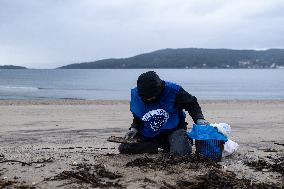
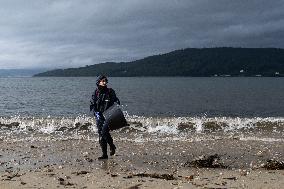
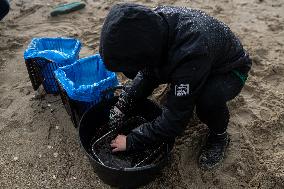
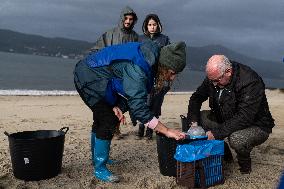
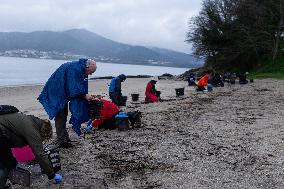
A volunteer from the Noia Limpa organization participates in the collection of pellets on Bos beach, January 13, 2024, in Noia, A Coruña, Galicia (Spain). Already known as the "white tide", it is expected to come from the six containers from the ship Toconao that fell into the sea in Portuguese waters. At least one of the six containers, weighing around 20 tons, is believed to contain between 800 and 1,000 25-kilogram sacks of pellets. Pellets are small plastic balls of less than five millimeters that are used to manufacture plastic products. Because of their small size and light weight, it is "almost impossible to clean them up" once they are scattered on the beaches. Photo by Elena Fernández / Europa Press/ABACAPRESS.COM

  •  
Plastic Pellets Polluting Spanish Beaches After Container Ship Spill

Plastic Pellets Polluting Spanish Beaches After Container Ship Spill

A volunteer from the Noia Limpa organization participates in the collection of pellets on Bos beach, January 13, 2024, in Noia, A Coruña, Galicia (Spain). Already known as the "white tide", it is expected to come from the six containers from the ship Toconao that fell into the sea in Portuguese waters. At least one of the six containers, weighing around 20 tons, is believed to contain between 800 and 1,000 25-kilogram sacks of pellets. Pellets are small plastic balls of less than five millimeters that are used to manufacture plastic products. Because of their small size and light weight, it is "almost impossible to clean them up" once they are spread on the beaches. Photo by Elena Fernández / Europa Press/ABACAPRESS.COM

  •  
Plastic Pellets Polluting Spanish Beaches After Container Ship Spill

Plastic Pellets Polluting Spanish Beaches After Container Ship Spill

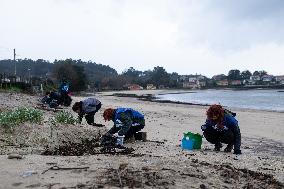
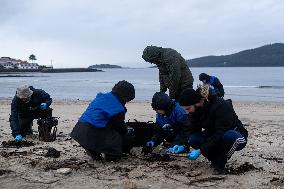
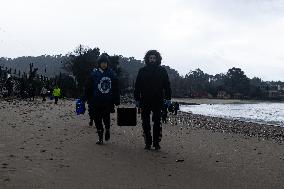
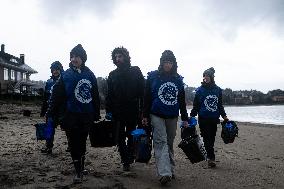
Volunteers from the Noia Limpa organization participate in the collection of pellets on Bos beach, January 13, 2024, in Noia, A Coruña, Galicia (Spain). Already known as the "white tide", it is expected to come from the six containers from the ship Toconao that fell into the sea in Portuguese waters. At least one of the six containers, weighing around 20 tons, is believed to contain between 800 and 1,000 25-kilogram sacks of pellets. Pellets are small plastic balls of less than five millimeters that are used to manufacture plastic products. Because of their small size and light weight, it is "almost impossible to clean them up" once they are scattered on the beaches. Photo by Elena Fernández / Europa Press/ABACAPRESS.COM

  •  
Plastic Pellets Polluting Spanish Beaches After Container Ship Spill

Plastic Pellets Polluting Spanish Beaches After Container Ship Spill

Volunteers from the Noia Limpa organization participate in the collection of pellets on Bos beach, January 13, 2024, in Noia, A Coruña, Galicia (Spain). Already known as the "white tide", it is expected to come from the six containers from the ship Toconao that fell into the sea in Portuguese waters. At least one of the six containers, weighing around 20 tons, is believed to contain between 800 and 1,000 25-kilogram sacks of pellets. Pellets are small plastic balls of less than five millimeters that are used to manufacture plastic products. Because of their small size and light weight, it is "almost impossible to clean them up" once they are scattered on the beaches. Photo by Elena Fernández / Europa Press/ABACAPRESS.COM

  •  
Plastic Pellets Polluting Spanish Beaches After Container Ship Spill

Plastic Pellets Polluting Spanish Beaches After Container Ship Spill

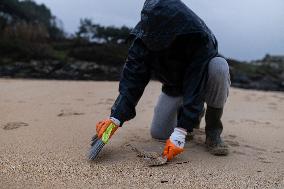
A volunteer from the Noia Limpa organization participates in the collection of pellets on Bos beach, January 13, 2024, in Noia, A Coruña, Galicia (Spain). Already known as the "white tide", it is expected to come from the six containers from the ship Toconao that fell into the sea in Portuguese waters. At least one of the six containers, weighing around 20 tons, is believed to contain between 800 and 1,000 25-kilogram sacks of pellets. Pellets are small plastic balls of less than five millimeters that are used to manufacture plastic products. Because of their small size and light weight, it is "almost impossible to clean them up" once they are scattered on the beaches. Photo by Elena Fernández / Europa Press/ABACAPRESS.COM

  •  
Plastic Pellets Polluting Spanish Beaches After Container Ship Spill

Plastic Pellets Polluting Spanish Beaches After Container Ship Spill

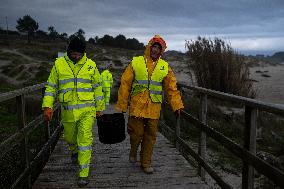
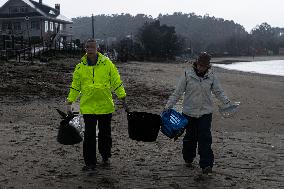
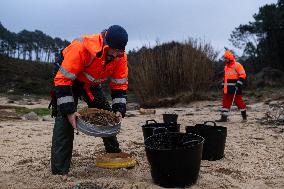
Two men carry a bucket full of pellets on the beach Do Dique, January 13, 2024, in Queiruga, A Coruña, Galicia (Spain). Already known as the "white tide", it is expected to come from the six containers from the ship Toconao that fell into the sea in Portuguese waters. At least one of the six containers, weighing around 20 tons, is believed to contain between 800 and 1,000 25-kilogram sacks of pellets. Pellets are small plastic balls of less than five millimeters that are used to manufacture plastic products. Because of their small size and light weight, it is "almost impossible to clean them up" once they are scattered on the beaches. Photo by Elena Fernández / Europa Press/ABACAPRESS.COM

  •  
Plastic Pellets Polluting Spanish Beaches After Container Ship Spill

Plastic Pellets Polluting Spanish Beaches After Container Ship Spill

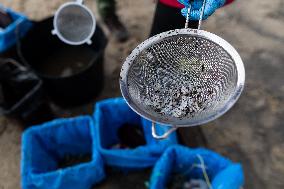
Pellets found on Bos beach, January 13, 2024, in Noia, A Coruña, Galicia (Spain). Already known as the "white tide", it is expected to come from the six containers of the ship Toconao that fell into the sea in Portuguese waters. At least one of the six containers, weighing around 20 tons, is believed to contain between 800 and 1,000 25-kilogram sacks of pellets. Pellets are small plastic balls of less than five millimeters that are used to manufacture plastic products. Because of their small size and light weight, it is "almost impossible to clean them up" once they are scattered on the beaches. Photo by Elena Fernández / Europa Press/ABACAPRESS.COM

  •  
Plastic Pellets Polluting Spanish Beaches After Container Ship Spill

Plastic Pellets Polluting Spanish Beaches After Container Ship Spill

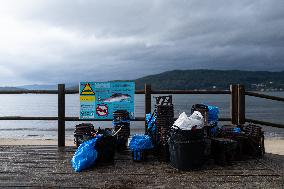
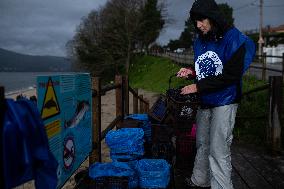
Material used to collect pellets on Bos beach, January 13, 2024, in Noia, A Coruña, Galicia (Spain). Already known as the "white tide", it is expected to come from the six containers from the ship Toconao that fell into the sea in Portuguese waters. At least one of the six containers, weighing around 20 tons, is believed to contain between 800 and 1,000 25-kilogram sacks of pellets. Pellets are small plastic balls of less than five millimeters that are used to manufacture plastic products. Because of their small size and light weight, it is "almost impossible to clean them up" once they are scattered on the beaches. Photo by Elena Fernández / Europa Press/ABACAPRESS.COM

  •  
Plastic Pellets Polluting Spanish Beaches After Container Ship Spill

Plastic Pellets Polluting Spanish Beaches After Container Ship Spill

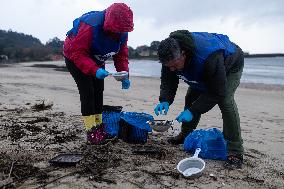
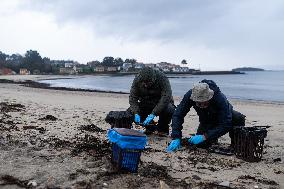
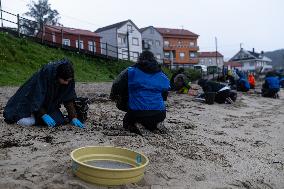
Two volunteers from the Noia Limpa organization participate in the collection of pellets on Bos beach, January 13, 2024, in Noia, A Coruña, Galicia (Spain). Already known as the "white tide", it is expected to come from the six containers from the ship Toconao that fell into the sea in Portuguese waters. At least one of the six containers, weighing around 20 tons, is believed to contain between 800 and 1,000 25-kilogram sacks of pellets. Pellets are small plastic balls of less than five millimeters that are used to manufacture plastic products. Because of their small size and light weight, it is "almost impossible to clean them up" once they are scattered on the beaches. Photo by Elena Fernández / Europa Press/ABACAPRESS.COM

  •  
Plastic Pellets Polluting Spanish Beaches After Container Ship Spill

Plastic Pellets Polluting Spanish Beaches After Container Ship Spill

Two volunteers from the Noia Limpa organization participate in the collection of pellets on Bos beach, January 13, 2024, in Noia, A Coruña, Galicia (Spain). Already known as the "white tide", it is expected to come from the six containers from the ship Toconao that fell into the sea in Portuguese waters. At least one of the six containers, weighing around 20 tons, is believed to contain between 800 and 1,000 25-kilogram sacks of pellets. Pellets are small plastic balls of less than five millimeters that are used to manufacture plastic products. Because of their small size and light weight, it is "almost impossible to clean them up" once they are scattered on the beaches. Photo by Elena Fernández / Europa Press/ABACAPRESS.COM

  •  
Plastic Pellets Polluting Spanish Beaches After Container Ship Spill

Plastic Pellets Polluting Spanish Beaches After Container Ship Spill

Two volunteers from the Noia Limpa organization participate in the collection of pellets on Bos beach, January 13, 2024, in Noia, A Coruña, Galicia (Spain). Already known as the "white tide", it is expected to come from the six containers from the ship Toconao that fell into the sea in Portuguese waters. At least one of the six containers, weighing around 20 tons, is believed to contain between 800 and 1,000 25-kilogram sacks of pellets. Pellets are small plastic balls of less than five millimeters that are used to manufacture plastic products. Because of their small size and light weight, it is "almost impossible to clean them up" once they are scattered on the beaches. Photo by Elena Fernández / Europa Press/ABACAPRESS.COM

  •  
Plastic Pellets Polluting Spanish Beaches After Container Ship Spill

Plastic Pellets Polluting Spanish Beaches After Container Ship Spill

A volunteer from the Noia Limpa organization participates in the collection of pellets on Bos beach, January 13, 2024, in Noia, A Coruña, Galicia (Spain). Already known as the "white tide", it is expected to come from the six containers from the ship Toconao that fell into the sea in Portuguese waters. At least one of the six containers, weighing around 20 tons, is believed to contain between 800 and 1,000 25-kilogram sacks of pellets. Pellets are small plastic balls of less than five millimeters that are used to manufacture plastic products. Because of their small size and light weight, it is "almost impossible to clean them up" once they are spread on the beaches. Photo by Elena Fernández / Europa Press/ABACAPRESS.COM

  •  
Plastic Pellets Polluting Spanish Beaches After Container Ship Spill

Plastic Pellets Polluting Spanish Beaches After Container Ship Spill

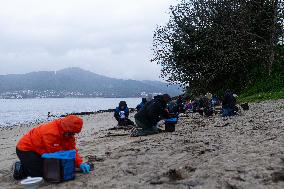
Volunteers from the Noia Limpa organization participate in the collection of pellets on Bos beach, January 13, 2024, in Noia, A Coruña, Galicia (Spain). Already known as the "white tide", it is expected to come from the six containers from the ship Toconao that fell into the sea in Portuguese waters. At least one of the six containers, weighing around 20 tons, is believed to contain between 800 and 1,000 25-kilogram sacks of pellets. Pellets are small plastic balls of less than five millimeters that are used to manufacture plastic products. Because of their small size and light weight, it is "almost impossible to clean them up" once they are scattered on the beaches. Photo by Elena Fernández / Europa Press/ABACAPRESS.COM

  •  
Plastic Pellets Polluting Spanish Beaches After Container Ship Spill

Plastic Pellets Polluting Spanish Beaches After Container Ship Spill

Volunteers from the Noia Limpa organization participate in the collection of pellets on Bos beach, January 13, 2024, in Noia, A Coruña, Galicia (Spain). Already known as the "white tide", it is expected to come from the six containers from the ship Toconao that fell into the sea in Portuguese waters. At least one of the six containers, weighing around 20 tons, is believed to contain between 800 and 1,000 25-kilogram sacks of pellets. Pellets are small plastic balls of less than five millimeters that are used to manufacture plastic products. Because of their small size and light weight, it is "almost impossible to clean them up" once they are scattered on the beaches. Photo by Elena Fernández / Europa Press/ABACAPRESS.COM

  •  
Plastic Pellets Polluting Spanish Beaches After Container Ship Spill

Plastic Pellets Polluting Spanish Beaches After Container Ship Spill

Volunteers from the Noia Limpa organization participate in the collection of pellets on Bos beach, January 13, 2024, in Noia, A Coruña, Galicia (Spain). Already known as the "white tide", it is expected to come from the six containers from the ship Toconao that fell into the sea in Portuguese waters. At least one of the six containers, weighing around 20 tons, is believed to contain between 800 and 1,000 25-kilogram sacks of pellets. Pellets are small plastic balls of less than five millimeters that are used to manufacture plastic products. Because of their small size and light weight, it is "almost impossible to clean them up" once they are scattered on the beaches. Photo by Elena Fernández / Europa Press/ABACAPRESS.COM

  •  
Plastic Pellets Polluting Spanish Beaches After Container Ship Spill

Plastic Pellets Polluting Spanish Beaches After Container Ship Spill

Two volunteers from the Noia Limpa organization participate in the collection of pellets on Bos beach, January 13, 2024, in Noia, A Coruña, Galicia (Spain). Already known as the "white tide", it is expected to come from the six containers from the ship Toconao that fell into the sea in Portuguese waters. At least one of the six containers, weighing around 20 tons, is believed to contain between 800 and 1,000 25-kilogram sacks of pellets. Pellets are small plastic balls of less than five millimeters that are used to manufacture plastic products. Because of their small size and light weight, it is "almost impossible to clean them up" once they are scattered on the beaches. Photo by Elena Fernández / Europa Press/ABACAPRESS.COM

  •  
Plastic Pellets Polluting Spanish Beaches After Container Ship Spill

Plastic Pellets Polluting Spanish Beaches After Container Ship Spill

Volunteers from the Noia Limpa organization participate in the collection of pellets on Bos beach, January 13, 2024, in Noia, A Coruña, Galicia (Spain). Already known as the "white tide", it is expected to come from the six containers from the ship Toconao that fell into the sea in Portuguese waters. At least one of the six containers, weighing around 20 tons, is believed to contain between 800 and 1,000 25-kilogram sacks of pellets. Pellets are small plastic balls of less than five millimeters that are used to manufacture plastic products. Because of their small size and light weight, it is "almost impossible to clean them up" once they are scattered on the beaches. Photo by Elena Fernández / Europa Press/ABACAPRESS.COM

  •  
Plastic Pellets Polluting Spanish Beaches After Container Ship Spill

Plastic Pellets Polluting Spanish Beaches After Container Ship Spill

Volunteers from the Noia Limpa organization participate in the collection of pellets on Bos beach, January 13, 2024, in Noia, A Coruña, Galicia (Spain). Already known as the "white tide", it is expected to come from the six containers from the ship Toconao that fell into the sea in Portuguese waters. At least one of the six containers, weighing around 20 tons, is believed to contain between 800 and 1,000 25-kilogram sacks of pellets. Pellets are small plastic balls of less than five millimeters that are used to manufacture plastic products. Because of their small size and light weight, it is "almost impossible to clean them up" once they are scattered on the beaches. Photo by Elena Fernández / Europa Press/ABACAPRESS.COM

  •  
Plastic Pellets Polluting Spanish Beaches After Container Ship Spill

Plastic Pellets Polluting Spanish Beaches After Container Ship Spill

A man pours pellets into a bucket on the beach Do Dique, January 13, 2024, in Queiruga, A Coruña, Galicia, Spain. Already known as the "white tide", it is expected to come from the six containers from the ship Toconao that fell into the sea in Portuguese waters. At least one of the six containers, weighing around 20 tons, is believed to contain between 800 and 1,000 25-kilogram sacks of pellets. Pellets are small plastic balls of less than five millimeters that are used to manufacture plastic products. Because of their small size and light weight, it is "almost impossible to clean them up" once they are scattered on the beaches. Photo by Elena Fernández / Europa Press/ABACAPRESS.COM

  •  
Plastic Pellets Polluting Spanish Beaches After Container Ship Spill

Plastic Pellets Polluting Spanish Beaches After Container Ship Spill

A person collects pellets at Do Dique beach, January 13, 2024, in Queiruga, A Coruña, Galicia, Spain. Already known as the "white tide", it is expected to come from the six containers from the ship Toconao that fell into the sea in Portuguese waters. At least one of the six containers, weighing around 20 tons, is believed to contain between 800 and 1,000 25-kilogram sacks of pellets. Pellets are small plastic balls of less than five millimeters that are used to manufacture plastic products. Because of their small size and light weight, it is "almost impossible to clean them up" once they are scattered on the beaches. Photo by Elena Fernández / Europa Press/ABACAPRESS.COM

  •  
Messi's golden foot

Messi's golden foot

TOKYO, Japan - Rodrigo Messi, brother of Argentina soccer star Lionel Messi, holds a pure gold cast of Lionel Messi's "golden" left foot during an event in Tokyo on March 6, 2013. Tanaka Kikinzoku Jewelry K.K. is selling the 25-kilogram figure for 486.5 million yen, planning to donate part of the profit to areas hit by the March 2011 Great East Japan Earthquake through the Leo Messi Foundation.

  •  
Sushi served at evacuation center

Sushi served at evacuation center

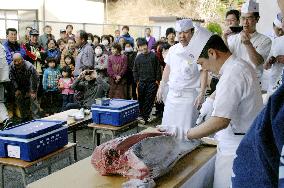
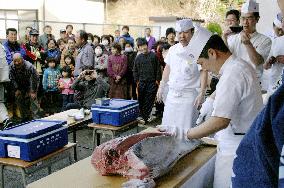
KAMAISHI, Japan - A sushi chef slices a 25-kilogram tuna caught off Kochi Prefecture at an evacuation center in quake-hit Kamaishi, Iwate Prefecture, on April 16, 2011. About 20 chefs served sushi to evacuees at the shelter on the day.

  •  
Huge maple-shaped bun made in Hiroshima

Huge maple-shaped bun made in Hiroshima

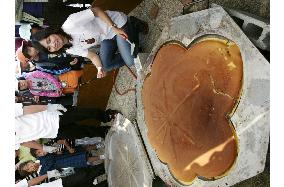
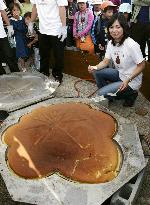
HIROSHIMA, Japan - A 25-kilogram maple-shaped bun stuffed with bean paste was made in commemoration of the 100th anniversary of its birth in Miyajima in Hiroshima Prefecture on Oct. 15. The bun, 100 centimeters in diameter, will be applied for a Guinness World Record.

  •  
Huge maple-shaped bun made in Hiroshima

Huge maple-shaped bun made in Hiroshima

HIROSHIMA, Japan - A 25-kilogram maple-shaped bun stuffed with bean paste was made in commemoration of the 100th anniversary of its birth in Miyajima in Hiroshima Prefecture on Oct. 15. The bun, 100 centimeters in diameter, will be applied for a Guinness World Record. (Kyodo)

  •  
Sushi served at evacuation center

Sushi served at evacuation center

KAMAISHI, Japan - A sushi chef slices a 25-kilogram tuna caught off Kochi Prefecture at an evacuation center in quake-hit Kamaishi, Iwate Prefecture, on April 16, 2011. About 20 chefs served sushi to evacuees at the shelter on the day. (Kyodo)

  • Main
  • Top
  • Editorial
  • Creative
  • About Us
  • About ILG
  • Terms of use
  • Company
  • BEHIND
  • Price List
  • Single Plan
  • Monthly Plan
  • Services
  • Shooting
  • Rights Clearance
  • Support
  • FAQ
  • How To Buy
  • Contact Us
  • Become a Partner

© KYODO NEWS IMAGES INC

All Rights Reserved.

  • Editorial
  • Olympics
  • News
  • Sports
  • Japan
  • Tech
  • Royal
  • Disaster
  • NorthKorea
  • Old Japan
  • SNS
  • Creative
  • Food
  • Japan
  • Landscape
  • Animal
  • Popular
  • #Ukraine
  • #China
  • #coronavirus
  • #N. Korea
  • #Thailand
  • #Russia
  • #Ukraine
  • #China
  • #coronavirus
  • #N. Korea
  • #Thailand
  • #Russia
  • Food
  • Japan
  • Landscape
  • Animal
  • Olympics
  • News
  • Sports
  • Japan
  • Tech
  • Royal
  • Disaster
  • NorthKorea
  • Old Japan
  • SNS