•  

Japan: Record January Snowfall Hits Aomori, Disrupting Traffic and Trains

On January 28, Aomori City recorded 150 centimeters of snowfall for the first time in 40 years, causing traffic congestion across the city and a series of train service suspensions. Snow depth reached 154 centimeters by 9 p.m., tying for the second-highest January total on record, last seen on January 30, 1986. According to Aomori Prefecture, as of 2 p.m. on January 29, two people had died and 85 others were injured, while damage was confirmed at four residential properties. The video captures conditions in Aomori City on the morning of January 29, showing the extent of the heavy snowfall.

  •  

Canada: Lake-Effect Snow Prompts Snow Squall Warning in Southern Ontario

A powerful snow squall warning is in effect across Ontario as a high-impact event moves in on Thursday, November 27. Environment Canada expects dangerous conditions, treacherous roads, near-zero visibility, and 30 to 50 centimeters of snow through Saturday, November 29.

  •  
Chinese Experience in Desert Controi

Chinese Experience in Desert Controi

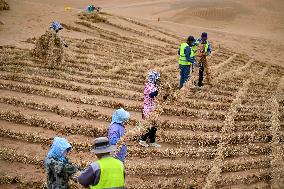
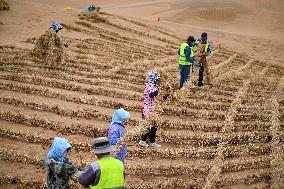
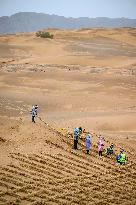
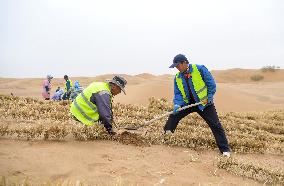
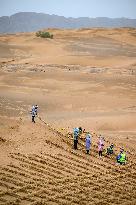
Workers pave straw checkerboards in the Tengger Desert, in Zhongwei of northwest China's Ningxia Hui Autonomous Region, May 29, 2024. In the 1950s, to protect China's first railway that runs through a desert, the city of Zhongwei embarked on a journey of desert mitigation. Scientists at the Shapotou Desert Research and Experiment Station, part of the Northwest Institute of Eco-Environment and Resources of the Chinese Academy of Sciences, along with local residents, developed straw checkerboards to stabilize the sand and prevent dunes from shifting. Tang Ximing, a senior engineer at a state-owned forestry farm in Zhongwei, crafted a steel tool that differs from regular shovels by featuring two horizontal bars at the front tip. This innovative tool enables the planting of seedling roots 50 centimeters deep into the moist sand layer. This simple tool increases the survival rate of afforestation by 25 percent to over 85 percent. It has been widely promoted and used in afforestation projects across other regions i

  •  
Chinese Experience in Desert Controi

Chinese Experience in Desert Controi

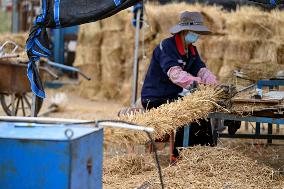
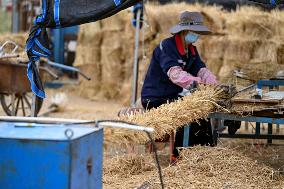
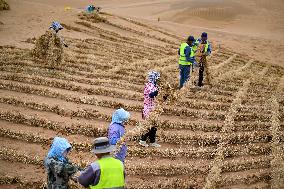
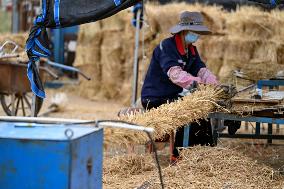
Workers produce straw checkerboard materials in Zhongwei of northwest China's Ningxia Hui Autonomous Region, May 29, 2024. In the 1950s, to protect China's first railway that runs through a desert, the city of Zhongwei embarked on a journey of desert mitigation. Scientists at the Shapotou Desert Research and Experiment Station, part of the Northwest Institute of Eco-Environment and Resources of the Chinese Academy of Sciences, along with local residents, developed straw checkerboards to stabilize the sand and prevent dunes from shifting. Tang Ximing, a senior engineer at a state-owned forestry farm in Zhongwei, crafted a steel tool that differs from regular shovels by featuring two horizontal bars at the front tip. This innovative tool enables the planting of seedling roots 50 centimeters deep into the moist sand layer. This simple tool increases the survival rate of afforestation by 25 percent to over 85 percent. It has been widely promoted and used in afforestation projects across other regions in northern

  •  
Chinese Experience in Desert Controi

Chinese Experience in Desert Controi

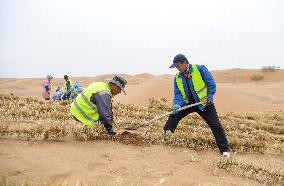
Workers pave straw checkerboards in the Tengger Desert, in Zhongwei of northwest China's Ningxia Hui Autonomous Region, May 29, 2024. In the 1950s, to protect China's first railway that runs through a desert, the city of Zhongwei embarked on a journey of desert mitigation. Scientists at the Shapotou Desert Research and Experiment Station, part of the Northwest Institute of Eco-Environment and Resources of the Chinese Academy of Sciences, along with local residents, developed straw checkerboards to stabilize the sand and prevent dunes from shifting. Tang Ximing, a senior engineer at a state-owned forestry farm in Zhongwei, crafted a steel tool that differs from regular shovels by featuring two horizontal bars at the front tip. This innovative tool enables the planting of seedling roots 50 centimeters deep into the moist sand layer. This simple tool increases the survival rate of afforestation by 25 percent to over 85 percent. It has been widely promoted and used in afforestation projects across other regions i

  •  
Chinese Experience in Desert Controi

Chinese Experience in Desert Controi

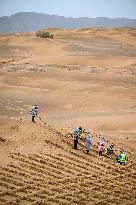
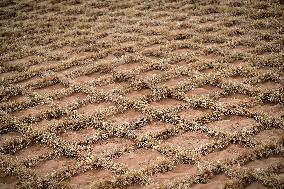
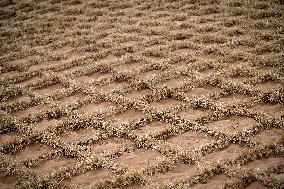
An aerial drone photo taken on May 29, 2024 shows straw checkerboards in the Tengger Desert, northwest China's Ningxia Hui Autonomous Region. In the 1950s, to protect China's first railway that runs through a desert, the city of Zhongwei embarked on a journey of desert mitigation. Scientists at the Shapotou Desert Research and Experiment Station, part of the Northwest Institute of Eco-Environment and Resources of the Chinese Academy of Sciences, along with local residents, developed straw checkerboards to stabilize the sand and prevent dunes from shifting. Tang Ximing, a senior engineer at a state-owned forestry farm in Zhongwei, crafted a steel tool that differs from regular shovels by featuring two horizontal bars at the front tip. This innovative tool enables the planting of seedling roots 50 centimeters deep into the moist sand layer. This simple tool increases the survival rate of afforestation by 25 percent to over 85 percent. It has been widely promoted and used in afforestation projects across other r

  •  
Chinese Experience in Desert Controi

Chinese Experience in Desert Controi

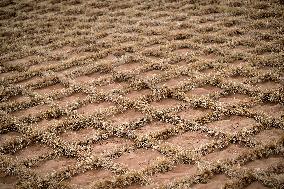
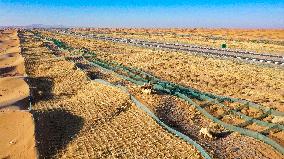
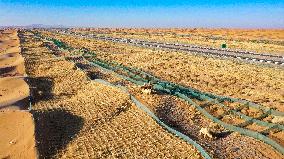
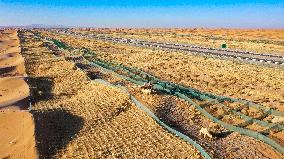
An aerial drone photo taken on Dec. 29, 2021 shows a section of an express way protected by straw checkerboards from the sand in the Tengger Desert, northwest China's Ningxia Hui Autonomous Region. In the 1950s, to protect China's first railway that runs through a desert, the city of Zhongwei embarked on a journey of desert mitigation. Scientists at the Shapotou Desert Research and Experiment Station, part of the Northwest Institute of Eco-Environment and Resources of the Chinese Academy of Sciences, along with local residents, developed straw checkerboards to stabilize the sand and prevent dunes from shifting. Tang Ximing, a senior engineer at a state-owned forestry farm in Zhongwei, crafted a steel tool that differs from regular shovels by featuring two horizontal bars at the front tip. This innovative tool enables the planting of seedling roots 50 centimeters deep into the moist sand layer. This simple tool increases the survival rate of afforestation by 25 percent to over 85 percent. It has been widely pr

  •  
(VistaNingxia)CHINA-NINGXIA-ZHONGWEI-ENVIRONMENT-SAND CONTROL (CN)

(VistaNingxia)CHINA-NINGXIA-ZHONGWEI-ENVIRONMENT-SAND CONTROL (CN)

(240616) -- ZHONGWEI, June 16, 2024 Photo by Xinhua/ABACAPRESS.COM) -- Workers pave straw checkerboards in the Tengger Desert, in Zhongwei of northwest China's Ningxia Hui Autonomous Region, May 29, 2024. In the 1950s, to protect China's first railway that runs through a desert, the city of Zhongwei embarked on a journey of desert mitigation. Scientists at the Shapotou Desert Research and Experiment Station, part of the Northwest Institute of Eco-Environment and Resources of the Chinese Academy of Sciences, along with local residents, developed straw checkerboards to stabilize the sand and prevent dunes from shifting. Tang Ximing, a senior engineer at a state-owned forestry farm in Zhongwei, crafted a steel tool that differs from regular shovels by featuring two horizontal bars at the front tip. This innovative tool enables the planting of seedling roots 50 centimeters deep into the moist sand layer. This simple tool increases the survival rate of afforestation by 25 percent to over 85 percent. It has been wi

  •  
(VistaNingxia)CHINA-NINGXIA-ZHONGWEI-ENVIRONMENT-SAND CONTROL (CN)

(VistaNingxia)CHINA-NINGXIA-ZHONGWEI-ENVIRONMENT-SAND CONTROL (CN)

(240616) -- ZHONGWEI, June 16, 2024 Photo by Xinhua/ABACAPRESS.COM) -- Workers pave straw checkerboards in Zhongwei, northwest China's Ningxia Hui Autonomous Region, May 29, 2024. In the 1950s, to protect China's first railway that runs through a desert, the city of Zhongwei embarked on a journey of desert mitigation. Scientists at the Shapotou Desert Research and Experiment Station, part of the Northwest Institute of Eco-Environment and Resources of the Chinese Academy of Sciences, along with local residents, developed straw checkerboards to stabilize the sand and prevent dunes from shifting. Tang Ximing, a senior engineer at a state-owned forestry farm in Zhongwei, crafted a steel tool that differs from regular shovels by featuring two horizontal bars at the front tip. This innovative tool enables the planting of seedling roots 50 centimeters deep into the moist sand layer. This simple tool increases the survival rate of afforestation by 25 percent to over 85 percent. It has been widely promoted and used in

  •  
(VistaNingxia)CHINA-NINGXIA-ZHONGWEI-ENVIRONMENT-SAND CONTROL (CN)

(VistaNingxia)CHINA-NINGXIA-ZHONGWEI-ENVIRONMENT-SAND CONTROL (CN)

(240616) -- ZHONGWEI, June 16, 2024 Photo by Xinhua/ABACAPRESS.COM) -- Workers produce straw checkerboard materials in Zhongwei of northwest China's Ningxia Hui Autonomous Region, May 29, 2024. In the 1950s, to protect China's first railway that runs through a desert, the city of Zhongwei embarked on a journey of desert mitigation. Scientists at the Shapotou Desert Research and Experiment Station, part of the Northwest Institute of Eco-Environment and Resources of the Chinese Academy of Sciences, along with local residents, developed straw checkerboards to stabilize the sand and prevent dunes from shifting. Tang Ximing, a senior engineer at a state-owned forestry farm in Zhongwei, crafted a steel tool that differs from regular shovels by featuring two horizontal bars at the front tip. This innovative tool enables the planting of seedling roots 50 centimeters deep into the moist sand layer. This simple tool increases the survival rate of afforestation by 25 percent to over 85 percent. It has been widely promot

  •  
(VistaNingxia)CHINA-NINGXIA-ZHONGWEI-ENVIRONMENT-SAND CONTROL (CN)

(VistaNingxia)CHINA-NINGXIA-ZHONGWEI-ENVIRONMENT-SAND CONTROL (CN)

(240616) -- ZHONGWEI, June 16, 2024 Photo by Xinhua/ABACAPRESS.COM) -- Workers pave straw checkerboards in the Tengger Desert, in Zhongwei of northwest China's Ningxia Hui Autonomous Region, May 29, 2024. In the 1950s, to protect China's first railway that runs through a desert, the city of Zhongwei embarked on a journey of desert mitigation. Scientists at the Shapotou Desert Research and Experiment Station, part of the Northwest Institute of Eco-Environment and Resources of the Chinese Academy of Sciences, along with local residents, developed straw checkerboards to stabilize the sand and prevent dunes from shifting. Tang Ximing, a senior engineer at a state-owned forestry farm in Zhongwei, crafted a steel tool that differs from regular shovels by featuring two horizontal bars at the front tip. This innovative tool enables the planting of seedling roots 50 centimeters deep into the moist sand layer. This simple tool increases the survival rate of afforestation by 25 percent to over 85 percent. It has been wi

  •  
(VistaNingxia)CHINA-NINGXIA-ZHONGWEI-ENVIRONMENT-SAND CONTROL (CN)

(VistaNingxia)CHINA-NINGXIA-ZHONGWEI-ENVIRONMENT-SAND CONTROL (CN)

(240616) -- ZHONGWEI, June 16, 2024 Photo by Xinhua/ABACAPRESS.COM) -- An aerial drone photo taken on Dec. 29, 2021 shows a section of an express way protected by straw checkerboards from the sand in the Tengger Desert, northwest China's Ningxia Hui Autonomous Region. In the 1950s, to protect China's first railway that runs through a desert, the city of Zhongwei embarked on a journey of desert mitigation. Scientists at the Shapotou Desert Research and Experiment Station, part of the Northwest Institute of Eco-Environment and Resources of the Chinese Academy of Sciences, along with local residents, developed straw checkerboards to stabilize the sand and prevent dunes from shifting. Tang Ximing, a senior engineer at a state-owned forestry farm in Zhongwei, crafted a steel tool that differs from regular shovels by featuring two horizontal bars at the front tip. This innovative tool enables the planting of seedling roots 50 centimeters deep into the moist sand layer. This simple tool increases the survival rate o

  •  
(VistaNingxia)CHINA-NINGXIA-ZHONGWEI-ENVIRONMENT-SAND CONTROL (CN)

(VistaNingxia)CHINA-NINGXIA-ZHONGWEI-ENVIRONMENT-SAND CONTROL (CN)

(240616) -- ZHONGWEI, June 16, 2024 Photo by Xinhua/ABACAPRESS.COM) -- An aerial drone photo taken on May 29, 2024 shows straw checkerboards in the Tengger Desert, northwest China's Ningxia Hui Autonomous Region. In the 1950s, to protect China's first railway that runs through a desert, the city of Zhongwei embarked on a journey of desert mitigation. Scientists at the Shapotou Desert Research and Experiment Station, part of the Northwest Institute of Eco-Environment and Resources of the Chinese Academy of Sciences, along with local residents, developed straw checkerboards to stabilize the sand and prevent dunes from shifting. Tang Ximing, a senior engineer at a state-owned forestry farm in Zhongwei, crafted a steel tool that differs from regular shovels by featuring two horizontal bars at the front tip. This innovative tool enables the planting of seedling roots 50 centimeters deep into the moist sand layer. This simple tool increases the survival rate of afforestation by 25 percent to over 85 percent. It has

  •  
(VistaNingxia)CHINA-NINGXIA-ZHONGWEI-ENVIRONMENT-SAND CONTROL (CN)

(VistaNingxia)CHINA-NINGXIA-ZHONGWEI-ENVIRONMENT-SAND CONTROL (CN)

(240616) -- ZHONGWEI, June 16, 2024 (Xinhua) -- Workers pave straw checkerboards in the Tengger Desert, in Zhongwei of northwest China's Ningxia Hui Autonomous Region, May 29, 2024. In the 1950s, to protect China's first railway that runs through a desert, the city of Zhongwei embarked on a journey of desert mitigation. Scientists at the Shapotou Desert Research and Experiment Station, part of the Northwest Institute of Eco-Environment and Resources of the Chinese Academy of Sciences, along with local residents, developed straw checkerboards to stabilize the sand and prevent dunes from shifting. Tang Ximing, a senior engineer at a state-owned forestry farm in Zhongwei, crafted a steel tool that differs from regular shovels by featuring two horizontal bars at the front tip. This innovative tool enables the planting of seedling roots 50 centimeters deep into the moist sand layer. This simple tool increases the survival rate of afforestation by 25 percent to over 85 percent. It has been widely promoted and u

  •  
(VistaNingxia)CHINA-NINGXIA-ZHONGWEI-ENVIRONMENT-SAND CONTROL (CN)

(VistaNingxia)CHINA-NINGXIA-ZHONGWEI-ENVIRONMENT-SAND CONTROL (CN)

(240616) -- ZHONGWEI, June 16, 2024 (Xinhua) -- Workers pave straw checkerboards in Zhongwei, northwest China's Ningxia Hui Autonomous Region, May 29, 2024. In the 1950s, to protect China's first railway that runs through a desert, the city of Zhongwei embarked on a journey of desert mitigation. Scientists at the Shapotou Desert Research and Experiment Station, part of the Northwest Institute of Eco-Environment and Resources of the Chinese Academy of Sciences, along with local residents, developed straw checkerboards to stabilize the sand and prevent dunes from shifting. Tang Ximing, a senior engineer at a state-owned forestry farm in Zhongwei, crafted a steel tool that differs from regular shovels by featuring two horizontal bars at the front tip. This innovative tool enables the planting of seedling roots 50 centimeters deep into the moist sand layer. This simple tool increases the survival rate of afforestation by 25 percent to over 85 percent. It has been widely promoted and used in afforestation proj

  •  
(VistaNingxia)CHINA-NINGXIA-ZHONGWEI-ENVIRONMENT-SAND CONTROL (CN)

(VistaNingxia)CHINA-NINGXIA-ZHONGWEI-ENVIRONMENT-SAND CONTROL (CN)

(240616) -- ZHONGWEI, June 16, 2024 (Xinhua) -- Workers produce straw checkerboard materials in Zhongwei of northwest China's Ningxia Hui Autonomous Region, May 29, 2024. In the 1950s, to protect China's first railway that runs through a desert, the city of Zhongwei embarked on a journey of desert mitigation. Scientists at the Shapotou Desert Research and Experiment Station, part of the Northwest Institute of Eco-Environment and Resources of the Chinese Academy of Sciences, along with local residents, developed straw checkerboards to stabilize the sand and prevent dunes from shifting. Tang Ximing, a senior engineer at a state-owned forestry farm in Zhongwei, crafted a steel tool that differs from regular shovels by featuring two horizontal bars at the front tip. This innovative tool enables the planting of seedling roots 50 centimeters deep into the moist sand layer. This simple tool increases the survival rate of afforestation by 25 percent to over 85 percent. It has been widely promoted and used in affo

  •  
(VistaNingxia)CHINA-NINGXIA-ZHONGWEI-ENVIRONMENT-SAND CONTROL (CN)

(VistaNingxia)CHINA-NINGXIA-ZHONGWEI-ENVIRONMENT-SAND CONTROL (CN)

(240616) -- ZHONGWEI, June 16, 2024 (Xinhua) -- An aerial drone photo taken on Dec. 29, 2021 shows a section of an express way protected by straw checkerboards from the sand in the Tengger Desert, northwest China's Ningxia Hui Autonomous Region. In the 1950s, to protect China's first railway that runs through a desert, the city of Zhongwei embarked on a journey of desert mitigation. Scientists at the Shapotou Desert Research and Experiment Station, part of the Northwest Institute of Eco-Environment and Resources of the Chinese Academy of Sciences, along with local residents, developed straw checkerboards to stabilize the sand and prevent dunes from shifting. Tang Ximing, a senior engineer at a state-owned forestry farm in Zhongwei, crafted a steel tool that differs from regular shovels by featuring two horizontal bars at the front tip. This innovative tool enables the planting of seedling roots 50 centimeters deep into the moist sand layer. This simple tool increases the survival rate of afforestation by

  •  
(VistaNingxia)CHINA-NINGXIA-ZHONGWEI-ENVIRONMENT-SAND CONTROL (CN)

(VistaNingxia)CHINA-NINGXIA-ZHONGWEI-ENVIRONMENT-SAND CONTROL (CN)

(240616) -- ZHONGWEI, June 16, 2024 (Xinhua) -- An aerial drone photo taken on May 29, 2024 shows straw checkerboards in the Tengger Desert, northwest China's Ningxia Hui Autonomous Region. In the 1950s, to protect China's first railway that runs through a desert, the city of Zhongwei embarked on a journey of desert mitigation. Scientists at the Shapotou Desert Research and Experiment Station, part of the Northwest Institute of Eco-Environment and Resources of the Chinese Academy of Sciences, along with local residents, developed straw checkerboards to stabilize the sand and prevent dunes from shifting. Tang Ximing, a senior engineer at a state-owned forestry farm in Zhongwei, crafted a steel tool that differs from regular shovels by featuring two horizontal bars at the front tip. This innovative tool enables the planting of seedling roots 50 centimeters deep into the moist sand layer. This simple tool increases the survival rate of afforestation by 25 percent to over 85 percent. It has been widely promot

  •  
(VistaNingxia)CHINA-NINGXIA-ZHONGWEI-ENVIRONMENT-SAND CONTROL (CN)

(VistaNingxia)CHINA-NINGXIA-ZHONGWEI-ENVIRONMENT-SAND CONTROL (CN)

(240616) -- ZHONGWEI, June 16, 2024 (Xinhua) -- Workers pave straw checkerboards in the Tengger Desert, in Zhongwei of northwest China's Ningxia Hui Autonomous Region, May 29, 2024. In the 1950s, to protect China's first railway that runs through a desert, the city of Zhongwei embarked on a journey of desert mitigation. Scientists at the Shapotou Desert Research and Experiment Station, part of the Northwest Institute of Eco-Environment and Resources of the Chinese Academy of Sciences, along with local residents, developed straw checkerboards to stabilize the sand and prevent dunes from shifting. Tang Ximing, a senior engineer at a state-owned forestry farm in Zhongwei, crafted a steel tool that differs from regular shovels by featuring two horizontal bars at the front tip. This innovative tool enables the planting of seedling roots 50 centimeters deep into the moist sand layer. This simple tool increases the survival rate of afforestation by 25 percent to over 85 percent. It has been widely promoted and u

  •  
French Senate Votes On Controversial CETA Free Trade Deal

French Senate Votes On Controversial CETA Free Trade Deal

File photo dated April 29, 2010 shows a major spring snowstorm dumped over 20 centimeters of snow on southern Alberta leaving thousands without power. Cattle make their way through snowy trees to their feed in a blizzard near Cremona, Alta, Canada. The French government on Thursday faces a risky vote on the controversial CETA trade deal between the EU and Canada in the Senate where an unlikely alliance between left and right hopes to torpedo the pact. The Comprehensive Economic and Trade Agreement (CETA) has been in force provisionally since 2017, but requires ratification in all European Union member countries to take full effect. Cattle farmers have always been among the main opponents of CETA. They feared that lower tariffs on Canadian meat imports would lead to unfair competition. Photo by Jeff McIntosh/CP/ABACAPRESS.COM

  •  
XINHUA PHOTOS OF THE DAY

XINHUA PHOTOS OF THE DAY

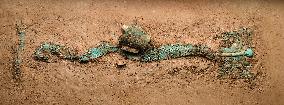
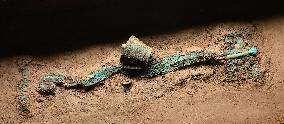
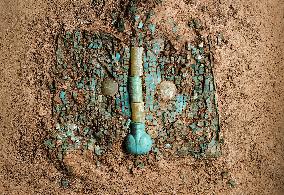
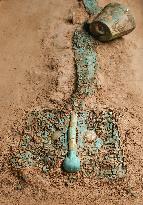
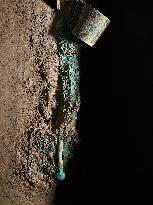
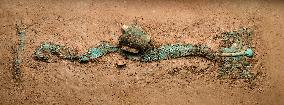
(240209) -- BEIJING, Feb. 9, 2024 (Xinhua) -- This photo taken on Jan. 29, 2024 shows a turquoise dragon-form artifact at Chinese Archaeological Museum in Beijing, capital of China. Unearthed from Erlitou site in the city of Luoyang, the turquoise dragon-form artifact has a total length over 70 centimeters and was formed from more than 2,000 pieces of turquoise. (Xinhua/Li He)

  •  
CHINA-ARCHAEOLOGY-TURQUOISE-DRAGON-FORM ARTIFACT (CN)

CHINA-ARCHAEOLOGY-TURQUOISE-DRAGON-FORM ARTIFACT (CN)

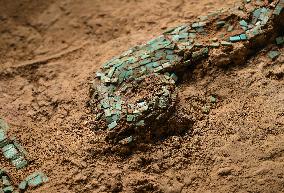
(240208) -- BEIJING, Feb. 8, 2024 (Xinhua) -- This photo taken on Jan. 29, 2024 shows the detail of the tail of a turquoise dragon-form artifact at Chinese Archaeological Museum in Beijing, capital of China. Unearthed from Erlitou site in the city of Luoyang, the turquoise dragon-form artifact has a total length over 70 centimeters and was formed from more than 2,000 pieces of turquoise. Chinese archaeologists dubbed the artifact the "Dragon of China", which has great historical, artistic and scientific value. (Xinhua/Cai Yang)

  •  
CHINA-ARCHAEOLOGY-TURQUOISE-DRAGON-FORM ARTIFACT (CN)

CHINA-ARCHAEOLOGY-TURQUOISE-DRAGON-FORM ARTIFACT (CN)

(240208) -- BEIJING, Feb. 8, 2024 (Xinhua) -- This photo taken on Jan. 29, 2024 shows a turquoise dragon-form artifact at Chinese Archaeological Museum in Beijing, capital of China. Unearthed from Erlitou site in the city of Luoyang, the turquoise dragon-form artifact has a total length over 70 centimeters and was formed from more than 2,000 pieces of turquoise. Chinese archaeologists dubbed the artifact the "Dragon of China", which has great historical, artistic and scientific value. (Xinhua/Li He)

  •  
CHINA-ARCHAEOLOGY-TURQUOISE-DRAGON-FORM ARTIFACT (CN)

CHINA-ARCHAEOLOGY-TURQUOISE-DRAGON-FORM ARTIFACT (CN)

(240208) -- BEIJING, Feb. 8, 2024 (Xinhua) -- This photo taken on Jan. 29, 2024 shows the detail of the tail a turquoise dragon-form artifact at Chinese Archaeological Museum in Beijing, capital of China. Unearthed from Erlitou site in the city of Luoyang, the turquoise dragon-form artifact has a total length over 70 centimeters and was formed from more than 2,000 pieces of turquoise. Chinese archaeologists dubbed the artifact the "Dragon of China", which has great historical, artistic and scientific value. (Xinhua/Cai Yang)

  •  
CHINA-ARCHAEOLOGY-TURQUOISE-DRAGON-FORM ARTIFACT (CN)

CHINA-ARCHAEOLOGY-TURQUOISE-DRAGON-FORM ARTIFACT (CN)

(240208) -- BEIJING, Feb. 8, 2024 (Xinhua) -- This photo taken on Jan. 29, 2024 shows the detail of the head of a turquoise dragon-form artifact at Chinese Archaeological Museum in Beijing, capital of China. Unearthed from Erlitou site in the city of Luoyang, the turquoise dragon-form artifact has a total length over 70 centimeters and was formed from more than 2,000 pieces of turquoise. Chinese archaeologists dubbed the artifact the "Dragon of China", which has great historical, artistic and scientific value. (Xinhua/Li He)

  •  
CHINA-ARCHAEOLOGY-TURQUOISE-DRAGON-FORM ARTIFACT (CN)

CHINA-ARCHAEOLOGY-TURQUOISE-DRAGON-FORM ARTIFACT (CN)

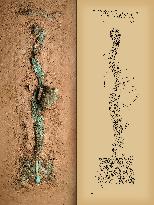
(240208) -- BEIJING, Feb. 8, 2024 (Xinhua) -- This combo image shows a turquoise dragon-form artifact at Chinese Archaeological Museum in Beijing, capital of China, Jan. 29, 2024 (L, photo taken by Xinhua photographer Li He), and an outline of the artifact drawn by Zhou Qi. Unearthed from Erlitou site in the city of Luoyang, the turquoise dragon-form artifact has a total length over 70 centimeters and was formed from more than 2,000 pieces of turquoise. Chinese archaeologists dubbed the artifact the "Dragon of China", which has great historical, artistic and scientific value. (Xinhua)

  •  
CHINA-ARCHAEOLOGY-TURQUOISE-DRAGON-FORM ARTIFACT (CN)

CHINA-ARCHAEOLOGY-TURQUOISE-DRAGON-FORM ARTIFACT (CN)

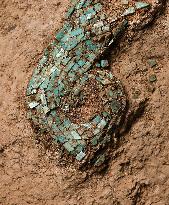
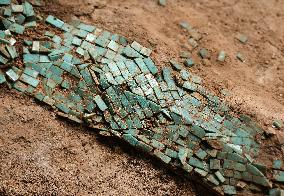
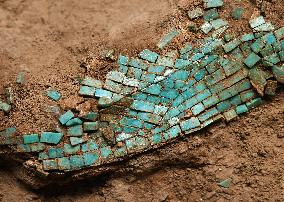
(240208) -- BEIJING, Feb. 8, 2024 (Xinhua) -- This photo taken on Jan. 29, 2024 shows the details of a turquoise dragon-form artifact at Chinese Archaeological Museum in Beijing, capital of China. Unearthed from Erlitou site in the city of Luoyang, the turquoise dragon-form artifact has a total length over 70 centimeters and was formed from more than 2,000 pieces of turquoise. Chinese archaeologists dubbed the artifact the "Dragon of China", which has great historical, artistic and scientific value. (Xinhua/Li He)

  •  
CHINA-ARCHAEOLOGY-TURQUOISE-DRAGON-FORM ARTIFACT (CN)

CHINA-ARCHAEOLOGY-TURQUOISE-DRAGON-FORM ARTIFACT (CN)

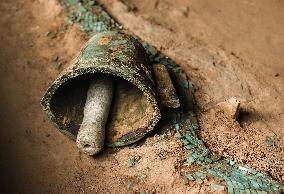
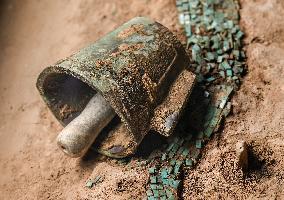
(240208) -- BEIJING, Feb. 8, 2024 (Xinhua) -- This photo taken on Jan. 29, 2024 shows a bell on a turquoise dragon-form artifact at Chinese Archaeological Museum in Beijing, capital of China. Unearthed from Erlitou site in the city of Luoyang, the turquoise dragon-form artifact has a total length over 70 centimeters and was formed from more than 2,000 pieces of turquoise. Chinese archaeologists dubbed the artifact the "Dragon of China", which has great historical, artistic and scientific value. (Xinhua/Han Fang)

  •  
CHINA-ARCHAEOLOGY-TURQUOISE-DRAGON-FORM ARTIFACT (CN)

CHINA-ARCHAEOLOGY-TURQUOISE-DRAGON-FORM ARTIFACT (CN)

(240208) -- BEIJING, Feb. 8, 2024 (Xinhua) -- This photo taken on Jan. 29, 2024 shows the detail of the head of a turquoise dragon-form artifact at Chinese Archaeological Museum in Beijing, capital of China. Unearthed from Erlitou site in the city of Luoyang, the turquoise dragon-form artifact has a total length over 70 centimeters and was formed from more than 2,000 pieces of turquoise. Chinese archaeologists dubbed the artifact the "Dragon of China", which has great historical, artistic and scientific value. (Xinhua/Han Fang)

  •  
CHINA-ARCHAEOLOGY-TURQUOISE-DRAGON-FORM ARTIFACT (CN)

CHINA-ARCHAEOLOGY-TURQUOISE-DRAGON-FORM ARTIFACT (CN)

(240208) -- BEIJING, Feb. 8, 2024 (Xinhua) -- This photo taken on Jan. 29, 2024 shows a bell on a turquoise dragon-form artifact at Chinese Archaeological Museum in Beijing, capital of China. Unearthed from Erlitou site in the city of Luoyang, the turquoise dragon-form artifact has a total length over 70 centimeters and was formed from more than 2,000 pieces of turquoise. Chinese archaeologists dubbed the artifact the "Dragon of China", which has great historical, artistic and scientific value. (Xinhua/Han Fang)

  •  
CHINA-ARCHAEOLOGY-TURQUOISE-DRAGON-FORM ARTIFACT (CN)

CHINA-ARCHAEOLOGY-TURQUOISE-DRAGON-FORM ARTIFACT (CN)

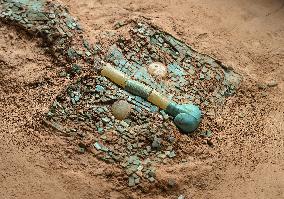
(240208) -- BEIJING, Feb. 8, 2024 (Xinhua) -- This photo taken on Jan. 29, 2024 shows part of a turquoise dragon-form artifact at Chinese Archaeological Museum in Beijing, capital of China. Unearthed from Erlitou site in the city of Luoyang, the turquoise dragon-form artifact has a total length over 70 centimeters and was formed from more than 2,000 pieces of turquoise. Chinese archaeologists dubbed the artifact the "Dragon of China", which has great historical, artistic and scientific value. (Xinhua/Li He)

  •  
CHINA-ARCHAEOLOGY-TURQUOISE-DRAGON-FORM ARTIFACT (CN)

CHINA-ARCHAEOLOGY-TURQUOISE-DRAGON-FORM ARTIFACT (CN)

(240208) -- BEIJING, Feb. 8, 2024 (Xinhua) -- This photo taken on Jan. 29, 2024 shows part of a turquoise dragon-form artifact at Chinese Archaeological Museum in Beijing, capital of China. Unearthed from Erlitou site in the city of Luoyang, the turquoise dragon-form artifact has a total length over 70 centimeters and was formed from more than 2,000 pieces of turquoise. Chinese archaeologists dubbed the artifact the "Dragon of China", which has great historical, artistic and scientific value. (Xinhua/Li He)

  •  
CHINA-ARCHAEOLOGY-TURQUOISE-DRAGON-FORM ARTIFACT (CN)

CHINA-ARCHAEOLOGY-TURQUOISE-DRAGON-FORM ARTIFACT (CN)

(240208) -- BEIJING, Feb. 8, 2024 (Xinhua) -- This photo taken on Jan. 29, 2024 shows a turquoise dragon-form artifact at Chinese Archaeological Museum in Beijing, capital of China. Unearthed from Erlitou site in the city of Luoyang, the turquoise dragon-form artifact has a total length over 70 centimeters and was formed from more than 2,000 pieces of turquoise. Chinese archaeologists dubbed the artifact the "Dragon of China", which has great historical, artistic and scientific value. (Xinhua/Li He)

  •  
CHINA-ARCHAEOLOGY-TURQUOISE-DRAGON-FORM ARTIFACT (CN)

CHINA-ARCHAEOLOGY-TURQUOISE-DRAGON-FORM ARTIFACT (CN)

(240208) -- BEIJING, Feb. 8, 2024 (Xinhua) -- This photo taken on Jan. 29, 2024 shows the details of a turquoise dragon-form artifact at Chinese Archaeological Museum in Beijing, capital of China. Unearthed from Erlitou site in the city of Luoyang, the turquoise dragon-form artifact has a total length over 70 centimeters and was formed from more than 2,000 pieces of turquoise. Chinese archaeologists dubbed the artifact the "Dragon of China", which has great historical, artistic and scientific value. (Xinhua/Li He)

  •  
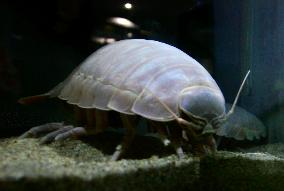
Giant isopod not eating

Giant isopod not eating

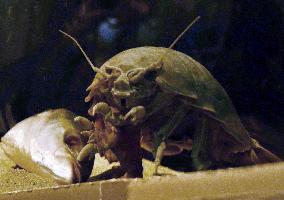
TOBA, Japan - Photo taken Jan. 2, 2014, at Toba Aquarium in Toba, Mie Prefecture, shows a giant isopod, a creature often called a "scavenger of the deep." The crustacean from Mexico, measuring about 29 centimeters and weighing about 1 kilogram, was near bait (L), but did not eat. According to the aquarium, it has not eating anything since it ate fish in January 2009.

  •  
Giant isopod stays alive for 4 years despite not eating

Giant isopod stays alive for 4 years despite not eating

TSU, Japan - Photo taken Feb. 6, 2013, at Toba Aquarium in Toba, Mie Prefecture, shows a giant isopod, a creature often called a "scavenger of the deep." According to the aquarium, the crustacean, measuring 29 centimeters and weighing one kilogram, has remained healthy despite not eating anything for more than four years.

  •  
Humanoid robot walking like fashion model developed

Humanoid robot walking like fashion model developed

TSUKUBA, Japan - The humanoid robot HPR-4C developed by the National Institute of Advanced Industrial Science and Technology looks surprised during a demonstration in Tsukuba, Ibaraki Prefecture, on March 16. The robot, designed to look like a young Japanese woman, is 158 centimeters tall, weighs 43 kilograms and walks like a fashion model. The robot will make its debut during Japan Fashion Week in Tokyo scheduled for March 23-29.

  •  
Humanoid robot walking like fashion model developed

Humanoid robot walking like fashion model developed

TSUKUBA, Japan - The humanoid robot HPR-4C developed by the National Institute of Advanced Industrial Science and Technology is unveiled in Tsukuba, Ibaraki Prefecture, on March 16. The robot, designed to look like a young Japanese woman, is 158 centimeters tall, weighs 43 kilograms and walks like a fashion model. The robot will make its debut during Japan Fashion Week in Tokyo scheduled for March 23-29.

  •  
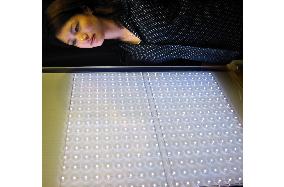
Sharp to sell light-producing solar panels from Nov.

Sharp to sell light-producing solar panels from Nov.

OSAKA, Japan - Sharp Corp. said July 29 it will sell light-producing solar panels with embedded light emitting diodes starting Nov. 1. The Lumiwall produces light throughout the day by using sunlight and by using LEDs at night if it is used on building windows or greenhouses. The panel, about 60 centimeters wide and 1 meter long, has a maximum power output of 35 watts, Sharp said.

  •  
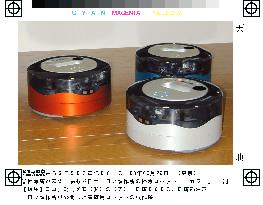
Hitachi devises vacuuming robot with memory function

Hitachi devises vacuuming robot with memory function

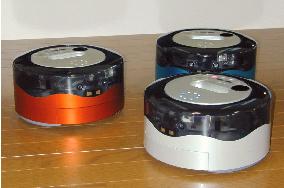
TOKYO, Japan - Hitachi Ltd. on May 29 unveiled a prototype cleaning robot (photo) that vacuums the floor by memorizing the location of obstacles and other features of the room in advance. A commercial model will be released within a few years, Hitachi said. The prototype saucer-shaped robot is 25 centimeters across and 13 cm high, the smallest machine of its kind ever developed in the world, according to Hitachi.

  •  
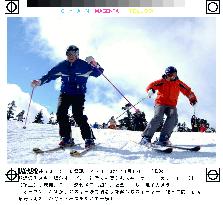
Niigata ski resort opens early due to heavy snow

Niigata ski resort opens early due to heavy snow

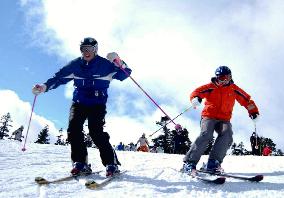
YUZAWA TOWN, Japan - About 600 skiers and snowboarders hit the slopes at the Kagura-Mitsumata ski area on Nov. 16 as the resort in Yuzawa town, Niigata Prefecture, opened to the public one week earlier than expected because of an unusually heavy snowfall. The Kagura-Mitsumata area saw its first snow on Oct. 29, and as of Nov. 16, mountain peaks had 80-90 centimeters of snow, and the lowest Mitsumata piste was covered with around 30 cm.

  •  

Plant growth in China's space lab in good condition

STORY: Plant growth in China's space lab in good condition DATELINE: Aug. 31, 2022 LENGTH: 00:00:42 LOCATION: SHANGHAI, China CATEGORY: SCIENCE SHOTLIST: 1. various of scientists working at the lab 2. file of the launch of Wentian STORYLINE: The seeds of two plants in China's Wentian lab module have germinated and are now in a good condition. That's according to a briefing on the progress of plant culture experiments in China's space station on Monday. Seed samples of the two plants, Arabidopsis and rice, were installed in the life ecology experiment cabinet of the lab module, which went into space in July. The space growth experiments were launched on July 29 with ground instructions. The Arabidopsis seedlings have grown several leaves, and rice seedlings have grown to a height of about 30 centimeters. Xinhua News Agency correspondents reporting from Shanghai, China. (XHTV)

  •  
Fossil thigh of herbivorous dinosaur found in Fukui

Fossil thigh of herbivorous dinosaur found in Fukui

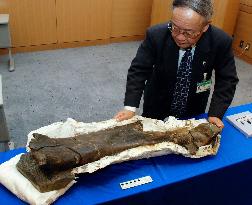
FUKUI, Japan - The Fukui Prefectural Dinosaur Museum announced Oct. 29 that fossils of what appear to be a thigh bone (photo) and other remains of a huge herbivorous dinosaur have been unearthed at the Kitadani quarry in Katsuyama, Fukui Prefecture, where dinosaur fossils have been found in the past. The fossil thigh bone is 86 centimeters long and measures 25 cm at its widest point. (Kyodo)

  •  
Humanoid robot walking like fashion model developed

Humanoid robot walking like fashion model developed

TSUKUBA, Japan - The humanoid robot HPR-4C developed by the National Institute of Advanced Industrial Science and Technology looks surprised during a demonstration in Tsukuba, Ibaraki Prefecture, on March 16. The robot, designed to look like a young Japanese woman, is 158 centimeters tall, weighs 43 kilograms and walks like a fashion model. The robot will make its debut during Japan Fashion Week in Tokyo scheduled for March 23-29. (Kyodo)

  •  
Humanoid robot walking like fashion model developed

Humanoid robot walking like fashion model developed

TSUKUBA, Japan - The humanoid robot HPR-4C developed by the National Institute of Advanced Industrial Science and Technology is unveiled in Tsukuba, Ibaraki Prefecture, on March 16. The robot, designed to look like a young Japanese woman, is 158 centimeters tall, weighs 43 kilograms and walks like a fashion model. The robot will make its debut during Japan Fashion Week in Tokyo scheduled for March 23-29. (Kyodo)

  •  
Niigata ski resort opens early due to heavy snow

Niigata ski resort opens early due to heavy snow

YUZAWA TOWN, Japan - About 600 skiers and snowboarders hit the slopes at the Kagura-Mitsumata ski area on Nov. 16 as the resort in Yuzawa town, Niigata Prefecture, opened to the public one week earlier than expected because of an unusually heavy snowfall. The Kagura-Mitsumata area saw its first snow on Oct. 29, and as of Nov. 16, mountain peaks had 80-90 centimeters of snow, and the lowest Mitsumata piste was covered with around 30 cm. (Kyodo)

  •  
Hitachi devises vacuuming robot with memory function

Hitachi devises vacuuming robot with memory function

TOKYO, Japan - Hitachi Ltd. on May 29 unveiled a prototype cleaning robot (photo) that vacuums the floor by memorizing the location of obstacles and other features of the room in advance. A commercial model will be released within a few years, Hitachi said. The prototype saucer-shaped robot is 25 centimeters across and 13 cm high, the smallest machine of its kind ever developed in the world, according to Hitachi. (Kyodo)

  •  
KDDI develops remote-controlled humanoid robot

KDDI develops remote-controlled humanoid robot

A man remotely controls a humanoid robot, developed by KDDI Corp. and Telexistence Inc., via specialized goggles and gloves in Tokyo on May 29, 2018. Standing 160 centimeters tall and weighing 70 kilograms, the robot can copy the actions of its operator, such as taking something in its hand. (Kyodo) ==Kyodo

  •  
Osaka univ. removes six-decade symbolic palm trees for safety

Osaka univ. removes six-decade symbolic palm trees for safety

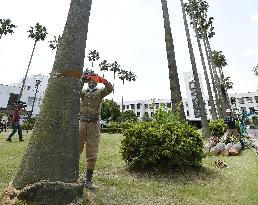
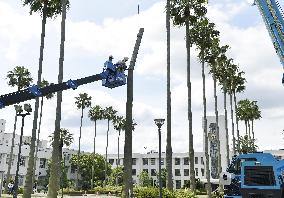
Workers begin on June 12, 2017, a weeklong operation to fell 29 palm trees that have stood as the symbol of Osaka City University's Sugimoto campus in western Japan for about six decades. The trees, which were about 50 centimeters tall when first planted by students in the late 1950s for a graduation celebration, have grown to some 23 meters tall and have reached their maximum lifespan. To the regret of many faculty, students and alumni, the iconic trees had to be removed due to increased risk of damage during bad weather. (Kyodo) ==Kyodo

  •  
Osaka univ. removes six-decade symbolic palm trees for safety

Osaka univ. removes six-decade symbolic palm trees for safety

Workers begin on June 12, 2017, a weeklong operation to fell 29 palm trees that have stood as the symbol of Osaka City University's Sugimoto campus in western Japan for about six decades. The trees, which were about 50 centimeters tall when first planted by students in the late 1950s for a graduation celebration, have grown to some 23 meters tall and have reached their maximum lifespan. To the regret of many faculty, students and alumni, the iconic trees had to be removed due to increased risk of damage during bad weather. (Kyodo) ==Kyodo

  • Main
  • Top
  • Editorial
  • Creative
  • About Us
  • About ILG
  • Terms of use
  • Company
  • BEHIND
  • Price List
  • Single Plan
  • Monthly Plan
  • Services
  • Shooting
  • Rights Clearance
  • Support
  • FAQ
  • How To Buy
  • Contact Us
  • Become a Partner

© KYODO NEWS IMAGES INC

All Rights Reserved.

  • Editorial
  • Olympics
  • News
  • Sports
  • Japan
  • Tech
  • Royal
  • Disaster
  • NorthKorea
  • Old Japan
  • SNS

  • Creative
  • Food
  • Japan
  • Landscape
  • Animal
  • Popular
  • #Ukraine
  • #China
  • #coronavirus
  • #N. Korea
  • #Russia
  • #Thailand
  • #Ukraine
  • #China
  • #coronavirus
  • #N. Korea
  • #Russia
  • #Thailand
  • Food
  • Japan
  • Landscape
  • Animal
  • Olympics
  • News
  • Sports
  • Japan
  • Tech
  • Royal
  • Disaster
  • NorthKorea
  • Old Japan
  • SNS