•  
Shijian-30A, Shijian-30B, and Shijian-30C Satellite Launch - China

Shijian-30A, Shijian-30B, and Shijian-30C Satellite Launch - China

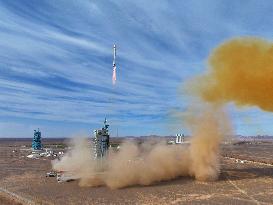
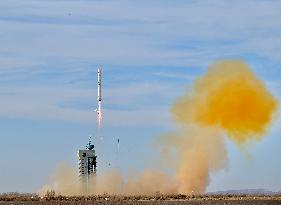
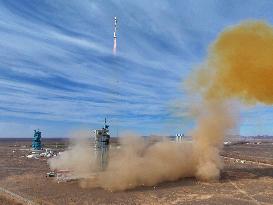
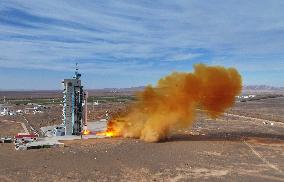
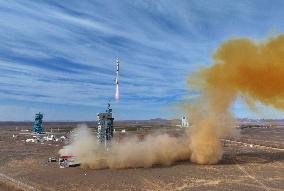
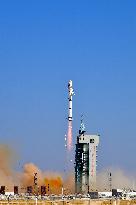
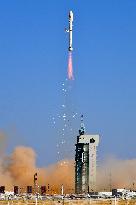
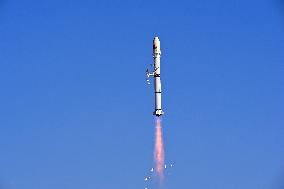
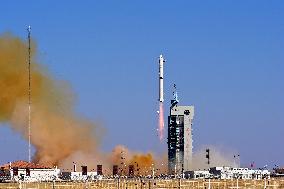
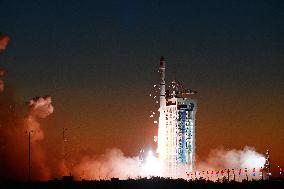
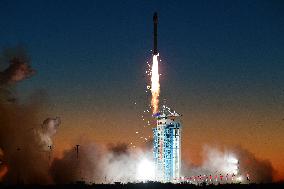
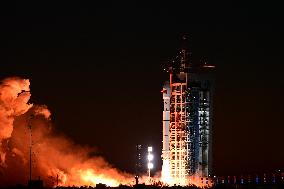
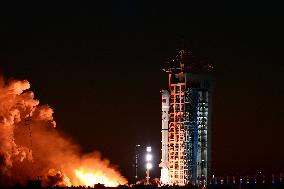
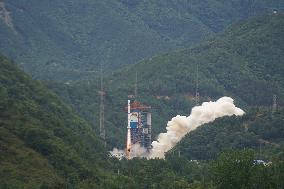
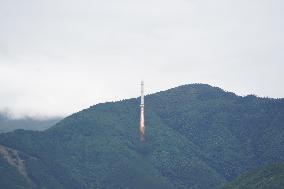
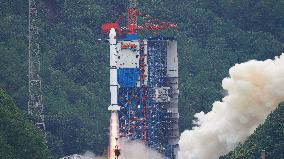
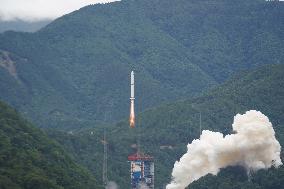
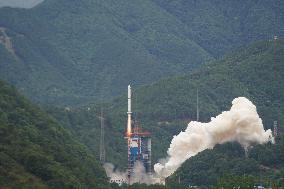
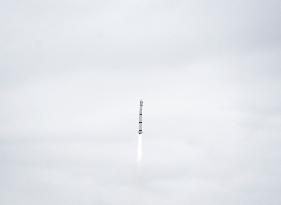
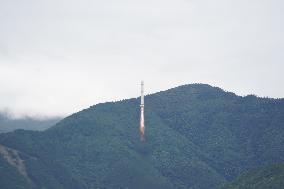
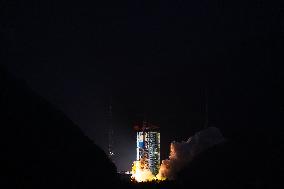
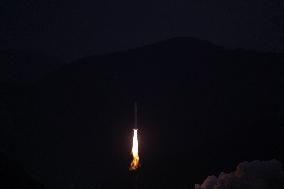
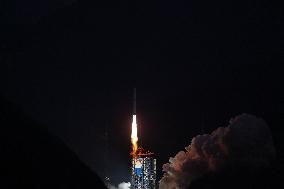
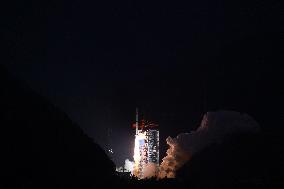
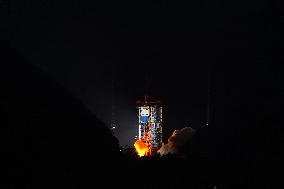
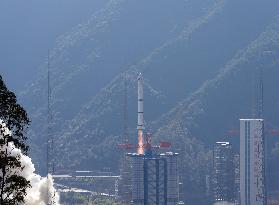
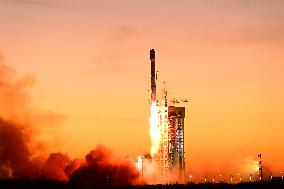
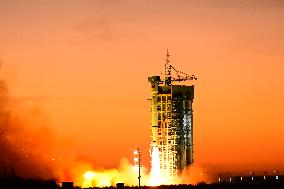
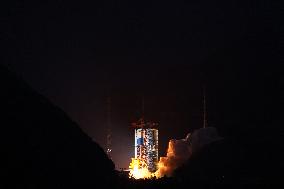
A Long March-2C carrier rocket carrying three new satellites blasts off from the Jiuquan Satellite Launch Center in northwest China, on Nov. 19, 2025. The rocket blasted off at 12:01 p.m. (Beijing Time) and sent the Shijian-30A, Shijian-30B, and Shijian-30C into the preset orbits. These satellites will be mainly used for space environment exploration and related technology verification. (Photo by Wang Jiangbo/Xinhua/ABACAPRESS.COM)

  •  
Shijian-30A, Shijian-30B, and Shijian-30C Satellite Launch - China

Shijian-30A, Shijian-30B, and Shijian-30C Satellite Launch - China

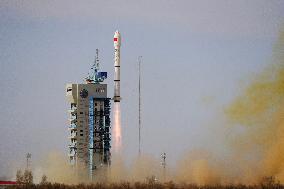
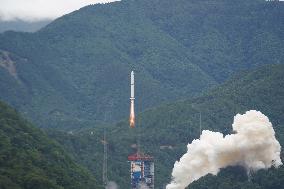
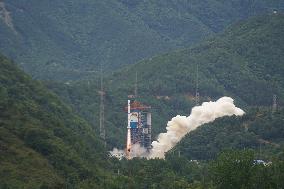
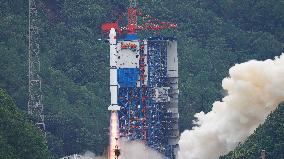
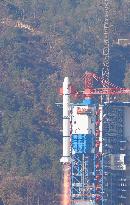
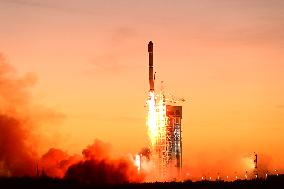
A Long March-2C carrier rocket carrying three new satellites blasts off from the Jiuquan Satellite Launch Center in northwest China, on Nov. 19, 2025. The rocket blasted off at 12:01 p.m. (Beijing Time) and sent the Shijian-30A, Shijian-30B, and Shijian-30C into the preset orbits. These satellites will be mainly used for space environment exploration and related technology verification. (Photo by Sun Haiying/Xinhua/ABACAPRESS.COM)

  •  
Shijian-30A, Shijian-30B, and Shijian-30C Satellite Launch - China

Shijian-30A, Shijian-30B, and Shijian-30C Satellite Launch - China

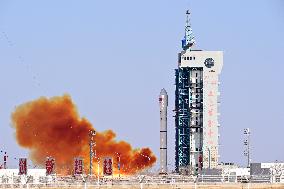
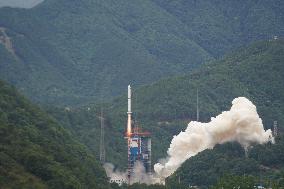
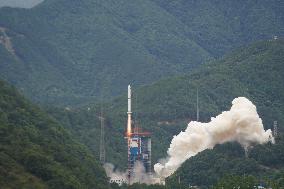
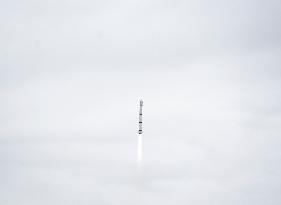
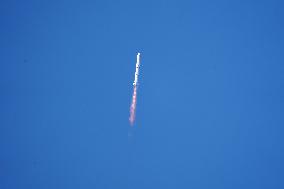
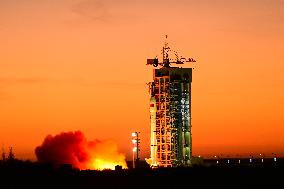
A Long March-2C carrier rocket carrying three new satellites blasts off from the Jiuquan Satellite Launch Center in northwest China, on Nov. 19, 2025. The rocket blasted off at 12:01 p.m. (Beijing Time) and sent the Shijian-30A, Shijian-30B, and Shijian-30C into the preset orbits. These satellites will be mainly used for space environment exploration and related technology verification. (Photo by Wang Jiangbo/Xinhua/ABACAPRESS.COM)

  •  
Shijian-30A, Shijian-30B, and Shijian-30C Satellite Launch - China

Shijian-30A, Shijian-30B, and Shijian-30C Satellite Launch - China

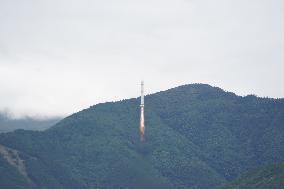
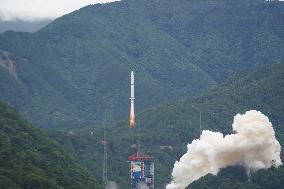
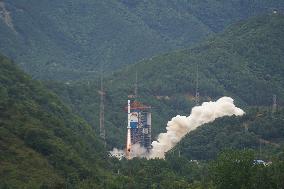
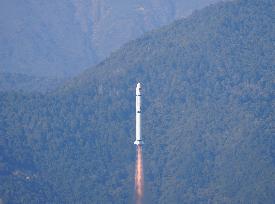
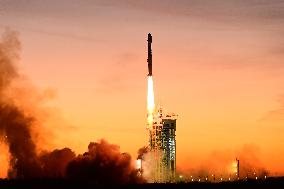
A Long March-2C carrier rocket carrying three new satellites blasts off from the Jiuquan Satellite Launch Center in northwest China, on Nov. 19, 2025. The rocket blasted off at 12:01 p.m. (Beijing Time) and sent the Shijian-30A, Shijian-30B, and Shijian-30C into the preset orbits. These satellites will be mainly used for space environment exploration and related technology verification. (Photo by Wang Jiangbo/Xinhua/ABACAPRESS.COM)

  •  
Shijian-30A, Shijian-30B, and Shijian-30C Satellite Launch - China

Shijian-30A, Shijian-30B, and Shijian-30C Satellite Launch - China

A Long March-2C carrier rocket carrying three new satellites blasts off from the Jiuquan Satellite Launch Center in northwest China, on Nov. 19, 2025. The rocket blasted off at 12:01 p.m. (Beijing Time) and sent the Shijian-30A, Shijian-30B, and Shijian-30C into the preset orbits. These satellites will be mainly used for space environment exploration and related technology verification. (Photo by Wang Jiangbo/Xinhua/ABACAPRESS.COM)

  •  
Shijian-30A, Shijian-30B, and Shijian-30C Satellite Launch - China

Shijian-30A, Shijian-30B, and Shijian-30C Satellite Launch - China

A Long March-2C carrier rocket carrying three new satellites blasts off from the Jiuquan Satellite Launch Center in northwest China, on Nov. 19, 2025. The rocket blasted off at 12:01 p.m. (Beijing Time) and sent the Shijian-30A, Shijian-30B, and Shijian-30C into the preset orbits. These satellites will be mainly used for space environment exploration and related technology verification. (Photo by Wang Heng/Xinhua/ABACAPRESS.COM)

  •  
Satellite Image Shows Mount Etna Spewing Lava From Above

Satellite Image Shows Mount Etna Spewing Lava From Above

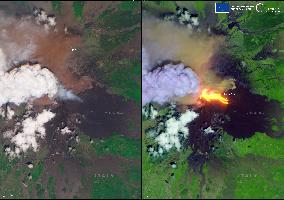
Handout photo dated June 2, 2025, shows The Copernicus Sentinel-2C satellite acquired an image of the area at 09:40 UTC, just minutes after the onset of the eruption. On the left, the natural colour image clearly depicts a dense ash plume in the summit crater area, partially obscured by a pyrocumulus cloud drifting westward towards inland Sicily. On the right, a false colour composite using shortwave infrared channels reveals the intense thermal signature of active lava flows descending into the Valle del Bove. Jaw-dropping satellite images shows Mount Etna erupting. At 11:24 am local time on 2 June, the most active volcano in Europe produced a spectacular eruption, propelling a dense column of ash and smoke several kilometres into the atmosphere. According to Italy’s National Institute of Geophysics and Volcanology (INGV), the eruption originated from the South East Crater, one of the most active summit vents in recent years. The event was characterised by vigorous Strombolian activity, lava effusion, and a

  •  
Long March-2C Rocket Successfully Launches Two Satellites - China

Long March-2C Rocket Successfully Launches Two Satellites - China

A Long March-2C carrier rocket carrying two satellites blasts off from the Jiuquan Satellite Launch Center in northwest China, Feb. 27, 2025. The rocket blasted off at 3:08 p.m. (Beijing Time) and sent the pair of satellites, Siwei Gaojing-1 03 and Siwei Gaojing-1 04, into their preset orbit. It was the 561st flight mission of the Long March series of rockets. Jiuquan, China on February 27, 2025. Photo by Wang Jiangbo/Xinhua/ABACAPRESS.COM

  •  
Long March-2C Rocket Successfully Launches Two Satellites - China

Long March-2C Rocket Successfully Launches Two Satellites - China

A Long March-2C carrier rocket carrying two satellites blasts off from the Jiuquan Satellite Launch Center in northwest China, Feb. 27, 2025. The rocket blasted off at 3:08 p.m. (Beijing Time) and sent the pair of satellites, Siwei Gaojing-1 03 and Siwei Gaojing-1 04, into their preset orbit. It was the 561st flight mission of the Long March series of rockets. Jiuquan, China on February 27, 2025. Photo by Wang Jiangbo/Xinhua/ABACAPRESS.COM

  •  
Long March-2C Rocket Successfully Launches Two Satellites - China

Long March-2C Rocket Successfully Launches Two Satellites - China

A Long March-2C carrier rocket carrying two satellites blasts off from the Jiuquan Satellite Launch Center in northwest China, Feb. 27, 2025. The rocket blasted off at 3:08 p.m. (Beijing Time) and sent the pair of satellites, Siwei Gaojing-1 03 and Siwei Gaojing-1 04, into their preset orbit. It was the 561st flight mission of the Long March series of rockets. Jiuquan, China on February 27, 2025. Photo by Wang Jiangbo/Xinhua/ABACAPRESS.COM

  •  
Long March-2C Rocket Successfully Launches Two Satellites - China

Long March-2C Rocket Successfully Launches Two Satellites - China

A Long March-2C carrier rocket carrying two satellites blasts off from the Jiuquan Satellite Launch Center in northwest China, Feb. 27, 2025. The rocket blasted off at 3:08 p.m. (Beijing Time) and sent the pair of satellites, Siwei Gaojing-1 03 and Siwei Gaojing-1 04, into their preset orbit It was the 561st flight mission of the Long March series of rockets. Jiuquan, China on February 27, 2025. Photo by Wang Jiangbo/Xinhua/ABACAPRESS.COM

  •  
Long March-2C Rocket Successfully Launches Two Satellites - China

Long March-2C Rocket Successfully Launches Two Satellites - China

A Long March-2C carrier rocket carrying two satellites blasts off from the Jiuquan Satellite Launch Center in northwest China, Feb. 27, 2025. The rocket blasted off at 3:08 p.m. (Beijing Time) and sent the pair of satellites, Siwei Gaojing-1 03 and Siwei Gaojing-1 04, into their preset orbit. It was the 561st flight mission of the Long March series of rockets. Jiuquan, China on February 27, 2025. Photo by Wang Jiangbo/Xinhua/ABACAPRESS.COM

  •  
China Launches Two New Satellites

China Launches Two New Satellites

A Long March-2C carrier rocket carrying two satellites blasts off from the Jiuquan Satellite Launch Center in northwest China, November 25, 2024. The rocket blasted off at 7:39 a.m. (Beijing Time) and sent the pair of satellites, Siwei Gaojing-2 03 and Siwei Gaojing-2 04, into the preset orbit. Photo by Wang Jiangbo/Xinhua/ABACAPRESS.COM

  •  
China Launches Two New Satellites

China Launches Two New Satellites

A Long March-2C carrier rocket carrying two satellites blasts off from the Jiuquan Satellite Launch Center in northwest China, November 25, 2024. The rocket blasted off at 7:39 a.m. (Beijing Time) and sent the pair of satellites, Siwei Gaojing-2 03 and Siwei Gaojing-2 04, into the preset orbit. Photo by Wang Jiangbo/Xinhua/ABACAPRESS.COM

  •  
China Launches Two New Satellites

China Launches Two New Satellites

A Long March-2C carrier rocket carrying two satellites blasts off from the Jiuquan Satellite Launch Center in northwest China, November 25, 2024. The rocket blasted off at 7:39 a.m. (Beijing Time) and sent the pair of satellites, Siwei Gaojing-2 03 and Siwei Gaojing-2 04, into the preset orbit. Photo by Wang Jiangbo/Xinhua/ABACAPRESS.COM

  •  
China Launches Two New Satellites

China Launches Two New Satellites

A Long March-2C carrier rocket carrying two satellites blasts off from the Jiuquan Satellite Launch Center in northwest China, November 25, 2024. The rocket blasted off at 7:39 a.m. (Beijing Time) and sent the pair of satellites, Siwei Gaojing-2 03 and Siwei Gaojing-2 04, into the preset orbit. Photo by Wang Jiangbo/Xinhua/ABACAPRESS.COM

  •  
March-2C Rocket Launch French-Chinese SVOM - China

March-2C Rocket Launch French-Chinese SVOM - China

A Long March-2C rocket carrying an astronomical satellite, the Space-based Multi-band Variable Object Monitor (SVOM), blasts off from the Xichang Satellite Launch Center in southwest China's Sichuan Province on June 22, 2024. China on Saturday launched the astronomical satellite, the result of nearly 20 years of hard work between Chinese and French scientists, to capture gamma-ray bursts which flicker like fireworks in the farthest reaches of the universe. Photo by Chen Haojie/Xinhua/ABACAPRESS.COM

  •  
March-2C Rocket Launch French-Chinese SVOM - China

March-2C Rocket Launch French-Chinese SVOM - China

A Long March-2C rocket carrying an astronomical satellite, the Space-based Multi-band Variable Object Monitor (SVOM), blasts off from the Xichang Satellite Launch Center in southwest China's Sichuan Province on June 22, 2024. China on Saturday launched the astronomical satellite, the result of nearly 20 years of hard work between Chinese and French scientists, to capture gamma-ray bursts which flicker like fireworks in the farthest reaches of the universe. Photo by Chen Haojie/Xinhua/ABACAPRESS.COM

  •  
March-2C Rocket Launch French-Chinese SVOM - China

March-2C Rocket Launch French-Chinese SVOM - China

A Long March-2C rocket carrying an astronomical satellite, the Space-based Multi-band Variable Object Monitor (SVOM), blasts off from the Xichang Satellite Launch Center in southwest China's Sichuan Province on June 22, 2024. China on Saturday launched the astronomical satellite, the result of nearly 20 years of hard work between Chinese and French scientists, to capture gamma-ray bursts which flicker like fireworks in the farthest reaches of the universe. Photo by Chen Haojie/Xinhua/ABACAPRESS.COM

  •  
March-2C Rocket Launch French-Chinese SVOM - China

March-2C Rocket Launch French-Chinese SVOM - China

A Long March-2C rocket carrying an astronomical satellite, the Space-based Multi-band Variable Object Monitor (SVOM), blasts off from the Xichang Satellite Launch Center in southwest China's Sichuan Province on June 22, 2024. China on Saturday launched the astronomical satellite, the result of nearly 20 years of hard work between Chinese and French scientists, to capture gamma-ray bursts which flicker like fireworks in the farthest reaches of the universe. Photo by Chen Haojie/Xinhua/ABACAPRESS.COM

  •  
(EyesOnSci)CHINA-XICHANG-FRANCE-ASTRONOMICAL SATELLITE-LAUNCHING (CN)

(EyesOnSci)CHINA-XICHANG-FRANCE-ASTRONOMICAL SATELLITE-LAUNCHING (CN)

(240622) -- XICHANG, June 22, 2024 Photo by Xinhua/ABACAPRESS.COM) -- A Long March-2C rocket carrying an astronomical satellite, the Space-based Multi-band Variable Object Monitor (SVOM), blasts off from the Xichang Satellite Launch Center in southwest China's Sichuan Province on June 22, 2024. China on Saturday launched the astronomical satellite, the result of nearly 20 years of hard work between Chinese and French scientists, to capture gamma-ray bursts which flicker like fireworks in the farthest reaches of the universe. (Photo by Chen Haojie/Xinhua/ABACAPRESS.COM

  •  
(EyesOnSci)CHINA-XICHANG-FRANCE-ASTRONOMICAL SATELLITE-LAUNCHING (CN)

(EyesOnSci)CHINA-XICHANG-FRANCE-ASTRONOMICAL SATELLITE-LAUNCHING (CN)

(240622) -- XICHANG, June 22, 2024 Photo by Xinhua/ABACAPRESS.COM) -- A Long March-2C rocket carrying an astronomical satellite, the Space-based Multi-band Variable Object Monitor (SVOM), blasts off from the Xichang Satellite Launch Center in southwest China's Sichuan Province on June 22, 2024. China on Saturday launched the astronomical satellite, the result of nearly 20 years of hard work between Chinese and French scientists, to capture gamma-ray bursts which flicker like fireworks in the farthest reaches of the universe. (Photo by Chen Haojie/Xinhua/ABACAPRESS.COM

  •  
(EyesOnSci)CHINA-XICHANG-FRANCE-ASTRONOMICAL SATELLITE-LAUNCHING (CN)

(EyesOnSci)CHINA-XICHANG-FRANCE-ASTRONOMICAL SATELLITE-LAUNCHING (CN)

(240622) -- XICHANG, June 22, 2024 Photo by Xinhua/ABACAPRESS.COM) -- A Long March-2C rocket carrying an astronomical satellite, the Space-based Multi-band Variable Object Monitor (SVOM), blasts off from the Xichang Satellite Launch Center in southwest China's Sichuan Province on June 22, 2024. China on Saturday launched the astronomical satellite, the result of nearly 20 years of hard work between Chinese and French scientists, to capture gamma-ray bursts which flicker like fireworks in the farthest reaches of the universe. (Photo by Chen Haojie/Xinhua/ABACAPRESS.COM

  •  
(EyesOnSci)CHINA-XICHANG-FRANCE-ASTRONOMICAL SATELLITE-LAUNCHING (CN)

(EyesOnSci)CHINA-XICHANG-FRANCE-ASTRONOMICAL SATELLITE-LAUNCHING (CN)

(240622) -- XICHANG, June 22, 2024 Photo by Xinhua/ABACAPRESS.COM) -- A Long March-2C rocket carrying an astronomical satellite, the Space-based Multi-band Variable Object Monitor (SVOM), blasts off from the Xichang Satellite Launch Center in southwest China's Sichuan Province on June 22, 2024. China on Saturday launched the astronomical satellite, the result of nearly 20 years of hard work between Chinese and French scientists, to capture gamma-ray bursts which flicker like fireworks in the farthest reaches of the universe. (Photo by Chen Haojie/Xinhua/ABACAPRESS.COM

  •  
(EyesOnSci)CHINA-XICHANG-FRANCE-ASTRONOMICAL SATELLITE-LAUNCHING (CN)

(EyesOnSci)CHINA-XICHANG-FRANCE-ASTRONOMICAL SATELLITE-LAUNCHING (CN)

(240622) -- XICHANG, June 22, 2024 Photo by Xinhua/ABACAPRESS.COM) -- A Long March-2C rocket carrying an astronomical satellite, the Space-based Multi-band Variable Object Monitor (SVOM), blasts off from the Xichang Satellite Launch Center in southwest China's Sichuan Province on June 22, 2024. China on Saturday launched the astronomical satellite, the result of nearly 20 years of hard work between Chinese and French scientists, to capture gamma-ray bursts which flicker like fireworks in the farthest reaches of the universe. (Photo by Chen Haojie/Xinhua/ABACAPRESS.COM

  •  
(EyesOnSci)CHINA-XICHANG-FRANCE-ASTRONOMICAL SATELLITE-LAUNCHING (CN)

(EyesOnSci)CHINA-XICHANG-FRANCE-ASTRONOMICAL SATELLITE-LAUNCHING (CN)

(240622) -- XICHANG, June 22, 2024 Photo by Xinhua/ABACAPRESS.COM) -- A Long March-2C rocket carrying an astronomical satellite, the Space-based Multi-band Variable Object Monitor (SVOM), blasts off from the Xichang Satellite Launch Center in southwest China's Sichuan Province on June 22, 2024. China on Saturday launched the astronomical satellite, the result of nearly 20 years of hard work between Chinese and French scientists, to capture gamma-ray bursts which flicker like fireworks in the farthest reaches of the universe. (Photo by Chen Haojie/Xinhua/ABACAPRESS.COM

  •  
(EyesOnSci)CHINA-XICHANG-FRANCE-ASTRONOMICAL SATELLITE-LAUNCHING (CN)

(EyesOnSci)CHINA-XICHANG-FRANCE-ASTRONOMICAL SATELLITE-LAUNCHING (CN)

(240622) -- XICHANG, June 22, 2024 (Xinhua) -- A Long March-2C rocket carrying an astronomical satellite, the Space-based Multi-band Variable Object Monitor (SVOM), blasts off from the Xichang Satellite Launch Center in southwest China's Sichuan Province on June 22, 2024. China on Saturday launched the astronomical satellite, the result of nearly 20 years of hard work between Chinese and French scientists, to capture gamma-ray bursts which flicker like fireworks in the farthest reaches of the universe. (Photo by Chen Haojie/Xinhua)

  •  
(EyesOnSci)CHINA-XICHANG-FRANCE-ASTRONOMICAL SATELLITE-LAUNCHING (CN)

(EyesOnSci)CHINA-XICHANG-FRANCE-ASTRONOMICAL SATELLITE-LAUNCHING (CN)

(240622) -- XICHANG, June 22, 2024 (Xinhua) -- A Long March-2C rocket carrying an astronomical satellite, the Space-based Multi-band Variable Object Monitor (SVOM), blasts off from the Xichang Satellite Launch Center in southwest China's Sichuan Province on June 22, 2024. China on Saturday launched the astronomical satellite, the result of nearly 20 years of hard work between Chinese and French scientists, to capture gamma-ray bursts which flicker like fireworks in the farthest reaches of the universe. (Photo by Chen Haojie/Xinhua)

  •  
(EyesOnSci)CHINA-XICHANG-FRANCE-ASTRONOMICAL SATELLITE-LAUNCHING (CN)

(EyesOnSci)CHINA-XICHANG-FRANCE-ASTRONOMICAL SATELLITE-LAUNCHING (CN)

(240622) -- XICHANG, June 22, 2024 (Xinhua) -- A Long March-2C rocket carrying an astronomical satellite, the Space-based Multi-band Variable Object Monitor (SVOM), blasts off from the Xichang Satellite Launch Center in southwest China's Sichuan Province on June 22, 2024. China on Saturday launched the astronomical satellite, the result of nearly 20 years of hard work between Chinese and French scientists, to capture gamma-ray bursts which flicker like fireworks in the farthest reaches of the universe. (Photo by Chen Haojie/Xinhua)

  •  
(EyesOnSci)CHINA-XICHANG-FRANCE-ASTRONOMICAL SATELLITE-LAUNCHING (CN)

(EyesOnSci)CHINA-XICHANG-FRANCE-ASTRONOMICAL SATELLITE-LAUNCHING (CN)

(240622) -- XICHANG, June 22, 2024 (Xinhua) -- A Long March-2C rocket carrying an astronomical satellite, the Space-based Multi-band Variable Object Monitor (SVOM), blasts off from the Xichang Satellite Launch Center in southwest China's Sichuan Province on June 22, 2024. China on Saturday launched the astronomical satellite, the result of nearly 20 years of hard work between Chinese and French scientists, to capture gamma-ray bursts which flicker like fireworks in the farthest reaches of the universe. (Photo by Chen Haojie/Xinhua)

  •  
(EyesOnSci)CHINA-XICHANG-FRANCE-ASTRONOMICAL SATELLITE-LAUNCHING (CN)

(EyesOnSci)CHINA-XICHANG-FRANCE-ASTRONOMICAL SATELLITE-LAUNCHING (CN)

(240622) -- XICHANG, June 22, 2024 (Xinhua) -- A Long March-2C rocket carrying an astronomical satellite, the Space-based Multi-band Variable Object Monitor (SVOM), blasts off from the Xichang Satellite Launch Center in southwest China's Sichuan Province on June 22, 2024. China on Saturday launched the astronomical satellite, the result of nearly 20 years of hard work between Chinese and French scientists, to capture gamma-ray bursts which flicker like fireworks in the farthest reaches of the universe. (Photo by Chen Haojie/Xinhua)

  •  
(EyesOnSci)CHINA-XICHANG-FRANCE-ASTRONOMICAL SATELLITE-LAUNCHING (CN)

(EyesOnSci)CHINA-XICHANG-FRANCE-ASTRONOMICAL SATELLITE-LAUNCHING (CN)

(240622) -- XICHANG, June 22, 2024 (Xinhua) -- A Long March-2C rocket carrying an astronomical satellite, the Space-based Multi-band Variable Object Monitor (SVOM), blasts off from the Xichang Satellite Launch Center in southwest China's Sichuan Province on June 22, 2024. China on Saturday launched the astronomical satellite, the result of nearly 20 years of hard work between Chinese and French scientists, to capture gamma-ray bursts which flicker like fireworks in the farthest reaches of the universe. (Photo by Chen Haojie/Xinhua)

  •  
US Moves Aircraft Carrier Toward Israel

US Moves Aircraft Carrier Toward Israel

Handout photo dated May 14, 2012 shows an F/A-18C Hornet from the Wildcats of Strike Fighter Squadron (VFA) 131 launches from the Nimitz-class aircraft carrier USS Dwight D. Eisenhower (CVN 69) in the Atlantic Ocean. The USS Dwight Eisenhower aircraft carrier has reportedly sailed north through the Red Sea toward Israel in a show of deterrence from the Biden administration. The carrier would be able to intercept missiles and drones fired by Iran. U.S. Navy photo by Mass Communication Specialist 1st Class Nathanael Miller via ABACAPRESS.COM

  •  

China launches Geely-02 satellites

STORY: China launches Geely-02 satellites SHOOTING TIME: Feb. 3, 2024 DATELINE: Feb. 3, 2024 LENGTH: 0:00:41 LOCATION: XICHANG, China CATEGORY: SCIENCE SHOTLIST: 1. various of a carrier rocket STORYLINE: China on Saturday sent a group of 11 satellites into space from the Xichang Satellite Launch Center in southwestern Sichuan Province. Carried by a Long March-2C carrier rocket, the 11 Geely-02 constellation satellites took off at 7:37 a.m. (Beijing Time) from the launch site, and entered the preset orbit. This was the 508th flight mission of the Long March rocket series. Xinhua News Agency correspondents reporting from Xichang, China. (XHTV)

  •  
(EyesOnSci)CHINA-XICHANG-SATELLITE-LAUNCH (CN)

(EyesOnSci)CHINA-XICHANG-SATELLITE-LAUNCH (CN)

(240203) -- XICHANG, Feb. 3, 2024 (Xinhua) -- A Long March-2C carrier rocket carrying 11 Geely-02 constellation satellites blasts off from the Xichang Satellite Launch Center in southwest China's Sichuan Province, Feb. 3, 2024. China on Saturday sent a group of 11 satellites into space from the Xichang Satellite Launch Center in southwestern Sichuan Province. Carried by a Long March-2C carrier rocket, the 11 Geely-02 constellation satellites took off at 7:37 a.m. (Beijing Time) from the launch site, and entered the preset orbit. This was the 508th flight mission of the Long March rocket series. (Photo by Xiao Xinjiang/Xinhua)

  •  
(EyesOnSci)CHINA-XICHANG-SATELLITE-LAUNCH (CN)

(EyesOnSci)CHINA-XICHANG-SATELLITE-LAUNCH (CN)

(240203) -- XICHANG, Feb. 3, 2024 (Xinhua) -- A Long March-2C carrier rocket carrying 11 Geely-02 constellation satellites blasts off from the Xichang Satellite Launch Center in southwest China's Sichuan Province, Feb. 3, 2024. China on Saturday sent a group of 11 satellites into space from the Xichang Satellite Launch Center in southwestern Sichuan Province. Carried by a Long March-2C carrier rocket, the 11 Geely-02 constellation satellites took off at 7:37 a.m. (Beijing Time) from the launch site, and entered the preset orbit. This was the 508th flight mission of the Long March rocket series. (Photo by Xiao Xinjiang/Xinhua)

  •  
(EyesOnSci)CHINA-XICHANG-SATELLITE-LAUNCH (CN)

(EyesOnSci)CHINA-XICHANG-SATELLITE-LAUNCH (CN)

(240203) -- XICHANG, Feb. 3, 2024 (Xinhua) -- A Long March-2C carrier rocket carrying 11 Geely-02 constellation satellites blasts off from the Xichang Satellite Launch Center in southwest China's Sichuan Province, Feb. 3, 2024. China on Saturday sent a group of 11 satellites into space from the Xichang Satellite Launch Center in southwestern Sichuan Province. Carried by a Long March-2C carrier rocket, the 11 Geely-02 constellation satellites took off at 7:37 a.m. (Beijing Time) from the launch site, and entered the preset orbit. This was the 508th flight mission of the Long March rocket series. (Photo by Xiao Xinjiang/Xinhua)

  •  
(EyesOnSci)CHINA-XICHANG-SATELLITE-LAUNCH (CN)

(EyesOnSci)CHINA-XICHANG-SATELLITE-LAUNCH (CN)

(240203) -- XICHANG, Feb. 3, 2024 (Xinhua) -- A Long March-2C carrier rocket carrying 11 Geely-02 constellation satellites blasts off from the Xichang Satellite Launch Center in southwest China's Sichuan Province, Feb. 3, 2024. China on Saturday sent a group of 11 satellites into space from the Xichang Satellite Launch Center in southwestern Sichuan Province. Carried by a Long March-2C carrier rocket, the 11 Geely-02 constellation satellites took off at 7:37 a.m. (Beijing Time) from the launch site, and entered the preset orbit. This was the 508th flight mission of the Long March rocket series. (Photo by Xiao Xinjiang/Xinhua)

  •  
(EyesOnSci)CHINA-XICHANG-SATELLITE-LAUNCH (CN)

(EyesOnSci)CHINA-XICHANG-SATELLITE-LAUNCH (CN)

(240203) -- XICHANG, Feb. 3, 2024 (Xinhua) -- A Long March-2C carrier rocket carrying 11 Geely-02 constellation satellites blasts off from the Xichang Satellite Launch Center in southwest China's Sichuan Province, Feb. 3, 2024. China on Saturday sent a group of 11 satellites into space from the Xichang Satellite Launch Center in southwestern Sichuan Province. Carried by a Long March-2C carrier rocket, the 11 Geely-02 constellation satellites took off at 7:37 a.m. (Beijing Time) from the launch site, and entered the preset orbit. This was the 508th flight mission of the Long March rocket series. (Photo by Xiao Xinjiang/Xinhua)

  •  
(EyesOnSci)CHINA-XICHANG-SATELLITE-LAUNCH (CN)

(EyesOnSci)CHINA-XICHANG-SATELLITE-LAUNCH (CN)

(240203) -- XICHANG, Feb. 3, 2024 (Xinhua) -- A Long March-2C carrier rocket carrying 11 Geely-02 constellation satellites blasts off from the Xichang Satellite Launch Center in southwest China's Sichuan Province, Feb. 3, 2024. China on Saturday sent a group of 11 satellites into space from the Xichang Satellite Launch Center in southwestern Sichuan Province. Carried by a Long March-2C carrier rocket, the 11 Geely-02 constellation satellites took off at 7:37 a.m. (Beijing Time) from the launch site, and entered the preset orbit. This was the 508th flight mission of the Long March rocket series. (Photo by Xiao Xinjiang/Xinhua)

  •  
(EyesonSci)CHINA-XICHANG-SATELLITE-LAUNCH (CN)

(EyesonSci)CHINA-XICHANG-SATELLITE-LAUNCH (CN)

(240109) -- XICHANG, Jan. 9, 2024 (Xinhua) -- A Long March-2C carrier rocket carrying a new astronomical satellite named Einstein Probe (EP) blasts off from the Xichang Satellite Launch Center in southwest China's Sichuan Province, Jan. 9, 2024. China sent the satellite, which uses a new X-ray detection technology inspired by the lobster eye, into space on Tuesday to observe mysterious transient phenomena in the universe comparable to the flickering of fireworks, with the aim of unveiling the violent and little-known aspects of the cosmos. The rocket was launched at 3:03 p.m. (Beijing Time) from here. (Photo by Ling Siqin/Xinhua)

  •  
(EyesonSci)CHINA-XICHANG-SATELLITE-LAUNCH (CN)

(EyesonSci)CHINA-XICHANG-SATELLITE-LAUNCH (CN)

(240109) -- XICHANG, Jan. 9, 2024 (Xinhua) -- A Long March-2C carrier rocket carrying a new astronomical satellite named Einstein Probe (EP) blasts off from the Xichang Satellite Launch Center in southwest China's Sichuan Province, Jan. 9, 2024. China sent the satellite, which uses a new X-ray detection technology inspired by the lobster eye, into space on Tuesday to observe mysterious transient phenomena in the universe comparable to the flickering of fireworks, with the aim of unveiling the violent and little-known aspects of the cosmos. The rocket was launched at 3:03 p.m. (Beijing Time) from here. (Photo by Zhang Jing/Xinhua)

  •  
(EyesonSci)CHINA-XICHANG-SATELLITE-LAUNCH (CN)

(EyesonSci)CHINA-XICHANG-SATELLITE-LAUNCH (CN)

(240109) -- XICHANG, Jan. 9, 2024 (Xinhua) -- A Long March-2C carrier rocket carrying a new astronomical satellite named Einstein Probe (EP) blasts off from the Xichang Satellite Launch Center in southwest China's Sichuan Province, Jan. 9, 2024. China sent the satellite, which uses a new X-ray detection technology inspired by the lobster eye, into space on Tuesday to observe mysterious transient phenomena in the universe comparable to the flickering of fireworks, with the aim of unveiling the violent and little-known aspects of the cosmos. The rocket was launched at 3:03 p.m. (Beijing Time) from here. (Photo by Zhang Jing/Xinhua)

  •  
(EyesonSci)CHINA-XICHANG-SATELLITE-LAUNCH (CN)

(EyesonSci)CHINA-XICHANG-SATELLITE-LAUNCH (CN)

(240109) -- XICHANG, Jan. 9, 2024 (Xinhua) -- A Long March-2C carrier rocket carrying a new astronomical satellite named Einstein Probe (EP) blasts off from the Xichang Satellite Launch Center in southwest China's Sichuan Province, Jan. 9, 2024. China sent the satellite, which uses a new X-ray detection technology inspired by the lobster eye, into space on Tuesday to observe mysterious transient phenomena in the universe comparable to the flickering of fireworks, with the aim of unveiling the violent and little-known aspects of the cosmos. The rocket was launched at 3:03 p.m. (Beijing Time) from here. (Photo by Qiu Lijun/Xinhua)

  •  
US Navy Ending Aircraft Carrier's Middle East Deployment

US Navy Ending Aircraft Carrier's Middle East Deployment

Handout photo dated August 4, 2020 shows a E-2C Hawkeye attached to the “Greyhawks” of Airborne Command and Control Squadron (VAW) 120 launches from the aircraft carrier USS Gerald R. Ford (CVN 78) during flight operations in the Atlantic Ocean. The Gerald R. Ford aircraft carrier will return to its home port, the U.S. Navy said on Monday, ending its deployment to the eastern Mediterranean, which started in support of Israel after the Oct. 7 attack by Hamas militants. The nuclear-powered Ford, the Navy's newest carrier with over 4,000 personnel and eight squadrons of aircraft, became a powerful symbol of American support by rushing closer to Israel after the Palestinian militant group's attack. U.S. Navy photo by Mass Communication Specialist Seaman Riley McDowell via ABACAPRESS.COM

  •  
XINHUA PHOTOS OF THE DAY

XINHUA PHOTOS OF THE DAY

(231231) -- BEIJING, Dec. 31, 2023 (Xinhua) -- A Long March-2C carrier rocket carrying a test satellite for satellite internet technologies blasts off from the Jiuquan Satellite Launch Center in northwest China on Dec. 30, 2023. The satellite was launched at 8:13 a.m. (Beijing Time), and successfully entered its preset orbit. (Photo by Wang Jiangbo/Xinhua)

  •  
(EyesonSci)CHINA-JIUQUAN-TEST SATELLITE-SATELLITE INTERNET TECHNOLOGIES-LAUNCH (CN)

(EyesonSci)CHINA-JIUQUAN-TEST SATELLITE-SATELLITE INTERNET TECHNOLOGIES-LAUNCH (CN)

(231230) -- JIUQUAN, Dec. 30, 2023 (Xinhua) -- A Long March-2C carrier rocket carrying a test satellite for satellite internet technologies blasts off from the Jiuquan Satellite Launch Center in northwest China on Dec. 30, 2023. The satellite was launched at 8:13 a.m. (Beijing Time), and successfully entered its preset orbit. (Photo by Wang Jiangbo/Xinhua)

  •  
(EyesonSci)CHINA-JIUQUAN-TEST SATELLITE-SATELLITE INTERNET TECHNOLOGIES-LAUNCH (CN)

(EyesonSci)CHINA-JIUQUAN-TEST SATELLITE-SATELLITE INTERNET TECHNOLOGIES-LAUNCH (CN)

(231230) -- JIUQUAN, Dec. 30, 2023 (Xinhua) -- A Long March-2C carrier rocket carrying a test satellite for satellite internet technologies blasts off from the Jiuquan Satellite Launch Center in northwest China on Dec. 30, 2023. The satellite was launched at 8:13 a.m. (Beijing Time), and successfully entered its preset orbit. (Photo by Wang Jiangbo/Xinhua)

  •  
(EyesonSci)CHINA-JIUQUAN-TEST SATELLITE-SATELLITE INTERNET TECHNOLOGIES-LAUNCH (CN)

(EyesonSci)CHINA-JIUQUAN-TEST SATELLITE-SATELLITE INTERNET TECHNOLOGIES-LAUNCH (CN)

(231230) -- JIUQUAN, Dec. 30, 2023 (Xinhua) -- A Long March-2C carrier rocket carrying a test satellite for satellite internet technologies blasts off from the Jiuquan Satellite Launch Center in northwest China on Dec. 30, 2023. The satellite was launched at 8:13 a.m. (Beijing Time), and successfully entered its preset orbit. (Photo by Wang Jiangbo/Xinhua)

  •  
(EyesonSci)CHINA-JIUQUAN-TEST SATELLITE-SATELLITE INTERNET TECHNOLOGIES-LAUNCH (CN)

(EyesonSci)CHINA-JIUQUAN-TEST SATELLITE-SATELLITE INTERNET TECHNOLOGIES-LAUNCH (CN)

(231230) -- JIUQUAN, Dec. 30, 2023 (Xinhua) -- A Long March-2C carrier rocket carrying a test satellite for satellite internet technologies blasts off from the Jiuquan Satellite Launch Center in northwest China on Dec. 30, 2023. The satellite was launched at 8:13 a.m. (Beijing Time), and successfully entered its preset orbit. (Photo by Wang Jiangbo/Xinhua)

  • Main
  • Top
  • Editorial
  • Creative
  • About Us
  • About ILG
  • Terms of use
  • Company
  • BEHIND
  • Price List
  • Single Plan
  • Monthly Plan
  • Services
  • Shooting
  • Rights Clearance
  • Support
  • FAQ
  • How To Buy
  • Contact Us
  • Become a Partner

© KYODO NEWS IMAGES INC

All Rights Reserved.

  • Editorial
  • Olympics
  • News
  • Sports
  • Japan
  • Tech
  • Royal
  • Disaster
  • NorthKorea
  • Old Japan
  • SNS
  • Creative
  • Food
  • Japan
  • Landscape
  • Animal
  • Popular
  • #Ukraine
  • #Thailand
  • #coronavirus
  • #N. Korea
  • #China
  • #Russia
  • #Ukraine
  • #Thailand
  • #coronavirus
  • #N. Korea
  • #China
  • #Russia
  • Food
  • Japan
  • Landscape
  • Animal
  • Olympics
  • News
  • Sports
  • Japan
  • Tech
  • Royal
  • Disaster
  • NorthKorea
  • Old Japan
  • SNS