•  
Robbers flee with 420 mil. yen in Tokyo

Robbers flee with 420 mil. yen in Tokyo

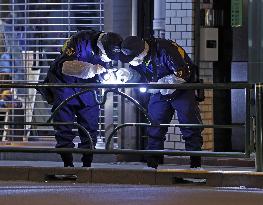
Police investigators in the small hours of Jan. 30, 2026, examine an abandoned blue compact car near the scene of a robbery in central Tokyo in which suitcases containing 420 million yen in cash were stolen by three suspects the previous day.

  •  
Robbers flee with 420 mil. yen in Tokyo

Robbers flee with 420 mil. yen in Tokyo

Police investigators in the small hours of Jan. 30, 2026, examine an abandoned blue compact car near the scene of a robbery in central Tokyo in which suitcases containing 420 million yen in cash were stolen by three suspects the previous day.

  •  
Robbers flee with 420 mil. yen in Tokyo

Robbers flee with 420 mil. yen in Tokyo

Police investigators work in the small hours of Jan. 30, 2026, near the scene of a robbery in central Tokyo in which suitcases containing around 420 million yen ($2.7 million) in cash were stolen by a group of three suspects the previous day.

  •  
Robbers flee with 420 mil. yen in Tokyo

Robbers flee with 420 mil. yen in Tokyo

Police investigators work in the small hours of Jan. 30, 2026, near the scene of a robbery in central Tokyo in which suitcases containing around 420 million yen ($2.7 million) in cash were stolen by a group of three suspects the previous day.

  •  
Robbers flee with 420 mil. yen in Tokyo

Robbers flee with 420 mil. yen in Tokyo

Police investigators work in the small hours of Jan. 30, 2026, near the scene of a robbery in central Tokyo in which suitcases containing around 420 million yen ($2.7 million) in cash were stolen by a group of three suspects the previous day.

  •  
Robbers flee with 420 mil. yen in Tokyo

Robbers flee with 420 mil. yen in Tokyo

Police investigators work in the small hours of Jan. 30, 2026, near the scene of a robbery in central Tokyo in which suitcases containing around 420 million yen ($2.7 million) in cash were stolen by a group of three suspects the previous day.

  •  
Robbers flee with 420 mil. yen in Tokyo

Robbers flee with 420 mil. yen in Tokyo

Police investigators work in the small hours of Jan. 30, 2026, near the scene of a robbery in central Tokyo in which suitcases containing around 420 million yen ($2.7 million) in cash were stolen by a group of three suspects the previous day.

  •  
Legendary Ancestor Worship In Lishui - China

Legendary Ancestor Worship In Lishui - China

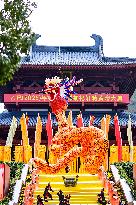
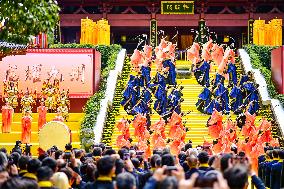
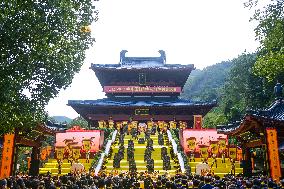
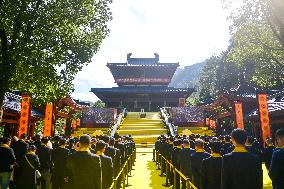
A performance is staged during a ceremony to worship the legendary ancestor Huangdi, or the Yellow Emperor, in Jinyun County, east China's Zhejiang Province, Oct. 29, 2025. Worshipping Huangdi is a tradition in China. The ceremony of ancestor worship record in Jinyun dates back to the Eastern Jin Dynasty (317-420). In 2011, the ceremony to worship the Yellow Emperor in Jinyun was listed as a national intangible cultural heritage. Photo by Jiang Han/Xinhua/ABACAPRESS.COM

  •  
Legendary Ancestor Worship In Lishui - China

Legendary Ancestor Worship In Lishui - China

A performance is staged during a ceremony to worship the legendary ancestor Huangdi, or the Yellow Emperor, in Jinyun County, east China's Zhejiang Province, Oct. 29, 2025. Worshipping Huangdi is a tradition in China. The ceremony of ancestor worship record in Jinyun dates back to the Eastern Jin Dynasty (317-420). In 2011, the ceremony to worship the Yellow Emperor in Jinyun was listed as a national intangible cultural heritage. Photo by Jiang Han/Xinhua/ABACAPRESS.COM

  •  
Legendary Ancestor Worship In Lishui - China

Legendary Ancestor Worship In Lishui - China

Actors perform during a ceremony to worship the legendary ancestor Huangdi, or the Yellow Emperor, in Jinyun County, east China's Zhejiang Province, Oct. 29, 2025. Worshipping Huangdi is a tradition in China. The ceremony of ancestor worship record in Jinyun dates back to the Eastern Jin Dynasty (317-420). In 2011, the ceremony to worship the Yellow Emperor in Jinyun was listed as a national intangible cultural heritage. Photo by Jiang Han/Xinhua/ABACAPRESS.COM

  •  
Legendary Ancestor Worship In Lishui - China

Legendary Ancestor Worship In Lishui - China

A performance is staged during a ceremony to worship the legendary ancestor Huangdi, or the Yellow Emperor, in Jinyun County, east China's Zhejiang Province, Oct. 29, 2025. Worshipping Huangdi is a tradition in China. The ceremony of ancestor worship record in Jinyun dates back to the Eastern Jin Dynasty (317-420). In 2011, the ceremony to worship the Yellow Emperor in Jinyun was listed as a national intangible cultural heritage. Photo by Jiang Han/Xinhua/ABACAPRESS.COM

  •  
Legendary Ancestor Worship In Lishui - China

Legendary Ancestor Worship In Lishui - China

A ceremony to worship the legendary ancestor Huangdi, or the Yellow Emperor, is held in Jinyun County, east China's Zhejiang Province, Oct. 29, 2025. Worshipping Huangdi is a tradition in China. The ceremony of ancestor worship record in Jinyun dates back to the Eastern Jin Dynasty (317-420). In 2011, the ceremony to worship the Yellow Emperor in Jinyun was listed as a national intangible cultural heritage. Photo by Jiang Han/Xinhua/ABACAPRESS.COM

  •  
XINHUA PHOTOS OF THE DAY

XINHUA PHOTOS OF THE DAY

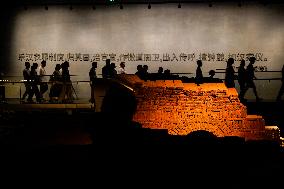
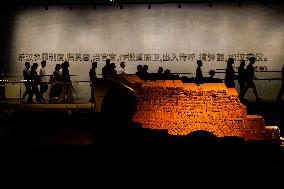
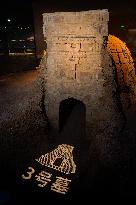
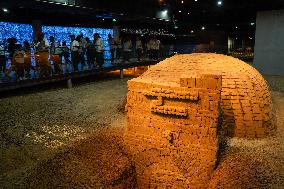
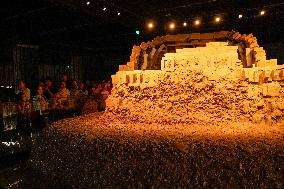
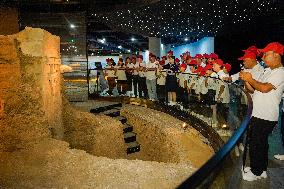
(240716) -- BEIJING, July 16, 2024 Photo by Xinhua/ABACAPRESS.COM) -- People visit the Wei and Jin Dynasties Ancient Tombs Site Museum in Kuqa City, northwest China's Xinjiang Uygur Autonomous Region, July 15, 2024. An underground museum of the Wei and Jin dynasties (220-420) ancient tombs opened on Monday in Kuqa County, an area that previously belonged to the ancient Qiuci State. The Qiuci State, which commenced in the second century BC and existed for more than 1,000 years, was one of the 36 states in the Western Regions, a term used in the Han Dynasty (206 BC-220 AD) for areas west of the Yumen Pass, including present Xinjiang and parts of Central Asia. This in-situ museum with an exhibition space of 5,000 square meters was built to protect 15 brick tomb chambers discovered in 2007 during the construction of the Youyi Road underground pass. The discovery was one of China's top ten new archaeological discoveries that year. The tomb complex was built in consistence with the Han Dynasty style brick-chambered

  •  
Wei And Jin Dynasties Ancient Tombs Site Museum - Kuqa City

Wei And Jin Dynasties Ancient Tombs Site Museum - Kuqa City

This photo taken on July 15, 2024. An underground museum of the Wei and Jin dynasties (220-420) ancient tombs opened on Monday in Kuqa County, an area that previously belonged to the ancient Qiuci State. The Qiuci State, which commenced in the second century BC and existed for more than 1,000 years, was one of the 36 states in the Western Regions, a term used in the Han Dynasty (206 BC-220 AD) for areas west of the Yumen Pass, including present Xinjiang and parts of Central Asia. This in-situ museum with an exhibition space of 5,000 square meters was built to protect 15 brick tomb chambers discovered in 2007 during the construction of the Youyi Road underground pass. The discovery was one of China's top ten new archaeological discoveries that year. The tomb complex was built in consistence with the Han Dynasty style brick-chambered tombs found in the central China region and along the Hexi Corridor, stretching over a distance of nearly 1,000 kilometers in northwest China's Gansu Province, which is home to fiv

  •  
Wei And Jin Dynasties Ancient Tombs Site Museum - Kuqa City

Wei And Jin Dynasties Ancient Tombs Site Museum - Kuqa City

Visitors wear VR sets for exhibitions at the Wei and Jin Dynasties Ancient Tombs Site Museum in Kuqa City, northwest China's Xinjiang Uygur Autonomous Region, July 15, 2024. An underground museum of the Wei and Jin dynasties (220-420) ancient tombs opened on Monday in Kuqa County, an area that previously belonged to the ancient Qiuci State. The Qiuci State, which commenced in the second century BC and existed for more than 1,000 years, was one of the 36 states in the Western Regions, a term used in the Han Dynasty (206 BC-220 AD) for areas west of the Yumen Pass, including present Xinjiang and parts of Central Asia. This in-situ museum with an exhibition space of 5,000 square meters was built to protect 15 brick tomb chambers discovered in 2007 during the construction of the Youyi Road underground pass. The discovery was one of China's top ten new archaeological discoveries that year. The tomb complex was built in consistence with the Han Dynasty style brick-chambered tombs found in the central China region a

  •  
Wei And Jin Dynasties Ancient Tombs Site Museum - Kuqa City

Wei And Jin Dynasties Ancient Tombs Site Museum - Kuqa City

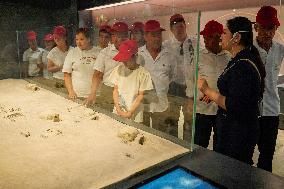
People visit the Wei and Jin Dynasties Ancient Tombs Site Museum in Kuqa City, northwest China's Xinjiang Uygur Autonomous Region, July 15, 2024. An underground museum of the Wei and Jin dynasties (220-420) ancient tombs opened on Monday in Kuqa County, an area that previously belonged to the ancient Qiuci State. The Qiuci State, which commenced in the second century BC and existed for more than 1,000 years, was one of the 36 states in the Western Regions, a term used in the Han Dynasty (206 BC-220 AD) for areas west of the Yumen Pass, including present Xinjiang and parts of Central Asia. This in-situ museum with an exhibition space of 5,000 square meters was built to protect 15 brick tomb chambers discovered in 2007 during the construction of the Youyi Road underground pass. The discovery was one of China's top ten new archaeological discoveries that year. The tomb complex was built in consistence with the Han Dynasty style brick-chambered tombs found in the central China region and along the Hexi Corridor,

  •  
Wei And Jin Dynasties Ancient Tombs Site Museum - Kuqa City

Wei And Jin Dynasties Ancient Tombs Site Museum - Kuqa City

This photo taken on July 15, 2024. An underground museum of the Wei and Jin dynasties (220-420) ancient tombs opened on Monday in Kuqa County, an area that previously belonged to the ancient Qiuci State. The Qiuci State, which commenced in the second century BC and existed for more than 1,000 years, was one of the 36 states in the Western Regions, a term used in the Han Dynasty (206 BC-220 AD) for areas west of the Yumen Pass, including present Xinjiang and parts of Central Asia. This in-situ museum with an exhibition space of 5,000 square meters was built to protect 15 brick tomb chambers discovered in 2007 during the construction of the Youyi Road underground pass. The discovery was one of China's top ten new archaeological discoveries that year. The tomb complex was built in consistence with the Han Dynasty style brick-chambered tombs found in the central China region and along the Hexi Corridor, stretching over a distance of nearly 1,000 kilometers in northwest China's Gansu Province, which is home to fiv

  •  
Wei And Jin Dynasties Ancient Tombs Site Museum - Kuqa City

Wei And Jin Dynasties Ancient Tombs Site Museum - Kuqa City

People visit the Wei and Jin Dynasties Ancient Tombs Site Museum in Kuqa City, northwest China's Xinjiang Uygur Autonomous Region, July 15, 2024. An underground museum of the Wei and Jin dynasties (220-420) ancient tombs opened on Monday in Kuqa County, an area that previously belonged to the ancient Qiuci State. The Qiuci State, which commenced in the second century BC and existed for more than 1,000 years, was one of the 36 states in the Western Regions, a term used in the Han Dynasty (206 BC-220 AD) for areas west of the Yumen Pass, including present Xinjiang and parts of Central Asia. This in-situ museum with an exhibition space of 5,000 square meters was built to protect 15 brick tomb chambers discovered in 2007 during the construction of the Youyi Road underground pass. The discovery was one of China's top ten new archaeological discoveries that year. The tomb complex was built in consistence with the Han Dynasty style brick-chambered tombs found in the central China region and along the Hexi Corridor,

  •  
Wei And Jin Dynasties Ancient Tombs Site Museum - Kuqa City

Wei And Jin Dynasties Ancient Tombs Site Museum - Kuqa City

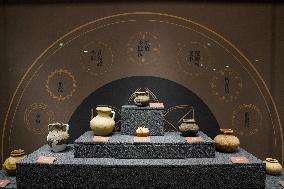
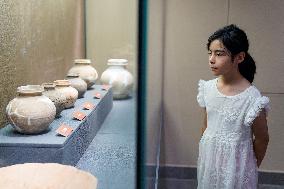
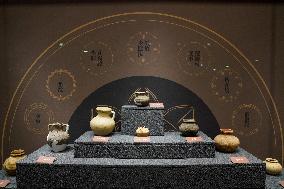
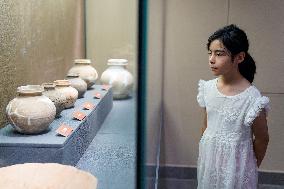
Potteries are exhibited at the Wei and Jin Dynasties Ancient Tombs Site Museum in Kuqa City, northwest China's Xinjiang Uygur Autonomous Region, July 15, 2024. An underground museum of the Wei and Jin dynasties (220-420) ancient tombs opened on Monday in Kuqa County, an area that previously belonged to the ancient Qiuci State. The Qiuci State, which commenced in the second century BC and existed for more than 1,000 years, was one of the 36 states in the Western Regions, a term used in the Han Dynasty (206 BC-220 AD) for areas west of the Yumen Pass, including present Xinjiang and parts of Central Asia. This in-situ museum with an exhibition space of 5,000 square meters was built to protect 15 brick tomb chambers discovered in 2007 during the construction of the Youyi Road underground pass. The discovery was one of China's top ten new archaeological discoveries that year. The tomb complex was built in consistence with the Han Dynasty style brick-chambered tombs found in the central China region and along the H

  •  
Wei And Jin Dynasties Ancient Tombs Site Museum - Kuqa City

Wei And Jin Dynasties Ancient Tombs Site Museum - Kuqa City

People visit the Wei and Jin Dynasties Ancient Tombs Site Museum in Kuqa City, northwest China's Xinjiang Uygur Autonomous Region, July 15, 2024. An underground museum of the Wei and Jin dynasties (220-420) ancient tombs opened on Monday in Kuqa County, an area that previously belonged to the ancient Qiuci State. The Qiuci State, which commenced in the second century BC and existed for more than 1,000 years, was one of the 36 states in the Western Regions, a term used in the Han Dynasty (206 BC-220 AD) for areas west of the Yumen Pass, including present Xinjiang and parts of Central Asia. This in-situ museum with an exhibition space of 5,000 square meters was built to protect 15 brick tomb chambers discovered in 2007 during the construction of the Youyi Road underground pass. The discovery was one of China's top ten new archaeological discoveries that year. The tomb complex was built in consistence with the Han Dynasty style brick-chambered tombs found in the central China region and along the Hexi Corridor,

  •  
Wei And Jin Dynasties Ancient Tombs Site Museum - Kuqa City

Wei And Jin Dynasties Ancient Tombs Site Museum - Kuqa City

This photo taken on July 15, 2024. An underground museum of the Wei and Jin dynasties (220-420) ancient tombs opened on Monday in Kuqa County, an area that previously belonged to the ancient Qiuci State. The Qiuci State, which commenced in the second century BC and existed for more than 1,000 years, was one of the 36 states in the Western Regions, a term used in the Han Dynasty (206 BC-220 AD) for areas west of the Yumen Pass, including present Xinjiang and parts of Central Asia. This in-situ museum with an exhibition space of 5,000 square meters was built to protect 15 brick tomb chambers discovered in 2007 during the construction of the Youyi Road underground pass. The discovery was one of China's top ten new archaeological discoveries that year. The tomb complex was built in consistence with the Han Dynasty style brick-chambered tombs found in the central China region and along the Hexi Corridor, stretching over a distance of nearly 1,000 kilometers in northwest China's Gansu Province, which is home to fiv

  •  
Wei And Jin Dynasties Ancient Tombs Site Museum - Kuqa City

Wei And Jin Dynasties Ancient Tombs Site Museum - Kuqa City

People visit the Wei and Jin Dynasties Ancient Tombs Site Museum in Kuqa City, northwest China's Xinjiang Uygur Autonomous Region, July 15, 2024. An underground museum of the Wei and Jin dynasties (220-420) ancient tombs opened on Monday in Kuqa County, an area that previously belonged to the ancient Qiuci State. The Qiuci State, which commenced in the second century BC and existed for more than 1,000 years, was one of the 36 states in the Western Regions, a term used in the Han Dynasty (206 BC-220 AD) for areas west of the Yumen Pass, including present Xinjiang and parts of Central Asia. This in-situ museum with an exhibition space of 5,000 square meters was built to protect 15 brick tomb chambers discovered in 2007 during the construction of the Youyi Road underground pass. The discovery was one of China's top ten new archaeological discoveries that year. The tomb complex was built in consistence with the Han Dynasty style brick-chambered tombs found in the central China region and along the Hexi Corridor,

  •  
Wei And Jin Dynasties Ancient Tombs Site Museum - Kuqa City

Wei And Jin Dynasties Ancient Tombs Site Museum - Kuqa City

People visit the Wei and Jin Dynasties Ancient Tombs Site Museum in Kuqa City, northwest China's Xinjiang Uygur Autonomous Region, July 15, 2024. An underground museum of the Wei and Jin dynasties (220-420) ancient tombs opened on Monday in Kuqa County, an area that previously belonged to the ancient Qiuci State. The Qiuci State, which commenced in the second century BC and existed for more than 1,000 years, was one of the 36 states in the Western Regions, a term used in the Han Dynasty (206 BC-220 AD) for areas west of the Yumen Pass, including present Xinjiang and parts of Central Asia. This in-situ museum with an exhibition space of 5,000 square meters was built to protect 15 brick tomb chambers discovered in 2007 during the construction of the Youyi Road underground pass. The discovery was one of China's top ten new archaeological discoveries that year. The tomb complex was built in consistence with the Han Dynasty style brick-chambered tombs found in the central China region and along the Hexi Corridor,

  •  
Wei And Jin Dynasties Ancient Tombs Site Museum - Kuqa City

Wei And Jin Dynasties Ancient Tombs Site Museum - Kuqa City

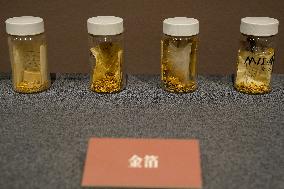
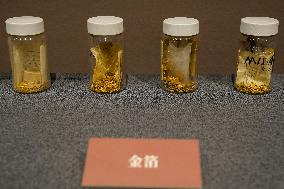
Gold foils are exhibited at the Wei and Jin Dynasties Ancient Tombs Site Museum in Kuqa City, northwest China's Xinjiang Uygur Autonomous Region, July 15, 2024. An underground museum of the Wei and Jin dynasties (220-420) ancient tombs opened on Monday in Kuqa County, an area that previously belonged to the ancient Qiuci State. The Qiuci State, which commenced in the second century BC and existed for more than 1,000 years, was one of the 36 states in the Western Regions, a term used in the Han Dynasty (206 BC-220 AD) for areas west of the Yumen Pass, including present Xinjiang and parts of Central Asia. This in-situ museum with an exhibition space of 5,000 square meters was built to protect 15 brick tomb chambers discovered in 2007 during the construction of the Youyi Road underground pass. The discovery was one of China's top ten new archaeological discoveries that year. The tomb complex was built in consistence with the Han Dynasty style brick-chambered tombs found in the central China region and along the

  •  
Wei And Jin Dynasties Ancient Tombs Site Museum - Kuqa City

Wei And Jin Dynasties Ancient Tombs Site Museum - Kuqa City

People visit the Wei and Jin Dynasties Ancient Tombs Site Museum in Kuqa City, northwest China's Xinjiang Uygur Autonomous Region, July 15, 2024. An underground museum of the Wei and Jin dynasties (220-420) ancient tombs opened on Monday in Kuqa County, an area that previously belonged to the ancient Qiuci State. The Qiuci State, which commenced in the second century BC and existed for more than 1,000 years, was one of the 36 states in the Western Regions, a term used in the Han Dynasty (206 BC-220 AD) for areas west of the Yumen Pass, including present Xinjiang and parts of Central Asia. This in-situ museum with an exhibition space of 5,000 square meters was built to protect 15 brick tomb chambers discovered in 2007 during the construction of the Youyi Road underground pass. The discovery was one of China's top ten new archaeological discoveries that year. The tomb complex was built in consistence with the Han Dynasty style brick-chambered tombs found in the central China region and along the Hexi Corridor,

  •  
Wei And Jin Dynasties Ancient Tombs Site Museum - Kuqa City

Wei And Jin Dynasties Ancient Tombs Site Museum - Kuqa City

People visit the Wei and Jin Dynasties Ancient Tombs Site Museum in Kuqa City, northwest China's Xinjiang Uygur Autonomous Region, July 15, 2024. An underground museum of the Wei and Jin dynasties (220-420) ancient tombs opened on Monday in Kuqa County, an area that previously belonged to the ancient Qiuci State. The Qiuci State, which commenced in the second century BC and existed for more than 1,000 years, was one of the 36 states in the Western Regions, a term used in the Han Dynasty (206 BC-220 AD) for areas west of the Yumen Pass, including present Xinjiang and parts of Central Asia. This in-situ museum with an exhibition space of 5,000 square meters was built to protect 15 brick tomb chambers discovered in 2007 during the construction of the Youyi Road underground pass. The discovery was one of China's top ten new archaeological discoveries that year. The tomb complex was built in consistence with the Han Dynasty style brick-chambered tombs found in the central China region and along the Hexi Corridor,

  •  
Wei And Jin Dynasties Ancient Tombs Site Museum - Kuqa City

Wei And Jin Dynasties Ancient Tombs Site Museum - Kuqa City

A visitor views exhibits at the Wei and Jin Dynasties Ancient Tombs Site Museum in Kuqa City, northwest China's Xinjiang Uygur Autonomous Region, July 15, 2024. An underground museum of the Wei and Jin dynasties (220-420) ancient tombs opened on Monday in Kuqa County, an area that previously belonged to the ancient Qiuci State. The Qiuci State, which commenced in the second century BC and existed for more than 1,000 years, was one of the 36 states in the Western Regions, a term used in the Han Dynasty (206 BC-220 AD) for areas west of the Yumen Pass, including present Xinjiang and parts of Central Asia. This in-situ museum with an exhibition space of 5,000 square meters was built to protect 15 brick tomb chambers discovered in 2007 during the construction of the Youyi Road underground pass. The discovery was one of China's top ten new archaeological discoveries that year. The tomb complex was built in consistence with the Han Dynasty style brick-chambered tombs found in the central China region and along the

  •  
Wei And Jin Dynasties Ancient Tombs Site Museum - Kuqa City

Wei And Jin Dynasties Ancient Tombs Site Museum - Kuqa City

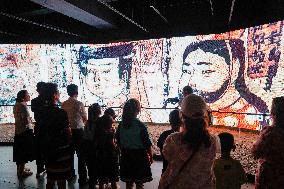
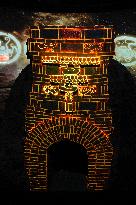
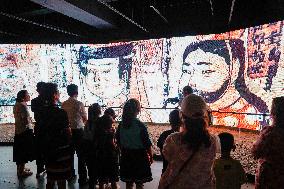
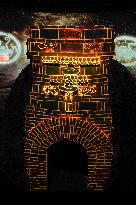
Exhibits powered by digital technologies are pictured at the Wei and Jin Dynasties Ancient Tombs Site Museum in Kuqa City, northwest China's Xinjiang Uygur Autonomous Region, July 15, 2024. An underground museum of the Wei and Jin dynasties (220-420) ancient tombs opened on Monday in Kuqa County, an area that previously belonged to the ancient Qiuci State. The Qiuci State, which commenced in the second century BC and existed for more than 1,000 years, was one of the 36 states in the Western Regions, a term used in the Han Dynasty (206 BC-220 AD) for areas west of the Yumen Pass, including present Xinjiang and parts of Central Asia. This in-situ museum with an exhibition space of 5,000 square meters was built to protect 15 brick tomb chambers discovered in 2007 during the construction of the Youyi Road underground pass. The discovery was one of China's top ten new archaeological discoveries that year. The tomb complex was built in consistence with the Han Dynasty style brick-chambered tombs found in the centra

  •  
CHINA-XINJIANG-KUQA-TOMBS SITE MUSEUM-OPEN (CN)

CHINA-XINJIANG-KUQA-TOMBS SITE MUSEUM-OPEN (CN)

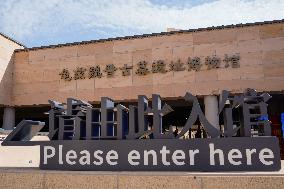
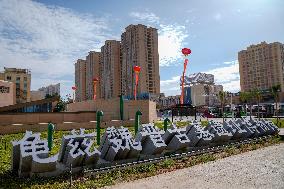
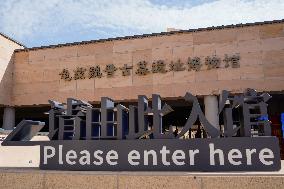
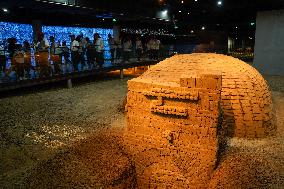
(240715) -- KUQA, July 15, 2024 Photo by Xinhua/ABACAPRESS.COM) -- This photo taken on July 15, 2024 shows an exterior view of the Wei and Jin Dynasties Ancient Tombs Site Museum in Kuqa City, northwest China's Xinjiang Uygur Autonomous Region. An underground museum of the Wei and Jin dynasties (220-420) ancient tombs opened on Monday in Kuqa County, an area that previously belonged to the ancient Qiuci State. The Qiuci State, which commenced in the second century BC and existed for more than 1,000 years, was one of the 36 states in the Western Regions, a term used in the Han Dynasty (206 BC-220 AD) for areas west of the Yumen Pass, including present Xinjiang and parts of Central Asia. This in-situ museum with an exhibition space of 5,000 square meters was built to protect 15 brick tomb chambers discovered in 2007 during the construction of the Youyi Road underground pass. The discovery was one of China's top ten new archaeological discoveries that year. The tomb complex was built in consistence with the Han

  •  
CHINA-XINJIANG-KUQA-TOMBS SITE MUSEUM-OPEN (CN)

CHINA-XINJIANG-KUQA-TOMBS SITE MUSEUM-OPEN (CN)

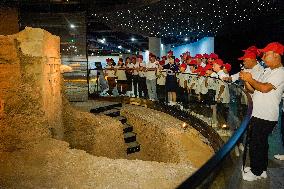
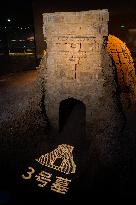
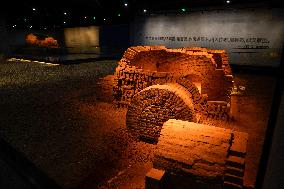
(240715) -- KUQA, July 15, 2024 Photo by Xinhua/ABACAPRESS.COM) -- This photo taken on July 15, 2024 shows a tomb exhibited at the Wei and Jin Dynasties Ancient Tombs Site Museum in Kuqa City, northwest China's Xinjiang Uygur Autonomous Region. An underground museum of the Wei and Jin dynasties (220-420) ancient tombs opened on Monday in Kuqa County, an area that previously belonged to the ancient Qiuci State. The Qiuci State, which commenced in the second century BC and existed for more than 1,000 years, was one of the 36 states in the Western Regions, a term used in the Han Dynasty (206 BC-220 AD) for areas west of the Yumen Pass, including present Xinjiang and parts of Central Asia. This in-situ museum with an exhibition space of 5,000 square meters was built to protect 15 brick tomb chambers discovered in 2007 during the construction of the Youyi Road underground pass. The discovery was one of China's top ten new archaeological discoveries that year. The tomb complex was built in consistence with the Han

  •  
CHINA-XINJIANG-KUQA-TOMBS SITE MUSEUM-OPEN (CN)

CHINA-XINJIANG-KUQA-TOMBS SITE MUSEUM-OPEN (CN)

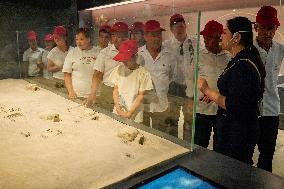
(240715) -- KUQA, July 15, 2024 Photo by Xinhua/ABACAPRESS.COM) -- People visit the Wei and Jin Dynasties Ancient Tombs Site Museum in Kuqa City, northwest China's Xinjiang Uygur Autonomous Region, July 15, 2024. An underground museum of the Wei and Jin dynasties (220-420) ancient tombs opened on Monday in Kuqa County, an area that previously belonged to the ancient Qiuci State. The Qiuci State, which commenced in the second century BC and existed for more than 1,000 years, was one of the 36 states in the Western Regions, a term used in the Han Dynasty (206 BC-220 AD) for areas west of the Yumen Pass, including present Xinjiang and parts of Central Asia. This in-situ museum with an exhibition space of 5,000 square meters was built to protect 15 brick tomb chambers discovered in 2007 during the construction of the Youyi Road underground pass. The discovery was one of China's top ten new archaeological discoveries that year. The tomb complex was built in consistence with the Han Dynasty style brick-chambered to

  •  
CHINA-XINJIANG-KUQA-TOMBS SITE MUSEUM-OPEN (CN)

CHINA-XINJIANG-KUQA-TOMBS SITE MUSEUM-OPEN (CN)

(240715) -- KUQA, July 15, 2024 Photo by Xinhua/ABACAPRESS.COM) -- People visit the Wei and Jin Dynasties Ancient Tombs Site Museum in Kuqa City, northwest China's Xinjiang Uygur Autonomous Region, July 15, 2024. An underground museum of the Wei and Jin dynasties (220-420) ancient tombs opened on Monday in Kuqa County, an area that previously belonged to the ancient Qiuci State. The Qiuci State, which commenced in the second century BC and existed for more than 1,000 years, was one of the 36 states in the Western Regions, a term used in the Han Dynasty (206 BC-220 AD) for areas west of the Yumen Pass, including present Xinjiang and parts of Central Asia. This in-situ museum with an exhibition space of 5,000 square meters was built to protect 15 brick tomb chambers discovered in 2007 during the construction of the Youyi Road underground pass. The discovery was one of China's top ten new archaeological discoveries that year. The tomb complex was built in consistence with the Han Dynasty style brick-chambered to

  •  
CHINA-XINJIANG-KUQA-TOMBS SITE MUSEUM-OPEN (CN)

CHINA-XINJIANG-KUQA-TOMBS SITE MUSEUM-OPEN (CN)

(240715) -- KUQA, July 15, 2024 Photo by Xinhua/ABACAPRESS.COM) -- This photo taken on July 15, 2024 shows an exterior view of the Wei and Jin Dynasties Ancient Tombs Site Museum in Kuqa City, northwest China's Xinjiang Uygur Autonomous Region. An underground museum of the Wei and Jin dynasties (220-420) ancient tombs opened on Monday in Kuqa County, an area that previously belonged to the ancient Qiuci State. The Qiuci State, which commenced in the second century BC and existed for more than 1,000 years, was one of the 36 states in the Western Regions, a term used in the Han Dynasty (206 BC-220 AD) for areas west of the Yumen Pass, including present Xinjiang and parts of Central Asia. This in-situ museum with an exhibition space of 5,000 square meters was built to protect 15 brick tomb chambers discovered in 2007 during the construction of the Youyi Road underground pass. The discovery was one of China's top ten new archaeological discoveries that year. The tomb complex was built in consistence with the Han

  •  
CHINA-XINJIANG-KUQA-TOMBS SITE MUSEUM-OPEN (CN)

CHINA-XINJIANG-KUQA-TOMBS SITE MUSEUM-OPEN (CN)

(240715) -- KUQA, July 15, 2024 Photo by Xinhua/ABACAPRESS.COM) -- People visit the Wei and Jin Dynasties Ancient Tombs Site Museum in Kuqa City, northwest China's Xinjiang Uygur Autonomous Region, July 15, 2024. An underground museum of the Wei and Jin dynasties (220-420) ancient tombs opened on Monday in Kuqa County, an area that previously belonged to the ancient Qiuci State. The Qiuci State, which commenced in the second century BC and existed for more than 1,000 years, was one of the 36 states in the Western Regions, a term used in the Han Dynasty (206 BC-220 AD) for areas west of the Yumen Pass, including present Xinjiang and parts of Central Asia. This in-situ museum with an exhibition space of 5,000 square meters was built to protect 15 brick tomb chambers discovered in 2007 during the construction of the Youyi Road underground pass. The discovery was one of China's top ten new archaeological discoveries that year. The tomb complex was built in consistence with the Han Dynasty style brick-chambered to

  •  
CHINA-XINJIANG-KUQA-TOMBS SITE MUSEUM-OPEN (CN)

CHINA-XINJIANG-KUQA-TOMBS SITE MUSEUM-OPEN (CN)

(240715) -- KUQA, July 15, 2024 Photo by Xinhua/ABACAPRESS.COM) -- Potteries are exhibited at the Wei and Jin Dynasties Ancient Tombs Site Museum in Kuqa City, northwest China's Xinjiang Uygur Autonomous Region, July 15, 2024. An underground museum of the Wei and Jin dynasties (220-420) ancient tombs opened on Monday in Kuqa County, an area that previously belonged to the ancient Qiuci State. The Qiuci State, which commenced in the second century BC and existed for more than 1,000 years, was one of the 36 states in the Western Regions, a term used in the Han Dynasty (206 BC-220 AD) for areas west of the Yumen Pass, including present Xinjiang and parts of Central Asia. This in-situ museum with an exhibition space of 5,000 square meters was built to protect 15 brick tomb chambers discovered in 2007 during the construction of the Youyi Road underground pass. The discovery was one of China's top ten new archaeological discoveries that year. The tomb complex was built in consistence with the Han Dynasty style bric

  •  
CHINA-XINJIANG-KUQA-TOMBS SITE MUSEUM-OPEN (CN)

CHINA-XINJIANG-KUQA-TOMBS SITE MUSEUM-OPEN (CN)

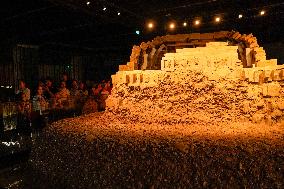
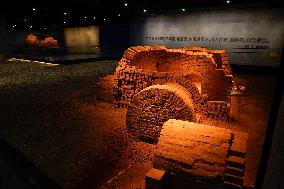
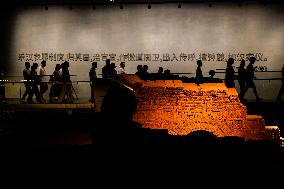
(240715) -- KUQA, July 15, 2024 Photo by Xinhua/ABACAPRESS.COM) -- This photo taken on July 15, 2024 shows an interior view of the Wei and Jin Dynasties Ancient Tombs Site Museum in Kuqa City, northwest China's Xinjiang Uygur Autonomous Region. An underground museum of the Wei and Jin dynasties (220-420) ancient tombs opened on Monday in Kuqa County, an area that previously belonged to the ancient Qiuci State. The Qiuci State, which commenced in the second century BC and existed for more than 1,000 years, was one of the 36 states in the Western Regions, a term used in the Han Dynasty (206 BC-220 AD) for areas west of the Yumen Pass, including present Xinjiang and parts of Central Asia. This in-situ museum with an exhibition space of 5,000 square meters was built to protect 15 brick tomb chambers discovered in 2007 during the construction of the Youyi Road underground pass. The discovery was one of China's top ten new archaeological discoveries that year. The tomb complex was built in consistence with the Han

  •  
CHINA-XINJIANG-KUQA-TOMBS SITE MUSEUM-OPEN (CN)

CHINA-XINJIANG-KUQA-TOMBS SITE MUSEUM-OPEN (CN)

(240715) -- KUQA, July 15, 2024 Photo by Xinhua/ABACAPRESS.COM) -- People visit the Wei and Jin Dynasties Ancient Tombs Site Museum in Kuqa City, northwest China's Xinjiang Uygur Autonomous Region, July 15, 2024. An underground museum of the Wei and Jin dynasties (220-420) ancient tombs opened on Monday in Kuqa County, an area that previously belonged to the ancient Qiuci State. The Qiuci State, which commenced in the second century BC and existed for more than 1,000 years, was one of the 36 states in the Western Regions, a term used in the Han Dynasty (206 BC-220 AD) for areas west of the Yumen Pass, including present Xinjiang and parts of Central Asia. This in-situ museum with an exhibition space of 5,000 square meters was built to protect 15 brick tomb chambers discovered in 2007 during the construction of the Youyi Road underground pass. The discovery was one of China's top ten new archaeological discoveries that year. The tomb complex was built in consistence with the Han Dynasty style brick-chambered to

  •  
CHINA-XINJIANG-KUQA-TOMBS SITE MUSEUM-OPEN (CN)

CHINA-XINJIANG-KUQA-TOMBS SITE MUSEUM-OPEN (CN)

(240715) -- KUQA, July 15, 2024 Photo by Xinhua/ABACAPRESS.COM) -- People visit the Wei and Jin Dynasties Ancient Tombs Site Museum in Kuqa City, northwest China's Xinjiang Uygur Autonomous Region, July 15, 2024. An underground museum of the Wei and Jin dynasties (220-420) ancient tombs opened on Monday in Kuqa County, an area that previously belonged to the ancient Qiuci State. The Qiuci State, which commenced in the second century BC and existed for more than 1,000 years, was one of the 36 states in the Western Regions, a term used in the Han Dynasty (206 BC-220 AD) for areas west of the Yumen Pass, including present Xinjiang and parts of Central Asia. This in-situ museum with an exhibition space of 5,000 square meters was built to protect 15 brick tomb chambers discovered in 2007 during the construction of the Youyi Road underground pass. The discovery was one of China's top ten new archaeological discoveries that year. The tomb complex was built in consistence with the Han Dynasty style brick-chambered to

  •  
CHINA-XINJIANG-KUQA-TOMBS SITE MUSEUM-OPEN (CN)

CHINA-XINJIANG-KUQA-TOMBS SITE MUSEUM-OPEN (CN)

(240715) -- KUQA, July 15, 2024 Photo by Xinhua/ABACAPRESS.COM) -- Visitors wear VR sets for exhibitions at the Wei and Jin Dynasties Ancient Tombs Site Museum in Kuqa City, northwest China's Xinjiang Uygur Autonomous Region, July 15, 2024. An underground museum of the Wei and Jin dynasties (220-420) ancient tombs opened on Monday in Kuqa County, an area that previously belonged to the ancient Qiuci State. The Qiuci State, which commenced in the second century BC and existed for more than 1,000 years, was one of the 36 states in the Western Regions, a term used in the Han Dynasty (206 BC-220 AD) for areas west of the Yumen Pass, including present Xinjiang and parts of Central Asia. This in-situ museum with an exhibition space of 5,000 square meters was built to protect 15 brick tomb chambers discovered in 2007 during the construction of the Youyi Road underground pass. The discovery was one of China's top ten new archaeological discoveries that year. The tomb complex was built in consistence with the Han Dyna

  •  
CHINA-XINJIANG-KUQA-TOMBS SITE MUSEUM-OPEN (CN)

CHINA-XINJIANG-KUQA-TOMBS SITE MUSEUM-OPEN (CN)

(240715) -- KUQA, July 15, 2024 Photo by Xinhua/ABACAPRESS.COM) -- Gold foils are exhibited at the Wei and Jin Dynasties Ancient Tombs Site Museum in Kuqa City, northwest China's Xinjiang Uygur Autonomous Region, July 15, 2024. An underground museum of the Wei and Jin dynasties (220-420) ancient tombs opened on Monday in Kuqa County, an area that previously belonged to the ancient Qiuci State. The Qiuci State, which commenced in the second century BC and existed for more than 1,000 years, was one of the 36 states in the Western Regions, a term used in the Han Dynasty (206 BC-220 AD) for areas west of the Yumen Pass, including present Xinjiang and parts of Central Asia. This in-situ museum with an exhibition space of 5,000 square meters was built to protect 15 brick tomb chambers discovered in 2007 during the construction of the Youyi Road underground pass. The discovery was one of China's top ten new archaeological discoveries that year. The tomb complex was built in consistence with the Han Dynasty style bri

  •  
CHINA-XINJIANG-KUQA-TOMBS SITE MUSEUM-OPEN (CN)

CHINA-XINJIANG-KUQA-TOMBS SITE MUSEUM-OPEN (CN)

(240715) -- KUQA, July 15, 2024 Photo by Xinhua/ABACAPRESS.COM) -- People visit the Wei and Jin Dynasties Ancient Tombs Site Museum in Kuqa City, northwest China's Xinjiang Uygur Autonomous Region, July 15, 2024. An underground museum of the Wei and Jin dynasties (220-420) ancient tombs opened on Monday in Kuqa County, an area that previously belonged to the ancient Qiuci State. The Qiuci State, which commenced in the second century BC and existed for more than 1,000 years, was one of the 36 states in the Western Regions, a term used in the Han Dynasty (206 BC-220 AD) for areas west of the Yumen Pass, including present Xinjiang and parts of Central Asia. This in-situ museum with an exhibition space of 5,000 square meters was built to protect 15 brick tomb chambers discovered in 2007 during the construction of the Youyi Road underground pass. The discovery was one of China's top ten new archaeological discoveries that year. The tomb complex was built in consistence with the Han Dynasty style brick-chambered to

  •  
CHINA-XINJIANG-KUQA-TOMBS SITE MUSEUM-OPEN (CN)

CHINA-XINJIANG-KUQA-TOMBS SITE MUSEUM-OPEN (CN)

(240715) -- KUQA, July 15, 2024 Photo by Xinhua/ABACAPRESS.COM) -- People visit the Wei and Jin Dynasties Ancient Tombs Site Museum in Kuqa City, northwest China's Xinjiang Uygur Autonomous Region, July 15, 2024. An underground museum of the Wei and Jin dynasties (220-420) ancient tombs opened on Monday in Kuqa County, an area that previously belonged to the ancient Qiuci State. The Qiuci State, which commenced in the second century BC and existed for more than 1,000 years, was one of the 36 states in the Western Regions, a term used in the Han Dynasty (206 BC-220 AD) for areas west of the Yumen Pass, including present Xinjiang and parts of Central Asia. This in-situ museum with an exhibition space of 5,000 square meters was built to protect 15 brick tomb chambers discovered in 2007 during the construction of the Youyi Road underground pass. The discovery was one of China's top ten new archaeological discoveries that year. The tomb complex was built in consistence with the Han Dynasty style brick-chambered to

  •  
CHINA-XINJIANG-KUQA-TOMBS SITE MUSEUM-OPEN (CN)

CHINA-XINJIANG-KUQA-TOMBS SITE MUSEUM-OPEN (CN)

(240715) -- KUQA, July 15, 2024 Photo by Xinhua/ABACAPRESS.COM) -- A visitor views exhibits at the Wei and Jin Dynasties Ancient Tombs Site Museum in Kuqa City, northwest China's Xinjiang Uygur Autonomous Region, July 15, 2024. An underground museum of the Wei and Jin dynasties (220-420) ancient tombs opened on Monday in Kuqa County, an area that previously belonged to the ancient Qiuci State. The Qiuci State, which commenced in the second century BC and existed for more than 1,000 years, was one of the 36 states in the Western Regions, a term used in the Han Dynasty (206 BC-220 AD) for areas west of the Yumen Pass, including present Xinjiang and parts of Central Asia. This in-situ museum with an exhibition space of 5,000 square meters was built to protect 15 brick tomb chambers discovered in 2007 during the construction of the Youyi Road underground pass. The discovery was one of China's top ten new archaeological discoveries that year. The tomb complex was built in consistence with the Han Dynasty style bri

  •  
CHINA-XINJIANG-KUQA-TOMBS SITE MUSEUM-OPEN (CN)

CHINA-XINJIANG-KUQA-TOMBS SITE MUSEUM-OPEN (CN)

(240715) -- KUQA, July 15, 2024 Photo by Xinhua/ABACAPRESS.COM) -- Exhibits powered by digital technologies are pictured at the Wei and Jin Dynasties Ancient Tombs Site Museum in Kuqa City, northwest China's Xinjiang Uygur Autonomous Region, July 15, 2024. An underground museum of the Wei and Jin dynasties (220-420) ancient tombs opened on Monday in Kuqa County, an area that previously belonged to the ancient Qiuci State. The Qiuci State, which commenced in the second century BC and existed for more than 1,000 years, was one of the 36 states in the Western Regions, a term used in the Han Dynasty (206 BC-220 AD) for areas west of the Yumen Pass, including present Xinjiang and parts of Central Asia. This in-situ museum with an exhibition space of 5,000 square meters was built to protect 15 brick tomb chambers discovered in 2007 during the construction of the Youyi Road underground pass. The discovery was one of China's top ten new archaeological discoveries that year. The tomb complex was built in consistence w

  •  
(SP)SLOVENIA-PORTOROZ-SAILING-INTERNATIONAL 420 CLASS OPEN EUROPEAN CHAMPIONSHIP

(SP)SLOVENIA-PORTOROZ-SAILING-INTERNATIONAL 420 CLASS OPEN EUROPEAN CHAMPIONSHIP

(240710) -- LJUBLJANA, July 10, 2024 Photo by Xinhua/ABACAPRESS.COM) -- Sailors start during the mixed category at the International 420 Class Open European Championship in Portoroz, Slovenia, July 9, 2024. (Photo by Zeljko Stevanic/Xinhua/ABACAPRESS.COM

  •  
(SP)SLOVENIA-PORTOROZ-SAILING-INTERNATIONAL 420 CLASS OPEN EUROPEAN CHAMPIONSHIP

(SP)SLOVENIA-PORTOROZ-SAILING-INTERNATIONAL 420 CLASS OPEN EUROPEAN CHAMPIONSHIP

(240710) -- LJUBLJANA, July 10, 2024 Photo by Xinhua/ABACAPRESS.COM) -- Sailors prepare their boats before the International 420 Class Open European Championship in Portoroz, Slovenia, July 9, 2024. (Photo by Zeljko Stevanic/Xinhua/ABACAPRESS.COM

  •  
(SP)SLOVENIA-PORTOROZ-SAILING-INTERNATIONAL 420 CLASS OPEN EUROPEAN CHAMPIONSHIP

(SP)SLOVENIA-PORTOROZ-SAILING-INTERNATIONAL 420 CLASS OPEN EUROPEAN CHAMPIONSHIP

(240710) -- LJUBLJANA, July 10, 2024 Photo by Xinhua/ABACAPRESS.COM) -- Ana Planinsic/Teo Gerzelj (L) of Slovenia compete during the mixed category at the International 420 Class Open European Championship in Portoroz, Slovenia, July 9, 2024. (Photo by Zeljko Stevanic/Xinhua/ABACAPRESS.COM

  •  
(SP)SLOVENIA-PORTOROZ-SAILING-INTERNATIONAL 420 CLASS OPEN EUROPEAN CHAMPIONSHIP

(SP)SLOVENIA-PORTOROZ-SAILING-INTERNATIONAL 420 CLASS OPEN EUROPEAN CHAMPIONSHIP

(240710) -- LJUBLJANA, July 10, 2024 Photo by Xinhua/ABACAPRESS.COM) -- Ana Planinsic/Teo Gerzelj of Slovenia compete during the mixed category at the International 420 Class Open European Championship in Portoroz, Slovenia, July 9, 2024. (Photo by Zeljko Stevanic/Xinhua/ABACAPRESS.COM

  •  
(SP)SLOVENIA-PORTOROZ-SAILING-INTERNATIONAL 420 CLASS OPEN EUROPEAN CHAMPIONSHIP

(SP)SLOVENIA-PORTOROZ-SAILING-INTERNATIONAL 420 CLASS OPEN EUROPEAN CHAMPIONSHIP

(240710) -- LJUBLJANA, July 10, 2024 Photo by Xinhua/ABACAPRESS.COM) -- Lisa Vucetti/Vittorio Bonifacio (L) of Italy compete during the mixed category at the International 420 Class Open European Championship in Portoroz, Slovenia, July 9, 2024. (Photo by Zeljko Stevanic/Xinhua/ABACAPRESS.COM

  •  
(SP)SLOVENIA-PORTOROZ-SAILING-INTERNATIONAL 420 CLASS OPEN EUROPEAN CHAMPIONSHIP

(SP)SLOVENIA-PORTOROZ-SAILING-INTERNATIONAL 420 CLASS OPEN EUROPEAN CHAMPIONSHIP

(240710) -- LJUBLJANA, July 10, 2024 Photo by Xinhua/ABACAPRESS.COM) -- Sailors compete during the International 420 Class Open European Championship in Portoroz, Slovenia, July 9, 2024. (Photo by Zeljko Stevanic/Xinhua/ABACAPRESS.COM

  • Main
  • Top
  • Editorial
  • Creative
  • About Us
  • About ILG
  • Terms of use
  • Company
  • BEHIND
  • Price List
  • Single Plan
  • Monthly Plan
  • Services
  • Shooting
  • Rights Clearance
  • Support
  • FAQ
  • How To Buy
  • Contact Us
  • Become a Partner

© KYODO NEWS IMAGES INC

All Rights Reserved.

  • Editorial
  • Olympics
  • News
  • Sports
  • Japan
  • Tech
  • Royal
  • Disaster
  • NorthKorea
  • Old Japan
  • SNS
  • Creative
  • Food
  • Japan
  • Landscape
  • Animal
  • Popular
  • #Ukraine
  • #China
  • #coronavirus
  • #N. Korea
  • #Thailand
  • #Russia
  • #Ukraine
  • #China
  • #coronavirus
  • #N. Korea
  • #Thailand
  • #Russia
  • Food
  • Japan
  • Landscape
  • Animal
  • Olympics
  • News
  • Sports
  • Japan
  • Tech
  • Royal
  • Disaster
  • NorthKorea
  • Old Japan
  • SNS