•  
Aoi Festival in Kyoto

Aoi Festival in Kyoto

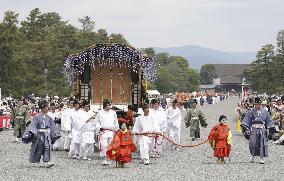
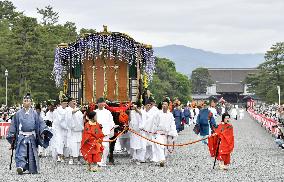
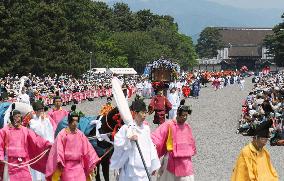
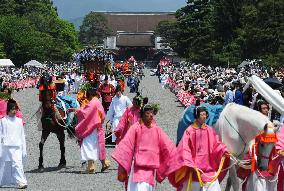
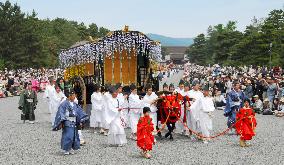
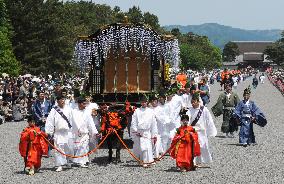
People dressed in court-style attire from the Heian period (794-1185) leave Kyoto Imperial Palace for a parade with a court carriage during the annual Aoi Festival, one of the three main festivals of the ancient Japanese capital, on May 15, 2025.

  •  
Actress Mizuki takes part in ancient imperial boating party reenacted in Kyoto

Actress Mizuki takes part in ancient imperial boating party reenacted in Kyoto

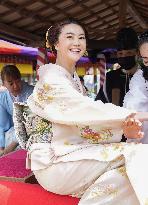
Japanese actress and singer Arisa Mizuki rides a boat in a reenactment of an imperial boating party from the Heian period (794-late 12th century) during the annual Mifune festival in Kyoto on May 21, 2023.

  •  
Ancient imperial boat celebration reenacted in Kyoto

Ancient imperial boat celebration reenacted in Kyoto

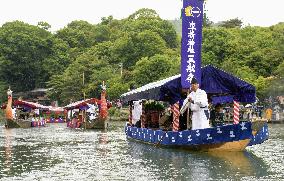
People dressed in ancient Japanese court-style attire are seen on boats floating down the Oigawa River in the western Japan city of Kyoto on May 19, 2024, during the annual Mifune festival, known for its reenactment of an imperial boating party from the Heian period (794-1185).

  •  
Ancient imperial boat celebration reenacted in Kyoto

Ancient imperial boat celebration reenacted in Kyoto

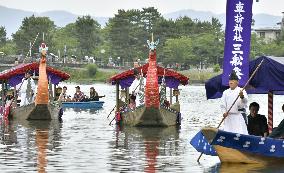
People dressed in ancient Japanese court-style attire are seen on boats floating down the Oigawa River in the western Japan city of Kyoto on May 19, 2024, during the annual Mifune festival, known for its reenactment of an imperial boating party from the Heian period (794-1185).

  •  

Aoi festival in Kyoto

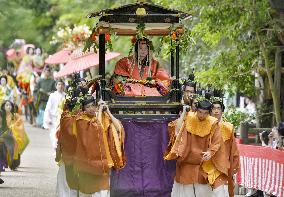
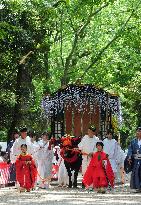
KYOTO, Japan, May 15 Kyodo - People dressed in traditional costumes of the ancient Heian period (794-1185) parade through Shimogamo Shrine in Kyoto on May 15, 2024, with a palanquin carrying a woman playing the role of the Saio-dai priestess during the annual Aoi Festival, one of the three main festivals of the ancient Japanese capital. (Kyodo)

  •  
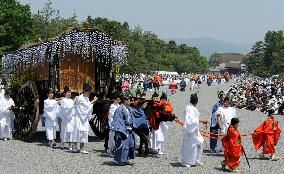
Aoi festival in Kyoto

Aoi festival in Kyoto

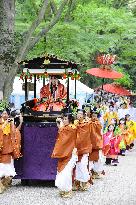
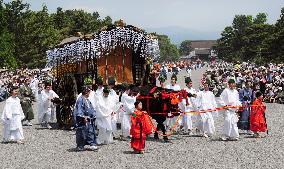
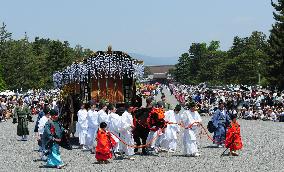
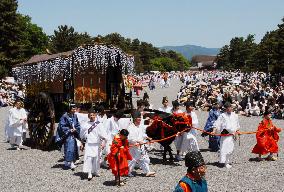
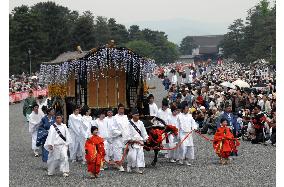
People dressed in traditional costumes of the ancient Heian period (794-1185) parade with an ancient style court carriage during the annual Aoi Festival, one of the three main festivals of the ancient Japanese capital of Kyoto, on May 15, 2024.

  •  
Aoi festival in Kyoto

Aoi festival in Kyoto

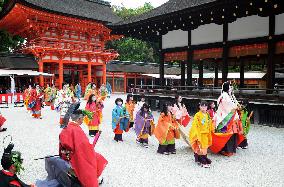
People dressed in traditional costumes of the ancient Heian period (794-1185) parade through Shimogamo Shrine in Kyoto on May 15, 2024, with a palanquin carrying a woman playing the role of the Saio-dai priestess during the annual Aoi Festival, one of the three main festivals of the ancient Japanese capital.

  •  
Ancient roof tiles found in disposal pit in Kyoto

Ancient roof tiles found in disposal pit in Kyoto

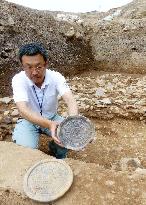
KYOTO, Japan - A local education board official shows ancient roof tiles found in a disposal pit in Oyamazaki, Kyoto Prefecture, western Japan, on June 4, 2014. They have the same patterns as tiles used to build structures in Kyoto where the nation's capital was relocated in 794 A.D.

  •  
Missing piece of ancient classic writing found in Kyoto

Missing piece of ancient classic writing found in Kyoto

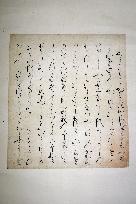
TOKYO, Japan - A partial script of "Yoru no Nezame" (Awakening at Night), a classic tale from the Heian era (794-1192) believed to have been written by a daughter of nobleman Sugawara no Takasue, is displayed in Kyoto, western Japan, on May 29, 2014. It was found at an antiquarian bookstore in the ancient Japanese capital.

  •  
Heian-style procession in Tottori Pref.

Heian-style procession in Tottori Pref.

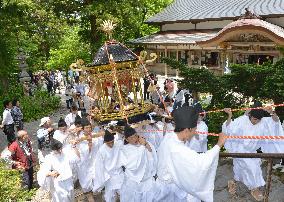
YONAGO, Japan - People dressed in ancient attire from the Heian era (794-1192) carry a ''mikoshi'' (portable shrine) along the approach of Daisenji, a Buddhist temple in Daisen, Tottori Prefecture, on May 24, 2014.

  •  
Ancient court-style parade held in Kyoto

Ancient court-style parade held in Kyoto

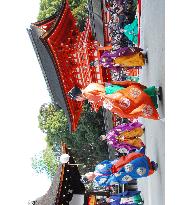
KYOTO, Japan - A procession of people dressed as nobles in ancient court-style attire from the Heian era (794-1192) reaches the Shimogamo Shrine on May 15, 2014, during the Aoi Festival, one of three major festivals in Kyoto, western Japan.

  •  
Ancient court-style parade held in Kyoto

Ancient court-style parade held in Kyoto

KYOTO, Japan - A procession of people dressed as nobles in ancient court-style attire from the Heian era (794-1192) goes through the Shimogamo Shrine on May 15, 2014, during the Aoi Festival, one of three major festivals in Kyoto, western Japan.

  •  
Ancient court-style parade held in Kyoto

Ancient court-style parade held in Kyoto

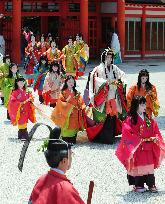
KYOTO, Japan - A procession of people dressed as nobles in ancient court-style attire from the Heian era (794-1192) departs from the Old Imperial Palace in Kyoto, western Japan, on May 15, 2014, for an 8-kilometer parade during the Aoi Festival, one of three major festivals in the old Japanese capital.

  •  
Kyoto temple after renovation

Kyoto temple after renovation

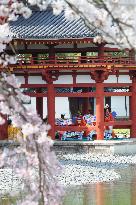
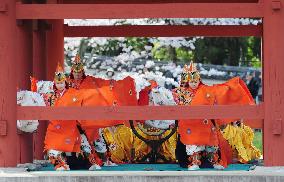
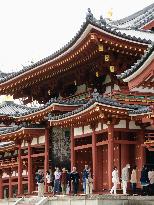
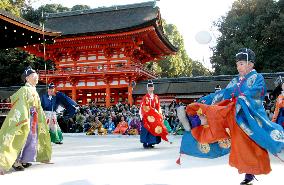
KYOTO, Japan - A "bugaku" dance and music performance takes place at a ceremony at World Heritage site Byodoin temple's Phoenix Hall in Uji, Kyoto Prefecture, on April 2, 2014, to mark the completion of the main part of the hall's restoration work. The hall, one of the finest examples of the aristocratic art and architecture of the latter part of the Heian period (794-1185), was opened to visitors the following day after one and a half years of renovation work.

  •  
Kyoto temple after renovation

Kyoto temple after renovation

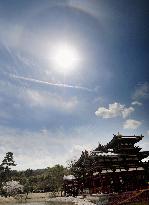
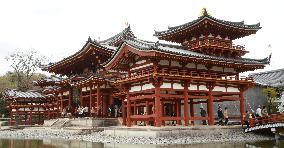
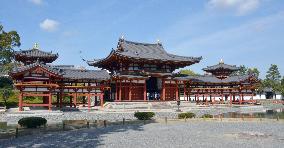
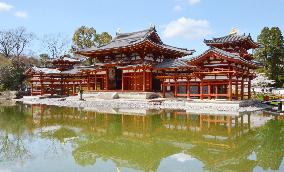
KYOTO, Japan - Photo taken April 2, 2014, shows World Heritage site Byodoin temple's Phoenix Hall in Uji, Kyoto Prefecture, where a ceremony was held that day to mark the completion of the main part of the hall's restoration work. The hall, one of the finest examples of the aristocratic art and architecture of the latter part of the Heian period (794-1185), was opened to visitors the following day after one and a half years of renovation work.

  •  
Kyoto temple after renovation

Kyoto temple after renovation

KYOTO, Japan - A "bugaku" dance and music performance takes place at a ceremony at World Heritage site Byodoin temple's Phoenix Hall in Uji, Kyoto Prefecture, on April 2, 2014, to mark the completion of the main part of the hall's restoration work. The hall, one of the finest examples of the aristocratic art and architecture of the latter part of the Heian period (794-1185), was opened to visitors the following day after one and a half years of renovation work.

  •  
Kyoto temple after renovation

Kyoto temple after renovation

KYOTO, Japan - Photo shows World Heritage site Byodoin temple's Phoenix Hall in Uji, Kyoto Prefecture, on April 3, 2014. The hall, one of the finest examples of the aristocratic art and architecture of the latter part of the Heian period (794-1185), was opened to visitors that day after one and a half years of renovation work.

  •  
Kyoto temple after renovation

Kyoto temple after renovation

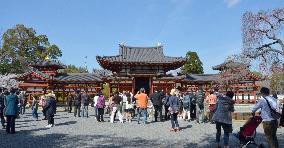
KYOTO, Japan - Photo shows visitors at World Heritage site Byodoin temple's Phoenix Hall in Uji, Kyoto Prefecture, on April 3, 2014. The hall, one of the finest examples of the aristocratic art and architecture of the latter part of the Heian period (794-1185), was opened to visitors that day after one and a half years of renovation work.

  •  
Kyoto temple after renovation

Kyoto temple after renovation

KYOTO, Japan - Photo taken April 3, 2014, shows World Heritage site Byodoin temple's Phoenix Hall in Uji, Kyoto Prefecture. The hall, one of the finest examples of the aristocratic art and architecture of the latter part of the Heian period (794-1185), was opened to visitors that day after one and a half years of renovation work.

  •  
Kyoto temple after renovation

Kyoto temple after renovation

KYOTO, Japan - Photo taken April 3, 2014, shows World Heritage site Byodoin temple's Phoenix Hall in Uji, Kyoto Prefecture. The hall, one of the finest examples of the aristocratic art and architecture of the latter part of the Heian period (794-1185), was opened to visitors that day after one and a half years of renovation work.

  •  
Kyoto temple after renovation

Kyoto temple after renovation

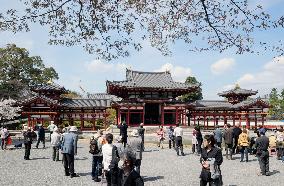
KYOTO, Japan - Photo shows tourists in front of World Heritage site Byodoin temple's Phoenix Hall in Uji, Kyoto Prefecture, on April 3, 2014. The hall, one of the finest examples of the aristocratic art and architecture of the latter part of the Heian period (794-1185), was opened to visitors that day after one and a half years of renovation work.

  •  
Kyoto's World Heritage temple to reopen after renovation

Kyoto's World Heritage temple to reopen after renovation

KYOTO, Japan - World Heritage site Byodoin temple's Phoenix Hall in Uji, Kyoto Prefecture, western Japan, as photographed on April 2, 2014. The hall, one of the finest examples of the aristocratic art and architecture of the latter part of the Heian period (794-1185), was reopened to visitors the following day after one and a half years of renovation work.

  •  
Wooden lion of Heian period to be displayed at Toji

Wooden lion of Heian period to be displayed at Toji

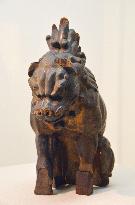
KYOTO, Japan - A wooden lion, made during the Heian period (794 - 1185 A.D.), is disclosed to the press at Toji, a world heritage temple in Kyoto, on March 19, 2014, ahead of the opening of the temple's esoteric Buddhism art craft exhibition on March 20, 2014.

  •  
Aoi festival in Kyoto

Aoi festival in Kyoto

KYOTO, Japan - Men dressed as nobles of the Heian Period (794-1185) move in a procession during the annual Aoi Matsuri, one of the three main festivals in Kyoto, in the western city on May 15, 2013. Some 500 participants walked around 8 kilometers from Kyoto Imperial Palace to Shimogamo and Kamigamo shrines during the festival dating back 1,400 years.

  •  
Aoi festival in Kyoto

Aoi festival in Kyoto

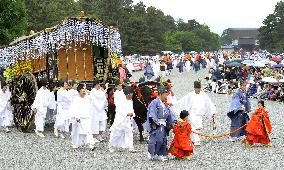
KYOTO, Japan - Men dressed as nobles of the Heian Period (794-1185) move in a procession with a decorated ox cart during the annual Aoi Matsuri, one of the three main festivals in Kyoto, in the western city on May 15, 2013. Some 500 participants walked around 8 kilometers from Kyoto Imperial Palace to Shimogamo and Kamigamo shrines during the festival dating back 1,400 years.

  •  
Aoi festival in Kyoto

Aoi festival in Kyoto

KYOTO, Japan - Participants in the annual Aoi Matsuri, one of the three main festivals of Kyoto, move in a procession in the western Japanese city on May 16, 2012. Some 500 participants, dressed as nobles of the Heian Period (794-1185), walked with decorated ox carts and horses around eight kilometers from Kyoto Imperial Palace to Shimogamo and Kamigamo shrines, during the ancient capital's major festival dating back 1,400 years.

  •  
Aoi festival in Kyoto

Aoi festival in Kyoto

KYOTO, Japan - Participants in the annual Aoi Matsuri, one of the three main festivals of Kyoto, move in a procession in the western Japanese city on May 16, 2012. Some 500 participants, dressed as nobles of the Heian Period (794-1185), walked with decorated ox carts and horses around eight kilometers from Kyoto Imperial Palace to Shimogamo and Kamigamo shrines, during the ancient capital's major festival dating back 1,400 years.

  •  
Aoi festival in Kyoto

Aoi festival in Kyoto

KYOTO, Japan - Participants in the annual Aoi Matsuri, one of the three main festivals of Kyoto, move in a procession in the western Japanese city on May 16, 2012. Some 500 participants, dressed as nobles of the Heian Period (794-1185), walked with decorated ox carts and horses around eight kilometers from Kyoto Imperial Palace to Shimogamo and Kamigamo shrines, during the ancient capital's major festival dating back 1,400 years.

  •  
Aoi festival in Kyoto

Aoi festival in Kyoto

KYOTO, Japan - Participants in the annual Aoi Matsuri, one of the three main festivals of Kyoto, move in a procession in the western Japanese city on May 16, 2012. Some 500 participants, dressed as nobles of the Heian Period (794-1185), walked with decorated ox carts and horses around eight kilometers from Kyoto Imperial Palace to Shimogamo and Kamigamo shrines, during the ancient capital's major festival dating back 1,400 years.

  •  
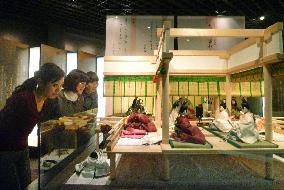
Museum of 'Ogura hyakunin isshu'

Museum of 'Ogura hyakunin isshu'

KYOTO, Japan - A diorama forms part of the displays at Shigureden, a Kyoto museum devoted to ''Ogura hyakunin isshu'' (100 poems by 100 poets). The museum was shown to the media on March 14, 2012, prior to its scheduled reopening on March 17 following a yearlong renovation. Hyakunin isshu karuta (playing cards) of the Edo period (1603-1868) and dolls representing the poets are among the exhibits and visitors can try on Heian period (794-1185) costumes.

  •  
Kyoto's Aoi Festival

Kyoto's Aoi Festival

KYOTO, Japan - Men dressed as public servants from the Heian Period (794-1185), walk with a decorated ox cart during Kyoto's Aoi Festival on May 15, 2010. Around 500 men wearing costumes from the period took part in the parade, which travels around eight kilometers from Kyoto Imperial Palace to Shimogamo and Kamigamo shrines, during the ancient capital's major festival dating back 1,400 years.

  •  
Aoi Matsuri dating back 1,400 years held in Kyoto

Aoi Matsuri dating back 1,400 years held in Kyoto

KYOTO, Japan - About 500 participants and around 40 horses and cows parade in the Aoi Matsuri (festival), which dates back 1,400 years, in Kyoto on May 15, 2010. The participants, dressed as nobles of the Heian Period (794-1185), walked around eight kilometers from Kyoto Imperial Palace to Shimogamo and Kamigamo shrines, watched by about 26,000 people on the parade route.

  •  
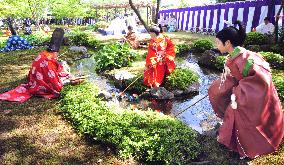
Ancient waterside tanka event in Kyoto

Ancient waterside tanka event in Kyoto

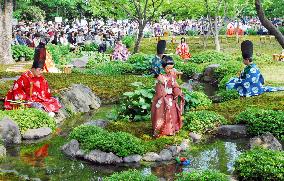
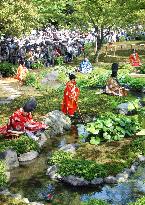
KYOTO, Japan - Performers show tourists the ''kyokusui no en'' ancient waterside pastime near a winding stream at Jonangu shrine in Kyoto on April 29, 2010. The performers dressed as the nobles of the Heian Era, which started in 794, make tanka poems before floating cups of sake reach them.

  •  
Ancient waterside tanka event in Kyoto

Ancient waterside tanka event in Kyoto

KYOTO, Japan - Performers show tourists the ''kyokusui no en'' ancient waterside pastime near a winding stream at Jonangu shrine in Kyoto on April 29, 2010. The performers dressed as the nobles of the Heian Era, which started in 794, make tanka poems before floating cups of sake reach them.

  •  
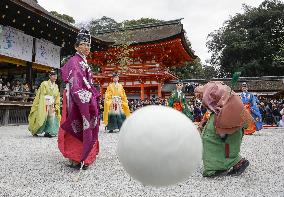
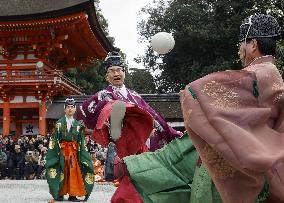
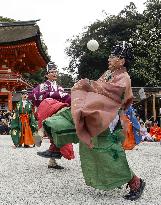
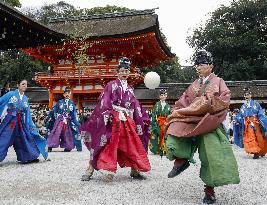
Ancient New Year 'Kemari' ball game reenacted in Kyoto

Ancient New Year 'Kemari' ball game reenacted in Kyoto

KYOTO, Japan - Members of the Kemari Preservation Society dressed in court costume play the ancient ball game in the courtyard of Shimogamo Shrine in Kyoto on Jan. 4, 2010, during the traditional ''First Kemari of the Year'' festival. Introduced from China, Kemari, played with a ball made of deer leather, was popular among aristocrats during Japan's Heian era (794-1192).

  •  
Aoi Matsuri dating back 1,400 years held in Kyoto

Aoi Matsuri dating back 1,400 years held in Kyoto

KYOTO, Japan - About 500 participants in the Aoi Matsuri (festival), which has a history of 1,400 years, parade through Kyoto on May 15. The participants, dressed like nobles of the Heian Period (794-1185), go about 8 kilometers from the Kyoto Imperial Palace to Shimogamo and Kamigamo shrines.

  •  
Heian-period 'Feast on a winding stream' reenacted in Kyoto

Heian-period 'Feast on a winding stream' reenacted in Kyoto

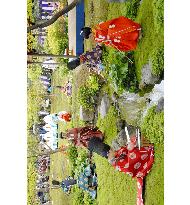
KYOTO, Japan - Watched by a crowd of spectators, the annual ''Kyokusui-no-en,'' a Heian period (AD 794-1185) pastime for nobles, is reenacted in the garden of the Jonan-gu shrine in Kyoto on April 29. Kyokusui-no-en, or feast on a winding stream, was performed by nobles who had to compose a Japanese poem and write it down on a strip of paper before floating cups of sake reached them, or else they had to drink the sake as a penalty.

  •  
Aoi Matsuri dating back 1,400 years held in Kyoto

Aoi Matsuri dating back 1,400 years held in Kyoto

KYOTO, Japan - About 500 participants in the Aoi Matsuri (festival) which has a history of 1,400 years process through Kyoto on May 15. The participants, dressed like nobles of the Heian Period (794-1185), are leaving the Kyoto Imperial Palace.

  •  
Heian-period 'Feast on a winding stream' reenacted in Kyoto

Heian-period 'Feast on a winding stream' reenacted in Kyoto

KYOTO, Japan - Watched by a large crowd of spectators, ''Kyokusui-no-en,'' a Heian period (AD 794-1185) pastime for the nobles, is reenacted in the garden of Jonan-gu shrine in Kyoto on April 29. Kyokusui-no-en, or feast on a winding stream, was performed by Heian nobles who must compose a Japanese poem and write it down on a strip of paper before floating cups of sake reach them, or else they must drink up the sake as penalty.

  •  
Ancient New Year 'Kemari' ball game reenacted in Kyoto

Ancient New Year 'Kemari' ball game reenacted in Kyoto

KYOTO, Japan - Dressed in ancient court costume, members of the Kemari Preservation Society in Kyoto play a ''Kemari'' ball game in the courtyard of Shimogamo Shrine in Kyoto on Jan. 4 in the traditional ''First Kemari of the Year'' festival. First introduced from China, Kemari, a game with a ball made of deer leather, was popular among aristocrats in Japan's Heian era (circa 794-1185 A.D.). The team that keeps the ball in the air with the largest number of kicks wins the game.

  •  
Aoi festival dating back 1,400 years held in Kyoto

Aoi festival dating back 1,400 years held in Kyoto

KYOTO, Japan - Some 500 participants in the Aoi Matsuri (festival), which has a history of 1,400 years, process through Kyoto on May 15. The participants, dressed like nobles of the Heian Period (794-1185), were leaving Kyoto Palace (background) on their way to Kami-Gamo Shrine.

  •  
Ancient poem-reading gathering held in Kyoto

Ancient poem-reading gathering held in Kyoto

KYOTO, Japan - People impersonating noblemen in the Heian Period (794-1192) join in a poem-reading at Jyonangu Shrine in Kyoto on April 29.

  •  
Silver 'hina' dolls to be sold to commemorate princess' wedding

Silver 'hina' dolls to be sold to commemorate princess' wedding

TOKYO, Japan - A set of silver ''hina'' dolls commemorating the wedding of Princess Sayako on Nov. 15 is displayed at a hotel in Tokyo on Nov. 22. The set consists of two dolls representing an emperor and empress wearing the court dress of the Heian period (794-1185) and three dolls representing court ladies serving the emperor and the empress, sitting on a vermillion-lacquered platform. Tanaka Kikinzoku Jewelry K.K. will sell the ''hina'' dolls at 150,000 yen per set for display at the annual March 3 Doll Festival.

  •  
Kyoto holds Jidai Matsuri festival

Kyoto holds Jidai Matsuri festival

KYOTO, Japan - About 2,000 people dressed in historical costume to celebrate Kyoto's 1,100-year history as Japan's ancient capital (794-1867) parade through the city's streets to mark the annual Jidai Matsuri (Festival of Eras) on Oct. 22.

  •  
Kyoto holds Jidai Matsuri festival

Kyoto holds Jidai Matsuri festival

KYOTO, Japan - About 2,000 people dressed in historical costume to celebrate Kyoto's 1,100-year history as Japan's ancient capital (794-1867) parade through the city's streets to mark the annual Jidai Matsuri (Festival of Eras) on Oct. 22. Guests from the Italian city of Florence joined the procession for the first time to mark the 40th anniversary of the signing of a sister-city pact between the two cities.

  •  
Medieval poetry competition reproduced

Medieval poetry competition reproduced

KYOTO, Japan - As crowds of tourists watch, two persons (far left and far right) clad in aristocratic attire write down their waka (poems) at a Kyoto garden on April 29 in a reproduction of a poetry competition popular among the nobility in the Heian period (794-1185).

  •  
Medieval court game 'kemari' played

Medieval court game 'kemari' played

KYOTO, Japan - People in traditional Japanese costumes play ''kemari'' in a reenactment of the traditional ball game at Shimogamo Shrine in Kyoto on Jan. 4. Kemari attained wide popularity among court nobles during the Nara (710-794), Heian (794-1185) and Kamakura (1185-1333) periods. People wearing leather shoes form a circle and kick a deerskin ball about 24 centimeters in diameter, trying to keep it from hitting the ground.

  •  
Aoi festival held in rain

Aoi festival held in rain

KYOTO, Japan - Participants in the annual Aoi Matsuri (festival) process beneath umbrellas in rainy Kyoto on May 15. The participants, dressed like nobles of the Heian Period (794-1185), were leaving Kyoto Palace on their way to Kami-Gamo Shrine.

  •  
Medieval court game 'kemari' played

Medieval court game 'kemari' played

KYOTO, Japan - People in traditional Japanese costumes play ''kemari'' in a reproduction of the traditional ball game at Shimogamo Shrine in Kyoto on Jan. 4. Kemari attained wide popularity among court nobles during the Nara (710-794), Heian (794-1185) and Kamakura (1185-1333) periods. People wearing leather shoes form a circle and kick a deerskin ball about 24 centimeters in diameter trying to keep it from falling to the ground.

  •  
Hoodo illuminated for sightseeing

Hoodo illuminated for sightseeing

UJI, Japan - Hoodo (Phoenix Hall) of Byodoin Temple in Uji, southeast of Kyoto, is illuminated April 26 to attract evening visitors. dedicated to the Buddha, the hall is one of the finest examples of the aristocratic art and architecture of the latter part of the Heian period (794-1185).

  • Main
  • Top
  • Editorial
  • Creative
  • About Us
  • About ILG
  • Terms of use
  • Company
  • BEHIND
  • Price List
  • Single Plan
  • Monthly Plan
  • Services
  • Shooting
  • Rights Clearance
  • Support
  • FAQ
  • How To Buy
  • Contact Us
  • Become a Partner

© KYODO NEWS IMAGES INC

All Rights Reserved.

  • Editorial
  • Olympics
  • News
  • Sports
  • Japan
  • Tech
  • Royal
  • Disaster
  • NorthKorea
  • Old Japan
  • SNS
  • Creative
  • Food
  • Japan
  • Landscape
  • Animal
  • Popular
  • #Ukraine
  • #China
  • #coronavirus
  • #N. Korea
  • #Thailand
  • #Russia
  • #Ukraine
  • #China
  • #coronavirus
  • #N. Korea
  • #Thailand
  • #Russia
  • Food
  • Japan
  • Landscape
  • Animal
  • Olympics
  • News
  • Sports
  • Japan
  • Tech
  • Royal
  • Disaster
  • NorthKorea
  • Old Japan
  • SNS