•  
Gaza Omari Mosque and Pasha Palace After Israeli Airstrikes - Gaza

Gaza Omari Mosque and Pasha Palace After Israeli Airstrikes - Gaza

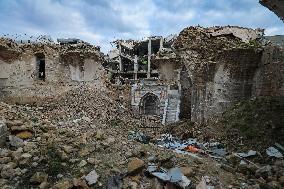
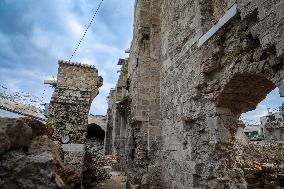
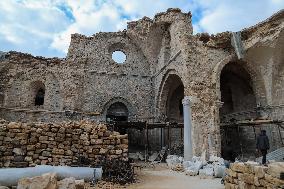
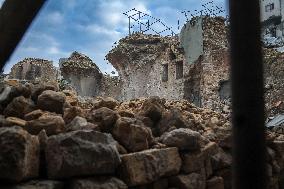
Piles of stones and debris fill the courtyard of the Great Omari Mosque in Gaza City on December 19, 2025. The Great Omari Mosque, the oldest mosque in Gaza and a key historical and religious landmark dating back to the 7th century CE, was heavily damaged during Israeli airstrikes. Photo by Eyad Azam/Middle East Images/ABACAPRESS.COM

  •  
Gaza Omari Mosque and Pasha Palace After Israeli Airstrikes - Gaza

Gaza Omari Mosque and Pasha Palace After Israeli Airstrikes - Gaza

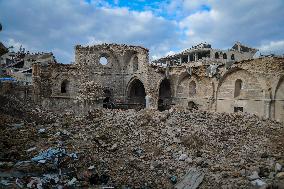
Rubble covers the courtyard of the Great Omari Mosque in Gaza City on December 19, 2025. The Great Omari Mosque, the oldest mosque in Gaza and a key historical and religious landmark dating back to the 7th century CE, was heavily damaged during Israeli airstrikes. Photo by Eyad Azam/Middle East Images/ABACAPRESS.COM

  •  
Gaza Omari Mosque and Pasha Palace After Israeli Airstrikes - Gaza

Gaza Omari Mosque and Pasha Palace After Israeli Airstrikes - Gaza

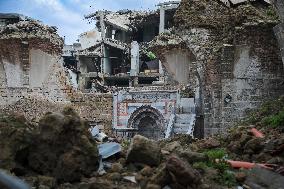
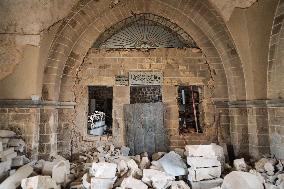
A damaged marble mihrab and staircase are seen amid rubble at the Great Omari Mosque in Gaza City on December 19, 2025. The Great Omari Mosque, the oldest mosque in Gaza and a key historical and religious landmark dating back to the 7th century CE, was heavily damaged during Israeli airstrikes. Photo by Eyad Azam/Middle East Images/ABACAPRESS.COM

  •  
Gaza Omari Mosque and Pasha Palace After Israeli Airstrikes - Gaza

Gaza Omari Mosque and Pasha Palace After Israeli Airstrikes - Gaza

A damaged marble mihrab and staircase are seen amid rubble at the Great Omari Mosque in Gaza City on December 19, 2025. The Great Omari Mosque, the oldest mosque in Gaza and a key historical and religious landmark dating back to the 7th century CE, was heavily damaged during Israeli airstrikes. Photo by Eyad Azam/Middle East Images/ABACAPRESS.COM

  •  
Gaza Omari Mosque and Pasha Palace After Israeli Airstrikes - Gaza

Gaza Omari Mosque and Pasha Palace After Israeli Airstrikes - Gaza

Piles of stones and debris fill the courtyard of the Great Omari Mosque in Gaza City on December 19, 2025. The Great Omari Mosque, the oldest mosque in Gaza and a key historical and religious landmark dating back to the 7th century CE, was heavily damaged during Israeli airstrikes. Photo by Eyad Azam/Middle East Images/ABACAPRESS.COM

  •  
Gaza Omari Mosque and Pasha Palace After Israeli Airstrikes - Gaza

Gaza Omari Mosque and Pasha Palace After Israeli Airstrikes - Gaza

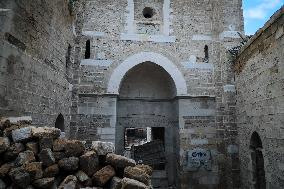
A damaged entrance is seen inside the Great Omari Mosque in Gaza City on December 19, 2025. The Great Omari Mosque, the oldest mosque in Gaza and a key historical and religious landmark dating back to the 7th century CE, was heavily damaged during Israeli airstrikes. Photo by Eyad Azam/Middle East Images/ABACAPRESS.COM

  •  
Gaza Omari Mosque and Pasha Palace After Israeli Airstrikes - Gaza

Gaza Omari Mosque and Pasha Palace After Israeli Airstrikes - Gaza

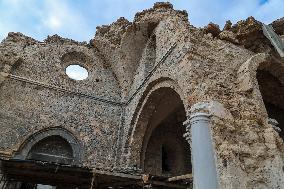
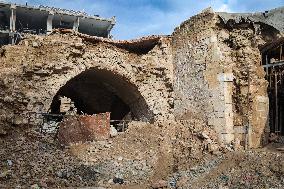
A damaged stone arch and wall are seen at the Great Omari Mosque in Gaza City on December 19, 2025. The Great Omari Mosque, the oldest mosque in Gaza and a key historical and religious landmark dating back to the 7th century CE, was heavily damaged during Israeli airstrikes. Photo by Eyad Azam/Middle East Images/ABACAPRESS.COM

  •  
Gaza Omari Mosque and Pasha Palace After Israeli Airstrikes - Gaza

Gaza Omari Mosque and Pasha Palace After Israeli Airstrikes - Gaza

Piles of stones and debris fill the courtyard of the Great Omari Mosque in Gaza City on December 19, 2025. The Great Omari Mosque, the oldest mosque in Gaza and a key historical and religious landmark dating back to the 7th century CE, was heavily damaged during Israeli airstrikes. Photo by Eyad Azam/Middle East Images/ABACAPRESS.COM

  •  
Gaza Omari Mosque and Pasha Palace After Israeli Airstrikes - Gaza

Gaza Omari Mosque and Pasha Palace After Israeli Airstrikes - Gaza

Piles of stones and debris fill the courtyard of the Great Omari Mosque in Gaza City on December 19, 2025. The Great Omari Mosque, the oldest mosque in Gaza and a key historical and religious landmark dating back to the 7th century CE, was heavily damaged during Israeli airstrikes. Photo by Eyad Azam/Middle East Images/ABACAPRESS.COM

  •  
Gaza Omari Mosque and Pasha Palace After Israeli Airstrikes - Gaza

Gaza Omari Mosque and Pasha Palace After Israeli Airstrikes - Gaza

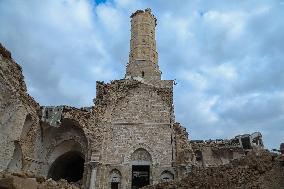
A view shows the minaret of the Great Omari Mosque in Gaza City on December 19, 2025. The Great Omari Mosque, the oldest mosque in Gaza and a key historical and religious landmark dating back to the 7th century CE, was heavily damaged during Israeli airstrikes. Photo by Eyad Azam/Middle East Images/ABACAPRESS.COM

  •  
Gaza Omari Mosque and Pasha Palace After Israeli Airstrikes - Gaza

Gaza Omari Mosque and Pasha Palace After Israeli Airstrikes - Gaza

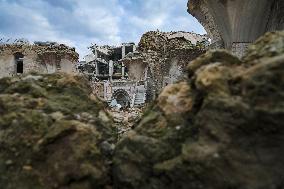
Rubble and debris surround a damaged archway at the Great Omari Mosque in Gaza City on December 19, 2025. The Great Omari Mosque, the oldest mosque in Gaza and a key historical and religious landmark dating back to the 7th century CE, was heavily damaged during Israeli airstrikes. Photo by Eyad Azam/Middle East Images/ABACAPRESS.COM

  •  
Gaza Omari Mosque and Pasha Palace After Israeli Airstrikes - Gaza

Gaza Omari Mosque and Pasha Palace After Israeli Airstrikes - Gaza

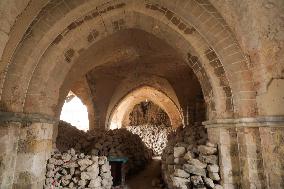
A damaged stone arch and blocked doorway are seen inside the Great Omari Mosque in Gaza City on December 19, 2025. The Great Omari Mosque, the oldest mosque in Gaza and a key historical and religious landmark dating back to the 7th century CE, was heavily damaged during Israeli airstrikes. Photo by Eyad Azam/Middle East Images/ABACAPRESS.COM

  •  
Gaza Omari Mosque and Pasha Palace After Israeli Airstrikes - Gaza

Gaza Omari Mosque and Pasha Palace After Israeli Airstrikes - Gaza

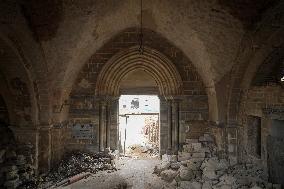
Collapsed stones fill a vaulted passageway inside the Great Omari Mosque in Gaza City on December 19, 2025. The Great Omari Mosque, the oldest mosque in Gaza and a key historical and religious landmark dating back to the 7th century CE, was heavily damaged during Israeli airstrikes. Photo by Eyad Azam/Middle East Images/ABACAPRESS.COM

  •  
Gaza Omari Mosque and Pasha Palace After Israeli Airstrikes - Gaza

Gaza Omari Mosque and Pasha Palace After Israeli Airstrikes - Gaza

Rubble and debris surround a damaged archway at the Great Omari Mosque in Gaza City on December 19, 2025. The Great Omari Mosque, the oldest mosque in Gaza and a key historical and religious landmark dating back to the 7th century CE, was heavily damaged during Israeli airstrikes. Photo by Eyad Azam/Middle East Images/ABACAPRESS.COM

  •  
Shia Muslim Chehlum - India

Shia Muslim Chehlum - India

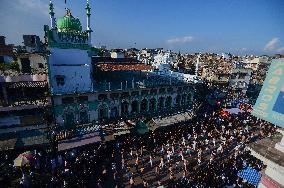
Participants perform traditional mourning rituals during the Chehlum procession in Prayagraj, India, on August 15, 2025. Chehlum, also known as Arbaeen, is a Shia Muslim religious observance held 40 days after Ashura to commemorate the martyrdom of Imam Hussein, the grandson of Prophet Muhammad, in the Battle of Karbala in the 7th century. Photo by Sanjay Kanojia/Middle East Images/ABACAPRESS.COM

  •  
Shia Muslim Chehlum - India

Shia Muslim Chehlum - India

Shia Muslim devotees beat their chests during a Chehlum procession in Prayagraj, India, on August 15, 2025. Chehlum, also known as Arbaeen, is a Shia Muslim religious observance held 40 days after Ashura to commemorate the martyrdom of Imam Hussein, the grandson of Prophet Muhammad, in the Battle of Karbala in the 7th century. Photo by Sanjay Kanojia/Middle East Images/ABACAPRESS.COM

  •  
Shia Muslim Chehlum - India

Shia Muslim Chehlum - India

Participants perform traditional mourning rituals during the Chehlum procession in Prayagraj, India, on August 15, 2025. Chehlum, also known as Arbaeen, is a Shia Muslim religious observance held 40 days after Ashura to commemorate the martyrdom of Imam Hussein, the grandson of Prophet Muhammad, in the Battle of Karbala in the 7th century. Photo by Sanjay Kanojia/Middle East Images/ABACAPRESS.COM

  •  
Shia Muslim Chehlum - India

Shia Muslim Chehlum - India

Shia Muslim devotees beat their chests during a Chehlum procession in Prayagraj, India, on August 15, 2025. Chehlum, also known as Arbaeen, is a Shia Muslim religious observance held 40 days after Ashura to commemorate the martyrdom of Imam Hussein, the grandson of Prophet Muhammad, in the Battle of Karbala in the 7th century. Photo by Sanjay Kanojia/Middle East Images/ABACAPRESS.COM

  •  
Shia Muslim Chehlum - India

Shia Muslim Chehlum - India

Participants perform traditional mourning rituals during the Chehlum procession in Prayagraj, India, on August 15, 2025. Chehlum, also known as Arbaeen, is a Shia Muslim religious observance held 40 days after Ashura to commemorate the martyrdom of Imam Hussein, the grandson of Prophet Muhammad, in the Battle of Karbala in the 7th century. Photo by Sanjay Kanojia/Middle East Images/ABACAPRESS.COM

  •  
Shia Muslim Chehlum - India

Shia Muslim Chehlum - India

Participants perform traditional mourning rituals during the Chehlum procession in Prayagraj, India, on August 15, 2025. Chehlum, also known as Arbaeen, is a Shia Muslim religious observance held 40 days after Ashura to commemorate the martyrdom of Imam Hussein, the grandson of Prophet Muhammad, in the Battle of Karbala in the 7th century. Photo by Sanjay Kanojia/Middle East Images/ABACAPRESS.COM

  •  
Shia Muslim Chehlum - India

Shia Muslim Chehlum - India

Participants perform traditional mourning rituals during the Chehlum procession in Prayagraj, India, on August 15, 2025. Chehlum, also known as Arbaeen, is a Shia Muslim religious observance held 40 days after Ashura to commemorate the martyrdom of Imam Hussein, the grandson of Prophet Muhammad, in the Battle of Karbala in the 7th century. Photo by Sanjay Kanojia/Middle East Images/ABACAPRESS.COM

  •  
Shia Muslim Chehlum - India

Shia Muslim Chehlum - India

Participants perform traditional mourning rituals during the Chehlum procession in Prayagraj, India, on August 15, 2025. Chehlum, also known as Arbaeen, is a Shia Muslim religious observance held 40 days after Ashura to commemorate the martyrdom of Imam Hussein, the grandson of Prophet Muhammad, in the Battle of Karbala in the 7th century. Photo by Sanjay Kanojia/Middle East Images/ABACAPRESS.COM

  •  
Shia Muslim Chehlum - India

Shia Muslim Chehlum - India

Shia Muslim devotees beat their chests during a Chehlum procession in Prayagraj, India, on August 15, 2025. Chehlum, also known as Arbaeen, is a Shia Muslim religious observance held 40 days after Ashura to commemorate the martyrdom of Imam Hussein, the grandson of Prophet Muhammad, in the Battle of Karbala in the 7th century. Photo by Sanjay Kanojia/Middle East Images/ABACAPRESS.COM

  •  
Shia Muslim Chehlum - India

Shia Muslim Chehlum - India

Participants perform traditional mourning rituals during the Chehlum procession in Prayagraj, India, on August 15, 2025. Chehlum, also known as Arbaeen, is a Shia Muslim religious observance held 40 days after Ashura to commemorate the martyrdom of Imam Hussein, the grandson of Prophet Muhammad, in the Battle of Karbala in the 7th century. Photo by Sanjay Kanojia/Middle East Images/ABACAPRESS.COM

  •  
Shia Muslim Chehlum - India

Shia Muslim Chehlum - India

Shia Muslim devotees beat their chests during a Chehlum procession in Prayagraj, India, on August 15, 2025. Chehlum, also known as Arbaeen, is a Shia Muslim religious observance held 40 days after Ashura to commemorate the martyrdom of Imam Hussein, the grandson of Prophet Muhammad, in the Battle of Karbala in the 7th century. Photo by Sanjay Kanojia/Middle East Images/ABACAPRESS.COM

  •  
Shia Muslim Chehlum - India

Shia Muslim Chehlum - India

Shia Muslim devotees beat their chests during a Chehlum procession in Prayagraj, India, on August 15, 2025. Chehlum, also known as Arbaeen, is a Shia Muslim religious observance held 40 days after Ashura to commemorate the martyrdom of Imam Hussein, the grandson of Prophet Muhammad, in the Battle of Karbala in the 7th century. Photo by Sanjay Kanojia/Middle East Images/ABACAPRESS.COM

  •  
Tang China A Cosmopolitan Dynasty Exhibition - Paris

Tang China A Cosmopolitan Dynasty Exhibition - Paris

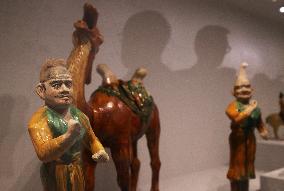
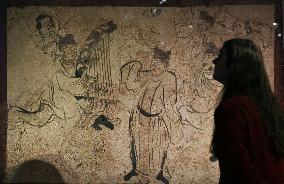
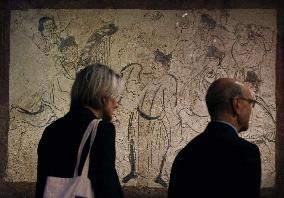
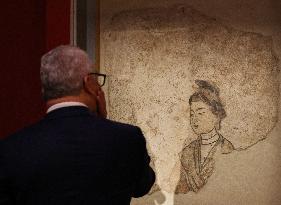
People visit an exhibition titled "Tang China -- A Cosmopolitan Dynasty (7th-10th Century)" at the Guimet National Museum of Asian Arts in Paris, France, November 18, 2024. The exhibition was inaugurated Monday at France's Guimet National Museum of Asian Arts. The exhibition, directed by China's National Cultural Heritage Administration and the French Ministry of Culture, showcases over 200 pieces or sets of exquisite artifacts from 32 cultural and museum institutions in 10 provincial-level regions and cities in China. Photo by Gao Jing/Xinhua/ABACAPRESS.COM

  •  
Tang China A Cosmopolitan Dynasty Exhibition - Paris

Tang China A Cosmopolitan Dynasty Exhibition - Paris

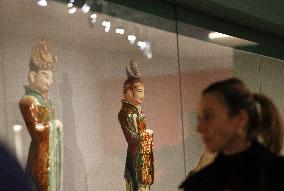
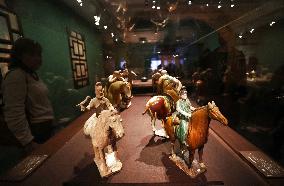
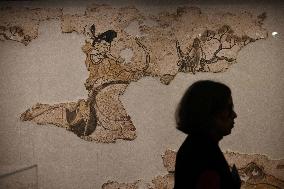
This photo taken on November 18, 2024 shows exhibits at an exhibition titled "Tang China -- A Cosmopolitan Dynasty (7th-10th Century)" at the Guimet National Museum of Asian Arts in Paris, France. The exhibition was inaugurated Monday at France's Guimet National Museum of Asian Arts. The exhibition, directed by China's National Cultural Heritage Administration and the French Ministry of Culture, showcases over 200 pieces or sets of exquisite artifacts from 32 cultural and museum institutions in 10 provincial-level regions and cities in China. Photo by Gao Jing/Xinhua/ABACAPRESS.COM

  •  
Tang China A Cosmopolitan Dynasty Exhibition - Paris

Tang China A Cosmopolitan Dynasty Exhibition - Paris

A visitor is pictured at an exhibition titled "Tang China -- A Cosmopolitan Dynasty (7th-10th Century)" at the Guimet National Museum of Asian Arts in Paris, France, November 18, 2024. The exhibition was inaugurated Monday at France's Guimet National Museum of Asian Arts. The exhibition, directed by China's National Cultural Heritage Administration and the French Ministry of Culture, showcases over 200 pieces or sets of exquisite artifacts from 32 cultural and museum institutions in 10 provincial-level regions and cities in China. Photo by Gao Jing/Xinhua/ABACAPRESS.COM

  •  
Tang China A Cosmopolitan Dynasty Exhibition - Paris

Tang China A Cosmopolitan Dynasty Exhibition - Paris

A visitor is pictured at an exhibition titled "Tang China -- A Cosmopolitan Dynasty (7th-10th Century)" at the Guimet National Museum of Asian Arts in Paris, France, November 18, 2024. The exhibition was inaugurated Monday at France's Guimet National Museum of Asian Arts. The exhibition, directed by China's National Cultural Heritage Administration and the French Ministry of Culture, showcases over 200 pieces or sets of exquisite artifacts from 32 cultural and museum institutions in 10 provincial-level regions and cities in China. Photo by Gao Jing/Xinhua/ABACAPRESS.COM

  •  
Tang China A Cosmopolitan Dynasty Exhibition - Paris

Tang China A Cosmopolitan Dynasty Exhibition - Paris

People visit an exhibition titled "Tang China -- A Cosmopolitan Dynasty (7th-10th Century)" at the Guimet National Museum of Asian Arts in Paris, France, November 18, 2024. The exhibition was inaugurated Monday at France's Guimet National Museum of Asian Arts. The exhibition, directed by China's National Cultural Heritage Administration and the French Ministry of Culture, showcases over 200 pieces or sets of exquisite artifacts from 32 cultural and museum institutions in 10 provincial-level regions and cities in China. Photo by Gao Jing/Xinhua/ABACAPRESS.COM

  •  
Tang China A Cosmopolitan Dynasty Exhibition - Paris

Tang China A Cosmopolitan Dynasty Exhibition - Paris

People visit an exhibition titled "Tang China -- A Cosmopolitan Dynasty (7th-10th Century)" at the Guimet National Museum of Asian Arts in Paris, France, November 18, 2024. The exhibition was inaugurated Monday at France's Guimet National Museum of Asian Arts. The exhibition, directed by China's National Cultural Heritage Administration and the French Ministry of Culture, showcases over 200 pieces or sets of exquisite artifacts from 32 cultural and museum institutions in 10 provincial-level regions and cities in China. Photo by Gao Jing/Xinhua/ABACAPRESS.COM

  •  
Tang China A Cosmopolitan Dynasty Exhibition - Paris

Tang China A Cosmopolitan Dynasty Exhibition - Paris

A visitor views exhibits at an exhibition titled "Tang China -- A Cosmopolitan Dynasty (7th-10th Century)" at the Guimet National Museum of Asian Arts in Paris, France, November 18, 2024. The exhibition was inaugurated Monday at France's Guimet National Museum of Asian Arts. The exhibition, directed by China's National Cultural Heritage Administration and the French Ministry of Culture, showcases over 200 pieces or sets of exquisite artifacts from 32 cultural and museum institutions in 10 provincial-level regions and cities in China. Photo by Gao Jing/Xinhua/ABACAPRESS.COM

  •  
Tang China A Cosmopolitan Dynasty Exhibition - Paris

Tang China A Cosmopolitan Dynasty Exhibition - Paris

A visitor views an exhibit at an exhibition titled "Tang China -- A Cosmopolitan Dynasty (7th-10th Century)" at the Guimet National Museum of Asian Arts in Paris, France, November 18, 2024. The exhibition was inaugurated Monday at France's Guimet National Museum of Asian Arts. The exhibition, directed by China's National Cultural Heritage Administration and the French Ministry of Culture, showcases over 200 pieces or sets of exquisite artifacts from 32 cultural and museum institutions in 10 provincial-level regions and cities in China. Photo by Gao Jing/Xinhua/ABACAPRESS.COM

  •  
Tang China A Cosmopolitan Dynasty Exhibition - Paris

Tang China A Cosmopolitan Dynasty Exhibition - Paris

A visitor is pictured at an exhibition titled "Tang China -- A Cosmopolitan Dynasty (7th-10th Century)" at the Guimet National Museum of Asian Arts in Paris, France, November 18, 2024. The exhibition was inaugurated Monday at France's Guimet National Museum of Asian Arts. The exhibition, directed by China's National Cultural Heritage Administration and the French Ministry of Culture, showcases over 200 pieces or sets of exquisite artifacts from 32 cultural and museum institutions in 10 provincial-level regions and cities in China. Photo by Gao Jing/Xinhua/ABACAPRESS.COM

  •  
7th Century Church In Tavush - Armenia

7th Century Church In Tavush - Armenia

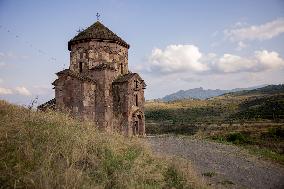
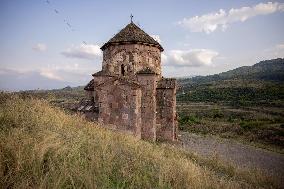
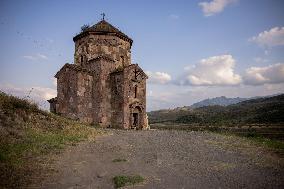
The Holy Mother of God Church, a relic from the 7th Century nestled in Voskepar, Tavush Province, stands along the new border with Azerbaijan just several meters away from the barbed wire dividing line on August 18, 2024. New border guard checkpoints were establish on both sides along the new border near the church, while a new road south of Voskepar in Kirants was completed recently. Armenia’s National Security Service (NSS) confirmed the completion of the first land transfer on May 24th as part of an agreement between Yerevan and Baku, Azerbaijan's border service assumed control over four villages in the Gazakh district along the Armenia-Azerbaijan border. Armenia had pledged in April to return these uninhabited villages to Azerbaijan, marking a significant step toward a potential peace agreement between the two countries, which have been embroiled in conflict for over three decades. However the opposition movement continues now with a more specific agenda which is to replace the current leadership includin

  •  
7th Century Church In Tavush - Armenia

7th Century Church In Tavush - Armenia

The Holy Mother of God Church, a relic from the 7th Century nestled in Voskepar, Tavush Province, stands along the new border with Azerbaijan just several meters away from the barbed wire dividing line on August 18, 2024. New border guard checkpoints were establish on both sides along the new border near the church, while a new road south of Voskepar in Kirants was completed recently. Armenia’s National Security Service (NSS) confirmed the completion of the first land transfer on May 24th as part of an agreement between Yerevan and Baku, Azerbaijan's border service assumed control over four villages in the Gazakh district along the Armenia-Azerbaijan border. Armenia had pledged in April to return these uninhabited villages to Azerbaijan, marking a significant step toward a potential peace agreement between the two countries, which have been embroiled in conflict for over three decades. However the opposition movement continues now with a more specific agenda which is to replace the current leadership includin

  •  
7th Century Church In Tavush - Armenia

7th Century Church In Tavush - Armenia

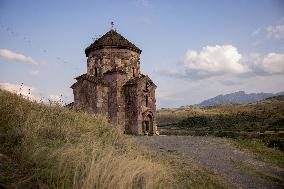
The Holy Mother of God Church, a relic from the 7th Century nestled in Voskepar, Tavush Province, stands along the new border with Azerbaijan just several meters away from the barbed wire dividing line on August 18, 2024. New border guard checkpoints were establish on both sides along the new border near the church, while a new road south of Voskepar in Kirants was completed recently. Armenia’s National Security Service (NSS) confirmed the completion of the first land transfer on May 24th as part of an agreement between Yerevan and Baku, Azerbaijan's border service assumed control over four villages in the Gazakh district along the Armenia-Azerbaijan border. Armenia had pledged in April to return these uninhabited villages to Azerbaijan, marking a significant step toward a potential peace agreement between the two countries, which have been embroiled in conflict for over three decades. However the opposition movement continues now with a more specific agenda which is to replace the current leadership includin

  •  
7th Century Church In Tavush - Armenia

7th Century Church In Tavush - Armenia

The Holy Mother of God Church, a relic from the 7th Century nestled in Voskepar, Tavush Province, stands along the new border with Azerbaijan just several meters away from the barbed wire dividing line on August 18, 2024. New border guard checkpoints were establish on both sides along the new border near the church, while a new road south of Voskepar in Kirants was completed recently. Armenia’s National Security Service (NSS) confirmed the completion of the first land transfer on May 24th as part of an agreement between Yerevan and Baku, Azerbaijan's border service assumed control over four villages in the Gazakh district along the Armenia-Azerbaijan border. Armenia had pledged in April to return these uninhabited villages to Azerbaijan, marking a significant step toward a potential peace agreement between the two countries, which have been embroiled in conflict for over three decades. However the opposition movement continues now with a more specific agenda which is to replace the current leadership includin

  •  
Border Conflict Between Armenia And Azerbaijan

Border Conflict Between Armenia And Azerbaijan

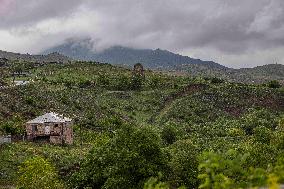
View of the Holy Mother of God Church, a relic from the 7th Century nestled in Voskepar, Tavush Province, stands on the verge of the new border with Azerbaijan on May 04, 2024. As the border is redrawn, the church finds itself in close proximity to the dividing line. By April 29, the government had positioned 35 border markers along the Armenia-Azerbaijan border, coinciding with ongoing demining efforts. Residents of border villages fear that border demarcation according to the Soviet-era plan and the 1991 Almaty Declaration will restrict their access to farmlands and complicate travel, with sections of roads falling under Azerbaijani jurisdiction. Photo by Anthony Pizzoferrato/Middle East Images/ABACAPRESS.COM

  •  

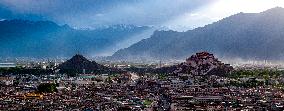
Discovering Tibet with FPV drone: Potala Palace

STORY: Discovering Tibet with FPV drone: Potala Palace DATELINE: July 18, 2023 LENGTH: 00:02:05 LOCATION: LHASA, China CATEGORY: CULTURE/SOCIETY SHOTLIST: 1. various of Tibet with FPV drone STORYLINE: The Potala Palace is the world's highest ancient palace. It was built by Tibetan King Songtsa Gambo in the 7th century. It was expanded in the 17th century by the fifth Dalai Lama. The palace was included on the UNESCO World Heritage List in 1994. It's one of the most popular tourist attractions in Tibet. Home to over 100,000 cultural relics, the Potala Palace is a model of ancient architecture. Xinhua News Agency correspondents reporting from Lhasa, China. (XHTV)

  •  
CHINA-TIBET-LHASA-CULTURE (CN)

CHINA-TIBET-LHASA-CULTURE (CN)

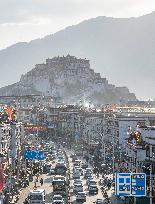
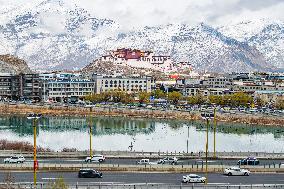
(230619) -- LHASA, June 19, 2023 (Xinhua) -- Traffics are seen at the foot of the Potala Palace in Lhasa, capital of southwest China's Tibet Autonomous Region, June 7, 2023. Since the 7th century, the city of Lhasa gradually emerged in the heart of the plateau, nestled within the valley of the Lhasa River -- a tributary of the Yarlung Tsangpo River. The city's rich history spans centuries, characterized by layers of cultural heritage, thereby fostering a distinctive plateau culture that embraces diversity and inclusiveness. This remarkable plateau culture exemplifies the enduring vibrancy of Chinese cultural heritage, resonating with people around the world. (Xinhua/Sun Fei)

  •  
CHINA-TIBET-LHASA-CULTURE (CN)

CHINA-TIBET-LHASA-CULTURE (CN)

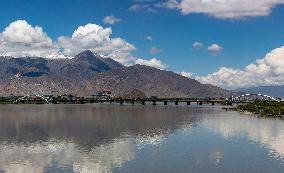
(230619) -- LHASA, June 19, 2023 (Xinhua) -- The Liuwu Bridge is seen over the Lhasa River in Lhasa, capital of southwest China's Tibet Autonomous Region, June 15, 2023. Since the 7th century, the city of Lhasa gradually emerged in the heart of the plateau, nestled within the valley of the Lhasa River -- a tributary of the Yarlung Tsangpo River. The city's rich history spans centuries, characterized by layers of cultural heritage, thereby fostering a distinctive plateau culture that embraces diversity and inclusiveness. This remarkable plateau culture exemplifies the enduring vibrancy of Chinese cultural heritage, resonating with people around the world. (Xinhua/Jiang Fan)

  •  
CHINA-TIBET-LHASA-CULTURE (CN)

CHINA-TIBET-LHASA-CULTURE (CN)

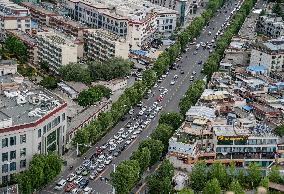
(230619) -- LHASA, June 19, 2023 (Xinhua) -- This aerial photo taken on March 30, 2023 shows the south ring road in Lhasa, capital of southwest China's Tibet Autonomous Region. Since the 7th century, the city of Lhasa gradually emerged in the heart of the plateau, nestled within the valley of the Lhasa River -- a tributary of the Yarlung Tsangpo River. The city's rich history spans centuries, characterized by layers of cultural heritage, thereby fostering a distinctive plateau culture that embraces diversity and inclusiveness. This remarkable plateau culture exemplifies the enduring vibrancy of Chinese cultural heritage, resonating with people around the world. (Xinhua/Sun Fei)

  •  
CHINA-TIBET-LHASA-CULTURE (CN)

CHINA-TIBET-LHASA-CULTURE (CN)

(230619) -- LHASA, June 19, 2023 (Xinhua) -- Traffics are seen in a street in Lhasa, capital of southwest China's Tibet Autonomous Region, June 15, 2023, Since the 7th century, the city of Lhasa gradually emerged in the heart of the plateau, nestled within the valley of the Lhasa River -- a tributary of the Yarlung Tsangpo River. The city's rich history spans centuries, characterized by layers of cultural heritage, thereby fostering a distinctive plateau culture that embraces diversity and inclusiveness. This remarkable plateau culture exemplifies the enduring vibrancy of Chinese cultural heritage, resonating with people around the world. (Xinhua/Sun Fei)

  •  
CHINA-TIBET-LHASA-CULTURE (CN)

CHINA-TIBET-LHASA-CULTURE (CN)

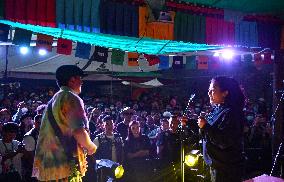
(230619) -- LHASA, June 19, 2023 (Xinhua) -- Youngsters attend a live concert in Lhasa, capital of southwest China's Tibet Autonomous Region, July 29, 2022. Since the 7th century, the city of Lhasa gradually emerged in the heart of the plateau, nestled within the valley of the Lhasa River -- a tributary of the Yarlung Tsangpo River. The city's rich history spans centuries, characterized by layers of cultural heritage, thereby fostering a distinctive plateau culture that embraces diversity and inclusiveness. This remarkable plateau culture exemplifies the enduring vibrancy of Chinese cultural heritage, resonating with people around the world. (Xinhua/Jigme Dorje)

  •  
CHINA-TIBET-LHASA-CULTURE (CN)

CHINA-TIBET-LHASA-CULTURE (CN)

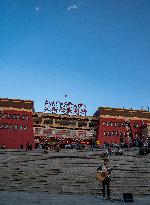
(230619) -- LHASA, June 19, 2023 (Xinhua) -- A man plays the guitar in front of the Princess Wencheng Theatre in Lhasa, capital of southwest China's Tibet Autonomous Region, June 6, 2023. Since the 7th century, the city of Lhasa gradually emerged in the heart of the plateau, nestled within the valley of the Lhasa River -- a tributary of the Yarlung Tsangpo River. The city's rich history spans centuries, characterized by layers of cultural heritage, thereby fostering a distinctive plateau culture that embraces diversity and inclusiveness. This remarkable plateau culture exemplifies the enduring vibrancy of Chinese cultural heritage, resonating with people around the world. (Xinhua/Sun Fei)

  •  
CHINA-TIBET-LHASA-CULTURE (CN)

CHINA-TIBET-LHASA-CULTURE (CN)

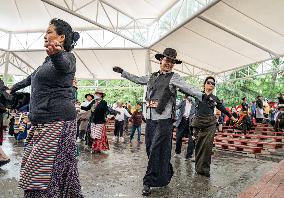
(230619) -- LHASA, June 19, 2023 (Xinhua) -- People perform Guozhuang, a bonfire dance of Tibetans, at a park in Lhasa, capital of southwest China's Tibet Autonomous Region, June 14, 2023. Since the 7th century, the city of Lhasa gradually emerged in the heart of the plateau, nestled within the valley of the Lhasa River -- a tributary of the Yarlung Tsangpo River. The city's rich history spans centuries, characterized by layers of cultural heritage, thereby fostering a distinctive plateau culture that embraces diversity and inclusiveness. This remarkable plateau culture exemplifies the enduring vibrancy of Chinese cultural heritage, resonating with people around the world. (Xinhua/Jiang Fan)

  •  
CHINA-TIBET-LHASA-CULTURE (CN)

CHINA-TIBET-LHASA-CULTURE (CN)

(230619) -- LHASA, June 19, 2023 (Xinhua) -- The sunshine is shed on the Potala Palace in Lhasa, capital of southwest China's Tibet Autonomous Region, June 15, 2023. Since the 7th century, the city of Lhasa gradually emerged in the heart of the plateau, nestled within the valley of the Lhasa River -- a tributary of the Yarlung Tsangpo River. The city's rich history spans centuries, characterized by layers of cultural heritage, thereby fostering a distinctive plateau culture that embraces diversity and inclusiveness. This remarkable plateau culture exemplifies the enduring vibrancy of Chinese cultural heritage, resonating with people around the world. (Xinhua/Jiang Fan)

  •  
CHINA-TIBET-LHASA-CULTURE (CN)

CHINA-TIBET-LHASA-CULTURE (CN)

(230619) -- LHASA, June 19, 2023 (Xinhua) -- People perform Guozhuang, a bonfire dance of Tibetans, at a park in Lhasa, capital of southwest China's Tibet Autonomous Region, June 14, 2023. Since the 7th century, the city of Lhasa gradually emerged in the heart of the plateau, nestled within the valley of the Lhasa River -- a tributary of the Yarlung Tsangpo River. The city's rich history spans centuries, characterized by layers of cultural heritage, thereby fostering a distinctive plateau culture that embraces diversity and inclusiveness. This remarkable plateau culture exemplifies the enduring vibrancy of Chinese cultural heritage, resonating with people around the world. (Xinhua/Sun Fei)

  • Main
  • Top
  • Editorial
  • Creative
  • About Us
  • About ILG
  • Terms of use
  • Company
  • BEHIND
  • Price List
  • Single Plan
  • Monthly Plan
  • Services
  • Shooting
  • Rights Clearance
  • Support
  • FAQ
  • How To Buy
  • Contact Us
  • Become a Partner

© KYODO NEWS IMAGES INC

All Rights Reserved.

  • Editorial
  • Olympics
  • News
  • Sports
  • Japan
  • Tech
  • Royal
  • Disaster
  • NorthKorea
  • Old Japan
  • SNS
  • Creative
  • Food
  • Japan
  • Landscape
  • Animal
  • Popular
  • #Ukraine
  • #Thailand
  • #coronavirus
  • #N. Korea
  • #China
  • #Russia
  • #Ukraine
  • #Thailand
  • #coronavirus
  • #N. Korea
  • #China
  • #Russia
  • Food
  • Japan
  • Landscape
  • Animal
  • Olympics
  • News
  • Sports
  • Japan
  • Tech
  • Royal
  • Disaster
  • NorthKorea
  • Old Japan
  • SNS