•  
Arg-e Bam Citadel - Iran

Arg-e Bam Citadel - Iran

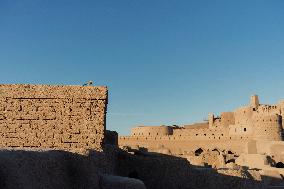
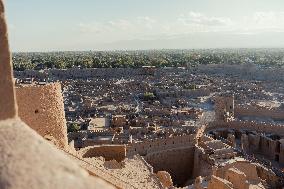
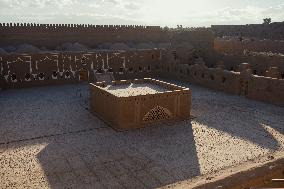
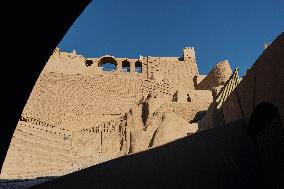
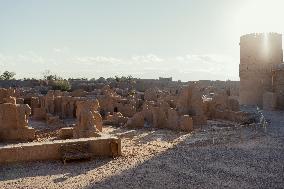
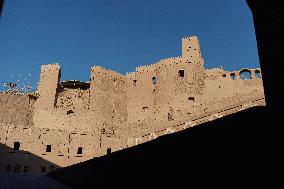
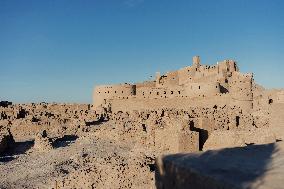
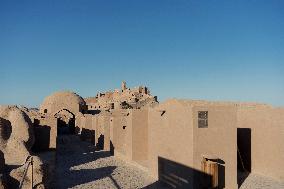
A general view shows adobe structures of the Arg-e Bam citadel in Bam, Iran on December 14, 2025. Arg-e Bam, a UNESCO World Heritage Site, is the largest adobe structure in the world and dates back to at least the Achaemenid period, having served for centuries as a fortified city and a key hub along Silk Road trade routes before being largely destroyed in a 2003 earthquake and subsequently restored. Photo by Bahram/Middle East Images/ABACAPRESS.COM

  •  
Arg-e Bam Citadel - Iran

Arg-e Bam Citadel - Iran

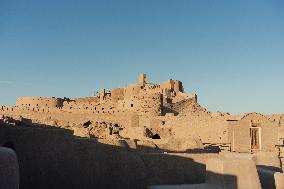
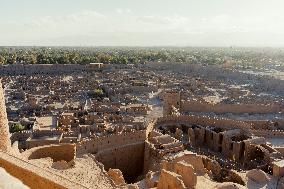
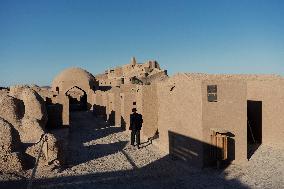
A general view shows adobe structures of the Arg-e Bam citadel in Bam, Iran on December 14, 2025. Arg-e Bam, a UNESCO World Heritage Site, is the largest adobe structure in the world and dates back to at least the Achaemenid period, having served for centuries as a fortified city and a key hub along Silk Road trade routes before being largely destroyed in a 2003 earthquake and subsequently restored. Photo by Bahram/Middle East Images/ABACAPRESS.COM

  •  
Arg-e Bam Citadel - Iran

Arg-e Bam Citadel - Iran

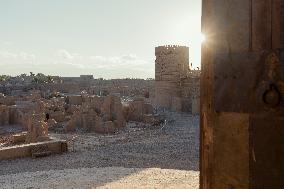
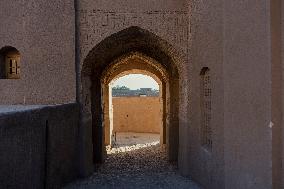
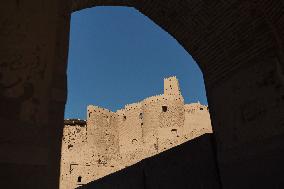
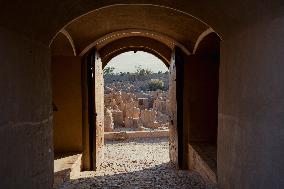
A view of adobe ruins and a tower is seen through a doorway inside the Arg-e Bam citadel in Bam, Iran on December 14, 2025. Arg-e Bam, a UNESCO World Heritage Site, is the largest adobe structure in the world and dates back to at least the Achaemenid period, having served for centuries as a fortified city and a key hub along Silk Road trade routes before being largely destroyed in a 2003 earthquake and subsequently restored. Photo by Bahram/Middle East Images/ABACAPRESS.COM

  •  
Arg-e Bam Citadel - Iran

Arg-e Bam Citadel - Iran

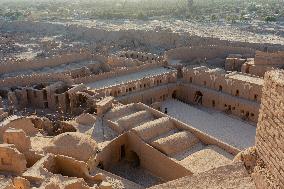
A general view shows adobe structures of the Arg-e Bam citadel in Bam, Iran on December 14, 2025. Arg-e Bam, a UNESCO World Heritage Site, is the largest adobe structure in the world and dates back to at least the Achaemenid period, having served for centuries as a fortified city and a key hub along Silk Road trade routes before being largely destroyed in a 2003 earthquake and subsequently restored. Photo by Bahram/Middle East Images/ABACAPRESS.COM

  •  
Arg-e Bam Citadel - Iran

Arg-e Bam Citadel - Iran

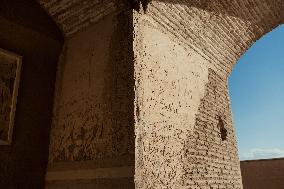
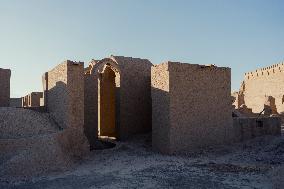
An arched interior structure is seen inside the Arg-e Bam citadel in Bam, Iran on December 14, 2025. Arg-e Bam, a UNESCO World Heritage Site, is the largest adobe structure in the world and dates back to at least the Achaemenid period, having served for centuries as a fortified city and a key hub along Silk Road trade routes before being largely destroyed in a 2003 earthquake and subsequently restored. Photo by Bahram/Middle East Images/ABACAPRESS.COM

  •  
Arg-e Bam Citadel - Iran

Arg-e Bam Citadel - Iran

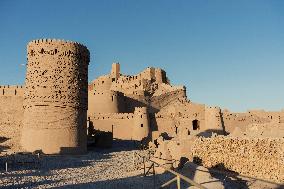
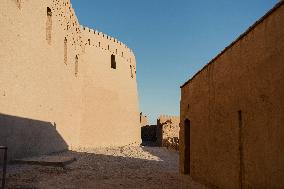
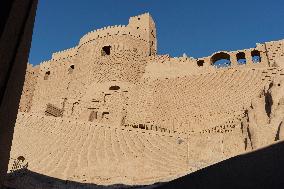
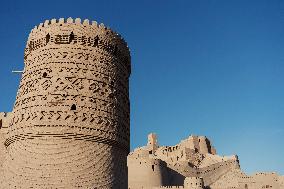
An adobe tower and surrounding defensive walls stand inside the Arg-e Bam citadel in Bam, Iran on December 14, 2025. Arg-e Bam, a UNESCO World Heritage Site, is the largest adobe structure in the world and dates back to at least the Achaemenid period, having served for centuries as a fortified city and a key hub along Silk Road trade routes before being largely destroyed in a 2003 earthquake and subsequently restored. Photo by Bahram/Middle East Images/ABACAPRESS.COM

  •  
Arg-e Bam Citadel - Iran

Arg-e Bam Citadel - Iran

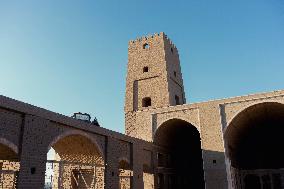
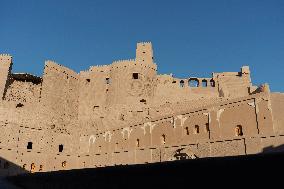
An adobe tower rises above arched structures inside the Arg-e Bam citadel in Bam, Iran on December 14, 2025. Arg-e Bam, a UNESCO World Heritage Site, is the largest adobe structure in the world and dates back to at least the Achaemenid period. The historic fortress once served as a key stop along Silk Road trade routes and was a major center for regional commerce. Photo by Bahram/Middle East Images/ABACAPRESS.COM

  •  
Arg-e Bam Citadel - Iran

Arg-e Bam Citadel - Iran

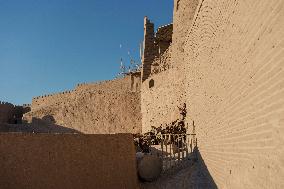
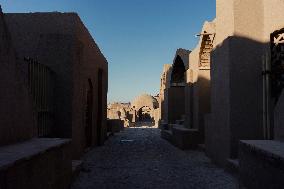
A narrow pathway runs between adobe walls inside the Arg-e Bam citadel in Bam, Iran on December 14, 2025. Arg-e Bam, a UNESCO World Heritage Site, is the largest adobe structure in the world and dates back to at least the Achaemenid period, having served for centuries as a fortified city and a key hub along Silk Road trade routes before being largely destroyed in a 2003 earthquake and subsequently restored. Photo by Bahram/Middle East Images/ABACAPRESS.COM

  •  
Arg-e Bam Citadel - Iran

Arg-e Bam Citadel - Iran

An arched interior structure is seen inside the Arg-e Bam citadel in Bam, Iran on December 14, 2025. Arg-e Bam, a UNESCO World Heritage Site, is the largest adobe structure in the world and dates back to at least the Achaemenid period, having served for centuries as a fortified city and a key hub along Silk Road trade routes before being largely destroyed in a 2003 earthquake and subsequently restored. Photo by Bahram/Middle East Images/ABACAPRESS.COM

  •  
Arg-e Bam Citadel - Iran

Arg-e Bam Citadel - Iran

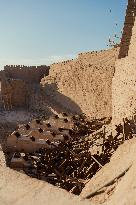
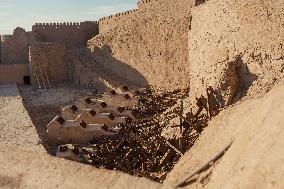
Adobe fortress walls and restoration debris are seen inside the Arg-e Bam citadel in Bam, Iran on December 14, 2025. Arg-e Bam, a UNESCO World Heritage Site, is the largest adobe structure in the world and dates back to at least the Achaemenid period, having served for centuries as a fortified city and a key hub along Silk Road trade routes before being largely destroyed in a 2003 earthquake and subsequently restored. Photo by Bahram/Middle East Images/ABACAPRESS.COM

  •  
Arg-e Bam Citadel - Iran

Arg-e Bam Citadel - Iran

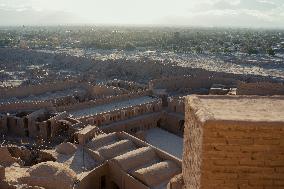
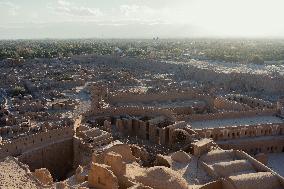
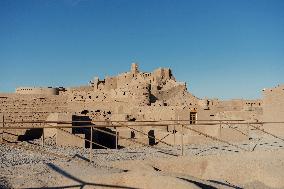
A general view shows the adobe ruins and restored structures of the Arg-e Bam citadel in Bam, Iran on December 14, 2025. Arg-e Bam, a UNESCO World Heritage Site, is the largest adobe structure in the world and dates back to at least the Achaemenid period, having served for centuries as a fortified city and a key hub along Silk Road trade routes before being largely destroyed in a 2003 earthquake and subsequently restored. Photo by Bahram/Middle East Images/ABACAPRESS.COM

  •  
Arg-e Bam Citadel - Iran

Arg-e Bam Citadel - Iran

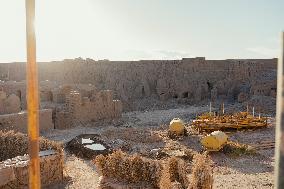
Construction materials and equipment are seen in an open area inside the Arg-e Bam citadel in Bam, Iran on December 14, 2025. Arg-e Bam, a UNESCO World Heritage Site, is the largest adobe structure in the world and dates back to at least the Achaemenid period, having served for centuries as a fortified city and a key hub along Silk Road trade routes before being largely destroyed in a 2003 earthquake and subsequently restored. Photo by Bahram/Middle East Images/ABACAPRESS.COM

  •  
Arg-e Bam Citadel - Iran

Arg-e Bam Citadel - Iran

Adobe fortress walls and restoration debris are seen inside the Arg-e Bam citadel in Bam, Iran on December 14, 2025. Arg-e Bam, a UNESCO World Heritage Site, is the largest adobe structure in the world and dates back to at least the Achaemenid period, having served for centuries as a fortified city and a key hub along Silk Road trade routes before being largely destroyed in a 2003 earthquake and subsequently restored. Photo by Bahram/Middle East Images/ABACAPRESS.COM

  •  
Arg-e Bam Citadel - Iran

Arg-e Bam Citadel - Iran

Adobe fortress walls and restoration debris are seen inside the Arg-e Bam citadel in Bam, Iran on December 14, 2025. Arg-e Bam, a UNESCO World Heritage Site, is the largest adobe structure in the world and dates back to at least the Achaemenid period, having served for centuries as a fortified city and a key hub along Silk Road trade routes before being largely destroyed in a 2003 earthquake and subsequently restored. Photo by Bahram/Middle East Images/ABACAPRESS.COM

  •  
Arg-e Bam Citadel - Iran

Arg-e Bam Citadel - Iran

A general view shows the adobe ruins and restored structures of the Arg-e Bam citadel in Bam, Iran on December 14, 2025. Arg-e Bam, a UNESCO World Heritage Site, is the largest adobe structure in the world and dates back to at least the Achaemenid period, having served for centuries as a fortified city and a key hub along Silk Road trade routes before being largely destroyed in a 2003 earthquake and subsequently restored. Photo by Bahram/Middle East Images/ABACAPRESS.COM

  •  
Arg-e Bam Citadel - Iran

Arg-e Bam Citadel - Iran

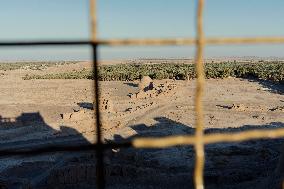
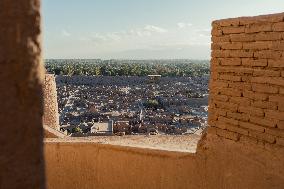
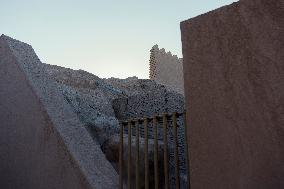
A view of the surrounding landscape is seen through protective netting inside the Arg-e Bam citadel in Bam, Iran on December 14, 2025. Arg-e Bam, a UNESCO World Heritage Site, is the largest adobe structure in the world and dates back to at least the Achaemenid period. The historic fortress once served as a key stop along Silk Road trade routes and was a major center for regional commerce. Photo by Bahram/Middle East Images/ABACAPRESS.COM

  •  
Arg-e Bam Citadel - Iran

Arg-e Bam Citadel - Iran

A general view shows the adobe ruins and restored structures of the Arg-e Bam citadel in Bam, Iran on December 14, 2025. Arg-e Bam, a UNESCO World Heritage Site, is the largest adobe structure in the world and dates back to at least the Achaemenid period, having served for centuries as a fortified city and a key hub along Silk Road trade routes before being largely destroyed in a 2003 earthquake and subsequently restored. Photo by Bahram/Middle East Images/ABACAPRESS.COM

  •  
Arg-e Bam Citadel - Iran

Arg-e Bam Citadel - Iran

A general view shows the adobe ruins and restored structures of the Arg-e Bam citadel in Bam, Iran on December 14, 2025. Arg-e Bam, a UNESCO World Heritage Site, is the largest adobe structure in the world and dates back to at least the Achaemenid period, having served for centuries as a fortified city and a key hub along Silk Road trade routes before being largely destroyed in a 2003 earthquake and subsequently restored. Photo by Bahram/Middle East Images/ABACAPRESS.COM

  •  
Arg-e Bam Citadel - Iran

Arg-e Bam Citadel - Iran

An arched passageway leads through adobe walls inside the Arg-e Bam citadel in Bam, Iran on December 14, 2025. Arg-e Bam, a UNESCO World Heritage Site, is the largest adobe structure in the world and dates back to at least the Achaemenid period. The historic fortress once served as a key stop along Silk Road trade routes and was a major center for regional commerce. Photo by Bahram/Middle East Images/ABACAPRESS.COM

  •  
Arg-e Bam Citadel - Iran

Arg-e Bam Citadel - Iran

A general view shows the adobe ruins and restored structures of the Arg-e Bam citadel in Bam, Iran on December 14, 2025. Arg-e Bam, a UNESCO World Heritage Site, is the largest adobe structure in the world and dates back to at least the Achaemenid period, having served for centuries as a fortified city and a key hub along Silk Road trade routes before being largely destroyed in a 2003 earthquake and subsequently restored. Photo by Bahram/Middle East Images/ABACAPRESS.COM

  •  
Arg-e Bam Citadel - Iran

Arg-e Bam Citadel - Iran

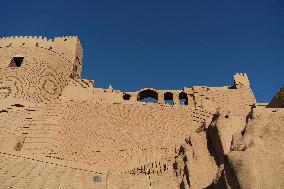
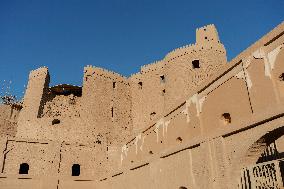
Fortress walls and towers rise inside the Arg-e Bam citadel in Bam, Iran on December 14, 2025. Arg-e Bam, a UNESCO World Heritage Site, is the largest adobe structure in the world and dates back to at least the Achaemenid period. The historic fortress once served as a key stop along Silk Road trade routes and was a major center for regional commerce. Photo by Bahram/Middle East Images/ABACAPRESS.COM

  •  
Arg-e Bam Citadel - Iran

Arg-e Bam Citadel - Iran

A general view shows the adobe ruins and restored structures of the Arg-e Bam citadel in Bam, Iran on December 14, 2025. Arg-e Bam, a UNESCO World Heritage Site, is the largest adobe structure in the world and dates back to at least the Achaemenid period, having served for centuries as a fortified city and a key hub along Silk Road trade routes before being largely destroyed in a 2003 earthquake and subsequently restored. Photo by Bahram/Middle East Images/ABACAPRESS.COM

  •  
Arg-e Bam Citadel - Iran

Arg-e Bam Citadel - Iran

Fortress walls and towers rise inside the Arg-e Bam citadel in Bam, Iran on December 14, 2025. Arg-e Bam, a UNESCO World Heritage Site, is the largest adobe structure in the world and dates back to at least the Achaemenid period. The historic fortress once served as a key stop along Silk Road trade routes and was a major center for regional commerce. Photo by Bahram/Middle East Images/ABACAPRESS.COM

  •  
Arg-e Bam Citadel - Iran

Arg-e Bam Citadel - Iran

Adobe rooftops and a watchtower are seen inside the Arg-e Bam citadel in Bam, Iran on December 14, 2025. Arg-e Bam, a UNESCO World Heritage Site, is the largest adobe structure in the world and dates back to at least the Achaemenid period. The historic fortress once served as a key stop along Silk Road trade routes and was a major center for regional commerce. Photo by Bahram/Middle East Images/ABACAPRESS.COM

  •  
Arg-e Bam Citadel - Iran

Arg-e Bam Citadel - Iran

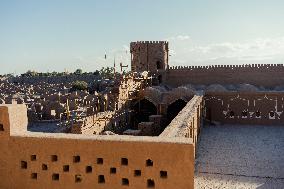
A flat rooftop and inner section of the Arg-e Bam citadel are seen in Bam, Iran on December 14, 2025. Arg-e Bam, a UNESCO World Heritage Site, is the largest adobe structure in the world and dates back to at least the Achaemenid period. The historic fortress once served as a key stop along Silk Road trade routes and was a major center for regional commerce. Photo by Bahram/Middle East Images/ABACAPRESS.COM

  •  
Arg-e Bam Citadel - Iran

Arg-e Bam Citadel - Iran

Fortress walls and towers rise inside the Arg-e Bam citadel in Bam, Iran on December 14, 2025. Arg-e Bam, a UNESCO World Heritage Site, is the largest adobe structure in the world and dates back to at least the Achaemenid period. The historic fortress once served as a key stop along Silk Road trade routes and was a major center for regional commerce. Photo by Bahram/Middle East Images/ABACAPRESS.COM

  •  
Arg-e Bam Citadel - Iran

Arg-e Bam Citadel - Iran

Fortress walls and towers rise inside the Arg-e Bam citadel in Bam, Iran on December 14, 2025. Arg-e Bam, a UNESCO World Heritage Site, is the largest adobe structure in the world and dates back to at least the Achaemenid period. The historic fortress once served as a key stop along Silk Road trade routes and was a major center for regional commerce. Photo by Bahram/Middle East Images/ABACAPRESS.COM

  •  
Arg-e Bam Citadel - Iran

Arg-e Bam Citadel - Iran

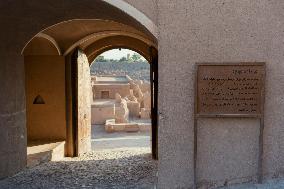
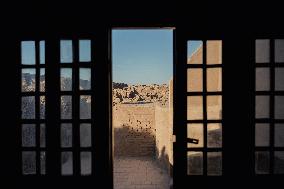
A view of adobe buildings is seen through a doorway inside the Arg-e Bam citadel in Bam, Iran on December 14, 2025. Arg-e Bam, a UNESCO World Heritage Site, is the largest adobe structure in the world and dates back to at least the Achaemenid period. The historic fortress once served as a key stop along Silk Road trade routes and was a major center for regional commerce. Photo by Bahram/Middle East Images/ABACAPRESS.COM

  •  
Arg-e Bam Citadel - Iran

Arg-e Bam Citadel - Iran

An open courtyard and adobe structures are seen inside the Arg-e Bam citadel in Bam, Iran on December 14, 2025. Arg-e Bam, a UNESCO World Heritage Site, is the largest adobe structure in the world and dates back to at least the Achaemenid period. The historic fortress once served as a key stop along Silk Road trade routes and was a major center for regional commerce. Photo by Bahram/Middle East Images/ABACAPRESS.COM

  •  
Arg-e Bam Citadel - Iran

Arg-e Bam Citadel - Iran

Fortress walls and towers rise inside the Arg-e Bam citadel in Bam, Iran on December 14, 2025. Arg-e Bam, a UNESCO World Heritage Site, is the largest adobe structure in the world and dates back to at least the Achaemenid period. The historic fortress once served as a key stop along Silk Road trade routes and was a major center for regional commerce. Photo by Bahram/Middle East Images/ABACAPRESS.COM

  •  
Arg-e Bam Citadel - Iran

Arg-e Bam Citadel - Iran

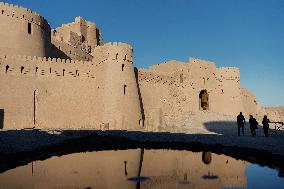
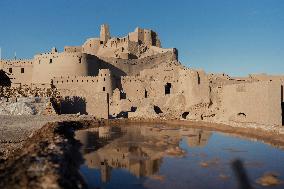
Adobe structures of the Arg-e Bam citadel are reflected in water in Bam, Iran on December 14, 2025. Arg-e Bam, a UNESCO World Heritage Site, is the largest adobe structure in the world and dates back to at least the Achaemenid period. The historic fortress once served as a key stop along Silk Road trade routes and was a major center for regional commerce. Photo by Bahram/Middle East Images/ABACAPRESS.COM

  •  
Arg-e Bam Citadel - Iran

Arg-e Bam Citadel - Iran

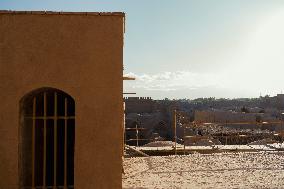
An arched window and scaffolding are seen during restoration work inside the Arg-e Bam citadel in Bam, Iran on December 14, 2025. Arg-e Bam, a UNESCO World Heritage Site, is the largest adobe structure in the world and dates back to at least the Achaemenid period. The historic fortress once served as a key stop along Silk Road trade routes and was a major center for regional commerce. Photo by Bahram/Middle East Images/ABACAPRESS.COM

  •  
Arg-e Bam Citadel - Iran

Arg-e Bam Citadel - Iran

Fortress walls and towers rise inside the Arg-e Bam citadel in Bam, Iran on December 14, 2025. Arg-e Bam, a UNESCO World Heritage Site, is the largest adobe structure in the world and dates back to at least the Achaemenid period. The historic fortress once served as a key stop along Silk Road trade routes and was a major center for regional commerce. Photo by Bahram/Middle East Images/ABACAPRESS.COM

  •  
Arg-e Bam Citadel - Iran

Arg-e Bam Citadel - Iran

Fortress walls and towers rise inside the Arg-e Bam citadel in Bam, Iran on December 14, 2025. Arg-e Bam, a UNESCO World Heritage Site, is the largest adobe structure in the world and dates back to at least the Achaemenid period. The historic fortress once served as a key stop along Silk Road trade routes and was a major center for regional commerce. Photo by Bahram/Middle East Images/ABACAPRESS.COM

  •  
Arg-e Bam Citadel - Iran

Arg-e Bam Citadel - Iran

An adobe tower stands inside the Arg-e Bam citadel in Bam, Iran on December 14, 2025. Arg-e Bam, a UNESCO World Heritage Site, is the largest adobe structure in the world and dates back to at least the Achaemenid period. The historic fortress once served as a key stop along Silk Road trade routes and was a major center for regional commerce. Photo by Bahram/Middle East Images/ABACAPRESS.COM

  •  
Arg-e Bam Citadel - Iran

Arg-e Bam Citadel - Iran

A view shows adobe buildings and pathways inside the Arg-e Bam citadel in Bam, Iran on December 14, 2025. Arg-e Bam, a UNESCO World Heritage Site, is the largest adobe structure in the world and dates back to at least the Achaemenid period. The historic fortress once served as a key stop along Silk Road trade routes and was a major center for regional commerce. Photo by Bahram/Middle East Images/ABACAPRESS.COM

  •  
Arg-e Bam Citadel - Iran

Arg-e Bam Citadel - Iran

A view shows adobe buildings and pathways inside the Arg-e Bam citadel in Bam, Iran on December 14, 2025. Arg-e Bam, a UNESCO World Heritage Site, is the largest adobe structure in the world and dates back to at least the Achaemenid period. The historic fortress once served as a key stop along Silk Road trade routes and was a major center for regional commerce. Photo by Bahram/Middle East Images/ABACAPRESS.COM

  •  
Arg-e Bam Citadel - Iran

Arg-e Bam Citadel - Iran

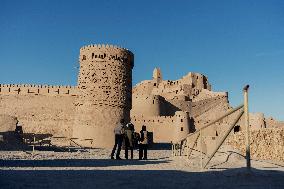
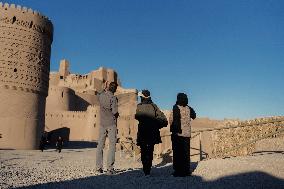
Visitors stand near an adobe tower inside the Arg-e Bam citadel in Bam, Iran on December 14, 2025. Arg-e Bam, a UNESCO World Heritage Site, is the largest adobe structure in the world and dates back to at least the Achaemenid period. The historic fortress once served as a key stop along Silk Road trade routes and was a major center for regional commerce. Photo by Bahram/Middle East Images/ABACAPRESS.COM

  •  
Arg-e Bam Citadel - Iran

Arg-e Bam Citadel - Iran

Visitors stand near an adobe tower inside the Arg-e Bam citadel in Bam, Iran on December 14, 2025. Arg-e Bam, a UNESCO World Heritage Site, is the largest adobe structure in the world and dates back to at least the Achaemenid period. The historic fortress once served as a key stop along Silk Road trade routes and was a major center for regional commerce. Photo by Bahram/Middle East Images/ABACAPRESS.COM

  •  
Arg-e Bam Citadel - Iran

Arg-e Bam Citadel - Iran

Adobe structures of the Arg-e Bam citadel are reflected in water in Bam, Iran on December 14, 2025. Arg-e Bam, a UNESCO World Heritage Site, is the largest adobe structure in the world and dates back to at least the Achaemenid period. The historic fortress once served as a key stop along Silk Road trade routes and was a major center for regional commerce. Photo by Bahram/Middle East Images/ABACAPRESS.COM

  •  
Arg-e Bam Citadel - Iran

Arg-e Bam Citadel - Iran

A view of adobe buildings is seen through a doorway inside the Arg-e Bam citadel in Bam, Iran on December 14, 2025. Arg-e Bam, a UNESCO World Heritage Site, is the largest adobe structure in the world and dates back to at least the Achaemenid period. The historic fortress once served as a key stop along Silk Road trade routes and was a major center for regional commerce. Photo by Bahram/Middle East Images/ABACAPRESS.COM

  •  
Arg-e Bam Citadel - Iran

Arg-e Bam Citadel - Iran

A view shows adobe buildings and pathways inside the Arg-e Bam citadel in Bam, Iran on December 14, 2025. Arg-e Bam, a UNESCO World Heritage Site, is the largest adobe structure in the world and dates back to at least the Achaemenid period. The historic fortress once served as a key stop along Silk Road trade routes and was a major center for regional commerce. Photo by Bahram/Middle East Images/ABACAPRESS.COM

  •  
Arg-e Bam Citadel - Iran

Arg-e Bam Citadel - Iran

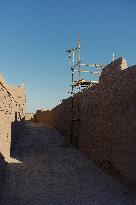
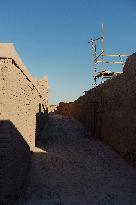
A narrow alleyway runs between adobe buildings inside the Arg-e Bam citadel in Bam, Iran on December 14, 2025. Arg-e Bam, a UNESCO World Heritage Site, is the largest adobe structure in the world and dates back to at least the Achaemenid period. The historic fortress once served as a key stop along Silk Road trade routes and was a major center for regional commerce. Photo by Bahram/Middle East Images/ABACAPRESS.COM

  •  
Arg-e Bam Citadel - Iran

Arg-e Bam Citadel - Iran

A view shows adobe buildings and pathways inside the Arg-e Bam citadel in Bam, Iran on December 14, 2025. Arg-e Bam, a UNESCO World Heritage Site, is the largest adobe structure in the world and dates back to at least the Achaemenid period. The historic fortress once served as a key stop along Silk Road trade routes and was a major center for regional commerce. Photo by Bahram/Middle East Images/ABACAPRESS.COM

  •  
Arg-e Bam Citadel - Iran

Arg-e Bam Citadel - Iran

A damaged structure is seen inside the Arg-e Bam citadel in Bam, Iran on December 14, 2025. The citadel was almost completely destroyed during the 2003 earthquake and has since undergone long-term reconstruction and conservation efforts. Arg-e Bam, a UNESCO World Heritage Site, is the largest adobe structure in the world and dates back to at least the Achaemenid period. The historic fortress once served as a key stop along Silk Road trade routes and was a major center for regional commerce. Photo by Bahram/Middle East Images/ABACAPRESS.COM

  •  
Arg-e Bam Citadel - Iran

Arg-e Bam Citadel - Iran

A narrow alleyway runs between adobe buildings inside the Arg-e Bam citadel in Bam, Iran on December 14, 2025. Arg-e Bam, a UNESCO World Heritage Site, is the largest adobe structure in the world and dates back to at least the Achaemenid period. The historic fortress once served as a key stop along Silk Road trade routes and was a major center for regional commerce. Photo by Bahram/Middle East Images/ABACAPRESS.COM

  •  
Arg-e Bam Citadel - Iran

Arg-e Bam Citadel - Iran

A narrow alleyway runs between adobe buildings inside the Arg-e Bam citadel in Bam, Iran on December 14, 2025. Arg-e Bam, a UNESCO World Heritage Site, is the largest adobe structure in the world and dates back to at least the Achaemenid period. The historic fortress once served as a key stop along Silk Road trade routes and was a major center for regional commerce. Photo by Bahram/Middle East Images/ABACAPRESS.COM

  •  
Arg-e Bam Citadel - Iran

Arg-e Bam Citadel - Iran

A view shows adobe buildings and pathways inside the Arg-e Bam citadel in Bam, Iran on December 14, 2025. Arg-e Bam, a UNESCO World Heritage Site, is the largest adobe structure in the world and dates back to at least the Achaemenid period. The historic fortress once served as a key stop along Silk Road trade routes and was a major center for regional commerce. Photo by Bahram/Middle East Images/ABACAPRESS.COM

  •  
Arg-e Bam Citadel - Iran

Arg-e Bam Citadel - Iran

A visitor walks along a pathway inside the Arg-e Bam citadel in Bam, Iran on December 14, 2025. Arg-e Bam, a UNESCO World Heritage Site, is the largest adobe structure in the world and dates back to at least the Achaemenid period. The historic fortress once served as a key stop along Silk Road trade routes and was a major center for regional commerce. Photo by Bahram/Middle East Images/ABACAPRESS.COM

  •  
Historical Site Persepolis Takht-e Jamshid - Iran

Historical Site Persepolis Takht-e Jamshid - Iran

A woman takes a selfie next to the Golden Cup of  Xerxes, the king of the Persian Achaemenid Empire, put on display in the museum in the ruins of Persepolis or Takht-e Jamshid, a UNESCO World Heritage site near Shiraz, Iran, on May 18, 2024. Founded by Darius I in 518 B.C., Persepolis was the capital of the Achaemenid Empire. It was built on an immense half-artificial, half-natural terrace, where the king of kings created an impressive palace complex inspired by Mesopotamian models. Takht-e Jamshid in Persian and 'Persepolis' in Greek, this site has earned global recognition. The columns, column heads, inscriptions, reliefs, palaces, and gates in the Persepolis area are among the world's most celebrated works of civilization. As the Persepolis area is known, the' Land of Persia' draws tourists worldwide to Shiraz every year. a Photo by Moe/Middle East Images/ABACAPRESS.COM

  • Main
  • Top
  • Editorial
  • Creative
  • About Us
  • About ILG
  • Terms of use
  • Company
  • BEHIND
  • Price List
  • Single Plan
  • Monthly Plan
  • Services
  • Shooting
  • Rights Clearance
  • Support
  • FAQ
  • How To Buy
  • Contact Us
  • Become a Partner

© KYODO NEWS IMAGES INC

All Rights Reserved.

  • Editorial
  • Olympics
  • News
  • Sports
  • Japan
  • Tech
  • Royal
  • Disaster
  • NorthKorea
  • Old Japan
  • SNS
  • Creative
  • Food
  • Japan
  • Landscape
  • Animal
  • Popular
  • #Ukraine
  • #China
  • #coronavirus
  • #N. Korea
  • #Thailand
  • #Russia
  • #Ukraine
  • #China
  • #coronavirus
  • #N. Korea
  • #Thailand
  • #Russia
  • Food
  • Japan
  • Landscape
  • Animal
  • Olympics
  • News
  • Sports
  • Japan
  • Tech
  • Royal
  • Disaster
  • NorthKorea
  • Old Japan
  • SNS