•  
Gion Festival in Kyoto

Gion Festival in Kyoto

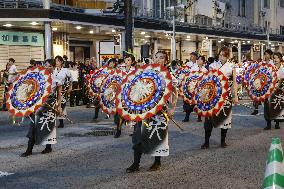
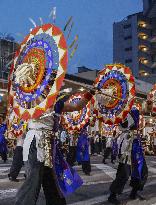
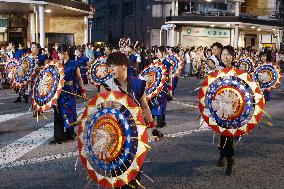
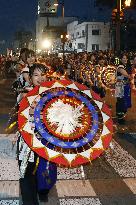
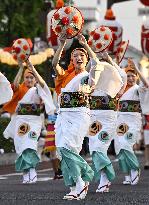
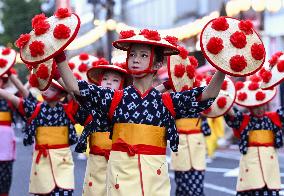
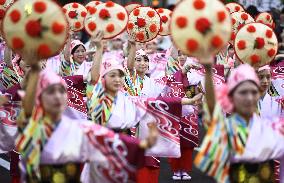
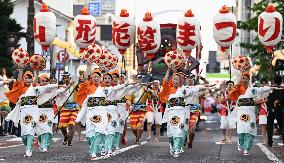
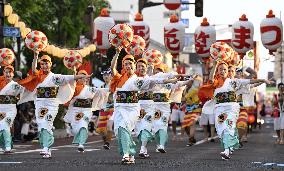
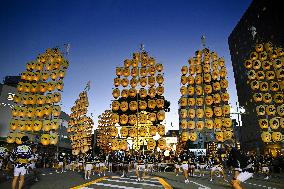
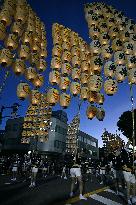
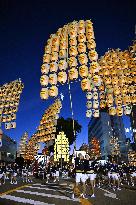
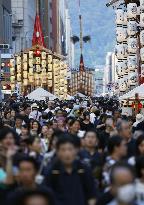
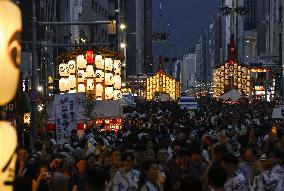
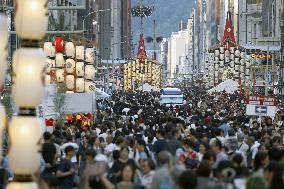
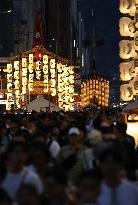
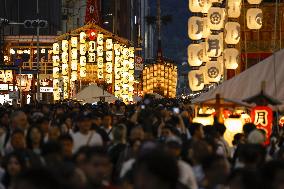
People fill the streets as decorated floats adorned with illuminated lanterns are displayed during the annual Gion Festival's Yoiyama event in Kyoto, western Japan, on July 16, 2026, the eve of the Yamahoko Junko parade, the highlight of the month-long festival.

  •  
Gion Festival in Kyoto

Gion Festival in Kyoto

People fill the streets as decorated floats adorned with illuminated lanterns are displayed during the annual Gion Festival's Yoiyama event in Kyoto, western Japan, on July 16, 2026, the eve of the Yamahoko Junko parade, the highlight of the month-long festival.

  •  
Gion Festival in Kyoto

Gion Festival in Kyoto

People fill the streets as decorated floats adorned with illuminated lanterns are displayed during the annual Gion Festival's Yoiyama event in Kyoto, western Japan, on July 16, 2026, the eve of the Yamahoko Junko parade, the highlight of the month-long festival.

  •  
Gion Festival in Kyoto

Gion Festival in Kyoto

People fill the streets as decorated floats adorned with illuminated lanterns are displayed during the annual Gion Festival's Yoiyama event in Kyoto, western Japan, on July 16, 2026, the eve of the Yamahoko Junko parade, the highlight of the month-long festival.

  •  
Gion Festival in Kyoto

Gion Festival in Kyoto

People fill the streets as decorated floats adorned with illuminated lanterns are displayed during the annual Gion Festival's Yoiyama event in Kyoto, western Japan, on July 16, 2026, the eve of the Yamahoko Junko parade, the highlight of the month-long festival.

  •  

[Breaking News]JAL Ohtani jet's final flight

Fukuoka, Japan, June 11 Kyodo - Video taken at Fukuoka airport on June 10, 2026, shows the "Dream Sho Jet" passenger plane, adorned with an image of Los Angeles Dodgers two-way star Shohei Ohtani, before it made its final flight to Tokyo's Haneda airport. (Kyodo)

  •  
JAL Ohtani jet's final flight

JAL Ohtani jet's final flight

Photo taken at Fukuoka airport on June 10, 2026, shows the "Dream Sho Jet" passenger plane, adorned with an image of Los Angeles Dodgers two-way star Shohei Ohtani, before it made its final flight to Tokyo's Haneda airport.

  •  
JAL Ohtani jet's final flight

JAL Ohtani jet's final flight

Photo taken at Tokyo's Haneda airport on June 10, 2026, shows the "Dream Sho Jet" passenger plane, adorned with an image of Los Angeles Dodgers two-way star Shohei Ohtani, after making its final flight from Fukuoka airport.

  •  
JAL Ohtani jet's final flight

JAL Ohtani jet's final flight

Photo taken at Fukuoka airport on June 10, 2026, shows the "Dream Sho Jet" passenger plane, adorned with an image of Los Angeles Dodgers two-way star Shohei Ohtani, before it made its final flight to Tokyo's Haneda airport.

  •  
JAL Ohtani jet's final flight

JAL Ohtani jet's final flight

Photo taken at Tokyo's Haneda airport on June 10, 2026, shows the "Dream Sho Jet" passenger plane, adorned with an image of Los Angeles Dodgers two-way star Shohei Ohtani, after making its final flight from Fukuoka airport.

  •  
JAL Ohtani jet's final flight

JAL Ohtani jet's final flight

Photo taken at Fukuoka airport on June 10, 2026, shows the "Dream Sho Jet" passenger plane, adorned with an image of Los Angeles Dodgers two-way star Shohei Ohtani, before it made its final flight to Tokyo's Haneda airport.

  •  
JAL Ohtani jet's final flight

JAL Ohtani jet's final flight

Photo taken at Tokyo's Haneda airport on June 10, 2026, shows the "Dream Sho Jet" passenger plane, adorned with an image of Los Angeles Dodgers two-way star Shohei Ohtani, after making its final flight from Fukuoka airport.

  •  
New Year Decorations in Astana - Kazakhstan

New Year Decorations in Astana - Kazakhstan

New Year signs and decorations are seen along a street in Astana, Kazakhstan, Dec. 26, 2025. Astana has been adorned in festive decorations recently as the New Year approaches. Photo by Kalizhan Ospanov/Xinhua/ABACAPRESS.COM

  •  
New Year Decorations in Astana - Kazakhstan

New Year Decorations in Astana - Kazakhstan

New Year signs and decorations are seen along a street in Astana, Kazakhstan, Dec. 26, 2025. Astana has been adorned in festive decorations recently as the New Year approaches. Photo by Kalizhan Ospanov/Xinhua/ABACAPRESS.COM

  •  
New Year Decorations in Astana - Kazakhstan

New Year Decorations in Astana - Kazakhstan

Local residents take selfies at a New Year-themed park at Independence Square in Astana, Kazakhstan, Dec. 26, 2025. Astana has been adorned in festive decorations recently as the New Year approaches. Photo by Kalizhan Ospanov/Xinhua/ABACAPRESS.COM

  •  
New Year Decorations in Astana - Kazakhstan

New Year Decorations in Astana - Kazakhstan

New Year decorations are seen in front of the Baiterek Tower in Astana, Kazakhstan, Dec. 25, 2025. Astana has been adorned in festive decorations recently as the New Year approaches. Photo by Kalizhan Ospanov/Xinhua/ABACAPRESS.COM

  •  
New Year Decorations in Astana - Kazakhstan

New Year Decorations in Astana - Kazakhstan

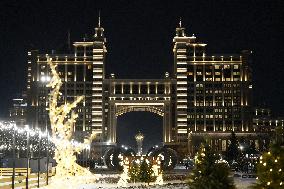
New Year-themed decorations are displayed in front of a landmark building in Astana, Kazakhstan, Dec. 25, 2025. Astana has been adorned in festive decorations recently as the New Year approaches. Photo by Kalizhan Ospanov/Xinhua/ABACAPRESS.COM

  •  
Tie-Dye Technique Of Bai Ethnic Group - Chin

Tie-Dye Technique Of Bai Ethnic Group - Chin

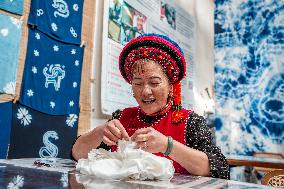
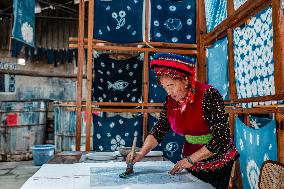
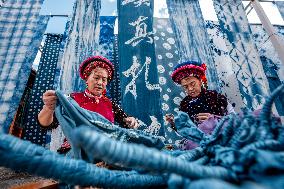
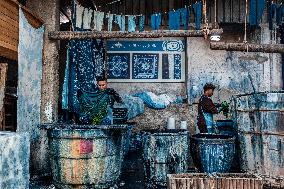
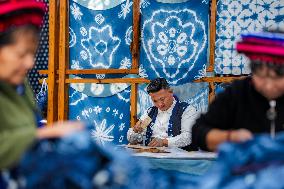
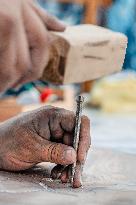
Duan Yuan, an inheritor of the tie-dye technique of Bai ethnic group, makes tie-dye designs in a dyehouse in Zhoucheng Village of Dali Bai Autonomous Prefecture, southwest China's Yunnan Province, November 21, 2025. Known as the hometown of the tie-dye technique of Bai ethnic group, Zhoucheng Village hosts over 200 households engaging in tie-dye businesses, with the number of employees exceeding 4,000. As a traditional folk technique of the Bai ethnic group, tie-dye boasts a history spanning over a thousand years and was included in the first batch of China's national intangible cultural heritage list in 2006. Tying and dyeing are the core steps in the process of making indigo tie-dye products. Artisans use needles and threads to create various patterns on the fabric, which are then dyed with plant-based dyes, resulting in blue backgrounds adorned with vivid white patterns. Photo by Hu Chao/Xinhua/ABACAPRESS.COM

  •  
Tie-Dye Technique Of Bai Ethnic Group - Chin

Tie-Dye Technique Of Bai Ethnic Group - Chin

Duan Yinmei, an inheritor of the tie-dye technique of Bai ethnic group, creates knots on fabrics in a dyehouse in Zhoucheng Village of Dali Bai Autonomous Prefecture, southwest China's Yunnan Province, November 21, 2025. Known as the hometown of the tie-dye technique of Bai ethnic group, Zhoucheng Village hosts over 200 households engaging in tie-dye businesses, with the number of employees exceeding 4,000. As a traditional folk technique of the Bai ethnic group, tie-dye boasts a history spanning over a thousand years and was included in the first batch of China's national intangible cultural heritage list in 2006. Tying and dyeing are the core steps in the process of making indigo tie-dye products. Artisans use needles and threads to create various patterns on the fabric, which are then dyed with plant-based dyes, resulting in blue backgrounds adorned with vivid white patterns. Photo by Hu Chao/Xinhua/ABACAPRESS.COM

  •  
Tie-Dye Technique Of Bai Ethnic Group - Chin

Tie-Dye Technique Of Bai Ethnic Group - Chin

A woman experiences the tie-dye technique of Bai ethnic group in a dyehouse in Zhoucheng Village of Dali Bai Autonomous Prefecture, southwest China's Yunnan Province, November 21, 2025. Known as the hometown of the tie-dye technique of Bai ethnic group, Zhoucheng Village hosts over 200 households engaging in tie-dye businesses, with the number of employees exceeding 4,000. As a traditional folk technique of the Bai ethnic group, tie-dye boasts a history spanning over a thousand years and was included in the first batch of China's national intangible cultural heritage list in 2006. Tying and dyeing are the core steps in the process of making indigo tie-dye products. Artisans use needles and threads to create various patterns on the fabric, which are then dyed with plant-based dyes, resulting in blue backgrounds adorned with vivid white patterns. Photo by Hu Chao/Xinhua/ABACAPRESS.COM

  •  
Tie-Dye Technique Of Bai Ethnic Group - Chin

Tie-Dye Technique Of Bai Ethnic Group - Chin

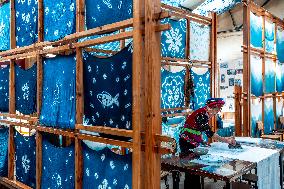
Duan Yinmei, an inheritor of the tie-dye technique of Bai ethnic group, dyes patterns on fabrics in a dyehouse in Zhoucheng Village of Dali Bai Autonomous Prefecture, southwest China's Yunnan Province, November 21, 2025. Known as the hometown of the tie-dye technique of Bai ethnic group, Zhoucheng Village hosts over 200 households engaging in tie-dye businesses, with the number of employees exceeding 4,000. As a traditional folk technique of the Bai ethnic group, tie-dye boasts a history spanning over a thousand years and was included in the first batch of China's national intangible cultural heritage list in 2006. Tying and dyeing are the core steps in the process of making indigo tie-dye products. Artisans use needles and threads to create various patterns on the fabric, which are then dyed with plant-based dyes, resulting in blue backgrounds adorned with vivid white patterns. Photo by Hu Chao/Xinhua/ABACAPRESS.COM

  •  
Tie-Dye Technique Of Bai Ethnic Group - Chin

Tie-Dye Technique Of Bai Ethnic Group - Chin

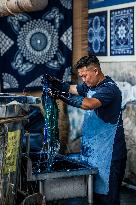
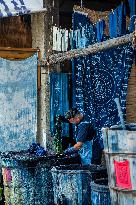
Duan Yuan, an inheritor of the tie-dye technique of Bai ethnic group, rinses dyed fabrics in a dyehouse in Zhoucheng Village of Dali Bai Autonomous Prefecture, southwest China's Yunnan Province, November 21, 2025. Known as the hometown of the tie-dye technique of Bai ethnic group, Zhoucheng Village hosts over 200 households engaging in tie-dye businesses, with the number of employees exceeding 4,000. As a traditional folk technique of the Bai ethnic group, tie-dye boasts a history spanning over a thousand years and was included in the first batch of China's national intangible cultural heritage list in 2006. Tying and dyeing are the core steps in the process of making indigo tie-dye products. Artisans use needles and threads to create various patterns on the fabric, which are then dyed with plant-based dyes, resulting in blue backgrounds adorned with vivid white patterns. Photo by Hu Chao/Xinhua/ABACAPRESS.COM

  •  
Tie-Dye Technique Of Bai Ethnic Group - Chin

Tie-Dye Technique Of Bai Ethnic Group - Chin

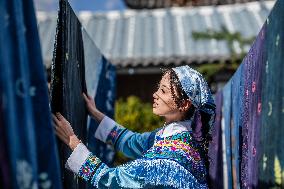
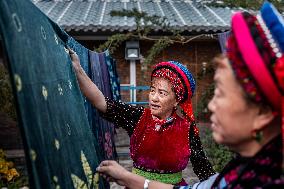
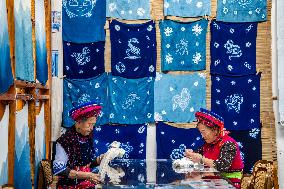
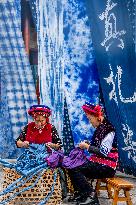
Duan Yinmei (L), an inheritor of the tie-dye technique of Bai ethnic group, and handicraftsman Duan Lilan dry tie-dye fabrics in a dyehouse in Zhoucheng Village of Dali Bai Autonomous Prefecture, southwest China's Yunnan Province, November 21, 2025. Known as the hometown of the tie-dye technique of Bai ethnic group, Zhoucheng Village hosts over 200 households engaging in tie-dye businesses, with the number of employees exceeding 4,000. As a traditional folk technique of the Bai ethnic group, tie-dye boasts a history spanning over a thousand years and was included in the first batch of China's national intangible cultural heritage list in 2006. Tying and dyeing are the core steps in the process of making indigo tie-dye products. Artisans use needles and threads to create various patterns on the fabric, which are then dyed with plant-based dyes, resulting in blue backgrounds adorned with vivid white patterns. Photo by Hu Chao/Xinhua/ABACAPRESS.COM

  •  
Tie-Dye Technique Of Bai Ethnic Group - Chin

Tie-Dye Technique Of Bai Ethnic Group - Chin

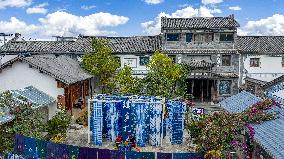
An aerial drone photo shows a scene at a dyehouse in Zhoucheng Village of Dali Bai Autonomous Prefecture, southwest China's Yunnan Province, November 21, 2025. Known as the hometown of the tie-dye technique of Bai ethnic group, Zhoucheng Village hosts over 200 households engaging in tie-dye businesses, with the number of employees exceeding 4,000. As a traditional folk technique of the Bai ethnic group, tie-dye boasts a history spanning over a thousand years and was included in the first batch of China's national intangible cultural heritage list in 2006. Tying and dyeing are the core steps in the process of making indigo tie-dye products. Artisans use needles and threads to create various patterns on the fabric, which are then dyed with plant-based dyes, resulting in blue backgrounds adorned with vivid white patterns. Photo by Hu Chao/Xinhua/ABACAPRESS.COM

  •  
Tie-Dye Technique Of Bai Ethnic Group - Chin

Tie-Dye Technique Of Bai Ethnic Group - Chin

Duan Yinmei (L), an inheritor of the tie-dye technique of Bai ethnic group, and handicraftsman Duan Lilan untie knots on fabrics in a dyehouse in Zhoucheng Village of Dali Bai Autonomous Prefecture, southwest China's Yunnan Province, November 21, 2025. Known as the hometown of the tie-dye technique of Bai ethnic group, Zhoucheng Village hosts over 200 households engaging in tie-dye businesses, with the number of employees exceeding 4,000. As a traditional folk technique of the Bai ethnic group, tie-dye boasts a history spanning over a thousand years and was included in the first batch of China's national intangible cultural heritage list in 2006. Tying and dyeing are the core steps in the process of making indigo tie-dye products. Artisans use needles and threads to create various patterns on the fabric, which are then dyed with plant-based dyes, resulting in blue backgrounds adorned with vivid white patterns. Photo by Hu Chao/Xinhua/ABACAPRESS.COM

  •  
Tie-Dye Technique Of Bai Ethnic Group - Chin

Tie-Dye Technique Of Bai Ethnic Group - Chin

Duan Yinmei (L), an inheritor of the tie-dye technique of Bai ethnic group, and handicraftsman Duan Lilan untie knots on fabrics in a dyehouse in Zhoucheng Village of Dali Bai Autonomous Prefecture, southwest China's Yunnan Province, November 21, 2025. Known as the hometown of the tie-dye technique of Bai ethnic group, Zhoucheng Village hosts over 200 households engaging in tie-dye businesses, with the number of employees exceeding 4,000. As a traditional folk technique of the Bai ethnic group, tie-dye boasts a history spanning over a thousand years and was included in the first batch of China's national intangible cultural heritage list in 2006. Tying and dyeing are the core steps in the process of making indigo tie-dye products. Artisans use needles and threads to create various patterns on the fabric, which are then dyed with plant-based dyes, resulting in blue backgrounds adorned with vivid white patterns. Photo by Hu Chao/Xinhua/ABACAPRESS.COM

  •  
Tie-Dye Technique Of Bai Ethnic Group - Chin

Tie-Dye Technique Of Bai Ethnic Group - Chin

Duan Yuan (L), an inheritor of the tie-dye technique of Bai ethnic group, dyes fabrics in a dyehouse in Zhoucheng Village of Dali Bai Autonomous Prefecture, southwest China's Yunnan Province, November 21, 2025. Known as the hometown of the tie-dye technique of Bai ethnic group, Zhoucheng Village hosts over 200 households engaging in tie-dye businesses, with the number of employees exceeding 4,000. As a traditional folk technique of the Bai ethnic group, tie-dye boasts a history spanning over a thousand years and was included in the first batch of China's national intangible cultural heritage list in 2006. Tying and dyeing are the core steps in the process of making indigo tie-dye products. Artisans use needles and threads to create various patterns on the fabric, which are then dyed with plant-based dyes, resulting in blue backgrounds adorned with vivid white patterns. Photo by Hu Chao/Xinhua/ABACAPRESS.COM

  •  
Tie-Dye Technique Of Bai Ethnic Group - Chin

Tie-Dye Technique Of Bai Ethnic Group - Chin

Duan Yuan, an inheritor of the tie-dye technique of Bai ethnic group, makes tie-dye designs in a dyehouse in Zhoucheng Village of Dali Bai Autonomous Prefecture, southwest China's Yunnan Province, November 21, 2025. Known as the hometown of the tie-dye technique of Bai ethnic group, Zhoucheng Village hosts over 200 households engaging in tie-dye businesses, with the number of employees exceeding 4,000. As a traditional folk technique of the Bai ethnic group, tie-dye boasts a history spanning over a thousand years and was included in the first batch of China's national intangible cultural heritage list in 2006. Tying and dyeing are the core steps in the process of making indigo tie-dye products. Artisans use needles and threads to create various patterns on the fabric, which are then dyed with plant-based dyes, resulting in blue backgrounds adorned with vivid white patterns. Photo by Hu Chao/Xinhua/ABACAPRESS.COM

  •  
Tie-Dye Technique Of Bai Ethnic Group - Chin

Tie-Dye Technique Of Bai Ethnic Group - Chin

Duan Yuan, an inheritor of the tie-dye technique of Bai ethnic group, dyes fabrics in a dyehouse in Zhoucheng Village of Dali Bai Autonomous Prefecture, southwest China's Yunnan Province, November 21, 2025. Known as the hometown of the tie-dye technique of Bai ethnic group, Zhoucheng Village hosts over 200 households engaging in tie-dye businesses, with the number of employees exceeding 4,000. As a traditional folk technique of the Bai ethnic group, tie-dye boasts a history spanning over a thousand years and was included in the first batch of China's national intangible cultural heritage list in 2006. Tying and dyeing are the core steps in the process of making indigo tie-dye products. Artisans use needles and threads to create various patterns on the fabric, which are then dyed with plant-based dyes, resulting in blue backgrounds adorned with vivid white patterns. Photo by Hu Chao/Xinhua/ABACAPRESS.COM

  •  
Tie-Dye Technique Of Bai Ethnic Group - Chin

Tie-Dye Technique Of Bai Ethnic Group - Chin

Duan Yuan, an inheritor of the tie-dye technique of Bai ethnic group, dyes fabrics in a dyehouse in Zhoucheng Village of Dali Bai Autonomous Prefecture, southwest China's Yunnan Province, November 21, 2025. Known as the hometown of the tie-dye technique of Bai ethnic group, Zhoucheng Village hosts over 200 households engaging in tie-dye businesses, with the number of employees exceeding 4,000. As a traditional folk technique of the Bai ethnic group, tie-dye boasts a history spanning over a thousand years and was included in the first batch of China's national intangible cultural heritage list in 2006. Tying and dyeing are the core steps in the process of making indigo tie-dye products. Artisans use needles and threads to create various patterns on the fabric, which are then dyed with plant-based dyes, resulting in blue backgrounds adorned with vivid white patterns. Photo by Hu Chao/Xinhua/ABACAPRESS.COM

  •  
Tie-Dye Technique Of Bai Ethnic Group - Chin

Tie-Dye Technique Of Bai Ethnic Group - Chin

Duan Yuan, an inheritor of the tie-dye technique of Bai ethnic group, makes tie-dye designs in a dyehouse in Zhoucheng Village of Dali Bai Autonomous Prefecture, southwest China's Yunnan Province, November 21, 2025. Known as the hometown of the tie-dye technique of Bai ethnic group, Zhoucheng Village hosts over 200 households engaging in tie-dye businesses, with the number of employees exceeding 4,000. As a traditional folk technique of the Bai ethnic group, tie-dye boasts a history spanning over a thousand years and was included in the first batch of China's national intangible cultural heritage list in 2006. Tying and dyeing are the core steps in the process of making indigo tie-dye products. Artisans use needles and threads to create various patterns on the fabric, which are then dyed with plant-based dyes, resulting in blue backgrounds adorned with vivid white patterns. Photo by Hu Chao/Xinhua/ABACAPRESS.COM

  •  
Tie-Dye Technique Of Bai Ethnic Group - Chin

Tie-Dye Technique Of Bai Ethnic Group - Chin

Duan Yinmei, an inheritor of the tie-dye technique of Bai ethnic group, unties knots on fabrics in a dyehouse in Zhoucheng Village of Dali Bai Autonomous Prefecture, southwest China's Yunnan Province, November 21, 2025. Known as the hometown of the tie-dye technique of Bai ethnic group, Zhoucheng Village hosts over 200 households engaging in tie-dye businesses, with the number of employees exceeding 4,000. As a traditional folk technique of the Bai ethnic group, tie-dye boasts a history spanning over a thousand years and was included in the first batch of China's national intangible cultural heritage list in 2006. Tying and dyeing are the core steps in the process of making indigo tie-dye products. Artisans use needles and threads to create various patterns on the fabric, which are then dyed with plant-based dyes, resulting in blue backgrounds adorned with vivid white patterns. Photo by Hu Chao/Xinhua/ABACAPRESS.COM

  •  
Tie-Dye Technique Of Bai Ethnic Group - Chin

Tie-Dye Technique Of Bai Ethnic Group - Chin

Duan Yinmei, an inheritor of the tie-dye technique of Bai ethnic group, dyes patterns on fabrics in a dyehouse in Zhoucheng Village of Dali Bai Autonomous Prefecture, southwest China's Yunnan Province, November 21, 2025. Known as the hometown of the tie-dye technique of Bai ethnic group, Zhoucheng Village hosts over 200 households engaging in tie-dye businesses, with the number of employees exceeding 4,000. As a traditional folk technique of the Bai ethnic group, tie-dye boasts a history spanning over a thousand years and was included in the first batch of China's national intangible cultural heritage list in 2006. Tying and dyeing are the core steps in the process of making indigo tie-dye products. Artisans use needles and threads to create various patterns on the fabric, which are then dyed with plant-based dyes, resulting in blue backgrounds adorned with vivid white patterns. Photo by Hu Chao/Xinhua/ABACAPRESS.COM

  •  
Tie-Dye Technique Of Bai Ethnic Group - Chin

Tie-Dye Technique Of Bai Ethnic Group - Chin

Duan Yinmei (R), an inheritor of the tie-dye technique of Bai ethnic group, and handicraftsman Duan Lilan create knots on fabrics in a dyehouse in Zhoucheng Village of Dali Bai Autonomous Prefecture, southwest China's Yunnan Province, November 21, 2025. Known as the hometown of the tie-dye technique of Bai ethnic group, Zhoucheng Village hosts over 200 households engaging in tie-dye businesses, with the number of employees exceeding 4,000. As a traditional folk technique of the Bai ethnic group, tie-dye boasts a history spanning over a thousand years and was included in the first batch of China's national intangible cultural heritage list in 2006. Tying and dyeing are the core steps in the process of making indigo tie-dye products. Artisans use needles and threads to create various patterns on the fabric, which are then dyed with plant-based dyes, resulting in blue backgrounds adorned with vivid white patterns. Photo by Hu Chao/Xinhua/ABACAPRESS.COM

  •  
Guwahati Nuns Mark Solemn Day - India

Guwahati Nuns Mark Solemn Day - India

Relatives gather around graves adorned with flowers and candles in Guwahati, India, on November 2, 2025. Millions of Christians worldwide observe All Souls’ Day to pray for the souls of deceased loved ones. Photo by Hafiz Ahmed/Middle East Images/ABACAPRESS.COM

  •  
Guwahati Nuns Mark Solemn Day - India

Guwahati Nuns Mark Solemn Day - India

Relatives gather around graves adorned with flowers and candles in Guwahati, India, on November 2, 2025. Millions of Christians worldwide observe All Souls’ Day to pray for the souls of deceased loved ones. Photo by Hafiz Ahmed/Middle East Images/ABACAPRESS.COM

  •  
Sheikh ul Alam Posthumous Ceremony - India

Sheikh ul Alam Posthumous Ceremony - India

Devotees gather at Charar-e-Sharief to take part in the Poshakbandi ceremony, where the grave of Sheikh-ul-Alam is adorned with a new cloth. Sheikh ul Alam, also known as Nund Rishi, was a 14th-century Kashmiri Sufi saint and poet who preached peace, simplicity, and harmony between religions. He is the founder of the Rishi order and is regarded as the patron saint of Kashmir. on October 18, 2025 in Srinagar, India. Photo by Danish Showkat/ Eyepix Group/ABACAPRESS.COM

  •  
Sheikh ul Alam Posthumous Ceremony - India

Sheikh ul Alam Posthumous Ceremony - India

Devotees gather at Charar-e-Sharief to take part in the Poshakbandi ceremony, where the grave of Sheikh-ul-Alam is adorned with a new cloth. Sheikh ul Alam, also known as Nund Rishi, was a 14th-century Kashmiri Sufi saint and poet who preached peace, simplicity, and harmony between religions. He is the founder of the Rishi order and is regarded as the patron saint of Kashmir. on October 18, 2025 in Srinagar, India. Photo by Danish Showkat/ Eyepix Group/ABACAPRESS.COM

  •  
Sheikh ul Alam Posthumous Ceremony - India

Sheikh ul Alam Posthumous Ceremony - India

Devotees gather at Charar-e-Sharief to take part in the Poshakbandi ceremony, where the grave of Sheikh-ul-Alam is adorned with a new cloth. Sheikh ul Alam, also known as Nund Rishi, was a 14th-century Kashmiri Sufi saint and poet who preached peace, simplicity, and harmony between religions. He is the founder of the Rishi order and is regarded as the patron saint of Kashmir. on October 18, 2025 in Srinagar, India. Photo by Danish Showkat/ Eyepix Group/ABACAPRESS.COM

  •  
Sheikh ul Alam Posthumous Ceremony - India

Sheikh ul Alam Posthumous Ceremony - India

Devotees gather at Charar-e-Sharief to take part in the Poshakbandi ceremony, where the grave of Sheikh-ul-Alam is adorned with a new cloth. Sheikh ul Alam, also known as Nund Rishi, was a 14th-century Kashmiri Sufi saint and poet who preached peace, simplicity, and harmony between religions. He is the founder of the Rishi order and is regarded as the patron saint of Kashmir. on October 18, 2025 in Srinagar, India. Photo by Danish Showkat/ Eyepix Group/ABACAPRESS.COM

  •  
Sheikh ul Alam Posthumous Ceremony - India

Sheikh ul Alam Posthumous Ceremony - India

Devotees gather at Charar-e-Sharief to take part in the Poshakbandi ceremony, where the grave of Sheikh-ul-Alam is adorned with a new cloth. Sheikh ul Alam, also known as Nund Rishi, was a 14th-century Kashmiri Sufi saint and poet who preached peace, simplicity, and harmony between religions. He is the founder of the Rishi order and is regarded as the patron saint of Kashmir. on October 18, 2025 in Srinagar, India. Photo by Danish Showkat/ Eyepix Group/ABACAPRESS.COM

  •  
Sheikh ul Alam Posthumous Ceremony - India

Sheikh ul Alam Posthumous Ceremony - India

Devotees gather at Charar-e-Sharief to take part in the Poshakbandi ceremony, where the grave of Sheikh-ul-Alam is adorned with a new cloth. Sheikh ul Alam, also known as Nund Rishi, was a 14th-century Kashmiri Sufi saint and poet who preached peace, simplicity, and harmony between religions. He is the founder of the Rishi order and is regarded as the patron saint of Kashmir. on October 18, 2025 in Srinagar, India. Photo by Danish Showkat/ Eyepix Group/ABACAPRESS.COM

  •  
Sheikh ul Alam Posthumous Ceremony - India

Sheikh ul Alam Posthumous Ceremony - India

Devotees gather at Charar-e-Sharief to take part in the Poshakbandi ceremony, where the grave of Sheikh-ul-Alam is adorned with a new cloth. Sheikh ul Alam, also known as Nund Rishi, was a 14th-century Kashmiri Sufi saint and poet who preached peace, simplicity, and harmony between religions. He is the founder of the Rishi order and is regarded as the patron saint of Kashmir. on October 18, 2025 in Srinagar, India. Photo by Danish Showkat/ Eyepix Group/ABACAPRESS.COM

  •  
Sheikh ul Alam Posthumous Ceremony - India

Sheikh ul Alam Posthumous Ceremony - India

Devotees gather at Charar-e-Sharief to take part in the Poshakbandi ceremony, where the grave of Sheikh-ul-Alam is adorned with a new cloth. Sheikh ul Alam, also known as Nund Rishi, was a 14th-century Kashmiri Sufi saint and poet who preached peace, simplicity, and harmony between religions. He is the founder of the Rishi order and is regarded as the patron saint of Kashmir. on October 18, 2025 in Srinagar, India. Photo by Danish Showkat/ Eyepix Group/ABACAPRESS.COM

  •  
Sheikh ul Alam Posthumous Ceremony - India

Sheikh ul Alam Posthumous Ceremony - India

Devotees gather at Charar-e-Sharief to take part in the Poshakbandi ceremony, where the grave of Sheikh-ul-Alam is adorned with a new cloth. Sheikh ul Alam, also known as Nund Rishi, was a 14th-century Kashmiri Sufi saint and poet who preached peace, simplicity, and harmony between religions. He is the founder of the Rishi order and is regarded as the patron saint of Kashmir. on October 18, 2025 in Srinagar, India. Photo by Danish Showkat/ Eyepix Group/ABACAPRESS.COM

  •  
Sheikh ul Alam Posthumous Ceremony - India

Sheikh ul Alam Posthumous Ceremony - India

Devotees gather at Charar-e-Sharief to take part in the Poshakbandi ceremony, where the grave of Sheikh-ul-Alam is adorned with a new cloth. Sheikh ul Alam, also known as Nund Rishi, was a 14th-century Kashmiri Sufi saint and poet who preached peace, simplicity, and harmony between religions. He is the founder of the Rishi order and is regarded as the patron saint of Kashmir. on October 18, 2025 in Srinagar, India. Photo by Danish Showkat/ Eyepix Group/ABACAPRESS.COM

  •  
Sheikh ul Alam Posthumous Ceremony - India

Sheikh ul Alam Posthumous Ceremony - India

Devotees gather at Charar-e-Sharief to take part in the Poshakbandi ceremony, where the grave of Sheikh-ul-Alam is adorned with a new cloth. Sheikh ul Alam, also known as Nund Rishi, was a 14th-century Kashmiri Sufi saint and poet who preached peace, simplicity, and harmony between religions. He is the founder of the Rishi order and is regarded as the patron saint of Kashmir. on October 18, 2025 in Srinagar, India. Photo by Danish Showkat/ Eyepix Group/ABACAPRESS.COM

  •  
Sheikh ul Alam Posthumous Ceremony - India

Sheikh ul Alam Posthumous Ceremony - India

Devotees gather at Charar-e-Sharief to take part in the Poshakbandi ceremony, where the grave of Sheikh-ul-Alam is adorned with a new cloth. Sheikh ul Alam, also known as Nund Rishi, was a 14th-century Kashmiri Sufi saint and poet who preached peace, simplicity, and harmony between religions. He is the founder of the Rishi order and is regarded as the patron saint of Kashmir. on October 18, 2025 in Srinagar, India. Photo by Danish Showkat/ Eyepix Group/ABACAPRESS.COM

  •  
Sheikh ul Alam Posthumous Ceremony - India

Sheikh ul Alam Posthumous Ceremony - India

Devotees gather at Charar-e-Sharief to take part in the Poshakbandi ceremony, where the grave of Sheikh-ul-Alam is adorned with a new cloth. Sheikh ul Alam, also known as Nund Rishi, was a 14th-century Kashmiri Sufi saint and poet who preached peace, simplicity, and harmony between religions. He is the founder of the Rishi order and is regarded as the patron saint of Kashmir. on October 18, 2025 in Srinagar, India. Photo by Danish Showkat/ Eyepix Group/ABACAPRESS.COM

  •  
Sheikh ul Alam Posthumous Ceremony - India

Sheikh ul Alam Posthumous Ceremony - India

Devotees gather at Charar-e-Sharief to take part in the Poshakbandi ceremony, where the grave of Sheikh-ul-Alam is adorned with a new cloth. Sheikh ul Alam, also known as Nund Rishi, was a 14th-century Kashmiri Sufi saint and poet who preached peace, simplicity, and harmony between religions. He is the founder of the Rishi order and is regarded as the patron saint of Kashmir. on October 18, 2025 in Srinagar, India. Photo by Danish Showkat/ Eyepix Group/ABACAPRESS.COM

  • Main
  • Top
  • Editorial
  • Creative
  • About Us
  • About ILG
  • Terms of use
  • Company
  • BEHIND
  • Price List
  • Single Plan
  • Monthly Plan
  • Services
  • Shooting
  • Rights Clearance
  • Support
  • FAQ
  • How To Buy
  • Contact Us
  • Become a Partner

© KYODO NEWS IMAGES INC

All Rights Reserved.

  • Editorial
  • Olympics
  • News
  • Sports
  • Japan
  • Tech
  • Royal
  • Disaster
  • NorthKorea
  • Old Japan
  • SNS
  • Creative
  • Food
  • Japan
  • Landscape
  • Animal
  • Popular
  • #Ukraine
  • #Russia
  • #coronavirus
  • #N. Korea
  • #Thailand
  • #China
  • #Ukraine
  • #Russia
  • #coronavirus
  • #N. Korea
  • #Thailand
  • #China
  • Food
  • Japan
  • Landscape
  • Animal
  • Olympics
  • News
  • Sports
  • Japan
  • Tech
  • Royal
  • Disaster
  • NorthKorea
  • Old Japan
  • SNS