•  
38th Sun Island International Snow Sculpture Art Expo - Harbin

38th Sun Island International Snow Sculpture Art Expo - Harbin

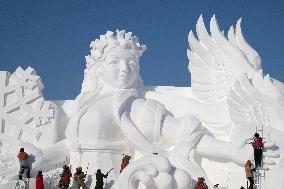
Artisans work on a snow sculpture at the 38th Sun Island International Snow Sculpture Art Expo in Harbin, northeast China's Heilongjiang Province, Dec. 27, 2025. The 38th Sun Island International Snow Sculpture Art Expo opened here for trial on Saturday, with an exhibition area of 1.5 million square meters and a snow-using volume of 120,000 cubic meters. Photo by Zhang Tao /Xinhua/ABACAPRESS.COM

  •  
38th Sun Island International Snow Sculpture Art Expo - Harbin

38th Sun Island International Snow Sculpture Art Expo - Harbin

Artisans work on a snow sculpture at the venue of the 38th Sun Island International Snow Sculpture Art Expo in Harbin, northeast China's Heilongjiang Province, Dec. 26, 2025. The 38th Sun Island International Snow Sculpture Art Expo opened here for trial on Saturday, with an exhibition area of 1.5 million square meters and a snow-using volume of 120,000 cubic meters. Photo by Wang Song /Xinhua/ABACAPRESS.COM

  •  
Production of Paper Mache Christmas Ornaments - India

Production of Paper Mache Christmas Ornaments - India

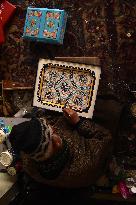
On December 18,2025 papier-mâché artists in Srinagar ,Jammu and Kashmir create Christmas decorations as the holiday season approaches. However, the industry faces fresh hurdles after the US increases import duties. Artisans fear that the higher tariffs will decrease demand for their products, particularly Christmas ornaments, which make up a large part of exports. Kashmir’s papier-mâché items are sent to markets in the US, Europe, Australia, and the UAE. Exporters warn that these higher costs could harm both sales and the livelihoods of local artisans.(Photo by Danish Showkat/Eyepix group)

  •  
Tie-Dye Technique Of Bai Ethnic Group - Chin

Tie-Dye Technique Of Bai Ethnic Group - Chin

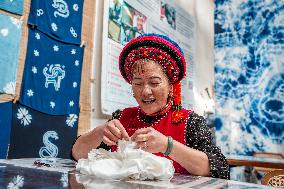
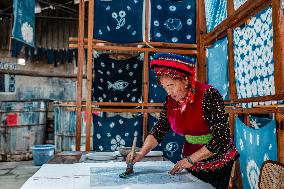
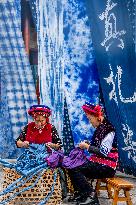
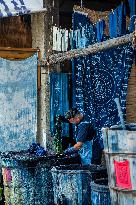
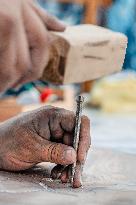
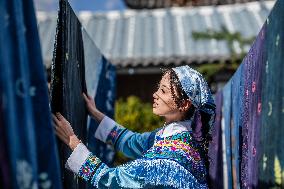
Duan Yuan, an inheritor of the tie-dye technique of Bai ethnic group, makes tie-dye designs in a dyehouse in Zhoucheng Village of Dali Bai Autonomous Prefecture, southwest China's Yunnan Province, November 21, 2025. Known as the hometown of the tie-dye technique of Bai ethnic group, Zhoucheng Village hosts over 200 households engaging in tie-dye businesses, with the number of employees exceeding 4,000. As a traditional folk technique of the Bai ethnic group, tie-dye boasts a history spanning over a thousand years and was included in the first batch of China's national intangible cultural heritage list in 2006. Tying and dyeing are the core steps in the process of making indigo tie-dye products. Artisans use needles and threads to create various patterns on the fabric, which are then dyed with plant-based dyes, resulting in blue backgrounds adorned with vivid white patterns. Photo by Hu Chao/Xinhua/ABACAPRESS.COM

  •  
Tie-Dye Technique Of Bai Ethnic Group - Chin

Tie-Dye Technique Of Bai Ethnic Group - Chin

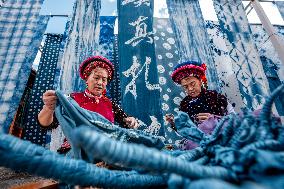
Duan Yinmei, an inheritor of the tie-dye technique of Bai ethnic group, creates knots on fabrics in a dyehouse in Zhoucheng Village of Dali Bai Autonomous Prefecture, southwest China's Yunnan Province, November 21, 2025. Known as the hometown of the tie-dye technique of Bai ethnic group, Zhoucheng Village hosts over 200 households engaging in tie-dye businesses, with the number of employees exceeding 4,000. As a traditional folk technique of the Bai ethnic group, tie-dye boasts a history spanning over a thousand years and was included in the first batch of China's national intangible cultural heritage list in 2006. Tying and dyeing are the core steps in the process of making indigo tie-dye products. Artisans use needles and threads to create various patterns on the fabric, which are then dyed with plant-based dyes, resulting in blue backgrounds adorned with vivid white patterns. Photo by Hu Chao/Xinhua/ABACAPRESS.COM

  •  
Tie-Dye Technique Of Bai Ethnic Group - Chin

Tie-Dye Technique Of Bai Ethnic Group - Chin

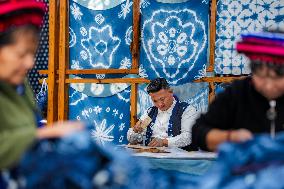
A woman experiences the tie-dye technique of Bai ethnic group in a dyehouse in Zhoucheng Village of Dali Bai Autonomous Prefecture, southwest China's Yunnan Province, November 21, 2025. Known as the hometown of the tie-dye technique of Bai ethnic group, Zhoucheng Village hosts over 200 households engaging in tie-dye businesses, with the number of employees exceeding 4,000. As a traditional folk technique of the Bai ethnic group, tie-dye boasts a history spanning over a thousand years and was included in the first batch of China's national intangible cultural heritage list in 2006. Tying and dyeing are the core steps in the process of making indigo tie-dye products. Artisans use needles and threads to create various patterns on the fabric, which are then dyed with plant-based dyes, resulting in blue backgrounds adorned with vivid white patterns. Photo by Hu Chao/Xinhua/ABACAPRESS.COM

  •  
Tie-Dye Technique Of Bai Ethnic Group - Chin

Tie-Dye Technique Of Bai Ethnic Group - Chin

Duan Yinmei, an inheritor of the tie-dye technique of Bai ethnic group, dyes patterns on fabrics in a dyehouse in Zhoucheng Village of Dali Bai Autonomous Prefecture, southwest China's Yunnan Province, November 21, 2025. Known as the hometown of the tie-dye technique of Bai ethnic group, Zhoucheng Village hosts over 200 households engaging in tie-dye businesses, with the number of employees exceeding 4,000. As a traditional folk technique of the Bai ethnic group, tie-dye boasts a history spanning over a thousand years and was included in the first batch of China's national intangible cultural heritage list in 2006. Tying and dyeing are the core steps in the process of making indigo tie-dye products. Artisans use needles and threads to create various patterns on the fabric, which are then dyed with plant-based dyes, resulting in blue backgrounds adorned with vivid white patterns. Photo by Hu Chao/Xinhua/ABACAPRESS.COM

  •  
Tie-Dye Technique Of Bai Ethnic Group - Chin

Tie-Dye Technique Of Bai Ethnic Group - Chin

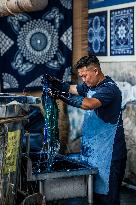
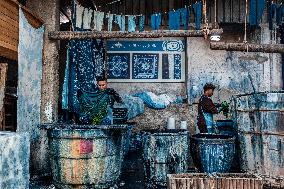
Duan Yuan, an inheritor of the tie-dye technique of Bai ethnic group, rinses dyed fabrics in a dyehouse in Zhoucheng Village of Dali Bai Autonomous Prefecture, southwest China's Yunnan Province, November 21, 2025. Known as the hometown of the tie-dye technique of Bai ethnic group, Zhoucheng Village hosts over 200 households engaging in tie-dye businesses, with the number of employees exceeding 4,000. As a traditional folk technique of the Bai ethnic group, tie-dye boasts a history spanning over a thousand years and was included in the first batch of China's national intangible cultural heritage list in 2006. Tying and dyeing are the core steps in the process of making indigo tie-dye products. Artisans use needles and threads to create various patterns on the fabric, which are then dyed with plant-based dyes, resulting in blue backgrounds adorned with vivid white patterns. Photo by Hu Chao/Xinhua/ABACAPRESS.COM

  •  
Tie-Dye Technique Of Bai Ethnic Group - Chin

Tie-Dye Technique Of Bai Ethnic Group - Chin

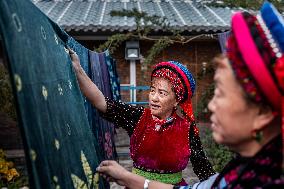
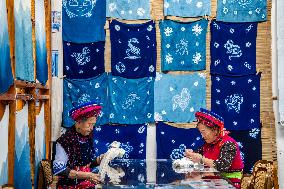
Duan Yinmei (L), an inheritor of the tie-dye technique of Bai ethnic group, and handicraftsman Duan Lilan dry tie-dye fabrics in a dyehouse in Zhoucheng Village of Dali Bai Autonomous Prefecture, southwest China's Yunnan Province, November 21, 2025. Known as the hometown of the tie-dye technique of Bai ethnic group, Zhoucheng Village hosts over 200 households engaging in tie-dye businesses, with the number of employees exceeding 4,000. As a traditional folk technique of the Bai ethnic group, tie-dye boasts a history spanning over a thousand years and was included in the first batch of China's national intangible cultural heritage list in 2006. Tying and dyeing are the core steps in the process of making indigo tie-dye products. Artisans use needles and threads to create various patterns on the fabric, which are then dyed with plant-based dyes, resulting in blue backgrounds adorned with vivid white patterns. Photo by Hu Chao/Xinhua/ABACAPRESS.COM

  •  
Tie-Dye Technique Of Bai Ethnic Group - Chin

Tie-Dye Technique Of Bai Ethnic Group - Chin

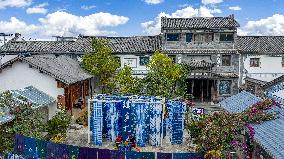
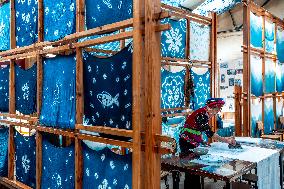
An aerial drone photo shows a scene at a dyehouse in Zhoucheng Village of Dali Bai Autonomous Prefecture, southwest China's Yunnan Province, November 21, 2025. Known as the hometown of the tie-dye technique of Bai ethnic group, Zhoucheng Village hosts over 200 households engaging in tie-dye businesses, with the number of employees exceeding 4,000. As a traditional folk technique of the Bai ethnic group, tie-dye boasts a history spanning over a thousand years and was included in the first batch of China's national intangible cultural heritage list in 2006. Tying and dyeing are the core steps in the process of making indigo tie-dye products. Artisans use needles and threads to create various patterns on the fabric, which are then dyed with plant-based dyes, resulting in blue backgrounds adorned with vivid white patterns. Photo by Hu Chao/Xinhua/ABACAPRESS.COM

  •  
Tie-Dye Technique Of Bai Ethnic Group - Chin

Tie-Dye Technique Of Bai Ethnic Group - Chin

Duan Yinmei (L), an inheritor of the tie-dye technique of Bai ethnic group, and handicraftsman Duan Lilan untie knots on fabrics in a dyehouse in Zhoucheng Village of Dali Bai Autonomous Prefecture, southwest China's Yunnan Province, November 21, 2025. Known as the hometown of the tie-dye technique of Bai ethnic group, Zhoucheng Village hosts over 200 households engaging in tie-dye businesses, with the number of employees exceeding 4,000. As a traditional folk technique of the Bai ethnic group, tie-dye boasts a history spanning over a thousand years and was included in the first batch of China's national intangible cultural heritage list in 2006. Tying and dyeing are the core steps in the process of making indigo tie-dye products. Artisans use needles and threads to create various patterns on the fabric, which are then dyed with plant-based dyes, resulting in blue backgrounds adorned with vivid white patterns. Photo by Hu Chao/Xinhua/ABACAPRESS.COM

  •  
Tie-Dye Technique Of Bai Ethnic Group - Chin

Tie-Dye Technique Of Bai Ethnic Group - Chin

Duan Yinmei (L), an inheritor of the tie-dye technique of Bai ethnic group, and handicraftsman Duan Lilan untie knots on fabrics in a dyehouse in Zhoucheng Village of Dali Bai Autonomous Prefecture, southwest China's Yunnan Province, November 21, 2025. Known as the hometown of the tie-dye technique of Bai ethnic group, Zhoucheng Village hosts over 200 households engaging in tie-dye businesses, with the number of employees exceeding 4,000. As a traditional folk technique of the Bai ethnic group, tie-dye boasts a history spanning over a thousand years and was included in the first batch of China's national intangible cultural heritage list in 2006. Tying and dyeing are the core steps in the process of making indigo tie-dye products. Artisans use needles and threads to create various patterns on the fabric, which are then dyed with plant-based dyes, resulting in blue backgrounds adorned with vivid white patterns. Photo by Hu Chao/Xinhua/ABACAPRESS.COM

  •  
Tie-Dye Technique Of Bai Ethnic Group - Chin

Tie-Dye Technique Of Bai Ethnic Group - Chin

Duan Yuan (L), an inheritor of the tie-dye technique of Bai ethnic group, dyes fabrics in a dyehouse in Zhoucheng Village of Dali Bai Autonomous Prefecture, southwest China's Yunnan Province, November 21, 2025. Known as the hometown of the tie-dye technique of Bai ethnic group, Zhoucheng Village hosts over 200 households engaging in tie-dye businesses, with the number of employees exceeding 4,000. As a traditional folk technique of the Bai ethnic group, tie-dye boasts a history spanning over a thousand years and was included in the first batch of China's national intangible cultural heritage list in 2006. Tying and dyeing are the core steps in the process of making indigo tie-dye products. Artisans use needles and threads to create various patterns on the fabric, which are then dyed with plant-based dyes, resulting in blue backgrounds adorned with vivid white patterns. Photo by Hu Chao/Xinhua/ABACAPRESS.COM

  •  
Tie-Dye Technique Of Bai Ethnic Group - Chin

Tie-Dye Technique Of Bai Ethnic Group - Chin

Duan Yuan, an inheritor of the tie-dye technique of Bai ethnic group, makes tie-dye designs in a dyehouse in Zhoucheng Village of Dali Bai Autonomous Prefecture, southwest China's Yunnan Province, November 21, 2025. Known as the hometown of the tie-dye technique of Bai ethnic group, Zhoucheng Village hosts over 200 households engaging in tie-dye businesses, with the number of employees exceeding 4,000. As a traditional folk technique of the Bai ethnic group, tie-dye boasts a history spanning over a thousand years and was included in the first batch of China's national intangible cultural heritage list in 2006. Tying and dyeing are the core steps in the process of making indigo tie-dye products. Artisans use needles and threads to create various patterns on the fabric, which are then dyed with plant-based dyes, resulting in blue backgrounds adorned with vivid white patterns. Photo by Hu Chao/Xinhua/ABACAPRESS.COM

  •  
Tie-Dye Technique Of Bai Ethnic Group - Chin

Tie-Dye Technique Of Bai Ethnic Group - Chin

Duan Yuan, an inheritor of the tie-dye technique of Bai ethnic group, dyes fabrics in a dyehouse in Zhoucheng Village of Dali Bai Autonomous Prefecture, southwest China's Yunnan Province, November 21, 2025. Known as the hometown of the tie-dye technique of Bai ethnic group, Zhoucheng Village hosts over 200 households engaging in tie-dye businesses, with the number of employees exceeding 4,000. As a traditional folk technique of the Bai ethnic group, tie-dye boasts a history spanning over a thousand years and was included in the first batch of China's national intangible cultural heritage list in 2006. Tying and dyeing are the core steps in the process of making indigo tie-dye products. Artisans use needles and threads to create various patterns on the fabric, which are then dyed with plant-based dyes, resulting in blue backgrounds adorned with vivid white patterns. Photo by Hu Chao/Xinhua/ABACAPRESS.COM

  •  
Tie-Dye Technique Of Bai Ethnic Group - Chin

Tie-Dye Technique Of Bai Ethnic Group - Chin

Duan Yuan, an inheritor of the tie-dye technique of Bai ethnic group, dyes fabrics in a dyehouse in Zhoucheng Village of Dali Bai Autonomous Prefecture, southwest China's Yunnan Province, November 21, 2025. Known as the hometown of the tie-dye technique of Bai ethnic group, Zhoucheng Village hosts over 200 households engaging in tie-dye businesses, with the number of employees exceeding 4,000. As a traditional folk technique of the Bai ethnic group, tie-dye boasts a history spanning over a thousand years and was included in the first batch of China's national intangible cultural heritage list in 2006. Tying and dyeing are the core steps in the process of making indigo tie-dye products. Artisans use needles and threads to create various patterns on the fabric, which are then dyed with plant-based dyes, resulting in blue backgrounds adorned with vivid white patterns. Photo by Hu Chao/Xinhua/ABACAPRESS.COM

  •  
Tie-Dye Technique Of Bai Ethnic Group - Chin

Tie-Dye Technique Of Bai Ethnic Group - Chin

Duan Yuan, an inheritor of the tie-dye technique of Bai ethnic group, makes tie-dye designs in a dyehouse in Zhoucheng Village of Dali Bai Autonomous Prefecture, southwest China's Yunnan Province, November 21, 2025. Known as the hometown of the tie-dye technique of Bai ethnic group, Zhoucheng Village hosts over 200 households engaging in tie-dye businesses, with the number of employees exceeding 4,000. As a traditional folk technique of the Bai ethnic group, tie-dye boasts a history spanning over a thousand years and was included in the first batch of China's national intangible cultural heritage list in 2006. Tying and dyeing are the core steps in the process of making indigo tie-dye products. Artisans use needles and threads to create various patterns on the fabric, which are then dyed with plant-based dyes, resulting in blue backgrounds adorned with vivid white patterns. Photo by Hu Chao/Xinhua/ABACAPRESS.COM

  •  
Tie-Dye Technique Of Bai Ethnic Group - Chin

Tie-Dye Technique Of Bai Ethnic Group - Chin

Duan Yinmei, an inheritor of the tie-dye technique of Bai ethnic group, unties knots on fabrics in a dyehouse in Zhoucheng Village of Dali Bai Autonomous Prefecture, southwest China's Yunnan Province, November 21, 2025. Known as the hometown of the tie-dye technique of Bai ethnic group, Zhoucheng Village hosts over 200 households engaging in tie-dye businesses, with the number of employees exceeding 4,000. As a traditional folk technique of the Bai ethnic group, tie-dye boasts a history spanning over a thousand years and was included in the first batch of China's national intangible cultural heritage list in 2006. Tying and dyeing are the core steps in the process of making indigo tie-dye products. Artisans use needles and threads to create various patterns on the fabric, which are then dyed with plant-based dyes, resulting in blue backgrounds adorned with vivid white patterns. Photo by Hu Chao/Xinhua/ABACAPRESS.COM

  •  
Tie-Dye Technique Of Bai Ethnic Group - Chin

Tie-Dye Technique Of Bai Ethnic Group - Chin

Duan Yinmei, an inheritor of the tie-dye technique of Bai ethnic group, dyes patterns on fabrics in a dyehouse in Zhoucheng Village of Dali Bai Autonomous Prefecture, southwest China's Yunnan Province, November 21, 2025. Known as the hometown of the tie-dye technique of Bai ethnic group, Zhoucheng Village hosts over 200 households engaging in tie-dye businesses, with the number of employees exceeding 4,000. As a traditional folk technique of the Bai ethnic group, tie-dye boasts a history spanning over a thousand years and was included in the first batch of China's national intangible cultural heritage list in 2006. Tying and dyeing are the core steps in the process of making indigo tie-dye products. Artisans use needles and threads to create various patterns on the fabric, which are then dyed with plant-based dyes, resulting in blue backgrounds adorned with vivid white patterns. Photo by Hu Chao/Xinhua/ABACAPRESS.COM

  •  
Tie-Dye Technique Of Bai Ethnic Group - Chin

Tie-Dye Technique Of Bai Ethnic Group - Chin

Duan Yinmei (R), an inheritor of the tie-dye technique of Bai ethnic group, and handicraftsman Duan Lilan create knots on fabrics in a dyehouse in Zhoucheng Village of Dali Bai Autonomous Prefecture, southwest China's Yunnan Province, November 21, 2025. Known as the hometown of the tie-dye technique of Bai ethnic group, Zhoucheng Village hosts over 200 households engaging in tie-dye businesses, with the number of employees exceeding 4,000. As a traditional folk technique of the Bai ethnic group, tie-dye boasts a history spanning over a thousand years and was included in the first batch of China's national intangible cultural heritage list in 2006. Tying and dyeing are the core steps in the process of making indigo tie-dye products. Artisans use needles and threads to create various patterns on the fabric, which are then dyed with plant-based dyes, resulting in blue backgrounds adorned with vivid white patterns. Photo by Hu Chao/Xinhua/ABACAPRESS.COM

  •  
Traditional Daf Drums of Sanandaj- Iran

Traditional Daf Drums of Sanandaj- Iran

Artisans work on wooden frames for daf drums at a workshop in Sanandaj, Iran, on May 7, 2025. The Kurdish city is regarded as the center of daf craftsmanship, where skills are passed down through generations for use in folk music and Sufi ceremonies. Photo by Younes Mohammad/Middle East Images/ABACAPRESS.COM

  •  
Damascus International Fair - Syria

Damascus International Fair - Syria

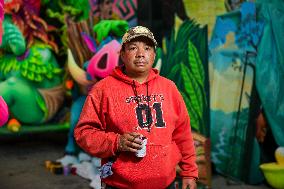
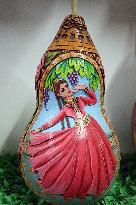
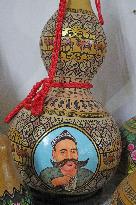
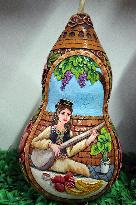
Syrian artisans display handmade artistic pieces to visitors at the Damascus International Fair. The exhibition features traditional crafts and creative works produced by local craftsmen as part of Syria’s cultural and economic revival after years of conflict. September 3, 2025. Photo by Mohammad Daher/ABACAPRESS.COM

  •  
Damascus International Fair - Syria

Damascus International Fair - Syria

Syrian artisans display handmade artistic pieces to visitors at the Damascus International Fair. The exhibition features traditional crafts and creative works produced by local craftsmen as part of Syria’s cultural and economic revival after years of conflict. September 3, 2025. Photo by Mohammad Daher/ABACAPRESS.COM

  •  
Damascus International Fair - Syria

Damascus International Fair - Syria

Syrian artisans display handmade artistic pieces to visitors at the Damascus International Fair. The exhibition features traditional crafts and creative works produced by local craftsmen as part of Syria’s cultural and economic revival after years of conflict. September 3, 2025. Photo by Mohammad Daher/ABACAPRESS.COM

  •  
Agartala Artisans Build Durga Puja Panda - India

Agartala Artisans Build Durga Puja Panda - India

Workers climb a bamboo structure to build an idol of Goddess Durga in Agartala, India on September 5, 2025. The structure, locally known as a “Pandal,” is being prepared for the upcoming Durga Puja, one of the largest Hindu festivals in eastern India. Photo by Abhisek Saha/Middle East Images/ABACAPRESS.COM

  •  
Agartala Artisans Build Durga Puja Panda - India

Agartala Artisans Build Durga Puja Panda - India

Workers climb a bamboo structure to build an idol of Goddess Durga in Agartala, India on September 5, 2025. The structure, locally known as a “Pandal,” is being prepared for the upcoming Durga Puja, one of the largest Hindu festivals in eastern India. Photo by Abhisek Saha/Middle East Images/ABACAPRESS.COM

  •  
Agartala Artisans Build Durga Puja Panda - India

Agartala Artisans Build Durga Puja Panda - India

Workers climb a bamboo structure to build an idol of Goddess Durga in Agartala, India on September 5, 2025. The structure, locally known as a “Pandal,” is being prepared for the upcoming Durga Puja, one of the largest Hindu festivals in eastern India. Photo by Abhisek Saha/Middle East Images/ABACAPRESS.COM

  •  
Agartala Artisans Build Durga Puja Panda - India

Agartala Artisans Build Durga Puja Panda - India

Workers climb a bamboo structure to build an idol of Goddess Durga in Agartala, India on September 5, 2025. The structure, locally known as a “Pandal,” is being prepared for the upcoming Durga Puja, one of the largest Hindu festivals in eastern India. Photo by Abhisek Saha/Middle East Images/ABACAPRESS.COM

  •  
Agartala Artisans Build Durga Puja Panda - India

Agartala Artisans Build Durga Puja Panda - India

Workers climb a bamboo structure to build an idol of Goddess Durga in Agartala, India on September 5, 2025. The structure, locally known as a “Pandal,” is being prepared for the upcoming Durga Puja, one of the largest Hindu festivals in eastern India. Photo by Abhisek Saha/Middle East Images/ABACAPRESS.COM

  •  
Agartala Artisans Build Durga Puja Panda - India

Agartala Artisans Build Durga Puja Panda - India

Workers climb a bamboo structure to build an idol of Goddess Durga in Agartala, India on September 5, 2025. The structure, locally known as a “Pandal,” is being prepared for the upcoming Durga Puja, one of the largest Hindu festivals in eastern India. Photo by Abhisek Saha/Middle East Images/ABACAPRESS.COM

  •  
Agartala Artisans Build Durga Puja Panda - India

Agartala Artisans Build Durga Puja Panda - India

Workers climb a bamboo structure to build an idol of Goddess Durga in Agartala, India on September 5, 2025. The structure, locally known as a “Pandal,” is being prepared for the upcoming Durga Puja, one of the largest Hindu festivals in eastern India. Photo by Abhisek Saha/Middle East Images/ABACAPRESS.COM

  •  
Kumartuli Sculptors Prepare for Festival Season - India

Kumartuli Sculptors Prepare for Festival Season - India

Kumartuli, Kolkata's historic potters' quarter, is renowned for its centuries-old tradition of crafting clay idols, especially for the Durga Puja festival. Artisans sculpt elaborate figures of Hindu deities from straw and clay inside narrow, open-air workshops in this densely populated neighborhood in northern Kolkata, India, on August 5, 2025. The area dates back to the early 18th century, when potters were commissioned to create idols for wealthy Bengali households. Today, Kumartuli supplies thousands of handcrafted idols not only to cities across India but also to international communities celebrating Durga Puja. As the festival approaches, the pace of work intensifies, with sculptors of all ages and skill levels contributing to the creation of goddess Durga, Ganesh, Kartik, Lakshmi, and Saraswati. The craft blends spiritual devotion with generational artistry, sustaining a vital cultural heritage that continues to thrive amid urban transformation. Photo by Debajyoti Chakraborty/Middle East Images/ABACAPRE

  •  
Kumartuli Sculptors Prepare for Festival Season - India

Kumartuli Sculptors Prepare for Festival Season - India

Kumartuli, Kolkata's historic potters' quarter, is renowned for its centuries-old tradition of crafting clay idols, especially for the Durga Puja festival. Artisans sculpt elaborate figures of Hindu deities from straw and clay inside narrow, open-air workshops in this densely populated neighborhood in northern Kolkata, India, on August 5, 2025. The area dates back to the early 18th century, when potters were commissioned to create idols for wealthy Bengali households. Today, Kumartuli supplies thousands of handcrafted idols not only to cities across India but also to international communities celebrating Durga Puja. As the festival approaches, the pace of work intensifies, with sculptors of all ages and skill levels contributing to the creation of goddess Durga, Ganesh, Kartik, Lakshmi, and Saraswati. The craft blends spiritual devotion with generational artistry, sustaining a vital cultural heritage that continues to thrive amid urban transformation. Photo by Debajyoti Chakraborty/Middle East Images/ABACAPRE

  •  
Kumartuli Sculptors Prepare for Festival Season - India

Kumartuli Sculptors Prepare for Festival Season - India

Kumartuli, Kolkata's historic potters' quarter, is renowned for its centuries-old tradition of crafting clay idols, especially for the Durga Puja festival. Artisans sculpt elaborate figures of Hindu deities from straw and clay inside narrow, open-air workshops in this densely populated neighborhood in northern Kolkata, India, on August 5, 2025. The area dates back to the early 18th century, when potters were commissioned to create idols for wealthy Bengali households. Today, Kumartuli supplies thousands of handcrafted idols not only to cities across India but also to international communities celebrating Durga Puja. As the festival approaches, the pace of work intensifies, with sculptors of all ages and skill levels contributing to the creation of goddess Durga, Ganesh, Kartik, Lakshmi, and Saraswati. The craft blends spiritual devotion with generational artistry, sustaining a vital cultural heritage that continues to thrive amid urban transformation. Photo by Debajyoti Chakraborty/Middle East Images/ABACAPRE

  •  
Kumartuli Sculptors Prepare for Festival Season - India

Kumartuli Sculptors Prepare for Festival Season - India

Kumartuli, Kolkata's historic potters' quarter, is renowned for its centuries-old tradition of crafting clay idols, especially for the Durga Puja festival. Artisans sculpt elaborate figures of Hindu deities from straw and clay inside narrow, open-air workshops in this densely populated neighborhood in northern Kolkata, India, on August 5, 2025. The area dates back to the early 18th century, when potters were commissioned to create idols for wealthy Bengali households. Today, Kumartuli supplies thousands of handcrafted idols not only to cities across India but also to international communities celebrating Durga Puja. As the festival approaches, the pace of work intensifies, with sculptors of all ages and skill levels contributing to the creation of goddess Durga, Ganesh, Kartik, Lakshmi, and Saraswati. The craft blends spiritual devotion with generational artistry, sustaining a vital cultural heritage that continues to thrive amid urban transformation. Photo by Debajyoti Chakraborty/Middle East Images/ABACAPRE

  •  
Kumartuli Sculptors Prepare for Festival Season - India

Kumartuli Sculptors Prepare for Festival Season - India

Kumartuli, Kolkata's historic potters' quarter, is renowned for its centuries-old tradition of crafting clay idols, especially for the Durga Puja festival. Artisans sculpt elaborate figures of Hindu deities from straw and clay inside narrow, open-air workshops in this densely populated neighborhood in northern Kolkata, India, on August 5, 2025. The area dates back to the early 18th century, when potters were commissioned to create idols for wealthy Bengali households. Today, Kumartuli supplies thousands of handcrafted idols not only to cities across India but also to international communities celebrating Durga Puja. As the festival approaches, the pace of work intensifies, with sculptors of all ages and skill levels contributing to the creation of goddess Durga, Ganesh, Kartik, Lakshmi, and Saraswati. The craft blends spiritual devotion with generational artistry, sustaining a vital cultural heritage that continues to thrive amid urban transformation. Photo by Debajyoti Chakraborty/Middle East Images/ABACAPRE

  •  
Kumartuli Sculptors Prepare for Festival Season - India

Kumartuli Sculptors Prepare for Festival Season - India

Kumartuli, Kolkata's historic potters' quarter, is renowned for its centuries-old tradition of crafting clay idols, especially for the Durga Puja festival. Artisans sculpt elaborate figures of Hindu deities from straw and clay inside narrow, open-air workshops in this densely populated neighborhood in northern Kolkata, India, on August 5, 2025. The area dates back to the early 18th century, when potters were commissioned to create idols for wealthy Bengali households. Today, Kumartuli supplies thousands of handcrafted idols not only to cities across India but also to international communities celebrating Durga Puja. As the festival approaches, the pace of work intensifies, with sculptors of all ages and skill levels contributing to the creation of goddess Durga, Ganesh, Kartik, Lakshmi, and Saraswati. The craft blends spiritual devotion with generational artistry, sustaining a vital cultural heritage that continues to thrive amid urban transformation. Photo by Debajyoti Chakraborty/Middle East Images/ABACAPRE

  •  
Kumartuli Sculptors Prepare for Festival Season - India

Kumartuli Sculptors Prepare for Festival Season - India

Kumartuli, Kolkata's historic potters' quarter, is renowned for its centuries-old tradition of crafting clay idols, especially for the Durga Puja festival. Artisans sculpt elaborate figures of Hindu deities from straw and clay inside narrow, open-air workshops in this densely populated neighborhood in northern Kolkata, India, on August 5, 2025. The area dates back to the early 18th century, when potters were commissioned to create idols for wealthy Bengali households. Today, Kumartuli supplies thousands of handcrafted idols not only to cities across India but also to international communities celebrating Durga Puja. As the festival approaches, the pace of work intensifies, with sculptors of all ages and skill levels contributing to the creation of goddess Durga, Ganesh, Kartik, Lakshmi, and Saraswati. The craft blends spiritual devotion with generational artistry, sustaining a vital cultural heritage that continues to thrive amid urban transformation. Photo by Debajyoti Chakraborty/Middle East Images/ABACAPRE

  •  
Kumartuli Sculptors Prepare for Festival Season - India

Kumartuli Sculptors Prepare for Festival Season - India

Kumartuli, Kolkata's historic potters' quarter, is renowned for its centuries-old tradition of crafting clay idols, especially for the Durga Puja festival. Artisans sculpt elaborate figures of Hindu deities from straw and clay inside narrow, open-air workshops in this densely populated neighborhood in northern Kolkata, India, on August 5, 2025. The area dates back to the early 18th century, when potters were commissioned to create idols for wealthy Bengali households. Today, Kumartuli supplies thousands of handcrafted idols not only to cities across India but also to international communities celebrating Durga Puja. As the festival approaches, the pace of work intensifies, with sculptors of all ages and skill levels contributing to the creation of goddess Durga, Ganesh, Kartik, Lakshmi, and Saraswati. The craft blends spiritual devotion with generational artistry, sustaining a vital cultural heritage that continues to thrive amid urban transformation. Photo by Debajyoti Chakraborty/Middle East Images/ABACAPRE

  •  
Kumartuli Sculptors Prepare for Festival Season - India

Kumartuli Sculptors Prepare for Festival Season - India

Kumartuli, Kolkata's historic potters' quarter, is renowned for its centuries-old tradition of crafting clay idols, especially for the Durga Puja festival. Artisans sculpt elaborate figures of Hindu deities from straw and clay inside narrow, open-air workshops in this densely populated neighborhood in northern Kolkata, India, on August 5, 2025. The area dates back to the early 18th century, when potters were commissioned to create idols for wealthy Bengali households. Today, Kumartuli supplies thousands of handcrafted idols not only to cities across India but also to international communities celebrating Durga Puja. As the festival approaches, the pace of work intensifies, with sculptors of all ages and skill levels contributing to the creation of goddess Durga, Ganesh, Kartik, Lakshmi, and Saraswati. The craft blends spiritual devotion with generational artistry, sustaining a vital cultural heritage that continues to thrive amid urban transformation. Photo by Debajyoti Chakraborty/Middle East Images/ABACAPRE

  •  
Kumartuli Sculptors Prepare for Festival Season - India

Kumartuli Sculptors Prepare for Festival Season - India

Kumartuli, Kolkata's historic potters' quarter, is renowned for its centuries-old tradition of crafting clay idols, especially for the Durga Puja festival. Artisans sculpt elaborate figures of Hindu deities from straw and clay inside narrow, open-air workshops in this densely populated neighborhood in northern Kolkata, India, on August 5, 2025. The area dates back to the early 18th century, when potters were commissioned to create idols for wealthy Bengali households. Today, Kumartuli supplies thousands of handcrafted idols not only to cities across India but also to international communities celebrating Durga Puja. As the festival approaches, the pace of work intensifies, with sculptors of all ages and skill levels contributing to the creation of goddess Durga, Ganesh, Kartik, Lakshmi, and Saraswati. The craft blends spiritual devotion with generational artistry, sustaining a vital cultural heritage that continues to thrive amid urban transformation. Photo by Debajyoti Chakraborty/Middle East Images/ABACAPRE

  •  
Kumartuli Sculptors Prepare for Festival Season - India

Kumartuli Sculptors Prepare for Festival Season - India

Kumartuli, Kolkata's historic potters' quarter, is renowned for its centuries-old tradition of crafting clay idols, especially for the Durga Puja festival. Artisans sculpt elaborate figures of Hindu deities from straw and clay inside narrow, open-air workshops in this densely populated neighborhood in northern Kolkata, India, on August 5, 2025. The area dates back to the early 18th century, when potters were commissioned to create idols for wealthy Bengali households. Today, Kumartuli supplies thousands of handcrafted idols not only to cities across India but also to international communities celebrating Durga Puja. As the festival approaches, the pace of work intensifies, with sculptors of all ages and skill levels contributing to the creation of goddess Durga, Ganesh, Kartik, Lakshmi, and Saraswati. The craft blends spiritual devotion with generational artistry, sustaining a vital cultural heritage that continues to thrive amid urban transformation. Photo by Debajyoti Chakraborty/Middle East Images/ABACAPRE

  •  
Kumartuli Sculptors Prepare for Festival Season - India

Kumartuli Sculptors Prepare for Festival Season - India

Kumartuli, Kolkata's historic potters' quarter, is renowned for its centuries-old tradition of crafting clay idols, especially for the Durga Puja festival. Artisans sculpt elaborate figures of Hindu deities from straw and clay inside narrow, open-air workshops in this densely populated neighborhood in northern Kolkata, India, on August 5, 2025. The area dates back to the early 18th century, when potters were commissioned to create idols for wealthy Bengali households. Today, Kumartuli supplies thousands of handcrafted idols not only to cities across India but also to international communities celebrating Durga Puja. As the festival approaches, the pace of work intensifies, with sculptors of all ages and skill levels contributing to the creation of goddess Durga, Ganesh, Kartik, Lakshmi, and Saraswati. The craft blends spiritual devotion with generational artistry, sustaining a vital cultural heritage that continues to thrive amid urban transformation. Photo by Debajyoti Chakraborty/Middle East Images/ABACAPRE

  •  
Kumartuli Sculptors Prepare for Festival Season - India

Kumartuli Sculptors Prepare for Festival Season - India

Kumartuli, Kolkata's historic potters' quarter, is renowned for its centuries-old tradition of crafting clay idols, especially for the Durga Puja festival. Artisans sculpt elaborate figures of Hindu deities from straw and clay inside narrow, open-air workshops in this densely populated neighborhood in northern Kolkata, India, on August 5, 2025. The area dates back to the early 18th century, when potters were commissioned to create idols for wealthy Bengali households. Today, Kumartuli supplies thousands of handcrafted idols not only to cities across India but also to international communities celebrating Durga Puja. As the festival approaches, the pace of work intensifies, with sculptors of all ages and skill levels contributing to the creation of goddess Durga, Ganesh, Kartik, Lakshmi, and Saraswati. The craft blends spiritual devotion with generational artistry, sustaining a vital cultural heritage that continues to thrive amid urban transformation. Photo by Debajyoti Chakraborty/Middle East Images/ABACAPRE

  •  
Kumartuli Sculptors Prepare for Festival Season - India

Kumartuli Sculptors Prepare for Festival Season - India

Kumartuli, Kolkata's historic potters' quarter, is renowned for its centuries-old tradition of crafting clay idols, especially for the Durga Puja festival. Artisans sculpt elaborate figures of Hindu deities from straw and clay inside narrow, open-air workshops in this densely populated neighborhood in northern Kolkata, India, on August 5, 2025. The area dates back to the early 18th century, when potters were commissioned to create idols for wealthy Bengali households. Today, Kumartuli supplies thousands of handcrafted idols not only to cities across India but also to international communities celebrating Durga Puja. As the festival approaches, the pace of work intensifies, with sculptors of all ages and skill levels contributing to the creation of goddess Durga, Ganesh, Kartik, Lakshmi, and Saraswati. The craft blends spiritual devotion with generational artistry, sustaining a vital cultural heritage that continues to thrive amid urban transformation. Photo by Debajyoti Chakraborty/Middle East Images/ABACAPRE

  •  
Kumartuli Sculptors Prepare for Festival Season - India

Kumartuli Sculptors Prepare for Festival Season - India

Kumartuli, Kolkata's historic potters' quarter, is renowned for its centuries-old tradition of crafting clay idols, especially for the Durga Puja festival. Artisans sculpt elaborate figures of Hindu deities from straw and clay inside narrow, open-air workshops in this densely populated neighborhood in northern Kolkata, India, on August 5, 2025. The area dates back to the early 18th century, when potters were commissioned to create idols for wealthy Bengali households. Today, Kumartuli supplies thousands of handcrafted idols not only to cities across India but also to international communities celebrating Durga Puja. As the festival approaches, the pace of work intensifies, with sculptors of all ages and skill levels contributing to the creation of goddess Durga, Ganesh, Kartik, Lakshmi, and Saraswati. The craft blends spiritual devotion with generational artistry, sustaining a vital cultural heritage that continues to thrive amid urban transformation. Photo by Debajyoti Chakraborty/Middle East Images/ABACAPRE

  •  
Kumartuli Sculptors Prepare for Festival Season - India

Kumartuli Sculptors Prepare for Festival Season - India

Kumartuli, Kolkata's historic potters' quarter, is renowned for its centuries-old tradition of crafting clay idols, especially for the Durga Puja festival. Artisans sculpt elaborate figures of Hindu deities from straw and clay inside narrow, open-air workshops in this densely populated neighborhood in northern Kolkata, India, on August 5, 2025. The area dates back to the early 18th century, when potters were commissioned to create idols for wealthy Bengali households. Today, Kumartuli supplies thousands of handcrafted idols not only to cities across India but also to international communities celebrating Durga Puja. As the festival approaches, the pace of work intensifies, with sculptors of all ages and skill levels contributing to the creation of goddess Durga, Ganesh, Kartik, Lakshmi, and Saraswati. The craft blends spiritual devotion with generational artistry, sustaining a vital cultural heritage that continues to thrive amid urban transformation. Photo by Debajyoti Chakraborty/Middle East Images/ABACAPRE

  •  
Artisans Preserve Legacy of Truck Painting - Pakistan

Artisans Preserve Legacy of Truck Painting - Pakistan

An artisan carefully paints a vibrant peacock motif on the side of a truck at a workshop in the Pirwadhai area of Rawalpindi, Pakistan, on July 31, 2025. Adorned with intricate designs, mirror work, and bold colors, truck art remains a powerful symbol of cultural identity and craftsmanship across Pakistan. This long-standing tradition, which began in the 1920s, transforms cargo vehicles into moving canvases that reflect poetry, politics, religious devotion, and personal pride. Each truck serves as a unique artistic expression by its owner and painter, often featuring animals, calligraphy, landscapes, and portraits of cultural icons. Photo by Raja Imran/Middle East Images/ABACAPRESS.COM

  •  
Artisans Preserve Legacy of Truck Painting - Pakistan

Artisans Preserve Legacy of Truck Painting - Pakistan

An artisan carefully paints a vibrant peacock motif on the side of a truck at a workshop in the Pirwadhai area of Rawalpindi, Pakistan, on July 31, 2025. Adorned with intricate designs, mirror work, and bold colors, truck art remains a powerful symbol of cultural identity and craftsmanship across Pakistan. This long-standing tradition, which began in the 1920s, transforms cargo vehicles into moving canvases that reflect poetry, politics, religious devotion, and personal pride. Each truck serves as a unique artistic expression by its owner and painter, often featuring animals, calligraphy, landscapes, and portraits of cultural icons. Photo by Raja Imran/Middle East Images/ABACAPRESS.COM

  •  
Artisans Preserve Legacy of Truck Painting - Pakistan

Artisans Preserve Legacy of Truck Painting - Pakistan

An artisan carefully paints a vibrant peacock motif on the side of a truck at a workshop in the Pirwadhai area of Rawalpindi, Pakistan, on July 31, 2025. Adorned with intricate designs, mirror work, and bold colors, truck art remains a powerful symbol of cultural identity and craftsmanship across Pakistan. This long-standing tradition, which began in the 1920s, transforms cargo vehicles into moving canvases that reflect poetry, politics, religious devotion, and personal pride. Each truck serves as a unique artistic expression by its owner and painter, often featuring animals, calligraphy, landscapes, and portraits of cultural icons. Photo by Raja Imran/Middle East Images/ABACAPRESS.COM

  • Main
  • Top
  • Editorial
  • Creative
  • About Us
  • About ILG
  • Terms of use
  • Company
  • BEHIND
  • Price List
  • Single Plan
  • Monthly Plan
  • Services
  • Shooting
  • Rights Clearance
  • Support
  • FAQ
  • How To Buy
  • Contact Us
  • Become a Partner

© KYODO NEWS IMAGES INC

All Rights Reserved.

  • Editorial
  • Olympics
  • News
  • Sports
  • Japan
  • Tech
  • Royal
  • Disaster
  • NorthKorea
  • Old Japan
  • SNS
  • Creative
  • Food
  • Japan
  • Landscape
  • Animal
  • Popular
  • #Ukraine
  • #China
  • #coronavirus
  • #N. Korea
  • #Russia
  • #Thailand
  • #Ukraine
  • #China
  • #coronavirus
  • #N. Korea
  • #Russia
  • #Thailand
  • Food
  • Japan
  • Landscape
  • Animal
  • Olympics
  • News
  • Sports
  • Japan
  • Tech
  • Royal
  • Disaster
  • NorthKorea
  • Old Japan
  • SNS