•  
Celebs Attend Inaugural Franca Fund Gala - Doha

Celebs Attend Inaugural Franca Fund Gala - Doha

Aline Asmar d’Amman arrives to the Franca Fund Gala at the Museum of Islamic Art, in Doha, Qatar, on November 23, 2025. Photo by Balkis Press/ABACAPRESS.COM

  •  
Celebs Attend Inaugural Franca Fund Gala - Doha

Celebs Attend Inaugural Franca Fund Gala - Doha

Aline Asmar d’Amman arrives to the Franca Fund Gala at the Museum of Islamic Art, in Doha, Qatar, on November 23, 2025. Photo by Balkis Press/ABACAPRESS.COM

  •  
Russian Airstrikes Hit Idlib Region - Syria

Russian Airstrikes Hit Idlib Region - Syria

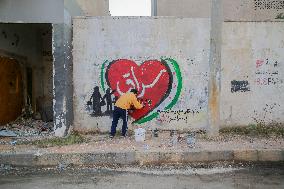
The graffiti artist Aziz Asmar works on a vibrant mural on a wall in Saraqib, Syria, on December 1, 2024. The city is slowly reviving after years of war, with residents beginning to reclaim their space. A wave of airstrikes has pummelled hospitals and neighbourhoods in the rebel-held region of Idlib in northern Syria as Islamist insurgents continued to battle forces loyal to Bashar al-Assad after the militants' lightning assault on Aleppo. Photo by Bilal Alhammoud/Middle East Images/ABACAPRESS.COM

  •  
The Kurds of Khorasan - Iran

The Kurds of Khorasan - Iran

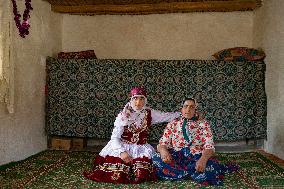
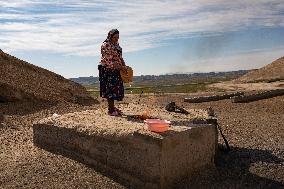
Faezeh and her mother, Asmar, taking a pose for a portrait with her traditional clothes at her house. They are one of the Kurdish nomadic families of Kermanj who were forced to migrate from their homeland to these areas to protect the eastern borders of Iran, and during this period they lost many of their cultural characteristics and behaviors. They are animal husbandry now and still speak Kurdish, but the clothes they wear are no longer Kurdish and their behaviors have completely changed and most of them do not even know where their original birthplace was. Golestan, Iran, March 2, 2022. Photo by Younes Mohammad/Middle East Images/ABACAPRESS.COM

  •  
The Kurds of Khorasan - Iran

The Kurds of Khorasan - Iran

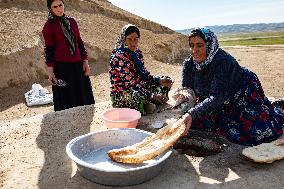
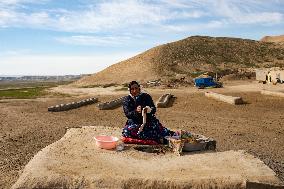
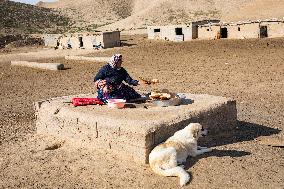
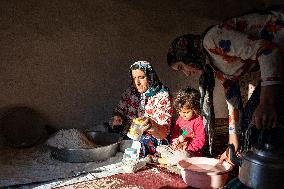
Asmar is baking traditional bread. They are one of the Kurdish nomadic families of Kermanj who were forced to migrate from their homeland to these areas to protect the eastern borders of Iran, and during this period they lost many of their cultural characteristics and behaviors. They are animal husbandry now and still speak Kurdish, but the clothes they wear are no longer Kurdish and their behaviors have completely changed and most of them do not even know where their original birthplace was. Golestan, Iran, March 2, 2022. Photo by Younes Mohammad/Middle East Images/ABACAPRESS.COM

  •  
The Kurds of Khorasan - Iran

The Kurds of Khorasan - Iran

Asmar is baking traditional bread. They are one of the Kurdish nomadic families of Kermanj who were forced to migrate from their homeland to these areas to protect the eastern borders of Iran, and during this period they lost many of their cultural characteristics and behaviors. They are animal husbandry now and still speak Kurdish, but the clothes they wear are no longer Kurdish and their behaviors have completely changed and most of them do not even know where their original birthplace was. Golestan, Iran, March 2, 2022. Photo by Younes Mohammad/Middle East Images/ABACAPRESS.COM

  •  
The Kurds of Khorasan - Iran

The Kurds of Khorasan - Iran

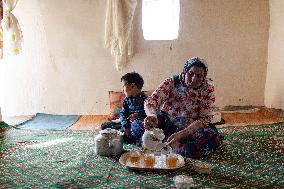
Asmar is preparing and giving tea to the guests. They are one of the Kurdish nomadic families of Kermanj who were forced to migrate from their homeland to these areas to protect the eastern borders of Iran, and during this period they lost many of their cultural characteristics and behaviors. They are animal husbandry now and still speak Kurdish, but the clothes they wear are no longer Kurdish and their behaviors have completely changed and most of them do not even know where their original birthplace was. Golestan, Iran, March 2, 2022. Photo by Younes Mohammad/Middle East Images/ABACAPRESS.COM

  •  
The Kurds of Khorasan - Iran

The Kurds of Khorasan - Iran

Asmar is baking traditional bread. They are one of the Kurdish nomadic families of Kermanj who were forced to migrate from their homeland to these areas to protect the eastern borders of Iran, and during this period they lost many of their cultural characteristics and behaviors. They are animal husbandry now and still speak Kurdish, but the clothes they wear are no longer Kurdish and their behaviors have completely changed and most of them do not even know where their original birthplace was. Golestan, Iran, March 2, 2022. Photo by Younes Mohammad/Middle East Images/ABACAPRESS.COM

  •  
The Kurds of Khorasan - Iran

The Kurds of Khorasan - Iran

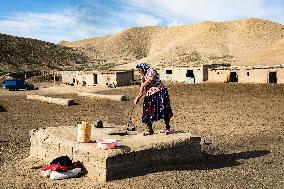
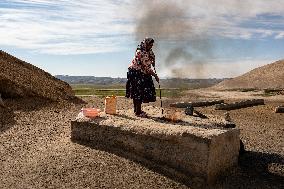
Asmar is warming up and preparing the oven for baking traditional bread. They are one of the Kurdish nomadic families of Kermanj who were forced to migrate from their homeland to these areas to protect the eastern borders of Iran, and during this period they lost many of their cultural characteristics and behaviors. They are animal husbandry now and still speak Kurdish, but the clothes they wear are no longer Kurdish and their behaviors have completely changed and most of them do not even know where their original birthplace was. Golestan, Iran, March 2, 2022. Photo by Younes Mohammad/Middle East Images/ABACAPRESS.COM

  •  
The Kurds of Khorasan - Iran

The Kurds of Khorasan - Iran

Asmar is warming up and preparing the oven for baking traditional bread. They are one of the Kurdish nomadic families of Kermanj who were forced to migrate from their homeland to these areas to protect the eastern borders of Iran, and during this period they lost many of their cultural characteristics and behaviors. They are animal husbandry now and still speak Kurdish, but the clothes they wear are no longer Kurdish and their behaviors have completely changed and most of them do not even know where their original birthplace was. Golestan, Iran, March 2, 2022. Photo by Younes Mohammad/Middle East Images/ABACAPRESS.COM

  •  
The Kurds of Khorasan - Iran

The Kurds of Khorasan - Iran

Asmar is warming up and preparing the oven for baking traditional bread. They are one of the Kurdish nomadic families of Kermanj who were forced to migrate from their homeland to these areas to protect the eastern borders of Iran, and during this period they lost many of their cultural characteristics and behaviors. They are animal husbandry now and still speak Kurdish, but the clothes they wear are no longer Kurdish and their behaviors have completely changed and most of them do not even know where their original birthplace was. Golestan, Iran, March 2, 2022. Photo by Younes Mohammad/Middle East Images/ABACAPRESS.COM

  •  
The Kurds of Khorasan - Iran

The Kurds of Khorasan - Iran

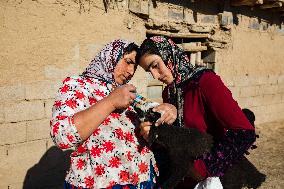
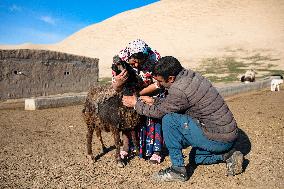
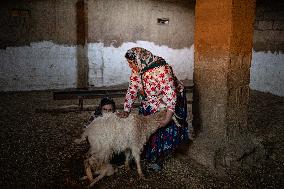
Asmar and her daughter, are injecting some medicine into the eyes of one of the sick lambs. They are one of the Kurdish nomadic families of Kermanj who were forced to migrate from their homeland to these areas to protect the eastern borders of Iran, and during this period they lost many of their cultural characteristics and behaviors. They are animal husbandry now and still speak Kurdish, but the clothes they wear are no longer Kurdish and their behaviors have completely changed and most of them do not even know where their original birthplace was. Golestan, Iran, March 2, 2022. Photo by Younes Mohammad/Middle East Images/ABACAPRESS.COM

  •  
The Kurds of Khorasan - Iran

The Kurds of Khorasan - Iran

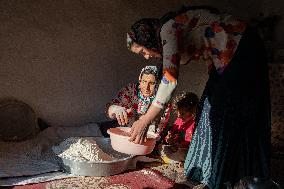
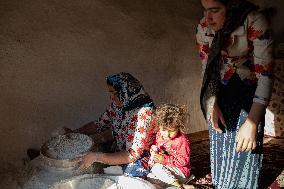
Asmar and his daughter Faezeh, are preparing dough in the kitchen to make and cook the daily bread. They are one of the Kurdish nomadic families of Kermanj who were forced to migrate from their homeland to these areas to protect the eastern borders of Iran, and during this period they lost many of their cultural characteristics and behaviors. They are animal husbandry now and still speak Kurdish, but the clothes they wear are no longer Kurdish and their behaviors have completely changed and most of them do not even know where their original birthplace was. Golestan, Iran, March 2, 2022. Photo by Younes Mohammad/Middle East Images/ABACAPRESS.COM

  •  
The Kurds of Khorasan - Iran

The Kurds of Khorasan - Iran

Asmar and his daughter Faezeh, are preparing dough in the kitchen to make and cook the daily bread. They are one of the Kurdish nomadic families of Kermanj who were forced to migrate from their homeland to these areas to protect the eastern borders of Iran, and during this period they lost many of their cultural characteristics and behaviors. They are animal husbandry now and still speak Kurdish, but the clothes they wear are no longer Kurdish and their behaviors have completely changed and most of them do not even know where their original birthplace was. Golestan, Iran, March 2, 2022. Photo by Younes Mohammad/Middle East Images/ABACAPRESS.COM

  •  
The Kurds of Khorasan - Iran

The Kurds of Khorasan - Iran

Hadi and his wife Asmar, are injecting medicine into one of the sick sheep. They are one of the Kurdish nomadic families of Kermanj who were forced to migrate from their homeland to these areas to protect the eastern borders of Iran, and during this period they lost many of their cultural characteristics and behaviors. They are animal husbandry now and still speak Kurdish, but the clothes they wear are no longer Kurdish and their behaviors have completely changed and most of them do not even know where their original birthplace was. Golestan, Iran, March 2, 2022. Photo by Younes Mohammad/Middle East Images/ABACAPRESS.COM

  •  
The Kurds of Khorasan - Iran

The Kurds of Khorasan - Iran

Asmar and his daughter Faezeh, are preparing dough in the kitchen to make and cook the daily bread. They are one of the Kurdish nomadic families of Kermanj who were forced to migrate from their homeland to these areas to protect the eastern borders of Iran, and during this period they lost many of their cultural characteristics and behaviors. They are animal husbandry now and still speak Kurdish, but the clothes they wear are no longer Kurdish and their behaviors have completely changed and most of them do not even know where their original birthplace was. Golestan, Iran, March 2, 2022. Photo by Younes Mohammad/Middle East Images/ABACAPRESS.COM

  •  
The Kurds of Khorasan - Iran

The Kurds of Khorasan - Iran

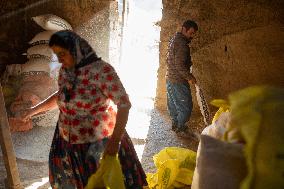
Hadi and his wife Asmar, are preparing hay and sheep food in the fodder barn. They are one of the Kurdish nomadic families of Kermanj who were forced to migrate from their homeland to these areas to protect the eastern borders of Iran, and during this period they lost many of their cultural characteristics and behaviors. They are animal husbandry now and still speak Kurdish, but the clothes they wear are no longer Kurdish and their behaviors have completely changed and most of them do not even know where their original birthplace was. Golestan, Iran, March 2, 2022. Photo by Younes Mohammad/Middle East Images/ABACAPRESS.COM

  •  
The Kurds of Khorasan - Iran

The Kurds of Khorasan - Iran

Asmar and his daughter Faezeh are carrying newborn lambs that are kept separate and away from the mother sheep. They are one of the Kurdish nomadic families of Kermanj who were forced to migrate from their homeland to these areas to protect the eastern borders of Iran, and during this period they lost many of their cultural characteristics and behaviors. They are animal husbandry now and still speak Kurdish, but the clothes they wear are no longer Kurdish and their behaviors have completely changed and most of them do not even know where their original birthplace was. Golestan, Iran, March 2, 2022. Photo by Younes Mohammad/Middle East Images/ABACAPRESS.COM

  •  
The Kurds of Khorasan - Iran

The Kurds of Khorasan - Iran

Asmar and her daughter Faezeh are breastfeeding a newborn lamb that are kept separate and away from the mother sheep. They are one of the Kurdish nomadic families of Kermanj who were forced to migrate from their homeland to these areas to protect the eastern borders of Iran, and during this period they lost many of their cultural characteristics and behaviors. They are animal husbandry now and still speak Kurdish, but the clothes they wear are no longer Kurdish and their behaviors have completely changed and most of them do not even know where their original birthplace was. Golestan, Iran, February 2, 2022. Photo by Younes Mohammad/Middle East Images/ABACAPRESS.COM

  •  
The Kurds of Khorasan - Iran

The Kurds of Khorasan - Iran

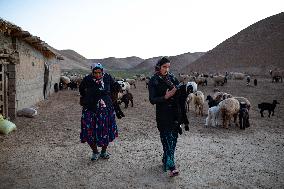
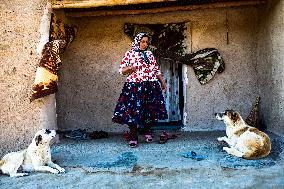
Hadi's wife, Asmar, comes out of the kitchen which is also their children's bedroom to feed the chickens, roosters and dogs. They are one of the Kurdish nomadic families of Kermanj who were forced to migrate from their homeland to these areas to protect the eastern borders of Iran, and during this period they lost many of their cultural characteristics and behaviors. They are animal husbandry now and still speak Kurdish, but the clothes they wear are no longer Kurdish and their behaviors have completely changed and most of them do not even know where their original birthplace was. Golestan, Iran, February 2, 2022. Photo by Younes Mohammad/Middle East Images/ABACAPRESS.COM

  •  

Live concert takes old maqam music into young Iraqis' hearts

STORY: Live concert takes old maqam music into young Iraqis' hearts DATELINE: Dec. 16, 2022 LENGTH: 00:03:22 LOCATION: Baghdad CATEGORY: CULTURE SHOTLIST: 1. various of Iraqi maqam singers singing on the stage of the al-Baghdadi Museum 2. SOUNDBITE 1 (Arabic): BASIM AL-ENZII, Head of tourism affairs at the al-Baghdadi Museum 3. SOUNDBITE 2 (Arabic): SAMER AL-ASMAR, Maqam singer STORYLINE: In an old building near the Tigris River running through Baghdad, a weekly-staged music ensemble of Iraqi maqam offers the audience a nostalgic journey into the past everyday life of the Iraqi capital. Perhaps in the robust cultural scene of modern-day Iraq, it was uncommon to see young people root for this traditional form of music, but the Friday live concerts held by the al-Baghdadi Museum broke this usual rule. A lead singer appeared on stage accompanied by a five-member orchestra, named Chalghi, playing the oud, fiddle, dumbek, and a small tambourine called daff. Swaying to the ornate songs that flew from the sing

  •  
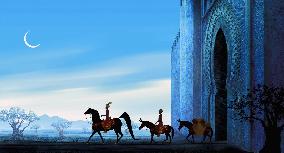
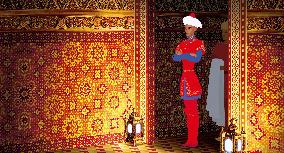
Azur & Asmar (2006)

Azur & Asmar (2006)

Azur Film: Azur & Asmar: The Princes' Quest; Azur Et Asmar (2006) Director: Michel Ocelot 21 May 2006 Date: 21 May 2006

  •  
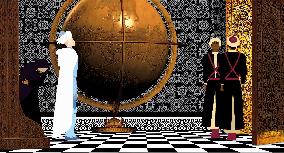
Azur & Asmar (2006)

Azur & Asmar (2006)

Azur & Asmar Film: Azur & Asmar: The Princes' Quest; Azur Et Asmar (2006) Director: Michel Ocelot 21 May 2006 Date: 21 May 2006

  •  
Azur & Asmar (2006)

Azur & Asmar (2006)

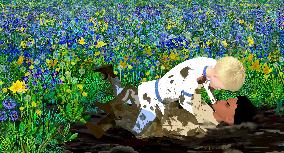
Azur Film: Azur & Asmar: The Princes' Quest; Azur Et Asmar (2006) Director: Michel Ocelot 21 May 2006 Date: 21 May 2006

  •  
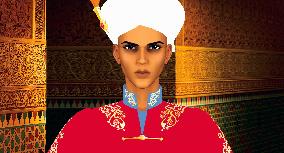
Azur & Asmar (2006)

Azur & Asmar (2006)

Asmar Film: Azur & Asmar: The Princes' Quest; Azur Et Asmar (2006) Director: Michel Ocelot 21 May 2006 Date: 21 May 2006

  •  
Azur & Asmar (2006)

Azur & Asmar (2006)

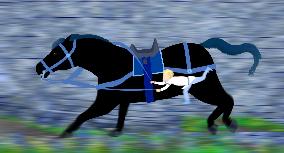
Azur Film: Azur & Asmar: The Princes' Quest; Azur Et Asmar (2006) Director: Michel Ocelot 21 May 2006 Date: 21 May 2006

  •  
Azur & Asmar (2006)

Azur & Asmar (2006)

Asmar Film: Azur & Asmar: The Princes' Quest; Azur Et Asmar (2006) Director: Michel Ocelot 21 May 2006 Date: 21 May 2006

  •  
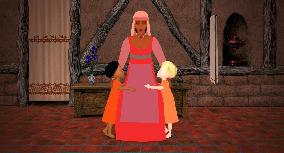
Azur & Asmar (2006)

Azur & Asmar (2006)

Asmar, Jenane & Azur Film: Azur & Asmar: The Princes' Quest; Azur Et Asmar (2006) Director: Michel Ocelot 21 May 2006 Date: 21 May 2006

  •  
Azur & Asmar (2006)

Azur & Asmar (2006)

Asmar Film: Azur & Asmar: The Princes' Quest; Azur Et Asmar (2006) Director: Michel Ocelot 21 May 2006 Date: 21 May 2006

  •  
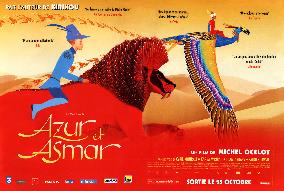
AZUR ET ASMAR

AZUR ET ASMAR

AZUR ET ASMAR Date: 2006

  • Main
  • Top
  • Editorial
  • Creative
  • About Us
  • About ILG
  • Terms of use
  • Company
  • BEHIND
  • Price List
  • Single Plan
  • Monthly Plan
  • Services
  • Shooting
  • Rights Clearance
  • Support
  • FAQ
  • How To Buy
  • Contact Us
  • Become a Partner

© KYODO NEWS IMAGES INC

All Rights Reserved.

  • Editorial
  • Olympics
  • News
  • Sports
  • Japan
  • Tech
  • Royal
  • Disaster
  • NorthKorea
  • Old Japan
  • SNS
  • Creative
  • Food
  • Japan
  • Landscape
  • Animal
  • Popular
  • #Ukraine
  • #Thailand
  • #coronavirus
  • #N. Korea
  • #Russia
  • #China
  • #Ukraine
  • #Thailand
  • #coronavirus
  • #N. Korea
  • #Russia
  • #China
  • Food
  • Japan
  • Landscape
  • Animal
  • Olympics
  • News
  • Sports
  • Japan
  • Tech
  • Royal
  • Disaster
  • NorthKorea
  • Old Japan
  • SNS