•  
Hungry Ghost Festival Celebrations - Indonesia

Hungry Ghost Festival Celebrations - Indonesia

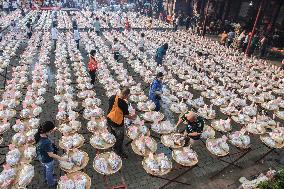
Ethnic-Chinese Indonesians arrange offerings for their ancestors' souls during the "hungry ghost" festival on September 6, 2025, in Medan, North Sumatra, Indonesia. The Hungry Ghost Festival is celebrated annually in the seventh lunar month according to Chinese beliefs, when prayers are offered to the dead and offerings of food and paper replicas of objects such as televisions and cars are burned. This signifies the belief that the Gates of Hell are opened to release hungry ghosts, who then wander the world of the living in search of food deemed in need of respect and appeasement. These offerings are made to keep the spirits of deceased ancestors happy and bring good luck and prosperity. Photo by Albert Ivan Damanik/Middle East Images/ABACAPRESS.COM

  •  
Hungry Ghost Festival Celebrations - Indonesia

Hungry Ghost Festival Celebrations - Indonesia

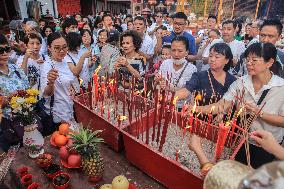
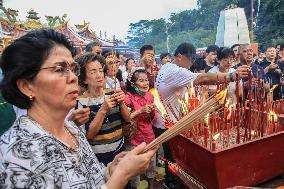
Ethnic Chinese people burn incense as they pray during the Hungry Ghost Festival on September 6, 2025, in Medan, North Sumatra, Indonesia. The Hungry Ghost Festival is celebrated annually during the seventh lunar month according to Chinese beliefs, when prayers are offered to the dead and offerings of food and paper replicas of objects such as televisions and cars are burned. This signifies the belief that the Gates of Hell are opened to release hungry ghosts, who then wander the world of the living in search of food deemed in need of respect and appeasement. These offerings are made to keep the spirits of deceased ancestors happy and bring good luck and prosperity. Photo by Albert Ivan Damanik/Middle East Images/ABACAPRESS.COM

  •  
Hungry Ghost Festival Celebrations - Indonesia

Hungry Ghost Festival Celebrations - Indonesia

Ethnic Chinese people burn incense as they pray during the Hungry Ghost Festival on September 6, 2025, in Medan, North Sumatra, Indonesia. The Hungry Ghost Festival is celebrated annually during the seventh lunar month according to Chinese beliefs, when prayers are offered to the dead and offerings of food and paper replicas of objects such as televisions and cars are burned. This signifies the belief that the Gates of Hell are opened to release hungry ghosts, who then wander the world of the living in search of food deemed in need of respect and appeasement. These offerings are made to keep the spirits of deceased ancestors happy and bring good luck and prosperity. Photo by Albert Ivan Damanik/Middle East Images/ABACAPRESS.COM

  •  
Hungry Ghost Festival Celebrations - Indonesia

Hungry Ghost Festival Celebrations - Indonesia

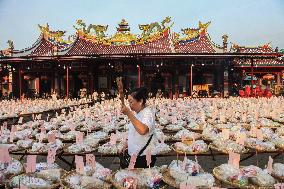
An ethnic Chinese Indonesian woman carries incense as an offering to the spirits of her ancestors during the "hungry ghost" festival on September 6, 2025, in Medan, North Sumatra, Indonesia. The Hungry Ghost Festival is celebrated annually during the seventh lunar month according to Chinese beliefs, when prayers are offered to the dead and offerings of food and paper replicas of objects such as televisions and cars are burned. This signifies the belief that the Gates of Hell are opened to release hungry ghosts, who then wander the world of the living in search of food deemed in need of respect and appeasement. These offerings are made to keep the spirits of deceased ancestors happy and bring good luck and prosperity. Photo by Albert Ivan Damanik/Middle East Images/ABACAPRESS.COM

  •  
Hungry Ghost Festival Celebrations - Indonesia

Hungry Ghost Festival Celebrations - Indonesia

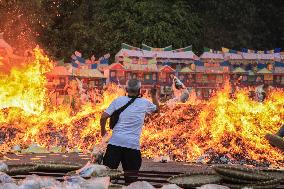
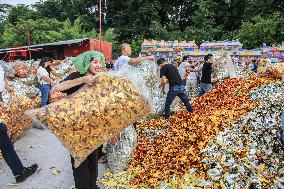
A Chinese-Indonesian man throws food into a fire during the Hungry Ghost Festival on September 6, 2025, in Medan, North Sumatra, Indonesia. The Hungry Ghost Festival is celebrated annually during the seventh lunar month according to Chinese beliefs, when prayers are offered to the dead and offerings of food and paper replicas of objects such as televisions and cars are burned. This signifies the belief that the Gates of Hell are opened to release hungry ghosts, who then wander the world of the living in search of food deemed in need of respect and appeasement. These offerings are made to keep the spirits of deceased ancestors happy and bring good luck and prosperity. Photo by Albert Ivan Damanik/Middle East Images/ABACAPRESS.COM

  •  
Hungry Ghost Festival Celebrations - Indonesia

Hungry Ghost Festival Celebrations - Indonesia

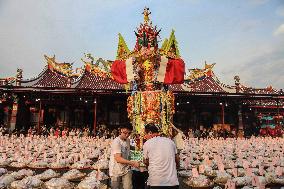
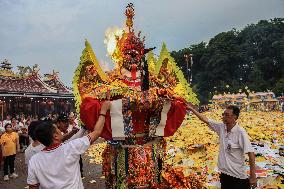
Ethnic-Chinese Indonesians carry an effigy of the "king of ghosts" during the "hungry ghost" festival on September 6, 2025, in Medan, North Sumatra, Indonesia. The Hungry Ghost Festival is celebrated annually in the seventh lunar month according to Chinese beliefs, when prayers are offered to the dead and offerings of food and paper replicas of objects such as televisions and cars are burned. This signifies the belief that the Gates of Hell are opened to release hungry ghosts, who then wander the world of the living in search of food deemed in need of respect and appeasement. These offerings are made to keep the spirits of deceased ancestors happy and bring good luck and prosperity. Photo by Albert Ivan Damanik/Middle East Images/ABACAPRESS.COM

  •  
Hungry Ghost Festival Celebrations - Indonesia

Hungry Ghost Festival Celebrations - Indonesia

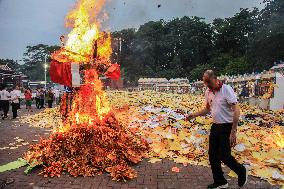
Ethnic Chinese people burn an effigy of the 'King of Ghosts' during the Hungry Ghost Festival on September 6, 2025, in Medan, North Sumatra, Indonesia. The Hungry Ghost Festival is celebrated annually in the seventh lunar month according to Chinese beliefs, when prayers are offered to the dead and offerings of food and paper replicas of objects such as televisions and cars are burned. This signifies the belief that the Gates of Hell are opened to release hungry ghosts, who then wander the world of the living in search of food deemed in need of respect and appeasement. These offerings are made to keep the spirits of deceased ancestors happy and bring good luck and prosperity. Photo by Albert Ivan Damanik/Middle East Images/ABACAPRESS.COM

  •  
Hungry Ghost Festival Celebrations - Indonesia

Hungry Ghost Festival Celebrations - Indonesia

Ethnic Chinese people burn an effigy of the 'King of Ghosts' during the Hungry Ghost Festival on September 6, 2025, in Medan, North Sumatra, Indonesia. The Hungry Ghost Festival is celebrated annually in the seventh lunar month according to Chinese beliefs, when prayers are offered to the dead and offerings of food and paper replicas of objects such as televisions and cars are burned. This signifies the belief that the Gates of Hell are opened to release hungry ghosts, who then wander the world of the living in search of food deemed in need of respect and appeasement. These offerings are made to keep the spirits of deceased ancestors happy and bring good luck and prosperity. Photo by Albert Ivan Damanik/Middle East Images/ABACAPRESS.COM

  •  
Hungry Ghost Festival Celebrations - Indonesia

Hungry Ghost Festival Celebrations - Indonesia

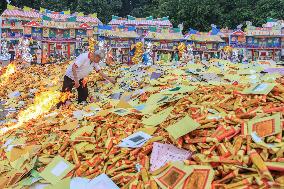
An ethnic Chinese man burns "hell money" during the "hungry ghost" festival on September 6, 2025, in Medan, North Sumatra, Indonesia. The Hungry Ghost Festival is celebrated annually during the seventh lunar month according to Chinese beliefs, when prayers are offered to the dead and offerings of food and paper replicas of objects such as televisions and cars are burned. This signifies the belief that the Gates of Hell are opened to release hungry ghosts, who then wander the world of the living in search of food deemed in need of respect and appeasement. These offerings are made to keep the spirits of deceased ancestors happy and bring good luck and prosperity. Photo by Albert Ivan Damanik/Middle East Images/ABACAPRESS.COM

  •  
Hungry Ghost Festival Celebrations - Indonesia

Hungry Ghost Festival Celebrations - Indonesia

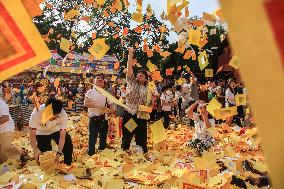
Ethnic-Chinese Indonesians prepare offerings to throw "hell money," prepared as offerings for their ancestors' souls, into the air during the "hungry ghost" festival on September 6, 2025, in Medan, North Sumatra, Indonesia. The Hungry Ghost Festival is celebrated annually during the seventh lunar month according to Chinese beliefs. Prayers are offered to the dead and offerings of food and paper replicas of objects such as televisions and cars are burned. This signifies the belief that the Gates of Hell are opened to release hungry ghosts, who then wander the world of the living in search of food deemed in need of respect and appeasement. These offerings are made to keep the spirits of deceased ancestors happy and bring good luck and prosperity. Photo by Albert Ivan Damanik/Middle East Images/ABACAPRESS.COM

  •  
Hungry Ghost Festival Celebrations - Indonesia

Hungry Ghost Festival Celebrations - Indonesia

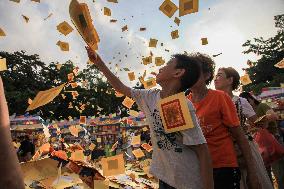
Ethnic-Chinese Indonesians throw "hell money," prepared as offerings for their ancestors' souls, into the air during the "hungry ghost" festival on September 6, 2025, in Medan, North Sumatra, Indonesia. The Hungry Ghost Festival is celebrated annually during the seventh lunar month according to Chinese beliefs. Prayers are offered to the dead and offerings of food and paper replicas of objects such as televisions and cars are burned. This signifies the belief that the Gates of Hell are opened to release hungry ghosts, who then wander the world of the living in search of food deemed in need of respect and appeasement. These offerings are made to keep the spirits of deceased ancestors happy and bring good luck and prosperity. Photo by Albert Ivan Damanik/Middle East Images/ABACAPRESS.COM

  •  
Hungry Ghost Festival Celebrations - Indonesia

Hungry Ghost Festival Celebrations - Indonesia

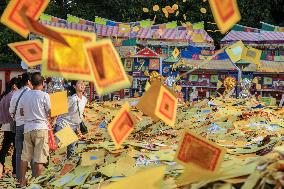
Ethnic-Chinese Indonesians throw "hell money," prepared as offerings for their ancestors' souls, into the air during the "hungry ghost" festival on September 6, 2025, in Medan, North Sumatra, Indonesia. The Hungry Ghost Festival is celebrated annually during the seventh lunar month according to Chinese beliefs. Prayers are offered to the dead and offerings of food and paper replicas of objects such as televisions and cars are burned. This signifies the belief that the Gates of Hell are opened to release hungry ghosts, who then wander the world of the living in search of food deemed in need of respect and appeasement. These offerings are made to keep the spirits of deceased ancestors happy and bring good luck and prosperity. Photo by Albert Ivan Damanik/Middle East Images/ABACAPRESS.COM

  •  
Hungry Ghost Festival Celebrations - Indonesia

Hungry Ghost Festival Celebrations - Indonesia

Ethnic-Chinese Indonesians throw "hell money," prepared as offerings for their ancestors' souls, into the air during the "hungry ghost" festival on September 6, 2025, in Medan, North Sumatra, Indonesia. The Hungry Ghost Festival is celebrated annually during the seventh lunar month according to Chinese beliefs. Prayers are offered to the dead and offerings of food and paper replicas of objects such as televisions and cars are burned. This signifies the belief that the Gates of Hell are opened to release hungry ghosts, who then wander the world of the living in search of food deemed in need of respect and appeasement. These offerings are made to keep the spirits of deceased ancestors happy and bring good luck and prosperity. Photo by Albert Ivan Damanik/Middle East Images/ABACAPRESS.COM

  •  
Hungry Ghost Festival Celebrations - Indonesia

Hungry Ghost Festival Celebrations - Indonesia

Ethnic-Chinese Indonesians throw "hell money," prepared as offerings for their ancestors' souls, into the air during the "hungry ghost" festival on September 6, 2025, in Medan, North Sumatra, Indonesia. The Hungry Ghost Festival is celebrated annually during the seventh lunar month according to Chinese beliefs. Prayers are offered to the dead and offerings of food and paper replicas of objects such as televisions and cars are burned. This signifies the belief that the Gates of Hell are opened to release hungry ghosts, who then wander the world of the living in search of food deemed in need of respect and appeasement. These offerings are made to keep the spirits of deceased ancestors happy and bring good luck and prosperity. Photo by Albert Ivan Damanik/Middle East Images/ABACAPRESS.COM

  •  
Illustration - Aerial View of France

Illustration - Aerial View of France

FRANCE . LOT (46) ROCAMADOUR. AERIAL VIEW OF THE SITE FROM THE EAST. BELOW, THE RUE DE LA COURONNERIE. A MIRACULOUS ROCK, A COLLECTION OF BELIEFS AND LEGENDS, A SANCTUARY OF THE BLACK MADONNA, A PLACE OF PILGRIMAGE: ROCAMADOUR IS ALL OF THESE THINGS, BUT IT IS ALSO AN EXTRAORDINARY SITE, ALONG A STEEP CLIFF 150 M ABOVE THE ALZOU CANYON. Photo by Stephane Compoint/Only France/ABACAPRESS.COM

  •  
Dia de Muertos Celebrations - Mexico

Dia de Muertos Celebrations - Mexico

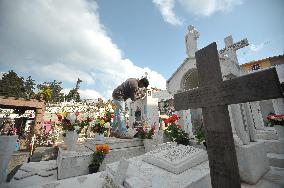
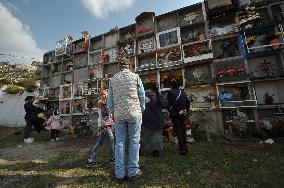
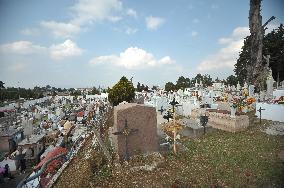
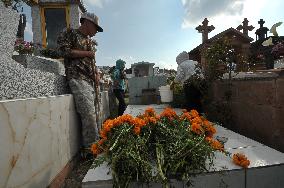
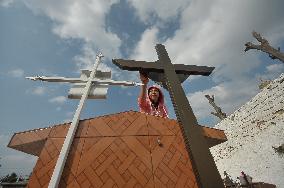
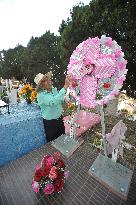
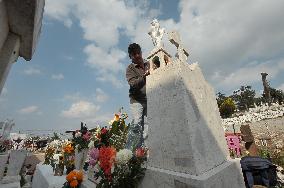
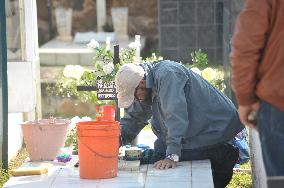
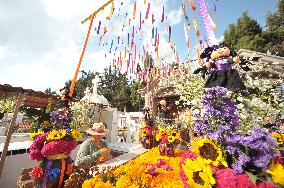
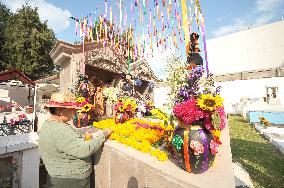
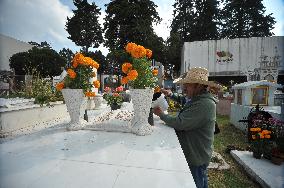
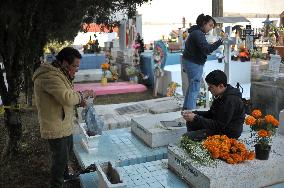
A person decorates the graves of his loved ones with cempasuchil flowers and hold a vigil at the Municipal Cemetery of Amealco de Bonfil. As part of the Mexican traditions of the Day of the Dead, people visit the tombs of their deceased to spend time with them, according to the beliefs the souls of the deceased return home to spend time with their relatives and nourish themselves with the food that is offered to them. Amealco de Bonfil, Mexico, November 1, 2024. Photo by Fernando Camacho/Eyepix Group/ABACAPRESS.COM

  •  
Dia de Muertos Celebrations - Mexico

Dia de Muertos Celebrations - Mexico

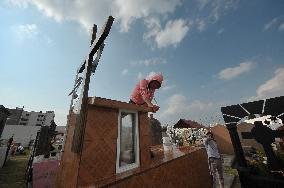
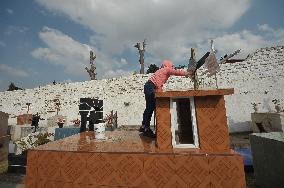
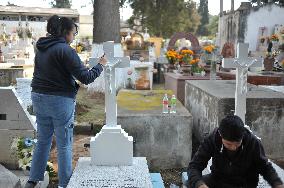
A person decorates the graves of her loved ones with cempasuchil flowers and hold a vigil at the Municipal Cemetery of Amealco de Bonfil. As part of the Mexican traditions of the Day of the Dead, people visit the tombs of their deceased to spend time with them, according to the beliefs the souls of the deceased return home to spend time with their relatives and nourish themselves with the food that is offered to them. Amealco de Bonfil, Mexico, November 1, 2024. Photo by Fernando Camacho/Eyepix Group/ABACAPRESS.COM

  •  
Dia de Muertos Celebrations - Mexico

Dia de Muertos Celebrations - Mexico

A person decorates the graves of her loved ones with cempasuchil flowers and hold a vigil at the Municipal Cemetery of Amealco de Bonfil. As part of the Mexican traditions of the Day of the Dead, people visit the tombs of their deceased to spend time with them, according to the beliefs the souls of the deceased return home to spend time with their relatives and nourish themselves with the food that is offered to them. Amealco de Bonfil, Mexico, November 1, 2024. Photo by Fernando Camacho/Eyepix Group/ABACAPRESS.COM

  •  
Dia de Muertos Celebrations - Mexico

Dia de Muertos Celebrations - Mexico

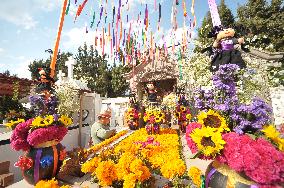
Relatives decorate the graves of their loved ones with cempasuchil flowers and hold a vigil at the Municipal Cemetery of Amealco de Bonfil. As part of the Mexican traditions of the Day of the Dead, people visit the tombs of their deceased to spend time with them, according to the beliefs the souls of the deceased return home to spend time with their relatives and nourish themselves with the food that is offered to them. Amealco de Bonfil, Mexico, November 1, 2024. Photo by Fernando Camacho/Eyepix Group/ABACAPRESS.COM

  •  
Dia de Muertos Celebrations - Mexico

Dia de Muertos Celebrations - Mexico

Relatives decorate the graves of their loved ones with cempasuchil flowers and hold a vigil at the Municipal Cemetery of Amealco de Bonfil. As part of the Mexican traditions of the Day of the Dead, people visit the tombs of their deceased to spend time with them, according to the beliefs the souls of the deceased return home to spend time with their relatives and nourish themselves with the food that is offered to them. Amealco de Bonfil, Mexico, November 1, 2024. Photo by Fernando Camacho/Eyepix Group/ABACAPRESS.COM

  •  
Dia de Muertos Celebrations - Mexico

Dia de Muertos Celebrations - Mexico

Relatives decorate the graves of their loved ones with cempasuchil flowers and hold a vigil at the Municipal Cemetery of Amealco de Bonfil. As part of the Mexican traditions of the Day of the Dead, people visit the tombs of their deceased to spend time with them, according to the beliefs the souls of the deceased return home to spend time with their relatives and nourish themselves with the food that is offered to them. Amealco de Bonfil, Mexico, November 1, 2024. Photo by Fernando Camacho/Eyepix Group/ABACAPRESS.COM

  •  
Dia de Muertos Celebrations - Mexico

Dia de Muertos Celebrations - Mexico

A person decorates the graves of her loved ones with cempasuchil flowers and hold a vigil at the Municipal Cemetery of Amealco de Bonfil. As part of the Mexican traditions of the Day of the Dead, people visit the tombs of their deceased to spend time with them, according to the beliefs the souls of the deceased return home to spend time with their relatives and nourish themselves with the food that is offered to them. Amealco de Bonfil, Mexico, November 1, 2024. Photo by Fernando Camacho/Eyepix Group/ABACAPRESS.COM

  •  
Dia de Muertos Celebrations - Mexico

Dia de Muertos Celebrations - Mexico

A person decorates the graves of his loved ones with cempasuchil flowers and hold a vigil at the Municipal Cemetery of Amealco de Bonfil. As part of the Mexican traditions of the Day of the Dead, people visit the tombs of their deceased to spend time with them, according to the beliefs the souls of the deceased return home to spend time with their relatives and nourish themselves with the food that is offered to them. Amealco de Bonfil, Mexico, November 1, 2024. Photo by Fernando Camacho/Eyepix Group/ABACAPRESS.COM

  •  
Dia de Muertos Celebrations - Mexico

Dia de Muertos Celebrations - Mexico

A person decorates the graves of his loved ones with cempasuchil flowers and hold a vigil at the Municipal Cemetery of Amealco de Bonfil. As part of the Mexican traditions of the Day of the Dead, people visit the tombs of their deceased to spend time with them, according to the beliefs the souls of the deceased return home to spend time with their relatives and nourish themselves with the food that is offered to them. Amealco de Bonfil, Mexico, November 1, 2024. Photo by Fernando Camacho/Eyepix Group/ABACAPRESS.COM

  •  
Dia de Muertos Celebrations - Mexico

Dia de Muertos Celebrations - Mexico

A person decorates the graves of his loved ones with cempasuchil flowers and hold a vigil at the Municipal Cemetery of Amealco de Bonfil. As part of the Mexican traditions of the Day of the Dead, people visit the tombs of their deceased to spend time with them, according to the beliefs the souls of the deceased return home to spend time with their relatives and nourish themselves with the food that is offered to them. Amealco de Bonfil, Mexico, November 1, 2024. Photo by Fernando Camacho/Eyepix Group/ABACAPRESS.COM

  •  
Dia de Muertos Celebrations - Mexico

Dia de Muertos Celebrations - Mexico

A person decorates the graves of her loved ones with cempasuchil flowers and hold a vigil at the Municipal Cemetery of Amealco de Bonfil. As part of the Mexican traditions of the Day of the Dead, people visit the tombs of their deceased to spend time with them, according to the beliefs the souls of the deceased return home to spend time with their relatives and nourish themselves with the food that is offered to them. Amealco de Bonfil, Mexico, November 1, 2024. Photo by Fernando Camacho/Eyepix Group/ABACAPRESS.COM

  •  
Dia de Muertos Celebrations - Mexico

Dia de Muertos Celebrations - Mexico

A person decorates the graves of her loved ones with cempasuchil flowers and hold a vigil at the Municipal Cemetery of Amealco de Bonfil. As part of the Mexican traditions of the Day of the Dead, people visit the tombs of their deceased to spend time with them, according to the beliefs the souls of the deceased return home to spend time with their relatives and nourish themselves with the food that is offered to them. Amealco de Bonfil, Mexico, November 1, 2024. Photo by Fernando Camacho/Eyepix Group/ABACAPRESS.COM

  •  
Dia de Muertos Celebrations - Mexico

Dia de Muertos Celebrations - Mexico

A person decorates the graves of her loved ones with cempasuchil flowers and hold a vigil at the Municipal Cemetery of Amealco de Bonfil. As part of the Mexican traditions of the Day of the Dead, people visit the tombs of their deceased to spend time with them, according to the beliefs the souls of the deceased return home to spend time with their relatives and nourish themselves with the food that is offered to them. Amealco de Bonfil, Mexico, November 1, 2024. Photo by Fernando Camacho/Eyepix Group/ABACAPRESS.COM

  •  
Dia de Muertos Celebrations - Mexico

Dia de Muertos Celebrations - Mexico

A person decorates the graves of her loved ones with cempasuchil flowers and hold a vigil at the Municipal Cemetery of Amealco de Bonfil. As part of the Mexican traditions of the Day of the Dead, people visit the tombs of their deceased to spend time with them, according to the beliefs the souls of the deceased return home to spend time with their relatives and nourish themselves with the food that is offered to them. Amealco de Bonfil, Mexico, November 1, 2024. Photo by Fernando Camacho/Eyepix Group/ABACAPRESS.COM

  •  
Dia de Muertos Celebrations - Mexico

Dia de Muertos Celebrations - Mexico

Relatives decorate the graves of their loved ones with cempasuchil flowers and hold a vigil at the Municipal Cemetery of Amealco de Bonfil. As part of the Mexican traditions of the Day of the Dead, people visit the tombs of their deceased to spend time with them, according to the beliefs the souls of the deceased return home to spend time with their relatives and nourish themselves with the food that is offered to them. Amealco de Bonfil, Mexico, November 1, 2024. Photo by Fernando Camacho/Eyepix Group/ABACAPRESS.COM

  •  
Dia de Muertos Celebrations - Mexico

Dia de Muertos Celebrations - Mexico

A person decorates the graves of his loved ones with cempasuchil flowers and hold a vigil at the Municipal Cemetery of Amealco de Bonfil. As part of the Mexican traditions of the Day of the Dead, people visit the tombs of their deceased to spend time with them, according to the beliefs the souls of the deceased return home to spend time with their relatives and nourish themselves with the food that is offered to them. Amealco de Bonfil, Mexico, November 1, 2024. Photo by Fernando Camacho/Eyepix Group/ABACAPRESS.COM

  •  
Dia de Muertos Celebrations - Mexico

Dia de Muertos Celebrations - Mexico

Relatives decorate the graves of their loved ones with cempasuchil flowers and hold a vigil at the Municipal Cemetery of Amealco de Bonfil. As part of the Mexican traditions of the Day of the Dead, people visit the tombs of their deceased to spend time with them, according to the beliefs the souls of the deceased return home to spend time with their relatives and nourish themselves with the food that is offered to them. Amealco de Bonfil, Mexico, November 1, 2024. Photo by Fernando Camacho/Eyepix Group/ABACAPRESS.COM

  •  
(HainanOutlook)CHINA-HAINAN-LINGSHUI-TANKA MUSEUM (CN)

(HainanOutlook)CHINA-HAINAN-LINGSHUI-TANKA MUSEUM (CN)

(240728) -- HAIKOU, July 28, 2024 Photo by Xinhua/ABACAPRESS.COM) -- A visitor watches an animation simulating aquaculture of Danjia people at Hainan Tanka Museum in Lingshui, south China's Hainan Province, July 26, 2024. Hainan Tanka Museum, a comprehensive museum of Danjia culture, showcases the maritime history of Danjia people. The Danjia people, also known as the Tanka people, live in coastal areas, and river and lake estuaries in southern China. In Hainan, they have formed unique water-related cultures in language, customs and beliefs, among others. Photo by Xinhua/ABACAPRESS.COM/Pu Xiaoxu)

  •  
(HainanOutlook)CHINA-HAINAN-LINGSHUI-TANKA MUSEUM (CN)

(HainanOutlook)CHINA-HAINAN-LINGSHUI-TANKA MUSEUM (CN)

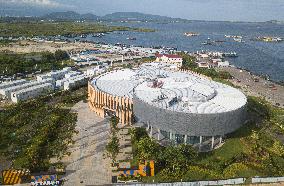
(240728) -- HAIKOU, July 28, 2024 Photo by Xinhua/ABACAPRESS.COM) -- An aerial drone photo taken on July 26, 2024 shows the Hainan Tanka Museum in Lingshui, south China's Hainan Province. Hainan Tanka Museum, a comprehensive museum of Danjia culture, showcases the maritime history of Danjia people. The Danjia people, also known as the Tanka people, live in coastal areas, and river and lake estuaries in southern China. In Hainan, they have formed unique water-related cultures in language, customs and beliefs, among others. Photo by Xinhua/ABACAPRESS.COM/Pu Xiaoxu)

  •  
(HainanOutlook)CHINA-HAINAN-LINGSHUI-TANKA MUSEUM (CN)

(HainanOutlook)CHINA-HAINAN-LINGSHUI-TANKA MUSEUM (CN)

(240728) -- HAIKOU, July 28, 2024 Photo by Xinhua/ABACAPRESS.COM) -- Visitors watch an animation simulating Danjia people picking pearls in the sea at Hainan Tanka Museum in Lingshui, south China's Hainan Province, July 26, 2024. Hainan Tanka Museum, a comprehensive museum of Danjia culture, showcases the maritime history of Danjia people. The Danjia people, also known as the Tanka people, live in coastal areas, and river and lake estuaries in southern China. In Hainan, they have formed unique water-related cultures in language, customs and beliefs, among others. Photo by Xinhua/ABACAPRESS.COM/Pu Xiaoxu)

  •  
(HainanOutlook)CHINA-HAINAN-LINGSHUI-TANKA MUSEUM (CN)

(HainanOutlook)CHINA-HAINAN-LINGSHUI-TANKA MUSEUM (CN)

(240728) -- HAIKOU, July 28, 2024 Photo by Xinhua/ABACAPRESS.COM) -- This photo taken on July 26, 2024 shows a water ladle exhibited at Hainan Tanka Museum in Lingshui, south China's Hainan Province. Hainan Tanka Museum, a comprehensive museum of Danjia culture, showcases the maritime history of Danjia people. The Danjia people, also known as the Tanka people, live in coastal areas, and river and lake estuaries in southern China. In Hainan, they have formed unique water-related cultures in language, customs and beliefs, among others. Photo by Xinhua/ABACAPRESS.COM/Pu Xiaoxu)

  •  
(HainanOutlook)CHINA-HAINAN-LINGSHUI-TANKA MUSEUM (CN)

(HainanOutlook)CHINA-HAINAN-LINGSHUI-TANKA MUSEUM (CN)

(240728) -- HAIKOU, July 28, 2024 Photo by Xinhua/ABACAPRESS.COM) -- This photo taken on July 26, 2024 shows a wooden pillow exhibited at Hainan Tanka Museum in Lingshui, south China's Hainan Province. Hainan Tanka Museum, a comprehensive museum of Danjia culture, showcases the maritime history of Danjia people. The Danjia people, also known as the Tanka people, live in coastal areas, and river and lake estuaries in southern China. In Hainan, they have formed unique water-related cultures in language, customs and beliefs, among others. Photo by Xinhua/ABACAPRESS.COM/Pu Xiaoxu)

  •  
(HainanOutlook)CHINA-HAINAN-LINGSHUI-TANKA MUSEUM (CN)

(HainanOutlook)CHINA-HAINAN-LINGSHUI-TANKA MUSEUM (CN)

(240728) -- HAIKOU, July 28, 2024 Photo by Xinhua/ABACAPRESS.COM) -- This photo taken on July 26, 2024 shows an installation depicting a houseboat where Danjia people live at Hainan Tanka Museum in Lingshui, south China's Hainan Province. Hainan Tanka Museum, a comprehensive museum of Danjia culture, showcases the maritime history of Danjia people. The Danjia people, also known as the Tanka people, live in coastal areas, and river and lake estuaries in southern China. In Hainan, they have formed unique water-related cultures in language, customs and beliefs, among others. Photo by Xinhua/ABACAPRESS.COM/Pu Xiaoxu)

  •  
(HainanOutlook)CHINA-HAINAN-LINGSHUI-TANKA MUSEUM (CN)

(HainanOutlook)CHINA-HAINAN-LINGSHUI-TANKA MUSEUM (CN)

(240728) -- HAIKOU, July 28, 2024 Photo by Xinhua/ABACAPRESS.COM) -- This photo taken on July 26, 2024 shows an installation depicting a wedding ceremony of Danjia people on the water at Hainan Tanka Museum in Lingshui, south China's Hainan Province. Hainan Tanka Museum, a comprehensive museum of Danjia culture, showcases the maritime history of Danjia people. The Danjia people, also known as the Tanka people, live in coastal areas, and river and lake estuaries in southern China. In Hainan, they have formed unique water-related cultures in language, customs and beliefs, among others. Photo by Xinhua/ABACAPRESS.COM/Pu Xiaoxu)

  •  
(HainanOutlook)CHINA-HAINAN-LINGSHUI-TANKA MUSEUM (CN)

(HainanOutlook)CHINA-HAINAN-LINGSHUI-TANKA MUSEUM (CN)

(240728) -- HAIKOU, July 28, 2024 Photo by Xinhua/ABACAPRESS.COM) -- A visitor views tools Danjia people used for boat building at Hainan Tanka Museum in Lingshui, south China's Hainan Province, July 26, 2024. Hainan Tanka Museum, a comprehensive museum of Danjia culture, showcases the maritime history of Danjia people. The Danjia people, also known as the Tanka people, live in coastal areas, and river and lake estuaries in southern China. In Hainan, they have formed unique water-related cultures in language, customs and beliefs, among others. Photo by Xinhua/ABACAPRESS.COM/Pu Xiaoxu)

  •  
(HainanOutlook)CHINA-HAINAN-LINGSHUI-TANKA MUSEUM (CN)

(HainanOutlook)CHINA-HAINAN-LINGSHUI-TANKA MUSEUM (CN)

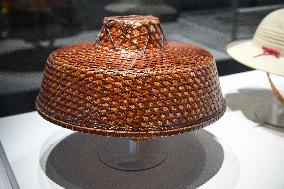
(240728) -- HAIKOU, July 28, 2024 Photo by Xinhua/ABACAPRESS.COM) -- This photo taken on July 26, 2024 shows a Danjia-styled hat at Hainan Tanka Museum in Lingshui, south China's Hainan Province. Hainan Tanka Museum, a comprehensive museum of Danjia culture, showcases the maritime history of Danjia people. The Danjia people, also known as the Tanka people, live in coastal areas, and river and lake estuaries in southern China. In Hainan, they have formed unique water-related cultures in language, customs and beliefs, among others. Photo by Xinhua/ABACAPRESS.COM/Pu Xiaoxu)

  •  
(HainanOutlook)CHINA-HAINAN-LINGSHUI-TANKA MUSEUM (CN)

(HainanOutlook)CHINA-HAINAN-LINGSHUI-TANKA MUSEUM (CN)

(240728) -- HAIKOU, July 28, 2024 Photo by Xinhua/ABACAPRESS.COM) -- This photo taken on July 26, 2024 shows fish hooks used by Danjia people at Hainan Tanka Museum in Lingshui, south China's Hainan Province. Hainan Tanka Museum, a comprehensive museum of Danjia culture, showcases the maritime history of Danjia people. The Danjia people, also known as the Tanka people, live in coastal areas, and river and lake estuaries in southern China. In Hainan, they have formed unique water-related cultures in language, customs and beliefs, among others. Photo by Xinhua/ABACAPRESS.COM/Pu Xiaoxu)

  •  
(HainanOutlook)CHINA-HAINAN-LINGSHUI-TANKA MUSEUM (CN)

(HainanOutlook)CHINA-HAINAN-LINGSHUI-TANKA MUSEUM (CN)

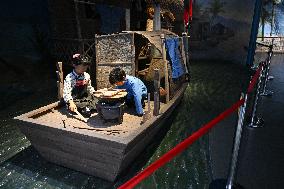
(240728) -- HAIKOU, July 28, 2024 Photo by Xinhua/ABACAPRESS.COM) -- This photo taken on July 26, 2024 shows an installation depicting boat building of Danjia people at Hainan Tanka Museum in Lingshui, south China's Hainan Province. Hainan Tanka Museum, a comprehensive museum of Danjia culture, showcases the maritime history of Danjia people. The Danjia people, also known as the Tanka people, live in coastal areas, and river and lake estuaries in southern China. In Hainan, they have formed unique water-related cultures in language, customs and beliefs, among others. Photo by Xinhua/ABACAPRESS.COM/Pu Xiaoxu)

  •  
(HainanOutlook)CHINA-HAINAN-LINGSHUI-TANKA MUSEUM (CN)

(HainanOutlook)CHINA-HAINAN-LINGSHUI-TANKA MUSEUM (CN)

(240728) -- HAIKOU, July 28, 2024 Photo by Xinhua/ABACAPRESS.COM) -- This photo taken on July 26, 2024 shows a floating beacon exhibited at Hainan Tanka Museum in Lingshui, south China's Hainan Province. Hainan Tanka Museum, a comprehensive museum of Danjia culture, showcases the maritime history of Danjia people. The Danjia people, also known as the Tanka people, live in coastal areas, and river and lake estuaries in southern China. In Hainan, they have formed unique water-related cultures in language, customs and beliefs, among others. Photo by Xinhua/ABACAPRESS.COM/Pu Xiaoxu)

  •  
(HainanOutlook)CHINA-HAINAN-LINGSHUI-TANKA MUSEUM (CN)

(HainanOutlook)CHINA-HAINAN-LINGSHUI-TANKA MUSEUM (CN)

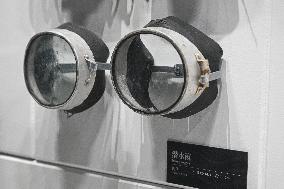
(240728) -- HAIKOU, July 28, 2024 Photo by Xinhua/ABACAPRESS.COM) -- This photo taken on July 26, 2024 shows a diving goggles exhibited at Hainan Tanka Museum in Lingshui, south China's Hainan Province. Hainan Tanka Museum, a comprehensive museum of Danjia culture, showcases the maritime history of Danjia people. The Danjia people, also known as the Tanka people, live in coastal areas, and river and lake estuaries in southern China. In Hainan, they have formed unique water-related cultures in language, customs and beliefs, among others. Photo by Xinhua/ABACAPRESS.COM/Pu Xiaoxu)

  •  
(HainanOutlook)CHINA-HAINAN-LINGSHUI-TANKA MUSEUM (CN)

(HainanOutlook)CHINA-HAINAN-LINGSHUI-TANKA MUSEUM (CN)

(240728) -- HAIKOU, July 28, 2024 Photo by Xinhua/ABACAPRESS.COM) -- This photo taken on July 26, 2024 shows a model of Danjia dish exhibited at Hainan Tanka Museum in Lingshui, south China's Hainan Province. Hainan Tanka Museum, a comprehensive museum of Danjia culture, showcases the maritime history of Danjia people. The Danjia people, also known as the Tanka people, live in coastal areas, and river and lake estuaries in southern China. In Hainan, they have formed unique water-related cultures in language, customs and beliefs, among others. Photo by Xinhua/ABACAPRESS.COM/Pu Xiaoxu)

  •  
(HainanOutlook)CHINA-HAINAN-LINGSHUI-TANKA MUSEUM (CN)

(HainanOutlook)CHINA-HAINAN-LINGSHUI-TANKA MUSEUM (CN)

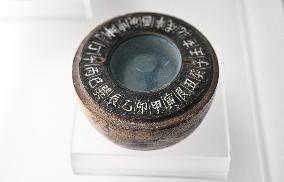
(240728) -- HAIKOU, July 28, 2024 Photo by Xinhua/ABACAPRESS.COM) -- This photo taken on July 26, 2024 shows a wooden compass exhibited at Hainan Tanka Museum in Lingshui, south China's Hainan Province. Hainan Tanka Museum, a comprehensive museum of Danjia culture, showcases the maritime history of Danjia people. The Danjia people, also known as the Tanka people, live in coastal areas, and river and lake estuaries in southern China. In Hainan, they have formed unique water-related cultures in language, customs and beliefs, among others. Photo by Xinhua/ABACAPRESS.COM/Pu Xiaoxu)

  •  
The 9th Day of Muharram Celebrates - Istanbul

The 9th Day of Muharram Celebrates - Istanbul

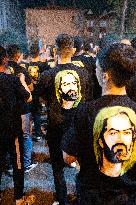
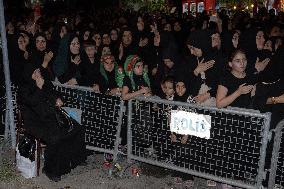
On the 9th day of the month of Muharram, which is part of the beliefs of the Ja'faris, on the night of tasua, which is the day of mourning of the Ja'faris for the killing of Hussein in Karbala, they spent their mourning with elegies and melodies, at Zeynebiye mosque, in the Halkali district of Istanbul, Turkey, on July 15, 2024. Photo by Mert Nazim Egin/ABACAPRESS.COM

  •  
The 9th Day of Muharram Celebrates - Istanbul

The 9th Day of Muharram Celebrates - Istanbul

On the 9th day of the month of Muharram, which is part of the beliefs of the Ja'faris, on the night of tasua, which is the day of mourning of the Ja'faris for the killing of Hussein in Karbala, they spent their mourning with elegies and melodies, at Zeynebiye mosque, in the Halkali district of Istanbul, Turkey, on July 15, 2024. Photo by Mert Nazim Egin/ABACAPRESS.COM

  •  
The 9th Day of Muharram Celebrates - Istanbul

The 9th Day of Muharram Celebrates - Istanbul

On the 9th day of the month of Muharram, which is part of the beliefs of the Ja'faris, on the night of tasua, which is the day of mourning of the Ja'faris for the killing of Hussein in Karbala, they spent their mourning with elegies and melodies, at Zeynebiye mosque, in the Halkali district of Istanbul, Turkey, on July 15, 2024. Photo by Mert Nazim Egin/ABACAPRESS.COM

  • Main
  • Top
  • Editorial
  • Creative
  • About Us
  • About ILG
  • Terms of use
  • Company
  • BEHIND
  • Price List
  • Single Plan
  • Monthly Plan
  • Services
  • Shooting
  • Rights Clearance
  • Support
  • FAQ
  • How To Buy
  • Contact Us
  • Become a Partner

© KYODO NEWS IMAGES INC

All Rights Reserved.

  • Editorial
  • Olympics
  • News
  • Sports
  • Japan
  • Tech
  • Royal
  • Disaster
  • NorthKorea
  • Old Japan
  • SNS

  • Creative
  • Food
  • Japan
  • Landscape
  • Animal
  • Popular
  • #Ukraine
  • #China
  • #coronavirus
  • #N. Korea
  • #Thailand
  • #Russia
  • #Ukraine
  • #China
  • #coronavirus
  • #N. Korea
  • #Thailand
  • #Russia
  • Food
  • Japan
  • Landscape
  • Animal
  • Olympics
  • News
  • Sports
  • Japan
  • Tech
  • Royal
  • Disaster
  • NorthKorea
  • Old Japan
  • SNS