•  
CHINA-XINJIANG-TEKES COUNTY-VIEW (CN)

CHINA-XINJIANG-TEKES COUNTY-VIEW (CN)

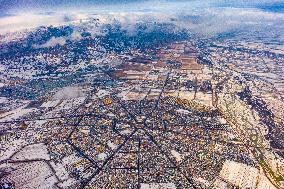
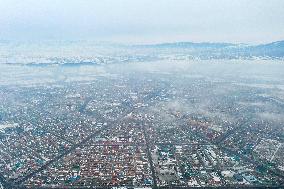
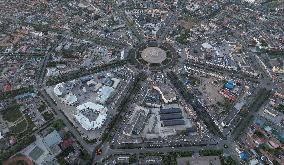
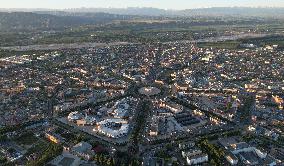
(An aerial photo taken on Aug. 29, 2023 shows a view of Tekes County in Ili Kazak Autonomous Prefecture, northwest China's Xinjiang Uygur Autonomous Region. Established in the 1930s, Tekes is located deep in the Ili River Valley on the northern slopes of the Tianshan Mountains. The county is renowned for its Bagua (or Eight Trigrams) layout: from the central Tai Chi Plaza, eight main streets extend outward in a progressive and radial pattern, while the roads are interconnected. Tekes is now promoting the integrated development of its cultural and tourism industries, striving to create a "museum of landscapes" and a world-class tourist destination. Photo by Zhang Qinghua/Xinhua/ABACAPRESS.COM

  •  
CHINA-XINJIANG-TEKES COUNTY-VIEW (CN)

CHINA-XINJIANG-TEKES COUNTY-VIEW (CN)

(An aerial photo taken on Dec. 30, 2023 shows a view of Tekes County in Ili Kazak Autonomous Prefecture, northwest China's Xinjiang Uygur Autonomous Region. Established in the 1930s, Tekes is located deep in the Ili River Valley on the northern slopes of the Tianshan Mountains. The county is renowned for its Bagua (or Eight Trigrams) layout: from the central Tai Chi Plaza, eight main streets extend outward in a progressive and radial pattern, while the roads are interconnected. Tekes is now promoting the integrated development of its cultural and tourism industries, striving to create a "museum of landscapes" and a world-class tourist destination. Photo by Zhou Meiling/Xinhua/ABACAPRESS.COM

  •  
CHINA-XINJIANG-TEKES COUNTY-VIEW (CN)

CHINA-XINJIANG-TEKES COUNTY-VIEW (CN)

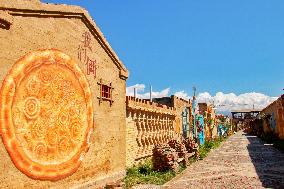
(This photo taken on Aug. 18, 2019 shows a view on one of the eight main streets in Tekes County in Ili Kazak Autonomous Prefecture, northwest China's Xinjiang Uygur Autonomous Region. Established in the 1930s, Tekes is located deep in the Ili River Valley on the northern slopes of the Tianshan Mountains. The county is renowned for its Bagua (or Eight Trigrams) layout: from the central Tai Chi Plaza, eight main streets extend outward in a progressive and radial pattern, while the roads are interconnected. Tekes is now promoting the integrated development of its cultural and tourism industries, striving to create a "museum of landscapes" and a world-class tourist destination. Photo by Zhao Fengshou/Xinhua/ABACAPRESS.COM

  •  
CHINA-XINJIANG-TEKES COUNTY-VIEW (CN)

CHINA-XINJIANG-TEKES COUNTY-VIEW (CN)

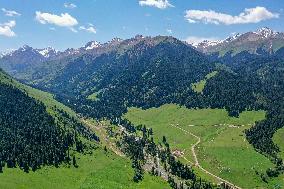
(This photo taken on June 8, 2021 shows a view of Tekes County in Ili Kazak Autonomous Prefecture, northwest China's Xinjiang Uygur Autonomous Region. Established in the 1930s, Tekes is located deep in the Ili River Valley on the northern slopes of the Tianshan Mountains. The county is renowned for its Bagua (or Eight Trigrams) layout: from the central Tai Chi Plaza, eight main streets extend outward in a progressive and radial pattern, while the roads are interconnected. Tekes is now promoting the integrated development of its cultural and tourism industries, striving to create a "museum of landscapes" and a world-class tourist destination. Photo by Ding Lei/Xinhua/ABACAPRESS.COM

  •  
CHINA-XINJIANG-TEKES COUNTY-VIEW (CN)

CHINA-XINJIANG-TEKES COUNTY-VIEW (CN)

(An aerial photo taken on Jan. 2, 2021 shows a night view of Tekes County in Ili Kazak Autonomous Prefecture, northwest China's Xinjiang Uygur Autonomous Region. Established in the 1930s, Tekes is located deep in the Ili River Valley on the northern slopes of the Tianshan Mountains. The county is renowned for its Bagua (or Eight Trigrams) layout: from the central Tai Chi Plaza, eight main streets extend outward in a progressive and radial pattern, while the roads are interconnected. Tekes is now promoting the integrated development of its cultural and tourism industries, striving to create a "museum of landscapes" and a world-class tourist destination. Photo by Ding Lei/Xinhua/ABACAPRESS.COM

  •  
CHINA-XINJIANG-TEKES COUNTY-VIEW (CN)

CHINA-XINJIANG-TEKES COUNTY-VIEW (CN)

(A panoramic aerial photo taken on Jan. 2, 2021 shows a view of Tekes County in Ili Kazak Autonomous Prefecture, northwest China's Xinjiang Uygur Autonomous Region. Established in the 1930s, Tekes is located deep in the Ili River Valley on the northern slopes of the Tianshan Mountains. The county is renowned for its Bagua (or Eight Trigrams) layout: from the central Tai Chi Plaza, eight main streets extend outward in a progressive and radial pattern, while the roads are interconnected. Tekes is now promoting the integrated development of its cultural and tourism industries, striving to create a "museum of landscapes" and a world-class tourist destination. Photo by Ding Lei/Xinhua/ABACAPRESS.COM

  •  
CHINA-XINJIANG-TEKES COUNTY-VIEW (CN)

CHINA-XINJIANG-TEKES COUNTY-VIEW (CN)

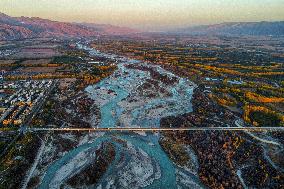
(An aerial photo taken on Oct. 9, 2024 shows a view of the Tekes River in Tekes County, Ili Kazak Autonomous Prefecture, northwest China's Xinjiang Uygur Autonomous Region. Established in the 1930s, Tekes is located deep in the Ili River Valley on the northern slopes of the Tianshan Mountains. The county is renowned for its Bagua (or Eight Trigrams) layout: from the central Tai Chi Plaza, eight main streets extend outward in a progressive and radial pattern, while the roads are interconnected. Tekes is now promoting the integrated development of its cultural and tourism industries, striving to create a "museum of landscapes" and a world-class tourist destination. Photo by Zhao Fengshou/Xinhua/ABACAPRESS.COM

  •  
CHINA-XINJIANG-TEKES COUNTY-VIEW (CN)

CHINA-XINJIANG-TEKES COUNTY-VIEW (CN)

(An aerial photo taken on Jan. 9, 2025 shows a view of Tekes County in Ili Kazak Autonomous Prefecture, northwest China's Xinjiang Uygur Autonomous Region. Established in the 1930s, Tekes is located deep in the Ili River Valley on the northern slopes of the Tianshan Mountains. The county is renowned for its Bagua (or Eight Trigrams) layout: from the central Tai Chi Plaza, eight main streets extend outward in a progressive and radial pattern, while the roads are interconnected. Tekes is now promoting the integrated development of its cultural and tourism industries, striving to create a "museum of landscapes" and a world-class tourist destination. Photo by Zhao Fengshou/Xinhua/ABACAPRESS.COM

  •  
CHINA-XINJIANG-TEKES COUNTY-VIEW (CN)

CHINA-XINJIANG-TEKES COUNTY-VIEW (CN)

(An aerial photo taken on May 15, 2024 shows a view of Tekes County in Ili Kazak Autonomous Prefecture, northwest China's Xinjiang Uygur Autonomous Region. Established in the 1930s, Tekes is located deep in the Ili River Valley on the northern slopes of the Tianshan Mountains. The county is renowned for its Bagua (or Eight Trigrams) layout: from the central Tai Chi Plaza, eight main streets extend outward in a progressive and radial pattern, while the roads are interconnected. Tekes is now promoting the integrated development of its cultural and tourism industries, striving to create a "museum of landscapes" and a world-class tourist destination. Photo by Lai Yuning/Xinhua/ABACAPRESS.COM

  •  
CHINA-XINJIANG-TEKES COUNTY-VIEW (CN)

CHINA-XINJIANG-TEKES COUNTY-VIEW (CN)

(An aerial photo taken on Jan. 2, 2021 shows a view of Tekes County in Ili Kazak Autonomous Prefecture, northwest China's Xinjiang Uygur Autonomous Region. Established in the 1930s, Tekes is located deep in the Ili River Valley on the northern slopes of the Tianshan Mountains. The county is renowned for its Bagua (or Eight Trigrams) layout: from the central Tai Chi Plaza, eight main streets extend outward in a progressive and radial pattern, while the roads are interconnected. Tekes is now promoting the integrated development of its cultural and tourism industries, striving to create a "museum of landscapes" and a world-class tourist destination. Photo by Ding Lei/Xinhua/ABACAPRESS.COM

  •  
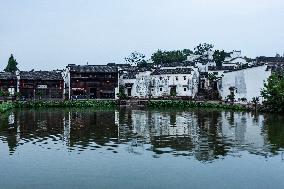
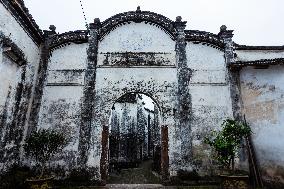
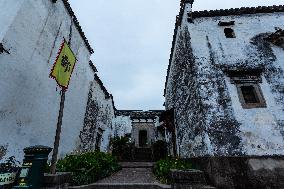
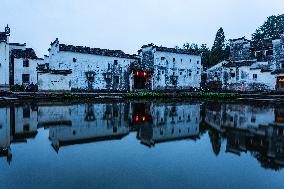
Zhuge Bagua Village

Zhuge Bagua Village

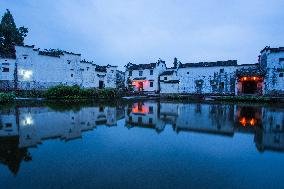
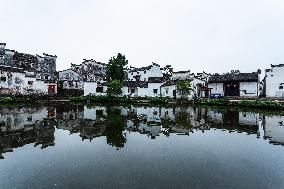
JINHUA, CHINA - OCTOBER 14, 2016 - (FILE) View of Zhuge Bagua village, a traditional ancient village in Jiangnan, Jinhua city, Zhejiang province, China, Oct 14, 2016.

  •  
Zhuge Bagua Village

Zhuge Bagua Village

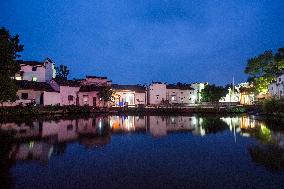
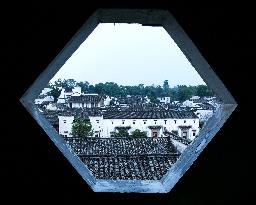
JINHUA, CHINA - OCTOBER 14, 2016 - (FILE) View of Zhuge Bagua village, a traditional ancient village in Jiangnan, Jinhua city, Zhejiang province, China, Oct 14, 2016.

  •  
Zhuge Bagua Village

Zhuge Bagua Village

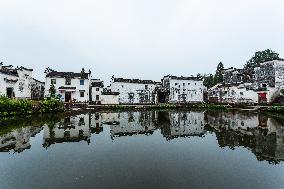
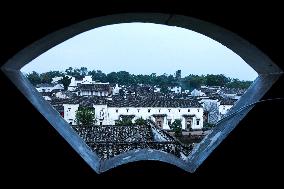
JINHUA, CHINA - OCTOBER 14, 2016 - (FILE) View of Zhuge Bagua village, a traditional ancient village in Jiangnan, Jinhua city, Zhejiang province, China, Oct 14, 2016.

  •  
Zhuge Bagua Village

Zhuge Bagua Village

JINHUA, CHINA - OCTOBER 14, 2016 - (FILE) View of Zhuge Bagua village, a traditional ancient village in Jiangnan, Jinhua city, Zhejiang province, China, Oct 14, 2016.

  •  
Zhuge Bagua Village

Zhuge Bagua Village

JINHUA, CHINA - OCTOBER 14, 2016 - (FILE) View of Zhuge Bagua village, a traditional ancient village in Jiangnan, Jinhua city, Zhejiang province, China, Oct 14, 2016.

  •  
Zhuge Bagua Village

Zhuge Bagua Village

JINHUA, CHINA - OCTOBER 14, 2016 - (FILE) View of Zhuge Bagua village, a traditional ancient village in Jiangnan, Jinhua city, Zhejiang province, China, Oct 14, 2016.

  •  
Zhuge Bagua Village

Zhuge Bagua Village

JINHUA, CHINA - OCTOBER 14, 2016 - (FILE) View of Zhuge Bagua village, a traditional ancient village in Jiangnan, Jinhua city, Zhejiang province, China, Oct 14, 2016.

  •  
Zhuge Bagua Village

Zhuge Bagua Village

JINHUA, CHINA - OCTOBER 14, 2016 - (FILE) View of Zhuge Bagua village, a traditional ancient village in Jiangnan, Jinhua city, Zhejiang province, China, Oct 14, 2016.

  •  
Zhuge Bagua Village

Zhuge Bagua Village

JINHUA, CHINA - OCTOBER 14, 2016 - (FILE) View of Zhuge Bagua village, a traditional ancient village in Jiangnan, Jinhua city, Zhejiang province, China, Oct 14, 2016.

  •  
Zhuge Bagua Village

Zhuge Bagua Village

JINHUA, CHINA - OCTOBER 14, 2016 - (FILE) View of Zhuge Bagua village, a traditional ancient village in Jiangnan, Jinhua city, Zhejiang province, China, Oct 14, 2016.

  •  
Zhuge Bagua Village

Zhuge Bagua Village

JINHUA, CHINA - OCTOBER 14, 2016 - (FILE) View of Zhuge Bagua village, a traditional ancient village in Jiangnan, Jinhua city, Zhejiang province, China, Oct 14, 2016.

  •  
Zhuge Bagua Village

Zhuge Bagua Village

JINHUA, CHINA - OCTOBER 14, 2016 - (FILE) View of Zhuge Bagua village, a traditional ancient village in Jiangnan, Jinhua city, Zhejiang province, China, Oct 14, 2016.

  •  
Zhuge Bagua Village

Zhuge Bagua Village

JINHUA, CHINA - OCTOBER 14, 2016 - (FILE) View of Zhuge Bagua village, a traditional ancient village in Jiangnan, Jinhua city, Zhejiang province, China, Oct 14, 2016.

  •  
Zhuge Bagua Village

Zhuge Bagua Village

JINHUA, CHINA - OCTOBER 14, 2016 - (FILE) View of Zhuge Bagua village, a traditional ancient village in Jiangnan, Jinhua city, Zhejiang province, China, Oct 14, 2016.

  •  
Zhuge Bagua Village

Zhuge Bagua Village

JINHUA, CHINA - OCTOBER 14, 2016 - (FILE) View of Zhuge Bagua village, a traditional ancient village in Jiangnan, Jinhua city, Zhejiang province, China, Oct 14, 2016.

  •  
Zhuge Bagua Village

Zhuge Bagua Village

JINHUA, CHINA - OCTOBER 14, 2016 - (FILE) View of Zhuge Bagua village, a traditional ancient village in Jiangnan, Jinhua city, Zhejiang province, China, Oct 14, 2016.

  •  
Zhuge Bagua Village

Zhuge Bagua Village

JINHUA, CHINA - OCTOBER 14, 2016 - (FILE) View of Zhuge Bagua village, a traditional ancient village in Jiangnan, Jinhua city, Zhejiang province, China, Oct 14, 2016.

  •  
Zhuge Bagua Village

Zhuge Bagua Village

JINHUA, CHINA - OCTOBER 14, 2016 - (FILE) View of Zhuge Bagua village, a traditional ancient village in Jiangnan, Jinhua city, Zhejiang province, China, Oct 14, 2016.

  •  
Zhuge Bagua Village

Zhuge Bagua Village

JINHUA, CHINA - OCTOBER 14, 2016 - (FILE) View of Zhuge Bagua village, a traditional ancient village in Jiangnan, Jinhua city, Zhejiang province, China, Oct 14, 2016.

  •  
Zhuge Bagua Village

Zhuge Bagua Village

JINHUA, CHINA - OCTOBER 14, 2016 - (FILE) View of Zhuge Bagua village, a traditional ancient village in Jiangnan, Jinhua city, Zhejiang province, China, Oct 14, 2016.

  •  
Zhuge Bagua Village

Zhuge Bagua Village

JINHUA, CHINA - OCTOBER 14, 2016 - (FILE) View of Zhuge Bagua village, a traditional ancient village in Jiangnan, Jinhua city, Zhejiang province, China, Oct 14, 2016.

  •  
Turks Bagua City in Yili

Turks Bagua City in Yili

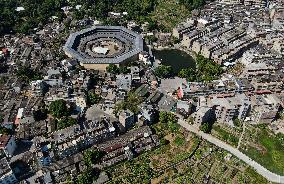
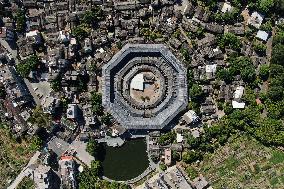
YILI, CHINA - JUNE 1, 2024 - Aerial photo taken on June 1, 2024 shows Turks Bagua City in Yili, Xinjiang province, China.

  •  
Turks Bagua City in Yili

Turks Bagua City in Yili

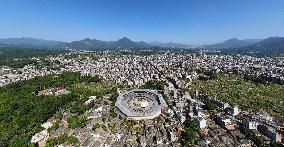
YILI, CHINA - JUNE 1, 2024 - Aerial photo taken on June 1, 2024 shows Turks Bagua City in Yili, Xinjiang province, China.

  •  
CHINA-GUANGDONG-CHAOZHOU-TULOU-EARTHEN BUILDING (CN)

CHINA-GUANGDONG-CHAOZHOU-TULOU-EARTHEN BUILDING (CN)

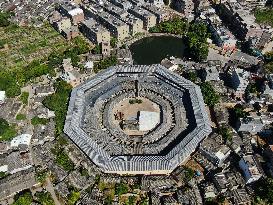
(221025) -- CHAOZHOU, Oct. 25, 2022 (Xinhua) -- This aerial photo taken on Oct. 21, 2022 shows Daoyun Lou, an octagonal Tulou earthen building compound in Raoping County of Chaozhou, south China's Guangdong Province. Daoyun Lou, China's largest octagonal Tulou earthen building, is undergoing renovations that will give it a new look by June 2023. Daoyun Lou was built in 1587 in today's Chaozhou. In 2006, it became a major historical and cultural site protected at the national level. The walled building compound covers a floor area of 10,000 square meters in the shape of Bagua, or Eight Trigrams, the eight combinations of three whole or broken lines which were used by ancient Chinese people in their divination. All its three residential rings were built primarily of earth. Tulou is a type of large, enclosed Hakka community residence. Many historical Tulou compounds are still inhabited and well maintained in China's southern and southeastern parts. (Xinhua/Deng Hua)

  •  
CHINA-GUANGDONG-CHAOZHOU-TULOU-EARTHEN BUILDING (CN)

CHINA-GUANGDONG-CHAOZHOU-TULOU-EARTHEN BUILDING (CN)

(221025) -- CHAOZHOU, Oct. 25, 2022 (Xinhua) -- This aerial photo taken on Oct. 21, 2022 shows Daoyun Lou, an octagonal Tulou earthen building compound in Raoping County of Chaozhou, south China's Guangdong Province. Daoyun Lou, China's largest octagonal Tulou earthen building, is undergoing renovations that will give it a new look by June 2023. Daoyun Lou was built in 1587 in today's Chaozhou. In 2006, it became a major historical and cultural site protected at the national level. The walled building compound covers a floor area of 10,000 square meters in the shape of Bagua, or Eight Trigrams, the eight combinations of three whole or broken lines which were used by ancient Chinese people in their divination. All its three residential rings were built primarily of earth. Tulou is a type of large, enclosed Hakka community residence. Many historical Tulou compounds are still inhabited and well maintained in China's southern and southeastern parts. (Xinhua/Deng Hua)

  •  
CHINA-GUANGDONG-CHAOZHOU-TULOU-EARTHEN BUILDING (CN)

CHINA-GUANGDONG-CHAOZHOU-TULOU-EARTHEN BUILDING (CN)

(221025) -- CHAOZHOU, Oct. 25, 2022 (Xinhua) -- This aerial photo taken on Oct. 21, 2022 shows Daoyun Lou, an octagonal Tulou earthen building compound in Raoping County of Chaozhou, south China's Guangdong Province. Daoyun Lou, China's largest octagonal Tulou earthen building, is undergoing renovations that will give it a new look by June 2023. Daoyun Lou was built in 1587 in today's Chaozhou. In 2006, it became a major historical and cultural site protected at the national level. The walled building compound covers a floor area of 10,000 square meters in the shape of Bagua, or Eight Trigrams, the eight combinations of three whole or broken lines which were used by ancient Chinese people in their divination. All its three residential rings were built primarily of earth. Tulou is a type of large, enclosed Hakka community residence. Many historical Tulou compounds are still inhabited and well maintained in China's southern and southeastern parts. (Xinhua/Deng Hua)

  •  
CHINA-GUANGDONG-CHAOZHOU-TULOU-EARTHEN BUILDING (CN)

CHINA-GUANGDONG-CHAOZHOU-TULOU-EARTHEN BUILDING (CN)

(221025) -- CHAOZHOU, Oct. 25, 2022 (Xinhua) -- This aerial photo taken on Oct. 21, 2022 shows Daoyun Lou, an octagonal Tulou earthen building compound in Raoping County of Chaozhou, south China's Guangdong Province. Daoyun Lou, China's largest octagonal Tulou earthen building, is undergoing renovations that will give it a new look by June 2023. Daoyun Lou was built in 1587 in today's Chaozhou. In 2006, it became a major historical and cultural site protected at the national level. The walled building compound covers a floor area of 10,000 square meters in the shape of Bagua, or Eight Trigrams, the eight combinations of three whole or broken lines which were used by ancient Chinese people in their divination. All its three residential rings were built primarily of earth. Tulou is a type of large, enclosed Hakka community residence. Many historical Tulou compounds are still inhabited and well maintained in China's southern and southeastern parts. (Xinhua/Deng Hua)

  • Main
  • Top
  • Editorial
  • Creative
  • About Us
  • About ILG
  • Terms of use
  • Company
  • BEHIND
  • Price List
  • Single Plan
  • Monthly Plan
  • Services
  • Shooting
  • Rights Clearance
  • Support
  • FAQ
  • How To Buy
  • Contact Us
  • Become a Partner

© KYODO NEWS IMAGES INC

All Rights Reserved.

  • Editorial
  • Olympics
  • News
  • Sports
  • Japan
  • Tech
  • Royal
  • Disaster
  • NorthKorea
  • Old Japan
  • SNS
  • Creative
  • Food
  • Japan
  • Landscape
  • Animal
  • Popular
  • #Ukraine
  • #Russia
  • #coronavirus
  • #N. Korea
  • #China
  • #Thailand
  • #Ukraine
  • #Russia
  • #coronavirus
  • #N. Korea
  • #China
  • #Thailand
  • Food
  • Japan
  • Landscape
  • Animal
  • Olympics
  • News
  • Sports
  • Japan
  • Tech
  • Royal
  • Disaster
  • NorthKorea
  • Old Japan
  • SNS