•  
Wetlands Guard Bird Species from Plateau to Urban Landscape - China

Wetlands Guard Bird Species from Plateau to Urban Landscape - China

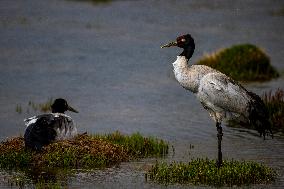
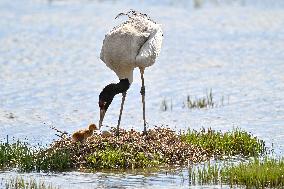
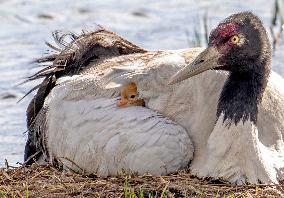
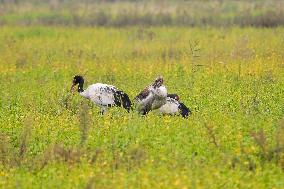
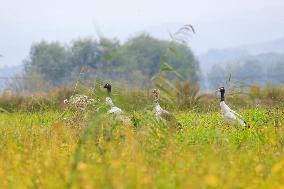
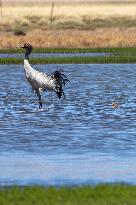
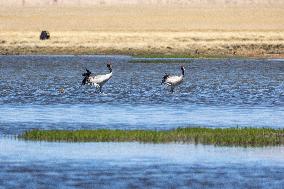
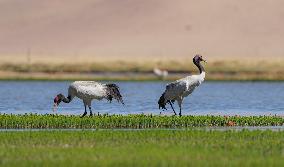
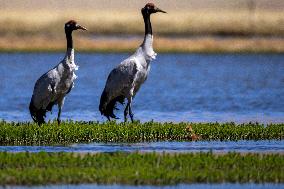
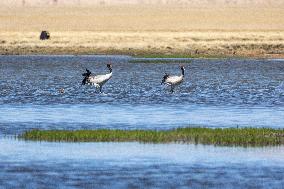
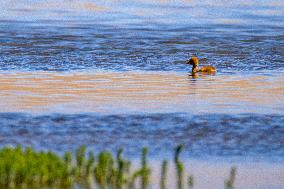
A black-necked crane keeps its baby warm under its body while the other remains vigilant at a wetland in Xainza County of Nagqu City, southwest China's Xizang Autonomous Region, June 4, 2025. As an important part of the world's ecosystem, wetland plays a huge role in many aspects including ecology, environment, economy and society. Known as an extra lung for Londoners, the London Wetland Centre is an urban ecological paradise transformed from industrial wasteland on the banks of the River Thames. The site was formerly four reservoirs operated by the Thames Water Company, which supplied drinking water to the southwest of London. The London Wetland Centre began construction in 1995 and was completed and opened to the public in 2000. Visitors to the centre can observe numerous endangered bird species, with over 200 species observed and recorded in the area, embodying a harmonious balance between urban life and nature. The unique geographical environment of Xizang nurtures distinct biological communities, housing

  •  
Wetlands Guard Bird Species from Plateau to Urban Landscape - China

Wetlands Guard Bird Species from Plateau to Urban Landscape - China

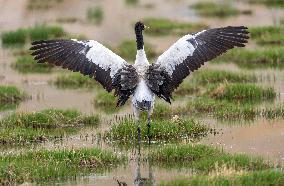
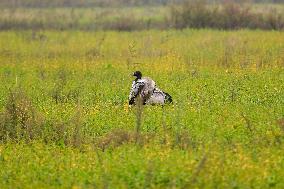
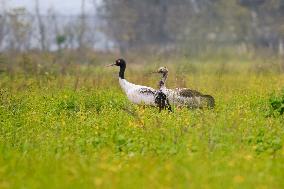
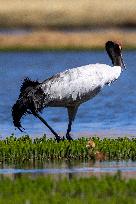
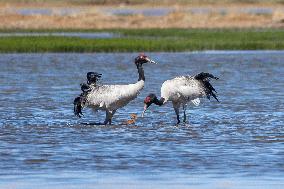
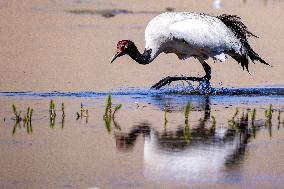
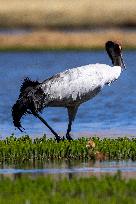
A black-necked crane is seen at a wetland in Xainza County of Nagqu City, southwest China's Xizang Autonomous Region, June 4, 2025. As an important part of the world's ecosystem, wetland plays a huge role in many aspects including ecology, environment, economy and society. Known as an extra lung for Londoners, the London Wetland Centre is an urban ecological paradise transformed from industrial wasteland on the banks of the River Thames. The site was formerly four reservoirs operated by the Thames Water Company, which supplied drinking water to the southwest of London. The London Wetland Centre began construction in 1995 and was completed and opened to the public in 2000. Visitors to the centre can observe numerous endangered bird species, with over 200 species observed and recorded in the area, embodying a harmonious balance between urban life and nature. The unique geographical environment of Xizang nurtures distinct biological communities, housing many rare species. In efforts to protect the plateau's wild

  •  
Wetlands Guard Bird Species from Plateau to Urban Landscape - China

Wetlands Guard Bird Species from Plateau to Urban Landscape - China

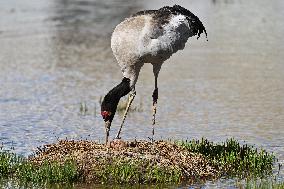
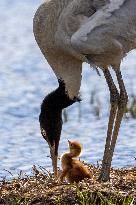
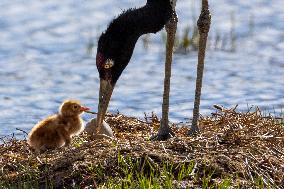
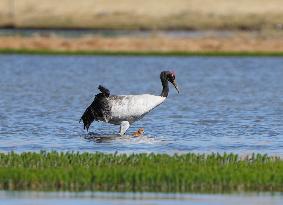
A black-necked crane checks its baby at a wetland in Xainza County of Nagqu City, southwest China's Xizang Autonomous Region, June 4, 2025. As an important part of the world's ecosystem, wetland plays a huge role in many aspects including ecology, environment, economy and society. Known as an extra lung for Londoners, the London Wetland Centre is an urban ecological paradise transformed from industrial wasteland on the banks of the River Thames. The site was formerly four reservoirs operated by the Thames Water Company, which supplied drinking water to the southwest of London. The London Wetland Centre began construction in 1995 and was completed and opened to the public in 2000. Visitors to the centre can observe numerous endangered bird species, with over 200 species observed and recorded in the area, embodying a harmonious balance between urban life and nature. The unique geographical environment of Xizang nurtures distinct biological communities, housing many rare species. In efforts to protect the platea

  •  
Wetlands Guard Bird Species from Plateau to Urban Landscape - China

Wetlands Guard Bird Species from Plateau to Urban Landscape - China

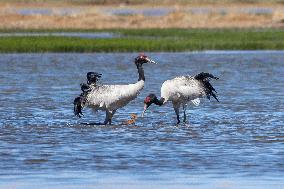
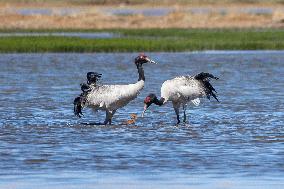
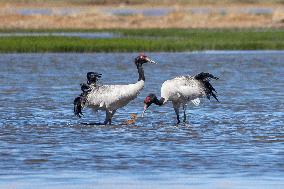
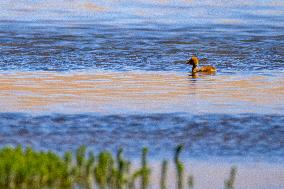
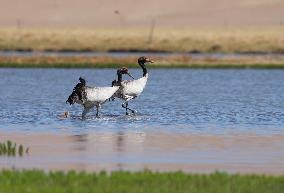
A black-necked crane tries to keep a fishing gull away from its nest in Xainza County of Nagqu City, southwest China's Xizang Autonomous Region, June 4, 2025. As an important part of the world's ecosystem, wetland plays a huge role in many aspects including ecology, environment, economy and society. Known as an extra lung for Londoners, the London Wetland Centre is an urban ecological paradise transformed from industrial wasteland on the banks of the River Thames. The site was formerly four reservoirs operated by the Thames Water Company, which supplied drinking water to the southwest of London. The London Wetland Centre began construction in 1995 and was completed and opened to the public in 2000. Visitors to the centre can observe numerous endangered bird species, with over 200 species observed and recorded in the area, embodying a harmonious balance between urban life and nature. The unique geographical environment of Xizang nurtures distinct biological communities, housing many rare species. In efforts to

  •  
Wetlands Guard Bird Species from Plateau to Urban Landscape - China

Wetlands Guard Bird Species from Plateau to Urban Landscape - China

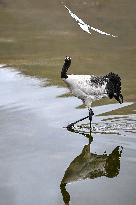
A black-necked crane takes care of its baby at a wetland in Xainza County of Nagqu City, southwest China's Xizang Autonomous Region, June 5, 2025. As an important part of the world's ecosystem, wetland plays a huge role in many aspects including ecology, environment, economy and society. Known as an extra lung for Londoners, the London Wetland Centre is an urban ecological paradise transformed from industrial wasteland on the banks of the River Thames. The site was formerly four reservoirs operated by the Thames Water Company, which supplied drinking water to the southwest of London. The London Wetland Centre began construction in 1995 and was completed and opened to the public in 2000. Visitors to the centre can observe numerous endangered bird species, with over 200 species observed and recorded in the area, embodying a harmonious balance between urban life and nature. The unique geographical environment of Xizang nurtures distinct biological communities, housing many rare species. In efforts to protect the

  •  
Wetlands Guard Bird Species from Plateau to Urban Landscape - China

Wetlands Guard Bird Species from Plateau to Urban Landscape - China

A black-necked crane takes care of its baby at a wetland in Xainza County of Nagqu City, southwest China's Xizang Autonomous Region, June 5, 2025. As an important part of the world's ecosystem, wetland plays a huge role in many aspects including ecology, environment, economy and society. Known as an extra lung for Londoners, the London Wetland Centre is an urban ecological paradise transformed from industrial wasteland on the banks of the River Thames. The site was formerly four reservoirs operated by the Thames Water Company, which supplied drinking water to the southwest of London. The London Wetland Centre began construction in 1995 and was completed and opened to the public in 2000. Visitors to the centre can observe numerous endangered bird species, with over 200 species observed and recorded in the area, embodying a harmonious balance between urban life and nature. The unique geographical environment of Xizang nurtures distinct biological communities, housing many rare species. In efforts to protect the

  •  
Wetlands Guard Bird Species from Plateau to Urban Landscape - China

Wetlands Guard Bird Species from Plateau to Urban Landscape - China

A black-necked crane takes care of its baby at a wetland in Xainza County of Nagqu City, southwest China's Xizang Autonomous Region, June 5, 2025. As an important part of the world's ecosystem, wetland plays a huge role in many aspects including ecology, environment, economy and society. Known as an extra lung for Londoners, the London Wetland Centre is an urban ecological paradise transformed from industrial wasteland on the banks of the River Thames. The site was formerly four reservoirs operated by the Thames Water Company, which supplied drinking water to the southwest of London. The London Wetland Centre began construction in 1995 and was completed and opened to the public in 2000. Visitors to the centre can observe numerous endangered bird species, with over 200 species observed and recorded in the area, embodying a harmonious balance between urban life and nature. The unique geographical environment of Xizang nurtures distinct biological communities, housing many rare species. In efforts to protect the

  •  
Wetlands Guard Bird Species from Plateau to Urban Landscape - China

Wetlands Guard Bird Species from Plateau to Urban Landscape - China

A black-necked crane takes care of its baby at a wetland in Xainza County of Nagqu City, southwest China's Xizang Autonomous Region, June 5, 2025. As an important part of the world's ecosystem, wetland plays a huge role in many aspects including ecology, environment, economy and society. Known as an extra lung for Londoners, the London Wetland Centre is an urban ecological paradise transformed from industrial wasteland on the banks of the River Thames. The site was formerly four reservoirs operated by the Thames Water Company, which supplied drinking water to the southwest of London. The London Wetland Centre began construction in 1995 and was completed and opened to the public in 2000. Visitors to the centre can observe numerous endangered bird species, with over 200 species observed and recorded in the area, embodying a harmonious balance between urban life and nature. The unique geographical environment of Xizang nurtures distinct biological communities, housing many rare species. In efforts to protect the

  •  
Black-necked Crane

Black-necked Crane

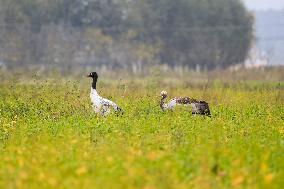
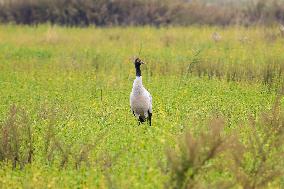
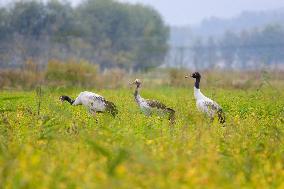
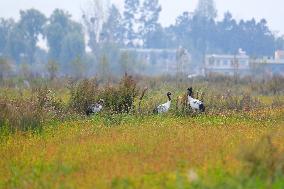
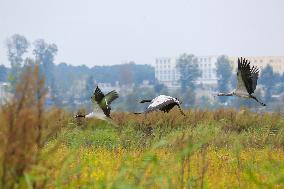
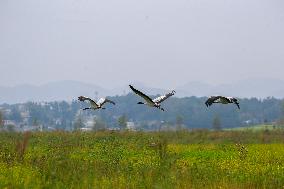
WEINING, CHINA - NOVEMBER 3, 2024 - The first batch of migratory black necked cranes to overwinter this year are seen at the Caohai National Nature Reserve in Weining Autonomous County, southwest China's Guizhou province, Nov 3, 2024.

  •  
Black-necked Crane

Black-necked Crane

WEINING, CHINA - NOVEMBER 3, 2024 - The first batch of migratory black necked cranes to overwinter this year are seen at the Caohai National Nature Reserve in Weining Autonomous County, southwest China's Guizhou province, Nov 3, 2024.

  •  
Black-necked Crane

Black-necked Crane

WEINING, CHINA - NOVEMBER 3, 2024 - The first batch of migratory black necked cranes to overwinter this year are seen at the Caohai National Nature Reserve in Weining Autonomous County, southwest China's Guizhou province, Nov 3, 2024.

  •  
Black-necked Crane

Black-necked Crane

WEINING, CHINA - NOVEMBER 3, 2024 - The first batch of migratory black necked cranes to overwinter this year are seen at the Caohai National Nature Reserve in Weining Autonomous County, southwest China's Guizhou province, Nov 3, 2024.

  •  
Black-necked Crane

Black-necked Crane

WEINING, CHINA - NOVEMBER 3, 2024 - The first batch of migratory black necked cranes to overwinter this year are seen at the Caohai National Nature Reserve in Weining Autonomous County, southwest China's Guizhou province, Nov 3, 2024.

  •  
Black-necked Crane

Black-necked Crane

WEINING, CHINA - NOVEMBER 3, 2024 - The first batch of migratory black necked cranes to overwinter this year are seen at the Caohai National Nature Reserve in Weining Autonomous County, southwest China's Guizhou province, Nov 3, 2024.

  •  
Black-necked Crane

Black-necked Crane

WEINING, CHINA - NOVEMBER 3, 2024 - The first batch of migratory black necked cranes to overwinter this year are seen at the Caohai National Nature Reserve in Weining Autonomous County, southwest China's Guizhou province, Nov 3, 2024.

  •  
Black-necked Crane

Black-necked Crane

WEINING, CHINA - NOVEMBER 3, 2024 - The first batch of migratory black necked cranes to overwinter this year are seen at the Caohai National Nature Reserve in Weining Autonomous County, southwest China's Guizhou province, Nov 3, 2024.

  •  
Black-necked Crane

Black-necked Crane

WEINING, CHINA - NOVEMBER 3, 2024 - The first batch of migratory black necked cranes to overwinter this year are seen at the Caohai National Nature Reserve in Weining Autonomous County, southwest China's Guizhou province, Nov 3, 2024.

  •  
Black-necked Crane

Black-necked Crane

WEINING, CHINA - NOVEMBER 3, 2024 - The first batch of migratory black necked cranes to overwinter this year are seen at the Caohai National Nature Reserve in Weining Autonomous County, southwest China's Guizhou province, Nov 3, 2024.

  •  
XINHUA PHOTOS OF THE DAY

XINHUA PHOTOS OF THE DAY

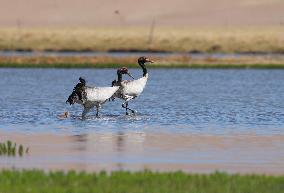
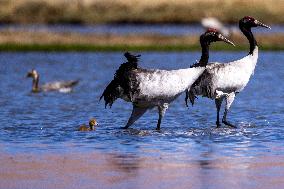
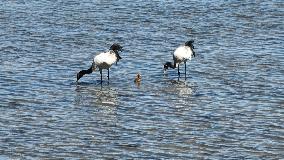
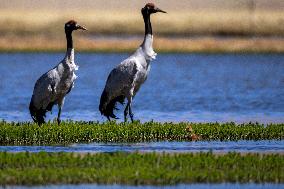
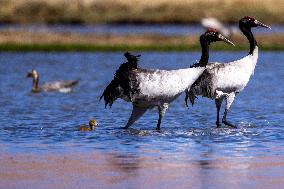
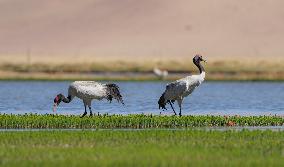
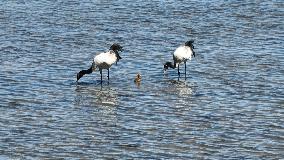
(240611) -- BEIJING, June 11, 2024 Photo by Xinhua/ABACAPRESS.COM) -- Two black-necked cranes and their baby are seen at a wetland in Xainza County of Nagqu City, southwest China's Xizang Autonomous Region, June 9, 2024. Black-necked crane couples are breeding babies in wetlands at an altitude of about 4,700 meters in Xainza County. Every year around the time of June, pairs of black-necked cranes migrate to Xainza County to hatch eggs on grass piers surrounded by water. The black-necked crane, a species under first-class state protection in China, mainly inhabits plateau meadows and marshes at an altitude of 2,500 to 5,000 meters. Photo by Xinhua/ABACAPRESS.COM/Tenzing Nima Qadhup)

  •  
XINHUA PHOTOS OF THE DAY

XINHUA PHOTOS OF THE DAY

(240611) -- BEIJING, June 11, 2024 (Xinhua) -- Two black-necked cranes and their baby are seen at a wetland in Xainza County of Nagqu City, southwest China's Xizang Autonomous Region, June 9, 2024. Black-necked crane couples are breeding babies in wetlands at an altitude of about 4,700 meters in Xainza County. Every year around the time of June, pairs of black-necked cranes migrate to Xainza County to hatch eggs on grass piers surrounded by water. The black-necked crane, a species under first-class state protection in China, mainly inhabits plateau meadows and marshes at an altitude of 2,500 to 5,000 meters. (Xinhua/Tenzing Nima Qadhup)

  •  
(InXizang)CHINA-XIZANG-XAINZA-BLACK-NECKED CRANE BABY (CN)

(InXizang)CHINA-XIZANG-XAINZA-BLACK-NECKED CRANE BABY (CN)

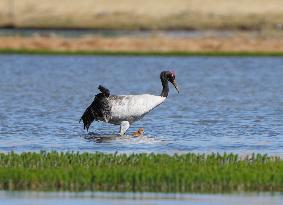
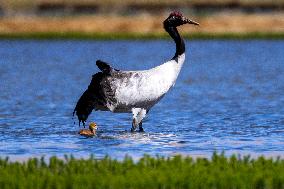
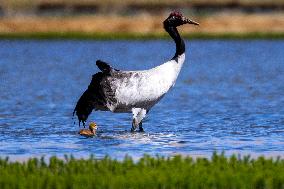
(240610) -- LHASA, June 10, 2024 Photo by Xinhua/ABACAPRESS.COM) -- A black-necked crane and its baby are seen at a wetland in Xainza County of Nagqu City, southwest China's Xizang Autonomous Region, June 9, 2024. Black-necked crane couples are breeding babies in wetlands at an altitude of about 4,700 meters in Xainza County. Every year around the time of June, pairs of black-necked cranes migrate to Xainza County to hatch eggs on grass piers surrounded by water. The black-necked crane, a species under first-class state protection in China, mainly inhabits plateau meadows and marshes at an altitude of 2,500 to 5,000 meters. Photo by Xinhua/ABACAPRESS.COM/Tenzing Nima Qadhup)

  •  
(InXizang)CHINA-XIZANG-XAINZA-BLACK-NECKED CRANE BABY (CN)

(InXizang)CHINA-XIZANG-XAINZA-BLACK-NECKED CRANE BABY (CN)

(240610) -- LHASA, June 10, 2024 Photo by Xinhua/ABACAPRESS.COM) -- A black-necked crane and its baby are seen at a wetland in Xainza County of Nagqu City, southwest China's Xizang Autonomous Region, June 9, 2024. Black-necked crane couples are breeding babies in wetlands at an altitude of about 4,700 meters in Xainza County. Every year around the time of June, pairs of black-necked cranes migrate to Xainza County to hatch eggs on grass piers surrounded by water. The black-necked crane, a species under first-class state protection in China, mainly inhabits plateau meadows and marshes at an altitude of 2,500 to 5,000 meters. Photo by Xinhua/ABACAPRESS.COM/Jiang Fan)

  •  
(InXizang)CHINA-XIZANG-XAINZA-BLACK-NECKED CRANE BABY (CN)

(InXizang)CHINA-XIZANG-XAINZA-BLACK-NECKED CRANE BABY (CN)

(240610) -- LHASA, June 10, 2024 Photo by Xinhua/ABACAPRESS.COM) -- Two black-necked cranes and their baby are seen at a wetland in Xainza County of Nagqu City, southwest China's Xizang Autonomous Region, June 9, 2024. Black-necked crane couples are breeding babies in wetlands at an altitude of about 4,700 meters in Xainza County. Every year around the time of June, pairs of black-necked cranes migrate to Xainza County to hatch eggs on grass piers surrounded by water. The black-necked crane, a species under first-class state protection in China, mainly inhabits plateau meadows and marshes at an altitude of 2,500 to 5,000 meters. Photo by Xinhua/ABACAPRESS.COM/Jigme Dorje)

  •  
(InXizang)CHINA-XIZANG-XAINZA-BLACK-NECKED CRANE BABY (CN)

(InXizang)CHINA-XIZANG-XAINZA-BLACK-NECKED CRANE BABY (CN)

(240610) -- LHASA, June 10, 2024 Photo by Xinhua/ABACAPRESS.COM) -- A black-necked crane and its baby are seen at a wetland in Xainza County of Nagqu City, southwest China's Xizang Autonomous Region, June 9, 2024. Black-necked crane couples are breeding babies in wetlands at an altitude of about 4,700 meters in Xainza County. Every year around the time of June, pairs of black-necked cranes migrate to Xainza County to hatch eggs on grass piers surrounded by water. The black-necked crane, a species under first-class state protection in China, mainly inhabits plateau meadows and marshes at an altitude of 2,500 to 5,000 meters. Photo by Xinhua/ABACAPRESS.COM/Jigme Dorje)

  •  
(InXizang)CHINA-XIZANG-XAINZA-BLACK-NECKED CRANE BABY (CN)

(InXizang)CHINA-XIZANG-XAINZA-BLACK-NECKED CRANE BABY (CN)

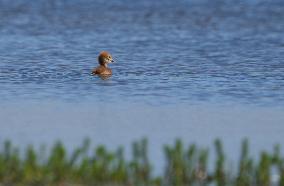
(240610) -- LHASA, June 10, 2024 Photo by Xinhua/ABACAPRESS.COM) -- A black-necked crane baby is seen at a wetland in Xainza County of Nagqu City, southwest China's Xizang Autonomous Region, June 9, 2024. Black-necked crane couples are breeding babies in wetlands at an altitude of about 4,700 meters in Xainza County. Every year around the time of June, pairs of black-necked cranes migrate to Xainza County to hatch eggs on grass piers surrounded by water. The black-necked crane, a species under first-class state protection in China, mainly inhabits plateau meadows and marshes at an altitude of 2,500 to 5,000 meters. Photo by Xinhua/ABACAPRESS.COM/Jigme Dorje)

  •  
(InXizang)CHINA-XIZANG-XAINZA-BLACK-NECKED CRANE BABY (CN)

(InXizang)CHINA-XIZANG-XAINZA-BLACK-NECKED CRANE BABY (CN)

(240610) -- LHASA, June 10, 2024 Photo by Xinhua/ABACAPRESS.COM) -- Two black-necked cranes and their baby are seen at a wetland in Xainza County of Nagqu City, southwest China's Xizang Autonomous Region, June 9, 2024. Black-necked crane couples are breeding babies in wetlands at an altitude of about 4,700 meters in Xainza County. Every year around the time of June, pairs of black-necked cranes migrate to Xainza County to hatch eggs on grass piers surrounded by water. The black-necked crane, a species under first-class state protection in China, mainly inhabits plateau meadows and marshes at an altitude of 2,500 to 5,000 meters. Photo by Xinhua/ABACAPRESS.COM/Jiang Fan)

  •  
(InXizang)CHINA-XIZANG-XAINZA-BLACK-NECKED CRANE BABY (CN)

(InXizang)CHINA-XIZANG-XAINZA-BLACK-NECKED CRANE BABY (CN)

(240610) -- LHASA, June 10, 2024 Photo by Xinhua/ABACAPRESS.COM) -- A black-necked crane baby is seen at a wetland in Xainza County of Nagqu City, southwest China's Xizang Autonomous Region, June 9, 2024. Black-necked crane couples are breeding babies in wetlands at an altitude of about 4,700 meters in Xainza County. Every year around the time of June, pairs of black-necked cranes migrate to Xainza County to hatch eggs on grass piers surrounded by water. The black-necked crane, a species under first-class state protection in China, mainly inhabits plateau meadows and marshes at an altitude of 2,500 to 5,000 meters. Photo by Xinhua/ABACAPRESS.COM/Jigme Dorje)

  •  
(InXizang)CHINA-XIZANG-XAINZA-BLACK-NECKED CRANE BABY (CN)

(InXizang)CHINA-XIZANG-XAINZA-BLACK-NECKED CRANE BABY (CN)

(240610) -- LHASA, June 10, 2024 Photo by Xinhua/ABACAPRESS.COM) -- Two black-necked cranes and their baby are seen at a wetland in Xainza County of Nagqu City, southwest China's Xizang Autonomous Region, June 9, 2024. Black-necked crane couples are breeding babies in wetlands at an altitude of about 4,700 meters in Xainza County. Every year around the time of June, pairs of black-necked cranes migrate to Xainza County to hatch eggs on grass piers surrounded by water. The black-necked crane, a species under first-class state protection in China, mainly inhabits plateau meadows and marshes at an altitude of 2,500 to 5,000 meters. Photo by Xinhua/ABACAPRESS.COM/Jigme Dorje)

  •  
(InXizang)CHINA-XIZANG-XAINZA-BLACK-NECKED CRANE BABY (CN)

(InXizang)CHINA-XIZANG-XAINZA-BLACK-NECKED CRANE BABY (CN)

(240610) -- LHASA, June 10, 2024 Photo by Xinhua/ABACAPRESS.COM) -- Two black-necked cranes and their baby are seen at a wetland in Xainza County of Nagqu City, southwest China's Xizang Autonomous Region, June 9, 2024. Black-necked crane couples are breeding babies in wetlands at an altitude of about 4,700 meters in Xainza County. Every year around the time of June, pairs of black-necked cranes migrate to Xainza County to hatch eggs on grass piers surrounded by water. The black-necked crane, a species under first-class state protection in China, mainly inhabits plateau meadows and marshes at an altitude of 2,500 to 5,000 meters. Photo by Xinhua/ABACAPRESS.COM/Jiang Fan)

  •  
(InXizang)CHINA-XIZANG-XAINZA-BLACK-NECKED CRANE BABY (CN)

(InXizang)CHINA-XIZANG-XAINZA-BLACK-NECKED CRANE BABY (CN)

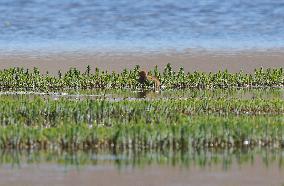
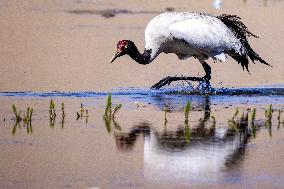
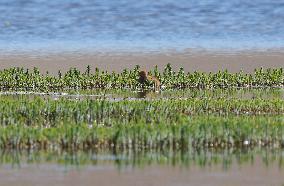
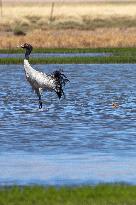
(240610) -- LHASA, June 10, 2024 Photo by Xinhua/ABACAPRESS.COM) -- A black-necked crane forages at a wetland in Xainza County of Nagqu City, southwest China's Xizang Autonomous Region, June 9, 2024. Black-necked crane couples are breeding babies in wetlands at an altitude of about 4,700 meters in Xainza County. Every year around the time of June, pairs of black-necked cranes migrate to Xainza County to hatch eggs on grass piers surrounded by water. The black-necked crane, a species under first-class state protection in China, mainly inhabits plateau meadows and marshes at an altitude of 2,500 to 5,000 meters. Photo by Xinhua/ABACAPRESS.COM/Jiang Fan)

  •  
(InXizang)CHINA-XIZANG-XAINZA-BLACK-NECKED CRANE BABY (CN)

(InXizang)CHINA-XIZANG-XAINZA-BLACK-NECKED CRANE BABY (CN)

(240610) -- LHASA, June 10, 2024 Photo by Xinhua/ABACAPRESS.COM) -- Two black-necked cranes and their baby are seen at a wetland in Xainza County of Nagqu City, southwest China's Xizang Autonomous Region, June 9, 2024. Black-necked crane couples are breeding babies in wetlands at an altitude of about 4,700 meters in Xainza County. Every year around the time of June, pairs of black-necked cranes migrate to Xainza County to hatch eggs on grass piers surrounded by water. The black-necked crane, a species under first-class state protection in China, mainly inhabits plateau meadows and marshes at an altitude of 2,500 to 5,000 meters. Photo by Xinhua/ABACAPRESS.COM/Tenzing Nima Qadhup)

  •  
(InXizang)CHINA-XIZANG-XAINZA-BLACK-NECKED CRANE BABY (CN)

(InXizang)CHINA-XIZANG-XAINZA-BLACK-NECKED CRANE BABY (CN)

(240610) -- LHASA, June 10, 2024 Photo by Xinhua/ABACAPRESS.COM) -- A black-necked crane and its baby are seen at a wetland in Xainza County of Nagqu City, southwest China's Xizang Autonomous Region, June 9, 2024. Black-necked crane couples are breeding babies in wetlands at an altitude of about 4,700 meters in Xainza County. Every year around the time of June, pairs of black-necked cranes migrate to Xainza County to hatch eggs on grass piers surrounded by water. The black-necked crane, a species under first-class state protection in China, mainly inhabits plateau meadows and marshes at an altitude of 2,500 to 5,000 meters. Photo by Xinhua/ABACAPRESS.COM/Jiang Fan)

  •  
(InXizang)CHINA-XIZANG-XAINZA-BLACK-NECKED CRANE BABY (CN)

(InXizang)CHINA-XIZANG-XAINZA-BLACK-NECKED CRANE BABY (CN)

(240610) -- LHASA, June 10, 2024 Photo by Xinhua/ABACAPRESS.COM) -- Two black-necked cranes and their baby are seen at a wetland in Xainza County of Nagqu City, southwest China's Xizang Autonomous Region, June 9, 2024. Black-necked crane couples are breeding babies in wetlands at an altitude of about 4,700 meters in Xainza County. Every year around the time of June, pairs of black-necked cranes migrate to Xainza County to hatch eggs on grass piers surrounded by water. The black-necked crane, a species under first-class state protection in China, mainly inhabits plateau meadows and marshes at an altitude of 2,500 to 5,000 meters. Photo by Xinhua/ABACAPRESS.COM/Tenzing Nima Qadhup)

  •  
(InXizang)CHINA-XIZANG-XAINZA-BLACK-NECKED CRANE BABY (CN)

(InXizang)CHINA-XIZANG-XAINZA-BLACK-NECKED CRANE BABY (CN)

(240610) -- LHASA, June 10, 2024 Photo by Xinhua/ABACAPRESS.COM) -- Two black-necked cranes and their baby are seen at a wetland in Xainza County of Nagqu City, southwest China's Xizang Autonomous Region, June 9, 2024. Black-necked crane couples are breeding babies in wetlands at an altitude of about 4,700 meters in Xainza County. Every year around the time of June, pairs of black-necked cranes migrate to Xainza County to hatch eggs on grass piers surrounded by water. The black-necked crane, a species under first-class state protection in China, mainly inhabits plateau meadows and marshes at an altitude of 2,500 to 5,000 meters. Photo by Xinhua/ABACAPRESS.COM/Jigme Dorje)

  •  
(InXizang)CHINA-XIZANG-XAINZA-BLACK-NECKED CRANE BABY (CN)

(InXizang)CHINA-XIZANG-XAINZA-BLACK-NECKED CRANE BABY (CN)

(240610) -- LHASA, June 10, 2024 Photo by Xinhua/ABACAPRESS.COM) -- A black-necked crane baby is seen at a wetland in Xainza County of Nagqu City, southwest China's Xizang Autonomous Region, June 9, 2024. Black-necked crane couples are breeding babies in wetlands at an altitude of about 4,700 meters in Xainza County. Every year around the time of June, pairs of black-necked cranes migrate to Xainza County to hatch eggs on grass piers surrounded by water. The black-necked crane, a species under first-class state protection in China, mainly inhabits plateau meadows and marshes at an altitude of 2,500 to 5,000 meters. Photo by Xinhua/ABACAPRESS.COM/Jiang Fan)

  •  
(InXizang)CHINA-XIZANG-XAINZA-BLACK-NECKED CRANE BABY (CN)

(InXizang)CHINA-XIZANG-XAINZA-BLACK-NECKED CRANE BABY (CN)

(240610) -- LHASA, June 10, 2024 (Xinhua) -- A black-necked crane baby is seen at a wetland in Xainza County of Nagqu City, southwest China's Xizang Autonomous Region, June 9, 2024. Black-necked crane couples are breeding babies in wetlands at an altitude of about 4,700 meters in Xainza County. Every year around the time of June, pairs of black-necked cranes migrate to Xainza County to hatch eggs on grass piers surrounded by water. The black-necked crane, a species under first-class state protection in China, mainly inhabits plateau meadows and marshes at an altitude of 2,500 to 5,000 meters. (Xinhua/Jigme Dorje)

  •  
(InXizang)CHINA-XIZANG-XAINZA-BLACK-NECKED CRANE BABY (CN)

(InXizang)CHINA-XIZANG-XAINZA-BLACK-NECKED CRANE BABY (CN)

(240610) -- LHASA, June 10, 2024 (Xinhua) -- Two black-necked cranes and their baby are seen at a wetland in Xainza County of Nagqu City, southwest China's Xizang Autonomous Region, June 9, 2024. Black-necked crane couples are breeding babies in wetlands at an altitude of about 4,700 meters in Xainza County. Every year around the time of June, pairs of black-necked cranes migrate to Xainza County to hatch eggs on grass piers surrounded by water. The black-necked crane, a species under first-class state protection in China, mainly inhabits plateau meadows and marshes at an altitude of 2,500 to 5,000 meters. (Xinhua/Jiang Fan)

  •  
(InXizang)CHINA-XIZANG-XAINZA-BLACK-NECKED CRANE BABY (CN)

(InXizang)CHINA-XIZANG-XAINZA-BLACK-NECKED CRANE BABY (CN)

(240610) -- LHASA, June 10, 2024 (Xinhua) -- Two black-necked cranes and their baby are seen at a wetland in Xainza County of Nagqu City, southwest China's Xizang Autonomous Region, June 9, 2024. Black-necked crane couples are breeding babies in wetlands at an altitude of about 4,700 meters in Xainza County. Every year around the time of June, pairs of black-necked cranes migrate to Xainza County to hatch eggs on grass piers surrounded by water. The black-necked crane, a species under first-class state protection in China, mainly inhabits plateau meadows and marshes at an altitude of 2,500 to 5,000 meters. (Xinhua/Tenzing Nima Qadhup)

  •  
(InXizang)CHINA-XIZANG-XAINZA-BLACK-NECKED CRANE BABY (CN)

(InXizang)CHINA-XIZANG-XAINZA-BLACK-NECKED CRANE BABY (CN)

(240610) -- LHASA, June 10, 2024 (Xinhua) -- Two black-necked cranes and their baby are seen at a wetland in Xainza County of Nagqu City, southwest China's Xizang Autonomous Region, June 9, 2024. Black-necked crane couples are breeding babies in wetlands at an altitude of about 4,700 meters in Xainza County. Every year around the time of June, pairs of black-necked cranes migrate to Xainza County to hatch eggs on grass piers surrounded by water. The black-necked crane, a species under first-class state protection in China, mainly inhabits plateau meadows and marshes at an altitude of 2,500 to 5,000 meters. (Xinhua/Tenzing Nima Qadhup)

  •  
(InXizang)CHINA-XIZANG-XAINZA-BLACK-NECKED CRANE BABY (CN)

(InXizang)CHINA-XIZANG-XAINZA-BLACK-NECKED CRANE BABY (CN)

(240610) -- LHASA, June 10, 2024 (Xinhua) -- A black-necked crane and its baby are seen at a wetland in Xainza County of Nagqu City, southwest China's Xizang Autonomous Region, June 9, 2024. Black-necked crane couples are breeding babies in wetlands at an altitude of about 4,700 meters in Xainza County. Every year around the time of June, pairs of black-necked cranes migrate to Xainza County to hatch eggs on grass piers surrounded by water. The black-necked crane, a species under first-class state protection in China, mainly inhabits plateau meadows and marshes at an altitude of 2,500 to 5,000 meters. (Xinhua/Jigme Dorje)

  •  
(InXizang)CHINA-XIZANG-XAINZA-BLACK-NECKED CRANE BABY (CN)

(InXizang)CHINA-XIZANG-XAINZA-BLACK-NECKED CRANE BABY (CN)

(240610) -- LHASA, June 10, 2024 (Xinhua) -- Two black-necked cranes and their baby are seen at a wetland in Xainza County of Nagqu City, southwest China's Xizang Autonomous Region, June 9, 2024. Black-necked crane couples are breeding babies in wetlands at an altitude of about 4,700 meters in Xainza County. Every year around the time of June, pairs of black-necked cranes migrate to Xainza County to hatch eggs on grass piers surrounded by water. The black-necked crane, a species under first-class state protection in China, mainly inhabits plateau meadows and marshes at an altitude of 2,500 to 5,000 meters. (Xinhua/Jigme Dorje)

  •  
(InXizang)CHINA-XIZANG-XAINZA-BLACK-NECKED CRANE BABY (CN)

(InXizang)CHINA-XIZANG-XAINZA-BLACK-NECKED CRANE BABY (CN)

(240610) -- LHASA, June 10, 2024 (Xinhua) -- A black-necked crane baby is seen at a wetland in Xainza County of Nagqu City, southwest China's Xizang Autonomous Region, June 9, 2024. Black-necked crane couples are breeding babies in wetlands at an altitude of about 4,700 meters in Xainza County. Every year around the time of June, pairs of black-necked cranes migrate to Xainza County to hatch eggs on grass piers surrounded by water. The black-necked crane, a species under first-class state protection in China, mainly inhabits plateau meadows and marshes at an altitude of 2,500 to 5,000 meters. (Xinhua/Jigme Dorje)

  •  
(InXizang)CHINA-XIZANG-XAINZA-BLACK-NECKED CRANE BABY (CN)

(InXizang)CHINA-XIZANG-XAINZA-BLACK-NECKED CRANE BABY (CN)

(240610) -- LHASA, June 10, 2024 (Xinhua) -- A black-necked crane and its baby are seen at a wetland in Xainza County of Nagqu City, southwest China's Xizang Autonomous Region, June 9, 2024. Black-necked crane couples are breeding babies in wetlands at an altitude of about 4,700 meters in Xainza County. Every year around the time of June, pairs of black-necked cranes migrate to Xainza County to hatch eggs on grass piers surrounded by water. The black-necked crane, a species under first-class state protection in China, mainly inhabits plateau meadows and marshes at an altitude of 2,500 to 5,000 meters. (Xinhua/Jiang Fan)

  •  
(InXizang)CHINA-XIZANG-XAINZA-BLACK-NECKED CRANE BABY (CN)

(InXizang)CHINA-XIZANG-XAINZA-BLACK-NECKED CRANE BABY (CN)

(240610) -- LHASA, June 10, 2024 (Xinhua) -- A black-necked crane and its baby are seen at a wetland in Xainza County of Nagqu City, southwest China's Xizang Autonomous Region, June 9, 2024. Black-necked crane couples are breeding babies in wetlands at an altitude of about 4,700 meters in Xainza County. Every year around the time of June, pairs of black-necked cranes migrate to Xainza County to hatch eggs on grass piers surrounded by water. The black-necked crane, a species under first-class state protection in China, mainly inhabits plateau meadows and marshes at an altitude of 2,500 to 5,000 meters. (Xinhua/Tenzing Nima Qadhup)

  •  
(InXizang)CHINA-XIZANG-XAINZA-BLACK-NECKED CRANE BABY (CN)

(InXizang)CHINA-XIZANG-XAINZA-BLACK-NECKED CRANE BABY (CN)

(240610) -- LHASA, June 10, 2024 (Xinhua) -- Two black-necked cranes and their baby are seen at a wetland in Xainza County of Nagqu City, southwest China's Xizang Autonomous Region, June 9, 2024. Black-necked crane couples are breeding babies in wetlands at an altitude of about 4,700 meters in Xainza County. Every year around the time of June, pairs of black-necked cranes migrate to Xainza County to hatch eggs on grass piers surrounded by water. The black-necked crane, a species under first-class state protection in China, mainly inhabits plateau meadows and marshes at an altitude of 2,500 to 5,000 meters. (Xinhua/Jiang Fan)

  •  
(InXizang)CHINA-XIZANG-XAINZA-BLACK-NECKED CRANE BABY (CN)

(InXizang)CHINA-XIZANG-XAINZA-BLACK-NECKED CRANE BABY (CN)

(240610) -- LHASA, June 10, 2024 (Xinhua) -- Two black-necked cranes and their baby are seen at a wetland in Xainza County of Nagqu City, southwest China's Xizang Autonomous Region, June 9, 2024. Black-necked crane couples are breeding babies in wetlands at an altitude of about 4,700 meters in Xainza County. Every year around the time of June, pairs of black-necked cranes migrate to Xainza County to hatch eggs on grass piers surrounded by water. The black-necked crane, a species under first-class state protection in China, mainly inhabits plateau meadows and marshes at an altitude of 2,500 to 5,000 meters. (Xinhua/Jigme Dorje)

  •  
(InXizang)CHINA-XIZANG-XAINZA-BLACK-NECKED CRANE BABY (CN)

(InXizang)CHINA-XIZANG-XAINZA-BLACK-NECKED CRANE BABY (CN)

(240610) -- LHASA, June 10, 2024 (Xinhua) -- A black-necked crane baby is seen at a wetland in Xainza County of Nagqu City, southwest China's Xizang Autonomous Region, June 9, 2024. Black-necked crane couples are breeding babies in wetlands at an altitude of about 4,700 meters in Xainza County. Every year around the time of June, pairs of black-necked cranes migrate to Xainza County to hatch eggs on grass piers surrounded by water. The black-necked crane, a species under first-class state protection in China, mainly inhabits plateau meadows and marshes at an altitude of 2,500 to 5,000 meters. (Xinhua/Jiang Fan)

  •  
(InXizang)CHINA-XIZANG-XAINZA-BLACK-NECKED CRANE BABY (CN)

(InXizang)CHINA-XIZANG-XAINZA-BLACK-NECKED CRANE BABY (CN)

(240610) -- LHASA, June 10, 2024 (Xinhua) -- A black-necked crane forages at a wetland in Xainza County of Nagqu City, southwest China's Xizang Autonomous Region, June 9, 2024. Black-necked crane couples are breeding babies in wetlands at an altitude of about 4,700 meters in Xainza County. Every year around the time of June, pairs of black-necked cranes migrate to Xainza County to hatch eggs on grass piers surrounded by water. The black-necked crane, a species under first-class state protection in China, mainly inhabits plateau meadows and marshes at an altitude of 2,500 to 5,000 meters. (Xinhua/Jiang Fan)

  •  
(InXizang)CHINA-XIZANG-XAINZA-BLACK-NECKED CRANE BABY (CN)

(InXizang)CHINA-XIZANG-XAINZA-BLACK-NECKED CRANE BABY (CN)

(240610) -- LHASA, June 10, 2024 (Xinhua) -- A black-necked crane and its baby are seen at a wetland in Xainza County of Nagqu City, southwest China's Xizang Autonomous Region, June 9, 2024. Black-necked crane couples are breeding babies in wetlands at an altitude of about 4,700 meters in Xainza County. Every year around the time of June, pairs of black-necked cranes migrate to Xainza County to hatch eggs on grass piers surrounded by water. The black-necked crane, a species under first-class state protection in China, mainly inhabits plateau meadows and marshes at an altitude of 2,500 to 5,000 meters. (Xinhua/Jiang Fan)

  •  
(InXizang)CHINA-XIZANG-XAINZA-BLACK-NECKED CRANE BABY (CN)

(InXizang)CHINA-XIZANG-XAINZA-BLACK-NECKED CRANE BABY (CN)

(240610) -- LHASA, June 10, 2024 (Xinhua) -- Two black-necked cranes and their baby are seen at a wetland in Xainza County of Nagqu City, southwest China's Xizang Autonomous Region, June 9, 2024. Black-necked crane couples are breeding babies in wetlands at an altitude of about 4,700 meters in Xainza County. Every year around the time of June, pairs of black-necked cranes migrate to Xainza County to hatch eggs on grass piers surrounded by water. The black-necked crane, a species under first-class state protection in China, mainly inhabits plateau meadows and marshes at an altitude of 2,500 to 5,000 meters. (Xinhua/Jigme Dorje)

  • Main
  • Top
  • Editorial
  • Creative
  • About Us
  • About ILG
  • Terms of use
  • Company
  • BEHIND
  • Price List
  • Single Plan
  • Monthly Plan
  • Services
  • Shooting
  • Rights Clearance
  • Support
  • FAQ
  • How To Buy
  • Contact Us
  • Become a Partner

© KYODO NEWS IMAGES INC

All Rights Reserved.

  • Editorial
  • Olympics
  • News
  • Sports
  • Japan
  • Tech
  • Royal
  • Disaster
  • NorthKorea
  • Old Japan
  • SNS
  • Creative
  • Food
  • Japan
  • Landscape
  • Animal
  • Popular
  • #Ukraine
  • #Russia
  • #coronavirus
  • #N. Korea
  • #China
  • #Thailand
  • #Ukraine
  • #Russia
  • #coronavirus
  • #N. Korea
  • #China
  • #Thailand
  • Food
  • Japan
  • Landscape
  • Animal
  • Olympics
  • News
  • Sports
  • Japan
  • Tech
  • Royal
  • Disaster
  • NorthKorea
  • Old Japan
  • SNS