•  
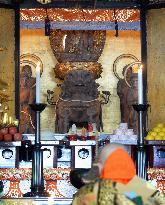
Manjusri image at Chikurin-ji temple unveiled for 1st time in 50 years

Manjusri image at Chikurin-ji temple unveiled for 1st time in 50 years

KOCHI, Japan - "Monju Bosatsu, " an image of Manjusri, sitting atop a roaring lion, which symbolizes the powerful voice of Buddhist Law and the power of Buddhism to overcome all obstacles, goes on display to the public on April 25, 2014 for the first time in 50 years at Chikurin-ji, a Shingon temple in Kochi, Kochi Prefecture, western Japan. The temple is number 31 on the Shikoku 88 temple pilgrimage said to be launched by Kukai, a renowned monk also known as Kobo Daishi, 1,200 years ago. The display is open to the public through May 25. (Pool photo by Kochi Shimbun).

  •  
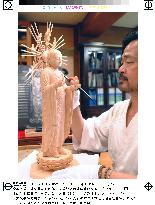
New 'Jizo Bosatsu' statue almost completed

New 'Jizo Bosatsu' statue almost completed

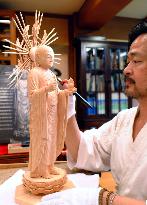
KYOTO, Japan - A new 'Jizo Bosatsu,' (an image of a Buddhist saint), is almost complete. The original centuries-old wooden statue was destroyed in a suspected arson attack at the main hall of the Jakko-in Temple in Kyoto on May 9. The 2.6-meter wooden statue, housed in the main hall, had been designated by the state as an important cultural treasure. The new statue is 42 centimeters tall.

  •  
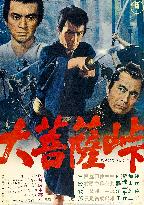
The Sword Of Doom - film (1966)

The Sword Of Doom - film (1966)

Movie Poster Film: The Sword Of Doom; Dai-Bosatsu Toge (1966) Director: Kihachi Okamoto 25 February 1966 Date: 25-Feb-66

  •  
The Sword Of Doom - film (1966)

The Sword Of Doom - film (1966)

Tatsuya Nakadai Poster Characters: Ryunosuke Tsukue Film: The Sword Of Doom; Dai-Bosatsu Toge (1967) Director: Kihachi Okamoto 25 February 1966 Date: 25-Feb-66

  •  
The Sword Of Doom - film (1966)

The Sword Of Doom - film (1966)

Movie Poster Film: The Sword Of Doom; Dai-Bosatsu Toge (1968) Director: Kihachi Okamoto 25 February 1966 Date: 25-Feb-66

  •  
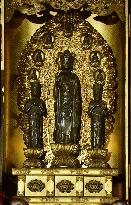
Gokaicho event starts at Zenko-ji Temple in Nagano

Gokaicho event starts at Zenko-ji Temple in Nagano

Replicas of the Amida-Nyorai, Kannon-Bosatsu and Seishi-Bosatsu statues, which are kept in absolute secrecy, are shown to the public at the main hall of Zenko-ji Temple in Nagano, central Japan, on April 5, the start of the temple's Maedachi Honzon Gokaicho event. The statues were brought into Japan when Buddhism was first introduced in the 6th century. The event, which is held only once in seven years, will run through May 31. (Kyodo) ==Kyodo

  •  
Gokaicho event starts at Zenko-ji Temple in Nagano

Gokaicho event starts at Zenko-ji Temple in Nagano

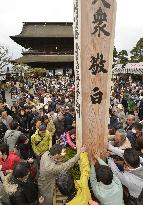
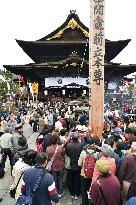
Worshippers touch the sacred pillar called Eko-bashira, in front of the main hall of Zenko-ji Temple, one of the most magnificent Buddhist temples in Japan, in Nagano, central Japan, on April 5, 2015, the start of the temple's Maedachi Honzon Gokaicho event. During the event held only once every seven years, replicas of the Amida-Nyorai, Kannon-Bosatsu and Seishi-Bosatsu statues, which are normally kept in absolute secrecy, are shown to the public. The statues were brought into Japan when Buddhism was first introduced in the 6th century. The event will run through May 31. (Kyodo) ==Kyodo

  •  
Gokaicho event starts at Zenko-ji Temple in Nagano

Gokaicho event starts at Zenko-ji Temple in Nagano

Worshippers touch the sacred pillar called Eko-bashira, in front of the main hall of Zenko-ji Temple, one of the most magnificent Buddhist temples in Japan, in Nagano, central Japan, on April 5, 2015, the start of the temple's Maedachi Honzon Gokaicho event. During the event held only once every seven years, replicas of the Amida-Nyorai, Kannon-Bosatsu and Seishi-Bosatsu statues, which are normally kept in absolute secrecy, are shown to the public. The statues were brought into Japan when Buddhism was first introduced in the 6th century. The event will run through May 31. (Kyodo) ==Kyodo

  •  
The Jogyo-do and the Hokke-do,Rinnoji Temple

The Jogyo-do and the Hokke-do,Rinnoji Temple

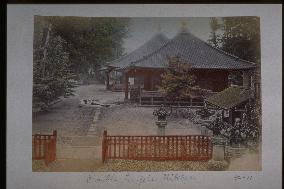
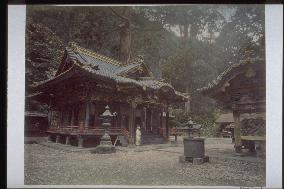
Hokkedo (foreground) and Jogyodo are viewed from in front of Niomon Gate at Taiyuin. The buildings connected by outside corridor, called Futatsudo (the two shrines), are examples of a rare style seen only at Rinoji Temple and Mt. Hiei. Amida-nyorai and Madarajin are enshrined at Jogyodo, while Fugen-bosatsu, Kishimojin and Jurasetsu-nyo are enshrined at Hokkedo.==Date:unknown, Place:Nikko, Photo:unknown, (Credit:Nagasaki University Library/Kyodo News Images) [Cabinet Number92‐11‐0]

  •  
The Sanmon Gate at Sensoji Temple

The Sanmon Gate at Sensoji Temple

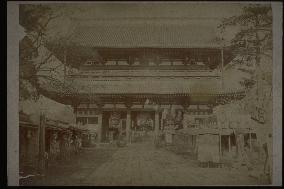
The sanmon (front gate) at Sensoji Temple was called Niomon because statues of the guardian deities Kongo Rikishi were installed on both the right and left (present-day Hozomon). Statues of Monju Bosatsu (Manjusri Bodhisattva) and Shiten (four angels) are installed on the second floor of the gate building. The plaque Sensoji is based on calligraphy by the head priest of the Tendai Sect, Ryosho Hoshin-o. This photograph was taken before brick buildings were erected in the Nakamise commercial area in 1885.==Date:unknown, Place:Tokyo, Photo:unknown, (Credit:Nagasaki University Library/Kyodo News Images) [Cabinet Number72‐123‐0]

  •  
Myogi Shinto Shrine

Myogi Shinto Shrine

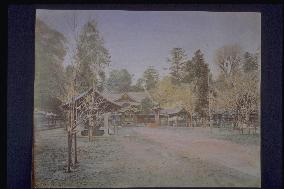
Myogi Shrine at the eastern foot of Hakuunzan of Omote Myogi, surrounded by old cedar trees. The building of the shrine was built from the Hoei years to the second year of Horeki (1752). The Gods worshipped are the Nihon Buson, Hojutaishin, and Sugawara Michizane. It possesses the national cultural asset of Jizo Bosatsu Reigenki. A priest is seen in front of the shrine building.==Date:unknown, Place:Gunma, Photo:Kusakabe Kinbei, (Credit:Nagasaki University Library/Kyodo News Images) [Cabinet Number38‐64‐0]

  •  
Ueno Gongen

Ueno Gongen

Ueno Gongen is also called Ueno Toshogu, and worships the Shogun Tokugawa Ieyasu. Gogen implies the Bosatsu appearing in the form of Ancient Gods or people, but Ieyasu also was given this title.==Date:unknown, Place:Tokyo, Photo:unknown, (Credit:Nagasaki University Library/Kyodo News Images) [Cabinet Number37‐48‐0]

  •  
Buddhist sculptures go 3-D on iPads at Kyoto temple

Buddhist sculptures go 3-D on iPads at Kyoto temple

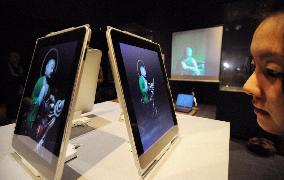
KYOTO, Japan - A visitor looks at a digital image of a Buddhist sculpture displayed on Apple Inc.'s iPad tablet computer at a museum of Byodoin Temple in Uji, Kyoto Prefecture, on Nov. 22, 2010. The temple began an exhibition of stereoscopic images of its national treasure ''Bosatsu on Clouds'' figures dating from the 11th century the same day. (Kyodo)

  •  
New 'Jizo Bosatsu' statue almost completed

New 'Jizo Bosatsu' statue almost completed

KYOTO, Japan - A new 'Jizo Bosatsu,' (an image of a Buddhist saint), is almost complete. The original centuries-old wooden statue was destroyed in a suspected arson attack at the main hall of the Jakko-in Temple in Kyoto on May 9. The 2.6-meter wooden statue, housed in the main hall, had been designated by the state as an important cultural treasure. The new statue is 42 centimeters tall.

  • Main
  • Top
  • Editorial
  • Creative
  • About Us
  • About ILG
  • Terms of use
  • Company
  • BEHIND
  • Price List
  • Single Plan
  • Monthly Plan
  • Services
  • Shooting
  • Rights Clearance
  • Support
  • FAQ
  • How To Buy
  • Contact Us
  • Become a Partner

© KYODO NEWS IMAGES INC

All Rights Reserved.

  • Editorial
  • Olympics
  • News
  • Sports
  • Japan
  • Tech
  • Royal
  • Disaster
  • NorthKorea
  • Old Japan
  • SNS
  • Creative
  • Food
  • Japan
  • Landscape
  • Animal
  • Popular
  • #Ukraine
  • #Thailand
  • #coronavirus
  • #N. Korea
  • #China
  • #Russia
  • #Ukraine
  • #Thailand
  • #coronavirus
  • #N. Korea
  • #China
  • #Russia
  • Food
  • Japan
  • Landscape
  • Animal
  • Olympics
  • News
  • Sports
  • Japan
  • Tech
  • Royal
  • Disaster
  • NorthKorea
  • Old Japan
  • SNS