•  

China: Rare Pink Dolphins Spotted Near Nan’ao Bridge in Guangdong

This video captured the stunning moment that a group of pink dolphins appeared near Nan’ao Bridge in Shantou, Guangdong, on August 20, stunning lucky onlookers with their rare presence. The sighting was described as both mysterious and enchanting, since pink dolphins are classified as a nationally protected species in China and are considered extremely rare in the wild.

  •  
The Supilinna Pond

The Supilinna Pond

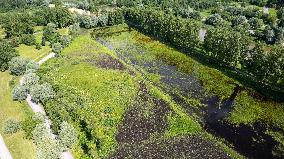
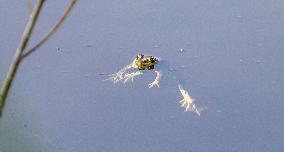
02.07.2024, Tartu. The Supilinna Pond formed in the 1950s, when land was taken from the right bank of the Emajõgi River for construction. Since then, the watering hole has become an important site for both the residents of Supilinn and many species. The Supilinna Pond covers an area of nearly 2.5 hectares and is home to a large number of frogs. Many of the locals instead refer to it as frog lake. Photo: Kristjan Teedema/Tartu Postimees

  •  
The Supilinna Pond

The Supilinna Pond

02.07.2024, Tartu. The Supilinna Pond formed in the 1950s, when land was taken from the right bank of the Emajõgi River for construction. Since then, the watering hole has become an important site for both the residents of Supilinn and many species. The Supilinna Pond covers an area of nearly 2.5 hectares and is home to a large number of frogs. Many of the locals instead refer to it as frog lake. Photo: Kristjan Teedema/Tartu Postimees

  •  
Giant Panda Reintroduction - China

Giant Panda Reintroduction - China

WOLONG, June 29, 2024 -- This file photo taken on Sept. 16, 2014 shows giant panda cub Hua Jiao (L), the world's first giant panda cub with both captive and wild parents, and her mother Cao Cao in the wild training fields. In recent years, China has made significant progress in panda conservation through a series of measures, including forest and wildlife protection as well as the construction of giant panda national parks. The wild giant panda population in China has grown from about 1,100 in the 1980s to nearly 1,900. Giant panda reintroduction refers to releasing captive-bred giant pandas to their historical distribution areas to live and reproduce after acclimatization training so as to rebuild the wild population of the species. China Conservation and Research Center for the Giant Panda (CCRCGP) started a reintroduction program in 2003. It has reintroduced eleven pandas into the wild, nine of which survived. In the future, the center will continue to train more individual panda cubs using the mother-cub

  •  
(FOCUS)CHINA-SICHUAN-GIANT PANDA-REINTRODUCTION (CN)

(FOCUS)CHINA-SICHUAN-GIANT PANDA-REINTRODUCTION (CN)

(240629) -- WOLONG, June 29, 2024 Photo by Xinhua/ABACAPRESS.COM) -- This file photo taken on Sept. 16, 2014 shows giant panda cub Hua Jiao (L), the world's first giant panda cub with both captive and wild parents, and her mother Cao Cao in the wild training fields. In recent years, China has made significant progress in panda conservation through a series of measures, including forest and wildlife protection as well as the construction of giant panda national parks. The wild giant panda population in China has grown from about 1,100 in the 1980s to nearly 1,900. Giant panda reintroduction refers to releasing captive-bred giant pandas to their historical distribution areas to live and reproduce after acclimatization training so as to rebuild the wild population of the species. China Conservation and Research Center for the Giant Panda (CCRCGP) started a reintroduction program in 2003. It has reintroduced eleven pandas into the wild, nine of which survived. In the future, the center will continue to train more

  •  
BRAZIL-RIO DE JANEIRO-FIOCRUZ-AEDES AEGYPTI MOSQUITOES-WOLBACHIA

BRAZIL-RIO DE JANEIRO-FIOCRUZ-AEDES AEGYPTI MOSQUITOES-WOLBACHIA

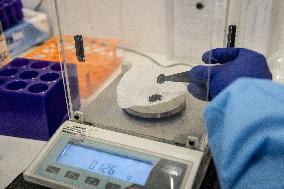
(240519) -- RIO DE JANEIRO, May 19, 2024 (Xinhua) -- A staff member places Aedes aegypti mosquito larvae carrying Wolbachia into containers at the Oswaldo Cruz Foundation's biotechnology factory in Rio de Janeiro, Brazil, on May 14, 2024. According to updated data from the Brazilian Ministry of Health on the May 17, Brazil has reported a total of 4,921,252 cases of dengue fever this year, including both confirmed and suspected cases, marking the highest level since the country began keeping records of the epidemic. The Oswaldo Cruz Foundation is a biomedical research institution under the Brazilian Ministry of Health. The foundation has established a small biotechnology factory in Mare, Rio de Janeiro, where it cultivates Aedes aegypti mosquitoes carrying Wolbachia bacteria. Wolbachia is an intracellular microorganism found in 60 percent of insect species in nature but is not commonly found in Aedes aegypti. Once mosquitoes carrying Wolbachia are released into the wild, they will reproduce, spreading Wolba

  •  
BRAZIL-RIO DE JANEIRO-FIOCRUZ-AEDES AEGYPTI MOSQUITOES-WOLBACHIA

BRAZIL-RIO DE JANEIRO-FIOCRUZ-AEDES AEGYPTI MOSQUITOES-WOLBACHIA

(240519) -- RIO DE JANEIRO, May 19, 2024 (Xinhua) -- A staff member works at the Oswaldo Cruz Foundation's biotechnology factory in Rio de Janeiro, Brazil, on May 14, 2024. According to updated data from the Brazilian Ministry of Health on the May 17, Brazil has reported a total of 4,921,252 cases of dengue fever this year, including both confirmed and suspected cases, marking the highest level since the country began keeping records of the epidemic. The Oswaldo Cruz Foundation is a biomedical research institution under the Brazilian Ministry of Health. The foundation has established a small biotechnology factory in Mare, Rio de Janeiro, where it cultivates Aedes aegypti mosquitoes carrying Wolbachia bacteria. Wolbachia is an intracellular microorganism found in 60 percent of insect species in nature but is not commonly found in Aedes aegypti. Once mosquitoes carrying Wolbachia are released into the wild, they will reproduce, spreading Wolbachia to more mosquitoes. The presence of Wolbachia in these mosqui

  •  
BRAZIL-RIO DE JANEIRO-FIOCRUZ-AEDES AEGYPTI MOSQUITOES-WOLBACHIA

BRAZIL-RIO DE JANEIRO-FIOCRUZ-AEDES AEGYPTI MOSQUITOES-WOLBACHIA

(240519) -- RIO DE JANEIRO, May 19, 2024 (Xinhua) -- This photo taken on May 14, 2024 shows a breeding container of Aedes aegypti mosquitoes carrying Wolbachia at the Oswaldo Cruz Foundation's biotechnology factory in Rio de Janeiro, Brazil. According to updated data from the Brazilian Ministry of Health on the May 17, Brazil has reported a total of 4,921,252 cases of dengue fever this year, including both confirmed and suspected cases, marking the highest level since the country began keeping records of the epidemic. The Oswaldo Cruz Foundation is a biomedical research institution under the Brazilian Ministry of Health. The foundation has established a small biotechnology factory in Mare, Rio de Janeiro, where it cultivates Aedes aegypti mosquitoes carrying Wolbachia bacteria. Wolbachia is an intracellular microorganism found in 60 percent of insect species in nature but is not commonly found in Aedes aegypti. Once mosquitoes carrying Wolbachia are released into the wild, they will reproduce, spreading Wo

  •  
BRAZIL-RIO DE JANEIRO-FIOCRUZ-AEDES AEGYPTI MOSQUITOES-WOLBACHIA

BRAZIL-RIO DE JANEIRO-FIOCRUZ-AEDES AEGYPTI MOSQUITOES-WOLBACHIA

(240519) -- RIO DE JANEIRO, May 19, 2024 (Xinhua) -- A staff member observes the eggs of Aedes aegypti mosquito carrying Wolbachia at the Oswaldo Cruz Foundation's biotechnology factory in Rio de Janeiro, Brazil, on May 14, 2024. According to updated data from the Brazilian Ministry of Health on the May 17, Brazil has reported a total of 4,921,252 cases of dengue fever this year, including both confirmed and suspected cases, marking the highest level since the country began keeping records of the epidemic. The Oswaldo Cruz Foundation is a biomedical research institution under the Brazilian Ministry of Health. The foundation has established a small biotechnology factory in Mare, Rio de Janeiro, where it cultivates Aedes aegypti mosquitoes carrying Wolbachia bacteria. Wolbachia is an intracellular microorganism found in 60 percent of insect species in nature but is not commonly found in Aedes aegypti. Once mosquitoes carrying Wolbachia are released into the wild, they will reproduce, spreading Wolbachia to m

  •  
BRAZIL-RIO DE JANEIRO-FIOCRUZ-AEDES AEGYPTI MOSQUITOES-WOLBACHIA

BRAZIL-RIO DE JANEIRO-FIOCRUZ-AEDES AEGYPTI MOSQUITOES-WOLBACHIA

(240519) -- RIO DE JANEIRO, May 19, 2024 (Xinhua) -- Staff members inspect breeding containers of Aedes aegypti mosquitoes carrying Wolbachia at the Oswaldo Cruz Foundation's biotechnology factory in Rio de Janeiro, Brazil, on May 14, 2024. According to updated data from the Brazilian Ministry of Health on the May 17, Brazil has reported a total of 4,921,252 cases of dengue fever this year, including both confirmed and suspected cases, marking the highest level since the country began keeping records of the epidemic. The Oswaldo Cruz Foundation is a biomedical research institution under the Brazilian Ministry of Health. The foundation has established a small biotechnology factory in Mare, Rio de Janeiro, where it cultivates Aedes aegypti mosquitoes carrying Wolbachia bacteria. Wolbachia is an intracellular microorganism found in 60 percent of insect species in nature but is not commonly found in Aedes aegypti. Once mosquitoes carrying Wolbachia are released into the wild, they will reproduce, spreading Wol

  •  
BRAZIL-RIO DE JANEIRO-FIOCRUZ-AEDES AEGYPTI MOSQUITOES-WOLBACHIA

BRAZIL-RIO DE JANEIRO-FIOCRUZ-AEDES AEGYPTI MOSQUITOES-WOLBACHIA

(240519) -- RIO DE JANEIRO, May 19, 2024 (Xinhua) -- A staff member showcases the Aedes aegypti mosquito eggs carrying Wolbachia at the Oswaldo Cruz Foundation's biotechnology factory in Rio de Janeiro, Brazil, on May 14, 2024. According to updated data from the Brazilian Ministry of Health on the May 17, Brazil has reported a total of 4,921,252 cases of dengue fever this year, including both confirmed and suspected cases, marking the highest level since the country began keeping records of the epidemic. The Oswaldo Cruz Foundation is a biomedical research institution under the Brazilian Ministry of Health. The foundation has established a small biotechnology factory in Mare, Rio de Janeiro, where it cultivates Aedes aegypti mosquitoes carrying Wolbachia bacteria. Wolbachia is an intracellular microorganism found in 60 percent of insect species in nature but is not commonly found in Aedes aegypti. Once mosquitoes carrying Wolbachia are released into the wild, they will reproduce, spreading Wolbachia to mor

  •  
BRAZIL-RIO DE JANEIRO-FIOCRUZ-AEDES AEGYPTI MOSQUITOES-WOLBACHIA

BRAZIL-RIO DE JANEIRO-FIOCRUZ-AEDES AEGYPTI MOSQUITOES-WOLBACHIA

(240519) -- RIO DE JANEIRO, May 19, 2024 (Xinhua) -- This photo taken on May 14, 2024 shows the headquarters of the Oswaldo Cruz Foundation's biotechnology factory in Rio de Janeiro, Brazil. According to updated data from the Brazilian Ministry of Health on the May 17, Brazil has reported a total of 4,921,252 cases of dengue fever this year, including both confirmed and suspected cases, marking the highest level since the country began keeping records of the epidemic. The Oswaldo Cruz Foundation is a biomedical research institution under the Brazilian Ministry of Health. The foundation has established a small biotechnology factory in Mare, Rio de Janeiro, where it cultivates Aedes aegypti mosquitoes carrying Wolbachia bacteria. Wolbachia is an intracellular microorganism found in 60 percent of insect species in nature but is not commonly found in Aedes aegypti. Once mosquitoes carrying Wolbachia are released into the wild, they will reproduce, spreading Wolbachia to more mosquitoes. The presence of Wolbach

  •  
BRAZIL-RIO DE JANEIRO-FIOCRUZ-AEDES AEGYPTI MOSQUITOES-WOLBACHIA

BRAZIL-RIO DE JANEIRO-FIOCRUZ-AEDES AEGYPTI MOSQUITOES-WOLBACHIA

(240519) -- RIO DE JANEIRO, May 19, 2024 (Xinhua) -- A staff member places Aedes aegypti mosquito larvae carrying Wolbachia into containers at the Oswaldo Cruz Foundation's biotechnology factory in Rio de Janeiro, Brazil, on May 14, 2024. According to updated data from the Brazilian Ministry of Health on the May 17, Brazil has reported a total of 4,921,252 cases of dengue fever this year, including both confirmed and suspected cases, marking the highest level since the country began keeping records of the epidemic. The Oswaldo Cruz Foundation is a biomedical research institution under the Brazilian Ministry of Health. The foundation has established a small biotechnology factory in Mare, Rio de Janeiro, where it cultivates Aedes aegypti mosquitoes carrying Wolbachia bacteria. Wolbachia is an intracellular microorganism found in 60 percent of insect species in nature but is not commonly found in Aedes aegypti. Once mosquitoes carrying Wolbachia are released into the wild, they will reproduce, spreading Wolba

  •  
BRAZIL-RIO DE JANEIRO-FIOCRUZ-AEDES AEGYPTI MOSQUITOES-WOLBACHIA

BRAZIL-RIO DE JANEIRO-FIOCRUZ-AEDES AEGYPTI MOSQUITOES-WOLBACHIA

(240519) -- RIO DE JANEIRO, May 19, 2024 (Xinhua) -- A staff member inspects a breeding container of Aedes aegypti mosquitoes carrying Wolbachia at the Oswaldo Cruz Foundation's biotechnology factory in Rio de Janeiro, Brazil, on May 14, 2024. According to updated data from the Brazilian Ministry of Health on the May 17, Brazil has reported a total of 4,921,252 cases of dengue fever this year, including both confirmed and suspected cases, marking the highest level since the country began keeping records of the epidemic. The Oswaldo Cruz Foundation is a biomedical research institution under the Brazilian Ministry of Health. The foundation has established a small biotechnology factory in Mare, Rio de Janeiro, where it cultivates Aedes aegypti mosquitoes carrying Wolbachia bacteria. Wolbachia is an intracellular microorganism found in 60 percent of insect species in nature but is not commonly found in Aedes aegypti. Once mosquitoes carrying Wolbachia are released into the wild, they will reproduce, spreading

  •  
BRAZIL-RIO DE JANEIRO-FIOCRUZ-AEDES AEGYPTI MOSQUITOES-WOLBACHIA

BRAZIL-RIO DE JANEIRO-FIOCRUZ-AEDES AEGYPTI MOSQUITOES-WOLBACHIA

(240519) -- RIO DE JANEIRO, May 19, 2024 (Xinhua) -- This photo shows the Oswaldo Cruz Foundation's biotechnology factory in Rio de Janeiro, Brazil, on May 14, 2024. According to updated data from the Brazilian Ministry of Health on the May 17, Brazil has reported a total of 4,921,252 cases of dengue fever this year, including both confirmed and suspected cases, marking the highest level since the country began keeping records of the epidemic. The Oswaldo Cruz Foundation is a biomedical research institution under the Brazilian Ministry of Health. The foundation has established a small biotechnology factory in Mare, Rio de Janeiro, where it cultivates Aedes aegypti mosquitoes carrying Wolbachia bacteria. Wolbachia is an intracellular microorganism found in 60 percent of insect species in nature but is not commonly found in Aedes aegypti. Once mosquitoes carrying Wolbachia are released into the wild, they will reproduce, spreading Wolbachia to more mosquitoes. The presence of Wolbachia in these mosquitoes in

  •  
BRAZIL-RIO DE JANEIRO-FIOCRUZ-AEDES AEGYPTI MOSQUITOES-WOLBACHIA

BRAZIL-RIO DE JANEIRO-FIOCRUZ-AEDES AEGYPTI MOSQUITOES-WOLBACHIA

(240519) -- RIO DE JANEIRO, May 19, 2024 (Xinhua) -- A staff member works at the Oswaldo Cruz Foundation's biotechnology factory in Rio de Janeiro, Brazil, on May 14, 2024. According to updated data from the Brazilian Ministry of Health on the May 17, Brazil has reported a total of 4,921,252 cases of dengue fever this year, including both confirmed and suspected cases, marking the highest level since the country began keeping records of the epidemic. The Oswaldo Cruz Foundation is a biomedical research institution under the Brazilian Ministry of Health. The foundation has established a small biotechnology factory in Mare, Rio de Janeiro, where it cultivates Aedes aegypti mosquitoes carrying Wolbachia bacteria. Wolbachia is an intracellular microorganism found in 60 percent of insect species in nature but is not commonly found in Aedes aegypti. Once mosquitoes carrying Wolbachia are released into the wild, they will reproduce, spreading Wolbachia to more mosquitoes. The presence of Wolbachia in these mosqui

  •  
BRAZIL-RIO DE JANEIRO-FIOCRUZ-AEDES AEGYPTI MOSQUITOES-WOLBACHIA

BRAZIL-RIO DE JANEIRO-FIOCRUZ-AEDES AEGYPTI MOSQUITOES-WOLBACHIA

(240519) -- RIO DE JANEIRO, May 19, 2024 (Xinhua) -- This photo taken on May 14, 2024 shows an Aedes aegypti mosquito and larva carrying Wolbachia at the Oswaldo Cruz Foundation's biotechnology factory in Rio de Janeiro, Brazil. According to updated data from the Brazilian Ministry of Health on the May 17, Brazil has reported a total of 4,921,252 cases of dengue fever this year, including both confirmed and suspected cases, marking the highest level since the country began keeping records of the epidemic. The Oswaldo Cruz Foundation is a biomedical research institution under the Brazilian Ministry of Health. The foundation has established a small biotechnology factory in Mare, Rio de Janeiro, where it cultivates Aedes aegypti mosquitoes carrying Wolbachia bacteria. Wolbachia is an intracellular microorganism found in 60 percent of insect species in nature but is not commonly found in Aedes aegypti. Once mosquitoes carrying Wolbachia are released into the wild, they will reproduce, spreading Wolbachia to mo

  •  

China-Russia joint efforts on Siberian tiger protection bear fruit

STORY: China-Russia joint efforts on Siberian tiger protection bear fruit SHOOTING TIME: May 15, 2024/File DATELINE: May 17, 2024 LENGTH: 00:01:40 LOCATION: CHANGCHUN, China CATEGORY: ENVIRONMENT SHOTLIST: 1. various of Siberian tigers and Amur leopards 2. SOUNDBITE (Chinese): FENG LIMIN, Deputy director of the monitoring and research center for Siberian tigers and Amur leopards under the National Forestry and Grassland Administration 3. various of Siberian tigers STORYLINE: Siberian tigers have been frequently spotted around China-Russia border areas in recent years, due to joint protection efforts made by both countries. As one of the world's most endangered species, Siberian tigers, also known as Amur tigers, mainly live in Russia's Far East and northeast China. Back in 2010, the two countries signed a cooperation agreement to protect Siberian tigers and Amur leopards. In 2019, two national parks in China and Russia signed a three-year cooperative action plan to beef up cooperation in the protection

  •  

Rwandan farmers boost milk production through cow fodder cultivation

STORY: Rwandan farmers boost milk production through cow fodder cultivation DATELINE: Sept. 23, 2023 LENGTH: 00:02:33 LOCATION: Kigali CATEGORY: SOCIETY SHOTLIST: 1. various of cows and farmland 2. SOUNDBITE 1 (Kinyarwanda): LIVINGSTONE ABIYINGOMA, Local farmer 3. SOUNDBITE 2 (Kinyarwanda): THOMAS RUKERA, Local farmer STORYLINE: Some livestock farmers in Rwanda have witnessed a remarkable increase in milk production by adopting innovative farming practices, primarily centered around grass cultivation. Livingstone Abiyingoma and Thomas Rukera, both local livestock farmers in Nyagatare District, Eastern Province, shared their practices with Xinhua recently on how the cultivation of various cow fodder species has transformed their dairy operations, allowing them to provide for their families and support their children's education. Abiyingoma initially faced challenges with low milk production during the dry season. He, however, has witnessed a significant boost in milk yields with support from the Rwanda D

  •  
CHINA-ANHUI-NATURE RESERVE-RANGERS (CN)

CHINA-ANHUI-NATURE RESERVE-RANGERS (CN)

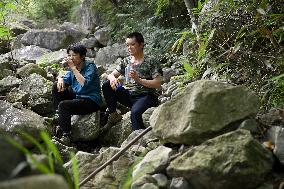
(230814) -- LU'AN, Aug. 14, 2023 (Xinhua) -- Wang Kedong and his wife Gao Kaiyu take a rest while patrolling at Tiantangzhai management station in Anhui Tianma National Nature Reserve, east China's Anhui Province, Aug. 11, 2023. Wang Kedong and Gao Kaiyu, both 58 years old, are rangers of Tiantangzhai management station of Anhui Tianma National Nature Reserve. They live in the mountains all the year round and have kept patrolling every day on a route longer than 20 kilometers for 25 years. Anhui Tianma National Nature Reserve was established in 1998 based on two former Anhui provincial nature reserves. It is located at the transition zone from subtropical zone to warm temperate zone with abundant animal and plant resources. As many rare and endangered species are living here, the protection work in the reserve is particularly important. Patrol and forest protection are the couple's daily work. According to Wang, there are seven daily patrol routes for the couple, and the longest route is longer than 30 ki

  •  
CHINA-ANHUI-NATURE RESERVE-RANGERS (CN)

CHINA-ANHUI-NATURE RESERVE-RANGERS (CN)

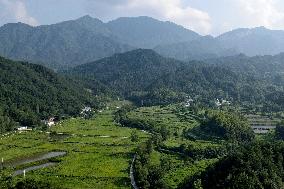
(230814) -- LU'AN, Aug. 14, 2023 (Xinhua) -- This aerial photo taken on Aug. 12, 2023 shows a view at Tiantangzhai management station in Anhui Tianma National Nature Reserve, east China's Anhui Province. Wang Kedong and Gao Kaiyu, both 58 years old, are rangers of Tiantangzhai management station of Anhui Tianma National Nature Reserve. They live in the mountains all the year round and have kept patrolling every day on a route longer than 20 kilometers for 25 years. Anhui Tianma National Nature Reserve was established in 1998 based on two former Anhui provincial nature reserves. It is located at the transition zone from subtropical zone to warm temperate zone with abundant animal and plant resources. As many rare and endangered species are living here, the protection work in the reserve is particularly important. Patrol and forest protection are the couple's daily work. According to Wang, there are seven daily patrol routes for the couple, and the longest route is longer than 30 kilometers back and forth,

  •  
CHINA-ANHUI-NATURE RESERVE-RANGERS (CN)

CHINA-ANHUI-NATURE RESERVE-RANGERS (CN)

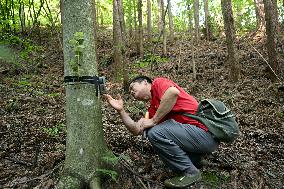
(230814) -- LU'AN, Aug. 14, 2023 (Xinhua) -- Wang Kedong checks an infrared camera while patrolling at Tiantangzhai management station in Anhui Tianma National Nature Reserve, east China's Anhui Province, Aug. 12, 2023. Wang Kedong and Gao Kaiyu, both 58 years old, are rangers of Tiantangzhai management station of Anhui Tianma National Nature Reserve. They live in the mountains all the year round and have kept patrolling every day on a route longer than 20 kilometers for 25 years. Anhui Tianma National Nature Reserve was established in 1998 based on two former Anhui provincial nature reserves. It is located at the transition zone from subtropical zone to warm temperate zone with abundant animal and plant resources. As many rare and endangered species are living here, the protection work in the reserve is particularly important. Patrol and forest protection are the couple's daily work. According to Wang, there are seven daily patrol routes for the couple, and the longest route is longer than 30 kilometers

  •  
CHINA-ANHUI-NATURE RESERVE-RANGERS (CN)

CHINA-ANHUI-NATURE RESERVE-RANGERS (CN)

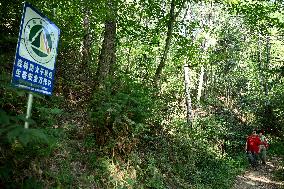
(230814) -- LU'AN, Aug. 14, 2023 (Xinhua) -- Wang Kedong and his wife Gao Kaiyu patrol at Tiantangzhai management station in Anhui Tianma National Nature Reserve, east China's Anhui Province, Aug. 12, 2023. Wang Kedong and Gao Kaiyu, both 58 years old, are rangers of Tiantangzhai management station of Anhui Tianma National Nature Reserve. They live in the mountains all the year round and have kept patrolling every day on a route longer than 20 kilometers for 25 years. Anhui Tianma National Nature Reserve was established in 1998 based on two former Anhui provincial nature reserves. It is located at the transition zone from subtropical zone to warm temperate zone with abundant animal and plant resources. As many rare and endangered species are living here, the protection work in the reserve is particularly important. Patrol and forest protection are the couple's daily work. According to Wang, there are seven daily patrol routes for the couple, and the longest route is longer than 30 kilometers back and fort

  •  
CHINA-ANHUI-NATURE RESERVE-RANGERS (CN)

CHINA-ANHUI-NATURE RESERVE-RANGERS (CN)

(230814) -- LU'AN, Aug. 14, 2023 (Xinhua) -- Wang Kedong and his wife Gao Kaiyu patrol at Tiantangzhai management station in Anhui Tianma National Nature Reserve, east China's Anhui Province, Aug. 12, 2023. Wang Kedong and Gao Kaiyu, both 58 years old, are rangers of Tiantangzhai management station of Anhui Tianma National Nature Reserve. They live in the mountains all the year round and have kept patrolling every day on a route longer than 20 kilometers for 25 years. Anhui Tianma National Nature Reserve was established in 1998 based on two former Anhui provincial nature reserves. It is located at the transition zone from subtropical zone to warm temperate zone with abundant animal and plant resources. As many rare and endangered species are living here, the protection work in the reserve is particularly important. Patrol and forest protection are the couple's daily work. According to Wang, there are seven daily patrol routes for the couple, and the longest route is longer than 30 kilometers back and fort

  •  
CHINA-ANHUI-NATURE RESERVE-RANGERS (CN)

CHINA-ANHUI-NATURE RESERVE-RANGERS (CN)

(230814) -- LU'AN, Aug. 14, 2023 (Xinhua) -- Wang Kedong refreshes himself with river water while patrolling at Tiantangzhai management station in Anhui Tianma National Nature Reserve, east China's Anhui Province, Aug. 12, 2023. Wang Kedong and Gao Kaiyu, both 58 years old, are rangers of Tiantangzhai management station of Anhui Tianma National Nature Reserve. They live in the mountains all the year round and have kept patrolling every day on a route longer than 20 kilometers for 25 years. Anhui Tianma National Nature Reserve was established in 1998 based on two former Anhui provincial nature reserves. It is located at the transition zone from subtropical zone to warm temperate zone with abundant animal and plant resources. As many rare and endangered species are living here, the protection work in the reserve is particularly important. Patrol and forest protection are the couple's daily work. According to Wang, there are seven daily patrol routes for the couple, and the longest route is longer than 30 ki

  •  
CHINA-ANHUI-NATURE RESERVE-RANGERS (CN)

CHINA-ANHUI-NATURE RESERVE-RANGERS (CN)

(230814) -- LU'AN, Aug. 14, 2023 (Xinhua) -- This aerial panoramic photo taken on Aug. 12, 2023 shows a view at Tiantangzhai management station in Anhui Tianma National Nature Reserve, east China's Anhui Province. Wang Kedong and Gao Kaiyu, both 58 years old, are rangers of Tiantangzhai management station of Anhui Tianma National Nature Reserve. They live in the mountains all the year round and have kept patrolling every day on a route longer than 20 kilometers for 25 years. Anhui Tianma National Nature Reserve was established in 1998 based on two former Anhui provincial nature reserves. It is located at the transition zone from subtropical zone to warm temperate zone with abundant animal and plant resources. As many rare and endangered species are living here, the protection work in the reserve is particularly important. Patrol and forest protection are the couple's daily work. According to Wang, there are seven daily patrol routes for the couple, and the longest route is longer than 30 kilometers back a

  •  
CHINA-ANHUI-NATURE RESERVE-RANGERS (CN)

CHINA-ANHUI-NATURE RESERVE-RANGERS (CN)

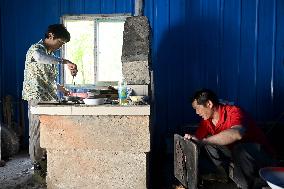
(230814) -- LU'AN, Aug. 14, 2023 (Xinhua) -- Wang Kedong and his wife Gao Kaiyu have meal at a stand of Tiantangzhai management station in Anhui Tianma National Nature Reserve, east China's Anhui Province, Aug. 12, 2023. They live at this station during the critical period of fire prevention from Oct. 1 to April 30. Wang Kedong and Gao Kaiyu, both 58 years old, are rangers of Tiantangzhai management station of Anhui Tianma National Nature Reserve. They live in the mountains all the year round and have kept patrolling every day on a route longer than 20 kilometers for 25 years. Anhui Tianma National Nature Reserve was established in 1998 based on two former Anhui provincial nature reserves. It is located at the transition zone from subtropical zone to warm temperate zone with abundant animal and plant resources. As many rare and endangered species are living here, the protection work in the reserve is particularly important. Patrol and forest protection are the couple's daily work. According to Wang, there

  •  
CHINA-ANHUI-NATURE RESERVE-RANGERS (CN)

CHINA-ANHUI-NATURE RESERVE-RANGERS (CN)

(230814) -- LU'AN, Aug. 14, 2023 (Xinhua) -- Wang Kedong and his wife Gao Kaiyu cook at a stand of Tiantangzhai management station in Anhui Tianma National Nature Reserve, east China's Anhui Province, Aug. 12, 2023. They live at this station during the critical period of fire prevention from Oct. 1 to April 30. Wang Kedong and Gao Kaiyu, both 58 years old, are rangers of Tiantangzhai management station of Anhui Tianma National Nature Reserve. They live in the mountains all the year round and have kept patrolling every day on a route longer than 20 kilometers for 25 years. Anhui Tianma National Nature Reserve was established in 1998 based on two former Anhui provincial nature reserves. It is located at the transition zone from subtropical zone to warm temperate zone with abundant animal and plant resources. As many rare and endangered species are living here, the protection work in the reserve is particularly important. Patrol and forest protection are the couple's daily work. According to Wang, there are

  •  
CHINA-ANHUI-NATURE RESERVE-RANGERS (CN)

CHINA-ANHUI-NATURE RESERVE-RANGERS (CN)

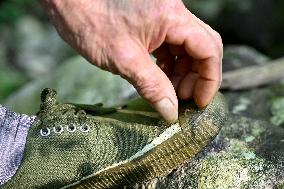
(230814) -- LU'AN, Aug. 14, 2023 (Xinhua) -- Wang Kedong takes off a leech from his shoe at Tiantangzhai management station in Anhui Tianma National Nature Reserve, east China's Anhui Province, Aug. 12, 2023. Wang Kedong and Gao Kaiyu, both 58 years old, are rangers of Tiantangzhai management station of Anhui Tianma National Nature Reserve. They live in the mountains all the year round and have kept patrolling every day on a route longer than 20 kilometers for 25 years. Anhui Tianma National Nature Reserve was established in 1998 based on two former Anhui provincial nature reserves. It is located at the transition zone from subtropical zone to warm temperate zone with abundant animal and plant resources. As many rare and endangered species are living here, the protection work in the reserve is particularly important. Patrol and forest protection are the couple's daily work. According to Wang, there are seven daily patrol routes for the couple, and the longest route is longer than 30 kilometers back and fo

  •  
CHINA-ANHUI-NATURE RESERVE-RANGERS (CN)

CHINA-ANHUI-NATURE RESERVE-RANGERS (CN)

(230814) -- LU'AN, Aug. 14, 2023 (Xinhua) -- This aerial panoramic photo taken on Aug. 12, 2023 shows a view at Tiantangzhai management station in Anhui Tianma National Nature Reserve, east China's Anhui Province. Wang Kedong and Gao Kaiyu, both 58 years old, are rangers of Tiantangzhai management station of Anhui Tianma National Nature Reserve. They live in the mountains all the year round and have kept patrolling every day on a route longer than 20 kilometers for 25 years. Anhui Tianma National Nature Reserve was established in 1998 based on two former Anhui provincial nature reserves. It is located at the transition zone from subtropical zone to warm temperate zone with abundant animal and plant resources. As many rare and endangered species are living here, the protection work in the reserve is particularly important. Patrol and forest protection are the couple's daily work. According to Wang, there are seven daily patrol routes for the couple, and the longest route is longer than 30 kilometers back a

  •  
CHINA-ANHUI-NATURE RESERVE-RANGERS (CN)

CHINA-ANHUI-NATURE RESERVE-RANGERS (CN)

(230814) -- LU'AN, Aug. 14, 2023 (Xinhua) -- Wang Kedong and his wife Gao Kaiyu patrol at Tiantangzhai management station in Anhui Tianma National Nature Reserve, east China's Anhui Province, Aug. 12, 2023. Wang Kedong and Gao Kaiyu, both 58 years old, are rangers of Tiantangzhai management station of Anhui Tianma National Nature Reserve. They live in the mountains all the year round and have kept patrolling every day on a route longer than 20 kilometers for 25 years. Anhui Tianma National Nature Reserve was established in 1998 based on two former Anhui provincial nature reserves. It is located at the transition zone from subtropical zone to warm temperate zone with abundant animal and plant resources. As many rare and endangered species are living here, the protection work in the reserve is particularly important. Patrol and forest protection are the couple's daily work. According to Wang, there are seven daily patrol routes for the couple, and the longest route is longer than 30 kilometers back and fort

  •  

Villagers in China's Yunnan seeking coexistence with elephants

STORY: Villagers in China's Yunnan seeking coexistence with elephants DATELINE: Aug. 13, 2023 LENGTH: 00:02:08 LOCATION: KUNMING, China CATEGORY: ENVIRONMENT SHOTLIST: 1. various of Asian elephants 2. SOUNDBITE 1 (Chinese): LI XIAOMEI, Villager in Jiangcheng County, Yunnan Province 3. various of crops 4. SOUNDBITE 2 (Chinese): YANG YONG, Staffer with local forestry and grassland bureau 5. SOUNDBITE 3 (Chinese): GUO XINGXIANG, Asian elephant monitor, Jiangcheng County, Yunnan Province STORYLINE: Asian elephants, a pivotal species in the rainforest ecosystem, are under first-class national protection in China. They are mostly found across Yunnan. Near a village in Pu'er City, eight Asian elephants walked out of the mountains and came to a corn field to forage. August is the mature season for local crops such as rice and corn, which are both favorite foods for Asian elephants. SOUNDBITE 1 (Chinese): LI XIAOMEI, Villager in Jiangcheng County, Yunnan Province "My family planted 15 mu (1 hectare) of corn last

  •  

China, Vietnam release 100 mln fish into Beibu Gulf

STORY: China, Vietnam release 100 mln fish into Beibu Gulf DATELINE: May 7, 2023 LENGTH: 00:01:32 LOCATION: NANNING, China CATEGORY: ENVIRONMENT SHOTLIST: 1. various of agriculture authorities of China and Vietnam releasing some 100 million fish and shrimps STORYLINE: Agriculture authorities of China and Vietnam jointly released some 100 million fish and shrimps in the Beibu Gulf waters on Saturday afternoon. The event, aimed at restoring fishery resources in the Beibu Gulf, took place in the border city of Fangchenggang, south China's Guangxi Zhuang Autonomous Region. Eight aquatic species, including black sea bream, yellowfin sea bream, and prawn, were released into the Beibu Gulf waters at this event. China-Vietnam fishery cooperation has a long history, and the positive interactions and cooperation between the two countries in this and other fields have brought tangible benefits to the people of both sides, Ma Youxiang, vice minister of agriculture and rural affairs, said at the event. Since 2017,

  •  

Oriental white storks build nests on power towers in NE China

STORY: Oriental white storks build nests on power towers in NE China DATELINE: April 4, 2023 LENGTH: 00:00:40 LOCATION: QIQIHAR, China CATEGORY: ENVIRONMENT SHOTLIST: 1. various of Oriental white storks STORYLINE: A group of Oriental White Storks, an endangered bird species, has recently migrated to the Zhalong wetland in northeast China's Heilongjiang Province and nested on power transmission towers. They are expected to live there for seven to eight months. To protect both the birds and the power transmission lines, staff of local electric company have placed protection boards, built artificial nests and conducted special patrols. Xinhua News Agency correspondents reporting from Qiqihar, China. (XHTV)

  •  

Australian zoo welcomes 1st southern white rhino calf born in decade

STORY: Australian zoo welcomes 1st southern white rhino calf born in decade DATELINE: March 23, 2023 LENGTH: 00:01:18 LOCATION: SYDNEY, Australia CATEGORY: SOCIETY SHOTLIST: 1. various of the southern white rhino calf STORYLINE: The Werribee Open Range Zoo in the Australian state of Victoria has been celebrating the arrival of a southern white rhino calf, which is the first calf of this threatened species to be born at the zoo in almost a decade. The zoo said in a statement on Thursday that following a 16-month pregnancy, first-time mother Kipenzi gave birth just before 4:00 a.m. local time on Tuesday to the female calf who weighed just over 60 kilograms. Both Kipenzi and the newborn has been carefully monitored by veterinarians and zookeepers. According to the statement, keepers observed an absence of healthy bonding after birth, with the calf not thriving as expected during the first hours of infancy. It was later brought to the zoo's vet clinic for medical checks and supplementary feeding. This

  •  
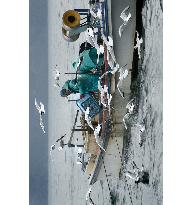
Japan's gastronomy depends on eco-balance in Lake Biwa

Japan's gastronomy depends on eco-balance in Lake Biwa

KUSATSU, Japan - In the early morning, fishermen pull in a net full of Suji-Ebi, a kind of Japanese pawn, and Isaza, a kind of Japanese goby, while black-headed gulls flock overhead. Both species are caught only in the lake.

  •  

Siberian tigers and Amur leopards caught on camera in NE China's national park

STORY: Siberian tigers and Amur leopards caught on camera in NE China's national park DATELINE: Nov. 16, 2022 LENGTH: 00:00:24 LOCATION: HARBIN, China CATEGORY: ENVIRONMENT SHOTLIST: 1. various of Siberian tigers and leopards captured by the infrared camera STORYLINE: Activities of Siberian tigers and Amur leopards have been caught on camera at the Northeast China Tiger and Leopard National Park in China's Heilongjiang Province. Staff of the national park found the footages of these rare species when maintaining the infrared camera recently. Siberian tigers and Amur leopards, both listed among the world's most endangered species, live mostly in northeast China and Russia's Far East. Xinhua News Agency correspondents reporting from Harbin, China. (XHTV)

  •  
CHINA-HEILONGJIANG-ORIENTAL WHITE STORK (CN)

CHINA-HEILONGJIANG-ORIENTAL WHITE STORK (CN)

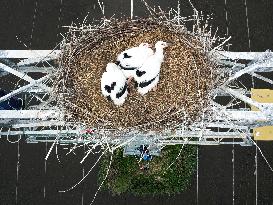
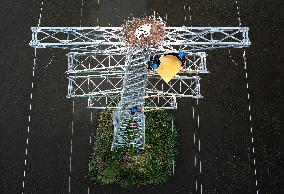
(220618) -- HARBIN, June 18, 2022 (Xinhua) -- In this aerial photo taken on June 15, 2022, young chicks of oriental white storks are seen at a nest while electricians are installing bird protecting boards under the nest on top of a power transmission tower in Qiqihar, northeast China's Heilongjiang Province. Some 100 nests have been made by oriental white storks, an endangered bird species, on power towers in Qiqihar. To protect both the birds and the power transmission lines, staff of local electric company took various measures such as placing protection boards, building artificial nests and conducting special patrols for the safety of the birds and the facilities. (Xinhua/Wang Jianwei)

  •  
CHINA-HEILONGJIANG-ORIENTAL WHITE STORK (CN)

CHINA-HEILONGJIANG-ORIENTAL WHITE STORK (CN)

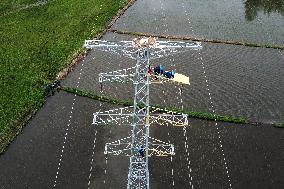
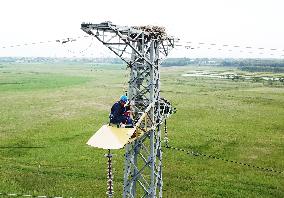
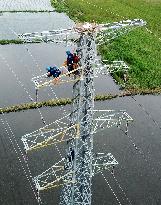
(220618) -- HARBIN, June 18, 2022 (Xinhua) -- Aerial photo taken on June 15, 2022 shows electricians installing bird protecting boards under the nest of oriental white storks on a power transmission tower in Qiqihar, northeast China's Heilongjiang Province. Some 100 nests have been made by oriental white storks, an endangered bird species, on power towers in Qiqihar. To protect both the birds and the power transmission lines, staff of local electric company took various measures such as placing protection boards, building artificial nests and conducting special patrols for the safety of the birds and the facilities. (Xinhua/Wang Jianwei)

  •  
CHINA-HEILONGJIANG-ORIENTAL WHITE STORK (CN)

CHINA-HEILONGJIANG-ORIENTAL WHITE STORK (CN)

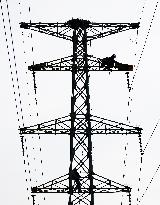
(220618) -- HARBIN, June 18, 2022 (Xinhua) -- Electricians carry bird protecting boards to install on power transmission towers in Qiqihar, northeast China's Heilongjiang Province, June 15, 2022. Some 100 nests have been made by oriental white storks, an endangered bird species, on power towers in Qiqihar. To protect both the birds and the power transmission lines, staff of local electric company took various measures such as placing protection boards, building artificial nests and conducting special patrols for the safety of the birds and the facilities. (Xinhua/Wang Jianwei)

  •  
CHINA-HEILONGJIANG-ORIENTAL WHITE STORK (CN)

CHINA-HEILONGJIANG-ORIENTAL WHITE STORK (CN)

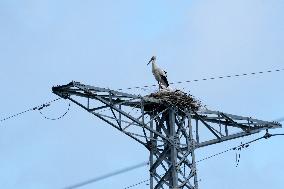
(220618) -- HARBIN, June 18, 2022 (Xinhua) -- An oriental white stork rests at its nest on top of a power transmission tower in Qiqihar, northeast China's Heilongjiang Province, June 15, 2022. Some 100 nests have been made by oriental white storks, an endangered bird species, on power towers in Qiqihar. To protect both the birds and the power transmission lines, staff of local electric company took various measures such as placing protection boards, building artificial nests and conducting special patrols for the safety of the birds and the facilities. (Xinhua/Wang Jianwei)

  •  
CHINA-HEILONGJIANG-ORIENTAL WHITE STORK (CN)

CHINA-HEILONGJIANG-ORIENTAL WHITE STORK (CN)

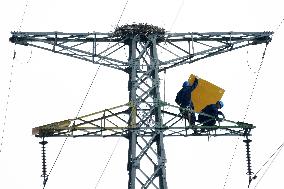
(220618) -- HARBIN, June 18, 2022 (Xinhua) -- Photo taken on June 15, 2022 shows electricians installing bird protecting boards under the nest of oriental white storks on a power transmission tower in Qiqihar, northeast China's Heilongjiang Province. Some 100 nests have been made by oriental white storks, an endangered bird species, on power towers in Qiqihar. To protect both the birds and the power transmission lines, staff of local electric company took various measures such as placing protection boards, building artificial nests and conducting special patrols for the safety of the birds and the facilities. (Xinhua/Wang Jianwei)

  •  
CHINA-HEILONGJIANG-ORIENTAL WHITE STORK (CN)

CHINA-HEILONGJIANG-ORIENTAL WHITE STORK (CN)

(220618) -- HARBIN, June 18, 2022 (Xinhua) -- Aerial photo taken on June 15, 2022 shows electricians installing bird protecting boards under the nest of oriental white storks on a power transmission tower in Qiqihar, northeast China's Heilongjiang Province. Some 100 nests have been made by oriental white storks, an endangered bird species, on power towers in Qiqihar. To protect both the birds and the power transmission lines, staff of local electric company took various measures such as placing protection boards, building artificial nests and conducting special patrols for the safety of the birds and the facilities. (Xinhua/Wang Jianwei)

  •  
CHINA-HEILONGJIANG-ORIENTAL WHITE STORK (CN)

CHINA-HEILONGJIANG-ORIENTAL WHITE STORK (CN)

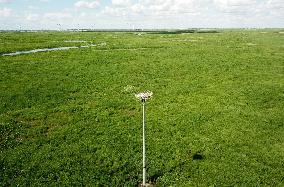
(220618) -- HARBIN, June 18, 2022 (Xinhua) -- Aerial photo taken on June 16, 2022 shows an artificial nest built for oriental white storks at a nature reserve in Qiqihar, northeast China's Heilongjiang Province. Some 100 nests have been made by oriental white storks, an endangered bird species, on power towers in Qiqihar. To protect both the birds and the power transmission lines, staff of local electric company took various measures such as placing protection boards, building artificial nests and conducting special patrols for the safety of the birds and the facilities. (Xinhua/Wang Jianwei)

  •  
CHINA-HEILONGJIANG-ORIENTAL WHITE STORK (CN)

CHINA-HEILONGJIANG-ORIENTAL WHITE STORK (CN)

(220618) -- HARBIN, June 18, 2022 (Xinhua) -- Photo taken on June 15, 2022 shows electricians installing bird protecting boards under the nest of oriental white storks on a power transmission tower in Qiqihar, northeast China's Heilongjiang Province. Some 100 nests have been made by oriental white storks, an endangered bird species, on power towers in Qiqihar. To protect both the birds and the power transmission lines, staff of local electric company took various measures such as placing protection boards, building artificial nests and conducting special patrols for the safety of the birds and the facilities. (Xinhua/Wang Jianwei)

  •  
CHINA-HEILONGJIANG-ORIENTAL WHITE STORK (CN)

CHINA-HEILONGJIANG-ORIENTAL WHITE STORK (CN)

(220618) -- HARBIN, June 18, 2022 (Xinhua) -- Aerial photo taken on June 15, 2022 shows electricians installing bird protecting boards under the nest of oriental white storks on a power transmission tower in Qiqihar, northeast China's Heilongjiang Province. Some 100 nests have been made by oriental white storks, an endangered bird species, on power towers in Qiqihar. To protect both the birds and the power transmission lines, staff of local electric company took various measures such as placing protection boards, building artificial nests and conducting special patrols for the safety of the birds and the facilities. (Xinhua/Wang Jianwei)

  •  
CHINA-HEILONGJIANG-ORIENTAL WHITE STORK (CN)

CHINA-HEILONGJIANG-ORIENTAL WHITE STORK (CN)

(220618) -- HARBIN, June 18, 2022 (Xinhua) -- Aerial photo taken on June 15, 2022 shows electricians installing bird protecting boards under the nest of oriental white storks on a power transmission tower in Qiqihar, northeast China's Heilongjiang Province. Some 100 nests have been made by oriental white storks, an endangered bird species, on power towers in Qiqihar. To protect both the birds and the power transmission lines, staff of local electric company took various measures such as placing protection boards, building artificial nests and conducting special patrols for the safety of the birds and the facilities. (Xinhua/Wang Jianwei)

  •  
CHINA-HEILONGJIANG-ORIENTAL WHITE STORK (CN)

CHINA-HEILONGJIANG-ORIENTAL WHITE STORK (CN)

(220618) -- HARBIN, June 18, 2022 (Xinhua) -- Aerial photo taken on June 16, 2022 shows an artificial nest built for oriental white storks at a nature reserve in Qiqihar, northeast China's Heilongjiang Province. Some 100 nests have been made by oriental white storks, an endangered bird species, on power towers in Qiqihar. To protect both the birds and the power transmission lines, staff of local electric company took various measures such as placing protection boards, building artificial nests and conducting special patrols for the safety of the birds and the facilities. (Xinhua/Wang Jianwei)

  •  
CHINA-HEILONGJIANG-ORIENTAL WHITE STORK (CN)

CHINA-HEILONGJIANG-ORIENTAL WHITE STORK (CN)

(220618) -- HARBIN, June 18, 2022 (Xinhua) -- In this aerial photo taken on June 15, 2022, young chicks of oriental white storks are seen at a nest while electricians are installing bird protecting boards under the nest on top of a power transmission tower in Qiqihar, northeast China's Heilongjiang Province. Some 100 nests have been made by oriental white storks, an endangered bird species, on power towers in Qiqihar. To protect both the birds and the power transmission lines, staff of local electric company took various measures such as placing protection boards, building artificial nests and conducting special patrols for the safety of the birds and the facilities. (Xinhua/Wang Jianwei)

  •  
CHINA-HEILONGJIANG-ORIENTAL WHITE STORK (CN)

CHINA-HEILONGJIANG-ORIENTAL WHITE STORK (CN)

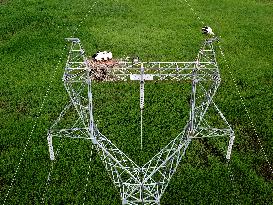
(220618) -- HARBIN, June 18, 2022 (Xinhua) -- Aerial photo taken on June 16, 2022 shows a nest of oriental white storks on top of a power transmission tower in Qiqihar, northeast China's Heilongjiang Province. Some 100 nests have been made by oriental white storks, an endangered bird species, on power towers in Qiqihar. To protect both the birds and the power transmission lines, staff of local electric company took various measures such as placing protection boards, building artificial nests and conducting special patrols for the safety of the birds and the facilities. (Xinhua/Wang Jianwei)

  • Main
  • Top
  • Editorial
  • Creative
  • About Us
  • About ILG
  • Terms of use
  • Company
  • BEHIND
  • Price List
  • Single Plan
  • Monthly Plan
  • Services
  • Shooting
  • Rights Clearance
  • Support
  • FAQ
  • How To Buy
  • Contact Us
  • Become a Partner

© KYODO NEWS IMAGES INC

All Rights Reserved.

  • Editorial
  • Olympics
  • News
  • Sports
  • Japan
  • Tech
  • Royal
  • Disaster
  • NorthKorea
  • Old Japan
  • SNS
  • Creative
  • Food
  • Japan
  • Landscape
  • Animal
  • Popular
  • #Ukraine
  • #Thailand
  • #coronavirus
  • #N. Korea
  • #China
  • #Russia
  • #Ukraine
  • #Thailand
  • #coronavirus
  • #N. Korea
  • #China
  • #Russia
  • Food
  • Japan
  • Landscape
  • Animal
  • Olympics
  • News
  • Sports
  • Japan
  • Tech
  • Royal
  • Disaster
  • NorthKorea
  • Old Japan
  • SNS