•  
Sake Making At Jozan Brewery In Fukui - Japan

Sake Making At Jozan Brewery In Fukui - Japan

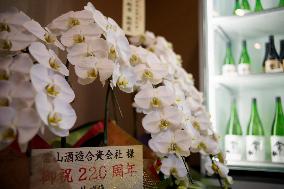
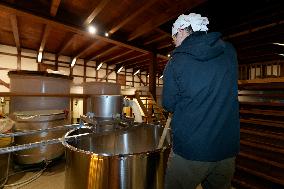
A flower basket marking the 220th anniversary of the establishment at Jozan Brewery in Fukui. Japanese alcoholic beverages, including sake (nihonshu), shochu and awamori, are made from grains and water. Craftspeople use koji mold to convert the starch in the ingredients into sugar, and oversee the process to make sure the mold grows in optimal conditions. Jozan, a brewery located in Fukui Prefecture, a region renowned for its high-quality rice, has upheld traditional sake-making for over 220 years. Led by Shinpei Tokoyama, the brewery exemplifies its ongoing efforts in coping with challenges in modern era while preserving traditional craftsmanship. With modern techniques, Jozan has realized a meticulous control over the brewing process, ensuring the consistency of product quality without compromising the essence of traditional making methods. In 2017, Jozan also renovated its brewing space, combining functionality with modern design to accommodate both production needs and visitors from around the world. The

  •  
Sake Making At Jozan Brewery In Fukui - Japan

Sake Making At Jozan Brewery In Fukui - Japan

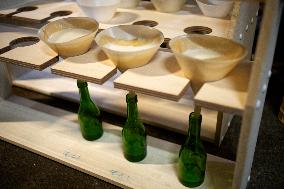
Samples of fresh sake are pictured at Jozan Brewery in Fukui. Japanese alcoholic beverages, including sake (nihonshu), shochu and awamori, are made from grains and water. Craftspeople use koji mold to convert the starch in the ingredients into sugar, and oversee the process to make sure the mold grows in optimal conditions. Jozan, a brewery located in Fukui Prefecture, a region renowned for its high-quality rice, has upheld traditional sake-making for over 220 years. Led by Shinpei Tokoyama, the brewery exemplifies its ongoing efforts in coping with challenges in modern era while preserving traditional craftsmanship. With modern techniques, Jozan has realized a meticulous control over the brewing process, ensuring the consistency of product quality without compromising the essence of traditional making methods. In 2017, Jozan also renovated its brewing space, combining functionality with modern design to accommodate both production needs and visitors from around the world. The United Nations Educational, Scie

  •  
Sake Making At Jozan Brewery In Fukui - Japan

Sake Making At Jozan Brewery In Fukui - Japan

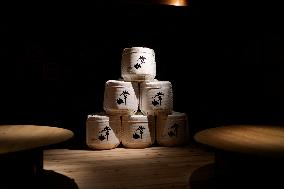
Trademarks of Jozan Brewery are pictured at the reception area of the brewery in Fukui. Japanese alcoholic beverages, including sake (nihonshu), shochu and awamori, are made from grains and water. Craftspeople use koji mold to convert the starch in the ingredients into sugar, and oversee the process to make sure the mold grows in optimal conditions. Jozan, a brewery located in Fukui Prefecture, a region renowned for its high-quality rice, has upheld traditional sake-making for over 220 years. Led by Shinpei Tokoyama, the brewery exemplifies its ongoing efforts in coping with challenges in modern era while preserving traditional craftsmanship. With modern techniques, Jozan has realized a meticulous control over the brewing process, ensuring the consistency of product quality without compromising the essence of traditional making methods. In 2017, Jozan also renovated its brewing space, combining functionality with modern design to accommodate both production needs and visitors from around the world. The United

  •  
Sake Making At Jozan Brewery In Fukui - Japan

Sake Making At Jozan Brewery In Fukui - Japan

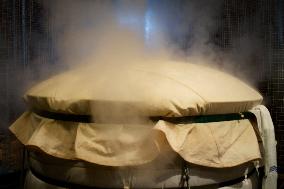
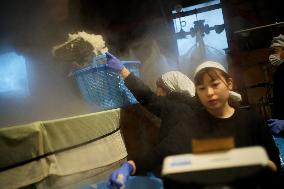
Cleaned rice is steamed at Jozan Brewery in Fukui. Japanese alcoholic beverages, including sake (nihonshu), shochu and awamori, are made from grains and water. Craftspeople use koji mold to convert the starch in the ingredients into sugar, and oversee the process to make sure the mold grows in optimal conditions. Jozan, a brewery located in Fukui Prefecture, a region renowned for its high-quality rice, has upheld traditional sake-making for over 220 years. Led by Shinpei Tokoyama, the brewery exemplifies its ongoing efforts in coping with challenges in modern era while preserving traditional craftsmanship. With modern techniques, Jozan has realized a meticulous control over the brewing process, ensuring the consistency of product quality without compromising the essence of traditional making methods. In 2017, Jozan also renovated its brewing space, combining functionality with modern design to accommodate both production needs and visitors from around the world. The United Nations Educational, Scientific and

  •  
Sake Making At Jozan Brewery In Fukui - Japan

Sake Making At Jozan Brewery In Fukui - Japan

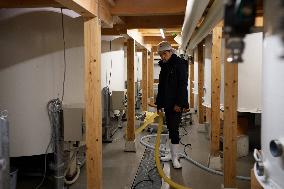
Shinpei Tokoyama waits for moromi to flow into the filter at Jozan Brewery in Fukui. Japanese alcoholic beverages, including sake (nihonshu), shochu and awamori, are made from grains and water. Craftspeople use koji mold to convert the starch in the ingredients into sugar, and oversee the process to make sure the mold grows in optimal conditions. Jozan, a brewery located in Fukui Prefecture, a region renowned for its high-quality rice, has upheld traditional sake-making for over 220 years. Led by Shinpei Tokoyama, the brewery exemplifies its ongoing efforts in coping with challenges in modern era while preserving traditional craftsmanship. With modern techniques, Jozan has realized a meticulous control over the brewing process, ensuring the consistency of product quality without compromising the essence of traditional making methods. In 2017, Jozan also renovated its brewing space, combining functionality with modern design to accommodate both production needs and visitors from around the world. The United Na

  •  
Sake Making At Jozan Brewery In Fukui - Japan

Sake Making At Jozan Brewery In Fukui - Japan

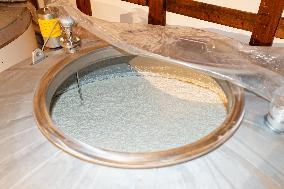
Fermenting moromi is pictured at Jozan Brewery in Fukui. Japanese alcoholic beverages, including sake (nihonshu), shochu and awamori, are made from grains and water. Craftspeople use koji mold to convert the starch in the ingredients into sugar, and oversee the process to make sure the mold grows in optimal conditions. Jozan, a brewery located in Fukui Prefecture, a region renowned for its high-quality rice, has upheld traditional sake-making for over 220 years. Led by Shinpei Tokoyama, the brewery exemplifies its ongoing efforts in coping with challenges in modern era while preserving traditional craftsmanship. With modern techniques, Jozan has realized a meticulous control over the brewing process, ensuring the consistency of product quality without compromising the essence of traditional making methods. In 2017, Jozan also renovated its brewing space, combining functionality with modern design to accommodate both production needs and visitors from around the world. The United Nations Educational, Scientifi

  •  
Sake Making At Jozan Brewery In Fukui - Japan

Sake Making At Jozan Brewery In Fukui - Japan

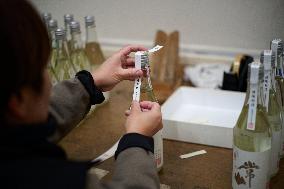
A worker seals a bottle of sake at Jozan Brewery in Fukui. Japanese alcoholic beverages, including sake (nihonshu), shochu and awamori, are made from grains and water. Craftspeople use koji mold to convert the starch in the ingredients into sugar, and oversee the process to make sure the mold grows in optimal conditions. Jozan, a brewery located in Fukui Prefecture, a region renowned for its high-quality rice, has upheld traditional sake-making for over 220 years. Led by Shinpei Tokoyama, the brewery exemplifies its ongoing efforts in coping with challenges in modern era while preserving traditional craftsmanship. With modern techniques, Jozan has realized a meticulous control over the brewing process, ensuring the consistency of product quality without compromising the essence of traditional making methods. In 2017, Jozan also renovated its brewing space, combining functionality with modern design to accommodate both production needs and visitors from around the world. The United Nations Educational, Scienti

  •  
Sake Making At Jozan Brewery In Fukui - Japan

Sake Making At Jozan Brewery In Fukui - Japan

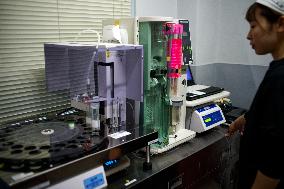
A worker examines samples of fresh sake at Jozan Brewery in Fukui. Japanese alcoholic beverages, including sake (nihonshu), shochu and awamori, are made from grains and water. Craftspeople use koji mold to convert the starch in the ingredients into sugar, and oversee the process to make sure the mold grows in optimal conditions. Jozan, a brewery located in Fukui Prefecture, a region renowned for its high-quality rice, has upheld traditional sake-making for over 220 years. Led by Shinpei Tokoyama, the brewery exemplifies its ongoing efforts in coping with challenges in modern era while preserving traditional craftsmanship. With modern techniques, Jozan has realized a meticulous control over the brewing process, ensuring the consistency of product quality without compromising the essence of traditional making methods. In 2017, Jozan also renovated its brewing space, combining functionality with modern design to accommodate both production needs and visitors from around the world. The United Nations Educational,

  •  
Sake Making At Jozan Brewery In Fukui - Japan

Sake Making At Jozan Brewery In Fukui - Japan

A worker stirs the mixture of steamed rice, koji, water and Shubo at Jozan Brewery in Fukui. Japanese alcoholic beverages, including sake (nihonshu), shochu and awamori, are made from grains and water. Craftspeople use koji mold to convert the starch in the ingredients into sugar, and oversee the process to make sure the mold grows in optimal conditions. Jozan, a brewery located in Fukui Prefecture, a region renowned for its high-quality rice, has upheld traditional sake-making for over 220 years. Led by Shinpei Tokoyama, the brewery exemplifies its ongoing efforts in coping with challenges in modern era while preserving traditional craftsmanship. With modern techniques, Jozan has realized a meticulous control over the brewing process, ensuring the consistency of product quality without compromising the essence of traditional making methods. In 2017, Jozan also renovated its brewing space, combining functionality with modern design to accommodate both production needs and visitors from around the world. The U

  •  
Sake Making At Jozan Brewery In Fukui - Japan

Sake Making At Jozan Brewery In Fukui - Japan

Bags of locally produced rice, a raw material for sake-making, is seen at Jozan Brewery in Fukui. Japanese alcoholic beverages, including sake (nihonshu), shochu and awamori, are made from grains and water. Craftspeople use koji mold to convert the starch in the ingredients into sugar, and oversee the process to make sure the mold grows in optimal conditions. Jozan, a brewery located in Fukui Prefecture, a region renowned for its high-quality rice, has upheld traditional sake-making for over 220 years. Led by Shinpei Tokoyama, the brewery exemplifies its ongoing efforts in coping with challenges in modern era while preserving traditional craftsmanship. With modern techniques, Jozan has realized a meticulous control over the brewing process, ensuring the consistency of product quality without compromising the essence of traditional making methods. In 2017, Jozan also renovated its brewing space, combining functionality with modern design to accommodate both production needs and visitors from around the world.

  •  
Sake Making At Jozan Brewery In Fukui - Japan

Sake Making At Jozan Brewery In Fukui - Japan

Workers weigh steamed rice at Jozan Brewery in Fukui. Japanese alcoholic beverages, including sake (nihonshu), shochu and awamori, are made from grains and water. Craftspeople use koji mold to convert the starch in the ingredients into sugar, and oversee the process to make sure the mold grows in optimal conditions. Jozan, a brewery located in Fukui Prefecture, a region renowned for its high-quality rice, has upheld traditional sake-making for over 220 years. Led by Shinpei Tokoyama, the brewery exemplifies its ongoing efforts in coping with challenges in modern era while preserving traditional craftsmanship. With modern techniques, Jozan has realized a meticulous control over the brewing process, ensuring the consistency of product quality without compromising the essence of traditional making methods. In 2017, Jozan also renovated its brewing space, combining functionality with modern design to accommodate both production needs and visitors from around the world. The United Nations Educational, Scientific a

  •  
Sake Making At Jozan Brewery In Fukui - Japan

Sake Making At Jozan Brewery In Fukui - Japan

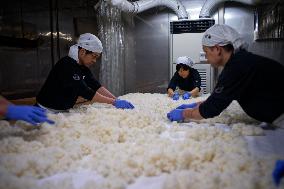
Shinpei Tokoyama (L) and workers spread steamed rice mixed with koji mold at Jozan Brewery in Fukui. Japanese alcoholic beverages, including sake (nihonshu), shochu and awamori, are made from grains and water. Craftspeople use koji mold to convert the starch in the ingredients into sugar, and oversee the process to make sure the mold grows in optimal conditions. Jozan, a brewery located in Fukui Prefecture, a region renowned for its high-quality rice, has upheld traditional sake-making for over 220 years. Led by Shinpei Tokoyama, the brewery exemplifies its ongoing efforts in coping with challenges in modern era while preserving traditional craftsmanship. With modern techniques, Jozan has realized a meticulous control over the brewing process, ensuring the consistency of product quality without compromising the essence of traditional making methods. In 2017, Jozan also renovated its brewing space, combining functionality with modern design to accommodate both production needs and visitors from around the worl

  •  
Sake Making At Jozan Brewery In Fukui - Japan

Sake Making At Jozan Brewery In Fukui - Japan

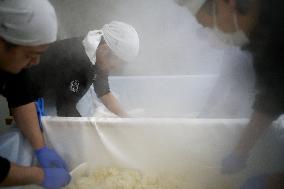
Shinpei Tokoyama (2nd L) and workers spread koji mold over steamed rice at Jozan Brewery in Fukui. Japanese alcoholic beverages, including sake (nihonshu), shochu and awamori, are made from grains and water. Craftspeople use koji mold to convert the starch in the ingredients into sugar, and oversee the process to make sure the mold grows in optimal conditions. Jozan, a brewery located in Fukui Prefecture, a region renowned for its high-quality rice, has upheld traditional sake-making for over 220 years. Led by Shinpei Tokoyama, the brewery exemplifies its ongoing efforts in coping with challenges in modern era while preserving traditional craftsmanship. With modern techniques, Jozan has realized a meticulous control over the brewing process, ensuring the consistency of product quality without compromising the essence of traditional making methods. In 2017, Jozan also renovated its brewing space, combining functionality with modern design to accommodate both production needs and visitors from around the world.

  •  
Japan sake-brewing added to UNESCO intangible heritage

Japan sake-brewing added to UNESCO intangible heritage

Okinawa Gov. Denny Tamaki meets the press in the prefectural capital Naha on Dec. 5, 2024, a day after traditional knowledge and skills used in the production of Japanese distilled spirits, including awamori produced in the southern Japan prefecture, were approved for addition to the U.N. Educational, Scientific and Cultural Organization's Intangible Cultural Heritage list during its intergovernmental committee meeting in Asuncion, Paraguay.

  •  
Japan sake-brewing added to UNESCO intangible heritage

Japan sake-brewing added to UNESCO intangible heritage

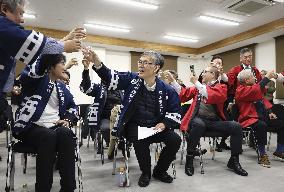
Sake brewers from the southwestern Japan prefecture of Kumamoto toast in the small hours of Dec. 5, 2024, in the city of Kumamoto, after traditional knowledge and skills of Japanese sake-brewing using "koji" mold was approved for addition to the U.N. Educational, Scientific and Cultural Organization's Intangible Cultural Heritage list during its intergovernmental committee meeting the previous day in Asuncion, Paraguay.

  •  
Japan sake-brewing added to UNESCO intangible heritage

Japan sake-brewing added to UNESCO intangible heritage

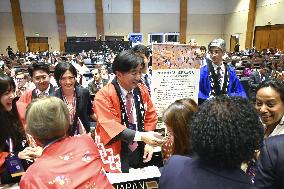
Takehiro Kano (C), ambassador to the permanent delegation of Japan to the U.N. Educational, Scientific and Cultural Organization, is congratulated by his counterparts after traditional knowledge and skills of Japanese sake-brewing using "koji" mold was approved for addition to the Intangible Cultural Heritage list during an intergovernmental committee meeting in Asuncion, Paraguay, on Dec. 4, 2024.

  •  
Japan sake-brewing added to UNESCO intangible heritage

Japan sake-brewing added to UNESCO intangible heritage

Sake brewers from the southwestern Japan prefecture of Kumamoto toast in the small hours of Dec. 5, 2024, in the city of Kumamoto, after traditional knowledge and skills of Japanese sake-brewing using "koji" mold was approved for addition to the U.N. Educational, Scientific and Cultural Organization's Intangible Cultural Heritage list during an intergovernmental committee meeting in Asuncion, Paraguay.

  •  
Japan sake-brewing added to UNESCO intangible heritage

Japan sake-brewing added to UNESCO intangible heritage

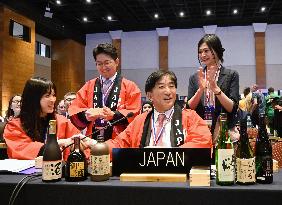
Takehiro Kano (front, R), ambassador to the permanent delegation of Japan to the U.N. Educational, Scientific and Cultural Organization, and other members of the delegation celebrate after traditional knowledge and skills of Japanese sake-brewing using "koji" mold was approved for addition to the Intangible Cultural Heritage list during an intergovernmental committee meeting in Asuncion, Paraguay, on Dec. 4, 2024.

  •  
Japan sake-brewing added to UNESCO intangible heritage

Japan sake-brewing added to UNESCO intangible heritage

Takehiro Kano (front), ambassador to the permanent delegation of Japan to the U.N. Educational, Scientific and Cultural Organization, speaks after traditional knowledge and skills of Japanese sake-brewing using "koji" mold was approved for addition to the Intangible Cultural Heritage list during an intergovernmental committee meeting in Asuncion, Paraguay, on Dec. 4, 2024.

  •  
Winter Brewing Ceremony For Yellow Rice Wine - China

Winter Brewing Ceremony For Yellow Rice Wine - China

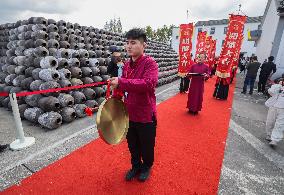
A start-of-winter brewing ceremony for yellow rice wine is held at Shendang Winery Co., Ltd. in Haiyan County of Jiaxing City, east China's Zhejiang Province, Nov. 9, 2024. Shendang Winery Co., Ltd., a century-old winery in Shendang Ancient Town in Jiaxing, held a start-of-winter brewing ceremony for yellow rice wine on Saturday. The ceremony is a tradition observed around Lidong, or Start of Winter, the 19th of the 24 solar terms in the Chinese lunar calendar. Photo by Xinhua/Xu Yu/ABACAPRESS.COM

  •  
Winter Brewing Ceremony For Yellow Rice Wine - China

Winter Brewing Ceremony For Yellow Rice Wine - China

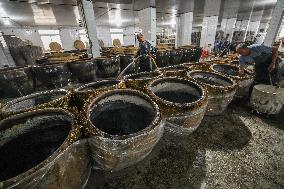
Workers clean brewing vats at Shendang Winery Co., Ltd. in Haiyan County of Jiaxing City, east China's Zhejiang Province, Nov. 9, 2024. Shendang Winery Co., Ltd., a century-old winery in Shendang Ancient Town in Jiaxing, held a start-of-winter brewing ceremony for yellow rice wine on Saturday. The ceremony is a tradition observed around Lidong, or Start of Winter, the 19th of the 24 solar terms in the Chinese lunar calendar. Photo by Xinhua/Xu Yu/ABACAPRESS.COM

  •  
Winter Brewing Ceremony For Yellow Rice Wine - China

Winter Brewing Ceremony For Yellow Rice Wine - China

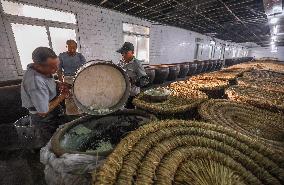
Staff members work at Shendang Winery Co., Ltd. in Haiyan County of Jiaxing City, east China's Zhejiang Province, Nov. 9, 2024. Shendang Winery Co., Ltd., a century-old winery in Shendang Ancient Town in Jiaxing, held a start-of-winter brewing ceremony for yellow rice wine on Saturday. The ceremony is a tradition observed around Lidong, or Start of Winter, the 19th of the 24 solar terms in the Chinese lunar calendar. Photo by Xinhua/Xu Yu/ABACAPRESS.COM

  •  
Winter Brewing Ceremony For Yellow Rice Wine - China

Winter Brewing Ceremony For Yellow Rice Wine - China

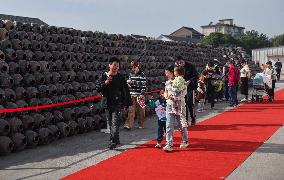
Tourists visit Shendang Winery Co., Ltd. in Haiyan County of Jiaxing City, east China's Zhejiang Province, Nov. 9, 2024. Shendang Winery Co., Ltd., a century-old winery in Shendang Ancient Town in Jiaxing, held a start-of-winter brewing ceremony for yellow rice wine on Saturday. The ceremony is a tradition observed around Lidong, or Start of Winter, the 19th of the 24 solar terms in the Chinese lunar calendar. Photo by Xinhua/Xu Yu/ABACAPRESS.COM

  •  
Winter Brewing Ceremony For Yellow Rice Wine - China

Winter Brewing Ceremony For Yellow Rice Wine - China

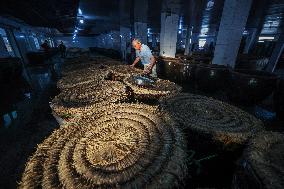
A staff member works at Shendang Winery Co., Ltd. in Haiyan County of Jiaxing City, east China's Zhejiang Province, Nov. 9, 2024. Shendang Winery Co., Ltd., a century-old winery in Shendang Ancient Town in Jiaxing, held a start-of-winter brewing ceremony for yellow rice wine on Saturday. The ceremony is a tradition observed around Lidong, or Start of Winter, the 19th of the 24 solar terms in the Chinese lunar calendar. Photo by Xinhua/Xu Yu/ABACAPRESS.COM

  •  
XINHUA PHOTOS OF THE DAY

XINHUA PHOTOS OF THE DAY

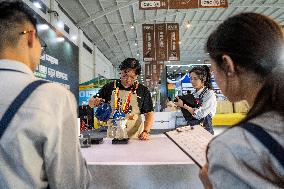
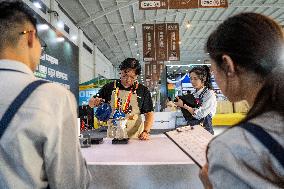
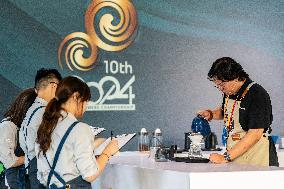
(240725) -- BEIJING, July 25, 2024 Photo by Xinhua/ABACAPRESS.COM) -- A contestant brews coffee during a coffee brewing competition at the pavilion dedicated to the coffee industry during the 8th China-South Asia Expo in Kunming, southwest China's Yunnan Province, July 24, 2024. The 8th China-South Asia Expo opened on Tuesday in Kunming, the capital of southwest China's Yunnan Province, attracting over 2,000 exhibitors. Photo by Xinhua/ABACAPRESS.COM/Hu Chao)

  •  
Traditional Torch Festival Of Yi Ethnic Group - China

Traditional Torch Festival Of Yi Ethnic Group - China

(240724) -- KUNMING, July 24, 2024 (Xinhua) -- A contestant brews coffee during a coffee brewing competition at the pavilion dedicated to the coffee industry during the 8th China-South Asia Expo in Kunming, southwest China's Yunnan Province, July 24, 2024. The 8th China-South Asia Expo opened on Tuesday in Kunming, the capital of southwest China's Yunnan Province, attracting over 2,000 exhibitors. Notably, for the first time, a pavilion dedicated to the coffee industry has been established, highlighting Yunnan's status as China's premier coffee producer. Over 160 companies are showcasing their products in this pavilion. (Xinhua/Hu Chao)

  •  
CHINA-YUNNAN-KUNMING-CHINA-SOUTH ASIA EXPO-COFFEE-PAVILION (CN)

CHINA-YUNNAN-KUNMING-CHINA-SOUTH ASIA EXPO-COFFEE-PAVILION (CN)

(240724) -- KUNMING, July 24, 2024 Photo by Xinhua/ABACAPRESS.COM) -- A contestant brews coffee during a coffee brewing competition at the pavilion dedicated to the coffee industry during the 8th China-South Asia Expo in Kunming, southwest China's Yunnan Province, July 24, 2024. The 8th China-South Asia Expo opened on Tuesday in Kunming, the capital of southwest China's Yunnan Province, attracting over 2,000 exhibitors. Notably, for the first time, a pavilion dedicated to the coffee industry has been established, highlighting Yunnan's status as China's premier coffee producer. Over 160 companies are showcasing their products in this pavilion. Photo by Xinhua/ABACAPRESS.COM/Hu Chao)

  •  
CHINA-YUNNAN-KUNMING-CHINA-SOUTH ASIA EXPO-COFFEE-PAVILION (CN)

CHINA-YUNNAN-KUNMING-CHINA-SOUTH ASIA EXPO-COFFEE-PAVILION (CN)

(240724) -- KUNMING, July 24, 2024 Photo by Xinhua/ABACAPRESS.COM) -- A contestant brews coffee during a coffee brewing competition at the pavilion dedicated to the coffee industry during the 8th China-South Asia Expo in Kunming, southwest China's Yunnan Province, July 24, 2024. The 8th China-South Asia Expo opened on Tuesday in Kunming, the capital of southwest China's Yunnan Province, attracting over 2,000 exhibitors. Notably, for the first time, a pavilion dedicated to the coffee industry has been established, highlighting Yunnan's status as China's premier coffee producer. Over 160 companies are showcasing their products in this pavilion. Photo by Xinhua/ABACAPRESS.COM/Hu Chao)

  •  
ChineseToday | Tea mixologist brings Huangshan tea culture in vogue

ChineseToday | Tea mixologist brings Huangshan tea culture in vogue

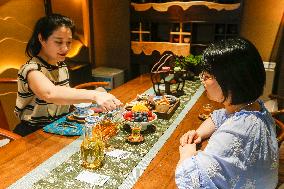
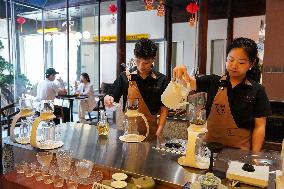
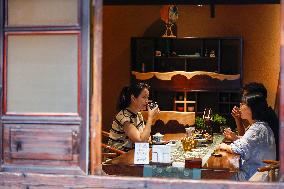
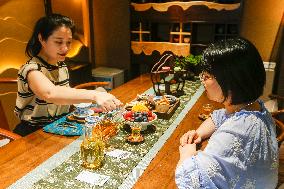
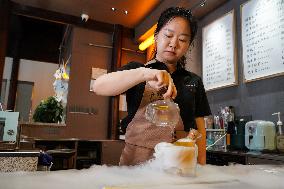
(240602) -- HUANGSHAN, June 2, 2024 Photo by Xinhua/ABACAPRESS.COM) -- Customers drink tea beverages at a shop in Huangshan City, east China's Anhui Province, May 23, 2024. Wang Sun is the founder of Demingshe, a tea art vocational training school in Huangshan City. Huangshan City is the place of origin of several famous teas including Huangshan Maofeng, Taiping Houkui and Keemun black tea, and boasts a long history of drinking tea. As a pioneer in developing innovative tea-making skills and alternative ways of drinking tea, Wang started the research and promotion of the new-style tea beverages in 2021. Inspired by bartenders, she uses traditional Huangshan teas as base, employing bar tools to blend the tea with fresh fruits, herbal medicines, fermented rice wine, or ice cubes, creating beverages with diverse flavours, mouthfeels, and appearances. The tea beverages hit the market and were well received by consumers, meeting their preferences of tea drinking that were dissimilar from traditional brewing method

  •  
ChineseToday | Tea mixologist brings Huangshan tea culture in vogue

ChineseToday | Tea mixologist brings Huangshan tea culture in vogue

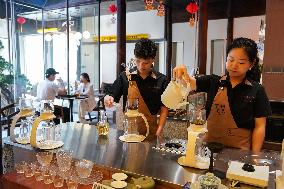
(240602) -- HUANGSHAN, June 2, 2024 Photo by Xinhua/ABACAPRESS.COM) -- Tea mixologists make beverages at a shop in Huangshan City, east China's Anhui Province, May 23, 2024. Wang Sun is the founder of Demingshe, a tea art vocational training school in Huangshan City. Huangshan City is the place of origin of several famous teas including Huangshan Maofeng, Taiping Houkui and Keemun black tea, and boasts a long history of drinking tea. As a pioneer in developing innovative tea-making skills and alternative ways of drinking tea, Wang started the research and promotion of the new-style tea beverages in 2021. Inspired by bartenders, she uses traditional Huangshan teas as base, employing bar tools to blend the tea with fresh fruits, herbal medicines, fermented rice wine, or ice cubes, creating beverages with diverse flavours, mouthfeels, and appearances. The tea beverages hit the market and were well received by consumers, meeting their preferences of tea drinking that were dissimilar from traditional brewing metho

  •  
ChineseToday | Tea mixologist brings Huangshan tea culture in vogue

ChineseToday | Tea mixologist brings Huangshan tea culture in vogue

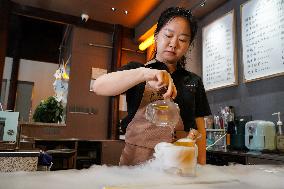
(240602) -- HUANGSHAN, June 2, 2024 Photo by Xinhua/ABACAPRESS.COM) -- A tea mixologist makes a beverage at a shop in Huangshan City, east China's Anhui Province, May 23, 2024. Wang Sun is the founder of Demingshe, a tea art vocational training school in Huangshan City. Huangshan City is the place of origin of several famous teas including Huangshan Maofeng, Taiping Houkui and Keemun black tea, and boasts a long history of drinking tea. As a pioneer in developing innovative tea-making skills and alternative ways of drinking tea, Wang started the research and promotion of the new-style tea beverages in 2021. Inspired by bartenders, she uses traditional Huangshan teas as base, employing bar tools to blend the tea with fresh fruits, herbal medicines, fermented rice wine, or ice cubes, creating beverages with diverse flavours, mouthfeels, and appearances. The tea beverages hit the market and were well received by consumers, meeting their preferences of tea drinking that were dissimilar from traditional brewing me

  •  
ChineseToday | Tea mixologist brings Huangshan tea culture in vogue

ChineseToday | Tea mixologist brings Huangshan tea culture in vogue

(240602) -- HUANGSHAN, June 2, 2024 Photo by Xinhua/ABACAPRESS.COM) -- Customers drink tea beverages at a shop in Huangshan City, east China's Anhui Province, May 23, 2024. Wang Sun is the founder of Demingshe, a tea art vocational training school in Huangshan City. Huangshan City is the place of origin of several famous teas including Huangshan Maofeng, Taiping Houkui and Keemun black tea, and boasts a long history of drinking tea. As a pioneer in developing innovative tea-making skills and alternative ways of drinking tea, Wang started the research and promotion of the new-style tea beverages in 2021. Inspired by bartenders, she uses traditional Huangshan teas as base, employing bar tools to blend the tea with fresh fruits, herbal medicines, fermented rice wine, or ice cubes, creating beverages with diverse flavours, mouthfeels, and appearances. The tea beverages hit the market and were well received by consumers, meeting their preferences of tea drinking that were dissimilar from traditional brewing method

  •  
ChineseToday | Tea mixologist brings Huangshan tea culture in vogue

ChineseToday | Tea mixologist brings Huangshan tea culture in vogue

(240602) -- HUANGSHAN, June 2, 2024 (Xinhua) -- Customers drink tea beverages at a shop in Huangshan City, east China's Anhui Province, May 23, 2024. Wang Sun is the founder of Demingshe, a tea art vocational training school in Huangshan City. Huangshan City is the place of origin of several famous teas including Huangshan Maofeng, Taiping Houkui and Keemun black tea, and boasts a long history of drinking tea. As a pioneer in developing innovative tea-making skills and alternative ways of drinking tea, Wang started the research and promotion of the new-style tea beverages in 2021. Inspired by bartenders, she uses traditional Huangshan teas as base, employing bar tools to blend the tea with fresh fruits, herbal medicines, fermented rice wine, or ice cubes, creating beverages with diverse flavours, mouthfeels, and appearances. The tea beverages hit the market and were well received by consumers, meeting their preferences of tea drinking that were dissimilar from traditional brewing methods. "Young peop

  •  
ChineseToday | Tea mixologist brings Huangshan tea culture in vogue

ChineseToday | Tea mixologist brings Huangshan tea culture in vogue

(240602) -- HUANGSHAN, June 2, 2024 (Xinhua) -- A tea mixologist makes a beverage at a shop in Huangshan City, east China's Anhui Province, May 23, 2024. Wang Sun is the founder of Demingshe, a tea art vocational training school in Huangshan City. Huangshan City is the place of origin of several famous teas including Huangshan Maofeng, Taiping Houkui and Keemun black tea, and boasts a long history of drinking tea. As a pioneer in developing innovative tea-making skills and alternative ways of drinking tea, Wang started the research and promotion of the new-style tea beverages in 2021. Inspired by bartenders, she uses traditional Huangshan teas as base, employing bar tools to blend the tea with fresh fruits, herbal medicines, fermented rice wine, or ice cubes, creating beverages with diverse flavours, mouthfeels, and appearances. The tea beverages hit the market and were well received by consumers, meeting their preferences of tea drinking that were dissimilar from traditional brewing methods. "Young

  •  
ChineseToday | Tea mixologist brings Huangshan tea culture in vogue

ChineseToday | Tea mixologist brings Huangshan tea culture in vogue

(240602) -- HUANGSHAN, June 2, 2024 (Xinhua) -- Tea mixologists make beverages at a shop in Huangshan City, east China's Anhui Province, May 23, 2024. Wang Sun is the founder of Demingshe, a tea art vocational training school in Huangshan City. Huangshan City is the place of origin of several famous teas including Huangshan Maofeng, Taiping Houkui and Keemun black tea, and boasts a long history of drinking tea. As a pioneer in developing innovative tea-making skills and alternative ways of drinking tea, Wang started the research and promotion of the new-style tea beverages in 2021. Inspired by bartenders, she uses traditional Huangshan teas as base, employing bar tools to blend the tea with fresh fruits, herbal medicines, fermented rice wine, or ice cubes, creating beverages with diverse flavours, mouthfeels, and appearances. The tea beverages hit the market and were well received by consumers, meeting their preferences of tea drinking that were dissimilar from traditional brewing methods. "Young peo

  •  
ChineseToday | Tea mixologist brings Huangshan tea culture in vogue

ChineseToday | Tea mixologist brings Huangshan tea culture in vogue

(240602) -- HUANGSHAN, June 2, 2024 (Xinhua) -- Customers drink tea beverages at a shop in Huangshan City, east China's Anhui Province, May 23, 2024. Wang Sun is the founder of Demingshe, a tea art vocational training school in Huangshan City. Huangshan City is the place of origin of several famous teas including Huangshan Maofeng, Taiping Houkui and Keemun black tea, and boasts a long history of drinking tea. As a pioneer in developing innovative tea-making skills and alternative ways of drinking tea, Wang started the research and promotion of the new-style tea beverages in 2021. Inspired by bartenders, she uses traditional Huangshan teas as base, employing bar tools to blend the tea with fresh fruits, herbal medicines, fermented rice wine, or ice cubes, creating beverages with diverse flavours, mouthfeels, and appearances. The tea beverages hit the market and were well received by consumers, meeting their preferences of tea drinking that were dissimilar from traditional brewing methods. "Young peop

  •  
CHINA-SHANGHAI-FACTORIES-EVOLUTION (CN)

CHINA-SHANGHAI-FACTORIES-EVOLUTION (CN)

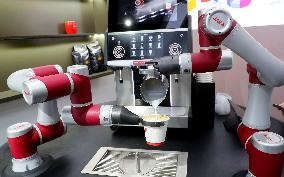
(240524) -- SHANGHAI, May 24, 2024 (Xinhua) -- A robot demonstrates coffee-brewing at an exhibition hall of JAKA Robotics in east China's Shanghai, May 24, 2024. TO GO WITH "China Focus: From robots to peacocks, the evolution of China's factories" (Xinhua/Gong Bing)

  •  
Yebisu Brewery Tokyo

Yebisu Brewery Tokyo

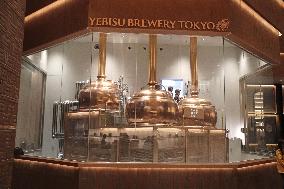
Photo taken on April 2, 2024, shows brewing pots at Sapporo Breweries Ltd.'s Yebisu Brewery Tokyo facility in Tokyo.

  •  
Liquor-making craft of China's Liaoyuan Longquan Distillery Co.

Liquor-making craft of China's Liaoyuan Longquan Distillery Co.

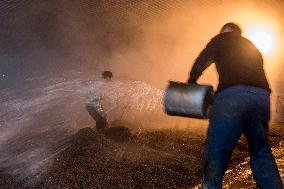
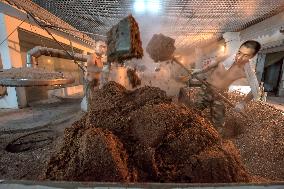
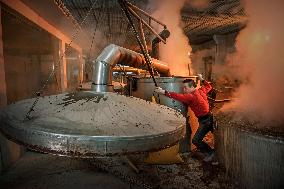
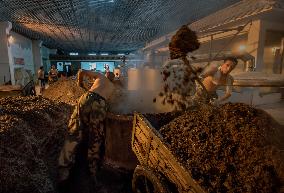
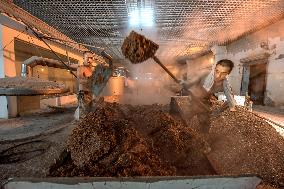
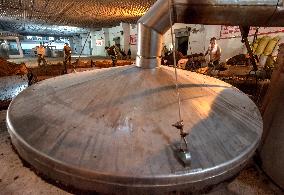
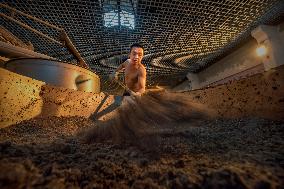
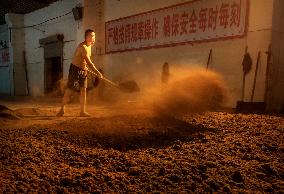
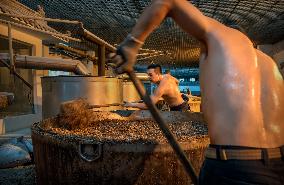
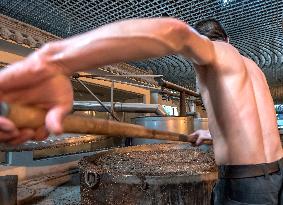
LIAOYUAN, CHINA - JUNE 22, 2016 - (FILE) It was a scene familiar to any fan of small-batch, artisanal craft liquor: the gleaming brewing equipment, the bready smell, the bulging sacks of sorghum. The photo grapher take a visit to the 110-years-old Liaoyuan Longquan Distillery Co. Ltd in China's Jilin province, 22 June 2016. Photo shows workers are busy at the workshop making liquor which is full of steam.

  •  
Liquor-making craft of China's Liaoyuan Longquan Distillery Co.

Liquor-making craft of China's Liaoyuan Longquan Distillery Co.

LIAOYUAN, CHINA - JUNE 22, 2016 - (FILE) It was a scene familiar to any fan of small-batch, artisanal craft liquor: the gleaming brewing equipment, the bready smell, the bulging sacks of sorghum. The photo grapher take a visit to the 110-years-old Liaoyuan Longquan Distillery Co. Ltd in China's Jilin province, 22 June 2016. Photo shows workers are busy at the workshop making liquor which is full of steam.

  •  
Liquor-making craft of China's Liaoyuan Longquan Distillery Co.

Liquor-making craft of China's Liaoyuan Longquan Distillery Co.

LIAOYUAN, CHINA - JUNE 22, 2016 - (FILE) It was a scene familiar to any fan of small-batch, artisanal craft liquor: the gleaming brewing equipment, the bready smell, the bulging sacks of sorghum. The photo grapher take a visit to the 110-years-old Liaoyuan Longquan Distillery Co. Ltd in China's Jilin province, 22 June 2016. Photo shows workers are busy at the workshop making liquor which is full of steam.

  •  
Liquor-making craft of China's Liaoyuan Longquan Distillery Co.

Liquor-making craft of China's Liaoyuan Longquan Distillery Co.

LIAOYUAN, CHINA - JUNE 22, 2016 - (FILE) It was a scene familiar to any fan of small-batch, artisanal craft liquor: the gleaming brewing equipment, the bready smell, the bulging sacks of sorghum. The photo grapher take a visit to the 110-years-old Liaoyuan Longquan Distillery Co. Ltd in China's Jilin province, 22 June 2016. Photo shows workers are busy at the workshop making liquor which is full of steam.

  •  
Liquor-making craft of China's Liaoyuan Longquan Distillery Co.

Liquor-making craft of China's Liaoyuan Longquan Distillery Co.

LIAOYUAN, CHINA - JUNE 22, 2016 - (FILE) It was a scene familiar to any fan of small-batch, artisanal craft liquor: the gleaming brewing equipment, the bready smell, the bulging sacks of sorghum. The photo grapher take a visit to the 110-years-old Liaoyuan Longquan Distillery Co. Ltd in China's Jilin province, 22 June 2016. Photo shows workers are busy at the workshop making liquor which is full of steam.

  •  
Liquor-making craft of China's Liaoyuan Longquan Distillery Co.

Liquor-making craft of China's Liaoyuan Longquan Distillery Co.

LIAOYUAN, CHINA - JUNE 22, 2016 - (FILE) It was a scene familiar to any fan of small-batch, artisanal craft liquor: the gleaming brewing equipment, the bready smell, the bulging sacks of sorghum. The photo grapher take a visit to the 110-years-old Liaoyuan Longquan Distillery Co. Ltd in China's Jilin province, 22 June 2016. Photo shows workers are busy at the workshop making liquor which is full of steam.

  •  
Liquor-making craft of China's Liaoyuan Longquan Distillery Co.

Liquor-making craft of China's Liaoyuan Longquan Distillery Co.

LIAOYUAN, CHINA - JUNE 22, 2016 - (FILE) It was a scene familiar to any fan of small-batch, artisanal craft liquor: the gleaming brewing equipment, the bready smell, the bulging sacks of sorghum. The photo grapher take a visit to the 110-years-old Liaoyuan Longquan Distillery Co. Ltd in China's Jilin province, 22 June 2016. Photo shows workers are busy at the workshop making liquor which is full of steam.

  •  
Liquor-making craft of China's Liaoyuan Longquan Distillery Co.

Liquor-making craft of China's Liaoyuan Longquan Distillery Co.

LIAOYUAN, CHINA - JUNE 22, 2016 - (FILE) It was a scene familiar to any fan of small-batch, artisanal craft liquor: the gleaming brewing equipment, the bready smell, the bulging sacks of sorghum. The photo grapher take a visit to the 110-years-old Liaoyuan Longquan Distillery Co. Ltd in China's Jilin province, 22 June 2016. Photo shows workers are busy at the workshop making liquor which is full of steam.

  •  
Liquor-making craft of China's Liaoyuan Longquan Distillery Co.

Liquor-making craft of China's Liaoyuan Longquan Distillery Co.

LIAOYUAN, CHINA - JUNE 22, 2016 - (FILE) It was a scene familiar to any fan of small-batch, artisanal craft liquor: the gleaming brewing equipment, the bready smell, the bulging sacks of sorghum. The photo grapher take a visit to the 110-years-old Liaoyuan Longquan Distillery Co. Ltd in China's Jilin province, 22 June 2016. Photo shows workers are busy at the workshop making liquor which is full of steam.

  •  
Liquor-making craft of China's Liaoyuan Longquan Distillery Co.

Liquor-making craft of China's Liaoyuan Longquan Distillery Co.

LIAOYUAN, CHINA - JUNE 22, 2016 - (FILE) It was a scene familiar to any fan of small-batch, artisanal craft liquor: the gleaming brewing equipment, the bready smell, the bulging sacks of sorghum. The photo grapher take a visit to the 110-years-old Liaoyuan Longquan Distillery Co. Ltd in China's Jilin province, 22 June 2016. Photo shows workers are busy at the workshop making liquor which is full of steam.

  •  
Liquor-making craft of China's Liaoyuan Longquan Distillery Co.

Liquor-making craft of China's Liaoyuan Longquan Distillery Co.

LIAOYUAN, CHINA - JUNE 22, 2016 - (FILE) It was a scene familiar to any fan of small-batch, artisanal craft liquor: the gleaming brewing equipment, the bready smell, the bulging sacks of sorghum. The photo grapher take a visit to the 110-years-old Liaoyuan Longquan Distillery Co. Ltd in China's Jilin province, 22 June 2016. Photo shows workers are busy at the workshop making liquor which is full of steam.

  •  
Liquor-making craft of China's Liaoyuan Longquan Distillery Co.

Liquor-making craft of China's Liaoyuan Longquan Distillery Co.

LIAOYUAN, CHINA - JUNE 22, 2016 - (FILE) It was a scene familiar to any fan of small-batch, artisanal craft liquor: the gleaming brewing equipment, the bready smell, the bulging sacks of sorghum. The photo grapher take a visit to the 110-years-old Liaoyuan Longquan Distillery Co. Ltd in China's Jilin province, 22 June 2016. Photo shows workers are busy at the workshop making liquor which is full of steam.

  • Main
  • Top
  • Editorial
  • Creative
  • About Us
  • About ILG
  • Terms of use
  • Company
  • BEHIND
  • Price List
  • Single Plan
  • Monthly Plan
  • Services
  • Shooting
  • Rights Clearance
  • Support
  • FAQ
  • How To Buy
  • Contact Us
  • Become a Partner

© KYODO NEWS IMAGES INC

All Rights Reserved.

  • Editorial
  • Olympics
  • News
  • Sports
  • Japan
  • Tech
  • Royal
  • Disaster
  • NorthKorea
  • Old Japan
  • SNS
  • Creative
  • Food
  • Japan
  • Landscape
  • Animal
  • Popular
  • #Ukraine
  • #Russia
  • #coronavirus
  • #N. Korea
  • #China
  • #Thailand
  • #Ukraine
  • #Russia
  • #coronavirus
  • #N. Korea
  • #China
  • #Thailand
  • Food
  • Japan
  • Landscape
  • Animal
  • Olympics
  • News
  • Sports
  • Japan
  • Tech
  • Royal
  • Disaster
  • NorthKorea
  • Old Japan
  • SNS