•  
Burang Gutu Eve Celebration - Xizang

Burang Gutu Eve Celebration - Xizang

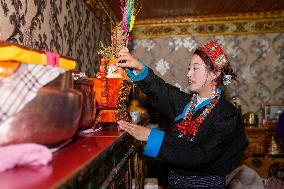
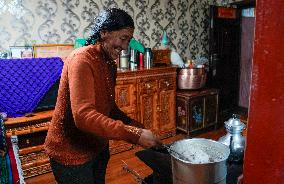
This photo taken on Dec. 18, 2025 shows "Gutu" cooked at Jamyang Drolma's home in Khorchak Village, Burang County of Ngari Prefecture, southwest China's Xizang Autonomous Region. Two days ahead of the Tibetan New Year is the traditional "Gutu Eve" for families to have a feast of "gutu", a traditional soup dish made of flour, at home. "Gu" in Tibetan means nine, which is a lucky number. "Tu" means "pasta." Nine different fillings like wool, charcoal and chili are placed inside the dough drops, and each of these fillings has a meaning. While in Burang, "Gutu" is a sort of porridge with nine ingredients and also a distinctive dish on the dinner table of the "Gutu Eve." In Khorchak Village of Burang County, Jamyang Drolma's family is bustling with New Year preparations at home. A pot of "Gutu" steams on the stove, while the "chema," a two-tier rectangular wooden box containing roasted barley and fried wheat grain, is placed to pray for harvest in the next year. This year, the family rejoiced over a bumper harvest

  •  
Burang Gutu Eve Celebration - Xizang

Burang Gutu Eve Celebration - Xizang

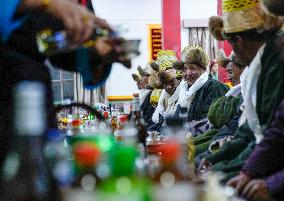
Local residents in Tibetan costumes celebrate the "Gutu Eve" in Khorchak Village, Burang County of Ngari Prefecture, southwest China's Xizang Autonomous Region, Dec. 18, 2025. Two days ahead of the Tibetan New Year is the traditional "Gutu Eve" for families to have a feast of "gutu", a traditional soup dish made of flour, at home. "Gu" in Tibetan means nine, which is a lucky number. "Tu" means "pasta." Nine different fillings like wool, charcoal and chili are placed inside the dough drops, and each of these fillings has a meaning. While in Burang, "Gutu" is a sort of porridge with nine ingredients and also a distinctive dish on the dinner table of the "Gutu Eve." In Khorchak Village of Burang County, Jamyang Drolma's family is bustling with New Year preparations at home. A pot of "Gutu" steams on the stove, while the "chema," a two-tier rectangular wooden box containing roasted barley and fried wheat grain, is placed to pray for harvest in the next year. This year, the family rejoiced over a bumper harvest of

  •  
Burang Gutu Eve Celebration - Xizang

Burang Gutu Eve Celebration - Xizang

A resident shows a note denoting wishes and expectations for the New Year on the "Gutu Eve" in Khorchak Village, Burang County of Ngari Prefecture, southwest China's Xizang Autonomous Region, Dec. 18, 2025. Two days ahead of the Tibetan New Year is the traditional "Gutu Eve" for families to have a feast of "gutu", a traditional soup dish made of flour, at home. "Gu" in Tibetan means nine, which is a lucky number. "Tu" means "pasta." Nine different fillings like wool, charcoal and chili are placed inside the dough drops, and each of these fillings has a meaning. While in Burang, "Gutu" is a sort of porridge with nine ingredients and also a distinctive dish on the dinner table of the "Gutu Eve." In Khorchak Village of Burang County, Jamyang Drolma's family is bustling with New Year preparations at home. A pot of "Gutu" steams on the stove, while the "chema," a two-tier rectangular wooden box containing roasted barley and fried wheat grain, is placed to pray for harvest in the next year. This year, the family re

  •  
Burang Gutu Eve Celebration - Xizang

Burang Gutu Eve Celebration - Xizang

Local residents celebrate the "Gutu Eve" in Khorchak Village, Burang County of Ngari Prefecture, southwest China's Xizang Autonomous Region, Dec. 18, 2025. Two days ahead of the Tibetan New Year is the traditional "Gutu Eve" for families to have a feast of "gutu", a traditional soup dish made of flour, at home. "Gu" in Tibetan means nine, which is a lucky number. "Tu" means "pasta." Nine different fillings like wool, charcoal and chili are placed inside the dough drops, and each of these fillings has a meaning. While in Burang, "Gutu" is a sort of porridge with nine ingredients and also a distinctive dish on the dinner table of the "Gutu Eve." In Khorchak Village of Burang County, Jamyang Drolma's family is bustling with New Year preparations at home. A pot of "Gutu" steams on the stove, while the "chema," a two-tier rectangular wooden box containing roasted barley and fried wheat grain, is placed to pray for harvest in the next year. This year, the family rejoiced over a bumper harvest of highland barley and

  •  
Burang Gutu Eve Celebration - Xizang

Burang Gutu Eve Celebration - Xizang

Jamyang Drolma prepares "chema" at home in Khorchak Village, Burang County of Ngari Prefecture, southwest China's Xizang Autonomous Region, Dec. 18, 2025. Two days ahead of the Tibetan New Year is the traditional "Gutu Eve" for families to have a feast of "gutu", a traditional soup dish made of flour, at home. "Gu" in Tibetan means nine, which is a lucky number. "Tu" means "pasta." Nine different fillings like wool, charcoal and chili are placed inside the dough drops, and each of these fillings has a meaning. While in Burang, "Gutu" is a sort of porridge with nine ingredients and also a distinctive dish on the dinner table of the "Gutu Eve." In Khorchak Village of Burang County, Jamyang Drolma's family is bustling with New Year preparations at home. A pot of "Gutu" steams on the stove, while the "chema," a two-tier rectangular wooden box containing roasted barley and fried wheat grain, is placed to pray for harvest in the next year. This year, the family rejoiced over a bumper harvest of highland barley and

  •  
Burang Gutu Eve Celebration - Xizang

Burang Gutu Eve Celebration - Xizang

Jamyang Drolma's mother cooks "Gutu" at their home in Khorchak Village, Burang County of Ngari Prefecture, southwest China's Xizang Autonomous Region, Dec. 18, 2025. Two days ahead of the Tibetan New Year is the traditional "Gutu Eve" for families to have a feast of "gutu", a traditional soup dish made of flour, at home. "Gu" in Tibetan means nine, which is a lucky number. "Tu" means "pasta." Nine different fillings like wool, charcoal and chili are placed inside the dough drops, and each of these fillings has a meaning. While in Burang, "Gutu" is a sort of porridge with nine ingredients and also a distinctive dish on the dinner table of the "Gutu Eve." In Khorchak Village of Burang County, Jamyang Drolma's family is bustling with New Year preparations at home. A pot of "Gutu" steams on the stove, while the "chema," a two-tier rectangular wooden box containing roasted barley and fried wheat grain, is placed to pray for harvest in the next year. This year, the family rejoiced over a bumper harvest of highland

  •  
Burang Gutu Eve Celebration - Xizang

Burang Gutu Eve Celebration - Xizang

Jamyang Drolma (2nd L) poses for a group photo with her family in Khorchak Village, Burang County of Ngari Prefecture, southwest China's Xizang Autonomous Region, Dec. 18, 2025. Two days ahead of the Tibetan New Year is the traditional "Gutu Eve" for families to have a feast of "gutu", a traditional soup dish made of flour, at home. "Gu" in Tibetan means nine, which is a lucky number. "Tu" means "pasta." Nine different fillings like wool, charcoal and chili are placed inside the dough drops, and each of these fillings has a meaning. While in Burang, "Gutu" is a sort of porridge with nine ingredients and also a distinctive dish on the dinner table of the "Gutu Eve." In Khorchak Village of Burang County, Jamyang Drolma's family is bustling with New Year preparations at home. A pot of "Gutu" steams on the stove, while the "chema," a two-tier rectangular wooden box containing roasted barley and fried wheat grain, is placed to pray for harvest in the next year. This year, the family rejoiced over a bumper harvest

  •  
Burang Gutu Eve Celebration - Xizang

Burang Gutu Eve Celebration - Xizang

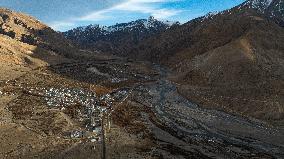
An aerial drone photo taken on Dec. 18, 2025 shows a view of Khorchak Village in Burang County of Ngari Prefecture, southwest China's Xizang Autonomous Region. Two days ahead of the Tibetan New Year is the traditional "Gutu Eve" for families to have a feast of "gutu", a traditional soup dish made of flour, at home. "Gu" in Tibetan means nine, which is a lucky number. "Tu" means "pasta." Nine different fillings like wool, charcoal and chili are placed inside the dough drops, and each of these fillings has a meaning. While in Burang, "Gutu" is a sort of porridge with nine ingredients and also a distinctive dish on the dinner table of the "Gutu Eve." In Khorchak Village of Burang County, Jamyang Drolma's family is bustling with New Year preparations at home. A pot of "Gutu" steams on the stove, while the "chema," a two-tier rectangular wooden box containing roasted barley and fried wheat grain, is placed to pray for harvest in the next year. This year, the family rejoiced over a bumper harvest of highland barley

  •  
Burang Gutu Eve Celebration - Xizang

Burang Gutu Eve Celebration - Xizang

An aerial drone photo taken on Dec. 18, 2025 shows a view of Khorchak Village in Burang County of Ngari Prefecture, southwest China's Xizang Autonomous Region. Two days ahead of the Tibetan New Year is the traditional "Gutu Eve" for families to have a feast of "gutu", a traditional soup dish made of flour, at home. "Gu" in Tibetan means nine, which is a lucky number. "Tu" means "pasta." Nine different fillings like wool, charcoal and chili are placed inside the dough drops, and each of these fillings has a meaning. While in Burang, "Gutu" is a sort of porridge with nine ingredients and also a distinctive dish on the dinner table of the "Gutu Eve." In Khorchak Village of Burang County, Jamyang Drolma's family is bustling with New Year preparations at home. A pot of "Gutu" steams on the stove, while the "chema," a two-tier rectangular wooden box containing roasted barley and fried wheat grain, is placed to pray for harvest in the next year. This year, the family rejoiced over a bumper harvest of highland barley

  •  
#CHINA-XIZANG-BURANG-WILD DONKEYS (CN)

#CHINA-XIZANG-BURANG-WILD DONKEYS (CN)

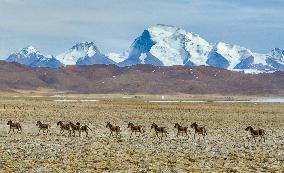
(240329) -- BURANG, March 29, 2024 (Xinhua) -- A drone photo taken on March 29, 2024 shows Tibetan wild donkeys in Burang County, southwest China's Xizang Autonomous Region. (Photo by Liu Xiaodong/Xinhua)

  •  
#CHINA-XIZANG-BURANG-WILD DONKEYS (CN)

#CHINA-XIZANG-BURANG-WILD DONKEYS (CN)

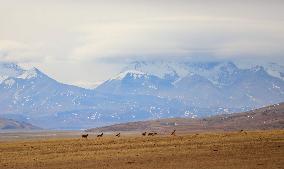
(240329) -- BURANG, March 29, 2024 (Xinhua) -- Tibetan wild donkeys are seen in Burang County, southwest China's Xizang Autonomous Region, March 29, 2024. (Photo by Liu Xiaodong/Xinhua)

  •  
#CHINA-XIZANG-BURANG-WILD DONKEYS (CN)

#CHINA-XIZANG-BURANG-WILD DONKEYS (CN)

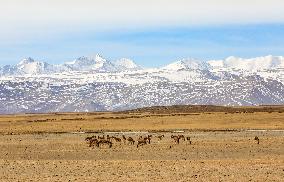
(240329) -- BURANG, March 29, 2024 (Xinhua) -- Tibetan wild donkeys are seen in Burang County, southwest China's Xizang Autonomous Region, March 29, 2024. (Photo by Liu Xiaodong/Xinhua)

  •  
#CHINA-XIZANG-BURANG-WILD DONKEYS (CN)

#CHINA-XIZANG-BURANG-WILD DONKEYS (CN)

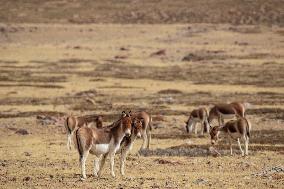
(240329) -- BURANG, March 29, 2024 (Xinhua) -- Tibetan wild donkeys are seen in Burang County, southwest China's Xizang Autonomous Region, March 29, 2024. (Photo by Liu Xiaodong/Xinhua)

  •  
#CHINA-XIZANG-BURANG-WILD DONKEYS (CN)

#CHINA-XIZANG-BURANG-WILD DONKEYS (CN)

(240329) -- BURANG, March 29, 2024 (Xinhua) -- A drone photo taken on March 29, 2024 shows Tibetan wild donkeys in Burang County, southwest China's Xizang Autonomous Region. (Photo by Liu Xiaodong/Xinhua)

  •  
#CHINA-XIZANG-BURANG-WILD DONKEYS (CN)

#CHINA-XIZANG-BURANG-WILD DONKEYS (CN)

(240329) -- BURANG, March 29, 2024 (Xinhua) -- Tibetan wild donkeys are seen in Burang County, southwest China's Xizang Autonomous Region, March 29, 2024. (Photo by Liu Xiaodong/Xinhua)

  •  
XINHUA PHOTOS OF THE DAY

XINHUA PHOTOS OF THE DAY

(240131) -- BEIJING, Jan. 31, 2024 (Xinhua) -- This aerial drone photo taken on Jan. 29, 2024 shows winter scenery of the Mapam Yumco Lake in Burang County of Ngari Prefecture, southwest China's Xizang Autonomous Region. Located on an altitude of 4,588 meters, the Mapam Yumco Lake is considered one of the three sacred lakes in Xizang. (Photo by Tenzin Norbu/Xinhua)

  •  
CHINA-XIZANG-MAPAM YUMCO LAKE-WINTER SCENERY (CN)

CHINA-XIZANG-MAPAM YUMCO LAKE-WINTER SCENERY (CN)

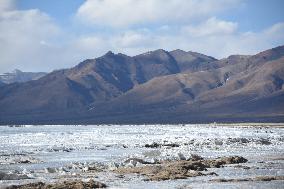
(240130) -- NGARI, Jan. 30, 2024 (Xinhua) -- This photo taken on Jan. 29, 2024 shows piled-up ice on the Mapam Yumco Lake in Burang County of Ngari Prefecture, southwest China's Xizang Autonomous Region. Located on an altitude of 4,588 meters, the Mapam Yumco Lake is considered one of the three sacred lakes in Xizang. (Xinhua/Guan Minghui)

  •  
CHINA-XIZANG-MAPAM YUMCO LAKE-WINTER SCENERY (CN)

CHINA-XIZANG-MAPAM YUMCO LAKE-WINTER SCENERY (CN)

(240130) -- NGARI, Jan. 30, 2024 (Xinhua) -- This photo taken on Jan. 29, 2024 shows winter scenery of the Mapam Yumco Lake in Burang County of Ngari Prefecture, southwest China's Xizang Autonomous Region. Located on an altitude of 4,588 meters, the Mapam Yumco Lake is considered one of the three sacred lakes in Xizang. (Xinhua/Liu Wenbo)

  •  
CHINA-XIZANG-MAPAM YUMCO LAKE-WINTER SCENERY (CN)

CHINA-XIZANG-MAPAM YUMCO LAKE-WINTER SCENERY (CN)

(240130) -- NGARI, Jan. 30, 2024 (Xinhua) -- This aerial drone photo taken on Jan. 29, 2024 shows winter scenery of the Mapam Yumco Lake in Burang County of Ngari Prefecture, southwest China's Xizang Autonomous Region. Located on an altitude of 4,588 meters, the Mapam Yumco Lake is considered one of the three sacred lakes in Xizang. (Photo by Tenzin Norbu/Xinhua)

  •  
CHINA-XIZANG-MAPAM YUMCO LAKE-WINTER SCENERY (CN)

CHINA-XIZANG-MAPAM YUMCO LAKE-WINTER SCENERY (CN)

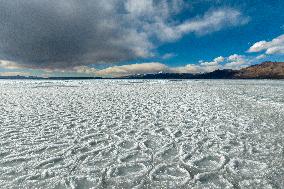
(240130) -- NGARI, Jan. 30, 2024 (Xinhua) -- This photo taken on Jan. 29, 2024 shows piled-up ice in a wavy pattern on the Mapam Yumco Lake in Burang County of Ngari Prefecture, southwest China's Xizang Autonomous Region. Located on an altitude of 4,588 meters, the Mapam Yumco Lake is considered one of the three sacred lakes in Xizang. (Xinhua/Guan Minghui)

  •  
CHINA-XIZANG-MAPAM YUMCO LAKE-WINTER SCENERY (CN)

CHINA-XIZANG-MAPAM YUMCO LAKE-WINTER SCENERY (CN)

(240130) -- NGARI, Jan. 30, 2024 (Xinhua) -- This aerial drone photo taken on Jan. 29, 2024 shows winter scenery of the Mapam Yumco Lake in Burang County of Ngari Prefecture, southwest China's Xizang Autonomous Region. Located on an altitude of 4,588 meters, the Mapam Yumco Lake is considered one of the three sacred lakes in Xizang. (Photo by Tenzin Norbu/Xinhua)

  •  
CHINA-XIZANG-MAPAM YUMCO LAKE-WINTER SCENERY (CN)

CHINA-XIZANG-MAPAM YUMCO LAKE-WINTER SCENERY (CN)

(240130) -- NGARI, Jan. 30, 2024 (Xinhua) -- This drone photo taken on Jan. 29, 2024 shows piled-up ice in different patterns on the Mapam Yumco Lake in Burang County of Ngari Prefecture, southwest China's Xizang Autonomous Region. Located on an altitude of 4,588 meters, the Mapam Yumco Lake is considered one of the three sacred lakes in Xizang. (Photo by Tenzin Norbu/Xinhua)

  •  
CHINA-XIZANG-MAPAM YUMCO LAKE-WINTER SCENERY (CN)

CHINA-XIZANG-MAPAM YUMCO LAKE-WINTER SCENERY (CN)

(240130) -- NGARI, Jan. 30, 2024 (Xinhua) -- This photo taken on Jan. 29, 2024 shows piled-up ice on the Mapam Yumco Lake in Burang County of Ngari Prefecture, southwest China's Xizang Autonomous Region. Located on an altitude of 4,588 meters, the Mapam Yumco Lake is considered one of the three sacred lakes in Xizang. (Xinhua/Guan Minghui)

  •  
CHINA-XIZANG-MAPAM YUMCO LAKE-WINTER SCENERY (CN)

CHINA-XIZANG-MAPAM YUMCO LAKE-WINTER SCENERY (CN)

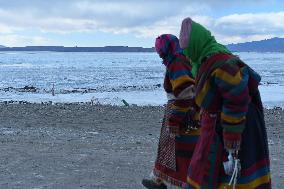
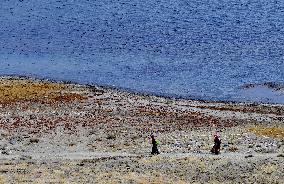
(240130) -- NGARI, Jan. 30, 2024 (Xinhua) -- People walk past the Mapam Yumco Lake in Burang County of Ngari Prefecture, southwest China's Xizang Autonomous Region, Jan. 29, 2024. Located on an altitude of 4,588 meters, the Mapam Yumco Lake is considered one of the three sacred lakes in Xizang. (Xinhua/Liu Wenbo)

  •  
CHINA-XIZANG-MAPAM YUMCO LAKE-WINTER SCENERY (CN)

CHINA-XIZANG-MAPAM YUMCO LAKE-WINTER SCENERY (CN)

(240130) -- NGARI, Jan. 30, 2024 (Xinhua) -- This photo taken on Jan. 29, 2024 shows winter scenery of the Mapam Yumco Lake in Burang County of Ngari Prefecture, southwest China's Xizang Autonomous Region. Located on an altitude of 4,588 meters, the Mapam Yumco Lake is considered one of the three sacred lakes in Xizang. (Xinhua/Guan Minghui)

  •  
CHINA-TIBET-NGARI-SCENERY (CN)

CHINA-TIBET-NGARI-SCENERY (CN)

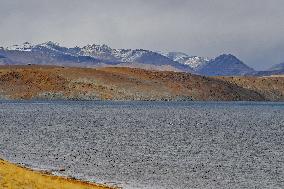
(231031) -- NGARI, Oct. 31, 2023 (Xinhua) -- This photo taken on Oct. 29, 2023 shows the scenery of the Mapam Yumco Lake in Burang County of Ngari Prefecture, southwest China's Tibet Autonomous Region. (Xinhua/Zhang Rufeng)

  •  
CHINA-TIBET-NGARI-SCENERY (CN)

CHINA-TIBET-NGARI-SCENERY (CN)

(231031) -- NGARI, Oct. 31, 2023 (Xinhua) -- This photo taken on Oct. 29, 2023 shows bar-headed geese on the Mapam Yumco Lake in Burang County of Ngari Prefecture, southwest China's Tibet Autonomous Region. (Xinhua/Zhang Rufeng)

  •  
CHINA-TIBET-NGARI-SCENERY (CN)

CHINA-TIBET-NGARI-SCENERY (CN)

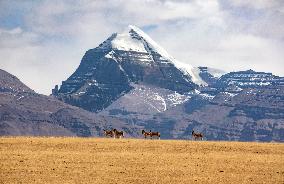
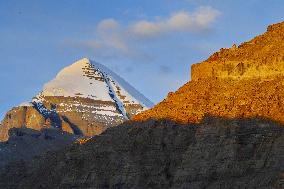
(231031) -- NGARI, Oct. 31, 2023 (Xinhua) -- This photo taken on Oct. 29, 2023 shows the scenery of Mount Kangrinboqe in Burang County of Ngari Prefecture, southwest China's Tibet Autonomous Region. (Xinhua/Zhang Rufeng)

  •  
CHINA-TIBET-NGARI-SCENERY (CN)

CHINA-TIBET-NGARI-SCENERY (CN)

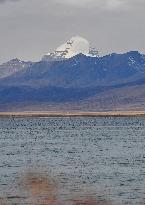
(231031) -- NGARI, Oct. 31, 2023 (Xinhua) -- This photo taken on Oct. 29, 2023 shows a view of Mount Kangrinboqe in Burang County of Ngari Prefecture, southwest China's Tibet Autonomous Region. (Xinhua/Zhang Rufeng)

  •  
CHINA-TIBET-NGARI-SCENERY (CN)

CHINA-TIBET-NGARI-SCENERY (CN)

(231031) -- NGARI, Oct. 31, 2023 (Xinhua) -- This photo taken on Oct. 29, 2023 shows the scenery of the Mapam Yumco Lake in Burang County of Ngari Prefecture, southwest China's Tibet Autonomous Region. (Xinhua/Zhang Rufeng)

  •  
(InTibet)CHINA-TIBET-WILD ANIMALS (CN)

(InTibet)CHINA-TIBET-WILD ANIMALS (CN)

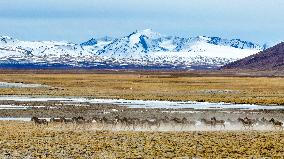
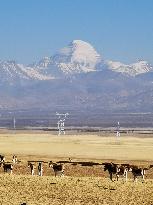
(220416) -- LHASA, April 16, 2022 (Xinhua) -- Photo taken with a mobile phone shows a herd of Tibetan wild donkeys in Burang County, southwest China's Tibet Autonomous Region, April 7, 2022. Tibet has become an ideal habitat for wild animals over the years amid the region's thriving biodiversity protection endeavors. Compared to statistics released by the regional wildlife conservation society in the 1990s, the population of Tibetan wild ass has risen to around 90,000 from 50,000 previously. The population of black-necked cranes has exceeded 10,000 from 1,000 to 3,000 previously, while the number of wild yaks rose to about 10,000. Meanwhile, the population of Tibetan antelopes has surged from 50,000 to more than 300,000 over the past decades. (Xinhua/Shen Hongbing)

  • Main
  • Top
  • Editorial
  • Creative
  • About Us
  • About ILG
  • Terms of use
  • Company
  • BEHIND
  • Price List
  • Single Plan
  • Monthly Plan
  • Services
  • Shooting
  • Rights Clearance
  • Support
  • FAQ
  • How To Buy
  • Contact Us
  • Become a Partner

© KYODO NEWS IMAGES INC

All Rights Reserved.

  • Editorial
  • Olympics
  • News
  • Sports
  • Japan
  • Tech
  • Royal
  • Disaster
  • NorthKorea
  • Old Japan
  • SNS
  • Creative
  • Food
  • Japan
  • Landscape
  • Animal
  • Popular
  • #Ukraine
  • #Thailand
  • #coronavirus
  • #N. Korea
  • #Russia
  • #China
  • #Ukraine
  • #Thailand
  • #coronavirus
  • #N. Korea
  • #Russia
  • #China
  • Food
  • Japan
  • Landscape
  • Animal
  • Olympics
  • News
  • Sports
  • Japan
  • Tech
  • Royal
  • Disaster
  • NorthKorea
  • Old Japan
  • SNS