•  
XINHUA PHOTOS OF THE DAY

XINHUA PHOTOS OF THE DAY

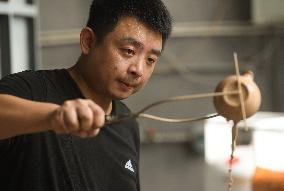
(240712) -- BEIJING, July 12, 2024 Photo by Xinhua/ABACAPRESS.COM) -- Xie Zhenwei applies glaze to a porcelain ware at a kiln in Shabu Township, Huangyan of Taizhou, east China's Zhejiang Province, July 11, 2024. Originated in the Tang Dynasty (618-907) and flourished in the Northern Song Dynasty (960-1127), the Shabu Kilns are considered as transitional kilns during the development of southern celadon industry from Yue Kilns to Longquan Kilns. Xie Zhenwei, a young porcelain artisan and a native of Shabu Township, has been making efforts to reproduce the celadon wares in the style of Shabu Kilns, which is characterized by exquisite carved patterns. To achieve his goal, Xie learned techniques from Yue Kilns and Longquan Kilns and kept using local materials. At present, Xie has successfully made celadon wares like censer, jug and powder boxes, in the style of Shabu Kilns. He also set up a workshop to display the culture of this art. Photo by Xinhua/ABACAPRESS.COM/Weng Xinyang)

  •  
(ZhejiangPictorial)CHINA-ZHEJIANG-SHABU KILNS-CELADON PORCELAIN-ARTISAN (CN)

(ZhejiangPictorial)CHINA-ZHEJIANG-SHABU KILNS-CELADON PORCELAIN-ARTISAN (CN)

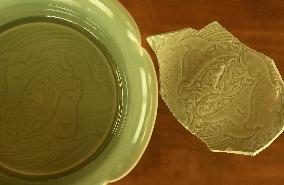
(240711) -- TAIZHOU, July 11, 2024 Photo by Xinhua/ABACAPRESS.COM) -- A piece of ancient Shabu-Kiln celadon ware (R) and a celadon ware made by Xie Zhenwei are pictured in Shabu Township, Huangyan of Taizhou, east China's Zhejiang Province, July 11, 2024. Originated in the Tang Dynasty (618-907) and flourished in the Northern Song Dynasty (960-1127), the Shabu Kilns are considered as transitional kilns during the development of southern celadon industry from Yue Kilns to Longquan Kilns. Xie Zhenwei, a young porcelain artisan and a native of Shabu Township, has been making efforts to reproduce the celadon wares in the style of Shabu Kilns, which is characterized by exquisite carved patterns. To achieve his goal, Xie learned techniques from Yue Kilns and Longquan Kilns and kept using local materials. At present, Xie has successfully made celadon wares like censer, jug and powder boxes, in the style of Shabu Kilns. He also set up a workshop to display the culture of this art. Photo by Xinhua/ABACAPRESS.COM/Weng

  •  
(ZhejiangPictorial)CHINA-ZHEJIANG-SHABU KILNS-CELADON PORCELAIN-ARTISAN (CN)

(ZhejiangPictorial)CHINA-ZHEJIANG-SHABU KILNS-CELADON PORCELAIN-ARTISAN (CN)

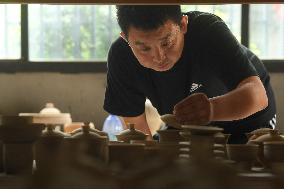
(240711) -- TAIZHOU, July 11, 2024 Photo by Xinhua/ABACAPRESS.COM) -- Xie Zhenwei arranges porcelain wares at a kiln in Shabu Township, Huangyan of Taizhou, east China's Zhejiang Province, July 11, 2024. Originated in the Tang Dynasty (618-907) and flourished in the Northern Song Dynasty (960-1127), the Shabu Kilns are considered as transitional kilns during the development of southern celadon industry from Yue Kilns to Longquan Kilns. Xie Zhenwei, a young porcelain artisan and a native of Shabu Township, has been making efforts to reproduce the celadon wares in the style of Shabu Kilns, which is characterized by exquisite carved patterns. To achieve his goal, Xie learned techniques from Yue Kilns and Longquan Kilns and kept using local materials. At present, Xie has successfully made celadon wares like censer, jug and powder boxes, in the style of Shabu Kilns. He also set up a workshop to display the culture of this art. Photo by Xinhua/ABACAPRESS.COM/Weng Xinyang)

  •  
(ZhejiangPictorial)CHINA-ZHEJIANG-SHABU KILNS-CELADON PORCELAIN-ARTISAN (CN)

(ZhejiangPictorial)CHINA-ZHEJIANG-SHABU KILNS-CELADON PORCELAIN-ARTISAN (CN)

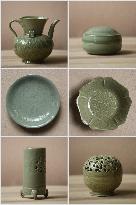
(240711) -- TAIZHOU, July 11, 2024 Photo by Xinhua/ABACAPRESS.COM) -- This combo photo taken on July 11, 2024 shows celadon wares made by Xie Zhenwei in Shabu Township, Huangyan of Taizhou, east China's Zhejiang Province. Originated in the Tang Dynasty (618-907) and flourished in the Northern Song Dynasty (960-1127), the Shabu Kilns are considered as transitional kilns during the development of southern celadon industry from Yue Kilns to Longquan Kilns. Xie Zhenwei, a young porcelain artisan and a native of Shabu Township, has been making efforts to reproduce the celadon wares in the style of Shabu Kilns, which is characterized by exquisite carved patterns. To achieve his goal, Xie learned techniques from Yue Kilns and Longquan Kilns and kept using local materials. At present, Xie has successfully made celadon wares like censer, jug and powder boxes, in the style of Shabu Kilns. He also set up a workshop to display the culture of this art. Photo by Xinhua/ABACAPRESS.COM/Weng Xinyang)

  •  
(ZhejiangPictorial)CHINA-ZHEJIANG-SHABU KILNS-CELADON PORCELAIN-ARTISAN (CN)

(ZhejiangPictorial)CHINA-ZHEJIANG-SHABU KILNS-CELADON PORCELAIN-ARTISAN (CN)

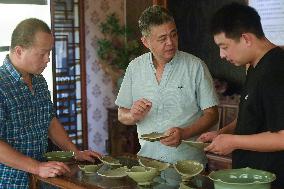
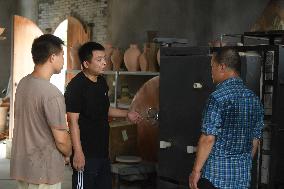
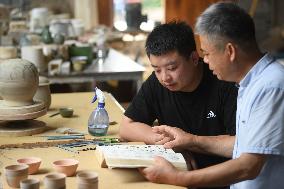
(240711) -- TAIZHOU, July 11, 2024 Photo by Xinhua/ABACAPRESS.COM) -- Luo Yonghua (C), an expert on Shabu Kilns, explains the features of the carved patterns on ancient Shabu-Kiln celadon pieces as Xie Zhenwei (R) listens in Shabu Township, Huangyan of Taizhou, east China's Zhejiang Province, July 11, 2024. Originated in the Tang Dynasty (618-907) and flourished in the Northern Song Dynasty (960-1127), the Shabu Kilns are considered as transitional kilns during the development of southern celadon industry from Yue Kilns to Longquan Kilns. Xie Zhenwei, a young porcelain artisan and a native of Shabu Township, has been making efforts to reproduce the celadon wares in the style of Shabu Kilns, which is characterized by exquisite carved patterns. To achieve his goal, Xie learned techniques from Yue Kilns and Longquan Kilns and kept using local materials. At present, Xie has successfully made celadon wares like censer, jug and powder boxes, in the style of Shabu Kilns. He also set up a workshop to display the cult

  •  
(ZhejiangPictorial)CHINA-ZHEJIANG-SHABU KILNS-CELADON PORCELAIN-ARTISAN (CN)

(ZhejiangPictorial)CHINA-ZHEJIANG-SHABU KILNS-CELADON PORCELAIN-ARTISAN (CN)

(240711) -- TAIZHOU, July 11, 2024 Photo by Xinhua/ABACAPRESS.COM) -- Xie Zhenwei works at a kiln in Shabu Township, Huangyan of Taizhou, east China's Zhejiang Province, July 11, 2024. Originated in the Tang Dynasty (618-907) and flourished in the Northern Song Dynasty (960-1127), the Shabu Kilns are considered as transitional kilns during the development of southern celadon industry from Yue Kilns to Longquan Kilns. Xie Zhenwei, a young porcelain artisan and a native of Shabu Township, has been making efforts to reproduce the celadon wares in the style of Shabu Kilns, which is characterized by exquisite carved patterns. To achieve his goal, Xie learned techniques from Yue Kilns and Longquan Kilns and kept using local materials. At present, Xie has successfully made celadon wares like censer, jug and powder boxes, in the style of Shabu Kilns. He also set up a workshop to display the culture of this art. Photo by Xinhua/ABACAPRESS.COM/Weng Xinyang)

  •  
(ZhejiangPictorial)CHINA-ZHEJIANG-SHABU KILNS-CELADON PORCELAIN-ARTISAN (CN)

(ZhejiangPictorial)CHINA-ZHEJIANG-SHABU KILNS-CELADON PORCELAIN-ARTISAN (CN)

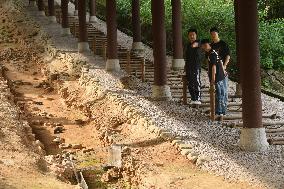
(240711) -- TAIZHOU, July 11, 2024 Photo by Xinhua/ABACAPRESS.COM) -- Xie Zhenwei (L) makes a point as students graduated from a technician college look on during a visit in a relic site of an ancient kiln in Shabu Township, Huangyan of Taizhou, east China's Zhejiang Province, July 11, 2024. Originated in the Tang Dynasty (618-907) and flourished in the Northern Song Dynasty (960-1127), the Shabu Kilns are considered as transitional kilns during the development of southern celadon industry from Yue Kilns to Longquan Kilns. Xie Zhenwei, a young porcelain artisan and a native of Shabu Township, has been making efforts to reproduce the celadon wares in the style of Shabu Kilns, which is characterized by exquisite carved patterns. To achieve his goal, Xie learned techniques from Yue Kilns and Longquan Kilns and kept using local materials. At present, Xie has successfully made celadon wares like censer, jug and powder boxes, in the style of Shabu Kilns. He also set up a workshop to display the culture of this art.

  •  
(ZhejiangPictorial)CHINA-ZHEJIANG-SHABU KILNS-CELADON PORCELAIN-ARTISAN (CN)

(ZhejiangPictorial)CHINA-ZHEJIANG-SHABU KILNS-CELADON PORCELAIN-ARTISAN (CN)

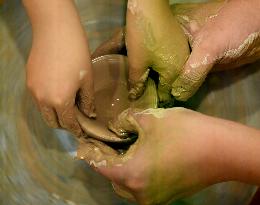
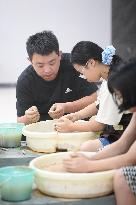
(240711) -- TAIZHOU, July 11, 2024 Photo by Xinhua/ABACAPRESS.COM) -- Xie Zhenwei helps a primary school student make a piece of porcelain in Shabu Township, Huangyan of Taizhou, east China's Zhejiang Province, July 11, 2024. Originated in the Tang Dynasty (618-907) and flourished in the Northern Song Dynasty (960-1127), the Shabu Kilns are considered as transitional kilns during the development of southern celadon industry from Yue Kilns to Longquan Kilns. Xie Zhenwei, a young porcelain artisan and a native of Shabu Township, has been making efforts to reproduce the celadon wares in the style of Shabu Kilns, which is characterized by exquisite carved patterns. To achieve his goal, Xie learned techniques from Yue Kilns and Longquan Kilns and kept using local materials. At present, Xie has successfully made celadon wares like censer, jug and powder boxes, in the style of Shabu Kilns. He also set up a workshop to display the culture of this art. Photo by Xinhua/ABACAPRESS.COM/Weng Xinyang)

  •  
(ZhejiangPictorial)CHINA-ZHEJIANG-SHABU KILNS-CELADON PORCELAIN-ARTISAN (CN)

(ZhejiangPictorial)CHINA-ZHEJIANG-SHABU KILNS-CELADON PORCELAIN-ARTISAN (CN)

(240711) -- TAIZHOU, July 11, 2024 Photo by Xinhua/ABACAPRESS.COM) -- Xie Zhenwei (C) discusses with his fellows on porcelain-making in Shabu Township, Huangyan of Taizhou, east China's Zhejiang Province, July 11, 2024. Originated in the Tang Dynasty (618-907) and flourished in the Northern Song Dynasty (960-1127), the Shabu Kilns are considered as transitional kilns during the development of southern celadon industry from Yue Kilns to Longquan Kilns. Xie Zhenwei, a young porcelain artisan and a native of Shabu Township, has been making efforts to reproduce the celadon wares in the style of Shabu Kilns, which is characterized by exquisite carved patterns. To achieve his goal, Xie learned techniques from Yue Kilns and Longquan Kilns and kept using local materials. At present, Xie has successfully made celadon wares like censer, jug and powder boxes, in the style of Shabu Kilns. He also set up a workshop to display the culture of this art. Photo by Xinhua/ABACAPRESS.COM/Weng Xinyang)

  •  
(ZhejiangPictorial)CHINA-ZHEJIANG-SHABU KILNS-CELADON PORCELAIN-ARTISAN (CN)

(ZhejiangPictorial)CHINA-ZHEJIANG-SHABU KILNS-CELADON PORCELAIN-ARTISAN (CN)

(240711) -- TAIZHOU, July 11, 2024 Photo by Xinhua/ABACAPRESS.COM) -- Luo Yonghua (R), an expert on Shabu Kilns, shows the traditional carved patterns to Xie Zhenwei in Shabu Township, Huangyan of Taizhou, east China's Zhejiang Province, July 11, 2024. Originated in the Tang Dynasty (618-907) and flourished in the Northern Song Dynasty (960-1127), the Shabu Kilns are considered as transitional kilns during the development of southern celadon industry from Yue Kilns to Longquan Kilns. Xie Zhenwei, a young porcelain artisan and a native of Shabu Township, has been making efforts to reproduce the celadon wares in the style of Shabu Kilns, which is characterized by exquisite carved patterns. To achieve his goal, Xie learned techniques from Yue Kilns and Longquan Kilns and kept using local materials. At present, Xie has successfully made celadon wares like censer, jug and powder boxes, in the style of Shabu Kilns. He also set up a workshop to display the culture of this art. Photo by Xinhua/ABACAPRESS.COM/Weng Xin

  •  
(ZhejiangPictorial)CHINA-ZHEJIANG-SHABU KILNS-CELADON PORCELAIN-ARTISAN (CN)

(ZhejiangPictorial)CHINA-ZHEJIANG-SHABU KILNS-CELADON PORCELAIN-ARTISAN (CN)

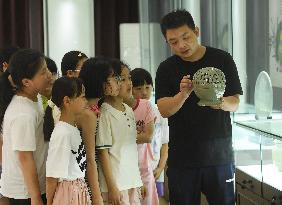
(240711) -- TAIZHOU, July 11, 2024 Photo by Xinhua/ABACAPRESS.COM) -- Xie Zhenwei explains the features of a Shabu-Kiln celadon censer as primary school students listen in Shabu Township, Huangyan of Taizhou, east China's Zhejiang Province, July 11, 2024. Originated in the Tang Dynasty (618-907) and flourished in the Northern Song Dynasty (960-1127), the Shabu Kilns are considered as transitional kilns during the development of southern celadon industry from Yue Kilns to Longquan Kilns. Xie Zhenwei, a young porcelain artisan and a native of Shabu Township, has been making efforts to reproduce the celadon wares in the style of Shabu Kilns, which is characterized by exquisite carved patterns. To achieve his goal, Xie learned techniques from Yue Kilns and Longquan Kilns and kept using local materials. At present, Xie has successfully made celadon wares like censer, jug and powder boxes, in the style of Shabu Kilns. He also set up a workshop to display the culture of this art. Photo by Xinhua/ABACAPRESS.COM/Weng

  •  
(ZhejiangPictorial)CHINA-ZHEJIANG-SHABU KILNS-CELADON PORCELAIN-ARTISAN (CN)

(ZhejiangPictorial)CHINA-ZHEJIANG-SHABU KILNS-CELADON PORCELAIN-ARTISAN (CN)

(240711) -- TAIZHOU, July 11, 2024 Photo by Xinhua/ABACAPRESS.COM) -- Xie Zhenwei gives instruction in a pottery class for primary school students at his studio in Shabu Township, Huangyan of Taizhou, east China's Zhejiang Province, July 11, 2024. Originated in the Tang Dynasty (618-907) and flourished in the Northern Song Dynasty (960-1127), the Shabu Kilns are considered as transitional kilns during the development of southern celadon industry from Yue Kilns to Longquan Kilns. Xie Zhenwei, a young porcelain artisan and a native of Shabu Township, has been making efforts to reproduce the celadon wares in the style of Shabu Kilns, which is characterized by exquisite carved patterns. To achieve his goal, Xie learned techniques from Yue Kilns and Longquan Kilns and kept using local materials. At present, Xie has successfully made celadon wares like censer, jug and powder boxes, in the style of Shabu Kilns. He also set up a workshop to display the culture of this art. Photo by Xinhua/ABACAPRESS.COM/Weng Xinyang)

  •  
(ZhejiangPictorial)CHINA-ZHEJIANG-SHABU KILNS-CELADON PORCELAIN-ARTISAN (CN)

(ZhejiangPictorial)CHINA-ZHEJIANG-SHABU KILNS-CELADON PORCELAIN-ARTISAN (CN)

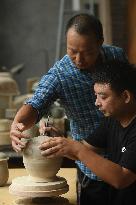
(240711) -- TAIZHOU, July 11, 2024 Photo by Xinhua/ABACAPRESS.COM) -- Longquan celadon artisan Chen Junlin (top) instructs as Xie Zhenwei makes a censer in the style of Shabu Kilns in Shabu Township, Huangyan of Taizhou, east China's Zhejiang Province, July 11, 2024. Originated in the Tang Dynasty (618-907) and flourished in the Northern Song Dynasty (960-1127), the Shabu Kilns are considered as transitional kilns during the development of southern celadon industry from Yue Kilns to Longquan Kilns. Xie Zhenwei, a young porcelain artisan and a native of Shabu Township, has been making efforts to reproduce the celadon wares in the style of Shabu Kilns, which is characterized by exquisite carved patterns. To achieve his goal, Xie learned techniques from Yue Kilns and Longquan Kilns and kept using local materials. At present, Xie has successfully made celadon wares like censer, jug and powder boxes, in the style of Shabu Kilns. He also set up a workshop to display the culture of this art. Photo by Xinhua/ABACAPRE

  •  
(ZhejiangPictorial)CHINA-ZHEJIANG-SHABU KILNS-CELADON PORCELAIN-ARTISAN (CN)

(ZhejiangPictorial)CHINA-ZHEJIANG-SHABU KILNS-CELADON PORCELAIN-ARTISAN (CN)

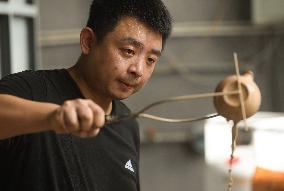
(240711) -- TAIZHOU, July 11, 2024 Photo by Xinhua/ABACAPRESS.COM) -- Xie Zhenwei applies glaze to a porcelain ware at a kiln in Shabu Township, Huangyan of Taizhou, east China's Zhejiang Province, July 11, 2024. Originated in the Tang Dynasty (618-907) and flourished in the Northern Song Dynasty (960-1127), the Shabu Kilns are considered as transitional kilns during the development of southern celadon industry from Yue Kilns to Longquan Kilns. Xie Zhenwei, a young porcelain artisan and a native of Shabu Township, has been making efforts to reproduce the celadon wares in the style of Shabu Kilns, which is characterized by exquisite carved patterns. To achieve his goal, Xie learned techniques from Yue Kilns and Longquan Kilns and kept using local materials. At present, Xie has successfully made celadon wares like censer, jug and powder boxes, in the style of Shabu Kilns. He also set up a workshop to display the culture of this art. Photo by Xinhua/ABACAPRESS.COM/Weng Xinyang)

  •  
(ZhejiangPictorial)CHINA-ZHEJIANG-SHABU KILNS-CELADON PORCELAIN-ARTISAN (CN)

(ZhejiangPictorial)CHINA-ZHEJIANG-SHABU KILNS-CELADON PORCELAIN-ARTISAN (CN)

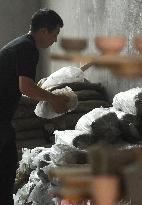
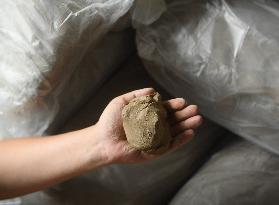
(240711) -- TAIZHOU, July 11, 2024 Photo by Xinhua/ABACAPRESS.COM) -- Xie Zhenwei shows the clay made from local materials for porcelain-making in Shabu Township, Huangyan of Taizhou, east China's Zhejiang Province, July 11, 2024. Originated in the Tang Dynasty (618-907) and flourished in the Northern Song Dynasty (960-1127), the Shabu Kilns are considered as transitional kilns during the development of southern celadon industry from Yue Kilns to Longquan Kilns. Xie Zhenwei, a young porcelain artisan and a native of Shabu Township, has been making efforts to reproduce the celadon wares in the style of Shabu Kilns, which is characterized by exquisite carved patterns. To achieve his goal, Xie learned techniques from Yue Kilns and Longquan Kilns and kept using local materials. At present, Xie has successfully made celadon wares like censer, jug and powder boxes, in the style of Shabu Kilns. He also set up a workshop to display the culture of this art. Photo by Xinhua/ABACAPRESS.COM/Weng Xinyang)

  •  
(ZhejiangPictorial)CHINA-ZHEJIANG-SHABU KILNS-CELADON PORCELAIN-ARTISAN (CN)

(ZhejiangPictorial)CHINA-ZHEJIANG-SHABU KILNS-CELADON PORCELAIN-ARTISAN (CN)

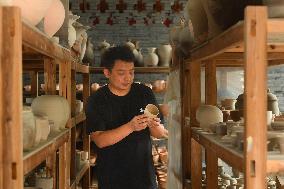
(240711) -- TAIZHOU, July 11, 2024 Photo by Xinhua/ABACAPRESS.COM) -- Xie Zhenwei arranges porcelain wares at a kiln in Shabu Township, Huangyan of Taizhou, east China's Zhejiang Province, July 11, 2024. Originated in the Tang Dynasty (618-907) and flourished in the Northern Song Dynasty (960-1127), the Shabu Kilns are considered as transitional kilns during the development of southern celadon industry from Yue Kilns to Longquan Kilns. Xie Zhenwei, a young porcelain artisan and a native of Shabu Township, has been making efforts to reproduce the celadon wares in the style of Shabu Kilns, which is characterized by exquisite carved patterns. To achieve his goal, Xie learned techniques from Yue Kilns and Longquan Kilns and kept using local materials. At present, Xie has successfully made celadon wares like censer, jug and powder boxes, in the style of Shabu Kilns. He also set up a workshop to display the culture of this art. Photo by Xinhua/ABACAPRESS.COM/Weng Xinyang)

  •  

Iran hosts art event to present tourism, cultural attractions of China's Zhejiang

STORY: Iran hosts art event to present tourism, cultural attractions of China's Zhejiang DATELINE: Oct. 31, 2023 LENGTH: 0:01:45 LOCATION: Tehran CATEGORY: SOCIETY SHOTLIST: 1. various of the event STORYLINE: An art event to present the tourism and cultural attractions of the eastern Chinese Zhejiang Province, and to display the province's celadon ware was inaugurated on Monday in the Iranian capital Tehran. The event was organized by the Chinese Embassy in Tehran, Zhejiang Provincial Department of Culture and Tourism and the Iranian Academy of Arts. In remarks at the event, China's Vice Minister of Culture and Tourism Lu Yingchuan said, "looking back at history, China and Iran met and knew each other and learned from one another through the ancient Silk Road." He added that the cooperation between China and Iran throughout history had led to the creation of superb artworks, stressing in recent years, cultural exchanges and collaborations between the two countries had witnessed significant growth. The

  •  
IRAN-TEHRAN-ART EXHIBITION-CELADON WARE-CHINA

IRAN-TEHRAN-ART EXHIBITION-CELADON WARE-CHINA

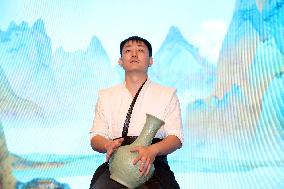
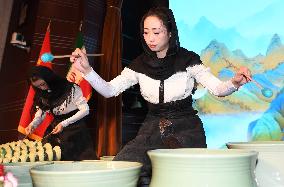
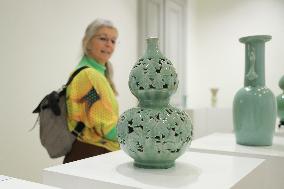
(231031) -- TEHRAN, Oct. 31, 2023 (Xinhua) -- An actor performs at the opening ceremony of an art event in Tehran, capital of Iran, on Oct. 30, 2023. An art event to present tourism and cultural attractions in east China's Zhejiang Province and to display the province's celadon ware was held in Tehran on Monday. (Xinhua/Shadati)

  •  
IRAN-TEHRAN-ART EXHIBITION-CELADON WARE-CHINA

IRAN-TEHRAN-ART EXHIBITION-CELADON WARE-CHINA

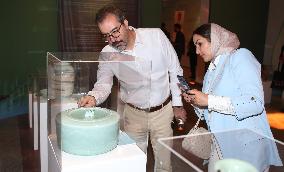
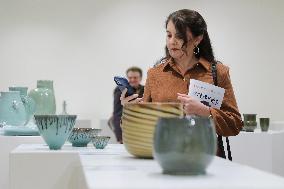
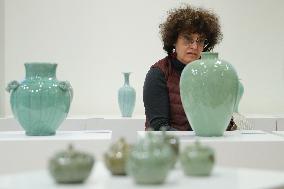
(231031) -- TEHRAN, Oct. 31, 2023 (Xinhua) -- A visitor looks at an exhibit in Tehran, capital of Iran, on Oct. 30, 2023. An art event to present tourism and cultural attractions in east China's Zhejiang Province and to display the province's celadon ware was held in Tehran on Monday. (Xinhua/Shadati)

  •  
IRAN-TEHRAN-ART EXHIBITION-CELADON WARE-CHINA

IRAN-TEHRAN-ART EXHIBITION-CELADON WARE-CHINA

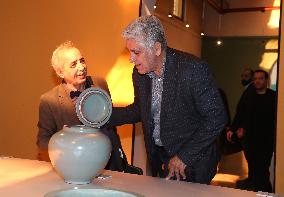
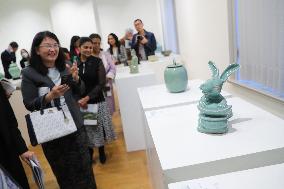
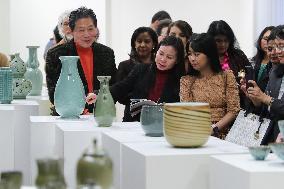
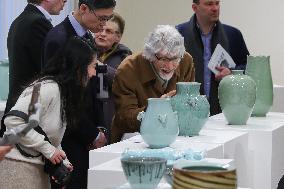
(231031) -- TEHRAN, Oct. 31, 2023 (Xinhua) -- Visitors look at an exhibit in Tehran, capital of Iran, on Oct. 30, 2023. An art event to present tourism and cultural attractions in east China's Zhejiang Province and to display the province's celadon ware was held in Tehran on Monday. (Xinhua/Shadati)

  •  
IRAN-TEHRAN-ART EXHIBITION-CELADON WARE-CHINA

IRAN-TEHRAN-ART EXHIBITION-CELADON WARE-CHINA

(231031) -- TEHRAN, Oct. 31, 2023 (Xinhua) -- Visitors look at an exhibit in Tehran, capital of Iran, on Oct. 30, 2023. An art event to present tourism and cultural attractions in east China's Zhejiang Province and to display the province's celadon ware was held in Tehran on Monday. (Xinhua/Shadati)

  •  
IRAN-TEHRAN-ART EXHIBITION-CELADON WARE-CHINA

IRAN-TEHRAN-ART EXHIBITION-CELADON WARE-CHINA

(231031) -- TEHRAN, Oct. 31, 2023 (Xinhua) -- An actress performs at the opening ceremony of an art event in Tehran, capital of Iran, on Oct. 30, 2023. An art event to present tourism and cultural attractions in east China's Zhejiang Province and to display the province's celadon ware was held in Tehran on Monday. (Xinhua/Shadati)

  •  
CHINA-ZHEJIANG-LONGQUAN-WORLD CELADON CONFERENCE (CN)

CHINA-ZHEJIANG-LONGQUAN-WORLD CELADON CONFERENCE (CN)

(231030) -- LISHUI, Oct. 30, 2023 (Xinhua) -- People visit a celadon exhibition in Longquan, east China's Zhejiang Province, Oct. 30, 2023. The 6th World Celadon Conference was held in Longquan City on Monday, along with a series of forums, exhibitions and skill competitions. (Xinhua/Weng Xinyang)

  •  
CHINA-ZHEJIANG-LONGQUAN-WORLD CELADON CONFERENCE (CN)

CHINA-ZHEJIANG-LONGQUAN-WORLD CELADON CONFERENCE (CN)

(231030) -- LISHUI, Oct. 30, 2023 (Xinhua) -- People learn about underwater archaeology at Longquan Museum in Longquan, east China's Zhejiang Province, Oct. 30, 2023. The 6th World Celadon Conference was held in Longquan City on Monday, along with a series of forums, exhibitions and skill competitions. (Xinhua/Weng Xinyang)

  •  
CHINA-ZHEJIANG-LONGQUAN-WORLD CELADON CONFERENCE (CN)

CHINA-ZHEJIANG-LONGQUAN-WORLD CELADON CONFERENCE (CN)

(231030) -- LISHUI, Oct. 30, 2023 (Xinhua) -- People visit a celadon exhibition in Longquan, east China's Zhejiang Province, Oct. 30, 2023. The 6th World Celadon Conference was held in Longquan City on Monday, along with a series of forums, exhibitions and skill competitions. (Xinhua/Weng Xinyang)

  •  
CHINA-ZHEJIANG-LONGQUAN-WORLD CELADON CONFERENCE (CN)

CHINA-ZHEJIANG-LONGQUAN-WORLD CELADON CONFERENCE (CN)

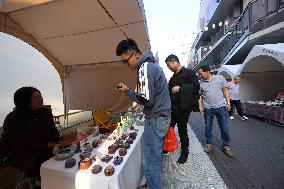
(231030) -- LISHUI, Oct. 30, 2023 (Xinhua) -- People visit a pottery and porcelain market in a cultural block in Longquan, east China's Zhejiang Province, Oct. 30, 2023. The 6th World Celadon Conference was held in Longquan City on Monday, along with a series of forums, exhibitions and skill competitions. (Xinhua/Weng Xinyang)

  •  
CHINA-ZHEJIANG-LONGQUAN-WORLD CELADON CONFERENCE (CN)

CHINA-ZHEJIANG-LONGQUAN-WORLD CELADON CONFERENCE (CN)

(231030) -- LISHUI, Oct. 30, 2023 (Xinhua) -- Inheritors of celadon and sword-making skills raise symbolic kindling tools at the opening ceremony of the 6th World Celadon Conference in Longquan, east China's Zhejiang Province, Oct. 30, 2023. The 6th World Celadon Conference was held in Longquan City on Monday, along with a series of forums, exhibitions and skill competitions. (Xinhua/Weng Xinyang)

  •  
BELGIUM-BRUSSELS-CHINA-LONGQUAN CELADON-EXHIBITION

BELGIUM-BRUSSELS-CHINA-LONGQUAN CELADON-EXHIBITION

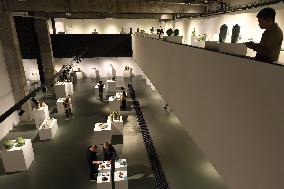
(230403) -- BRUSSELS, April 3, 2023 (Xinhua) -- Visitors look at exhibits during the "Longquan City Celadon Art" exhibition at the Chinese Cultural Center in Brussels, Belgium, on April 3, 2023. The opening ceremony of the "Longquan City Celadon Art" exhibition was held Monday at the Chinese Cultural Center, with 55 works made by Chinese artists on display. (Xinhua/Zheng Huansong)

  •  
BELGIUM-BRUSSELS-CHINA-LONGQUAN CELADON-EXHIBITION

BELGIUM-BRUSSELS-CHINA-LONGQUAN CELADON-EXHIBITION

(230403) -- BRUSSELS, April 3, 2023 (Xinhua) -- A visitor looks at an exhibit during the "Longquan City Celadon Art" exhibition at the Chinese Cultural Center in Brussels, Belgium, on April 3, 2023. The opening ceremony of the "Longquan City Celadon Art" exhibition was held Monday at the Chinese Cultural Center, with 55 works made by Chinese artists on display. (Xinhua/Zheng Huansong)

  •  
BELGIUM-BRUSSELS-CHINA-LONGQUAN CELADON-EXHIBITION

BELGIUM-BRUSSELS-CHINA-LONGQUAN CELADON-EXHIBITION

(230403) -- BRUSSELS, April 3, 2023 (Xinhua) -- A visitor takes photos of an exhibit during the "Longquan City Celadon Art" exhibition at the Chinese Cultural Center in Brussels, Belgium, on April 3, 2023. The opening ceremony of the "Longquan City Celadon Art" exhibition was held Monday at the Chinese Cultural Center, with 55 works made by Chinese artists on display. (Xinhua/Zheng Huansong)

  •  
BELGIUM-BRUSSELS-CHINA-LONGQUAN CELADON-EXHIBITION

BELGIUM-BRUSSELS-CHINA-LONGQUAN CELADON-EXHIBITION

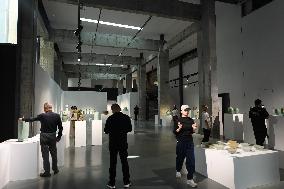
(230403) -- BRUSSELS, April 3, 2023 (Xinhua) -- Visitors look at exhibits during the "Longquan City Celadon Art" exhibition at the Chinese Cultural Center in Brussels, Belgium, on April 3, 2023. The opening ceremony of the "Longquan City Celadon Art" exhibition was held Monday at the Chinese Cultural Center, with 55 works made by Chinese artists on display. (Xinhua/Zheng Huansong)

  •  
BELGIUM-BRUSSELS-CHINA-LONGQUAN CELADON-EXHIBITION

BELGIUM-BRUSSELS-CHINA-LONGQUAN CELADON-EXHIBITION

(230403) -- BRUSSELS, April 3, 2023 (Xinhua) -- Visitors look at exhibits during the "Longquan City Celadon Art" exhibition at the Chinese Cultural Center in Brussels, Belgium, on April 3, 2023. The opening ceremony of the "Longquan City Celadon Art" exhibition was held Monday at the Chinese Cultural Center, with 55 works made by Chinese artists on display. (Xinhua/Zheng Huansong)

  •  
BELGIUM-BRUSSELS-CHINA-LONGQUAN CELADON-EXHIBITION

BELGIUM-BRUSSELS-CHINA-LONGQUAN CELADON-EXHIBITION

(230403) -- BRUSSELS, April 3, 2023 (Xinhua) -- A visitor looks at an exhibit during the "Longquan City Celadon Art" exhibition at the Chinese Cultural Center in Brussels, Belgium, on April 3, 2023. The opening ceremony of the "Longquan City Celadon Art" exhibition was held Monday at the Chinese Cultural Center, with 55 works made by Chinese artists on display. (Xinhua/Zheng Huansong)

  •  
Ancient tomb in N. Korea

Ancient tomb in N. Korea

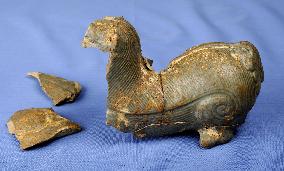
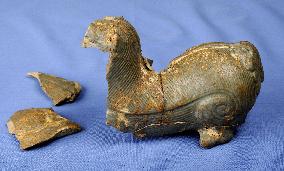
PYONGYANG, North Korea - Photo shows a celadon candleholder featuring a kind of animal found in the newly-unearthed Tongsan-dong mural tomb, a Koguryo relic dating back to around the fifth century. Kyodo News reported on Aug. 14, 2010 that it sent a team of journalists and scholars to Pyongyang and conducted joint research on the tomb in the capital's Raknang district with the Archaeological Institute of North Korea's Academy of Social Sciences.

  •  

Chinese celadon pottery on display in Cairo

STORY: Chinese celadon pottery on display in Cairo DATELINE: Nov. 19, 2022 LENGTH: 00:01:06 LOCATION: Cairo CATEGORY: CULTURE SHOTLIST: 1. various of the opening ceremony 2. SOUNDBITE (Chinese): LIAO LIQIANG, Chinese ambassador to Egypt STORYLINE: An exhibition featuring China's renowned celadon pottery opened Thursday at the Manial Palace Museum in Cairo, Egypt, deepening cultural exchanges between China and Egypt. Entitled "Exhibition on Zhejiang's Celadon and Chinese Culture," dozens of ceramic wares from east China's Zhejiang Province were displayed. SOUNDBITE (Chinese): LIAO LIQIANG, Chinese ambassador to Egypt "This exhibition tells the story of Chinese celadon and shows the integration of Chinese and Egyptian ceramic cultures. I also look forward to having more Egyptian friends, especially young ones, come to this museum to see the history of our friendly exchanges." The exhibition is held by the Chinese Cultural Center in Cairo and Manial Palace Museum, under the auspices of the Egyptian Mini

  •  
CHINA-ZHEJIANG-WENZHOU-SHUOMEN ANCIENT PORT-RUINS (CN)

CHINA-ZHEJIANG-WENZHOU-SHUOMEN ANCIENT PORT-RUINS (CN)

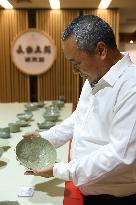
(221011) -- WENZHOU, Oct. 11, 2022 (Xinhua) -- A researcher checks a Longquan celadon ware discovered at the archaeological site of Shuomen ancient port in Wenzhou, east China's Zhejiang Province, Oct. 11, 2022. The archaeological site of Shuomen ancient port was discovered at the end of 2021, with ruins of ancient buildings, shipwrecks, and porcelain pieces unearthed in the following archaeological excavations. According to the National Cultural Heritage Administration, the discovery is important to studies of the ancient Maritime Silk Road. (Xinhua/Weng Xinyang)

  •  
CHINA-HUNAN-CELADON KILN SITE (CN)

CHINA-HUNAN-CELADON KILN SITE (CN)

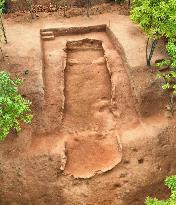
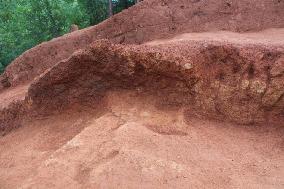
(220714) -- CHANGSHA, July 14, 2022 (Xinhua) -- Undated file photo shows a celadon kiln site in Liling City, central China's Hunan Province. Archaeologists have found a celadon kiln site dating back to the Eastern Han Dynasty (25-220) at a village in Hunan Province. The site was found in Yongxing Village in the city of Liling in April when a group of archaeologists conducted a survey of the Lushui basin. The ruins of the celadon kiln measure 7.2 meters in length and 2 to 2.15 meters in width. TO GO WITH "1,900-year-old celadon kiln site found in central China's Hunan" (Xinhua)

  •  
CHINA-HUNAN-CELADON KILN SITE (CN)

CHINA-HUNAN-CELADON KILN SITE (CN)

(220714) -- CHANGSHA, July 14, 2022 (Xinhua) -- Undated file photo shows part of a celadon kiln site in Liling City, central China's Hunan Province. Archaeologists have found a celadon kiln site dating back to the Eastern Han Dynasty (25-220) at a village in Hunan Province. The site was found in Yongxing Village in the city of Liling in April when a group of archaeologists conducted a survey of the Lushui basin. The ruins of the celadon kiln measure 7.2 meters in length and 2 to 2.15 meters in width. TO GO WITH "1,900-year-old celadon kiln site found in central China's Hunan" (Xinhua)

  •  
Ancient tomb in N. Korea

Ancient tomb in N. Korea

PYONGYANG, North Korea - Photo shows a celadon candleholder featuring a kind of animal found in the newly-unearthed Tongsan-dong mural tomb, a Koguryo relic dating back to around the fifth century. Kyodo News reported on Aug. 14, 2010 that it sent a team of journalists and scholars to Pyongyang and conducted joint research on the tomb in the capital's Raknang district with the Archaeological Institute of North Korea's Academy of Social Sciences. (Kyodo)

  • Main
  • Top
  • Editorial
  • Creative
  • About Us
  • About ILG
  • Terms of use
  • Company
  • BEHIND
  • Price List
  • Single Plan
  • Monthly Plan
  • Services
  • Shooting
  • Rights Clearance
  • Support
  • FAQ
  • How To Buy
  • Contact Us
  • Become a Partner

© KYODO NEWS IMAGES INC

All Rights Reserved.

  • Editorial
  • Olympics
  • News
  • Sports
  • Japan
  • Tech
  • Royal
  • Disaster
  • NorthKorea
  • Old Japan
  • SNS
  • Creative
  • Food
  • Japan
  • Landscape
  • Animal
  • Popular
  • #Ukraine
  • #China
  • #coronavirus
  • #N. Korea
  • #Thailand
  • #Russia
  • #Ukraine
  • #China
  • #coronavirus
  • #N. Korea
  • #Thailand
  • #Russia
  • Food
  • Japan
  • Landscape
  • Animal
  • Olympics
  • News
  • Sports
  • Japan
  • Tech
  • Royal
  • Disaster
  • NorthKorea
  • Old Japan
  • SNS