•  
Robot Chemist - China

Robot Chemist - China

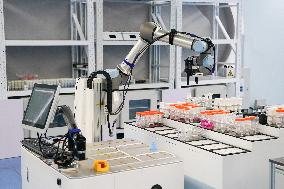
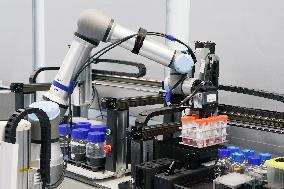
Robot Xiaolai performs an experiment at the state key laboratory of precision and intelligent chemistry of the University of Science and Technology of China (USTC) in Hefei, east China's Anhui Province, November 24, 2025. Traditional chemical research has long relied on continuous trial and error by scientists. With the development of artificial intelligence and robotic automation technologies, it has become possible to design experiments and issue instructions through intelligent platforms, using robots to replace human labor in experiential operations, which enhances experimental efficiency and precision. In 2021, after eight years of dedicated effort by a research team from USTC, Xiaolai, the first-generation "robot chemist," was successfully developed. After several years of iterations, the second-generation dual-armed humanoid robot Xiaolin has been put into operation, capable of performing more complex tasks. It has evolved from a substitute of human labor to a "research partner." According to Zhu Zhuoy

  •  
Robot Chemist - China

Robot Chemist - China

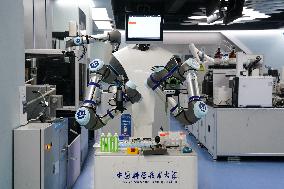
Robot Xiaolin is pictured at the state key laboratory of precision and intelligent chemistry of the University of Science and Technology of China (USTC) in Hefei, east China's Anhui Province, November 24, 2025. Traditional chemical research has long relied on continuous trial and error by scientists. With the development of artificial intelligence and robotic automation technologies, it has become possible to design experiments and issue instructions through intelligent platforms, using robots to replace human labor in experiential operations, which enhances experimental efficiency and precision. In 2021, after eight years of dedicated effort by a research team from USTC, Xiaolai, the first-generation "robot chemist," was successfully developed. After several years of iterations, the second-generation dual-armed humanoid robot Xiaolin has been put into operation, capable of performing more complex tasks. It has evolved from a substitute of human labor to a "research partner." According to Zhu Zhuoying, a prof

  •  
Robot Chemist - China

Robot Chemist - China

Robot Xiaolin is pictured at the state key laboratory of precision and intelligent chemistry of the University of Science and Technology of China (USTC) in Hefei, east China's Anhui Province, November 24, 2025. Traditional chemical research has long relied on continuous trial and error by scientists. With the development of artificial intelligence and robotic automation technologies, it has become possible to design experiments and issue instructions through intelligent platforms, using robots to replace human labor in experiential operations, which enhances experimental efficiency and precision. In 2021, after eight years of dedicated effort by a research team from USTC, Xiaolai, the first-generation "robot chemist," was successfully developed. After several years of iterations, the second-generation dual-armed humanoid robot Xiaolin has been put into operation, capable of performing more complex tasks. It has evolved from a substitute of human labor to a "research partner." According to Zhu Zhuoying, a prof

  •  
Robot Chemist - China

Robot Chemist - China

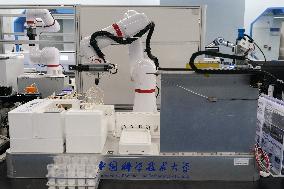
Robot Xiaolai performs an experiment at the state key laboratory of precision and intelligent chemistry of the University of Science and Technology of China (USTC) in Hefei, east China's Anhui Province, November 24, 2025. Traditional chemical research has long relied on continuous trial and error by scientists. With the development of artificial intelligence and robotic automation technologies, it has become possible to design experiments and issue instructions through intelligent platforms, using robots to replace human labor in experiential operations, which enhances experimental efficiency and precision. In 2021, after eight years of dedicated effort by a research team from USTC, Xiaolai, the first-generation "robot chemist," was successfully developed. After several years of iterations, the second-generation dual-armed humanoid robot Xiaolin has been put into operation, capable of performing more complex tasks. It has evolved from a substitute of human labor to a "research partner." According to Zhu Zhuoy

  •  
Robot Chemist - China

Robot Chemist - China

Robot Xiaolai performs an experiment at the state key laboratory of precision and intelligent chemistry of the University of Science and Technology of China (USTC) in Hefei, east China's Anhui Province, November 24, 2025. Traditional chemical research has long relied on continuous trial and error by scientists. With the development of artificial intelligence and robotic automation technologies, it has become possible to design experiments and issue instructions through intelligent platforms, using robots to replace human labor in experiential operations, which enhances experimental efficiency and precision. In 2021, after eight years of dedicated effort by a research team from USTC, Xiaolai, the first-generation "robot chemist," was successfully developed. After several years of iterations, the second-generation dual-armed humanoid robot Xiaolin has been put into operation, capable of performing more complex tasks. It has evolved from a substitute of human labor to a "research partner." According to Zhu Zhuoy

  •  
Robot Chemist - China

Robot Chemist - China

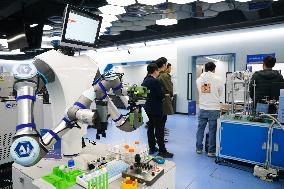
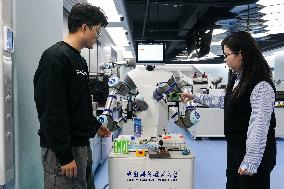
Professor Zhu Zhuoying (R) and doctoral student Guo Lulu have a discussion in front of Robot Xiaolin at the state key laboratory of precision and intelligent chemistry of the University of Science and Technology of China (USTC) in Hefei, east China's Anhui Province, November 24, 2025. Traditional chemical research has long relied on continuous trial and error by scientists. With the development of artificial intelligence and robotic automation technologies, it has become possible to design experiments and issue instructions through intelligent platforms, using robots to replace human labor in experiential operations, which enhances experimental efficiency and precision. In 2021, after eight years of dedicated effort by a research team from USTC, Xiaolai, the first-generation "robot chemist," was successfully developed. After several years of iterations, the second-generation dual-armed humanoid robot Xiaolin has been put into operation, capable of performing more complex tasks. It has evolved from a substitut

  •  
Russian drone wreckage damages apartment block in Shevchenkivskyi district of Kyiv

Russian drone wreckage damages apartment block in Shevchenkivskyi district of Kyiv

A chemist in the Shevchenkivskyi district is damaged by the falling Russian drone debris, Kyiv, Ukraine, on May 7, 2025. (Photo by Danylo Antoniuk/Ukrinform)

  •  
Russian drone wreckage damages apartment block in Shevchenkivskyi district of Kyiv

Russian drone wreckage damages apartment block in Shevchenkivskyi district of Kyiv

A chemist in the Shevchenkivskyi district is damaged by the falling Russian drone debris, Kyiv, Ukraine, on May 7, 2025. (Photo by Danylo Antoniuk/Ukrinform)

  •  
Kyivs Sviatoshynskyi district after Russian missile attack

Kyivs Sviatoshynskyi district after Russian missile attack

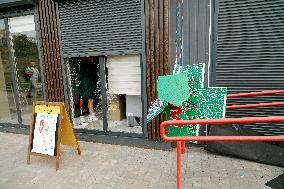
KYIV, UKRAINE - SEPTEMBER 2, 2024 - A pharmacy in the Sviatoshynskyi district is damaged by the Russian missile attack, Kyiv, capital of Ukraine.

  •  
Kyivs Sviatoshynskyi district after Russian missile attack

Kyivs Sviatoshynskyi district after Russian missile attack

KYIV, UKRAINE - SEPTEMBER 2, 2024 - A woman lifts a security shutter at a pharmacy in the Sviatoshynskyi district after the Russian missile attack, Kyiv, capital of Ukraine.

  •  
Kyivs Sviatoshynskyi district after Russian missile attack

Kyivs Sviatoshynskyi district after Russian missile attack

KYIV, UKRAINE - SEPTEMBER 2, 2024 - A pharmacy in the Sviatoshynskyi district is damaged by the Russian missile attack, Kyiv, capital of Ukraine.

  •  
Kyivs Sviatoshynskyi district after Russian missile attack

Kyivs Sviatoshynskyi district after Russian missile attack

KYIV, UKRAINE - SEPTEMBER 2, 2024 - A pharmacy in the Sviatoshynskyi district is damaged by the Russian missile attack, Kyiv, capital of Ukraine.

  •  
Xinhua Headlines: AI tech speeds up China's R&D innovation

Xinhua Headlines: AI tech speeds up China's R&D innovation

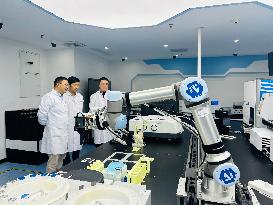
(240731) -- BEIJING, July 31, 2024 Photo by Xinhua/ABACAPRESS.COM) -- This photo taken with a mobile phone shows researchers working with an AI-driven robotic chemist at the University of Science and Technology of China in Hefei, east China's Anhui Province, Nov. 10, 2023. Photo by Xinhua/ABACAPRESS.COM/Zhou Chang)

  •  
CHINA-CHONGQING-FIRST-STORE ECONOMY (CN)

CHINA-CHONGQING-FIRST-STORE ECONOMY (CN)

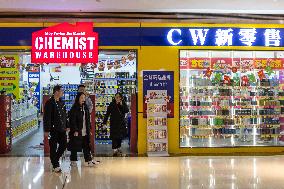
(240121) -- CHONGQING, Jan. 21, 2024 (Xinhua) -- This photo taken on Jan. 21, 2024 shows the Chemist Warehouse in Yuzhong District of southwest China's Chongqing Municipality. TO GO WITH "Economic Watch: 'First-store economy' spurs consumption in southwest China" (Xinhua/Chu Jiayin)

  •  
CHINA-CHONGQING-FIRST-STORE ECONOMY (CN)

CHINA-CHONGQING-FIRST-STORE ECONOMY (CN)

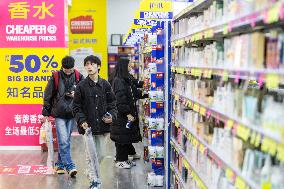
(240121) -- CHONGQING, Jan. 21, 2024 (Xinhua) -- Customers shop at Chemist Warehouse in Yuzhong District of southwest China's Chongqing Municipality, Jan. 21, 2024. TO GO WITH "Economic Watch: 'First-store economy' spurs consumption in southwest China" (Xinhua/Chu Jiayin)

  •  
Winter in Kyiv

Winter in Kyiv

KYIV, UKRAINE - DECEMBER 14, 2023 - A senior woman with a walking cane enters a chemist in winter, Kyiv, capital of Ukraine.

  •  
CHINA-ANHUI-AI ROBOTIC CHEMIST-MARS (CN)

CHINA-ANHUI-AI ROBOTIC CHEMIST-MARS (CN)

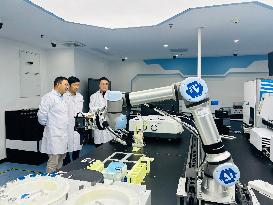
(231114) -- HEFEI, Nov. 14, 2023 (Xinhua) -- This photo taken with a mobile phone shows researchers working with an AI-driven robotic chemist at the University of Science and Technology of China in Hefei, east China's Anhui Province, Nov. 10, 2023. TO GO WITH "China's AI robotic chemist synthesizes catalysts for oxygen production on Mars" (Xinhua/Zhou Chang)

  •  
Consequences of Russian shelling of Antonivka

Consequences of Russian shelling of Antonivka

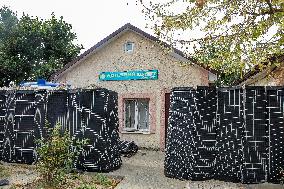
ANTONIVKA, UKRAINE - SEPTEMBER 14, 2023 - A chemist shop is sealed with gabions in Antonivka, Kherson Region, southern Ukraine. The town suffers from Russian attacks every day.

  •  
Consequences of Russian shelling of Antonivka

Consequences of Russian shelling of Antonivka

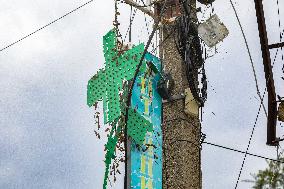
ANTONIVKA, UKRAINE - SEPTEMBER 14, 2023 - A pharmacy sign damaged in the shelling of Russian troops is seen in Antonivka, Kherson Region, southern Ukraine. The town suffers from Russian attacks every day.

  •  
Ukrainsk

Ukrainsk

UKRAINSK, UKRAINE - AUGUST 13, 2023 - A chemist and a photo studio are situated on the ground floor of a building in Ukrainsk, Donetsk Region, eastern Ukraine.

  •  
EGYPT-MENOUFIA PROVINCE-CHINESE COMPANY-PROSPER

EGYPT-MENOUFIA PROVINCE-CHINESE COMPANY-PROSPER

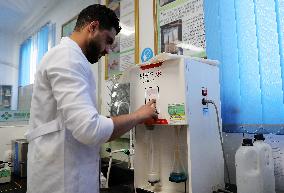
(230711) -- CAIRO, July 11, 2023 (Xinhua) -- A chemist works at the lab of Chinese company New Hope Egypt Co., Ltd. in Menoufia province, Egypt, July 6, 2023. TO GO WITH "Feature: How does a Chinese company prosper despite economic headwinds in Egypt?" (Xinhua/Wang Dongzhen)

  •  
Otto Hahn's grandson visits Hiroshima

Otto Hahn's grandson visits Hiroshima

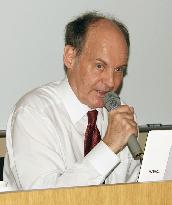
HIROSHIMA, Japan - Dietrich Hahn, a 67-year-old journalist and grandson of Otto Hahn, the German chemist who won the Nobel Prize in Chemistry for the discovery of nuclear fission, delivers a speech in Hiroshima on the night of Sept. 30, 2013. Earlier in the day, Hahn met survivors of the 1945 U.S. atomic bombing of the western Japanese city and offered flowers at the cenotaph for the victims of the attack.

  •  
Film about man who gave cherry trees to U.S.

Film about man who gave cherry trees to U.S.

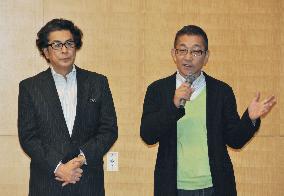
YOKOHAMA, Japan - Actor Hatsunori Hasegawa (L) and director Toru Ichikawa speak to the audience at the screening of Ichikawa's film, ''TAKAMINE -- America ni sakura o sakaseta otoko (The man who made cherry blossoms bloom in America),'' in Kawasaki near Tokyo on Feb. 20, 2012. The film is about the life of Jokichi Takamine (1854-1922), a Japanese chemist and businessman who donated 6,000 cherry trees to Washington and New York in 1912. Hasegawa plays Takamine.

  •  
2 Japanese chemists honored at Nobel ceremony

2 Japanese chemists honored at Nobel ceremony

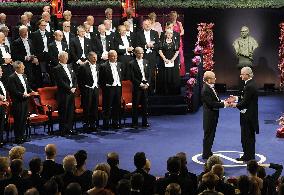
STOCKHOLM, Sweden - Japanese chemist Akira Suzuki (2nd from R) receives a medal and diploma in chemistry from King Carl XVI Gustaf of Sweden (R) during the Nobel Prize Award Ceremony at the Stockholm Concert Hall on Dec. 10, 2010. (Pool Photo by Kyodo News)

  •  
2 Japanese chemists honored at Nobel ceremony

2 Japanese chemists honored at Nobel ceremony

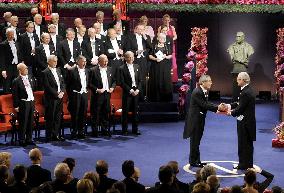
STOCKHOLM, Sweden - Japanese chemist Eiichi Negishi (2nd from R) receives a medal and diploma in chemistry from King Carl XVI Gustaf of Sweden (R) during the Nobel Prize Award Ceremony at the Stockholm Concert Hall on Dec. 10, 2010. (Pool Photo by Kyodo News)

  •  
Nobel laureate chemist Negishi in Stockholm

Nobel laureate chemist Negishi in Stockholm

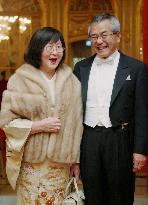
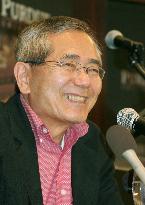
STOCKHOLM, Sweden - Japanese chemist Eiichi Negishi (R), a winner of the Nobel Prize in chemistry and the Herbert C. Brown Distinguished Professor of Chemistry at Purdue University, smiles with his wife Sumire at a hotel in Stockholm on Dec. 10, 2010, before the Nobel Prize Award Ceremony in the Swedish capital. (Pool Photo)

  •  
Nobel Foundation banquet

Nobel Foundation banquet

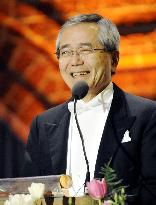
STOCKHOLM, Sweden - Japanese chemist Eiichi Negishi delivers a speech at a banquet hosted by the Nobel Foundation in Stockholm on Dec. 10, 2010, after receiving a medal and diploma in chemistry at the Nobel Prize Award Ceremony. (Pool photo by Kyodo News)

  •  
Nobel laureate chemist Negishi

Nobel laureate chemist Negishi

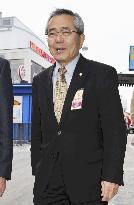
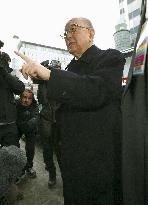
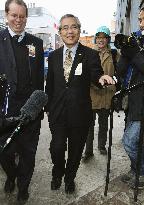
STOCKHOLM, Sweden - Japanese chemist Eiichi Negishi arrives at the venue of the Nobel Prize Award Ceremony in Stockholm on Dec. 10, 2010, for a rehearsal. (Pool photo)

  •  
Nobel laureate chemist Suzuki

Nobel laureate chemist Suzuki

STOCKHOLM, Sweden - Japanese chemist Akira Suzuki arrives at the venue of the Nobel Prize Award Ceremony in Stockholm on Dec. 10, 2010, for a rehearsal. (Pool photo)

  •  
Nobel laureate chemist Suzuki

Nobel laureate chemist Suzuki

STOCKHOLM, Sweden - Japanese chemist Akira Suzuki arrives at the venue of the Nobel Prize Award Ceremony in Stockholm on Dec. 10, 2010, for a rehearsal. (Pool photo)

  •  
Nobel laureate chemist Negishi

Nobel laureate chemist Negishi

STOCKHOLM, Sweden - Japanese chemist Eiichi Negishi arrives at the venue of the Nobel Prize Award Ceremony in Stockholm on Dec. 10, 2010, for a rehearsal. (Pool photo)

  •  
Nobel laureates in chemistry give lectures

Nobel laureates in chemistry give lectures

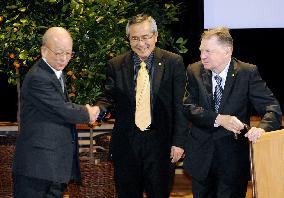
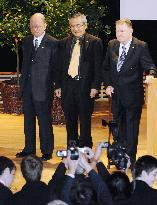
STOCKHOLM, Sweden - (From L to R) Japanese scientists Akira Suzuki and Eiichi Negishi and American chemist Richard Heck, who won this year's Nobel Prize in chemistry, stand together after giving lectures at Stockholm University on Dec. 8, 2010.

  •  
Nobel laureates in chemistry give lectures

Nobel laureates in chemistry give lectures

STOCKHOLM, Sweden - (From L to R) Japanese scientists Akira Suzuki and Eiichi Negishi and American chemist Richard Heck, who won this year's Nobel Prize in chemistry, stand together after giving lectures at Stockholm University on Dec. 8, 2010.

  •  
Nobel laureates Suzuki, Negishi in Stockholm

Nobel laureates Suzuki, Negishi in Stockholm

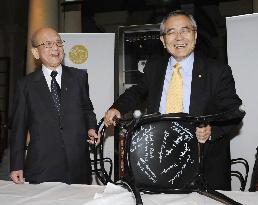
STOCKHOLM, Sweden - Akira Suzuki (L) and Eiichi Negishi, Japanese winners of the 2010 Nobel Prize in chemistry along with American chemist Richard Heck, share a laugh as Negishi holds a chair with their autographs at the Nobel Museum in Stockholm, Sweden, on Dec. 6, 2010. They are scheduled to attend the award ceremony at the Swedish capital on Dec. 10.

  •  
Negishi in Stockholm for Nobel Prize ceremony

Negishi in Stockholm for Nobel Prize ceremony

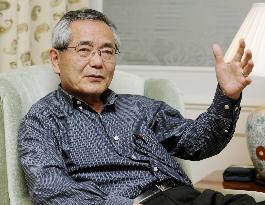
STOCKHOLM, Sweden - Japanese chemist Eiichi Negishi, professor at Purdue University in the United States and a winner of the 2010 Nobel Prize in chemistry, speaks during an interview in Stockholm on Dec. 5, 2010. Negishi, who shared the prize with Japanese chemist Akira Suzuki and U.S. chemist Richard Heck, said he feels due responsibility as a Nobel laureate prior to attending the award ceremony in the Swedish capital on Dec. 10.

  •  
Nobel laureate Suzuki departs for award ceremony

Nobel laureate Suzuki departs for award ceremony

SAPPORO, Japan - Akira Suzuki, a winner of the 2010 Nobel Prize in chemistry and a professor emeritus at Hokkaido University, leaves his home in Ebetsu, Hokkaido, on Dec. 3, 2010, to attend the award ceremony in Stockholm on Dec. 10. Suzuki shared the prize with another Japanese scientist, Eiichi Negishi, and American chemist Richard Heck.

  •  
Recipients of Order of Culture

Recipients of Order of Culture

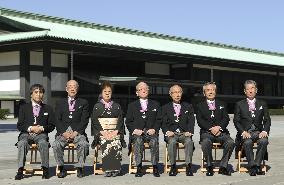
TOKYO, Japan - Recipients of the Order of Culture (from L) architect Tadao Ando, stage director Yukio Ninagawa, medieval historian Haruko Wakita, Nobel laureate chemist Akira Suzuki, nuclear physicist Akito Arima, Nobel laureate chemist Eiichi Negishi and fashion designer Issey Miyake pose for a photo session at the Imperial Palace in Tokyo on Nov. 3, 2010, a national holiday, Culture Day. They received the Order of Culture from Emperor Akihito.

  •  
Nobel laureate Suzuki at education ministry

Nobel laureate Suzuki at education ministry

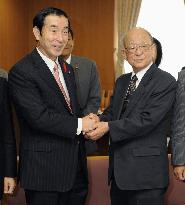
TOKYO, Japan - Nobel Prize-winning chemist Akira Suzuki (R) shakes hands with education minister Yoshiaki Takaki at the Ministry of Education, Culture, Sports, Science and Technology in Tokyo on Oct. 14, 2010.

  •  
Nobel laureate Suzuki at education ministry

Nobel laureate Suzuki at education ministry

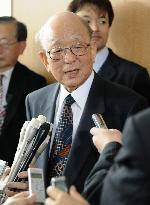
TOKYO, Japan - Nobel Prize-winning chemist Akira Suzuki speaks to reporters at the Ministry of Education, Culture, Sports, Science and Technology in Tokyo on Oct. 14, 2010. Suzuki, a professor emeritus at Hokkaido University, called for the government to provide long-term financial and intellectual support for researchers.

  •  
Nobel laureate Negishi

Nobel laureate Negishi

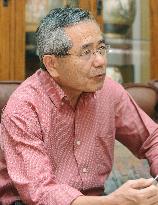
WEST LAFAYETTE, United States - Japanese chemist Eiichi Negishi, professor at Purdue University in West Lafayette, Indiana, speaks during an interview at his home on Oct. 7, 2010. Negishi won the 2010 Nobel Prize in chemistry with Akira Suzuki and Richard Heck for ''palladium-catalyzed cross couplings in organic synthesis.''

  •  
Japan chemist Negishi among Nobel laureates

Japan chemist Negishi among Nobel laureates

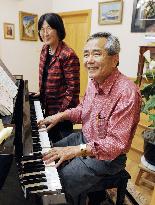
WEST LAFAYETTE, United States - Japanese chemist Eiichi Negishi, a Nobel Prize laureate, plays the piano with his wife Sumire at their home in Indiana on Oct. 6, 2010. Negishi, together with Akira Suzuki and Richard Heck, was given the coveted award.

  •  
Japan chemist Negishi among Nobel laureates

Japan chemist Negishi among Nobel laureates

WEST LAFAYETTE, United States - Japanese chemist Eiichi Negishi, a professor at Purdue University, talks about his sharing the Nobel Prize in chemistry with two other chemists in West Lafayette, Indiana, on Oct. 6, 2010. Negishi, together with Akira Suzuki and Richard Heck, was given the award for ''palladium-catalyzed cross couplings in organic synthesis.''

  •  
Japan chemist Negishi among Nobel laureates

Japan chemist Negishi among Nobel laureates

WEST LAFAYETTE, United States - Japanese chemist Eiichi Negishi, a professor at Purdue University, talks about his sharing the Nobel Prize in chemistry with two other chemists in West Lafayette, Indiana, on Oct. 6, 2010. Negishi, together with Akira Suzuki and Richard Heck, was given the award for ''palladium-catalyzed cross couplings in organic synthesis.''

  •  
Japan chemist Negishi among Nobel laureates

Japan chemist Negishi among Nobel laureates

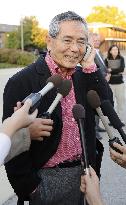
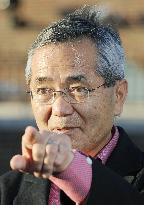
WEST LAFAYETTE, United States - Japanese chemist Eiichi Negishi, a professor at Purdue University, points during a joint media interview on Oct. 6, 2010, in West Lafayette, Indiana, after winning the Nobel Prize in chemistry with Akira Suzuki and Richard Heck for ''palladium-catalyzed cross couplings in organic synthesis.''

  •  
Japan chemist Suzuki among Nobel laureates

Japan chemist Suzuki among Nobel laureates

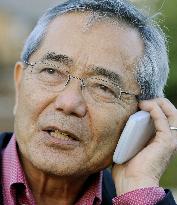
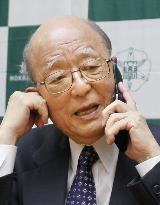
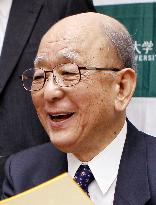
SAPPORO, Japan - Akira Suzuki, a professor emeritus at Hokkaido University, speaks during a telephone interview at the university in Sapporo on Oct. 6, 2010, after winning 2010 Nobel Prize in chemistry with Eiichi Negishi and Richard Heck for ''palladium-catalyzed cross couplings in organic synthesis.''

  •  
Japan chemist Negishi among Nobel laureates

Japan chemist Negishi among Nobel laureates

INDIANAPOLIS, United States - Japanese chemist Eiichi Negishi, a professor at Purdue University, speaks at a news conference on Oct. 6, 2010, at the university in Indiana, after winning the Nobel Prize in chemistry with Akira Suzuki and Richard Heck for ''palladium-catalyzed cross couplings in organic synthesis.''

  •  
Japan chemist Negishi among Nobel laureates

Japan chemist Negishi among Nobel laureates

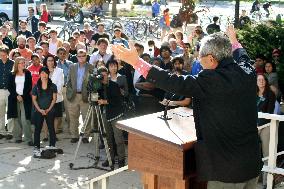
INDIANAPOLIS, United States - Japanese chemist Eiichi Negishi delivers a speech in front of students at Purdue University where he works at its campus in Indiana on Oct. 6, 2010, after winning the 2010 Nobel Prize in chemistry with Akira Suzuki and Richard Heck for ''palladium-catalyzed cross couplings in organic synthesis.''

  •  
Japan chemist Suzuki among Nobel laureates

Japan chemist Suzuki among Nobel laureates

SAPPORO, Japan - Akira Suzuki (C), a professor emeritus at Hokkaido University, heads off after a press conference at the university in Sapporo on Oct. 7, 2010, after winning 2010 Nobel Prize in chemistry with Eiichi Negishi and Richard Heck for ''palladium-catalyzed cross couplings in organic synthesis.''

  •  
Japan chemist Suzuki among Nobel laureates

Japan chemist Suzuki among Nobel laureates

SAPPORO, Japan - Akira Suzuki, a professor emeritus at Hokkaido University, speaks during a press conference at the university in Sapporo at past midnight Oct. 7, 2010, after hearing that he had shared the Nobel Prize in chemistry with Eiichi Negishi and Richard Heck for ''palladium-catalyzed cross couplings in organic synthesis.''

  •  
Japan chemist Suzuki among Nobel laureates

Japan chemist Suzuki among Nobel laureates

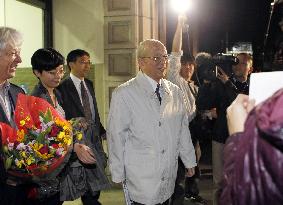
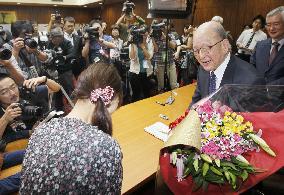
SAPPORO, Japan - Akira Suzuki, a professor emeritus at Hokkaido University, receives flowers from a student at a press conference at the university in Sapporo on Oct. 6, 2010, after winning 2010 Nobel Prize in chemistry with Eiichi Negishi and Richard Heck for ''palladium-catalyzed cross couplings in organic synthesis.''

  • Main
  • Top
  • Editorial
  • Creative
  • About Us
  • About ILG
  • Terms of use
  • Company
  • BEHIND
  • Price List
  • Single Plan
  • Monthly Plan
  • Services
  • Shooting
  • Rights Clearance
  • Support
  • FAQ
  • How To Buy
  • Contact Us
  • Become a Partner

© KYODO NEWS IMAGES INC

All Rights Reserved.

  • Editorial
  • Olympics
  • News
  • Sports
  • Japan
  • Tech
  • Royal
  • Disaster
  • NorthKorea
  • Old Japan
  • SNS

  • Creative
  • Food
  • Japan
  • Landscape
  • Animal
  • Popular
  • #Ukraine
  • #China
  • #coronavirus
  • #N. Korea
  • #Thailand
  • #Russia
  • #Ukraine
  • #China
  • #coronavirus
  • #N. Korea
  • #Thailand
  • #Russia
  • Food
  • Japan
  • Landscape
  • Animal
  • Olympics
  • News
  • Sports
  • Japan
  • Tech
  • Royal
  • Disaster
  • NorthKorea
  • Old Japan
  • SNS