•  
Duangyan Dao Coast Guard Patrol - Chin

Duangyan Dao Coast Guard Patrol - Chin

An aerial drone photo taken on November 14, 2025 shows a view of China's Huangyan Dao in the South China Sea. Huangyan Dao is part of China's Zhongsha Qundao with diverse natural ecosystem. Photo by Bei He/Xinhua/ABACAPRESS.COM

  •  
Duangyan Dao Coast Guard Patrol - Chin

Duangyan Dao Coast Guard Patrol - Chin

An aerial drone photo taken on November 14, 2025 shows a view of China's Huangyan Dao in the South China Sea. Huangyan Dao is part of China's Zhongsha Qundao with diverse natural ecosystem. Photo by Bei He/Xinhua/ABACAPRESS.COM

  •  
Duangyan Dao Coast Guard Patrol - Chin

Duangyan Dao Coast Guard Patrol - Chin

An aerial drone photo taken on November 14, 2025 shows a panoramic view of China's Huangyan Dao in the South China Sea. Huangyan Dao is part of China's Zhongsha Qundao with diverse natural ecosystem. Photo by Bei He/Xinhua/ABACAPRESS.COM

  •  
Duangyan Dao Coast Guard Patrol - Chin

Duangyan Dao Coast Guard Patrol - Chin

An aerial drone photo taken on November 14, 2025 shows a panoramic view of China's Huangyan Dao in the South China Sea. Huangyan Dao is part of China's Zhongsha Qundao with diverse natural ecosystem. Photo by Bei He/Xinhua/ABACAPRESS.COM

  •  
Duangyan Dao Coast Guard Patrol - Chin

Duangyan Dao Coast Guard Patrol - Chin

An aerial drone photo shows the China Coast Guard (CCG) conducting law enforcement patrols in the territorial waters of China's Huangyan Dao and surrounding areas on November 14, 2025. Photo by Bei He/Xinhua/ABACAPRESS.COM

  •  
Duangyan Dao Coast Guard Patrol - Chin

Duangyan Dao Coast Guard Patrol - Chin

An aerial drone photo shows the China Coast Guard (CCG) patrolling in the territorial waters of China's Huangyan Dao and surrounding areas on November 14, 2025. Photo by Bei He/Xinhua/ABACAPRESS.COM

  •  
Duangyan Dao Coast Guard Patrol - Chin

Duangyan Dao Coast Guard Patrol - Chin

An aerial drone photo shows the China Coast Guard (CCG) patrolling in the territorial waters of China's Huangyan Dao and surrounding areas on November 14, 2025. Photo by Bei He/Xinhua/ABACAPRESS.COM

  •  
Duangyan Dao Coast Guard Patrol - Chin

Duangyan Dao Coast Guard Patrol - Chin

An aerial drone photo shows the China Coast Guard (CCG) conducting law enforcement patrols in the territorial waters of China's Huangyan Dao and surrounding areas on November 14, 2025. Photo by Bei He/Xinhua/ABACAPRESS.COM

  •  
Tie-Dye Technique Of Bai Ethnic Group - Chin

Tie-Dye Technique Of Bai Ethnic Group - Chin

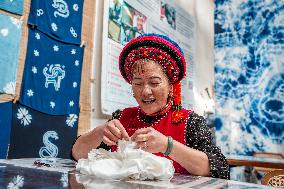
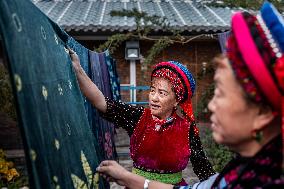
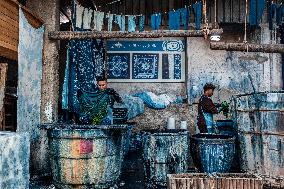
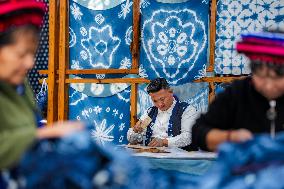
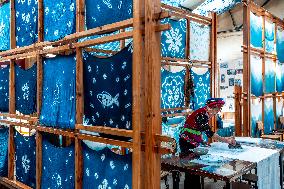
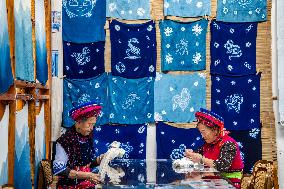
Duan Yuan, an inheritor of the tie-dye technique of Bai ethnic group, makes tie-dye designs in a dyehouse in Zhoucheng Village of Dali Bai Autonomous Prefecture, southwest China's Yunnan Province, November 21, 2025. Known as the hometown of the tie-dye technique of Bai ethnic group, Zhoucheng Village hosts over 200 households engaging in tie-dye businesses, with the number of employees exceeding 4,000. As a traditional folk technique of the Bai ethnic group, tie-dye boasts a history spanning over a thousand years and was included in the first batch of China's national intangible cultural heritage list in 2006. Tying and dyeing are the core steps in the process of making indigo tie-dye products. Artisans use needles and threads to create various patterns on the fabric, which are then dyed with plant-based dyes, resulting in blue backgrounds adorned with vivid white patterns. Photo by Hu Chao/Xinhua/ABACAPRESS.COM

  •  
Tie-Dye Technique Of Bai Ethnic Group - Chin

Tie-Dye Technique Of Bai Ethnic Group - Chin

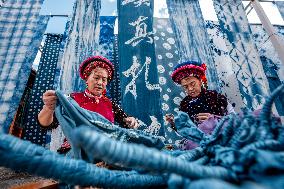
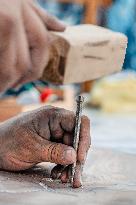
Duan Yinmei, an inheritor of the tie-dye technique of Bai ethnic group, creates knots on fabrics in a dyehouse in Zhoucheng Village of Dali Bai Autonomous Prefecture, southwest China's Yunnan Province, November 21, 2025. Known as the hometown of the tie-dye technique of Bai ethnic group, Zhoucheng Village hosts over 200 households engaging in tie-dye businesses, with the number of employees exceeding 4,000. As a traditional folk technique of the Bai ethnic group, tie-dye boasts a history spanning over a thousand years and was included in the first batch of China's national intangible cultural heritage list in 2006. Tying and dyeing are the core steps in the process of making indigo tie-dye products. Artisans use needles and threads to create various patterns on the fabric, which are then dyed with plant-based dyes, resulting in blue backgrounds adorned with vivid white patterns. Photo by Hu Chao/Xinhua/ABACAPRESS.COM

  •  
Tie-Dye Technique Of Bai Ethnic Group - Chin

Tie-Dye Technique Of Bai Ethnic Group - Chin

A woman experiences the tie-dye technique of Bai ethnic group in a dyehouse in Zhoucheng Village of Dali Bai Autonomous Prefecture, southwest China's Yunnan Province, November 21, 2025. Known as the hometown of the tie-dye technique of Bai ethnic group, Zhoucheng Village hosts over 200 households engaging in tie-dye businesses, with the number of employees exceeding 4,000. As a traditional folk technique of the Bai ethnic group, tie-dye boasts a history spanning over a thousand years and was included in the first batch of China's national intangible cultural heritage list in 2006. Tying and dyeing are the core steps in the process of making indigo tie-dye products. Artisans use needles and threads to create various patterns on the fabric, which are then dyed with plant-based dyes, resulting in blue backgrounds adorned with vivid white patterns. Photo by Hu Chao/Xinhua/ABACAPRESS.COM

  •  
Tie-Dye Technique Of Bai Ethnic Group - Chin

Tie-Dye Technique Of Bai Ethnic Group - Chin

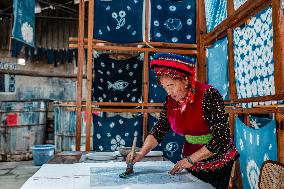
Duan Yinmei, an inheritor of the tie-dye technique of Bai ethnic group, dyes patterns on fabrics in a dyehouse in Zhoucheng Village of Dali Bai Autonomous Prefecture, southwest China's Yunnan Province, November 21, 2025. Known as the hometown of the tie-dye technique of Bai ethnic group, Zhoucheng Village hosts over 200 households engaging in tie-dye businesses, with the number of employees exceeding 4,000. As a traditional folk technique of the Bai ethnic group, tie-dye boasts a history spanning over a thousand years and was included in the first batch of China's national intangible cultural heritage list in 2006. Tying and dyeing are the core steps in the process of making indigo tie-dye products. Artisans use needles and threads to create various patterns on the fabric, which are then dyed with plant-based dyes, resulting in blue backgrounds adorned with vivid white patterns. Photo by Hu Chao/Xinhua/ABACAPRESS.COM

  •  
Tie-Dye Technique Of Bai Ethnic Group - Chin

Tie-Dye Technique Of Bai Ethnic Group - Chin

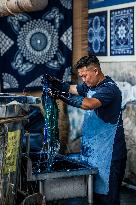
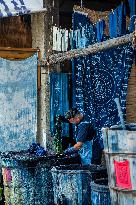
Duan Yuan, an inheritor of the tie-dye technique of Bai ethnic group, rinses dyed fabrics in a dyehouse in Zhoucheng Village of Dali Bai Autonomous Prefecture, southwest China's Yunnan Province, November 21, 2025. Known as the hometown of the tie-dye technique of Bai ethnic group, Zhoucheng Village hosts over 200 households engaging in tie-dye businesses, with the number of employees exceeding 4,000. As a traditional folk technique of the Bai ethnic group, tie-dye boasts a history spanning over a thousand years and was included in the first batch of China's national intangible cultural heritage list in 2006. Tying and dyeing are the core steps in the process of making indigo tie-dye products. Artisans use needles and threads to create various patterns on the fabric, which are then dyed with plant-based dyes, resulting in blue backgrounds adorned with vivid white patterns. Photo by Hu Chao/Xinhua/ABACAPRESS.COM

  •  
Tie-Dye Technique Of Bai Ethnic Group - Chin

Tie-Dye Technique Of Bai Ethnic Group - Chin

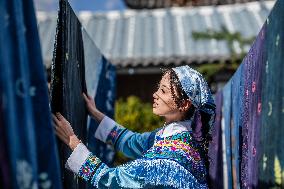
Duan Yinmei (L), an inheritor of the tie-dye technique of Bai ethnic group, and handicraftsman Duan Lilan dry tie-dye fabrics in a dyehouse in Zhoucheng Village of Dali Bai Autonomous Prefecture, southwest China's Yunnan Province, November 21, 2025. Known as the hometown of the tie-dye technique of Bai ethnic group, Zhoucheng Village hosts over 200 households engaging in tie-dye businesses, with the number of employees exceeding 4,000. As a traditional folk technique of the Bai ethnic group, tie-dye boasts a history spanning over a thousand years and was included in the first batch of China's national intangible cultural heritage list in 2006. Tying and dyeing are the core steps in the process of making indigo tie-dye products. Artisans use needles and threads to create various patterns on the fabric, which are then dyed with plant-based dyes, resulting in blue backgrounds adorned with vivid white patterns. Photo by Hu Chao/Xinhua/ABACAPRESS.COM

  •  
Tie-Dye Technique Of Bai Ethnic Group - Chin

Tie-Dye Technique Of Bai Ethnic Group - Chin

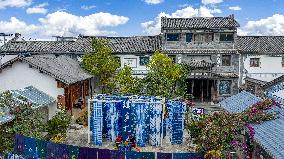
An aerial drone photo shows a scene at a dyehouse in Zhoucheng Village of Dali Bai Autonomous Prefecture, southwest China's Yunnan Province, November 21, 2025. Known as the hometown of the tie-dye technique of Bai ethnic group, Zhoucheng Village hosts over 200 households engaging in tie-dye businesses, with the number of employees exceeding 4,000. As a traditional folk technique of the Bai ethnic group, tie-dye boasts a history spanning over a thousand years and was included in the first batch of China's national intangible cultural heritage list in 2006. Tying and dyeing are the core steps in the process of making indigo tie-dye products. Artisans use needles and threads to create various patterns on the fabric, which are then dyed with plant-based dyes, resulting in blue backgrounds adorned with vivid white patterns. Photo by Hu Chao/Xinhua/ABACAPRESS.COM

  •  
Tie-Dye Technique Of Bai Ethnic Group - Chin

Tie-Dye Technique Of Bai Ethnic Group - Chin

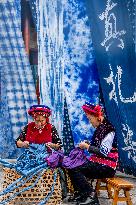
Duan Yinmei (L), an inheritor of the tie-dye technique of Bai ethnic group, and handicraftsman Duan Lilan untie knots on fabrics in a dyehouse in Zhoucheng Village of Dali Bai Autonomous Prefecture, southwest China's Yunnan Province, November 21, 2025. Known as the hometown of the tie-dye technique of Bai ethnic group, Zhoucheng Village hosts over 200 households engaging in tie-dye businesses, with the number of employees exceeding 4,000. As a traditional folk technique of the Bai ethnic group, tie-dye boasts a history spanning over a thousand years and was included in the first batch of China's national intangible cultural heritage list in 2006. Tying and dyeing are the core steps in the process of making indigo tie-dye products. Artisans use needles and threads to create various patterns on the fabric, which are then dyed with plant-based dyes, resulting in blue backgrounds adorned with vivid white patterns. Photo by Hu Chao/Xinhua/ABACAPRESS.COM

  •  
Tie-Dye Technique Of Bai Ethnic Group - Chin

Tie-Dye Technique Of Bai Ethnic Group - Chin

Duan Yinmei (L), an inheritor of the tie-dye technique of Bai ethnic group, and handicraftsman Duan Lilan untie knots on fabrics in a dyehouse in Zhoucheng Village of Dali Bai Autonomous Prefecture, southwest China's Yunnan Province, November 21, 2025. Known as the hometown of the tie-dye technique of Bai ethnic group, Zhoucheng Village hosts over 200 households engaging in tie-dye businesses, with the number of employees exceeding 4,000. As a traditional folk technique of the Bai ethnic group, tie-dye boasts a history spanning over a thousand years and was included in the first batch of China's national intangible cultural heritage list in 2006. Tying and dyeing are the core steps in the process of making indigo tie-dye products. Artisans use needles and threads to create various patterns on the fabric, which are then dyed with plant-based dyes, resulting in blue backgrounds adorned with vivid white patterns. Photo by Hu Chao/Xinhua/ABACAPRESS.COM

  •  
Tie-Dye Technique Of Bai Ethnic Group - Chin

Tie-Dye Technique Of Bai Ethnic Group - Chin

Duan Yuan (L), an inheritor of the tie-dye technique of Bai ethnic group, dyes fabrics in a dyehouse in Zhoucheng Village of Dali Bai Autonomous Prefecture, southwest China's Yunnan Province, November 21, 2025. Known as the hometown of the tie-dye technique of Bai ethnic group, Zhoucheng Village hosts over 200 households engaging in tie-dye businesses, with the number of employees exceeding 4,000. As a traditional folk technique of the Bai ethnic group, tie-dye boasts a history spanning over a thousand years and was included in the first batch of China's national intangible cultural heritage list in 2006. Tying and dyeing are the core steps in the process of making indigo tie-dye products. Artisans use needles and threads to create various patterns on the fabric, which are then dyed with plant-based dyes, resulting in blue backgrounds adorned with vivid white patterns. Photo by Hu Chao/Xinhua/ABACAPRESS.COM

  •  
Tie-Dye Technique Of Bai Ethnic Group - Chin

Tie-Dye Technique Of Bai Ethnic Group - Chin

Duan Yuan, an inheritor of the tie-dye technique of Bai ethnic group, makes tie-dye designs in a dyehouse in Zhoucheng Village of Dali Bai Autonomous Prefecture, southwest China's Yunnan Province, November 21, 2025. Known as the hometown of the tie-dye technique of Bai ethnic group, Zhoucheng Village hosts over 200 households engaging in tie-dye businesses, with the number of employees exceeding 4,000. As a traditional folk technique of the Bai ethnic group, tie-dye boasts a history spanning over a thousand years and was included in the first batch of China's national intangible cultural heritage list in 2006. Tying and dyeing are the core steps in the process of making indigo tie-dye products. Artisans use needles and threads to create various patterns on the fabric, which are then dyed with plant-based dyes, resulting in blue backgrounds adorned with vivid white patterns. Photo by Hu Chao/Xinhua/ABACAPRESS.COM

  •  
Tie-Dye Technique Of Bai Ethnic Group - Chin

Tie-Dye Technique Of Bai Ethnic Group - Chin

Duan Yuan, an inheritor of the tie-dye technique of Bai ethnic group, dyes fabrics in a dyehouse in Zhoucheng Village of Dali Bai Autonomous Prefecture, southwest China's Yunnan Province, November 21, 2025. Known as the hometown of the tie-dye technique of Bai ethnic group, Zhoucheng Village hosts over 200 households engaging in tie-dye businesses, with the number of employees exceeding 4,000. As a traditional folk technique of the Bai ethnic group, tie-dye boasts a history spanning over a thousand years and was included in the first batch of China's national intangible cultural heritage list in 2006. Tying and dyeing are the core steps in the process of making indigo tie-dye products. Artisans use needles and threads to create various patterns on the fabric, which are then dyed with plant-based dyes, resulting in blue backgrounds adorned with vivid white patterns. Photo by Hu Chao/Xinhua/ABACAPRESS.COM

  •  
Tie-Dye Technique Of Bai Ethnic Group - Chin

Tie-Dye Technique Of Bai Ethnic Group - Chin

Duan Yuan, an inheritor of the tie-dye technique of Bai ethnic group, dyes fabrics in a dyehouse in Zhoucheng Village of Dali Bai Autonomous Prefecture, southwest China's Yunnan Province, November 21, 2025. Known as the hometown of the tie-dye technique of Bai ethnic group, Zhoucheng Village hosts over 200 households engaging in tie-dye businesses, with the number of employees exceeding 4,000. As a traditional folk technique of the Bai ethnic group, tie-dye boasts a history spanning over a thousand years and was included in the first batch of China's national intangible cultural heritage list in 2006. Tying and dyeing are the core steps in the process of making indigo tie-dye products. Artisans use needles and threads to create various patterns on the fabric, which are then dyed with plant-based dyes, resulting in blue backgrounds adorned with vivid white patterns. Photo by Hu Chao/Xinhua/ABACAPRESS.COM

  •  
Tie-Dye Technique Of Bai Ethnic Group - Chin

Tie-Dye Technique Of Bai Ethnic Group - Chin

Duan Yuan, an inheritor of the tie-dye technique of Bai ethnic group, makes tie-dye designs in a dyehouse in Zhoucheng Village of Dali Bai Autonomous Prefecture, southwest China's Yunnan Province, November 21, 2025. Known as the hometown of the tie-dye technique of Bai ethnic group, Zhoucheng Village hosts over 200 households engaging in tie-dye businesses, with the number of employees exceeding 4,000. As a traditional folk technique of the Bai ethnic group, tie-dye boasts a history spanning over a thousand years and was included in the first batch of China's national intangible cultural heritage list in 2006. Tying and dyeing are the core steps in the process of making indigo tie-dye products. Artisans use needles and threads to create various patterns on the fabric, which are then dyed with plant-based dyes, resulting in blue backgrounds adorned with vivid white patterns. Photo by Hu Chao/Xinhua/ABACAPRESS.COM

  •  
Tie-Dye Technique Of Bai Ethnic Group - Chin

Tie-Dye Technique Of Bai Ethnic Group - Chin

Duan Yinmei, an inheritor of the tie-dye technique of Bai ethnic group, unties knots on fabrics in a dyehouse in Zhoucheng Village of Dali Bai Autonomous Prefecture, southwest China's Yunnan Province, November 21, 2025. Known as the hometown of the tie-dye technique of Bai ethnic group, Zhoucheng Village hosts over 200 households engaging in tie-dye businesses, with the number of employees exceeding 4,000. As a traditional folk technique of the Bai ethnic group, tie-dye boasts a history spanning over a thousand years and was included in the first batch of China's national intangible cultural heritage list in 2006. Tying and dyeing are the core steps in the process of making indigo tie-dye products. Artisans use needles and threads to create various patterns on the fabric, which are then dyed with plant-based dyes, resulting in blue backgrounds adorned with vivid white patterns. Photo by Hu Chao/Xinhua/ABACAPRESS.COM

  •  
Tie-Dye Technique Of Bai Ethnic Group - Chin

Tie-Dye Technique Of Bai Ethnic Group - Chin

Duan Yinmei, an inheritor of the tie-dye technique of Bai ethnic group, dyes patterns on fabrics in a dyehouse in Zhoucheng Village of Dali Bai Autonomous Prefecture, southwest China's Yunnan Province, November 21, 2025. Known as the hometown of the tie-dye technique of Bai ethnic group, Zhoucheng Village hosts over 200 households engaging in tie-dye businesses, with the number of employees exceeding 4,000. As a traditional folk technique of the Bai ethnic group, tie-dye boasts a history spanning over a thousand years and was included in the first batch of China's national intangible cultural heritage list in 2006. Tying and dyeing are the core steps in the process of making indigo tie-dye products. Artisans use needles and threads to create various patterns on the fabric, which are then dyed with plant-based dyes, resulting in blue backgrounds adorned with vivid white patterns. Photo by Hu Chao/Xinhua/ABACAPRESS.COM

  •  
Tie-Dye Technique Of Bai Ethnic Group - Chin

Tie-Dye Technique Of Bai Ethnic Group - Chin

Duan Yinmei (R), an inheritor of the tie-dye technique of Bai ethnic group, and handicraftsman Duan Lilan create knots on fabrics in a dyehouse in Zhoucheng Village of Dali Bai Autonomous Prefecture, southwest China's Yunnan Province, November 21, 2025. Known as the hometown of the tie-dye technique of Bai ethnic group, Zhoucheng Village hosts over 200 households engaging in tie-dye businesses, with the number of employees exceeding 4,000. As a traditional folk technique of the Bai ethnic group, tie-dye boasts a history spanning over a thousand years and was included in the first batch of China's national intangible cultural heritage list in 2006. Tying and dyeing are the core steps in the process of making indigo tie-dye products. Artisans use needles and threads to create various patterns on the fabric, which are then dyed with plant-based dyes, resulting in blue backgrounds adorned with vivid white patterns. Photo by Hu Chao/Xinhua/ABACAPRESS.COM

  •  
Fencing at China's 15th National Games - Hong Kong

Fencing at China's 15th National Games - Hong Kong

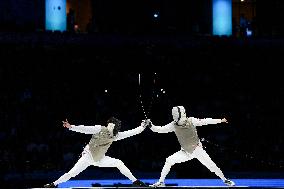
Leung Chin Yu (R) of Hong Kong competes against Chen Weiquan of Fujian during the men's team foil final of fencing at China's 15th National Games in Hong Kong, south China, November 19, 2025. Photo by Xinhua/Wu Lu/ABACAPRESS.COM

  •  
Fencing at China's 15th National Games - Hong Kong

Fencing at China's 15th National Games - Hong Kong

Leung Chin Yu (R) of Hong Kong competes against Chen Weiquan of Fujian during the men's team foil final of fencing at China's 15th National Games in Hong Kong, south China, November 19, 2025. Photo by Xinhua/Wu Lu/ABACAPRESS.COM

  •  
Macao Open Golf Tournament Begins - Chin

Macao Open Golf Tournament Begins - Chin

Dominic Foos of Germany competes during the Macao Open golf tournament in Macao, South China, Oct. 19, 2025. Photo by Xinhua/ABACAPRESS.COM

  •  
Macao Open Golf Tournament Begins - Chin

Macao Open Golf Tournament Begins - Chin

Wang Wei-hsuan of Chinese Taipei is seen during the Macao Open golf tournament in Macao, South China, Oct. 19, 2025. Photo by Xinhua/ABACAPRESS.COM

  •  
Macao Open Golf Tournament Begins - Chin

Macao Open Golf Tournament Begins - Chin

Ding Wenyi of China competes during the Macao Open golf tournament in Macao, South China, Oct. 19, 2025. Photo by Xinhua/ABACAPRESS.COM

  •  
Macao Open Golf Tournament Begins - Chin

Macao Open Golf Tournament Begins - Chin

Dominic Foos of Germany competes during the Macao Open golf tournament in Macao, South China, Oct. 19, 2025. Photo by Xinhua/ABACAPRESS.COM

  •  
Macao Open Golf Tournament Begins - Chin

Macao Open Golf Tournament Begins - Chin

Dominic Foos of Germany celebrates after the Macao Open golf tournament in Macao, South China, Oct. 19, 2025. Photo by Xinhua/ABACAPRESS.COM

  •  
Macao Open Golf Tournament Begins - Chin

Macao Open Golf Tournament Begins - Chin

Ding Wenyi of China competes during the Macao Open golf tournament in Macao, South China, Oct. 19, 2025. Photo by Xinhua/ABACAPRESS.COM

  •  
Macao Open Golf Tournament Begins - Chin

Macao Open Golf Tournament Begins - Chin

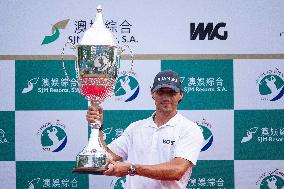
Dominic Foos of Germany poses with the trophy after the Macao Open golf tournament in Macao, South China, Oct. 19, 2025. Photo by Xinhua/ABACAPRESS.COM

  •  
Macao Open Golf Tournament Begins - Chin

Macao Open Golf Tournament Begins - Chin

Dominic Foos of Germany celebrates after the Macao Open golf tournament in Macao, South China, Oct. 19, 2025. Photo by Xinhua/ABACAPRESS.COM

  •  
Macao Open Golf Tournament Begins - Chin

Macao Open Golf Tournament Begins - Chin

Wang Wei-hsuan (front) of Chinese Taipei competes during the Macao Open golf tournament in Macao, South China, Oct. 19, 2025. Photo by Xinhua/ABACAPRESS.COM

  •  
Macao Open Golf Tournament Begins - Chin

Macao Open Golf Tournament Begins - Chin

Ding Wenyi of China competes during the Macao Open golf tournament in Macao, South China, Oct. 19, 2025. Photo by Xinhua/ABACAPRESS.COM

  •  
Macao Open Golf Tournament Begins - Chin

Macao Open Golf Tournament Begins - Chin

Dominic Foos of Germany competes during the Macao Open golf tournament in Macao, South China, Oct. 19, 2025. Photo by Xinhua/ABACAPRESS.COM

  •  
Macao Open Golf Tournament Begins - Chin

Macao Open Golf Tournament Begins - Chin

Dominic Foos of Germany poses with the trophy after the Macao Open golf tournament in Macao, South China, Oct. 19, 2025. Photo by Xinhua/ABACAPRESS.COM

  •  
Macao Open Golf Tournament Begins - Chin

Macao Open Golf Tournament Begins - Chin

Ding Wenyi of China competes during the Macao Open golf tournament in Macao, South China, Oct. 19, 2025. Photo by Xinhua/ABACAPRESS.COM

  •  
Macao Open Golf Tournament Begins - Chin

Macao Open Golf Tournament Begins - Chin

Wang Wei-hsuan of Chinese Taipei is seen during the Macao Open golf tournament in Macao, South China, Oct. 19, 2025. Photo by Xinhua/ABACAPRESS.COM

  •  
Commercial Aerospace Satellites Launch - Chin

Commercial Aerospace Satellites Launch - Chin

The Lijian-1 Y8 carrier rocket with three satellites blasts off from a commercial aerospace innovation pilot zone in northwest China, Oct. 19, 2025. China on Sunday launched the Lijian-1 Y8 carrier rocket with three satellites onboard. The rocket blasted off at 11:33 a.m. (Beijing Time) from a commercial aerospace innovation pilot zone in northwest China and successfully sent the satellites into the planned orbit. The three satellites are Pakistan remote-sensing satellite (PRSS-2), AIRSAT 03 and 04 satellites. Photo by Wang Jiangbo/Xinhua/ABACAPRESS.COM

  •  
Commercial Aerospace Satellites Launch - Chin

Commercial Aerospace Satellites Launch - Chin

The Lijian-1 Y8 carrier rocket with three satellites blasts off from a commercial aerospace innovation pilot zone in northwest China, Oct. 19, 2025. China on Sunday launched the Lijian-1 Y8 carrier rocket with three satellites onboard. The rocket blasted off at 11:33 a.m. (Beijing Time) from a commercial aerospace innovation pilot zone in northwest China and successfully sent the satellites into the planned orbit. The three satellites are Pakistan remote-sensing satellite (PRSS-2), AIRSAT 03 and 04 satellites. Photo by Li Yunxi/Xinhua/ABACAPRESS.COM

  •  
Commercial Aerospace Satellites Launch - Chin

Commercial Aerospace Satellites Launch - Chin

The Lijian-1 Y8 carrier rocket with three satellites blasts off from a commercial aerospace innovation pilot zone in northwest China, Oct. 19, 2025. China on Sunday launched the Lijian-1 Y8 carrier rocket with three satellites onboard. The rocket blasted off at 11:33 a.m. (Beijing Time) from a commercial aerospace innovation pilot zone in northwest China and successfully sent the satellites into the planned orbit. The three satellites are Pakistan remote-sensing satellite (PRSS-2), AIRSAT 03 and 04 satellites. Photo by Wang Jiangbo/Xinhua/ABACAPRESS.COM

  •  
Commercial Aerospace Satellites Launch - Chin

Commercial Aerospace Satellites Launch - Chin

The Lijian-1 Y8 carrier rocket with three satellites blasts off from a commercial aerospace innovation pilot zone in northwest China, Oct. 19, 2025. China on Sunday launched the Lijian-1 Y8 carrier rocket with three satellites onboard. The rocket blasted off at 11:33 a.m. (Beijing Time) from a commercial aerospace innovation pilot zone in northwest China and successfully sent the satellites into the planned orbit. The three satellites are Pakistan remote-sensing satellite (PRSS-2), AIRSAT 03 and 04 satellites. Photo by Wang Jiangbo/Xinhua/ABACAPRESS.COM

  •  
Commercial Aerospace Satellites Launch - Chin

Commercial Aerospace Satellites Launch - Chin

The Lijian-1 Y8 carrier rocket with three satellites blasts off from a commercial aerospace innovation pilot zone in northwest China, Oct. 19, 2025. China on Sunday launched the Lijian-1 Y8 carrier rocket with three satellites onboard. The rocket blasted off at 11:33 a.m. (Beijing Time) from a commercial aerospace innovation pilot zone in northwest China and successfully sent the satellites into the planned orbit. The three satellites are Pakistan remote-sensing satellite (PRSS-2), AIRSAT 03 and 04 satellites. Photo by Wang Jiangbo/Xinhua/ABACAPRESS.COM

  •  
Commercial Aerospace Satellites Launch - Chin

Commercial Aerospace Satellites Launch - Chin

The Lijian-1 Y8 carrier rocket with three satellites blasts off from a commercial aerospace innovation pilot zone in northwest China, Oct. 19, 2025. China on Sunday launched the Lijian-1 Y8 carrier rocket with three satellites onboard. The rocket blasted off at 11:33 a.m. (Beijing Time) from a commercial aerospace innovation pilot zone in northwest China and successfully sent the satellites into the planned orbit. The three satellites are Pakistan remote-sensing satellite (PRSS-2), AIRSAT 03 and 04 satellites. Photo by Li Yunxi/Xinhua/ABACAPRESS.COM

  •  
Commercial Aerospace Satellites Launch - Chin

Commercial Aerospace Satellites Launch - Chin

The Lijian-1 Y8 carrier rocket with three satellites blasts off from a commercial aerospace innovation pilot zone in northwest China, Oct. 19, 2025. China on Sunday launched the Lijian-1 Y8 carrier rocket with three satellites onboard. The rocket blasted off at 11:33 a.m. (Beijing Time) from a commercial aerospace innovation pilot zone in northwest China and successfully sent the satellites into the planned orbit. The three satellites are Pakistan remote-sensing satellite (PRSS-2), AIRSAT 03 and 04 satellites. Photo by Li Yunxi/Xinhua/ABACAPRESS.COM

  •  
Commercial Aerospace Satellites Launch - Chin

Commercial Aerospace Satellites Launch - Chin

The Lijian-1 Y8 carrier rocket with three satellites blasts off from a commercial aerospace innovation pilot zone in northwest China, Oct. 19, 2025. China on Sunday launched the Lijian-1 Y8 carrier rocket with three satellites onboard. The rocket blasted off at 11:33 a.m. (Beijing Time) from a commercial aerospace innovation pilot zone in northwest China and successfully sent the satellites into the planned orbit. The three satellites are Pakistan remote-sensing satellite (PRSS-2), AIRSAT 03 and 04 satellites. Photo by Li Yunxi/Xinhua/ABACAPRESS.COM

  •  
Autumn Scenery Tourism - Chin

Autumn Scenery Tourism - Chin

An aerial drone photo shows a group of milu deer crossing a river at a wetland park in Jiangyan District, Taizhou City, east China's Jiangsu Province, Oct. 17, 2025. Photo by Xinhua/ABACAPRESS.COM

  • Main
  • Top
  • Editorial
  • Creative
  • About Us
  • About ILG
  • Terms of use
  • Company
  • BEHIND
  • Price List
  • Single Plan
  • Monthly Plan
  • Services
  • Shooting
  • Rights Clearance
  • Support
  • FAQ
  • How To Buy
  • Contact Us
  • Become a Partner

© KYODO NEWS IMAGES INC

All Rights Reserved.

  • Editorial
  • Olympics
  • News
  • Sports
  • Japan
  • Tech
  • Royal
  • Disaster
  • NorthKorea
  • Old Japan
  • SNS

  • Creative
  • Food
  • Japan
  • Landscape
  • Animal
  • Popular
  • #Ukraine
  • #Russia
  • #coronavirus
  • #N. Korea
  • #Thailand
  • #China
  • #Ukraine
  • #Russia
  • #coronavirus
  • #N. Korea
  • #Thailand
  • #China
  • Food
  • Japan
  • Landscape
  • Animal
  • Olympics
  • News
  • Sports
  • Japan
  • Tech
  • Royal
  • Disaster
  • NorthKorea
  • Old Japan
  • SNS