•  
Tibetan Antelopes Migration - China

Tibetan Antelopes Migration - China

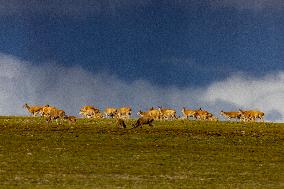
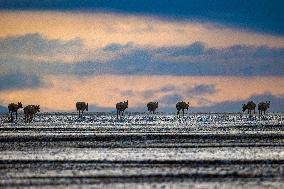
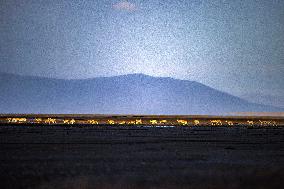
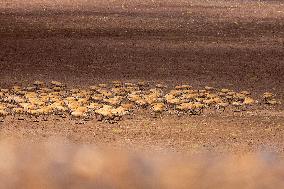
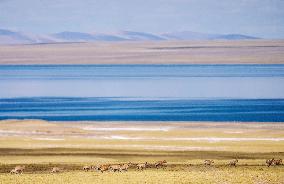
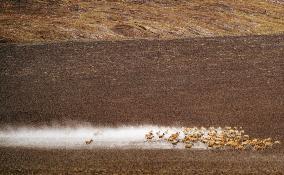
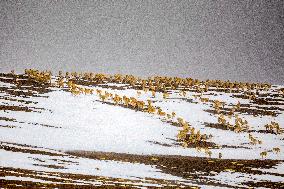
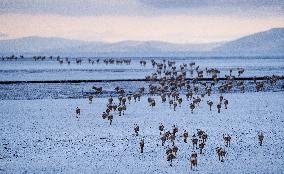
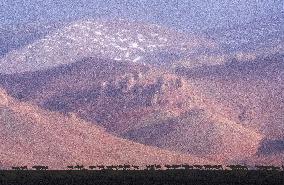
Tibetan antelopes prepare to cross the Senlong Zangbo River in Changtang National Nature Reserve in southwest China's Xizang Autonomous Region, July 14, 2025. The Senlong Zangbo River, located in Changtang National Nature Reserve in Nagqu, is a vital migration route for Tibetan antelopes. Each July, Tibetan antelope calves and their mothers cross the river and migrate to their habitats. Over the past three years, the number of Tibetan antelope migrating across this river has exceeded 150,000 each year. Thanks to effective conservation measures, the number of Tibetan antelopes in Xizang has increased to more than 300,000, according to data from the region's ecology and environment department. Photo by Jiang Fan /Xinhua/ABACAPRESS.COM

  •  
Tibetan Antelopes Migration - China

Tibetan Antelopes Migration - China

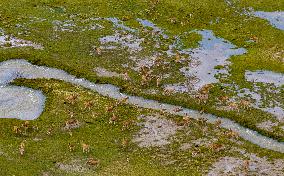
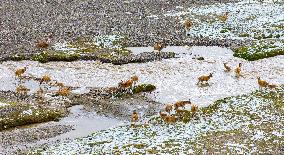
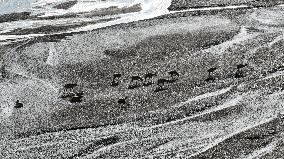
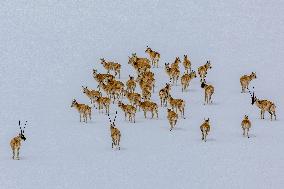
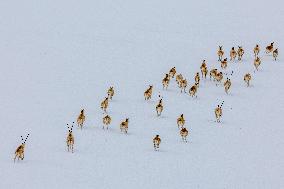
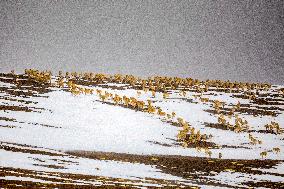
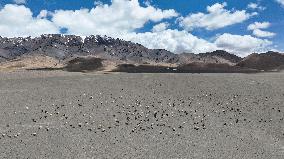
This aerial drone photo shows Tibetan antelopes crossing the Senlong Zangbo River in Changtang National Nature Reserve in southwest China's Xizang Autonomous Region, July 14, 2025. The Senlong Zangbo River, located in Changtang National Nature Reserve in Nagqu, is a vital migration route for Tibetan antelopes. Each July, Tibetan antelope calves and their mothers cross the river and migrate to their habitats. Over the past three years, the number of Tibetan antelope migrating across this river has exceeded 150,000 each year. Thanks to effective conservation measures, the number of Tibetan antelopes in Xizang has increased to more than 300,000, according to data from the region's ecology and environment department. Photo by Jiang Fan /Xinhua/ABACAPRESS.COM

  •  
Tibetan Antelopes Migration - China

Tibetan Antelopes Migration - China

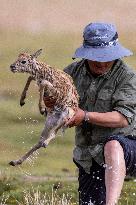
A ranger rescues a stranded Tibetan antelope calf in Changtang National Nature Reserve in southwest China's Xizang Autonomous Region, July 14, 2025. The Senlong Zangbo River, located in Changtang National Nature Reserve in Nagqu, is a vital migration route for Tibetan antelopes. Each July, Tibetan antelope calves and their mothers cross the river and migrate to their habitats. Over the past three years, the number of Tibetan antelope migrating across this river has exceeded 150,000 each year. Thanks to effective conservation measures, the number of Tibetan antelopes in Xizang has increased to more than 300,000, according to data from the region's ecology and environment department. Photo by Jiang Fan /Xinhua/ABACAPRESS.COM

  •  
Tibetan Antelopes Migration - China

Tibetan Antelopes Migration - China

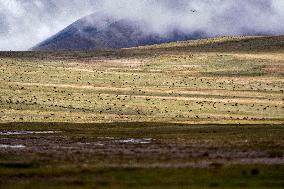
Tibetan antelopes prepare to cross the Senlong Zangbo River in Changtang National Nature Reserve in southwest China's Xizang Autonomous Region, July 15, 2025. The Senlong Zangbo River, located in Changtang National Nature Reserve in Nagqu, is a vital migration route for Tibetan antelopes. Each July, Tibetan antelope calves and their mothers cross the river and migrate to their habitats. Over the past three years, the number of Tibetan antelope migrating across this river has exceeded 150,000 each year. Thanks to effective conservation measures, the number of Tibetan antelopes in Xizang has increased to more than 300,000, according to data from the region's ecology and environment department. Photo by Jiang Fan /Xinhua/ABACAPRESS.COM

  •  
Tibetan Antelopes Migration - China

Tibetan Antelopes Migration - China

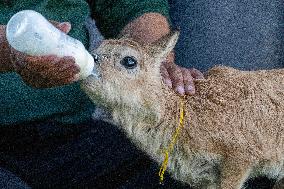
Ngawang Lodro, a staff member at a management station, feeds a Tibetan antelope calf in Changtang National Nature Reserve in southwest China's Xizang Autonomous Region, July 16, 2025. The Senlong Zangbo River, located in Changtang National Nature Reserve in Nagqu, is a vital migration route for Tibetan antelopes. Each July, Tibetan antelope calves and their mothers cross the river and migrate to their habitats. Over the past three years, the number of Tibetan antelope migrating across this river has exceeded 150,000 each year. Thanks to effective conservation measures, the number of Tibetan antelopes in Xizang has increased to more than 300,000, according to data from the region's ecology and environment department. Photo by Jiang Fan /Xinhua/ABACAPRESS.COM

  •  
Tibetan Antelopes Migration - China

Tibetan Antelopes Migration - China

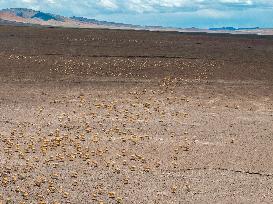
This aerial drone photo taken on July 14, 2025 shows Tibetan antelopes crossing the Senlong Zangbo River in Changtang National Nature Reserve in southwest China's Xizang Autonomous Region. The Senlong Zangbo River, located in Changtang National Nature Reserve in Nagqu, is a vital migration route for Tibetan antelopes. Each July, Tibetan antelope calves and their mothers cross the river and migrate to their habitats. Over the past three years, the number of Tibetan antelope migrating across this river has exceeded 150,000 each year. Thanks to effective conservation measures, the number of Tibetan antelopes in Xizang has increased to more than 300,000, according to data from the region's ecology and environment department. Photo by Jiang Fan /Xinhua/ABACAPRESS.COM

  •  
Tibetan Antelopes Migration - China

Tibetan Antelopes Migration - China

This aerial drone photo shows Tibetan antelopes crossing the Senlong Zangbo River in Changtang National Nature Reserve in southwest China's Xizang Autonomous Region, July 14, 2025. The Senlong Zangbo River, located in Changtang National Nature Reserve in Nagqu, is a vital migration route for Tibetan antelopes. Each July, Tibetan antelope calves and their mothers cross the river and migrate to their habitats. Over the past three years, the number of Tibetan antelope migrating across this river has exceeded 150,000 each year. Thanks to effective conservation measures, the number of Tibetan antelopes in Xizang has increased to more than 300,000, according to data from the region's ecology and environment department. Photo by Jiang Fan /Xinhua/ABACAPRESS.COM

  •  
Ukrainian Carpathians

Ukrainian Carpathians

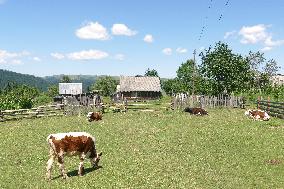
CHERNIVTSI REGION, UKRAINE - JULY 31, 2024 - Cows and calves graze on the grass in an enclosure in the Carpathians Mountains in Vyzhnytsia district, Chernivtsi region, western Ukraine.

  •  
Tibetan Antelopes Migration - China

Tibetan Antelopes Migration - China

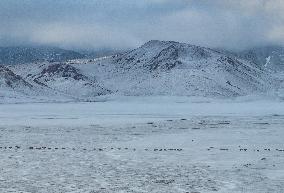
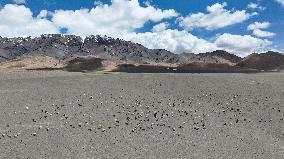
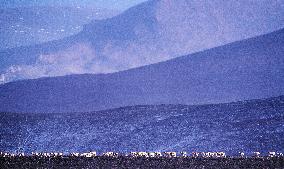
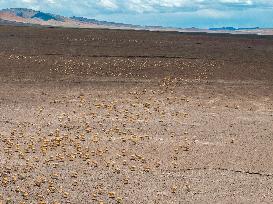
An aerial drone photo taken on June 15, 2024 shows Tibetan antelopes on migration to their birth-giving ground in Qiangtang National Nature Reserve in southwest China's Xizang Autonomous Region. Tens of thousands of pregnant Tibetan antelopes start their migration around May every year for birth-giving and would return with their calves in late July. Their natural enemies including wolves and bears are always there to ambush them. Under first-class state protection in China, the once-endangered Tibetan antelope is mostly found in the Xizang Autonomous Region, Qinghai Province, and the Xinjiang Uygur Autonomous Region. Their population has increased over the past three decades thanks to a ban on illegal hunting and measures implemented to improve their habitat. Photo by Xinhua/Jigme Dorje/ABACAPRESS.COM

  •  
Tibetan Antelopes Migration - China

Tibetan Antelopes Migration - China

An aerial drone photo taken on June 15, 2024 shows Tibetan antelopes on migration to their birth-giving ground in Qiangtang National Nature Reserve in southwest China's Xizang Autonomous Region. Tens of thousands of pregnant Tibetan antelopes start their migration around May every year for birth-giving and would return with their calves in late July. Their natural enemies including wolves and bears are always there to ambush them. Under first-class state protection in China, the once-endangered Tibetan antelope is mostly found in the Xizang Autonomous Region, Qinghai Province, and the Xinjiang Uygur Autonomous Region. Their population has increased over the past three decades thanks to a ban on illegal hunting and measures implemented to improve their habitat. Photo by Xinhua/Jigme Dorje/ABACAPRESS.COM

  •  
Tibetan Antelopes Migration - China

Tibetan Antelopes Migration - China

An aerial drone photo taken on June 15, 2024 shows Tibetan antelopes on migration to their birth-giving ground in Qiangtang National Nature Reserve in southwest China's Xizang Autonomous Region. Tens of thousands of pregnant Tibetan antelopes start their migration around May every year for birth-giving and would return with their calves in late July. Their natural enemies including wolves and bears are always there to ambush them. Under first-class state protection in China, the once-endangered Tibetan antelope is mostly found in the Xizang Autonomous Region, Qinghai Province, and the Xinjiang Uygur Autonomous Region. Their population has increased over the past three decades thanks to a ban on illegal hunting and measures implemented to improve their habitat. Photo by Xinhua/Jigme Dorje/ABACAPRESS.COM

  •  
Tibetan Antelopes Migration - China

Tibetan Antelopes Migration - China

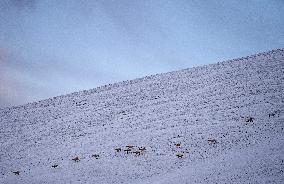
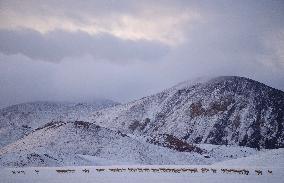
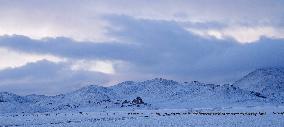
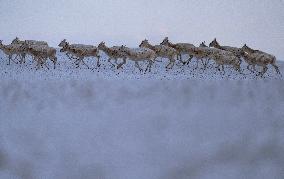
Tibetan antelopes are on migration in Qiangtang National Nature Reserve in southwest China's Xizang Autonomous Region, June 14, 2024. Tens of thousands of pregnant Tibetan antelopes start their migration around May every year for birth-giving and would return with their calves in late July. Their natural enemies including wolves and bears are always there to ambush them. Under first-class state protection in China, the once-endangered Tibetan antelope is mostly found in the Xizang Autonomous Region, Qinghai Province, and the Xinjiang Uygur Autonomous Region. Their population has increased over the past three decades thanks to a ban on illegal hunting and measures implemented to improve their habitat. Photo by Xinhua/Jigme Dorje/ABACAPRESS.COM

  •  
Tibetan Antelopes Migration - China

Tibetan Antelopes Migration - China

An aerial drone photo taken on June 15, 2024 shows Tibetan antelopes on migration to their birth-giving ground in Qiangtang National Nature Reserve in southwest China's Xizang Autonomous Region. Tens of thousands of pregnant Tibetan antelopes start their migration around May every year for birth-giving and would return with their calves in late July. Their natural enemies including wolves and bears are always there to ambush them. Under first-class state protection in China, the once-endangered Tibetan antelope is mostly found in the Xizang Autonomous Region, Qinghai Province, and the Xinjiang Uygur Autonomous Region. Their population has increased over the past three decades thanks to a ban on illegal hunting and measures implemented to improve their habitat. Photo by Xinhua/Jigme Dorje/ABACAPRESS.COM

  •  
Tibetan Antelopes Migration - China

Tibetan Antelopes Migration - China

Tibetan antelopes are on migration in Qiangtang National Nature Reserve in southwest China's Xizang Autonomous Region, June 13, 2024. Tens of thousands of pregnant Tibetan antelopes start their migration around May every year for birth-giving and would return with their calves in late July. Their natural enemies including wolves and bears are always there to ambush them. Under first-class state protection in China, the once-endangered Tibetan antelope is mostly found in the Xizang Autonomous Region, Qinghai Province, and the Xinjiang Uygur Autonomous Region. Their population has increased over the past three decades thanks to a ban on illegal hunting and measures implemented to improve their habitat. Photo by Xinhua/Jigme Dorje/ABACAPRESS.COM

  •  
Tibetan Antelopes Migration - China

Tibetan Antelopes Migration - China

Tibetan antelopes are on migration in Qiangtang National Nature Reserve in southwest China's Xizang Autonomous Region, June 13, 2024. Tens of thousands of pregnant Tibetan antelopes start their migration around May every year for birth-giving and would return with their calves in late July. Their natural enemies including wolves and bears are always there to ambush them. Under first-class state protection in China, the once-endangered Tibetan antelope is mostly found in the Xizang Autonomous Region, Qinghai Province, and the Xinjiang Uygur Autonomous Region. Their population has increased over the past three decades thanks to a ban on illegal hunting and measures implemented to improve their habitat. Photo by Xinhua/Jigme Dorje/ABACAPRESS.COM

  •  
Tibetan Antelopes Migration - China

Tibetan Antelopes Migration - China

An aerial drone photo taken on June 13, 2024 shows Tibetan antelopes on migration to their birth-giving ground in Qiangtang National Nature Reserve in southwest China's Xizang Autonomous Region. Tens of thousands of pregnant Tibetan antelopes start their migration around May every year for birth-giving and would return with their calves in late July. Their natural enemies including wolves and bears are always there to ambush them. Under first-class state protection in China, the once-endangered Tibetan antelope is mostly found in the Xizang Autonomous Region, Qinghai Province, and the Xinjiang Uygur Autonomous Region. Their population has increased over the past three decades thanks to a ban on illegal hunting and measures implemented to improve their habitat. Photo by Xinhua/Jigme Dorje/ABACAPRESS.COM

  •  
Tibetan Antelopes Migration - China

Tibetan Antelopes Migration - China

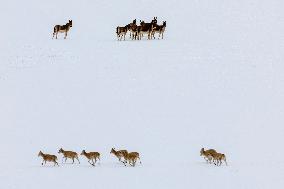
A herd of Tibetan wild donkeys watches Tibetan antelopes migrating in Qiangtang National Nature Reserve in southwest China's Xizang Autonomous Region, May 8, 2024. Tens of thousands of pregnant Tibetan antelopes start their migration around May every year for birth-giving and would return with their calves in late July. Their natural enemies including wolves and bears are always there to ambush them. Under first-class state protection in China, the once-endangered Tibetan antelope is mostly found in the Xizang Autonomous Region, Qinghai Province, and the Xinjiang Uygur Autonomous Region. Their population has increased over the past three decades thanks to a ban on illegal hunting and measures implemented to improve their habitat. Photo by Xinhua/Jiang Fan/ABACAPRESS.COM

  •  
Tibetan Antelopes Migration - China

Tibetan Antelopes Migration - China

Male Tibetan antelopes guard the female ones during their migration to their birth-giving ground in Qiangtang National Nature Reserve in southwest China's Xizang Autonomous Region, June 13, 2024. Tens of thousands of pregnant Tibetan antelopes start their migration around May every year for birth-giving and would return with their calves in late July. Their natural enemies including wolves and bears are always there to ambush them. Under first-class state protection in China, the once-endangered Tibetan antelope is mostly found in the Xizang Autonomous Region, Qinghai Province, and the Xinjiang Uygur Autonomous Region. Their population has increased over the past three decades thanks to a ban on illegal hunting and measures implemented to improve their habitat. Photo by Xinhua/Jigme Dorje/ABACAPRESS.COM

  •  
Tibetan Antelopes Migration - China

Tibetan Antelopes Migration - China

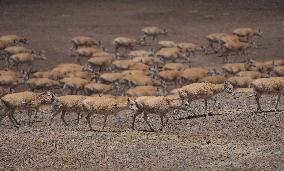
Female Tibetan antelopes are on migration to their birth-giving ground in Qiangtang National Nature Reserve in southwest China's Xizang Autonomous Region, June 15, 2024. Tens of thousands of pregnant Tibetan antelopes start their migration around May every year for birth-giving and would return with their calves in late July. Their natural enemies including wolves and bears are always there to ambush them. Under first-class state protection in China, the once-endangered Tibetan antelope is mostly found in the Xizang Autonomous Region, Qinghai Province, and the Xinjiang Uygur Autonomous Region. Their population has increased over the past three decades thanks to a ban on illegal hunting and measures implemented to improve their habitat. Photo by Xinhua/Fei Maohua/ABACAPRESS.COM

  •  
Tibetan Antelopes Migration - China

Tibetan Antelopes Migration - China

Female Tibetan antelopes are on migration to their birth-giving ground in Qiangtang National Nature Reserve in southwest China's Xizang Autonomous Region, June 13, 2024. Tens of thousands of pregnant Tibetan antelopes start their migration around May every year for birth-giving and would return with their calves in late July. Their natural enemies including wolves and bears are always there to ambush them. Under first-class state protection in China, the once-endangered Tibetan antelope is mostly found in the Xizang Autonomous Region, Qinghai Province, and the Xinjiang Uygur Autonomous Region. Their population has increased over the past three decades thanks to a ban on illegal hunting and measures implemented to improve their habitat. Photo by Xinhua/Jiang Fan/ABACAPRESS.COM

  •  
Tibetan Antelopes Migration - China

Tibetan Antelopes Migration - China

Female Tibetan antelopes are on migration to their birth-giving ground in Qiangtang National Nature Reserve in southwest China's Xizang Autonomous Region, June 15, 2024. Tens of thousands of pregnant Tibetan antelopes start their migration around May every year for birth-giving and would return with their calves in late July. Their natural enemies including wolves and bears are always there to ambush them. Under first-class state protection in China, the once-endangered Tibetan antelope is mostly found in the Xizang Autonomous Region, Qinghai Province, and the Xinjiang Uygur Autonomous Region. Their population has increased over the past three decades thanks to a ban on illegal hunting and measures implemented to improve their habitat. Photo by Xinhua/Jiang Fan/ABACAPRESS.COM

  •  
Tibetan Antelopes Migration - China

Tibetan Antelopes Migration - China

Female Tibetan antelopes are on migration to their birth-giving ground in Qiangtang National Nature Reserve in southwest China's Xizang Autonomous Region, June 15, 2024. Tens of thousands of pregnant Tibetan antelopes start their migration around May every year for birth-giving and would return with their calves in late July. Their natural enemies including wolves and bears are always there to ambush them. Under first-class state protection in China, the once-endangered Tibetan antelope is mostly found in the Xizang Autonomous Region, Qinghai Province, and the Xinjiang Uygur Autonomous Region. Their population has increased over the past three decades thanks to a ban on illegal hunting and measures implemented to improve their habitat. Photo by Xinhua/Jiang Fan/ABACAPRESS.COM

  •  
Tibetan Antelopes Migration - China

Tibetan Antelopes Migration - China

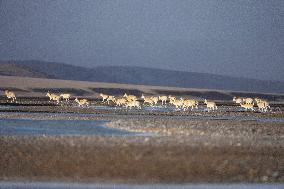
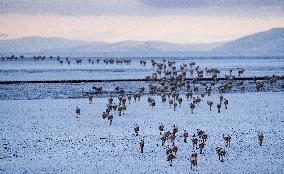
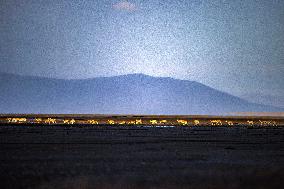
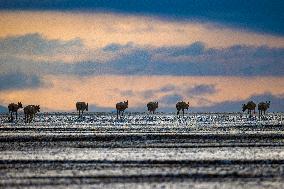
Tibetan antelopes are on migration in twilight in Qiangtang National Nature Reserve in southwest China's Xizang Autonomous Region, June 13, 2024. Tens of thousands of pregnant Tibetan antelopes start their migration around May every year for birth-giving and would return with their calves in late July. Their natural enemies including wolves and bears are always there to ambush them. Under first-class state protection in China, the once-endangered Tibetan antelope is mostly found in the Xizang Autonomous Region, Qinghai Province, and the Xinjiang Uygur Autonomous Region. Their population has increased over the past three decades thanks to a ban on illegal hunting and measures implemented to improve their habitat. Photo by Xinhua/Jiang Fan/ABACAPRESS.COM

  •  
Tibetan Antelopes Migration - China

Tibetan Antelopes Migration - China

Male Tibetan antelopes guard the female ones during their migration to their birth-giving ground in Qiangtang National Nature Reserve in southwest China's Xizang Autonomous Region, May 8, 2024. Tens of thousands of pregnant Tibetan antelopes start their migration around May every year for birth-giving and would return with their calves in late July. Their natural enemies including wolves and bears are always there to ambush them. Under first-class state protection in China, the once-endangered Tibetan antelope is mostly found in the Xizang Autonomous Region, Qinghai Province, and the Xinjiang Uygur Autonomous Region. Their population has increased over the past three decades thanks to a ban on illegal hunting and measures implemented to improve their habitat. Photo by Xinhua/Jiang Fan/ABACAPRESS.COM

  •  
Tibetan Antelopes Migration - China

Tibetan Antelopes Migration - China

Male Tibetan antelopes guard the femle ones during their migration to their birth-giving ground in Qiangtang National Nature Reserve in southwest China's Xizang Autonomous Region, May 8, 2024. Tens of thousands of pregnant Tibetan antelopes start their migration around May every year for birth-giving and would return with their calves in late July. Their natural enemies including wolves and bears are always there to ambush them. Under first-class state protection in China, the once-endangered Tibetan antelope is mostly found in the Xizang Autonomous Region, Qinghai Province, and the Xinjiang Uygur Autonomous Region. Their population has increased over the past three decades thanks to a ban on illegal hunting and measures implemented to improve their habitat. Photo by Xinhua/Jiang Fan/ABACAPRESS.COM

  •  
Tibetan Antelopes Migration - China

Tibetan Antelopes Migration - China

Tibetan antelopes are on migration to their birth-giving ground in Qiangtang National Nature Reserve in southwest China's Xizang Autonomous Region, June 14, 2024. Tens of thousands of pregnant Tibetan antelopes start their migration around May every year for birth-giving and would return with their calves in late July. Their natural enemies including wolves and bears are always there to ambush them. Under first-class state protection in China, the once-endangered Tibetan antelope is mostly found in the Xizang Autonomous Region, Qinghai Province, and the Xinjiang Uygur Autonomous Region. Their population has increased over the past three decades thanks to a ban on illegal hunting and measures implemented to improve their habitat. Photo by Xinhua/Jiang Fan/ABACAPRESS.COM

  •  
Tibetan Antelopes Migration - China

Tibetan Antelopes Migration - China

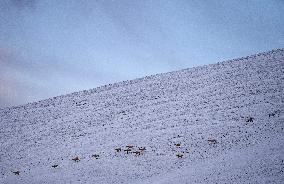
Tibetan antelopes climb over the ridge during their migration in Qiangtang National Nature Reserve in southwest China's Xizang Autonomous Region, May 10, 2024. Tens of thousands of pregnant Tibetan antelopes start their migration around May every year for birth-giving and would return with their calves in late July. Their natural enemies including wolves and bears are always there to ambush them. Under first-class state protection in China, the once-endangered Tibetan antelope is mostly found in the Xizang Autonomous Region, Qinghai Province, and the Xinjiang Uygur Autonomous Region. Their population has increased over the past three decades thanks to a ban on illegal hunting and measures implemented to improve their habitat. Photo by Xinhua/Jiang Fan/ABACAPRESS.COM

  •  
Tibetan Antelopes Migration - China

Tibetan Antelopes Migration - China

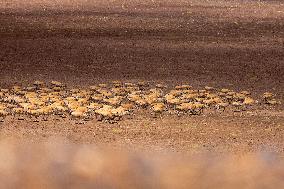
An aerial drone photo taken on June 12, 2024 shows female Tibetan antelopes on migration to their birth-giving ground in Qiangtang National Nature Reserve in southwest China's Xizang Autonomous Region. Tens of thousands of pregnant Tibetan antelopes start their migration around May every year for birth-giving and would return with their calves in late July. Their natural enemies including wolves and bears are always there to ambush them. Under first-class state protection in China, the once-endangered Tibetan antelope is mostly found in the Xizang Autonomous Region, Qinghai Province, and the Xinjiang Uygur Autonomous Region. Their population has increased over the past three decades thanks to a ban on illegal hunting and measures implemented to improve their habitat. Photo by Xinhua/Jiang Fan/ABACAPRESS.COM

  •  
Tibetan Antelopes Migration - China

Tibetan Antelopes Migration - China

Female Tibetan antelopes are on migration to their birth-giving ground in Qiangtang National Nature Reserve in southwest China's Xizang Autonomous Region, June 15, 2024. Tens of thousands of pregnant Tibetan antelopes start their migration around May every year for birth-giving and would return with their calves in late July. Their natural enemies including wolves and bears are always there to ambush them. Under first-class state protection in China, the once-endangered Tibetan antelope is mostly found in the Xizang Autonomous Region, Qinghai Province, and the Xinjiang Uygur Autonomous Region. Their population has increased over the past three decades thanks to a ban on illegal hunting and measures implemented to improve their habitat. Photo by Xinhua/Fei Maohua/ABACAPRESS.COM

  •  
Tibetan Antelopes Migration - China

Tibetan Antelopes Migration - China

A female Tibetan antelope is pictured in Qiangtang National Nature Reserve in southwest China's Xizang Autonomous Region, June 15, 2024. Tens of thousands of pregnant Tibetan antelopes start their migration around May every year for birth-giving and would return with their calves in late July. Their natural enemies including wolves and bears are always there to ambush them. Under first-class state protection in China, the once-endangered Tibetan antelope is mostly found in the Xizang Autonomous Region, Qinghai Province, and the Xinjiang Uygur Autonomous Region. Their population has increased over the past three decades thanks to a ban on illegal hunting and measures implemented to improve their habitat. Photo by Xinhua/Fei Maohua/ABACAPRESS.COM

  •  
Tibetan Antelopes Migration - China

Tibetan Antelopes Migration - China

Tibetan antelopes are on migration in Qiangtang National Nature Reserve in southwest China's Xizang Autonomous Region, June 15, 2024. Tens of thousands of pregnant Tibetan antelopes start their migration around May every year for birth-giving and would return with their calves in late July. Their natural enemies including wolves and bears are always there to ambush them. Under first-class state protection in China, the once-endangered Tibetan antelope is mostly found in the Xizang Autonomous Region, Qinghai Province, and the Xinjiang Uygur Autonomous Region. Their population has increased over the past three decades thanks to a ban on illegal hunting and measures implemented to improve their habitat. Photo by Xinhua/Fei Maohua/ABACAPRESS.COM

  •  
Tibetan Antelopes Migration - China

Tibetan Antelopes Migration - China

Tibetan antelopes are on migration at sunrise in Qiangtang National Nature Reserve in southwest China's Xizang Autonomous Region, June 15, 2024. Tens of thousands of pregnant Tibetan antelopes start their migration around May every year for birth-giving and would return with their calves in late July. Their natural enemies including wolves and bears are always there to ambush them. Under first-class state protection in China, the once-endangered Tibetan antelope is mostly found in the Xizang Autonomous Region, Qinghai Province, and the Xinjiang Uygur Autonomous Region. Their population has increased over the past three decades thanks to a ban on illegal hunting and measures implemented to improve their habitat. Photo by Xinhua/Fei Maohua/ABACAPRESS.COM

  •  
Tibetan Antelopes Migration - China

Tibetan Antelopes Migration - China

Female Tibetan antelopes are on migration to their birth-giving ground in Qiangtang National Nature Reserve in southwest China's Xizang Autonomous Region, June 15, 2024. Tens of thousands of pregnant Tibetan antelopes start their migration around May every year for birth-giving and would return with their calves in late July. Their natural enemies including wolves and bears are always there to ambush them. Under first-class state protection in China, the once-endangered Tibetan antelope is mostly found in the Xizang Autonomous Region, Qinghai Province, and the Xinjiang Uygur Autonomous Region. Their population has increased over the past three decades thanks to a ban on illegal hunting and measures implemented to improve their habitat. Photo by Xinhua/Fei Maohua/ABACAPRESS.COM

  •  
Tibetan Antelopes Migration - China

Tibetan Antelopes Migration - China

Tibetan antelopes are on migration in Qiangtang National Nature Reserve in southwest China's Xizang Autonomous Region, June 13, 2024. Tens of thousands of pregnant Tibetan antelopes start their migration around May every year for birth-giving and would return with their calves in late July. Their natural enemies including wolves and bears are always there to ambush them. Under first-class state protection in China, the once-endangered Tibetan antelope is mostly found in the Xizang Autonomous Region, Qinghai Province, and the Xinjiang Uygur Autonomous Region. Their population has increased over the past three decades thanks to a ban on illegal hunting and measures implemented to improve their habitat. Photo by Xinhua/Fei Maohua/ABACAPRESS.COM

  •  
Tibetan Antelopes Migration - China

Tibetan Antelopes Migration - China

Tibetan antelopes are on migration in Qiangtang National Nature Reserve in southwest China's Xizang Autonomous Region, June 15, 2024. Tens of thousands of pregnant Tibetan antelopes start their migration around May every year for birth-giving and would return with their calves in late July. Their natural enemies including wolves and bears are always there to ambush them. Under first-class state protection in China, the once-endangered Tibetan antelope is mostly found in the Xizang Autonomous Region, Qinghai Province, and the Xinjiang Uygur Autonomous Region. Their population has increased over the past three decades thanks to a ban on illegal hunting and measures implemented to improve their habitat. Photo by Xinhua/Fei Maohua/ABACAPRESS.COM

  •  
Tibetan Antelopes Migration - China

Tibetan Antelopes Migration - China

Tibetan antelopes are on migration in Qiangtang National Nature Reserve in southwest China's Xizang Autonomous Region, June 13, 2024. Tens of thousands of pregnant Tibetan antelopes start their migration around May every year for birth-giving and would return with their calves in late July. Their natural enemies including wolves and bears are always there to ambush them. Under first-class state protection in China, the once-endangered Tibetan antelope is mostly found in the Xizang Autonomous Region, Qinghai Province, and the Xinjiang Uygur Autonomous Region. Their population has increased over the past three decades thanks to a ban on illegal hunting and measures implemented to improve their habitat. Photo by Xinhua/Fei Maohua/ABACAPRESS.COM

  •  
Tibetan Antelopes Migration - China

Tibetan Antelopes Migration - China

Tibetan antelopes are on migration in Qiangtang National Nature Reserve in southwest China's Xizang Autonomous Region, June 13, 2024. Tens of thousands of pregnant Tibetan antelopes start their migration around May every year for birth-giving and would return with their calves in late July. Their natural enemies including wolves and bears are always there to ambush them. Under first-class state protection in China, the once-endangered Tibetan antelope is mostly found in the Xizang Autonomous Region, Qinghai Province, and the Xinjiang Uygur Autonomous Region. Their population has increased over the past three decades thanks to a ban on illegal hunting and measures implemented to improve their habitat. Photo by Xinhua/Fei Maohua/ABACAPRESS.COM

  •  
Tibetan Antelopes Migration - China

Tibetan Antelopes Migration - China

Tibetan antelopes are on migration in Qiangtang National Nature Reserve in southwest China's Xizang Autonomous Region, June 13, 2024. Tens of thousands of pregnant Tibetan antelopes start their migration around May every year for birth-giving and would return with their calves in late July. Their natural enemies including wolves and bears are always there to ambush them. Under first-class state protection in China, the once-endangered Tibetan antelope is mostly found in the Xizang Autonomous Region, Qinghai Province, and the Xinjiang Uygur Autonomous Region. Their population has increased over the past three decades thanks to a ban on illegal hunting and measures implemented to improve their habitat. Photo by Xinhua/Fei Maohua/ABACAPRESS.COM

  •  
Tibetan Antelopes Migration - China

Tibetan Antelopes Migration - China

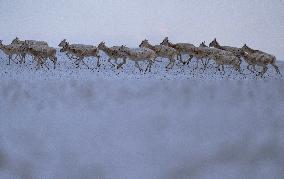
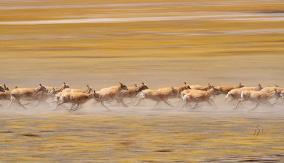
Tibetan antelopes gallop during their migration in Qiangtang National Nature Reserve in southwest China's Xizang Autonomous Region, June 13, 2024. Tens of thousands of pregnant Tibetan antelopes start their migration around May every year for birth-giving and would return with their calves in late July. Their natural enemies including wolves and bears are always there to ambush them. Under first-class state protection in China, the once-endangered Tibetan antelope is mostly found in the Xizang Autonomous Region, Qinghai Province, and the Xinjiang Uygur Autonomous Region. Their population has increased over the past three decades thanks to a ban on illegal hunting and measures implemented to improve their habitat. Photo by Xinhua/Fei Maohua/ABACAPRESS.COM

  •  
Tibetan Antelopes Migration - China

Tibetan Antelopes Migration - China

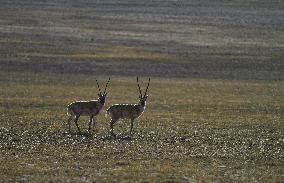
A Tibetan antelope is pictured in Qiangtang National Nature Reserve in southwest China's Xizang Autonomous Region, June 13, 2024. Tens of thousands of pregnant Tibetan antelopes start their migration around May every year for birth-giving and would return with their calves in late July. Their natural enemies including wolves and bears are always there to ambush them. Under first-class state protection in China, the once-endangered Tibetan antelope is mostly found in the Xizang Autonomous Region, Qinghai Province, and the Xinjiang Uygur Autonomous Region. Their population has increased over the past three decades thanks to a ban on illegal hunting and measures implemented to improve their habitat. Photo by Xinhua/Fei Maohua/ABACAPRESS.COM

  •  
Tibetan Antelopes Migration - China

Tibetan Antelopes Migration - China

Tibetan antelopes are on migration in Qiangtang National Nature Reserve in southwest China's Xizang Autonomous Region, June 13, 2024. Tens of thousands of pregnant Tibetan antelopes start their migration around May every year for birth-giving and would return with their calves in late July. Their natural enemies including wolves and bears are always there to ambush them. Under first-class state protection in China, the once-endangered Tibetan antelope is mostly found in the Xizang Autonomous Region, Qinghai Province, and the Xinjiang Uygur Autonomous Region. Their population has increased over the past three decades thanks to a ban on illegal hunting and measures implemented to improve their habitat. Photo by Xinhua/Fei Maohua/ABACAPRESS.COM

  •  
(InXizang)CHINA-XIZANG-TIBETAN ANTELOPES-MIGRATION (CN)

(InXizang)CHINA-XIZANG-TIBETAN ANTELOPES-MIGRATION (CN)

(240620) -- NAGQU, June 20, 2024 Photo by Xinhua/ABACAPRESS.COM) -- An aerial drone photo taken on June 13, 2024 shows Tibetan antelopes on migration to their birth-giving ground in Qiangtang National Nature Reserve in southwest China's Xizang Autonomous Region. Tens of thousands of pregnant Tibetan antelopes start their migration around May every year for birth-giving and would return with their calves in late July. Their natural enemies including wolves and bears are always there to ambush them. Under first-class state protection in China, the once-endangered Tibetan antelope is mostly found in the Xizang Autonomous Region, Qinghai Province, and the Xinjiang Uygur Autonomous Region. Their population has increased over the past three decades thanks to a ban on illegal hunting and measures implemented to improve their habitat. Photo by Xinhua/ABACAPRESS.COM/Jigme Dorje)

  •  
(InXizang)CHINA-XIZANG-TIBETAN ANTELOPES-MIGRATION (CN)

(InXizang)CHINA-XIZANG-TIBETAN ANTELOPES-MIGRATION (CN)

(240620) -- NAGQU, June 20, 2024 Photo by Xinhua/ABACAPRESS.COM) -- Tibetan antelopes climb over the ridge during their migration in Qiangtang National Nature Reserve in southwest China's Xizang Autonomous Region, May 10, 2024. Tens of thousands of pregnant Tibetan antelopes start their migration around May every year for birth-giving and would return with their calves in late July. Their natural enemies including wolves and bears are always there to ambush them. Under first-class state protection in China, the once-endangered Tibetan antelope is mostly found in the Xizang Autonomous Region, Qinghai Province, and the Xinjiang Uygur Autonomous Region. Their population has increased over the past three decades thanks to a ban on illegal hunting and measures implemented to improve their habitat. Photo by Xinhua/ABACAPRESS.COM/Jiang Fan)

  •  
(InXizang)CHINA-XIZANG-TIBETAN ANTELOPES-MIGRATION (CN)

(InXizang)CHINA-XIZANG-TIBETAN ANTELOPES-MIGRATION (CN)

(240620) -- NAGQU, June 20, 2024 Photo by Xinhua/ABACAPRESS.COM) -- Female Tibetan antelopes are on migration to their birth-giving ground in Qiangtang National Nature Reserve in southwest China's Xizang Autonomous Region, June 15, 2024. Tens of thousands of pregnant Tibetan antelopes start their migration around May every year for birth-giving and would return with their calves in late July. Their natural enemies including wolves and bears are always there to ambush them. Under first-class state protection in China, the once-endangered Tibetan antelope is mostly found in the Xizang Autonomous Region, Qinghai Province, and the Xinjiang Uygur Autonomous Region. Their population has increased over the past three decades thanks to a ban on illegal hunting and measures implemented to improve their habitat. Photo by Xinhua/ABACAPRESS.COM/Fei Maohua)

  •  
(InXizang)CHINA-XIZANG-TIBETAN ANTELOPES-MIGRATION (CN)

(InXizang)CHINA-XIZANG-TIBETAN ANTELOPES-MIGRATION (CN)

(240620) -- NAGQU, June 20, 2024 Photo by Xinhua/ABACAPRESS.COM) -- An aerial drone photo taken on June 12, 2024 shows female Tibetan antelopes on migration to their birth-giving ground in Qiangtang National Nature Reserve in southwest China's Xizang Autonomous Region. Tens of thousands of pregnant Tibetan antelopes start their migration around May every year for birth-giving and would return with their calves in late July. Their natural enemies including wolves and bears are always there to ambush them. Under first-class state protection in China, the once-endangered Tibetan antelope is mostly found in the Xizang Autonomous Region, Qinghai Province, and the Xinjiang Uygur Autonomous Region. Their population has increased over the past three decades thanks to a ban on illegal hunting and measures implemented to improve their habitat. Photo by Xinhua/ABACAPRESS.COM/Jiang Fan)

  •  
(InXizang)CHINA-XIZANG-TIBETAN ANTELOPES-MIGRATION (CN)

(InXizang)CHINA-XIZANG-TIBETAN ANTELOPES-MIGRATION (CN)

(240620) -- NAGQU, June 20, 2024 Photo by Xinhua/ABACAPRESS.COM) -- Tibetan antelopes are on migration in twilight in Qiangtang National Nature Reserve in southwest China's Xizang Autonomous Region, June 13, 2024. Tens of thousands of pregnant Tibetan antelopes start their migration around May every year for birth-giving and would return with their calves in late July. Their natural enemies including wolves and bears are always there to ambush them. Under first-class state protection in China, the once-endangered Tibetan antelope is mostly found in the Xizang Autonomous Region, Qinghai Province, and the Xinjiang Uygur Autonomous Region. Their population has increased over the past three decades thanks to a ban on illegal hunting and measures implemented to improve their habitat. Photo by Xinhua/ABACAPRESS.COM/Jiang Fan)

  •  
(InXizang)CHINA-XIZANG-TIBETAN ANTELOPES-MIGRATION (CN)

(InXizang)CHINA-XIZANG-TIBETAN ANTELOPES-MIGRATION (CN)

(240620) -- NAGQU, June 20, 2024 Photo by Xinhua/ABACAPRESS.COM) -- Female Tibetan antelopes are on migration to their birth-giving ground in Qiangtang National Nature Reserve in southwest China's Xizang Autonomous Region, June 15, 2024. Tens of thousands of pregnant Tibetan antelopes start their migration around May every year for birth-giving and would return with their calves in late July. Their natural enemies including wolves and bears are always there to ambush them. Under first-class state protection in China, the once-endangered Tibetan antelope is mostly found in the Xizang Autonomous Region, Qinghai Province, and the Xinjiang Uygur Autonomous Region. Their population has increased over the past three decades thanks to a ban on illegal hunting and measures implemented to improve their habitat. Photo by Xinhua/ABACAPRESS.COM/Fei Maohua)

  •  
(InXizang)CHINA-XIZANG-TIBETAN ANTELOPES-MIGRATION (CN)

(InXizang)CHINA-XIZANG-TIBETAN ANTELOPES-MIGRATION (CN)

(240620) -- NAGQU, June 20, 2024 Photo by Xinhua/ABACAPRESS.COM) -- Tibetan antelopes are on migration in Qiangtang National Nature Reserve in southwest China's Xizang Autonomous Region, June 15, 2024. Tens of thousands of pregnant Tibetan antelopes start their migration around May every year for birth-giving and would return with their calves in late July. Their natural enemies including wolves and bears are always there to ambush them. Under first-class state protection in China, the once-endangered Tibetan antelope is mostly found in the Xizang Autonomous Region, Qinghai Province, and the Xinjiang Uygur Autonomous Region. Their population has increased over the past three decades thanks to a ban on illegal hunting and measures implemented to improve their habitat. Photo by Xinhua/ABACAPRESS.COM/Fei Maohua)

  •  
(InXizang)CHINA-XIZANG-TIBETAN ANTELOPES-MIGRATION (CN)

(InXizang)CHINA-XIZANG-TIBETAN ANTELOPES-MIGRATION (CN)

(240620) -- NAGQU, June 20, 2024 Photo by Xinhua/ABACAPRESS.COM) -- Female Tibetan antelopes are on migration to their birth-giving ground in Qiangtang National Nature Reserve in southwest China's Xizang Autonomous Region, June 15, 2024. Tens of thousands of pregnant Tibetan antelopes start their migration around May every year for birth-giving and would return with their calves in late July. Their natural enemies including wolves and bears are always there to ambush them. Under first-class state protection in China, the once-endangered Tibetan antelope is mostly found in the Xizang Autonomous Region, Qinghai Province, and the Xinjiang Uygur Autonomous Region. Their population has increased over the past three decades thanks to a ban on illegal hunting and measures implemented to improve their habitat. Photo by Xinhua/ABACAPRESS.COM/Jiang Fan)

  •  
(InXizang)CHINA-XIZANG-TIBETAN ANTELOPES-MIGRATION (CN)

(InXizang)CHINA-XIZANG-TIBETAN ANTELOPES-MIGRATION (CN)

(240620) -- NAGQU, June 20, 2024 Photo by Xinhua/ABACAPRESS.COM) -- Tibetan antelopes are on migration to their birth-giving ground in Qiangtang National Nature Reserve in southwest China's Xizang Autonomous Region, June 14, 2024. Tens of thousands of pregnant Tibetan antelopes start their migration around May every year for birth-giving and would return with their calves in late July. Their natural enemies including wolves and bears are always there to ambush them. Under first-class state protection in China, the once-endangered Tibetan antelope is mostly found in the Xizang Autonomous Region, Qinghai Province, and the Xinjiang Uygur Autonomous Region. Their population has increased over the past three decades thanks to a ban on illegal hunting and measures implemented to improve their habitat. Photo by Xinhua/ABACAPRESS.COM/Jiang Fan)

  • Main
  • Top
  • Editorial
  • Creative
  • About Us
  • About ILG
  • Terms of use
  • Company
  • BEHIND
  • Price List
  • Single Plan
  • Monthly Plan
  • Services
  • Shooting
  • Rights Clearance
  • Support
  • FAQ
  • How To Buy
  • Contact Us
  • Become a Partner

© KYODO NEWS IMAGES INC

All Rights Reserved.

  • Editorial
  • Olympics
  • News
  • Sports
  • Japan
  • Tech
  • Royal
  • Disaster
  • NorthKorea
  • Old Japan
  • SNS
  • Creative
  • Food
  • Japan
  • Landscape
  • Animal
  • Popular
  • #Ukraine
  • #China
  • #coronavirus
  • #N. Korea
  • #Russia
  • #Thailand
  • #Ukraine
  • #China
  • #coronavirus
  • #N. Korea
  • #Russia
  • #Thailand
  • Food
  • Japan
  • Landscape
  • Animal
  • Olympics
  • News
  • Sports
  • Japan
  • Tech
  • Royal
  • Disaster
  • NorthKorea
  • Old Japan
  • SNS