•  
Bioluminescent Plankton Light Up The Galicia Coast - Spain

Bioluminescent Plankton Light Up The Galicia Coast - Spain

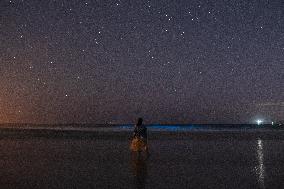
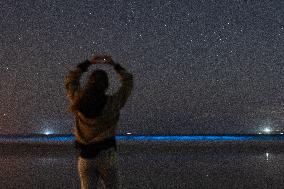
A person in the Sea of Ardora on the beach of Carnota, on August 7, 2024, in Carnota, A Coruña, Galicia, Spain. The Sea of Ardora is a natural phenomenon in which the sea water glows with a bluish hue in the darkness of the night. This spectacle is due to bioluminescent microorganisms, specifically the dinoflagellate Noctiluca Scintillans and other species of microalgae, where the organisms emit light as a result of internal chemical reactions, creating the characteristic luminous effect in the water. When there is a high density of microalgae and the water is agitated, this reaction that generates the blue glow occurs, a reaction similar to that which occurs in terrestrial fireflies. Photo by Elena Fernandez/Europa Press/ABACAPRESS.COM

  •  
Bioluminescent Plankton Light Up The Galicia Coast - Spain

Bioluminescent Plankton Light Up The Galicia Coast - Spain

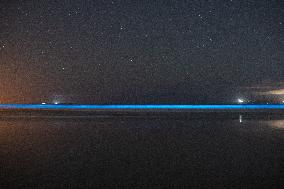
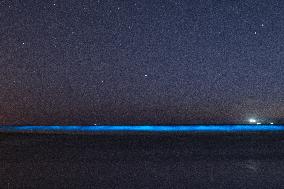
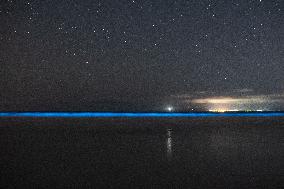
View of the Sea of Ardora on the beach of Carnota, on August 7, 2024, in Carnota, A Coruña, Galicia, Spain. The Sea of Ardora is a natural phenomenon in which the sea water glows with a bluish hue in the darkness of the night. This spectacle is due to bioluminescent microorganisms, specifically the dinoflagellate Noctiluca Scintillans and other species of microalgae, where the organisms emit light as a result of internal chemical reactions, creating the characteristic luminous effect in the water. When there is a high density of microalgae and the water is agitated, this reaction that generates the blue glow occurs, a reaction similar to that which occurs in terrestrial fireflies. Photo by Elena Fernandez/Europa Press/ABACAPRESS.COM

  •  
Bioluminescent Plankton Light Up The Galicia Coast - Spain

Bioluminescent Plankton Light Up The Galicia Coast - Spain

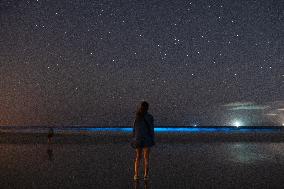
A person in the Sea of Ardora on the beach of Carnota, on August 7, 2024, in Carnota, A Coruña, Galicia, Spain. The Sea of Ardora is a natural phenomenon in which the sea water glows with a bluish hue in the darkness of the night. This spectacle is due to bioluminescent microorganisms, specifically the dinoflagellate Noctiluca Scintillans and other species of microalgae, where the organisms emit light as a result of internal chemical reactions, creating the characteristic luminous effect in the water. When there is a high density of microalgae and the water is agitated, this reaction that generates the blue glow occurs, a reaction similar to that which occurs in terrestrial fireflies. Photo by Elena Fernandez/Europa Press/ABACAPRESS.COM

  •  
Bioluminescent Plankton Light Up The Galicia Coast - Spain

Bioluminescent Plankton Light Up The Galicia Coast - Spain

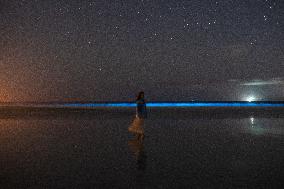
A person in the Sea of Ardora on the beach of Carnota, on August 7, 2024, in Carnota, A Coruña, Galicia, Spain. The Sea of Ardora is a natural phenomenon in which the sea water glows with a bluish hue in the darkness of the night. This spectacle is due to bioluminescent microorganisms, specifically the dinoflagellate Noctiluca Scintillans and other species of microalgae, where the organisms emit light as a result of internal chemical reactions, creating the characteristic luminous effect in the water. When there is a high density of microalgae and the water is agitated, this reaction that generates the blue glow occurs, a reaction similar to that which occurs in terrestrial fireflies. Photo by Elena Fernandez/Europa Press/ABACAPRESS.COM

  •  
Bioluminescent Plankton Light Up The Galicia Coast - Spain

Bioluminescent Plankton Light Up The Galicia Coast - Spain

View of the Sea of Ardora on the beach of Carnota, on August 7, 2024, in Carnota, A Coruña, Galicia, Spain. The Sea of Ardora is a natural phenomenon in which the sea water glows with a bluish hue in the darkness of the night. This spectacle is due to bioluminescent microorganisms, specifically the dinoflagellate Noctiluca Scintillans and other species of microalgae, where the organisms emit light as a result of internal chemical reactions, creating the characteristic luminous effect in the water. When there is a high density of microalgae and the water is agitated, this reaction that generates the blue glow occurs, a reaction similar to that which occurs in terrestrial fireflies. Photo by Elena Fernandez/Europa Press/ABACAPRESS.COM Photo by Elena Fernandez/Europa Press/ABACAPRESS.COM

  •  
Bioluminescent Plankton Light Up The Galicia Coast - Spain

Bioluminescent Plankton Light Up The Galicia Coast - Spain

View of the Sea of Ardora on the beach of Carnota, on August 7, 2024, in Carnota, A Coruña, Galicia, Spain. The Sea of Ardora is a natural phenomenon in which the sea water glows with a bluish hue in the darkness of the night. This spectacle is due to bioluminescent microorganisms, specifically the dinoflagellate Noctiluca Scintillans and other species of microalgae, where the organisms emit light as a result of internal chemical reactions, creating the characteristic luminous effect in the water. When there is a high density of microalgae and the water is agitated, this reaction that generates the blue glow occurs, a reaction similar to that which occurs in terrestrial fireflies. Photo by Elena Fernandez/Europa Press/ABACAPRESS.COM

  •  
Bioluminescent Plankton Light Up The Galicia Coast - Spain

Bioluminescent Plankton Light Up The Galicia Coast - Spain

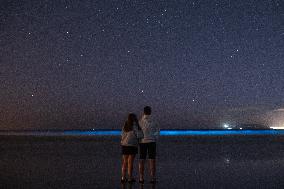
A couple in the Sea of Ardora on the beach of Carnota, on August 7, 2024, in Carnota, A Coruña, Galicia, Spain. The Sea of Ardora is a natural phenomenon in which the sea water glows with a bluish hue in the darkness of the night. This spectacle is due to bioluminescent microorganisms, specifically the dinoflagellate Noctiluca Scintillans and other species of microalgae, where the organisms emit light as a result of internal chemical reactions, creating the characteristic luminous effect in the water. When there is a high density of microalgae and the water is agitated, this reaction that generates the blue glow occurs, a reaction similar to that which occurs in terrestrial fireflies. Photo by Elena Fernandez/Europa Press/ABACAPRESS.COM

  •  
Bioluminescent Plankton Light Up The Galicia Coast - Spain

Bioluminescent Plankton Light Up The Galicia Coast - Spain

A person in the Sea of Ardora on the beach of Carnota, on August 7, 2024, in Carnota, A Coruña, Galicia, Spain. The Sea of Ardora is a natural phenomenon in which the sea water glows with a bluish hue in the darkness of the night. This spectacle is due to bioluminescent microorganisms, specifically the dinoflagellate Noctiluca Scintillans and other species of microalgae, where the organisms emit light as a result of internal chemical reactions, creating the characteristic luminous effect in the water. When there is a high density of microalgae and the water is agitated, this reaction that generates the blue glow occurs, a reaction similar to that which occurs in terrestrial fireflies. Photo by Elena Fernandez/Europa Press/ABACAPRESS.COM

  • Main
  • Top
  • Editorial
  • Creative
  • About Us
  • About ILG
  • Terms of use
  • Company
  • BEHIND
  • Price List
  • Single Plan
  • Monthly Plan
  • Services
  • Shooting
  • Rights Clearance
  • Support
  • FAQ
  • How To Buy
  • Contact Us
  • Become a Partner

© KYODO NEWS IMAGES INC

All Rights Reserved.

  • Editorial
  • Olympics
  • News
  • Sports
  • Japan
  • Tech
  • Royal
  • Disaster
  • NorthKorea
  • Old Japan
  • SNS
  • Creative
  • Food
  • Japan
  • Landscape
  • Animal
  • Popular
  • #Ukraine
  • #Russia
  • #coronavirus
  • #N. Korea
  • #China
  • #Thailand
  • #Ukraine
  • #Russia
  • #coronavirus
  • #N. Korea
  • #China
  • #Thailand
  • Food
  • Japan
  • Landscape
  • Animal
  • Olympics
  • News
  • Sports
  • Japan
  • Tech
  • Royal
  • Disaster
  • NorthKorea
  • Old Japan
  • SNS