•  
Nobel laureate Sakaguchi donates items to Nobel museum

Nobel laureate Sakaguchi donates items to Nobel museum

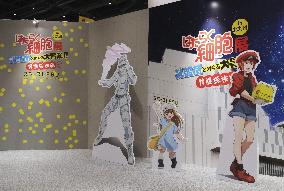
Photo taken on Dec. 9, 2025, shows an illustration and other items related to popular Japanese comic "Cells at Work!" at the Nobel Prize Museum in Stockholm, donated by Shimon Sakaguchi, University of Osaka professor and co-winner of the 2025 Nobel Prize in physiology or medicine. Sakaguchi was recognized for his team's groundbreaking discoveries on how the immune system is kept in check.

  •  
Nobel laureate Sakaguchi donates items to Nobel museum

Nobel laureate Sakaguchi donates items to Nobel museum

Photo taken on Dec. 9, 2025, shows an illustration and other items related to popular Japanese comic "Cells at Work!" at the Nobel Prize Museum in Stockholm, donated by Shimon Sakaguchi, University of Osaka professor and co-winner of the 2025 Nobel Prize in physiology or medicine. Sakaguchi was recognized for his team's groundbreaking discoveries on how the immune system is kept in check.

  •  
Exhibition on popular comic themed on human cells

Exhibition on popular comic themed on human cells

Photo taken on July 27, 2022, shows an exhibition featuring popular Japanese comic series "Cells at Work" at Space LABO at Kitakyushu City Science Museum in Kitakyushu, southwestern Japan.

  •  
Exhibition on popular comic themed on human cells

Exhibition on popular comic themed on human cells

Photo taken on July 27, 2022, shows an exhibition featuring popular Japanese comic series "Cells at Work" at Space LABO at Kitakyushu City Science Museum in Kitakyushu, southwestern Japan.

  •  

US: Winter Storm Continues To Bring Heavy Snow To Colorado, Wreaking Havoc

A major winter storm continued to hit Colorado, bringing heavy snow to the Denver area on Thursday, March 14. Parts of Interstate 70 were closed, hundreds of flights were canceled, and tens of thousands of homes were without power. This video shows a car stuck on a snow-covered highway near the Interchange of Interstate I-25 and I-225.

  •  
Lab-Grown Human Embryos Offer New Research Hope

Lab-Grown Human Embryos Offer New Research Hope

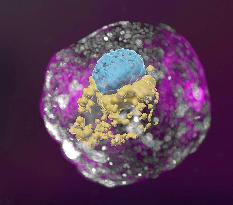
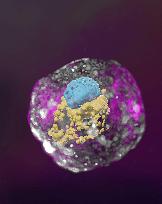
Handout photo shows a stem-cell derived human embryo model showing blue cells (embryo), yellow cells (yolk sac) and pink cells (placenta). Scientists have grown an entity that closely resembles an early human embryo, without using sperm, eggs or a womb. The Weizmann Institute team say their "embryo model", made using stem cells, looks like a textbook example of a real 14-day-old embryo. It even released hormones that turned a pregnancy test positive in the lab. The ambition for embryo models is to provide an ethical way of understanding the earliest moments of our lives. The researchers, led by Palestinian scientist Jacob Hanna at the Weizmann Institute in Israel, harnessed the power of embryonic stem cells, which can become any kind of cell. They produced embryo models up to 14 days old, which is the legal limit for human embryo lab research in many countries, and the point at which organs like the brain begin to develop. The researchers say their work differs from those of other teams because it uses chemic

  •  
Lab-Grown Human Embryos Offer New Research Hope

Lab-Grown Human Embryos Offer New Research Hope

Handout photo shows a stem-cell derived human embryo model showing blue cells (embryo), yellow cells (yolk sac) and pink cells (placenta). Scientists have grown an entity that closely resembles an early human embryo, without using sperm, eggs or a womb. The Weizmann Institute team say their "embryo model", made using stem cells, looks like a textbook example of a real 14-day-old embryo. It even released hormones that turned a pregnancy test positive in the lab. The ambition for embryo models is to provide an ethical way of understanding the earliest moments of our lives. The researchers, led by Palestinian scientist Jacob Hanna at the Weizmann Institute in Israel, harnessed the power of embryonic stem cells, which can become any kind of cell. They produced embryo models up to 14 days old, which is the legal limit for human embryo lab research in many countries, and the point at which organs like the brain begin to develop. The researchers say their work differs from those of other teams because it uses chemic

  •  
Nobel Prize winners Yamanaka, Gurdon

Nobel Prize winners Yamanaka, Gurdon

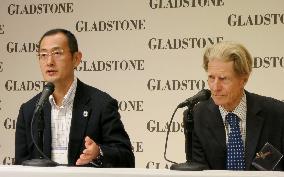
SAN FRANCISCO, United States - Japanese researcher Shinya Yamanaka (L) and British biologist John Gurdon attend a press conference in San Francisco on Oct. 24, 2012. They shared their delight at jointly winning this year's Nobel Prize in medicine for their work on artificially derived multipurpose stem cells.

  •  
Nobel laureate Yamanaka at interview

Nobel laureate Yamanaka at interview

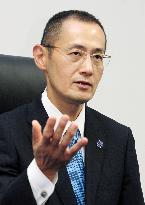
KYOTO, Japan - Japanese scientist Shinya Yamanaka is interviewed by Kyodo News at Kyoto University in Kyoto on Oct. 11, 2012. The 50-year-old professor at the university was jointly awarded the 2012 Nobel Prize in Physiology or Medicine for his work on artificially derived multipurpose stem cells.

  •  
Nobel laureate Yamanaka at interview

Nobel laureate Yamanaka at interview

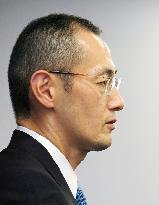
KYOTO, Japan - Japanese scientist Shinya Yamanaka is interviewed by Kyodo News at Kyoto University in Kyoto on Oct. 11, 2012. The 50-year-old professor at the university was jointly awarded the 2012 Nobel Prize in Physiology or Medicine for his work on artificially derived multipurpose stem cells.

  •  
Nobel laureate Yamanaka at interview

Nobel laureate Yamanaka at interview

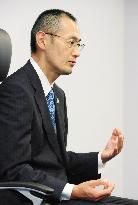
KYOTO, Japan - Japanese scientist Shinya Yamanaka is interviewed by Kyodo News at Kyoto University in Kyoto on Oct. 11, 2012. The 50-year-old professor at the university was jointly awarded the 2012 Nobel Prize in Physiology or Medicine for his work on artificially derived multipurpose stem cells.

  •  
Students read newspaper extra on Yamanaka's Nobel winning

Students read newspaper extra on Yamanaka's Nobel winning

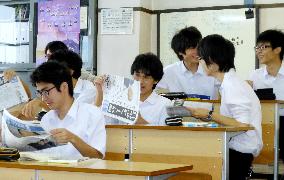
OSAKA, Japan - Students at Tennoji High School attached to Osaka Kyoiku University in Osaka read a newspaper's extra edition reporting on the winning of this year's Nobel Prize in Physiology or Medicine by Japanese scientist and Kyoto University professor Shinya Yamanaka for his work on artificially derived multipurpose stem cells, on Oct. 9, 2012. Yamanaka graduated from the high school.

  •  
Nobel laureate Yamanaka

Nobel laureate Yamanaka

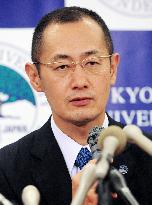
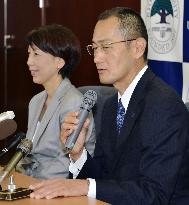
KYOTO, Japan - Japanese scientist and Kyoto University professor Shinya Yamanaka holds a press conference at the university in Kyoto on Oct. 9, 2012. Yamanaka, who won this year's Nobel Prize in Physiology or Medicine for his work on artificially derived multipurpose stem cells, expressed his gratitude to assistants in his laboratory and family members at a press conference at the university the same day, a day after the prize winners were announced in Stockholm.

  •  
Nobel laureate Yamanaka, wife

Nobel laureate Yamanaka, wife

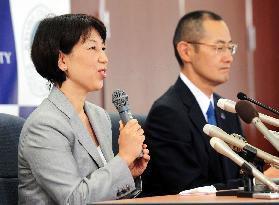
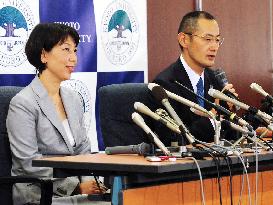
KYOTO, Japan - Chika Yamanaka (L), a dermatologist and the wife of Japanese scientist and Kyoto University professor Shinya Yamanaka (R), holds a press conference at the university in Kyoto with her husband on Oct. 9, 2012, the day after the announcement that her 50-year-old husband had won this year's Nobel Prize in Physiology or Medicine for his work on artificially derived multipurpose stem cells.

  •  
Nobel laureate Yamanaka, wife

Nobel laureate Yamanaka, wife

KYOTO, Japan - Japanese scientist and Kyoto University professor Shinya Yamanaka (R) holds a press conference with his wife Chika (L) at the university in Kyoto on Oct. 9, 2012, the day after the announcement that he had won this year's Nobel Prize in Physiology or Medicine for his work on artificially derived multipurpose stem cells.

  •  
Wife of Nobel laureate Yamanaka

Wife of Nobel laureate Yamanaka

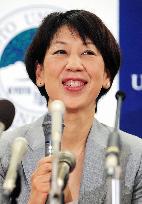
KYOTO, Japan - Chika Yamanaka, a dermatologist and the wife of Japanese scientist and Kyoto University professor Shinya Yamanaka, holds a press conference at the university in Kyoto with her husband on Oct. 9, 2012, the day after the announcement that her 50-year-old husband had won this year's Nobel Prize in Physiology or Medicine for his work on artificially derived multipurpose stem cells.

  •  
Nobel laureate Yamanaka, wife

Nobel laureate Yamanaka, wife

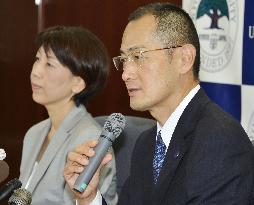
KYOTO, Japan - Japanese scientist and Kyoto University professor Shinya Yamanaka (R) holds a press conference with his wife Chika (L) at the university in Kyoto on Oct. 9, 2012, the day after the announcement that he had won this year's Nobel Prize in Physiology or Medicine for his work on artificially derived multipurpose stem cells.

  •  
Nobel laureate Yamanaka, wife

Nobel laureate Yamanaka, wife

KYOTO, Japan - Japanese scientist and Kyoto University professor Shinya Yamanaka (R) holds a press conference with his wife Chika (L) at the university in Kyoto on Oct. 9, 2012, the day after the announcement that he had won this year's Nobel Prize in Physiology or Medicine for his work on artificially derived multipurpose stem cells.

  •  
Nobel laureate Yamanaka

Nobel laureate Yamanaka

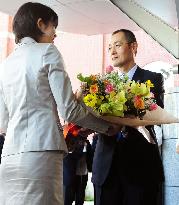
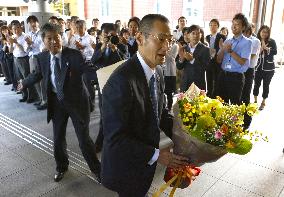
KYOTO, Japan - Japanese scientist and Kyoto University professor Shinya Yamanaka (R) receives flowers from a colleague at the entrance of the university in Kyoto on Oct. 9, 2012. Yamanaka, who won this year's Nobel Prize in Physiology or Medicine for his work on artificially derived multipurpose stem cells, expressed his gratitude to assistants in his laboratory and family members at a press conference at the university the same day, a day after the prize winners were announced in Stockholm.

  •  
Nobel laureate Yamanaka

Nobel laureate Yamanaka

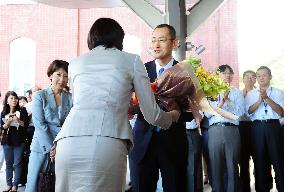
KYOTO, Japan - Japanese scientist and Kyoto University professor Shinya Yamanaka (C) receives flowers from a colleague at the entrance of the university in Kyoto on Oct. 9, 2012. His wife Chika (L, front) was with him. Yamanaka, who won this year's Nobel Prize in Physiology or Medicine for his work on artificially derived multipurpose stem cells, expressed his gratitude to assistants in his laboratory and family members at a press conference at the university the same day, a day after the prize winners were announced in Stockholm.

  •  
Nobel laureate Yamanaka

Nobel laureate Yamanaka

KYOTO, Japan - Japanese scientist and Kyoto University professor Shinya Yamanaka (C) enters the university in Kyoto on Oct. 9, 2012, to hold a press conference after receiving flowers from a colleague. Yamanaka, who won this year's Nobel Prize in Physiology or Medicine for his work on artificially derived multipurpose stem cells, expressed his gratitude to assistants in his laboratory and family members at a press conference at the university the same day, a day after the prize winners were announced in Stockholm.

  •  
Prof. Yamanaka receives Balzan Prize for work on iPS cells

Prof. Yamanaka receives Balzan Prize for work on iPS cells

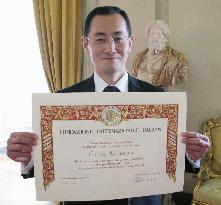
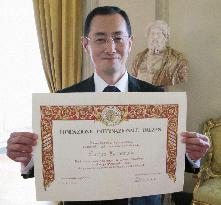
ROME, Italy - Shinya Yamanaka, professor at Kyoto University, holds up a certificate for the Balzan Prize in Rome on Nov. 19, 2010, after winning the award for his pioneering work in producing induced pluripotent stem cells, or iPS cells.

  •  

China's Foshan best place to pursue fuel cell dream: Canadian fuel cell expert

STORY: China's Foshan best place to pursue fuel cell dream: Canadian fuel cell expert DATELINE: Aug. 25, 2022 LENGTH: 0:03:32 LOCATION: FOSHAN, China CATEGORY: TECHNOLOGY SHOTLIST: 1. various of Canadian fuel cell expert Dustin Banham living in Foshan 2. SOUNDBITE (English): DUSTIN BANHAM, CTO of Guangdong Taiji Power Technology Co., Ltd. STORYLINE: Canadian fuel cell expert Dustin Banham has been pursuing his fuel cell dream in south China's Foshan for nearly four years. For Dustin, Foshan is not only a tech hub but also a livable city. SOUNDBITE (English): DUSTIN BANHAM, CTO of Guangdong Taiji Power Technology Co., Ltd. "When I was 14, I decided to drop out of school and became super interested in fuel cells. I was fortunate enough to university to get a PhD studying fuel cell electrochemistry. And after graduating, I went to work at one of the world-leading fuel cell companies in Vancouver.   I knew very little coming from Canada about China. I had heard of Beijing, and I had heard of Shenzhen and Shan

  •  
Prof. Yamanaka receives Balzan Prize for work on iPS cells

Prof. Yamanaka receives Balzan Prize for work on iPS cells

ROME, Italy - Shinya Yamanaka, professor at Kyoto University, holds up a certificate for the Balzan Prize in Rome on Nov. 19, 2010, after winning the award for his pioneering work in producing induced pluripotent stem cells, or iPS cells. (Kyodo)

  • Main
  • Top
  • Editorial
  • Creative
  • About Us
  • About ILG
  • Terms of use
  • Company
  • BEHIND
  • Price List
  • Single Plan
  • Monthly Plan
  • Services
  • Shooting
  • Rights Clearance
  • Support
  • FAQ
  • How To Buy
  • Contact Us
  • Become a Partner

© KYODO NEWS IMAGES INC

All Rights Reserved.

  • Editorial
  • Olympics
  • News
  • Sports
  • Japan
  • Tech
  • Royal
  • Disaster
  • NorthKorea
  • Old Japan
  • SNS
  • Creative
  • Food
  • Japan
  • Landscape
  • Animal
  • Popular
  • #Ukraine
  • #China
  • #coronavirus
  • #N. Korea
  • #Russia
  • #Thailand
  • #Ukraine
  • #China
  • #coronavirus
  • #N. Korea
  • #Russia
  • #Thailand
  • Food
  • Japan
  • Landscape
  • Animal
  • Olympics
  • News
  • Sports
  • Japan
  • Tech
  • Royal
  • Disaster
  • NorthKorea
  • Old Japan
  • SNS