•  
Nobel Prize Banquet 2024 - Stockholm

Nobel Prize Banquet 2024 - Stockholm

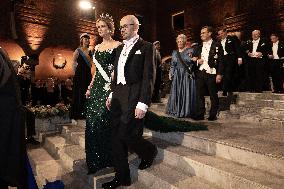
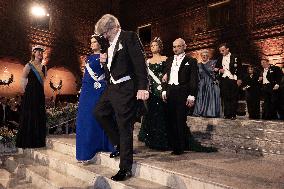
Princess Madeleine of Sweden, Nobel Prize in Physiology or Medicine 2024 laureate and US molecular biologist Gary Ruvkun, Princess Madeleine of Sweden and Nobel Prize in Chemistry 2024 laureate and British computational neuroscientist and AI researcher Demis Hassabis attend the Nobel Prize Banquet 2024 at Stockholm City Hall, on December 10, 2024 in Stockholm, Sweden.Photo by David NIVIERE/ABACAPRESS.COM

  •  
Nobel Prize Banquet 2024 - Stockholm

Nobel Prize Banquet 2024 - Stockholm

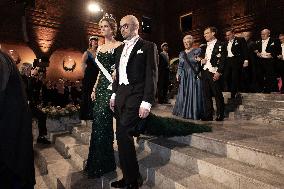
Princess Madeleine of Sweden and Nobel Prize in Chemistry 2024 laureate and British computational neuroscientist and AI researcher Demis Hassabis attend the Nobel Prize Banquet 2024 at Stockholm City Hall, on December 10, 2024 in Stockholm, Sweden.Photo by David NIVIERE/ABACAPRESS.COM

  •  
Nobel Prize Banquet 2024 - Stockholm

Nobel Prize Banquet 2024 - Stockholm

Princess Madeleine of Sweden and Nobel Prize in Chemistry 2024 laureate and British computational neuroscientist and AI researcher Demis Hassabis attend the Nobel Prize Banquet 2024 at Stockholm City Hall, on December 10, 2024 in Stockholm, Sweden.Photo by David NIVIERE/ABACAPRESS.COM

  •  
Nobel Prize Banquet 2024 - Stockholm

Nobel Prize Banquet 2024 - Stockholm

Princess Sofia of Sweden, Nobel Prize in Physiology or Medicine 2024 laureate and US molecular biologist Gary Ruvkun, Princess Madeleine of Sweden and Nobel Prize in Chemistry 2024 laureate and British computational neuroscientist and AI researcher Demis Hassabis attend the Nobel Prize Banquet 2024 at Stockholm City Hall, on December 10, 2024 in Stockholm, Sweden.Photo by David NIVIERE/ABACAPRESS.COM

  •  
Nobel Prize Banquet 2024 - Stockholm

Nobel Prize Banquet 2024 - Stockholm

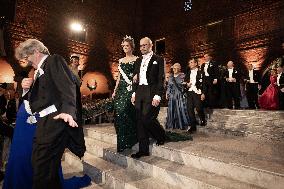
Princess Madeleine of Sweden and Nobel Prize in Chemistry 2024 laureate and British computational neuroscientist and AI researcher Demis Hassabis attend the Nobel Prize Banquet 2024 at Stockholm City Hall, on December 10, 2024 in Stockholm, Sweden.Photo by David NIVIERE/ABACAPRESS.COM

  •  
Nobel Prize Banquet 2024 - Stockholm

Nobel Prize Banquet 2024 - Stockholm

Princess Madeleine of Sweden and Nobel Prize in Chemistry 2024 laureate and British computational neuroscientist and AI researcher Demis Hassabis attend the Nobel Prize Banquet 2024 at Stockholm City Hall, on December 10, 2024 in Stockholm, Sweden.Photo by David NIVIERE/ABACAPRESS.COM

  •  
Supercomputer “Fugaku”

Supercomputer “Fugaku”

Supercomputer “Fugaku”. (Photo taken at the RIKEN Center for Computational Science)=September 18,2024,Hyogo, Japan

  •  
Supercomputer “Fugaku”

Supercomputer “Fugaku”

Supercomputer “Fugaku”. (Photo taken at the RIKEN Center for Computational Science)=September 18,2024,Hyogo, Japan

  •  
Supercomputer “Fugaku”

Supercomputer “Fugaku”

Supercomputer “Fugaku”. (Photo taken at the RIKEN Center for Computational Science)=September 18,2024,Hyogo, Japan

  •  
Supercomputer “Fugaku”

Supercomputer “Fugaku”

Supercomputer “Fugaku”. (Photo taken at the RIKEN Center for Computational Science)=September 18,2024,Hyogo, Japan

  •  
Supercomputer “Fugaku”

Supercomputer “Fugaku”

Supercomputer “Fugaku”. (Photo taken at the RIKEN Center for Computational Science)=September 18,2024,Hyogo, Japan

  •  
Supercomputer “Fugaku”

Supercomputer “Fugaku”

Supercomputer “Fugaku”. (Photo taken at the RIKEN Center for Computational Science)=September 18,2024,Hyogo, Japan

  •  
Supercomputer “Fugaku”

Supercomputer “Fugaku”

Supercomputer “Fugaku”. (Photo taken at the RIKEN Center for Computational Science)=September 18,2024,Hyogo, Japan

  •  
Supercomputer “Fugaku”

Supercomputer “Fugaku”

Supercomputer “Fugaku”. (Photo taken at the RIKEN Center for Computational Science)=September 18,2024,Hyogo, Japan

  •  
Supercomputer “Fugaku”

Supercomputer “Fugaku”

Supercomputer “Fugaku”. (Photo taken at the RIKEN Center for Computational Science)=September 18,2024,Hyogo, Japan

  •  
Supercomputer “Fugaku”

Supercomputer “Fugaku”

Supercomputer “Fugaku”. (Photo taken at the RIKEN Center for Computational Science)=September 18,2024,Hyogo, Japan

  •  
Supercomputer “Fugaku”

Supercomputer “Fugaku”

Supercomputer “Fugaku”. (Photo taken at the RIKEN Center for Computational Science)=September 18,2024,Hyogo, Japan

  •  
XINHUA PHOTOS OF THE DAY

XINHUA PHOTOS OF THE DAY

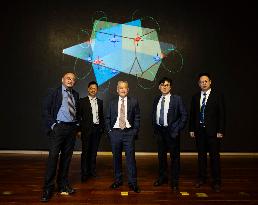
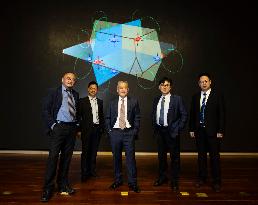
(240626) -- BEIJING, June 26, 2024 Photo by Xinhua/ABACAPRESS.COM) -- Dai Xi, Wang Zhijun, Fang Zhong, Weng Hongming and Yu Rui (L to R) pose for a group photo at the Institute of Physics, Chinese Academy of Sciences in Beijing, capital of China, June 22, 2024. Research on the computational prediction of topological electronic materials was on Monday honored with the first prize of State Natural Science Award. The research project is led by Fang Zhong and his team from Institute of Physics, Chinese Academy of Sciences. The team's achievements has promoted the research development in the topological electronic field and made China stand in the forefront worldwide in this field of research. Photo by Xinhua/ABACAPRESS.COM/Jin Liwang)

  •  
XINHUA PHOTOS OF THE DAY

XINHUA PHOTOS OF THE DAY

(240626) -- BEIJING, June 26, 2024 (Xinhua) -- Dai Xi, Wang Zhijun, Fang Zhong, Weng Hongming and Yu Rui (L to R) pose for a group photo at the Institute of Physics, Chinese Academy of Sciences in Beijing, capital of China, June 22, 2024. Research on the computational prediction of topological electronic materials was on Monday honored with the first prize of State Natural Science Award. The research project is led by Fang Zhong and his team from Institute of Physics, Chinese Academy of Sciences. The team's achievements has promoted the research development in the topological electronic field and made China stand in the forefront worldwide in this field of research. (Xinhua/Jin Liwang)

  •  
CHINA-BEIJING-SCIENTISTS-TOPOLOGICAL RESEARCH (CN)

CHINA-BEIJING-SCIENTISTS-TOPOLOGICAL RESEARCH (CN)

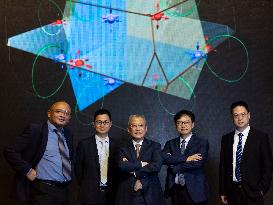
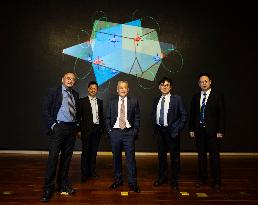
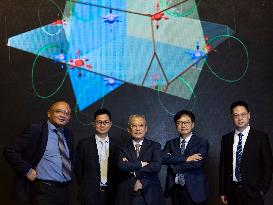
(240625) -- BEIJING, June 25, 2024 Photo by Xinhua/ABACAPRESS.COM) -- Fang Zhong (C) and his team members Wang Zhijun (1st L), Weng Hongming (2nd L), Dai Xi (2nd R), Yu Rui (1st R) pose for a group photo at the Institute of Physics, Chinese Academy of Sciences in Beijing, capital of China, June 22, 2024. Research on the computational prediction of topological electronic materials was on Monday honored with the first prize of State Natural Science Award. The research project is led by Fang Zhong and his team from Institute of Physics, Chinese Academy of Sciences. The team's achievements has promoted the research development in the topological electronic field and made China stand in the forefront worldwide in this field of research. Photo by Xinhua/ABACAPRESS.COM/Jin Liwang)

  •  
CHINA-BEIJING-SCIENTISTS-TOPOLOGICAL RESEARCH (CN)

CHINA-BEIJING-SCIENTISTS-TOPOLOGICAL RESEARCH (CN)

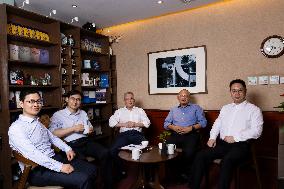
(240625) -- BEIJING, June 25, 2024 Photo by Xinhua/ABACAPRESS.COM) -- Dai Xi, Wang Zhijun, Fang Zhong, Weng Hongming and Yu Rui (L to R) pose for a group photo at the Institute of Physics, Chinese Academy of Sciences in Beijing, capital of China, June 22, 2024. Research on the computational prediction of topological electronic materials was on Monday honored with the first prize of State Natural Science Award. The research project is led by Fang Zhong and his team from Institute of Physics, Chinese Academy of Sciences. The team's achievements has promoted the research development in the topological electronic field and made China stand in the forefront worldwide in this field of research. Photo by Xinhua/ABACAPRESS.COM/Jin Liwang)

  •  
CHINA-BEIJING-SCIENTISTS-TOPOLOGICAL RESEARCH (CN)

CHINA-BEIJING-SCIENTISTS-TOPOLOGICAL RESEARCH (CN)

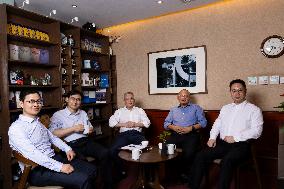
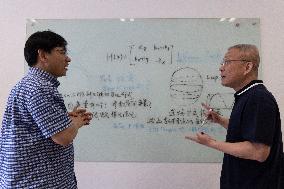
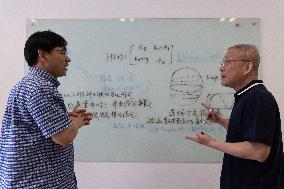
(240625) -- BEIJING, June 25, 2024 Photo by Xinhua/ABACAPRESS.COM) -- Fang Zhong (R) and his team member Weng Hongming talk on research progress at the Institute of Physics, Chinese Academy of Sciences in Beijing, capital of China, June 19, 2024. Research on the computational prediction of topological electronic materials was on Monday honored with the first prize of State Natural Science Award. The research project is led by Fang Zhong and his team from Institute of Physics, Chinese Academy of Sciences. The team's achievements has promoted the research development in the topological electronic field and made China stand in the forefront worldwide in this field of research. Photo by Xinhua/ABACAPRESS.COM/Jin Liwang)

  •  
CHINA-BEIJING-SCIENTISTS-TOPOLOGICAL RESEARCH (CN)

CHINA-BEIJING-SCIENTISTS-TOPOLOGICAL RESEARCH (CN)

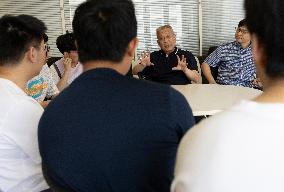
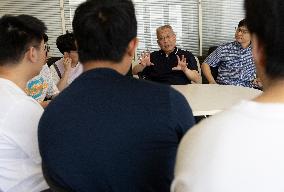
(240625) -- BEIJING, June 25, 2024 Photo by Xinhua/ABACAPRESS.COM) -- Fang Zhong (2nd R) and his team member Weng Hongming talk with students at the Institute of Physics, Chinese Academy of Sciences in Beijing, capital of China, June 19, 2024. Research on the computational prediction of topological electronic materials was on Monday honored with the first prize of State Natural Science Award. The research project is led by Fang Zhong and his team from Institute of Physics, Chinese Academy of Sciences. The team's achievements has promoted the research development in the topological electronic field and made China stand in the forefront worldwide in this field of research. Photo by Xinhua/ABACAPRESS.COM/Jin Liwang)

  •  
CHINA-BEIJING-SCIENTISTS-TOPOLOGICAL RESEARCH (CN)

CHINA-BEIJING-SCIENTISTS-TOPOLOGICAL RESEARCH (CN)

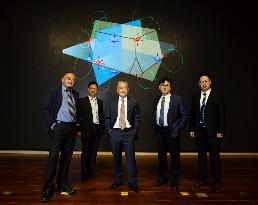
(240625) -- BEIJING, June 25, 2024 Photo by Xinhua/ABACAPRESS.COM) -- Dai Xi, Wang Zhijun, Fang Zhong, Weng Hongming and Yu Rui (L to R) pose for a group photo at the Institute of Physics, Chinese Academy of Sciences in Beijing, capital of China, June 22, 2024. Research on the computational prediction of topological electronic materials was on Monday honored with the first prize of State Natural Science Award. The research project is led by Fang Zhong and his team from Institute of Physics, Chinese Academy of Sciences. The team's achievements has promoted the research development in the topological electronic field and made China stand in the forefront worldwide in this field of research. Photo by Xinhua/ABACAPRESS.COM/Jin Liwang)

  •  
CHINA-BEIJING-SCIENTISTS-TOPOLOGICAL RESEARCH (CN)

CHINA-BEIJING-SCIENTISTS-TOPOLOGICAL RESEARCH (CN)

(240625) -- BEIJING, June 25, 2024 (Xinhua) -- Fang Zhong (2nd R) and his team member Weng Hongming talk with students at the Institute of Physics, Chinese Academy of Sciences in Beijing, capital of China, June 19, 2024. Research on the computational prediction of topological electronic materials was on Monday honored with the first prize of State Natural Science Award. The research project is led by Fang Zhong and his team from Institute of Physics, Chinese Academy of Sciences. The team's achievements has promoted the research development in the topological electronic field and made China stand in the forefront worldwide in this field of research. (Xinhua/Jin Liwang)

  •  
CHINA-BEIJING-SCIENTISTS-TOPOLOGICAL RESEARCH (CN)

CHINA-BEIJING-SCIENTISTS-TOPOLOGICAL RESEARCH (CN)

(240625) -- BEIJING, June 25, 2024 (Xinhua) -- Fang Zhong (C) and his team members Wang Zhijun (1st L), Weng Hongming (2nd L), Dai Xi (2nd R), Yu Rui (1st R) pose for a group photo at the Institute of Physics, Chinese Academy of Sciences in Beijing, capital of China, June 22, 2024. Research on the computational prediction of topological electronic materials was on Monday honored with the first prize of State Natural Science Award. The research project is led by Fang Zhong and his team from Institute of Physics, Chinese Academy of Sciences. The team's achievements has promoted the research development in the topological electronic field and made China stand in the forefront worldwide in this field of research. (Xinhua/Jin Liwang)

  •  
CHINA-BEIJING-SCIENTISTS-TOPOLOGICAL RESEARCH (CN)

CHINA-BEIJING-SCIENTISTS-TOPOLOGICAL RESEARCH (CN)

(240625) -- BEIJING, June 25, 2024 (Xinhua) -- Dai Xi, Wang Zhijun, Fang Zhong, Weng Hongming and Yu Rui (L to R) pose for a group photo at the Institute of Physics, Chinese Academy of Sciences in Beijing, capital of China, June 22, 2024. Research on the computational prediction of topological electronic materials was on Monday honored with the first prize of State Natural Science Award. The research project is led by Fang Zhong and his team from Institute of Physics, Chinese Academy of Sciences. The team's achievements has promoted the research development in the topological electronic field and made China stand in the forefront worldwide in this field of research. (Xinhua/Jin Liwang)

  •  
CHINA-BEIJING-SCIENTISTS-TOPOLOGICAL RESEARCH (CN)

CHINA-BEIJING-SCIENTISTS-TOPOLOGICAL RESEARCH (CN)

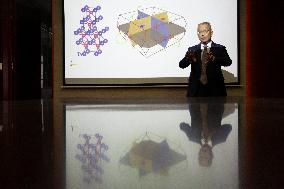
(240625) -- BEIJING, June 25, 2024 (Xinhua) -- Fang Zhong briefs on research achievements at the Institute of Physics, Chinese Academy of Sciences in Beijing, capital of China, June 19, 2024. Research on the computational prediction of topological electronic materials was on Monday honored with the first prize of State Natural Science Award. The research project is led by Fang Zhong and his team from Institute of Physics, Chinese Academy of Sciences. The team's achievements has promoted the research development in the topological electronic field and made China stand in the forefront worldwide in this field of research. (Xinhua/Jin Liwang)

  •  
CHINA-BEIJING-SCIENTISTS-TOPOLOGICAL RESEARCH (CN)

CHINA-BEIJING-SCIENTISTS-TOPOLOGICAL RESEARCH (CN)

(240625) -- BEIJING, June 25, 2024 (Xinhua) -- Fang Zhong (R) and his team member Weng Hongming talk on research progress at the Institute of Physics, Chinese Academy of Sciences in Beijing, capital of China, June 19, 2024. Research on the computational prediction of topological electronic materials was on Monday honored with the first prize of State Natural Science Award. The research project is led by Fang Zhong and his team from Institute of Physics, Chinese Academy of Sciences. The team's achievements has promoted the research development in the topological electronic field and made China stand in the forefront worldwide in this field of research. (Xinhua/Jin Liwang)

  •  
CHINA-BEIJING-SCIENTISTS-TOPOLOGICAL RESEARCH (CN)

CHINA-BEIJING-SCIENTISTS-TOPOLOGICAL RESEARCH (CN)

(240625) -- BEIJING, June 25, 2024 (Xinhua) -- Dai Xi, Wang Zhijun, Fang Zhong, Weng Hongming and Yu Rui (L to R) pose for a group photo at the Institute of Physics, Chinese Academy of Sciences in Beijing, capital of China, June 22, 2024. Research on the computational prediction of topological electronic materials was on Monday honored with the first prize of State Natural Science Award. The research project is led by Fang Zhong and his team from Institute of Physics, Chinese Academy of Sciences. The team's achievements has promoted the research development in the topological electronic field and made China stand in the forefront worldwide in this field of research. (Xinhua/Jin Liwang)

  •  
Analysis results of MS Estonia wreck

Analysis results of MS Estonia wreck

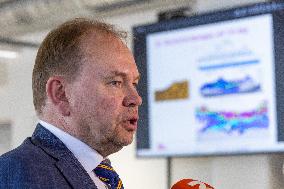
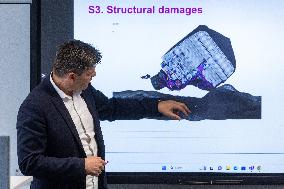
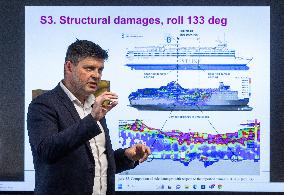
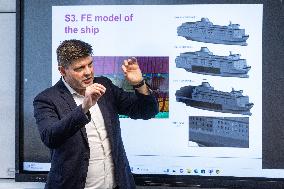
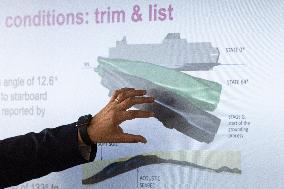
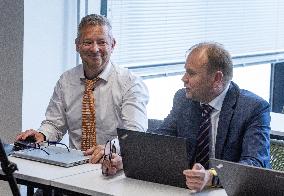
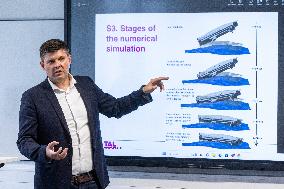
21.09.2023, Tallinn. Based on computational modeling by Tallinn University of Technology researchers, a report presented suggests that the Estonia's starboard side was damaged by the ship's collision with the seafloor. he study's lead author, Professor of Marine Structures and Technology Kristjan Tabri, explained that a computational method was used to simulate the ship's sinking and its impact with the seafloor, while assessing structural deformations and damage. On the photo head of the Estonian Safety Investigation Bureau Märt Ots. Photo Mihkel Maripuu, Postimees

  •  
Analysis results of MS Estonia wreck

Analysis results of MS Estonia wreck

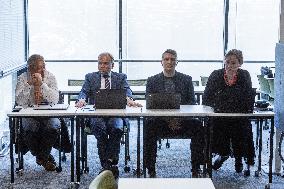
21.09.2023, Tallinn. Based on computational modeling by Tallinn University of Technology researchers, a report presented suggests that the Estonia's starboard side was damaged by the ship's collision with the seafloor. he study's lead author, Professor of Marine Structures and Technology Kristjan Tabri, explained that a computational method was used to simulate the ship's sinking and its impact with the seafloor, while assessing structural deformations and damage. On the photo head of the Estonian Safety Investigation Bureau Märt Ots (2nd left), deputy head of the Swedish Accident Investigation Authority Jonas Bäckstrand (L). Photo Mihkel Maripuu, Postimees

  •  
Analysis results of MS Estonia wreck

Analysis results of MS Estonia wreck

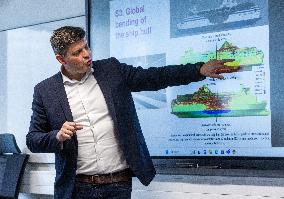
21.09.2023, Tallinn. Based on computational modeling by Tallinn University of Technology researchers, a report presented suggests that the Estonia's starboard side was damaged by the ship's collision with the seafloor. he study's lead author, Professor of Marine Structures and Technology Kristjan Tabri, explained that a computational method was used to simulate the ship's sinking and its impact with the seafloor, while assessing structural deformations and damage. Photo Mihkel Maripuu, Postimees

  •  
Analysis results of MS Estonia wreck

Analysis results of MS Estonia wreck

21.09.2023, Tallinn. Based on computational modeling by Tallinn University of Technology researchers, a report presented suggests that the Estonia's starboard side was damaged by the ship's collision with the seafloor. he study's lead author, Professor of Marine Structures and Technology Kristjan Tabri, explained that a computational method was used to simulate the ship's sinking and its impact with the seafloor, while assessing structural deformations and damage. Photo Mihkel Maripuu, Postimees

  •  
Analysis results of MS Estonia wreck

Analysis results of MS Estonia wreck

21.09.2023, Tallinn. Based on computational modeling by Tallinn University of Technology researchers, a report presented suggests that the Estonia's starboard side was damaged by the ship's collision with the seafloor. he study's lead author, Professor of Marine Structures and Technology Kristjan Tabri, explained that a computational method was used to simulate the ship's sinking and its impact with the seafloor, while assessing structural deformations and damage. Photo Mihkel Maripuu, Postimees

  •  
Analysis results of MS Estonia wreck

Analysis results of MS Estonia wreck

21.09.2023, Tallinn. Based on computational modeling by Tallinn University of Technology researchers, a report presented suggests that the Estonia's starboard side was damaged by the ship's collision with the seafloor. he study's lead author, Professor of Marine Structures and Technology Kristjan Tabri, explained that a computational method was used to simulate the ship's sinking and its impact with the seafloor, while assessing structural deformations and damage. Photo Mihkel Maripuu, Postimees

  •  
Analysis results of MS Estonia wreck

Analysis results of MS Estonia wreck

21.09.2023, Tallinn. Based on computational modeling by Tallinn University of Technology researchers, a report presented suggests that the Estonia's starboard side was damaged by the ship's collision with the seafloor. he study's lead author, Professor of Marine Structures and Technology Kristjan Tabri, explained that a computational method was used to simulate the ship's sinking and its impact with the seafloor, while assessing structural deformations and damage. Photo Mihkel Maripuu, Postimees

  •  
Analysis results of MS Estonia wreck

Analysis results of MS Estonia wreck

21.09.2023, Tallinn. Based on computational modeling by Tallinn University of Technology researchers, a report presented suggests that the Estonia's starboard side was damaged by the ship's collision with the seafloor. he study's lead author, Professor of Marine Structures and Technology Kristjan Tabri, explained that a computational method was used to simulate the ship's sinking and its impact with the seafloor, while assessing structural deformations and damage. Photo Mihkel Maripuu, Postimees

  •  
Analysis results of MS Estonia wreck

Analysis results of MS Estonia wreck

21.09.2023, Tallinn. Based on computational modeling by Tallinn University of Technology researchers, a report presented suggests that the Estonia's starboard side was damaged by the ship's collision with the seafloor. he study's lead author, Professor of Marine Structures and Technology Kristjan Tabri, explained that a computational method was used to simulate the ship's sinking and its impact with the seafloor, while assessing structural deformations and damage. On the photo head of the Estonian Safety Investigation Bureau Märt Ots (R), deputy head of the Swedish Accident Investigation Authority Jonas Bäckstrand (L). Photo Mihkel Maripuu, Postimees

  •  
AI Chips at The 2023 WAIC In Shanghai

AI Chips at The 2023 WAIC In Shanghai

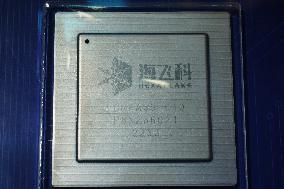
SHANGHAI, CHINA - JULY 6, 2023 - The Compass C10 chip photographed at the 2023 World Artificial Intelligence Conference. July 6, 2023, Shanghai, China. Compass C10 is Artificial intelligence Universal Parallel Processing (AIGPU), with high computational power density and utilization, supporting multiple AI model deployment.

  •  
Japan emperor in Kobe

Japan emperor in Kobe

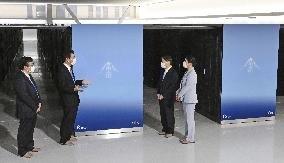
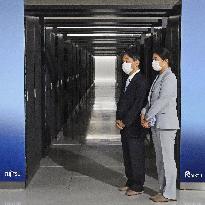
Japanese Emperor Naruhito and Empress Masako are briefed about the Fugaku supercomputer at the RIKEN Center for Computational Science in the Hyogo Prefecture city of Kobe, western Japan, on Nov. 12, 2022. (Pool photo)

  •  
Japan emperor in Kobe

Japan emperor in Kobe

Japanese Emperor Naruhito and Empress Masako are briefed about the Fugaku supercomputer at the RIKEN Center for Computational Science in the Hyogo Prefecture city of Kobe, western Japan, on Nov. 12, 2022. (Pool photo)

  •  

Supercomputer Fugaku in full operation to aid COVID-19 research?

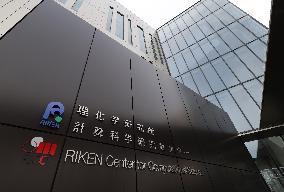
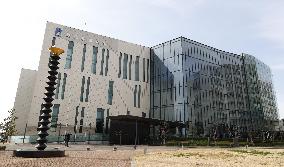
KOBE, Japan Kyodo - Video taken March 9, 2021, shows the Riken Center for Computational Science in Kobe, western Japan. The Fugaku supercomputer, the world's fastest in terms of computing speed, went into full operation there the same day, earlier than initially scheduled, in the hope of being utilized for research related to the novel coronavirus.

  •  
Outage stops Japanese supercomputer K temporarily in March

Outage stops Japanese supercomputer K temporarily in March

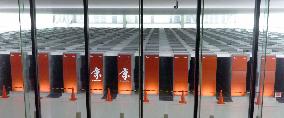
The Japanese supercomputer K, pictured in June 2012 at the RIKEN Advanced Institute for Computational Science in Kobe, western Japan, became unusable for a day in March 2015 due to a power outage caused by rainwater but there was no direct impact on the computer or the data stored. (Kyodo) ==Kyodo

  •  
Supercomputer Fugaku in full operation to aid COVID-19 research

Supercomputer Fugaku in full operation to aid COVID-19 research

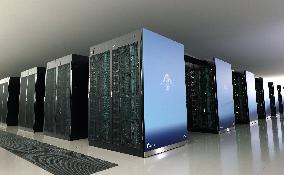
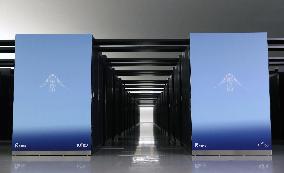
Photo taken March 9, 2021, shows Japan's Fugaku supercomputer, the world's fastest in terms of computing speed, at the Riken Center for Computational Science in Kobe. It went into full operation the same day, earlier than initially scheduled, in the hope of being utilized for research related to the novel coronavirus.

  •  
Supercomputer Fugaku in full operation to aid COVID-19 research

Supercomputer Fugaku in full operation to aid COVID-19 research

Photo taken March 9, 2021, shows the Riken Center for Computational Science in Kobe, western Japan. The Fugaku supercomputer, the world's fastest in terms of computing speed, went into full operation there the same day, earlier than initially scheduled, in the hope of being utilized for research related to the novel coronavirus.

  •  
Supercomputer Fugaku in full operation to aid COVID-19 research

Supercomputer Fugaku in full operation to aid COVID-19 research

Photo taken March 9, 2021, shows the Riken Center for Computational Science in Kobe, western Japan. The Fugaku supercomputer, the world's fastest in terms of computing speed, went into full operation there the same day, earlier than initially scheduled, in the hope of being utilized for research related to the novel coronavirus.

  •  
Supercomputer Fugaku in full operation to aid COVID-19 research

Supercomputer Fugaku in full operation to aid COVID-19 research

Photo taken March 9, 2021, shows Japan's Fugaku supercomputer, the world's fastest in terms of computing speed, at the Riken Center for Computational Science in Kobe. It went into full operation the same day, earlier than initially scheduled, in the hope of being utilized for research related to the novel coronavirus.

  •  
Japan's new supercomputer ranked fastest in world

Japan's new supercomputer ranked fastest in world

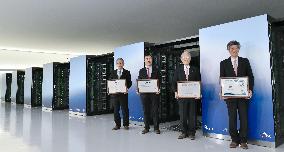
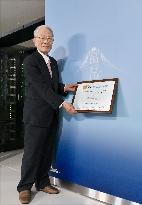
Hiroshi Matsumoto (2nd from R), president of Japan's state-backed Riken research institute, poses for a photo in front of new supercomputer Fugaku in Kobe on June 23, 2020, after Fugaku, jointly developed with the institute's Center for Computational Science and Fujitsu Ltd., was recognized as having the fastest computing speed in the world. (Kyodo) ==Kyodo

  •  
Japan's new supercomputer ranked fastest in world

Japan's new supercomputer ranked fastest in world

Hiroshi Matsumoto, president of Japan's state-backed Riken research institute, poses for a photo in front of new supercomputer Fugaku in Kobe on June 23, 2020, after Fugaku, jointly developed with the institute's Center for Computational Science and Fujitsu Ltd., was recognized as having the fastest computing speed in the world. (Kyodo) ==Kyodo

  • Main
  • Top
  • Editorial
  • Creative
  • About Us
  • About ILG
  • Terms of use
  • Company
  • BEHIND
  • Price List
  • Single Plan
  • Monthly Plan
  • Services
  • Shooting
  • Rights Clearance
  • Support
  • FAQ
  • How To Buy
  • Contact Us
  • Become a Partner

© KYODO NEWS IMAGES INC

All Rights Reserved.

  • Editorial
  • Olympics
  • News
  • Sports
  • Japan
  • Tech
  • Royal
  • Disaster
  • NorthKorea
  • Old Japan
  • SNS
  • Creative
  • Food
  • Japan
  • Landscape
  • Animal
  • Popular
  • #Ukraine
  • #Thailand
  • #coronavirus
  • #N. Korea
  • #Russia
  • #China
  • #Ukraine
  • #Thailand
  • #coronavirus
  • #N. Korea
  • #Russia
  • #China
  • Food
  • Japan
  • Landscape
  • Animal
  • Olympics
  • News
  • Sports
  • Japan
  • Tech
  • Royal
  • Disaster
  • NorthKorea
  • Old Japan
  • SNS