•  
XINHUA PHOTOS OF THE DAY

XINHUA PHOTOS OF THE DAY

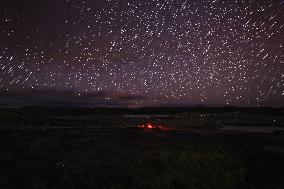
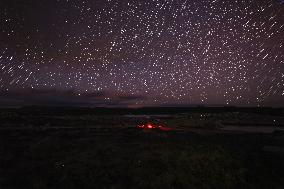
(240227) -- BEIJING, Feb. 27, 2024 (Xinhua) -- This composite photo taken on April 21, 2023 shows the Large High Altitude Air Shower Observatory (LHAASO) at an altitude of 4,410 meters on Mount Haizi in Daocheng County, southwest China's Sichuan Province. China's cosmic ray observatory has discovered a giant ultra-high-energy gamma-ray bubble structure, about ten million times larger than our solar system, in the Cygnus star-forming region, around 5,000 light years from Earth. Based on the observations made by China's LHAASO, scientists identified that star-forming region as one source of the cosmic rays in the Milky Way with an energy level higher than 10 peta-electron volts (quadrillion electron volts or PeV), about 1,000 times more than the record high achieved by any manmade accelerator on Earth. (Xinhua/Jin Liwang)

  •  
(EyesonSci) CHINA-LHAASO-GAMMA-RAY-DISCOVERY (CN)

(EyesonSci) CHINA-LHAASO-GAMMA-RAY-DISCOVERY (CN)

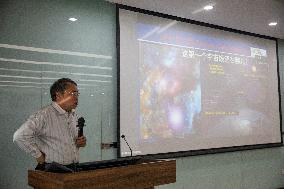
(240226) -- BEIJING, Feb. 26, 2024 (Xinhua) -- Cao Zhen, principal investigator of Large High Altitude Air Shower Observatory (LHAASO) and an academician of Chinese Academy of Sciences (CAS), introduces research findings at the Institute of High Energy Physics of CAS, in Beijing, capital of China, Feb. 22, 2024. China's cosmic ray observatory has discovered a giant ultra-high-energy gamma-ray bubble structure, about ten million times larger than our solar system, in the Cygnus star-forming region, around 5,000 light years from Earth. Based on the observations made by China's LHAASO, scientists identified that star-forming region as one source of the cosmic rays in the Milky Way with an energy level higher than 10 peta-electron volts (quadrillion electron volts or PeV), about 1,000 times more than the record high achieved by any manmade accelerator on Earth. (Xinhua/Jin Liwang)

  •  
(EyesonSci) CHINA-LHAASO-GAMMA-RAY-DISCOVERY (CN)

(EyesonSci) CHINA-LHAASO-GAMMA-RAY-DISCOVERY (CN)

(240226) -- BEIJING, Feb. 26, 2024 (Xinhua) -- This composite photo taken on April 21, 2023 shows the Large High Altitude Air Shower Observatory (LHAASO) at an altitude of 4,410 meters on Mount Haizi in Daocheng County, southwest China's Sichuan Province. China's cosmic ray observatory has discovered a giant ultra-high-energy gamma-ray bubble structure, about ten million times larger than our solar system, in the Cygnus star-forming region, around 5,000 light years from Earth. Based on the observations made by China's LHAASO, scientists identified that star-forming region as one source of the cosmic rays in the Milky Way with an energy level higher than 10 peta-electron volts (quadrillion electron volts or PeV), about 1,000 times more than the record high achieved by any manmade accelerator on Earth. (Xinhua/Jin Liwang)

  •  
(EyesonSci) CHINA-LHAASO-GAMMA-RAY-DISCOVERY (CN)

(EyesonSci) CHINA-LHAASO-GAMMA-RAY-DISCOVERY (CN)

(240226) -- BEIJING, Feb. 26, 2024 (Xinhua) -- Cao Zhen (1st R, front), principal investigator of Large High Altitude Air Shower Observatory (LHAASO) and an academician of Chinese Academy of Sciences (CAS), answers questions at the Institute of High Energy Physics of CAS, in Beijing, capital of China, Feb. 22, 2024. China's cosmic ray observatory has discovered a giant ultra-high-energy gamma-ray bubble structure, about ten million times larger than our solar system, in the Cygnus star-forming region, around 5,000 light years from Earth. Based on the observations made by China's LHAASO, scientists identified that star-forming region as one source of the cosmic rays in the Milky Way with an energy level higher than 10 peta-electron volts (quadrillion electron volts or PeV), about 1,000 times more than the record high achieved by any manmade accelerator on Earth. (Xinhua/Jin Liwang)

  •  
(EyesonSci) CHINA-LHAASO-GAMMA-RAY-DISCOVERY (CN)

(EyesonSci) CHINA-LHAASO-GAMMA-RAY-DISCOVERY (CN)

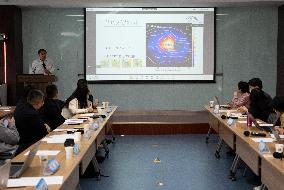
(240226) -- BEIJING, Feb. 26, 2024 (Xinhua) -- Cao Zhen (at the podium), principal investigator of Large High Altitude Air Shower Observatory (LHAASO) and an academician of Chinese Academy of Sciences (CAS), introduces research findings at the Institute of High Energy Physics of CAS, in Beijing, capital of China, Feb. 22, 2024. China's cosmic ray observatory has discovered a giant ultra-high-energy gamma-ray bubble structure, about ten million times larger than our solar system, in the Cygnus star-forming region, around 5,000 light years from Earth. Based on the observations made by China's LHAASO, scientists identified that star-forming region as one source of the cosmic rays in the Milky Way with an energy level higher than 10 peta-electron volts (quadrillion electron volts or PeV), about 1,000 times more than the record high achieved by any manmade accelerator on Earth. (Xinhua/Jin Liwang)

  •  
Latest Images From Space Station

Latest Images From Space Station

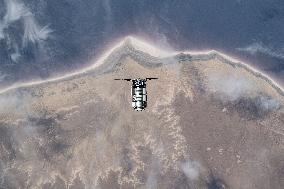
Handout photo dated August 4, 2023 shows Northrop Grumman's Cygnus cargo craft is pictured from the International Space Station as it approaches while orbiting 261 miles above the coast of the Garabogazköl Basin in Turkmenistan. Photo by NASA via ABACAPRESS.COM

  •  
Latest Images From Space Station

Latest Images From Space Station

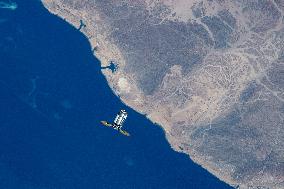
Handout photo dated August 4, 2023 shows Northrop Grumman's Cygnus cargo craft is pictured from the International Space Station as it approaches while orbiting 261 miles above the coast of the Red Sea in Saudi Arabia. Photo by NASA via ABACAPRESS.COM

  •  
Latest Images From Space Station

Latest Images From Space Station

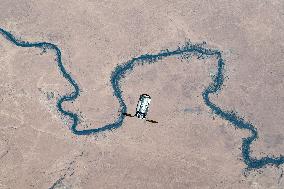
Handout photo dated August 4, 2023 shows Northrop Grumman's Cygnus cargo craft is pictured from the International Space Station as it approaches while orbiting 260 miles above the Euphrates River in Iraq. Photo by NASA via ABACAPRESS.COM

  •  
U.S. rocket explodes after failed launch

U.S. rocket explodes after failed launch

CHIBA, Japan - Photo taken at the Chiba Institute of Technology in Narashino, Chiba Prefecture on Oct. 29, 2014, shows a meteor observation camera partly developed by the Japanese university. The same type of camera was among two tons of cargo including food and experimental equipment bound for the International Space Station, carried by the Cygnus unmanned spacecraft which exploded shortly after launch in Virginia on Oct. 28.

  •  
Antares rocket

Antares rocket

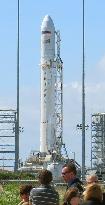
WALLOPS, United States - Orbital Sciences Corp.'s Antares rocket is launched at the Wallops Flight Facility of the National Aeronautics and Space Administration in Virginia on Sept. 18, 2013. The rocket later released an unmanned Cygnus spacecraft to deliver cargo to the International Space Station.

  •  
Antares rocket

Antares rocket

WALLOPS, United States - Orbital Sciences Corp.'s Antares rocket is unveiled at the Wallops Flight Facility of the National Aeronautics and Space Administration in Virginia on Sept. 17, 2013. The rocket carrying the first unmanned Cygnus spacecraft is scheduled to be launched the following day to deliver cargo to the International Space Station.

  •  
Freighters collide off Izu Oshima island, 1 may have sunk

Freighters collide off Izu Oshima island, 1 may have sunk

TOKYO, Japan - The bow of the Panamanian-registered Cygnus Ace is seen damaged March 10 in the Pacific off Izu Oshima island, about 120 kilometers south of Tokyo, after colliding with the South Korean freighter Orchid Pia earlier in the day.

  •  
Freighters collide off Izu Oshima island, 1 may have sunk

Freighters collide off Izu Oshima island, 1 may have sunk

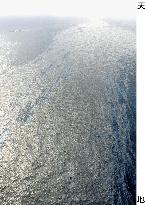
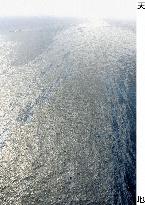
TOKYO, Japan - An oil slick spreads March 10 in the Pacific off Izu Oshima island, where a South Korean-registered freighter, the 4,255-ton Orchid Pia, and the 10,833-ton Panamanian-registered Cygnus Ace collided. The South Korean freighter may have sunk.

  •  
Freighters collide off Izu Oshima island, 1 may have sunk

Freighters collide off Izu Oshima island, 1 may have sunk

TOKYO, Japan - The Panamanian-registered Cygnus Ace cruises March 10 in the Pacific off Izu Oshima island, about 120 kilometers south of Tokyo, after colliding with the South Korean freighter Orchid Pia.

  •  

Yellow River wetland witnesses growing number of migrant birds

STORY: Yellow River wetland witnesses growing number of migrant birds DATELINE: March 18, 2022 LENGTH: 00:02:08 LOCATION: YINCHUAN, China CATEGORY: ENVIRONMENT SHOTLIST: 1. various of the migrant birds 2. SOUNDBITE (Chinese): YUE CHANGHONG, photographer STORYLINE: Pingluo county along the Yellow River in northwest China's Ningxia Hui Autonomous Region is dubbed the "hometown of the grey cranes," a habitat where large flocks of grey cranes migrate to nest and breed during their breeding season each year.      SOUNDBITE (Chinese): YUE CHANGHONG, photographer "The ice and snow have been melted since March, and a large number of migratory birds stop to feed and play here in Tianhewan National Wetland Park during their migration. Sometimes, you can see tens of thousands of wild geese, including bean geese, swan geese, grey geese and so on, flying together. They stay here for about 10 days to replenish food and play. In addition, birds like redhead pochards, green head ducks, etc, as well as cygnus and cygnets a

  •  
Freighters collide off Izu Oshima island, 1 may have sunk

Freighters collide off Izu Oshima island, 1 may have sunk

TOKYO, Japan - The bow of the Panamanian-registered Cygnus Ace is seen damaged March 10 in the Pacific off Izu Oshima island, about 120 kilometers south of Tokyo, after colliding with the South Korean freighter Orchid Pia earlier in the day. (Kyodo)

  •  
Freighters collide off Izu Oshima island, 1 may have sunk

Freighters collide off Izu Oshima island, 1 may have sunk

TOKYO, Japan - An oil slick spreads March 10 in the Pacific off Izu Oshima island, where a South Korean-registered freighter, the 4,255-ton Orchid Pia, and the 10,833-ton Panamanian-registered Cygnus Ace collided. The South Korean freighter may have sunk. (Kyodo)

  •  
Freighters collide off Izu Oshima island, 1 may have sunk

Freighters collide off Izu Oshima island, 1 may have sunk

TOKYO, Japan - The Panamanian-registered Cygnus Ace cruises March 10 in the Pacific off Izu Oshima island, about 120 kilometers south of Tokyo, after colliding with the South Korean freighter Orchid Pia. (Kyodo)

  •  
Swan, river, Vltava

Swan, river, Vltava

Swarm of swans (Cygnus olor) on Vltava river,in Prague, Czech Republic, November 12, 2020. (CTK Photo/Martin Macak Gregor)

  •  
Swan, river, Vltava

Swan, river, Vltava

Swan (Cygnus olor) on Vltava river,in Prague, Czech Republic, November 12, 2020. (CTK Photo/Martin Macak Gregor)

  •  
Swan, river, Vltava

Swan, river, Vltava

Swan (Cygnus olor) on Vltava river,in Prague, Czech Republic, November 12, 2020. (CTK Photo/Martin Macak Gregor)

  •  
mute swan (Cygnus olor), swans, frozen lake, ice

mute swan (Cygnus olor), swans, frozen lake, ice

A flock of mute swans (Cygnus olor) is seen on the frozen Podebrady Lake near Olomouc, Czech Republic, on January 21, 2019. (CTK Photo/Ludek Perina)

  •  
mute swan (Cygnus olor), frozen lake, ice

mute swan (Cygnus olor), frozen lake, ice

A mute swan (Cygnus olor) is seen on the frozen Podebrady Lake near Olomouc, Czech Republic, on January 21, 2019. (CTK Photo/Ludek Perina)

  •  
mute swan (Cygnus olor), swans, frozen lake, ice

mute swan (Cygnus olor), swans, frozen lake, ice

A flock of mute swans (Cygnus olor) is seen on the frozen Podebrady Lake near Olomouc, Czech Republic, on January 21, 2019. (CTK Photo/Ludek Perina)

  •  
mute swan (Cygnus olor), frozen lake, ice

mute swan (Cygnus olor), frozen lake, ice

A mute swan (Cygnus olor) is seen on the frozen Podebrady Lake near Olomouc, Czech Republic, on January 21, 2019. (CTK Photo/Ludek Perina)

  •  
mute swan (Cygnus olor), frozen lake, ice

mute swan (Cygnus olor), frozen lake, ice

A mute swan (Cygnus olor) is seen on the frozen Podebrady Lake near Olomouc, Czech Republic, on January 21, 2019. (CTK Photo/Ludek Perina)

  •  
mute swan (Cygnus olor), frozen lake, ice

mute swan (Cygnus olor), frozen lake, ice

A mute swan (Cygnus olor) is seen on the frozen Podebrady Lake near Olomouc, Czech Republic, on January 21, 2019. (CTK Photo/Ludek Perina)

  •  
mute swan (Cygnus olor), frozen lake, ice

mute swan (Cygnus olor), frozen lake, ice

A mute swan (Cygnus olor) is seen on the frozen Podebrady Lake near Olomouc, Czech Republic, on January 21, 2019. (CTK Photo/Ludek Perina)

  • Main
  • Top
  • Editorial
  • Creative
  • About Us
  • About ILG
  • Terms of use
  • Company
  • BEHIND
  • Price List
  • Single Plan
  • Monthly Plan
  • Services
  • Shooting
  • Rights Clearance
  • Support
  • FAQ
  • How To Buy
  • Contact Us
  • Become a Partner

© KYODO NEWS IMAGES INC

All Rights Reserved.

  • Editorial
  • Olympics
  • News
  • Sports
  • Japan
  • Tech
  • Royal
  • Disaster
  • NorthKorea
  • Old Japan
  • SNS
  • Creative
  • Food
  • Japan
  • Landscape
  • Animal
  • Popular
  • #Ukraine
  • #China
  • #coronavirus
  • #N. Korea
  • #Russia
  • #Thailand
  • #Ukraine
  • #China
  • #coronavirus
  • #N. Korea
  • #Russia
  • #Thailand
  • Food
  • Japan
  • Landscape
  • Animal
  • Olympics
  • News
  • Sports
  • Japan
  • Tech
  • Royal
  • Disaster
  • NorthKorea
  • Old Japan
  • SNS