•  
Snowy Landscapes - China

Snowy Landscapes - China

A drone photo taken on Dec. 13, 2025 shows the snow scenery of the Wangwu Mountain scenic spot in Jiyuan, central China's Henan Province. (Photo by Duan Erping/Xinhua) /ABACAPRESS.COM

  •  
Self-Glimmering Plants Cultivated by Magicpen Bio - China

Self-Glimmering Plants Cultivated by Magicpen Bio - China

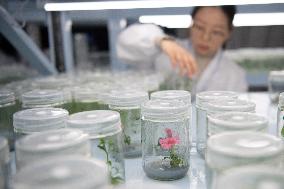
A reseacher checks the growth of seedlings at the laboratory of Magicpen Bio in Hefei, east China's Anhui Province, December 3, 2025. Chinese researchers have successfully cultivated a number of gene-edited plants that steadily glimmer in dark environments. They managed to introduce gene fragments from organisms such as fireflies into plant cells, allowing the latter to glimmer by themselves. Photo by Xinhua/Zhang Duan/ABACAPRESS.COM

  •  
Self-Glimmering Plants Cultivated by Magicpen Bio - China

Self-Glimmering Plants Cultivated by Magicpen Bio - China

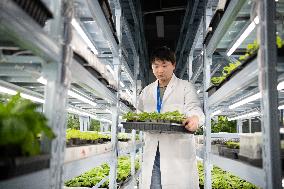
A researcher prepares to transfer a tray of self-glimmering plants into a dark room for observation at the laboratory of Magicpen Bio in Hefei, east China's Anhui Province, December 3, 2025. Chinese researchers have successfully cultivated a number of gene-edited plants that steadily glimmer in dark environments. They managed to introduce gene fragments from organisms such as fireflies into plant cells, allowing the latter to glimmer by themselves. Photo by Xinhua/Zhang Duan/ABACAPRESS.COM

  •  
Self-Glimmering Plants Cultivated by Magicpen Bio - China

Self-Glimmering Plants Cultivated by Magicpen Bio - China

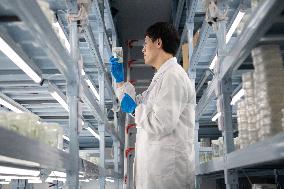
A reseacher checks the growth of seedlings at the laboratory of Magicpen Bio in Hefei, east China's Anhui Province, December 3, 2025. Chinese researchers have successfully cultivated a number of gene-edited plants that steadily glimmer in dark environments. They managed to introduce gene fragments from organisms such as fireflies into plant cells, allowing the latter to glimmer by themselves. Photo by Xinhua/Zhang Duan/ABACAPRESS.COM

  •  
Self-Glimmering Plants Cultivated by Magicpen Bio - China

Self-Glimmering Plants Cultivated by Magicpen Bio - China

A reseacher checks the growth of seedlings at the laboratory of Magicpen Bio in Hefei, east China's Anhui Province, December 3, 2025. Chinese researchers have successfully cultivated a number of gene-edited plants that steadily glimmer in dark environments. They managed to introduce gene fragments from organisms such as fireflies into plant cells, allowing the latter to glimmer by themselves. Photo by Xinhua/Zhang Duan/ABACAPRESS.COM

  •  
Self-Glimmering Plants Cultivated by Magicpen Bio - China

Self-Glimmering Plants Cultivated by Magicpen Bio - China

A reseacher checks the growth of seedlings at the laboratory of Magicpen Bio in Hefei, east China's Anhui Province, December 3, 2025. Chinese researchers have successfully cultivated a number of gene-edited plants that steadily glimmer in dark environments. They managed to introduce gene fragments from organisms such as fireflies into plant cells, allowing the latter to glimmer by themselves. Photo by Xinhua/Zhang Duan/ABACAPRESS.COM

  •  
Self-Glimmering Plants Cultivated by Magicpen Bio - China

Self-Glimmering Plants Cultivated by Magicpen Bio - China

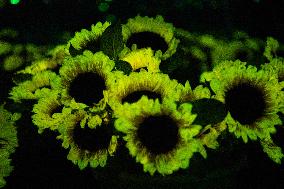
This photo taken on December 3, 2025 shows self-glimmering sunflowers cultivated by Magicpen Bio in Hefei, east China's Anhui Province. Chinese researchers have successfully cultivated a number of gene-edited plants that steadily glimmer in dark environments. They managed to introduce gene fragments from organisms such as fireflies into plant cells, allowing the latter to glimmer by themselves. Photo by Xinhua/Zhang Duan/ABACAPRESS.COM

  •  
Pre-Training Center for Humanoid Robots - China

Pre-Training Center for Humanoid Robots - China

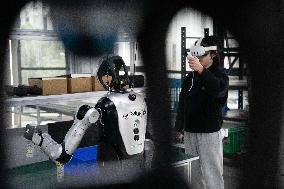
A technician teaches a humanoid robot to wipe the kitchen stove at a data collection pre-training center for humanoid robots in Hefei, east China's Anhui Province, December 4, 2025. Using technologies such as physical simulation, virtual reality, and big data modelling, the data collection pre-training center helps robots adapt to diverse tasks from handling precision components to daily household services, while shortening research and development cycles and reducing relevant costs. The center has attracted companies to test their robots here through structured courses and assessments. Photo by Xinhua/Zhang Duan/ABACAPRESS.COM

  •  
Pre-Training Center for Humanoid Robots - China

Pre-Training Center for Humanoid Robots - China

A technician teaches a humanoid robot to pick and sort components at a data collection pre-training center for humanoid robots in Hefei, east China's Anhui Province, December 4, 2025. Using technologies such as physical simulation, virtual reality, and big data modelling, the data collection pre-training center helps robots adapt to diverse tasks from handling precision components to daily household services, while shortening research and development cycles and reducing relevant costs. The center has attracted companies to test their robots here through structured courses and assessments. Photo by Xinhua/Zhang Duan/ABACAPRESS.COM

  •  
Pre-Training Center for Humanoid Robots - China

Pre-Training Center for Humanoid Robots - China

A humanoid robot conducts box-carrying training at a data collection pre-training center for humanoid robots in Hefei, east China's Anhui Province, December 4, 2025. Using technologies such as physical simulation, virtual reality, and big data modelling, the data collection pre-training center helps robots adapt to diverse tasks from handling precision components to daily household services, while shortening research and development cycles and reducing relevant costs. The center has attracted companies to test their robots here through structured courses and assessments. Photo by Xinhua/Zhang Duan/ABACAPRESS.COM

  •  
Pre-Training Center for Humanoid Robots - China

Pre-Training Center for Humanoid Robots - China

A humanoid robot conducts screw fastening training at a data collection pre-training center for humanoid robots in Hefei, east China's Anhui Province, December 4, 2025. Using technologies such as physical simulation, virtual reality, and big data modelling, the data collection pre-training center helps robots adapt to diverse tasks from handling precision components to daily household services, while shortening research and development cycles and reducing relevant costs. The center has attracted companies to test their robots here through structured courses and assessments. Photo by Xinhua/Zhang Duan/ABACAPRESS.COM

  •  
Pre-Training Center for Humanoid Robots - China

Pre-Training Center for Humanoid Robots - China

A technician teaches a humanoid robot to use a wrench to tighten a screw at a data collection pre-training center for humanoid robots in Hefei, east China's Anhui Province, December 4, 2025. Using technologies such as physical simulation, virtual reality, and big data modelling, the data collection pre-training center helps robots adapt to diverse tasks from handling precision components to daily household services, while shortening research and development cycles and reducing relevant costs. The center has attracted companies to test their robots here through structured courses and assessments. Photo by Xinhua/Zhang Duan/ABACAPRESS.COM

  •  
Nippur Archaeological Site Views - Qadisiyah

Nippur Archaeological Site Views - Qadisiyah

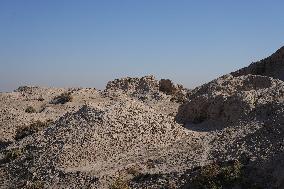
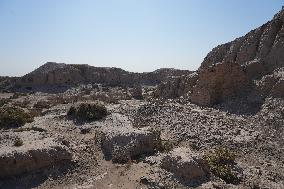
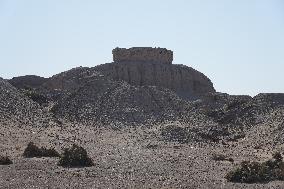
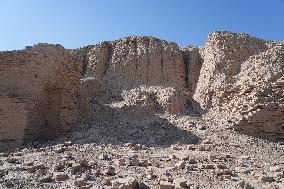
The archaeological site of Nippur is seen in Qadisiyah, Iraq on November 22, 2025. The ancient Mesopotamian city contains multiple layers of urban settlement dating from 5000 BC to around 800 AD. Photo by Duan Minfu/Xinhua/ABACAPRESS.COM

  •  
Nippur Archaeological Site Views - Qadisiyah

Nippur Archaeological Site Views - Qadisiyah

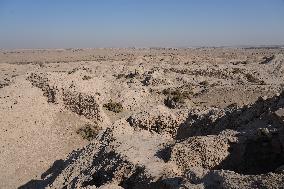
The archaeological site of Nippur is seen in Qadisiyah, Iraq on November 22, 2025. The ancient Mesopotamian city contains multiple layers of urban settlement dating from 5000 BC to around 800 AD. Photo by Duan Minfu/Xinhua/ABACAPRESS.COM

  •  
Nippur Archaeological Site Views - Qadisiyah

Nippur Archaeological Site Views - Qadisiyah

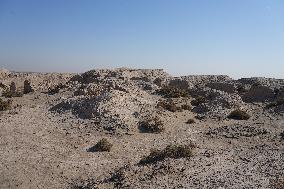
The archaeological site of Nippur is seen in Qadisiyah, Iraq on November 22, 2025. The ancient Mesopotamian city contains multiple layers of urban settlement dating from 5000 BC to around 800 AD. Photo by Duan Minfu/Xinhua/ABACAPRESS.COM

  •  
Nippur Archaeological Site Views - Qadisiyah

Nippur Archaeological Site Views - Qadisiyah

The archaeological site of Nippur is seen in Qadisiyah, Iraq on November 22, 2025. The ancient Mesopotamian city contains multiple layers of urban settlement dating from 5000 BC to around 800 AD. Photo by Duan Minfu/Xinhua/ABACAPRESS.COM

  •  
Nippur Archaeological Site Views - Qadisiyah

Nippur Archaeological Site Views - Qadisiyah

The archaeological site of Nippur is seen in Qadisiyah, Iraq on November 22, 2025. The ancient Mesopotamian city contains multiple layers of urban settlement dating from 5000 BC to around 800 AD. Photo by Duan Minfu/Xinhua/ABACAPRESS.COM

  •  
Nippur Archaeological Site Views - Qadisiyah

Nippur Archaeological Site Views - Qadisiyah

The archaeological site of Nippur is seen in Qadisiyah, Iraq on November 22, 2025. The ancient Mesopotamian city contains multiple layers of urban settlement dating from 5000 BC to around 800 AD. Photo by Duan Minfu/Xinhua/ABACAPRESS.COM

  •  
Nippur Archaeological Site Views - Qadisiyah

Nippur Archaeological Site Views - Qadisiyah

The archaeological site of Nippur is seen in Qadisiyah, Iraq on November 22, 2025. The ancient Mesopotamian city contains multiple layers of urban settlement dating from 5000 BC to around 800 AD. Photo by Duan Minfu/Xinhua/ABACAPRESS.COM

  •  
Nippur Archaeological Site Views - Qadisiyah

Nippur Archaeological Site Views - Qadisiyah

The archaeological site of Nippur is seen in Qadisiyah, Iraq on November 22, 2025. The ancient Mesopotamian city contains multiple layers of urban settlement dating from 5000 BC to around 800 AD. Photo by Duan Minfu/Xinhua/ABACAPRESS.COM

  •  
Nippur Archaeological Site Views - Qadisiyah

Nippur Archaeological Site Views - Qadisiyah

The archaeological site of Nippur is seen in Qadisiyah, Iraq on November 22, 2025. The ancient Mesopotamian city contains multiple layers of urban settlement dating from 5000 BC to around 800 AD. Photo by Duan Minfu/Xinhua/ABACAPRESS.COM

  •  
Nippur Archaeological Site Views - Qadisiyah

Nippur Archaeological Site Views - Qadisiyah

The archaeological site of Nippur is seen in Qadisiyah, Iraq on November 22, 2025. The ancient Mesopotamian city contains multiple layers of urban settlement dating from 5000 BC to around 800 AD. Photo by Duan Minfu/Xinhua/ABACAPRESS.COM

  •  
Tie-Dye Technique Of Bai Ethnic Group - Chin

Tie-Dye Technique Of Bai Ethnic Group - Chin

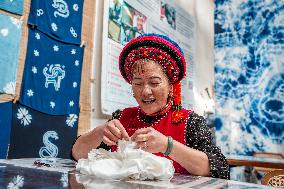
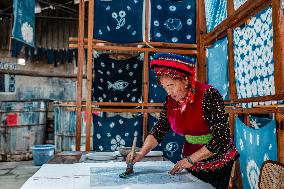
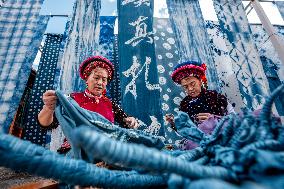
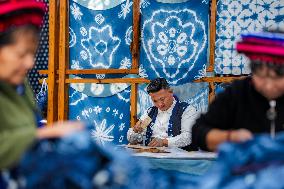
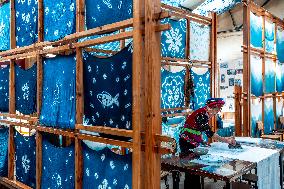
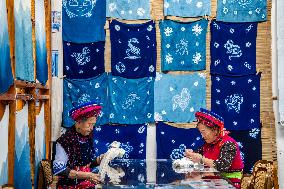
Duan Yuan, an inheritor of the tie-dye technique of Bai ethnic group, makes tie-dye designs in a dyehouse in Zhoucheng Village of Dali Bai Autonomous Prefecture, southwest China's Yunnan Province, November 21, 2025. Known as the hometown of the tie-dye technique of Bai ethnic group, Zhoucheng Village hosts over 200 households engaging in tie-dye businesses, with the number of employees exceeding 4,000. As a traditional folk technique of the Bai ethnic group, tie-dye boasts a history spanning over a thousand years and was included in the first batch of China's national intangible cultural heritage list in 2006. Tying and dyeing are the core steps in the process of making indigo tie-dye products. Artisans use needles and threads to create various patterns on the fabric, which are then dyed with plant-based dyes, resulting in blue backgrounds adorned with vivid white patterns. Photo by Hu Chao/Xinhua/ABACAPRESS.COM

  •  
Tie-Dye Technique Of Bai Ethnic Group - Chin

Tie-Dye Technique Of Bai Ethnic Group - Chin

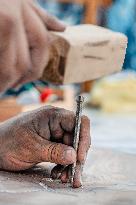
Duan Yinmei, an inheritor of the tie-dye technique of Bai ethnic group, creates knots on fabrics in a dyehouse in Zhoucheng Village of Dali Bai Autonomous Prefecture, southwest China's Yunnan Province, November 21, 2025. Known as the hometown of the tie-dye technique of Bai ethnic group, Zhoucheng Village hosts over 200 households engaging in tie-dye businesses, with the number of employees exceeding 4,000. As a traditional folk technique of the Bai ethnic group, tie-dye boasts a history spanning over a thousand years and was included in the first batch of China's national intangible cultural heritage list in 2006. Tying and dyeing are the core steps in the process of making indigo tie-dye products. Artisans use needles and threads to create various patterns on the fabric, which are then dyed with plant-based dyes, resulting in blue backgrounds adorned with vivid white patterns. Photo by Hu Chao/Xinhua/ABACAPRESS.COM

  •  
Tie-Dye Technique Of Bai Ethnic Group - Chin

Tie-Dye Technique Of Bai Ethnic Group - Chin

Duan Yinmei, an inheritor of the tie-dye technique of Bai ethnic group, dyes patterns on fabrics in a dyehouse in Zhoucheng Village of Dali Bai Autonomous Prefecture, southwest China's Yunnan Province, November 21, 2025. Known as the hometown of the tie-dye technique of Bai ethnic group, Zhoucheng Village hosts over 200 households engaging in tie-dye businesses, with the number of employees exceeding 4,000. As a traditional folk technique of the Bai ethnic group, tie-dye boasts a history spanning over a thousand years and was included in the first batch of China's national intangible cultural heritage list in 2006. Tying and dyeing are the core steps in the process of making indigo tie-dye products. Artisans use needles and threads to create various patterns on the fabric, which are then dyed with plant-based dyes, resulting in blue backgrounds adorned with vivid white patterns. Photo by Hu Chao/Xinhua/ABACAPRESS.COM

  •  
Tie-Dye Technique Of Bai Ethnic Group - Chin

Tie-Dye Technique Of Bai Ethnic Group - Chin

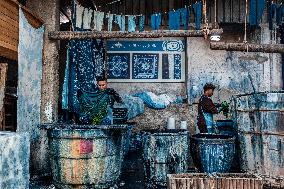
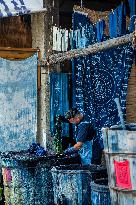
Duan Yuan, an inheritor of the tie-dye technique of Bai ethnic group, rinses dyed fabrics in a dyehouse in Zhoucheng Village of Dali Bai Autonomous Prefecture, southwest China's Yunnan Province, November 21, 2025. Known as the hometown of the tie-dye technique of Bai ethnic group, Zhoucheng Village hosts over 200 households engaging in tie-dye businesses, with the number of employees exceeding 4,000. As a traditional folk technique of the Bai ethnic group, tie-dye boasts a history spanning over a thousand years and was included in the first batch of China's national intangible cultural heritage list in 2006. Tying and dyeing are the core steps in the process of making indigo tie-dye products. Artisans use needles and threads to create various patterns on the fabric, which are then dyed with plant-based dyes, resulting in blue backgrounds adorned with vivid white patterns. Photo by Hu Chao/Xinhua/ABACAPRESS.COM

  •  
Tie-Dye Technique Of Bai Ethnic Group - Chin

Tie-Dye Technique Of Bai Ethnic Group - Chin

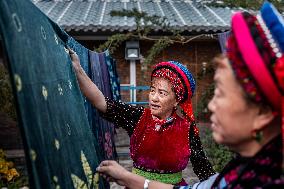
Duan Yinmei (L), an inheritor of the tie-dye technique of Bai ethnic group, and handicraftsman Duan Lilan dry tie-dye fabrics in a dyehouse in Zhoucheng Village of Dali Bai Autonomous Prefecture, southwest China's Yunnan Province, November 21, 2025. Known as the hometown of the tie-dye technique of Bai ethnic group, Zhoucheng Village hosts over 200 households engaging in tie-dye businesses, with the number of employees exceeding 4,000. As a traditional folk technique of the Bai ethnic group, tie-dye boasts a history spanning over a thousand years and was included in the first batch of China's national intangible cultural heritage list in 2006. Tying and dyeing are the core steps in the process of making indigo tie-dye products. Artisans use needles and threads to create various patterns on the fabric, which are then dyed with plant-based dyes, resulting in blue backgrounds adorned with vivid white patterns. Photo by Hu Chao/Xinhua/ABACAPRESS.COM

  •  
Tie-Dye Technique Of Bai Ethnic Group - Chin

Tie-Dye Technique Of Bai Ethnic Group - Chin

Duan Yinmei (L), an inheritor of the tie-dye technique of Bai ethnic group, and handicraftsman Duan Lilan untie knots on fabrics in a dyehouse in Zhoucheng Village of Dali Bai Autonomous Prefecture, southwest China's Yunnan Province, November 21, 2025. Known as the hometown of the tie-dye technique of Bai ethnic group, Zhoucheng Village hosts over 200 households engaging in tie-dye businesses, with the number of employees exceeding 4,000. As a traditional folk technique of the Bai ethnic group, tie-dye boasts a history spanning over a thousand years and was included in the first batch of China's national intangible cultural heritage list in 2006. Tying and dyeing are the core steps in the process of making indigo tie-dye products. Artisans use needles and threads to create various patterns on the fabric, which are then dyed with plant-based dyes, resulting in blue backgrounds adorned with vivid white patterns. Photo by Hu Chao/Xinhua/ABACAPRESS.COM

  •  
Tie-Dye Technique Of Bai Ethnic Group - Chin

Tie-Dye Technique Of Bai Ethnic Group - Chin

Duan Yinmei (L), an inheritor of the tie-dye technique of Bai ethnic group, and handicraftsman Duan Lilan untie knots on fabrics in a dyehouse in Zhoucheng Village of Dali Bai Autonomous Prefecture, southwest China's Yunnan Province, November 21, 2025. Known as the hometown of the tie-dye technique of Bai ethnic group, Zhoucheng Village hosts over 200 households engaging in tie-dye businesses, with the number of employees exceeding 4,000. As a traditional folk technique of the Bai ethnic group, tie-dye boasts a history spanning over a thousand years and was included in the first batch of China's national intangible cultural heritage list in 2006. Tying and dyeing are the core steps in the process of making indigo tie-dye products. Artisans use needles and threads to create various patterns on the fabric, which are then dyed with plant-based dyes, resulting in blue backgrounds adorned with vivid white patterns. Photo by Hu Chao/Xinhua/ABACAPRESS.COM

  •  
Tie-Dye Technique Of Bai Ethnic Group - Chin

Tie-Dye Technique Of Bai Ethnic Group - Chin

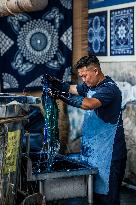
Duan Yuan (L), an inheritor of the tie-dye technique of Bai ethnic group, dyes fabrics in a dyehouse in Zhoucheng Village of Dali Bai Autonomous Prefecture, southwest China's Yunnan Province, November 21, 2025. Known as the hometown of the tie-dye technique of Bai ethnic group, Zhoucheng Village hosts over 200 households engaging in tie-dye businesses, with the number of employees exceeding 4,000. As a traditional folk technique of the Bai ethnic group, tie-dye boasts a history spanning over a thousand years and was included in the first batch of China's national intangible cultural heritage list in 2006. Tying and dyeing are the core steps in the process of making indigo tie-dye products. Artisans use needles and threads to create various patterns on the fabric, which are then dyed with plant-based dyes, resulting in blue backgrounds adorned with vivid white patterns. Photo by Hu Chao/Xinhua/ABACAPRESS.COM

  •  
Tie-Dye Technique Of Bai Ethnic Group - Chin

Tie-Dye Technique Of Bai Ethnic Group - Chin

Duan Yuan, an inheritor of the tie-dye technique of Bai ethnic group, makes tie-dye designs in a dyehouse in Zhoucheng Village of Dali Bai Autonomous Prefecture, southwest China's Yunnan Province, November 21, 2025. Known as the hometown of the tie-dye technique of Bai ethnic group, Zhoucheng Village hosts over 200 households engaging in tie-dye businesses, with the number of employees exceeding 4,000. As a traditional folk technique of the Bai ethnic group, tie-dye boasts a history spanning over a thousand years and was included in the first batch of China's national intangible cultural heritage list in 2006. Tying and dyeing are the core steps in the process of making indigo tie-dye products. Artisans use needles and threads to create various patterns on the fabric, which are then dyed with plant-based dyes, resulting in blue backgrounds adorned with vivid white patterns. Photo by Hu Chao/Xinhua/ABACAPRESS.COM

  •  
Tie-Dye Technique Of Bai Ethnic Group - Chin

Tie-Dye Technique Of Bai Ethnic Group - Chin

Duan Yuan, an inheritor of the tie-dye technique of Bai ethnic group, dyes fabrics in a dyehouse in Zhoucheng Village of Dali Bai Autonomous Prefecture, southwest China's Yunnan Province, November 21, 2025. Known as the hometown of the tie-dye technique of Bai ethnic group, Zhoucheng Village hosts over 200 households engaging in tie-dye businesses, with the number of employees exceeding 4,000. As a traditional folk technique of the Bai ethnic group, tie-dye boasts a history spanning over a thousand years and was included in the first batch of China's national intangible cultural heritage list in 2006. Tying and dyeing are the core steps in the process of making indigo tie-dye products. Artisans use needles and threads to create various patterns on the fabric, which are then dyed with plant-based dyes, resulting in blue backgrounds adorned with vivid white patterns. Photo by Hu Chao/Xinhua/ABACAPRESS.COM

  •  
Tie-Dye Technique Of Bai Ethnic Group - Chin

Tie-Dye Technique Of Bai Ethnic Group - Chin

Duan Yuan, an inheritor of the tie-dye technique of Bai ethnic group, dyes fabrics in a dyehouse in Zhoucheng Village of Dali Bai Autonomous Prefecture, southwest China's Yunnan Province, November 21, 2025. Known as the hometown of the tie-dye technique of Bai ethnic group, Zhoucheng Village hosts over 200 households engaging in tie-dye businesses, with the number of employees exceeding 4,000. As a traditional folk technique of the Bai ethnic group, tie-dye boasts a history spanning over a thousand years and was included in the first batch of China's national intangible cultural heritage list in 2006. Tying and dyeing are the core steps in the process of making indigo tie-dye products. Artisans use needles and threads to create various patterns on the fabric, which are then dyed with plant-based dyes, resulting in blue backgrounds adorned with vivid white patterns. Photo by Hu Chao/Xinhua/ABACAPRESS.COM

  •  
Tie-Dye Technique Of Bai Ethnic Group - Chin

Tie-Dye Technique Of Bai Ethnic Group - Chin

Duan Yuan, an inheritor of the tie-dye technique of Bai ethnic group, makes tie-dye designs in a dyehouse in Zhoucheng Village of Dali Bai Autonomous Prefecture, southwest China's Yunnan Province, November 21, 2025. Known as the hometown of the tie-dye technique of Bai ethnic group, Zhoucheng Village hosts over 200 households engaging in tie-dye businesses, with the number of employees exceeding 4,000. As a traditional folk technique of the Bai ethnic group, tie-dye boasts a history spanning over a thousand years and was included in the first batch of China's national intangible cultural heritage list in 2006. Tying and dyeing are the core steps in the process of making indigo tie-dye products. Artisans use needles and threads to create various patterns on the fabric, which are then dyed with plant-based dyes, resulting in blue backgrounds adorned with vivid white patterns. Photo by Hu Chao/Xinhua/ABACAPRESS.COM

  •  
Tie-Dye Technique Of Bai Ethnic Group - Chin

Tie-Dye Technique Of Bai Ethnic Group - Chin

Duan Yinmei, an inheritor of the tie-dye technique of Bai ethnic group, unties knots on fabrics in a dyehouse in Zhoucheng Village of Dali Bai Autonomous Prefecture, southwest China's Yunnan Province, November 21, 2025. Known as the hometown of the tie-dye technique of Bai ethnic group, Zhoucheng Village hosts over 200 households engaging in tie-dye businesses, with the number of employees exceeding 4,000. As a traditional folk technique of the Bai ethnic group, tie-dye boasts a history spanning over a thousand years and was included in the first batch of China's national intangible cultural heritage list in 2006. Tying and dyeing are the core steps in the process of making indigo tie-dye products. Artisans use needles and threads to create various patterns on the fabric, which are then dyed with plant-based dyes, resulting in blue backgrounds adorned with vivid white patterns. Photo by Hu Chao/Xinhua/ABACAPRESS.COM

  •  
Tie-Dye Technique Of Bai Ethnic Group - Chin

Tie-Dye Technique Of Bai Ethnic Group - Chin

Duan Yinmei, an inheritor of the tie-dye technique of Bai ethnic group, dyes patterns on fabrics in a dyehouse in Zhoucheng Village of Dali Bai Autonomous Prefecture, southwest China's Yunnan Province, November 21, 2025. Known as the hometown of the tie-dye technique of Bai ethnic group, Zhoucheng Village hosts over 200 households engaging in tie-dye businesses, with the number of employees exceeding 4,000. As a traditional folk technique of the Bai ethnic group, tie-dye boasts a history spanning over a thousand years and was included in the first batch of China's national intangible cultural heritage list in 2006. Tying and dyeing are the core steps in the process of making indigo tie-dye products. Artisans use needles and threads to create various patterns on the fabric, which are then dyed with plant-based dyes, resulting in blue backgrounds adorned with vivid white patterns. Photo by Hu Chao/Xinhua/ABACAPRESS.COM

  •  
Tie-Dye Technique Of Bai Ethnic Group - Chin

Tie-Dye Technique Of Bai Ethnic Group - Chin

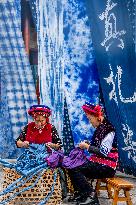
Duan Yinmei (R), an inheritor of the tie-dye technique of Bai ethnic group, and handicraftsman Duan Lilan create knots on fabrics in a dyehouse in Zhoucheng Village of Dali Bai Autonomous Prefecture, southwest China's Yunnan Province, November 21, 2025. Known as the hometown of the tie-dye technique of Bai ethnic group, Zhoucheng Village hosts over 200 households engaging in tie-dye businesses, with the number of employees exceeding 4,000. As a traditional folk technique of the Bai ethnic group, tie-dye boasts a history spanning over a thousand years and was included in the first batch of China's national intangible cultural heritage list in 2006. Tying and dyeing are the core steps in the process of making indigo tie-dye products. Artisans use needles and threads to create various patterns on the fabric, which are then dyed with plant-based dyes, resulting in blue backgrounds adorned with vivid white patterns. Photo by Hu Chao/Xinhua/ABACAPRESS.COM

  •  
ATLETICA - Internazionali di Atletica - Meeting Internazionale 61° Palio della Quercia

ATLETICA - Internazionali di Atletica - Meeting Internazionale 61° Palio della Quercia

Brandon Hicklin from United States, Duan Asemota from Canada and Gift Leotlela from South Africa in action during the 61th edition of Palio della Quercia, parts of the World Athletics Continental Tour at Quercia Stadium on June 2, 2025, Rovereto, Trento Italy.

  •  
ATLETICA - Internazionali di Atletica - Meeting Internazionale 61° Palio della Quercia

ATLETICA - Internazionali di Atletica - Meeting Internazionale 61° Palio della Quercia

Brandon Hicklin from United States, Duan Asemota from Canada and Gift Leotlela from South Africa in action during the 61th edition of Palio della Quercia, parts of the World Athletics Continental Tour at Quercia Stadium on June 2, 2025, Rovereto, Trento Italy.

  •  
ATLETICA - Internazionali di Atletica - Meeting Internazionale 61° Palio della Quercia

ATLETICA - Internazionali di Atletica - Meeting Internazionale 61° Palio della Quercia

Brandon Hicklin from United States, Duan Asemota from Canada and Gift Leotlela from South Africa in action during the 61th edition of Palio della Quercia, parts of the World Athletics Continental Tour at Quercia Stadium on June 2, 2025, Rovereto, Trento Italy.

  •  
Fish-Shaped Lanterns - China

Fish-Shaped Lanterns - China

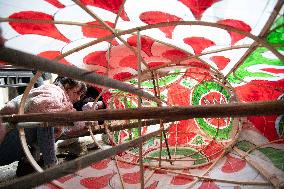
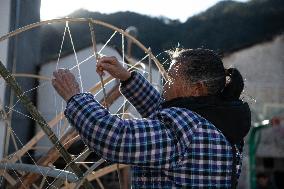
A villager makes fish-shaped lanterns in Wangmantian Village of Xitou Town in Shexian County, Huangshan City of east China's Anhui Province, February 10, 2025. Local villagers have the tradition to make fish-shaped lanterns to pray for harvest and good fortune and parade with them cheerfully around the Lantern Festival, which falls on the 15th day of the first month of the Chinese lunar calendar, or February 12 this year. Photo by Xinhua/Zhang Duan/ABACAPRESS.COM

  •  
Fish-Shaped Lanterns - China

Fish-Shaped Lanterns - China

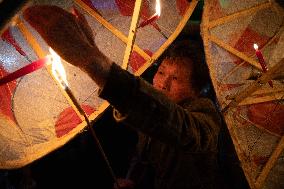
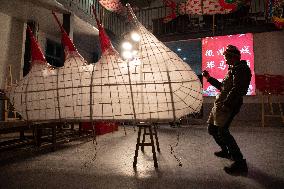
A villager ignites the candles inside the fish-shaped lanterns in Wangmantian Village of Xitou Town in Shexian County, Huangshan City of east China's Anhui Province, February 10, 2025. Local villagers have the tradition to make fish-shaped lanterns to pray for harvest and good fortune and parade with them cheerfully around the Lantern Festival, which falls on the 15th day of the first month of the Chinese lunar calendar, or February 12 this year. Photo by Xinhua/Zhang Duan/ABACAPRESS.COM

  •  
Fish-Shaped Lanterns - China

Fish-Shaped Lanterns - China

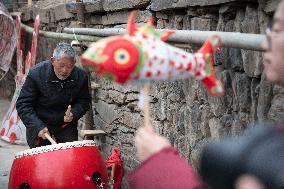
A villager practices drumming in Wangmantian Village of Xitou Town in Shexian County, Huangshan City of east China's Anhui Province, February 10, 2025. Local villagers have the tradition to make fish-shaped lanterns to pray for harvest and good fortune and parade with them cheerfully around the Lantern Festival, which falls on the 15th day of the first month of the Chinese lunar calendar, or February 12 this year. Photo by Xinhua/Zhang Duan/ABACAPRESS.COM

  •  
Fish-Shaped Lanterns - China

Fish-Shaped Lanterns - China

A villager makes fish-shaped lanterns in Wangmantian Village of Xitou Town in Shexian County, Huangshan City of east China's Anhui Province, February 8, 2025. Local villagers have the tradition to make fish-shaped lanterns to pray for harvest and good fortune and parade with them cheerfully around the Lantern Festival, which falls on the 15th day of the first month of the Chinese lunar calendar, or February 12 this year. Photo by Xinhua/Zhang Duan/ABACAPRESS.COM

  •  
Fish-Shaped Lanterns - China

Fish-Shaped Lanterns - China

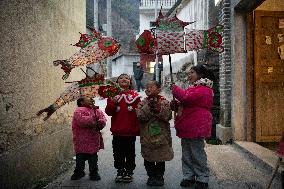
Kids holding fish-shaped lanterns pose for photos in Wangmantian Village of Xitou Town in Shexian County, Huangshan City of east China's Anhui Province, February 10, 2025. Local villagers have the tradition to make fish-shaped lanterns to pray for harvest and good fortune and parade with them cheerfully around the Lantern Festival, which falls on the 15th day of the first month of the Chinese lunar calendar, or February 12 this year. Photo by Xinhua/Zhang Duan/ABACAPRESS.COM

  •  
Fish-Shaped Lanterns - China

Fish-Shaped Lanterns - China

A villager makes fish-shaped lanterns in Wangmantian Village of Xitou Town in Shexian County, Huangshan City of east China's Anhui Province, February 8, 2025. Local villagers have the tradition to make fish-shaped lanterns to pray for harvest and good fortune and parade with them cheerfully around the Lantern Festival, which falls on the 15th day of the first month of the Chinese lunar calendar, or February 12 this year. Photo by Xinhua/Zhang Duan/ABACAPRESS.COM

  •  
Fish-Shaped Lanterns - China

Fish-Shaped Lanterns - China

A tourist records the process of making fish-shaped lanterns at a workshop in Wangmantian Village of Xitou Town in Shexian County, Huangshan City of east China's Anhui Province, February 8, 2025. Local villagers have the tradition to make fish-shaped lanterns to pray for harvest and good fortune and parade with them cheerfully around the Lantern Festival, which falls on the 15th day of the first month of the Chinese lunar calendar, or February 12 this year. Photo by Xinhua/Zhang Duan/ABACAPRESS.COM

  •  
Winter Scenery - China

Winter Scenery - China

This photo taken on Nov. 30, 2024 shows a marine ranch in Xiajiaomen Village of Ganjiang Town, Yuhuan City, east China's Zhejiang Province. Photo by Duan Junli/Xinhua/ABACAPRESS.COM

  •  
Chery Doubles Down On Overseas Push - China

Chery Doubles Down On Overseas Push - China

This photo taken on Sept. 12, 2024 shows an AI robot working inside Chinese automaker Chery's smart factory in Wuhu City, east China's Anhui Province. Over the past two decades, Chinese automaker Chery has expanded its presence to over 80 countries and regions worldwide. In the first half of 2024 alone, Chery sold more than 1.1 million vehicles, achieving a remarkable 48.4 percent increase compared to the previous year. Photo by Zhang Duan/Xinhua/ABACAPRESS.COM

  •  
Chery Doubles Down On Overseas Push - China

Chery Doubles Down On Overseas Push - China

This photo taken on Sept. 12, 2024 shows a view inside Chinese automaker Chery's smart factory in Wuhu City, east China's Anhui Province. Over the past two decades, Chinese automaker Chery has expanded its presence to over 80 countries and regions worldwide. In the first half of 2024 alone, Chery sold more than 1.1 million vehicles, achieving a remarkable 48.4 percent increase compared to the previous year. Photo by Zhang Duan/Xinhua/ABACAPRESS.COM

  • Main
  • Top
  • Editorial
  • Creative
  • About Us
  • About ILG
  • Terms of use
  • Company
  • BEHIND
  • Price List
  • Single Plan
  • Monthly Plan
  • Services
  • Shooting
  • Rights Clearance
  • Support
  • FAQ
  • How To Buy
  • Contact Us
  • Become a Partner

© KYODO NEWS IMAGES INC

All Rights Reserved.

  • Editorial
  • Olympics
  • News
  • Sports
  • Japan
  • Tech
  • Royal
  • Disaster
  • NorthKorea
  • Old Japan
  • SNS
  • Creative
  • Food
  • Japan
  • Landscape
  • Animal
  • Popular
  • #Ukraine
  • #Thailand
  • #coronavirus
  • #N. Korea
  • #China
  • #Russia
  • #Ukraine
  • #Thailand
  • #coronavirus
  • #N. Korea
  • #China
  • #Russia
  • Food
  • Japan
  • Landscape
  • Animal
  • Olympics
  • News
  • Sports
  • Japan
  • Tech
  • Royal
  • Disaster
  • NorthKorea
  • Old Japan
  • SNS