•  
Chiang Kai-shek eyed preemptive strike at China's nuke facilities in 1964

Chiang Kai-shek eyed preemptive strike at China's nuke facilities in 1964

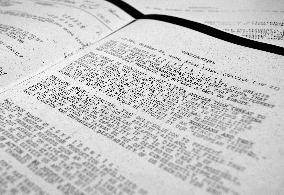
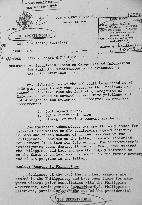
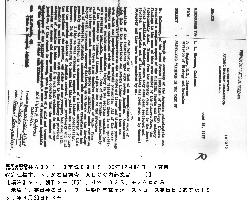
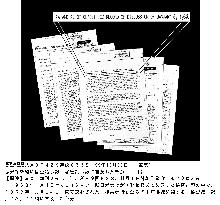
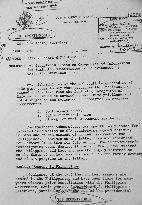
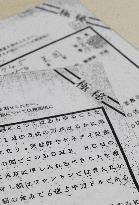
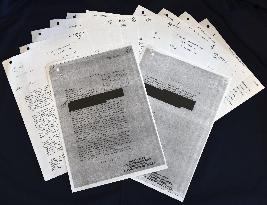
TOKYO, Japan - Photo shows U.S. official documents declassified on Oct. 16, 2014. The document shows that Chiang Kai-shek, then the president of the Republic of China, planned a preemptive strike on China's nuclear facilities in 1964, fearing an attack from Beijing after the communist country successfully carried out its first nuclear test earlier in the year.

  •  
U.S. documents show Britain supported atomic bombing of Japan

U.S. documents show Britain supported atomic bombing of Japan

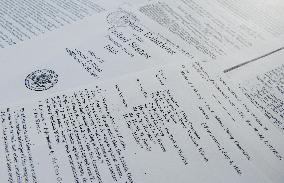
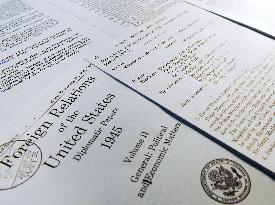
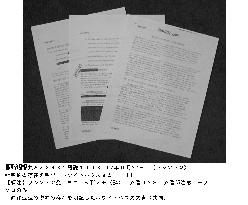
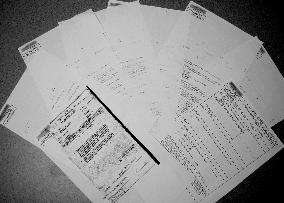
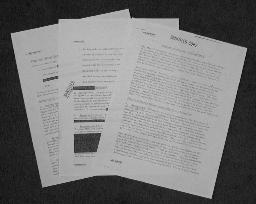
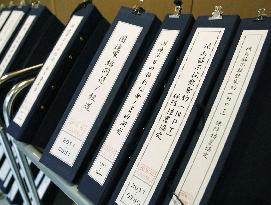
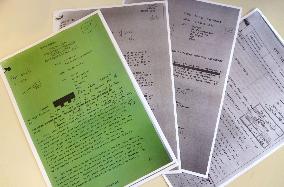
TOKYO, Japan - Photo taken in July 2013 shows copies of documents declassified by the U.S. National Archives and Records Administration. The documents show Britain expressed support for the use of atomic bombs by the United States against Japan in World War II about a month before the first one was dropped on Hiroshima.

  •  
U.S. documents show Britain supported atomic bombing of Japan

U.S. documents show Britain supported atomic bombing of Japan

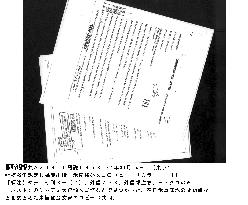
TOKYO, Japan - Photo taken in July 2013 shows copies of documents declassified by the U.S. National Archives and Records Administration. The documents show Britain expressed support for the use of atomic bombs by the United States against Japan in World War II about a month before the first one was dropped on Hiroshima.

  •  
Japan mulled possessing nuke weapons in 1958

Japan mulled possessing nuke weapons in 1958

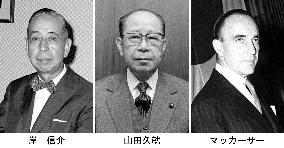
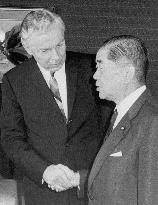
TOKYO, Japan - Photo shows (from L) former Japanese Prime Minister Nobusuke Kishi, former Japanese Vice Foreign Minister Hisanari Yamada and former U.S. Ambassador to Japan Douglas MacArthur II. Japanese officials in 1958 discussed an option for the country to possess ''defensive'' nuclear weapons as protection against the Soviet Union during the Cold War, and conveyed those talks to the United States, declassified U.S. archives showed March 16, 2013. That year, MacArthur told a meeting with U.S. defense and state department officials that then Japanese Prime Minister Kishi believed it was ''essential'' for Japan to have nuclear arsenals and Yamada, then Japan's vice foreign minister, told the envoy that Japanese Foreign Ministry officials discussed whether Tokyo should study and reach a decision on acquiring defensive nuclear weapons.

  •  
Diplomatic documents declassified

Diplomatic documents declassified

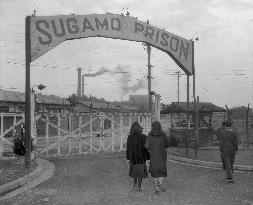
TOKYO, Japan - A 1953 file photo shows a gate at then Sugamo Prison in Tokyo. Japanese diplomatic documents declassified on March 7, 2013, show that after regaining its sovereignty under the 1952 San Francisco Peace Treaty, Japan strongly urged the United States to approve the early release of or reduced sentences for Class-A and other war criminals held at the prison.

  •  
Diplomatic documents declassified

Diplomatic documents declassified

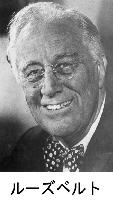
TOKYO, Japan - A file photo shows former U.S. President Franklin Roosevelt. Japanese diplomatic documents declassified on March 7, 2013, show prosecutors at the Tokyo war crime trials following Japan's surrender in 1945 closely looked into the delay in delivering Roosevelt's letter to the Japanese emperor on the eve of war, apparently to establish that the Japanese foreign minister was responsible for failing to stop Japan's attack on Pearl Harbor.

  •  
Diplomatic documents declassified

Diplomatic documents declassified

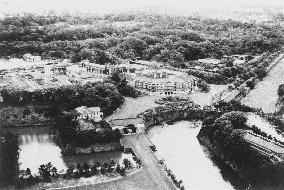
TOKYO, Japan - A 1945 file photo shows part of the Imperial Palace in Tokyo. Japanese diplomatic documents declassified on March 7, 2013, show reporters from the victorious allies tried to interview then Emperor Hirohito at the palace while soldiers visited an imperial villa and demanded a guide to it.

  •  
Diplomatic documents declassified

Diplomatic documents declassified

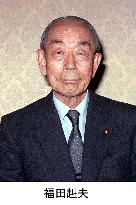
TOKYO, Japan - A file photo shows former Japanese Prime Minister Takeo Fukuda. Japanese diplomatic documents declassified on March 7, 2013, show that Fukuda, then foreign minister, expressed discontent over an attempt by the United States to use the historic 1971 meeting between Emperor Hirohito and U.S. President Richard Nixon in Alaska for political purposes.

  •  
Diplomatic documents declassified

Diplomatic documents declassified

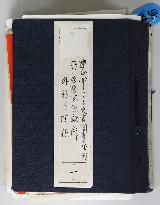
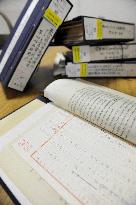
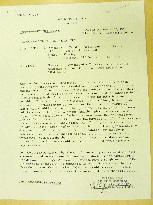
TOKYO, Japan - Photo shows part of Japanese diplomatic documents declassified at the Foreign Ministry in Tokyo on March 7, 2013.

  •  
U.S. eyed bases throughout main island of Okinawa

U.S. eyed bases throughout main island of Okinawa

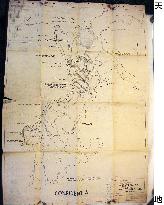
WASHINGTON, United States - Photo shows a map of Okinawa with proposed major U.S. military facilities, created by the U.S. Army in October 1946, that has been discovered at the U.S. National Archives. Declassified U.S. documents show that the U.S. military was planning from 1945 to 1946 to use the entire area of the main island of Okinawa for permanent bases.

  •  
U.S. eyed bases throughout main island of Okinawa

U.S. eyed bases throughout main island of Okinawa

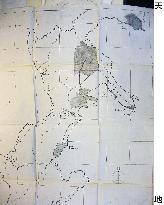
WASHINGTON, United States - Photo shows a map of Okinawa with proposed major U.S. military facilities, created by the U.S. Navy in November 1945, that has been discovered at the U.S. National Archives. Declassified U.S. documents show that the U.S. military was planning from 1945 to 1946 to use the entire area of the main island of Okinawa for permanent bases.

  •  
Declassified diplomatic documents

Declassified diplomatic documents

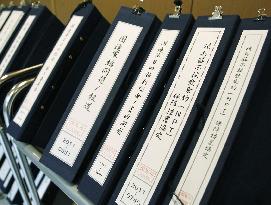
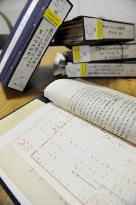
TOKYO, Japan - Photo taken on Feb. 15, 2012, shows declassified diplomatic documents, including a document related to the Treaty on the Non-Proliferation of Nuclear Weapons, at the Diplomatic Archives of the Japanese Foreign Ministry in Tokyo. The documents were declassified the same day.

  •  
Declassified U.S. document on nuclear weapons in Philippines

Declassified U.S. document on nuclear weapons in Philippines

MANILA, Philippines - Photo shows a declassified September 1969 U.S. diplomatic document on the secret U.S. possession of nuclear weapons in the Philippines. It says, ''Divulgence of the fact that nuclear weapons are stored in the Philippines, and have been there for many years without prior consultation with the Philippine Government, would gravely jeopardize U.S.-Philippine relations.''

  •  
British gov't's declassified files

British gov't's declassified files

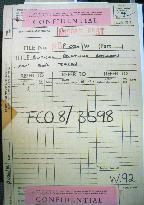
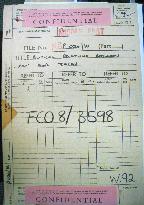
LONDON, Britain - Photo shows a file containing confidential papers created in 1980. The British National Archives disclosed some Foreign Office papers on Dec. 30, 2010, that revealed the British government was considering encouraging Tokyo to join European countries and the United States in imposing sanctions on Iran following the taking of American hostages at the U.S. Embassy in Iran in November 1979, as doing so without Japan would only give it enhanced business opportunities in the Middle Eastern country. Japan imposed sanctions on the country in June 1980 and lifted them in January 1981 after the release of the hostages.

  •  
Declassified diplomatic documents

Declassified diplomatic documents

TOKYO, Japan - Photo taken on Dec. 22, 2010, at the Japanese Foreign Ministry's Diplomatic Record Office in Tokyo shows diplomatic documents declassified the same day. Some of the documents relate to a Japan-U.S. campaign to sway in 1968 the first public election for the head of the Ryukyu government, or Okinawa, then under U.S. rule.

  •  
(2)S. Korea agreed to make no compensation demands of Japan

(2)S. Korea agreed to make no compensation demands of Japan

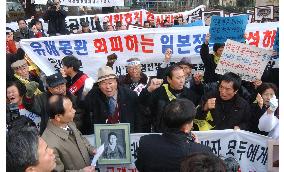
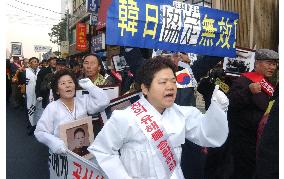
SEOUL, South Korea - Relatives of Korean victims of World War II demonstrate Jan. 17 in front of the Japanese Embassy in Seoul after the South Korean government made declassified diplomatic documents public earlier in the day. The documents show Seoul must tackle compensation demands from individuals who suffered under the Japan's 1910-1945 colonial rule of the Korean Peninsula.

  •  
(1)S. Korea agreed to make no compensation demands of Japan

(1)S. Korea agreed to make no compensation demands of Japan

SEOUL, South Korea - Relatives of Korean victims of World War II take to the streets Jan. 17 in Seoul after the South Korean government made declassified diplomatic documents public earlier in the day. The documents show Seoul must tackle compensation demands from individuals who suffered under the Japan's 1910-1945 colonial rule of the Korean Peninsula.

  •  
U.S. examined autopsy tissue of Bikini Atoll blast victim

U.S. examined autopsy tissue of Bikini Atoll blast victim

LAS VEGAS, United States - Declassified documents discovered recently at the U.S. Department of Energy (DOE) archives in Nevada show the United States had studied tissue from the autopsy of Japanese fisherman Aikichi Kuboyama, a crew member on the No. 5 Fukuryu Maru fishing boat, who died after exposure to radiation from the 1954 Bikini Atoll hydrogen bomb test.

  •  
Document shows secret U.S.-Japan pact on Okinawa reversion

Document shows secret U.S.-Japan pact on Okinawa reversion

WASHINGTON, United States - Photo shows copies of a recently declassified U.S. government document that confirmed the existence of a secret pact between Washington and Tokyo concerning the 1972 reversion of Okinawa to Japanese rule. Under the secret pact, Japan assumed the $4 million cost the U.S. was supposed to pay to restore Okinawa land to its original state as ''the classified U.S.-GOJ (the government of Japan) understanding'' and Japan has asked the U.S. to flatly deny the existence of such a pact to press inquiries.

  •  
U.S. planned to utilize Japan bases in all-out nuclear war

U.S. planned to utilize Japan bases in all-out nuclear war

TOKYO, Japan - Copies of declassified U.S. government documents found at the John F. Kennedy Library in Boston and the National Archives in Washington. The documents show the United States once considered scaling down its military bases in Japan due to difficulties in deploying nuclear weapons there in 1962, but ditched the idea in case of a nuclear war with its Communist enemies.

  •  
U.S. compiled nuclear war scenarios in 1963

U.S. compiled nuclear war scenarios in 1963

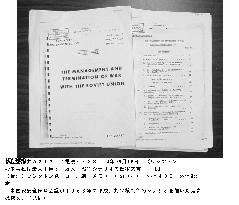
WASHINGTON, United States - A declassified National Security Council document titled ''The Management and Termination of War With the Soviet Union'' was found at the U.S. National Archive. The National Security Archive, a private think-tank, found the 79-page document, which shows the United States in 1963 compiled scenarios for a possible nuclear war with the Soviet Union.

  •  
Secret notes on nuclear arms

Secret notes on nuclear arms

TOKYO, Japan - Pictured is a newly declassified cable sent by U.S. Ambassador to Japan Edwin Reischauer to the State Department on April 4, 1963, which contains a passage referring to the secret minutes: ''paras 2A and 2C of classified record of discussion.''

  •  
U.S. recruited ex-Japanese army officers to form spy ring

U.S. recruited ex-Japanese army officers to form spy ring

WASHINGTON, United States - Recently declassified U.S. intelligence documents show that the United States recruited former top Japanese army officers after World War II to form a spy ring against communists in Japan and other countries such as the Soviet Union and North Korea. (Kyodo)

  •  
Johnson pressed Sato to pay money to fight communists in S.E. As

Johnson pressed Sato to pay money to fight communists in S.E. As

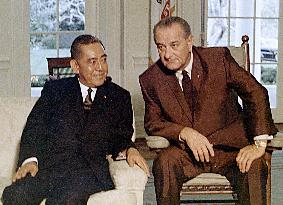
TOKYO, Japan - Japanese Prime Minister Eisaku Sato (L) is in talks with U.S. President Lyndon Johnson in a photo taken at the White House in Nove,ber 1967. When the United States was bogged down in the Vietnam War in 1967, U.S. President Lyndon Johnson pressed Japanese Prime Minister Eisaku Sato to contribute $500 million to the Asian Development Bank to help stabilize Southeast Asian countries economically and to block communists from eventually gaining strength there, according to Japanese diplomatic documents declassified on Aug. 30. (Kyodo)

  •  
Document shows secret U.S.-Japan pact on Okinawa reversion

Document shows secret U.S.-Japan pact on Okinawa reversion

WASHINGTON, United States - Photo shows copies of a recently declassified U.S. government document that confirmed the existence of a secret pact between Washington and Tokyo concerning the 1972 reversion of Okinawa to Japanese rule. Under the secret pact, Japan assumed the $4 million cost the U.S. was supposed to pay to restore Okinawa land to its original state as ''the classified U.S.-GOJ (the government of Japan) understanding'' and Japan has asked the U.S. to flatly deny the existence of such a pact to press inquiries.

  •  
Files on Indian independence movement leader Bose declassified

Files on Indian independence movement leader Bose declassified

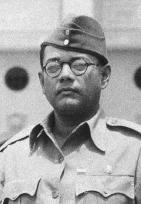
File photo shows Indian independence movement leader Subhash Chandra Bose. Files declassified by the West Bengal state government in India in September 2015 are said to support the theory that Bose was alive after his reported death in an air crash in Taiwan in August 1945. (Kyodo) ==Kyodo

  •  
(1)S. Korea agreed to make no compensation demands of Japan

(1)S. Korea agreed to make no compensation demands of Japan

SEOUL, South Korea - Relatives of Korean victims of World War II take to the streets Jan. 17 in Seoul after the South Korean government made declassified diplomatic documents public earlier in the day. The documents show Seoul must tackle compensation demands from individuals who suffered under the Japan's 1910-1945 colonial rule of the Korean Peninsula. (Kyodo)

  •  
(2)S. Korea agreed to make no compensation demands of Japan

(2)S. Korea agreed to make no compensation demands of Japan

SEOUL, South Korea - Relatives of Korean victims of World War II demonstrate Jan. 17 in front of the Japanese Embassy in Seoul after the South Korean government made declassified diplomatic documents public earlier in the day. The documents show Seoul must tackle compensation demands from individuals who suffered under the Japan's 1910-1945 colonial rule of the Korean Peninsula. (Kyodo)

  •  
Declassified U.S. document on nuclear weapons in Philippines

Declassified U.S. document on nuclear weapons in Philippines

MANILA, Philippines - Photo shows a declassified September 1969 U.S. diplomatic document on the secret U.S. possession of nuclear weapons in the Philippines. It says, ''Divulgence of the fact that nuclear weapons are stored in the Philippines, and have been there for many years without prior consultation with the Philippine Government, would gravely jeopardize U.S.-Philippine relations.'' (Kyodo)

  •  
Ex-PM Sato ordered backroom talks with U.S. over textiles

Ex-PM Sato ordered backroom talks with U.S. over textiles

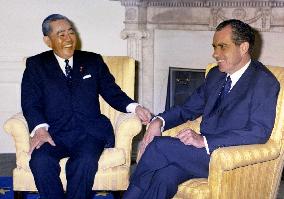
TOKYO, Japan - File photo shows then Japanese Prime Minister Eisaku Sato (L) and then U.S. President Richard Nixon meeting in Washington in November 1969. They agreed to settle the dispute over Japan's textile exports to the United States by the end of that year but Sato failed to honor the agreement. Japanese diplomatic documents declassified on Feb. 18, 2011, shows Sato told a senior diplomat in 1970 to hold backroom negotiations with the United States to settle a long-standing bilateral textile trade dispute. (Kyodo)

  •  
U.S. demanded Japan pay $650 mil. for Okinawa reversion costs

U.S. demanded Japan pay $650 mil. for Okinawa reversion costs

TOKYO, Japan - Japanese diplomatic documents declassified on Feb. 18, 2011, show the United States in 1969 demanded Japan pay $650 million, worth some 234 billion yen based on the exchange rate at that time, to finance unspecified costs related to the 1972 reversion of Okinawa from U.S. control to Japanese sovereignty. (Kyodo)

  •  
Declassified diplomatic documents

Declassified diplomatic documents

TOKYO, Japan - Photo taken on Feb. 15, 2012, shows declassified diplomatic documents, including a document related to the Treaty on the Non-Proliferation of Nuclear Weapons, at the Diplomatic Archives of the Japanese Foreign Ministry in Tokyo. The documents were declassified the same day. (Kyodo)

  •  
British gov't's declassified files

British gov't's declassified files

LONDON, Britain - Photo shows a file containing confidential papers created in 1980. The British National Archives disclosed some Foreign Office papers on Dec. 30, 2010, that revealed the British government was considering encouraging Tokyo to join European countries and the United States in imposing sanctions on Iran following the taking of American hostages at the U.S. Embassy in Iran in November 1979, as doing so without Japan would only give it enhanced business opportunities in the Middle Eastern country. Japan imposed sanctions on the country in June 1980 and lifted them in January 1981 after the release of the hostages. (Kyodo)

  •  
Declassified diplomatic documents

Declassified diplomatic documents

TOKYO, Japan - Photo taken on Dec. 22, 2010, at the Japanese Foreign Ministry's Diplomatic Record Office in Tokyo shows diplomatic documents declassified the same day. Some of the documents relate to a Japan-U.S. campaign to sway in 1968 the first public election for the head of the Ryukyu government, or Okinawa, then under U.S. rule. (Kyodo)

  •  
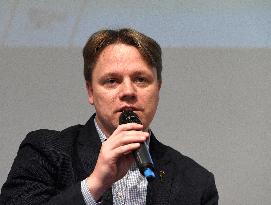
Opening the KGB Archives,  Andriy Kohut

Opening the KGB Archives, Andriy Kohut

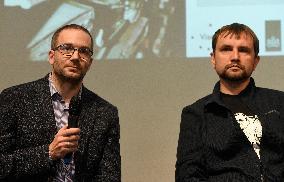
The results of six months of work of Ukrainian, Czech, Slovak and Polish journalists with declassified documents of KGB and other Soviet and communist services were presented in Prague, Czech Republic, December 13, 2018. Andriy Kohut, director of the historical archives of Ukraineエs SBU security service speaks during the meeting.(CTK Photo/Michal Krumphanzl)

  •  
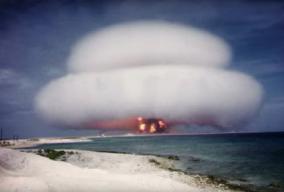
U.S. nuclear test films declassified, uploaded to YouTube

U.S. nuclear test films declassified, uploaded to YouTube

An image from YouTube shows a mushroom cloud from a U.S. above-ground nuclear test. The Lawrence Livermore National Laboratory in California released the first set of restored films of nuclear tests conducted by the U.S. government from the 1940s to the early 1960s on YouTube on March 15, 2017. (Kyodo) ==Kyodo

  •  
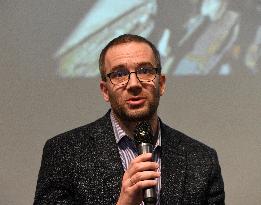
Opening the KGB Archives, Ondrej Matejka

Opening the KGB Archives, Ondrej Matejka

The results of six months of work of Ukrainian, Czech, Slovak and Polish journalists with declassified documents of KGB and other Soviet and communist services were presented in Prague, Czech Republic, December 13, 2018. The deputy director of the Institute for the Study of Totalitarian Regimes Ondrej Matejka speaks during the session. (CTK Photo/Michal Krumphanzl)

  •  
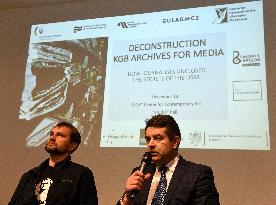
Opening the KGB Archives, Jevhen Perebyjnis, Volodymyr Viatrovych

Opening the KGB Archives, Jevhen Perebyjnis, Volodymyr Viatrovych

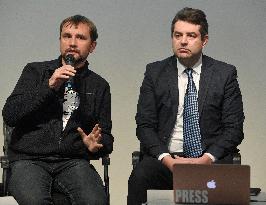
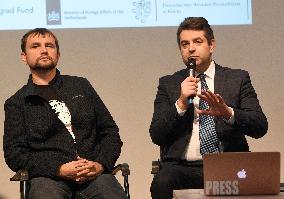
The results of six months of work of Ukrainian, Czech, Slovak and Polish journalists with declassified documents of KGB and other Soviet and communist services were presented in Prague, Czech Republic, December 13, 2018. Director of the Ukrainian Institute of National Remembrance Volodymyr Viatrovych during the meeting. At right is Ukraine Ambassador in the Czech Republic Jevhen Perebyjnis speaks during the meeting - Deconstruction KGB archives for media. (CTK Photo/Michal Krumphanzl)

  •  
Opening the KGB Archives, Ondrej Matejka, Volodymyr Viatrovych

Opening the KGB Archives, Ondrej Matejka, Volodymyr Viatrovych

The results of six months of work of Ukrainian, Czech, Slovak and Polish journalists with declassified documents of KGB and other Soviet and communist services were presented in Prague, Czech Republic, December 13, 2018. At left is the deputy director of the Institute for the Study of Totalitarian Regimes Ondrej Matejka and at right is Director of the Ukrainian Institute of National Remembrance Volodymyr Viatrovych. (CTK Photo/Michal Krumphanzl)

  •  
Opening the KGB Archives, Volodymyr Viatrovych

Opening the KGB Archives, Volodymyr Viatrovych

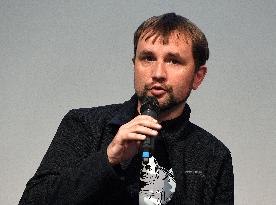
The results of six months of work of Ukrainian, Czech, Slovak and Polish journalists with declassified documents of KGB and other Soviet and communist services were presented in Prague, Czech Republic, December 13, 2018. Director of the Ukrainian Institute of National Remembrance Volodymyr Viatrovych speaks during the meeting. (CTK Photo/Michal Krumphanzl)

  •  
Opening the KGB Archives, Jevhen Perebyjnis, Volodymyr Viatrovych

Opening the KGB Archives, Jevhen Perebyjnis, Volodymyr Viatrovych

The results of six months of work of Ukrainian, Czech, Slovak and Polish journalists with declassified documents of KGB and other Soviet and communist services were presented in Prague, Czech Republic, December 13, 2018. Director of the Ukrainian Institute of National Remembrance Volodymyr Viatrovych speaks during the meeting. At right is Ukraine Ambassador in the Czech Republic Jevhen Perebyjnis. (CTK Photo/Michal Krumphanzl)

  •  
Opening the KGB Archives, Jevhen Perebyjnis, Volodymyr Viatrovych

Opening the KGB Archives, Jevhen Perebyjnis, Volodymyr Viatrovych

The results of six months of work of Ukrainian, Czech, Slovak and Polish journalists with declassified documents of KGB and other Soviet and communist services were presented in Prague, Czech Republic, December 13, 2018. Director of the Ukrainian Institute of National Remembrance Volodymyr Viatrovych speaks during the meeting. At right is Ukraine Ambassador in the Czech Republic Jevhen Perebyjnis. (CTK Photo/Michal Krumphanzl)

  •  
Japanese Emperor Naruhito's overseas study

Japanese Emperor Naruhito's overseas study

Photo taken June 7, 2019, in London, shows the British government's declassified diplomatic documents dated between August and November 1982, about the process to decide where Japanese Prince Hiro, now Emperor Naruhito, would study in Britain. He eventually went to the University of Oxford from 1983 to 1985 and, with his accession on May 1, 2019, became the first Japanese emperor to have studied abroad. The blacked-out text remains unpublicized. (Kyodo) ==Kyodo

  •  
British archives on Japan's response to Gulf War

British archives on Japan's response to Gulf War

Photo taken in May 2018 shows copies of recently declassified British documents about Japan's financial support to the multinational coalition during the Gulf War. (Kyodo) ==Kyodo

  •  
Documents show U.S. mulled Japan nuke deployment request in 1960s

Documents show U.S. mulled Japan nuke deployment request in 1960s

File photo taken June 25, 1969, shows U.S. Ambassador to Japan Armin Meyer (L) and Japanese Foreign Minister Kiichi Aichi shaking hands at the Foreign Ministry in Tokyo. Declassified documents showed on Nov. 19, 2017 that the U.S. government weighed its chances of convincing Tokyo in the late 1960s to allow the deployment of nuclear weapons on mainland Japan if an East Asia crisis broke out. (Kyodo) ==Kyodo

  •  
Japan agreed to nukes in Okinawa before reversion deal

Japan agreed to nukes in Okinawa before reversion deal

Undated photo shows a page of a memorandum dated Nov. 17, 1969. The U.S. document, declassified in May 2017, shows Japan officially gave the United States consent to bring nuclear weapons into Okinawa ahead of the 1969 bilateral accord on the reversion of the U.S.-occupied island. (Kyodo) ==Kyodo

  •  
Japan agreed to nukes in Okinawa before reversion deal

Japan agreed to nukes in Okinawa before reversion deal

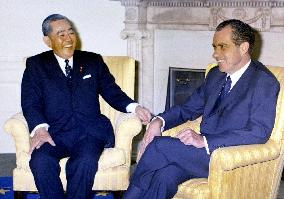
Photo taken in November 1969 shows Japanese Prime Minister Eisaku Sato (L) and U.S. President Richard Nixon holding talks at the White House in Washington. A U.S. document declassified in May 2017 shows Japan officially gave the United States consent to bring nuclear weapons into Okinawa ahead of the 1969 bilateral accord on the reversion of the U.S.-occupied island. (Kyodo) ==Kyodo

  •  
Hirohito "uncomfortable" with war but powerless to stop

Hirohito "uncomfortable" with war but powerless to stop

Photo shows a British government assessment document declassified on July 20, 2017, by the National Archives in London on Japanese Emperor Hirohito. The document indicates the emperor was uneasy with Japan's drift to war in the 1930s and 1940s but was too weak to alter the course of events. (Kyodo) ==Kyodo

  •  
Hirohito "uncomfortable" with military aggression but powerless to change

Hirohito "uncomfortable" with military aggression but powerless to change

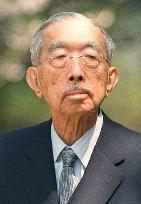
Photo taken in 1988 shows then Japanese Emperor Hirohito. He was uneasy with Japan's drift to war in the 1930s and 1940s but was too weak to alter the course of events, according to a declassified British government assessment of the Japanese monarch upon his death in January 1989. (Kyodo) ==Kyodo

  •  
Ex-Japan PM Nakasone sought to halt 1980s trade talks with U.S.

Ex-Japan PM Nakasone sought to halt 1980s trade talks with U.S.

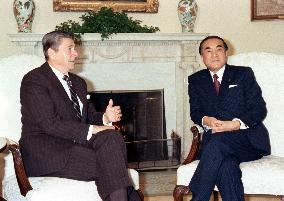
File photo taken in January 1983 shows U.S. President Ronald Reagan (L) and Japanese Prime Minister Yasuhiro Nakasone during their first summit at the White House in Washington. According to Japanese diplomatic records declassified on Jan. 12, 2017, Nakasone resisted pressure from Reagan to open up the Japanese market to imports of U.S. beef and oranges, proposing a "cooling-off" in trade talks. (Kyodo) ==Kyodo

  • Main
  • Top
  • Editorial
  • Creative
  • About Us
  • About ILG
  • Terms of use
  • Company
  • BEHIND
  • Price List
  • Single Plan
  • Monthly Plan
  • Services
  • Shooting
  • Rights Clearance
  • Support
  • FAQ
  • How To Buy
  • Contact Us
  • Become a Partner

© KYODO NEWS IMAGES INC

All Rights Reserved.

  • Editorial
  • Olympics
  • News
  • Sports
  • Japan
  • Tech
  • Royal
  • Disaster
  • NorthKorea
  • Old Japan
  • SNS
  • Creative
  • Food
  • Japan
  • Landscape
  • Animal
  • Popular
  • #Ukraine
  • #China
  • #coronavirus
  • #N. Korea
  • #Russia
  • #Thailand
  • #Ukraine
  • #China
  • #coronavirus
  • #N. Korea
  • #Russia
  • #Thailand
  • Food
  • Japan
  • Landscape
  • Animal
  • Olympics
  • News
  • Sports
  • Japan
  • Tech
  • Royal
  • Disaster
  • NorthKorea
  • Old Japan
  • SNS