•  
Taklimakan Desert Control Afforestation - China

Taklimakan Desert Control Afforestation - China

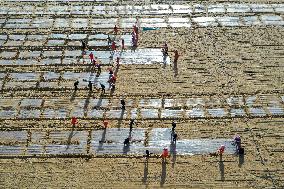
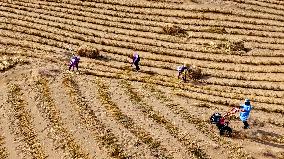
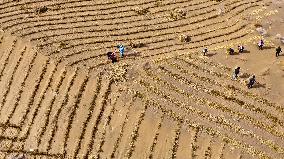
An aerial drone photo taken on April 8, 2025 shows people planting coix at a sand industry experimental base in Yutian County of Hotan Prefecture, northwest China's Xinjiang Uygur Autonomous Region. The Taklimakan Desert in northwest China's Xinjiang Uygur Autonomous Region covers 337,600 square kilometers and its circumference measures 3,046 kilometers, making it the largest desert in China and the second-largest drifting desert in the world. Thanks to decades-long sand prevention and control efforts, the Taklimakan Desert was completely encircled with a sand-blocking green belt on Nov. 28, 2024. In 2025, Xinjiang aims to afforest a land area of about 796,000 hectares, including 562,666 hectares for frontline control in the Taklimakan Desert. These afforestations form a part of the Three-North Shelterbelt Forest Program, the world's largest afforestation program, which tackles desertification in northwest, north and northeast China. Meanwhile, Xinjiang will further widen the sand-blocking green belt and enha

  •  
Taklimakan Desert Control Afforestation - China

Taklimakan Desert Control Afforestation - China

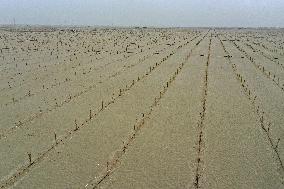
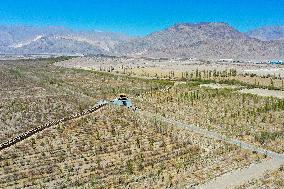
An aerial drone photo taken on April 7, 2025 shows oleaster saplings in Hotan County of Hotan Prefecture, northwest China's Xinjiang Uygur Autonomous Region. The Taklimakan Desert in northwest China's Xinjiang Uygur Autonomous Region covers 337,600 square kilometers and its circumference measures 3,046 kilometers, making it the largest desert in China and the second-largest drifting desert in the world. Thanks to decades-long sand prevention and control efforts, the Taklimakan Desert was completely encircled with a sand-blocking green belt on Nov. 28, 2024. In 2025, Xinjiang aims to afforest a land area of about 796,000 hectares, including 562,666 hectares for frontline control in the Taklimakan Desert. These afforestations form a part of the Three-North Shelterbelt Forest Program, the world's largest afforestation program, which tackles desertification in northwest, north and northeast China. Meanwhile, Xinjiang will further widen the sand-blocking green belt and enhance desert-locking efforts to achieve sus

  •  
Taklimakan Desert Control Afforestation - China

Taklimakan Desert Control Afforestation - China

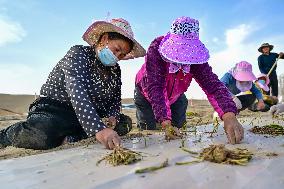
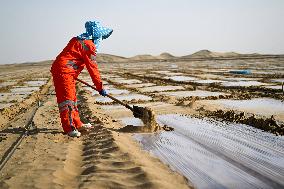
Staff members plant onions in sandy land at a sand-control experimental station in Minfeng County of Hotan Prefecture, northwest China's Xinjiang Uygur Autonomous Region on April 8, 2025. The Taklimakan Desert in northwest China's Xinjiang Uygur Autonomous Region covers 337,600 square kilometers and its circumference measures 3,046 kilometers, making it the largest desert in China and the second-largest drifting desert in the world. Thanks to decades-long sand prevention and control efforts, the Taklimakan Desert was completely encircled with a sand-blocking green belt on Nov. 28, 2024. In 2025, Xinjiang aims to afforest a land area of about 796,000 hectares, including 562,666 hectares for frontline control in the Taklimakan Desert. These afforestations form a part of the Three-North Shelterbelt Forest Program, the world's largest afforestation program, which tackles desertification in northwest, north and northeast China. Meanwhile, Xinjiang will further widen the sand-blocking green belt and enhance desert-

  •  
Taklimakan Desert Control Afforestation - China

Taklimakan Desert Control Afforestation - China

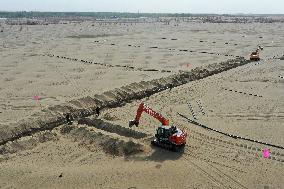
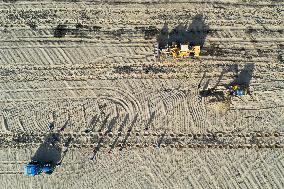
An aerial drone photo taken on April 8, 2025 shows staff members embedding water pipelines in Minfeng County of Hotan Prefecture, northwest China's Xinjiang Uygur Autonomous Region. The Taklimakan Desert in northwest China's Xinjiang Uygur Autonomous Region covers 337,600 square kilometers and its circumference measures 3,046 kilometers, making it the largest desert in China and the second-largest drifting desert in the world. Thanks to decades-long sand prevention and control efforts, the Taklimakan Desert was completely encircled with a sand-blocking green belt on Nov. 28, 2024. In 2025, Xinjiang aims to afforest a land area of about 796,000 hectares, including 562,666 hectares for frontline control in the Taklimakan Desert. These afforestations form a part of the Three-North Shelterbelt Forest Program, the world's largest afforestation program, which tackles desertification in northwest, north and northeast China. Meanwhile, Xinjiang will further widen the sand-blocking green belt and enhance desert-lockin

  •  
Taklimakan Desert Control Afforestation - China

Taklimakan Desert Control Afforestation - China

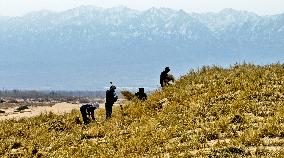
An aerial drone photo taken on April 9, 2025 shows staff members planting seedlings at a sand-control base in Qiemo County, the Mongolian Autonomous Prefecture of Bayingolin, northwest China's Xinjiang Uygur Autonomous Region. The Taklimakan Desert in northwest China's Xinjiang Uygur Autonomous Region covers 337,600 square kilometers and its circumference measures 3,046 kilometers, making it the largest desert in China and the second-largest drifting desert in the world. Thanks to decades-long sand prevention and control efforts, the Taklimakan Desert was completely encircled with a sand-blocking green belt on Nov. 28, 2024. In 2025, Xinjiang aims to afforest a land area of about 796,000 hectares, including 562,666 hectares for frontline control in the Taklimakan Desert. These afforestations form a part of the Three-North Shelterbelt Forest Program, the world's largest afforestation program, which tackles desertification in northwest, north and northeast China. Meanwhile, Xinjiang will further widen the sand-

  •  
Taklimakan Desert Control Afforestation - China

Taklimakan Desert Control Afforestation - China

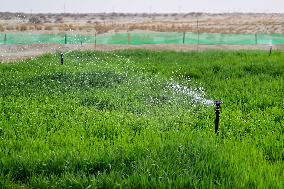
This photo taken on April 13, 2025 shows a wheat field irrigated by desalinated water in Xayar County, Aksu Prefecture, northwest China's Xinjiang Uygur Autonomous Region. The Taklimakan Desert in northwest China's Xinjiang Uygur Autonomous Region covers 337,600 square kilometers and its circumference measures 3,046 kilometers, making it the largest desert in China and the second-largest drifting desert in the world. Thanks to decades-long sand prevention and control efforts, the Taklimakan Desert was completely encircled with a sand-blocking green belt on Nov. 28, 2024. In 2025, Xinjiang aims to afforest a land area of about 796,000 hectares, including 562,666 hectares for frontline control in the Taklimakan Desert. These afforestations form a part of the Three-North Shelterbelt Forest Program, the world's largest afforestation program, which tackles desertification in northwest, north and northeast China. Meanwhile, Xinjiang will further widen the sand-blocking green belt and enhance desert-locking efforts

  •  
Taklimakan Desert Control Afforestation - China

Taklimakan Desert Control Afforestation - China

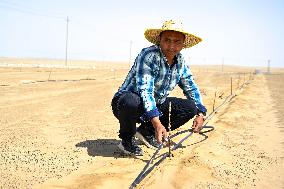
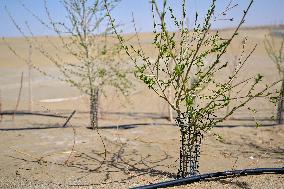
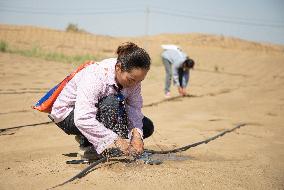
A villager arranges a drip irrigation pipe at a desert-control model zone in Yutian County of Hotan Prefecture, northwest China's Xinjiang Uygur Autonomous Region, April 8, 2025. The Taklimakan Desert in northwest China's Xinjiang Uygur Autonomous Region covers 337,600 square kilometers and its circumference measures 3,046 kilometers, making it the largest desert in China and the second-largest drifting desert in the world. Thanks to decades-long sand prevention and control efforts, the Taklimakan Desert was completely encircled with a sand-blocking green belt on Nov. 28, 2024. In 2025, Xinjiang aims to afforest a land area of about 796,000 hectares, including 562,666 hectares for frontline control in the Taklimakan Desert. These afforestations form a part of the Three-North Shelterbelt Forest Program, the world's largest afforestation program, which tackles desertification in northwest, north and northeast China. Meanwhile, Xinjiang will further widen the sand-blocking green belt and enhance desert-locking e

  •  
Taklimakan Desert Control Afforestation - China

Taklimakan Desert Control Afforestation - China

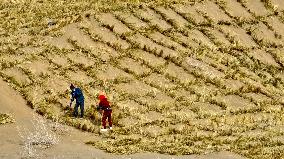
A villager plants coix at a sand industry experimental base in Yutian County of Hotan Prefecture, northwest China's Xinjiang Uygur Autonomous Region on April 8, 2025. The Taklimakan Desert in northwest China's Xinjiang Uygur Autonomous Region covers 337,600 square kilometers and its circumference measures 3,046 kilometers, making it the largest desert in China and the second-largest drifting desert in the world. Thanks to decades-long sand prevention and control efforts, the Taklimakan Desert was completely encircled with a sand-blocking green belt on Nov. 28, 2024. In 2025, Xinjiang aims to afforest a land area of about 796,000 hectares, including 562,666 hectares for frontline control in the Taklimakan Desert. These afforestations form a part of the Three-North Shelterbelt Forest Program, the world's largest afforestation program, which tackles desertification in northwest, north and northeast China. Meanwhile, Xinjiang will further widen the sand-blocking green belt and enhance desert-locking efforts to ac

  •  
Taklimakan Desert Control Afforestation - China

Taklimakan Desert Control Afforestation - China

Protective nets are attached to seedlings to prevent animals from eating them at a sand-control base in Qiemo County, the Mongolian Autonomous Prefecture of Bayingolin, northwest China's Xinjiang Uygur Autonomous Region, April 9, 2025. The Taklimakan Desert in northwest China's Xinjiang Uygur Autonomous Region covers 337,600 square kilometers and its circumference measures 3,046 kilometers, making it the largest desert in China and the second-largest drifting desert in the world. Thanks to decades-long sand prevention and control efforts, the Taklimakan Desert was completely encircled with a sand-blocking green belt on Nov. 28, 2024. In 2025, Xinjiang aims to afforest a land area of about 796,000 hectares, including 562,666 hectares for frontline control in the Taklimakan Desert. These afforestations form a part of the Three-North Shelterbelt Forest Program, the world's largest afforestation program, which tackles desertification in northwest, north and northeast China. Meanwhile, Xinjiang will further widen

  •  
Taklimakan Desert Control Afforestation - China

Taklimakan Desert Control Afforestation - China

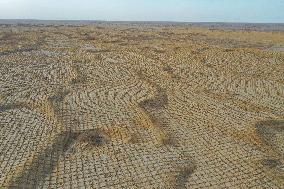
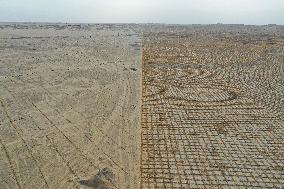
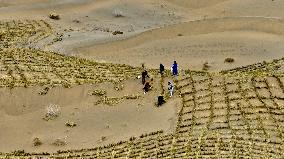
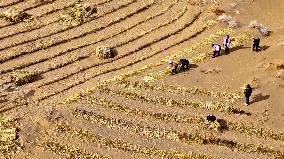
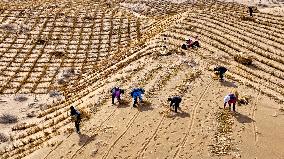
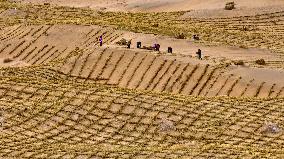
An aerial drone photo taken on April 8, 2025 shows checkerboard sand barriers in Minfeng County of Hotan Prefecture, northwest China's Xinjiang Uygur Autonomous Region. The Taklimakan Desert in northwest China's Xinjiang Uygur Autonomous Region covers 337,600 square kilometers and its circumference measures 3,046 kilometers, making it the largest desert in China and the second-largest drifting desert in the world. Thanks to decades-long sand prevention and control efforts, the Taklimakan Desert was completely encircled with a sand-blocking green belt on Nov. 28, 2024. In 2025, Xinjiang aims to afforest a land area of about 796,000 hectares, including 562,666 hectares for frontline control in the Taklimakan Desert. These afforestations form a part of the Three-North Shelterbelt Forest Program, the world's largest afforestation program, which tackles desertification in northwest, north and northeast China. Meanwhile, Xinjiang will further widen the sand-blocking green belt and enhance desert-locking efforts to

  •  
Taklimakan Desert Control Afforestation - China

Taklimakan Desert Control Afforestation - China

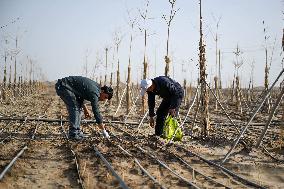
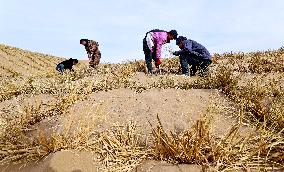
People arrange drip irrigation pipes at a sand-control experimental base in Yutian County of Hotan Prefecture, northwest China's Xinjiang Uygur Autonomous Region, April 8, 2025. The Taklimakan Desert in northwest China's Xinjiang Uygur Autonomous Region covers 337,600 square kilometers and its circumference measures 3,046 kilometers, making it the largest desert in China and the second-largest drifting desert in the world. Thanks to decades-long sand prevention and control efforts, the Taklimakan Desert was completely encircled with a sand-blocking green belt on Nov. 28, 2024. In 2025, Xinjiang aims to afforest a land area of about 796,000 hectares, including 562,666 hectares for frontline control in the Taklimakan Desert. These afforestations form a part of the Three-North Shelterbelt Forest Program, the world's largest afforestation program, which tackles desertification in northwest, north and northeast China. Meanwhile, Xinjiang will further widen the sand-blocking green belt and enhance desert-locking ef

  •  
Taklimakan Desert Control Afforestation - China

Taklimakan Desert Control Afforestation - China

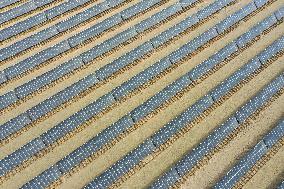
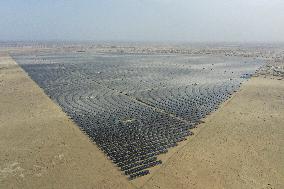
An aerial drone photo taken on April 13, 2025 shows a photovoltaic power project in Xayar County, Aksu Prefecture, northwest China's Xinjiang Uygur Autonomous Region. The Taklimakan Desert in northwest China's Xinjiang Uygur Autonomous Region covers 337,600 square kilometers and its circumference measures 3,046 kilometers, making it the largest desert in China and the second-largest drifting desert in the world. Thanks to decades-long sand prevention and control efforts, the Taklimakan Desert was completely encircled with a sand-blocking green belt on Nov. 28, 2024. In 2025, Xinjiang aims to afforest a land area of about 796,000 hectares, including 562,666 hectares for frontline control in the Taklimakan Desert. These afforestations form a part of the Three-North Shelterbelt Forest Program, the world's largest afforestation program, which tackles desertification in northwest, north and northeast China. Meanwhile, Xinjiang will further widen the sand-blocking green belt and enhance desert-locking efforts to ac

  •  
Taklimakan Desert Control Afforestation - China

Taklimakan Desert Control Afforestation - China

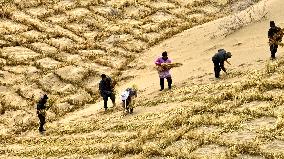
An aerial drone photo taken on April 8, 2025 shows checkerboard sand barriers at a sand-control zone in Minfeng County of Hotan Prefecture, northwest China's Xinjiang Uygur Autonomous Region. The Taklimakan Desert in northwest China's Xinjiang Uygur Autonomous Region covers 337,600 square kilometers and its circumference measures 3,046 kilometers, making it the largest desert in China and the second-largest drifting desert in the world. Thanks to decades-long sand prevention and control efforts, the Taklimakan Desert was completely encircled with a sand-blocking green belt on Nov. 28, 2024. In 2025, Xinjiang aims to afforest a land area of about 796,000 hectares, including 562,666 hectares for frontline control in the Taklimakan Desert. These afforestations form a part of the Three-North Shelterbelt Forest Program, the world's largest afforestation program, which tackles desertification in northwest, north and northeast China. Meanwhile, Xinjiang will further widen the sand-blocking green belt and enhance des

  •  
Taklimakan Desert Control Afforestation - China

Taklimakan Desert Control Afforestation - China

An aerial drone photo taken on April 11, 2025 shows a forest park in Hejing County, the Mongolian Autonomous Prefecture of Bayingolin, northwest China's Xinjiang Uygur Autonomous Region. The Taklimakan Desert in northwest China's Xinjiang Uygur Autonomous Region covers 337,600 square kilometers and its circumference measures 3,046 kilometers, making it the largest desert in China and the second-largest drifting desert in the world. Thanks to decades-long sand prevention and control efforts, the Taklimakan Desert was completely encircled with a sand-blocking green belt on Nov. 28, 2024. In 2025, Xinjiang aims to afforest a land area of about 796,000 hectares, including 562,666 hectares for frontline control in the Taklimakan Desert. These afforestations form a part of the Three-North Shelterbelt Forest Program, the world's largest afforestation program, which tackles desertification in northwest, north and northeast China. Meanwhile, Xinjiang will further widen the sand-blocking green belt and enhance desert-l

  •  
Taklimakan Desert Control Afforestation - China

Taklimakan Desert Control Afforestation - China

An aerial drone photo taken on April 13, 2025 shows a photovoltaic power project in Xayar County, Aksu Prefecture, northwest China's Xinjiang Uygur Autonomous Region. The Taklimakan Desert in northwest China's Xinjiang Uygur Autonomous Region covers 337,600 square kilometers and its circumference measures 3,046 kilometers, making it the largest desert in China and the second-largest drifting desert in the world. Thanks to decades-long sand prevention and control efforts, the Taklimakan Desert was completely encircled with a sand-blocking green belt on Nov. 28, 2024. In 2025, Xinjiang aims to afforest a land area of about 796,000 hectares, including 562,666 hectares for frontline control in the Taklimakan Desert. These afforestations form a part of the Three-North Shelterbelt Forest Program, the world's largest afforestation program, which tackles desertification in northwest, north and northeast China. Meanwhile, Xinjiang will further widen the sand-blocking green belt and enhance desert-locking efforts to ac

  •  
Taklimakan Desert Control Afforestation - China

Taklimakan Desert Control Afforestation - China

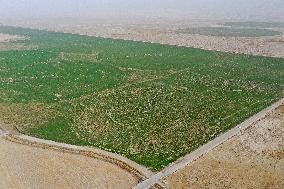
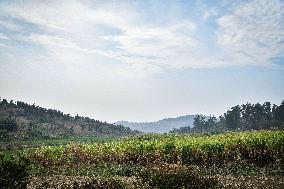
An aerial drone photo taken on April 12, 2025 shows a grassland in Baicheng County, Aksu Prefecture, northwest China's Xinjiang Uygur Autonomous Region. The Taklimakan Desert in northwest China's Xinjiang Uygur Autonomous Region covers 337,600 square kilometers and its circumference measures 3,046 kilometers, making it the largest desert in China and the second-largest drifting desert in the world. Thanks to decades-long sand prevention and control efforts, the Taklimakan Desert was completely encircled with a sand-blocking green belt on Nov. 28, 2024. In 2025, Xinjiang aims to afforest a land area of about 796,000 hectares, including 562,666 hectares for frontline control in the Taklimakan Desert. These afforestations form a part of the Three-North Shelterbelt Forest Program, the world's largest afforestation program, which tackles desertification in northwest, north and northeast China. Meanwhile, Xinjiang will further widen the sand-blocking green belt and enhance desert-locking efforts to achieve sustaina

  •  
Prevent And Control Desertification in Zhangye

Prevent And Control Desertification in Zhangye

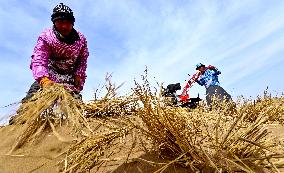
ZHANGYE, CHINA - MARCH 13, 2025 - Volunteers lay grass on a sand dune at the site of a project to prevent and control desertification in Zhangye city, Gansu province, China, March 13, 2025.

  •  
Prevent And Control Desertification in Zhangye

Prevent And Control Desertification in Zhangye

ZHANGYE, CHINA - MARCH 13, 2025 - Volunteers lay grass on a sand dune at the site of a project to prevent and control desertification in Zhangye city, Gansu province, China, March 13, 2025.

  •  
Prevent And Control Desertification in Zhangye

Prevent And Control Desertification in Zhangye

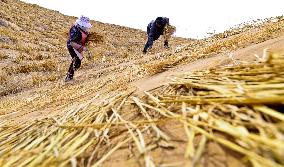
ZHANGYE, CHINA - MARCH 13, 2025 - Volunteers lay straw on a sand slope at the site of a project to prevent and control desertification in Zhangye city, Gansu province, China, March 13, 2025.

  •  
Prevent And Control Desertification in Zhangye

Prevent And Control Desertification in Zhangye

ZHANGYE, CHINA - MARCH 13, 2025 - Volunteers lay straw on a sand slope at the site of a project to prevent and control desertification in Zhangye city, Gansu province, China, March 13, 2025.

  •  
Prevent And Control Desertification in Zhangye

Prevent And Control Desertification in Zhangye

ZHANGYE, CHINA - MARCH 13, 2025 - Volunteers lay straw on a sand slope at the site of a project to prevent and control desertification in Zhangye city, Gansu province, China, March 13, 2025.

  •  
Prevent And Control Desertification in Zhangye

Prevent And Control Desertification in Zhangye

ZHANGYE, CHINA - MARCH 13, 2025 - Volunteers lay grass on a sand dune at the site of a project to prevent and control desertification in Zhangye city, Gansu province, China, March 13, 2025.

  •  
Prevent And Control Desertification in Zhangye

Prevent And Control Desertification in Zhangye

ZHANGYE, CHINA - MARCH 13, 2025 - Volunteers lay straw on a sand slope at the site of a project to prevent and control desertification in Zhangye city, Gansu province, China, March 13, 2025.

  •  
Prevent And Control Desertification in Zhangye

Prevent And Control Desertification in Zhangye

ZHANGYE, CHINA - MARCH 13, 2025 - Volunteers lay straw on a sand slope at the site of a project to prevent and control desertification in Zhangye city, Gansu province, China, March 13, 2025.

  •  
Prevent And Control Desertification in Zhangye

Prevent And Control Desertification in Zhangye

ZHANGYE, CHINA - MARCH 13, 2025 - Volunteers lay grass on a sand dune at the site of a project to prevent and control desertification in Zhangye city, Gansu province, China, March 13, 2025.

  •  
Prevent And Control Desertification in Zhangye

Prevent And Control Desertification in Zhangye

ZHANGYE, CHINA - MARCH 13, 2025 - Volunteers lay grass on a sand dune at the site of a project to prevent and control desertification in Zhangye city, Gansu province, China, March 13, 2025.

  •  
Prevent And Control Desertification in Zhangye

Prevent And Control Desertification in Zhangye

ZHANGYE, CHINA - MARCH 13, 2025 - Volunteers lay straw on a sand slope at the site of a project to prevent and control desertification in Zhangye city, Gansu province, China, March 13, 2025.

  •  
Prevent And Control Desertification in Zhangye

Prevent And Control Desertification in Zhangye

ZHANGYE, CHINA - MARCH 13, 2025 - Volunteers lay straw on a sand slope at the site of a project to prevent and control desertification in Zhangye city, Gansu province, China, March 13, 2025.

  •  
Adel bin Ahmed Al-Jubeir Interviewed - Riyadh

Adel bin Ahmed Al-Jubeir Interviewed - Riyadh

Adel bin Ahmed Al-Jubeir, Saudi Arabia's minister of state for foreign affairs and climate envoy, speaks in an exclusive interview with Xinhua on the sidelines of the 16th session of the Conference of the Parties to the United Nations Convention to Combat Desertification in Riyadh, Saudi Arabia, on Dec. 6, 2024. TO GO WITH "Interview: Saudi-Chinese partnership exceptional -- minister" Photo by Luo Chen/Xinhua/ABACAPRESS.COM

  •  
Pharmaceutical company in Rong'an County

Pharmaceutical company in Rong'an County

Technicians test sweet wormwood as raw materials at a pharmaceutical company in Rong'an County, south China's Guangxi Zhuang Autonomous Region, on August 27, 2024. Located in a remote, mountainous area experiencing severe rocky desertification, Rong'an County covers largely barren land that makes traditional farming difficult. However, its harsh conditions are ideal for growing sweet wormwood, which thrives in arid environments and can withstand drought. Once dried, the plant is processed to extract artemisinin, which is then made into medicine and shipped to Africa to help local communities fight malaria. Rong'an is a major production base of artemisinin at home and abroad. The annual production of artemisinin exceeds 100 tonnes, accounting for a quarter of the global total. In recent years, companies, planting bases, scientific research institutes, cooperatives and local farmers in Rong'an have been coordinated to develop sweet wormwood planting to advance rural revitalization. Photo by Huang Xiaobang/Xinhu

  •  
Pharmaceutical company in Rong'an County

Pharmaceutical company in Rong'an County

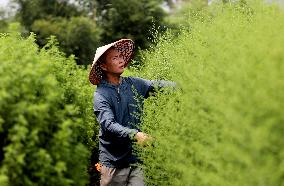
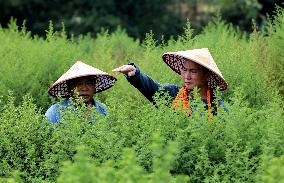
A worker checks the growth of sweet wormwood at a planting base of a pharmaceutical company in Rong'an County, south China's Guangxi Zhuang Autonomous Region, on August 28, 2024. Located in a remote, mountainous area experiencing severe rocky desertification, Rong'an County covers largely barren land that makes traditional farming difficult. However, its harsh conditions are ideal for growing sweet wormwood, which thrives in arid environments and can withstand drought. Once dried, the plant is processed to extract artemisinin, which is then made into medicine and shipped to Africa to help local communities fight malaria. Rong'an is a major production base of artemisinin at home and abroad. The annual production of artemisinin exceeds 100 tonnes, accounting for a quarter of the global total. In recent years, companies, planting bases, scientific research institutes, cooperatives and local farmers in Rong'an have been coordinated to develop sweet wormwood planting to advance rural revitalization. Photo by Huang

  •  
Pharmaceutical company in Rong'an County

Pharmaceutical company in Rong'an County

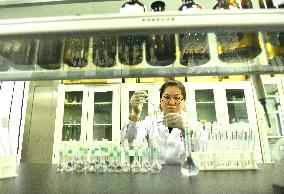
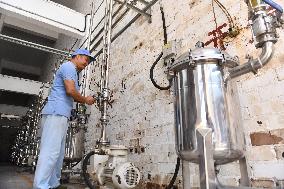
A technician tests artemisinin at a pharmaceutical company in Rong'an County, south China's Guangxi Zhuang Autonomous Region, on August 27, 2024. Located in a remote, mountainous area experiencing severe rocky desertification, Rong'an County covers largely barren land that makes traditional farming difficult. However, its harsh conditions are ideal for growing sweet wormwood, which thrives in arid environments and can withstand drought. Once dried, the plant is processed to extract artemisinin, which is then made into medicine and shipped to Africa to help local communities fight malaria. Rong'an is a major production base of artemisinin at home and abroad. The annual production of artemisinin exceeds 100 tonnes, accounting for a quarter of the global total. In recent years, companies, planting bases, scientific research institutes, cooperatives and local farmers in Rong'an have been coordinated to develop sweet wormwood planting to advance rural revitalization. Photo by Huang Xiaobang/Xinhua/ABACAPRESS.COM

  •  
Pharmaceutical company in Rong'an County

Pharmaceutical company in Rong'an County

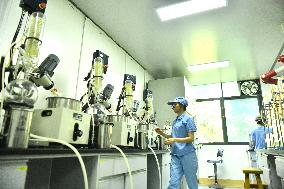
A technician works on sweet wormwood breeding at a pharmaceutical company in Rong'an County, south China's Guangxi Zhuang Autonomous Region, on August 27, 2024. Located in a remote, mountainous area experiencing severe rocky desertification, Rong'an County covers largely barren land that makes traditional farming difficult. However, its harsh conditions are ideal for growing sweet wormwood, which thrives in arid environments and can withstand drought. Once dried, the plant is processed to extract artemisinin, which is then made into medicine and shipped to Africa to help local communities fight malaria. Rong'an is a major production base of artemisinin at home and abroad. The annual production of artemisinin exceeds 100 tonnes, accounting for a quarter of the global total. In recent years, companies, planting bases, scientific research institutes, cooperatives and local farmers in Rong'an have been coordinated to develop sweet wormwood planting to advance rural revitalization. Photo by Huang Xiaobang/Xinhua/A

  •  
Pharmaceutical company in Rong'an County

Pharmaceutical company in Rong'an County

A technician tests artemisinin at a pharmaceutical company in Rong'an County, south China's Guangxi Zhuang Autonomous Region, on August 27, 2024. Located in a remote, mountainous area experiencing severe rocky desertification, Rong'an County covers largely barren land that makes traditional farming difficult. However, its harsh conditions are ideal for growing sweet wormwood, which thrives in arid environments and can withstand drought. Once dried, the plant is processed to extract artemisinin, which is then made into medicine and shipped to Africa to help local communities fight malaria. Rong'an is a major production base of artemisinin at home and abroad. The annual production of artemisinin exceeds 100 tonnes, accounting for a quarter of the global total. In recent years, companies, planting bases, scientific research institutes, cooperatives and local farmers in Rong'an have been coordinated to develop sweet wormwood planting to advance rural revitalization. Photo by Huang Xiaobang/Xinhua/ABACAPRESS.COM

  •  
Pharmaceutical company in Rong'an County

Pharmaceutical company in Rong'an County

Workers check the growth of sweet wormwood at a planting base of a pharmaceutical company in Rong'an County, south China's Guangxi Zhuang Autonomous Region, on August 28, 2024. Located in a remote, mountainous area experiencing severe rocky desertification, Rong'an County covers largely barren land that makes traditional farming difficult. However, its harsh conditions are ideal for growing sweet wormwood, which thrives in arid environments and can withstand drought. Once dried, the plant is processed to extract artemisinin, which is then made into medicine and shipped to Africa to help local communities fight malaria. Rong'an is a major production base of artemisinin at home and abroad. The annual production of artemisinin exceeds 100 tonnes, accounting for a quarter of the global total. In recent years, companies, planting bases, scientific research institutes, cooperatives and local farmers in Rong'an have been coordinated to develop sweet wormwood planting to advance rural revitalization. Photo by Huang X

  •  
Pharmaceutical company in Rong'an County

Pharmaceutical company in Rong'an County

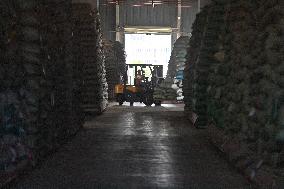
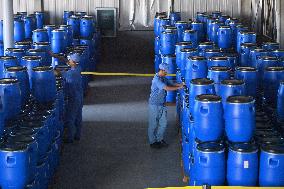
Employees transfer barrels of artemisinin at a pharmaceutical company in Rong'an County, south China's Guangxi Zhuang Autonomous Region, on August 27, 2024. Located in a remote, mountainous area experiencing severe rocky desertification, Rong'an County covers largely barren land that makes traditional farming difficult. However, its harsh conditions are ideal for growing sweet wormwood, which thrives in arid environments and can withstand drought. Once dried, the plant is processed to extract artemisinin, which is then made into medicine and shipped to Africa to help local communities fight malaria. Rong'an is a major production base of artemisinin at home and abroad. The annual production of artemisinin exceeds 100 tonnes, accounting for a quarter of the global total. In recent years, companies, planting bases, scientific research institutes, cooperatives and local farmers in Rong'an have been coordinated to develop sweet wormwood planting to advance rural revitalization. Photo by Huang Xiaobang/Xinhua/ABACA

  •  
Pharmaceutical company in Rong'an County

Pharmaceutical company in Rong'an County

A worker transfers sweet wormwood as raw materials at a pharmaceutical company in Rong'an County, south China's Guangxi Zhuang Autonomous Region, on August 27, 2024. Located in a remote, mountainous area experiencing severe rocky desertification, Rong'an County covers largely barren land that makes traditional farming difficult. However, its harsh conditions are ideal for growing sweet wormwood, which thrives in arid environments and can withstand drought. Once dried, the plant is processed to extract artemisinin, which is then made into medicine and shipped to Africa to help local communities fight malaria. Rong'an is a major production base of artemisinin at home and abroad. The annual production of artemisinin exceeds 100 tonnes, accounting for a quarter of the global total. In recent years, companies, planting bases, scientific research institutes, cooperatives and local farmers in Rong'an have been coordinated to develop sweet wormwood planting to advance rural revitalization. Photo by Huang Xiaobang/Xin

  •  
Pharmaceutical company in Rong'an County

Pharmaceutical company in Rong'an County

A technician operates to extract artemisinin at a pharmaceutical company in Rong'an County, south China's Guangxi Zhuang Autonomous Region, on August 27, 2024. Located in a remote, mountainous area experiencing severe rocky desertification, Rong'an County covers largely barren land that makes traditional farming difficult. However, its harsh conditions are ideal for growing sweet wormwood, which thrives in arid environments and can withstand drought. Once dried, the plant is processed to extract artemisinin, which is then made into medicine and shipped to Africa to help local communities fight malaria. Rong'an is a major production base of artemisinin at home and abroad. The annual production of artemisinin exceeds 100 tonnes, accounting for a quarter of the global total. In recent years, companies, planting bases, scientific research institutes, cooperatives and local farmers in Rong'an have been coordinated to develop sweet wormwood planting to advance rural revitalization. Photo by Huang Xiaobang/Xinhua/AB

  •  
China's Juncao technology sows seeds of hope in Africa

China's Juncao technology sows seeds of hope in Africa

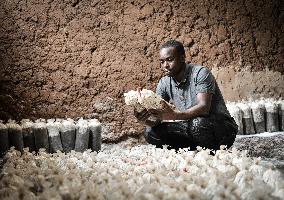
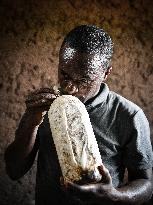
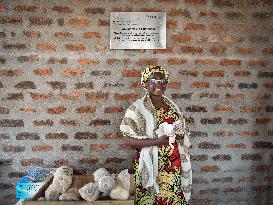
Nyambo Obed checks mushroom tubes at his workshop in Muhanga District, Southern Province, Rwanda, on August 14, 2024. Nyambo Obed has been to China twice for Juncao technology training. Since the 1980s, Lin Zhanxi, a professor of Fujian Agriculture and Forestry University, has led a research team on Juncao technology in China's southeastern Fujian Province. Juncao means "mushroom" and "grass" in Chinese. Its versatility is a key feature, allowing it to grow edible mushrooms, provide livestock feed and help battle desertification. Since the 1990s, China has shared the technology with over 100 countries by opening training classes and conducting on-site demonstrations. By now, Juncao technology has taken root in more than 40 African countries, helping African farmers combat poverty and promoting cooperation between China and Africa. Photo by Han Xu/Xinhua/ABACAPRESS.COM

  •  
China's Juncao technology sows seeds of hope in Africa

China's Juncao technology sows seeds of hope in Africa

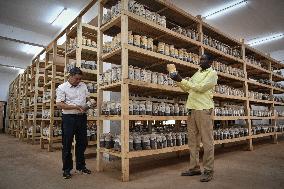
Juncao expert Chen Kehua (L) and a local technician check bags of mycelium at Central African Institute of Agronomic Research in Bangui, the Central African Republic, Feb. 6, 2024. Since the 1980s, Lin Zhanxi, a professor of Fujian Agriculture and Forestry University, has led a research team on Juncao technology in China's southeastern Fujian Province. Juncao means "mushroom" and "grass" in Chinese. Its versatility is a key feature, allowing it to grow edible mushrooms, provide livestock feed and help battle desertification. Since the 1990s, China has shared the technology with over 100 countries by opening training classes and conducting on-site demonstrations. By now, Juncao technology has taken root in more than 40 African countries, helping African farmers combat poverty and promoting cooperation between China and Africa. Photo by Han Xu/Xinhua/ABACAPRESS.COM

  •  
China's Juncao technology sows seeds of hope in Africa

China's Juncao technology sows seeds of hope in Africa

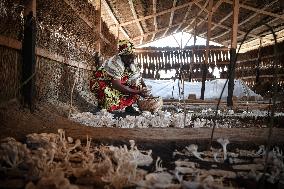
Fatime Abba Rekya picks mushrooms in her own mushroom shed in Damara, the Central African Republic, Feb. 6, 2024. Fatime Abba Rekya learns Juncao technology on a training class in Bangui in 2022. Since the 1980s, Lin Zhanxi, a professor of Fujian Agriculture and Forestry University, has led a research team on Juncao technology in China's southeastern Fujian Province. Juncao means "mushroom" and "grass" in Chinese. Its versatility is a key feature, allowing it to grow edible mushrooms, provide livestock feed and help battle desertification. Since the 1990s, China has shared the technology with over 100 countries by opening training classes and conducting on-site demonstrations. By now, Juncao technology has taken root in more than 40 African countries, helping African farmers combat poverty and promoting cooperation between China and Africa. Photo by Han Xu/Xinhua/ABACAPRESS.COM

  •  
China's Juncao technology sows seeds of hope in Africa

China's Juncao technology sows seeds of hope in Africa

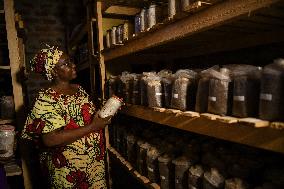
Fatime Abba Rekya checks bags of mycelium in Damara, the Central African Republic, Feb. 6, 2024. Fatime Abba Rekya learns Juncao technology on a training class in Bangui in 2022. Since the 1980s, Lin Zhanxi, a professor of Fujian Agriculture and Forestry University, has led a research team on Juncao technology in China's southeastern Fujian Province. Juncao means "mushroom" and "grass" in Chinese. Its versatility is a key feature, allowing it to grow edible mushrooms, provide livestock feed and help battle desertification. Since the 1990s, China has shared the technology with over 100 countries by opening training classes and conducting on-site demonstrations. By now, Juncao technology has taken root in more than 40 African countries, helping African farmers combat poverty and promoting cooperation between China and Africa. Photo by Han Xu/Xinhua/ABACAPRESS.COM

  •  
China's Juncao technology sows seeds of hope in Africa

China's Juncao technology sows seeds of hope in Africa

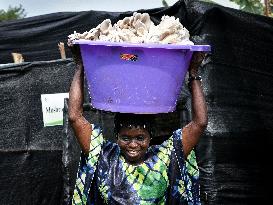
A farmer carries freshly harvested mushrooms out of a mushroom shed in Huye District, Southern Province, Rwanda, on August 14, 2024. Since the 1980s, Lin Zhanxi, a professor of Fujian Agriculture and Forestry University, has led a research team on Juncao technology in China's southeastern Fujian Province. Juncao means "mushroom" and "grass" in Chinese. Its versatility is a key feature, allowing it to grow edible mushrooms, provide livestock feed and help battle desertification. Since the 1990s, China has shared the technology with over 100 countries by opening training classes and conducting on-site demonstrations. By now, Juncao technology has taken root in more than 40 African countries, helping African farmers combat poverty and promoting cooperation between China and Africa. Photo by Han Xu/Xinhua/ABACAPRESS.COM

  •  
China's Juncao technology sows seeds of hope in Africa

China's Juncao technology sows seeds of hope in Africa

Nyambo Obed checks mushroom tube at his workshop in Muhanga District, Southern Province, Rwanda, on August 14, 2024. Nyambo Obed has been to China twice for Juncao technology training. Since the 1980s, Lin Zhanxi, a professor of Fujian Agriculture and Forestry University, has led a research team on Juncao technology in China's southeastern Fujian Province. Juncao means "mushroom" and "grass" in Chinese. Its versatility is a key feature, allowing it to grow edible mushrooms, provide livestock feed and help battle desertification. Since the 1990s, China has shared the technology with over 100 countries by opening training classes and conducting on-site demonstrations. By now, Juncao technology has taken root in more than 40 African countries, helping African farmers combat poverty and promoting cooperation between China and Africa. Photo by Han Xu/Xinhua/ABACAPRESS.COM

  •  
China's Juncao technology sows seeds of hope in Africa

China's Juncao technology sows seeds of hope in Africa

This photo taken on August 15, 2024 shows a view of Juncao grass field in Huye District, Southern Province, Rwanda. Since the 1980s, Lin Zhanxi, a professor of Fujian Agriculture and Forestry University, has led a research team on Juncao technology in China's southeastern Fujian Province. Juncao means "mushroom" and "grass" in Chinese. Its versatility is a key feature, allowing it to grow edible mushrooms, provide livestock feed and help battle desertification. Since the 1990s, China has shared the technology with over 100 countries by opening training classes and conducting on-site demonstrations. By now, Juncao technology has taken root in more than 40 African countries, helping African farmers combat poverty and promoting cooperation between China and Africa. Photo by Han Xu/Xinhua/ABACAPRESS.COM

  •  
China's Juncao technology sows seeds of hope in Africa

China's Juncao technology sows seeds of hope in Africa

Fatime Abba Rekya is pictured at an edible mushroom cultivation workshop she established in Damara, the Central African Republic, Feb. 6, 2024. Fatime Abba Rekya learns Juncao technology on a training class in Bangui in 2022. Since the 1980s, Lin Zhanxi, a professor of Fujian Agriculture and Forestry University, has led a research team on Juncao technology in China's southeastern Fujian Province. Juncao means "mushroom" and "grass" in Chinese. Its versatility is a key feature, allowing it to grow edible mushrooms, provide livestock feed and help battle desertification. Since the 1990s, China has shared the technology with over 100 countries by opening training classes and conducting on-site demonstrations. By now, Juncao technology has taken root in more than 40 African countries, helping African farmers combat poverty and promoting cooperation between China and Africa. Photo by Han Xu/Xinhua/ABACAPRESS.COM

  •  
Prevent and Control Desertification in Xinjiang

Prevent and Control Desertification in Xinjiang

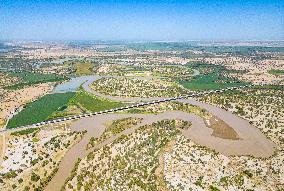
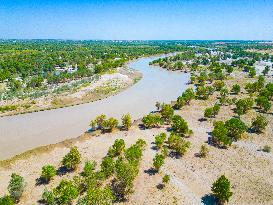
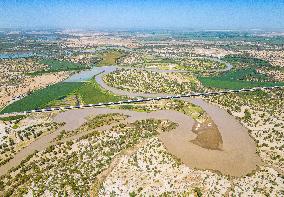
BAZHOU, CHINA - AUGUST 9, 2024 - The meandering Tarim River nourishes vegetation along its banks in the Weili section of the middle and lower reaches of the Tarim River in Bazhou, Xinjiang province, China, Aug 9, 2024.

  •  
Prevent and Control Desertification in Xinjiang

Prevent and Control Desertification in Xinjiang

BAZHOU, CHINA - AUGUST 9, 2024 - The meandering Tarim River nourishes vegetation along its banks in the Weili section of the middle and lower reaches of the Tarim River in Bazhou, Xinjiang province, China, Aug 9, 2024.

  •  
Prevent and Control Desertification in Xinjiang

Prevent and Control Desertification in Xinjiang

BAZHOU, CHINA - AUGUST 9, 2024 - Guards maintain drip irrigation facilities at the Weili Section of the middle and lower reaches of Tarim River in Bazhou, Xinjiang province, China, Aug 9, 2024.

  •  
Prevent and Control Desertification in Xinjiang

Prevent and Control Desertification in Xinjiang

BAZHOU, CHINA - AUGUST 9, 2024 - The meandering Tarim River nourishes vegetation along its banks in the Weili section of the middle and lower reaches of the Tarim River in Bazhou, Xinjiang province, China, Aug 9, 2024.

  • Main
  • Top
  • Editorial
  • Creative
  • About Us
  • About ILG
  • Terms of use
  • Company
  • BEHIND
  • Price List
  • Single Plan
  • Monthly Plan
  • Services
  • Shooting
  • Rights Clearance
  • Support
  • FAQ
  • How To Buy
  • Contact Us
  • Become a Partner

© KYODO NEWS IMAGES INC

All Rights Reserved.

  • Editorial
  • Olympics
  • News
  • Sports
  • Japan
  • Tech
  • Royal
  • Disaster
  • NorthKorea
  • Old Japan
  • SNS
  • Creative
  • Food
  • Japan
  • Landscape
  • Animal
  • Popular
  • #Ukraine
  • #Thailand
  • #coronavirus
  • #N. Korea
  • #China
  • #Russia
  • #Ukraine
  • #Thailand
  • #coronavirus
  • #N. Korea
  • #China
  • #Russia
  • Food
  • Japan
  • Landscape
  • Animal
  • Olympics
  • News
  • Sports
  • Japan
  • Tech
  • Royal
  • Disaster
  • NorthKorea
  • Old Japan
  • SNS