•  
Tie-Dye Technique Of Bai Ethnic Group - Chin

Tie-Dye Technique Of Bai Ethnic Group - Chin

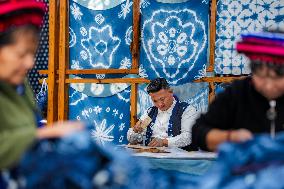
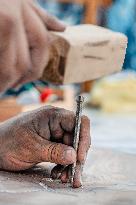
Duan Yuan, an inheritor of the tie-dye technique of Bai ethnic group, makes tie-dye designs in a dyehouse in Zhoucheng Village of Dali Bai Autonomous Prefecture, southwest China's Yunnan Province, November 21, 2025. Known as the hometown of the tie-dye technique of Bai ethnic group, Zhoucheng Village hosts over 200 households engaging in tie-dye businesses, with the number of employees exceeding 4,000. As a traditional folk technique of the Bai ethnic group, tie-dye boasts a history spanning over a thousand years and was included in the first batch of China's national intangible cultural heritage list in 2006. Tying and dyeing are the core steps in the process of making indigo tie-dye products. Artisans use needles and threads to create various patterns on the fabric, which are then dyed with plant-based dyes, resulting in blue backgrounds adorned with vivid white patterns. Photo by Hu Chao/Xinhua/ABACAPRESS.COM

  •  
Tie-Dye Technique Of Bai Ethnic Group - Chin

Tie-Dye Technique Of Bai Ethnic Group - Chin

Duan Yuan, an inheritor of the tie-dye technique of Bai ethnic group, makes tie-dye designs in a dyehouse in Zhoucheng Village of Dali Bai Autonomous Prefecture, southwest China's Yunnan Province, November 21, 2025. Known as the hometown of the tie-dye technique of Bai ethnic group, Zhoucheng Village hosts over 200 households engaging in tie-dye businesses, with the number of employees exceeding 4,000. As a traditional folk technique of the Bai ethnic group, tie-dye boasts a history spanning over a thousand years and was included in the first batch of China's national intangible cultural heritage list in 2006. Tying and dyeing are the core steps in the process of making indigo tie-dye products. Artisans use needles and threads to create various patterns on the fabric, which are then dyed with plant-based dyes, resulting in blue backgrounds adorned with vivid white patterns. Photo by Hu Chao/Xinhua/ABACAPRESS.COM

  •  
Tie-Dye Technique Of Bai Ethnic Group - Chin

Tie-Dye Technique Of Bai Ethnic Group - Chin

Duan Yuan, an inheritor of the tie-dye technique of Bai ethnic group, makes tie-dye designs in a dyehouse in Zhoucheng Village of Dali Bai Autonomous Prefecture, southwest China's Yunnan Province, November 21, 2025. Known as the hometown of the tie-dye technique of Bai ethnic group, Zhoucheng Village hosts over 200 households engaging in tie-dye businesses, with the number of employees exceeding 4,000. As a traditional folk technique of the Bai ethnic group, tie-dye boasts a history spanning over a thousand years and was included in the first batch of China's national intangible cultural heritage list in 2006. Tying and dyeing are the core steps in the process of making indigo tie-dye products. Artisans use needles and threads to create various patterns on the fabric, which are then dyed with plant-based dyes, resulting in blue backgrounds adorned with vivid white patterns. Photo by Hu Chao/Xinhua/ABACAPRESS.COM

  •  
Artisans Preserve Legacy of Truck Painting - Pakistan

Artisans Preserve Legacy of Truck Painting - Pakistan

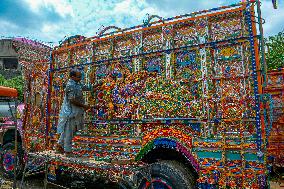
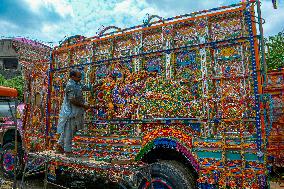
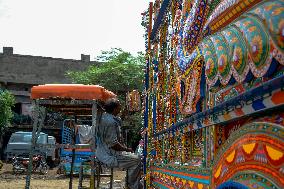
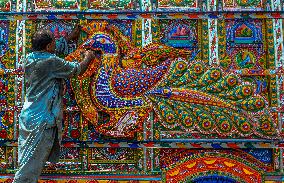
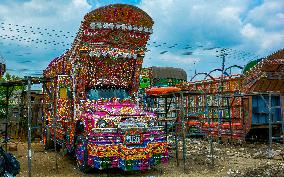
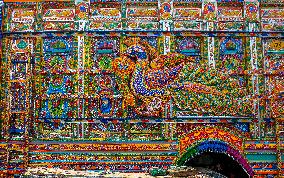
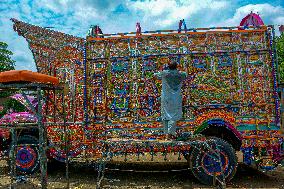
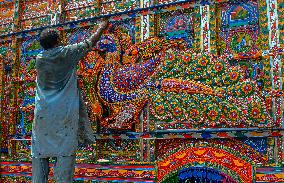
An artisan carefully paints a vibrant peacock motif on the side of a truck at a workshop in the Pirwadhai area of Rawalpindi, Pakistan, on July 31, 2025. Adorned with intricate designs, mirror work, and bold colors, truck art remains a powerful symbol of cultural identity and craftsmanship across Pakistan. This long-standing tradition, which began in the 1920s, transforms cargo vehicles into moving canvases that reflect poetry, politics, religious devotion, and personal pride. Each truck serves as a unique artistic expression by its owner and painter, often featuring animals, calligraphy, landscapes, and portraits of cultural icons. Photo by Raja Imran/Middle East Images/ABACAPRESS.COM

  •  
Artisans Preserve Legacy of Truck Painting - Pakistan

Artisans Preserve Legacy of Truck Painting - Pakistan

An artisan carefully paints a vibrant peacock motif on the side of a truck at a workshop in the Pirwadhai area of Rawalpindi, Pakistan, on July 31, 2025. Adorned with intricate designs, mirror work, and bold colors, truck art remains a powerful symbol of cultural identity and craftsmanship across Pakistan. This long-standing tradition, which began in the 1920s, transforms cargo vehicles into moving canvases that reflect poetry, politics, religious devotion, and personal pride. Each truck serves as a unique artistic expression by its owner and painter, often featuring animals, calligraphy, landscapes, and portraits of cultural icons. Photo by Raja Imran/Middle East Images/ABACAPRESS.COM

  •  
Artisans Preserve Legacy of Truck Painting - Pakistan

Artisans Preserve Legacy of Truck Painting - Pakistan

An artisan carefully paints a vibrant peacock motif on the side of a truck at a workshop in the Pirwadhai area of Rawalpindi, Pakistan, on July 31, 2025. Adorned with intricate designs, mirror work, and bold colors, truck art remains a powerful symbol of cultural identity and craftsmanship across Pakistan. This long-standing tradition, which began in the 1920s, transforms cargo vehicles into moving canvases that reflect poetry, politics, religious devotion, and personal pride. Each truck serves as a unique artistic expression by its owner and painter, often featuring animals, calligraphy, landscapes, and portraits of cultural icons. Photo by Raja Imran/Middle East Images/ABACAPRESS.COM

  •  
Artisans Preserve Legacy of Truck Painting - Pakistan

Artisans Preserve Legacy of Truck Painting - Pakistan

An artisan carefully paints a vibrant peacock motif on the side of a truck at a workshop in the Pirwadhai area of Rawalpindi, Pakistan, on July 31, 2025. Adorned with intricate designs, mirror work, and bold colors, truck art remains a powerful symbol of cultural identity and craftsmanship across Pakistan. This long-standing tradition, which began in the 1920s, transforms cargo vehicles into moving canvases that reflect poetry, politics, religious devotion, and personal pride. Each truck serves as a unique artistic expression by its owner and painter, often featuring animals, calligraphy, landscapes, and portraits of cultural icons. Photo by Raja Imran/Middle East Images/ABACAPRESS.COM

  •  
Artisans Preserve Legacy of Truck Painting - Pakistan

Artisans Preserve Legacy of Truck Painting - Pakistan

An artisan carefully paints a vibrant peacock motif on the side of a truck at a workshop in the Pirwadhai area of Rawalpindi, Pakistan, on July 31, 2025. Adorned with intricate designs, mirror work, and bold colors, truck art remains a powerful symbol of cultural identity and craftsmanship across Pakistan. This long-standing tradition, which began in the 1920s, transforms cargo vehicles into moving canvases that reflect poetry, politics, religious devotion, and personal pride. Each truck serves as a unique artistic expression by its owner and painter, often featuring animals, calligraphy, landscapes, and portraits of cultural icons. Photo by Raja Imran/Middle East Images/ABACAPRESS.COM

  •  
Artisans Preserve Legacy of Truck Painting - Pakistan

Artisans Preserve Legacy of Truck Painting - Pakistan

An artisan carefully paints a vibrant peacock motif on the side of a truck at a workshop in the Pirwadhai area of Rawalpindi, Pakistan, on July 31, 2025. Adorned with intricate designs, mirror work, and bold colors, truck art remains a powerful symbol of cultural identity and craftsmanship across Pakistan. This long-standing tradition, which began in the 1920s, transforms cargo vehicles into moving canvases that reflect poetry, politics, religious devotion, and personal pride. Each truck serves as a unique artistic expression by its owner and painter, often featuring animals, calligraphy, landscapes, and portraits of cultural icons. Photo by Raja Imran/Middle East Images/ABACAPRESS.COM

  •  
Artisans Preserve Legacy of Truck Painting - Pakistan

Artisans Preserve Legacy of Truck Painting - Pakistan

An artisan carefully paints a vibrant peacock motif on the side of a truck at a workshop in the Pirwadhai area of Rawalpindi, Pakistan, on July 31, 2025. Adorned with intricate designs, mirror work, and bold colors, truck art remains a powerful symbol of cultural identity and craftsmanship across Pakistan. This long-standing tradition, which began in the 1920s, transforms cargo vehicles into moving canvases that reflect poetry, politics, religious devotion, and personal pride. Each truck serves as a unique artistic expression by its owner and painter, often featuring animals, calligraphy, landscapes, and portraits of cultural icons. Photo by Raja Imran/Middle East Images/ABACAPRESS.COM

  •  
Artisans Preserve Legacy of Truck Painting - Pakistan

Artisans Preserve Legacy of Truck Painting - Pakistan

An artisan carefully paints a vibrant peacock motif on the side of a truck at a workshop in the Pirwadhai area of Rawalpindi, Pakistan, on July 31, 2025. Adorned with intricate designs, mirror work, and bold colors, truck art remains a powerful symbol of cultural identity and craftsmanship across Pakistan. This long-standing tradition, which began in the 1920s, transforms cargo vehicles into moving canvases that reflect poetry, politics, religious devotion, and personal pride. Each truck serves as a unique artistic expression by its owner and painter, often featuring animals, calligraphy, landscapes, and portraits of cultural icons. Photo by Raja Imran/Middle East Images/ABACAPRESS.COM

  •  
Artisans Preserve Legacy of Truck Painting - Pakistan

Artisans Preserve Legacy of Truck Painting - Pakistan

An artisan carefully paints a vibrant peacock motif on the side of a truck at a workshop in the Pirwadhai area of Rawalpindi, Pakistan, on July 31, 2025. Adorned with intricate designs, mirror work, and bold colors, truck art remains a powerful symbol of cultural identity and craftsmanship across Pakistan. This long-standing tradition, which began in the 1920s, transforms cargo vehicles into moving canvases that reflect poetry, politics, religious devotion, and personal pride. Each truck serves as a unique artistic expression by its owner and painter, often featuring animals, calligraphy, landscapes, and portraits of cultural icons. Photo by Raja Imran/Middle East Images/ABACAPRESS.COM

  •  
Matatus in Nairobi

Matatus in Nairobi

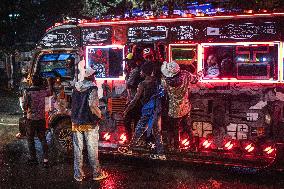
This photo taken on July 18, 2025 shows the passengers on a "matatu" in Nairobi, Kenya. Popularly known as "matatus," the privately owned minibuses are the main means of public transport plying various routes in this East Africa country. Matatus are famous for their bold graffiti, vibrant music, and artistic designs. The energetic vibe they bring reflects the urban culture and hustle of the city. The word "matatu" is a Swahili word meaning "three" which originated from the three pennies passengers used to pay when the industry began in the 1970s. Photo by Wang Guansen/Xinhua/ABACAPRESS.COM

  •  
Matatus in Nairobi

Matatus in Nairobi

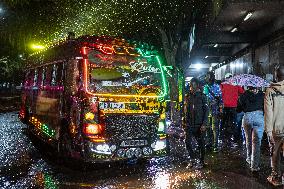
A "matatu" waits for passengers in Nairobi, Kenya, on July 18, 2025. Popularly known as "matatus," the privately owned minibuses are the main means of public transport plying various routes in this East Africa country. Matatus are famous for their bold graffiti, vibrant music, and artistic designs. The energetic vibe they bring reflects the urban culture and hustle of the city. The word "matatu" is a Swahili word meaning "three" which originated from the three pennies passengers used to pay when the industry began in the 1970s. Photo by Wang Guansen/Xinhua/ABACAPRESS.COM

  •  
Matatus in Nairobi

Matatus in Nairobi

A matatu driver steers a vehicle on the route from Nairobi downtown to Ngong town in Kenya, on July 18, 2025. Popularly known as "matatus," the privately owned minibuses are the main means of public transport plying various routes in this East Africa country. Matatus are famous for their bold graffiti, vibrant music, and artistic designs. The energetic vibe they bring reflects the urban culture and hustle of the city. The word "matatu" is a Swahili word meaning "three" which originated from the three pennies passengers used to pay when the industry began in the 1970s. Photo by Wang Guansen/Xinhua/ABACAPRESS.COM

  •  
Matatus in Nairobi

Matatus in Nairobi

A conductor collects fares on a "matatu" in Nairobi, Kenya, on July 18, 2025. Popularly known as "matatus," the privately owned minibuses are the main means of public transport plying various routes in this East Africa country. Matatus are famous for their bold graffiti, vibrant music, and artistic designs. The energetic vibe they bring reflects the urban culture and hustle of the city. The word "matatu" is a Swahili word meaning "three" which originated from the three pennies passengers used to pay when the industry began in the 1970s. Photo by Wang Guansen/Xinhua/ABACAPRESS.COM

  •  
Matatus in Nairobi

Matatus in Nairobi

People cheer around a "matatu" as it plays music in Nairobi, Kenya, on July 18, 2025. Popularly known as "matatus," the privately owned minibuses are the main means of public transport plying various routes in this East Africa country. Matatus are famous for their bold graffiti, vibrant music, and artistic designs. The energetic vibe they bring reflects the urban culture and hustle of the city. The word "matatu" is a Swahili word meaning "three" which originated from the three pennies passengers used to pay when the industry began in the 1970s. Photo by Wang Guansen/Xinhua/ABACAPRESS.COM

  •  
Matatus in Nairobi

Matatus in Nairobi

This photo taken on July 18, 2025 shows the passengers on a "matatu" in Nairobi, Kenya. Popularly known as "matatus," the privately owned minibuses are the main means of public transport plying various routes in this East Africa country. Matatus are famous for their bold graffiti, vibrant music, and artistic designs. The energetic vibe they bring reflects the urban culture and hustle of the city. The word "matatu" is a Swahili word meaning "three" which originated from the three pennies passengers used to pay when the industry began in the 1970s. Photo by Wang Guansen/Xinhua/ABACAPRESS.COM

  •  
Matatus in Nairobi

Matatus in Nairobi

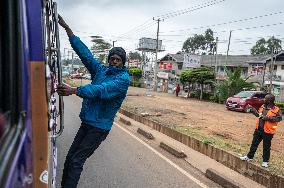
A matatu conductor jumps on the vehicle after departure in Nairobi, Kenya, on July 18, 2025. Popularly known as "matatus," the privately owned minibuses are the main means of public transport plying various routes in this East Africa country. Matatus are famous for their bold graffiti, vibrant music, and artistic designs. The energetic vibe they bring reflects the urban culture and hustle of the city. The word "matatu" is a Swahili word meaning "three" which originated from the three pennies passengers used to pay when the industry began in the 1970s. Photo by Wang Guansen/Xinhua/ABACAPRESS.COM

  •  
Matatus in Nairobi

Matatus in Nairobi

A "matatu" waits for passengers in Nairobi, Kenya, on July 18, 2025. Popularly known as "matatus," the privately owned minibuses are the main means of public transport plying various routes in this East Africa country. Matatus are famous for their bold graffiti, vibrant music, and artistic designs. The energetic vibe they bring reflects the urban culture and hustle of the city. The word "matatu" is a Swahili word meaning "three" which originated from the three pennies passengers used to pay when the industry began in the 1970s. Photo by Wang Guansen/Xinhua/ABACAPRESS.COM

  •  
Matatus in Nairobi

Matatus in Nairobi

A matatu conductor calls out for passengers in Nairobi, Kenya, on July 18, 2025. Popularly known as "matatus," the privately owned minibuses are the main means of public transport plying various routes in this East Africa country. Matatus are famous for their bold graffiti, vibrant music, and artistic designs. The energetic vibe they bring reflects the urban culture and hustle of the city. The word "matatu" is a Swahili word meaning "three" which originated from the three pennies passengers used to pay when the industry began in the 1970s. Photo by Wang Guansen/Xinhua/ABACAPRESS.COM

  •  
Matatus in Nairobi

Matatus in Nairobi

Passengers wait inside a "matatu" before departure in Nairobi, Kenya, on July 18, 2025. Popularly known as "matatus," the privately owned minibuses are the main means of public transport plying various routes in this East Africa country. Matatus are famous for their bold graffiti, vibrant music, and artistic designs. The energetic vibe they bring reflects the urban culture and hustle of the city. The word "matatu" is a Swahili word meaning "three" which originated from the three pennies passengers used to pay when the industry began in the 1970s. Photo by Wang Guansen/Xinhua/ABACAPRESS.COM

  •  
Prime Ministers of Ukraine and Finland meet in Kyiv

Prime Ministers of Ukraine and Finland meet in Kyiv

Prime Minister of Ukraine Denys Shmyhal, Prime Minister of the Republic of Finland Petteri Orpo and Deputy Prime Minister of Ukraine for Innovation, Education, Science and Technology Development and Minister of Digital Transformation of Ukraine Mykhailo Fedorov (L to R) get familiar with domestic defence industry designs, Kyiv, Ukraine, on May 28, 2025. (Photo by Danylo Antoniuk/Ukrinform)

  •  
Prime Ministers of Ukraine and Finland meet in Kyiv

Prime Ministers of Ukraine and Finland meet in Kyiv

Prime Minister of the Republic of Finland Petteri Orpo and Prime Minister of Ukraine Denys Shmyhal (R to L) look at domestic defence industry designs, Kyiv, Ukraine, on May 28, 2025. (Photo by Danylo Antoniuk/Ukrinform)

  •  
Prime Ministers of Ukraine and Finland meet in Kyiv

Prime Ministers of Ukraine and Finland meet in Kyiv

Prime Minister of Ukraine Denys Shmyhal (R) and Prime Minister of the Republic of Finland Petteri Orpo get familiar with domestic defence industry designs, Kyiv, Ukraine, on May 28, 2025. (Photo by Danylo Antoniuk/Ukrinform)

  •  
Prime Ministers of Ukraine and Finland meet in Kyiv

Prime Ministers of Ukraine and Finland meet in Kyiv

Prime Minister of Ukraine Denys Shmyhal (L) and Prime Minister of the Republic of Finland Petteri Orpo get familiar with domestic defence industry designs, Kyiv, Ukraine, on May 28, 2025. (Photo by Danylo Antoniuk/Ukrinform)

  •  
Youths paint designs on the road to celebrate Bengali New Year

Youths paint designs on the road to celebrate Bengali New Year

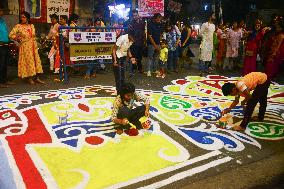
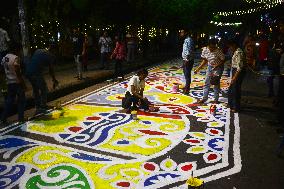
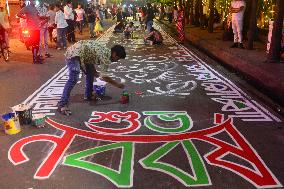
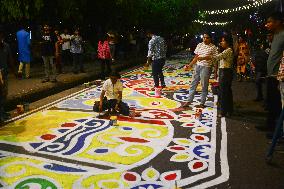
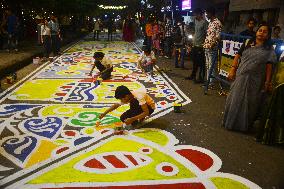
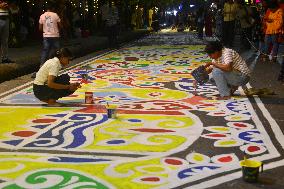
Indian Hindu Bengali youths paint designs on the road during celebrations to mark the eve of the Bengali New Year in the Bengali calendar in Siliguri, India on April 14, 2025. Photo by Diptendu Dutta/Middle East Images/ABACAPRESS.COM

  •  
Youths paint designs on the road to celebrate Bengali New Year

Youths paint designs on the road to celebrate Bengali New Year

Indian Hindu Bengali youths paint designs on the road during celebrations to mark the eve of the Bengali New Year in the Bengali calendar in Siliguri, India on April 14, 2025. Photo by Diptendu Dutta/Middle East Images/ABACAPRESS.COM

  •  
Youths paint designs on the road to celebrate Bengali New Year

Youths paint designs on the road to celebrate Bengali New Year

Indian Hindu Bengali youths paint designs on the road during celebrations to mark the eve of the Bengali New Year in the Bengali calendar in Siliguri, India on April 14, 2025. Photo by Diptendu Dutta/Middle East Images/ABACAPRESS.COM

  •  
Youths paint designs on the road to celebrate Bengali New Year

Youths paint designs on the road to celebrate Bengali New Year

Indian Hindu Bengali youths paint designs on the road during celebrations to mark the eve of the Bengali New Year in the Bengali calendar in Siliguri, India on April 14, 2025. Photo by Diptendu Dutta/Middle East Images/ABACAPRESS.COM

  •  
Youths paint designs on the road to celebrate Bengali New Year

Youths paint designs on the road to celebrate Bengali New Year

Indian Hindu Bengali youths paint designs on the road during celebrations to mark the eve of the Bengali New Year in the Bengali calendar in Siliguri, India on April 14, 2025. Photo by Diptendu Dutta/Middle East Images/ABACAPRESS.COM

  •  
Youths paint designs on the road to celebrate Bengali New Year

Youths paint designs on the road to celebrate Bengali New Year

Indian Hindu Bengali youths paint designs on the road during celebrations to mark the eve of the Bengali New Year in the Bengali calendar in Siliguri, India on April 14, 2025. Photo by Diptendu Dutta/Middle East Images/ABACAPRESS.COM

  •  
Lakme Fashion Week In Mumbai

Lakme Fashion Week In Mumbai

A model showcase designs from Za Za's collection on the runway at Lakme Fashion Week in Mumbai, India, on March 28, 2025. EDITORIAL USE ONLY. Photo by Indranil Aditya/Middle East Images/ABACAPRESS.COM

  •  
Lakme Fashion Week In Mumbai

Lakme Fashion Week In Mumbai

A model showcase designs from Salim Azam's collection on the runway at Lakme Fashion Week in Mumbai, India, on March 29, 2025. EDITORIAL USE ONLY. Photo by Indranil Aditya/Middle East Images/ABACAPRESS.COM

  •  
Lakme Fashion Week In Mumbai

Lakme Fashion Week In Mumbai

A model showcase designs from Salim Azzam's collection on the runway at Lakme Fashion Week in Mumbai, India, on March 29, 2025. EDITORIAL USE ONLY. Photo by Indranil Aditya/Middle East Images/ABACAPRESS.COM

  •  
Lakme Fashion Week In Mumbai

Lakme Fashion Week In Mumbai

A model showcase designs from Za Za's collection on the runway at Lakme Fashion Week in Mumbai, India, on March 28, 2025. EDITORIAL USE ONLY. Photo by Indranil Aditya/Middle East Images/ABACAPRESS.COM

  •  
Lakme Fashion Week In Mumbai

Lakme Fashion Week In Mumbai

Models showcase designs from Asos's collection on the runway at Lakme Fashion Week in Mumbai, India, on March 29, 2025. EDITORIAL USE ONLY. Photo by Indranil Aditya/Middle East Images/ABACAPRESS.COM

  •  
Lakme Fashion Week In Mumbai

Lakme Fashion Week In Mumbai

A model showcase designs from Kazna Asker's collection on the runway at Lakme Fashion Week in Mumbai, India, on March 29, 2025. EDITORIAL USE ONLY. Photo by Indranil Aditya/Middle East Images/ABACAPRESS.COM

  •  
Lakme Fashion Week In Mumbai

Lakme Fashion Week In Mumbai

A model showcase designs from Kazna Asker's collection on the runway at Lakme Fashion Week in Mumbai, India, on March 29, 2025. EDITORIAL USE ONLY. Photo by Indranil Aditya/Middle East Images/ABACAPRESS.COM

  •  
Lakme Fashion Week In Mumbai

Lakme Fashion Week In Mumbai

Karan Johar, Indian film maker and film producer showcase designs from Falguni Shane's collection on the runway at Lakme Fashion Week in Mumbai, India, on March 28, 2025. EDITORIAL USE ONLY. Photo by Indranil Aditya/Middle East Images/ABACAPRESS.COM

  •  
Lakme Fashion Week In Mumbai

Lakme Fashion Week In Mumbai

A model showcase designs from Yousef Akbar's collection on the runway at Lakme Fashion Week in Mumbai, India, on March 29, 2025. EDITORIAL USE ONLY. Photo by Indranil Aditya/Middle East Images/ABACAPRESS.COM

  •  
Lakme Fashion Week In Mumbai

Lakme Fashion Week In Mumbai

A model showcase designs from Namrata Joshipura's collection on the runway at Lakme Fashion Week in Mumbai, India, on March 28, 2025. EDITORIAL USE ONLY. Photo by Indranil Aditya/Middle East Images/ABACAPRESS.COM

  •  
Lakme Fashion Week In Mumbai

Lakme Fashion Week In Mumbai

Bollywood actress Malaika Arora reacts to the towards the media as she showcase designs from Amit Aggarwal's collection on the runway at Lakme Fashion Week in Mumbai, India, on March 28, 2025. EDITORIAL USE ONLY. Photo by Indranil Aditya/Middle East Images/ABACAPRESS.COM

  •  
Lakme Fashion Week In Mumbai

Lakme Fashion Week In Mumbai

A model showcase designs from Namrata Joshipura's collection on the runway at Lakme Fashion Week in Mumbai, India, on March 28, 2025. EDITORIAL USE ONLY. Photo by Indranil Aditya/Middle East Images/ABACAPRESS.COM

  •  
Lakme Fashion Week In Mumbai

Lakme Fashion Week In Mumbai

Bollywood actress Tamannaah Bhatia showcase designs from Falguni Shane's collection on the runway at Lakme Fashion Week in Mumbai, India, on March 28, 2025. EDITORIAL USE ONLY. Photo by Indranil Aditya/Middle East Images/ABACAPRESS.COM

  •  
Lakme Fashion Week In Mumbai

Lakme Fashion Week In Mumbai

A model showcase designs from Namrata Joshipura's collection on the runway at Lakme Fashion Week in Mumbai, India, on March 28, 2025. EDITORIAL USE ONLY. Photo by Indranil Aditya/Middle East Images/ABACAPRESS.COM

  •  
Lakme Fashion Week In Mumbai

Lakme Fashion Week In Mumbai

A model showcase designs from Za Za's collection on the runway at Lakme Fashion Week in Mumbai, India, on March 28, 2025. EDITORIAL USE ONLY. Photo by Indranil Aditya/Middle East Images/ABACAPRESS.COM

  •  
Lakme Fashion Week In Mumbai

Lakme Fashion Week In Mumbai

Mirror reflections of a model showcasing designs from Rahul's collection on the runway at Lakme Fashion Week in Mumbai, India, on March 29, 2025. EDITORIAL USE ONLY. Photo by Indranil Aditya/Middle East Images/ABACAPRESS.COM

  •  
Lakme Fashion Week In Mumbai

Lakme Fashion Week In Mumbai

A model showcase designs from Yousef Akbar's collection on the runway at Lakme Fashion Week in Mumbai, India, on March 29, 2025. EDITORIAL USE ONLY. Photo by Indranil Aditya/Middle East Images/ABACAPRESS.COM

  •  
Lakme Fashion Week In Mumbai

Lakme Fashion Week In Mumbai

A model showcase designs from Za Za's collection on the runway at Lakme Fashion Week in Mumbai, India, on March 28, 2025. EDITORIAL USE ONLY. Photo by Indranil Aditya/Middle East Images/ABACAPRESS.COM

  • Main
  • Top
  • Editorial
  • Creative
  • About Us
  • About ILG
  • Terms of use
  • Company
  • BEHIND
  • Price List
  • Single Plan
  • Monthly Plan
  • Services
  • Shooting
  • Rights Clearance
  • Support
  • FAQ
  • How To Buy
  • Contact Us
  • Become a Partner

© KYODO NEWS IMAGES INC

All Rights Reserved.

  • Editorial
  • Olympics
  • News
  • Sports
  • Japan
  • Tech
  • Royal
  • Disaster
  • NorthKorea
  • Old Japan
  • SNS

  • Creative
  • Food
  • Japan
  • Landscape
  • Animal
  • Popular
  • #Ukraine
  • #Russia
  • #coronavirus
  • #N. Korea
  • #China
  • #Thailand
  • #Ukraine
  • #Russia
  • #coronavirus
  • #N. Korea
  • #China
  • #Thailand
  • Food
  • Japan
  • Landscape
  • Animal
  • Olympics
  • News
  • Sports
  • Japan
  • Tech
  • Royal
  • Disaster
  • NorthKorea
  • Old Japan
  • SNS