•  
Satellite View of Shark Bay UNESCO World Heritage Site - Australia

Satellite View of Shark Bay UNESCO World Heritage Site - Australia

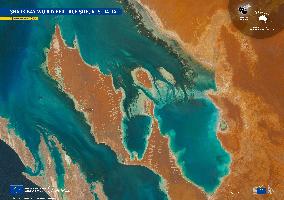
Handout satellite view, dated on November 26, 2025, shows the Shark Bay UNESCO World Heritage Site. Shark Bay, located on the western coast of Australia, is a UNESCO World Heritage Site renowned for its exceptional natural beauty, including unique marine biodiversity and one of the world's most extensive seagrass beds. The site is globally significant for its ecological processes, geological formations, and as a habitat for threatened species such as dugongs and green turtles. These fragile ecosystems are highly sensitive to changes in water quality, sea temperature, and coastal development. This Copernicus Sentinel-2 image, acquired on 26 November 2025, shows the striking coastal and marine features of Shark Bay in high resolution. The contrasting colours reveal shallow sandbanks, seagrass meadows, and hypersaline basins, as well as the arid terrestrial surroundings near Denham. Photo by European Union, Copernicus Sentinel-2 imagery via ABACAPRESS.COM

  •  
Satellite View of Ouvéa Island - New Caledonia

Satellite View of Ouvéa Island - New Caledonia

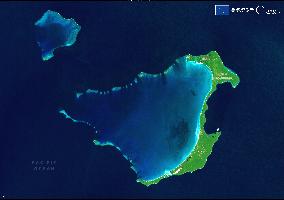
Handout photo dated on April, 17, 2025 shows Satellite View of Ouvéa Island in New Caledonia. Ouvéa Island, part of the Loyalty Islands in New Caledonia, is renowned for its untouched beauty and ecological richness. Protected as a UNESCO World Heritage Site, the island is fringed by one of the world’s most pristine lagoons, home to vibrant coral reefs and endangered species such as dugongs and green sea turtles. The surrounding reef structures support a delicate balance of marine biodiversity, while inland, coastal vegetation and coconut groves provide habitat for endemic birds. This Copernicus Sentinel-2 image, acquired on 17 April 2025, reveals the island’s shape and its spectacular barrier reef. Photo by European Union, Copernicus Sentinel-2 imagery via ABACAPRESS.COM

  •  
Conservationist checks seaweed bed in Oura Bay, Nago

Conservationist checks seaweed bed in Oura Bay, Nago

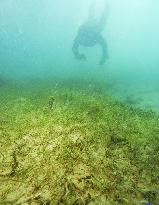
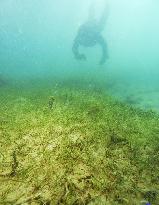
NAGO, Japan - A survey by the Nature Conservation Society of Japan is conducted in Oura Bay in Nago, Okinawa Prefecture, on Aug. 22, 2014. No trace of dugongs eating seaweed there was found during the survey. The society's Mariko Abe suggested it is highly likely the marine mammals have abandoned the area as a feeding ground due to an influence of the presence of boats for drilling survey and others for the planned relocation of the U.S. Marine Corps' Futenma airbase.

  •  
Conservationist checks seaweed bed in Oura Bay, Nago

Conservationist checks seaweed bed in Oura Bay, Nago

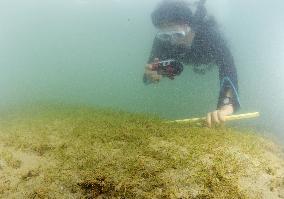
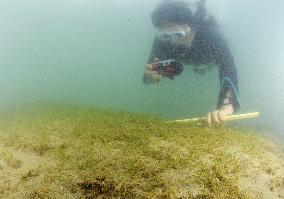
NAGO, Japan - The Nature Conservation Society of Japan's Mariko Abe examines a bed of seaweed which dugongs can feed on in Oura Bay, Nago in Okinawa Prefecture, Japan, on Aug. 22, 2014.

  •  
Tokyo rally against relocation of U.S. base in Okinawa

Tokyo rally against relocation of U.S. base in Okinawa

TOKYO, Japan - Protesters march with dugong balloons in Tokyo on Jan. 30, 2010, against the planned relocation of a U.S. Marine Corps airfield within Okinawa Prefecture. Dugongs, which are endangered, have been seen near the relocation site.

  •  
Japanese group to sue Pentagon with dugongs

Japanese group to sue Pentagon with dugongs

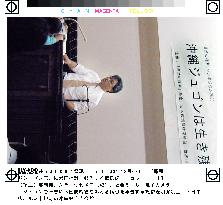
NAHA, Japan - Takaaki Kagohashi, one of lawyers, who lead a group of environmentalists, tells an international symposium on protection of dugongs in Naha, Okinawa Prefecture, on Dec. 2, that the group is planning to sue the U.S. Defense Department with dugongs and other rare animals living in and around the Heneko district of the southernmost island prefecture's city of Nago, the planned offshore construction site of a new civilian-military airport.

  •  
Conservationist checks seaweed bed in Oura Bay, Nago

Conservationist checks seaweed bed in Oura Bay, Nago

NAGO, Japan - The Nature Conservation Society of Japan's Mariko Abe examines a bed of seaweed which dugongs can feed on in Oura Bay, Nago in Okinawa Prefecture, Japan, on Aug. 22, 2014. (Kyodo)

  •  
Conservationist checks seaweed bed in Oura Bay, Nago

Conservationist checks seaweed bed in Oura Bay, Nago

NAGO, Japan - A survey by the Nature Conservation Society of Japan is conducted in Oura Bay in Nago, Okinawa Prefecture, on Aug. 22, 2014. No trace of dugongs eating seaweed there was found during the survey. The society's Mariko Abe suggested it is highly likely the marine mammals have abandoned the area as a feeding ground due to an influence of the presence of boats for drilling survey and others for the planned relocation of the U.S. Marine Corps' Futenma airbase. (Kyodo)

  •  
Tokyo rally against relocation of U.S. base in Okinawa

Tokyo rally against relocation of U.S. base in Okinawa

TOKYO, Japan - Protesters march with dugong balloons in Tokyo on Jan. 30, 2010, against the planned relocation of a U.S. Marine Corps airfield within Okinawa Prefecture. Dugongs, which are endangered, have been seen near the relocation site. (Kyodo)

  • Main
  • Top
  • Editorial
  • Creative
  • About Us
  • About ILG
  • Terms of use
  • Company
  • BEHIND
  • Price List
  • Single Plan
  • Monthly Plan
  • Services
  • Shooting
  • Rights Clearance
  • Support
  • FAQ
  • How To Buy
  • Contact Us
  • Become a Partner

© KYODO NEWS IMAGES INC

All Rights Reserved.

  • Editorial
  • Olympics
  • News
  • Sports
  • Japan
  • Tech
  • Royal
  • Disaster
  • NorthKorea
  • Old Japan
  • SNS
  • Creative
  • Food
  • Japan
  • Landscape
  • Animal
  • Popular
  • #Ukraine
  • #Russia
  • #coronavirus
  • #N. Korea
  • #Thailand
  • #China
  • #Ukraine
  • #Russia
  • #coronavirus
  • #N. Korea
  • #Thailand
  • #China
  • Food
  • Japan
  • Landscape
  • Animal
  • Olympics
  • News
  • Sports
  • Japan
  • Tech
  • Royal
  • Disaster
  • NorthKorea
  • Old Japan
  • SNS