•  
Tourism Developments In Zhaoxing Dong Village - China

Tourism Developments In Zhaoxing Dong Village - China

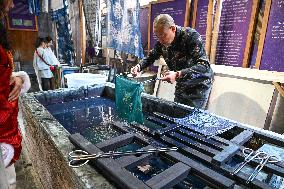
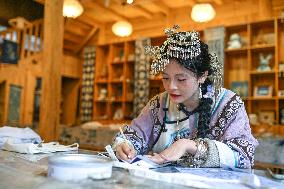
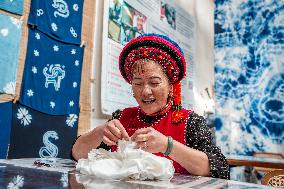
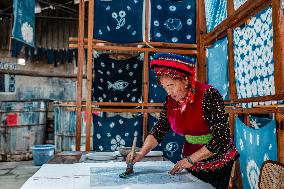
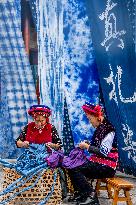
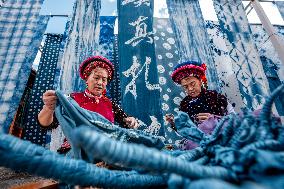
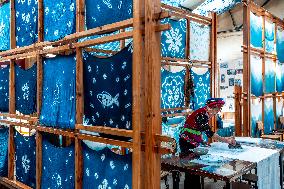
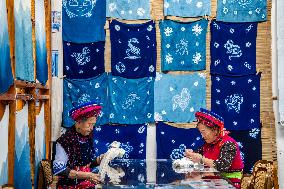
A tourist tries batik making at a rural cooperative in Zhaoxing Dong village of Liping County, southwest China's Guizhou Province, Dec. 20, 2025. Zhaoxing Dong village, home to a captivating cultural landscape, has seen an influx of tourists as the Dong New Year approaches. In recent years, the local government has leveraged the village's rich Dong ethnic cultural resources in developing the tourism industry. Boosted by tourism and other feature industries, the local Dong people have improved their living standards by inheriting traditional craftsmanship, developing ethnic handicrafts, launching cultural and creative products, and expanding the homestay and catering businesses. Photo by Yang Wenbin/Xinhua/ABACAPRESS.COM

  •  
Tourism Developments In Zhaoxing Dong Village - China

Tourism Developments In Zhaoxing Dong Village - China

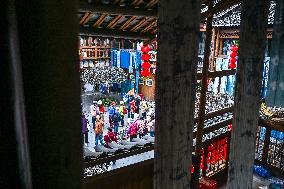
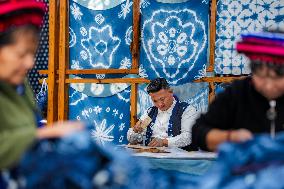
Tourists visit a rural cooperative in Zhaoxing Dong village of Liping County, southwest China's Guizhou Province, Dec. 19, 2025. Zhaoxing Dong village, home to a captivating cultural landscape, has seen an influx of tourists as the Dong New Year approaches. In recent years, the local government has leveraged the village's rich Dong ethnic cultural resources in developing the tourism industry. Boosted by tourism and other feature industries, the local Dong people have improved their living standards by inheriting traditional craftsmanship, developing ethnic handicrafts, launching cultural and creative products, and expanding the homestay and catering businesses. Photo by Yang Wenbin/Xinhua/ABACAPRESS.COM

  •  
Tourism Developments In Zhaoxing Dong Village - China

Tourism Developments In Zhaoxing Dong Village - China

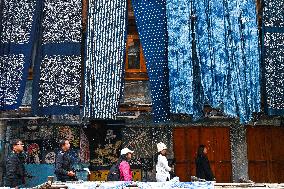
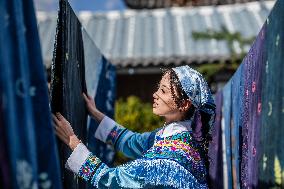
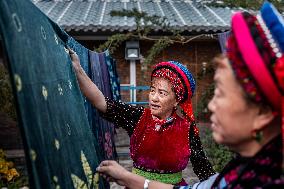
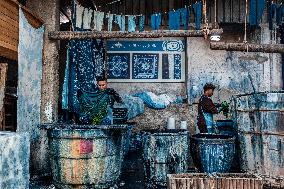
Locals dry Dong cloth in Zhaoxing Dong village of Liping County, southwest China's Guizhou Province, Dec. 19, 2025. Zhaoxing Dong village, home to a captivating cultural landscape, has seen an influx of tourists as the Dong New Year approaches. In recent years, the local government has leveraged the village's rich Dong ethnic cultural resources in developing the tourism industry. Boosted by tourism and other feature industries, the local Dong people have improved their living standards by inheriting traditional craftsmanship, developing ethnic handicrafts, launching cultural and creative products, and expanding the homestay and catering businesses. Photo by Yang Wenbin/Xinhua/ABACAPRESS.COM

  •  
Tourism Developments In Zhaoxing Dong Village - China

Tourism Developments In Zhaoxing Dong Village - China

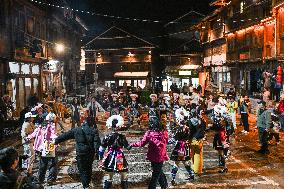
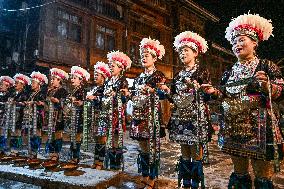
Tourists dance with locals in Zhaoxing Dong village of Liping County, southwest China's Guizhou Province, Dec. 19, 2025. Zhaoxing Dong village, home to a captivating cultural landscape, has seen an influx of tourists as the Dong New Year approaches. In recent years, the local government has leveraged the village's rich Dong ethnic cultural resources in developing the tourism industry. Boosted by tourism and other feature industries, the local Dong people have improved their living standards by inheriting traditional craftsmanship, developing ethnic handicrafts, launching cultural and creative products, and expanding the homestay and catering businesses. Photo by Yang Wenbin/Xinhua/ABACAPRESS.COM

  •  
Tourism Developments In Zhaoxing Dong Village - China

Tourism Developments In Zhaoxing Dong Village - China

Tourists take photos in Zhaoxing Dong village of Liping County, southwest China's Guizhou Province, Dec. 19, 2025. Zhaoxing Dong village, home to a captivating cultural landscape, has seen an influx of tourists as the Dong New Year approaches. In recent years, the local government has leveraged the village's rich Dong ethnic cultural resources in developing the tourism industry. Boosted by tourism and other feature industries, the local Dong people have improved their living standards by inheriting traditional craftsmanship, developing ethnic handicrafts, launching cultural and creative products, and expanding the homestay and catering businesses. Photo by Yang Wenbin/Xinhua/ABACAPRESS.COM

  •  
Tourism Developments In Zhaoxing Dong Village - China

Tourism Developments In Zhaoxing Dong Village - China

Tourists dine at a restaurant in Zhaoxing Dong village of Liping County, southwest China's Guizhou Province, Dec. 19, 2025. Zhaoxing Dong village, home to a captivating cultural landscape, has seen an influx of tourists as the Dong New Year approaches. In recent years, the local government has leveraged the village's rich Dong ethnic cultural resources in developing the tourism industry. Boosted by tourism and other feature industries, the local Dong people have improved their living standards by inheriting traditional craftsmanship, developing ethnic handicrafts, launching cultural and creative products, and expanding the homestay and catering businesses. Photo by Yang Wenbin/Xinhua/ABACAPRESS.COM

  •  
Tourism Developments In Zhaoxing Dong Village - China

Tourism Developments In Zhaoxing Dong Village - China

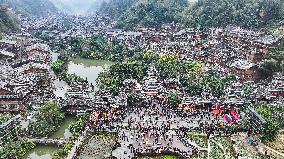
Tourists visit the Zhaoxing Dong village of Liping County, southwest China's Guizhou Province, Dec. 19, 2025. Zhaoxing Dong village, home to a captivating cultural landscape, has seen an influx of tourists as the Dong New Year approaches. In recent years, the local government has leveraged the village's rich Dong ethnic cultural resources in developing the tourism industry. Boosted by tourism and other feature industries, the local Dong people have improved their living standards by inheriting traditional craftsmanship, developing ethnic handicrafts, launching cultural and creative products, and expanding the homestay and catering businesses. Photo by Yang Wenbin/Xinhua/ABACAPRESS.COM

  •  
Tourism Developments In Zhaoxing Dong Village - China

Tourism Developments In Zhaoxing Dong Village - China

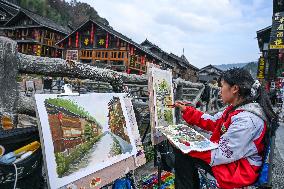
A student works on a painting in Zhaoxing Dong village of Liping County, southwest China's Guizhou Province, Dec. 19, 2025. Zhaoxing Dong village, home to a captivating cultural landscape, has seen an influx of tourists as the Dong New Year approaches. In recent years, the local government has leveraged the village's rich Dong ethnic cultural resources in developing the tourism industry. Boosted by tourism and other feature industries, the local Dong people have improved their living standards by inheriting traditional craftsmanship, developing ethnic handicrafts, launching cultural and creative products, and expanding the homestay and catering businesses. Photo by Yang Wenbin/Xinhua/ABACAPRESS.COM

  •  
Tourism Developments In Zhaoxing Dong Village - China

Tourism Developments In Zhaoxing Dong Village - China

Locals present belts with floral designs to tourists in Zhaoxing Dong village of Liping County, southwest China's Guizhou Province, Dec. 19, 2025. Zhaoxing Dong village, home to a captivating cultural landscape, has seen an influx of tourists as the Dong New Year approaches. In recent years, the local government has leveraged the village's rich Dong ethnic cultural resources in developing the tourism industry. Boosted by tourism and other feature industries, the local Dong people have improved their living standards by inheriting traditional craftsmanship, developing ethnic handicrafts, launching cultural and creative products, and expanding the homestay and catering businesses. Photo by Yang Wenbin/Xinhua/ABACAPRESS.COM

  •  
Tourism Developments In Zhaoxing Dong Village - China

Tourism Developments In Zhaoxing Dong Village - China

An aerial drone photo shows a long-table banquet joined by tourists and locals in Zhaoxing Dong village of Liping County, southwest China's Guizhou Province, Dec. 20, 2025. Zhaoxing Dong village, home to a captivating cultural landscape, has seen an influx of tourists as the Dong New Year approaches. In recent years, the local government has leveraged the village's rich Dong ethnic cultural resources in developing the tourism industry. Boosted by tourism and other feature industries, the local Dong people have improved their living standards by inheriting traditional craftsmanship, developing ethnic handicrafts, launching cultural and creative products, and expanding the homestay and catering businesses. Photo by Yang Wenbin/Xinhua/ABACAPRESS.COM

  •  
Tourism Developments In Zhaoxing Dong Village - China

Tourism Developments In Zhaoxing Dong Village - China

Locals sell cultural and creative products in Zhaoxing Dong village of Liping County, southwest China's Guizhou Province, Dec. 20, 2025. Zhaoxing Dong village, home to a captivating cultural landscape, has seen an influx of tourists as the Dong New Year approaches. In recent years, the local government has leveraged the village's rich Dong ethnic cultural resources in developing the tourism industry. Boosted by tourism and other feature industries, the local Dong people have improved their living standards by inheriting traditional craftsmanship, developing ethnic handicrafts, launching cultural and creative products, and expanding the homestay and catering businesses. Photo by Yang Wenbin/Xinhua/ABACAPRESS.COM

  •  
Tourism Developments In Zhaoxing Dong Village - China

Tourism Developments In Zhaoxing Dong Village - China

A tourist tries batik making at a rural cooperative in Zhaoxing Dong village of Liping County, southwest China's Guizhou Province, Dec. 19, 2025. Zhaoxing Dong village, home to a captivating cultural landscape, has seen an influx of tourists as the Dong New Year approaches. In recent years, the local government has leveraged the village's rich Dong ethnic cultural resources in developing the tourism industry. Boosted by tourism and other feature industries, the local Dong people have improved their living standards by inheriting traditional craftsmanship, developing ethnic handicrafts, launching cultural and creative products, and expanding the homestay and catering businesses. Photo by Yang Wenbin/Xinhua/ABACAPRESS.COM

  •  
Tourism Developments In Zhaoxing Dong Village - China

Tourism Developments In Zhaoxing Dong Village - China

A tourist tries batik making at a rural cooperative in Zhaoxing Dong village of Liping County, southwest China's Guizhou Province, Dec. 19, 2025. Zhaoxing Dong village, home to a captivating cultural landscape, has seen an influx of tourists as the Dong New Year approaches. In recent years, the local government has leveraged the village's rich Dong ethnic cultural resources in developing the tourism industry. Boosted by tourism and other feature industries, the local Dong people have improved their living standards by inheriting traditional craftsmanship, developing ethnic handicrafts, launching cultural and creative products, and expanding the homestay and catering businesses. Photo by Yang Wenbin/Xinhua/ABACAPRESS.COM

  •  
Dong New Year at Zhaoxing Dong Village - Chin

Dong New Year at Zhaoxing Dong Village - Chin

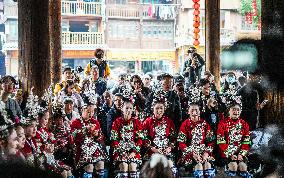
An aerial drone photo taken on Dec. 20, 2025 shows tourists and people of Dong ethnic group celebrating the Dong New Year at Zhaoxing Dong village of Liping County, Qiandongnan Miao and Dong Autonomous Prefecture, southwest China's Guizhou Province. Dong New Year, a traditional festival for harvest and gathering, was enlisted as one of China's national intangible cultural heritages in 2011. Various activities were held in Liping County over the weekend. Photo by Tao Liang /Xinhua/ABACAPRESS.COM

  •  
Dong New Year at Zhaoxing Dong Village - Chin

Dong New Year at Zhaoxing Dong Village - Chin

People sing the grand song of the Dong ethnic group at a drum tower during an event in celebration of Dong New Year at Zhaoxing Dong village of Liping County, Qiandongnan Miao and Dong Autonomous Prefecture, southwest China's Guizhou Province, Dec. 20, 2025. Dong New Year, a traditional festival for harvest and gathering, was enlisted as one of China's national intangible cultural heritages in 2011. Various activities were held in Liping County over the weekend. Photo by Tao Liang /Xinhua/ABACAPRESS.COM

  •  
La Scala Premiere - Milan

La Scala Premiere - Milan

Milan, Piazza della Scala, On the occasion of the premiere at La Scala of "A Lady Macbeth in the Mtsensk District" by Dmitry Shostakovich for the 2025-2026 season, a demonstration "The ceasefire is a Zionist lie, the genocide and ethnic cleansing continue. Let's bring solidarity to the center of Milan!" With CUB, the Palestinian Association in Italy (API), in a separate area, the CIGL demonstration and some musicians from the Teatro alla Scala will play "Choir of Jewish Slaves, Va Pensiero" , on December 7, 2025 in Milan, Italy. Photo by Francesco EnriquezFotogramma/IPA/ABACAPRESS.COM

  •  
La Scala Premiere - Milan

La Scala Premiere - Milan

Milan, Piazza della Scala, On the occasion of the premiere at La Scala of "A Lady Macbeth in the Mtsensk District" by Dmitry Shostakovich. for the 2025-2026 season, Presidium 'The ceasefire is a Zionist lie, genocide and ethnic cleansing continue. Let's bring solidarity to the center of Milan!' " With CUB, Association of Palestinians in Italy (API), in a separate part the CIGL presidium and some musicians of the Teatro alla Scala play , on December 7, 2025 in Milan, Italy. Photo by Francesco EnriquezFotogramma/IPA/ABACAPRESS.COM

  •  
Dutch Royals Visit Suriname - Day 1

Dutch Royals Visit Suriname - Day 1

Mama Sranan. King Willem-Alexander and Queen Maxima are paying a state visit to the Republic of Suriname at the invitation of President Jennifer Geerlings-Simons. King Willem-Alexander and Queen Maxima lay a wreath at the statue of Mama Sranan, which symbolizes "Mother Suriname." The statue depicts a woman holding five children, who represent the ethnic groups of Suriname, on December 1, 2025, in Paramaribo, Suriname. Photo by Patrick van Emst/ NLBeeld/Bruno PRess/ABACAPRESS.COM NLBeeld/Patrick van Emst Credit: NL Beeld / Patrick van Emst

  •  
Dutch Royals Visit Suriname - Day 1

Dutch Royals Visit Suriname - Day 1

Mama Sranan. King Willem-Alexander and Queen Maxima are paying a state visit to the Republic of Suriname at the invitation of President Jennifer Geerlings-Simons. King Willem-Alexander and Queen Maxima lay a wreath at the statue of Mama Sranan, which symbolizes "Mother Suriname." The statue depicts a woman holding five children, who represent the ethnic groups of Suriname, on December 1, 2025, in Paramaribo, Suriname. Photo by Patrick van Emst/ NLBeeld/Bruno PRess/ABACAPRESS.COM NLBeeld/Patrick van Emst Credit: NL Beeld / Patrick van Emst

  •  
Lusheng and Horse Fighting Festival in Rongshui Miao Autonomous County - China

Lusheng and Horse Fighting Festival in Rongshui Miao Autonomous County - China

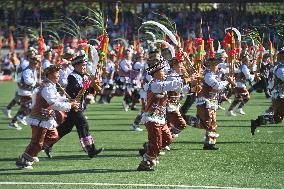
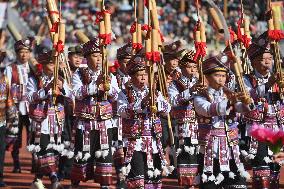
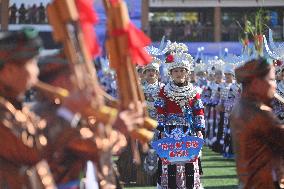
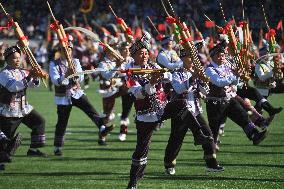
People perform with Lusheng, a traditional reed-pipe wind instrument, to celebrate Lusheng and horse fighting festival in Rongshui Miao Autonomous County, south China's Guangxi Zhuang Autonomous Region, on November 29, 2025. Rongshui County has leveraged its unique cultural resources of Lusheng to strengthen the inheritance of Miao ethnic culture and empower rural revitalization. Photo by Huang Xiaobang/Xinhua/ABACAPRESS.COM

  •  
Lusheng and Horse Fighting Festival in Rongshui Miao Autonomous County - China

Lusheng and Horse Fighting Festival in Rongshui Miao Autonomous County - China

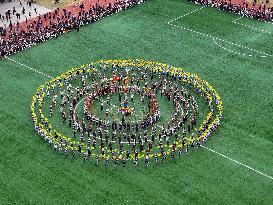
An aerial drone photo taken on on November 29, 2025 shows local residents dancing to the accompaniment of Lusheng, a traditional reed-pipe wind instrument to celebrate Lusheng and horse fighting festival in Rongshui Miao Autonomous County, south China's Guangxi Zhuang Autonomous Region. Rongshui County has leveraged its unique cultural resources of Lusheng to strengthen the inheritance of Miao ethnic culture and empower rural revitalization. Photo by Zheng Changhao/Xinhua/ABACAPRESS.COM

  •  
Lusheng and Horse Fighting Festival in Rongshui Miao Autonomous County - China

Lusheng and Horse Fighting Festival in Rongshui Miao Autonomous County - China

Performers play Lusheng, a traditional reed-pipe wind instrument, to celebrate Lusheng and horse fighting festival in Rongshui Miao Autonomous County, south China's Guangxi Zhuang Autonomous Region, on November 29, 2025. Rongshui County has leveraged its unique cultural resources of Lusheng to strengthen the inheritance of Miao ethnic culture and empower rural revitalization. Photo by Huang Xiaobang/Xinhua/ABACAPRESS.COM

  •  
Lusheng and Horse Fighting Festival in Rongshui Miao Autonomous County - China

Lusheng and Horse Fighting Festival in Rongshui Miao Autonomous County - China

People attend the opening ceremony of the Lusheng and horse fighting festival in Rongshui Miao Autonomous County, south China's Guangxi Zhuang Autonomous Region, on November 29, 2025. Rongshui County has leveraged its unique cultural resources of Lusheng to strengthen the inheritance of Miao ethnic culture and empower rural revitalization. Photo by Huang Xiaobang/Xinhua/ABACAPRESS.COM

  •  
Lusheng and Horse Fighting Festival in Rongshui Miao Autonomous County - China

Lusheng and Horse Fighting Festival in Rongshui Miao Autonomous County - China

People perform with Lusheng, a traditional reed-pipe wind instrument, to celebrate Lusheng and horse fighting festival in Rongshui Miao Autonomous County, south China's Guangxi Zhuang Autonomous Region, on November 29, 2025. Rongshui County has leveraged its unique cultural resources of Lusheng to strengthen the inheritance of Miao ethnic culture and empower rural revitalization. Photo by Huang Xiaobang/Xinhua/ABACAPRESS.COM

  •  
Tie-Dye Technique Of Bai Ethnic Group - Chin

Tie-Dye Technique Of Bai Ethnic Group - Chin

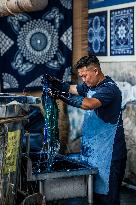
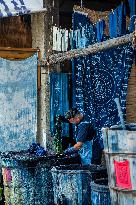
Duan Yuan, an inheritor of the tie-dye technique of Bai ethnic group, makes tie-dye designs in a dyehouse in Zhoucheng Village of Dali Bai Autonomous Prefecture, southwest China's Yunnan Province, November 21, 2025. Known as the hometown of the tie-dye technique of Bai ethnic group, Zhoucheng Village hosts over 200 households engaging in tie-dye businesses, with the number of employees exceeding 4,000. As a traditional folk technique of the Bai ethnic group, tie-dye boasts a history spanning over a thousand years and was included in the first batch of China's national intangible cultural heritage list in 2006. Tying and dyeing are the core steps in the process of making indigo tie-dye products. Artisans use needles and threads to create various patterns on the fabric, which are then dyed with plant-based dyes, resulting in blue backgrounds adorned with vivid white patterns. Photo by Hu Chao/Xinhua/ABACAPRESS.COM

  •  
Tie-Dye Technique Of Bai Ethnic Group - Chin

Tie-Dye Technique Of Bai Ethnic Group - Chin

Duan Yinmei, an inheritor of the tie-dye technique of Bai ethnic group, creates knots on fabrics in a dyehouse in Zhoucheng Village of Dali Bai Autonomous Prefecture, southwest China's Yunnan Province, November 21, 2025. Known as the hometown of the tie-dye technique of Bai ethnic group, Zhoucheng Village hosts over 200 households engaging in tie-dye businesses, with the number of employees exceeding 4,000. As a traditional folk technique of the Bai ethnic group, tie-dye boasts a history spanning over a thousand years and was included in the first batch of China's national intangible cultural heritage list in 2006. Tying and dyeing are the core steps in the process of making indigo tie-dye products. Artisans use needles and threads to create various patterns on the fabric, which are then dyed with plant-based dyes, resulting in blue backgrounds adorned with vivid white patterns. Photo by Hu Chao/Xinhua/ABACAPRESS.COM

  •  
Tie-Dye Technique Of Bai Ethnic Group - Chin

Tie-Dye Technique Of Bai Ethnic Group - Chin

A woman experiences the tie-dye technique of Bai ethnic group in a dyehouse in Zhoucheng Village of Dali Bai Autonomous Prefecture, southwest China's Yunnan Province, November 21, 2025. Known as the hometown of the tie-dye technique of Bai ethnic group, Zhoucheng Village hosts over 200 households engaging in tie-dye businesses, with the number of employees exceeding 4,000. As a traditional folk technique of the Bai ethnic group, tie-dye boasts a history spanning over a thousand years and was included in the first batch of China's national intangible cultural heritage list in 2006. Tying and dyeing are the core steps in the process of making indigo tie-dye products. Artisans use needles and threads to create various patterns on the fabric, which are then dyed with plant-based dyes, resulting in blue backgrounds adorned with vivid white patterns. Photo by Hu Chao/Xinhua/ABACAPRESS.COM

  •  
Tie-Dye Technique Of Bai Ethnic Group - Chin

Tie-Dye Technique Of Bai Ethnic Group - Chin

Duan Yinmei, an inheritor of the tie-dye technique of Bai ethnic group, dyes patterns on fabrics in a dyehouse in Zhoucheng Village of Dali Bai Autonomous Prefecture, southwest China's Yunnan Province, November 21, 2025. Known as the hometown of the tie-dye technique of Bai ethnic group, Zhoucheng Village hosts over 200 households engaging in tie-dye businesses, with the number of employees exceeding 4,000. As a traditional folk technique of the Bai ethnic group, tie-dye boasts a history spanning over a thousand years and was included in the first batch of China's national intangible cultural heritage list in 2006. Tying and dyeing are the core steps in the process of making indigo tie-dye products. Artisans use needles and threads to create various patterns on the fabric, which are then dyed with plant-based dyes, resulting in blue backgrounds adorned with vivid white patterns. Photo by Hu Chao/Xinhua/ABACAPRESS.COM

  •  
Tie-Dye Technique Of Bai Ethnic Group - Chin

Tie-Dye Technique Of Bai Ethnic Group - Chin

Duan Yuan, an inheritor of the tie-dye technique of Bai ethnic group, rinses dyed fabrics in a dyehouse in Zhoucheng Village of Dali Bai Autonomous Prefecture, southwest China's Yunnan Province, November 21, 2025. Known as the hometown of the tie-dye technique of Bai ethnic group, Zhoucheng Village hosts over 200 households engaging in tie-dye businesses, with the number of employees exceeding 4,000. As a traditional folk technique of the Bai ethnic group, tie-dye boasts a history spanning over a thousand years and was included in the first batch of China's national intangible cultural heritage list in 2006. Tying and dyeing are the core steps in the process of making indigo tie-dye products. Artisans use needles and threads to create various patterns on the fabric, which are then dyed with plant-based dyes, resulting in blue backgrounds adorned with vivid white patterns. Photo by Hu Chao/Xinhua/ABACAPRESS.COM

  •  
Tie-Dye Technique Of Bai Ethnic Group - Chin

Tie-Dye Technique Of Bai Ethnic Group - Chin

Duan Yinmei (L), an inheritor of the tie-dye technique of Bai ethnic group, and handicraftsman Duan Lilan dry tie-dye fabrics in a dyehouse in Zhoucheng Village of Dali Bai Autonomous Prefecture, southwest China's Yunnan Province, November 21, 2025. Known as the hometown of the tie-dye technique of Bai ethnic group, Zhoucheng Village hosts over 200 households engaging in tie-dye businesses, with the number of employees exceeding 4,000. As a traditional folk technique of the Bai ethnic group, tie-dye boasts a history spanning over a thousand years and was included in the first batch of China's national intangible cultural heritage list in 2006. Tying and dyeing are the core steps in the process of making indigo tie-dye products. Artisans use needles and threads to create various patterns on the fabric, which are then dyed with plant-based dyes, resulting in blue backgrounds adorned with vivid white patterns. Photo by Hu Chao/Xinhua/ABACAPRESS.COM

  •  
Tie-Dye Technique Of Bai Ethnic Group - Chin

Tie-Dye Technique Of Bai Ethnic Group - Chin

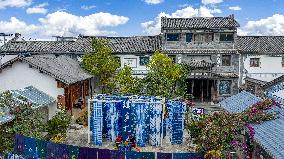
An aerial drone photo shows a scene at a dyehouse in Zhoucheng Village of Dali Bai Autonomous Prefecture, southwest China's Yunnan Province, November 21, 2025. Known as the hometown of the tie-dye technique of Bai ethnic group, Zhoucheng Village hosts over 200 households engaging in tie-dye businesses, with the number of employees exceeding 4,000. As a traditional folk technique of the Bai ethnic group, tie-dye boasts a history spanning over a thousand years and was included in the first batch of China's national intangible cultural heritage list in 2006. Tying and dyeing are the core steps in the process of making indigo tie-dye products. Artisans use needles and threads to create various patterns on the fabric, which are then dyed with plant-based dyes, resulting in blue backgrounds adorned with vivid white patterns. Photo by Hu Chao/Xinhua/ABACAPRESS.COM

  •  
Tie-Dye Technique Of Bai Ethnic Group - Chin

Tie-Dye Technique Of Bai Ethnic Group - Chin

Duan Yinmei (L), an inheritor of the tie-dye technique of Bai ethnic group, and handicraftsman Duan Lilan untie knots on fabrics in a dyehouse in Zhoucheng Village of Dali Bai Autonomous Prefecture, southwest China's Yunnan Province, November 21, 2025. Known as the hometown of the tie-dye technique of Bai ethnic group, Zhoucheng Village hosts over 200 households engaging in tie-dye businesses, with the number of employees exceeding 4,000. As a traditional folk technique of the Bai ethnic group, tie-dye boasts a history spanning over a thousand years and was included in the first batch of China's national intangible cultural heritage list in 2006. Tying and dyeing are the core steps in the process of making indigo tie-dye products. Artisans use needles and threads to create various patterns on the fabric, which are then dyed with plant-based dyes, resulting in blue backgrounds adorned with vivid white patterns. Photo by Hu Chao/Xinhua/ABACAPRESS.COM

  •  
Tie-Dye Technique Of Bai Ethnic Group - Chin

Tie-Dye Technique Of Bai Ethnic Group - Chin

Duan Yinmei (L), an inheritor of the tie-dye technique of Bai ethnic group, and handicraftsman Duan Lilan untie knots on fabrics in a dyehouse in Zhoucheng Village of Dali Bai Autonomous Prefecture, southwest China's Yunnan Province, November 21, 2025. Known as the hometown of the tie-dye technique of Bai ethnic group, Zhoucheng Village hosts over 200 households engaging in tie-dye businesses, with the number of employees exceeding 4,000. As a traditional folk technique of the Bai ethnic group, tie-dye boasts a history spanning over a thousand years and was included in the first batch of China's national intangible cultural heritage list in 2006. Tying and dyeing are the core steps in the process of making indigo tie-dye products. Artisans use needles and threads to create various patterns on the fabric, which are then dyed with plant-based dyes, resulting in blue backgrounds adorned with vivid white patterns. Photo by Hu Chao/Xinhua/ABACAPRESS.COM

  •  
Tie-Dye Technique Of Bai Ethnic Group - Chin

Tie-Dye Technique Of Bai Ethnic Group - Chin

Duan Yuan (L), an inheritor of the tie-dye technique of Bai ethnic group, dyes fabrics in a dyehouse in Zhoucheng Village of Dali Bai Autonomous Prefecture, southwest China's Yunnan Province, November 21, 2025. Known as the hometown of the tie-dye technique of Bai ethnic group, Zhoucheng Village hosts over 200 households engaging in tie-dye businesses, with the number of employees exceeding 4,000. As a traditional folk technique of the Bai ethnic group, tie-dye boasts a history spanning over a thousand years and was included in the first batch of China's national intangible cultural heritage list in 2006. Tying and dyeing are the core steps in the process of making indigo tie-dye products. Artisans use needles and threads to create various patterns on the fabric, which are then dyed with plant-based dyes, resulting in blue backgrounds adorned with vivid white patterns. Photo by Hu Chao/Xinhua/ABACAPRESS.COM

  •  
Tie-Dye Technique Of Bai Ethnic Group - Chin

Tie-Dye Technique Of Bai Ethnic Group - Chin

Duan Yuan, an inheritor of the tie-dye technique of Bai ethnic group, makes tie-dye designs in a dyehouse in Zhoucheng Village of Dali Bai Autonomous Prefecture, southwest China's Yunnan Province, November 21, 2025. Known as the hometown of the tie-dye technique of Bai ethnic group, Zhoucheng Village hosts over 200 households engaging in tie-dye businesses, with the number of employees exceeding 4,000. As a traditional folk technique of the Bai ethnic group, tie-dye boasts a history spanning over a thousand years and was included in the first batch of China's national intangible cultural heritage list in 2006. Tying and dyeing are the core steps in the process of making indigo tie-dye products. Artisans use needles and threads to create various patterns on the fabric, which are then dyed with plant-based dyes, resulting in blue backgrounds adorned with vivid white patterns. Photo by Hu Chao/Xinhua/ABACAPRESS.COM

  •  
Tie-Dye Technique Of Bai Ethnic Group - Chin

Tie-Dye Technique Of Bai Ethnic Group - Chin

Duan Yuan, an inheritor of the tie-dye technique of Bai ethnic group, dyes fabrics in a dyehouse in Zhoucheng Village of Dali Bai Autonomous Prefecture, southwest China's Yunnan Province, November 21, 2025. Known as the hometown of the tie-dye technique of Bai ethnic group, Zhoucheng Village hosts over 200 households engaging in tie-dye businesses, with the number of employees exceeding 4,000. As a traditional folk technique of the Bai ethnic group, tie-dye boasts a history spanning over a thousand years and was included in the first batch of China's national intangible cultural heritage list in 2006. Tying and dyeing are the core steps in the process of making indigo tie-dye products. Artisans use needles and threads to create various patterns on the fabric, which are then dyed with plant-based dyes, resulting in blue backgrounds adorned with vivid white patterns. Photo by Hu Chao/Xinhua/ABACAPRESS.COM

  •  
Tie-Dye Technique Of Bai Ethnic Group - Chin

Tie-Dye Technique Of Bai Ethnic Group - Chin

Duan Yuan, an inheritor of the tie-dye technique of Bai ethnic group, dyes fabrics in a dyehouse in Zhoucheng Village of Dali Bai Autonomous Prefecture, southwest China's Yunnan Province, November 21, 2025. Known as the hometown of the tie-dye technique of Bai ethnic group, Zhoucheng Village hosts over 200 households engaging in tie-dye businesses, with the number of employees exceeding 4,000. As a traditional folk technique of the Bai ethnic group, tie-dye boasts a history spanning over a thousand years and was included in the first batch of China's national intangible cultural heritage list in 2006. Tying and dyeing are the core steps in the process of making indigo tie-dye products. Artisans use needles and threads to create various patterns on the fabric, which are then dyed with plant-based dyes, resulting in blue backgrounds adorned with vivid white patterns. Photo by Hu Chao/Xinhua/ABACAPRESS.COM

  •  
Tie-Dye Technique Of Bai Ethnic Group - Chin

Tie-Dye Technique Of Bai Ethnic Group - Chin

Duan Yuan, an inheritor of the tie-dye technique of Bai ethnic group, makes tie-dye designs in a dyehouse in Zhoucheng Village of Dali Bai Autonomous Prefecture, southwest China's Yunnan Province, November 21, 2025. Known as the hometown of the tie-dye technique of Bai ethnic group, Zhoucheng Village hosts over 200 households engaging in tie-dye businesses, with the number of employees exceeding 4,000. As a traditional folk technique of the Bai ethnic group, tie-dye boasts a history spanning over a thousand years and was included in the first batch of China's national intangible cultural heritage list in 2006. Tying and dyeing are the core steps in the process of making indigo tie-dye products. Artisans use needles and threads to create various patterns on the fabric, which are then dyed with plant-based dyes, resulting in blue backgrounds adorned with vivid white patterns. Photo by Hu Chao/Xinhua/ABACAPRESS.COM

  •  
Tie-Dye Technique Of Bai Ethnic Group - Chin

Tie-Dye Technique Of Bai Ethnic Group - Chin

Duan Yinmei, an inheritor of the tie-dye technique of Bai ethnic group, unties knots on fabrics in a dyehouse in Zhoucheng Village of Dali Bai Autonomous Prefecture, southwest China's Yunnan Province, November 21, 2025. Known as the hometown of the tie-dye technique of Bai ethnic group, Zhoucheng Village hosts over 200 households engaging in tie-dye businesses, with the number of employees exceeding 4,000. As a traditional folk technique of the Bai ethnic group, tie-dye boasts a history spanning over a thousand years and was included in the first batch of China's national intangible cultural heritage list in 2006. Tying and dyeing are the core steps in the process of making indigo tie-dye products. Artisans use needles and threads to create various patterns on the fabric, which are then dyed with plant-based dyes, resulting in blue backgrounds adorned with vivid white patterns. Photo by Hu Chao/Xinhua/ABACAPRESS.COM

  •  
Tie-Dye Technique Of Bai Ethnic Group - Chin

Tie-Dye Technique Of Bai Ethnic Group - Chin

Duan Yinmei, an inheritor of the tie-dye technique of Bai ethnic group, dyes patterns on fabrics in a dyehouse in Zhoucheng Village of Dali Bai Autonomous Prefecture, southwest China's Yunnan Province, November 21, 2025. Known as the hometown of the tie-dye technique of Bai ethnic group, Zhoucheng Village hosts over 200 households engaging in tie-dye businesses, with the number of employees exceeding 4,000. As a traditional folk technique of the Bai ethnic group, tie-dye boasts a history spanning over a thousand years and was included in the first batch of China's national intangible cultural heritage list in 2006. Tying and dyeing are the core steps in the process of making indigo tie-dye products. Artisans use needles and threads to create various patterns on the fabric, which are then dyed with plant-based dyes, resulting in blue backgrounds adorned with vivid white patterns. Photo by Hu Chao/Xinhua/ABACAPRESS.COM

  •  
Tie-Dye Technique Of Bai Ethnic Group - Chin

Tie-Dye Technique Of Bai Ethnic Group - Chin

Duan Yinmei (R), an inheritor of the tie-dye technique of Bai ethnic group, and handicraftsman Duan Lilan create knots on fabrics in a dyehouse in Zhoucheng Village of Dali Bai Autonomous Prefecture, southwest China's Yunnan Province, November 21, 2025. Known as the hometown of the tie-dye technique of Bai ethnic group, Zhoucheng Village hosts over 200 households engaging in tie-dye businesses, with the number of employees exceeding 4,000. As a traditional folk technique of the Bai ethnic group, tie-dye boasts a history spanning over a thousand years and was included in the first batch of China's national intangible cultural heritage list in 2006. Tying and dyeing are the core steps in the process of making indigo tie-dye products. Artisans use needles and threads to create various patterns on the fabric, which are then dyed with plant-based dyes, resulting in blue backgrounds adorned with vivid white patterns. Photo by Hu Chao/Xinhua/ABACAPRESS.COM

  •  
10th China International Copyright Expo in Qingdao

10th China International Copyright Expo in Qingdao

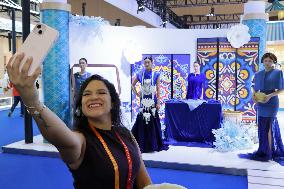
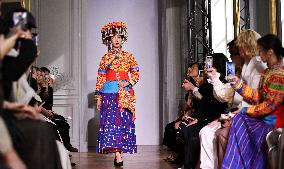
A foreign audience takes a photo with the Ethnic Minority Fashion Exhibition at the 10th China International Copyright Expo in Qingdao, Shandong Province, China on October 16, 2025.

  •  
Xinjiang Tekes Wedding - China

Xinjiang Tekes Wedding - China

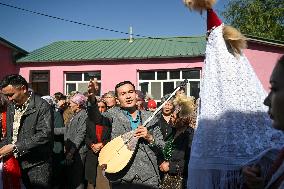
A villager plays the ethnic musical instrument dombra beside the bride Kumusi Yesdawulti in Karadala Township of Tekes County, northwest China's Xinjiang Uygur Autonomous Region, Oct. 11, 2025. A blue sky, white clouds, vast grassland, horses and automobiles set a poetic and picturesque wedding scene for the newlyweds Kumusi Yesdawulti and Bukehan Yelszi. For the couple, having fallen in love a year ago, a traditional wedding ceremony was at the top of their to-do list. Without a hair out of place, Kumusi, dressed head to toe in traditional costume and adorned in a red veil, married her better half Bukehan, describing the wedding as a dream realized. Throughout the wedding festivities, the couple's loved ones congregated to join in the celebration. Some of them played traditional musical instruments, such as dombra, and performed inspiring festive dances, while others lent their hands to prepare local specialties, including naan bread and baursak. A modern outdoor wedding ensued at dusk in a forest park, wher

  •  
PFW - Lisu Ethnic Clothing Runway

PFW - Lisu Ethnic Clothing Runway

A model presents a creation of Lisu ethnic clothing from Yanbian County of southwest China's Sichuan Province as part of the "Sichuan Intangible Cultural Heritage: A Hundred Cites, A Hundred Crafts" cultural event during the 3rd Sino-French fashion and culture festival at the Chinese culture center in Paris, France, October 1, 2025. The 3rd Sino-French fashion and culture festival is held from Sept. 29 to October 6. Photo by Xinhua/Gao Jing/ABACAPRESS.COM

  •  
PFW - Lisu Ethnic Clothing Runway

PFW - Lisu Ethnic Clothing Runway

A model presents a creation of Lisu ethnic clothing from Yanbian County of southwest China's Sichuan Province as part of the "Sichuan Intangible Cultural Heritage: A Hundred Cites, A Hundred Crafts" cultural event during the 3rd Sino-French fashion and culture festival at the Chinese culture center in Paris, France, October 1, 2025. The 3rd Sino-French fashion and culture festival is held from Sept. 29 to October 6. Photo by Xinhua/Gao Jing/ABACAPRESS.COM

  •  
PFW - Lisu Ethnic Clothing Runway

PFW - Lisu Ethnic Clothing Runway

A model presents a creation of Lisu ethnic clothing from Yanbian County of southwest China's Sichuan Province as part of the "Sichuan Intangible Cultural Heritage: A Hundred Cites, A Hundred Crafts" cultural event during the 3rd Sino-French fashion and culture festival at the Chinese culture center in Paris, France, October 1, 2025. The 3rd Sino-French fashion and culture festival is held from Sept. 29 to October 6. Photo by Xinhua/Gao Jing/ABACAPRESS.COM

  •  
PFW - Lisu Ethnic Clothing Runway

PFW - Lisu Ethnic Clothing Runway

A model presents a creation of Lisu ethnic clothing from Yanbian County of southwest China's Sichuan Province as part of the "Sichuan Intangible Cultural Heritage: A Hundred Cites, A Hundred Crafts" cultural event during the 3rd Sino-French fashion and culture festival at the Chinese culture center in Paris, France, October 1, 2025. The 3rd Sino-French fashion and culture festival is held from Sept. 29 to October 6. Photo by Xinhua/Gao Jing/ABACAPRESS.COM

  •  
PFW - Lisu Ethnic Clothing Runway

PFW - Lisu Ethnic Clothing Runway

A model presents a creation of Lisu ethnic clothing from Yanbian County of southwest China's Sichuan Province as part of the "Sichuan Intangible Cultural Heritage: A Hundred Cites, A Hundred Crafts" cultural event during the 3rd Sino-French fashion and culture festival at the Chinese culture center in Paris, France, October 1, 2025. The 3rd Sino-French fashion and culture festival is held from Sept. 29 to October 6. Photo by Xinhua/Gao Jing/ABACAPRESS.COM

  •  
PFW - Lisu Ethnic Clothing Runway

PFW - Lisu Ethnic Clothing Runway

A model presents a creation of Lisu ethnic clothing from Yanbian County of southwest China's Sichuan Province as part of the "Sichuan Intangible Cultural Heritage: A Hundred Cites, A Hundred Crafts" cultural event during the 3rd Sino-French fashion and culture festival at the Chinese culture center in Paris, France, October 1, 2025. The 3rd Sino-French fashion and culture festival is held from Sept. 29 to October 6. Photo by Xinhua/Gao Jing/ABACAPRESS.COM

  •  
PFW - Lisu Ethnic Clothing Runway

PFW - Lisu Ethnic Clothing Runway

A model presents a creation of Lisu ethnic clothing from Yanbian County of southwest China's Sichuan Province as part of the "Sichuan Intangible Cultural Heritage: A Hundred Cites, A Hundred Crafts" cultural event during the 3rd Sino-French fashion and culture festival at the Chinese culture center in Paris, France, October 1, 2025. The 3rd Sino-French fashion and culture festival is held from Sept. 29 to October 6. Photo by Xinhua/Gao Jing/ABACAPRESS.COM

  • Main
  • Top
  • Editorial
  • Creative
  • About Us
  • About ILG
  • Terms of use
  • Company
  • BEHIND
  • Price List
  • Single Plan
  • Monthly Plan
  • Services
  • Shooting
  • Rights Clearance
  • Support
  • FAQ
  • How To Buy
  • Contact Us
  • Become a Partner

© KYODO NEWS IMAGES INC

All Rights Reserved.

  • Editorial
  • Olympics
  • News
  • Sports
  • Japan
  • Tech
  • Royal
  • Disaster
  • NorthKorea
  • Old Japan
  • SNS
  • Creative
  • Food
  • Japan
  • Landscape
  • Animal
  • Popular
  • #Ukraine
  • #China
  • #coronavirus
  • #N. Korea
  • #Thailand
  • #Russia
  • #Ukraine
  • #China
  • #coronavirus
  • #N. Korea
  • #Thailand
  • #Russia
  • Food
  • Japan
  • Landscape
  • Animal
  • Olympics
  • News
  • Sports
  • Japan
  • Tech
  • Royal
  • Disaster
  • NorthKorea
  • Old Japan
  • SNS