•  
Train Derailment Aftermath - Adamuz

Train Derailment Aftermath - Adamuz

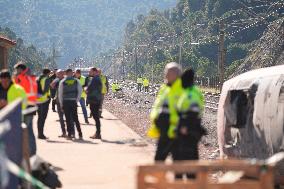
Emergency Services agents work at the scene of the accident, 20 January 2026, in Adamuz, Cordoba, Andalusia (Spain). The derailment of a high-speed train and the subsequent collision with another convoy, which occurred on Sunday afternoon in Adamuz (Córdoba), has left an extensive emergency operation in place, the suspension of several rail connections and an investigation open to clarify the causes. The number of people killed in the train derailment reached at least 41 on Tuesday, with a total of 122 people being treated in the accident, including 117 adults and five children. There are currently 39 people in hospital - 37 adults and four children. Photo by Joaquin Corchero/Europa Press/ABACAPRESS.COM

  •  
Train Derailment Aftermath - Adamuz

Train Derailment Aftermath - Adamuz

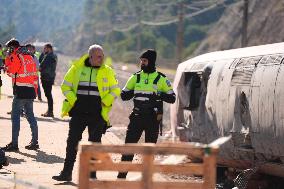
Emergency Services agents work at the scene of the accident, 20 January 2026, in Adamuz, Cordoba, Andalusia (Spain). The derailment of a high-speed train and the subsequent collision with another convoy, which occurred on Sunday afternoon in Adamuz (Córdoba), has left an extensive emergency operation in place, the suspension of several rail connections and an investigation open to clarify the causes. The number of people killed in the train derailment reached at least 41 on Tuesday, with a total of 122 people being treated in the accident, including 117 adults and five children. There are currently 39 people in hospital - 37 adults and four children. Photo by Joaquin Corchero/Europa Press/ABACAPRESS.COM

  •  
Rescue Efforts Continue After Tragedy In Adamuz - Spain

Rescue Efforts Continue After Tragedy In Adamuz - Spain

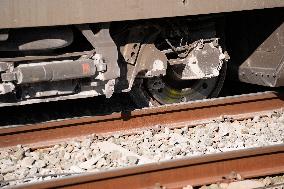
View of the wheels of one of the wagons of the Iryo train outside the rails of the track, on 20 January 2026, in Adamuz, Córdoba, Andalusia (Spain). The derailment of a high-speed train and the subsequent collision with another convoy, which occurred on Sunday afternoon in Adamuz (Cordoba), has left an extensive emergency operation in place, the suspension of several rail connections and an open investigation to clarify the causes. The number of people killed in the train derailment reached at least 41 on Tuesday, with a total of 122 people being treated in the accident, including 117 adults and five children. There are currently 39 people in hospital - 37 adults and four children. Photo by Joaquin Corchero / Europa Press / ABACAPRESS.COM

  •  
Rescue Efforts Continue After Tragedy In Adamuz - Spain

Rescue Efforts Continue After Tragedy In Adamuz - Spain

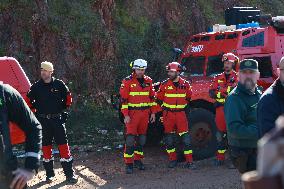
Emergency Services agents work at the scene of the accident, 20 January 2026, in Adamuz, Cordoba, Andalusia (Spain). The derailment of a high-speed train and the subsequent collision with another convoy, which occurred on Sunday afternoon in Adamuz (Córdoba), has left an extensive emergency operation underway, the suspension of several rail connections and an investigation open to clarify the causes. The number of people killed in the train derailment reached at least 41 on Tuesday, with a total of 122 people being treated in the accident, including 117 adults and five children. There are currently 39 people in hospital - 37 adults and four children. 20 JANUARY 2026;UME;CIVIL GUARD;PIXELATED Photo by Rocío Ruz / Europa Press / ABACAPRESS.COM

  •  
Israeli Airstrike in Lebanon

Israeli Airstrike in Lebanon

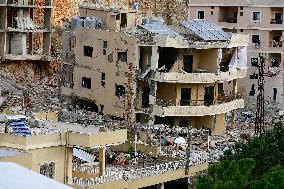
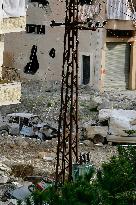
This photo taken on January 12, 2026 shows residential buildings destroyed in Israeli airstrikes in Kfar Hatta, southern Lebanon. The Israeli forces carried out on Sunday afternoon airstrikes on the village of Kfar Hatta in southern Lebanon's Litani River area, Lebanon's official National News Agency (NNA) reported. A Lebanese security source told Xinhua that Israeli warplanes carried out more than 35 airstrikes in three waves, firing around 70 missiles at Hezbollah positions and residential buildings in Kfar Hatta. The strikes caused extensive destruction, damaging dozens of homes. Photo by Ali Hashisho/Xinhua/ABACAPRESS.COM

  •  
Israeli Airstrike in Lebanon

Israeli Airstrike in Lebanon

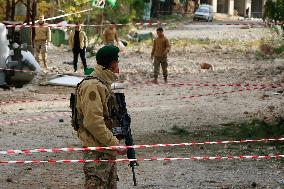
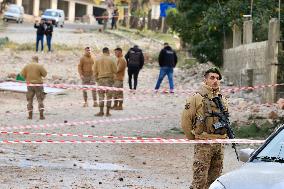
Lebanese soldiers inspect damage to residential buildings and cars following Israeli airstrikes in Kfar Hatta, southern Lebanon, January 12, 2026. The Israeli forces carried out on Sunday afternoon airstrikes on the village of Kfar Hatta in southern Lebanon's Litani River area, Lebanon's official National News Agency (NNA) reported. A Lebanese security source told Xinhua that Israeli warplanes carried out more than 35 airstrikes in three waves, firing around 70 missiles at Hezbollah positions and residential buildings in Kfar Hatta. The strikes caused extensive destruction, damaging dozens of homes. Photo by Ali Hashisho/Xinhua/ABACAPRESS.COM

  •  
Israeli Airstrike in Lebanon

Israeli Airstrike in Lebanon

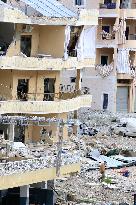
This photo taken on January 12, 2026 shows residential buildings and vehicles destroyed in Israeli airstrikes in Kfar Hatta, southern Lebanon. The Israeli forces carried out on Sunday afternoon airstrikes on the village of Kfar Hatta in southern Lebanon's Litani River area, Lebanon's official National News Agency (NNA) reported. A Lebanese security source told Xinhua that Israeli warplanes carried out more than 35 airstrikes in three waves, firing around 70 missiles at Hezbollah positions and residential buildings in Kfar Hatta. The strikes caused extensive destruction, damaging dozens of homes. Photo by Ali Hashisho/Xinhua/ABACAPRESS.COM

  •  
Israeli Airstrike in Lebanon

Israeli Airstrike in Lebanon

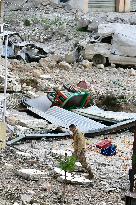
A Lebanese soldier inspects damage to residential buildings and cars following Israeli airstrikes in Kfar Hatta, southern Lebanon, January 12, 2026. The Israeli forces carried out on Sunday afternoon airstrikes on the village of Kfar Hatta in southern Lebanon's Litani River area, Lebanon's official National News Agency (NNA) reported. A Lebanese security source told Xinhua that Israeli warplanes carried out more than 35 airstrikes in three waves, firing around 70 missiles at Hezbollah positions and residential buildings in Kfar Hatta. The strikes caused extensive destruction, damaging dozens of homes. Photo by Ali Hashisho/Xinhua/ABACAPRESS.COM

  •  
Israeli Airstrike in Lebanon

Israeli Airstrike in Lebanon

This photo taken on January 12, 2026 shows residential buildings and vehicles destroyed in Israeli airstrikes in Kfar Hatta, southern Lebanon. The Israeli forces carried out on Sunday afternoon airstrikes on the village of Kfar Hatta in southern Lebanon's Litani River area, Lebanon's official National News Agency (NNA) reported. A Lebanese security source told Xinhua that Israeli warplanes carried out more than 35 airstrikes in three waves, firing around 70 missiles at Hezbollah positions and residential buildings in Kfar Hatta. The strikes caused extensive destruction, damaging dozens of homes. Photo by Ali Hashisho/Xinhua/ABACAPRESS.COM

  •  
Israeli Airstrike in Lebanon

Israeli Airstrike in Lebanon

A Lebanese soldier (1st R) inspects damage to residential buildings and cars following Israeli airstrikes in Kfar Hatta, southern Lebanon, January 12, 2026. The Israeli forces carried out on Sunday afternoon airstrikes on the village of Kfar Hatta in southern Lebanon's Litani River area, Lebanon's official National News Agency (NNA) reported. A Lebanese security source told Xinhua that Israeli warplanes carried out more than 35 airstrikes in three waves, firing around 70 missiles at Hezbollah positions and residential buildings in Kfar Hatta. The strikes caused extensive destruction, damaging dozens of homes. Photo by Ali Hashisho/Xinhua/ABACAPRESS.COM

  •  
Lake Urmia Environmental Disaster - Iran

Lake Urmia Environmental Disaster - Iran

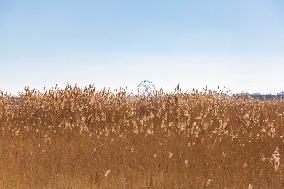
A view shows dry reeds on the dry bed of Lake Urmia in northwestern Iran on December 20, 2025. Lake Urmia, once the largest lake in the Middle East, has dramatically shrunk due to prolonged drought, the damming of rivers feeding the lake, and extensive groundwater extraction in the surrounding area. Although increased rainfall and water diversion briefly helped restore water levels in 2019, renewed drought and administrative mismanagement in the early 2020s reversed the trend, and satellite imagery shows the lake has almost entirely dried up by September 2025. Photo by Morteza Aminoroayayi/Middle East Images/ABACAPRESS.COM

  •  
Lake Urmia Environmental Disaster - Iran

Lake Urmia Environmental Disaster - Iran

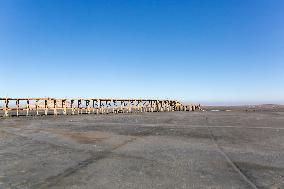
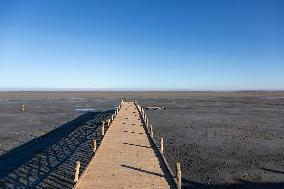
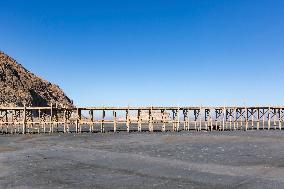
A view shows a wooden pier on the dry bed of Lake Urmia in northwestern Iran on December 20, 2025. Lake Urmia, once the largest lake in the Middle East, has dramatically shrunk due to prolonged drought, the damming of rivers feeding the lake, and extensive groundwater extraction in the surrounding area. Although increased rainfall and water diversion briefly helped restore water levels in 2019, renewed drought and administrative mismanagement in the early 2020s reversed the trend, and satellite imagery shows the lake has almost entirely dried up by September 2025. Photo by Morteza Aminoroayayi/Middle East Images/ABACAPRESS.COM

  •  
Lake Urmia Environmental Disaster - Iran

Lake Urmia Environmental Disaster - Iran

A view shows a wooden pier on the dry bed of Lake Urmia in northwestern Iran on December 20, 2025. Lake Urmia, once the largest lake in the Middle East, has dramatically shrunk due to prolonged drought, the damming of rivers feeding the lake, and extensive groundwater extraction in the surrounding area. Although increased rainfall and water diversion briefly helped restore water levels in 2019, renewed drought and administrative mismanagement in the early 2020s reversed the trend, and satellite imagery shows the lake has almost entirely dried up by September 2025. Photo by Morteza Aminoroayayi/Middle East Images/ABACAPRESS.COM

  •  
Lake Urmia Environmental Disaster - Iran

Lake Urmia Environmental Disaster - Iran

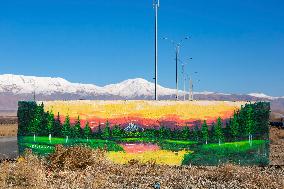
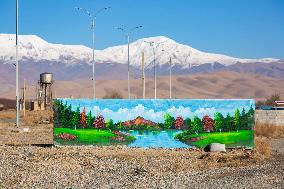
A view shows a mural depicting a landscape painted on a concrete wall near Sharafkhaneh port at Lake Urmia in northwestern Iran on December 19, 2025. Lake Urmia, once the largest lake in the Middle East, has dramatically shrunk due to prolonged drought, the damming of rivers feeding the lake, and extensive groundwater extraction in the surrounding area. Although increased rainfall and water diversion briefly helped restore water levels in 2019, renewed drought and administrative mismanagement in the early 2020s reversed the trend, and satellite imagery shows the lake has almost entirely dried up by September 2025. Photo by Morteza Aminoroayayi/Middle East Images/ABACAPRESS.COM

  •  
Lake Urmia Environmental Disaster - Iran

Lake Urmia Environmental Disaster - Iran

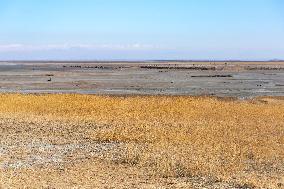
A view shows dry grass and the dry bed of Lake Urmia in northwestern Iran on December 20, 2025. Lake Urmia, once the largest lake in the Middle East, has dramatically shrunk due to prolonged drought, the damming of rivers feeding the lake, and extensive groundwater extraction in the surrounding area. Although increased rainfall and water diversion briefly helped restore water levels in 2019, renewed drought and administrative mismanagement in the early 2020s reversed the trend, and satellite imagery shows the lake has almost entirely dried up by September 2025. Photo by Morteza Aminoroayayi/Middle East Images/ABACAPRESS.COM

  •  
Lake Urmia Environmental Disaster - Iran

Lake Urmia Environmental Disaster - Iran

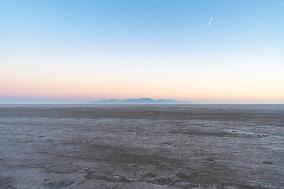
A view shows the dry bed of Lake Urmia in northwestern Iran on December 19, 2025. Lake Urmia, once the largest lake in the Middle East, has dramatically shrunk due to prolonged drought, the damming of rivers feeding the lake, and extensive groundwater extraction in the surrounding area. Although increased rainfall and water diversion briefly helped restore water levels in 2019, renewed drought and administrative mismanagement in the early 2020s reversed the trend, and satellite imagery shows the lake has almost entirely dried up by September 2025. Photo by Morteza Aminoroayayi/Middle East Images/ABACAPRESS.COM

  •  
Lake Urmia Environmental Disaster - Iran

Lake Urmia Environmental Disaster - Iran

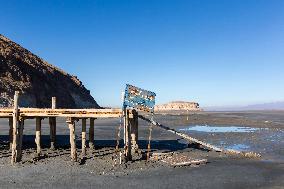
A view shows a rusty sign next to a wooden pier on the dry bed of Lake Urmia in northwestern Iran on December 20, 2025. Lake Urmia, once the largest lake in the Middle East, has dramatically shrunk due to prolonged drought, the damming of rivers feeding the lake, and extensive groundwater extraction in the surrounding area. Although increased rainfall and water diversion briefly helped restore water levels in 2019, renewed drought and administrative mismanagement in the early 2020s reversed the trend, and satellite imagery shows the lake has almost entirely dried up by September 2025. Photo by Morteza Aminoroayayi/Middle East Images/ABACAPRESS.COM

  •  
Lake Urmia Environmental Disaster - Iran

Lake Urmia Environmental Disaster - Iran

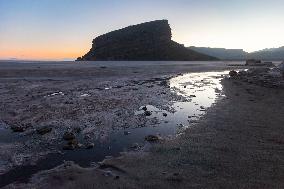
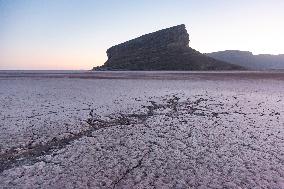
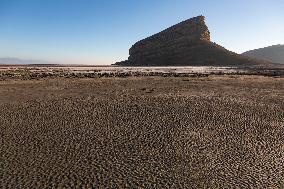
A view shows a shallow stream near a rocky cliff on the bed of Lake Urmia in northwestern Iran on December 19, 2025. Lake Urmia, once the largest lake in the Middle East, has dramatically shrunk due to prolonged drought, the damming of rivers feeding the lake, and extensive groundwater extraction in the surrounding area. Although increased rainfall and water diversion briefly helped restore water levels in 2019, renewed drought and administrative mismanagement in the early 2020s reversed the trend, and satellite imagery shows the lake has almost entirely dried up by September 2025. Photo by Morteza Aminoroayayi/Middle East Images/ABACAPRESS.COM

  •  
Lake Urmia Environmental Disaster - Iran

Lake Urmia Environmental Disaster - Iran

A view shows a wooden pier on the dry bed of Lake Urmia in northwestern Iran on December 20, 2025. Lake Urmia, once the largest lake in the Middle East, has dramatically shrunk due to prolonged drought, the damming of rivers feeding the lake, and extensive groundwater extraction in the surrounding area. Although increased rainfall and water diversion briefly helped restore water levels in 2019, renewed drought and administrative mismanagement in the early 2020s reversed the trend, and satellite imagery shows the lake has almost entirely dried up by September 2025. Photo by Morteza Aminoroayayi/Middle East Images/ABACAPRESS.COM

  •  
Lake Urmia Environmental Disaster - Iran

Lake Urmia Environmental Disaster - Iran

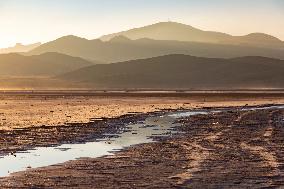
A view shows tire tracks running alongside a shallow stream on the bed of Lake Urmia in northwestern Iran on December 19, 2025. Lake Urmia, once the largest lake in the Middle East, has dramatically shrunk due to prolonged drought, the damming of rivers feeding the lake, and extensive groundwater extraction in the surrounding area. Although increased rainfall and water diversion briefly helped restore water levels in 2019, renewed drought and administrative mismanagement in the early 2020s reversed the trend, and satellite imagery shows the lake has almost entirely dried up by September 2025. Photo by Morteza Aminoroayayi/Middle East Images/ABACAPRESS.COM

  •  
Lake Urmia Environmental Disaster - Iran

Lake Urmia Environmental Disaster - Iran

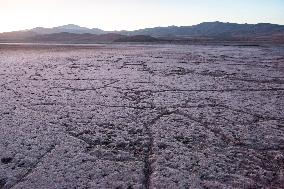
Salt formations cover the cracked surface of the dried bed of Lake Urmia in northwestern Iran on December 19, 2025. Lake Urmia, once the largest lake in the Middle East, has dramatically shrunk due to prolonged drought, the damming of rivers feeding the lake and extensive groundwater extraction in the surrounding area. Although increased rainfall and water diversion briefly helped restore water levels in 2019, renewed drought and administrative mismanagement in the early 2020s reversed the trend, and satellite imagery shows the lake has almost entirely dried up by September 2025. Photo by Morteza Aminoroayayi/Middle East Images/ABACAPRESS.COM

  •  
Lake Urmia Environmental Disaster - Iran

Lake Urmia Environmental Disaster - Iran

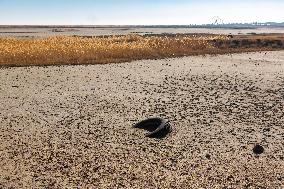
A discarded tire sits near dry reeds on the dry bed of Lake Urmia in northwestern Iran on December 20, 2025. Lake Urmia, once the largest lake in the Middle East, has dramatically shrunk due to prolonged drought, the damming of rivers feeding the lake, and extensive groundwater extraction in the surrounding area. Although increased rainfall and water diversion briefly helped restore water levels in 2019, renewed drought and administrative mismanagement in the early 2020s reversed the trend, and satellite imagery shows the lake has almost entirely dried up by September 2025. Photo by Morteza Aminoroayayi/Middle East Images/ABACAPRESS.COM

  •  
Lake Urmia Environmental Disaster - Iran

Lake Urmia Environmental Disaster - Iran

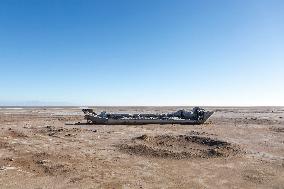
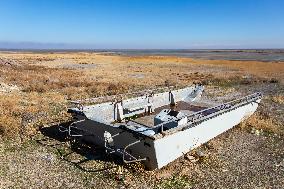
Remnants of a boat sit on the dry bed of Lake Urmia in northwestern Iran on December 19, 2025. Lake Urmia, once the largest lake in the Middle East, has dramatically shrunk due to prolonged drought, the damming of rivers feeding the lake, and extensive groundwater extraction in the surrounding area. Although increased rainfall and water diversion briefly helped restore water levels in 2019, renewed drought and administrative mismanagement in the early 2020s reversed the trend, and satellite imagery shows the lake has almost entirely dried up by September 2025. Photo by Morteza Aminoroayayi/Middle East Images/ABACAPRESS.COM

  •  
Lake Urmia Environmental Disaster - Iran

Lake Urmia Environmental Disaster - Iran

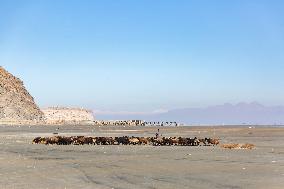
A shepherd guides a flock of sheep on the dry bed of Lake Urmia in northwestern Iran on December 20, 2025. Lake Urmia, once the largest lake in the Middle East, has dramatically shrunk due to prolonged drought, the damming of rivers feeding the lake, and extensive groundwater extraction in the surrounding area. Although increased rainfall and water diversion briefly helped restore water levels in 2019, renewed drought and administrative mismanagement in the early 2020s reversed the trend, and satellite imagery shows the lake has almost entirely dried up by September 2025. Photo by Morteza Aminoroayayi/Middle East Images/ABACAPRESS.COM

  •  
Lake Urmia Environmental Disaster - Iran

Lake Urmia Environmental Disaster - Iran

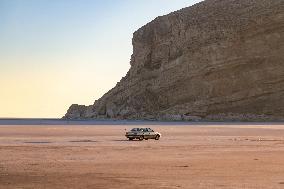
A car drives near a rocky cliff on the dry bed of Lake Urmia in northwestern Iran on December 19, 2025. Lake Urmia, once the largest lake in the Middle East, has dramatically shrunk due to prolonged drought, the damming of rivers feeding the lake, and extensive groundwater extraction in the surrounding area. Although increased rainfall and water diversion briefly helped restore water levels in 2019, renewed drought and administrative mismanagement in the early 2020s reversed the trend, and satellite imagery shows the lake has almost entirely dried up by September 2025. Photo by Morteza Aminoroayayi/Middle East Images/ABACAPRESS.COM

  •  
Lake Urmia Environmental Disaster - Iran

Lake Urmia Environmental Disaster - Iran

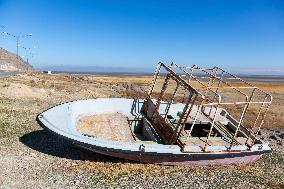
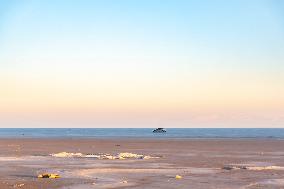
A rusty boat sits next to a road near Lake Urmia in northwestern Iran on December 20, 2025. Lake Urmia, once the largest lake in the Middle East, has dramatically shrunk due to prolonged drought, the damming of rivers feeding the lake, and extensive groundwater extraction in the surrounding area. Although increased rainfall and water diversion briefly helped restore water levels in 2019, renewed drought and administrative mismanagement in the early 2020s reversed the trend, and satellite imagery shows the lake has almost entirely dried up by September 2025. Photo by Morteza Aminoroayayi/Middle East Images/ABACAPRESS.COM

  •  
Lake Urmia Environmental Disaster - Iran

Lake Urmia Environmental Disaster - Iran

A view shows a wooden pier on the dry bed of Lake Urmia in northwestern Iran on December 19, 2025. Lake Urmia, once the largest lake in the Middle East, has dramatically shrunk due to prolonged drought, the damming of rivers feeding the lake, and extensive groundwater extraction in the surrounding area. Although increased rainfall and water diversion briefly helped restore water levels in 2019, renewed drought and administrative mismanagement in the early 2020s reversed the trend, and satellite imagery shows the lake has almost entirely dried up by September 2025. Photo by Morteza Aminoroayayi/Middle East Images/ABACAPRESS.COM

  •  
Lake Urmia Environmental Disaster - Iran

Lake Urmia Environmental Disaster - Iran

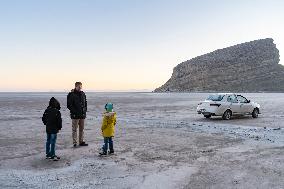
A man and two children stand near a car and a rocky cliff on the dry bed of Lake Urmia in northwestern Iran on December 19, 2025. Lake Urmia, once the largest lake in the Middle East, has dramatically shrunk due to prolonged drought, the damming of rivers feeding the lake, and extensive groundwater extraction in the surrounding area. Although increased rainfall and water diversion briefly helped restore water levels in 2019, renewed drought and administrative mismanagement in the early 2020s reversed the trend, and satellite imagery shows the lake has almost entirely dried up by September 2025. Photo by Morteza Aminoroayayi/Middle East Images/ABACAPRESS.COM

  •  
Lake Urmia Environmental Disaster - Iran

Lake Urmia Environmental Disaster - Iran

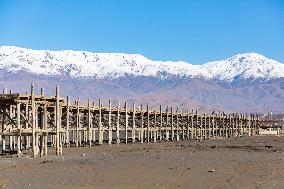
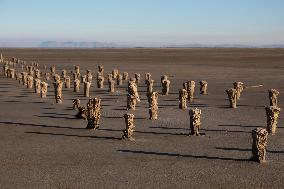
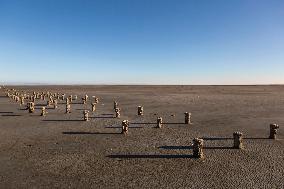
A view shows rows of wooden posts protruding from the dry bed of Lake Urmia in northwestern Iran on December 20, 2025. Lake Urmia, once the largest lake in the Middle East, has dramatically shrunk due to prolonged drought, the damming of rivers feeding the lake, and extensive groundwater extraction in the surrounding area. Although increased rainfall and water diversion briefly helped restore water levels in 2019, renewed drought and administrative mismanagement in the early 2020s reversed the trend, and satellite imagery shows the lake has almost entirely dried up by September 2025. Photo by Morteza Aminoroayayi/Middle East Images/ABACAPRESS.COM

  •  
Lake Urmia Environmental Disaster - Iran

Lake Urmia Environmental Disaster - Iran

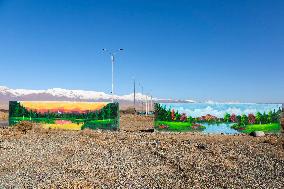
A view shows murals depicting nature scenes painted on concrete walls near Sharafkhaneh port at Lake Urmia in northwestern Iran on December 19, 2025. Lake Urmia, once the largest lake in the Middle East, has dramatically shrunk due to prolonged drought, the damming of rivers feeding the lake, and extensive groundwater extraction in the surrounding area. Although increased rainfall and water diversion briefly helped restore water levels in 2019, renewed drought and administrative mismanagement in the early 2020s reversed the trend, and satellite imagery shows the lake has almost entirely dried up by September 2025. Photo by Morteza Aminoroayayi/Middle East Images/ABACAPRESS.COM

  •  
Lake Urmia Environmental Disaster - Iran

Lake Urmia Environmental Disaster - Iran

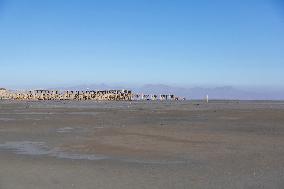
A view shows the dry bed of Lake Urmia in northwestern Iran on December 19, 2025. Lake Urmia, once the largest lake in the Middle East, has dramatically shrunk due to prolonged drought, the damming of rivers feeding the lake, and extensive groundwater extraction in the surrounding area. Although increased rainfall and water diversion briefly helped restore water levels in 2019, renewed drought and administrative mismanagement in the early 2020s reversed the trend, and satellite imagery shows the lake has almost entirely dried up by September 2025. Photo by Morteza Aminoroayayi/Middle East Images/ABACAPRESS.COM

  •  
Lake Urmia Environmental Disaster - Iran

Lake Urmia Environmental Disaster - Iran

A view shows a wooden pier on the dry bed of Lake Urmia in northwestern Iran on December 20, 2025. Lake Urmia, once the largest lake in the Middle East, has dramatically shrunk due to prolonged drought, the damming of rivers feeding the lake, and extensive groundwater extraction in the surrounding area. Although increased rainfall and water diversion briefly helped restore water levels in 2019, renewed drought and administrative mismanagement in the early 2020s reversed the trend, and satellite imagery shows the lake has almost entirely dried up by September 2025. Photo by Morteza Aminoroayayi/Middle East Images/ABACAPRESS.COM

  •  
Lake Urmia Environmental Disaster - Iran

Lake Urmia Environmental Disaster - Iran

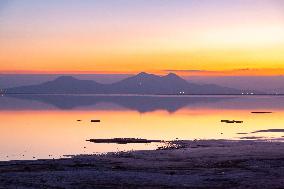
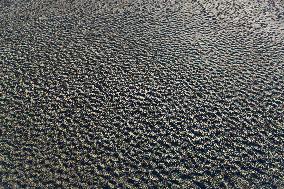
A view shows reflections on the surface of Lake Urmia in northwestern Iran on December 18, 2025. Lake Urmia, once the largest lake in the Middle East, has dramatically shrunk due to prolonged drought, the damming of rivers feeding the lake, and extensive groundwater extraction in the surrounding area. Although increased rainfall and water diversion briefly helped restore water levels in 2019, renewed drought and administrative mismanagement in the early 2020s reversed the trend, and satellite imagery shows the lake has almost entirely dried up by September 2025. Photo by Morteza Aminoroayayi/Middle East Images/ABACAPRESS.COM

  •  
Lake Urmia Environmental Disaster - Iran

Lake Urmia Environmental Disaster - Iran

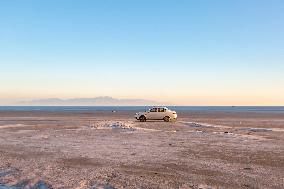
A car drives on the dry bed of Lake Urmia in northwestern Iran on December 19, 2025. Lake Urmia, once the largest lake in the Middle East, has dramatically shrunk due to prolonged drought, the damming of rivers feeding the lake, and extensive groundwater extraction in the surrounding area. Although increased rainfall and water diversion briefly helped restore water levels in 2019, renewed drought and administrative mismanagement in the early 2020s reversed the trend, and satellite imagery shows the lake has almost entirely dried up by September 2025. Photo by Morteza Aminoroayayi/Middle East Images/ABACAPRESS.COM

  •  
Lake Urmia Environmental Disaster - Iran

Lake Urmia Environmental Disaster - Iran

A view shows a mural depicting a landscape painted on a concrete wall near Sharafkhaneh port at Lake Urmia in northwestern Iran on December 19, 2025. Lake Urmia, once the largest lake in the Middle East, has dramatically shrunk due to prolonged drought, the damming of rivers feeding the lake, and extensive groundwater extraction in the surrounding area. Although increased rainfall and water diversion briefly helped restore water levels in 2019, renewed drought and administrative mismanagement in the early 2020s reversed the trend, and satellite imagery shows the lake has almost entirely dried up by September 2025. Photo by Morteza Aminoroayayi/Middle East Images/ABACAPRESS.COM

  •  
Lake Urmia Environmental Disaster - Iran

Lake Urmia Environmental Disaster - Iran

A view shows rows of wooden posts protruding from the dry bed of Lake Urmia in northwestern Iran on December 20, 2025. Lake Urmia, once the largest lake in the Middle East, has dramatically shrunk due to prolonged drought, the damming of rivers feeding the lake, and extensive groundwater extraction in the surrounding area. Although increased rainfall and water diversion briefly helped restore water levels in 2019, renewed drought and administrative mismanagement in the early 2020s reversed the trend, and satellite imagery shows the lake has almost entirely dried up by September 2025. Photo by Morteza Aminoroayayi/Middle East Images/ABACAPRESS.COM

  •  
Lake Urmia Environmental Disaster - Iran

Lake Urmia Environmental Disaster - Iran

Salt formations cover the cracked surface of the dried bed of Lake Urmia in northwestern Iran on December 19, 2025. Lake Urmia, once the largest lake in the Middle East, has dramatically shrunk due to prolonged drought, the damming of rivers feeding the lake and extensive groundwater extraction in the surrounding area. Although increased rainfall and water diversion briefly helped restore water levels in 2019, renewed drought and administrative mismanagement in the early 2020s reversed the trend, and satellite imagery shows the lake has almost entirely dried up by September 2025. Photo by Morteza Aminoroayayi/Middle East Images/ABACAPRESS.COM

  •  
Lake Urmia Environmental Disaster - Iran

Lake Urmia Environmental Disaster - Iran

Remains of a boat sits near the dry bed of Lake Urmia in northwestern Iran on December 20, 2025. Lake Urmia, once the largest lake in the Middle East, has dramatically shrunk due to prolonged drought, the damming of rivers feeding the lake, and extensive groundwater extraction in the surrounding area. Although increased rainfall and water diversion briefly helped restore water levels in 2019, renewed drought and administrative mismanagement in the early 2020s reversed the trend, and satellite imagery shows the lake has almost entirely dried up by September 2025. Photo by Morteza Aminoroayayi/Middle East Images/ABACAPRESS.COM

  •  
Lake Urmia Environmental Disaster - Iran

Lake Urmia Environmental Disaster - Iran

A car drives on the dry bed of Lake Urmia in northwestern Iran on December 19, 2025. Lake Urmia, once the largest lake in the Middle East, has dramatically shrunk due to prolonged drought, the damming of rivers feeding the lake, and extensive groundwater extraction in the surrounding area. Although increased rainfall and water diversion briefly helped restore water levels in 2019, renewed drought and administrative mismanagement in the early 2020s reversed the trend, and satellite imagery shows the lake has almost entirely dried up by September 2025. Photo by Morteza Aminoroayayi/Middle East Images/ABACAPRESS.COM

  •  
Lake Urmia Environmental Disaster - Iran

Lake Urmia Environmental Disaster - Iran

A view shows the dry bed of Lake Urmia in northwestern Iran on December 19, 2025. Lake Urmia, once the largest lake in the Middle East, has dramatically shrunk due to prolonged drought, the damming of rivers feeding the lake, and extensive groundwater extraction in the surrounding area. Although increased rainfall and water diversion briefly helped restore water levels in 2019, renewed drought and administrative mismanagement in the early 2020s reversed the trend, and satellite imagery shows the lake has almost entirely dried up by September 2025. Photo by Morteza Aminoroayayi/Middle East Images/ABACAPRESS.COM

  •  
Lake Urmia Environmental Disaster - Iran

Lake Urmia Environmental Disaster - Iran

A view shows scattered rocks and shallow water in parts of Lake Urmia in northwestern Iran on December 18, 2025. Lake Urmia, once the largest lake in the Middle East, has dramatically shrunk due to prolonged drought, the damming of rivers feeding the lake, and extensive groundwater extraction in the surrounding area. Although increased rainfall and water diversion briefly helped restore water levels in 2019, renewed drought and administrative mismanagement in the early 2020s reversed the trend, and satellite imagery shows the lake has almost entirely dried up by September 2025. Photo by Morteza Aminoroayayi/Middle East Images/ABACAPRESS.COM

  •  
Top 10 World Sports News Events In 2025

Top 10 World Sports News Events In 2025

Fairness in women's competitions became a focal issue worldwide as sports bodies reviewed eligibility standards. Under Coventry's leadership, the IOC oversaw extensive discussions on transgender participation and women's events, establishing expert and international federation working groups to reassess the qualification criteria. In 2025, international federations including World Boxing and World Athletics introduced genetic testing to confirm athletes' biological sex, aiming to strengthen fairness and transparency in women's competitions. This file photo taken on Aug. 9, 2024 shows gold medalist Imane Khelif of Algeria attending the victory ceremony for the women's boxing 66kg at the Paris 2024 Olympic Games in Paris, France. Photo by Jiang Wenyao/Xinhua/ABACAPRESS.COM

  •  
Portrait of Economist and Former Minister of Public Administration of Spain Jordi Sevilla - Madrid

Portrait of Economist and Former Minister of Public Administration of Spain Jordi Sevilla - Madrid

Economist and former Spanish Minister of Public Administration Jordi Sevilla poses for Europa Press on December 18, 2025, in Madrid (Spain). Jordi Sevilla holds a degree in Economics and is a civil servant in the Senior Corps of Commercial Technicians and State Economists. He has had an extensive career in public administration and the private sector. Photo by Alberto Ortega / Europa Press / ABACAPRESS.COM

  •  
Portrait of Economist and Former Minister of Public Administration of Spain Jordi Sevilla - Madrid

Portrait of Economist and Former Minister of Public Administration of Spain Jordi Sevilla - Madrid

Economist and former Spanish Minister of Public Administration Jordi Sevilla poses for Europa Press on December 18, 2025, in Madrid (Spain). Jordi Sevilla holds a degree in Economics and is a civil servant in the Senior Corps of Commercial Technicians and State Economists. He has had an extensive career in public administration and the private sector. Photo by Alberto Ortega / Europa Press / ABACAPRESS.COM

  •  
Portrait of Economist and Former Minister of Public Administration of Spain Jordi Sevilla - Madrid

Portrait of Economist and Former Minister of Public Administration of Spain Jordi Sevilla - Madrid

Economist and former Spanish Minister of Public Administration Jordi Sevilla, during an interview for Europa Press, on December 18, 2025, in Madrid (Spain). Jordi Sevilla holds a degree in Economics and is a civil servant in the Senior Corps of Commercial Technicians and Economists of the State, and has developed an extensive career in public administration and the private sector. Photo by Alberto Ortega / Europa Press / ABACAPRESS.COM

  •  
Portrait of Economist and Former Minister of Public Administration of Spain Jordi Sevilla - Madrid

Portrait of Economist and Former Minister of Public Administration of Spain Jordi Sevilla - Madrid

Economist and former Spanish Minister of Public Administration Jordi Sevilla poses for Europa Press on December 18, 2025, in Madrid (Spain). Jordi Sevilla holds a degree in Economics and is a civil servant in the Senior Corps of Commercial Technicians and State Economists. He has had an extensive career in public administration and the private sector. Photo by Alberto Ortega / Europa Press / ABACAPRESS.COM

  •  
Portrait of Economist and Former Minister of Public Administration of Spain Jordi Sevilla - Madrid

Portrait of Economist and Former Minister of Public Administration of Spain Jordi Sevilla - Madrid

Economist and former Spanish Minister of Public Administration Jordi Sevilla poses for Europa Press on December 18, 2025, in Madrid (Spain). Jordi Sevilla holds a degree in Economics and is a civil servant in the Senior Corps of Commercial Technicians and State Economists. He has had an extensive career in public administration and the private sector. Photo by Alberto Ortega / Europa Press / ABACAPRESS.COM

  •  
Portrait of Economist and Former Minister of Public Administration of Spain Jordi Sevilla - Madrid

Portrait of Economist and Former Minister of Public Administration of Spain Jordi Sevilla - Madrid

Economist and former Spanish Minister of Public Administration Jordi Sevilla poses for Europa Press on December 18, 2025, in Madrid (Spain). Jordi Sevilla holds a degree in Economics and is a civil servant in the Senior Corps of Commercial Technicians and State Economists. He has had an extensive career in public administration and the private sector. Photo by Alberto Ortega / Europa Press / ABACAPRESS.COM

  •  
Portrait of Economist and Former Minister of Public Administration of Spain Jordi Sevilla - Madrid

Portrait of Economist and Former Minister of Public Administration of Spain Jordi Sevilla - Madrid

Economist and former Spanish Minister of Public Administration Jordi Sevilla poses for Europa Press on December 18, 2025, in Madrid (Spain). Jordi Sevilla holds a degree in Economics and is a civil servant in the Senior Corps of Commercial Technicians and State Economists. He has had an extensive career in public administration and the private sector. Photo by Alberto Ortega / Europa Press / ABACAPRESS.COM

  •  
Portrait of Economist and Former Minister of Public Administration of Spain Jordi Sevilla - Madrid

Portrait of Economist and Former Minister of Public Administration of Spain Jordi Sevilla - Madrid

Economist and former Spanish Minister of Public Administration Jordi Sevilla poses for Europa Press on December 18, 2025, in Madrid (Spain). Jordi Sevilla holds a degree in Economics and is a civil servant in the Senior Corps of Commercial Technicians and State Economists. He has had an extensive career in public administration and the private sector. Photo by Alberto Ortega / Europa Press / ABACAPRESS.COM

  • Main
  • Top
  • Editorial
  • Creative
  • About Us
  • About ILG
  • Terms of use
  • Company
  • BEHIND
  • Price List
  • Single Plan
  • Monthly Plan
  • Services
  • Shooting
  • Rights Clearance
  • Support
  • FAQ
  • How To Buy
  • Contact Us
  • Become a Partner

© KYODO NEWS IMAGES INC

All Rights Reserved.

  • Editorial
  • Olympics
  • News
  • Sports
  • Japan
  • Tech
  • Royal
  • Disaster
  • NorthKorea
  • Old Japan
  • SNS
  • Creative
  • Food
  • Japan
  • Landscape
  • Animal
  • Popular
  • #Ukraine
  • #Thailand
  • #coronavirus
  • #N. Korea
  • #Russia
  • #China
  • #Ukraine
  • #Thailand
  • #coronavirus
  • #N. Korea
  • #Russia
  • #China
  • Food
  • Japan
  • Landscape
  • Animal
  • Olympics
  • News
  • Sports
  • Japan
  • Tech
  • Royal
  • Disaster
  • NorthKorea
  • Old Japan
  • SNS