•  
Tie-Dye Technique Of Bai Ethnic Group - Chin

Tie-Dye Technique Of Bai Ethnic Group - Chin

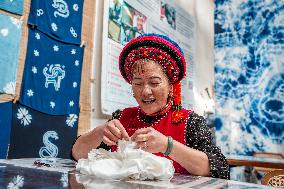
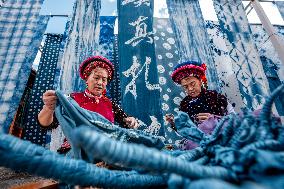
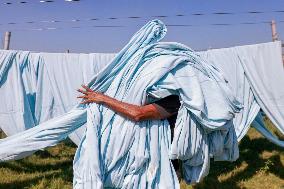
Duan Yinmei, an inheritor of the tie-dye technique of Bai ethnic group, creates knots on fabrics in a dyehouse in Zhoucheng Village of Dali Bai Autonomous Prefecture, southwest China's Yunnan Province, November 21, 2025. Known as the hometown of the tie-dye technique of Bai ethnic group, Zhoucheng Village hosts over 200 households engaging in tie-dye businesses, with the number of employees exceeding 4,000. As a traditional folk technique of the Bai ethnic group, tie-dye boasts a history spanning over a thousand years and was included in the first batch of China's national intangible cultural heritage list in 2006. Tying and dyeing are the core steps in the process of making indigo tie-dye products. Artisans use needles and threads to create various patterns on the fabric, which are then dyed with plant-based dyes, resulting in blue backgrounds adorned with vivid white patterns. Photo by Hu Chao/Xinhua/ABACAPRESS.COM

  •  
Tie-Dye Technique Of Bai Ethnic Group - Chin

Tie-Dye Technique Of Bai Ethnic Group - Chin

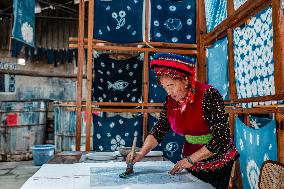
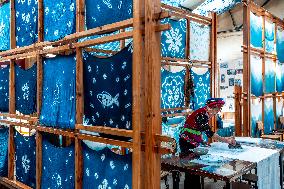
Duan Yinmei, an inheritor of the tie-dye technique of Bai ethnic group, dyes patterns on fabrics in a dyehouse in Zhoucheng Village of Dali Bai Autonomous Prefecture, southwest China's Yunnan Province, November 21, 2025. Known as the hometown of the tie-dye technique of Bai ethnic group, Zhoucheng Village hosts over 200 households engaging in tie-dye businesses, with the number of employees exceeding 4,000. As a traditional folk technique of the Bai ethnic group, tie-dye boasts a history spanning over a thousand years and was included in the first batch of China's national intangible cultural heritage list in 2006. Tying and dyeing are the core steps in the process of making indigo tie-dye products. Artisans use needles and threads to create various patterns on the fabric, which are then dyed with plant-based dyes, resulting in blue backgrounds adorned with vivid white patterns. Photo by Hu Chao/Xinhua/ABACAPRESS.COM

  •  
Tie-Dye Technique Of Bai Ethnic Group - Chin

Tie-Dye Technique Of Bai Ethnic Group - Chin

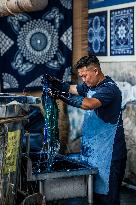
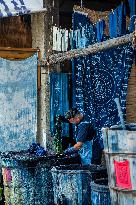
Duan Yuan, an inheritor of the tie-dye technique of Bai ethnic group, rinses dyed fabrics in a dyehouse in Zhoucheng Village of Dali Bai Autonomous Prefecture, southwest China's Yunnan Province, November 21, 2025. Known as the hometown of the tie-dye technique of Bai ethnic group, Zhoucheng Village hosts over 200 households engaging in tie-dye businesses, with the number of employees exceeding 4,000. As a traditional folk technique of the Bai ethnic group, tie-dye boasts a history spanning over a thousand years and was included in the first batch of China's national intangible cultural heritage list in 2006. Tying and dyeing are the core steps in the process of making indigo tie-dye products. Artisans use needles and threads to create various patterns on the fabric, which are then dyed with plant-based dyes, resulting in blue backgrounds adorned with vivid white patterns. Photo by Hu Chao/Xinhua/ABACAPRESS.COM

  •  
Tie-Dye Technique Of Bai Ethnic Group - Chin

Tie-Dye Technique Of Bai Ethnic Group - Chin

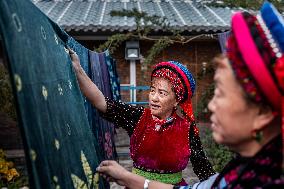
Duan Yinmei (L), an inheritor of the tie-dye technique of Bai ethnic group, and handicraftsman Duan Lilan dry tie-dye fabrics in a dyehouse in Zhoucheng Village of Dali Bai Autonomous Prefecture, southwest China's Yunnan Province, November 21, 2025. Known as the hometown of the tie-dye technique of Bai ethnic group, Zhoucheng Village hosts over 200 households engaging in tie-dye businesses, with the number of employees exceeding 4,000. As a traditional folk technique of the Bai ethnic group, tie-dye boasts a history spanning over a thousand years and was included in the first batch of China's national intangible cultural heritage list in 2006. Tying and dyeing are the core steps in the process of making indigo tie-dye products. Artisans use needles and threads to create various patterns on the fabric, which are then dyed with plant-based dyes, resulting in blue backgrounds adorned with vivid white patterns. Photo by Hu Chao/Xinhua/ABACAPRESS.COM

  •  
Tie-Dye Technique Of Bai Ethnic Group - Chin

Tie-Dye Technique Of Bai Ethnic Group - Chin

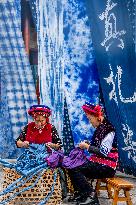
Duan Yinmei (L), an inheritor of the tie-dye technique of Bai ethnic group, and handicraftsman Duan Lilan untie knots on fabrics in a dyehouse in Zhoucheng Village of Dali Bai Autonomous Prefecture, southwest China's Yunnan Province, November 21, 2025. Known as the hometown of the tie-dye technique of Bai ethnic group, Zhoucheng Village hosts over 200 households engaging in tie-dye businesses, with the number of employees exceeding 4,000. As a traditional folk technique of the Bai ethnic group, tie-dye boasts a history spanning over a thousand years and was included in the first batch of China's national intangible cultural heritage list in 2006. Tying and dyeing are the core steps in the process of making indigo tie-dye products. Artisans use needles and threads to create various patterns on the fabric, which are then dyed with plant-based dyes, resulting in blue backgrounds adorned with vivid white patterns. Photo by Hu Chao/Xinhua/ABACAPRESS.COM

  •  
Tie-Dye Technique Of Bai Ethnic Group - Chin

Tie-Dye Technique Of Bai Ethnic Group - Chin

Duan Yinmei (L), an inheritor of the tie-dye technique of Bai ethnic group, and handicraftsman Duan Lilan untie knots on fabrics in a dyehouse in Zhoucheng Village of Dali Bai Autonomous Prefecture, southwest China's Yunnan Province, November 21, 2025. Known as the hometown of the tie-dye technique of Bai ethnic group, Zhoucheng Village hosts over 200 households engaging in tie-dye businesses, with the number of employees exceeding 4,000. As a traditional folk technique of the Bai ethnic group, tie-dye boasts a history spanning over a thousand years and was included in the first batch of China's national intangible cultural heritage list in 2006. Tying and dyeing are the core steps in the process of making indigo tie-dye products. Artisans use needles and threads to create various patterns on the fabric, which are then dyed with plant-based dyes, resulting in blue backgrounds adorned with vivid white patterns. Photo by Hu Chao/Xinhua/ABACAPRESS.COM

  •  
Tie-Dye Technique Of Bai Ethnic Group - Chin

Tie-Dye Technique Of Bai Ethnic Group - Chin

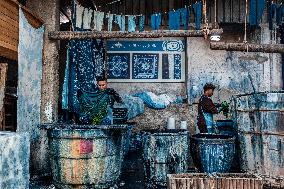
Duan Yuan (L), an inheritor of the tie-dye technique of Bai ethnic group, dyes fabrics in a dyehouse in Zhoucheng Village of Dali Bai Autonomous Prefecture, southwest China's Yunnan Province, November 21, 2025. Known as the hometown of the tie-dye technique of Bai ethnic group, Zhoucheng Village hosts over 200 households engaging in tie-dye businesses, with the number of employees exceeding 4,000. As a traditional folk technique of the Bai ethnic group, tie-dye boasts a history spanning over a thousand years and was included in the first batch of China's national intangible cultural heritage list in 2006. Tying and dyeing are the core steps in the process of making indigo tie-dye products. Artisans use needles and threads to create various patterns on the fabric, which are then dyed with plant-based dyes, resulting in blue backgrounds adorned with vivid white patterns. Photo by Hu Chao/Xinhua/ABACAPRESS.COM

  •  
Tie-Dye Technique Of Bai Ethnic Group - Chin

Tie-Dye Technique Of Bai Ethnic Group - Chin

Duan Yuan, an inheritor of the tie-dye technique of Bai ethnic group, dyes fabrics in a dyehouse in Zhoucheng Village of Dali Bai Autonomous Prefecture, southwest China's Yunnan Province, November 21, 2025. Known as the hometown of the tie-dye technique of Bai ethnic group, Zhoucheng Village hosts over 200 households engaging in tie-dye businesses, with the number of employees exceeding 4,000. As a traditional folk technique of the Bai ethnic group, tie-dye boasts a history spanning over a thousand years and was included in the first batch of China's national intangible cultural heritage list in 2006. Tying and dyeing are the core steps in the process of making indigo tie-dye products. Artisans use needles and threads to create various patterns on the fabric, which are then dyed with plant-based dyes, resulting in blue backgrounds adorned with vivid white patterns. Photo by Hu Chao/Xinhua/ABACAPRESS.COM

  •  
Tie-Dye Technique Of Bai Ethnic Group - Chin

Tie-Dye Technique Of Bai Ethnic Group - Chin

Duan Yuan, an inheritor of the tie-dye technique of Bai ethnic group, dyes fabrics in a dyehouse in Zhoucheng Village of Dali Bai Autonomous Prefecture, southwest China's Yunnan Province, November 21, 2025. Known as the hometown of the tie-dye technique of Bai ethnic group, Zhoucheng Village hosts over 200 households engaging in tie-dye businesses, with the number of employees exceeding 4,000. As a traditional folk technique of the Bai ethnic group, tie-dye boasts a history spanning over a thousand years and was included in the first batch of China's national intangible cultural heritage list in 2006. Tying and dyeing are the core steps in the process of making indigo tie-dye products. Artisans use needles and threads to create various patterns on the fabric, which are then dyed with plant-based dyes, resulting in blue backgrounds adorned with vivid white patterns. Photo by Hu Chao/Xinhua/ABACAPRESS.COM

  •  
Tie-Dye Technique Of Bai Ethnic Group - Chin

Tie-Dye Technique Of Bai Ethnic Group - Chin

Duan Yinmei, an inheritor of the tie-dye technique of Bai ethnic group, unties knots on fabrics in a dyehouse in Zhoucheng Village of Dali Bai Autonomous Prefecture, southwest China's Yunnan Province, November 21, 2025. Known as the hometown of the tie-dye technique of Bai ethnic group, Zhoucheng Village hosts over 200 households engaging in tie-dye businesses, with the number of employees exceeding 4,000. As a traditional folk technique of the Bai ethnic group, tie-dye boasts a history spanning over a thousand years and was included in the first batch of China's national intangible cultural heritage list in 2006. Tying and dyeing are the core steps in the process of making indigo tie-dye products. Artisans use needles and threads to create various patterns on the fabric, which are then dyed with plant-based dyes, resulting in blue backgrounds adorned with vivid white patterns. Photo by Hu Chao/Xinhua/ABACAPRESS.COM

  •  
Tie-Dye Technique Of Bai Ethnic Group - Chin

Tie-Dye Technique Of Bai Ethnic Group - Chin

Duan Yinmei, an inheritor of the tie-dye technique of Bai ethnic group, dyes patterns on fabrics in a dyehouse in Zhoucheng Village of Dali Bai Autonomous Prefecture, southwest China's Yunnan Province, November 21, 2025. Known as the hometown of the tie-dye technique of Bai ethnic group, Zhoucheng Village hosts over 200 households engaging in tie-dye businesses, with the number of employees exceeding 4,000. As a traditional folk technique of the Bai ethnic group, tie-dye boasts a history spanning over a thousand years and was included in the first batch of China's national intangible cultural heritage list in 2006. Tying and dyeing are the core steps in the process of making indigo tie-dye products. Artisans use needles and threads to create various patterns on the fabric, which are then dyed with plant-based dyes, resulting in blue backgrounds adorned with vivid white patterns. Photo by Hu Chao/Xinhua/ABACAPRESS.COM

  •  
Tie-Dye Technique Of Bai Ethnic Group - Chin

Tie-Dye Technique Of Bai Ethnic Group - Chin

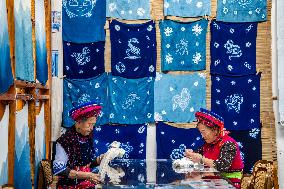
Duan Yinmei (R), an inheritor of the tie-dye technique of Bai ethnic group, and handicraftsman Duan Lilan create knots on fabrics in a dyehouse in Zhoucheng Village of Dali Bai Autonomous Prefecture, southwest China's Yunnan Province, November 21, 2025. Known as the hometown of the tie-dye technique of Bai ethnic group, Zhoucheng Village hosts over 200 households engaging in tie-dye businesses, with the number of employees exceeding 4,000. As a traditional folk technique of the Bai ethnic group, tie-dye boasts a history spanning over a thousand years and was included in the first batch of China's national intangible cultural heritage list in 2006. Tying and dyeing are the core steps in the process of making indigo tie-dye products. Artisans use needles and threads to create various patterns on the fabric, which are then dyed with plant-based dyes, resulting in blue backgrounds adorned with vivid white patterns. Photo by Hu Chao/Xinhua/ABACAPRESS.COM

  •  
Illustration - Iran

Illustration - Iran

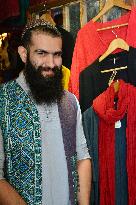
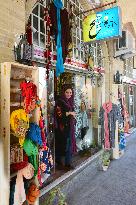
IRAN. ISPAHAN. ESFAHAN.^OWNER OF A SHOP SELLING CLOTHES AND FABRICS MADE BY LOCAL DESIGNER IN THE ARMENIAN DISTRICT OF DJOULFA. Photo by Antoine Lorgnier/Only World/ABACAPRESS.COM

  •  
Illustration - Iran

Illustration - Iran

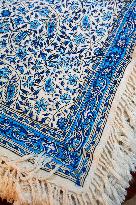
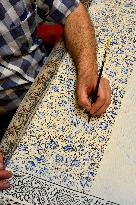
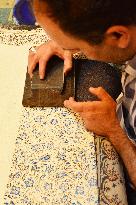
IRAN. ISPAHAN. PRINTED FABRICS IS ONE OF THE SPECIALITY OF THE CITY. Photo by Antoine Lorgnier/Only World/ABACAPRESS.COM

  •  
Illustration - Iran

Illustration - Iran

IRAN. ISPAHAN. PRINTED FABRICS IS ONE OF THE SPECIALITY OF THE CITY. Photo by Antoine Lorgnier/Only World/ABACAPRESS.COM

  •  
Illustration - Iran

Illustration - Iran

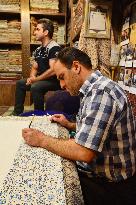
IRAN. ISPAHAN. ESFAHAN. SHOP SELLING CLOTHES AND FABRICS MADE BY LOCAL DESIGNER IN THE ARMENIAN DISTRICT OF DJOULFA. Photo by Antoine Lorgnier/Only World/ABACAPRESS.COM

  •  
Illustration - Iran

Illustration - Iran

IRAN. ISPAHAN. PRINTED FABRICS IS ONE OF THE SPECIALITY OF THE CITY. Photo by Antoine Lorgnier/Only World/ABACAPRESS.COM

  •  
Illustration - Iran

Illustration - Iran

IRAN. ISPAHAN. PRINTED FABRICS IS ONE OF THE SPECIALITY OF THE CITY. Photo by Antoine Lorgnier/Only World/ABACAPRESS.COM

  •  
Quanzhou City Riding on digital transformation as a driving force

Quanzhou City Riding on digital transformation as a driving force

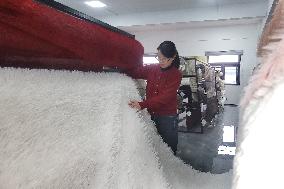
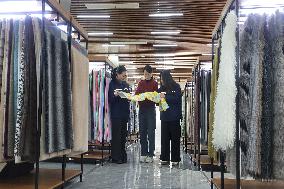
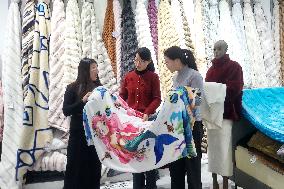
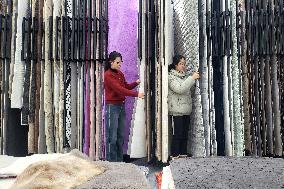
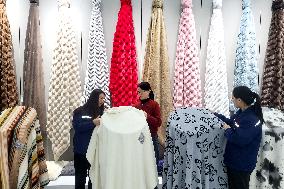
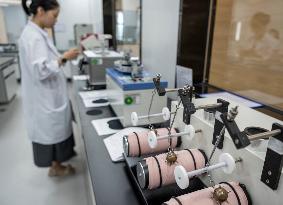
A staff member examines fabrics at a laboratory of Lianxingfa Knitting Co., Ltd. in Quanzhou, southeast China's Fujian Province, July 24, 2025. Riding on digital transformation as a driving force, Quanzhou City managed to enhance the quality and efficiency of its industrial economy in recent years. This has laid a sustainable ground for the upgrading of the traditional sectors, and accelerated the shift from simple manufacturing to smart creation. Photo by Wei Peiquan/Xinhua/ABACAPRESS.COM

  •  
Behind The Scenes Of The Vatican

Behind The Scenes Of The Vatican

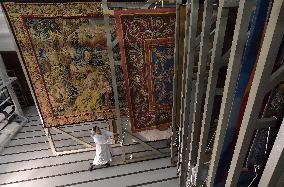
The Tapestry and fine fabrics Restoration Labs at the Vatican on November 2015. Sister Maria Smolen from Poland checks a 30 square metres ancient tapestry. The tapestry conservation laboratory uses a conservative method of caring for the organic and inorganic materials that enter through the Vatican. The team of experts have catalogued, disinfected, documented and conserved over one thousand works that were in a weak state of preservation due to age. Photo by Eric Vandeville/ABACAPRESS.COM

  •  
Drying of Meters Colorful Fabrics - Bangladesh

Drying of Meters Colorful Fabrics - Bangladesh

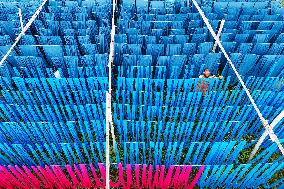
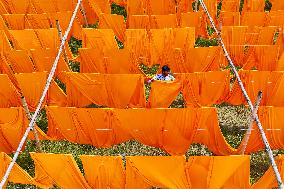
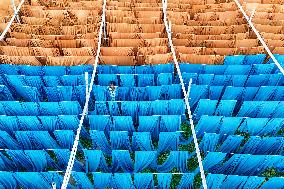
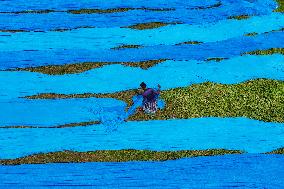
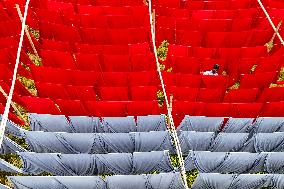
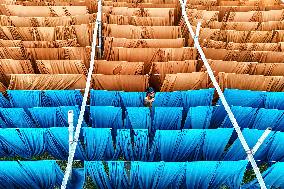
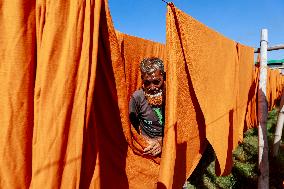
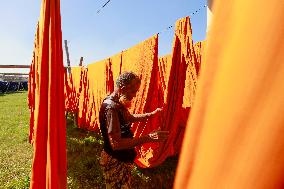
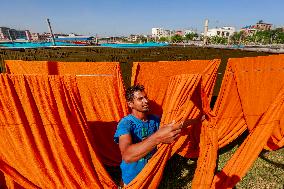
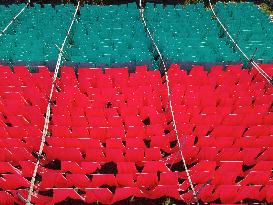
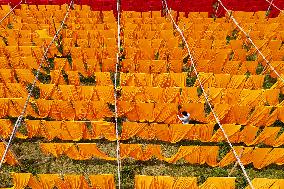
A Worker hangs hundred of brightly colored fabrics out to dry under the sun after the coloring process. After the fabrics dried are offer in wholesale markets and later sent to garment factories. Each row of threads is valued at just $5. This region relies heavily on the textile industry. on March 28, 2025 in Dhaka, Bangladesh. Photo by Shafiul Alam/ Eyepix /ABACAPRESS.COM

  •  
Drying of Meters Colorful Fabrics - Bangladesh

Drying of Meters Colorful Fabrics - Bangladesh

A Worker hangs hundred of brightly colored fabrics out to dry under the sun after the coloring process. After the fabrics dried are offer in wholesale markets and later sent to garment factories. Each row of threads is valued at just $5. This region relies heavily on the textile industry. on March 28, 2025 in Dhaka, Bangladesh. Photo by Shafiul Alam/ Eyepix /ABACAPRESS.COM

  •  
Drying of Meters Colorful Fabrics - Bangladesh

Drying of Meters Colorful Fabrics - Bangladesh

A Worker hangs hundred of brightly colored fabrics out to dry under the sun after the coloring process. After the fabrics dried are offer in wholesale markets and later sent to garment factories. Each row of threads is valued at just $5. This region relies heavily on the textile industry. on March 28, 2025 in Dhaka, Bangladesh. Photo by Shafiul Alam/ Eyepix /ABACAPRESS.COM

  •  
Drying of Meters Colorful Fabrics - Bangladesh

Drying of Meters Colorful Fabrics - Bangladesh

A Worker hangs hundred of brightly colored fabrics out to dry under the sun after the coloring process. After the fabrics dried are offer in wholesale markets and later sent to garment factories. Each row of threads is valued at just $5. This region relies heavily on the textile industry. on March 28, 2025 in Dhaka, Bangladesh. Photo by Shafiul Alam/ Eyepix /ABACAPRESS.COM

  •  
Drying of Meters Colorful Fabrics - Bangladesh

Drying of Meters Colorful Fabrics - Bangladesh

A Worker hangs hundred of brightly colored fabrics out to dry under the sun after the coloring process. After the fabrics dried are offer in wholesale markets and later sent to garment factories. Each row of threads is valued at just $5. This region relies heavily on the textile industry. on March 28, 2025 in Dhaka, Bangladesh. Photo by Shafiul Alam/ Eyepix /ABACAPRESS.COM

  •  
Drying of Meters Colorful Fabrics - Bangladesh

Drying of Meters Colorful Fabrics - Bangladesh

A Worker hangs hundred of brightly colored fabrics out to dry under the sun after the coloring process. After the fabrics dried are offer in wholesale markets and later sent to garment factories. Each row of threads is valued at just $5. This region relies heavily on the textile industry. on March 28, 2025 in Dhaka, Bangladesh. Photo by Shafiul Alam/ Eyepix /ABACAPRESS.COM

  •  
Drying of Meters Colorful Fabrics - Bangladesh

Drying of Meters Colorful Fabrics - Bangladesh

A Worker hangs hundred of brightly colored fabrics out to dry under the sun after the coloring process. After the fabrics dried are offer in wholesale markets and later sent to garment factories. Each row of threads is valued at just $5. This region relies heavily on the textile industry. on March 28, 2025 in Dhaka, Bangladesh. Photo by Shafiul Alam/ Eyepix /ABACAPRESS.COM

  •  
Drying of Meters Colorful Fabrics - Bangladesh

Drying of Meters Colorful Fabrics - Bangladesh

A Worker hangs hundred of brightly colored fabrics out to dry under the sun after the coloring process. After the fabrics dried are offer in wholesale markets and later sent to garment factories. Each row of threads is valued at just $5. This region relies heavily on the textile industry. on March 28, 2025 in Dhaka, Bangladesh. Photo by Shafiul Alam/ Eyepix /ABACAPRESS.COM

  •  
Drying of Meters Colorful Fabrics - Bangladesh

Drying of Meters Colorful Fabrics - Bangladesh

A Worker hangs hundred of brightly colored fabrics out to dry under the sun after the coloring process. After the fabrics dried are offer in wholesale markets and later sent to garment factories. Each row of threads is valued at just $5. This region relies heavily on the textile industry. on March 28, 2025 in Dhaka, Bangladesh. Photo by Shafiul Alam/ Eyepix /ABACAPRESS.COM

  •  
Drying of Meters Colorful Fabrics - Bangladesh

Drying of Meters Colorful Fabrics - Bangladesh

A Worker hangs hundred of brightly colored fabrics out to dry under the sun after the coloring process. After the fabrics dried are offer in wholesale markets and later sent to garment factories. Each row of threads is valued at just $5. This region relies heavily on the textile industry. on March 28, 2025 in Dhaka, Bangladesh. Photo by Shafiul Alam/ Eyepix /ABACAPRESS.COM

  •  
Bangladeshi Dyeing Workers – Dhaka

Bangladeshi Dyeing Workers – Dhaka

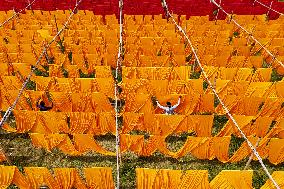
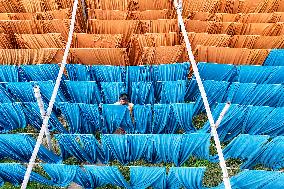
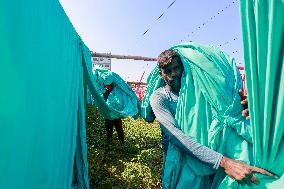
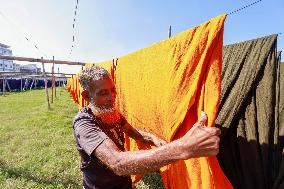
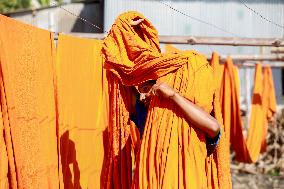
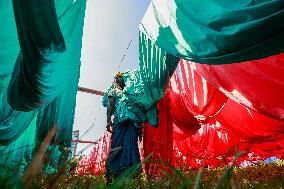
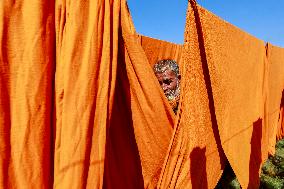
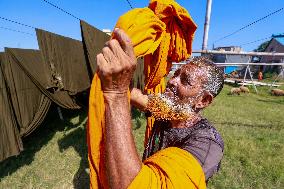
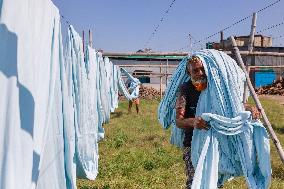
Bangladeshi workers collect fabric after dry them under the sun at a dyeing factory in Narayanganj, near Dhaka, Bangladesh, on November 9, 2024. In Narayanganj’s Fatullah, vibrantly dyed fabrics stretch across an open field, glowing as they dry under the sun. Factory workers pour their heart and soul into each step of the dyeing process, transforming raw fabric into material that will soon become T-shirts. Photo by Suvra Kanti Das/ABACAPRESS.COM

  •  
Bangladeshi Dyeing Workers – Dhaka

Bangladeshi Dyeing Workers – Dhaka

Bangladeshi workers collect fabric after dry them under the sun at a dyeing factory in Narayanganj, near Dhaka, Bangladesh, on November 9, 2024. In Narayanganj’s Fatullah, vibrantly dyed fabrics stretch across an open field, glowing as they dry under the sun. Factory workers pour their heart and soul into each step of the dyeing process, transforming raw fabric into material that will soon become T-shirts. Photo by Suvra Kanti Das/ABACAPRESS.COM

  •  
Bangladeshi Dyeing Workers – Dhaka

Bangladeshi Dyeing Workers – Dhaka

Bangladeshi workers collect fabric after dry them under the sun at a dyeing factory in Narayanganj, near Dhaka, Bangladesh, on November 9, 2024. In Narayanganj’s Fatullah, vibrantly dyed fabrics stretch across an open field, glowing as they dry under the sun. Factory workers pour their heart and soul into each step of the dyeing process, transforming raw fabric into material that will soon become T-shirts. Photo by Suvra Kanti Das/ABACAPRESS.COM

  •  
Bangladeshi Dyeing Workers – Dhaka

Bangladeshi Dyeing Workers – Dhaka

Bangladeshi workers collect fabric after dry them under the sun at a dyeing factory in Narayanganj, near Dhaka, Bangladesh, on November 9, 2024. In Narayanganj’s Fatullah, vibrantly dyed fabrics stretch across an open field, glowing as they dry under the sun. Factory workers pour their heart and soul into each step of the dyeing process, transforming raw fabric into material that will soon become T-shirts. Photo by Suvra Kanti Das/ABACAPRESS.COM

  •  
Bangladeshi Dyeing Workers – Dhaka

Bangladeshi Dyeing Workers – Dhaka

Bangladeshi workers collect fabric after dry them under the sun at a dyeing factory in Narayanganj, near Dhaka, Bangladesh, on November 9, 2024. In Narayanganj’s Fatullah, vibrantly dyed fabrics stretch across an open field, glowing as they dry under the sun. Factory workers pour their heart and soul into each step of the dyeing process, transforming raw fabric into material that will soon become T-shirts. Photo by Suvra Kanti Das/ABACAPRESS.COM

  •  
Bangladeshi Dyeing Workers – Dhaka

Bangladeshi Dyeing Workers – Dhaka

Bangladeshi workers collect fabric after dry them under the sun at a dyeing factory in Narayanganj, near Dhaka, Bangladesh, on November 9, 2024. In Narayanganj’s Fatullah, vibrantly dyed fabrics stretch across an open field, glowing as they dry under the sun. Factory workers pour their heart and soul into each step of the dyeing process, transforming raw fabric into material that will soon become T-shirts. Photo by Suvra Kanti Das/ABACAPRESS.COM

  •  
Bangladeshi Dyeing Workers – Dhaka

Bangladeshi Dyeing Workers – Dhaka

Bangladeshi workers collect fabric after dry them under the sun at a dyeing factory in Narayanganj, near Dhaka, Bangladesh, on November 9, 2024. In Narayanganj’s Fatullah, vibrantly dyed fabrics stretch across an open field, glowing as they dry under the sun. Factory workers pour their heart and soul into each step of the dyeing process, transforming raw fabric into material that will soon become T-shirts. Photo by Suvra Kanti Das/ABACAPRESS.COM

  •  
Bangladeshi Dyeing Workers – Dhaka

Bangladeshi Dyeing Workers – Dhaka

Bangladeshi workers collect fabric after dry them under the sun at a dyeing factory in Narayanganj, near Dhaka, Bangladesh, on November 9, 2024. In Narayanganj’s Fatullah, vibrantly dyed fabrics stretch across an open field, glowing as they dry under the sun. Factory workers pour their heart and soul into each step of the dyeing process, transforming raw fabric into material that will soon become T-shirts. Photo by Suvra Kanti Das/ABACAPRESS.COM

  •  
Bangladeshi Dyeing Workers – Dhaka

Bangladeshi Dyeing Workers – Dhaka

Bangladeshi workers collect fabric after dry them under the sun at a dyeing factory in Narayanganj, near Dhaka, Bangladesh, on November 9, 2024. In Narayanganj’s Fatullah, vibrantly dyed fabrics stretch across an open field, glowing as they dry under the sun. Factory workers pour their heart and soul into each step of the dyeing process, transforming raw fabric into material that will soon become T-shirts. Photo by Suvra Kanti Das/ABACAPRESS.COM

  •  
Bangladeshi Dyeing Workers – Dhaka

Bangladeshi Dyeing Workers – Dhaka

Bangladeshi workers collect fabric after dry them under the sun at a dyeing factory in Narayanganj, near Dhaka, Bangladesh, on November 9, 2024. In Narayanganj’s Fatullah, vibrantly dyed fabrics stretch across an open field, glowing as they dry under the sun. Factory workers pour their heart and soul into each step of the dyeing process, transforming raw fabric into material that will soon become T-shirts. Photo by Suvra Kanti Das/ABACAPRESS.COM

  •  
Bangladeshi Dyeing Workers – Dhaka

Bangladeshi Dyeing Workers – Dhaka

Bangladeshi workers collect fabric after dry them under the sun at a dyeing factory in Narayanganj, near Dhaka, Bangladesh, on November 9, 2024. In Narayanganj’s Fatullah, vibrantly dyed fabrics stretch across an open field, glowing as they dry under the sun. Factory workers pour their heart and soul into each step of the dyeing process, transforming raw fabric into material that will soon become T-shirts. Photo by Suvra Kanti Das/ABACAPRESS.COM

  •  
Bangladeshi Dyeing Workers – Dhaka

Bangladeshi Dyeing Workers – Dhaka

Bangladeshi workers collect fabric after dry them under the sun at a dyeing factory in Narayanganj, near Dhaka, Bangladesh, on November 9, 2024. In Narayanganj’s Fatullah, vibrantly dyed fabrics stretch across an open field, glowing as they dry under the sun. Factory workers pour their heart and soul into each step of the dyeing process, transforming raw fabric into material that will soon become T-shirts. Photo by Suvra Kanti Das/ABACAPRESS.COM

  •  
Bangladeshi Dyeing Workers – Dhaka

Bangladeshi Dyeing Workers – Dhaka

Bangladeshi workers collect fabric after dry them under the sun at a dyeing factory in Narayanganj, near Dhaka, Bangladesh, on November 9, 2024. In Narayanganj’s Fatullah, vibrantly dyed fabrics stretch across an open field, glowing as they dry under the sun. Factory workers pour their heart and soul into each step of the dyeing process, transforming raw fabric into material that will soon become T-shirts. Photo by Suvra Kanti Das/ABACAPRESS.COM

  •  
XINHUA PHOTOS OF THE DAY

XINHUA PHOTOS OF THE DAY

(240713) -- BEIJING, July 13, 2024 Photo by Xinhua/ABACAPRESS.COM) -- A girl walks past bollards adorned with woven fabrics by artisans in Praga district in Warsaw, capital of Poland, July 11, 2024. The Praga district is renowned for its vibrant cultural and creative atmosphere, with numerous galleries, museums, and designer studios. (Photo by Jaap Arriens/Xinhua/ABACAPRESS.COM

  •  
POLAND-WARSAW-STREET VIEW

POLAND-WARSAW-STREET VIEW

(240712) -- WARSAW, July 12, 2024 Photo by Xinhua/ABACAPRESS.COM) -- A woman walks past bollards adorned with woven fabrics by artisans in Praga district in Warsaw, capital of Poland, July 11, 2024. The Praga district is renowned for its vibrant cultural and creative atmosphere, with numerous galleries, museums, and designer studios. (Photo by Jaap Arriens/Xinhua/ABACAPRESS.COM

  •  
POLAND-WARSAW-STREET VIEW

POLAND-WARSAW-STREET VIEW

(240712) -- WARSAW, July 12, 2024 Photo by Xinhua/ABACAPRESS.COM) -- A girl walks past bollards adorned with woven fabrics by artisans in Praga district in Warsaw, capital of Poland, July 11, 2024. The Praga district is renowned for its vibrant cultural and creative atmosphere, with numerous galleries, museums, and designer studios. (Photo by Jaap Arriens/Xinhua/ABACAPRESS.COM

  •  
POLAND-WARSAW-STREET VIEW

POLAND-WARSAW-STREET VIEW

(240712) -- WARSAW, July 12, 2024 Photo by Xinhua/ABACAPRESS.COM) -- This photo taken on July 11, 2024 shows bollards adorned with woven fabrics by artisans in Praga district in Warsaw, capital of Poland. The Praga district is renowned for its vibrant cultural and creative atmosphere, with numerous galleries, museums, and designer studios. (Photo by Jaap Arriens/Xinhua/ABACAPRESS.COM

  •  
Queen Maxima Opens Museum Hindeloopen

Queen Maxima Opens Museum Hindeloopen

Queen Máxima opens the renovated Museum Hindeloopen. The museum, which has been housed in the former town hall of Hindeloopen since 1919, has been completely renovated and expanded with a visitor center. The museum focuses on Hindeloopen culture, based on commercial spirit and expertise, which is expressed in the typical colorful paintings and fabrics. Hindeloopen, Netherlands, on June 18, 2024. Photo by Robin Utrecht/ABACAPRESS.COM

  •  
Queen Maxima Opens Museum Hindeloopen

Queen Maxima Opens Museum Hindeloopen

Queen Máxima opens the renovated Museum Hindeloopen. The museum, which has been housed in the former town hall of Hindeloopen since 1919, has been completely renovated and expanded with a visitor center. The museum focuses on Hindeloopen culture, based on commercial spirit and expertise, which is expressed in the typical colorful paintings and fabrics. Hindeloopen, Netherlands, on June 18, 2024. Photo by Robin Utrecht/ABACAPRESS.COM

  •  
Queen Maxima Opens Museum Hindeloopen

Queen Maxima Opens Museum Hindeloopen

Queen Máxima opens the renovated Museum Hindeloopen. The museum, which has been housed in the former town hall of Hindeloopen since 1919, has been completely renovated and expanded with a visitor center. The museum focuses on Hindeloopen culture, based on commercial spirit and expertise, which is expressed in the typical colorful paintings and fabrics. Hindeloopen, Netherlands, on June 18, 2024. Photo by Robin Utrecht/ABACAPRESS.COM

  • Main
  • Top
  • Editorial
  • Creative
  • About Us
  • About ILG
  • Terms of use
  • Company
  • BEHIND
  • Price List
  • Single Plan
  • Monthly Plan
  • Services
  • Shooting
  • Rights Clearance
  • Support
  • FAQ
  • How To Buy
  • Contact Us
  • Become a Partner

© KYODO NEWS IMAGES INC

All Rights Reserved.

  • Editorial
  • Olympics
  • News
  • Sports
  • Japan
  • Tech
  • Royal
  • Disaster
  • NorthKorea
  • Old Japan
  • SNS
  • Creative
  • Food
  • Japan
  • Landscape
  • Animal
  • Popular
  • #Ukraine
  • #Russia
  • #coronavirus
  • #N. Korea
  • #Thailand
  • #China
  • #Ukraine
  • #Russia
  • #coronavirus
  • #N. Korea
  • #Thailand
  • #China
  • Food
  • Japan
  • Landscape
  • Animal
  • Olympics
  • News
  • Sports
  • Japan
  • Tech
  • Royal
  • Disaster
  • NorthKorea
  • Old Japan
  • SNS