•  
(MASTER OF CRAFTS) CHINA-BEIJING-JINGTAILAN-INHERITOR-STUDIO (CN)

(MASTER OF CRAFTS) CHINA-BEIJING-JINGTAILAN-INHERITOR-STUDIO (CN)

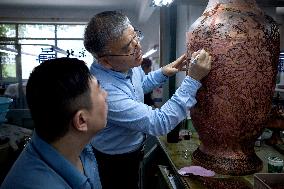
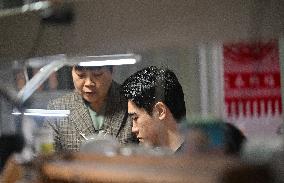
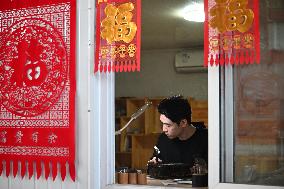
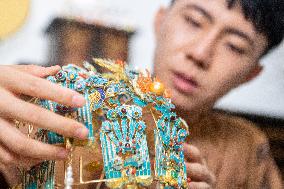
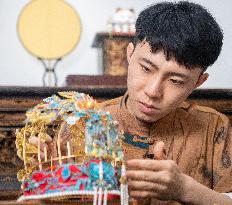
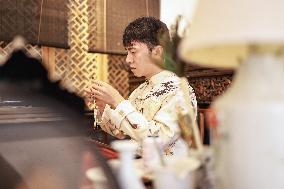
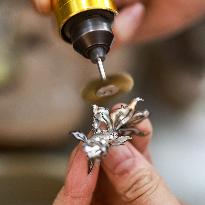
(240526) -- BEIJING, May 26, 2024 (Xinhua) -- Zhong Liansheng and a craftsman apply filigree on Jingtailan artwork at Beijing Enamel Factory in Beijing, capital of China, May 15, 2024. Introduced from the Arabian countries during the Yuan Dynasty (1271-1368) and became popular during the "Jingtai" years of the Ming Dynasty (1368-1644), "Jingtailan" represents a special localized cloisonne wrought of copper and porcelain. With patterns structured with copper wires and painted with enamel glaze all on a copper body, dozens of procedures including burning, grinding and gilding are applied to make a Jingtailan piece. Within 600 years, the craftwork are integrated into the traditional Chinese art. Beijing Enamel Factory, first set up in 1956, is the only China Time-honored Brand in Jingtailan making now also serves as a production and protection base of the crafts. Over the past 60 plus years, the factory cradled a team made up of professional Jingtailan craftsmen, and Zhong Liansheng, a Chinese Master of Arts and

  •  
(MASTER OF CRAFTS) CHINA-BEIJING-JINGTAILAN-INHERITOR-STUDIO (CN)

(MASTER OF CRAFTS) CHINA-BEIJING-JINGTAILAN-INHERITOR-STUDIO (CN)

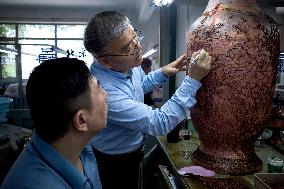
(240526) -- BEIJING, May 26, 2024 (Xinhua) -- Zhong Liansheng and a craftsman apply filigree on Jingtailan artwork at Beijing Enamel Factory in Beijing, capital of China, May 15, 2024. Introduced from the Arabian countries during the Yuan Dynasty (1271-1368) and became popular during the "Jingtai" years of the Ming Dynasty (1368-1644), "Jingtailan" represents a special localized cloisonne wrought of copper and porcelain. With patterns structured with copper wires and painted with enamel glaze all on a copper body, dozens of procedures including burning, grinding and gilding are applied to make a Jingtailan piece. Within 600 years, the craftwork are integrated into the traditional Chinese art. Beijing Enamel Factory, first set up in 1956, is the only China Time-honored Brand in Jingtailan making now also serves as a production and protection base of the crafts. Over the past 60 plus years, the factory cradled a team made up of professional Jingtailan craftsmen, and Zhong Liansheng, a Chinese Master

  •  
CHINA-SHANDONG-ZIBO-NIGHT SCHOOL FOR YOUTH (CN)

CHINA-SHANDONG-ZIBO-NIGHT SCHOOL FOR YOUTH (CN)

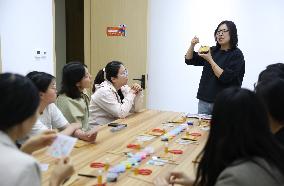
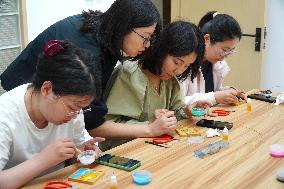
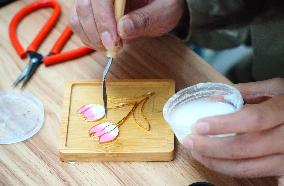
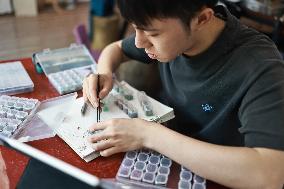
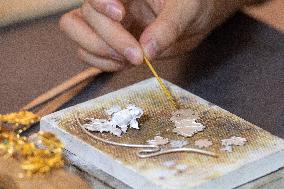
(240511) -- ZIBO, May 11, 2024 (Xinhua) -- Young people learn filigree enamel art at a night school in Zhangdian District of Zibo City, east China's Shandong Province, May 10, 2024. In recent days, three night schools have been opened for youth in Zhangdian District of Zibo City, aiming to offer space for young people to learn skills and relax themselves. (Xinhua/Wang Ying)

  •  
CHINA-SHANDONG-ZIBO-NIGHT SCHOOL FOR YOUTH (CN)

CHINA-SHANDONG-ZIBO-NIGHT SCHOOL FOR YOUTH (CN)

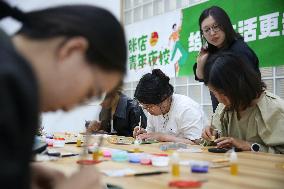
(240511) -- ZIBO, May 11, 2024 (Xinhua) -- Young people learn filigree enamel art at a night school in Zhangdian District of Zibo City, east China's Shandong Province, May 10, 2024. In recent days, three night schools have been opened for youth in Zhangdian District of Zibo City, aiming to offer space for young people to learn skills and relax themselves. (Xinhua/Wang Ying)

  •  
CHINA-SHANDONG-ZIBO-NIGHT SCHOOL FOR YOUTH (CN)

CHINA-SHANDONG-ZIBO-NIGHT SCHOOL FOR YOUTH (CN)

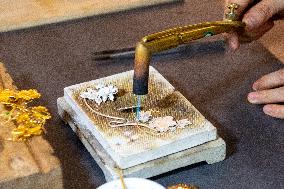
(240511) -- ZIBO, May 11, 2024 (Xinhua) -- Young people learn filigree enamel art at a night school in Zhangdian District of Zibo City, east China's Shandong Province, May 10, 2024. In recent days, three night schools have been opened for youth in Zhangdian District of Zibo City, aiming to offer space for young people to learn skills and relax themselves. (Xinhua/Xu Suhui)

  •  
CHINA-SHANDONG-ZIBO-NIGHT SCHOOL FOR YOUTH (CN)

CHINA-SHANDONG-ZIBO-NIGHT SCHOOL FOR YOUTH (CN)

(240511) -- ZIBO, May 11, 2024 (Xinhua) -- A young member learns filigree enamel art at a night school in Zhangdian District of Zibo City, east China's Shandong Province, May 10, 2024. In recent days, three night schools have been opened for youth in Zhangdian District of Zibo City, aiming to offer space for young people to learn skills and relax themselves. (Xinhua/Xu Suhui)

  •  
(MASTER OF CRAFTS) CHINA-TIANJIN-MA'S FILIGREE MOSAIC ART-INHERITOR (CN)

(MASTER OF CRAFTS) CHINA-TIANJIN-MA'S FILIGREE MOSAIC ART-INHERITOR (CN)

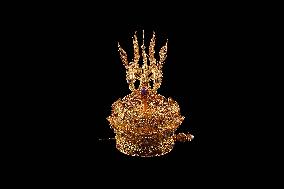
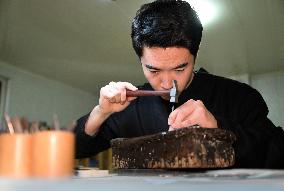
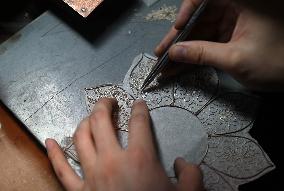
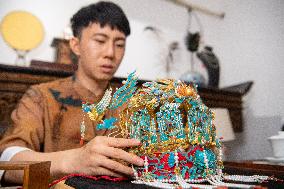
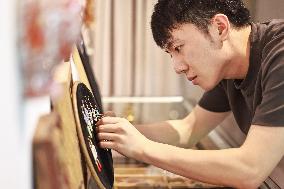
(240508) -- TIANJIN, May 8, 2024 (Xinhua) -- Ma Sai fixes a filigree mosaic artwork at his studio in Liuzhuang Village of Wuqing District of Tianjin, north China, March 19, 2024. Ma's Filigree Mosaic art, a city-level intangible cultural heritage in Tianjin, attracted the attention of the whole country when an accessory made with it appeared on the head of a Chinese actress during the Spring Festival Gala of the Year of the Dragon, staged by China Central Television, also called CCTV. Filigree Mosaic art, first seen in the Spring and Autumn period (770 B.C.-476 B.C.), greeted its peak season in the Ming Dynasty (1368-1644). The craft, having a history of more than 2,000 years, goes through complicated procedures and was listed as a national-level intangible cultural heritage in 2008. Two main steps are involved in the craft, namely making filigree and making mosaic. Using malleable materials such as gold and sliver to make thin threads and then forming different shapes is called filigree art. Inlaying pearls

  •  
(MASTER OF CRAFTS) CHINA-TIANJIN-MA'S FILIGREE MOSAIC ART-INHERITOR (CN)

(MASTER OF CRAFTS) CHINA-TIANJIN-MA'S FILIGREE MOSAIC ART-INHERITOR (CN)

(240508) -- TIANJIN, May 8, 2024 (Xinhua) -- Ma Sai makes a filigree mosaic artwork at his studio in Liuzhuang Village of Wuqing District of Tianjin, north China, March 19, 2024. Ma's Filigree Mosaic art, a city-level intangible cultural heritage in Tianjin, attracted the attention of the whole country when an accessory made with it appeared on the head of a Chinese actress during the Spring Festival Gala of the Year of the Dragon, staged by China Central Television, also called CCTV. Filigree Mosaic art, first seen in the Spring and Autumn period (770 B.C.-476 B.C.), greeted its peak season in the Ming Dynasty (1368-1644). The craft, having a history of more than 2,000 years, goes through complicated procedures and was listed as a national-level intangible cultural heritage in 2008. Two main steps are involved in the craft, namely making filigree and making mosaic. Using malleable materials such as gold and sliver to make thin threads and then forming different shapes is called filigree art. Inlaying pearls

  •  
(MASTER OF CRAFTS) CHINA-TIANJIN-MA'S FILIGREE MOSAIC ART-INHERITOR (CN)

(MASTER OF CRAFTS) CHINA-TIANJIN-MA'S FILIGREE MOSAIC ART-INHERITOR (CN)

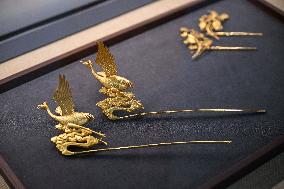
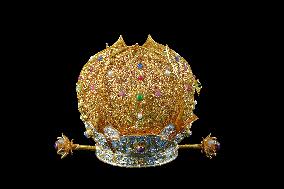
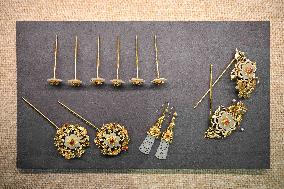
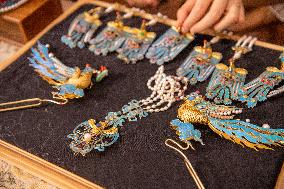
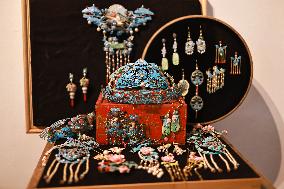
(240508) -- TIANJIN, May 8, 2024 (Xinhua) -- This photo taken on March 23, 2024 shows filigree mosaic artworks displayed at the Wuqing museum in Tianjin, north China. Ma's Filigree Mosaic art, a city-level intangible cultural heritage in Tianjin, attracted the attention of the whole country when an accessory made with it appeared on the head of a Chinese actress during the Spring Festival Gala of the Year of the Dragon, staged by China Central Television, also called CCTV. Filigree Mosaic art, first seen in the Spring and Autumn period (770 B.C.-476 B.C.), greeted its peak season in the Ming Dynasty (1368-1644). The craft, having a history of more than 2,000 years, goes through complicated procedures and was listed as a national-level intangible cultural heritage in 2008. Two main steps are involved in the craft, namely making filigree and making mosaic. Using malleable materials such as gold and sliver to make thin threads and then forming different shapes is called filigree art. Inlaying pearls or gems on

  •  
(MASTER OF CRAFTS) CHINA-TIANJIN-MA'S FILIGREE MOSAIC ART-INHERITOR (CN)

(MASTER OF CRAFTS) CHINA-TIANJIN-MA'S FILIGREE MOSAIC ART-INHERITOR (CN)

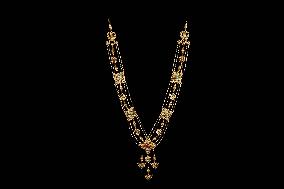
(240508) -- TIANJIN, May 8, 2024 (Xinhua) -- This undated file photo shows a Ma's filigree mosaic artwork. Ma's Filigree Mosaic art, a city-level intangible cultural heritage in Tianjin, attracted the attention of the whole country when an accessory made with it appeared on the head of a Chinese actress during the Spring Festival Gala of the Year of the Dragon, staged by China Central Television, also called CCTV. Filigree Mosaic art, first seen in the Spring and Autumn period (770 B.C.-476 B.C.), greeted its peak season in the Ming Dynasty (1368-1644). The craft, having a history of more than 2,000 years, goes through complicated procedures and was listed as a national-level intangible cultural heritage in 2008. Two main steps are involved in the craft, namely making filigree and making mosaic. Using malleable materials such as gold and sliver to make thin threads and then forming different shapes is called filigree art. Inlaying pearls or gems on shaped metal frames is called mosaic art. Imparted by pal

  •  
(MASTER OF CRAFTS) CHINA-TIANJIN-MA'S FILIGREE MOSAIC ART-INHERITOR (CN)

(MASTER OF CRAFTS) CHINA-TIANJIN-MA'S FILIGREE MOSAIC ART-INHERITOR (CN)

(240508) -- TIANJIN, May 8, 2024 (Xinhua) -- Ma Sai makes a filigree mosaic artwork at his studio in Liuzhuang Village of Wuqing District of Tianjin, north China, March 19, 2024. Ma's Filigree Mosaic art, a city-level intangible cultural heritage in Tianjin, attracted the attention of the whole country when an accessory made with it appeared on the head of a Chinese actress during the Spring Festival Gala of the Year of the Dragon, staged by China Central Television, also called CCTV. Filigree Mosaic art, first seen in the Spring and Autumn period (770 B.C.-476 B.C.), greeted its peak season in the Ming Dynasty (1368-1644). The craft, having a history of more than 2,000 years, goes through complicated procedures and was listed as a national-level intangible cultural heritage in 2008. Two main steps are involved in the craft, namely making filigree and making mosaic. Using malleable materials such as gold and sliver to make thin threads and then forming different shapes is called filigree art. Inlaying pearls

  •  
(MASTER OF CRAFTS) CHINA-TIANJIN-MA'S FILIGREE MOSAIC ART-INHERITOR (CN)

(MASTER OF CRAFTS) CHINA-TIANJIN-MA'S FILIGREE MOSAIC ART-INHERITOR (CN)

(240508) -- TIANJIN, May 8, 2024 (Xinhua) -- Ma Sai (L) and his girlfriend Min Fangping arrange filigree mosaic artworks before a show themed on Ma's Filigree Mosaic art at Wuqing museum in Tianjin, north China, March 19, 2024. Ma's Filigree Mosaic art, a city-level intangible cultural heritage in Tianjin, attracted the attention of the whole country when an accessory made with it appeared on the head of a Chinese actress during the Spring Festival Gala of the Year of the Dragon, staged by China Central Television, also called CCTV. Filigree Mosaic art, first seen in the Spring and Autumn period (770 B.C.-476 B.C.), greeted its peak season in the Ming Dynasty (1368-1644). The craft, having a history of more than 2,000 years, goes through complicated procedures and was listed as a national-level intangible cultural heritage in 2008. Two main steps are involved in the craft, namely making filigree and making mosaic. Using malleable materials such as gold and sliver to make thin threads and then forming differe

  •  
(MASTER OF CRAFTS) CHINA-TIANJIN-MA'S FILIGREE MOSAIC ART-INHERITOR (CN)

(MASTER OF CRAFTS) CHINA-TIANJIN-MA'S FILIGREE MOSAIC ART-INHERITOR (CN)

(240508) -- TIANJIN, May 8, 2024 (Xinhua) -- This undated file photo shows a Ma's filigree mosaic artwork. Ma's Filigree Mosaic art, a city-level intangible cultural heritage in Tianjin, attracted the attention of the whole country when an accessory made with it appeared on the head of a Chinese actress during the Spring Festival Gala of the Year of the Dragon, staged by China Central Television, also called CCTV. Filigree Mosaic art, first seen in the Spring and Autumn period (770 B.C.-476 B.C.), greeted its peak season in the Ming Dynasty (1368-1644). The craft, having a history of more than 2,000 years, goes through complicated procedures and was listed as a national-level intangible cultural heritage in 2008. Two main steps are involved in the craft, namely making filigree and making mosaic. Using malleable materials such as gold and sliver to make thin threads and then forming different shapes is called filigree art. Inlaying pearls or gems on shaped metal frames is called mosaic art. Imparted by pal

  •  
(MASTER OF CRAFTS) CHINA-TIANJIN-MA'S FILIGREE MOSAIC ART-INHERITOR (CN)

(MASTER OF CRAFTS) CHINA-TIANJIN-MA'S FILIGREE MOSAIC ART-INHERITOR (CN)

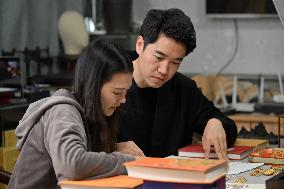
(240508) -- TIANJIN, May 8, 2024 (Xinhua) -- Ma Sai (L) and his girlfriend Min Fangping talk on details of making filigree mosaic artwork at his studio in Tianjin, north China, March 7, 2024. Ma's Filigree Mosaic art, a city-level intangible cultural heritage in Tianjin, attracted the attention of the whole country when an accessory made with it appeared on the head of a Chinese actress during the Spring Festival Gala of the Year of the Dragon, staged by China Central Television, also called CCTV. Filigree Mosaic art, first seen in the Spring and Autumn period (770 B.C.-476 B.C.), greeted its peak season in the Ming Dynasty (1368-1644). The craft, having a history of more than 2,000 years, goes through complicated procedures and was listed as a national-level intangible cultural heritage in 2008. Two main steps are involved in the craft, namely making filigree and making mosaic. Using malleable materials such as gold and sliver to make thin threads and then forming different shapes is called filigree art. In

  •  
(MASTER OF CRAFTS) CHINA-TIANJIN-MA'S FILIGREE MOSAIC ART-INHERITOR (CN)

(MASTER OF CRAFTS) CHINA-TIANJIN-MA'S FILIGREE MOSAIC ART-INHERITOR (CN)

(240508) -- TIANJIN, May 8, 2024 (Xinhua) -- Ma Sai makes a filigree mosaic artwork at his studio in Liuzhuang Village of Wuqing District of Tianjin, north China, March 19, 2024. Ma's Filigree Mosaic art, a city-level intangible cultural heritage in Tianjin, attracted the attention of the whole country when an accessory made with it appeared on the head of a Chinese actress during the Spring Festival Gala of the Year of the Dragon, staged by China Central Television, also called CCTV. Filigree Mosaic art, first seen in the Spring and Autumn period (770 B.C.-476 B.C.), greeted its peak season in the Ming Dynasty (1368-1644). The craft, having a history of more than 2,000 years, goes through complicated procedures and was listed as a national-level intangible cultural heritage in 2008. Two main steps are involved in the craft, namely making filigree and making mosaic. Using malleable materials such as gold and sliver to make thin threads and then forming different shapes is called filigree art. Inlaying pearls

  •  
(MASTER OF CRAFTS) CHINA-TIANJIN-MA'S FILIGREE MOSAIC ART-INHERITOR (CN)

(MASTER OF CRAFTS) CHINA-TIANJIN-MA'S FILIGREE MOSAIC ART-INHERITOR (CN)

(240508) -- TIANJIN, May 8, 2024 (Xinhua) -- Ma Sai makes a filigree mosaic artwork at his studio in Liuzhuang Village of Wuqing District of Tianjin, north China, March 19, 2024. Ma's Filigree Mosaic art, a city-level intangible cultural heritage in Tianjin, attracted the attention of the whole country when an accessory made with it appeared on the head of a Chinese actress during the Spring Festival Gala of the Year of the Dragon, staged by China Central Television, also called CCTV. Filigree Mosaic art, first seen in the Spring and Autumn period (770 B.C.-476 B.C.), greeted its peak season in the Ming Dynasty (1368-1644). The craft, having a history of more than 2,000 years, goes through complicated procedures and was listed as a national-level intangible cultural heritage in 2008. Two main steps are involved in the craft, namely making filigree and making mosaic. Using malleable materials such as gold and sliver to make thin threads and then forming different shapes is called filigree art. Inlaying pearls

  •  
(MASTER OF CRAFTS) CHINA-TIANJIN-MA'S FILIGREE MOSAIC ART-INHERITOR (CN)

(MASTER OF CRAFTS) CHINA-TIANJIN-MA'S FILIGREE MOSAIC ART-INHERITOR (CN)

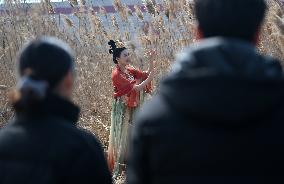
(240508) -- TIANJIN, May 8, 2024 (Xinhua) -- Ma Sai (R, back) and his girlfriend Min Fangping (L, back) watch a Hanfu enthusiast posing for photos in Tianjin, north China, March 7, 2024. Ma's Filigree Mosaic art, a city-level intangible cultural heritage in Tianjin, attracted the attention of the whole country when an accessory made with it appeared on the head of a Chinese actress during the Spring Festival Gala of the Year of the Dragon, staged by China Central Television, also called CCTV. Filigree Mosaic art, first seen in the Spring and Autumn period (770 B.C.-476 B.C.), greeted its peak season in the Ming Dynasty (1368-1644). The craft, having a history of more than 2,000 years, goes through complicated procedures and was listed as a national-level intangible cultural heritage in 2008. Two main steps are involved in the craft, namely making filigree and making mosaic. Using malleable materials such as gold and sliver to make thin threads and then forming different shapes is called filigree art. Inlayin

  •  
(MASTER OF CRAFTS) CHINA-TIANJIN-MA'S FILIGREE MOSAIC ART-INHERITOR (CN)

(MASTER OF CRAFTS) CHINA-TIANJIN-MA'S FILIGREE MOSAIC ART-INHERITOR (CN)

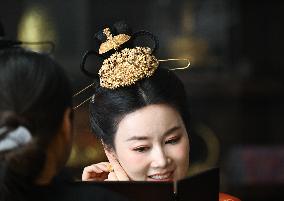
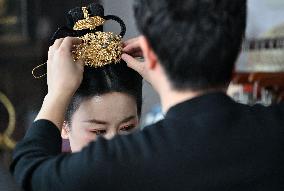
(240508) -- TIANJIN, May 8, 2024 (Xinhua) -- An enthusiast for Hanfu tries a head decoration of filigree mosaic at a studio in Tianjin, north China, March 7, 2024. Ma's Filigree Mosaic art, a city-level intangible cultural heritage in Tianjin, attracted the attention of the whole country when an accessory made with it appeared on the head of a Chinese actress during the Spring Festival Gala of the Year of the Dragon, staged by China Central Television, also called CCTV. Filigree Mosaic art, first seen in the Spring and Autumn period (770 B.C.-476 B.C.), greeted its peak season in the Ming Dynasty (1368-1644). The craft, having a history of more than 2,000 years, goes through complicated procedures and was listed as a national-level intangible cultural heritage in 2008. Two main steps are involved in the craft, namely making filigree and making mosaic. Using malleable materials such as gold and sliver to make thin threads and then forming different shapes is called filigree art. Inlaying pearls or gems on sha

  •  
(MASTER OF CRAFTS) CHINA-TIANJIN-MA'S FILIGREE MOSAIC ART-INHERITOR (CN)

(MASTER OF CRAFTS) CHINA-TIANJIN-MA'S FILIGREE MOSAIC ART-INHERITOR (CN)

(240508) -- TIANJIN, May 8, 2024 (Xinhua) -- This undated file photo shows a Ma's filigree mosaic artwork. Ma's Filigree Mosaic art, a city-level intangible cultural heritage in Tianjin, attracted the attention of the whole country when an accessory made with it appeared on the head of a Chinese actress during the Spring Festival Gala of the Year of the Dragon, staged by China Central Television, also called CCTV. Filigree Mosaic art, first seen in the Spring and Autumn period (770 B.C.-476 B.C.), greeted its peak season in the Ming Dynasty (1368-1644). The craft, having a history of more than 2,000 years, goes through complicated procedures and was listed as a national-level intangible cultural heritage in 2008. Two main steps are involved in the craft, namely making filigree and making mosaic. Using malleable materials such as gold and sliver to make thin threads and then forming different shapes is called filigree art. Inlaying pearls or gems on shaped metal frames is called mosaic art. Imparted by pal

  •  
(MASTER OF CRAFTS) CHINA-TIANJIN-MA'S FILIGREE MOSAIC ART-INHERITOR (CN)

(MASTER OF CRAFTS) CHINA-TIANJIN-MA'S FILIGREE MOSAIC ART-INHERITOR (CN)

(240508) -- TIANJIN, May 8, 2024 (Xinhua) -- Ma Sai puts a filigree mosaic artwork on the head of an enthusiast of Hanfu at his studio in Liuzhuang Village of Wuqing District of Tianjin, north China, March 7, 2024. Ma's Filigree Mosaic art, a city-level intangible cultural heritage in Tianjin, attracted the attention of the whole country when an accessory made with it appeared on the head of a Chinese actress during the Spring Festival Gala of the Year of the Dragon, staged by China Central Television, also called CCTV. Filigree Mosaic art, first seen in the Spring and Autumn period (770 B.C.-476 B.C.), greeted its peak season in the Ming Dynasty (1368-1644). The craft, having a history of more than 2,000 years, goes through complicated procedures and was listed as a national-level intangible cultural heritage in 2008. Two main steps are involved in the craft, namely making filigree and making mosaic. Using malleable materials such as gold and sliver to make thin threads and then forming different shapes is

  •  
(MASTER OF CRAFTS) CHINA-TIANJIN-MA'S FILIGREE MOSAIC ART-INHERITOR (CN)

(MASTER OF CRAFTS) CHINA-TIANJIN-MA'S FILIGREE MOSAIC ART-INHERITOR (CN)

(240508) -- TIANJIN, May 8, 2024 (Xinhua) -- This photo taken on March 23, 2024 shows filigree mosaic artworks displayed at the Wuqing museum in Tianjin, north China. Ma's Filigree Mosaic art, a city-level intangible cultural heritage in Tianjin, attracted the attention of the whole country when an accessory made with it appeared on the head of a Chinese actress during the Spring Festival Gala of the Year of the Dragon, staged by China Central Television, also called CCTV. Filigree Mosaic art, first seen in the Spring and Autumn period (770 B.C.-476 B.C.), greeted its peak season in the Ming Dynasty (1368-1644). The craft, having a history of more than 2,000 years, goes through complicated procedures and was listed as a national-level intangible cultural heritage in 2008. Two main steps are involved in the craft, namely making filigree and making mosaic. Using malleable materials such as gold and sliver to make thin threads and then forming different shapes is called filigree art. Inlaying pearls or gems on

  •  
(MASTER OF CRAFTS) CHINA-TIANJIN-MA'S FILIGREE MOSAIC ART-INHERITOR (CN)

(MASTER OF CRAFTS) CHINA-TIANJIN-MA'S FILIGREE MOSAIC ART-INHERITOR (CN)

(240508) -- TIANJIN, May 8, 2024 (Xinhua) -- Ma Sai (R) talks with his girlfriend Min Fangping on filigree mosaic design patterns at his studio in Liuzhuang Village of Wuqing District of Tianjin, north China, March 19, 2024. Ma's Filigree Mosaic art, a city-level intangible cultural heritage in Tianjin, attracted the attention of the whole country when an accessory made with it appeared on the head of a Chinese actress during the Spring Festival Gala of the Year of the Dragon, staged by China Central Television, also called CCTV. Filigree Mosaic art, first seen in the Spring and Autumn period (770 B.C.-476 B.C.), greeted its peak season in the Ming Dynasty (1368-1644). The craft, having a history of more than 2,000 years, goes through complicated procedures and was listed as a national-level intangible cultural heritage in 2008. Two main steps are involved in the craft, namely making filigree and making mosaic. Using malleable materials such as gold and sliver to make thin threads and then forming different

  •  
(MASTER OF CRAFTS) CHINA-TIANJIN-MA'S FILIGREE MOSAIC ART-INHERITOR (CN)

(MASTER OF CRAFTS) CHINA-TIANJIN-MA'S FILIGREE MOSAIC ART-INHERITOR (CN)

(240508) -- TIANJIN, May 8, 2024 (Xinhua) -- Ma Sai (R) talks with his mother on filigree mosaic art at his studio in Liuzhuang Village of Wuqing District of Tianjin, north China, March 19, 2024. Ma's Filigree Mosaic art, a city-level intangible cultural heritage in Tianjin, attracted the attention of the whole country when an accessory made with it appeared on the head of a Chinese actress during the Spring Festival Gala of the Year of the Dragon, staged by China Central Television, also called CCTV. Filigree Mosaic art, first seen in the Spring and Autumn period (770 B.C.-476 B.C.), greeted its peak season in the Ming Dynasty (1368-1644). The craft, having a history of more than 2,000 years, goes through complicated procedures and was listed as a national-level intangible cultural heritage in 2008. Two main steps are involved in the craft, namely making filigree and making mosaic. Using malleable materials such as gold and sliver to make thin threads and then forming different shapes is called filigree art

  •  
(MASTER OF CRAFTS) CHINA-TIANJIN-MA'S FILIGREE MOSAIC ART-INHERITOR (CN)

(MASTER OF CRAFTS) CHINA-TIANJIN-MA'S FILIGREE MOSAIC ART-INHERITOR (CN)

(240508) -- TIANJIN, May 8, 2024 (Xinhua) -- Ma Sai makes a filigree mosaic artwork at his studio in Liuzhuang Village of Wuqing District of Tianjin, north China, March 19, 2024. Ma's Filigree Mosaic art, a city-level intangible cultural heritage in Tianjin, attracted the attention of the whole country when an accessory made with it appeared on the head of a Chinese actress during the Spring Festival Gala of the Year of the Dragon, staged by China Central Television, also called CCTV. Filigree Mosaic art, first seen in the Spring and Autumn period (770 B.C.-476 B.C.), greeted its peak season in the Ming Dynasty (1368-1644). The craft, having a history of more than 2,000 years, goes through complicated procedures and was listed as a national-level intangible cultural heritage in 2008. Two main steps are involved in the craft, namely making filigree and making mosaic. Using malleable materials such as gold and sliver to make thin threads and then forming different shapes is called filigree art. Inlaying pearls

  •  
(MASTER OF CRAFTS) CHINA-TIANJIN-MA'S FILIGREE MOSAIC ART-INHERITOR (CN)

(MASTER OF CRAFTS) CHINA-TIANJIN-MA'S FILIGREE MOSAIC ART-INHERITOR (CN)

(240508) -- TIANJIN, May 8, 2024 (Xinhua) -- This undated file photo shows a Ma's filigree mosaic artwork. Ma's Filigree Mosaic art, a city-level intangible cultural heritage in Tianjin, attracted the attention of the whole country when an accessory made with it appeared on the head of a Chinese actress during the Spring Festival Gala of the Year of the Dragon, staged by China Central Television, also called CCTV. Filigree Mosaic art, first seen in the Spring and Autumn period (770 B.C.-476 B.C.), greeted its peak season in the Ming Dynasty (1368-1644). The craft, having a history of more than 2,000 years, goes through complicated procedures and was listed as a national-level intangible cultural heritage in 2008. Two main steps are involved in the craft, namely making filigree and making mosaic. Using malleable materials such as gold and sliver to make thin threads and then forming different shapes is called filigree art. Inlaying pearls or gems on shaped metal frames is called mosaic art. Imparted by pal

  •  
(MASTER OF CRAFTS) CHINA-TIANJIN-MA'S FILIGREE MOSAIC ART-INHERITOR (CN)

(MASTER OF CRAFTS) CHINA-TIANJIN-MA'S FILIGREE MOSAIC ART-INHERITOR (CN)

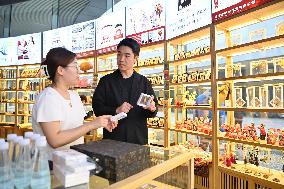
(240508) -- TIANJIN, May 8, 2024 (Xinhua) -- Ma Sai (R) talks with a staff member at a cultural and creative products store in Wuqing Distric of Tianjin, north China, March 23, 2024. Ma's Filigree Mosaic art, a city-level intangible cultural heritage in Tianjin, attracted the attention of the whole country when an accessory made with it appeared on the head of a Chinese actress during the Spring Festival Gala of the Year of the Dragon, staged by China Central Television, also called CCTV. Filigree Mosaic art, first seen in the Spring and Autumn period (770 B.C.-476 B.C.), greeted its peak season in the Ming Dynasty (1368-1644). The craft, having a history of more than 2,000 years, goes through complicated procedures and was listed as a national-level intangible cultural heritage in 2008. Two main steps are involved in the craft, namely making filigree and making mosaic. Using malleable materials such as gold and sliver to make thin threads and then forming different shapes is called filigree art. Inlaying pe

  •  
(MASTER OF CRAFTS) CHINA-TIANJIN-MA'S FILIGREE MOSAIC ART-INHERITOR (CN)

(MASTER OF CRAFTS) CHINA-TIANJIN-MA'S FILIGREE MOSAIC ART-INHERITOR (CN)

(240508) -- TIANJIN, May 8, 2024 (Xinhua) -- This undated file photo shows a Ma's filigree mosaic artwork. Ma's Filigree Mosaic art, a city-level intangible cultural heritage in Tianjin, attracted the attention of the whole country when an accessory made with it appeared on the head of a Chinese actress during the Spring Festival Gala of the Year of the Dragon, staged by China Central Television, also called CCTV. Filigree Mosaic art, first seen in the Spring and Autumn period (770 B.C.-476 B.C.), greeted its peak season in the Ming Dynasty (1368-1644). The craft, having a history of more than 2,000 years, goes through complicated procedures and was listed as a national-level intangible cultural heritage in 2008. Two main steps are involved in the craft, namely making filigree and making mosaic. Using malleable materials such as gold and sliver to make thin threads and then forming different shapes is called filigree art. Inlaying pearls or gems on shaped metal frames is called mosaic art. Imparted by pal

  •  
(MASTER OF CRAFTS) CHINA-TIANJIN-MA'S FILIGREE MOSAIC ART-INHERITOR (CN)

(MASTER OF CRAFTS) CHINA-TIANJIN-MA'S FILIGREE MOSAIC ART-INHERITOR (CN)

(240508) -- TIANJIN, May 8, 2024 (Xinhua) -- Ma Sai makes a filigree mosaic artwork at his studio in Liuzhuang Village of Wuqing District of Tianjin, north China, March 7, 2024. Ma's Filigree Mosaic art, a city-level intangible cultural heritage in Tianjin, attracted the attention of the whole country when an accessory made with it appeared on the head of a Chinese actress during the Spring Festival Gala of the Year of the Dragon, staged by China Central Television, also called CCTV. Filigree Mosaic art, first seen in the Spring and Autumn period (770 B.C.-476 B.C.), greeted its peak season in the Ming Dynasty (1368-1644). The craft, having a history of more than 2,000 years, goes through complicated procedures and was listed as a national-level intangible cultural heritage in 2008. Two main steps are involved in the craft, namely making filigree and making mosaic. Using malleable materials such as gold and sliver to make thin threads and then forming different shapes is called filigree art. Inlaying pearls

  •  
(MASTER OF CRAFTS) CHINA-TIANJIN-MA'S FILIGREE MOSAIC ART-INHERITOR (CN)

(MASTER OF CRAFTS) CHINA-TIANJIN-MA'S FILIGREE MOSAIC ART-INHERITOR (CN)

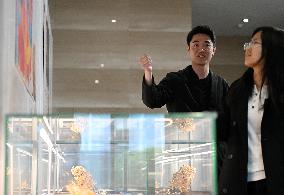
(240508) -- TIANJIN, May 8, 2024 (Xinhua) -- Ma Sai introduces to a visitor during a show themed on Ma's Filigree Mosaic art at Wuqing museum in Tianjin, north China, March 23, 2024. Ma's Filigree Mosaic art, a city-level intangible cultural heritage in Tianjin, attracted the attention of the whole country when an accessory made with it appeared on the head of a Chinese actress during the Spring Festival Gala of the Year of the Dragon, staged by China Central Television, also called CCTV. Filigree Mosaic art, first seen in the Spring and Autumn period (770 B.C.-476 B.C.), greeted its peak season in the Ming Dynasty (1368-1644). The craft, having a history of more than 2,000 years, goes through complicated procedures and was listed as a national-level intangible cultural heritage in 2008. Two main steps are involved in the craft, namely making filigree and making mosaic. Using malleable materials such as gold and sliver to make thin threads and then forming different shapes is called filigree art. Inlaying pe

  •  
(MASTER OF CRAFTS) CHINA-TIANJIN-MA'S FILIGREE MOSAIC ART-INHERITOR (CN)

(MASTER OF CRAFTS) CHINA-TIANJIN-MA'S FILIGREE MOSAIC ART-INHERITOR (CN)

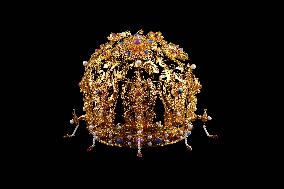
(240508) -- TIANJIN, May 8, 2024 (Xinhua) -- This undated file photo shows a Ma's filigree mosaic artwork. Ma's Filigree Mosaic art, a city-level intangible cultural heritage in Tianjin, attracted the attention of the whole country when an accessory made with it appeared on the head of a Chinese actress during the Spring Festival Gala of the Year of the Dragon, staged by China Central Television, also called CCTV. Filigree Mosaic art, first seen in the Spring and Autumn period (770 B.C.-476 B.C.), greeted its peak season in the Ming Dynasty (1368-1644). The craft, having a history of more than 2,000 years, goes through complicated procedures and was listed as a national-level intangible cultural heritage in 2008. Two main steps are involved in the craft, namely making filigree and making mosaic. Using malleable materials such as gold and sliver to make thin threads and then forming different shapes is called filigree art. Inlaying pearls or gems on shaped metal frames is called mosaic art. Imparted by pal

  •  
(MASTER OF CRAFTS) CHINA-TIANJIN-MA'S FILIGREE MOSAIC ART-INHERITOR (CN)

(MASTER OF CRAFTS) CHINA-TIANJIN-MA'S FILIGREE MOSAIC ART-INHERITOR (CN)

(240508) -- TIANJIN, May 8, 2024 (Xinhua) -- An enthusiast for Hanfu tries a head decoration of filigree mosaic at a studio in Tianjin, north China, March 7, 2024. Ma's Filigree Mosaic art, a city-level intangible cultural heritage in Tianjin, attracted the attention of the whole country when an accessory made with it appeared on the head of a Chinese actress during the Spring Festival Gala of the Year of the Dragon, staged by China Central Television, also called CCTV. Filigree Mosaic art, first seen in the Spring and Autumn period (770 B.C.-476 B.C.), greeted its peak season in the Ming Dynasty (1368-1644). The craft, having a history of more than 2,000 years, goes through complicated procedures and was listed as a national-level intangible cultural heritage in 2008. Two main steps are involved in the craft, namely making filigree and making mosaic. Using malleable materials such as gold and sliver to make thin threads and then forming different shapes is called filigree art. Inlaying pearls or gems on sha

  •  
(MASTER OF CRAFTS) CHINA-TIANJIN-MA'S FILIGREE MOSAIC ART-INHERITOR (CN)

(MASTER OF CRAFTS) CHINA-TIANJIN-MA'S FILIGREE MOSAIC ART-INHERITOR (CN)

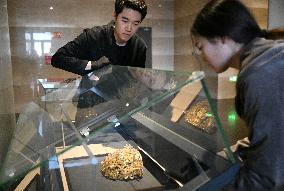
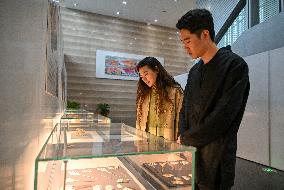
(240508) -- TIANJIN, May 8, 2024 (Xinhua) -- Ma Sai (R) and his girlfriend Min Fangping watch filigree mosaic artworks they made displayed at Wuqing museum in Tianjin, north China, March 23, 2024. Ma's Filigree Mosaic art, a city-level intangible cultural heritage in Tianjin, attracted the attention of the whole country when an accessory made with it appeared on the head of a Chinese actress during the Spring Festival Gala of the Year of the Dragon, staged by China Central Television, also called CCTV. Filigree Mosaic art, first seen in the Spring and Autumn period (770 B.C.-476 B.C.), greeted its peak season in the Ming Dynasty (1368-1644). The craft, having a history of more than 2,000 years, goes through complicated procedures and was listed as a national-level intangible cultural heritage in 2008. Two main steps are involved in the craft, namely making filigree and making mosaic. Using malleable materials such as gold and sliver to make thin threads and then forming different shapes is called filigree ar

  •  
(MASTER OF CRAFTS) CHINA-TIANJIN-MA'S FILIGREE MOSAIC ART-INHERITOR (CN)

(MASTER OF CRAFTS) CHINA-TIANJIN-MA'S FILIGREE MOSAIC ART-INHERITOR (CN)

(240508) -- TIANJIN, May 8, 2024 (Xinhua) -- Ma Sai (R) and his girlfriend Min Fangping carry filigree mosaic artworks before a show themed on Ma's Filigree Mosaic art at Wuqing museum in Tianjin, north China, March 19, 2024. Ma's Filigree Mosaic art, a city-level intangible cultural heritage in Tianjin, attracted the attention of the whole country when an accessory made with it appeared on the head of a Chinese actress during the Spring Festival Gala of the Year of the Dragon, staged by China Central Television, also called CCTV. Filigree Mosaic art, first seen in the Spring and Autumn period (770 B.C.-476 B.C.), greeted its peak season in the Ming Dynasty (1368-1644). The craft, having a history of more than 2,000 years, goes through complicated procedures and was listed as a national-level intangible cultural heritage in 2008. Two main steps are involved in the craft, namely making filigree and making mosaic. Using malleable materials such as gold and sliver to make thin threads and then forming different

  •  
(MASTER OF CRAFTS) CHINA-TIANJIN-MA'S FILIGREE MOSAIC ART-INHERITOR (CN)

(MASTER OF CRAFTS) CHINA-TIANJIN-MA'S FILIGREE MOSAIC ART-INHERITOR (CN)

(240508) -- TIANJIN, May 8, 2024 (Xinhua) -- Ma Sai makes a filigree mosaic artwork at his studio in Liuzhuang Village of Wuqing District of Tianjin, north China, March 19, 2024. Ma's Filigree Mosaic art, a city-level intangible cultural heritage in Tianjin, attracted the attention of the whole country when an accessory made with it appeared on the head of a Chinese actress during the Spring Festival Gala of the Year of the Dragon, staged by China Central Television, also called CCTV. Filigree Mosaic art, first seen in the Spring and Autumn period (770 B.C.-476 B.C.), greeted its peak season in the Ming Dynasty (1368-1644). The craft, having a history of more than 2,000 years, goes through complicated procedures and was listed as a national-level intangible cultural heritage in 2008. Two main steps are involved in the craft, namely making filigree and making mosaic. Using malleable materials such as gold and sliver to make thin threads and then forming different shapes is called filigree art. Inlaying pearls

  •  
(MASTER OF CRAFTS) CHINA-TIANJIN-MA'S FILIGREE MOSAIC ART-INHERITOR (CN)

(MASTER OF CRAFTS) CHINA-TIANJIN-MA'S FILIGREE MOSAIC ART-INHERITOR (CN)

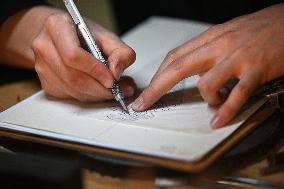
(240508) -- TIANJIN, May 8, 2024 (Xinhua) -- Ma Sai draws patterns for a filigree mosaic artwork at his studio in Liuzhuang Village of Wuqing District of Tianjin, north China, March 19, 2024. Ma's Filigree Mosaic art, a city-level intangible cultural heritage in Tianjin, attracted the attention of the whole country when an accessory made with it appeared on the head of a Chinese actress during the Spring Festival Gala of the Year of the Dragon, staged by China Central Television, also called CCTV. Filigree Mosaic art, first seen in the Spring and Autumn period (770 B.C.-476 B.C.), greeted its peak season in the Ming Dynasty (1368-1644). The craft, having a history of more than 2,000 years, goes through complicated procedures and was listed as a national-level intangible cultural heritage in 2008. Two main steps are involved in the craft, namely making filigree and making mosaic. Using malleable materials such as gold and sliver to make thin threads and then forming different shapes is called filigree art. In

  •  
(MASTER OF CRAFTS) CHINA-TIANJIN-MA'S FILIGREE MOSAIC ART-INHERITOR (CN)

(MASTER OF CRAFTS) CHINA-TIANJIN-MA'S FILIGREE MOSAIC ART-INHERITOR (CN)

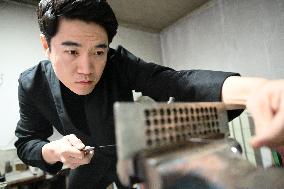
(240508) -- TIANJIN, May 8, 2024 (Xinhua) -- Ma Sai checks a filigree mosaic artwork at his studio in Liuzhuang Village of Wuqing District of Tianjin, north China, March 19, 2024. Ma's Filigree Mosaic art, a city-level intangible cultural heritage in Tianjin, attracted the attention of the whole country when an accessory made with it appeared on the head of a Chinese actress during the Spring Festival Gala of the Year of the Dragon, staged by China Central Television, also called CCTV. Filigree Mosaic art, first seen in the Spring and Autumn period (770 B.C.-476 B.C.), greeted its peak season in the Ming Dynasty (1368-1644). The craft, having a history of more than 2,000 years, goes through complicated procedures and was listed as a national-level intangible cultural heritage in 2008. Two main steps are involved in the craft, namely making filigree and making mosaic. Using malleable materials such as gold and sliver to make thin threads and then forming different shapes is called filigree art. Inlaying pearl

  •  
CHINA-SHAANXI-XI'AN-MUSEUMS-SILK ROAD (CN)

CHINA-SHAANXI-XI'AN-MUSEUMS-SILK ROAD (CN)

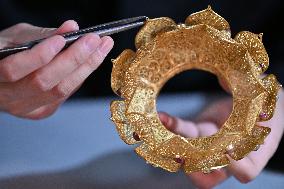
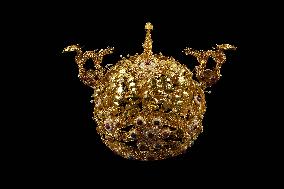
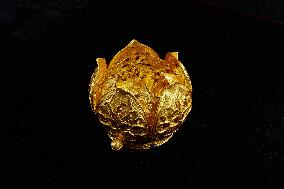
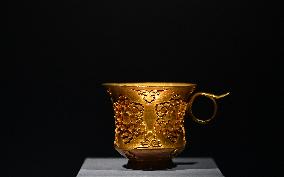
(230513) -- XI'AN, May 13, 2023 (Xinhua) -- This photo taken on May 11, 2023 shows a gold cup with filigree floral medallions at Shaanxi History Museum in Xi'an, northwest China's Shaanxi Province. Founded about 3,100 years ago, Xi'an, which is today the capital of China's Shaanxi Province, served as the capital for 13 dynasties in Chinese history. This is also the place where Zhang Qian, an envoy of the Western Han Dynasty (202 BC-25 AD), began his journey to the Western regions via Central Asia. This expedition eventually led to the opening of the Silk Road. Xi'an has a total of 159 museums, attracting over 30 million people each year. Many exhibits in the museums bear witness to the cultural exchanges between ancient China and countries along the ancient Silk Road in over 2,000 years. (Xinhua/Li Yibo)

  •  
(MASTER OF CRAFTS)CHINA-CHONGQING-FILIGREE MOSAIC CRAFT (CN)

(MASTER OF CRAFTS)CHINA-CHONGQING-FILIGREE MOSAIC CRAFT (CN)

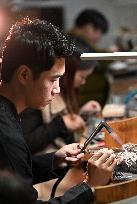
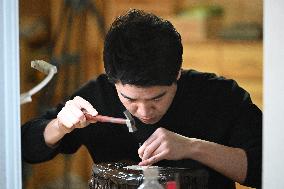
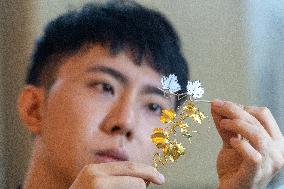
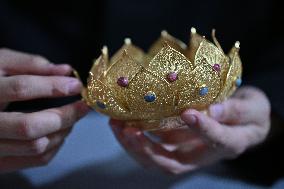
(220612) -- CHONGQING, June 12, 2022 (Xinhua) -- Gu Guoqiang shows filigree mosaic artworks in southwest China's Chongqing, June 9, 2022. Filigree Mosaic craft, a traditional Chinese aulic handicraft dating back to the Spring and Autumn Period (770-476BC), uses metal such as gold and silver to fold artwork inlaid with gemstone or pearl. It is also called fine gold craft as it usually uses spun gold as thin as 0.16 millimeters to form various shapes, and was listed as one of China's national intangible cultural heritages in 2008. Gu Guoqiang, born in 1994, fell in love with the craft seven years ago during his study in Beijing for restoration of cultural relics. Fascinated by a filigree mosaic work of his master, he returned to his hometown Chongqing and took provincial-level master of arts and crafts Li Changyi as his new master. In 2007, Gu Guoqiang set up his own studio, exploring a way to make filigree mosaic accessories fitting for modern people. He tries to absorb traditional Chinese culture concepts

  •  
(MASTER OF CRAFTS)CHINA-CHONGQING-FILIGREE MOSAIC CRAFT (CN)

(MASTER OF CRAFTS)CHINA-CHONGQING-FILIGREE MOSAIC CRAFT (CN)

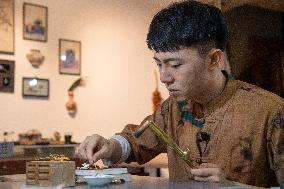
(220612) -- CHONGQING, June 12, 2022 (Xinhua) -- Gu Guoqiang makes a filigree mosaic artwork in southwest China's Chongqing, June 9, 2022. Filigree Mosaic craft, a traditional Chinese aulic handicraft dating back to the Spring and Autumn Period (770-476BC), uses metal such as gold and silver to fold artwork inlaid with gemstone or pearl. It is also called fine gold craft as it usually uses spun gold as thin as 0.16 millimeters to form various shapes, and was listed as one of China's national intangible cultural heritages in 2008. Gu Guoqiang, born in 1994, fell in love with the craft seven years ago during his study in Beijing for restoration of cultural relics. Fascinated by a filigree mosaic work of his master, he returned to his hometown Chongqing and took provincial-level master of arts and crafts Li Changyi as his new master. In 2007, Gu Guoqiang set up his own studio, exploring a way to make filigree mosaic accessories fitting for modern people. He tries to absorb traditional Chinese culture concepts

  •  
(MASTER OF CRAFTS)CHINA-CHONGQING-FILIGREE MOSAIC CRAFT (CN)

(MASTER OF CRAFTS)CHINA-CHONGQING-FILIGREE MOSAIC CRAFT (CN)

(220612) -- CHONGQING, June 12, 2022 (Xinhua) -- Gu Guoqiang makes a filigree mosaic artwork in southwest China's Chongqing, April 20, 2022. Filigree Mosaic craft, a traditional Chinese aulic handicraft dating back to the Spring and Autumn Period (770-476BC), uses metal such as gold and silver to fold artwork inlaid with gemstone or pearl. It is also called fine gold craft as it usually uses spun gold as thin as 0.16 millimeters to form various shapes, and was listed as one of China's national intangible cultural heritages in 2008. Gu Guoqiang, born in 1994, fell in love with the craft seven years ago during his study in Beijing for restoration of cultural relics. Fascinated by a filigree mosaic work of his master, he returned to his hometown Chongqing and took provincial-level master of arts and crafts Li Changyi as his new master. In 2007, Gu Guoqiang set up his own studio, exploring a way to make filigree mosaic accessories fitting for modern people. He tries to absorb traditional Chinese culture concep

  •  
(MASTER OF CRAFTS)CHINA-CHONGQING-FILIGREE MOSAIC CRAFT (CN)

(MASTER OF CRAFTS)CHINA-CHONGQING-FILIGREE MOSAIC CRAFT (CN)

(220612) -- CHONGQING, June 12, 2022 (Xinhua) -- Photo shows filigree mosaic artworks made by Gu Guoqiang in southwest China's Chongqing, April 20, 2022. Filigree Mosaic craft, a traditional Chinese aulic handicraft dating back to the Spring and Autumn Period (770-476BC), uses metal such as gold and silver to fold artwork inlaid with gemstone or pearl. It is also called fine gold craft as it usually uses spun gold as thin as 0.16 millimeters to form various shapes, and was listed as one of China's national intangible cultural heritages in 2008. Gu Guoqiang, born in 1994, fell in love with the craft seven years ago during his study in Beijing for restoration of cultural relics. Fascinated by a filigree mosaic work of his master, he returned to his hometown Chongqing and took provincial-level master of arts and crafts Li Changyi as his new master. In 2007, Gu Guoqiang set up his own studio, exploring a way to make filigree mosaic accessories fitting for modern people. He tries to absorb traditional Chinese c

  •  
(MASTER OF CRAFTS)CHINA-CHONGQING-FILIGREE MOSAIC CRAFT (CN)

(MASTER OF CRAFTS)CHINA-CHONGQING-FILIGREE MOSAIC CRAFT (CN)

(220612) -- CHONGQING, June 12, 2022 (Xinhua) -- Gu Guoqiang makes a filigree mosaic artwork in southwest China's Chongqing, June 9, 2022. Filigree Mosaic craft, a traditional Chinese aulic handicraft dating back to the Spring and Autumn Period (770-476BC), uses metal such as gold and silver to fold artwork inlaid with gemstone or pearl. It is also called fine gold craft as it usually uses spun gold as thin as 0.16 millimeters to form various shapes, and was listed as one of China's national intangible cultural heritages in 2008. Gu Guoqiang, born in 1994, fell in love with the craft seven years ago during his study in Beijing for restoration of cultural relics. Fascinated by a filigree mosaic work of his master, he returned to his hometown Chongqing and took provincial-level master of arts and crafts Li Changyi as his new master. In 2007, Gu Guoqiang set up his own studio, exploring a way to make filigree mosaic accessories fitting for modern people. He tries to absorb traditional Chinese culture concepts

  •  
(MASTER OF CRAFTS)CHINA-CHONGQING-FILIGREE MOSAIC CRAFT (CN)

(MASTER OF CRAFTS)CHINA-CHONGQING-FILIGREE MOSAIC CRAFT (CN)

(220612) -- CHONGQING, June 12, 2022 (Xinhua) -- Gu Guoqiang makes a filigree mosaic artwork in southwest China's Chongqing, June 9, 2022. Filigree Mosaic craft, a traditional Chinese aulic handicraft dating back to the Spring and Autumn Period (770-476BC), uses metal such as gold and silver to fold artwork inlaid with gemstone or pearl. It is also called fine gold craft as it usually uses spun gold as thin as 0.16 millimeters to form various shapes, and was listed as one of China's national intangible cultural heritages in 2008. Gu Guoqiang, born in 1994, fell in love with the craft seven years ago during his study in Beijing for restoration of cultural relics. Fascinated by a filigree mosaic work of his master, he returned to his hometown Chongqing and took provincial-level master of arts and crafts Li Changyi as his new master. In 2007, Gu Guoqiang set up his own studio, exploring a way to make filigree mosaic accessories fitting for modern people. He tries to absorb traditional Chinese culture concepts

  •  
(MASTER OF CRAFTS)CHINA-CHONGQING-FILIGREE MOSAIC CRAFT (CN)

(MASTER OF CRAFTS)CHINA-CHONGQING-FILIGREE MOSAIC CRAFT (CN)

(220612) -- CHONGQING, June 12, 2022 (Xinhua) -- Gu Guoqiang makes a filigree mosaic artwork in southwest China's Chongqing, June 9, 2022. Filigree Mosaic craft, a traditional Chinese aulic handicraft dating back to the Spring and Autumn Period (770-476BC), uses metal such as gold and silver to fold artwork inlaid with gemstone or pearl. It is also called fine gold craft as it usually uses spun gold as thin as 0.16 millimeters to form various shapes, and was listed as one of China's national intangible cultural heritages in 2008. Gu Guoqiang, born in 1994, fell in love with the craft seven years ago during his study in Beijing for restoration of cultural relics. Fascinated by a filigree mosaic work of his master, he returned to his hometown Chongqing and took provincial-level master of arts and crafts Li Changyi as his new master. In 2007, Gu Guoqiang set up his own studio, exploring a way to make filigree mosaic accessories fitting for modern people. He tries to absorb traditional Chinese culture concepts

  •  
(MASTER OF CRAFTS)CHINA-CHONGQING-FILIGREE MOSAIC CRAFT (CN)

(MASTER OF CRAFTS)CHINA-CHONGQING-FILIGREE MOSAIC CRAFT (CN)

(220612) -- CHONGQING, June 12, 2022 (Xinhua) -- Gu Guoqiang makes a filigree mosaic artwork in southwest China's Chongqing, June 9, 2022. Filigree Mosaic craft, a traditional Chinese aulic handicraft dating back to the Spring and Autumn Period (770-476BC), uses metal such as gold and silver to fold artwork inlaid with gemstone or pearl. It is also called fine gold craft as it usually uses spun gold as thin as 0.16 millimeters to form various shapes, and was listed as one of China's national intangible cultural heritages in 2008. Gu Guoqiang, born in 1994, fell in love with the craft seven years ago during his study in Beijing for restoration of cultural relics. Fascinated by a filigree mosaic work of his master, he returned to his hometown Chongqing and took provincial-level master of arts and crafts Li Changyi as his new master. In 2007, Gu Guoqiang set up his own studio, exploring a way to make filigree mosaic accessories fitting for modern people. He tries to absorb traditional Chinese culture concepts

  •  
(MASTER OF CRAFTS)CHINA-CHONGQING-FILIGREE MOSAIC CRAFT (CN)

(MASTER OF CRAFTS)CHINA-CHONGQING-FILIGREE MOSAIC CRAFT (CN)

(220612) -- CHONGQING, June 12, 2022 (Xinhua) -- Gu Guoqiang makes a filigree mosaic artwork in southwest China's Chongqing, April 20, 2022. Filigree Mosaic craft, a traditional Chinese aulic handicraft dating back to the Spring and Autumn Period (770-476BC), uses metal such as gold and silver to fold artwork inlaid with gemstone or pearl. It is also called fine gold craft as it usually uses spun gold as thin as 0.16 millimeters to form various shapes, and was listed as one of China's national intangible cultural heritages in 2008. Gu Guoqiang, born in 1994, fell in love with the craft seven years ago during his study in Beijing for restoration of cultural relics. Fascinated by a filigree mosaic work of his master, he returned to his hometown Chongqing and took provincial-level master of arts and crafts Li Changyi as his new master. In 2007, Gu Guoqiang set up his own studio, exploring a way to make filigree mosaic accessories fitting for modern people. He tries to absorb traditional Chinese culture concep

  •  
(MASTER OF CRAFTS)CHINA-CHONGQING-FILIGREE MOSAIC CRAFT (CN)

(MASTER OF CRAFTS)CHINA-CHONGQING-FILIGREE MOSAIC CRAFT (CN)

(220612) -- CHONGQING, June 12, 2022 (Xinhua) -- Gu Guoqiang shows a filigree mosaic artwork in southwest China's Chongqing, June 9, 2022. Filigree Mosaic craft, a traditional Chinese aulic handicraft dating back to the Spring and Autumn Period (770-476BC), uses metal such as gold and silver to fold artwork inlaid with gemstone or pearl. It is also called fine gold craft as it usually uses spun gold as thin as 0.16 millimeters to form various shapes, and was listed as one of China's national intangible cultural heritages in 2008. Gu Guoqiang, born in 1994, fell in love with the craft seven years ago during his study in Beijing for restoration of cultural relics. Fascinated by a filigree mosaic work of his master, he returned to his hometown Chongqing and took provincial-level master of arts and crafts Li Changyi as his new master. In 2007, Gu Guoqiang set up his own studio, exploring a way to make filigree mosaic accessories fitting for modern people. He tries to absorb traditional Chinese culture concepts

  •  
(MASTER OF CRAFTS)CHINA-CHONGQING-FILIGREE MOSAIC CRAFT (CN)

(MASTER OF CRAFTS)CHINA-CHONGQING-FILIGREE MOSAIC CRAFT (CN)

(220612) -- CHONGQING, June 12, 2022 (Xinhua) -- Gu Guoqiang makes a filigree mosaic artwork in southwest China's Chongqing, April 20, 2022. Filigree Mosaic craft, a traditional Chinese aulic handicraft dating back to the Spring and Autumn Period (770-476BC), uses metal such as gold and silver to fold artwork inlaid with gemstone or pearl. It is also called fine gold craft as it usually uses spun gold as thin as 0.16 millimeters to form various shapes, and was listed as one of China's national intangible cultural heritages in 2008. Gu Guoqiang, born in 1994, fell in love with the craft seven years ago during his study in Beijing for restoration of cultural relics. Fascinated by a filigree mosaic work of his master, he returned to his hometown Chongqing and took provincial-level master of arts and crafts Li Changyi as his new master. In 2007, Gu Guoqiang set up his own studio, exploring a way to make filigree mosaic accessories fitting for modern people. He tries to absorb traditional Chinese culture concep

  •  
(MASTER OF CRAFTS)CHINA-CHONGQING-FILIGREE MOSAIC CRAFT (CN)

(MASTER OF CRAFTS)CHINA-CHONGQING-FILIGREE MOSAIC CRAFT (CN)

(220612) -- CHONGQING, June 12, 2022 (Xinhua) -- Gu Guoqiang makes a filigree mosaic artwork in southwest China's Chongqing, April 20, 2022. Filigree Mosaic craft, a traditional Chinese aulic handicraft dating back to the Spring and Autumn Period (770-476BC), uses metal such as gold and silver to fold artwork inlaid with gemstone or pearl. It is also called fine gold craft as it usually uses spun gold as thin as 0.16 millimeters to form various shapes, and was listed as one of China's national intangible cultural heritages in 2008. Gu Guoqiang, born in 1994, fell in love with the craft seven years ago during his study in Beijing for restoration of cultural relics. Fascinated by a filigree mosaic work of his master, he returned to his hometown Chongqing and took provincial-level master of arts and crafts Li Changyi as his new master. In 2007, Gu Guoqiang set up his own studio, exploring a way to make filigree mosaic accessories fitting for modern people. He tries to absorb traditional Chinese culture concep

  •  
(MASTER OF CRAFTS)CHINA-CHONGQING-FILIGREE MOSAIC CRAFT (CN)

(MASTER OF CRAFTS)CHINA-CHONGQING-FILIGREE MOSAIC CRAFT (CN)

(220612) -- CHONGQING, June 12, 2022 (Xinhua) -- Gu Guoqiang makes a filigree mosaic artwork in southwest China's Chongqing, June 9, 2022. Filigree Mosaic craft, a traditional Chinese aulic handicraft dating back to the Spring and Autumn Period (770-476BC), uses metal such as gold and silver to fold artwork inlaid with gemstone or pearl. It is also called fine gold craft as it usually uses spun gold as thin as 0.16 millimeters to form various shapes, and was listed as one of China's national intangible cultural heritages in 2008. Gu Guoqiang, born in 1994, fell in love with the craft seven years ago during his study in Beijing for restoration of cultural relics. Fascinated by a filigree mosaic work of his master, he returned to his hometown Chongqing and took provincial-level master of arts and crafts Li Changyi as his new master. In 2007, Gu Guoqiang set up his own studio, exploring a way to make filigree mosaic accessories fitting for modern people. He tries to absorb traditional Chinese culture concepts

  • Main
  • Top
  • Editorial
  • Creative
  • About Us
  • About ILG
  • Terms of use
  • Company
  • BEHIND
  • Price List
  • Single Plan
  • Monthly Plan
  • Services
  • Shooting
  • Rights Clearance
  • Support
  • FAQ
  • How To Buy
  • Contact Us
  • Become a Partner

© KYODO NEWS IMAGES INC

All Rights Reserved.

  • Editorial
  • Olympics
  • News
  • Sports
  • Japan
  • Tech
  • Royal
  • Disaster
  • NorthKorea
  • Old Japan
  • SNS
  • Creative
  • Food
  • Japan
  • Landscape
  • Animal
  • Popular
  • #Ukraine
  • #China
  • #coronavirus
  • #N. Korea
  • #Thailand
  • #Russia
  • #Ukraine
  • #China
  • #coronavirus
  • #N. Korea
  • #Thailand
  • #Russia
  • Food
  • Japan
  • Landscape
  • Animal
  • Olympics
  • News
  • Sports
  • Japan
  • Tech
  • Royal
  • Disaster
  • NorthKorea
  • Old Japan
  • SNS